INTERNACIONAL
French school riots deepen as experts point to far-left alliance fueling ‘broader confrontation’

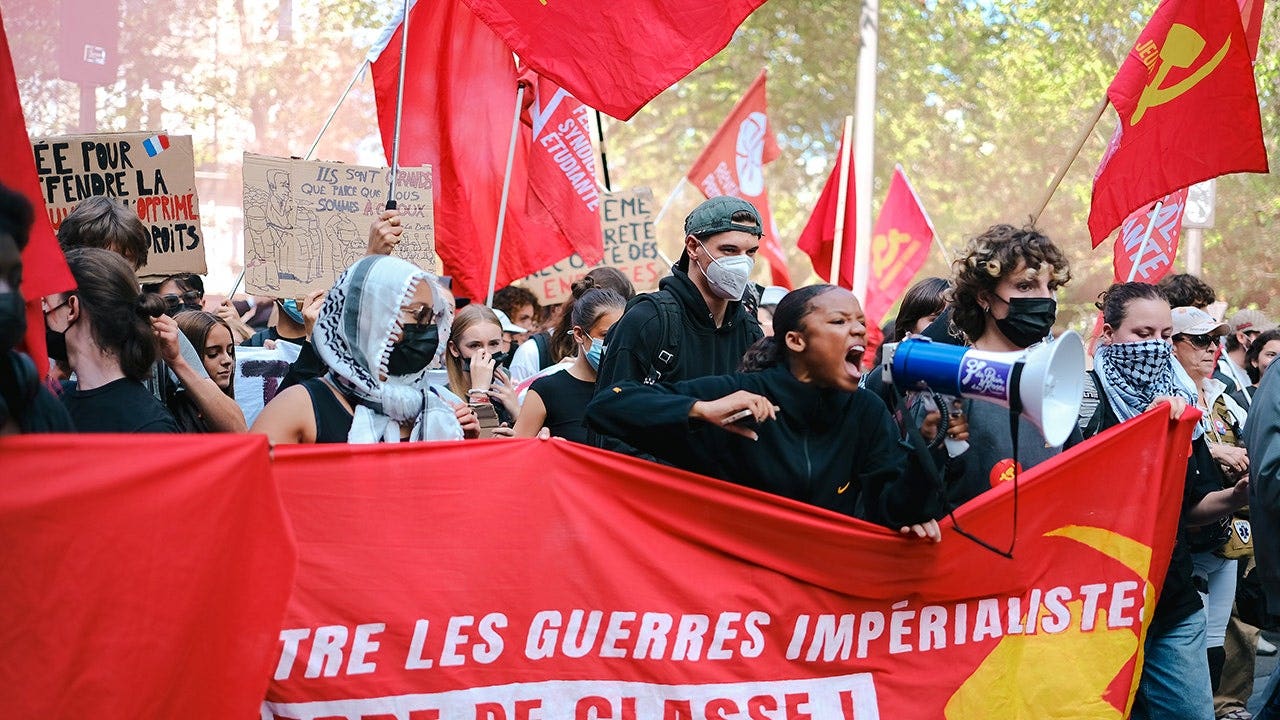
Violent student protests erupt across France as left-wing groups seize on chaos
Massive student demonstrations throw France into chaos as left-wing factions exploit ongoing anger over crumbling classrooms. Host Harris Faulkner analyzes the civil unrest with Fox News foreign correspondent Jeff Paul in Paris, where authorities have arrested over 5,000 people and nearly 200 have been injured. Heritage Foundation’s Nile Gardiner discusses how far-left groups are acting on the chaos.
NEWYou can now listen to Fox News articles!
An unholy alliance is being blamed for instigating the violence seen across France as experts point to a bond between extreme left and radical Islamic groups.
What began as protests over school conditions and funding is entering its third week, and the factors behind the widespread, more violent protests are being debated.
«The protests started in an apparently spontaneous way in the disadvantaged, immigrant suburbs of Paris,» Nathalie Szerman, researcher in radicalization and extremism in France at MEMRI, told Fox News Digital, but «it quickly became clear that the violence demonstrated in these protests conveyed a huge amount of hate towards the ‘system’ and not much concern for better material conditions in schools, as dozens of schools across France have suffered vandalism and blockades, and many were even set on fire.»
FRANCE ROCKED BY STUDENT RIOTS AS HUNDREDS ARRESTED, VIOLENCE SPREADS NATIONWIDE
Protesters hold Palestinian and Antifa flags as French high school and university students attend a demonstration in Strasbourg, France, on Thursday, Oct. 6, 2026. (Kai Pfaffenbach/Reuters)
Szerman said that while demonstrations over school conditions at the beginning of an academic year in France «is not a new phenomenon,» the «scope of these demonstrations and their character should raise concerns.» She points to protestors taking to the streets carrying Palestinian flags. «Pro-Palestinian organizations, such as Urgence Palestine, have declared the month of October to be a month of revolt, and these groups are supporting and fueling these demonstrations.»
«I think at the very heart of this, is the far-left and the Islamists combining forces to undermine France itself,» Nile Gardiner said.
«The French are notorious for strikes, labor shortages and street demonstrations,» former U.S. Assistant Attorney General Theo Wold told Fox News Digital, but these protests are «a consequence of mass immigration. The rioters are not of French culture, and they don’t respect the rule of law… France is learning that importing an underclass of foreigners causes broader societal damage.»
ISRAELI AMBASSADOR COMPARES FRANCE’S FAR-LEFT LEADER’S RHETORIC TO HITLER AS ANTISEMITISM SURGES
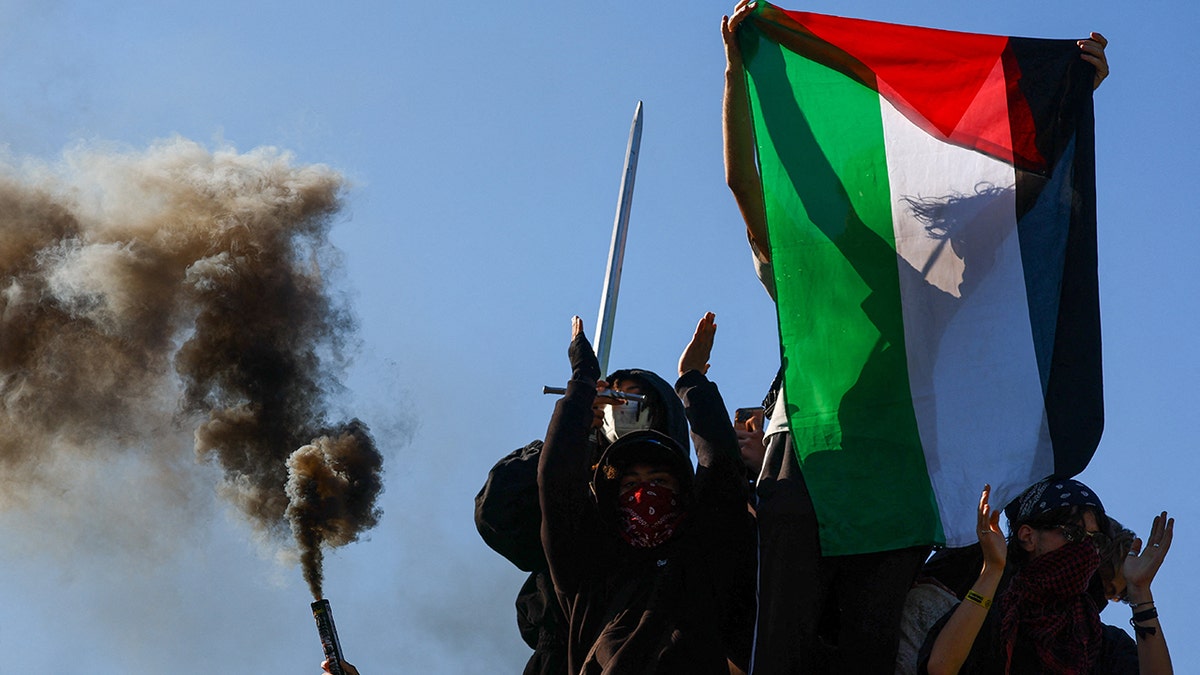
Protesters hold a Palestinian flag on the day French high school and university students attend a demonstration in Strasbourg as part of a nationwide day of protests and blockades, voicing anger over overcrowded classrooms, teacher shortages and dilapidated school buildings, which students blame on years of underinvestment, France, October 6, 2026. REUTERS/Kai Pfaffenbach ( )
Nile Gardiner, director of The Heritage Foundation’s Margaret Thatcher Center for Freedom, told Fox News’ Outnumbered on Tuesday, «I think at the very heart of this, is the far-left and the Islamists combining forces to undermine France itself… This is a form of uprising, frankly, by far left wing forces together with second, third generation migrants. And also, at the same time, France is in real economic trouble.»
Simone Rodan-Benzaquen, senior envoy to Europe at the Foundation for Defense of Democracies told Fox News Digital that, «Students have reason to be angry about overcrowded classrooms and absent teachers.» She added but «What does Gaza have to do with a shortage of teachers in France? I’ll tell you what: [the far-left La France Insoumise party] has spent years making hostility to Israel a central part of its appeal to young voters. Bringing that cause into the school protests helps fuel the racial dynamics and turn a demand for better classrooms into a much broader confrontation with the government,» she said.
EUROPE’S LEFT COURTS MUSLIM VOTERS AS ANTI-ISRAEL POLITICS RESHAPE CONTINENT
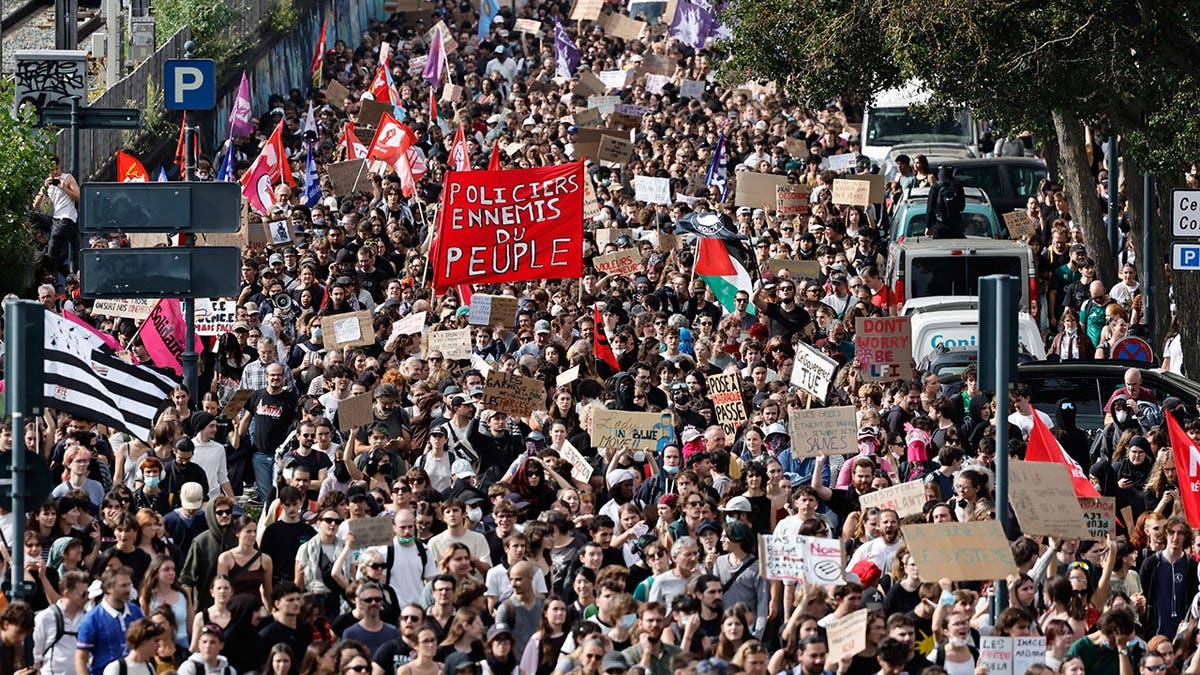
Students march with a large red banner reading «Police officers, enemy of the people» during a protest against under-resourced schools in Rennes, western France, on Tuesday, Oct. 6, 2026. (Jeremias Gonzalez/AP)
«LFI is the perfect embodiment of the Red-Green alliance – the alliance between leftists and Islamists,» adds Szerman. «LFI rallies Islamist and pro-Palestinian groups on the one hand, and other French anti-system leftists who accuse the elite of enriching itself at the expense of the poor on the other. It is a revolutionary party using Islam as an inner drive. Politicized Muslims are aware of this and are also using LFI to promote their own agenda.
«They are fueling and empowering each other, the common ground being the claim that they are the people,» Szerman continues. «The people are seen as the enemy of the ‘elite’ running the country, which therefore has to be overthrown.»
Rodan-Benzaquen said, «French students need their teachers to show up to class, and their parents need to know they will be safe at school. But [LFI leader Jean-Luc Mélenchon] is not interested in these goals.» She says he is «encouraging the citizens to see their schools as a front in a larger political battle, one whose real prize is the presidency.»
FRANCE’S TEEN RIOTS TAKE EXPLOSIVE NEW TURN AS GOVERNMENT POINTS FINGER AT HARD LEFT
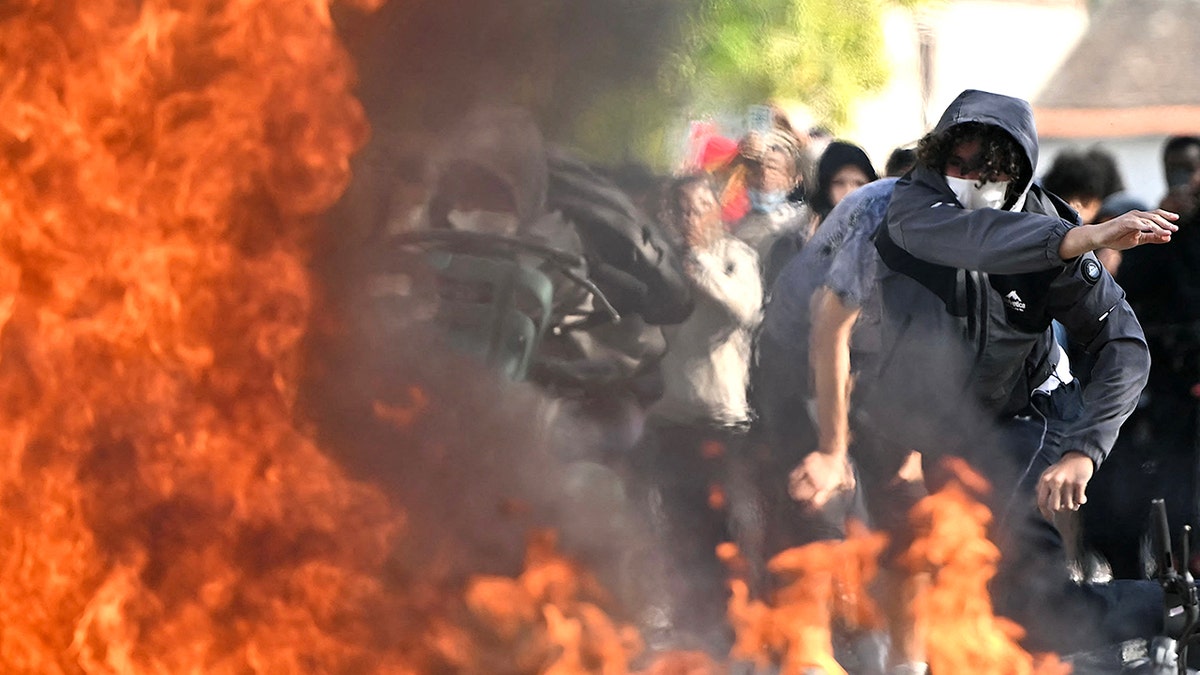
A protesting student feeds a burnt barrier during a blockading action outside the secondary school Le Corbusier, in Aubervilliers, northern Paris on October 1, 2026. Since late September, students have staged protests outside schools over grievances ranging from timetables, class sizes and a shortage of teachers to overheated classrooms during this year’s heatwaves. The protests started in the Ile-de-France region around Paris but have now spread to other cities nationwide. (Photo by LOU BENOIST / AFP via Getty Images) ( )
French President Emmanuel Macron is term-limited and cannot run for a third consecutive term in elections this coming Spring. Many observers believe a runoff match-up between the far-left Mélenchon and right-wing populist Marine Le Pen of the National Rally party could be on the horizon.
«No matter how the protests play out, Mélenchon will likely benefit,» said Rodan-Benzaquen. «If the unrest drives voters toward the far right, he can hope to emerge as the leader of the opposition. If he succeeds in mobilizing enough voters himself, he could reach the presidency. Either prospect gives him a reason to keep the confrontation going. Neither gives him much incentive to lower the temperature.»
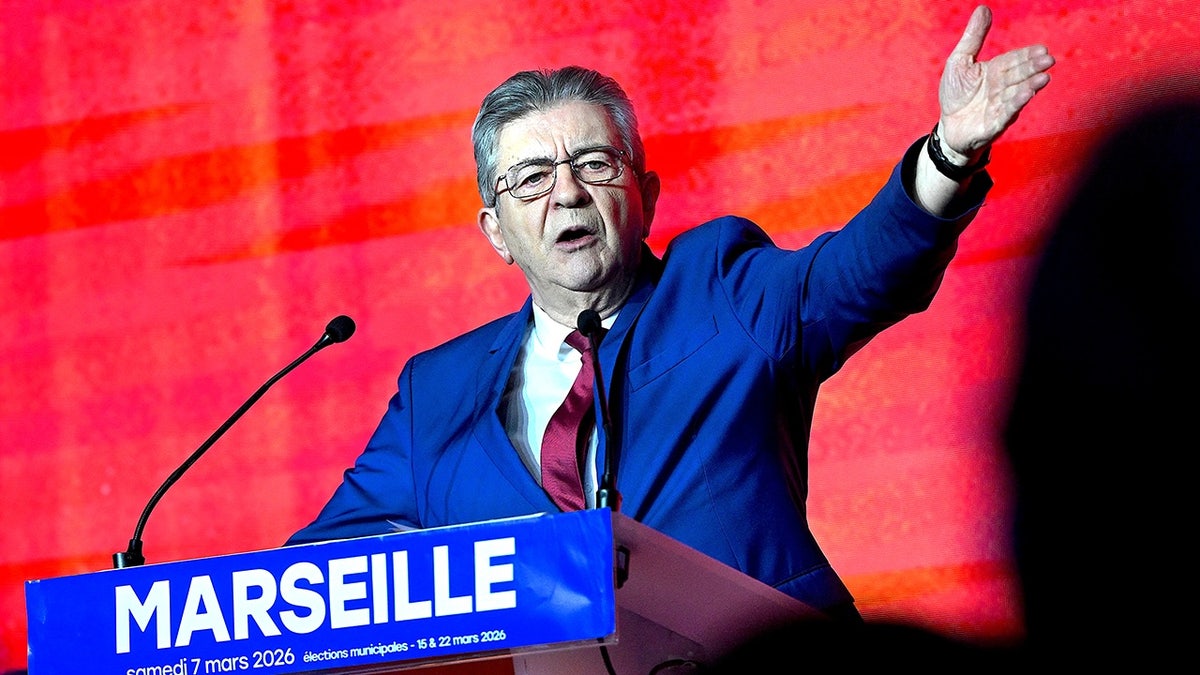
Leader of French left-wing La France Insoumise (LFI) party Jean-Luc Melenchon delivers a speech during an electoral campaign meeting of the local LFI candidate for French municipal elections in Marseille, southern France, on March 7, 2026. (Miguel Medina / AFP via Getty Images)
«I do not think that the LFI leadership made a conscious decision to trigger destructive demonstrations all over France,» adds Szerman, «but once the movement was launched, LFI did provide a backbone for the violence, as it will never blame any of its followers.»
FRANCE EXPLODES AGAIN AS STUDENTS RIOT OVER EDUCATION
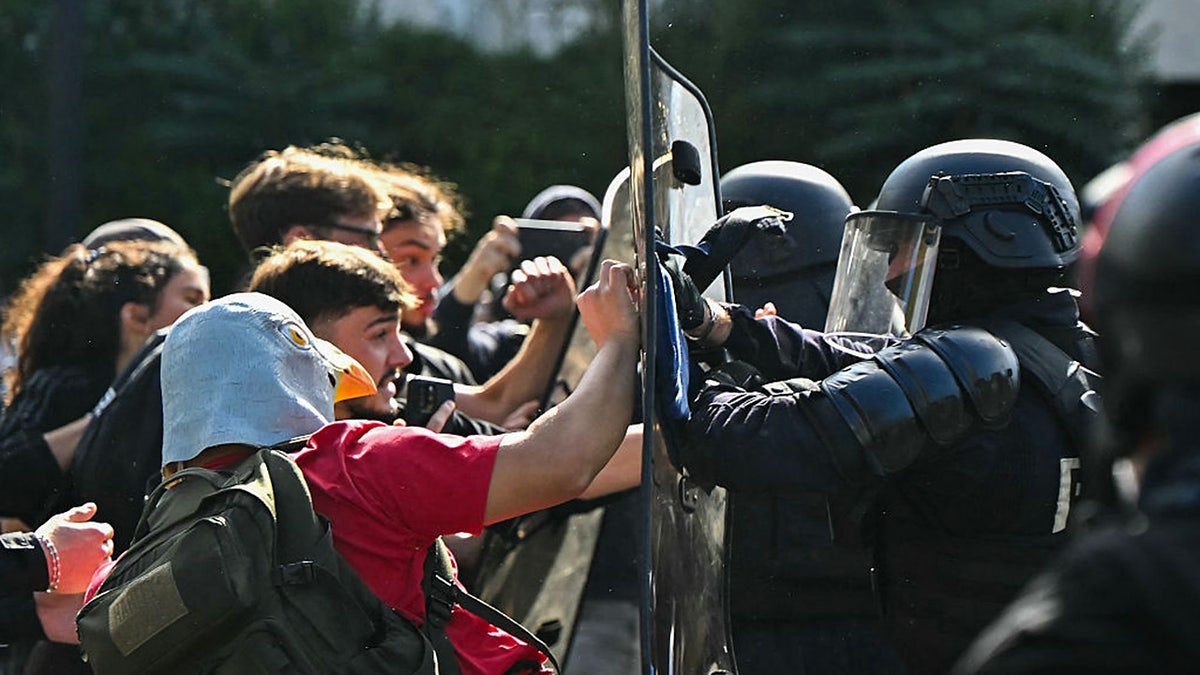
TOPSHOT – Anti-riot police officers face protesting students carrying out blockading action outside the secondary school Le Corbusier, in Aubervilliers, northern Paris on October 1, 2026. Since late September, students have staged protests outside schools over grievances ranging from timetables, class sizes and a shortage of teachers to overheated classrooms during this year’s heatwaves. The protests started in the Ile-de-France region around Paris but have now spread to other cities nationwide. ( )
So far, the protests have not spread across the continent even as spending on education seems close between countries.
According to the latest available figures from Eurostat, the European Union’s official statistical office, in 2024 France spent over 5% of its GDP on education, more than it spent on defense. In that same year, neighboring Germany spent only 4.5% of its GDP on education.
In Macron’s latest proposed budget, about $74 billion is earmarked for French schools, more than proposed for defense, but both are cuts from the last official budget narrowly approved by Parliament over the winter. Germany’s Federal Statistical Office reports spending on education was up to 7% of GDP at over $340 billion when including federal, state and local government spending. Meanwhile, in the U.K., Department for Education spending for the 2025/26 school year was estimated at around $142 billion.
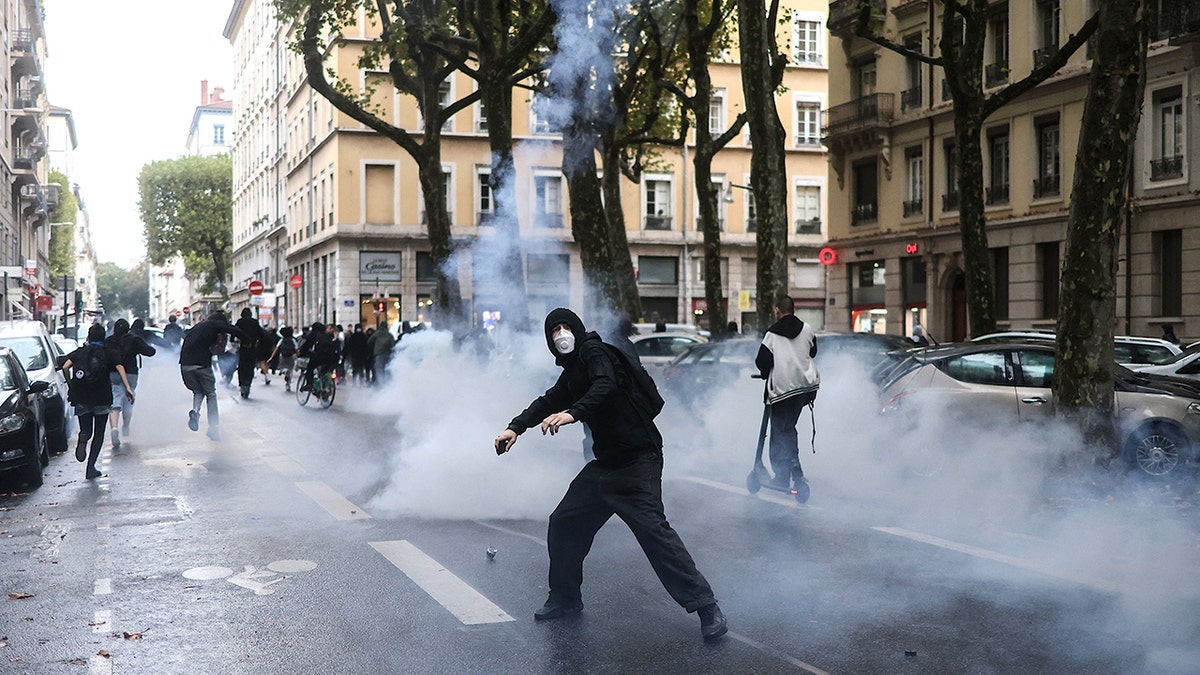
Students clash with police during ongoing student protest action, in Lyon, central eastern France, on Oct. 1, 2026. Since late September, students have staged protests outside schools over grievances ranging from timetables, class sizes and a shortage of teachers to overheated classrooms during this year’s heatwaves. The protests started in the Ile-de-France region around Paris but have now spread to other cities nationwide. (Alex Martin AFP via Getty Images)
When comparing the latest figures for expenditures per student, France’s ministry of education says in the 2024/25 school year, it spent $9,950 per student, Germany’s Federal Statistical Office says $12,000 was spent per student in 2025, and the U.K. spent about $10,100 per student in 2024/25. Meanwhile, the Organization for European Economic Co-operation says the Europe-wide average is around $12,000 per student per year.
Some 500 high schools are closed in France on Wednesday, down from 891 on Tuesday. The schools have been ordered by the ministry of education to replace normal lessons through Friday with structured dialogue and staff crisis management meetings in an effort to calm tensions, to avoid confrontations at school gates and to give staff time to reorganize.
The Associated Press reports more than 6,100 people have been arrested since the protests began, with the Interior Ministry saying 715 police officers have been injured.
france, world protests, emmanuel macron, europe, controversies education









INTERNACIONAL
Crece el rechazo a la inteligencia artificial en las universidades de Estados Unidos: los argumentos de estudiantes y profesores
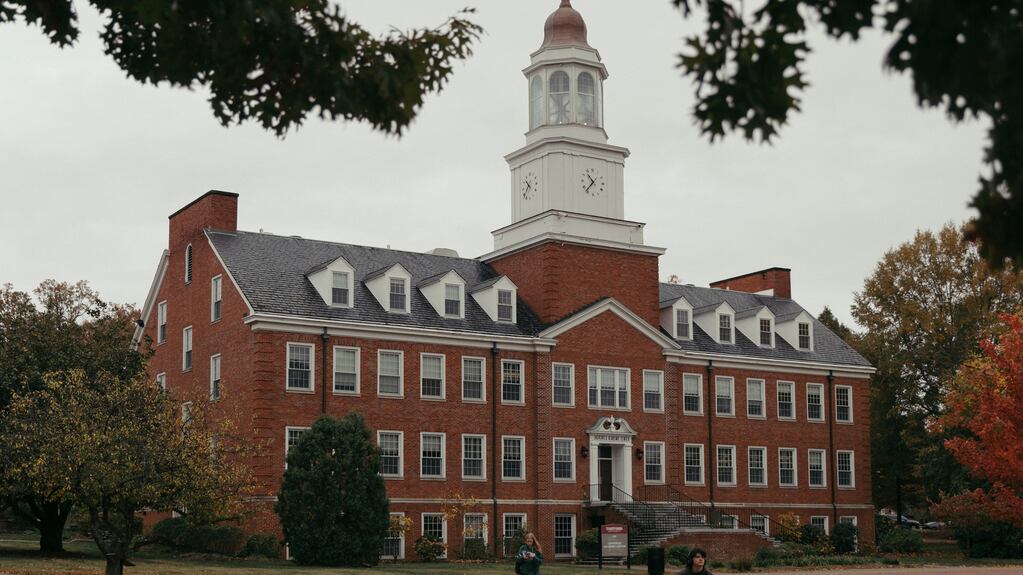
En marzo, estudiantes de la Universidad de Transilvania lanzaron una petición para intentar frenar el avance de la inteligencia artificial en el campus. En ella se pedía a la administración que cancelara las licencias de los chatbots con los gigantes de la IA y que mejor se invirtiera el dinero en una “educación enfocada en el ser humano”.
Aproximadamente un tercio de los estudiantes de la universidad la firmaron.
Transilvania, en Lexington (Kentucky), es una universidad muy pequeña, con menos de 1000 estudiantes. Sin embargo, tanto en Estados Unidos como en el resto del mundo, ha surgido una ola de resistencia universitaria contra la IA, impulsada en parte por un creciente grupo de objetores de conciencia que se niegan por completo a utilizarla.
Las encuestas indican que la gran mayoría de los estudiantes estadounidenses usan chatbots para sus tareas académicas. Por su parte, las autoridades universitarias han recibido con los brazos abiertos la IA, argumentando que es clave para preparar a los estudiantes para el mercado laboral.
No obstante, a medida que crece el uso de la IA, cada vez más estudiantes y profesores encienden las alarmas e intentan frenarla.
Gran parte de la oposición viene de la izquierda política y se centra en cómo la IA podría dañar el medio ambiente, restar poder a los trabajadores o utilizarse con fines bélicos. Algunas de las voces más críticas de la oposición estudian arte –donde la creatividad humana es fundamental– o derecho, ya que las empresas tecnológicas enfrentan demandas por posibles violaciones a los derechos de autor y a la privacidad.
También existe una profunda preocupación de que la IA empobrezca la misma experiencia universitaria al eliminar el esfuerzo constructivo que supone el aprendizaje.
Desde California hasta Sidney y París, los opositores publican cada vez más manifiestos en los que plantean sus exigencias: que las universidades no se asocien con empresas de IA; que no se obligue a los profesores a usar IA generativa en las clases o a la hora de calificar y que se permita a los estudiantes negarse a realizar tareas que requieran el uso de chatbots, sin que esto afecte sus calificaciones.
Times
INTERNACIONAL
Hakeem Jeffries wins overwhelming Speaker-designate vote as progressives’ revolt falls flat
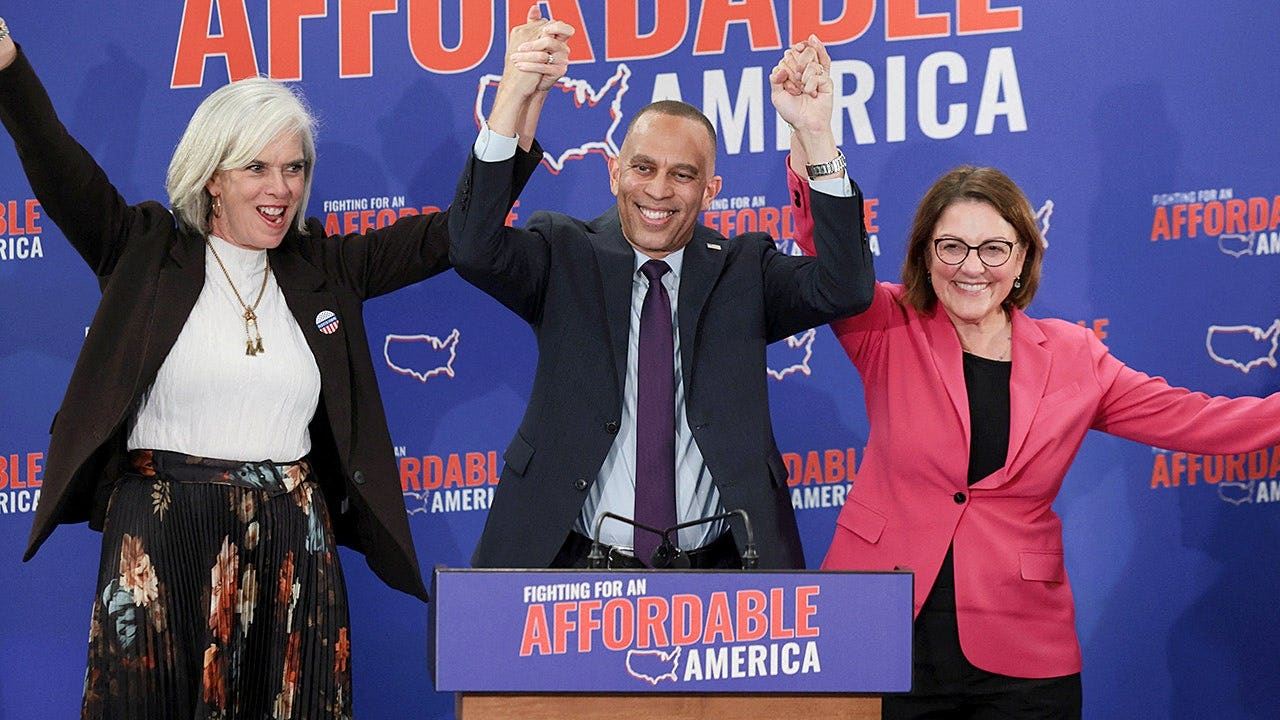
Democrats are fretting that the «Bloc» of progressives will lug House Democrats to the left.
But, there is strength in numbers.
Yours truly wanted to understand just how much sway progressives might have over the House Democratic Caucus. Look no further than Wednesday morning’s vote for speaker.
No one challenged House Minority Leader Hakeem Jeffries (D-N.Y.) to become speaker-designate in the internal caucus vote.
It’s about the math.
Jeffries marshaled 251 of the 262 secret ballots cast. The recorded vote revealed that despite all of their noise and clamor, extreme progressives really don’t have much juice compared to the rest of the Democratic Caucus. In fact, rank-and-file Democrats crushed their progressive colleagues.
Democrats did not vote by name. But numbers say a lot. While the recorded vote could have revealed potential craters of dissent among Democrats and questions about Jeffries, the tally registered the opposite. It showed just how diminutive the hard left is in the Democratic Caucus.
JEFFRIES BRUSHES OFF OPPOSITION FROM FAR-LEFT DEMS WHO VOTED NO: ‘WE’RE GOING TO WORK TOGETHER’
Do they exude an outsized political voice? Yes. But success in Congress is measured in numbers. And at least on Wednesday, the numbers signaled few results for the Bloc and a show of unity among Democrats.
«With the majority as big as it is, it’s going to be very hard for anybody to try and hold our group of hostage,» forecast Rep. Tom Suozzi (D-N.Y.).
«We’re going to work together to find the highest common denominator in order to make life better for the American people,» said Jeffries.
With more than 260 likely members in the Democratic Caucus, the Bloc wasn’t a factor on the first vote which mattered.
In January, Jeffries becomes the 57th person and the first Black speaker to grip the gavel. Members of the Congressional Black Caucus celebrated the ascendency of their colleague.
«I’ve been thinking about (the former Rep.) John Lewis (D-Ga.) a lot this week,» said former House Majority Whip and Rep. Jim Clyburn (D-S.C.), invoking the civil rights figure. «This is a very surreal moment for me.»
Clyburn spoke on behalf of Jeffries’ candidacy in the caucus, declaring that the path for the New York Democrat to the speakership makes him «feel vindicated.»
«As a Black woman from the South, having the next speaker of the House to be a Black man means a lot to me,» said Rep. Nikema Williams (D-Ga.).
Rep. Jonathan Jackson (D-Ill.) is the son of late Rev. Jesse Jackson. I asked what Jackson’s father would think of Jeffries rising to the speakership.
«He’d be more than happy to see America making progress. This is what the world looks like. This is what America looks like,» said Jackson.
WATCH: JEFFRIES FACES UNCERTAINTY FROM INCOMING DEMOCRATS AS HOUSE SPEAKER VOTE APPROACHES
But let’s filet the caucus vote for speaker to understand what unfolded with 11 Democrats who withheld their support from Jeffries.
Representative-elect Don Leonard (D-Ohio) is a populist in a district which President Trump won by 10 points in 2024. Leonard defeated Rep. Mike Carey (R-Ohio). The district Leonard flipped in central Ohio is a long way politically from left-leaning districts in New York City and New Jersey where renegade members of the Bloc refused to cast their ballots for Jeffries.
«What we need is a commitment from the speaker to get a 28th Amendment passed in 2028, to end Citizens United, end the corruption and call a vote on U.S. military aid to Israel,» said Leonard. «If he does those things, he’s got my vote.»
Seven of the progressives published a joint statement, demanding commitments from Jeffries to stop ICE and end «genocide in Gaza.»
The seven declared they saw «meaningful progress» in their talks with Jeffries. But since those negotiations continue, «our vote in caucus today was no» against Jeffries.
Despite repeated efforts, none of the seven spoke to Fox.
But what’s remarkable is that two of the seven withholding their support hail from Jeffries’ hometown, New York City. One is Representative-elect Claire Valdez (D-N.Y.) — who will represent a wide swath of Brooklyn and Queens. The other is Representative-elect Darializa Avila Chevalier (D-N.Y.). That district comprises parts of Upper Manhattan and The Bronx.
Your trusty reporter tried to understand what the dissent meant.
«How are their districts different than yours, being next door?» I asked Jeffries.
He deflected.
«The numbers speak for themselves,» said Jeffries.
I tried again.
«But those districts — are they that different from what you represent? And yet they weren’t willing to vote for you, Mr. speaker-designate?»
No response.
The lack of support for Jeffries from the dissidents annoyed Rep. Marilyn Strickland (D-Wash.).
«This idea that Hakeem Jeffries has not earned this is completely absurd. He has worked hard. He’s done everything he needed to do,» said Strickland.
Rep. Nydia Velázquez (D-N.Y.) is retiring at the end of this Congress. She opposed Valdez as her successor. She was bewildered that Valdez and Avila Chevalier wouldn’t support their hometown, Big Apple Congressman for speaker.
«My advice to them is take the time to know how this institution runs and what it takes to be successful here,» said an agitated Velázquez.
Rep. Joe Morelle (D-N.Y.) served with Jeffries in the state legislature. He argued that Valdez and Avila Chevalier made a mistake.
«They’re going to have to answer to their constituents,» said Morelle. «I think they should have been with Hakeem Jeffries who’s led us to this historic majority.»
And if you aren’t on the team in politics, the team also isn’t on you.
«It is a small group that marginalized themselves,» said Rep. Henry Cuellar (D-Texas) about the holdouts.
However, Representative-elect Dan Koh (D-Mass.) saw it differently.
«They all got elected with very different constituencies. A lot of them have different priorities,» said Koh. «There are things that their constituencies have demanded. And they want to make sure have the audience of the leader.»
Rep. Greg Landsman (D-Ohio) believed there was strategy in the dissent.
«They probably chose to do this because it’s a way of lifting up their issues,» said Landsman.
And keep in mind, this wasn’t the actual vote for speaker. That comes on the floor in January. It’s a win-win for Jeffries and the holdouts if they forge an accord. He promises them certain votes. And they can then tout what they extracted from the next speaker.
This is politics.
But let’s put the 11 defections into context.
Democrats flipped the House in 2018. In the internal caucus election, former House Speaker Nancy Pelosi (D-Calif.) lost 32 votes. In the vote for speaker in January 2019, 12 Democrats voted for someone else. Three members voted present.
«Nancy Pelosi will be remembered,» said Rep. Jared Moskowitz (D-Fla.). «And the 30 people who voted against her will not be remembered.»
Jeffries will go down in the history books as the first Black speaker. The holdouts? They’re freshmen. As Moskowitz suggests, we’ll see if anyone recalls them in a few years.
politics, congress, house of representatives, the squad, democrats elections
NEWYou can now listen to Fox News articles!
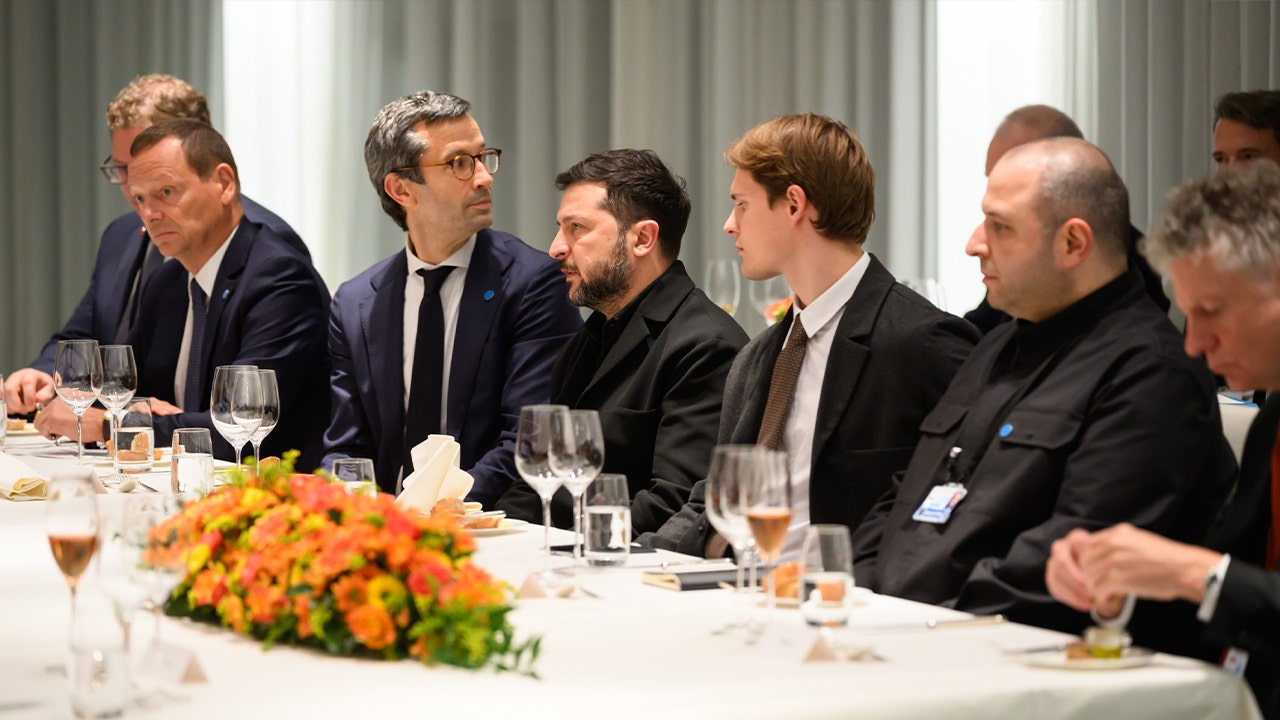
Ukrainian President Volodymyr Zelenskyy is calling on the U.S. to quickly organize talks with Russia with the full participation of European negotiators and advisors in what would mark a first-of-its-kind meeting.
He made the call Thursday after meeting with several U.S. and European leaders in Berlin at the Coalition of the Willing summit, which focused on security guarantees aimed at deterring future Russian aggression. During the meeting, U.S. special envoy Jared Kushner announced that Moscow and President Donald Trump had agreed to a multilateral negotiating format involving Europe.
«We are counting on the American side to help organize the first multilateral meeting at the team level, with full European participation, as soon as possible,» Zelenskyy said.
The push signals an effort to prevent Europe and Kyiv from being sidelined in U.S.-Russia talks.
KUSHNER, WITKOFF SET FOR KYIV TALKS AFTER PUTIN MEETING IN US PUSH FOR PEACE
Ukrainian President Volodymyr Zelenskyy on Thursday met with European leaders and U.S. envoys Jared Kushner and Steve Witkoff in Berlin to discuss security guarantees and efforts to end Russia’s war in Ukraine. (@ZelenskyyUa/X)
«From the very beginning, Ukraine has advocated for this approach — maximum coordination among us on everything concerning European and Ukrainian security and our future,» Zelenskyy said.
«We need to work quickly, and this is the only approach Ukraine is taking. The more actively the discussions move forward, the greater the chances of achieving real progress.»

British Prime Minister Andy Burnham, Ukrainian President Volodymyr Zelenskyy, German Chancellor Friedrich Merz, French President Emmanuel Macron and U.S. envoys Jared Kushner and Steve Witkoff attend a press conference during a Ukraine summit in Berlin Nov. 19, 2026. (Nadja Wohlleben/Getty Images)
According to Kushner, Russia agreed to the expanded negotiating format, including a recent breakthrough on prisoner exchanges.
«Russia has agreed to engage in the multilateral format with the Europeans. Part of that was us explaining to the Russians that we do believe that Russia having Europe at the table will be essential to ending this war in a just and long-term, durable way,» Kushner said.
«There’s going to be thousands of prisoners of war who will be going home to their families in the next weeks, which will be, obviously, a great gesture and a great relief for people.»
FRENCH TROOPS SECRETLY DEPLOYED INSIDE UKRAINE AS EX-NATO CHIEF PRAISES MACRON’S ‘GUTS’

Jared Kushner said Russia has agreed to multilateral Ukraine war talks involving Europe. (@ZelenskyyUa/X)
He added that President Donald Trump will not impose a unilateral deal but will work with allies to finalize postwar security guarantees.
«President Trump wants to make a deal with Europe by his side. He’s not looking to impose anything unilaterally,» Kushner said.
«Our goal is really to end this war and to really help build a durable peace. We are very committed. President Trump will do whatever it takes to do that.»
ukraine, wars, conflicts, russia, donald trump, the european union

Nuevo récord de exportaciones llegó justo para el Gobierno, en plena tensión con el dólar

Crece el rechazo a la inteligencia artificial en las universidades de Estados Unidos: los argumentos de estudiantes y profesores

Con un beneficio al kirchnerismo, Villarruel designó a los senadores para el Consejo de la Magistratura – Nexofin

La final del Mundial 2030, en juego: Marruecos se prepara para el examen de la FIFA

Di Tullio apuntó contra Bullrich: “Hay que ser cobarde y miserable para reprimir a personas con discapacidad”

Hakeem Jeffries wins overwhelming Speaker-designate vote as progressives’ revolt falls flat

Milei dijo que el riesgo país sube por el miedo a "Orcolandia" y afirmó: "Los argentinos no van a votar hacia el pasado"

Encontraron muerto a un trabajador en el Observatorio de La Plata

Se agudiza la suba de tasas y se complica la economía mundial

Feroz escándalo con Wanda Nara en su interminable pelea con la China Suárez: «Ya saben cómo se hizo famosa, te desnudabas en…»

 POLITICA3 días ago
Milei dijo que el riesgo país sube por el miedo a "Orcolandia" y afirmó: "Los argentinos no van a votar hacia el pasado"
- POLITICA18 horas ago
Javier Milei y sus medidas, en vivo: “Hoy discutimos si crecemos un punto más o menos”, dijo el Presidente
- ECONOMIA3 días ago
De la Patagonia a San Pablo: empieza a tomar forma el proyecto de exportar gas de Vaca Muerta a Brasil