INTERNACIONAL
Haitian fraudster’s eye-popping taxpayer-backed drug scam puts Congress on the hunt


NEWYou can now listen to Fox News articles!
Members of Congress are calling for increased oversight and reform after a Haitian national in Florida was convicted in a healthcare fraud conspiracy that prosecutors said involved more than $58 million in false claims targeting Medicare, Medicaid and private insurers using a federal drug discount program.
Prosecutors accused Jean Jethro Alexandre and his co-conspirators in 2025 of recruiting fake patients and offering them financial kickbacks if they accepted fraudulent prescriptions — primarily for HIV and AIDS medication — written by nurse practitioners involved in the operation, according to court documents reviewed by Fox News Digital. Alexandre would then cash in on the scheme through insurance reimbursements for filling the fake prescriptions.
He used the proceeds from his scheme to bankroll a life of luxury, including a fleet of top-end cars, a mansion near Miami and a slate of investment properties.
The case is drawing renewed scrutiny to the 340B Drug Pricing Program, a decades-old federal initiative designed to help safety-net providers serve low-income patients that is increasingly being criticized by lawmakers and industry groups who say weak oversight has allowed bad actors to exploit the system. Advocates for reform may point to Alexandre’s case as evidence that the program is in need of tweaks to reduce the risk of fraud.
MULTIBILLION-DOLLAR HEALTHCARE FRAUD SCHEME INCLUDED GIVING PEOPLE ‘UNNECESSARY’ SKIN GRAFTS: DOJ
Alexandre’s South Florida Mansion (Google)
«The 340B program was created with good intentions to help vulnerable and underserved patients access care, but unfortunately, it has evolved into a massive, poorly supervised program with weak transparency and accountability safeguards,» Rep. Diana Harshbarger, herself a pharmacist, told Fox News Digital. «Cases like this demonstrate how the current structure can create opportunities for bad actors to exploit deeply discounted drugs, questionable contract pharmacy arrangements and opaque reimbursement practices for personal profit.»
«When there is limited federal oversight, little transparency into how 340B revenues are used, and enormous financial spreads between discounted acquisition costs and insurer reimbursements, it should not surprise anyone that fraudsters see the program as a target,» she said.
Alexandre used a nonprofit health clinic that he secretly co-owned to purchase drugs at a discounted rate using the federal 340B Drug Pricing Program and had the prescriptions filled by pharmacies, who provided Alexandre’s clinic with reimbursements paid by insurers, including Medicare and Medicaid. The arrangement allowed Alexandre and his colleagues to pocket the difference between what he was paid in reimbursements and what the drugs cost him through the discount program.
While this is a legitimate way for healthcare providers to generate revenue generally, according to the Government Accountability Office, Alexandre’s conduct was illegal because the underlying prescriptions were fake. Prosecutors allege, for instance, that in some cases the drugs were simply destroyed after being dispensed to fraudulent patients.

WOODSTOCK, ENGLAND – SEPTEMBER 01: A Bentley Flying Spur Hybrid is displayed during the Salon Prive 2023 at Blenheim Palace on September 01, 2023 in Woodstock, England. (Getty Images)
«Alexandre’s blatantly setting up a fraudulent medical clinic and disregarding important safety net programs, as well as finite taxpayer dollars, shows the need for the Committee to continue its important work in cracking down on harmful schemes like this one,» Rep. Morgan Griffith, R-Va., who sits on the health subcommittee of the powerful Energy and Commerce Committee, told Fox News Digital.
«Although I am supportive of the 340B Drug Pricing Program, this instance of fraud is yet another example of how the program has strayed far from its initial intent and is something my Health Subcommittee will continue to monitor closely,» the congressman added.
FBI LAUNCHES ‘MOST WANTED FRAUDSTERS’ LIST AS DOJ CHARGES OHIO DEFENDANTS IN $30M MEDICAID SCHEME FOR KIDS
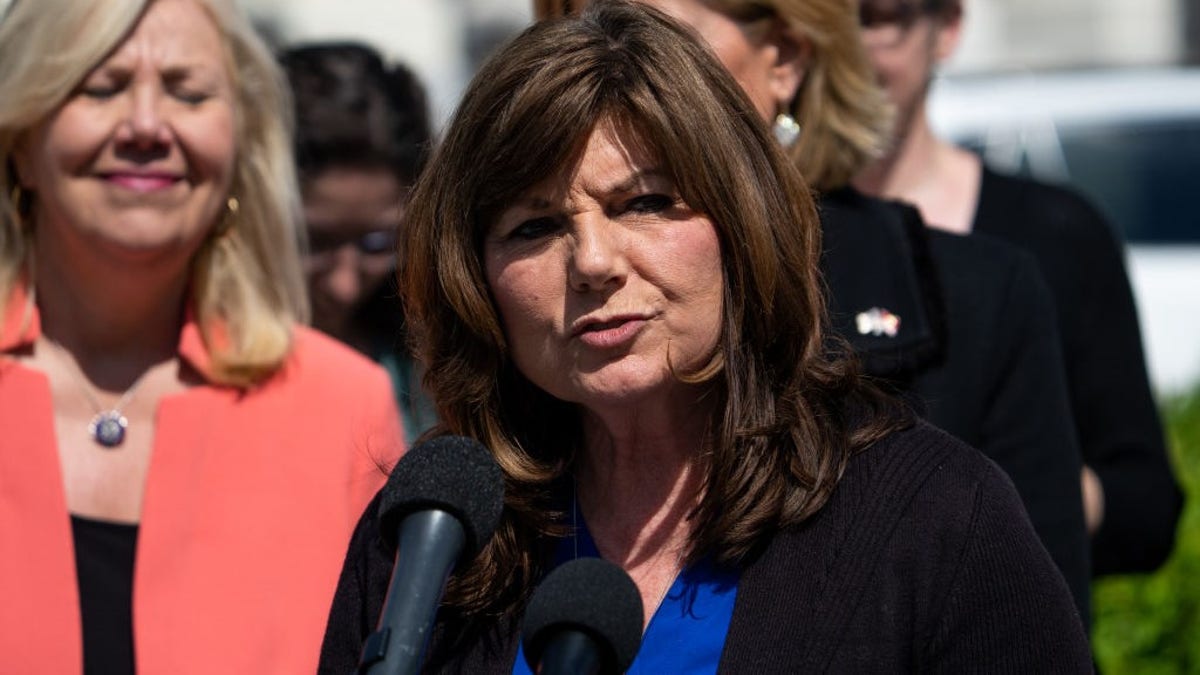
Rep. Diana Harshbarger, R-Tenn., speaks during the Republican Study Committee news conference to introduce a «Women’s Bill of Rights» outside the Capitol on May 19, 2022.
Prosecutors said Alexandre used proceeds from the healthcare fraud conspiracy for personal benefit and traced assets from the scheme to a luxury-car collection that included a 2024 Mercedes-Benz S-Class, a 2023 Bentley Flying Spur, a Mercedes-Benz G-Class AMG and a six-passenger golf cart-style vehicle.
Additionally, he purchased a $2.5 million 4,452-square-foot mansion on the southern coast of Florida equipped with a custom pool and spa.
The Trump administration has mounted a series of fraud investigations across federal programs, including Medicaid and Medicare, framing them as part of a broader push to root out waste, abuse and improper payments. That effort intensified in December 2025, shortly after Alexandre was initially indicted, signaling a more aggressive enforcement posture.
Alexandre, a native and citizen of Haiti, is to be handed over to ICE and processed for removal after serving his sentence of just under 10 years in prison. He will be barred from reentering the United States without written permission from the relevant authorities.
DR. OZ SAYS TAXPAYERS FOOTING $14 BILLION BILL FOR MEDICAID FRAUD WHILE ELIGIBLE PATIENTS STRUGGLE FOR CARE

Rep. Morgan Griffith, R-Va., listens during a House Rules Committee meeting on the One Big Beautiful Bill Act at the U.S. Capitol in Washington, D.C., on May 21, 2025. (Anna Moneymaker/Getty Images)
«Anyone who comes to the United States to steal from American taxpayers should be denaturalized and deported, which is why I introduced the Fraud Accountability Act earlier this year,» Sen. Marsha Blackburn told Fox News Digital. «We’re grateful President Trump is laser-focused on rooting out fraud across the federal government, including in the 340B Program. The Trump DOJ and HHS are working hand in hand to eliminate health care fraud and hold every fraudster accountable.»
CLICK HERE TO DOWNLOAD THE FOX NEWS APP
In addition to prison time, Alexandre is on the hook for paying roughly $14.3 million in restitution, per the terms of his plea agreement. Alexandre’s lawyer did not respond to a request for comment.
«Every dollar stolen from these programs is a dollar taken from families who need it most,» Sen. Bill Cassidy, R-La., told Fox News Digital. «The 340B Program was created to help patients access affordable health care, not enrich criminals and fraudsters. I am working to strengthen transparency and accountability in 340B to ensure the program lowers costs and improves care for American families.»
health care healthy living, corruption crime, hiv aids, illegal immigrants, drugs








INTERNACIONAL
Guerra en Oriente Medio: Estados Unidos e Irán ponen en pausa sus ataques por segundo día consecutivo

Estados Unidos pausó sus ataques contra Irán por segundo día consecutivo el domingo, y Teherán afirmó que también lo había hecho, mientras continuaban los esfuerzos para que ambos países regresen a negociaciones.
No estaba claro por qué Estados Unidos ha hecho una pausa después de atacar zonas costeras e infraestructura iraníes por casi dos semanas luego que Irán disparó contra barcos en el estrecho de Ormuz. El Pentágono no respondió a preguntas el domingo.
El presidente Donald Trump está “dando a las conversaciones algo de espacio. Les está dando un poco de margen”, dijo a Fox News Mike Waltz, el embajador estadounidense ante las Naciones Unidas. “Hemos tenido tanto a Omán como a Irán, y a varios de nuestros otros negociadores, involucrados a todos los niveles, desde los niveles más altos hasta el nivel técnico durante las últimas semanas, y particularmente en los últimos días”.
Como Estados Unidos ha detenido los ataques durante las últimas dos noches, Irán también lo ha hecho, dijo el domingo a la televisión estatal iraní el portavoz del ejército. En los últimos días, Teherán ha contraatacado a países de la región que albergan fuerzas norteamericanas y mató al menos a tres personas en una base en Jordania.
El periodo de 60 días que comenzó cuando ambos países firmaron el acuerdo provisional a mediados de junio ya está bien avanzado en su segunda mitad, y los principales asuntos que debían negociarse —en particular el programa nuclear iraní — siguen apartados mientras los mediadores intentan mantener a ambas partes dialogando.
Un funcionario regional involucrado en los esfuerzos de mediación señaló que la diplomacia estaba en marcha y que una pausa en los ataques es una “señal positiva que ayuda a los esfuerzos para desescalar”.
El funcionario indicó que ambos países quieren volver al acuerdo provisional de alto el fuego y que el arreglo que se negocia se centra en que Irán gestione el tránsito de embarcaciones por el estrecho de Ormuz con menos restricciones para los barcos. El funcionario no estaba autorizado a hablar del asunto y habló bajo condición de anonimato.
Persistían las preocupaciones sobre el transporte marítimo en el estrecho y ahora también en otra vía acuática crucial de la región, el estrecho de Bab al-Mandeb hacia el mar Rojo. Los rebeldes hutíes de Yemen, respaldados por Irán, amenazaron la semana pasada con un bloqueo del transporte marítimo saudí allí.
Los suministros energéticos y la economía mundial siguen en la balanza ya que los precios de la gasolina han vuelto a subir.
Irán reveló el domingo que seguía conversando con Omán sobre el paso seguro de los barcos por el estrecho de Ormuz, que se encuentra entre ambos países. El portavoz del Ministerio de Exteriores iraní, Esmail Baghaei, afirmó que las conversaciones habían avanzado y continuaban.
Añadió que el estatus del estrecho permanecía sin cambios. Teherán ha sostenido que el acuerdo provisional con Estados Unidos le permite, por ahora, gestionar el transporte marítimo en esa vía, y ha objetado los esfuerzos estadounidenses por respaldar una ruta a través del estrecho que pase cerca de Omán en su lugar. Antes de la guerra, el estrecho era considerado una vía acuática internacional.
El ejército estadounidense declaró el sábado que su bloqueo naval contra Irán continuaba, con una docena de barcos comerciales redirigidos, dos inutilizados y dos abordados. Las fuerzas estadounidenses “siguen altamente vigilantes, concentradas, letales y listas”, añadió.
Netanyahu dice que respalda “plenamente” los esfuerzos de Trump Mientras tanto, el primer ministro israelí Benjamin Netanyahu planea viajar a Estados Unidos y reunirse con Trump en Washington el martes, informó su oficina. La última vez que se reunieron en Washington fue en febrero, semanas antes de que lanzaran la guerra contra Irán que mató a altos dirigentes, incluido el líder supremo, el ayatolá Ali Jamenei.
El grupo libanés Hezbollah, respaldado por Irán, disparó contra Israel dos días después de que comenzara la guerra, e Israel respondió con ataques aéreos y fuerzas terrestres en el sur del Líbano. Desde entonces, Estados Unidos ha respaldado conversaciones directas históricas entre Líbano e Israel para intentar calmar ese frente y encontrar una manera de desarmar a Hezbollah.
Netanyahu dijo el domingo a Fox News que respalda “plenamente” los esfuerzos de Trump para debilitar a Irán y presionarlo para que ponga fin a su programa nuclear, y añadió: “Si puede hacerlo sin volver a un combate militar intenso, está bien. ¿Por qué no?”
El primer ministro indicó que no presentará nueva información a “nuestro buen amigo” Trump y que, en cambio, escuchará “lo que tiene en mente, porque creo que en muchos sentidos es su decisión”.
Pero Netanyahu advirtió que si Irán vuelve a atacar a Israel, de forma directa o mediante aliados armados, “cometerá un terrible error”.
NEWYou can now listen to Fox News articles!
President Donald Trump’s address to the nation alleging Chinese interference in American elections last week has renewed interest in Beijing’s broader influence efforts in the United States.
Federal records show that a number of Chinese government entities, state-controlled media organizations and China-based companies have registered under the Foreign Agents Registration Act (FARA) to disclose operations with political implications carried out in the United States on their behalf. Lobbying Disclosure Act filings submitted to Congress by other Chinese entities, meanwhile, cover lobbying activity by companies pursuing what they say are purely commercial interests.
Those filings provide a partial public record of how Chinese interests seek to shape U.S. policy, public opinion and commercial decisions, though they do not establish the full scope of Beijing’s activity or prove Trump’s election claims.
Private entities based in China and Hong Kong, many of which have significant ties to the Chinese Communist Party, spend significant amounts of money attempting to influence America. The DOJ recorded over $20 million in FARA expenditures from these entities in 2025, with millions of dollars more being recorded in lobbying disclosures filed with Congress. Chinese government sources, over the same period, spent close to $80 million on FARA expenses.
CHINA DISMISSES TRUMP ELECTION INTERFERENCE ACCUSATIONS AS ‘ENTIRELY FABRICATED,’ THREATENS COUNTERMEASURES
Chinese President Xi Jinping speaks during an international business meeting at The Great Hall Of The People on March 28, 2025 in Beijing, China. (Ken Ishii – Pool/Getty Images)
Not every Chinese influence operation happens on the books, however.
Campus groups that the State Department has linked to the Chinese government, such as the Chinese Students and Scholars Association, do not file paperwork with the DOJ, leaving Americans in the dark regarding their operations. Additionally, any groups that fall under China’s United Front Work Department — a global network of CCP loyalists that work to advance Beijing’s interests abroad — don’t file disclosures owing to their clandestine nature.
China hawks have also argued that some powerful domestic nonprofits have significant links to the CCP, giving it yet another mechanism it can use to influence the United States.
«China is committed to promoting mutual understanding and friendship between the Chinese and American peoples and advancing exchanges and cooperation between the two countries in areas including trade, education and culture,» a spokesperson for the Chinese embassy told Fox News Digital. «China’s international exchanges and cooperation are open and transparent, with the aim of enhancing mutual understanding and achieving mutual benefit.»
«Portraying China’s normal international exchanges and cooperation as so-called ‘influence operations’ distorts facts and stigmatizes legitimate engagement,» they added.
While the true extent of China’s influence in the United States is unknown, the evidence that is available to the public paints a picture of a broad, multi-front effort to shape how Americans live and think.
‘Propaganda’
Among China’s most prevalent levers of influence is its state-run media apparatus, which academic sources and the federal government often describe as a «propaganda» operation.
Globally, the State Department estimated in 2023 that China spends «billions of dollars annually on foreign information manipulation efforts.»
Five Chinese media operations are registered as active foreign agents in the United States, DOJ records show. CCTV, Xinhua News and China Daily each have direct affiliations with the CCP, whereas Sing Tao News Corporation is privately owned but consistently takes a pro-Beijing stance in its coverage.
CCTV, which is operated by the Chinese government, runs CGTN America, China’s flagship English-language media operation. DOJ filings reviewed by Fox News Digital show that CGTN received $66.8 million in funding from CCTV between February and November 2025 — a significant chunk of China’s overall foreign influence budget.
FIRST ON FOX: POWERFUL HOUSE WAYS AND MEANS CHAIR THROWS HAMMER DOWN ON ‘FOREIGN-ALIGNED INFLUENCE NETWORK’
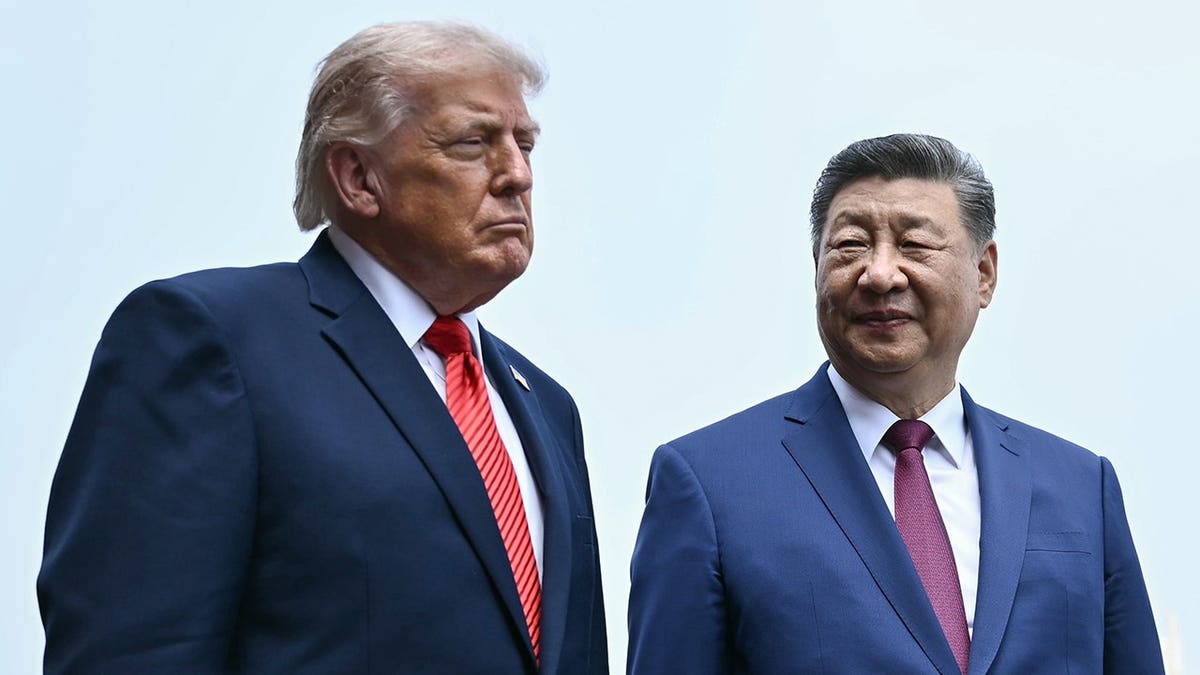
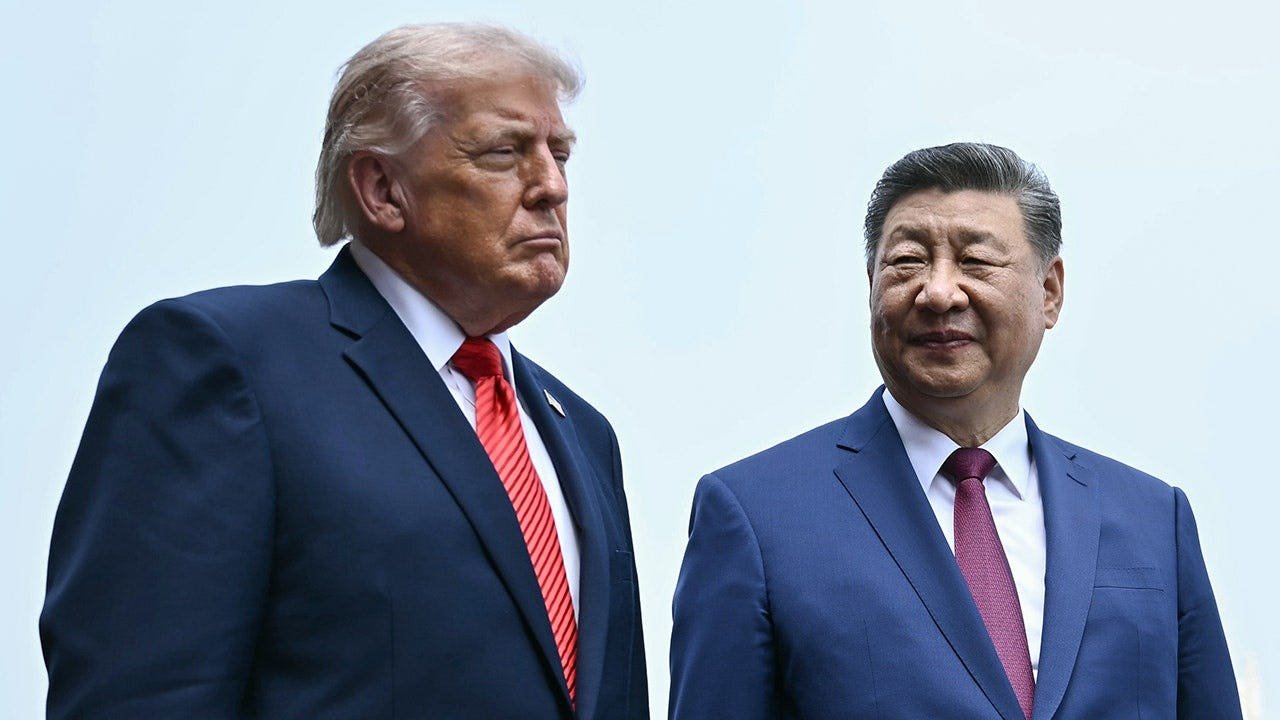
China’s President Xi Jinping (R) and US President Donald Trump visit the Temple of Heaven on May 14, 2026 in Beijing, China. (Brendan Smialowski – Pool/Getty Images)
In 2025, CGTN amplified rhetoric similar to that pushed by Democratic politicians.
The network pushed left-of-center rhetoric on issues such as climate change, racial tensions, immigration and the war in Gaza while criticizing Trump’s tariffs as well as his efforts to make Washington, D.C., safer through law enforcement and National Guard deployments. CGTN has also been eager to praise California Gov. Gavin Newsom, seen by many as one of Trump’s chief political rivals.
A 2022 academic paper published by researchers at King’s College in London argued that, despite appearances, CGTN doesn’t aim to influence voter behavior or have a strict ideological slant but rather seeks to portray America as «poorly governed, plutocratic, racist and a destabilizing international influence» in contrast to a China that is «well governed, benign, stable and a rising superpower.»
All the Chinese media operations designated as foreign agents tend to publish similar content. An appendix in one of Xinhua’s filings reveals that the federal government required it to register under FARA because the DOJ believes that it «intends to influence the American public or policy makers on relevant topics such as U.S. policy or foreign relations.»
«Chinese media outlets conduct news reporting and information dissemination in accordance with the law. Labeling outlets such as Xinhua, CGTN and China Daily as ‘propaganda tools’ or ‘foreign influence instruments’ reflects ideological bias and a Cold War mentality, rather than an objective view of international media exchanges,» the embassy spokesperson told Fox News Digital.
The China lobby
Representing the interests of Chinese companies, even those that the U.S. government warns are working on behalf of the Chinese military, is big business for American lobbyists.
Lobbying records show that dozens of American lobbyists have signed new contracts with dozens of companies partially or fully owned by Chinese entities since 2025. FARA records, meanwhile, reveal that seven Chinese companies — Huawei, BOE Technology America, Yangtze Memory Technologies, XH Smart Tech China, Hikvision, Futurewei Technologies and JinkoSolar — maintain active foreign agent registrations in the United States.
A Chinese company advocating for its own commercial interests usually files lobbying disclosures with Congress under the Lobbying Disclosure Act, whereas an organization carrying out what the federal government determines to be political, governmental or broader public-influence work for a foreign principal typically reports to the DOJ under FARA.
LAWMAKERS RAISE ALARM OVER NEVILLE ROY SINGHAM’S $278M NETWORK SPREADING CCP PROPAGANDA IN THE U.S.
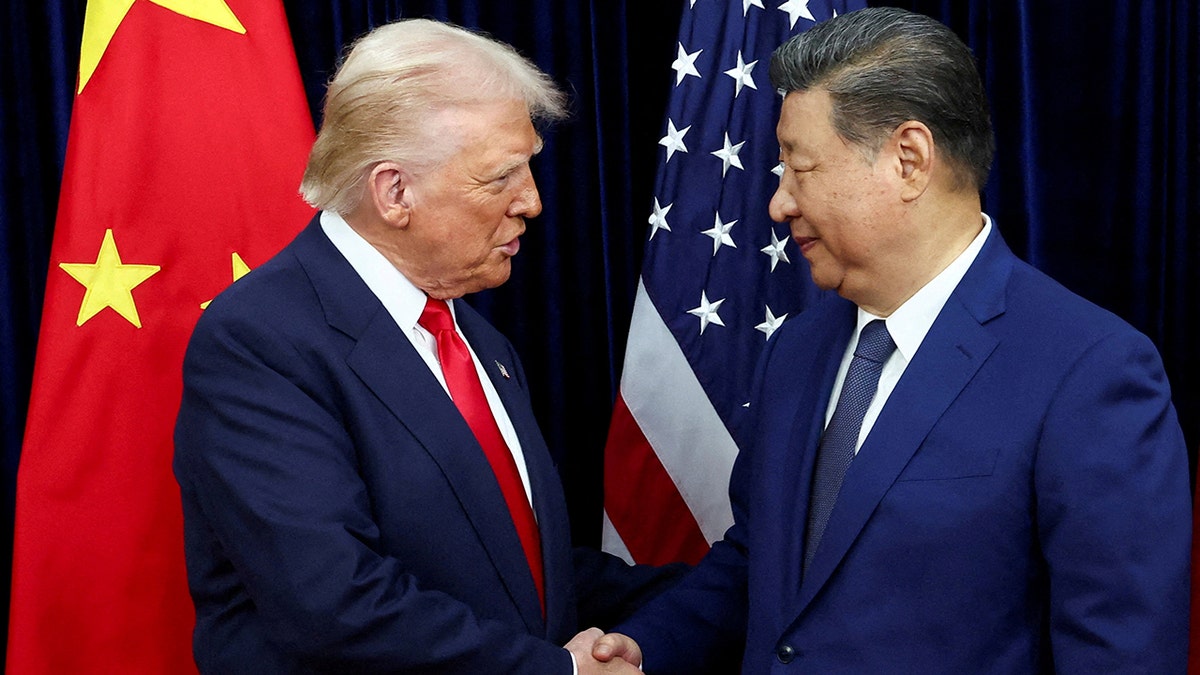
President Donald Trump shakes hands with Chinese President Xi Jinping as they hold a bilateral meeting at Gimhae International Airport, on the sidelines of the Asia-Pacific Economic Cooperation (APEC) summit, in Busan, South Korea, on Oct. 30, 2025. (Reuters/Evelyn Hockstein)
Hikvision, a partially state-owned video surveillance equipment manufacturer based in China, for instance, reports to the DOJ.
The company faces procurement, export and investment sanctions imposed by the United States government following allegations that it aided the CCP in its repression of Uyghur Muslims. It has paid American lobbyists millions to plead its case to the United States government that those restrictions should be dropped.
Since Hikvision is bound by the disclosure requirements of FARA, the public has access to the materials distributed to policymakers on its behalf, as well as information about specific policymakers they contacted, such as a slideshow presentation its lobbyists gave to Pentagon and Department of Commerce officials in October 2024.
Most of the lobbying services purchased by Chinese companies occur under the LDA, which only requires principals to disclose who they’re paying, how much they’re paying and a very basic description of what issues they’re lobbying on. Among the firms retaining American lobbyists are controversial Chinese-owned agriculture companies, major competitors with American industries, state-owned enterprises and firms that the Department of War claims are working on behalf of China’s People’s Liberation Army.
Tencent, a technology conglomerate that the Pentagon recently added to its list of «Chinese military companies,» has spent well over $10 million on lobbying expenses since 2025.
«As the Company is neither a Chinese military company nor a military-civil fusion contributor to the Chinese defense industrial base, it believes that its inclusion in the [Chinese military company] List is a mistake,» Tencent said in a statement after the Pentagon designated it as such. «The Company intends to initiate a Reconsideration Process to correct this mistake. During the process, it will engage in discussions with the U.S. Department of Defense to resolve any misunderstanding, and if necessary, will undertake legal proceedings to remove the Company from the [Chinese military company] List.»
A handful of Chinese companies, including some that have appeared on the Pentagon’s list of Chinese military companies, have even lobbied on issues related to American national security.
Some, such as Sen. Tom Cotton, have accused Chinese entities of abusing the LDA to avoid filing under FARA and complying with its stricter disclosure requirements, which would provide Americans with a fuller accounting of their activities.
Trade, tourism and development?
China, like many other countries, spends considerable funds on convincing Americans to trade with, travel to or invest in it.
The China Council for the Promotion of International Trade, for instance, receives hundreds of thousands of dollars from Beijing every six months to travel across the country to act as «the liaison between business, chamber of commerce, trade associations and organizations in China and in the United States to facilitate bilateral trade, investment and economic cooperation,» according to its FARA disclosures.
While CCPIT’s operations appear anodyne, China hawks argue that they may serve a dual purpose.
The Jamestown Foundation, for instance, asserts that CCPIT «has long been identified by the U.S. intelligence community as a united front entity supporting PRC diplomatic goals,» citing a declassified CIA memo from 1957. Sinopis, a research project associated with a Czech university, similarly argues that China uses CCPIT to forge relationships with foreign officials and business groups to ultimately advance Chinese economic and geopolitical objectives.
«Allegations concerning organizations allegedly linked to the United Front Work Department lack factual basis,» the embassy spokesperson told Fox News Digital. «In addition, the CCPIT has long been committed to promoting trade and investment cooperation between China and countries around the world and facilitating economic exchanges. Linking normal trade promotion activities to so-called geopolitical objectives is groundless.»
CLICK HERE TO DOWNLOAD THE FOX NEWS APP
Also paid by Beijing to operate in the United States are various offices encouraging Americans to visit China and soliciting investments for ventures in it.
Despite the harsh accusations levied against China, Trump has invited Chinese President Xi Jinping to visit the United States to discuss artificial intelligence and bilateral relations in September.
lobbying, national security, china, foreign affairs, politics
INTERNACIONAL
Capturan a mexicano acusado de retirar más de 7 mil dólares en cajeros automáticos en Honduras
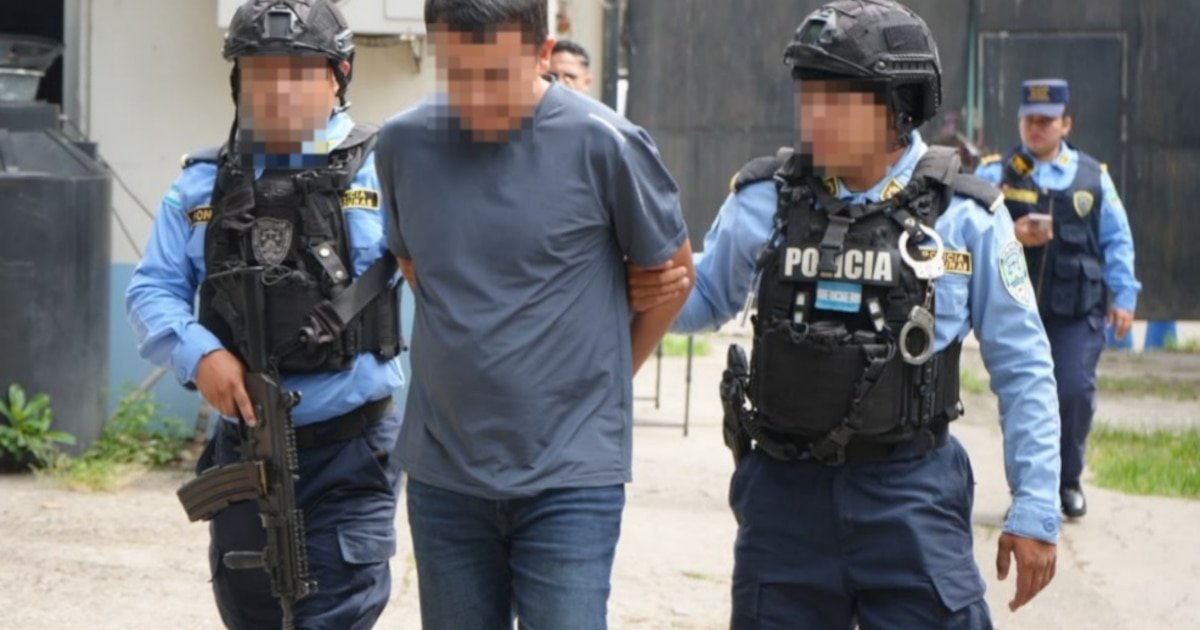
Las autoridades hondureñas capturaron a un ciudadano mexicano acusado de acceder de forma ilícita a sistemas de cajeros automáticos en San Pedro Sula, Honduras para retirar efectivo sin usar tarjetas bancarias. La Policía Nacional informó que el arresto se produjo tras alertas de una entidad bancaria sobre transacciones irregulares.
El arresto se realizó en las cercanías de un cajero automático ubicado sobre el bulevar del Norte, en el sector Los Álamos de San Pedro Sula, donde el sospechoso presuntamente intentaba continuar con la misma modalidad utilizada horas antes en otra agencia bancaria de la ciudad.
La investigación comenzó tras una serie de retiros irregulares. Según la Policía Nacional, la institución financiera detectó una secuencia de transacciones anómalas que comprometían el funcionamiento de varios cajeros automáticos.
Las alertas internas llevaron al banco a notificar de inmediato a las autoridades a través del Sistema Nacional de Emergencias 911 y se activó un operativo conjunto entre unidades de investigación e inteligencia policial.
La operación estuvo a cargo de agentes de la Dirección Policial de Investigaciones (DPI), en coordinación con la Oficina Central Nacional (OCN) Interpol Honduras, los agentes ubicaron al sospechoso y lo capturaron cuando permanecía cerca de uno de los cajeros donde presuntamente realizaba nuevas operaciones irregulares.

De acuerdo con las investigaciones preliminares, el detenido tiene 25 años, es originario de Culiacán, México, y reside en el barrio El Centro de San Pedro Sula.
Las pesquisas indican que el sospechoso presuntamente utilizaba un método basado en la manipulación de los sistemas informáticos de los cajeros automáticos.
Según la hipótesis de los investigadores, quienes ejecutaban este procedimiento lograban obtener acceso previo al sistema interno del cajero automático y luego utilizaban un algoritmo instalado en un teléfono celular para generar códigos que autorizaban retiros de efectivo sin necesidad de insertar una tarjeta bancaria.
Ese mecanismo permitía realizar extracciones de dinero mediante vulnerabilidades en los sistemas tecnológicos de los equipos, sin recurrir a métodos tradicionales de clonación de tarjetas o robo de información de clientes.
Las autoridades continúan analizando la forma en que habría sido comprometido el sistema y si existen antecedentes de operaciones similares en otras ciudades del país.
Las investigaciones establecen que el primer retiro irregular fue detectado en un cajero automático ubicado en una agencia bancaria de la 7 calle de San Pedro Sula.
Tras identificar las operaciones sospechosas, el banco reforzó el monitoreo de sus equipos y pocas horas después emitió una segunda alerta desde un cajero automático ubicado en la agencia de Los Álamos.
El sistema detectó nuevamente movimientos con características similares y permitió establecer que una persona con la misma descripción física continuaba realizando retiros mediante el mismo procedimiento. Esa información permitió a las unidades policiales desplegar un operativo que culminó con la captura del ciudadano mexicano antes de abandonar el sector.

Durante la inspección posterior al arresto, los agentes encontraron en poder del sospechoso 190.000 lempiras en efectivo, equivalentes a aproximadamente más de 7 mil dólares, distribuidos en billetes de 500 lempiras.
Además, las autoridades decomisaron un teléfono celular marca que será sometido a análisis forenses para determinar si fue utilizado como herramienta para ejecutar el presunto acceso ilícito al sistema informático de los cajeros automáticos.
La Policía Nacional informó que las investigaciones permanecen abiertas porque existen indicios de que este mismo método habría sido utilizado en otros cajeros automáticos de San Pedro Sula.
Las diligencias buscan determinar el monto total del perjuicio ocasionado a la institución financiera, establecer si hubo otras entidades afectadas e identificar a posibles cómplices que habrían participado en la planificación o ejecución de las operaciones.
Las autoridades tampoco descartan que el sospechoso forme parte de una organización dedicada a cometer delitos informáticos en distintos países de la región, por lo que mantienen coordinación con Interpol y otras instancias de investigación para verificar antecedentes y posibles vínculos internacionales.
Tras ser informado sobre los derechos que le asisten conforme a la legislación hondureña, el ciudadano mexicano fue puesto a disposición del Ministerio Público.
La Fiscalía continuará el proceso judicial por los presuntos delitos de estafa y acceso no autorizado a sistemas informáticos, mientras avanzan las investigaciones para determinar si enfrentará nuevas acusaciones relacionadas con otros retiros irregulares detectados en la ciudad.
Corresponsal:Desde Tegucigalpa, Honduras

El gobierno de Brasil convocó de urgencia al embajador argentino para que dé explicaciones por los dichos de Milei

Video: el golazo de un ex River en el Brasileirao

Leandro Santoro y Pilar Ramírez se cruzaron en redes sociales por la agenda legislativa del gobierno de Milei

Guerra en Oriente Medio: Estados Unidos e Irán ponen en pausa sus ataques por segundo día consecutivo

China’s influence machine: Federal records expose Beijing’s push to sway America

Volvió a caer la venta de ropa: se redujo 6,9% y sólo una de cada seis empresas espera una mejora

Jorge Berredo, general retirado de las FFAA, asumió como Secretario de Seguridad en San Isidro

Sin la anestesia mundialista, aflora la crisis del conurbano y Milei necesita reconectar con lo popular

Senado: Bullrich y Sturzenegger cierran filas para tratar de avanzar con la extranjerización de tierras
Marc Stanley destacó el potencial de Vaca Muerta para “estabilizar la economía” y evitó hablar de política interna

 POLITICA3 días ago
Mientras espera la vuelta de Macri, el PRO ya activó contactos con LLA: cómo sería la estrategia electoral en la Provincia
- POLITICA3 días ago
Río Negro: Alberto Weretilneck anunció un proyecto para eximir de Ingresos Brutos a los turistas extranjeros
- INTERNACIONAL3 días ago
Dem’s stunning ideal standard for immigration detention conditions resurfaces amid Texas senate bid