INTERNACIONAL
Houthis emerge as global threat beyond Iran control amid Saudi strikes, former envoy warns


NEWYou can now listen to Fox News articles!
The Houthis are increasingly operating independently of Tehran, posing a «clear and very present danger» on the international stage as the terror group rearms and sharpens its strike capabilities, a former U.S. envoy warned Thursday.
The warning came amid deadly missile and drone attacks on Saudi Arabia in recent days and growing threats to global shipping routes and critical Middle East infrastructure in the run-up.
Turki al-Maliki, spokesperson for the Saudi-led coalition in Yemen, also confirmed Thursday that Houthi attacks on King Khalid International Airport in Riyadh had killed 17 and injured 333 others from Oct. 7-11.
Speaking at a news conference in Riyadh, al-Maliki said the Oct. 10 attack involved 10 drones, missiles and other projectiles.
«King Khalid International Airport has been subjected to 20 attacks since (Oct. 1),» he noted.
Tim Lenderking, who served as U.S. special envoy for Yemen from 2021 to 2025 and was posted to Saudi Arabia from 2013 to 2016, said Saudi officials had warned more than a decade ago that the Houthis would become a major threat, a prediction he says has now materialized.
SAUDI FOREIGN MINISTER WARNS HOUTHI THREAT GOES GLOBAL AS TRUMP HOLDS FIRE
The Houthis are increasingly operating independently of Tehran, posing a «clear and very present danger» on the international stage as the terror group rearms and sharpens its strike capabilities, a former U.S. envoy warned. (Handout from Houthi Media Center via Getty Images)
«The Saudis were very clear to our leaders that they viewed the Houthis as a major threat,» Lenderking said of his time in the kingdom a decade ago.
At the time, he said, the group was «quietly building up their capability, burnishing their narrative of why they sought to lead Yemen as a messianic group, as a group from northern Yemen, with an agenda, with a mission.»
The Houthis had emerged as a religious and political movement in Yemen in the 1990s, but their ties to Iran developed into a military partnership after 2014, when Tehran expanded its assistance and training during Yemen’s civil war.
«The Houthis don’t really need the Iranians anymore,» Lenderking, a former acting assistant secretary for Near Eastern affairs at the U.S. State Department, continued, adding it was still «a very important relationship that «enabled the Houthis to become the powerful force that they are.»
Lenderking, now a distinguished diplomatic fellow at the Middle East Institute (MEI), said, over time, the Houthis had developed their own «homegrown indigenous capability» as they capitalized on any disunity across the Gulf region.
Saturday’s missile and drone attack on King Khalid International Airport in Riyadh raised concerns that President Donald Trump could be drawn into a broader regional conflict as Saudi Arabia seeks U.S. assistance.
Asked whether the U.S. would defend Saudi Arabia against further attacks, Trump said, «You’ll find out soon.»
NEW RISK FOR US CONSUMERS AS IRAN-BACKED ATTACKS THREATEN A SECOND MAJOR OIL CHOKEPOINT
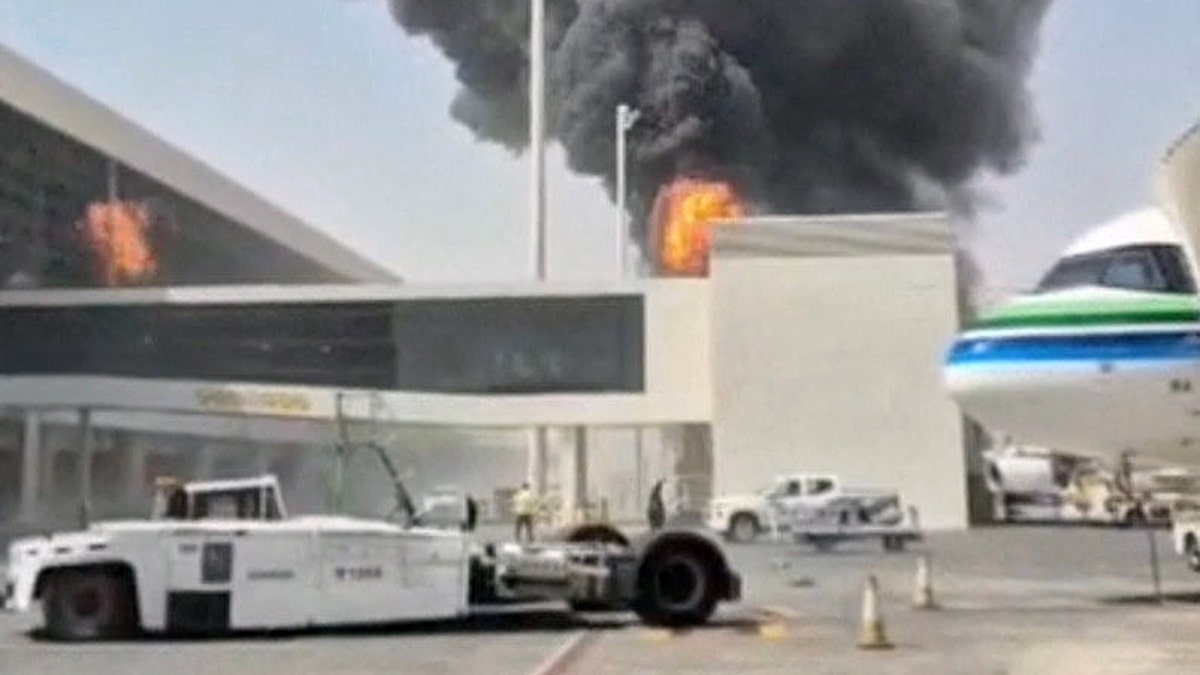
Smoke and flames rise from King Khalid International Airport after Yemen’s Iran-backed Houthis said they attacked the airport in Riyadh, Saudi Arabia, Oct. 8, 2026. (Reuters)
Speaking at an MEI briefing, Lenderking said the Houthis’ sophisticated weapons and targeting capabilities have transformed the group from a regional insurgency into an international security threat.
«They have the capability to hit around the region, including up into the northern reaches of the Red Sea. So, this is a regional problem, and given the fact that the Houthis control the west coast of Yemen,» Lenderking said.
«It’s an international problem now.»
Lenderking cited the precision of the Riyadh airport attack as evidence of the Houthis’ growing capabilities compared with earlier strikes during the Gaza conflict.
«They can hit things better. Now, they are hitting Terminal Four of Riyadh Airport, very specifically. It’s a clear and very present danger,» he said.
The Houthis reportedly launched multiple drones followed by cruise and ballistic missiles that traveled more than 620 miles to Riyadh, prompting an investigation into possible Saudi air defense failures, according to The Associated Press, citing regional officials.
Saudi forces intercepted two more ballistic missiles targeting Riyadh on Monday. On Tuesday, a Houthi strike caused damage to Aramco’s headquarters in Dhahran, sparking a fire that spread across several floors, Reuters reported.
Lenderking said the Houthis have built extensive weapons supply chains, smuggling networks and domestic financing operations that allow them to sustain attacks without relying solely on Tehran.
HOUTHIS ENTER US ‘KILL BOX’ AFTER SEIZING RED SEA ‘CORK,’ FORMER PENTAGON OFFICIAL WARNS

Houthi supporters demonstrate in solidarity with Iran, amid a two-week ceasefire between U.S. and Iran, in Sanaa, Yemen, April 10, 2026. (Khaled Abdullah/Reuters)
«They get a lot of supplies off the open market through the internet, through commercial exchanges. They have a very well entrenched smuggling network, from big boats onto small boats, onto tiny boats, on the pack animals, on people’s backs.
«They are able to move things undetected through government terrain, even through various borders and with a lot of wide open space there. They are constantly moving, building, resupplying, restocking, innovating.»
The group’s self-sufficiency also extends to financing. Lenderking said the Houthis generate revenue through black-market oil sales, taxation and extortion while also forcing families to provide recruits, allowing the group to continue fighting even if Iranian assistance is cut off.
«They have had support from Iran over the years, so they have money in the bank from that,» Lenderking said.
«They relied on sales of black market oil in the past. They extort Yemeni transport companies, businesses. They tax people in areas that they control. They force many families to offer up a son to fight on the front lines.»
The Houthis’ expanding arsenal has raised concerns about potential Chinese involvement in their weapons supply networks.
OIL SQUEEZE TIGHTENS AS IRAN-BACKED ATTACKS CRIPPLE HORMUZ ESCAPE ROUTES

Tim Lenderking, who served as U.S. special envoy for Yemen from 2021 to 2025 and was posted to Saudi Arabia from 2013 to 2016, said Saudi officials had warned more than a decade ago that the Houthis would become a major threat, a prediction he says has now materialized. (Houthi Media Center via Getty Images)
Yemen’s government has accused the rebels of seeking Chinese components for medium-range ballistic missiles, raising concerns about the group’s access to advanced military technology.
«There is a Chinese connection here that’s very detrimental,» Lenderking warned, adding that front companies have helped the group obtain weapons through commercial channels.
Lenderking warned that the Houthis could also target Saudi energy facilities, pipelines and desalination plants, infrastructure critical to the kingdom’s economy and water supply.
«The Houthis have hit pipelines,» he said. «They have diesel plants and other energy infrastructure in their sights.»
Attacks on such facilities could disrupt global energy markets, maritime commerce and regional stability.
The Houthis also control Yemen’s western coastline along the Red Sea, a vital shipping corridor connecting Europe and Asia.
With the rebels now capable of striking targets hundreds of miles away, Lenderking warned that the threat extends far beyond Yemen’s borders.
«One blast at Riyadh Airport is a huge statement,» the expert said.
«That’s why I come back to the fact that this is an international conflict,» he said, adding that «immediate action is required.»
world, foreign policy, national security, middle east foreign policy, middle east, saudi arabia, iran











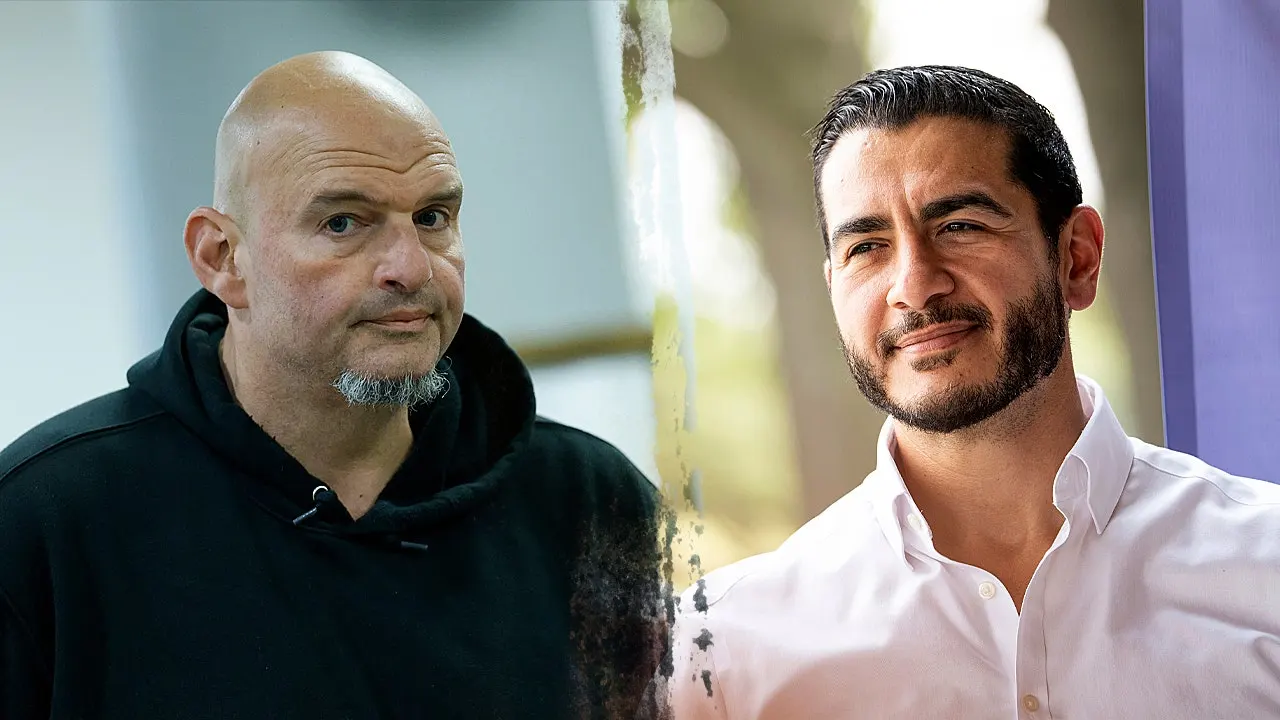
Senate Minority Leader Chuck Schumer called for Democratic Party unity Wednesday following the midterm elections, but a bitter feud between Sen. John Fetterman and Sen.-elect Abdul El-Sayed could complicate efforts to unite the caucus in the 120th Congress.
The two Democrats traded personal insults throughout the 2026 election cycle, clashing over U.S. military assistance to Israel, Medicare for All and the ideological direction of the Democratic Party.
«You put one ogre on a pike, and then everyone else gets the message,» El-Sayed, D-Mich., reportedly told progressive donors during a private Zoom call, arguing that challenging moderate Democrats in primary elections would send a message to the party’s establishment.
CHUCK SCHUMER AFTER SWEEPING DEMOCRATIC MIDTERM VICTORIES: ‘I’LL BE RE-ELECTED AS MAJORITY LEADER’
Fetterman, D-Pa., has been an outspoken supporter of U.S. military assistance to Israel, including funding for its Iron Dome missile defense system, and he has backed military action against Hezbollah and Iran. El-Sayed, meanwhile, campaigned against the war in Iran and opposed taxpayer-funded military operations and U.S. aid to Israel.
A longtime Democratic Senate staffer told Digital that they would «not be surprised» if tensions emerged between the two lawmakers but expressed confidence that their loyalty to the Democratic Party would outweigh their personal disagreements.
FETTERMAN CLAIMS DEMOCRATIC ‘BIG TENT’ HAS MORE ROOM FOR ‘AMERICA DESERVED 9/11’ THAN ISRAEL SUPPORT
The staffer added that Fetterman has faced criticism from other members of the Senate Democratic caucus, though those disagreements have not necessarily prevented lawmakers from working together.
During a televised primary debate, El-Sayed confirmed that his «ogre on a pike» remark was directed at Fetterman, accusing the Pennsylvania senator of having «abandoned his elected values» through his support for U.S. military assistance to Israel.
DEMS CLASH OVER AIPAC MONEY, ‘OGRE’ ATTACK AND ELECTABILITY DURING CRUCIAL SENATE DEBATE
El-Sayed later doubled down on his criticism, arguing against funding foreign defense systems such as Israel’s Iron Dome while American schools struggle with limited resources.
Fetterman fired back, referring to El-Sayed as the «Pontiac Platner» in an apparent jab at the Maine Democrat Graham Platner, who dropped out of his Senate race this election season under the weight of multiple scandals.
FETTERMAN ‘DARES’ EL-SAYED TO STICK WITH PIKER, CLAIMS MICHIGAN NOMINEE HAS ‘LITTLE MAN SYNDROME ENERGY’
The Pennsylvania senator also accused El-Sayed of seeking to become the «head of our emerging pro-Hamas wing here in the party,» criticizing his positions on Israel.
El-Sayed’s campaign appearances with left-wing streamer Hasan Piker, who previously said «America deserved 9/11,» further fueled the dispute, prompting Fetterman to publicly condemn Piker’s remarks.
The tensions escalated after El-Sayed narrowly defeated Rep. Haley Stevens, D-Mich., in the Democratic primary by less than one percentage point.
Days before the general election, reports emerged that El-Sayed’s campaign had barred Stevens from attending its final campaign events, drawing another sharp rebuke from Fetterman.
MICHIGAN DEMOCRAT HALEY STEVENS BACKS EL-SAYED AFTER NARROW PRIMARY DEFEAT, CALLS SOCIALISM ‘DANGEROUS’
«Rep. Haley Stevens simply held Abdul El-Sayed accountable for his views on Israel and fixation with Jewish money. El-Sayed is going after a woman and banning her from campaign events for having an opinion,» Fetterman told Jewish Insider.
«He has the worst case of little man syndrome I’ve ever seen,» Fetterman added.
DEM INSURGENT TURNS ON THE CHARM WITH PARTY ESTABLISHMENT AS SCHUMER LEAVES BITTER FEUD HANGING
Despite the public hostility, the Democratic Senate staffer’s assessment suggests the two lawmakers could ultimately set aside their differences to advance their party’s legislative priorities.
The feud could nevertheless present an early test for Schumer, D-N.Y., as he seeks to maintain unity among Senate Democrats, particularly on divisive issues such as U.S. foreign policy and the party’s progressive agenda.
El-Sayed and Fetterman did not respond to Digital’s requests for comment.
politics, chuck schumer, john fetterman, abdul el sayed, senate
INTERNACIONAL
Artemis IV: los detalles de cómo será la misión de la NASA que busca llevar astronautas a la superficie lunar en 2028
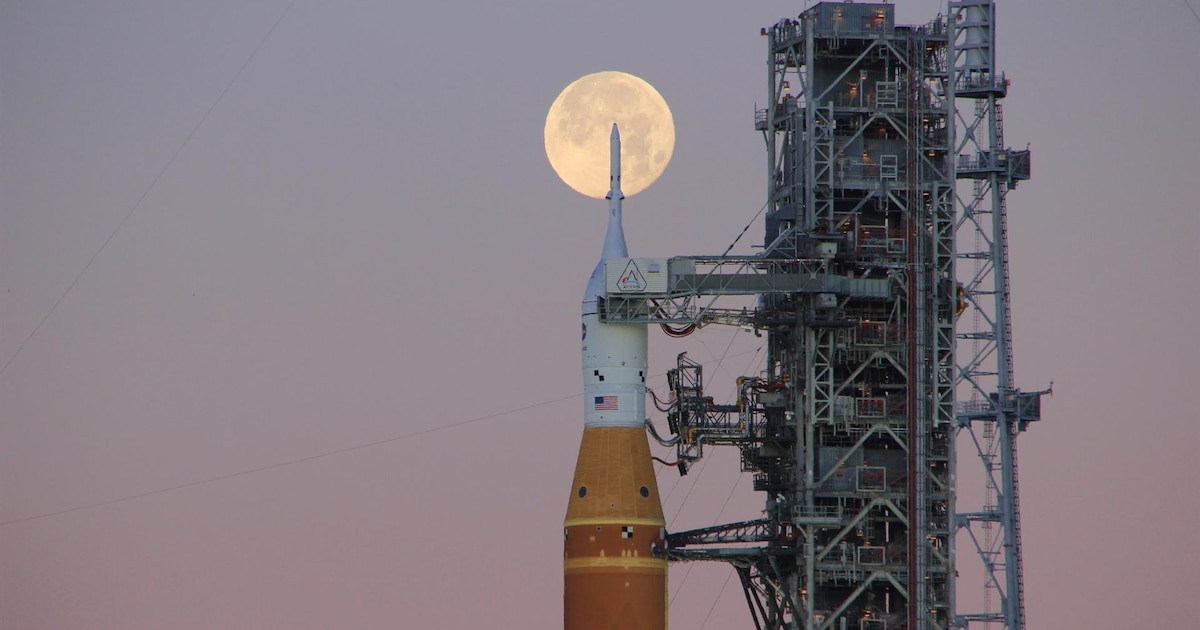
El camino de regreso de astronautas a la superficie lunar tiene una nueva meta: la NASA prevé un alunizaje tripulado en 2028 con la misión Artemis IV.
Antes, Artemis III pondrá a prueba en 2027 los sistemas y maniobras necesarios para ese objetivo durante una misión en órbita terrestre.
La Administración Nacional de Aeronáutica y el Espacio (NASA) anunció cambios en el calendario y en la arquitectura del programa Artemis, que incluye pruebas con vehículos de SpaceX y Blue Origin, alternativas para el cohete de lanzamiento y un traje espacial más liviano destinado a las primeras caminatas en la Luna.
“Esta es una NASA con mucha energía, y estas actualizaciones son solo una pequeña parte de esa historia. Estamos poniendo un foco extremo en la misión para garantizar resultados que cambien el mundo tan rápida, segura, asequible y exitosamente como sea posible”, afirmó el administrador de la NASA, Jared Isaacman.
El funcionario agregó: “La NASA está impulsando resultados para hacer realidad las misiones a la Luna, y no estamos esperando que otros nos presenten sus planes: la campaña debe avanzar con urgencia mientras competidores estratégicos buscan una presencia permanente más allá de la Tierra”.

Artemis III probará en órbita terrestre las maniobras necesarias para futuras misiones lunares
La misión Artemis III, prevista para 2027, no llevará astronautas hasta la superficie lunar. Su propósito será validar operaciones que la NASA considera necesarias antes de un descenso tripulado, entre ellas los encuentros y acoplamientos entre vehículos espaciales.
Cuatro astronautas viajarán a bordo de la cápsula Orion, que despegará mediante el cohete Space Launch System (SLS). La misión tendrá una duración estimada de 14 días en órbita terrestre.
La agencia prevé una secuencia con varios lanzamientos. En primer término, Blue Origin enviará a la órbita terrestre un prototipo de su módulo de aterrizaje Blue Moon. Después despegarán el SLS y Orion con la tripulación. La cápsula se acoplará con el vehículo de prueba de Blue Origin.
Más tarde, SpaceX lanzará un prototipo de la versión 3 de su nave Starship. Orion se separará del vehículo de Blue Origin para conectarse con Starship.

La misión Artemis III reunirá en órbita terrestre a Orion, Blue Moon y Starship. Un acoplamiento implica la unión controlada de dos naves en el espacio, lo que permite el traslado de personas, equipos o recursos entre vehículos.
La NASA señaló que estas pruebas permitirán reducir riesgos antes de que una tripulación intente descender en la Luna. El programa contempla que los sistemas de transporte y aterrizaje funcionen de forma coordinada antes del vuelo que buscará concretar el regreso a la superficie lunar.
Artemis IV apunta a llevar astronautas a la Luna en 2028
Para Artemis IV, la NASA proyecta el lanzamiento de astronautas a bordo de Orion y del SLS desde el Centro Espacial Kennedy, en Florida. La agencia trabaja con SpaceX y Blue Origin en el desarrollo de módulos lunares para trasladar a la tripulación desde la órbita hasta la superficie.
En el plan de SpaceX, Starship recibirá combustible en la órbita terrestre y luego se encontrará con Orion para iniciar el viaje hacia la Luna. El repostaje orbital consiste en transferir propulsante entre naves que ya se encuentran fuera de la Tierra. Este método permite que un vehículo lleve una mayor cantidad de combustible sin depender de un único despegue.
Blue Origin plantea un método distinto. La compañía usará etapas de transferencia en órbita terrestre para impulsar el módulo Blue Moon Mark 2 hacia la Luna. La nave se reunirá con Orion en una órbita lunar más cercana antes de descender hacia la superficie.
Las dos empresas buscan estar listas para respaldar un alunizaje tripulado en 2028, según el cronograma que difundió la NASA. Ambas modificaron sus diseños para simplificar las misiones y dotarlas de mayor flexibilidad frente a los planes anteriores.
La agencia informó que el hardware de Artemis III se encuentra dentro del calendario previsto. También indicó que redujo aproximadamente a la mitad los tiempos de procesamiento.
Entre las tareas realizadas, la NASA rediseñó, construyó y probó en cinco meses un componente crítico de una línea de combustible. El costo fue cercano a una décima parte de la estimación inicial realizada por un proveedor externo.

El gerente del programa Artemis, Jeremy Parsons, vinculó ese resultado con el refuerzo de las capacidades técnicas propias de la institución. “Se debe esperar que la NASA haga este tipo de trabajo, y contamos con algunos de los mejores conocimientos técnicos del mundo sobre hardware y operaciones de cohetes para hacerlo”, afirmó.
Parsons añadió: “Es un ejemplo de cómo estamos reconstruyendo nuestras capacidades centrales y desarrollando centros de excelencia en funciones técnicas, en lugar de seguir tercerizando el conocimiento especializado”.
Para Artemis IV, la NASA evaluará dos opciones para la etapa superior del SLS. Una corresponde a la etapa criogénica provisional que integra la configuración actual del cohete. La otra es una versión alargada del Centaur V, de United Launch Alliance, capaz de transportar más propulsante.
La agencia busca evitar una dependencia de una única opción técnica. Si una de las alternativas enfrenta inconvenientes o demoras, el programa contará con otra vía para sostener el calendario previsto.
La NASA también anunció un trabajo conjunto con Axiom Space para crear un segundo modelo de traje espacial, denominado Sortie suit. El equipo estará destinado a las primeras caminatas de los astronautas sobre la superficie lunar.
El Sortie suit no sustituirá al traje principal de Axiom, pensado para misiones futuras de mayor duración y exigencia. El nuevo modelo tendrá cerca de la mitad del peso del traje más grande, una diferencia que, de acuerdo con la NASA, permitirá avanzar con mayor rapidez en las misiones iniciales.
El programa Artemis prevé operaciones cada vez más complejas en el polo sur de la Luna. La agencia plantea que esas misiones ampliarán la exploración de esa región y contribuirán a preparar el terreno para una futura misión tripulada a Marte.
Artemis III tiene prevista una prueba en 2027 y Artemis IV mantiene como objetivo el regreso de astronautas a la superficie lunar en 2028.
Tierra,espacio exterior,luminiscencia atmosférica,Artemis II,Apollo 17
INTERNACIONAL
El papa León XIV llega a Uruguay, en la antesala de una visita histórica a la Argentina

El papa León XIV inicia este viernes en Uruguay, un país orgulloso de su laicismo y considerado el menos religioso de la región, su histórica visita a Sudamérica que incluye su paso por Argentina y Perú.
Después de semanas de incertidumbre por su estado de salud, el avión que traslada a Robert Prevost es esperado hoy a las 16:30hora local (misma hora en la Argentina) en el aeropuerto internacional de Montevideo-Carrasco.
Serán tres días de una intensa agenda que incluirá misas y distintos encuentros en Montevideo, Paysandú (frente a la ciudad entrerriana de Colón) y Florida.
León XIV será el segundo pontífice en visitar Uruguay, un país laico. Juan Pablo II estuvo en dos ocasiones en el país, en 1987 y 1988.
Su viaje servirá de antesala de su esperada visita a la Argentina que se desarrollará entre el domingo y el miércoles antes de emprender la última etapa de su periplo en Perú, país donde fue obispo de Chiclayo. Prevost tiene doble ciudadanía estadounidense y peruana.
“Es esperado con mucha expectativa, pero su visita no tiene un significado político, como se habla en la Argentina. Cuando el papa llegue a la Plaza Independencia, en el centro de Montevideo, lo recibirá el presidente Yamandú Orsi junto a todos los exmandatarios vivos, dijo a TN el politólogo y escritor uruguayo Alfonso Lessa.
Allí estarán Julio María Sanguinetti (1985/90 y 1995/2000), Luis Alberto Lacalle Herrera (1990/1995) y Luis Lacalle Pou (2020/2025) junto a representantes de todo el arco político nacional.
Uruguay es considerado el país menos religioso de Sudamérica. Según encuestas, solo el 39% de la población se declara católica y un 14% de otras religiones cristianas.
“Este es un país muy particular, de una larga tradición laica desde principios del siglo XX”, indicó Lessa.
Cuál es la agenda de León XIV en Uruguay
El viaje de Prevost a la región estuvo rodeado de una enorme incertidumbre después de la operación a la que fue sometido el 13 de octubre en la clínica Gemmeli de Roma para extraele un tumón maligno de un pulmón.
Cuatro días después fue dado de alta. Los médicos que lo atienden finalmente lo autorizaron a viajar.
Su primera etapa será intensa. La agenda incluye:
Viernes 6
- 16:30. Llegada a Montevideo
- 17:30. Ceremonia de bienvenida en la Plaza Independencia.
- 17:45. Encuentro con las autoridades, la sociedad civil y el cuerpo diplomático. Discurso del pontífice.
- 18:15. Visita al presidente Yamandú Orsi en el Edificio “José Artigas”, sede legislativa.
- 19:10: Celebración de las vísperas con los obispos, los sacerdotes, los diáconos, los religiosos, las religiosas y los seminaristas en la Catedral Metropolitana de la Inmaculada Concepción y San Felipe y Santiago. Homilía de León XIV.
XIV

El presidente Milei regresa de España y supervisará los preparativos para la visita del papa León XIV

Bitter Fetterman-El-Sayed feud threatens to complicate Schumer’s Senate unity push

Es uno de los mejores pilotos del año en la Fórmula 1, pero su futuro está en duda y confesó su desesperación: “No sé qué más quieren que haga”

Racing sigue en la busqueda de un nuevo entrenador para el 2027 y hay tres nombres apuntados

Artemis IV: los detalles de cómo será la misión de la NASA que busca llevar astronautas a la superficie lunar en 2028

Cuánto cobrarán directores y gerentes por el bono 2026 y cuántas empresas los pagan

La oposición cuestionó la suspensión de embargos a las pymes y criticó el plan económico: “Llegaron tarde”

Milei parte nuevamente a España y en el gobierno dicen que no bajará el tono de sus críticas a Pedro Sánchez

Sindicatos del transporte y de la industria se diferencian de la estrategia de la CGT y deciden acciones propias

Padrón provisorio para las elecciones 2027: dónde y hasta cuándo se puede consultar

 POLITICA2 días ago
La oposición cuestionó la suspensión de embargos a las pymes y criticó el plan económico: “Llegaron tarde”
- POLITICA3 días ago
Milei parte nuevamente a España y en el gobierno dicen que no bajará el tono de sus críticas a Pedro Sánchez
- POLITICA2 días ago
Sindicatos del transporte y de la industria se diferencian de la estrategia de la CGT y deciden acciones propias