INTERNACIONAL
‘Insulting’: Ex-Trump official’s ‘dishonest’ campaign ad triggers conservative revolt

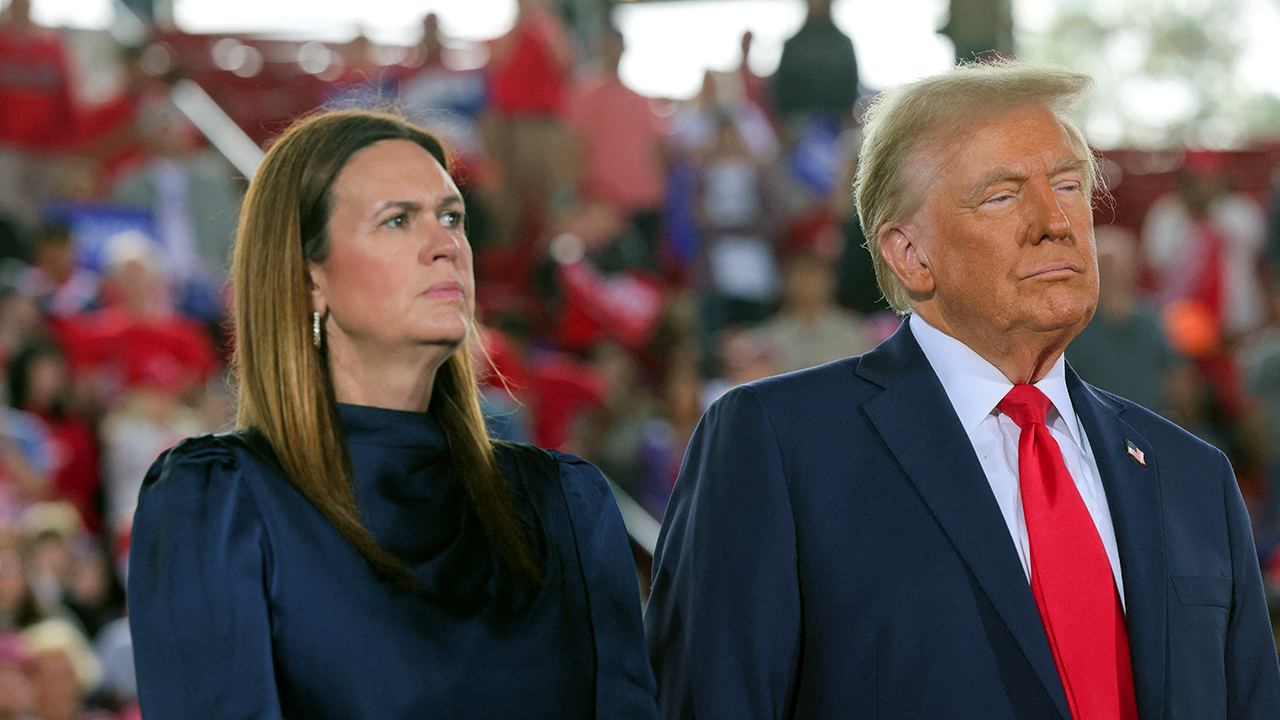
Republican Arkansas Gov. Sarah Huckabee Sanders ignited backlash from conservatives Monday after releasing a campaign ad depicting a young White man as the face of welfare abuse, with critics arguing the portrayal was misleading.
The ad, released as Huckabee Sanders runs for reelection on new welfare work requirements, follows a fictional character named «Brad,» who is portrayed as an able-bodied White man spending his days playing video games, lounging on the couch and avoiding work while relying on taxpayer-funded benefits. Huckabee Sanders argues her proposal would require able-bodied adults without dependents to work, train for a job or volunteer in order to continue receiving assistance.
«Meet Brad,» Huckabee Sanders starts the ad. «Brad has turned relaxing into a full-time profession. But you – you actually work hard. You pay taxes to cover welfare for guys like Brad who just choose not to work.»
Huckabee Sanders faced backlash from conservatives who slammed the campaign’s execution, arguing the decision to depict a young White man as the face of welfare abuse did not reflect reality.
FLORIDA BECOMES FIRST STATE TO BLOCK WELFARE CASH FOR TATTOOS, VAPES AND MORE
«Great policy,» Co-founder and CEO of The Federalist Sean Davis argued. «Terrible ad that is so dishonest and insulting that it will entirely overshadow the genuinely great policy.»
«This is a massive own goal, [Sarah Huckabee Sanders], and you should fire the consultants who made this ad,» Will Chamberlain, the Article III Project senior counsel, posted on X. «Do not portray your core voting bloc as losers, period. «
«White males are the Republican Party’s voting base and yet they are the group the Republican Party sh—s on at every possible opportunity,» responded Daily Wire’s Matt Walsh. «Meanwhile, back in reality, women are significantly more likely to be on welfare than men. And black people are astronomically more likely to be on welfare than white people. So the number of single young white male ‘Brads’ abusing the welfare system is minuscule.»
WARNOCK WARNS DEMS TO CUT THE ‘JARGON’ AND SPEAK ‘PLAIN ENGLISH’ WITH YOUNG MEN WHO FEEL LEFT BEHIND
«Attacking white (specifically Christian) young men is the most acceptable political tactic in America thanks to the evils of liberalism,» said the American Principles Project’s Caleb Pascoe. «It’s staggering how much even the majority of GOP politicians feel safe attacking white young men, instead of communicating the truth of welfare, because they might get called ‘racist’ or whatever.»
«Always a white male villain in these ads,» another conservative account wrote. «I hate the GOP so much it’s unreal.»
After the initial post got millions of views, Huckabee Sanders followed up with an X post that said, «Some critics online don’t like my welfare work requirement ad. Next thing you know they’ll say I should have used cookies instead of cheese balls.»
«If you are able-bodied you should not collect welfare simply because you choose not to work. Period. WATCH->» she continued, which invited conservatives to attack the video again.
«Your ad targeted and mocked the one demographic—young white men—that is least likely to be on welfare and yet the most likely to be illegally locked out of the job market,» Davis added in a follow-up post. «Why?»
«Is this an op?» another account wrote.
EX-HOUSE FREEDOM CAUCUS CHAIR SAYS GOP ISN’T ‘A CONSERVATIVE PARTY ANYMORE,’ BUT DEMOCRATS ARE ‘WORSE’
The unusual backlash from the right also attracted attention from critics on the left, who seized on the intra-conservative dispute over the ad.
Among them was left-wing commentator Keith Olbermann, who mocked what he called the «White Power GOP Party» for turning on Huckabee Sanders over the ad’s depiction of a white welfare recipient.
«Huck puts out the first honest TV ad by a republican in 75 years and the White Power GOP Party is big mad that the welfare leech shown is a white guy named Brad,» Olbermann said amid the backlash.
«Republicans are insanely mad this Sarah Huckabee Sanders ad portrays a white gamer guy as the face of welfare,» Will Sommer, a senior reporter for The Bulwark, posted on X.
«Republicans in the comments are furious that Sarah Huckabee Sanders dared to depict a white man on welfare and are blaming «jews,» far-left media company MeidasTouch posted on X. «The Republican Party has a massive racism and antisemitism problem.»
Digital reached out to Huckabee Sanders’ team for comment but did not hear back in time for publication.
sarah sanders, social policy, politics, fox news media, arkansas, republicans elections









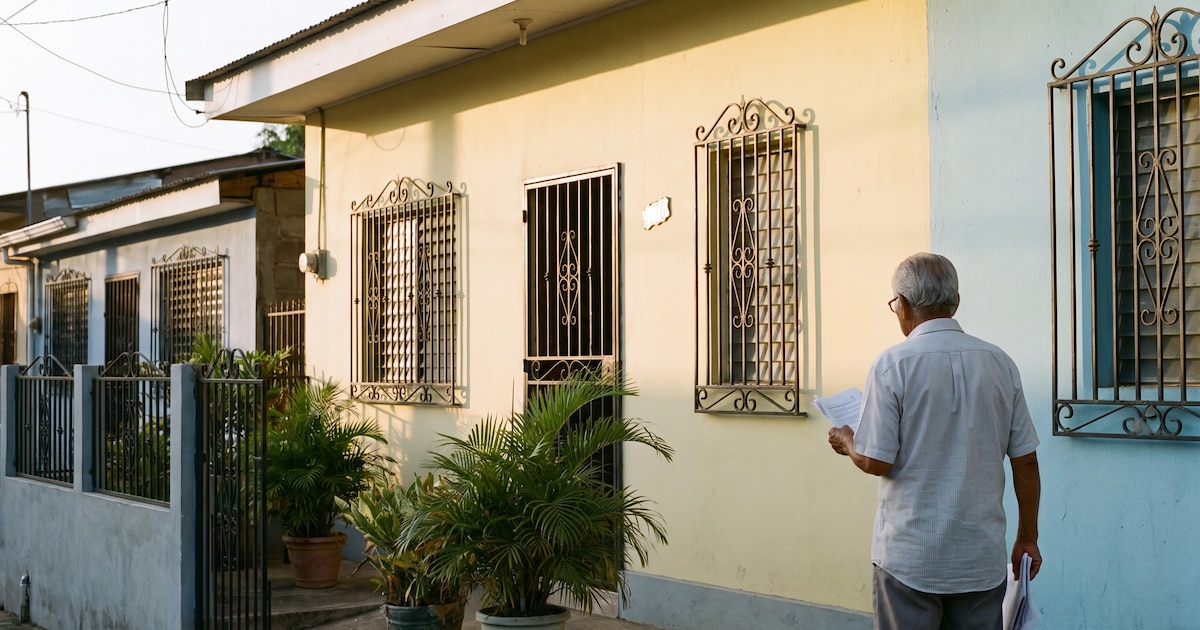
Las operaciones inmobiliarias en Nicaragua pueden involucrar controles sobre la situación registral, fiscal y legal de cada propiedad. Las denuncias sobre transferencias administrativas, cobros tributarios y dificultades en trámites realizados desde el exterior han planteado interrogantes entre propietarios, herederos e interesados en comprar inmuebles.
La información publicada por Confidencial.digital señala que la situación puede variar según el antecedente de la finca, la condición del titular y la zona donde se ubique el bien. En ese contexto, los documentos de propiedad, las constancias tributarias y los datos del Registro Público adquieren relevancia para conocer el estado de una operación.
Quienes compren, hereden o administren una propiedad pueden solicitar información sobre gravámenes, pagos pendientes y antecedentes de titularidad. La revisión del título, la situación del notario, la solvencia municipal y el resguardo de escrituras y recibos forman parte de los documentos mencionados para estos casos.
La Procuraduría ha intervenido en transferencias de propiedades
La Procuraduría General de Justicia ha participado en procedimientos mediante los cuales inmuebles privados fueron asignados a otras instituciones estatales. Según las denuncias citadas, estas decisiones pueden incluir la cancelación de contratos, la toma del control del bien y su posterior entrega a una entidad pública.
El procedimiento descrito no siempre contempla un juicio previo o una notificación judicial dirigida al propietario. Las transferencias pueden instrumentarse mediante resoluciones administrativas y autorizaciones de la copresidencia de Daniel Ortega y Rosario Murillo.
Uno de los casos publicados por Confidencial.digital involucró a nueve jubilados estadounidenses que tenían viviendas en Tola, Rivas. Sus contratos de arriendo con la Alcaldía fueron cancelados y las llaves de las casas fueron entregadas al Instituto Nicaragüense de Seguridad Social.
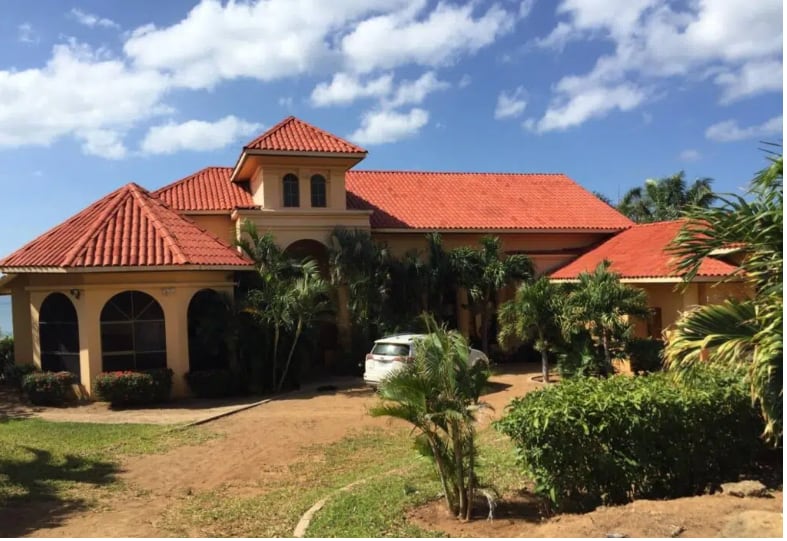
Las viviendas fueron valuadas en USD 15 millones. Cuatro días después de la publicación, comenzó la devolución de las propiedades, una situación presentada como una excepción frente a otros casos.
Entre 2024 y 2026, más de 370 propiedades fueron traspasadas al Instituto Nicaragüense de Seguridad Social bajo ese esquema. En parte de esos registros, se habrían eliminado datos sobre la ubicación y las características de las fincas.
El Registro Público conserva trámites ordinarios, aunque hay casos con obstáculos
La consulta ante el Registro Público permite verificar quién aparece como titular de un inmueble y conocer si existen hipotecas, embargos u otras anotaciones. Este paso resulta habitual antes de una compraventa o una sucesión.
El Sistema Integrado de Información de Catastro y Registro mantiene operaciones para trámites cotidianos. La información disponible indica, no obstante, que los asientos registrales pueden ser modificados, bloqueados o eliminados por decisiones administrativas cuando intervienen intereses gubernamentales.
La revisión de los tomos físicos del Registro Público puede complementar la consulta digital. Esa documentación permite revisar la historia de la finca y conservar constancias sobre su inscripción.
Las propiedades vinculadas con personas desnacionalizadas, sacerdotes, integrantes de organizaciones no gubernamentales canceladas, empresarios señalados o exiliados figuran entre los bienes que pueden estar más expuestos a este tipo de situaciones.
También se mencionan los inmuebles ubicados en Rivas, Tola, San Juan del Sur, Corn Island y el Pacífico Sur. Las áreas rurales de Matagalpa, Jinotega y Chinandega tienen antecedentes de tomas de tierras.
La vigencia del notario incide en la inscripción de las escrituras
La Corte Suprema de Justicia ha retirado o suspendido más de 2,000 licencias de abogados y notarios públicos. Entre los profesionales afectados figuran personas que viven en el exilio o que participaron en causas vinculadas con presos políticos.
Una escritura autorizada por un notario suspendido puede ser declarada nula por el Registro Público. La vigencia del carné y del quinquenio del profesional puede verificarse ante la Dirección de Control de Abogados de la Corte Suprema de Justicia.
Los poderes extendidos desde el extranjero tienen validez formal, aunque pueden enfrentar obstáculos durante su inscripción. Esta situación puede ocurrir incluso si el documento fue otorgado ante un consulado o un notario extranjero y cuenta con apostilla.
La Dirección de Registros, que pasó de la Corte Suprema de Justicia a la Procuraduría, puede pedir que el titular se presente personalmente. También puede aplicar revisiones especiales a documentos firmados por medio de representantes.
El IBI puede originar procesos de cobro y embargo
El Impuesto sobre Bienes Inmuebles es una de las obligaciones que puede afectar a propietarios y compradores. Las alcaldías pueden reclamar deudas tributarias y abrir procedimientos de cobro contra el titular del inmueble.
Se han denunciado incrementos en los avalúos catastrales, cobros retroactivos de hasta cinco años y multas aplicadas a propietarios que residen fuera del país. Algunos avalúos habrían aumentado hasta 300%.
Si la deuda no se cancela, la Alcaldía puede iniciar un juicio ejecutivo, solicitar un embargo y llevar el inmueble a remate. En ese proceso, la finca puede ser adjudicada por un valor inferior al de una venta ordinaria.
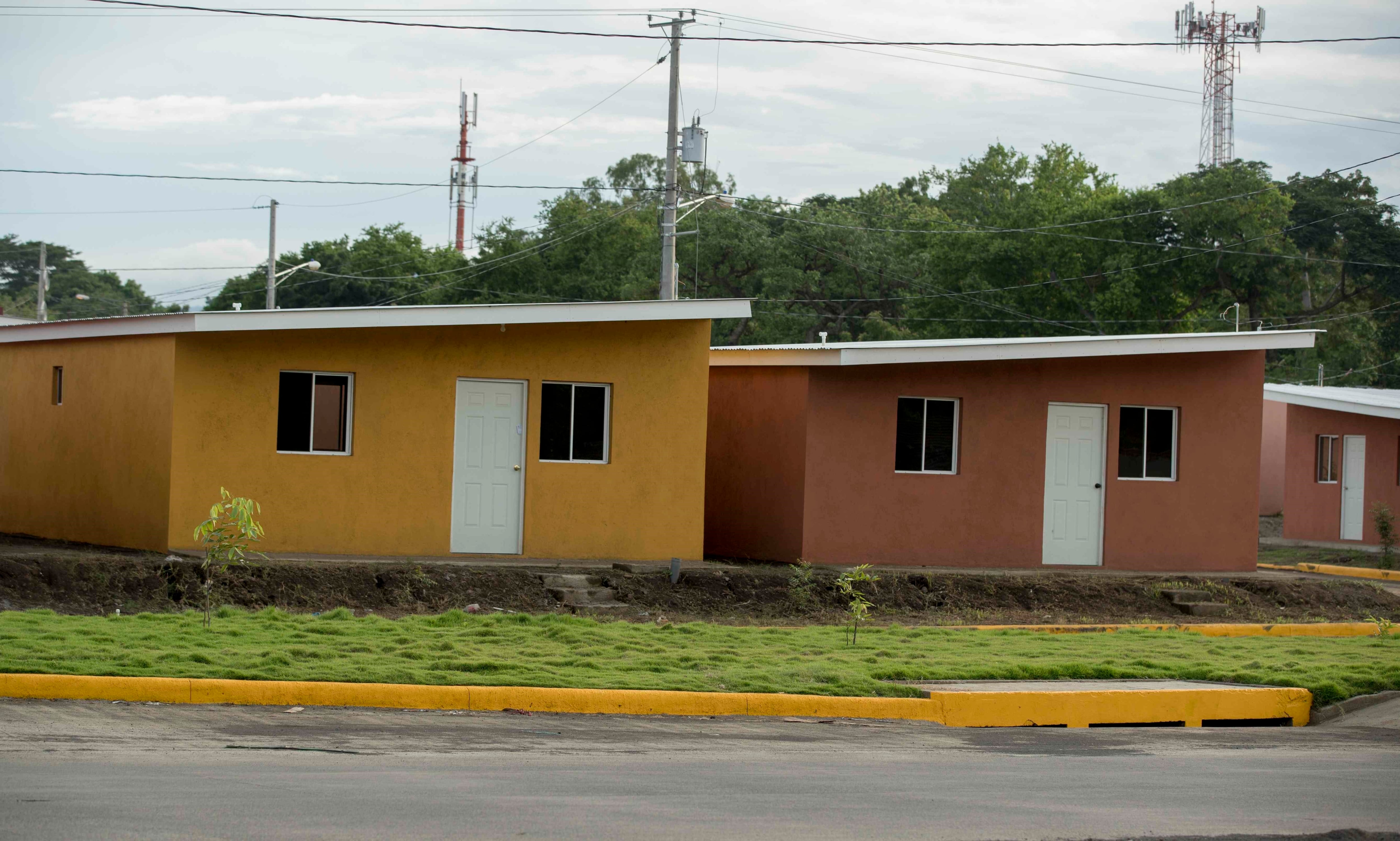
El embargo fiscal se vincula con una obligación tributaria impaga. La confiscación de facto se refiere a la toma de un bien o a la modificación de su condición registral sin una notificación judicial previa.
Los recibos del IBI permiten acreditar los pagos efectuados. Las constancias originales y sus copias digitales pueden mantenerse fuera de la vivienda o de la finca.
Los alquileres y las herencias pueden requerir trámites adicionales
Los propietarios que alquilan un inmueble pueden enfrentar conflictos con inquilinos o cuidadores que dejan de pagar y rechazan entregar la vivienda. En algunos casos, los ocupantes han alegado vínculos o respaldo político.
Los contratos de alquiler pueden establecer condiciones sobre la falta de pago, el vencimiento del plazo, el subarriendo y la cesión del uso a terceros. Para los dueños que residen fuera del país, también puede intervenir un apoderado dentro de Nicaragua.
Los procesos de desalojo pueden extenderse cuando las partes mantienen un conflicto. Algunos abogados han sugerido negociar la entrega voluntaria mediante familiares, representantes o notarios locales.
Las sucesiones pueden quedar paralizadas cuando los herederos o el fallecido fueron declarados traidores a la patria o perdieron la nacionalidad. La Procuraduría puede intervenir en la tramitación de esos bienes.
Las escrituras, los documentos familiares y las certificaciones registrales permiten respaldar los derechos hereditarios. Cada sucesión depende de los antecedentes de los involucrados y de la condición legal que figure en el expediente.
Los archivos conservados fuera del país pueden aportar pruebas
Las copias digitales de una escritura no impiden una ocupación, un embargo o una orden administrativa dentro de Nicaragua. Pueden servir, en cambio, para acreditar la titularidad, los pagos y la cadena de antecedentes de una propiedad.
El archivo patrimonial puede incluir escrituras, testimonios notariales, certificaciones registrales, planos, recibos del IBI y contratos de alquiler. Estos documentos pueden conservarse en la nube y en soportes físicos fuera del país.
Las vías de reposición, apelación municipal y amparo ante la Sala Constitucional han tenido resultados limitados en este tipo de casos. Una denuncia puede dejar constancia de la fecha en la que el propietario cuestionó una medida.
La documentación puede utilizarse en reclamos internacionales, arbitrajes o procesos posteriores de restitución e indemnización. Los ciudadanos estadounidenses también pueden recurrir a tribunales de su país o a mecanismos de protección de inversiones previstos en el CAFTA.
Cuatro documentos permiten conocer el estado de una finca
El certificado de libertad de gravamen debe tener una antigüedad máxima de 15 días. Este documento permite verificar la existencia de hipotecas, embargos u otras cargas inscritas.
El historial de la finca de los últimos 30 años muestra la sucesión de propietarios anteriores. Su consulta permite revisar si existen antecedentes relacionados con confiscaciones de los años 80 o repartos estatales.
El plano catastral aprobado por el Instituto Nicaragüense de Estudios Territoriales debe incluir la certificación de medidas y linderos. Esa información permite contrastar la delimitación de la propiedad con los datos disponibles.
La solvencia municipal del IBI informa si el inmueble tiene deudas, multas o avalúos pendientes. Estos documentos permiten reunir información sobre la situación jurídica y fiscal de una propiedad antes de una operación.
hombre,documentos,vivienda,Nicaragua,barrio
INTERNACIONAL
Strait of Hormuz crisis traps 6,000 sailors as attacks on ships mount, UN maritime chief says
NEWYou can now listen to Fox News articles!
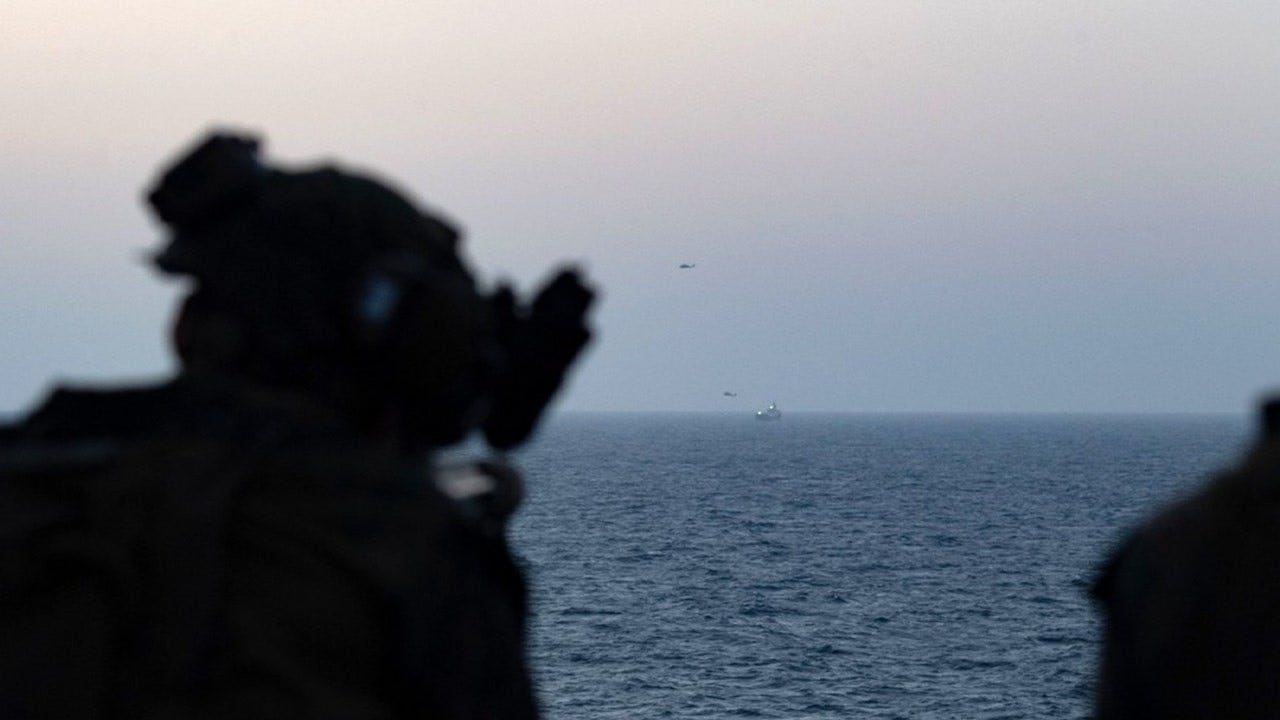
Thousands of sailors remain stranded near the Strait of Hormuz amid escalating attacks on commercial ships, the United Nations’ top maritime official warned Sunday after Iran accused the U.S. military of using an international emergency radio channel to threaten civilian crews.
The warning also came amid reports that 24 ships had been attacked on the waterway over roughly two weeks, underscoring growing concerns about maritime safety in the region, according to Financial Times.
«The situation continues to be severe and critical when it comes to international shipping,» International Maritime Organization (IMO) Secretary-General Arsenio Dominguez told Fox News Digital.
«There is a double blockade and too many vessels have been attacked, particularly in recent days.
‘VAST MAJORITY’ OF IRAN’S ATTEMPTED ATTACKS ON STRAIT OF HORMUZ ARE UNSUCCESSFUL, CENTCOM SPOKESMAN SAYS
24 ships have been attacked on the waterway over roughly two weeks, according to reports. (Fatemeh Bahrami / Anadolu via Getty Images)
«Seafarers have continued to perish in these attacks and around 6,000 seafarers remain trapped since the beginning of the conflict,» he warned, adding that his message was not to transit the Strait of Hormuz or put seafarers at risk «until we have guarantees.»
Dominguez’s warning followed an Oct. 9 letter to the IMO in which Iran alleged that the U.S. military used VHF Channel 16, an internationally designated maritime distress and safety channel, to intimidate Iranian crews in the Persian Gulf.
«VHF Channel 16 has been repeatedly occupied for prolonged periods by the United States military forces operating in the Persian Gulf,» the letter stated.
TRUMP OPENS HORMUZ UNDER FIRE WITH ‘PROJECT FREEDOM’ AS IRAN WARNS OF ATTACKS
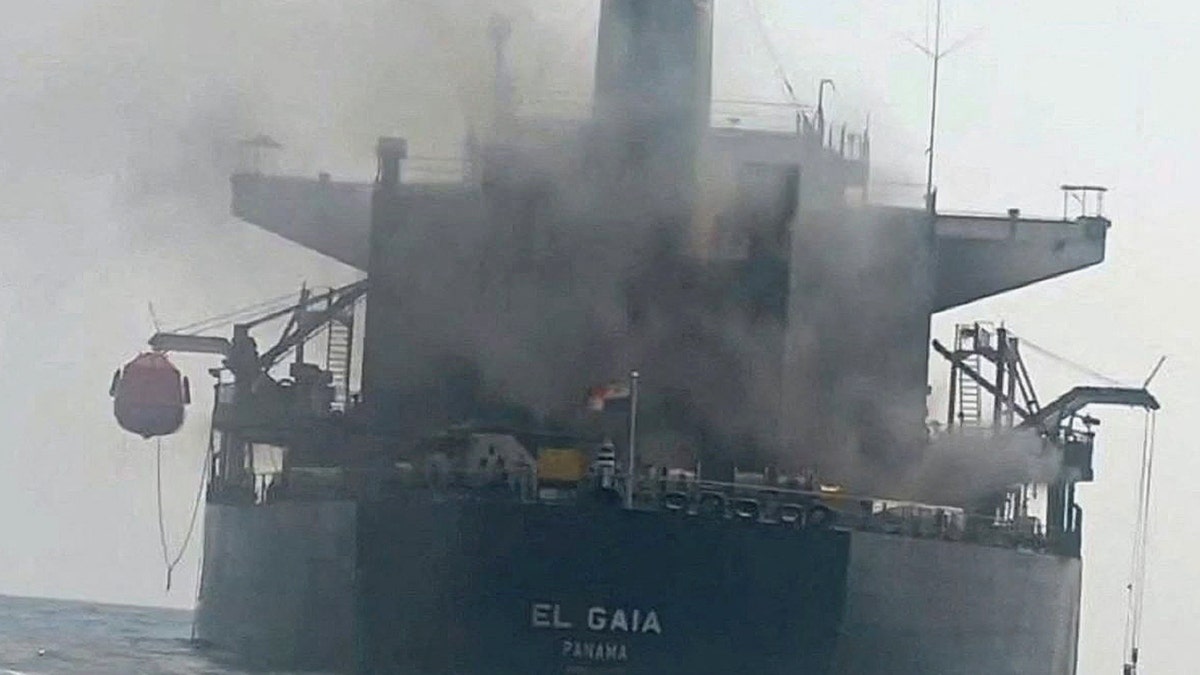
Smoke column rises from tanker El Gaia after incident in the Strait of Hormuz.
«During such transmissions, Iranian seafarers have been addressed in Persian with threatening, abusive and provocative language and in certain instances urged to abandon their vessels.»
In a statement to Fox News Digital, U.S. Central Command defended its enforcement of the naval blockade of Iranian ports.
«The U.S. naval blockade has been in place for months and is professionally communicated to all international mariners,» CENTCOM said.
«Vessels that refuse to comply with blockade enforcement receive multiple warnings, with ample opportunity to comply.
«American forces remain highly vigilant, focused, and professional while fully enforcing the naval blockade against Iran.»
Iran’s complaint was submitted by Seyed Ali Mousavi, its ambassador to the IMO, and circulated to member states on Oct. 9, according to a copy reviewed by Fox News Digital.
Tehran also accused American forces of turning the maritime safety channel into an «instrument of military intimidation and psychological pressure against civilian crews.»
The letter cited commercial vessels, shipping companies and maritime operators but provided no recordings, transcripts or specific details of the alleged exchanges. Fox News Digital could not independently verify the accusations.
IRAN THREATENS TO HALT RED SEA TRAFFIC IN RESPONSE TO US MILITARY BLOCKADE OF PORTS
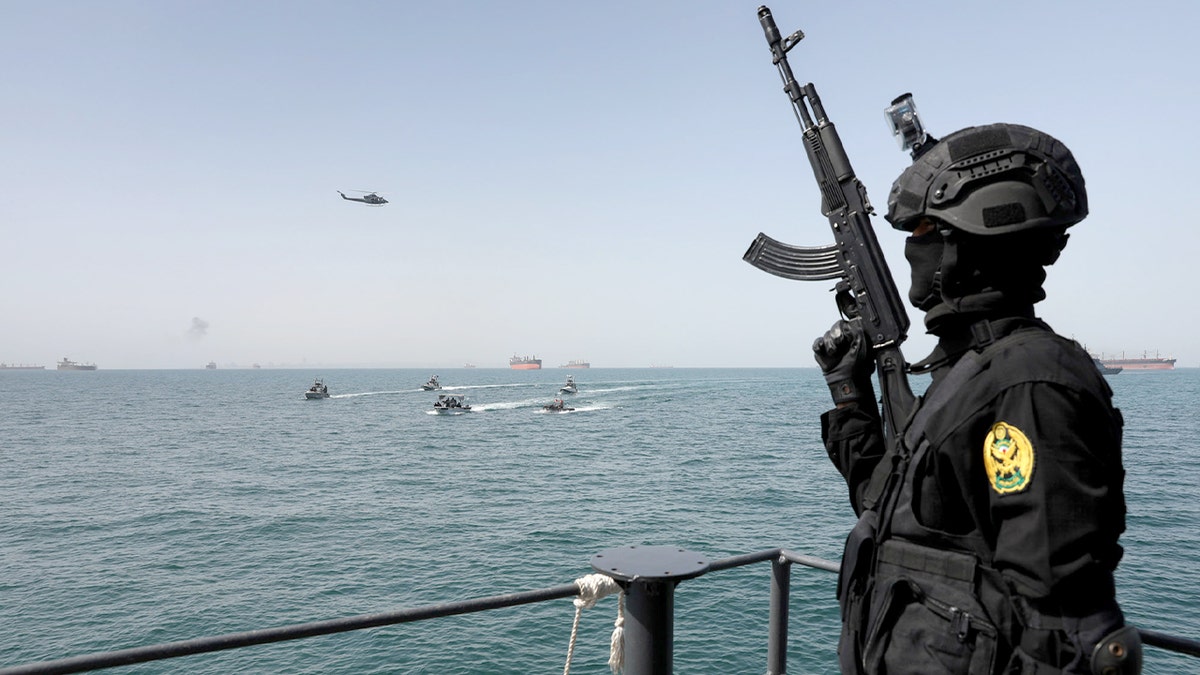
Naval units from Iran simulate the rescue of a hijacked vessel during joint drills at the Port of Bandar Abbas in Hormozgan, Iran, on Feb. 19, 2026. (Iranian Army/Handout/Anadolu via Getty Images)
«Seafarers are not trained for combat, and they are not guilty of any conflicts that are happening around the world,» Dominguez said.
«And we have seen this in several parts of the world where Channel 16, that should not be used for this kind of communication, starts receiving messages that may be perceived as actually threatening or that are outside the remit of why it was created.»
Iran also asked the IMO to raise its allegations with member states and relevant international organizations, potentially including the International Telecommunication Union.
Dominguez said the IMO could review its regulations and procedures to determine whether stronger safeguards are needed, though he did not announce a formal investigation.
«Our role here at IMO is that when those situations take place, we will then look into any technical measures or any operational aspects that we may need to clarify further within our regulatory framework,» he said, stressing that member states have equal rights to raise concerns, regardless of the conflict.
«We have a responsibility, and I have a duty as well, to circulate letters and notes that the countries actually put forward when they’re also being affected.»
WHO CONTROLS THE STRAIT OF HORMUZ RIGHT NOW? HERE’S WHAT THE SHIP TRAFFIC ACTUALLY SHOWS
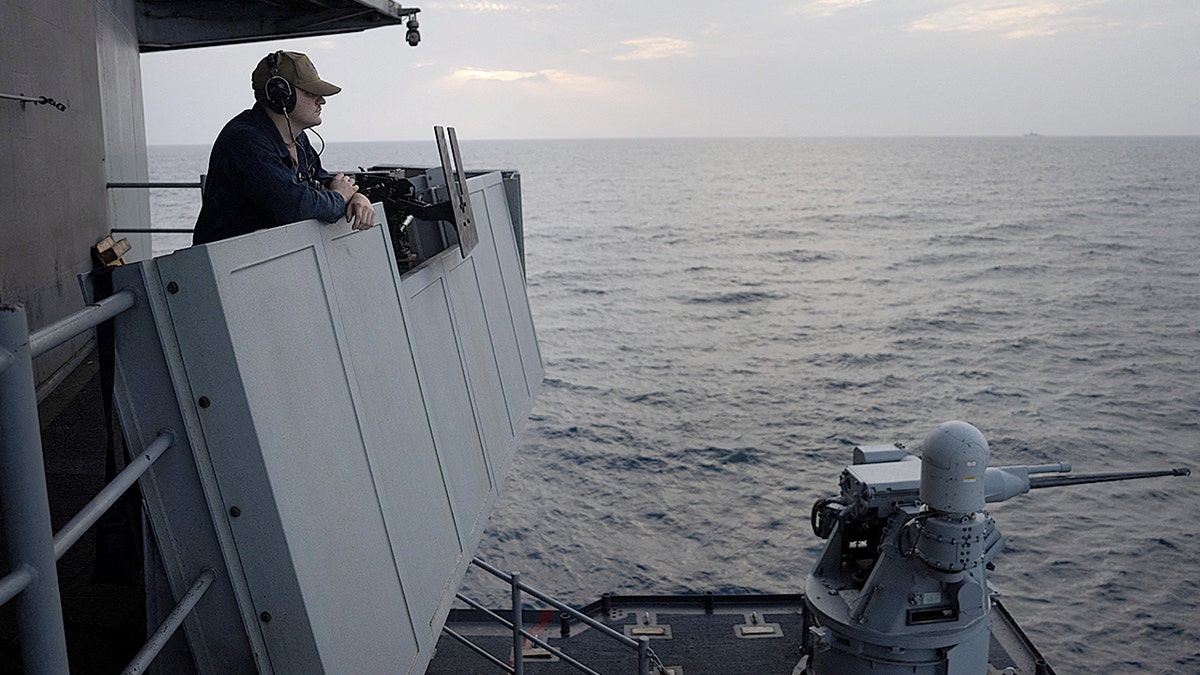
The U.S. naval blockade has been in place for months and is professionally communicated to all international mariners, CENTCOM said. (U.S. Navy)
«We take all that information, meet at the level of different meetings of the organization and have the discussions,» Dominguez added.
«If it’s demonstrated that we probably need to improve our rules in order to avoid communications issues, or that we need to enhance the knowledge of how these channels should be used, that is a role for us.»
The IMO had recorded 100 confirmed maritime incidents across the region as of Oct. 9, with 24 seafarers killed since the conflict began Feb. 28. Dominguez also warned that fraudulent ship registrations and false flags have become major contributors to the danger.
«What we’ve also seen right now is an increase in fraudulent registries with false flags that are taking the risk and acting as shuttle tankers in order to bring goods in and out,» he said. «That’s one of the reasons that we’re seeing an escalation.
«And it’s the irresponsible shipowners that are taking the risk in order to actually be able to trade and move some of the goods and the cargoes.»
WHITE HOUSE SILENT ON IRAN-OMAN HORMUZ PLAN TEHRAN SAYS WOULD BAN US WARSHIPS

A ship is seen passing through the Strait of Hormuz during a two-week temporary ceasefire between the United States and Iran on April 8, 2026. (Shady Alassar/Anadolu/Getty Images)
«For me, any single case, any vessel that is attacked, any life of a seafarer that is lost, is a critical situation for me, because they are all relevant, they are all important.»
Despite the confrontation, Dominguez said diplomatic channels with Iran remain open, though he has no direct contact with the Islamic Revolutionary Guard Corps.
«I have communications with all the member states of IMO, and that includes the Islamic Republic of Iran,» he said.
«Of course, that’s through the diplomatic channels. I don’t have direct contact with the IRGC.
«I have conversations with them and they respond to my messages. You know, the information flows. What is difficult is to get final decisions because of the conflict that is ongoing.»
Fox News Digital has reached out to the Iranian embassy for comment.
world, united nations, iran, military, international law, middle east
INTERNACIONAL
Entre mensajes de condena e indignación, familia realizará tributo al exfiscal Juan Francisco Solórzano Foppa en Guatemala
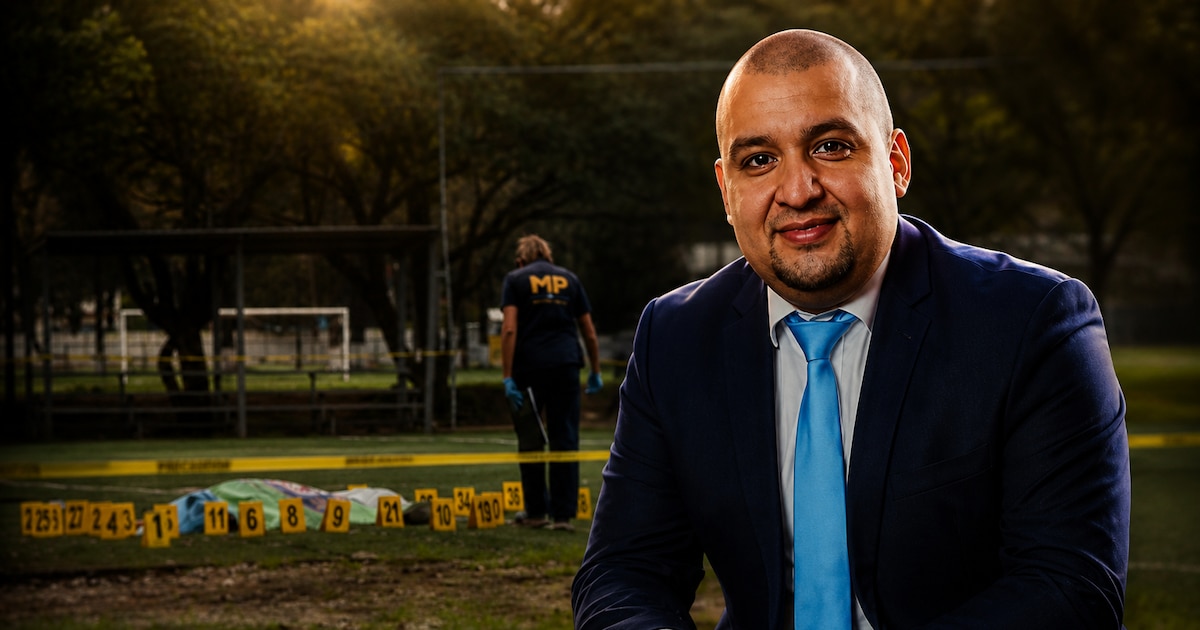
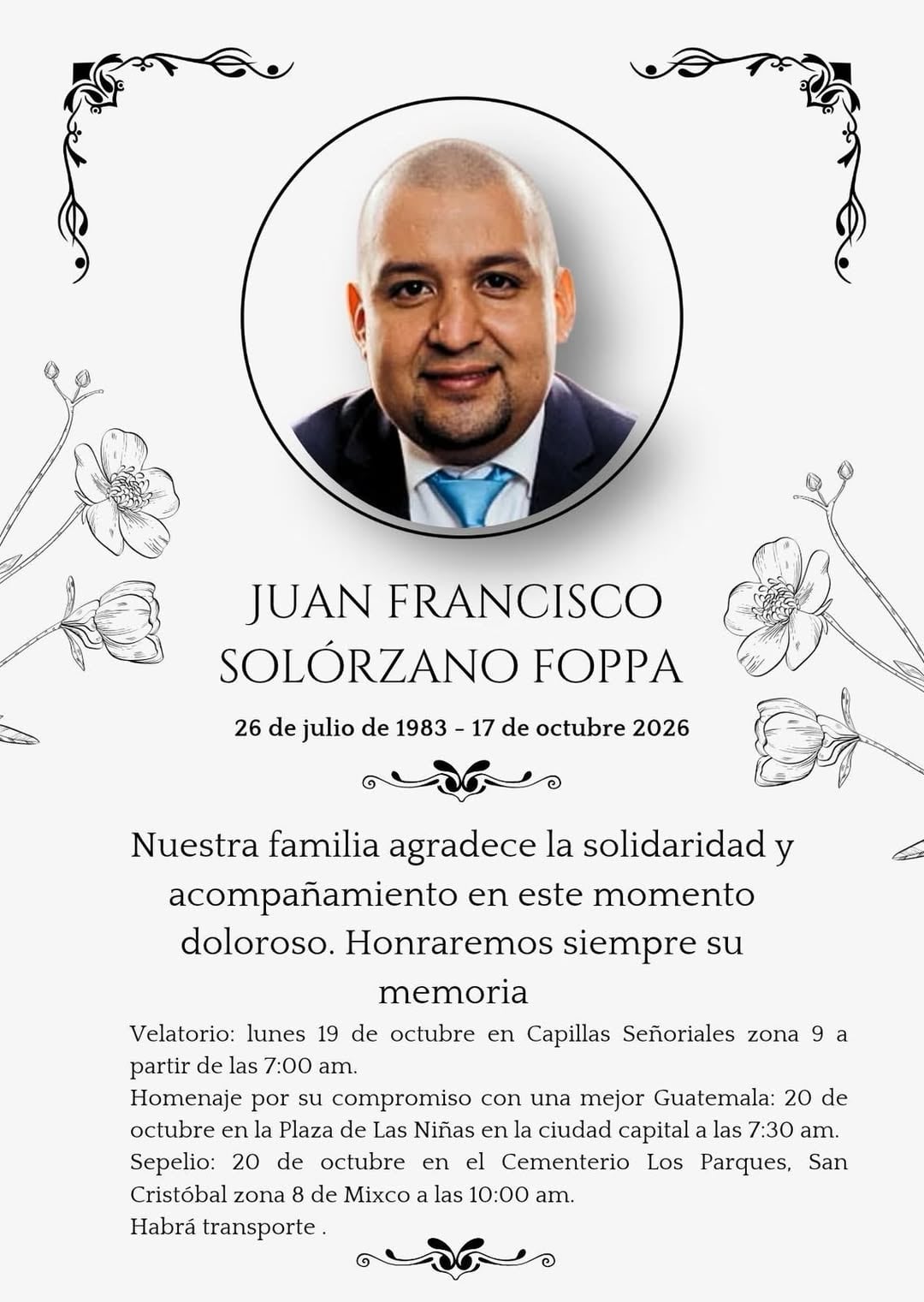
La familia de Juan Francisco Solórzano Foppa anunció las honras fúnebres y un homenaje público para despedir al abogado guatemalteco, asesinado el sábado 17 de octubre durante un ataque armado en el Campo Marte, en la zona 5 de la Ciudad de Guatemala.
Las actividades se realizarán entre el lunes 19 y el martes 20 de octubre, en medio de condenas de organizaciones nacionales e internacionales y reclamos para que el crimen sea esclarecido.
Los familiares agradecieron las expresiones de solidaridad que recibieron tras la muerte del exfiscal del Ministerio Público (MP) y exjefe de la Superintendencia de Administración Tributaria (SAT).
“Nuestra familia agradece la solidaridad y acompañamiento en este momento doloroso”, señalaron en una publicación difundida en las redes sociales que utilizaba el abogado.
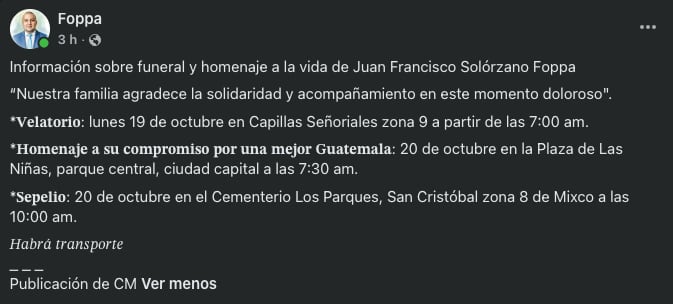
El velorio comenzará el lunes 19 de octubre, desde las 7:00, en Capillas Señoriales, en la zona 9 capitalina. Al día siguiente, la familia convocó a un acto para recordar la trayectoria profesional y pública de Solórzano Foppa, quien murió junto con Gustavo Adolfo Aguilar Gamarro.
El homenaje será en la Plaza de la Constitución antes del sepelio
El homenaje tendrá lugar el martes 20 de octubre a las 7:30 en la Plaza de la Constitución, frente al Palacio Nacional de la Cultura, en la zona 1 de la capital. La convocatoria plantea que el encuentro buscará recordar el compromiso del abogado “por una mejor Guatemala”.
Tras la actividad, los asistentes se dirigirán al Cementerio Los Parques, en San Cristóbal, zona 8 de Mixco, donde está previsto el sepelio a las 10:00. La familia indicó que habrá transporte disponible para quienes deseen acompañar el cortejo fúnebre.
La despedida ocurre mientras continúa bajo reserva la investigación por el ataque armado ocurrido en una cancha deportiva del Campo Marte. El MP informó que mantiene diligencias relacionadas con el asesinato de Solórzano Foppa y Aguilar Gamarro, sin divulgar detalles sobre los avances del caso.
El presidente de Guatemala, Bernardo Arévalo, repudió el crimen y afirmó que las instituciones del Gobierno colaborarán con las autoridades competentes para identificar a los responsables. “Los vamos a encontrar”, expresó el mandatario al referirse a los autores materiales e intelectuales.
Organizaciones nacionales e internacionales exigieron una investigación imparcial
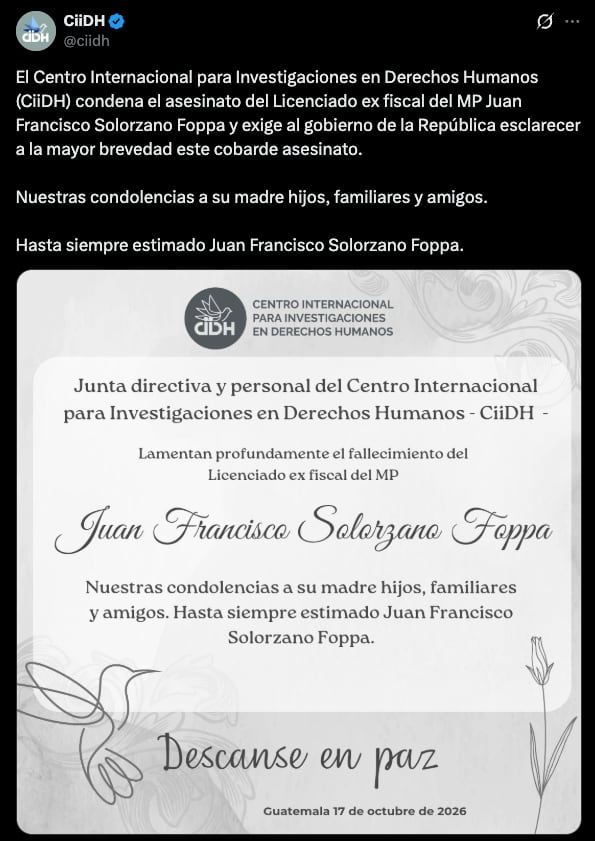
El asesinato provocó pronunciamientos de entidades de derechos humanos, gremios profesionales, organizaciones empresariales y actores de la sociedad civil.
La Comisión Interamericana de Derechos Humanos (CIDH) condenó el hecho y pidió al Estado una investigación diligente que permita establecer responsabilidades y sancionar a quienes participaron en el crimen.
La CIDH recordó las denuncias públicas que Solórzano Foppa hizo sobre la penetración del crimen organizado en instituciones guatemaltecas y contra el denominado “pacto de corruptos”. También señaló que las autoridades deben actuar con debida diligencia para esclarecer el ataque.
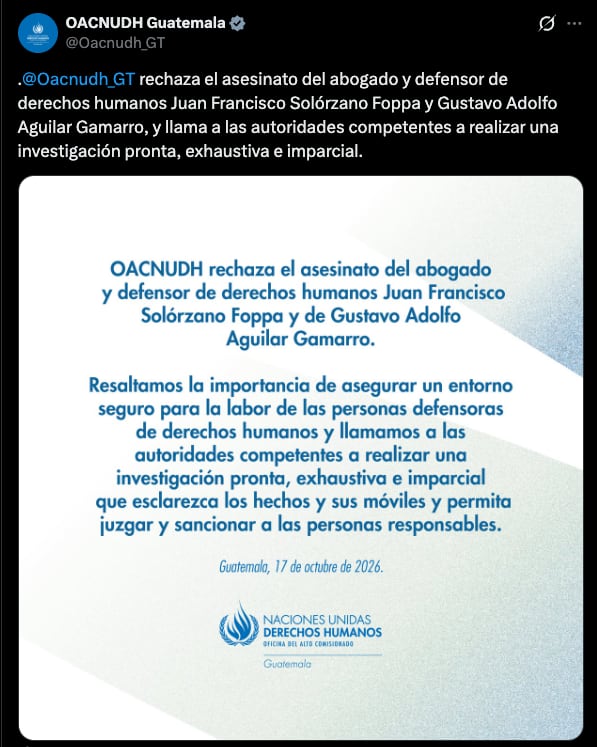
La Oficina del Alto Comisionado de las Naciones Unidas para los Derechos Humanos en Guatemala, (Oacnudh), rechazó el asesinato del abogado y de Aguilar Gamarro.
El organismo reclamó una pesquisa pronta, exhaustiva e imparcial, y subrayó la necesidad de garantizar condiciones de seguridad para las personas defensoras de derechos humanos.
La delegación de la Unión Europea en Guatemala expresó su solidaridad con la familia de Solórzano Foppa y destacó su labor en investigaciones vinculadas con estructuras criminales.

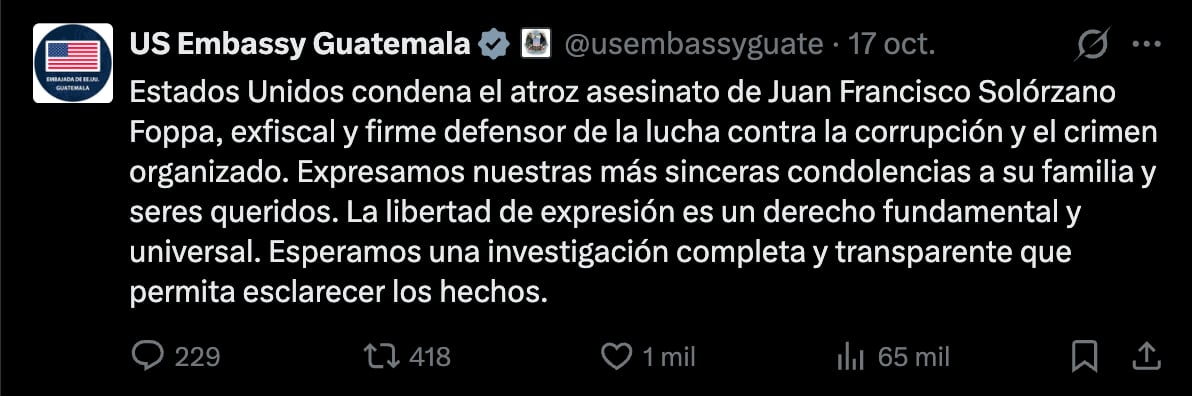
Mientras que la Embajada de Estados Unidos radicada en Guatemala condenó el “atroz asesinato” del exfiscal a quien calificó como un “firme defensor de la lucha contra la corrupción y el crimen organizado”, por lo que expresaron su “sinceras condolencias” a la familia del abogado.
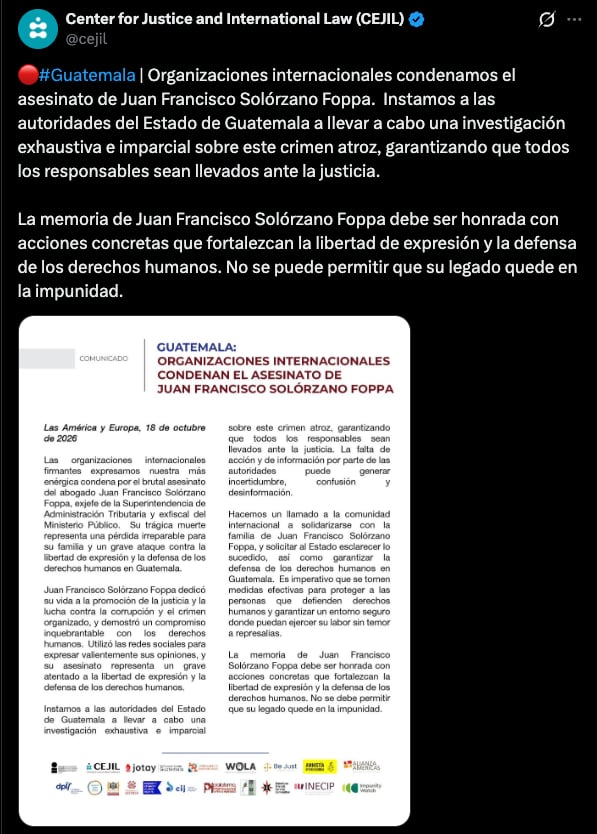
A las muestras de repudio se unió el Centro por la Justicia y el Derecho Internacional (Cejil) quienes, a través de un comunicado, instaron a las autoridades del Estado de Guatemala a llevar a cabo una”investigación exhaustiva e imparcial«, garantizando que “todos los responsables sean llevados ante la justicia”.
“La memoria de Juan Francisco Solórzano Foppa debe ser honrada con acciones concretas que fortalezcan la libertad de expresión y la defensa de los derechos humanos. No se puede permitir que su legado quede en la impunidad”, dijo Cejil.
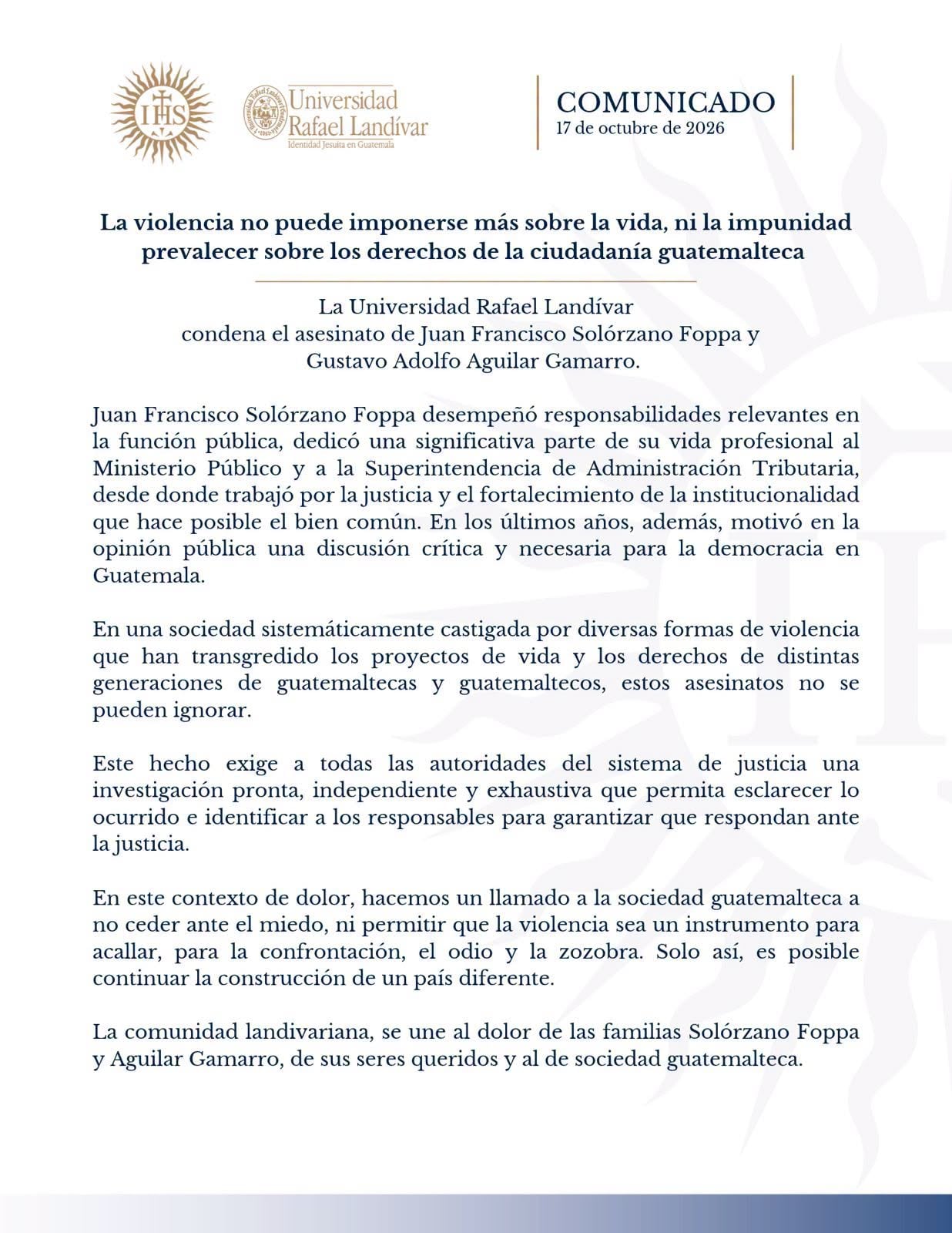
Su alma mater, la Universidad Rafael Landívar también lamentaron la muerte del abogado y recordaron que en los “últimos años motivó en la opinión pública una discusión crítica y necesaria par la democracia en Guatemala”.
Para la casa de estudios, este hecho de violencia “exige a todas las autoridades del sistema de justicia una investigación pronta, independiente y exhaustiva que permita esclarecer lo ocurrido”, al tiempo que pidieron a la sociedad guatemalteca a “no ceder ante el miedo”.
También se pronunciaron la Fundación para el Desarrollo de Guatemala, el Colegio de Abogados y Notarios de Guatemala, la Procuraduría de los Derechos Humanos, cámaras empresariales, universidades y organizaciones sociales.
Una trayectoria entre la investigación penal, la SAT y la defensa legal
Solórzano Foppa se graduó en la Universidad Rafael Landívar y desarrolló parte de su carrera en el MP, donde trabajó durante cerca de 12 años. Ocupó cargos ligados a la investigación criminal, entre ellos en la Fiscalía de Delitos contra la Vida y la Dirección de Análisis Criminal.
Durante ese período participó en investigaciones de alto impacto, como el caso de defraudación aduanera conocido como La Línea, que en 2015 derivó en la renuncia del entonces presidente Otto Pérez Molina y de la vicepresidenta Roxana Baldetti.

En marzo de 2016, el entonces presidente Jimmy Morales lo nombró superintendente de la SAT. Su gestión impulsó medidas de fiscalización y cobro a contribuyentes por incumplimientos tributarios. El Directorio de la institución lo destituyó en enero de 2018, tras cuestionamientos por el cumplimiento de la meta de recaudación.
En los últimos años ejerció como abogado y notario, participó en debates sobre justicia, corrupción y seguridad, y enfrentó procesos judiciales vinculados con actividades políticas y con su intervención en la defensa del periodista José Rubén Zamora. Su familia lo despedirá ahora con un homenaje abierto en el centro de la capital guatemalteca.
Guatemala,Bernardo Arévalo,Gobierno de Guatemala,Juan Francisco Solórzano Foppa,Foppa,Ataque armado,Homicidios,Ciudad de Guatemala

Punto de inflexión para Ter Stegen

Armaron un plan para atacar escuelas con Chat GPT y los descubrió el FBI: la historia de los hermanos detenidos en Chaco

Qué necesita River Plate para clasificarse a la Copa Libertadores 2027: cómo lo podría ayudar Boca Juniors

El horóscopo de hoy: lunes19 de octubre

Antes de su viaje a España, Milei advirtió por los disturbios en Europa: “Occidente está en peligro”

¿Qué riesgos enfrentan quienes tienen propiedades en Nicaragua?

La lesión de Lautaro Martínez que encendió las alarmas de la selección argentina: el comunicado del Inter

El crédito que nadie te cobra

Noche negra y oleada de críticas contra Jofre Torrents