INTERNACIONAL
US visa clash exposes Sudan’s forgotten war as foreign powers compete for strategic foothold

NEWYou can now listen to Fox News articles!
UNITED NATIONS — Sudan’s military leader is openly defying a U.S.-backed ceasefire push after Washington withheld his visa to attend the U.N. General Assembly, exposing a widening rift over a war that has become not only one of the world’s worst humanitarian disasters, but also a regional struggle for influence stretching to the Red Sea.
Gen. Abdel Fattah al-Burhan, head of Sudan’s armed forces and de facto leader, had been expected in New York during UNGA before the Trump administration withheld his visa amid a dispute over a proposed 90-day humanitarian truce. Days later, Burhan struck a defiant tone from Khartoum.
«We will keep our heads high. We will not accept bargaining, sell ourselves cheaply to anyone or bow to anyone,» Burhan said Saturday, according to Anadolu Agency. «We do not need a visa to any country or anyone’s permission.»
WORLD LEADERS DESCEND ON NEW YORK FOR UNGA — BUT WHO REALLY HAS AMERICA’S EAR?
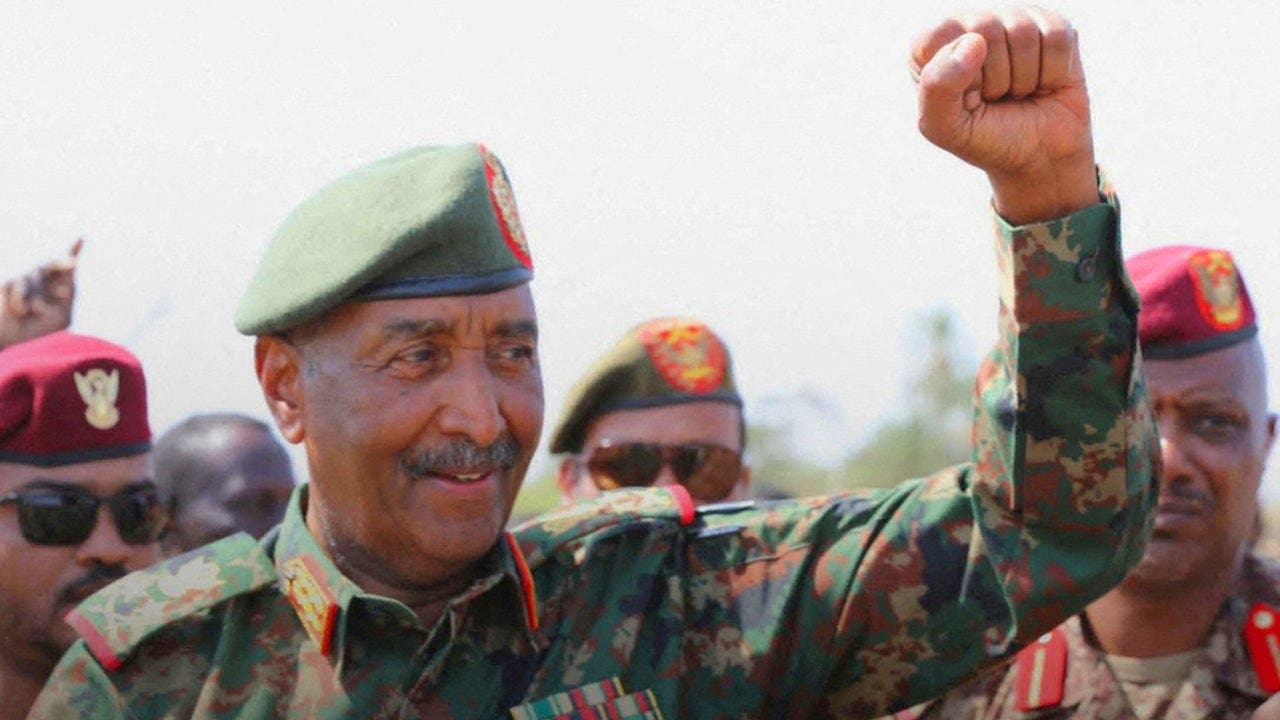
Sudan’s army chief Abdel Fattah al-Burhan gestures to soldiers inside the presidential palace after the Sudanese army said it had taken control of the building, in the capital Khartoum, Sudan March 26, 2025. (Sudan Transitional Sovereignty Council/Handout via Reuters)
The State Department has accused both Burhan’s Sudanese Armed Forces, or SAF, and the rival paramilitary Rapid Support Forces, or RSF, of failing to make serious commitments to an immediate truce.
«Neither the Sudanese Armed Forces, the Rapid Support Forces, nor their respective leaders, represent legitimate, constitutional governance for Sudan,» State Department spokesman Tommy Pigott said Sept. 22, adding that the conduct of both leaders renders them «ineligible to govern the country.»
The State Department said both sides had instead intensified combat operations and drone strikes that killed civilians and said Washington had repeatedly asked them to accept a humanitarian truce «without preconditions» and commit to an inclusive political dialogue leading to civilian government.
But a senior advisor to Burhan disputed Washington’s account in an on-camera interview with Fox News Digital on the sidelines of UNGA.
SUDAN’S FORGOTTEN WAR LEAVES MILLIONS HUNGRY AS GLOBAL ATTENTION REMAINS ELSEWHERE
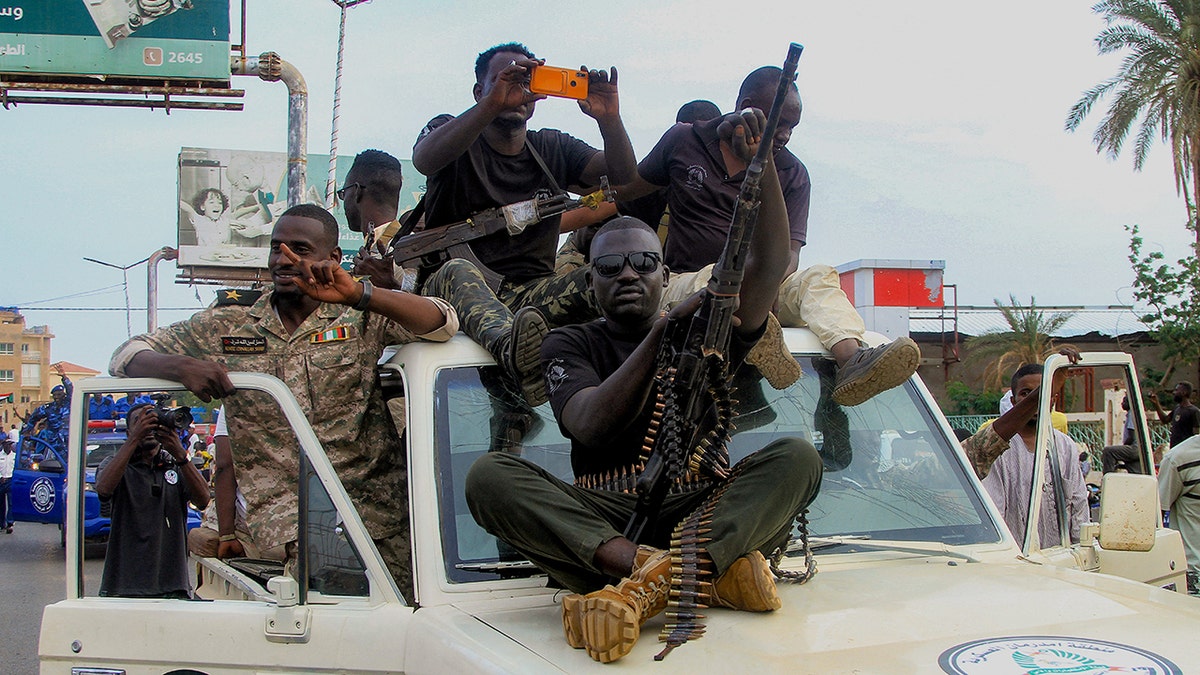
Sudanese army soldiers take part in a military parade as part of religious commemorations by Muslim devotees of the birthday of Islam’s Prophet Mohamed in Sudan’s capital Khartoum on Aug. 23, 2025 (Ebrahim Hamid AFP via Getty Images)
Dr. Amjad Farid Al-Tayyib, the foreign affairs advisor to Sudan’s Transitional Sovereignty Council, said Sudan never rejected the American ceasefire proposal and instead submitted technical comments on it.
«We never rejected this proposal,» Farid said. «The Sudanese government wants war with no one.»
Farid said a negotiating team had intended to accompany Burhan and accused Washington of undermining the very diplomatic process it was seeking to advance by preventing the delegation from traveling.
The State Department declined to comment on Burhan’s specific visa case, citing its policy of not discussing individual visa decisions. A State Department spokesperson told Fox News Digital on background that Washington is instead focused on a broader diplomatic framework with Egypt, Saudi Arabia and the UAE through the Quad, linking a humanitarian truce and sustained aid access to a permanent ceasefire, civilian transition and reconstruction.
«We are working with our partners to encourage the parties to agree to the humanitarian truce and guarantee humanitarian access, and to also ensure external military or financial support to the warring parties is cut off,» the spokesperson said.
The spokesperson added that the Quad supports the Quintet-led civilian political track and rejects parallel diplomatic processes that could fragment negotiations.
The United Nations also challenged Washington over the visa decision. «We immediately raised with the U.S. authorities the issue regarding the denial of visa to the President of the Transitional Sovereign Council of the Sudan, who was scheduled to address the General Assembly this week,» U.N. Secretary-General spokesman Stéphane Dujarric told Fox News Digital.
PUTIN USING AFRICA AS ‘PURSE’ FOR UKRAINE WAR WHILE US FACES ‘INTELLIGENCE BLACK HOLE’: COMMANDER
Cameron Hudson, a former director for African affairs on the National Security Council who also served as chief of staff to successive U.S. presidential special envoys for Sudan, said his understanding was that Washington had asked the Sudanese to send a delegation both to the U.N. and to Washington for talks on a ceasefire.
He said the Sudanese were preparing to do so before Washington, in his understanding, made Burhan’s visa contingent on signing the ceasefire agreement before traveling.
«It doesn’t fully make sense why the United States took this decision at the last minute,» Hudson told Fox News Digital.
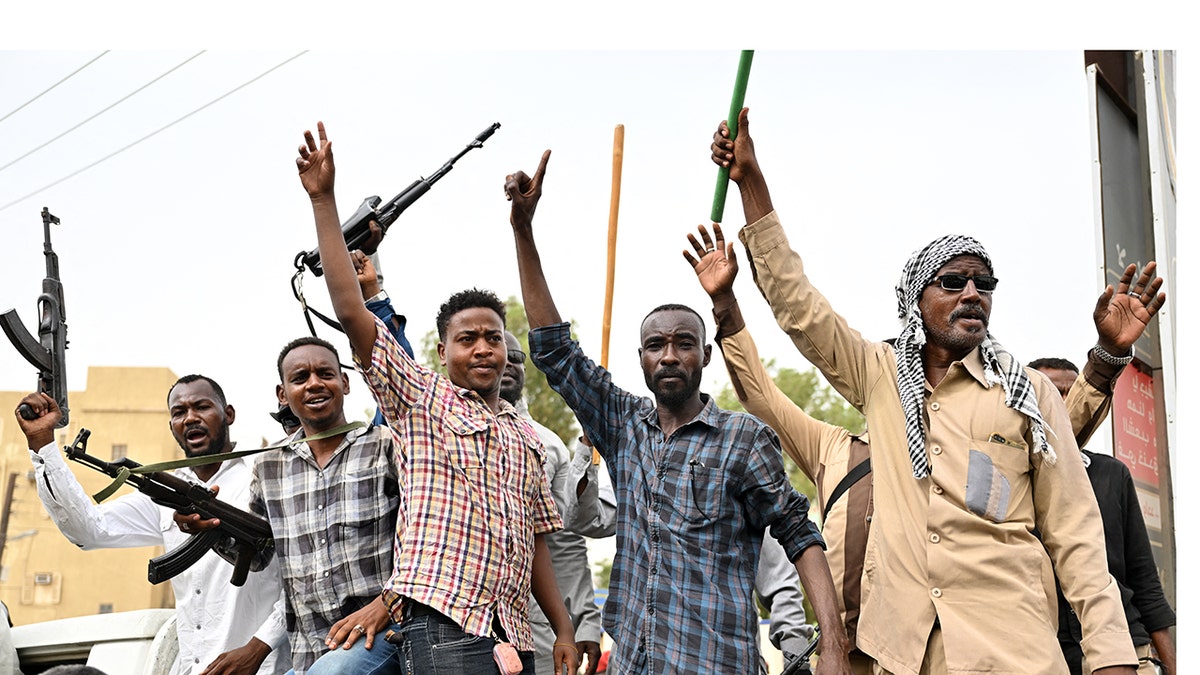
Armed men salute the governor of Sudan’s Red Sea State Mustafa Mahmud in Port Sudan in the war-torn country on July 24, 2024. Sudan has been gripped by war since April 2023, when fighting erupted between forces loyal to army chief Abdel Fattah al-Burhan and the RSF led by his former deputy Mohamed Hamdan Daglo. The conflict in the country of 48 million has killed tens of thousands, displaced millions and triggered one of the world’s worst humanitarian crises. (AFP via Getty Images)
Farid said the central dispute is whether the RSF would be required to withdraw from civilian areas it controls. He argued that freezing current lines of control risks turning a temporary ceasefire into a de facto partition of Sudan.
The dispute comes against the backdrop of a brutal civil war that erupted in April 2023 following a power struggle between Burhan and RSF commander Mohamed Hamdan Dagalo, widely known as Hemedti.
Both sides have been accused of serious violations, but Hudson told Fox News Digital that treating their records as interchangeable obscures an important distinction.
«The RSF is committing war crimes on a scale and with an intention that the army does not,» Hudson said.
Hudson said SAF has struck civilian targets and committed war crimes, including through drone attacks, but said the RSF’s record goes significantly further.
«They have committed mass rape, mass killing, torture, sexual enslavement,» Hudson said, arguing that Western descriptions of «both sides» can create the impression that the two forces are committing the same crimes «on the same scale or with the same intention.»
U.N. investigators have also drawn distinctions while documenting abuses by both forces.
AS WORLD FIXATES ON OTHER WARS, SUDAN SEES 12 MILLION FORCIBLY DISPLACED IN DEVASTATING CONFLICT
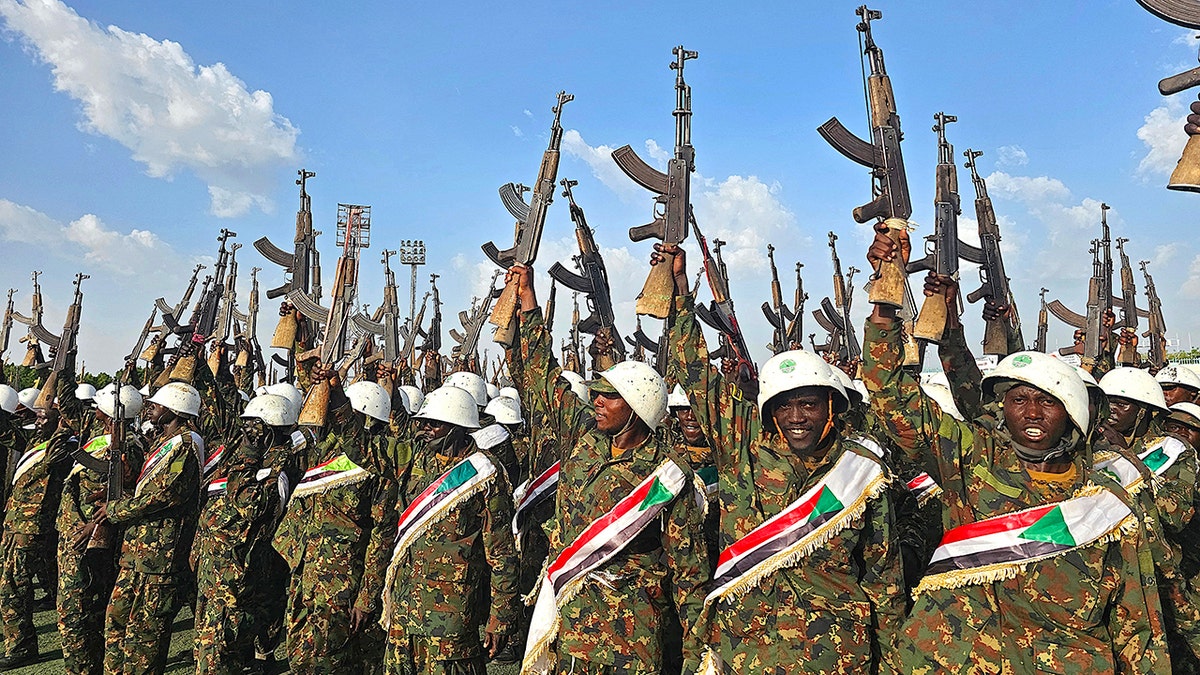
Members of Sudanese Armed Popular Resistance Force take part in a military parade for fresh graduates, in Al-Qadarif state, in eastern Sudan on May 20, 2026. (AFP via Getty Images)
A U.N. fact-finding mission reported in September 2025 that both SAF and RSF were responsible for direct, large-scale attacks against civilians and the destruction of critical civilian infrastructure. But it found that the RSF, particularly during its siege of El Fasher and surrounding areas, committed crimes against humanity including murder, torture, enslavement, rape, sexual slavery, forced displacement and persecution on ethnic, gender and political grounds.
A separate U.N. Human Rights Office report released in February documented more than 6,000 killings during the first three days of the RSF’s final offensive on El Fasher and found that the violations could amount to war crimes and possible crimes against humanity.
Farid nevertheless accused the U.N. and Western governments of creating what he called a ‘false equivalence’ between Sudan’s military and the RSF.
«The U.N. is not staying neutral,» he told Fox News Digital, arguing that international institutions have documented RSF atrocities without taking sufficient action against the group or those supporting it.
Farid nevertheless accused the U.N. and Western governments of creating what he called a false equivalence between Sudan’s military and the RSF.
U.N. Secretary-General spokesman Stéphane Dujarric rejected the allegation that the organization was equating the two sides. «This is not about equating two sides,» Dujarric told Fox News Digital. «We focus on the facts, the violations that have been documented, and above all, the devastating toll this war has taken on civilians since 15 April 2023.»
Dujarric said both the RSF and SAF have used explosive weapons in densely populated areas and that the U.N. Human Rights Office has documented attacks affecting schools, hospitals, markets and religious sites.
He pointed specifically to what he described as «particularly grave violations» by the RSF and affiliated forces in Darfur, including mass killings, sexual violence, torture, abductions and forced displacement, while noting that serious abuses have also been documented in SAF-controlled areas, including arbitrary detention, torture, ill-treatment and summary executions.
The war, meanwhile, increasingly extends beyond Sudan’s borders.
Foreign backing has become a central feature of the conflict. A July 2026 UK government assessment, drawing on U.N. and other reporting, said the RSF had benefited from support networks involving the UAE and neighboring countries, while SAF had received backing from states including Egypt, Iran, Pakistan and Turkey. The UAE has repeatedly denied providing military support to the RSF.
Fox News Digital reached out to the UAE Embassy in Washington and the UAE mission to the U.N. but did not receive a response in time for publication.
BAB EL-MANDEB STRAIT FACES GROWING THREAT AS HOUTHI ATTACKS RAISE FEARS OF A SECOND HORMUZ
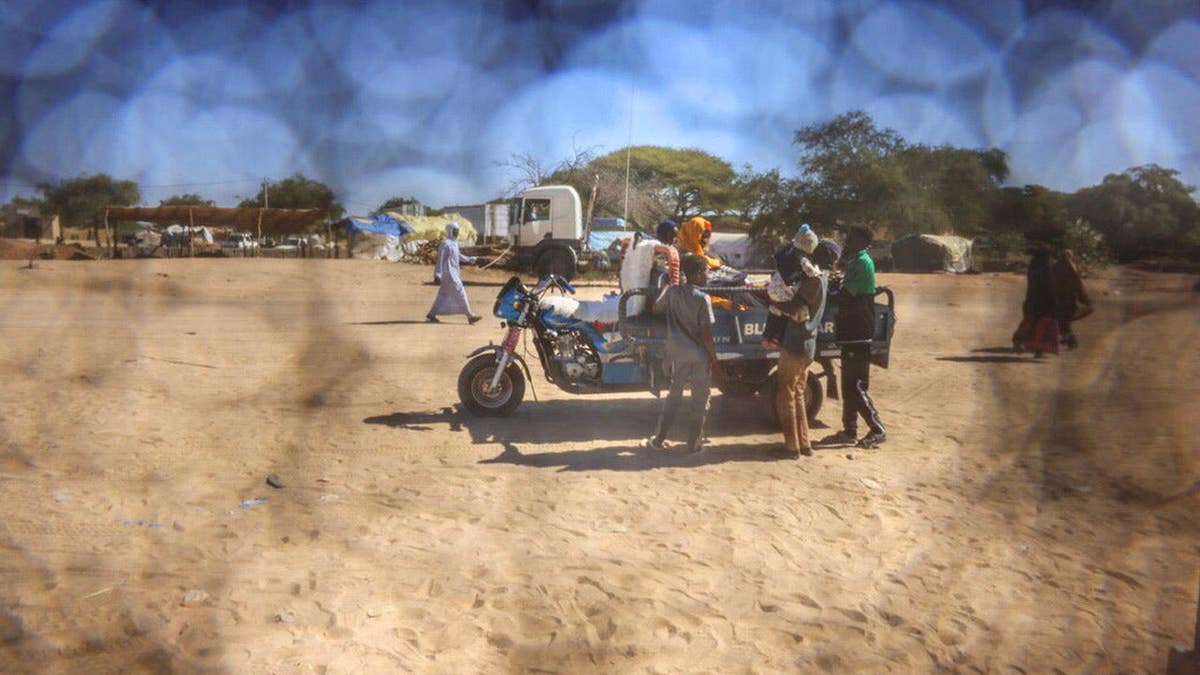
A Sudanese refugee father from Al-Fashir rides on a motorized cart with his family travelling between Chad and Sudan amid the ongoing conflict between the paramilitary Rapid Support Forces (RSF) and the Sudanese army, at the Tine border post in eastern Chad, November 22, 2025. (Amr Abdallah Dalsh/Reuters)
Hudson said the RSF’s foreign relationships are only part of a much larger regional competition.
He said Egypt, Turkey, Saudi Arabia, Pakistan and Qatar have supported the army to varying degrees, while outside powers pursue their own strategic interests in Sudan.
That competition increasingly centers on Sudan’s Red Sea coastline. «There is a regional battle of influence among neighboring states and regional states who want to be able to control Sudan’s Red Sea coastline,» Hudson said, pointing to potential military, port and economic access.
«Superimposed on top of the conflict inside Sudan is a regional proxy conflict for influence in Sudan and in the wider Horn of Africa, Red Sea region,» he said.
Secretary of State Marco Rubio has also said foreign powers are central to prolonging the war. «What’s happening in Sudan would not be happening were it not for external actors supporting one side or the other,» Rubio told reporters during UNGA week, describing U.S. efforts to secure even limited humanitarian agreements as «very frustrating.»
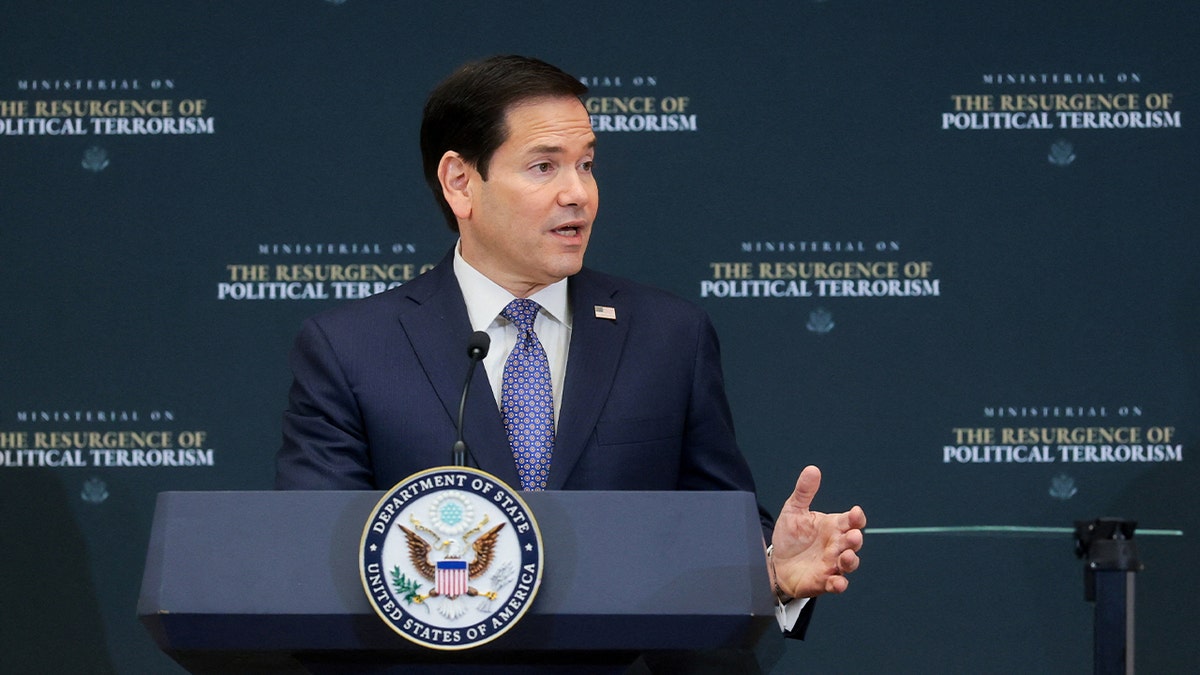
U.S. Secretary of State Marco Rubio delivers remarks at the start of a ministerial meeting on political violence, at the State Department in Washington, D.C., U.S., July 16, 2026. (Jonathan Ernst/Reuters)
Rubio said the parties have repeatedly agreed to commitments only to abandon them when one side believes it is gaining the upper hand. «There are external actors. I’m not going to single them out. You know who they are,» Rubio said. «That war and that conflict and that crisis would not be happening were it not for the active participation of external actors that are feeding one side of that conflict or another.»
He said meaningful progress would depend on those states pressuring their respective partners in Sudan.
«Until those external actors are prepared to use influence and pressure their respective proxies to live up to the commitments that they’re making, we’re not going to make progress,» Rubio said.
WORLD’S HUMANITARIAN SYSTEM BUCKLING, ‘NO LONGER FIT FOR PURPOSE,’ US-BASED RESEARCHERS SAY
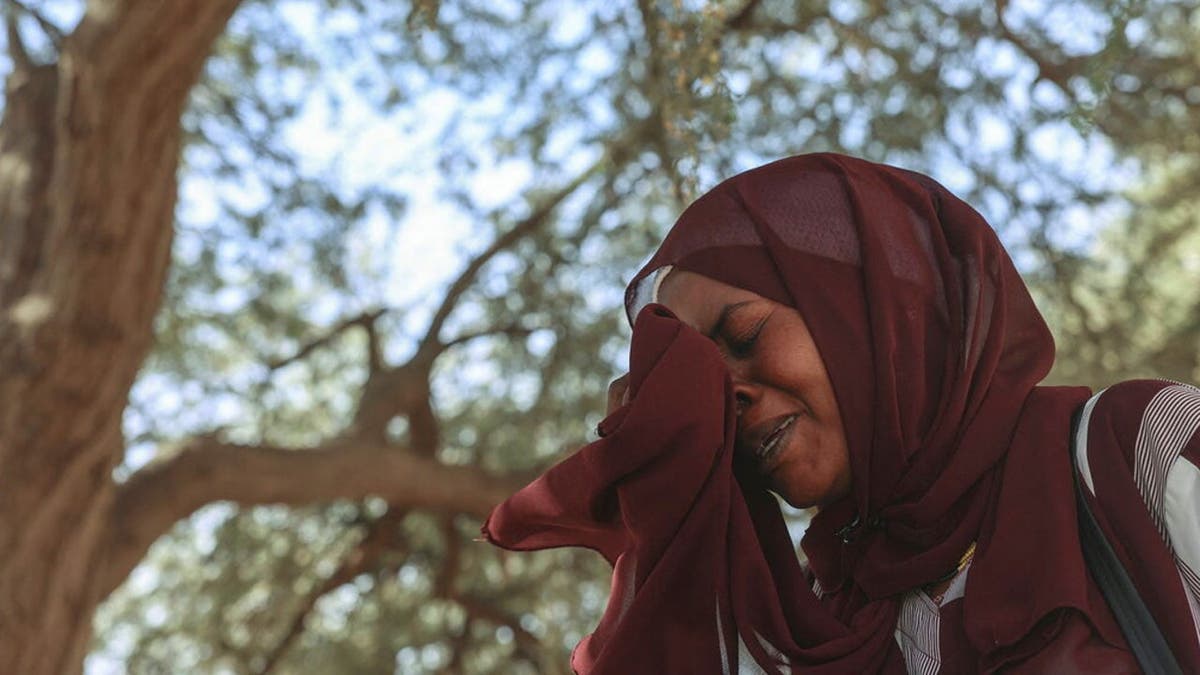
Mona Mohamed, 33, a Sudanese refugee who fled Al-Fashir, reacts during an interview with Reuters, amid ongoing conflict in Sudan between the paramilitary Rapid Support Forces (RSF) and the Sudanese army, at the Iridimi refugee camp, northwest of the town of Iriba, in Wadi Fira province, eastern Chad, November 27, 2025. (Amr Abdallah Dalsh/Reuters)
Sudan’s strategic value goes beyond geography. The country has significant gold, agricultural and livestock resources and sits at the crossroads of Africa and the Middle East. The World Bank has described Sudan as rich in fertile land, water and minerals, while noting its substantial gold production and agricultural potential.
Sudan also controls critical infrastructure used to transport South Sudanese crude oil to the Red Sea. A World Bank assessment says South Sudan’s oil has historically traveled through pipelines across Sudan to Port Sudan, its key export route.
Hudson said that broader regional competition helps explain why Washington has struggled to force Sudan’s outside backers to pull away.
«The United States is not going to use the limited political capital that it has with Saudi Arabia or Egypt or Turkey or UAE to get them to control their support to one side or the other in this conflict,» he said.
Hudson also questioned Washington’s diplomatic strategy, arguing that pressure on Burhan has not been matched by sufficient direct engagement inside Sudan.
He said Massad Boulos, President Donald Trump’s senior advisor for Arab and African affairs, has never traveled to Sudan while attempting to mediate the conflict.
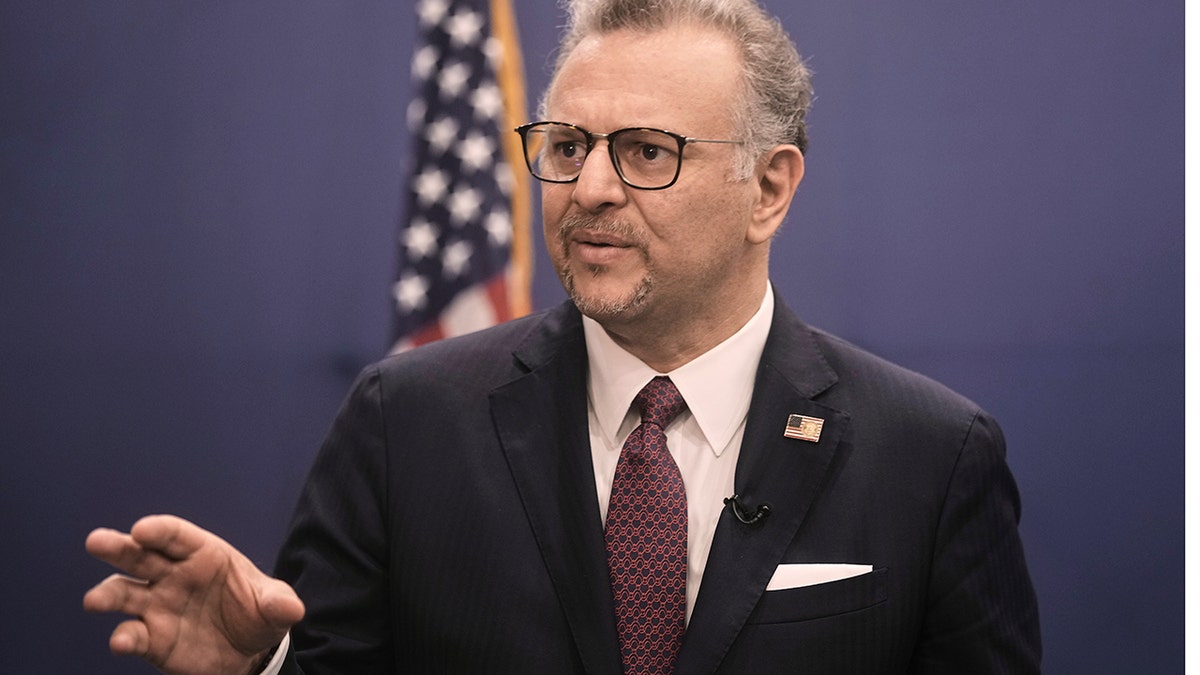
Massad Boulos, senior advisor to President Donald Trump, speaks during an interview with the Associated Press at the United States’ embassy in Cairo, Egypt, Monday, Nov. 3, 2025. (Amr Nabil/AP Photo)
«He’s trying to mediate peace in a country that he’s never been to,» Hudson said, arguing that Washington needs more «personal diplomacy» and less reliance on public statements and social media.
«If we want these people to sign a ceasefire deal, then they have to trust us,» Hudson said. «And right now we’ve given them no reason to do so.»

Patients are pictured in one of the rooms of the Saudi hospital in Khartoum’s twin-city Omdurman on March 20, 2025 as most hospitals and schools no longer function in the Sudanese capital and its environs due to the ongoing war which broke out in April 2023. Since April 2023, the conflict has pitted army chief Abdel Fattah al-Burhan against his former deputy and RSF commander Mohamed Hamdan Daglo, leaving thousands dead and uprooting more than 11 million, according to U.N. figures, with many living in makeshift camps and over 3.5 million fleeing across the country’s borders. (Ebrahim Hamid / AFP via Getty Images)
The U.N. acknowledged that international efforts have so far failed to stop the fighting. «Unfortunately, we are not seeing the war abating,» Dujarric said, reiterating the U.N. position that «there is no military solution to the conflict,» and noting Washington’s diplomatic role as the US and African Union co-chaired a Sept. 23 meeting bringing together the Quad and Quintet diplomatic groupings.
«The immediate priority is to stop the killing and secure a cessation of hostilities, while creating the conditions for a credible political process,» he said.
united nations, wars, state department, world, africa









INTERNACIONAL
Trasciende la captura de “Mosh”, señalado por Estados Unidos como lugarteniente del cartel guatemalteco Los Huistas
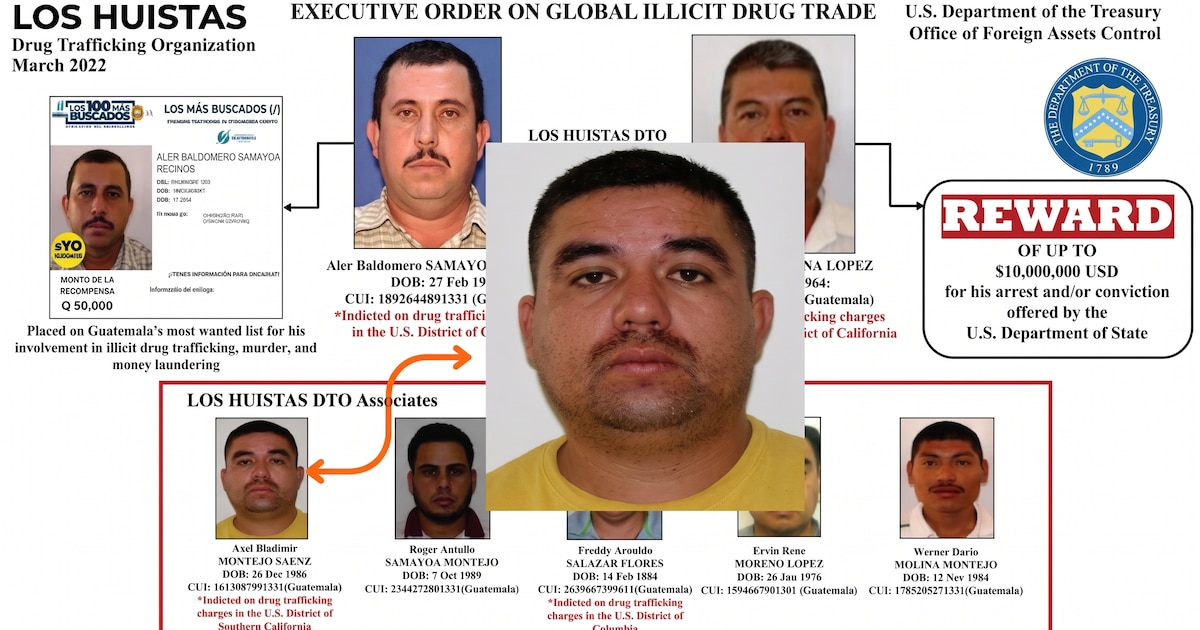
Uno de los principales lugartenientes de Los Huistas habría sido capturado este martes 10 de noviembre fuera del territorio guatemalteco. Se trata de Axel Bladimir Montejo Sáenz, conocido como “Mosh”, yerno de Eugenio Darío Molina López, alias “el Botas”, uno de los cabecillas del cartel guatemalteco, según el Departamento del Tesoro de Estados Unidos.
El Ministerio Público de Guatemala confirmó a Infobae que el hombre fue detenido, aunque aclaró que desconoce las circunstancias y otros detalles debido a que el procedimiento habría ocurrido fuera del país.
Montejo Sáenz es señalado por autoridades de Estados Unidos como uno de los principales lugartenientes de Los Huistas, organización de narcotráfico que opera en el departamento de Huehuetenango y en la frontera con México.
Según la acusación formal que pesa en su contra desde 2018 en el Tribunal de Distrito de Estados Unidos para el Distrito Sur de California, el señalado coordinaba el transporte de narcóticos con destino a territorio estadounidense.
Vínculo familiar con uno de los cabecillas
La Oficina de Control de Activos Extranjeros (OFAC) del Tesoro estadounidense identificó a Montejo Sáenz como yerno de Molina López y lo ubicó entre los integrantes relevantes de Los Huistas.

De acuerdo con la designación de 2022, “Mosh” habría ejercido funciones de lugarteniente y desempeñaba labores de coordinación del transporte de drogas dentro de la estructura, varios de ellos destinados al mercado estadounidense.
Montejo Sáenz, originario de Santa Ana Huista, figura en una acusación presentada ante el Tribunal de Distrito de Estados Unidos para el Distrito Sur de California.
El expediente le atribuye dos cargos: conspiración internacional para distribuir cocaína que sería importada ilegalmente a Estados Unidos y conspiración para distribuir cocaína a bordo de una embarcación bajo jurisdicción estadounidense.
Mientras que su suegro, Molina López fue capturado en San Diego, California, en abril de 2026, tras cuatro años de búsqueda y una recompensa ofrecida por el Departamento de Estado de hasta USD 10.000.000 millones por información que condujera a su arresto o condena.

Acusación federal lo vincula con rutas de cocaína en varios países
El proceso judicial estadounidense sostiene que Montejo Sáenz habría participado en una conspiración de narcotráfico en 2018 para distribuir la droga a bordo de una embarcación sujeta a jurisdicción estadounidense. La acusación menciona operaciones en Colombia, Ecuador, Guatemala, Costa Rica, El Salvador, México y otros lugares.
Además, un memorando presentado en julio de 2025 por la Fiscalía de Estados Unidos en el proceso contra Augusto Jean Carlo Castillo Hernández, alias “Metal”, incluyó intervenciones telefónicas en las que se menciona a Montejo Sáenz en relación con presuntos cargamentos de cocaína.
Castillo Hernández, sobrino de la diputada guatemalteca Sofía Hernández Herrera, admitió ante la justicia estadounidense su participación en la distribución de al menos 2.000 kilogramos de cocaína entre 2017 y julio de 2020, según documentos del caso.

Por ahora, no hay información oficial sobre el lugar, la fecha precisa ni la autoridad que habría ejecutado la captura de “Mosh”. La confirmación del Ministerio Público a Infobae se limitó a señalar que la aprehensión ocurrió fuera de Guatemala.
Sin confirmación oficial de Estados Unidos
Infobae consultó a la Embajada de Estados Unidos en Guatemala sobre la supuesta captura, pero al cierre de esta nota no se obtuvo respuesta ni confirmación oficial. Tampoco se localizaron publicaciones de medios estadounidenses que dieran cuenta del hecho hasta el momento.
El Departamento del Tesoro había señalado en 2022, al momento de sancionar a Los Huistas, que Montejo Sáenz usaba varios alias adicionales, entre ellos “Kraken”, “Gladiator”, “Baraja”, “Solin”, “Ron Zacapa”, “Captain Morgan” y “Corralejo”.
La organización mantiene vínculos documentados con rutas de narcotráfico que atraviesan Centroamérica y México, según la investigación estadounidense en curso.
Quiénes son Los Huistas
Los Huistas es una organización de tráfico de drogas (DTO, por sus siglas en inglés) que, según el Departamento del Tesoro de Estados Unidos, opera como la estructura criminal dominante en Huehuetenango desde al menos 2012.

La agrupación contrabandea cocaína, metanfetamina y heroína desde Guatemala hacia México, en coordinación con organizaciones mexicanas como el cartel de Sinaloa y el cartel Jalisco Nueva Generación (CJNG), para su posterior distribución en Estados Unidos.
La estructura, de carácter centralizado y jerárquico, controla también cultivos de amapola en la región montañosa entre Huehuetenango y San Marcos, además de participar en el lavado de dinero.
La OFAC sancionó en marzo de 2022 a la organización y a sus principales integrantes, entre ellos Eugenio Darío Molina López, alias “el Botas” o “Don Darío”, y Aler Baldomero Samayoa Recinos, alias “Chicharra”.
Los Huistas,Departamento del Tesoro de Estados Unidos,Axel Bladimir Montejo Sáenz,narcotráfico,Guatemala
INTERNACIONAL
Anti-Israel socialist silent on Jewish business boycott in district he’s set to represent

A newly elected Democratic socialist congressman from Philadelphia did not respond to questions about a boycott targeting Jewish-owned businesses in the city, even as prominent Pennsylvania Democrats condemned the demonstration, which coincided with the anniversary of Kristallnacht.
Rep.-elect Christopher Rabb, D-Pa., who currently represents part of Northwest Philadelphia in the state House, did not respond to requests for comment about the boycott, which drew a large counterprotest supporting Jewish residents and businesses in Rittenhouse Square.
A staff member at Rabb’s Harrisburg office acknowledged Digital’s inquiry and the two-hour deadline for a response. Digital also contacted Rabb’s Harrisburg and campaign offices by email.
TENSIONS FLARE AS DEMONSTRATORS TARGET JEWISH RESTAURANTS, DRAWING MASSIVE COUNTERPROTEST
Over the weekend, the left-wing cycling group Philly Bike on Your Left helped organize a boycott targeting Jewish-owned businesses in Philadelphia’s Rittenhouse Square neighborhood.
Flyers promoting the rally carried the slogans «No business for Zionists» and «Not in our city,» according to published reports. Philly Bike on Your Left could not immediately be reached for comment. Kristallnacht, or the Night of Broken Glass, refers to the November 1938 Nazi-organized attacks on Jews, synagogues and Jewish-owned businesses across Germany and Austria.
DSA ACCUSED OF ‘ELEVATING’ ANTISEMITIC, PRO-TERROR RHETORIC AFTER HASAN PIKER HOSTS ELECTION STREAM
Rabb has been an outspoken critic of Israel. He previously declared that the «Nakba never ended» — a reference to the displacement of Palestinians during the 1948 Arab-Israeli war — and has appeared with anti-Israel streamer Hasan Piker. Rabb has also called for Pennsylvania and the federal government to divest from Israel and participated in «war criminal» protests against Israeli Prime Minister Benjamin Netanyahu outside the United Nations.
Rabb’s lack of response contrasted with public condemnations from several prominent Pennsylvania Democrats, including Gov. Josh Shapiro, who is Jewish, Philadelphia City Council President Kenyatta Johnson and Sen. John Fetterman.
Rabb currently represents part of Northwest Philadelphia in the state legislature but is set to represent a much larger portion of the city in Congress, including Center City and Rittenhouse Square, where the boycott took place.
Digital asked Rabb whether he supports the boycott’s objectives, whether Jewish-owned businesses should be targeted over the Israeli government’s actions and whether he agrees with fellow Democrats who condemned the demonstration, including progressive Philadelphia District Attorney Larry Krasner.
Krasner noted the boycott’s proximity to the anniversary of Kristallnacht and described the Oct. 7, 2023, Hamas attack on Israel as a «terrorist attack». He also emphasized that «there is a difference between the leadership of a country and the people who reside there.»
He drew a comparison between criticism of Netanyahu and opposition to President Donald Trump, arguing that people should not be held responsible for the actions of their political leaders.
«Donald Trump didn’t do so well in this last election. Are all Americans the same as Donald Trump? Can they all be blamed for the things that he has done — is that fair?» he said, adding that legitimate demonstrations should not include epithets such as «ZioBusiness» — language he compared to rhetoric used by former Ku Klux Klan leader David Duke.
Although the boycott drew support from socialist activists, the Philadelphia chapter of the Democratic Socialists of America denied organizing or endorsing the demonstration, telling Digital that the group had no official involvement.
The group nevertheless criticized Shapiro, Johnson and Rep. Brendan Boyle, D-Pa., accusing them of participating in a «chorus of bad-faith and dangerous conflation of antisemitism with anti-Zionism and invoking comparisons of Kristallnacht that trivialize trauma and suppress political speech.»
GAZA-BORN DEMOCRATIC SOCIALIST LAUNCHES PRIMARY BID AGAINST SEN JOHN FETTERMAN
«Democratic voters sent a resounding message to a Trump administration engaged in violent acts of war abroad and at home… Yet in the wake of these historic victories, establishment Democrats have retreated to the very playbook that cost them the election in 2024.»
Boyle publicly condemned the planned boycott Thursday, issuing a statement condemning the plans as anti-Semitism .
«[T]argeting local businesses simply because they are Jewish-owned is simply wrong. Indeed, it is antisemitism,» Boyle said. «It evokes the darkest chapters of history, including the Nazi boycotts of Jewish businesses in the 1930s and Kristallnacht.»
SIGN UP TO GET THE POLITICS NEWSLETTER
«Philadelphia is a city that welcomes people of all backgrounds. This kind of hatred and discrimination has no place in our city, and I strongly condemn it.»
The controversy presents an early test for Rabb as he prepares to represent a congressional district that includes both the site of the boycott and the Jewish-owned businesses targeted by demonstrators.
pennsylvania, philadelphia, politics, john fetterman, benjamin netanyahu, israel, socialism, rise of socialism, elections, us protests

La Tierra sumó por unos meses un acompañante diminuto. El asteroide 2026 QQ8 quedó atrapado de forma temporal por la gravedad terrestre y trazará una vuelta y media en las cercanías del planeta antes de alejarse en 2027.
El fenómeno no altera la dinámica de la Luna ni representa una amenaza, pero aporta una oportunidad para observar cómo actúa la gravedad en la región donde compiten la influencia de la Tierra y la del Sol.
El Centro de Planetas Menores de la Unión Astronómica Internacional informó el hallazgo a fines de octubre. El astrónomo húngaro Krisztián Sárneczky, conocido por sus descubrimientos de asteroides, detectó por primera vez la roca espacial el 20 de agosto. Para ese momento, QQ8 ya se encontraba en una trayectoria ligada a nuestro planeta desde finales de abril.

La denominación de miniluna describe un satélite natural temporal. No se trata de una segunda Luna estable ni de un cuerpo destinado a permanecer en el sistema Tierra-Luna durante miles de años. Es un objeto pequeño que, por su velocidad y por la geometría de su aproximación, entra durante un período limitado en la zona donde la atracción terrestre logra modificar su recorrido alrededor del Sol.
Los cálculos indican que 2026 QQ8 completa una órbita solar cada 359 días, un lapso equivalente a 0,98 años terrestres. Esa cadencia lo conduce cerca de la Tierra aproximadamente una vez por década. En 2026, la aproximación presentó las condiciones necesarias para que el planeta lo retuviera por unos meses.
En 1965 pasó también cerca de la Tierra, aunque sin ingresar en una trayectoria de captura. Otra aproximación está prevista para 2058, sin perspectivas de una nueva miniluna.
QQ8 pasará a 568.000 kilómetros y no supone riesgo de impacto

La distancia mínima estimada entre el objeto y la Tierra será de 568.000 kilómetros, unas 1,5 veces la separación media entre nuestro planeta y la Luna. Esa cifra equivale a cerca de 177.000 kilómetros más que la distancia lunar promedio. Por eso, el término miniluna puede inducir a error si se interpreta como cercanía: QQ8 permanece mucho más lejos que nuestro satélite natural permanente.
Las estimaciones sobre su diámetro oscilan entre uno y dos metros. Incluso la cifra mayor lo sitúa entre los objetos espaciales más pequeños que logran una captura temporal reconocible. Si una roca de ese tamaño siguiera una ruta de colisión, la atmósfera terrestre la destruiría antes de que alcanzara la superficie. El episodio produciría, como mucho, un fenómeno luminoso en el cielo, sin consecuencias para la población.
La confirmación de su naturaleza resultó central en las observaciones posteriores al anuncio. Al principio surgió la duda de si QQ8 podía ser un fragmento de basura espacial, como una pieza desprendida de un cohete o de un satélite. Equipos astronómicos realizaron nuevas mediciones con el telescopio de 2,2 metros de la Universidad de Hawái y con el Telescopio Discovery de Lowell. Esos datos permitieron descartar un origen artificial.

El Centro de Planetas Menores concluyó que se trata de un cuerpo natural, probablemente un asteroide pequeño. La distinción tiene importancia científica: los restos tecnológicos pueden seguir trayectorias cercanas a la Tierra, pero no aportan la misma información sobre la población de rocas que circula por el vecindario planetario. QQ8 pertenece a esa segunda categoría y ayuda a estudiar cuerpos que suelen escapar a los registros por su tamaño reducido.
Su ruta tampoco forma un círculo regular alrededor de la Tierra. La esfera de Hill explica mejor el proceso. Esa región marca, de forma aproximada, el espacio en el que la gravedad terrestre puede imponerse sobre la del Sol para retener temporalmente un objeto. Fuera de ese límite, la fuerza solar determina el movimiento. QQ8 cruzó esa frontera gravitatoria en abril, por lo que quedó sujeto a una órbita transitoria y compleja.
El desenlace está previsto para diciembre. En ese punto, las perturbaciones gravitatorias devolverán al asteroide a una trayectoria dominada por el Sol. Algunas proyecciones sitúan su salida definitiva cerca de enero de 2027, una diferencia que depende de cómo se defina el inicio y el final exactos de la captura. En cualquier caso, el paso de QQ8 por las cercanías terrestres durará alrededor de nueve meses.
La Tierra recibe satélites temporales con más frecuencia de la que parece

La presencia de una miniluna no constituye un hecho excepcional, aunque cada caso ofrece condiciones distintas. Entre los antecedentes recientes figuran 2020 SO, 2020 CD3 y 2024 PT5. También aparece 2025 PN7, catalogado como cuasiluna. La diferencia importa: una cuasiluna comparte una órbita solar parecida a la terrestre y, vista desde nuestro planeta, parece acompañarlo; sin embargo, no queda capturada por la gravedad de la Tierra como un satélite temporal.
Un estudio publicado el año pasado planteó que la Tierra podría contar con hasta seis minilunas a la vez. Muchas pasarían inadvertidas porque miden apenas decenas de centímetros y permanecen poco tiempo cerca del planeta. Un modelo elaborado este año estimó un diámetro medio de 75 centímetros para esos satélites fugaces. El mismo trabajo calculó una permanencia media cercana a nueve meses, un valor compatible con el período previsto para 2026 QQ8.
Esa comparación también ubica a QQ8 por encima del tamaño medio propuesto para las minilunas. Las simulaciones indican que una roca espacial de unos tres metros de ancho podría mantenerse bajo control gravitatorio terrestre entre 10 y 20 años. No obstante, esos escenarios dependen de múltiples variables: la velocidad de llegada, el ángulo de aproximación, la influencia solar y el efecto gravitatorio de la Luna.

Algunas de estas rocas quizá proceden del propio satélite natural de la Tierra. Grandes impactos sobre la superficie lunar pueden expulsar material al espacio y enviar fragmentos hacia órbitas que cruzan el entorno terrestre. Kamo’oalewa, descubierto en 2016 y clasificado como cuasisatélite, figura entre los candidatos a ese origen. Tiene unos 40 metros de diámetro, mucho más que QQ8, y mantiene una relación orbital distinta con la Tierra.
“Su espectro se asemeja mucho al de las muestras lunares erosionadas por el espacio, lo que sugiere un origen lunar de Kamo’oalewa”, escribieron los autores de un estudio sobre ese objeto. La afirmación vincula la composición de Kamo’oalewa con material expuesto durante largo tiempo al entorno espacial en la Luna. Ese posible parentesco amplía el interés por los cuerpos pequeños que transitan cerca de la Tierra.
Los investigadores sostuvieron además que un origen lunar para Kamo’oalewa señalaría que los impactos dispersan fragmentos considerables por el sistema Tierra-Luna. Esa información resulta relevante para reconstruir la procedencia de los objetos próximos a la Tierra, entender la formación de satélites de planetas rocosos y evaluar riesgos potenciales. Los objetos cercanos a la Tierra, conocidos por la sigla NEO, suelen existir entre uno y 10 millones de años, aunque algunos persisten hasta 150 millones.
En el caso de la Tierra, 2026 QQ8 no modifica ninguno de esos equilibrios a gran escala. Su valor reside en la observación de un proceso breve: una roca de dimensiones modestas entra en la zona de influencia terrestre, completa parte de un recorrido condicionado por esa atracción y vuelve a integrarse en su órbita solar. Desde diciembre, la miniluna dejará de acompañar al planeta, pero sus mediciones permitirán afinar modelos sobre estas visitas temporales.
2026 QQ8,miniluna,órbita,Infobae

Independiente negocia con Tigre la venta de Santiago López antes de que termine el año

La pesadilla de una famosa en MasterChef Celebrity: su relleno de empanadas se cayó al piso y terminó eliminada

Fumito Ueda (56 años), creador de Shadow of the Colossus, sobre su infancia: "Disfrutaba atrapando peces o pájaros; me interesaban las cosas que se movían"

El Gobierno descarta reabrir el debate por la derogación de la Ley del aborto pese al mensaje del Papa

“Creo que está más avanzado”: una ex figura de Inglaterra afirmó que Lamine Yamal se desarrolló mejor que Messi y Cristiano Ronaldo

Saúl Durán: lo subieron a la Reserva de River y lo llamó la selección mayor de Costa Rica

La queja de Yanina Latorre tras asistir al VIP de la misa del papa León XIV: “Estuve al rayo del sol haciendo nada y…”

Así fue el saludo entre Javier Milei y el papa León XIV en Aeroparque tras la llegada a la Argentina

Franco Colapinto le hizo probar mate a Lewis Hamilton en un evento durante el GP de Brasil: la reacción del piloto de Ferrari

Gimnasia de Mendoza vs Independiente Rivadavia: formaciones, hora y dónde ver por tv

 CHIMENTOS1 día ago
La queja de Yanina Latorre tras asistir al VIP de la misa del papa León XIV: “Estuve al rayo del sol haciendo nada y…”
- POLITICA2 días ago
Así fue el saludo entre Javier Milei y el papa León XIV en Aeroparque tras la llegada a la Argentina
- POLITICA3 días ago
Elecciones desdobladas y lejos de las nacionales: la estrategia de los gobernadores patagónicos en 2027