INTERNACIONAL
La fotografía que rompió con la pintura en los años 20: cámaras Leica, desnudos en revistas y la nueva mujer que los nazis borraron

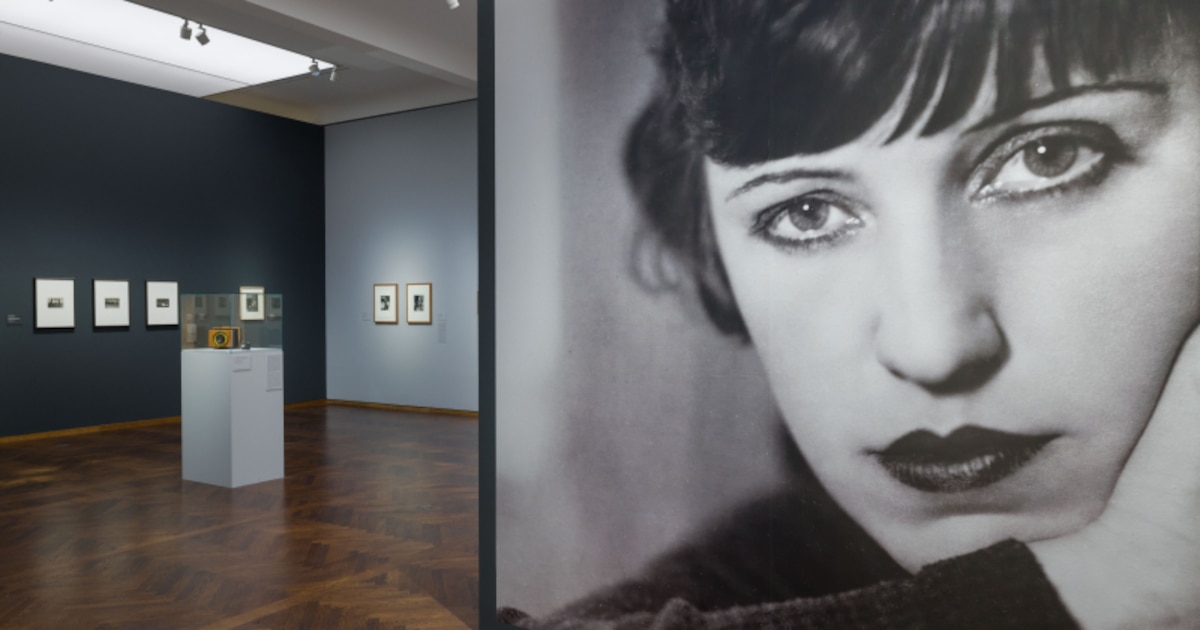
Europa Central, año 1920. La nueva sociedad que va surgiendo de las ruinas de la I Guerra Mundial necesita también una forma diferente de captar y contar el mundo: una fotografía que se independiza definitivamente de la pintura y se vuelve rápida, precisa y objetiva.
Los cambios técnicos y estéticos que la fotografía experimentó en las décadas de 1920 y 1930 en Alemania y Austria son el motivo de la exposición Nueva Objetiva, en la que el Museo Leopold de Viena reúne hasta finales de febrero más de 200 piezas que relatan cómo se hace ubicua en la arquitectura, el periodismo, la moda o la publicidad.
“La fotografía se hace adulta, definitivamente. Se convierte en un medio de masas. Se utiliza en todas estas revistas; el auge publicitario que tiene lugar en la década de 1920 incorpora la fotografía… Así que es omnipresente”, resume para esta agencia una de las comisarias de la muestra, Aline Marion Steinwender.
En ese proceso jugó un papel esencial la aparición de las cámaras de la empresa Leica, compactas y portátiles, que permitieron el acceso del público general a la fotografía: entre 1925 y 1931 se vendieron casi 60.000 unidades.

Una fotografía autónoma
La exposición del Leopold muestra cómo esta nueva concepción corta todo lazo no solo con la pintura, sino también con la anterior fotografía pictorialista, llena de desenfoques, alegorías, filtros y claroscuros.
Ahora, la fotografía “se basta a sí misma”, como definió Albert Renger-Patzsch, uno de los referentes de esta nueva corriente, en la que destacaron también August Sander, Aenne Biermann, Edith Tudor-Hart o Trude Fleischmann.
“La fotografía se emancipa e intenta postular como un valor igualmente válido lo que la hace verdaderamente autónoma: su pretensión de realidad y su fidelidad al detalle”, señala Dominik Papst, otro de los comisarios de la exposición.
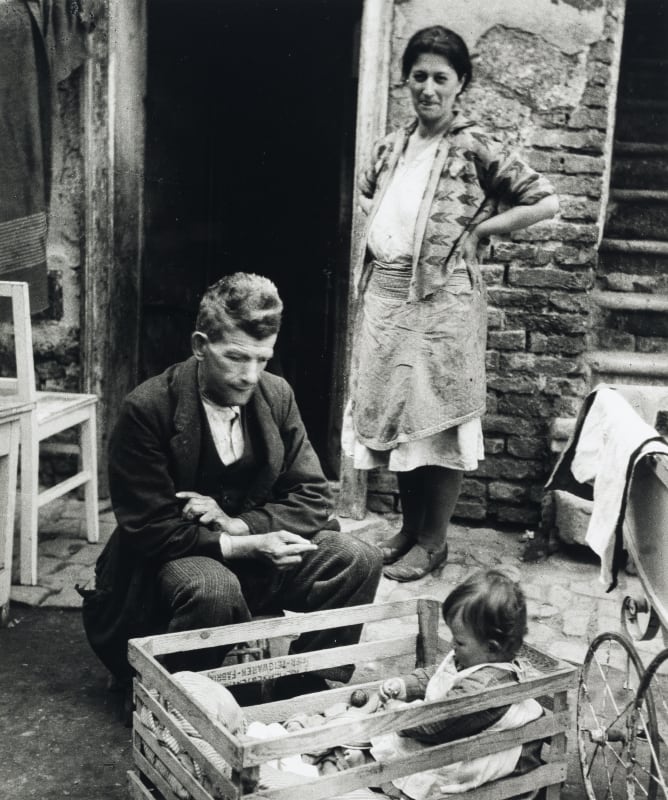
El nuevo fotoperiodismo muestra la realidad de forma cruda y directa, como las imágenes del desempleo y la pobreza por la crisis económica de 1929 que tomaron Walter Ballhause en Hanóver o Edith Tudor-Hart en Viena.
“Debemos ser capaces de soportar ver la verdad”, resumió en 1927 August Sander sobre esa tarea del fotógrafo.
La propia naturaleza no es ya captada como el habitual paisaje idílico, sino que la cámara es ahora un testigo fiable de las formas y la arquitectura natural, como hizo el berlinés Karl Blossfeldt en sus imágenes ultradetallistas de plantas.
La foto deja de ser un elemento secundario en libros y revistas, sino que surgen publicaciones en las que es la protagonista, como Die Welt ist schön (El mundo es hermoso), editado en 1928 por Albert Renger-Patzsch, o Antlitz der Zeit (El rostro del tiempo), por August Sander en 1929.
Estos libros de fotografías ya no son una mera sucesión de láminas con reproducciones: las fotos se crean y seleccionan pensando en el libro del que formarán parte.
Antes del crack del 29, la recuperación económica que siguió a la I Guerra Mundial, ayudada por la inflación, favoreció un boom del consumo y de la asociada a él, en la que la fotografía tuvo un papel esencial.
La foto en los anuncios se asocia con la modernidad y la autenticidad del producto, como en las famosas campañas de la marca de café Hag, o de las galletas Leibniz.
La proliferación de fotógrafas que abren sus propios estudios y tienen mucho éxito profesional es una señal más del proceso de emancipación tras la I Guerra Mundial.
La nueva mujer
Hay muchas mujeres tras las cámaras, pero también delante de ellas: la nueva mujer, con pelo corto, siempre a la moda, con un cigarrillo en la mano y mirando a la cámara con seguridad y desafío es uno de los motivos que más se reproducen.
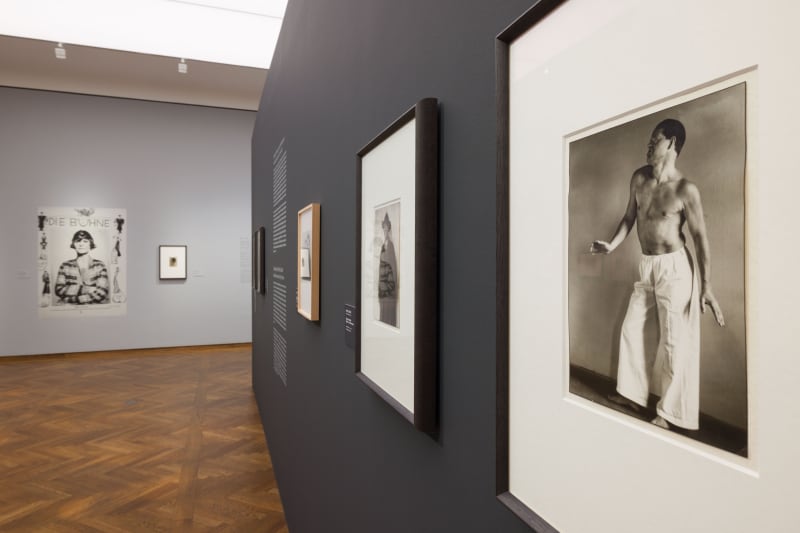
La foto que Sander hizo de Anneli Strohal, una secretaria en la radio pública WDR, o el retrato de la actriz Lotte Lenya que hizo Lotte Jacobi, son ejemplos de esa estética y esa ética que quedó arrasada cuando los nazis llegan al poder en Alemania (1933) y Austria (1938) y condenan de nuevo a la mujer a la marginación frente a los hombres.
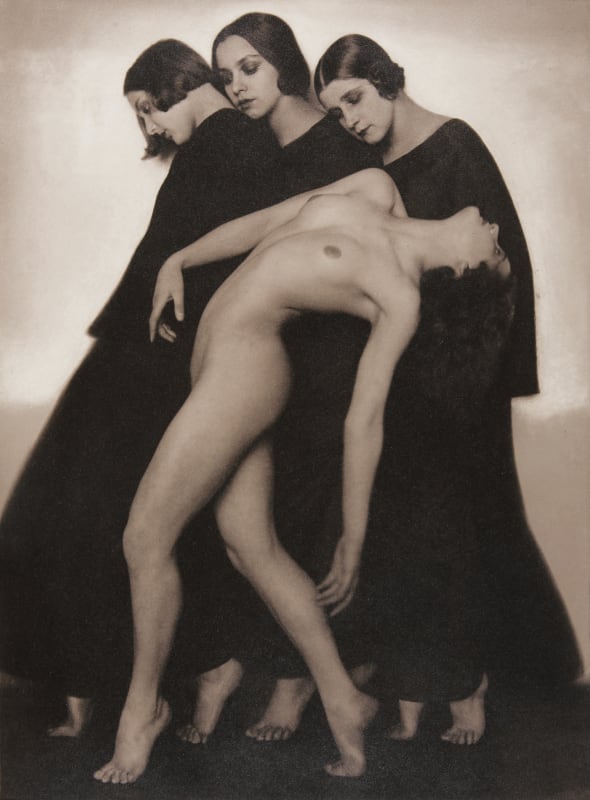
También proliferaron los desnudos, incluso a través de revistas de amplia tirada, que se mueven entre la moda del erotismo que llega de Estados Unidos y los estudios del movimiento y el dinamismo que permite la técnica fotográfica.
Aunque esta evolución de la fotografía se dio en muchos lugares del mundo en esa época, en Alemania fue muy especial por el maridaje con los nuevos conceptos sobre arquitectura y diseño de la Bauhaus y con la fascinación por lo funcional y lo práctico, además de que Berlín era en aquel momento una de las capitales mundiales de la modernidad.
Lo cierto es que hay un antes y después de 1920 en la historia de la fotografía, y que esa década y la de 1930 marcaron lo que vino luego.
Fuente: EFE.
Foto: EFE/ Antonio Sánchez Solís.
‘Nueva. Objetiva’,Museo Leopold de Viena,fotografía














Photos taken by a commuter on Washington, D.C.’s Metro system appear to show a White House advisor’s laptop displaying a draft plan to overhaul the Smithsonian’s National Museum of American History, ProPublica reported.
Last month, a commuter riding the Orange Line from Northern Virginia noticed a man in a suit working on a laptop displaying a document titled «Smithsonian Institution Renewal Plan.» The commuter photographed the screen and sent the images to ProPublica.
The multipoint draft proposed firing museum Director Anthea Hartig, creating new museum-wide exhibit guidelines that omit the Smithsonian’s diversity style guide, reviewing its traveling-exhibition strategy — including ending «The Bias Inside Us» — and reassessing grants to what the draft called «woke third parties,» including the American Alliance of Museums. A separate handwritten note that was also pictured proposed a policy against «X-rated» exhibitions. ProPublica said it likely referred to an exhibit the White House criticized for displaying a two-piece chrome-and-rubber harness designed for sadomasochism.
INSIDE THE BEHEMOTH SMITHSONIAN MUSEUM NETWORK DRAWING FIRE FROM THE TRUMP ADMINISTRATION
The draft renewal plan pictured on the staffer’s laptop surfaced amid a broader Trump administration effort to reshape how the Smithsonian presents American history. The White House released a 162-page report on July 4 accusing the National Museum of American History of «ideological capture.» Two congressional hearings followed, and a July executive order directed officials to post signs outside the museum informing visitors of the report’s findings about «ideological capture,» though ProPublica reported the signs had not yet gone up as of publication.
Digital reached out to the White House for comment on the photographed document and whether any of its proposals are under consideration, but did not receive a response by publication. The photographed document does not establish whether the proposals were approved or put into effect.
TRUMP GIVES SMITHSONIAN DAYS TO REPLACE ‘STRANGE MODERNIST SCULPTURE’ WITH FOUNDING FATHER
ProPublica reported that it identified the White House staffer as Sam Bock, a 27-year-old associate policy advisor with the White House Domestic Policy Council — which produced the July report — after spotting the initials «B.S.» or «S.B.» on the laptop screen and following a man matching his description from the Metro to a White House employee checkpoint. ProPublica reported that Bock did not respond to its messages and that the Smithsonian declined to comment.
ProPublica reported that the proposals on Bock’s laptop envisioned a permanent exhibit celebrating Western civilization, a display on prominent American families, a large George Washington statue at the museum entrance and new museum-wide interpretive guidelines written without reference to the Smithsonian’s diversity style guide. A separate handwritten note photographed alongside the laptop also floated a potential new D-Day exhibit.
In addition to the proposed exhibit changes, the draft called for the firing of National Museum of American History Director Anthea Hartig and about a dozen senior administrators and curators. That proposal came as Smithsonian Secretary Lonnie Bunch, who leads the broader institution, was preparing to retire at year’s end. ProPublica reported that White House criticism of the Smithsonian helped prompt Bunch’s departure.
TRUMP V. SMITHSONIAN: A TIMELINE OF HOW THE WHITE HOUSE FIGHT OVER ‘WOKE’ HISTORY UNFOLDED
The draft plan also called for overhauling the museum’s online curriculum for K-12 students, including dropping a module on immigration and creating new material focused on the Founders, according to ProPublica, which noted the document floated possible titles for the new curriculum, including «Architects of Liberty» and «Profiles in Liberty.»
The administration’s push to reshape how the Smithsonian presents American history began picking up steam in March 2025, when Trump signed an executive order directing Vice President JD Vance, through his role on the Smithsonian’s Board of Regents, to help remove what the order called «improper ideology» from the institution. The Smithsonian, which encompasses 21 museums and D.C.’s National Zoo, is governed by a 17-member Board of Regents that consists of the vice president, the chief justice of the Supreme Court, members of Congress and private citizens. It receives more than $1 billion in federal funding annually.
The White House’s July report cited, among other examples, a museum exhibit that raised the possibility Benjamin Franklin had used enslaved people in his household as subjects in electrical experiments. It also criticized staff training based on a social-action toolkit that the report said linked museums to White supremacy and other forms of oppression.
The report said the museum should not erase slavery, Jim Crow or other national failures. Its broader charge was that the museum was not giving visitors a coherent account of how the country developed, including both its achievements and its wrongs.
SIGN UP TO GET THE POLITICS NEWSLETTER
The criticism from the Trump administration came amid a longer-running debate over how the museum should tell the nation’s story, which has stretched back to at least 2001.
ProPublica reported that in response to earlier criticism, the Smithsonian convened a blue-ribbon commission in 2001, whose 2002 report urged the museum to present a more unified account of American history. The outlet also reported that after George Floyd’s murder in 2020, Bunch and other leaders began an institution-wide reassessment of the Smithsonian’s priorities and how it tells the nation’s story.
smithsonian, white house, executive policy, washington dc, arts, politics
INTERNACIONAL
Ex- Ukraine prosecutor general accuses Zelenskyy’s office of interfering in anti-corruption investigation

NEWYou can now listen to Fox News articles!
Ukraine’s former prosecutor general is accusing President Volodymyr Zelenskyy’s administration of interfering in a criminal investigation involving the head of the country’s anti-corruption bureau after the president demanded his removal from office in September.
In an extensive interview with Fox News Digital, Ruslan Kravchenko alleged that Zelenskyy’s decision to remove him came under pressure from the National Anti-Corruption Bureau of Ukraine (NABU) and the Specialized Anti-Corruption Prosecutor’s Office (SAPO), whose officials he said his office had been investigating.
«The signature on the resignation letter was mine. The decision was his,» Kravchenko said. «You do not have to put handcuffs on the president himself to tie his hands. It is enough to put the people he relies on at risk.»
BILLIONS IN US AID TO UKRAINE UNDER MICROSCOPE AS CORRUPTION ROCKS ZELENSKYY’S INNER CIRCLE
Former Prosecutor General of Ukraine Ruslan Kravchenko attends a press conference in Kyiv, Ukraine July 23, 2025. (Thomas Peter/Reuters)
Kravchenko’s most serious allegation concerns what happened afterward. He claims the president’s office instructed prosecutors to close a criminal case involving NABU Director Semen Kryvonos.
«The Office of the President began issuing instructions to the Office of the Prosecutor General to immediately close the criminal case against the head of NABU,» he said. «In my assessment, that amounts to deliberate interference in an investigation.»
«The authority to investigate crimes becomes the ability to determine government policy and even geopolitics,» he argued.
Kravchenko did not identify who allegedly issued those instructions or provide documentary evidence of the communications in the materials supplied to Fox News Digital. His allegation of presidential interference has not been independently verified.
UKRAINE’S ZELENSKYY ON DEFYING US IN ATTACKING RUSSIAN OIL: ‘OUR RESPONSE MUST BE PAINFUL’

Prosecutor General of Ukraine Ruslan Kravchenko attends a press conference in Kyiv, July 23, 2025. (Thomas Peter/Reuters)
The dispute behind his removal
Kravchenko’s departure followed a September investigation known as Operation Carthage, in which NABU and SAPO accused officials connected to the Prosecutor General’s Office of helping protect fraudulent call centers and laundering criminal proceeds.
According to a Sept. 8 report in The Guardian, the investigation centered on fraudulent call centers whose employees impersonated banks, police officers and investment advisers to steal money from victims in Ukraine, Russia and Europe. NABU alleged that a senior official in the Prosecutor General’s Office protected the operation and helped launder its proceeds.
Law enforcement sources told Ukrainska Pravda that individual call centers paid approximately $7,000 a month in protection money. Investigators also released recordings suggesting that the principal suspect had overseen repairs at Kravchenko’s home while allegedly collecting bribes.
Kravchenko, who has not been charged in the investigation, denies wrongdoing and rejects the allegations against his office. He claimed the operation was intended to seize investigative materials concerning misconduct by anti-corruption officials and prevent him from pursuing those cases.
He said he initially refused to resign but changed his position following a Sept. 7 meeting with Zelenskyy, attended, according to Kravchenko, by Davyd Arakhamia, leader of the president’s parliamentary faction.
«When the president wants your resignation and the leader of his parliamentary faction, which commands a majority, is sitting beside him, believe me: a prosecutor general’s room for maneuver is extremely limited,» he said.
Zelenskyy publicly confirmed that he had demanded Kravchenko’s removal.
«There is only one path for this Prosecutor General: removal from office. That is what I told him,» Zelenskyy said in a Sept. 14 statement, according to Reuters.
Zelenskyy also said that if Kravchenko considered the decision political pressure, he was free to characterize it that way. The president suspended him on Sept. 14, and parliament approved his dismissal the following day.
ZELENSKYY PRESSES US FOR EXPANDED RUSSIA TALKS AS KUSHNER ANNOUNCES BREAKTHROUGH
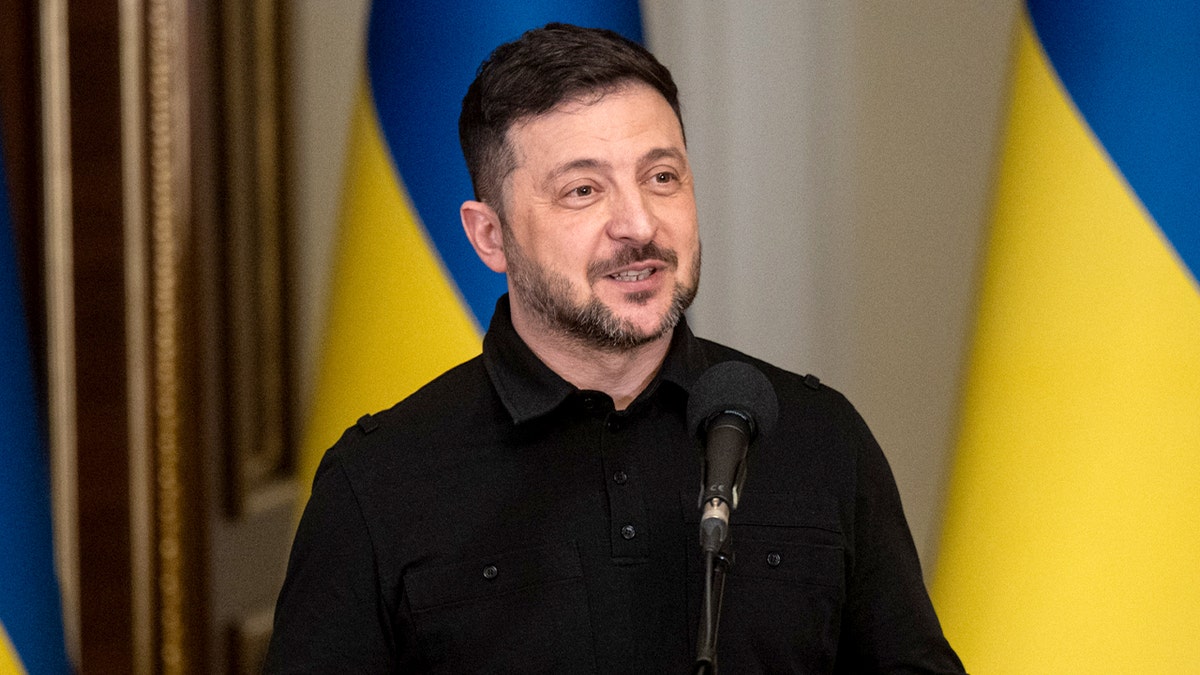
Ukrainian President Volodymyr Zelenskyy speaks during a briefing in Kyiv, Jan. 3, 2026. (Danylo Antoniuk/AP)
Disputed investigation
The confrontation intensified when Kravchenko announced on Sept. 14 that he had signed a notice of suspicion against Kryvonos over alleged misconduct predating his appointment as NABU director.
Ukraine’s Prosecutor General’s Office disputed the validity of the notice, stating that Kryvonos had not been formally notified of suspicion under Ukrainian law and that relevant entries in the investigative register had been deleted.
Kravchenko alleges those actions followed pressure from the president’s administration. The claim remains unverified.
NABU and SAPO have rejected Kravchenko’s broader accusations, describing them as a campaign against independent anti-corruption institutions. In a Nov. 4 announcement, the agencies said Operation Carthage had uncovered an alleged criminal network involving senior law-enforcement officials accused of protecting fraudulent businesses. Those allegations have not been proven in court.
The controversy comes amid widespread public concern about corruption. A September survey by the Kyiv International Institute of Sociology found that 72% of Ukrainians held Zelenskyy politically responsible for corruption among his associates, although the findings did not suggest respondents believed he was personally involved.
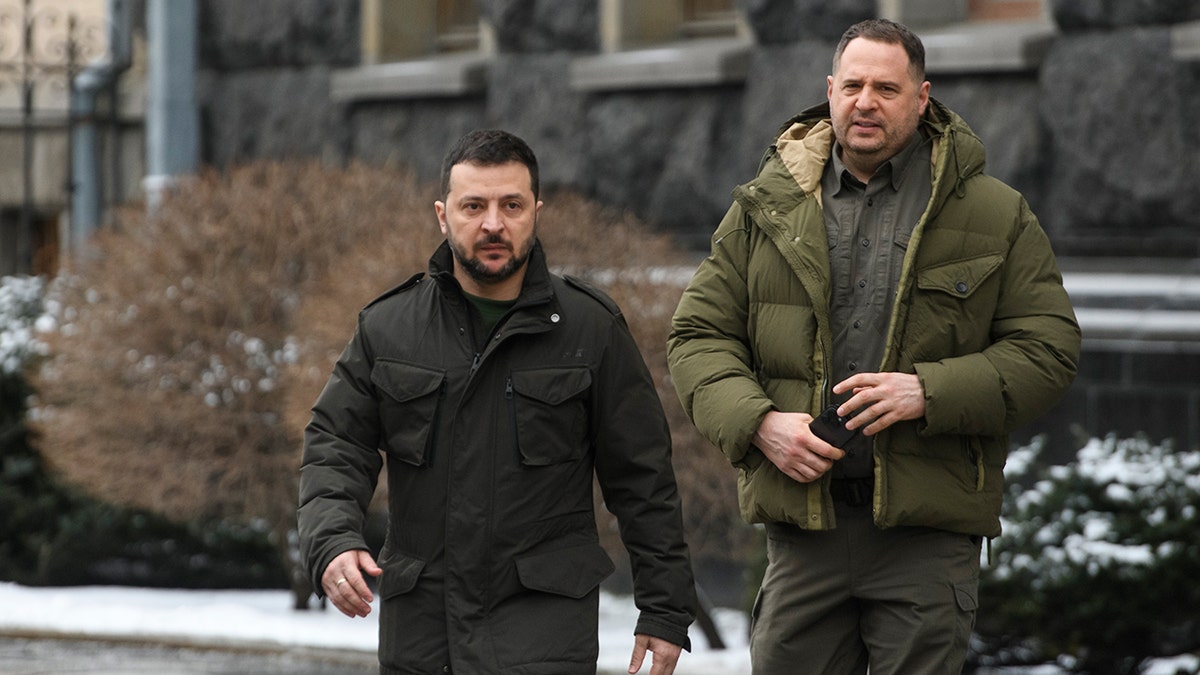
President Volodymyr Zelenskyy and former head of the presidential office, Andriy Yermak, in Kyiv, Ukraine, on Jan. 22, 2024. (Maxym Marusenko/NurPhoto via AP)
Zelenskyy has publicly condemned the widening investigation’s allegations. In a Nov. 7 address, he described alleged misconduct involving senior security officials as «frankly shameful, absolutely unacceptable,» according to Reuters, and called for a full investigation.
His former chief of staff, Andriy Yermak, defended him in an interview with the Axel Springer Global Reporters Network, amid an earlier corruption scandal in November 2025, describing Zelenskyy as «not corrupt» and saying he had allowed independent anti-corruption investigations.
Zelenskyy’s office did not respond to multiple requests from Fox News Digital for comment on Kravchenko’s latest allegations.
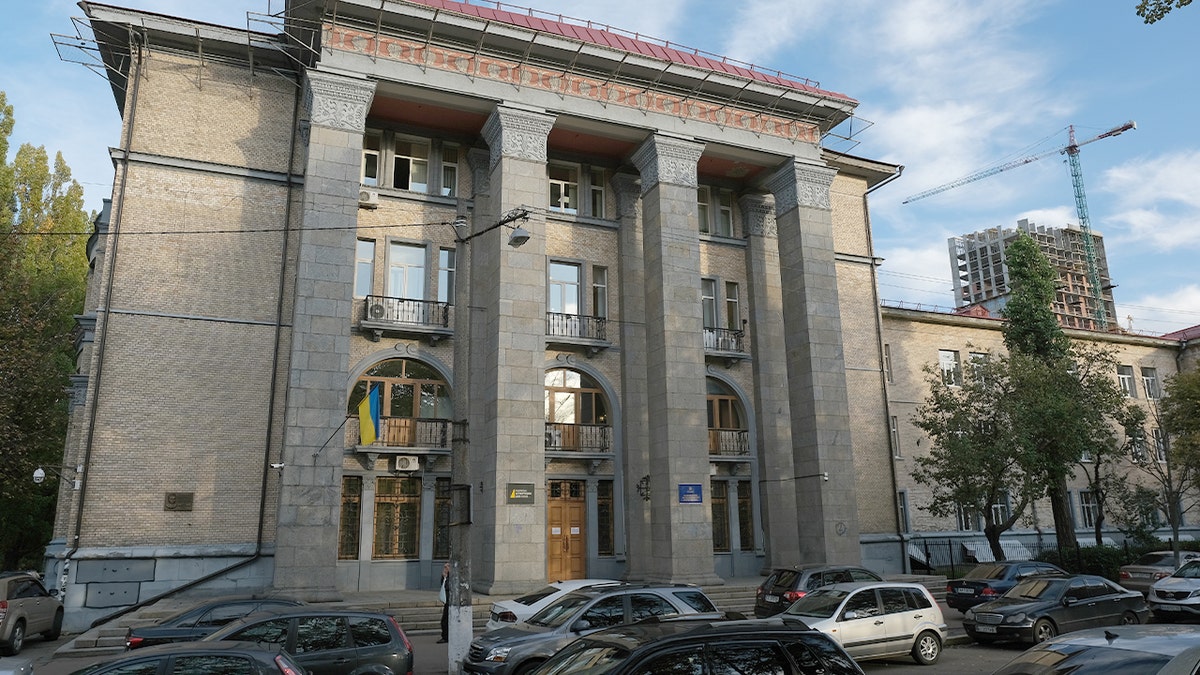
The offices of the National Anti-Corruption Bureau of Ukraine, on Oct. 1, 2019, in Kyiv. (Sean Gallup/Getty)
The former prosecutor general maintains that his removal prevented him from pursuing investigations into the leadership of the anti-corruption agencies. Ukrainian authorities, meanwhile, have publicly defended the investigation that preceded his dismissal.
ukraine, volodymyr zelenskyy, investigations, corruption
INTERNACIONAL
What the US gets from Israel alliance as support for aid to the Jewish State erodes on left and right: report
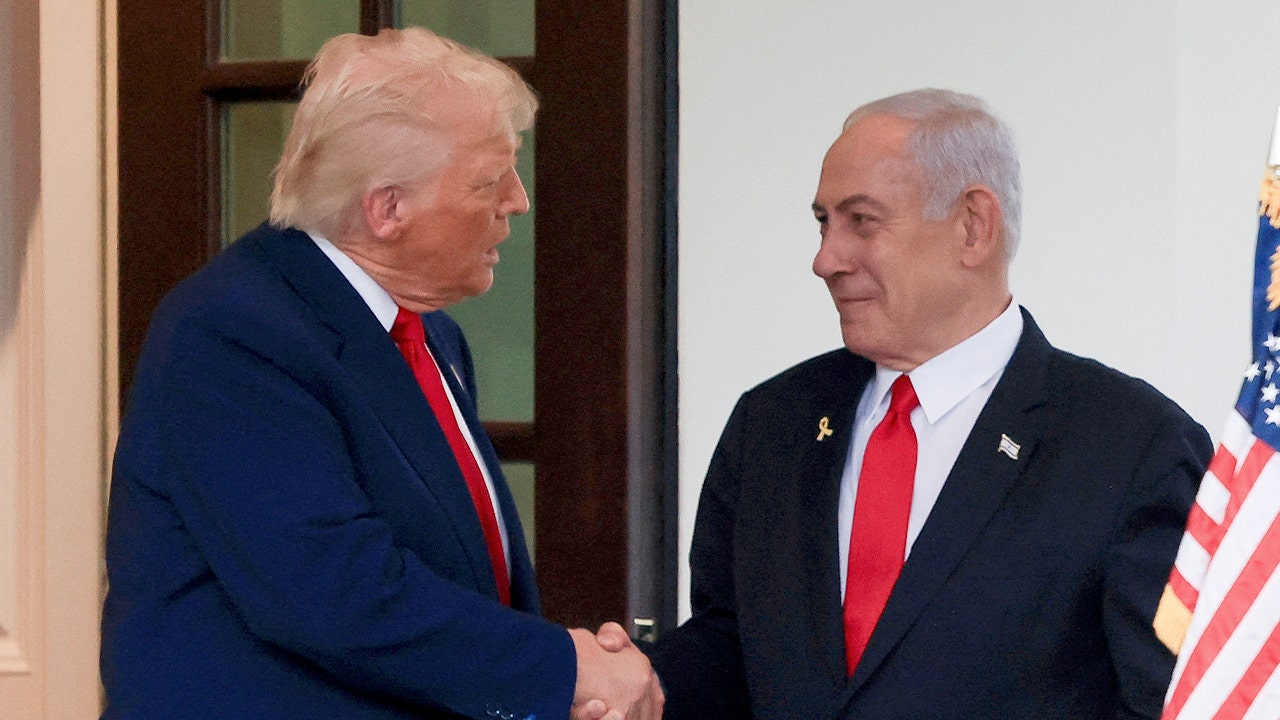
The U.S.-Israel alliance was tested when Washington and Jerusalem found common cause against Iran — and when defending Israel drew heavily on American weapons stocks. Meanwhile, that ongoing conflict has now sharpened a question for Washington: what does the alliance deliver, and what does it demand in return?
A new report from Advancing American Freedom (AAF) and the Zionist Organization of America (ZOA) argues that Israel’s military reach and regional role make the alliance a strategic asset for Washington.
Its authors call Israel «the largest U.S. aircraft carrier» in the Middle East. But this is in direct opposition of critics who say that the alliance costs the U.S. a lot and delivers very little in return.
The report, dated Oct. 26, 2026, arrives as public support for Israel continues to fall across the political spectrum — even among Republicans and MAGA supporters.
FROM INTELLIGENCE SHARING TO MISSILE DEFENSE, HOW ISRAEL’S PARTNERSHIP PROTECTS AMERICAN SECURITY
President Donald Trump and Israeli Prime Minister Benjamin Netanyahu have discussed ending direct U.S. military aid, but the U.S. leader has also called Israel «a great ally, much more reliable than most» and said Washington would help if Israel needed it.
The report specifically points to intelligence sharing, joint weapons development and military cooperation as returns on what the U.S. gets for providing support to Israel.
One of the clearest examples is missile defense. The U.S. and Israel develop systems including David’s Sling and Arrow, while American companies manufacture components for several programs. More than 100 companies across 34 states participate in missile-defense co-production, according to the Congressional Research Service. In August, a Raytheon-Rafael facility in Arkansas delivered the first Iron Dome Tamir interceptor built entirely in the U.S.
Those programs support U.S. manufacturers and give the Pentagon a role in developing missile-defense systems. During the Iran conflict, however, U.S. forces also expended large numbers of interceptors — costly weapons that can take years to replace.
US REBUILDING WEAPONS STOCKPILE COULD DELAY ORDERS FROM ALLIES
In September, the Congressional Budget Office (CBO) estimated that the U.S. had probably used between half and two-thirds of its combined inventory of Patriot, THAAD, SM-3 and SM-6 interceptors since June 2025.
The estimate includes weapons used during the earlier 12-day war with Iran and is based on publicly reported expenditures compared with the number of those interceptors the War Department has purchased. CBO said rebuilding stocks could take at least five years, even if production increased.
Intelligence sharing is another return cited by supporters of the alliance. Former CIA Director John Brennan said Israeli intelligence was among the «thousands of bits» considered during the years-long effort to find Usama bin Laden. He did not specify what Israel provided or how much it contributed to the operation.
A more recent exchange shows how Israeli reporting can prompt U.S. action even when its accuracy is uncertain. Israeli officials warned the U.S. of a possible Iranian plot to kill Trump during a trip to Turkey. The Secret Service took precautions, including moving him to another aircraft. U.S. intelligence agencies could not independently verify the threat, however, and the CIA assessed some of the Israeli reporting with «low confidence,» according to Reuters and The Washington Post.
NETANYAHU REVEALS HE WANTS AMERICAN FINANCIAL SUPPORT FOR ISRAEL TO ‘DRAW DOWN TO ZERO’
The financial relationship has also become part of the debate. Under the current agreement, the U.S. provides Israel with $3.3 billion annually in Foreign Military Financing and $500 million for joint missile-defense programs. Most of the military aid pays for weapons and services from U.S. contractors, according to CRS. Israel’s ability to spend a portion of the funding on domestic purchases is scheduled to phase out by 2028.
The report’s authors call the $3.8 billion in annual U.S. military aid «one of the highest returns on investment of any U.S. foreign assistance.»
Trump has said he wants to end annual aid, while Netanyahu has also publicly called for phasing it out over time. U.S. and Israeli officials have been negotiating a new agreement that could wind down direct assistance while expanding joint defense projects and weapons production. The current agreement runs through 2028, Congress controls appropriations, and no successor deal has been reached.
TRUMP WANTS LARGEST-EVER ISRAELI HEAVY BOMB TRANSFER — BUT PROPOSAL HAS CONGRESS PREPARING FOR $2.8B FIGHT
The debate is also becoming more politically consequential as Americans question the relationship’s terms.
A 2026 Chicago Council survey found that 56% favored reducing or ending U.S. military aid to Israel. Republicans remain more supportive than Democrats and independents, but the right is divided: Joe Kent blamed Israeli pressure for the Iran war, Rep. Thomas Massie has pushed to cut aid, and Vice President JD Vance has called for changing the relationship while continuing to describe Israel as a strategic ally.
The two countries have cooperated against Iran and developed defenses against missile attacks, but their goals have not always matched during the war. A Stimson Center analysis says Israel sought to broaden the conflict beyond what Washington preferred. That does not establish that Israel drew the United States into a war it opposed. It does show how cooperation can leave Washington managing military costs even when its preferred limits differ from Israel’s.
The next agreement will help determine whether the alliance continues to rely on direct grants or shifts toward joint weapons development and production. Either way, the military and intelligence cooperation described in the report comes with commitments of U.S. money and weapons — and leaves Washington weighing those costs against the advantages it expects the alliance to deliver.
foreign policy, israel, defense, war with iran, benjamin netanyahu, politics, national security, spending

Karina Milei reúne a la mesa política para avanzar con la agenda legislativa

Draft plan to overhaul Smithsonian spotted on White House staffer’s laptop: report

Ex- Ukraine prosecutor general accuses Zelenskyy’s office of interfering in anti-corruption investigation

La Facultad de Ciencias Sociales de la UBA convocó a una reunión extraordinaria por el homenaje a Santucho

El dólar minorista superó por primera vez los $1.600 y el financiero traspasó los $1.800

Video: erró un penal y sus hinchas festejaron porque su clásico rival podía ser campeón

Javier Milei destacó el desembarco de Tesla en el país y aseguró: “Esto también es devolverle la libertad a los argentinos”

Financial Times duda de la economía argentina: riesgo país, financiamiento e imagen Milei

Agustín “Rada” Aristarán se despide de Chanta: “Con esta obra dejé de ser un impostor”

NYC college put on notice after Jewish campus group shunned by student government: ‘rude awakening’

 ECONOMIA2 días ago
Financial Times duda de la economía argentina: riesgo país, financiamiento e imagen Milei
- CHIMENTOS2 días ago
Agustín “Rada” Aristarán se despide de Chanta: “Con esta obra dejé de ser un impostor”
- INTERNACIONAL2 días ago
NYC college put on notice after Jewish campus group shunned by student government: ‘rude awakening’