INTERNACIONAL
What the US gets from Israel alliance as support for aid to the Jewish State erodes on left and right: report

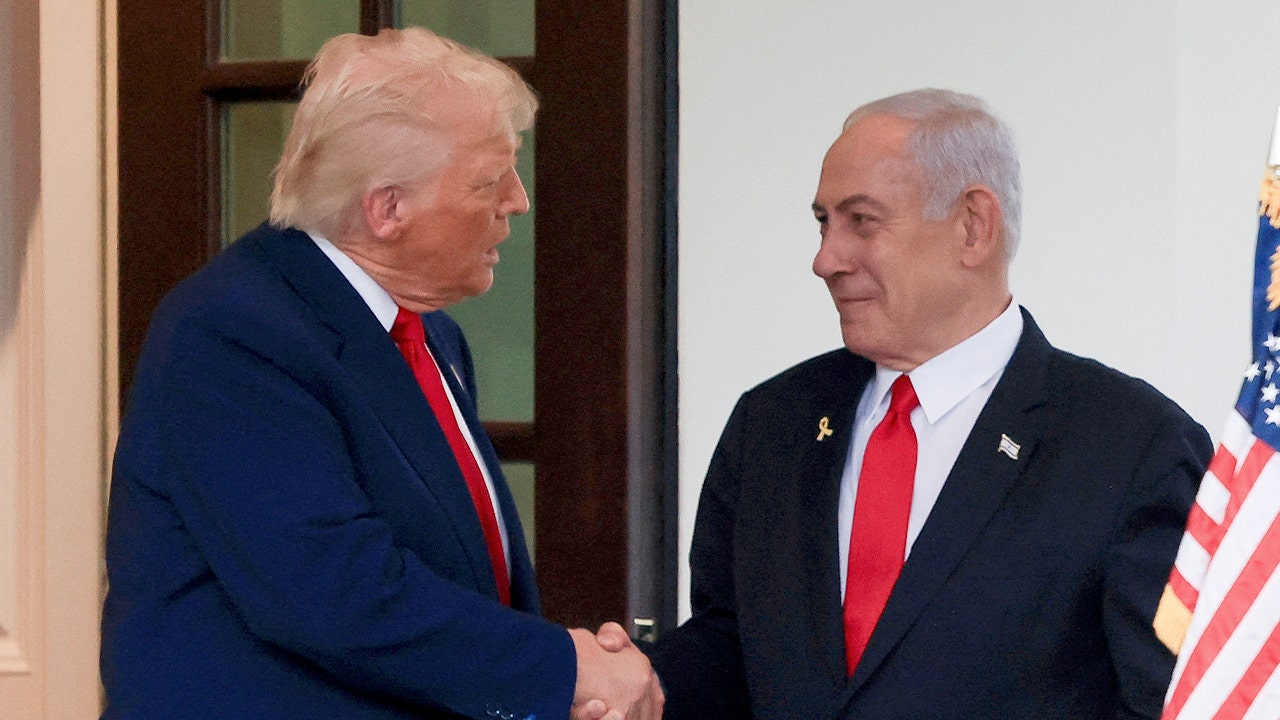
The U.S.-Israel alliance was tested when Washington and Jerusalem found common cause against Iran — and when defending Israel drew heavily on American weapons stocks. Meanwhile, that ongoing conflict has now sharpened a question for Washington: what does the alliance deliver, and what does it demand in return?
A new report from Advancing American Freedom (AAF) and the Zionist Organization of America (ZOA) argues that Israel’s military reach and regional role make the alliance a strategic asset for Washington.
Its authors call Israel «the largest U.S. aircraft carrier» in the Middle East. But this is in direct opposition of critics who say that the alliance costs the U.S. a lot and delivers very little in return.
The report, dated Oct. 26, 2026, arrives as public support for Israel continues to fall across the political spectrum — even among Republicans and MAGA supporters.
FROM INTELLIGENCE SHARING TO MISSILE DEFENSE, HOW ISRAEL’S PARTNERSHIP PROTECTS AMERICAN SECURITY
President Donald Trump and Israeli Prime Minister Benjamin Netanyahu have discussed ending direct U.S. military aid, but the U.S. leader has also called Israel «a great ally, much more reliable than most» and said Washington would help if Israel needed it.
The report specifically points to intelligence sharing, joint weapons development and military cooperation as returns on what the U.S. gets for providing support to Israel.
One of the clearest examples is missile defense. The U.S. and Israel develop systems including David’s Sling and Arrow, while American companies manufacture components for several programs. More than 100 companies across 34 states participate in missile-defense co-production, according to the Congressional Research Service. In August, a Raytheon-Rafael facility in Arkansas delivered the first Iron Dome Tamir interceptor built entirely in the U.S.
Those programs support U.S. manufacturers and give the Pentagon a role in developing missile-defense systems. During the Iran conflict, however, U.S. forces also expended large numbers of interceptors — costly weapons that can take years to replace.
US REBUILDING WEAPONS STOCKPILE COULD DELAY ORDERS FROM ALLIES
In September, the Congressional Budget Office (CBO) estimated that the U.S. had probably used between half and two-thirds of its combined inventory of Patriot, THAAD, SM-3 and SM-6 interceptors since June 2025.
The estimate includes weapons used during the earlier 12-day war with Iran and is based on publicly reported expenditures compared with the number of those interceptors the War Department has purchased. CBO said rebuilding stocks could take at least five years, even if production increased.
Intelligence sharing is another return cited by supporters of the alliance. Former CIA Director John Brennan said Israeli intelligence was among the «thousands of bits» considered during the years-long effort to find Usama bin Laden. He did not specify what Israel provided or how much it contributed to the operation.
A more recent exchange shows how Israeli reporting can prompt U.S. action even when its accuracy is uncertain. Israeli officials warned the U.S. of a possible Iranian plot to kill Trump during a trip to Turkey. The Secret Service took precautions, including moving him to another aircraft. U.S. intelligence agencies could not independently verify the threat, however, and the CIA assessed some of the Israeli reporting with «low confidence,» according to Reuters and The Washington Post.
NETANYAHU REVEALS HE WANTS AMERICAN FINANCIAL SUPPORT FOR ISRAEL TO ‘DRAW DOWN TO ZERO’
The financial relationship has also become part of the debate. Under the current agreement, the U.S. provides Israel with $3.3 billion annually in Foreign Military Financing and $500 million for joint missile-defense programs. Most of the military aid pays for weapons and services from U.S. contractors, according to CRS. Israel’s ability to spend a portion of the funding on domestic purchases is scheduled to phase out by 2028.
The report’s authors call the $3.8 billion in annual U.S. military aid «one of the highest returns on investment of any U.S. foreign assistance.»
Trump has said he wants to end annual aid, while Netanyahu has also publicly called for phasing it out over time. U.S. and Israeli officials have been negotiating a new agreement that could wind down direct assistance while expanding joint defense projects and weapons production. The current agreement runs through 2028, Congress controls appropriations, and no successor deal has been reached.
TRUMP WANTS LARGEST-EVER ISRAELI HEAVY BOMB TRANSFER — BUT PROPOSAL HAS CONGRESS PREPARING FOR $2.8B FIGHT
The debate is also becoming more politically consequential as Americans question the relationship’s terms.
A 2026 Chicago Council survey found that 56% favored reducing or ending U.S. military aid to Israel. Republicans remain more supportive than Democrats and independents, but the right is divided: Joe Kent blamed Israeli pressure for the Iran war, Rep. Thomas Massie has pushed to cut aid, and Vice President JD Vance has called for changing the relationship while continuing to describe Israel as a strategic ally.
The two countries have cooperated against Iran and developed defenses against missile attacks, but their goals have not always matched during the war. A Stimson Center analysis says Israel sought to broaden the conflict beyond what Washington preferred. That does not establish that Israel drew the United States into a war it opposed. It does show how cooperation can leave Washington managing military costs even when its preferred limits differ from Israel’s.
The next agreement will help determine whether the alliance continues to rely on direct grants or shifts toward joint weapons development and production. Either way, the military and intelligence cooperation described in the report comes with commitments of U.S. money and weapons — and leaves Washington weighing those costs against the advantages it expects the alliance to deliver.
foreign policy, israel, defense, war with iran, benjamin netanyahu, politics, national security, spending








INTERNACIONAL
Iran flogs female singer 74 times for performing without hijab in viral YouTube concert

29-year-old Iranian singer sentenced to 74 lashes for concert with no hijab
Iranian singer Parastoo Ahmadi faces 74 lashes and a travel ban for performing without a hijab, sparking international outrage. Zineb Riboua joins Fox News to discuss the regime’s brutal crackdown on dissidents, attributing it to the Islamic Republic’s growing weakness amid internal protests and external pressures. She emphasizes the need for international pressure on the Iranian regime.
NEWYou can now listen to Fox News articles!
Iranian authorities subjected a female singer and four members of her concert team to 74 lashes each Monday after she defied the Islamic Republic’s restrictions on women by performing without a hijab in a viral YouTube concert, their lawyers said.
Parastoo Ahmadi, 29, and her four male co-defendants were flogged in the Iranian city of Qom, defense attorney Mostafa Nili told Iranian news outlet Emtedad, according to Reuters.
The five were also banned from traveling abroad and engaging in artistic and musical activities for two years.
IRAN’S REGIME CAME FOR TEENAGE TWINS. THEIR FATE OFFERS A GLIMPSE OF TEHRAN’S WIDENING DEATH CAMPAIGN
Parastoo Ahmadi sings in a live performance filmed near Qom, Iran, in Dec. 2024. (Parastoo Ahmadi/YouTube)
One of the defendants’ lawyers told the BBC Monday that efforts to overturn the ruling, reduce the punishment or suspend its enforcement had failed. Defense attorneys also sought to postpone the flogging, but authorities insisted on carrying out the sentence immediately.
The punishment sparked outrage among Iranian artists and human rights advocates, who condemned the regime’s restrictions on women and artistic expression.
Bahar Ghandehari, director of advocacy at the U.S.-based Center for Human Rights in Iran (CHRI), told the BBC that Ahmadi’s flogging was «a flagrant violation of her fundamental rights» and demonstrated the authorities’ determination to suppress women’s freedoms and punish those who challenge discriminatory laws.
Those flogged alongside Ahmadi were musicians Soheil Faghih-Nasiri, Amin Taheri and Amirali Pirnia and producer Mohsen Lashkari.
IRAN REGIME’S EXECUTION SPREE CONTINUES AS TWINS FACE DEATH PENALTY, DECADES IN PRISON AFTER ALLEGED TORTURE

Iranian singer Parastoo Ahmadi performs alongside her band without a hijab during a concert released on YouTube on Dec. 11, 2024. Iranian authorities subjected Ahmadi and four members of her concert team to 74 lashes each on Nov. 23, 2026, according to their lawyers. (Parastoo Ahmadi/Youtube)
The case stems from a Dec. 11, 2024, performance in which Ahmadi appeared in a sleeveless black dress with her hair uncovered, accompanied by male musicians at the historic Deir Gachin Caravanserai in Qom province.
With no audience physically present, Ahmadi shared the performance, known as the «Imaginary Concert,» on her YouTube channel.
The video of the concert has garnered over 3 million views on YouTube.
Iran’s judiciary swiftly opened a criminal case over the performance, and Ahmadi was arrested three days later. Two musicians involved in the concert were also arrested. All three were subsequently released on bail, according to the Norway-based Hengaw Organization for Human Rights.
In June 2026, a criminal court in Qom sentenced Ahmadi and eight others involved in the production to 74 lashes each on charges of «offending public decency by producing and publishing obscene and immoral content online,» according to Hengaw.
The defendants denied the charges. An appeals court upheld the flogging sentences in September, clearing the way for their enforcement, Iran International reported Sept. 25.
IRAN JAILS PSYCHOLOGIST OVER TRUMP PLEA AS REGIME DEMANDS HE MAKE AMERICANS ‘LOOK STUPID’: FAMILY
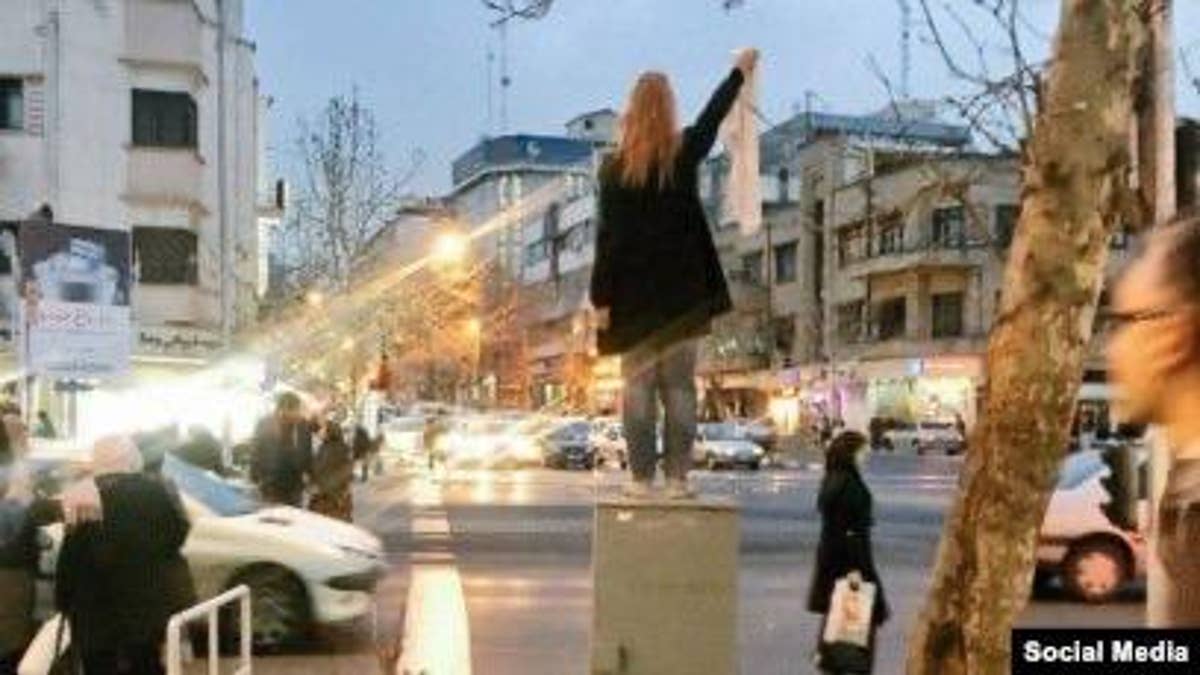
Maryam Shariatmadari was detained by Iranian security forces after removing her hijab in protest against mandatory veiling laws during the «Girls of Revolution Street» demonstrations in Tehran. Shariatmadari was later sentenced to one year in prison for what authorities described as «encouraging corruption by removing her hijab.» (Fox News)
Amnesty International urged Iranian authorities in October to abandon plans to carry out the sentences, arguing that judicial flogging amounts to torture and violates international human rights protections.
Ahmadi, a native of Nowshahr in northern Iran who studied film directing at Soore University, had previously faced restrictions from Iranian security authorities over her performances of protest songs and regional folk music during the Woman, Life, Freedom movement, according to Hengaw.
The movement erupted in Sept. 2022 following the death in custody of Mahsa Amini, a 22-year-old Iranian Kurdish woman detained by the country’s morality police for allegedly violating mandatory hijab rules.
Many Iranian women have since openly defied the compulsory dress code, despite periodic arrests, warnings and other enforcement measures.
Of the nine people originally sentenced over Ahmadi’s concert, five were reported to have been flogged Monday. The status of the remaining defendants’ punishments remains unclear.

A protestors holds a photo of Kurdish Iranian woman Mahsa Amini as another waves Iran’s former flag during a demonstration against the Iranian regime and in support of Iranian women, after Amini died after being arrested in Tehran by the Islamic Republic’s morality police, in Istanbul on October 2, 2022. (BULENT KILIC/AFP via Getty Images)
Ahmadi’s punishment comes amid a broader human rights crackdown in Iran that has intensified since nationwide anti-regime protests erupted in January. In addition to years of restrictions on women, artists, journalists and political dissidents, Iranian authorities have increasingly resorted to mass arrests, torture in detention and executions to suppress opposition, as previously reported by Fox News Digital .
Human Rights Watch reported in February that Iran’s executions in 2025 had reached levels unseen since the late 1980s, while rights groups have documented a further escalation in political repression throughout 2026.
Earlier this month, the Norway-based Iran Human Rights organization reported that at least 121 people arrested in connection with January’s protests had been sentenced to death, including at least 30 whose sentences had been upheld by Iran’s Supreme Court.

Women members of the Basij paramilitary, affiliated with Iran’s Revolutionary Guard, hold weapons during a parade of pro-government Iranian women. Tehran, Iran April 17, 2026. (Sobhan Farajvan/Pacific Press/LightRocket via Getty Images)
Iranian authorities did not immediately respond to Fox News Digital’s request for comment.
Reuters contributed to this report.
war with iran, human rights, iran, world
INTERNACIONAL
Cuáles fueron los tres encuentros del papa Francisco con el diablo: los inquietantes relatos en su diario íntimo
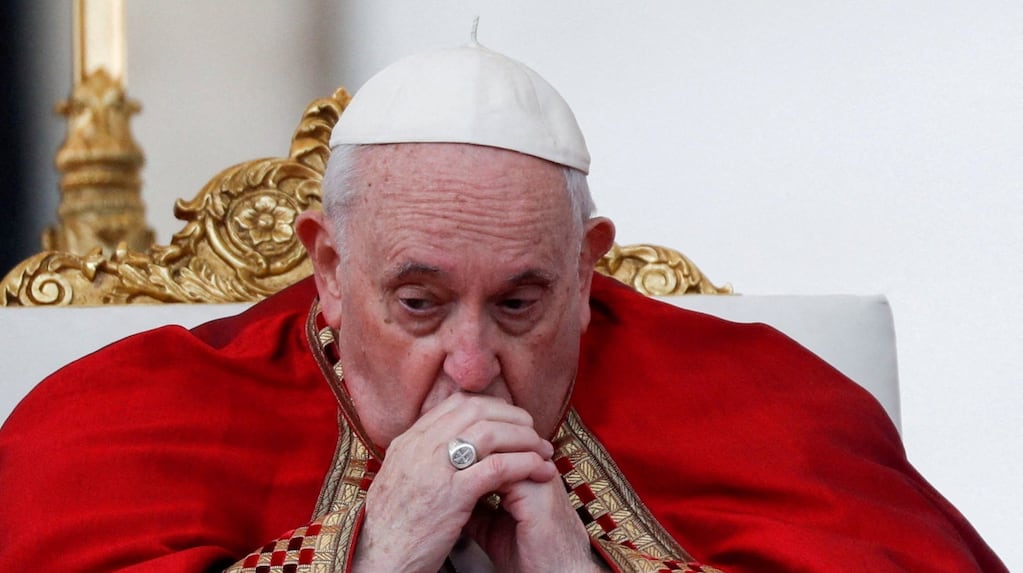
El papa Francisco dejó una confesión tan inquietante como inesperada en las páginas de su diario personal: aseguró haber visto al diablo en tres ocasiones. Los episodios, que describió con detalles sobre su apariencia, sus ojos y hasta su voz, forman parte de una serie de anotaciones privadas que Jorge Mario Bergoglio escribió a lo largo de más de tres décadas.
Los relatos se conocieron con la publicación de El diario íntimo del papa Francisco, un libro presentado por el cardenal argentino Víctor Manuel Fernández, prefecto del Dicasterio para la Doctrina de la Fe y uno de los colaboradores más cercanos del pontífice.
El material reúne escritos que comienzan en 1992, cuando Bergoglio era obispo auxiliar de Buenos Aires, y llegan hasta agosto de 2024, pocos meses antes de su muerte, ocurrida el 21 de abril de 2025.
En una anotación fechada el 24 de enero de 2021, Francisco recordó las tres experiencias que, según escribió, lo enfrentaron con la presencia del demonio. Dos sucedieron durante su etapa como arzobispo de Buenos Aires y la tercera tuvo lugar en Roma, después de un viaje a Chile.
“He visto al diablo”, escribió el Papa al dejar constancia de aquellas vivencias, que volvieron a aparecer en la última revisión que hizo de su propia vida, registrada en agosto de 2024.
El primer encuentro: una aparición desde la ventanilla de un auto
La primera experiencia ocurrió cuando Francisco todavía estaba al frente del Arzobispado de Buenos Aires. Según contó en su diario, viajaba en un auto cuando advirtió una figura que identificó con el demonio.
Lo que más lo impresionó fue la mirada. Bergoglio describió unos ojos que combinaban dos características aparentemente contradictorias: eran amenazantes, pero también seductores.
“No olvidaré sus ojos amenazantes y, al mismo tiempo, seductores”, escribió sobre aquella aparición.
La imagen quedó grabada en su memoria y se convirtió en una de las referencias que recuperaría años después al repasar los momentos en los que había sentido la presencia del demonio.
El segundo encuentro: una mirada como destellos de fuego durante una misa
La segunda experiencia también ocurrió en Buenos Aires, esta vez en una capilla de las carmelitas, mientras participaba de una celebración religiosa.
Francisco relató que volvió a encontrarse con aquella presencia, pero que la impresión fue todavía más intensa que la primera vez. El detalle que destacó nuevamente fueron los ojos, cuya descripción adquirió un tono particularmente inquietante.
“No olvidaré aquella mirada, más intensa que la anterior. Eran como destellos de fuego”, recordó.

La experiencia tuvo lugar durante una misa, en el coro de la capilla. Al reconstruir los dos primeros episodios, el pontífice señaló que nunca pudo borrar de su memoria aquellas miradas.
La reiteración de la imagen también aparece en una de sus últimas anotaciones, cuando volvió sobre los episodios para reflexionar acerca de las distintas formas en las que, según su interpretación, el demonio se había hecho presente a lo largo de su vida.
El tercer encuentro: una voz triunfante en Roma después del viaje a Chile
La tercera experiencia ocurrió en Roma, después de su viaje a Chile en enero de 2018, una visita que estuvo atravesada por una fuerte controversia dentro de la Iglesia católica.
En aquel momento, Francisco había defendido públicamente al obispo Juan Barros, cuestionado por su vínculo con el sacerdote Fernando Karadima, condenado por abusos sexuales. Tras las críticas de las víctimas y de periodistas, el Papa encargó una investigación que terminó por darle la razón a quienes denunciaban los encubrimientos.
El episodio lo afectó profundamente. En sus escritos reconoció que le había costado dimensionar la gravedad de lo ocurrido y que quedó devastado por la situación.
Fue en ese contexto cuando, según relató, volvió a experimentar la presencia del demonio. Esta vez, además de verlo, aseguró haber escuchado su voz.
“Lo vi y oí su voz, triunfante, poseyéndolo todo”, escribió Francisco. En otro fragmento recordó las palabras que atribuyó a esa presencia: “‘Ahora he conseguido todo lo que quería´“.
A diferencia de las dos primeras experiencias, en las que lo que más lo había impresionado eran los ojos, en esta oportunidad destacó el sonido de aquella voz: “Así como no puedo olvidar sus ojos de los dos anteriores, en este caso no puedo olvidar el poderoso ronquido de su voz”, manifestó.
La visión de las puertas del infierno y el rosario como protección
Los tres encuentros no fueron las únicas experiencias sobrenaturales que Francisco dejó registradas en sus escritos.
En otra anotación, fechada el 7 de junio de 2018, contó que había visto “las puertas del infierno” mientras se preparaba para dormir.
“La seducción pagana con todas sus fuerzas. Me asomé a mirar un poco y me aterrorizó”, escribió sobre aquella experiencia.
Ante el temor que le provocó la visión, recurrió al rosario como forma de protección espiritual. En sus anotaciones, la oración aparece como una herramienta fundamental para enfrentar los momentos de angustia y recuperar el sentido de su misión religiosa.
El cardenal Víctor Manuel Fernández explicó que estos relatos no debían interpretarse solamente como experiencias destinadas a provocar miedo. En declaraciones a Vatican News, sostuvo que reflejaban momentos en los que Bergoglio sentía la necesidad de salir de la superficialidad, profundizar su vida espiritual y mantenerse atento a las tentaciones.
La última anotación del diario, fechada el 18 de agosto de 2024, también recupera aquellos episodios. Allí, Francisco volvió sobre las dos primeras apariciones y escribió que nunca había podido olvidar los ojos que había visto desde el automóvil y durante la misa.
“Sentí la invitación del Señor a estar más atento y ser más cuidadoso, y no permitir su presencia. Pido a la Virgen que me cuide y me ayude”, concluyó.
Así, los tres encuentros que el Papa aseguró haber tenido con el demonio quedaron incorporados a un documento que permite conocer una faceta menos pública de Jorge Bergoglio: sus temores, sus dudas, sus crisis espirituales y la manera en que interpretaba su propia lucha interior.
Papa Francisco, Vaticano

President Donald Trump will participate in the annual Turkey Pardon on Tuesday, and the West Virginia turkey farmer responsible for raising this year’s two birds helps walk Digital through the process from hatch to White House ahead of the light-hearted event.
«We spent a little bit more one-on-one time with each of these birds to get them trained to loud noises, a lot of people present, flashing lights — just being handled — so when they get to the president, hopefully they’ll act like they have some sense,» Scott Rightsell told Digital about raising the birds for Tuesday’s National Thanksgiving Turkey Pardon.
Rightsell, who owns and operates Deans Gap Farm in rural Fort Seybert, West Virginia, with his wife Becky, found out during the summer that he would raise the turkeys for the ceremony. He received the young turkeys, called poults, in July — shortly after the celebration for America 250.
The turkeys were named Freedom and Feathers through a White House public opinion poll, beating out the options for Commander and Chief or Honey and Ham.
TRUMP’S THANKSGIVING TURKEYS ARRIVE AT LUXURY DC HOTEL AS AMERICANS VOTE ON THEIR NAMES
«We’ve had them from the middle of the July until now,» said Rightsell. «The turkeys weigh probably 40 to 45 pounds right now.»
He added that besides the aforementioned training, the birds receive the same treatment as all the others that he raises on the farm, which he and his wife founded in 2015.
«Being on national TV, that’s a big deal,» Rightsell said when asked what he was looking forward to most about his trip to the nation’s capital this week.
«I mean That’s probably what we’re looking forward to the most is being on national TV, actually meeting the president, which everybody does not get to do that. And getting to converse with him and the first lady, that’s gonna be a real treat for us.»
The National Thanksgiving Turkey Pardon has been a tradition for 79 years, recurring annually since President Harry Truman occupied the White House, according to Christy Puffenbarger.
Puffenbarger is this year’s National Turkey Federation chairwoman, a position that rotates annually. She’s the first woman to hold the role.
Typically, the pardon event is held in the Rose Garden. However, Trump will host the pardoning on the new South Lawn helipad Tuesday afternoon. A White House spokesperson tells Digital that Trump will deliver remarks about «how well our nation is doing» ahead of the holiday.
First lady Melania Trump, Vice President JD Vance and a litany of Cabinet secretaries, including Treasury Secretary Scott Bessent, Secretary of War Pete Hegseth, Secretary of Agriculture Brooke Rollins, Transportation Secretary Sean Duffy and Education Secretary Linda McMahon. Attorney General Todd Blanche will also attend. So will new White House chief of staff Stephen Miller.
Both turkeys receive a pardon, but which turkey participates in the pardoning ceremony depends on the American people, who vote for their preferred bird on the White House’s website. Voters are still deciding Tuesday morning which fleshy fowl will be pardoned later today.
INSIDE THE THANKSGIVING TURKEY HOTLINE THAT’S BEEN SAVING HOLIDAY DINNERS FOR 45 YEARS
Neither bird will end up on anyone’s Thanksgiving dinner table. The turkey that doesn’t receive a pardon remains behind the scenes at the White House, «for moral support,» as Puffenbarger put it. If the chosen bird gets stage fright or cannot carry out the ceremonial duties, the second bird is on standby.
«What I’m really looking forward to, obviously, like Scott and Becky, is meeting the president and his wife and representing this industry, and really [I] would like to thank the president for continuing this tradition,» Puffenbarger told Digital. «Because I do think it is a very nice event. It showcases not only our industry, but the tradition of turkey at Thanksgiving.»
Puffenbarger says the industry as a whole will provide 30 million pounds of turkey to Americans enjoying the Thanksgiving holiday this year.
«And to be able to showcase it at a positive, fun event like that … it’ll be quite an honor for myself and my family,» she said.
After spending their first few months of life like any normal turkey, the royal treatment for Feathers and Freedom began on Thursday.
They left for Washington, D.C., after a star-studded send-off from a local elementary school in Brandywine, West Virginia, where Becky Rightsell is also a teacher.
Secretary Rollins attended the sendoff, as did West Virginia Governor Patrick Morrisey.
«It’s so humbling for West Virginia to be named to have two of the turkeys that get pardoned. This is history in the making, only the second time that’s happened,» Morrisey told WDTV during the ceremony.
BROOKE ROLLINS, MONICA CROWLEY: AMERICA’S FAMILY FARMS HAVE KEPT US STRONG FOR 250 YEARS
Sunday night, the birds arrived at the five-star Willard InterContinental Hotel in Washington, D.C., where they received «presidential treatment,» according to the Department of Agriculture (USDA), which posted photos of the turkeys sitting on the beds in a hotel room.
A red carpet was rolled out as they strolled through the lobby of the hotel to much fanfare. Once in the room, the birds were greeted by a layer of crunchy fall leaves lining the floor.
But the fun doesn’t end after Tuesday’s pardoning. Instead, the turkeys will be whisked away for their next adventure.
«Immediately afterwards, another cool thing, these birds will get on an airplane and fly to beautiful College Station, Texas, where they will retire to live out the rest of their lives at Texas A&M University,» Puffenbarger explained.
Friday night, Texas A&M’s football team is scheduled to host rival Texas, the fifth-ranked college football team in the country.
Feathers and Freedom will be the guests of honor at the game.
«I don’t know how much they know about football, but I feel sure they will have a good time,» Puffenbarger said.
«And then Texas A&M … their poultry science department, will take care of the birds. They built quite a beautiful facility for them to spend their days in.»
white house, thanksgiving occasions lifestyle, politics, donald trump, west virginia, birds

El desdoblamiento electoral en Chubut complicó al peronismo y profundizó la interna por la candidatura a gobernador

“Cada uno acomoda el horizonte como quiere”, la reflexión de Juana Viale en su escapada aventurera a El Salvador

What the US gets from Israel alliance as support for aid to the Jewish State erodes on left and right: report

Iran flogs female singer 74 times for performing without hijab in viral YouTube concert

La recesión que incomoda a Milei: el equilibrio fiscal no alcanza y la economía real no arranca

Cuáles fueron los tres encuentros del papa Francisco con el diablo: los inquietantes relatos en su diario íntimo

Javier Milei destacó el desembarco de Tesla en el país y aseguró: “Esto también es devolverle la libertad a los argentinos”

Financial Times duda de la economía argentina: riesgo país, financiamiento e imagen Milei

Agustín “Rada” Aristarán se despide de Chanta: “Con esta obra dejé de ser un impostor”

NYC college put on notice after Jewish campus group shunned by student government: ‘rude awakening’

 ECONOMIA2 días ago
Financial Times duda de la economía argentina: riesgo país, financiamiento e imagen Milei
- CHIMENTOS2 días ago
Agustín “Rada” Aristarán se despide de Chanta: “Con esta obra dejé de ser un impostor”
- INTERNACIONAL2 días ago
NYC college put on notice after Jewish campus group shunned by student government: ‘rude awakening’