INTERNACIONAL
Las familias de dominicanos en la guerra rusa exigen respuestas al Gobierno y a la embajada

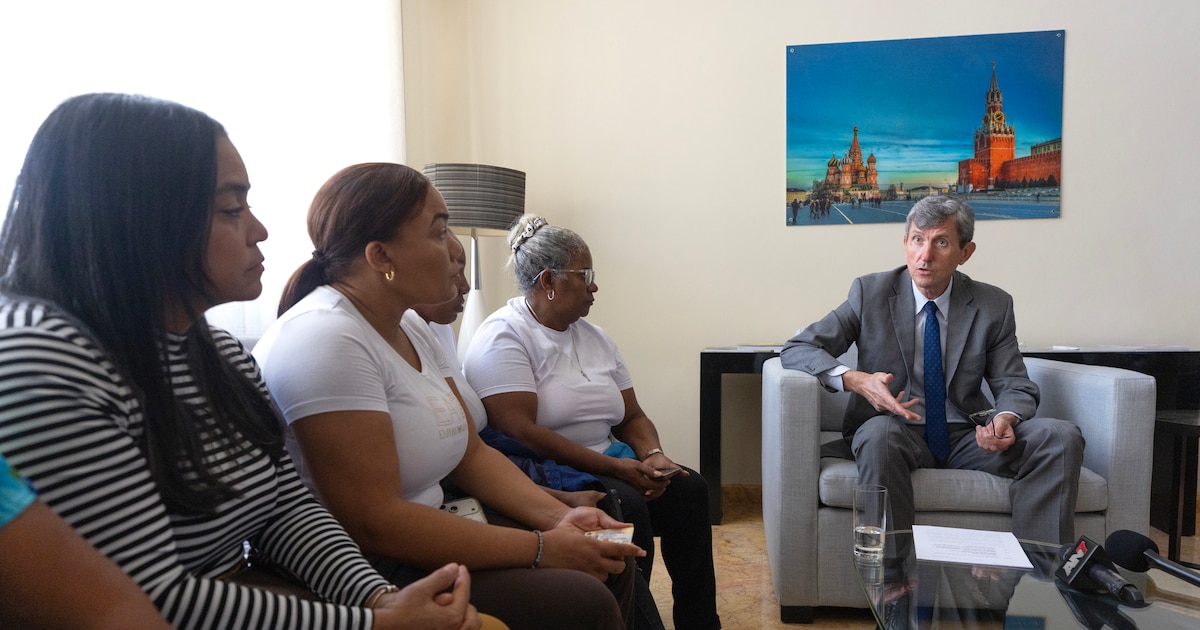
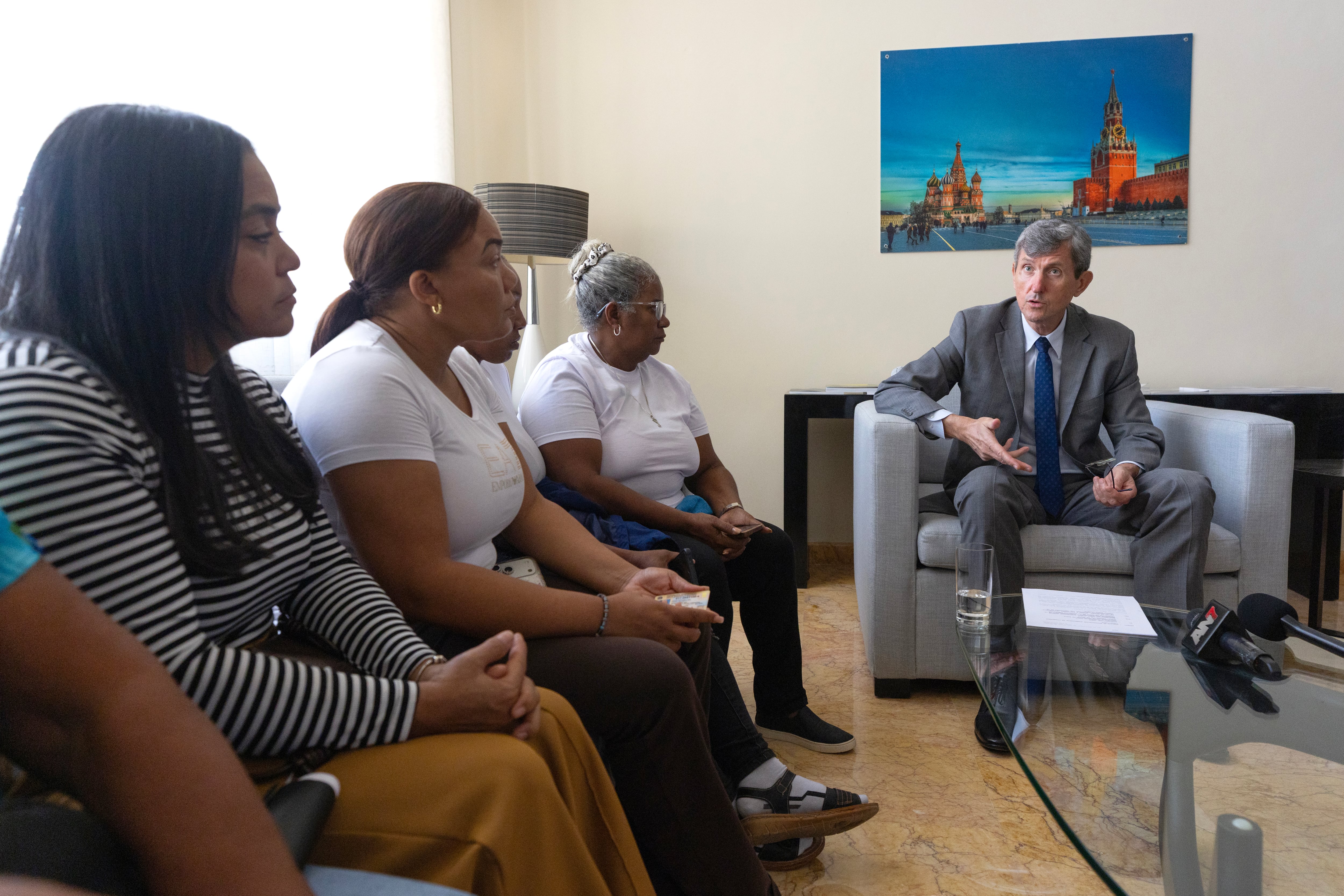
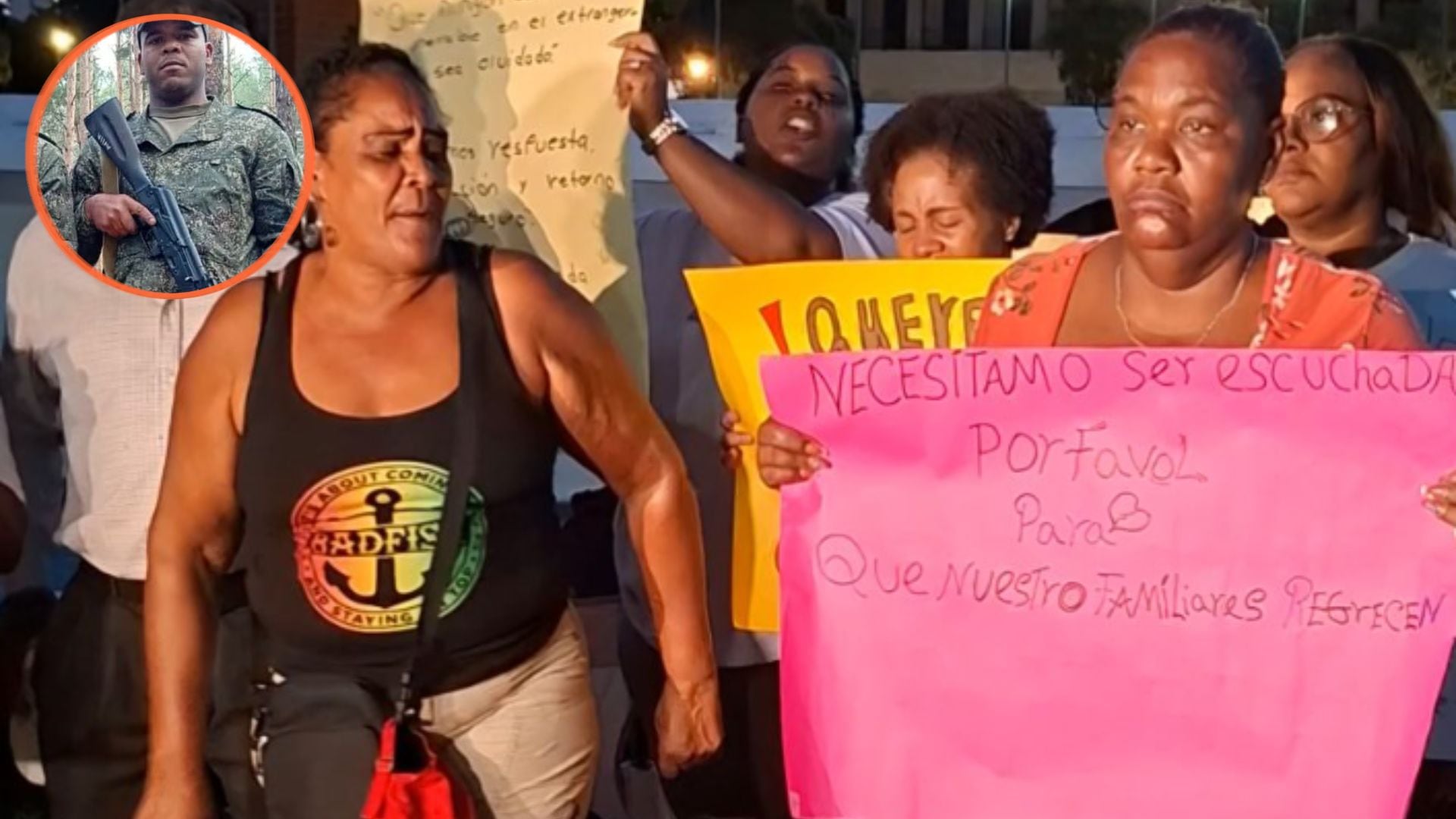
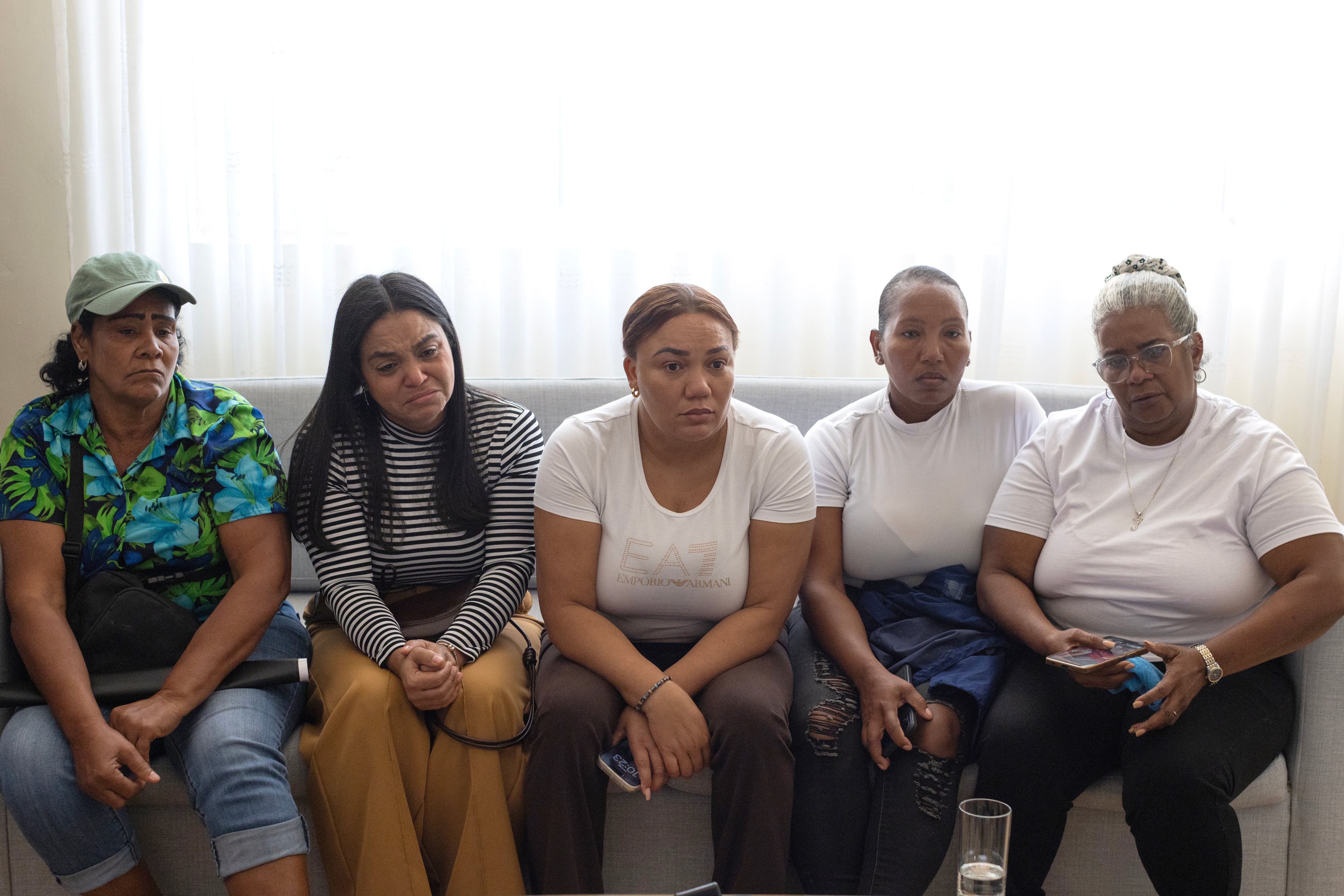
Decenas de dominicanos permanecen en el frente de guerra ruso y sus familias exigen una respuesta del Gobierno: ese fue el reclamo que un grupo de parientes llevó este lunes hasta la embajada de Rusia en Santo Domingo, según informó la agencia EFE.
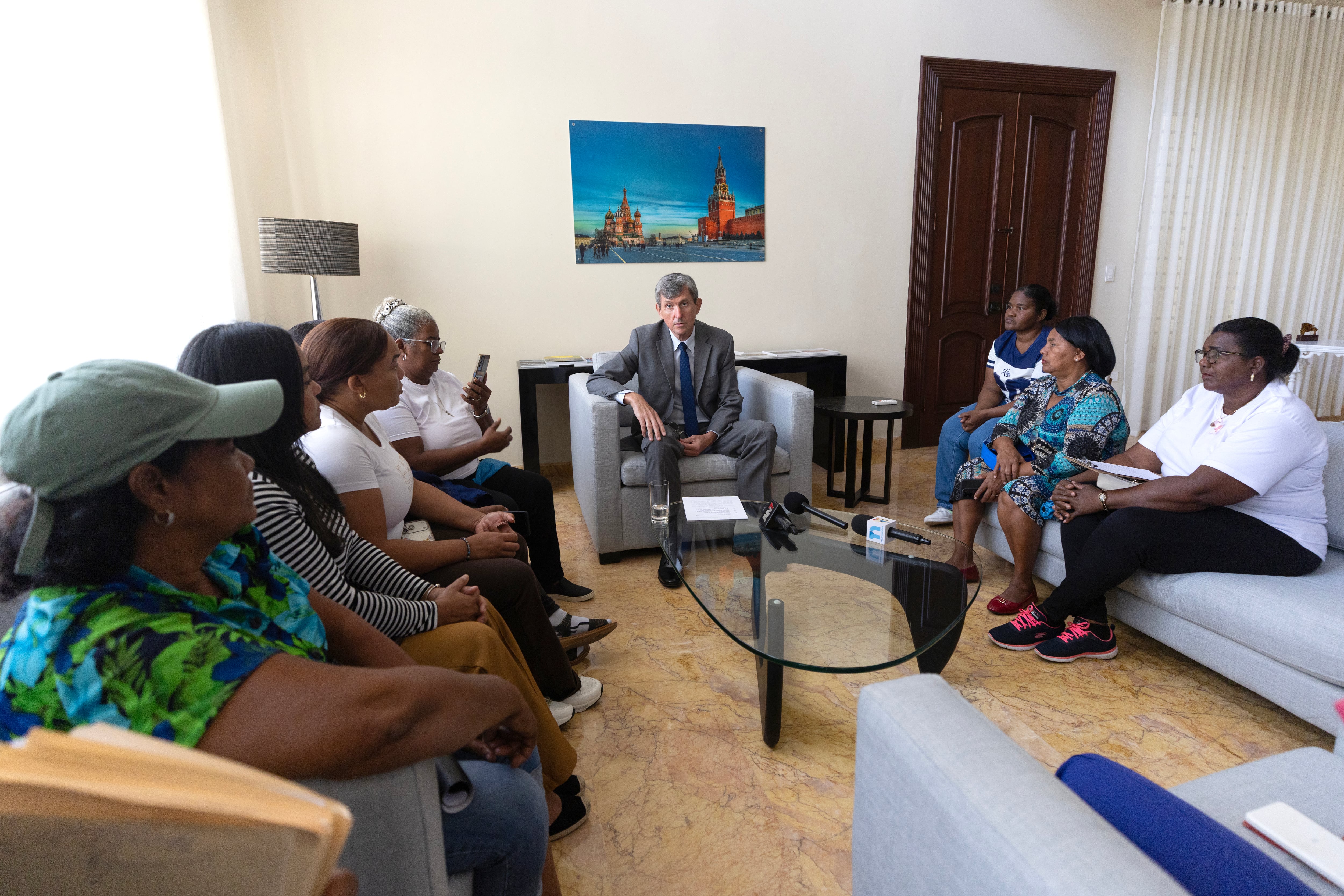
El encuentro reemplazó a la vigilia de oración que los manifestantes habían convocado originalmente frente a la sede diplomática. El embajador ruso, Alexey Victorovich Serendin, decidió recibirlos antes de que la protesta comenzara.
Entre las voces que se escucharon ese día estuvo la de Beatriz Melo. Su familiar, Juan Ramírez, mecánico de oficio, lleva más de dos meses en Rusia.
“La última vez que nos escribió fue hace cuatro días y dijo que ya estaba preparado para la guerra. Nosotros lo que queremos es que nos lo traigan”, declaró Melo a EFE.
¿Cuántos dominicanos combaten en las filas rusas?
Según Carlos Sánchez Díaz, coordinador del Comité Dominicano de los Derechos Humanos en la Región Sur, unos 150 dominicanos combaten actualmente en la guerra de Rusia contra Ucrania. El activista, que asesora a las familias, precisó ante EFE que más de 50 de ellos quieren regresar al país, mientras que otro grupo afirma sentirse bien en el frente.

Sánchez Díaz pidió que se esclarezca la situación contractual de cada uno. Planteó revisar “qué validez puede tener ese contrato de cara al derecho internacional y al Estado dominicano”.
Melo describió el miedo que sentía su familiar antes de partir. “Tenía miedo porque pasan hambre y los maltratan, el frío los está matando. Esos muchachos nunca han peleado, nunca han sido guerrilleros”, relató a la agencia.
El reclamo apunta directamente a Abinader
Melo reprochó la falta de contacto del presidente, Luis Abinader, con los familiares. “Hay otros países que han ido a buscar su gente, pero Abinader no ha hecho nada. No nos ha recibido”, afirmó tras la reunión con el embajador.
El diplomático ruso respondió a las denuncias de engaño con una defensa del procedimiento contractual. Serendin aseguró, según EFE, que el Ministerio de Defensa de su país “no engaña a nadie”, sino que “presenta el contrato y en el contrato está todo estipulado” antes de la firma.
El embajador matizó, sin embargo, que “otra cosa es cómo” estos dominicanos fueron atraídos a Rusia. Ese comentario dejó abierta la posibilidad de irregularidades en la etapa previa al reclutamiento, durante el proceso de captación.
Serendin remarcó que “las puertas de la embajada siempre están abiertas” para las familias. Añadió que su misión diplomática mantiene contacto permanente con la Cancillería dominicana, la cual, según sus palabras, “trabaja de manera intensa” en el caso.
Las gestiones oficiales ya lograron cuatro regresos
El mes pasado, el Gobierno dominicano contrató asesoría legal en Rusia para evaluar la situación jurídica de sus ciudadanos. Ese mismo mes, la Cancillería gestionó el regreso de cuatro connacionales que, ya en territorio ruso, decidieron no suscribir el contrato con el Ministerio de Defensa.
Un informe reciente de la Comisión Internacional Independiente de Investigación sobre Ucrania, presentado ante Naciones Unidas, identificó a República Dominicana entre 29 países cuyos ciudadanos habrían sido víctimas de trata de personas para integrarse a las fuerzas armadas rusas, según consignó El Día, diario dominicano. El documento detalla que, desde 2024, extranjeros fueron engañados o coaccionados tras responder a ofertas de empleos civiles que aparentaban ser legítimas.
Ante ese informe, el embajador Serendin advirtió que su país no tolerará “calumnias ni difamaciones” y cuestionó el mandato de la comisión, que Rusia no reconoce, de acuerdo con el mismo diario.
El canciller dominicano, Víctor “Ito” Bisonó, confirmó que su cartera mantiene gestiones diplomáticas para facilitar el retorno de quienes deseen regresar. El funcionario explicó al diario que las autoridades se reunieron con el canciller ruso y luego convocaron al embajador para abordar el tema, además de contratar a un abogado ruso que ofrece asesoría jurídica.
“¿Cuál es el trabajo de Cancillería? Rescatarlos, buscarlos, darles apoyo”, expresó Bisonó, citado por El Día.
Según Diario Libre, diario dominicano, el esquema de captación suele ofrecer salarios elevados para trabajar como soldadores, mecánicos o electricistas. Las cancillerías de República Dominicana, Colombia y Perú, entre otros países, advirtieron a sus ciudadanos sobre los riesgos de aceptar este tipo de propuestas laborales sin verificar antes la identidad del empleador y las condiciones reales del contrato.
República Dominicana,Rusia,trinchera,uniforme militar









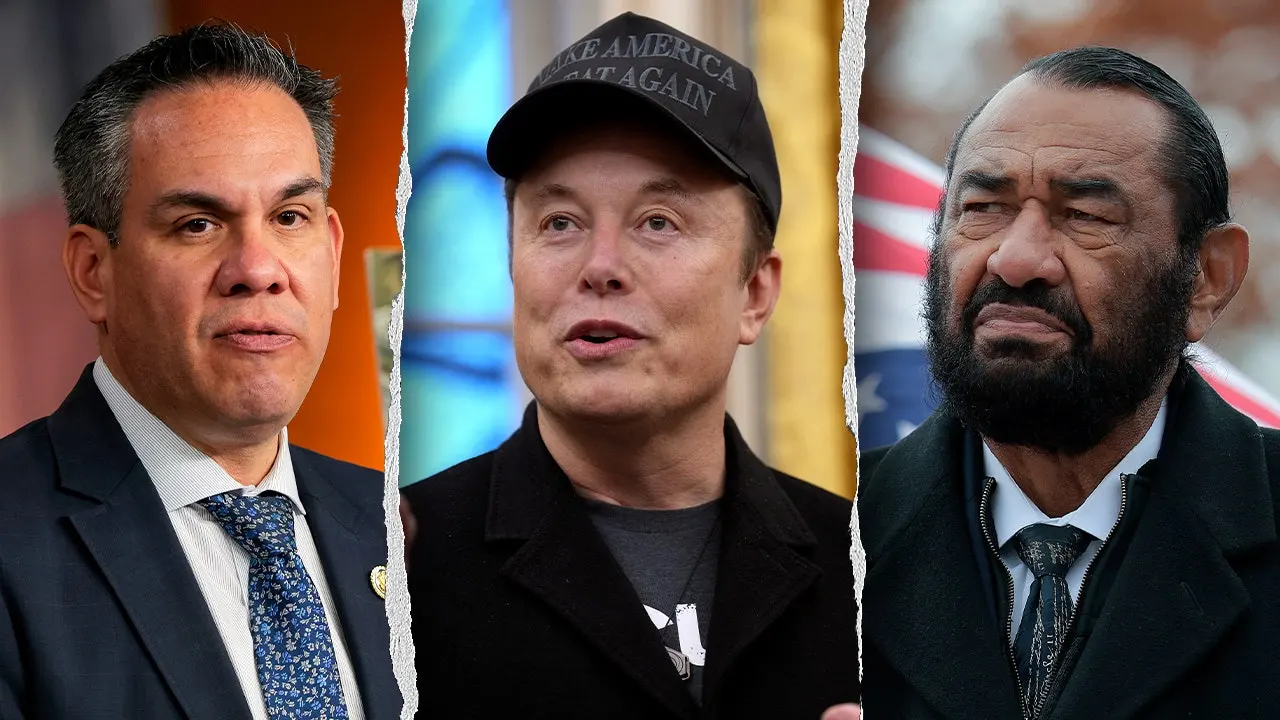
Democratic lawmakers are labeling Elon Musk an «opportunist» after the billionaire denied being «MAGA» last week and shared his regret for putting roughly $450 million toward the GOP in the midterm elections.
«I think that Mr. Musk is an opportunist,» Rep. Al Green, D-Texas, told Digital. «I think he’s a chameleon. I think he will be whatever benefits him and his business.»
«It sounds like buyer’s remorse to me,» Rep. Christian Menefee, D-Texas, said. «Maybe he should spend his time focusing on his businesses instead of trying to buy politicians.»
I SAW THE REAL DOGE FROM THE INSIDE. WHY THE MEDIA GOT DOGE AND ELON ALL WRONG
The political flip-flop callout comes after Musk made comments distancing himself from President Donald Trump and Republicans on Wednesday during The New York Times’ DealBook Summit. Musk has put millions of dollars toward Trump, has previously campaigned with him and worked for the administration.
«Whatever,» Rep. Troy Carter, D-La., said when asked about Musk’s comments. «That’s my response. Whatever.»
Musk has also been facing wrath from Democratic lawmakers as a potential target of oversight investigations for his time as the head of the Department of Government Efficiency (DOGE).
«You’re the architect of DOGE,» Carter continued. «You wreck people’s lives. You tear people’s opportunities and their careers apart in a reckless effort to so-called save money when nobody’s pocket’s been padded with his. If he really wants to do the right thing, demonstrate it, not in word, but in deed.»
«I’m certain that he will be the subject of investigations,» Rep. Sanford Bishop Jr., D-Ga., said. «We’ll deal with it when we deal with it.»
An investigation into Musk and DOGE seems to be at the top of the list for many Democrats as the party pushes for investigations to look into alleged corruption under the Trump administration after the party took back majorities in both chambers of Congress in the midterm elections.
«I’ve not seen anything that he’s done to reach out to Democrats or help or anything else in that regard,» Rep. Gregory Meeks, D-N.Y., said when asked if Democrats would reach out to Musk to work together.
He continued, «What he’s done is destroy the State Department [and] destroy diplomacy.»
THE TOP TRUMP OFFICIALS DEMOCRATS ADMIT ARE ON THEIR HIT LIST FOR INVESTIGATIONS IN THE NEW CONGRESS
Rep. Shomari Figures, D-Ala., urged Democrats to not make oversight investigations the center of their party’s agenda over the next two years with a majority in both the House and the Senate. He said the upcoming years should be focused on «leveraging this majority» to bring results to Americans.
«I think there will obviously be some degree of oversight into what happened with DOGE, and I think rightfully so,» Figures said. «But I don’t believe that sort of oversight can become the North Star of what the party is all about over the next two years.»
House Minority Leader Hakeem Jeffries, D-N.Y., who was just elected by his party to serve as speaker of the House, also recently left the door open to potential investigations into Musk when asked by Digital about the conversations surrounding oversight. He deferred leaving investigation decisions up to Rep. Jamie Raskin, D-Md., and Rep. Robert Garcia, D-Calif. — the party’s expected leaders of oversight work.
The Republicans whom Digital spoke with were not totally convinced that Musk’s recent comments meant he was backing out of supporting Republicans.
«I think Musk is about fiscal responsibility,» Rep. Glenn Grothman, R-Wis., said. «And the Republican Party, while it lets you down some of the time, is still the party of fiscal responsibility.»
JEFFRIES BRUSHES OFF OPPOSITION FROM FAR-LEFT DEMS WHO VOTED NO: ‘WE’RE GOING TO WORK TOGETHER’
Rep. Kat Cammack, R-Fla., acknowledged that Republicans in Congress «fell short,» excusing the American people for being upset with her party.
«It’s totally in his hands, whether he supports [Republicans] or not,» Rep. Kat Cammack, R-Fla., said. «But I don’t think that there’s any question that this Congress fell short, specifically the Senate, and people have a right to be angry. Hell, I’m angry.»
Congressional oversight into Musk could come as soon as January, when Democrats officially take control of Congress and leadership of the House Oversight Committee.
Digital’s request for comment from Musk was not immediately returned.
elon musk, democratic party, doge, politics, democrats, republicans elections, midterm elections, donald trump
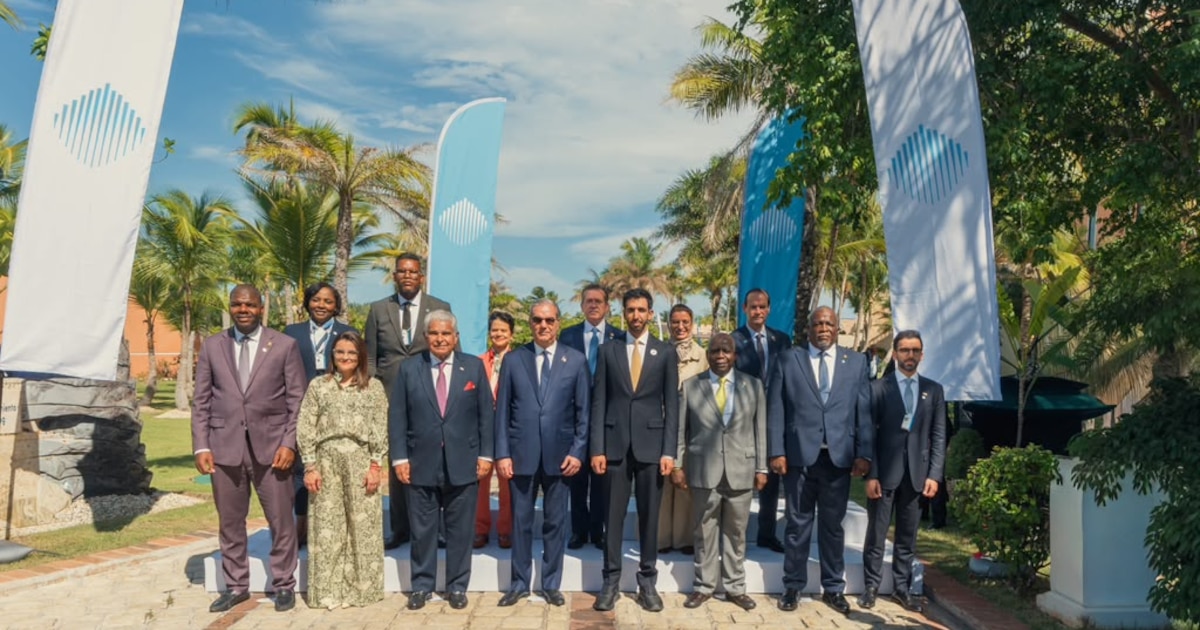
La semana pasada tuve la oportunidad de participar en el Diálogo Regional Latinoamericano y Caribeño del World Governments Summit (WGS), una iniciativa impulsada por los Emiratos Árabes Unidos que reunió a líderes de ambas regiones en Cap Cana, República Dominicana. La elección de esta sede no es casual y dice mucho sobre el lugar que el país ha conseguido ocupar en el escenario internacional.
La relación entre los países del Golfo y América Latina y el Caribe tiene un potencial enorme. Hace algunos años, el Banco Interamericano de Desarrollo estimó que el comercio entre ambas regiones podría aumentar en unos USD 9.800 millones anuales mediante acuerdos comerciales y otros USD 3.300 millones simplemente ampliando la presencia diplomática y las oficinas de promoción comercial. Son cifras que permiten dimensionar cuánto espacio existe todavía para construir nuevas relaciones económicas.
Durante dos días, el encuentro reunió a jefes de Estado y de Gobierno y líderes de los sectores público y privado del más alto nivel para discutir el futuro al que deben prepararse nuestros países. Es un ejercicio desafiante y necesario. Las conversaciones abordaron desde el impacto de la inteligencia artificial en el trabajo, la gestión pública y las relaciones humanas hasta el desarrollo de destinos turísticos y la conectividad aérea entre regiones. Temas distintos, pero atravesados por una misma pregunta: ¿Cómo pueden los gobiernos anticiparse a los cambios y aprovechar las oportunidades que estos generan?
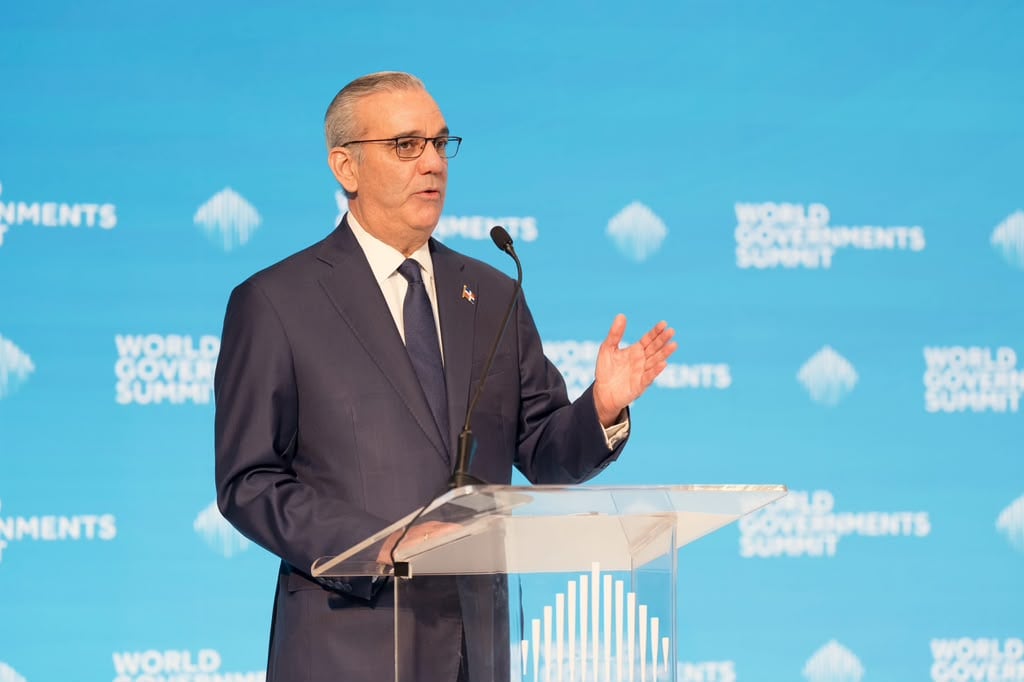
En una de las conversaciones que resumió el objetivo principal del encuentro, titulada La geografía de la oportunidad, los presidentes Luis Abinader y José Raúl Mulino abordaron el papel de los gobiernos en la construcción de nuevos corredores económicos. La innovación tecnológica, la apertura comercial y la atracción de inversiones fueron parte de una discusión sobre cómo acercar mercados, conectar regiones y fortalecer la competitividad de nuestros países en el largo plazo.
Construir esos puentes requiere algo más que identificar oportunidades. Hace falta generar confianza. En un mundo en el que el capital, el talento y las inversiones pueden escoger entre múltiples destinos, la estabilidad, la seguridad, la apertura y la credibilidad de las instituciones se convierten en ventajas competitivas. Los gobiernos no pueden decretar la confianza ni improvisar una reputación internacional. Deben construirlas con decisiones consistentes y demostrar que sus países son socios serios, capaces de sostener compromisos y ofrecer oportunidades.
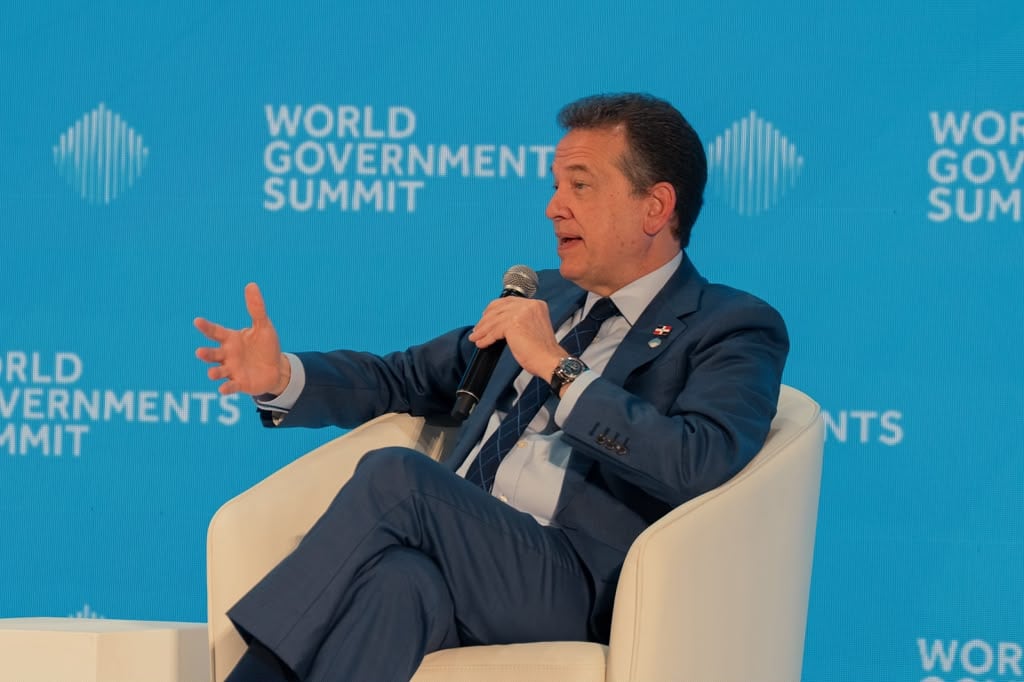
Identificar la construcción de puentes como una prioridad no es difícil; lo complejo es convertir esa intención en resultados. Y esta reunión es una muestra de que República Dominicana está avanzando en la dirección correcta. Me atrevo a decir que si una de las mayores economías del mundo árabe escoge a esta isla caribeña como plataforma para acercarse a nuestra región, buena parte de la explicación tiene nombre y apellido: Victor -Ito- Bisonó. El canciller dominicano es un líder que inspira confianza y que ha sabido transmitir al mundo un mensaje de apertura y seriedad que ha puesto a su país en el radar de las principales economías internacionales. Para el Adam Smith Center for Economic Freedom es un honor contar con él como profesor en nuestras aulas.
La trayectoria de esta iniciativa refleja también su compromiso personal. Ito era ministro de Industria, Comercio y Mipymes cuando propició los acercamientos con los Emiratos Árabes Unidos y se organizó, con el apoyo de su Centro de Análisis para Políticas Públicas (CAPP), la primera edición del encuentro en República Dominicana. Posteriormente, como ministro de Vivienda, Hábitat y Edificaciones, participó en la firma del memorando que dio continuidad al diálogo regional. Hoy, desde la cancillería, ha acompañado la realización de su segunda edición. Tres responsabilidades distintas, pero una misma visión de país. Su talento, experiencia y capacidad para construir relaciones han sido fundamentales para el éxito de esta iniciativa. Son precisamente estos vínculos, construidos con paciencia, dedicación y confianza, los que permiten transformar las oportunidades en resultados.
El concepto que inspira estos encuentros, la calidad de las discusiones y la apuesta por República Dominicana generan grandes expectativas sobre lo que viene. Más allá de las oportunidades comerciales y de inversión que puedan concretarse, hay un logro que merece destacarse: República Dominicana está demostrando que el tamaño de un país no determina necesariamente su capacidad de influencia. El liderazgo, la confianza y una visión clara de su lugar en el mundo pueden llevarlo mucho más lejos.
* El autor es empresario, estratega político y de políticas públicas y ex alto funcionario gubernamental de los Estados Unidos. Es el Director Fundador del Adam Smith Center for Economic Freedom de la Florida International University.
República Dominicana,Dubái,diplomacia,relaciones bilaterales
Massachusetts officials sued the Trump administration on Monday to block Immigration and Customs Enforcement (ICE) agents from carrying out civil arrests in the state’s courthouses, arguing that such arrests without judicial warrants are illegal under state law.
The lawsuit filed by Massachusetts Attorney General Andrea Joy Campbell challenges a 2025 ICE directive that authorizes agents to conduct civil arrests in or near state courthouses without judicial warrants, which she says violates the PROTECT Act, a new state law passed by the Democratic-led legislature that prohibits civil immigration arrests in state courthouses without judicial warrants. The courthouse protections took effect Nov. 3.
Campbell said the ICE directive interferes with the state’s authority to operate its judicial system, disrupts court proceedings, undermines constitutional principles and public safety and spreads fear, chaos and confusion.
«The Massachusetts PROTECT Act makes it illegal for ICE to conduct civil arrests in our courthouses without a judicial warrant. ICE’s intentional violation of state law has created unnecessary fear, made it more difficult to operate our courts and hold defendants accountable,» Campbell said in a statement.
DOJ SUES TO STOP OHIO COURT BLOCKING COURTHOUSE ARRESTS
«ICE is misleading the public by suggesting that these arrests make us safer when, in fact, ICE’s actions are preventing criminal cases from moving forward, denying a victim’s ability to obtain accountability, violating a defendant’s due process, and leaving open the possibility that someone facing serious criminal charges could ultimately be released from ICE custody without their criminal case ever being resolved,» she continued.
The attorney general said more than 1,110 people have been arrested at her state’s courthouses since President Donald Trump returned to the White House in January 2025, including more than 600 people in 2025 and more than 500 during the first 10 months of 2026.
Campbell said ICE has ignored the new state law and arrested at least 38 people in Massachusetts courthouses without judicial warrants in the two and a half weeks since the courthouse protections went into effect.
«I, along with our district attorneys, share the goal of holding defendants accountable for crimes, yet ICE’s unlawful tactics to arrest someone for a civil immigration violation is not the same as holding them accountable for a crime,» Campbell said.
FEDERAL JUDGE IN NEW YORK TIES TRUMP ADMIN HANDS ON ARRESTS AT IMMIGRATION COURTS
Campbell said that ICE’s courthouse arrests have continued in Massachusetts despite a federal ruling handed down in June by U.S. District Judge P. Casey Pitts in California that vacated the Trump administration’s courthouse arrest policy in a separate class action lawsuit.
In Monday’s lawsuit, Campbell argues the ICE policy violates the Administrative Procedure Act since it was adopted without taking into account the impact it would have on states and because the Immigration and Nationality Act does not explicitly authorize courthouse arrests.
The lawsuit also alleges that the policy violates the U.S. Constitution’s Tenth Amendment, which protects states’ rights to maintain authority over their own judicial systems.
«The Trump Administration’s ICE arrests at Massachusetts courthouses are interfering with our justice system and undermining public safety. When people are afraid to go to court, victims are less likely to report crimes, survivors are less likely to seek protection, and our communities are less safe,» Massachusetts Gov. Maura Healey said in a statement. «We expect ICE and all federal agents to follow Massachusetts law.»
Digital reached out to the Department of Homeland Security for comment.
In a statement to Reuters, a DHS spokesperson argued that making immigration arrests at courthouses «conserves valuable law enforcement resources because they already know where a target will be,» adding that «the ability of law enforcement to make arrests of criminal illegal aliens in courthouses is common sense.»
A similar lawsuit against ICE arrests at state courthouses was filed in October by California Attorney General Rob Bonta.
immigration, massachusetts, politics, homeland security, us, donald trump, immigrant rights

Dems brush off Elon Musk’s anti-MAGA pivot, warn DOGE probe still coming

¿Vuelve Villa a la selección de Colombia? Su nivel en Boca reinstaló el debate

El Gobierno pidió suspender el acto en homenaje a Santucho en la UBA

Escándalo en la salida de los famosos de MasterChef Celebrity: el conflicto que se desató en la casa de Luck Ra

Arnold Schwarzenegger elige su película de ciencia ficción con robots favorita, y no es Terminator: "No será la más conocida, pero su impacto fue profundo en mí"

Con un escenario incierto, Kicillof buscará avanzar en extraordinarias con las reelecciones indefinidas

Javier Milei destacó el desembarco de Tesla en el país y aseguró: “Esto también es devolverle la libertad a los argentinos”

Financial Times duda de la economía argentina: riesgo país, financiamiento e imagen Milei

Agustín “Rada” Aristarán se despide de Chanta: “Con esta obra dejé de ser un impostor”

NYC college put on notice after Jewish campus group shunned by student government: ‘rude awakening’

 ECONOMIA1 día ago
Financial Times duda de la economía argentina: riesgo país, financiamiento e imagen Milei
- CHIMENTOS2 días ago
Agustín “Rada” Aristarán se despide de Chanta: “Con esta obra dejé de ser un impostor”
- INTERNACIONAL2 días ago
NYC college put on notice after Jewish campus group shunned by student government: ‘rude awakening’