INTERNACIONAL
Lawmakers press Eli Lilly for China drug trials tied to military-linked hospitals

Navy SEAL-turned-investor says Trump is bringing America’s drone dominance back to beat China
Harpoon Ventures founder Larsen Jensen details the crucial need for strengthening U.S. tech leadership in defense. He emphasizes investment in AI, drone warfare, and space capabilities to counter China’s growing dominance. Jensen reveals Harpoon Ventures’ fourth fund and new Black Flag Investor List, aiming to boost industrial resilience and national security against adversaries.
NEWYou can now listen to Fox News articles!
FIRST ON FOX: House Select Committee on the Chinese Communist Party Chairman John Moolenaar is launching an investigation into pharmaceutical giant Eli Lilly’s clinical trial operations in China, demanding records related to research conducted at Chinese military-affiliated hospitals and facilities in Xinjiang.
In a Tuesday letter obtained by Fox News Digital, Moolenaar, R-Mich., demanded that Eli Lilly provide detailed information about its clinical trial operations in China, including how the company ensures ethical standards, protects sensitive biotechnology and intellectual property, and veterans research conducted at hospitals linked to the People’s Liberation Army and in Xinjiang, where the Chinese government has been accused of widespread human rights abuses against Muslim Uyghurs and other ethnic minorities.
The committee says publicly available records indicate Lilly has sponsored or collaborated on more than 220 clinical studies in China since 2003, including at least 11 trials involving hospitals in Xinjiang, China, and at least 16 involving Chinese military medical centers. Several remain active today, the letter says.
The inquiry marks an escalation in congressional scrutiny of U.S. pharmaceutical companies’ growing ties to China as lawmakers warn that clinical research conducted at Chinese military-affiliated hospitals and in Xinjiang, China, could pose national security, intellectual property and human rights risks. The committee is seeking records from Lilly as it expands its investments and research partnerships in China.
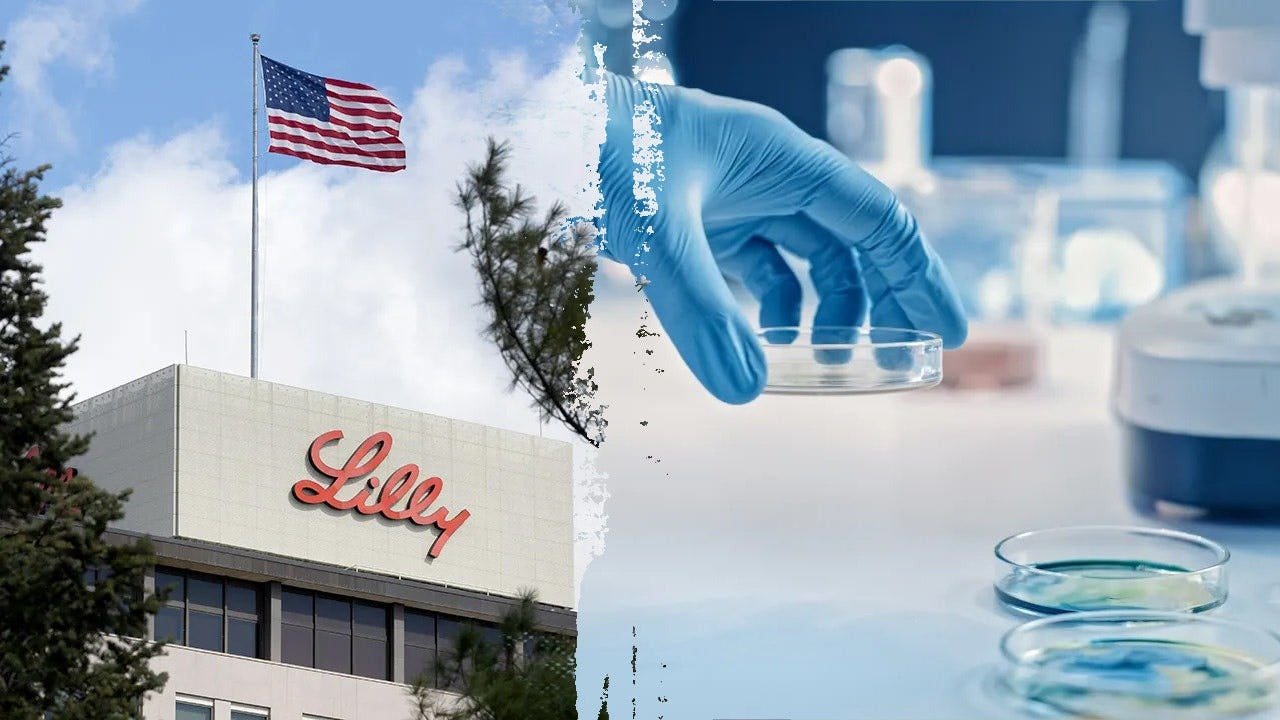
A flag flies above the headquarters campus of Eli Lilly and Company on March 17, 2024 in Indianapolis, Indiana. (Flag over Eli lilly)
Moolenaar stressed that the committee has «no evidence that Lilly has engaged in illegal activity or wrongdoing,» but argued that conducting clinical trials in China — particularly in Xinjiang, China, and at military-affiliated hospitals, hospitals affiliated with China’s People’s Liberation Army (PLA), which the committee argues could gain access to valuable biotechnology research and clinical trial data generated through collaborations with U.S. companies.
CHINA’S GRIP ON RARE-EARTH MAGNETS COULD CRUSH US DRONE INDUSTRY BEFORE IT GROWS
«The United States is engaged in a fierce biotechnology competition with the People’s Republic of China,» Moolenaar wrote, arguing that biotechnology has become a strategic arena in U.S.-China competition with implications for national security, economic competitiveness and the protection of Americans’ medical data.
He pointed to China’s latest five-year plan, which identifies biotechnology as a national priority and calls for expanded use of artificial intelligence across the sector.
Moolenaar said China has transformed itself into one of the world’s fastest and least expensive places to conduct early-stage human drug trials through regulatory reforms, state subsidies and rapid patient enrollment. The committee argues that speed has made China increasingly attractive for global drug development while also raising concerns about ethics, data security and intellectual property.
The committee says publicly available records indicate Lilly has sponsored or collaborated on more than 220 clinical studies in China since 2003, including at least 11 trials involving hospitals in Xinjiang and at least 16 involving Chinese military medical centers. (iStock)
GABBARD SAYS DECLASSIFIED BIOLAB RECORDS VALIDATE CONCERNS PREVIOUSLY DISMISSED AS MISINFORMATION
The inquiry comes as Lilly has continued expanding its presence in China.
Earlier in 2026, the company announced a roughly $3 billion investment to expand manufacturing and local supply in the country, bringing its total investment in China to nearly $6 billion.
Lilly also has deepened its research ties with Chinese biotechnology companies, announcing an up to $8.8 billion oncology and immunology collaboration with Innovent Biologics in February and an agreement worth up to about $3 billion with Haisco Pharmaceutical Group earlier ni June. Both partnerships are referenced in Moolenaar’s letter as examples of the company’s expanding relationships with Chinese drugmakers.
The chairman also questioned whether China’s clinical trial system adequately protects participants’ rights. He cited research suggesting many participants misunderstand the experimental nature of drug studies or mistakenly believe treatments have already been proven effective, raising concerns about whether informed consent is being properly obtained.
The letter separately raises concerns about trials conducted in Xinjiang, pointing to reports from the United Nations, the State Department and human rights organizations documenting allegations of forced medical testing, DNA collection and other abuses targeting Uyghurs. Moolenaar argued those conditions warrant heightened scrutiny over whether clinical trial participants in the region are volunteering freely.
The committee also argues that research conducted at hospitals affiliated with the People’s Liberation Army raises questions about whether sensitive biotechnology research and proprietary data developed through clinical trials could ultimately benefit China’s military biotechnology programs.
CLICK HERE TO DOWNLOAD THE FOX NEWS APP
Moolenaar gave Lilly until July 17 to provide documents detailing its due diligence procedures, inspections of clinical trial sites, agreements with Chinese companies, and safeguards for protecting sensitive data and intellectual property.
«Lilly has received the letter from the House Select Committee on China. We are reviewing the letter closely,» a company spokesperson told Fox News Digital.
politics, medical research, health, drugs, china











INTERNACIONAL
Trump admin taunts left for ‘praying’ for World Cup disaster as DOT touts record numbers
NEWYou can now listen to Fox News articles!
EXCLUSIVE: President Donald Trump’s Transportation Secretary Sean Duffy is claiming victory over the left after a successful FIFA World Cup tournament that saw record-shattering numbers of fans moving through the U.S.
Several million FIFA fans flocked to American stadiums this year, putting an enormous strain on federal, state and local transportation networks. However, aided in part by a more than a $100 million DOT infrastructure investment to World Cup host cities, the tournament went off without any major incidents, prompting Duffy to taunt doomsayers who predicted the country would fall on its face.
«The Left was praying for an American transit disaster as we hosted the most important international sporting event in modern history,» Duffy told Fox News Digital.
«They were wrong, and President Trump was right.»
FBI BOSS KASH PATEL DETAILS HOW AGENCY AND PARTNERS SECURED RECORD-SHATTERING FIFA WORLD CUP
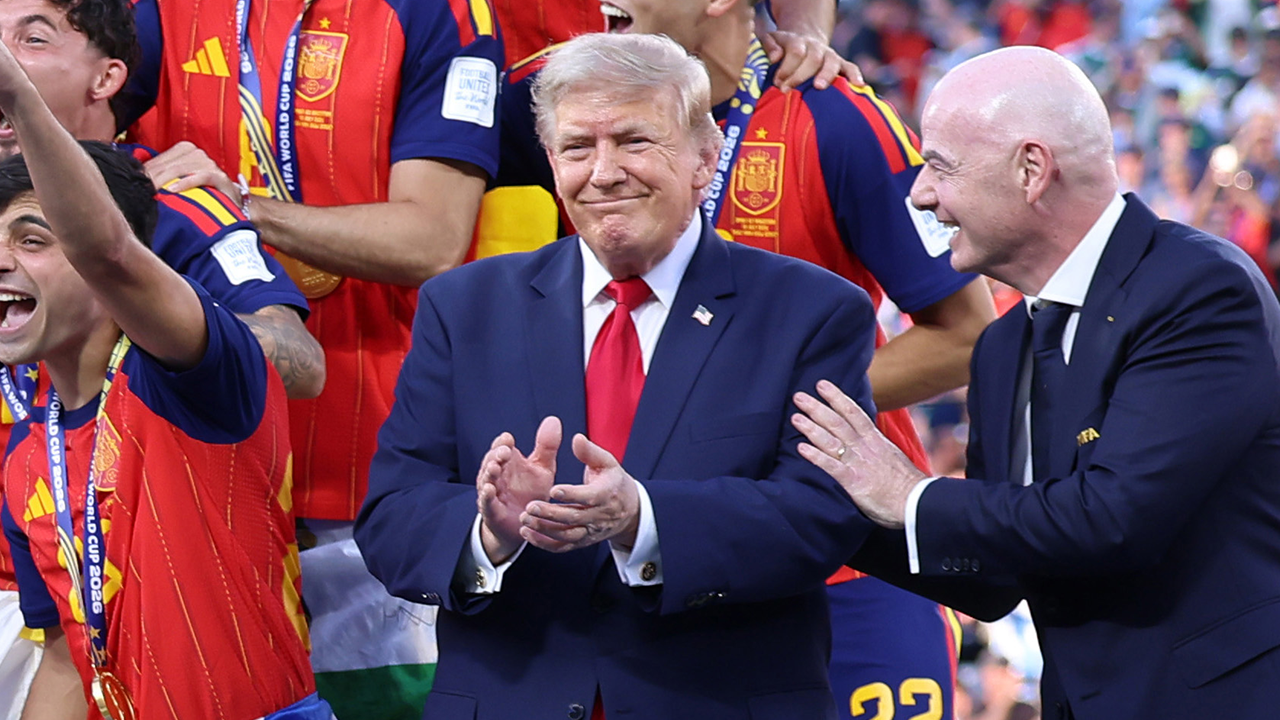
FIFA President Gianni Infantino (right) with President Donald Trump as Spain lifts the FIFA World Cup trophy after the FIFA World Cup 2026 Final match at New York New Jersey Stadium on July 19, 2026 in East Rutherford, New Jersey. (Catherine Ivill – AMA/Getty Images)
Among the naysayers was Sen. Ruben Gallego, D-Ariz., who in April accused the Trump administration of endangering FIFA fans by «systematically dismantling security agencies, delaying critical security assistance, and initiating a war with Iran.» All this, Gallego said, made the country’s top security agency, the Department of Homeland Security, «woefully unprepared to accomplish its mission.»
Gallego remarked that «if state and local officials do not trust that federal employees will coordinate in lockstep and operate as partners, they will be unable to protect their communities—increasing threat risk and compromising Americans’ safety in the process.» He added that «this self-imposed chaos extends to the Trump administration’s management of federal departments and agencies.»
Senate Minority Leader Chuck Schumer, D-N.Y., took a similar tone, asserting ahead of the tournament that «Trump cares more about being on international TV at midfield on match day than actually hosting successful games.»
In May, The Atlantic published a piece titled «Another Way America Will Choke at the World Cup,» in which the author predicted that «in the coming months, America’s patchwork railway system will be similarly challenged—and its weaknesses exposed—across all 11 U.S. sites of World Cup matches.»
Nathaniel Sizemore, a spokesperson for the agency, told Fox News Digital that it was «the Left’s TDS [Trump derangement syndrome]» that «put them in the absurd position of praying for an American transit disaster.»
PRESIDENT TRUMP STEALS PART OF SPOTLIGHT AS SPAIN CELEBRATES WORLD CUP TITLE OVER ARGENTINA
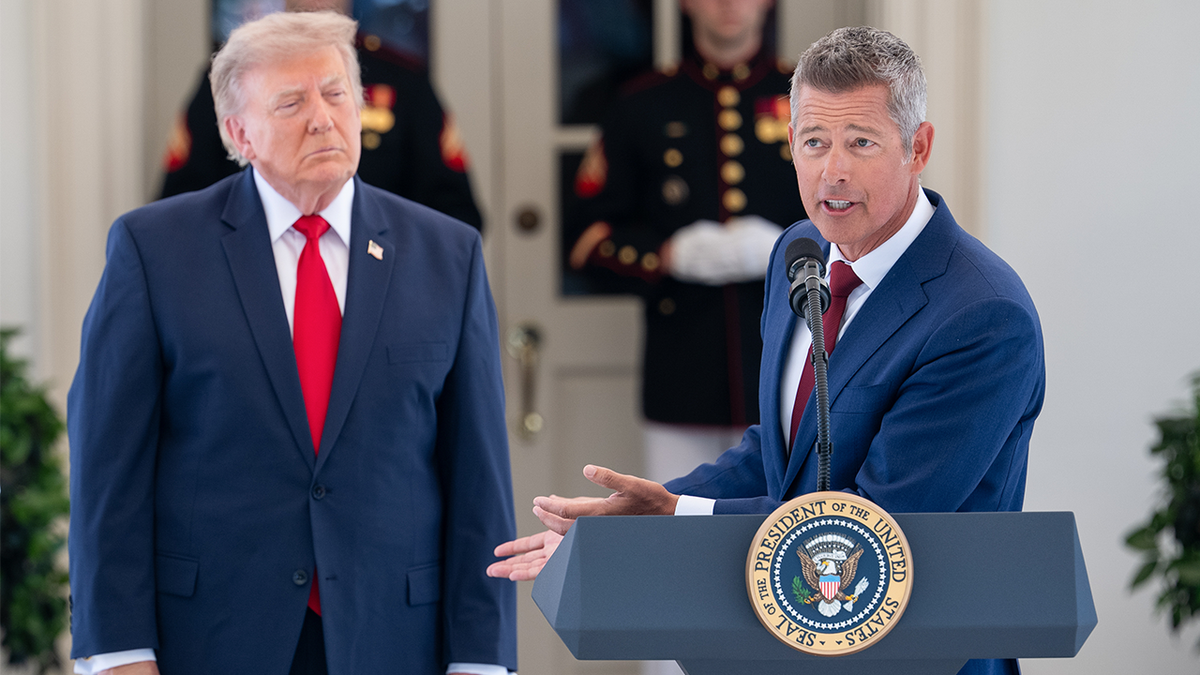
President Donald Trump and Transportation Secretary Sean Duffy during a Freedom 250 Grand Prix showcase at the White House in Washington, DC, US, on Monday, July 13, 2026. (Aaron Schwartz/CNP/Bloomberg via Getty Images)
However, with the World Cup officially concluded, the results are in and, according to DOT, they are conclusive. The department said that, aided by its $100.3 million in federal funding to host cities, local transit systems accommodated record-breaking numbers.
During the World Cup, Atlanta saw more than 2 million riders use public transit to get to matches, fan fests, and other events, with match-day ridership reaching up to three times the typical average.
In Seattle, DOT said that more than 1.1 million combined riders used city public transit during the first two matches alone. On July 6, the city’s light rail system accommodated 309,000 riders, blowing well past the system’s single-day record of 220,000 riders.
Meanwhile, Philadelphia, which also hosted this year’s MLB All-Star Game, saw an average of 27,000 riders using public transit per match. The city’s PHLASH bus service recorded a 500 percent increase in ridership.
Even cities not previously known for their public transit systems accommodated record numbers. Kansas City saw a one-day record for streetcar riders at 48,260 on June 27. Los Angeles saw a 598 percent increase in rider taps on World Cup match day compared to a typical Friday.
To put it further in perspective, DOT said that in San Francisco, an average of more than 38,000 fans moved to and from World Cup matches using public transit, exceeding Super Bowl LX’s numbers by nearly 8,000.
DOT is not the only one that noticed the U.S. public transit system performing.
At the start of the tournament, Vox ran a piece titled «The World Cup has a Trump problem.» In the piece, the outlet accused Trump of «actively hindering» the World Cup and other sporting events, especially through the president’s «hostility to all immigrants … especially to non-white ones.» Yet, ahead of the final match, Vox wrote that «the nation’s widely expected World Cup public transit meltdown has simply not materialized.»
RILEY GAINES: WORLD CUP VISITORS ARE REMINDING AMERICANS WHAT MAKES THIS COUNTRY GREAT
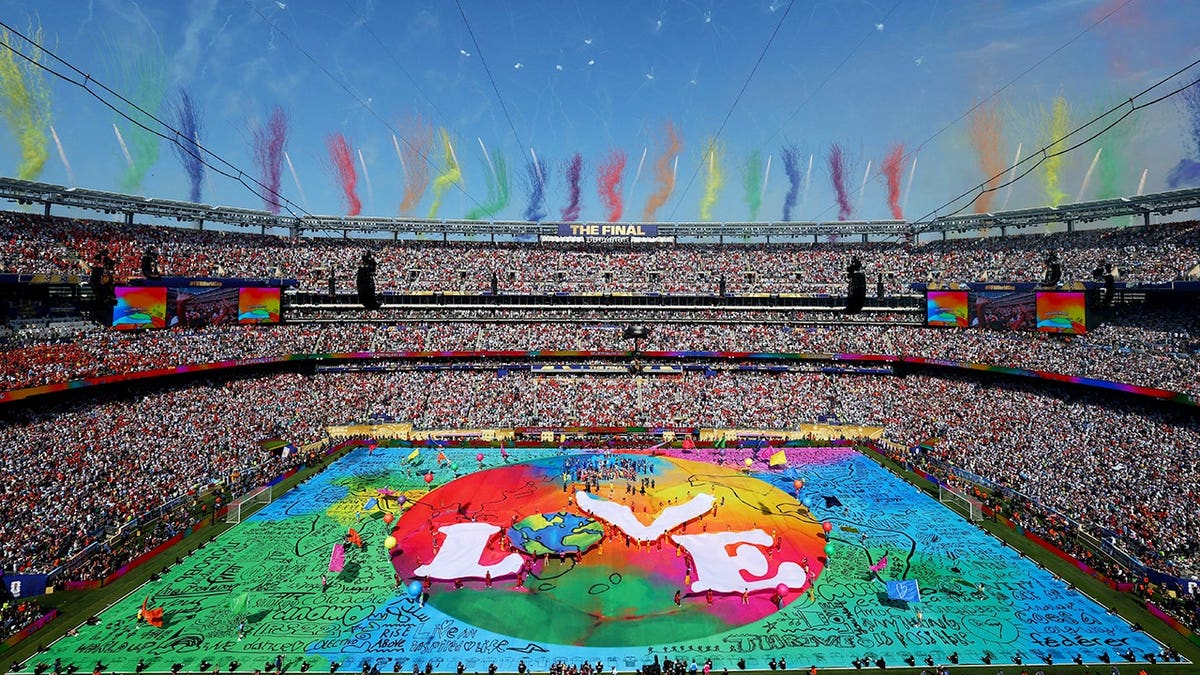
General view inside the stadium during the halftime show in East Rutherford, N.J. (Mike Segar/Reuters)
The outlet said that «to the surprise of pretty much everyone, US cities have managed to absorb the influx of fans with relative ease, even under the pressure of record ridership en route to stadiums, watch parties, and fan zones.»
Duffy, however, was not surprised.
«Whether they flew, took passenger rail, hopped on public transit, or hit the open road, Americans and visitors alike saw the best of our nation over the last month,» he told Fox News Digital.
CLICK HERE TO DOWNLOAD THE FOX NEWS APP
He added that «from the FTA’s investment into local public transit to the FAA’s work keeping our skies safe, we were proud to help FIFA fans get to the games safely and on time.»
Fox News Digital reached out to Gallego, Schumer, The Atlantic and Vox for comment.
the world cup, transportation, donald trump, sports, politics
INTERNACIONAL
El dilema del rearme europeo: se protege de Rusia, pero beneficia a China y a Vladimir Putin
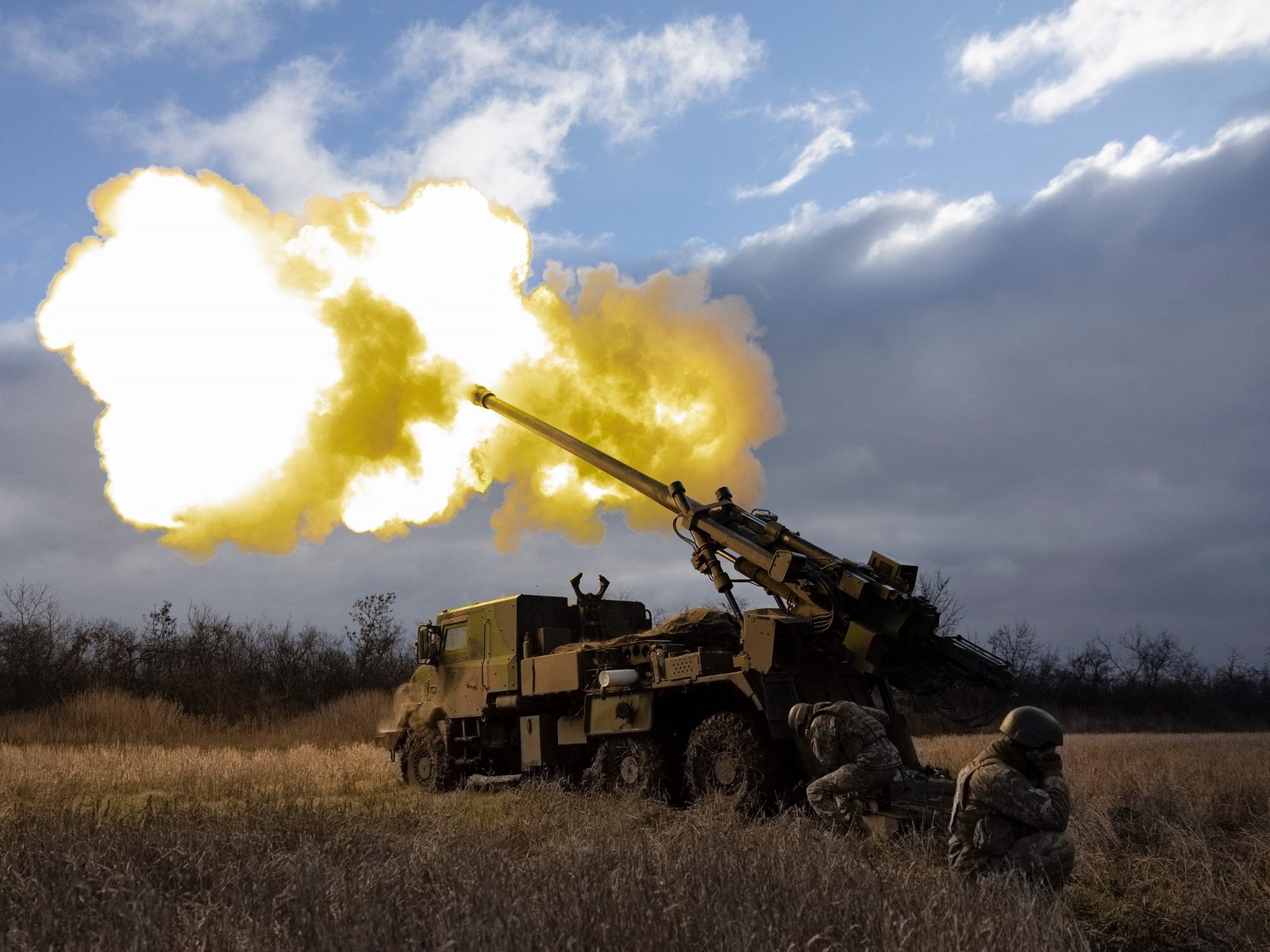
Europa decidió rearmarse incluso antes de la llegada de Donald Trump a la Casa Blanca, aunque ese acontecimiento acelerara los planes. El año pasado los 27 países de la Unión Europea aumentaron un 20% de media su gasto militar para llegar a un porcentaje de gasto sobre PBI que no se veía desde el fin de la Guerra Fría.
Europa se rearma por miedo a Rusia y porque desconfía de que Estados Unidos vaya a cumplir con sus obligaciones como miembro de la OTAN y vaya a acudir en su ayuda si al Kremlin se le ocurre atacar más países, además de Ucrania.
Pero el rearme, más allá de los problemas políticos que provoca en algunos países, de que el dinero tiene que salir de otras partidas de gasto o de más impuestos y de que ni siquiera la industria militar está siendo capaz de seguir el ritmo, genera un dilema. Porque rearmándose Europa está financiado a su enemiga rusa y a una potencial enemiga, China.
La industria europea necesita materias primas que debe importar, principalmente, de esos dos países, dos superpotencias mineras. Porque a Europa le falta titanio, tungsteno, grafito, galio, germanio y otros metales que vienen principalmente de Rusia y China. Además, Moscú y Beijing podrían en cualquier momento bloquear las exportaciones de esos minerales a Europa o incluso a terceros países si saben que terminarán en la industria militar europea.
El debate no es nuevo. El Tribunal de Cuentas de la Unión Europea publicó el febrero un extenso informe sobre los problemas europeos para conseguir los minerales y tierras raras para la transición energética. Informe que es aplicaba a la industria militar porque parte de los insumos necesarios son los mismos.
Ese informe, que ha servido de base para propuestas europeas de Defensa en las últimas semanas y que deberían tener el visto bueno de los gobiernos en una cumbre de ministros de Defensa a finales de agosto, señala la vulnerabilidad europea a la hora de conseguir los minerales necesarios para fabricar desde munición hasta radares pasando por aviones de combate, drones o sistemas de guerra electrónica. Sin suficiente titanio, tungsteno, grafito, galio, germanio y otros es imposible sostener la producción industrial de maquinaria bélica al ritmo que quieren los europeos.
Europa tiene principalmente dos problemas. El primero tiene poca solución. Los recursos mineros en el Viejo Continente son limitados en esos minerales. Pero tiene un segundo problema que sí podría solucionar y que ahora mismo la hace depender de China. Beijing concentra buena parte de la capacidad mundial de procesamiento de esos minerales.
Esa concentración en manos del Gobierno chino (porque aunque las minas en ocasiones son de gestión privada es el Gobierno quien da las licencias de exportación) es un riesgo para los europeos. En marzo de 2024 la Unión Europea aprobó su Reglamento de Materias Primas Fundamentales. Cubre 34 materiales que Europa considera estratégicos para transición energética, tecnología en general e industria militar en particular.
Ese reglamento pone objetivos. Asegura que la UE debe conseguir reducir sus dependencias de China. Ese reglamento sirvió para aprobar el pasado diciembre para lanzar planes para coordinar almacenamiento en Europa y para diversificar los proveedores, para que no todo dependa de China.
El objetivo es que en 2029 ningún proveedor tenga más del 50% del mercado europeo. Uno de los planes es desarrollar más la minería de esos minerales en Europa para explotar lo que quede en el subsuelo. Pero el propio Tribunal de Cuentas señala que la concesión de permisos sigue siendo lenta y que siete de los 27 países del bloque reciclan entre el 1% y el 5% de esos minerales después de usados y 10 países no reciclan nada. El informe afea que abrir una mina lleva prácticamente una década entre permisos ambientales y financiación. Si no hay oposición social y termina por abandonarse el proyecto.
El Tribunal de Cuentas retoma un eslogan muy repetido por los responsables europeos en los últimos años, el de la “autonomía estratégica” para recordar que “sin materias primas estratégicas no habrá autonomía estratégica”.
Europa sabe que tiene que acelerar porque, además, China usó en el pasado y puede volver a usar las licencias de exportación de minerales y tierras raras como arma de presión política. En caso de crisis comercial o de otra índole entre Bruselas y Beijing, el Gobierno chino podría suspender la exportación de esos minerales.
INTERNACIONAL
Médico dominicano es arrestado tras muerte de mujer a quien inyectó solución antienvejecimiento

El arresto de un médico dominicano sin licencia en Nueva York generó repercusión en la comunidad hispana del Bronx tras la muerte de una joven que habría recibido un tratamiento antienvejecimiento.
Luis Rojas Cabrera, propietario y director del Bereshit Lifestyle Center, fue detenido el domingo después de que una paciente de 27 años falleciera en circunstancias que aún investiga la policía, según informó el medio dominicano Diario Libre con base en datos del Daily Mail y Daily News.
La investigación policial apunta a que la víctima fue trasladada en estado crítico desde el centro de salud, ubicado en Riverdale, hasta el NewYork-Presbyterian Allen Hospital, donde fue declarada muerta. La llamada de emergencia se produjo a la 1:10 de la tarde y, de acuerdo con la información recabada por Diario Libre, la mujer había recibido en el centro una “solución de terapia antienvejecimiento” poco antes de sufrir la emergencia médica.
Las autoridades mantienen bajo reserva la identidad de la fallecida, mientras avanzan los análisis forenses que determinarán la causa exacta del deceso.
El acusado, Luis Rojas Cabrera, enfrenta cargos por imprudencia temeraria y por ejercer la medicina sin autorización en Estados Unidos. Según Diario Libre, el Bereshit Lifestyle Center se especializaba en medicina integrativa y terapias naturales, a cargo de Rojas Cabrera, quien, según su perfil profesional, se formó en la Universidad Tecnológica de Santiago (UTESA) en la República Dominicana y obtuvo el título de cirujano en el Hospital Salvador B. Gautier, en Santo Domingo.
En el sitio web del centro, Rojas Cabrera asegura haber realizado más de 6.000 cirugías y haber colaborado en la formación de más de 100 médicos en su país natal. Además, indica que recibió formación en cirugía de cabeza y cuello, bariátrica, laparoscópica y medicina alternativa en Israel, Francia, Puerto Rico y México. El médico también afirma poseer certificaciones de la American Association of Drugless Practitioners (AADP), asociación estadounidense de profesionales de prácticas no farmacológicas, y de la American Alternative Medical Association (AAMA), asociación estadounidense de medicina alternativa.

Diario Libre detalla que el centro dirigido por Rojas Cabrera promocionaba productos y tratamientos para el bienestar y la prevención de enfermedades, orientados a la comunidad hispana de Nueva York. En una de sus descripciones públicas, el establecimiento aseguraba que seleccionaba “cuidadosamente todos los productos” con el objetivo de ofrecer acceso a “innovaciones” en salud holística.
De acuerdo con la policía, la administración de la solución antienvejecimiento a la joven precedió de forma directa a la crisis que derivó en su fallecimiento. Informó Diario Libre: “La autopsia determinará la causa de la muerte, tras lo cual las autoridades podrían presentar cargos más graves contra el médico”. Las pesquisas se centran en establecer si el centro cumplía con las normativas locales y si el procedimiento aplicado a la víctima contaba con el aval de las autoridades sanitarias del estado.
El perfil profesional de Luis Rojas Cabrera incluye afirmaciones sobre su experiencia como jefe de residentes y jefe de urgencias en hospitales dominicanos, así como colaboraciones con universidades y clínicas en República Dominicana, Puerto Rico, El Salvador, México y Estados Unidos. Sin embargo, las autoridades confirmaron que el acusado no poseía sin licencia para ejercer en Nueva York ni autorización para realizar procedimientos médicos en ese estado.

La muerte de la joven y el arresto de Rojas Cabrera han causado impacto en la comunidad dominicana de Nueva York. Las autoridades advirtieron que podrían formalizar cargos adicionales dependiendo de los hallazgos de la autopsia y de la revisión de los antecedentes del centro de salud involucrado.
dermaplaning,tratamiento facial,exfoliación,cuidado de la piel,estética,piel

Una multitud recibió a la selección de España en Madrid: así fue la fiesta

El desguace de Pro. Los hermanos Milei y Patricia Bullrich trabajan para desgastar a la fuerza macrista

El fuerte mensaje de Giuliano Simeone en medio del escándalo donde lo acusan de ser el culpable del gol de España: “Perdón por…”

La enorme contradicción del kirchnerismo: criticaron a Lionel Messi, pero se colgaron de su grandeza para conservar la caja y la impunidad

YPF confirmó cuándo realizará el split de acciones para facilitar el acceso de pequeños inversores

Las fotos y videos del recibimiento a la selección argentina: del show de drones a la “sorpresa” en el aeropuerto

Rubio’s call to combat global funders of far-left terrorism could put Singham in crosshairs

Sismo de 7.4 sacude a Guatemala: Autoridades declaran alerta anaranjada por daños y descartan tsunami

Canales para ver EN VIVO el San Lorenzo vs. Deportivo Riestra por la Copa Argentina

Rogelio Frigerio presentó un seguro multirriesgo con un fondo de USD 1 millón para el maíz en Entre Ríos

 INTERNACIONAL2 días ago
Estados Unidos cambia una regla histórica del jugo de naranja vigente desde 1963 y afecta a toda la industria
- CHIMENTOS3 días ago
Es el conductor más querido de la tele y tan argentino como el mate, pero pocos saben que nació en España: ¿a quién alentará en la final?
- DEPORTE3 días ago
Antes de la clasificación, Franco Colapinto afrontará la última práctica libre del GP de Bélgica: hora, TV y todo lo que hay que saber