INTERNACIONAL
Lawmakers throw out ‘Trojan horse’ activists they say are engaged in American subversion

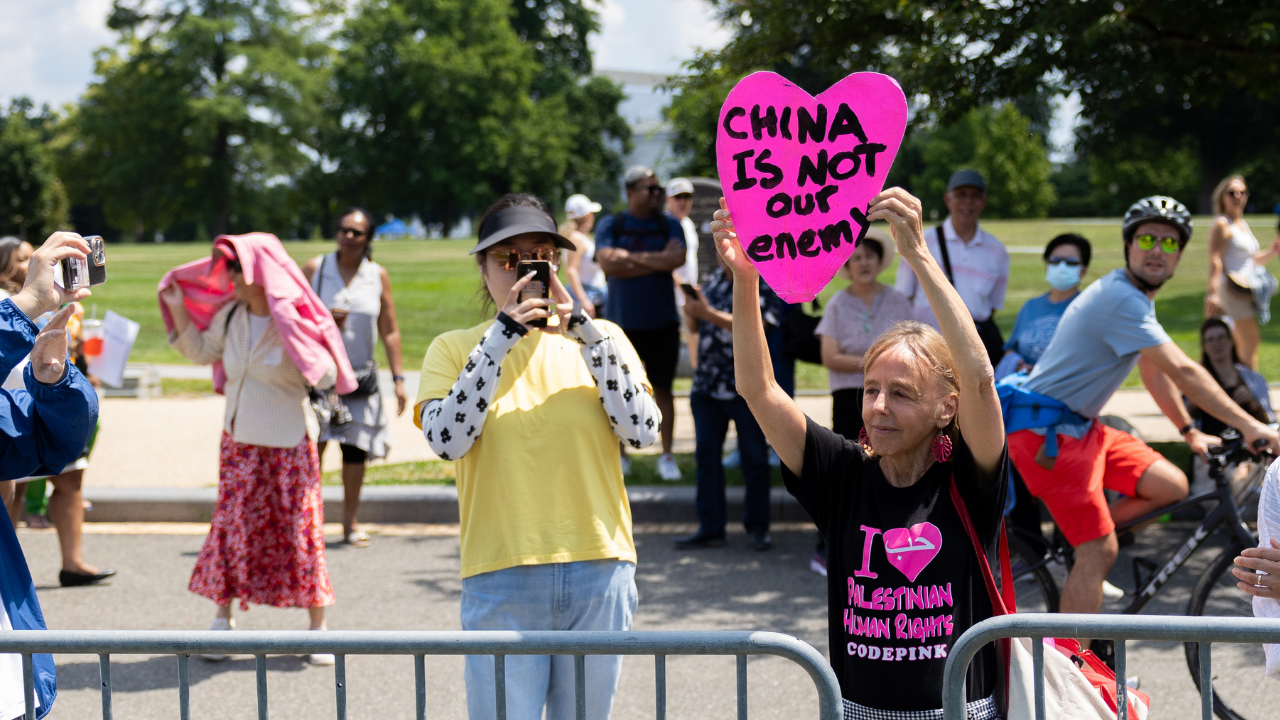
WASHINGTON, D.C. – CodePink co-founder Medea Benjamin and two fellow agitators entered the House Foreign Affairs Committee hearing room 2272 today, wearing camera-ready T-shirts supporting the Islamic Republic of Iran and the Communist Party of Cuba, turning themselves into a live demonstration of the «Trojan horses» for foreign influence that lawmakers had gathered to examine.
At 2:39 p.m., about 30 minutes into the hearing’s start, after Benjamin carefully photographed their T-shirt slogans appearing on the TV screen behind the witnesses, staffers on the House Foreign Affairs Subcommittee on South and Central Asia had had enough, and Capitol Hill police officers escorted Benjamin and her fellow agitators out of the room, as they protested their ejection for staging their trademark CodePink antics.
For lawmakers, CodePink’s camera-conscious performance underscored the central point of the hearing: that protest theater, messaging and social-media content can function as parts of foreign influence operations.
«It’s really about theatrics,» Subcommittee Chairman Bill Huizenga, R-Mich., later told Digital. «They’re using it not to affect policy, but really to enrich themselves because they use that then to go out on social media, to try to whip other people up, to help donations, to help get volunteers, help get some of those other folks, and to really try to go and disrupt our – not just our sense of government and processing government – but society.»
HOUSE PANEL TO PROBE FOREIGN ‘TROJAN HORSES’ AS SINGHAM SCRUTINY WIDENS
The hearing, «Trojan Horses: Covert Foreign Malign Influence Operations in America,» focused on the network of nonprofits, media outlets and activist groups that are promoting the interests of foreign governments and pro-communist ideologues, like Neville Roy Singham, a U.S. tech tycoon who lives in Shanghai, supporting the Chinese Communist Party. According to a Digital investigation, Singham has pumped $278 million into a far-left network of groups that have pushed anti-America, pro-China propaganda, including CodePink, which has received $1.33 million from Singham.
Outside the hearing room, Benjamin refused to answer questions from Digital about the Singham funding, and instead slipped into the hearing room with her fellow activists and positioned themselves behind the witnesses in seats that get maximum TV exposure.
Mike Gonzalez, a senior fellow at the Heritage Foundation, spotted Benjamin immediately and, in a tense back-and-forth with her, said «I’m telling Medea Benjamin that she should try to stop shilling for a communist tyranny.»
Standing on the committee hearing room floor, Benjamin defended herself as «anti-war,» and denied any direction from the Chinese Communist Party.
CUBA BUILT COVERT NETWORK INSIDE AMERICA THROUGH SPIES, ACTIVISTS AND UNIVERSITIES, STATE DEPT ALLEGES
During opening remarks, Huizenga took direct aim at actors he said are tied to U.S. adversaries attempting to influence the American public, including Singham, CodePink and Marxist influencer Hasan Piker.
«We are here today because America’s adversaries – China, Cuba, Iran, and Russia – are conducting covert influence campaigns to shape American thought and society through lies and censorship. These countries have one shared goal: to weaken the United States of America,» Huizenga
«A prominent example of these adversary efforts is Neville Roy Singham, who lives in China and uses his wealth and relationships with the CCP to provide millions of dollars and personnel to extremist groups like CodePink, the People’s Forum, and the Party for Socialism and Liberation to destabilize American society and promote communist ideology,» he continued.
A hub for pro-communist organizing in New York City, People’s Forum has received $22.44 million from Singham.
The first to testify, Gonzalez said a «red-green» alliance of far-left groups working with Islamist organizations channel money through intermediary organizations and donor funds before directing funds toward U.S.-based groups that organize protests and produce political messaging.
Gonzalez pointed to Cuba and China’s influence operations as the basis of a «sustained campaign of subversion against the United States.»
He described BreakThrough News as a media platform that amplifies demonstrations and promotes narratives aligned with Beijing, while arguing that the network’s causes — including Gaza, Cuba, Venezuela, the environment and social justice — provide a constantly changing set of rallying points. BreakThrough BT Media runs BreakThrough News and has received $1.098 million from Singham, according to reporting.
The testimony also focused on Singham’s connections in Shanghai. Gonzalez cited research saying Singham shares premises with Maku Cultural Communication, a Chinese communications firm that promotes a favorable image of China, and was photographed attending a Chinese Communist Party strategic communications workshop in 2023. Gonzalez also pointed to connections between Singham-funded organizations and Chinese state-linked academic and media institutions.
POWER COUPLE OF CHAOS: HOW A TYCOON AND ACTIVIST BUILT A ‘REVOLUTIONARY BASE’ AT THE HOUSE OF SINGHAM
Singham and CodePink have denied that the organization takes direction from the Chinese government. Singham has said he is guided by his own political beliefs, while Benjamin has said CodePink receives no money from the Chinese Communist Party. No criminal charges have been filed against Singham or the organizations in connection with the allegations.
Soon after, Sam Lyman, head of research at the Bitcoin Policy Institute, presented the network as one of three overlapping channels of influence: Chinese state media and online campaigns, nonprofits supported by Singham, and the Party for Socialism and Liberation, a Marxist-Leninist organization that works closely with CodePink, People’s Forum and BreakThrough News. Lyman said Singham-funded groups had echoed Chinese messaging on artificial intelligence, data centers and U.S. technology policy, while the Party for Socialism and Liberation organizers helped mobilize opposition to data-center projects across the country.
In the gallery, CodePink’s Benjamin stared at her phone, scrolling through messages.
Lyman said his research identified 21 campaigns linked to the Party for Socialism and Liberation in 14 states that contributed to data-center moratoriums, a permanent ban and the rejection or cancellation of several projects. He estimated that campaigns in which the Party for Socialism and Liberation played a role had delayed, reduced or blocked proposed AI infrastructure investment across the country. He cautioned, however, that opposition to data centers isn’t entirely manufactured and that many Americans had genuine concerns about electricity costs, environmental effects and local development.
Finally, among the Republican witnesses, Matthew Johnson, senior fellow at the Jamestown Foundation, a think tank, described the Singham network as an intermediary layer that translates themes associated with Beijing — including anti-imperialism, environmental harm, militarization, inequality and opposition to U.S. power — into activist language for American audiences.
HASAN PIKER CALLS HAMAS ‘FAR MORE MODERATE,’ DISMISSES TERROR GROUP’S BRUTAL RULE IN GAZA
His testimony identified the People’s Forum, BreakThrough News, Tricontinental, CodePink and the communist ANSWER Coalition as part of the broader ecosystem. Tricontinental Ltd. is a Massachusetts-based think tank led by a friend of Singham’s, Vijay Prashad, who led a session on the future of Marxism at Singham’s wedding to Evans. Singham provided $16.76 million to Tricontinental.
«Beijing cannot simply command an American university, company, journalist, think tank or activist,» Johnson said. «It must gain access and cultivate relationships within institutions that shape perception, expertise and decision-making.»
Democratic minority lawmakers called Donald Sherman, president of Citizens for Responsibility and Ethics in Washington, to the hearing as their witness. His opening remarks offered a dissenting opinion to the other witnesses, criticizing President Donald Trump for accepting a plane for Air Force One from Qatar and taking aim at Trump’s family’s business dealings with nations abroad.
The phrase «Trojan horse» comes from the ancient Greek story in which soldiers concealed themselves inside a wooden horse presented as a gift to the city of Troy. Once the horse was brought inside the city, the soldiers emerged and opened the gates to the invading army.
FACEBOOK CO-FOUNDER DUSTIN MOSKOVITZ’S ‘EFFECTIVE ALTRUISM’ NETWORK TIED TO AI REGULATION PUSH
In modern foreign influence operations, lawmakers used the «Trojan horse» metaphor to describe seemingly legitimate people, organizations, media outlets, nonprofits or cultural initiatives that can provide hidden access for a foreign power’s interests. The concern is that a foreign government, foreign intelligence service, wealthy foreign actor or proxy may use that structure to gain access to American audiences, political debates, institutions, policymaking or elections.
After the last witness spoke, about 30 minutes into the hearing, Huizenga briefly suspended proceedings while U.S. Capitol Police approached Benjamin and her fellow agitators.
«We do have some folks who have not verbally disrupted the committee as of yet,» Huizenga said. «This has been deemed to be a protest by the clerk because of the nature of the shirts and what is happening.»
The shirts were still visible on the official feed of the hearing behind the witnesses.
Video from inside the hearing room shows a Capitol Police officer approaching Benjamin at her seat and asking her to leave. Benjamin complied but protested.
As the activists huddled outside with Capitol Police officers, ranking member Rep. Sydney Kamlager-Dove, D-Calif., objected to the removal, saying the activists were «exercising their freedom of speech by wearing T-shirts» and «certainly were not being disruptive.»
CHINA EXPERT WARNS BEIJING WANTS AMERICANS — NOT THE CCP — TO SPREAD ITS MESSAGE
Outside, Benjamin kept the performance going, strategically positioning herself beside the bronze committee placard and started filming a video about the political spectacle just staged, her Trader Joe bag beside her feet. Suddenly, she cut filming when she spotted Rep. Randy Fine, R-Fla., exiting the hearing room. Chasing after Fine, a strong opponent of the anti-semitism of the «red-green alliance» and a strong supporter of Israel, Benjamin hurled questions at her, her team filming the chase.
After Fine entered an office, Benjamin returned to her spot outside the Foreign Affairs Committee hearing room, pulled out a comb to straighten her hair and returned to filming her remarks about the day’s hearing. The video complete, Benjamin disappeared down the hall with her fellow CodePink agitators.
Soon after, CodePink published videos of their members disrupting a House Financial Services Committee to heckle Treasury Secretary Scott Bessent. As Digital has reported, Bessent’s Treasury Department has been investigating CodePink and other organizations for possibly violating restrictions on doing business with the Communist Party of Cuba.
Then, just about two hours after being escorted out of the hearing room, at 4:38 p.m., the CodePink team posted a carefully edited 43-second video of Benjamin standing outside the hearing room and chasing Fine, packaging the day’s confrontation into a ready-made social-media clip.
Far-left activists from the Singham network quickly shared the CodePink video.
Digital’s Jesse Watson contributed to this report.
fox news investigates, politics, congress







INTERNACIONAL
$800-a-day penalty threatens to bleed investigative reporter dry as explosive legal fight escalates
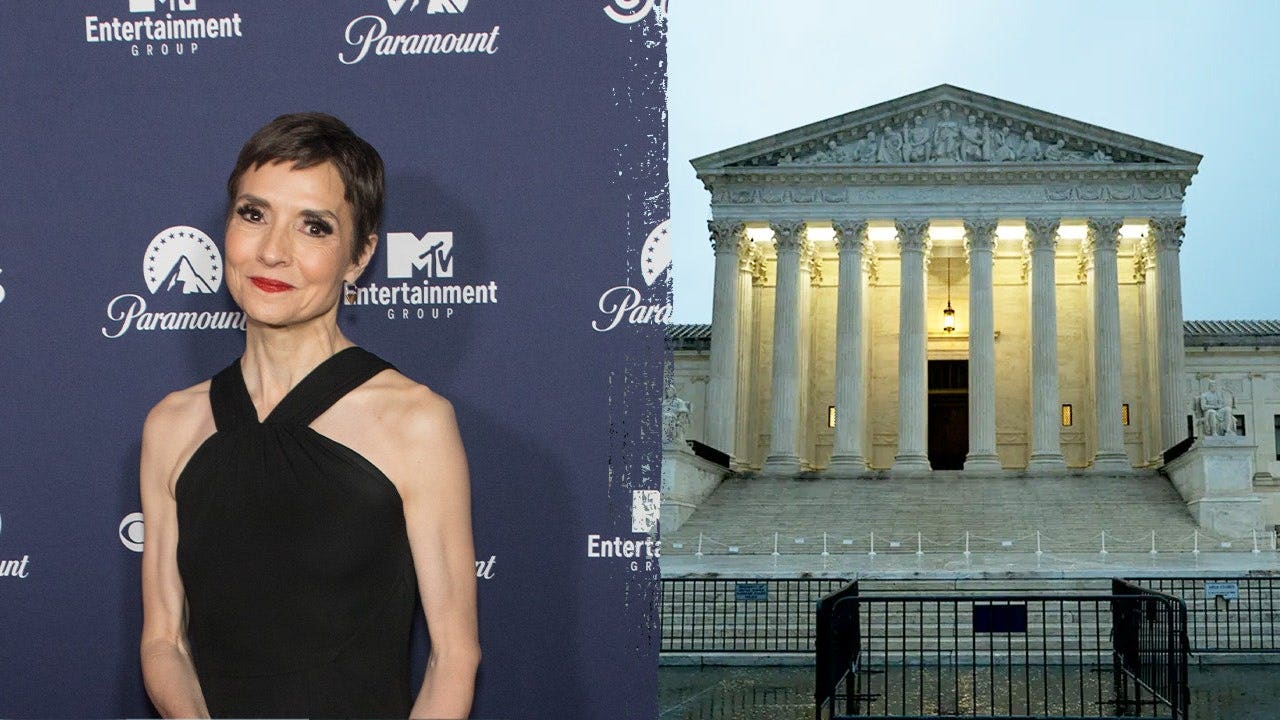
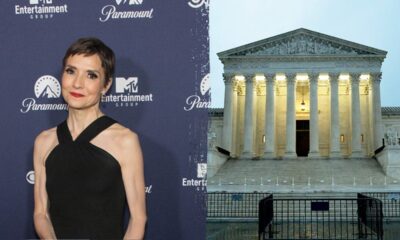
Former investigative reporter Catherine Herridge is asking the Supreme Court to protect her confidential sources after a federal court ordered her to identify who helped expose a woman’s alleged ties to China’s military.
The outcome of the case could dramatically reshape the legal protections afforded to journalists working in the U.S. under the First Amendment.
Herridge was held in contempt and ordered to pay $800 per day for refusing to reveal sources behind her 2017 reporting on Yanping Chen, a Chinese American businesswoman who operated a university attended by U.S. military personnel. Her reporting raised questions about Chen’s alleged past as a colonel for the People’s Liberation Army (PLA) of China and the potential exposure of sensitive information about American service members.
The Department of War subsequently cut off military tuition assistance funding to Chen’s university following a national security review, according to a filing by Herridge’s legal team. The school had been receiving approximately $200,000 a month in taxpayer-funded tuition assistance.
NEW YORK TIMES BLASTS ‘ABUSIVE’ TRUMP SUBPOENAS TARGETING REPORTERS’ SOURCES
Now Chen, who was investigated by federal authorities but never charged with a crime, is pursuing a lawsuit against the federal government, alleging that officials improperly disclosed her private records to Herridge in violation of the Privacy Act. She has sought to compel Herridge to identify her sources as part of that litigation.
The dispute has reached the Supreme Court, where Herridge’s attorneys are asking the justices to reconsider the legal standard used to force journalists to disclose confidential sources in civil cases.
Her legal team argues that the lower courts failed to adequately weigh the broader circumstances of Chen’s lawsuit, including the Pentagon’s national security findings and whether Chen can ultimately prevail in her claims against the government.
The case also exposes a longstanding disagreement among federal appeals courts over the scope of the reporter’s privilege, an issue the Supreme Court has not comprehensively addressed in more than five decades.
Herridge’s original investigation, published while she was working at in 2017, examined Chen’s background and her operation of the University of Management and Technology in Arlington, Virginia, which enrolled U.S. military personnel using Defense Department tuition assistance.
The reporting included photographs appearing to show Chen in a Chinese military uniform and examined allegations that she had concealed her previous military service when applying for U.S. immigration benefits.
It also raised concerns about the university’s collection of information on American service members, including details about their military training and professional backgrounds. A whistleblower interviewed for the investigation alleged that information stored on the school’s computers could be accessed remotely from China.
WASHINGTON POST BOASTS IT STARED DOWN ‘UNWARRANTED’ JUSTICE DEPARTMENT SUBPOENA
Federal authorities had previously investigated Chen over potential immigration violations and counterintelligence concerns, but prosecutors in the Eastern District of Virginia declined to bring charges.
Following Herridge’s reporting, the Pentagon completed a review of Chen’s university and terminated its eligibility for military tuition assistance funding, according to her filing.
Chen subsequently filed suit against the federal government, alleging that confidential information from government records had been improperly disclosed to Herridge. She contends that identifying the officials responsible for the alleged disclosures is necessary to establish her Privacy Act claims.
Herridge refused to identify her sources, arguing that compelling disclosure would undermine the ability of journalists to obtain sensitive information from government officials and whistleblowers.
A federal judge ultimately ordered Herridge to disclose the sources and held her in civil contempt when she refused. The U.S. Court of Appeals for the D.C. Circuit upheld the order, prompting her appeal to the Supreme Court.
Media has continued to support Herridge’s legal fight, including covering her legal fees, despite her departure from the network in 2019.
At the center of Herridge’s petition is a disagreement among federal appeals courts over how judges should evaluate a journalist’s claim of privilege when confidential sources are sought in civil litigation.
The filing argues that the D.C. Circuit applied a narrow test focused primarily on whether Chen needed the information to pursue her lawsuit and whether she had exhausted alternative means of obtaining it.
They contend that courts should also consider the strength of the underlying lawsuit and the consequences of compelling disclosure, particularly when confidential national security sources may be involved.
The distinction could prove significant for journalists reporting on sensitive government matters. Under the standard challenged by Herridge, a plaintiff could obtain a reporter’s confidential sources even if other deficiencies in the lawsuit would ultimately prevent the plaintiff from recovering damages, according to the petition.
supreme court, politics, law, judiciary, federal courts, fox news media, first amendment
INTERNACIONAL
El déficit fiscal, un Congreso adverso y las tensiones con Trump y Milei: los desafíos de Lula en su cuarto mandato
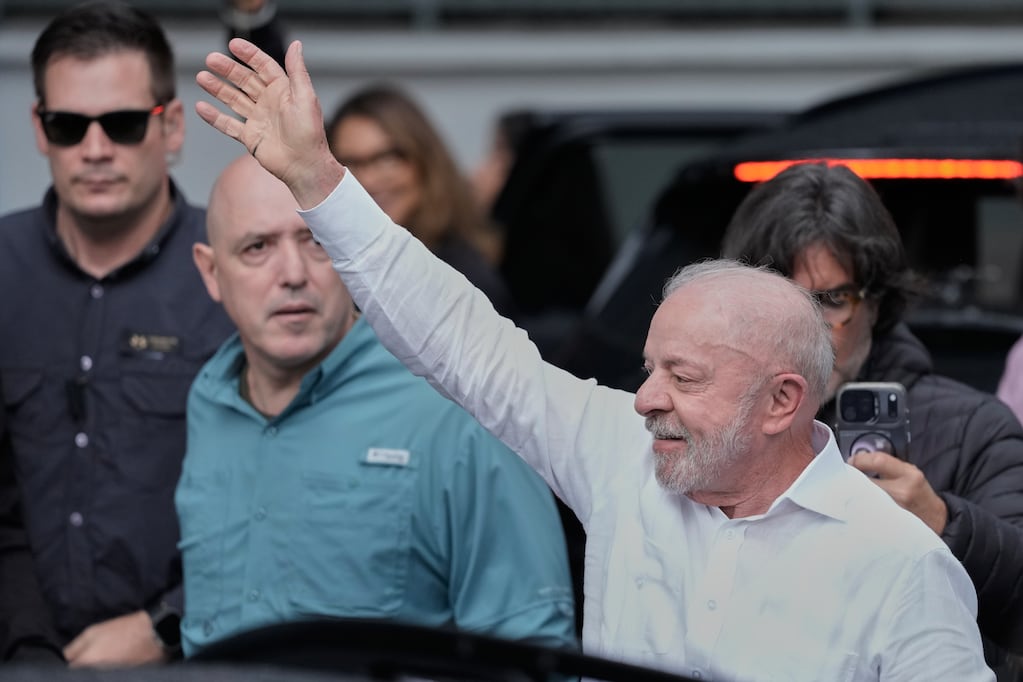
Gobernabilidad, gasto público, seguridad y relaciones con Estados Unidos se asoman como los grandes desafíos que deberá afrontar el reelecto presidente Luiz Lula da Silva en su cuarto mandato tras el triunfo en el balotaje de este domingo en Brasil.
Son temas prioritarios que el mandatario izquierdista, de 81 años, deberá enfrentar a partir del 5 de enero próximo.
“En general, lo más inmediato es la economía. Pero hay una serie de conexiones con otras cuestiones importantes de la agenda política interna”, dijo a TN la analista brasilela Denilde Holzhacker, directora del área de Investigaciones en la Escuela Superior de Publicidad y Marketing de San Pablo.
Cuáles son los temas prioritarios de la agenda
La agenda de prioridades del nuevo gobierno de Lula es extensa, pero los temas más candentes son cuatro.
- Gobernabilidad. Lula asumirá un nuevo período de gobierno con un Congreso adverso y dominado por el “bolsonarismo” y fuerzas de centroderecha. “Lula tiene un gran desafío: lidiar con un Congreso opositor”, resumió Holzhacker. El escenario es complejo. Los legisladores de derecha y de centro controlarán con una mayoría simple el nuevo Parlamento si se unen. La dinámica en el Senado podría ser similar. Lula tendrá que poner en juego toda su capacidad de negociación para refrendar acuerdos con el “Centrao”, la coalición de partidos de centroderecha que suele dar gobernabilidad al presidente de turno, pero que respaldó a Flávio Bolsonaro en el balotaje. La izquierda quedó en absoluta minoría.
- Deuda y déficit fiscal. “La cuestión de la deuda pública es un gran desafío”, dijo Holzhacker. La deuda pública llegó al 82,9% del PBI y el déficit fiscal al 9,48%. Ambos indicadores están en alza y representan una amenaza para las cuentas públicas. Brasil necesitará una férrea disciplina fiscal. Además, las tasas de interés están en 13,75%, muy elevadas según advierten expertos. La inflación está controlada en 4,58 % interanual. Lula necesita rigor fiscal, pero prometió más inversión pública para impulsar el crecimiento, aumentar la recaudación y mantener así los vitales planes sociales de su gobierno. “Si el país no crece se limita el proceso de inversiones”, alertó la analista. Brasil necesita más inversiones petroleras y mineras, además del vital rubro de las tierras raras.
- Estados Unidos. Es un tema de difícil resolución. El presidente estadounidense, Donald Trump, jugó duro a favor de Bolsonaro con fuertes presiones diplomáticas y la aplicación de aranceles que dieron un duro golpe a la economía brasileña. Lo paradójico es que Estados Unidos es su segundo socio comercial detrás de China. “Es el gran desafío externo”, dijo la analista. En juego estará también el difícil vínculo con la Argentina de Javier Milei, que apostó todo a ganador con Bolsonaro y dañó la relación bilateral con sus descalificaciones al presidente reelecto que lo tildó de ladrón. Las relaciones nunca estuvieron en un nivel tan bajo desde el regreso de la democracia.
Silva
INTERNACIONAL
Trump’s fingerprints seen on Latin America’s rightward shift as Brazil becomes next test
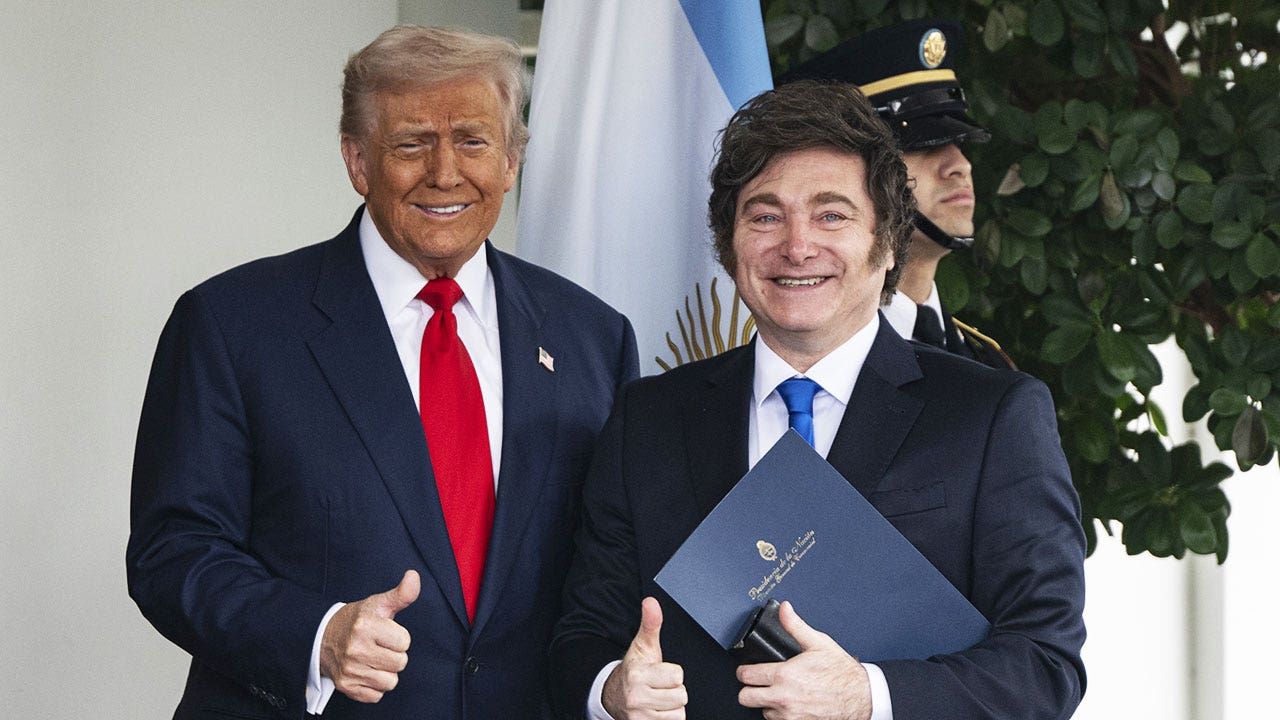
President Donald Trump’s political influence is reaching far beyond America’s borders as several Latin American countries shift toward right-leaning leadership, with Brazil emerging as the next major test of the region’s changing political direction.
For Argentina-born Trump rally attendee Marcelo Sandrin, who has lived in the U.S. for roughly three decades, the shift is unmistakable — and Trump deserves substantial credit.
Speaking to Digital outside the T. Ed Garrison Arena near Clemson, Sandrin pointed to Argentine President Javier Milei and the prospect of another rightward shift in Brazil as signs of what he sees as Trump’s growing influence. The trend comes as the Trump administration has also asserted U.S. power more directly in the region, most dramatically through the capture of Venezuelan socialist leader Nicolás Maduro.
«[Trump deserves] a lot of credit,» Sandrin told Digital, adding Milei is a very forceful libertarian, right-wing/small-government figure, and that during the Trump era, South America has moved «more and more to the right.»
LATIN AMERICA’S CONSERVATIVE SHIFT FACES ITS BIGGEST TEST YET IN BRAZIL ELECTION
In Argentina, Milei has emerged as one of Trump’s most prominent ideological allies in the hemisphere, pursuing sweeping economic reforms and challenging the left-wing political establishment that dominated much of the country’s recent history.
«Brazil is almost going to be [moving] to the right again. It’s only Mexico and Uruguay for now [on the left]. The problem in my country is one side or the other, they have to steal, stop stealing. That’s the number one thing.»
Brazil could provide another test of the region’s political direction, with allies of former President Jair Bolsonaro seeking to return the country to right-wing leadership. The country’s political future remains contested, however, underscoring the limits of describing Latin America’s political trajectory as a uniform rightward turn.
The Trump administration’s impact on the region has also extended beyond electoral politics. Venezuela underwent a dramatic change following the U.S. capture of longtime socialist leader Nicolás Maduro, an operation that Venezuela native and Manhattan Institute researcher Santiago Vidal Calvo argued reinforced Washington’s influence across the hemisphere and weakened the political order Maduro represented.
COAST GUARD FIREFIGHT PUTS US, MEXICO AT ODDS DESPITE COORDINATED BORDER OPERATIONS
«I have no doubt that President Trump has had a good influential policy towards making governments more right-leaning in Latin America,» Calvo said.
«I think that got exacerbated with the capture of Maduro,» he added. «A lot of people saw that the United States was again an influential force in the continent, that China was being kicked out in many fronts.»
Calvo argued that Trump, Milei and Salvadoran President Nayib Bukele have helped inspire right-leaning movements across the region, with implications extending beyond elections to immigration, trade, Chinese influence and national security.
He also pointed to China, arguing that Beijing expanded its influence in Latin America through loan agreements that differ from conventional North American banking transactions and can give it leverage in countries’ domestic affairs.
SIGN UP TO GET THE POLITICS NEWSLETTER
The regional shift is far from uniform. Mexico remains governed by the left-wing Morena movement, making it a political counterpoint to Trump’s network of right-leaning regional allies. Uruguay also remains on the left, another exception to the trend Sandrin described.
Calvo also singled out Secretary of State Marco Rubio for praise, arguing that the administration’s Latin America strategy has been an underappreciated foreign-policy achievement.
«I think one of the highlights of this Trump administration has been a good example of foreign policy in Latin America, especially at the hand of [Marco] Rubio,» Calvo told Digital.
Digital’s Reagan Schroeder contributed to this report.
donald trump, latin america, south america, foreign policy, geopolitics, jair bolsonaro, politics, nicolas maduro, mexico, illegal immigrants, immigration, world

Hotesur y Los Sauces: los detalles de la segunda audiencia del juicio a Cristina y Máximo Kirchner por asociación ilícita y lavado de dinero

San Martín de Formosa es campeón del Federal A y logró un ascenso histórico

Unos 200 mayoristas ofrecerán descuentos en todo el país durante el Black Week

Benjamín Vicuña rompió el silencio sobre sus hijos, en medio de su fuerte enojo con la China Suárez: «Sabemos que hay una…»

La CGT ya recibió señales positivas sobre la visita del Papa, pero podrían reprogramarse algunas actividades

$800-a-day penalty threatens to bleed investigative reporter dry as explosive legal fight escalates

Javier Milei y sus medidas, en vivo: el mandatario dijo que piensa un proyecto a “100 años” para la Argentina

Escándalo con Sancor Salud: Cuotas millonarias por un servicio nefasto que abandona a los pacientes en urgencias

Estudiantes de La Plata busca su sexta final de Copa Libertadores: la tabla histórica del torneo y la disputa Argentina-Brasil que podría dirimir

José Luis Manzano compró un 21% del holding de medios de Javier Negre y refuerza su alineamiento con la gestión de Milei

 SOCIEDAD3 días ago
Escándalo con Sancor Salud: Cuotas millonarias por un servicio nefasto que abandona a los pacientes en urgencias
- POLITICA12 horas ago
CFK, Axel Kicillof, Sergio Massa y otros referentes del PJ celebraron el triunfo electoral de Lula da Silva
- ECONOMIA2 días ago
El riesgo país volvió a superar los 700 puntos y la volatilidad internacional golpeó a los bonos argentinos