INTERNACIONAL
“Llevan una jeringa letal en el chaleco”: El dramático testimonio de la esposa de un guatemalteco en el frente ruso

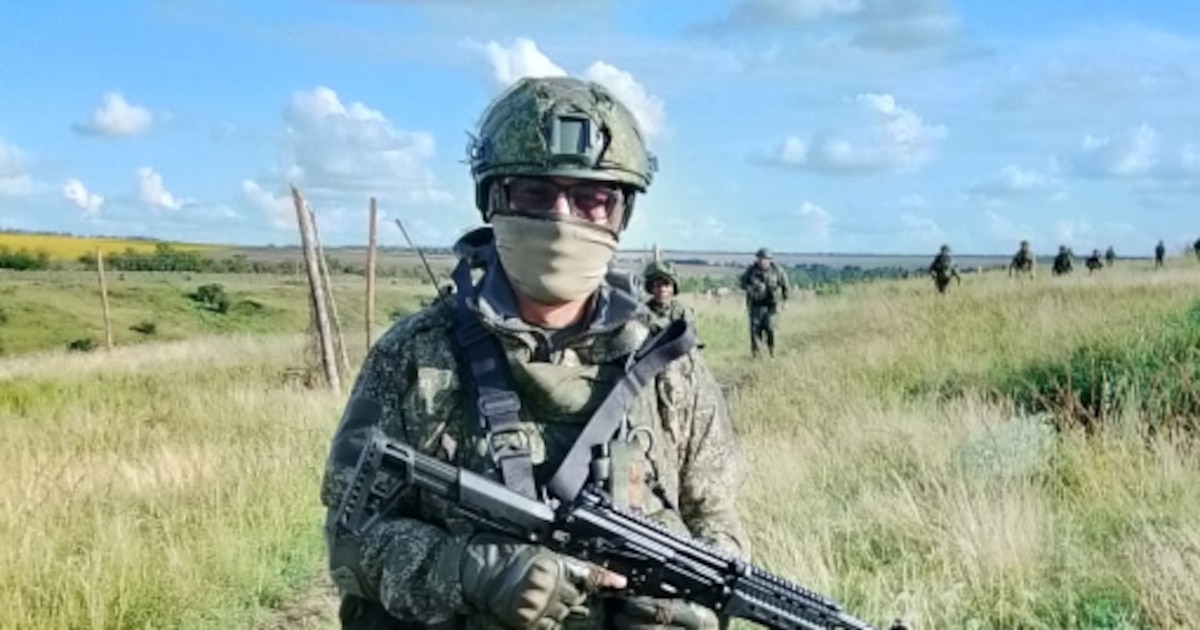
Las historias de reclutamiento de ciudadanos latinoamericanos para combatir en las filas del ejército ruso en el marco de la invasión a Ucrania siguen saliendo a la luz, pero con matices cada vez más perturbadores.
Por primera vez, Infobae tuvo acceso exclusivo al testimonio de la esposa del primer ciudadano guatemalteco documentado en las filas de las fuerzas de Moscú, un caso que retrata no solo el entramado de engaños económicos y la falta de respuesta diplomática, sino también graves e inusuales revelaciones sobre el equipamiento que llevan los extranjeros al frente de batalla.
Sarah Illescas, esposa de Carlos Alfredo González, accedió a hablar en exclusiva con Infobae y compartió una revelación inédita sobre el equipo de combate que su esposo aseguraba llevar consigo en el frente: la presencia de una supuesta jeringa autoinyectable destinada a ser utilizada en caso de captura por parte de las fuerzas ucranianas.
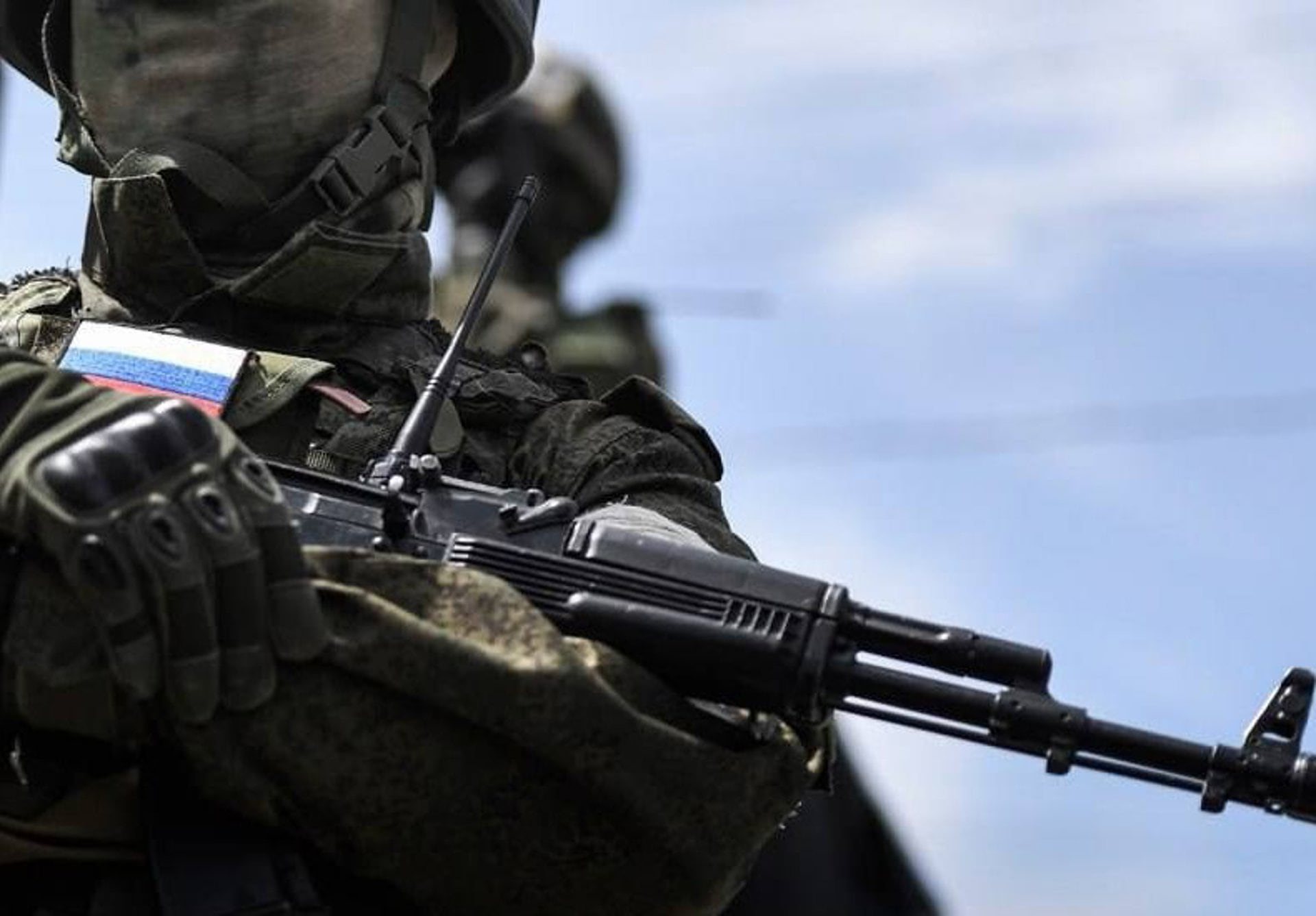
“Ellos, aparte de todo lo que cargan, cargan bombas, granadas, de todo, pero andan una inyección… Si alguien del otro lado los agarra, en este caso Ucrania, ellos se tienen que inyectar eso para morirse. Es una inyección letal”, afirmó Illescas a este medio.
Esta declaración constituye la primera vez que un familiar de un reclutado latinoamericano expone públicamente la existencia de este tipo de dispositivo en el equipo de los combatientes.
Infobae ha realizado las indagaciones correspondientes con otras familias de reclutados en la región; hasta la fecha, dichos contactos no han confirmado de forma directa el uso deliberado de sustancias suicidas, aunque han reiterado que los combatientes sufren constantes amenazas y represalias si intentan denunciar o exponer sus condiciones de servidumbre militar.
Contextualizando la denuncia, el uso de ampollas o jeringas en el kit médico ruso cuenta con antecedentes históricos en la doctrina militar de Moscú. Durante las Guerras de Chechenia, el botiquín militar obligatorio de los soldados (modelos AI-1 y AI-2) incluía la jeringa autoinyectable (shprits-tyubik) de Promedol, un potente analgésico opioide sintético.
Si bien su propósito oficial era anestesiar a los heridos graves para evitar el shock traumático, sobredosis de este tipo de analgésicos narcóticos o su mal uso en situaciones críticas pueden resultar letales o causar parálisis respiratoria.
El posible uso de sustancias químicas en el conflicto no se limita a analgésicos de emergencia. Según un informe del Estado Mayor de las Fuerzas Armadas de Ucrania difundido por la agencia EFE en 2024, el mando militar ruso ha recurrido al suministro sistemático de hasta siete sustancias narcóticas y psicotrópicas a tropas de élite, como el 108 Regimiento de Asalto Aerotransportado.
Estas drogas, diseñadas para inducir euforia y anular la percepción del dolor, buscan reducir la inhibición y el temor a sufrir heridas o la muerte, facilitando la ejecución de ataques prácticamente suicidas en frentes críticos como Márinka y Avdiivka (Donetsk).
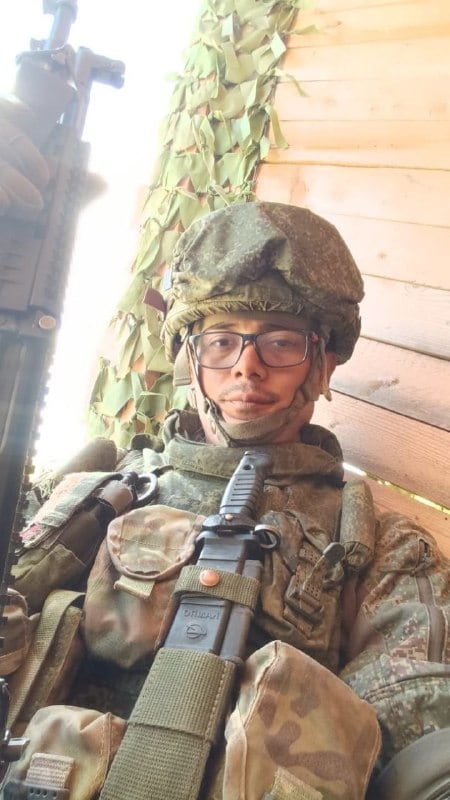
Illescas, detalló sobre el calvario que vive desde que su pareja tomó la decisión impulsiva de partir hacia Europa del Este, un viaje marcado por itinerarios irregulares, promesas de salarios exorbitantes y la posterior pérdida total de comunicación en las zonas de combate.
Carlos, guatemalteco nacido el 21 de octubre de 1990 y mecánico de profesión, abandonó Centroamérica a mediados de junio con la promesa de acceder a estabilidad financiera para su familia. Según relata su esposa, la salida debió coordinarse a través de un país vecino por impedimentos migratorios en su nación de origen.
“Nosotros lo fuimos a dejar a la frontera de El Salvador porque él tiene raíz aquí en Guatemala. Entonces, no puede salir por el lado de Guatemala legal… El 15 de junio salió en un vuelo de El Salvador para Panamá, luego hace escala en Panamá para Estambul y de Estambul hace vuelo para Moscú”, relató Illescas a Infobae.
El anzuelo principal para atraer a González al conflicto no dista de los patrones detectados en otros países de la región: sumas cuantiosas de dinero, bonos de incorporación y promesas de regularización migratoria que rara vez se concretan.
“A él le mandaron que iba a ganar un bono de 23,000 hasta 50,000 dólares. Iba a ganar un salario mensual de 210,000 a 280,000 rublos, que equivale a entre 2,300 y 2,800 dólares al mes. Iba a tener estatus legal, beneficios migratorios y le iban a dar la ciudadanía a él y a su familia”, explicó Illescas tras revisar las capturas de pantalla de la oferta.
Sin embargo, detrás del lucrativo contrato de un año se escondía una realidad distinta. Aunque a la esposa se le informó que González habría acumulado importantes sumas en cuentas bancarias rusas, la imposibilidad de realizar transferencias internacionales impidió que la familia recibiera un solo centavo en Guatemala.
“Me dijo que ya le habían pagado dos salarios… pero por tanta restricción yo nunca recibí ni un centavo… Me decía: ‘Tengo no sé cuántos millones aquí en la cuenta y son como 200,000 quetzales’. Pero yo le decía: ‘¿De qué sirve si no me puedes mandar ni un centavo?’”, enfatizó.
Entrenamiento, “caminatas de la muerte” y la pérdida del pasaporte
A su llegada a Moscú el 17 de junio, González fue sometido a exámenes médicos y alojado temporalmente en hoteles antes de ser trasladado a campos de entrenamiento y, posteriormente, a zonas de operaciones en territorio ucraniano ocupado. A partir de ese momento, la libertad de movimiento desapareció por completo.
“Al principio me dijo que iba de mecánico a arreglar cosas… Después me dijo que iba a recoger armamento que dejaban tirado las personas que fallecían. Pero estando allá, cuando pasaron los tres meses que supuestamente duraba su viaje, le dije que se escapara. Me dijo: ‘Es que yo ya no tengo mis papeles, ya no tengo mi pasaporte… Yo ya no estoy en Rusia, estoy del otro lado’”, denunció Illescas.
El testimonio detalla condiciones extremas en los frentes de combate donde operan hombres de diversas nacionalidades, entre ellos ciudadanos colombianos, venezolanos, ecuatorianos y africanos. Según Illescas, las raciones de alimento eran acaparadas por las tropas rusas de origen, dejando a los reclutados extranjeros en situaciones de vulnerabilidad.
Última comunicación y paradero incierto en el frente
La última comunicación de Illescas con Carlos tuvo lugar el 8 de septiembre de 2026, cuando él le informó que preparaba su equipo para salir a una nueva misión en una zona boscosa. Desde entonces, el paradero del ciudadano guatemalteco es incierto.
Frente a la desesperación, la cónyuge intentó obtener apoyo institucional en Guatemala, enfrentándose a barreras diplomáticas y respuestas evasivas por parte de las representaciones oficiales.
“Llamé a la Embajada de Rusia aquí en Guatemala… Le dije: ‘Mi esposo se fue tal fecha y dejé de comunicarme con él. Quiero saber de él’. Y me dicen ahí: ‘No, nosotros no te podemos apoyar, nosotros no tenemos relación con el Ministerio de la Defensa’… Me dieron el correo del ejército en Rusia para que escribiera en inglés, pero no he tenido respuesta”, lamentó.
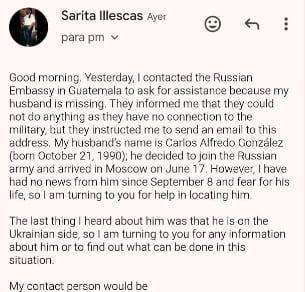
La historia de Carlos Alfredo González pone de manifiesto la vulnerabilidad de los ciudadanos latinoamericanos atraídos por la maquinaria de guerra rusa en Europa del Este, un fenómeno que ya afecta en Centroamérica.

INTERNACIONAL
Iowa Dem Senate candidate says he’s too busy campaigning to attend all state House votes

Democratic Iowa State Rep. Josh Turek defended his attendance record after being called out by his opponent, Republican Rep. Ashley Hinson, R-Iowa, during a Tuesday night debate for the state’s open Senate seat.
Hinson remarked on Turek’s absences while responding to a question posed to both candidates about Iowa’s rising cancer rates.
«You have to show up to vote for things like pediatric cancer research, and I’ve invested in legislation to make sure that we’re redirecting those resources to get to where it needs to go to help get to the bottom of this cancer crisis,» Hinson said.
As Digital first uncovered, Turek missed 261 votes in Iowa’s state legislature from Jan. 12, 2026, through May 3, representing nearly 58% of the total votes during that time.
The debate’s moderator asked Turek directly why he missed the votes.
DEM SENATE HOPEFUL RIPPED AS ‘ABSENTEE LEGISLATOR’ AFTER MISSING NEARLY 60% OF VOTES
«I have gone out there, and I have met with Iowans all over the state, all 99 counties, hundreds of public forums,» Turek responded.
POLL: TUREK, HINSON IN CLOSE IOWA SENATE RACE
«Meanwhile, Ashley Hinson, since she’s decided to run for U.S. Senate, has not done one in-person town forum. Also, in my first three years in the legislature, [I had] more than a 90% attendance record,» Turek continued.
«I want to ask again, though, why did you miss those votes?» the moderator repeated.
MEDIA NARRATIVE PREDICTING BLUE WAVE IN KEY BATTLEGROUND STATE NOT MESHING WITH LOCAL REPUBLICANS: ‘FIRED UP’
«I’m out campaigning. I’m out meeting Iowans all over all 99 counties. I’ve done hundreds of in-person town halls. Meanwhile, Ashley Hinson, since she’s running for the U.S. Senate, has not done a single in-person town hall,» he said.
Hinson objected to the notion that she hasn’t done any town halls during the campaign cycle.
POLL: A CLOSE SENATE CONTEST IS BREWING IN IOWA
«I’ve done more town halls than the percentage of time he showed up to work this year. 42% of the time is all Rep. Turek showed up to work this year. That’s two out of every five days of work,» Hinson said.
«Iowans, if you’re watching tonight, you should know if you don’t show up to work two out of five days, you’re not getting a promotion. You’re getting fired. I am proud of my bipartisan record working with both parties to get things across the finish line. I rank in the top 20% of bipartisan lawmakers in Congress and I have a 99% attendance record even while running a statewide campaign,» she concluded.
OBAMA ENDORSES DEMOCRATIC IOWA STATE REP RUNNING FOR US SENATE AGAINST TRUMP-BACKED HOUSE REPUBLICAN
Turek, before the moderator moved on, chimed in, adding, «She also missed 193 votes.»
A spokesperson for the Hinson campaign clarified to Digital that the 193 votes Hinson missed accounted for her entire time in Congress, while the 261 votes Turek missed were in the 2026 legislative session alone.
IOWA GOP GOVERNOR NOMINEE RECOUNTS VIRAL CLASH THAT PUT OBAMA ON THE SPOT AT 2009 TOWN HALL
The Hinson campaign also disputed the idea that she hasn’t held any town halls.
«Since being elected to Congress, Ashley Hinson has held 47 in-person town halls and more than 30 telephone town halls — speaking directly to Iowans about the issues that matter most to them,» Billy Fuerst, the Hinson campaign communications director, told Digital.
TRUMP-BACKED IOWA US SENATE HOPEFUL SAYS IRAN WAR MUST ‘BE BROUGHT TO A SUCCESSFUL AND IMMEDIATE END’
«Ashley has a 98.8% lifetime voting record while Josh Turek registered a 42% voting record in the State House this year. Ashley missed 16% (94 of 553) of committee amendment votes over the course of her congressional tenure, but has been present for all final passage votes (final passage votes include the amendment language) in her time on the Appropriations Committee — 70 total bills since 2021,» Fuerst concluded.
Rep. Turek and his campaign did not immediately respond to Digital for comment.
Digital’s Leo Briceno contributed to this report.
politics, senate, midterm elections, iowa, democratic party, republicans
NEWYou can now listen to Fox News articles!
The entire Horn of Africa region is said to be on a knife’s edge. As explosions reportedly claimed to be caused by drones hit Ethiopia’s capital city in early October, the U.S. Embassy in Addis Ababa warned U.S. citizens of the danger of «long-range attacks.»
Analysts say there’s a high probability that Ethiopia and Eritrea are about to erupt in a new war, with worrying regional backing for both sides.
Former CIA analyst and National Security Council Africa Director Cameron Hudson says the Trump administration needs to become more involved. He told Fox News Digital, «Regional leaders will say privately that they don’t want a regional war. But with so many armed actors and so much meddling going on in each other’s countries, a regional conflagration becomes increasingly likely. It is this kind of miscalculation that the Trump administration needs to be working now to guard against.»
EXCLUSIVE: TRUMP ENVOY BLASTS SOUTH AFRICA OVER HATEFUL ‘KILL’ CHANT, SAYS COUNTRY IS DRIFTING TOWARD US FOES
The U.S. Embassy in Addis Ababa took to its website to caution Americans in Ethiopia that it «is aware of reports of possible long-range attacks directed at Ethiopian military installations on several instances in October of this year. U.S. citizens should accordingly exercise caution and follow the advice of local authorities.»
The Embassy also hit out at reported disinformation, «some social media accounts contain false and misleading reports about the security situation in Ethiopia. U.S. citizens are urged to verify information using multiple sources or reliable information.»
Indeed, although explosions in and around Addis Ababa, mainly at military installations, can be confirmed as having taken place, it cannot be established that the frightening spectacle of drones crashing into buildings in a major African city which houses the headquarters of the African Union happened.
Requests for comment to the Ethiopian government were not returned.
Analysts say there is a high probability that Ethiopia and Eritrea are about to erupt in a new war. (Getty Images)
TRUMP GETS MAJOR WIN AGAINST CHINA IN AFRICAN RARE EARTH MINERALS RACE
Blen Mamo, executive director of the Ethiopian Horn Review think-tank, told Fox News Digital this is potentially a worrying development. «If identified as an aerial or drone attack, they exceed the capabilities of Ethiopia’s domestic insurgent groups, confirming Ethiopia’s allegation of foreign state involvement.»
The rebel groups opposing Ethiopia’s government have joined together to form the Ethiopian Peoples’ Forces Alliance for Survival. This coalition claimed responsibility for the Addis Ababa attacks, stating they used drones.
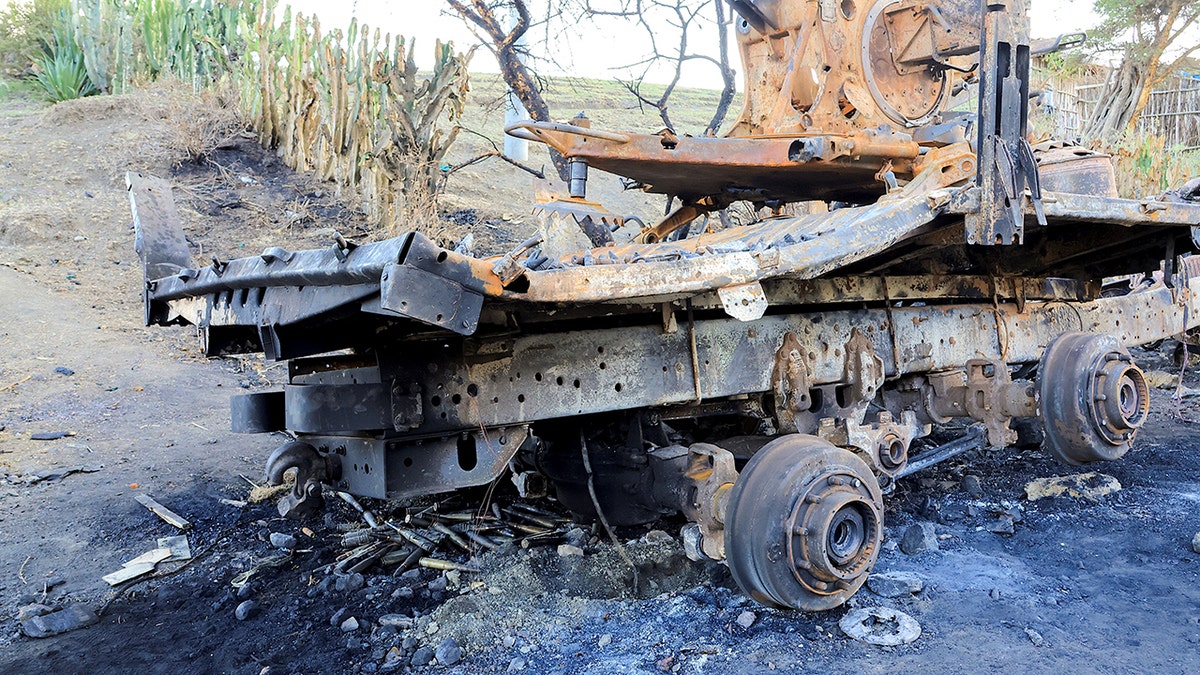
Destroyed ammunition lies on the ground under the charred wreckage of an abandoned truck damaged by a drone strike during fighting between the Ethiopian National Defense Force (ENDF) and the Tigray People’s Liberation Front (TPLF) forces in Adi Mesno, Southern Tigray region, Ethiopia, Oct. 9, 2026. (Reuters)
Dr. Jalale Getachew Birru, regional expert of the U.S.-based Armed Conflict Location and Event Data research group, is also concerned about a new phase of conflict using drones. Birru told Fox News Digital, «should the Alliance for Survival possess drone capabilities, it could fundamentally alter the dynamics of the conflict, refocusing strategic control on aerial dominance.»
In early October, Ethiopian troops pushed out rebel groups who had occupied the Tigrayan capital, Mekelle. This operation ended a four-year-long ceasefire between Ethiopia and Tigray, the northernmost province of Ethiopia.
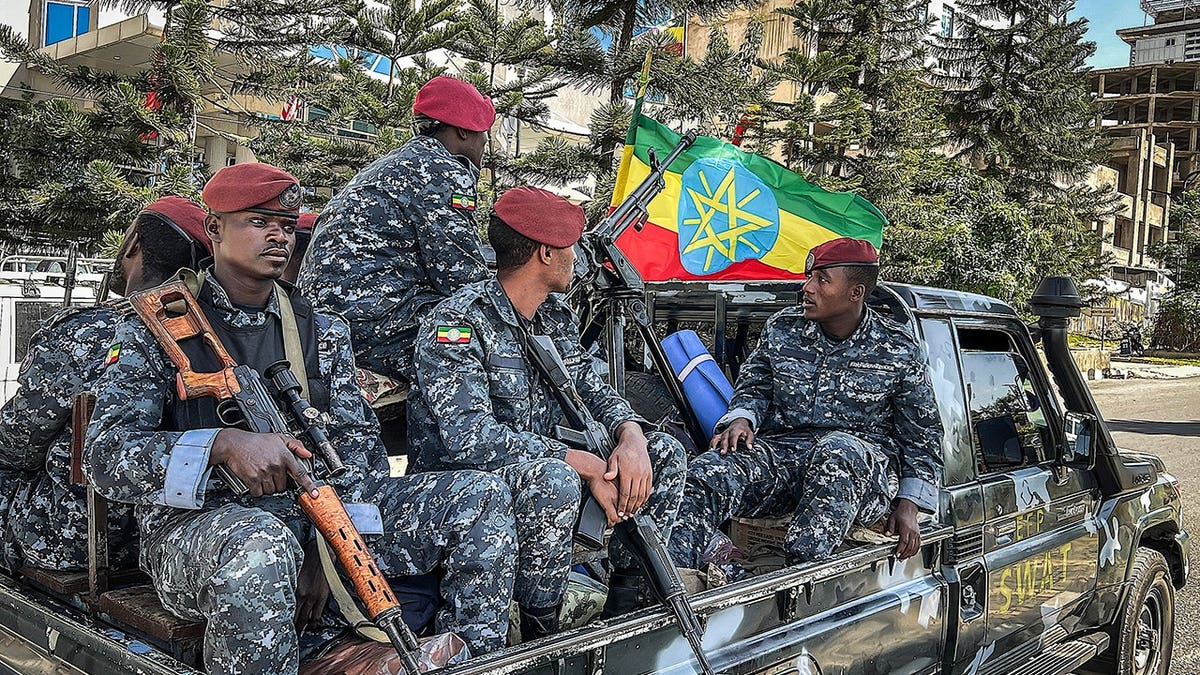
Members of the Ethiopian Federal Police (EFP) patrol aboard a pickup truck as they resumed operations after federal forces pushed back the rebel Tigray People’s Liberation Front (TPLF) in Mekelle on Oct. 9, 2026. Ethiopia and Eritrea each accused the other of starting a war of aggression as an internal Ethiopian conflict threatened to escalate into a regional war. Over the past week, the Ethiopian army has pushed back the rebel Tigray People’s Liberation Front (TPLF) and seized their capital city, Mekelle, with Ethiopian Airlines saying flights to the city would resume from Oct.11. (AFP via Getty Images)
Last week, reports claimed Eritrean troops had entered Ethiopia. Although the allegations have not been independently verified, Fox News Digital has seen multiple videos showing what appears to be large convoys of trucks carrying uniformed soldiers passing through the Ethiopian city of Adigrat. Addis Ababa is said to have subsequently launched drone attacks and pushed the Eritreans back over the border.
The latest fighting was sparked principally by Ethiopia’s statements that it wants to get access to Red Sea ports. The country became landlocked when Eritrea became independent in 1993. In a speech as he was sworn in for a new five-year term Oct. 5, Ethiopian Prime Minister Abiy Ahmed said sea access was «of vital importance to Ethiopia’s civilization.»
He added, «Based on the principle of give and take, we will work diligently to ensure that Ethiopia has an outlet to the sea.»
US VISA CLASH EXPOSES SUDAN’S FORGOTTEN WAR AS FOREIGN POWERS COMPETE FOR STRATEGIC FOOTHOLD
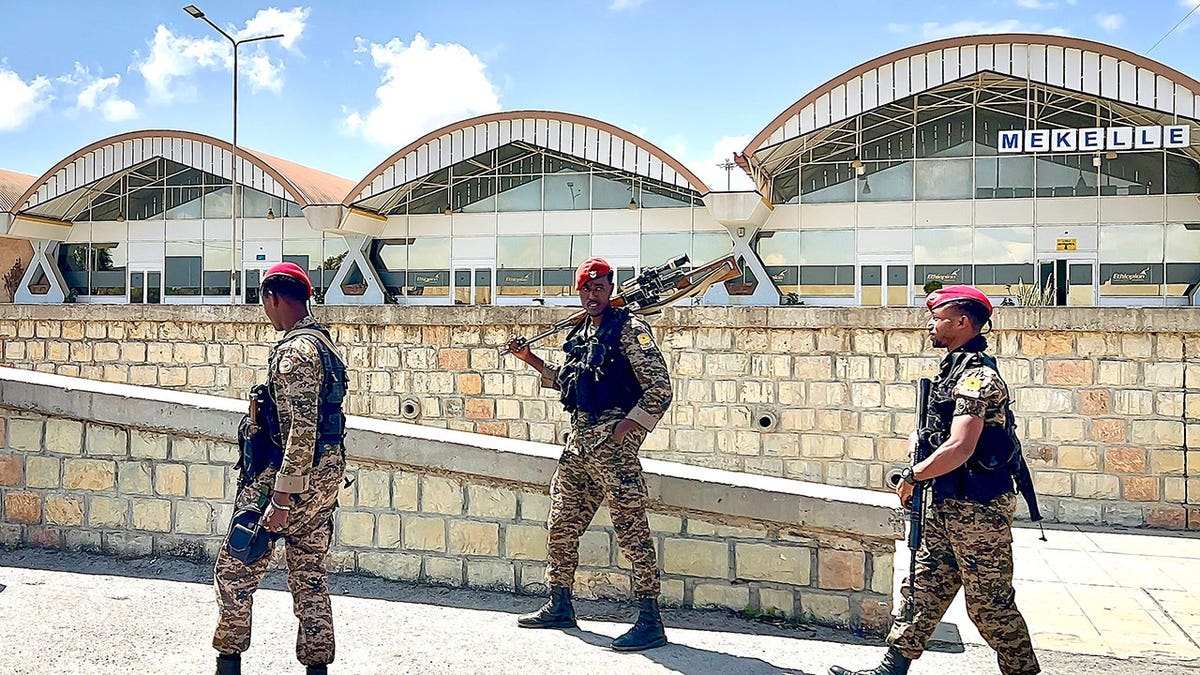
Members of the Ethiopian National Defense Force (ENDF) gather in front of Mekelle Alula Aba Nega International Airport after federal forces retook control of the facility in Mekelle on Oct. 6, 2026. (AFP via Getty Images)
Possible regional expansion of any conflict also comes from the creation of the Grand Ethiopian Renaissance Dam. Egypt and Sudan are at odds with Addis Ababa, after it built the dam across the Blue Nile, affecting access to water to these countries which are downstream. Egypt this month took up a formal position against Ethiopia, when it created a coalition with Sudan, Eritrea and Somalia.
The State Department has been active diplomatically to try and resolve the situation. A spokesperson told Fox News Digital that Undersecretary of State for Political Affairs Allison Hooker met this month with Eritrean Foreign Minister Osman Saleh and spoke with Ethiopian Foreign Minister Gedion Timotheos.
Also, Assistant Secretary for African Affairs Frank Garcia met with Minister Saleh. The spokesperson added, «Both U.S. officials underscored the importance of respecting the sovereignty and territorial integrity for all countries in the Horn of Africa.»
Following these discussions, State Department spokesman Thomas «Tommy» Piggott released a statement, saying, «Increasing cross-border tensions between Ethiopia and Eritrea have the potential to affect the entire region. The Horn of Africa cannot sustain another military conflict and humanitarian crisis. A conflict jeopardizes ongoing U.S. collaboration on shared interests with both countries.»
Piggott added, «We strongly urge Ethiopia and Eritrea to respect the sovereignty and territorial integrity of their neighbors, exercise maximum restraint and return to dialogue and cooperation as agreed in their 2018 peace framework. Peace through dialogue is the only path toward sustainable security, economic growth, and prosperity.»
The Horn Review’s Mamo told Fox News Digital the reality on the ground is «increasingly pointing toward a conflict that may prove impossible to avoid,» and warned of Egypt’s motives: «Parallel military and technical cooperation with Asmara (the capital of Eritrea) also adds strategic depth along Ethiopia’s northern frontier, while Egypt’s expanding role in Somalia and Red Sea port initiatives extends its regional influence.»
«The situation in Ethiopia and in the region is extremely dynamic,» analyst Cameron Hudson told Fox News Digital. Hudson added, «The question remains, given the weakness of the internal (rebel) coalition, will external forces attempt to step in and exert greater leverage against Abiy.»
He continued, «We are seeing Eritrea begin to move forces into Ethiopia, while a coalition of regional states including Somalia, Egypt, Sudan and Eritrea have issued a statement that amounts to a veiled threat against Ethiopia and its regional ambitions to establish a Red Sea naval presence and expand a series of hydroelectric dams on the Nile. The entire Horn of Africa region is on a knife’s edge and it is being made only more complicated by Houthi efforts to shut Red Sea shipping and the war in Iran.»
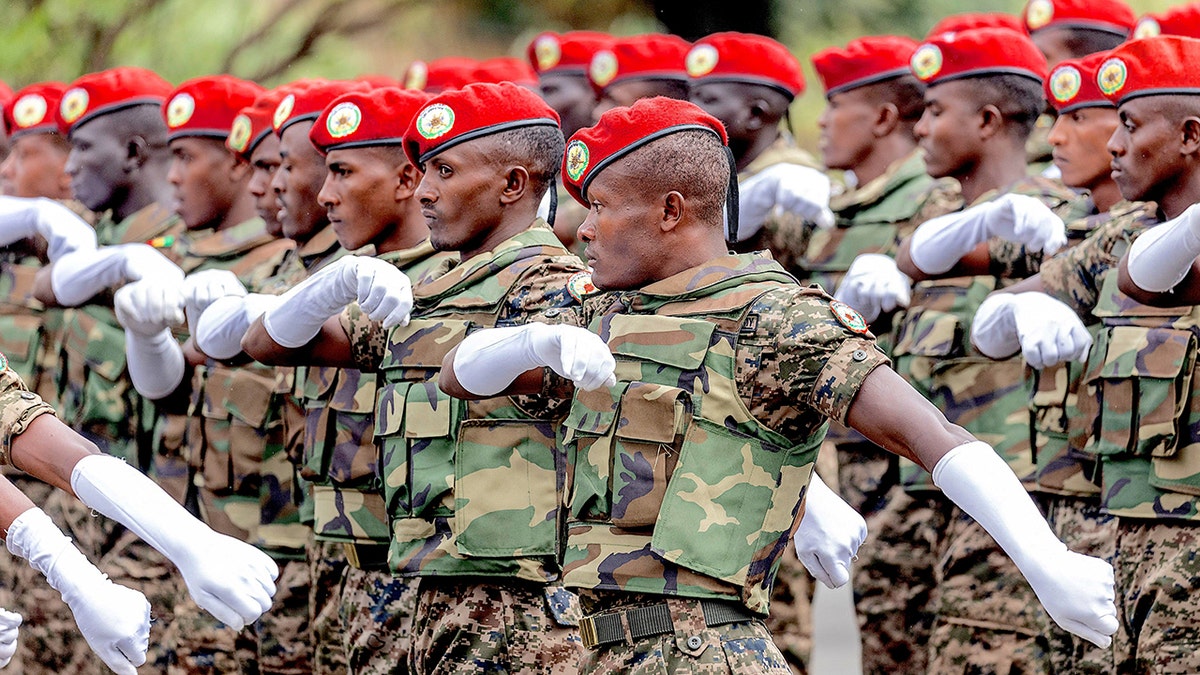
Members of the Ethiopian National Defense Force parade during a celebration of Ethiopian Defense Force day in Addis Ababa, Ethiopia. (Amanuel Sileshi/AFP via Getty Images)
«The risk of regional conflict remains high,» Hudson said. «Egypt would be happy to see Ethiopia bogged down in internal conflict and unable to pursue its ambitions on the Nile and in the Red Sea. Similarly, Sudan hopes that internal conflict in Ethiopia distracts Addis from its support of the rapid support forces militia in Sudan’s war.»
«Local disputes can quickly become regional and international disputes with global consequences very quickly in this corner of the world,» Hudson added, «Closure of the Bab el Mandab Strait, owing to unchecked tensions and violence across the Red Sea, will quickly be felt in the U.S.»
world, africa, wars, geopolitics

Una habitación individual para el fin de semana del 9 al 11 de octubre parte de USD 30 en la Ruta de las Flores, según un sondeo publicado por la Defensoría del Consumidor que informó tarifas de alojamientos en los principales circuitos turísticos de El Salvador.
El precio mínimo se ubicó en Concepción de Ataco, mientras que las opciones con valores más altos aparecieron en sectores de San Salvador y Surf City.
En su investigación, la institución incluyó 44 establecimientos, recolectó 133 precios y abarcó 15 distritos de 11 municipios. El relevamiento se realizó el 6 y 7 de octubre, con tarifas vigentes entre el 9 y el 11 de ese mes.
La Ruta de las Flores concentra las alternativas individuales de menor valor dentro del sondeo. En Concepción de Ataco, el precio más bajo registrado fue de USD 30, mientras que en Juayúa hubo opciones desde USD 35. Sonzacate figuró con tarifas individuales desde USD 38, y Apaneca, desde USD 45.
En zonas como Acajutla, los precios para grupos fueron superiores: una habitación doble alcanzó USD 294.98, una triple llegó a USD 420.35 y una cuádruple se ubicó en USD 545.71.
En otros sectores de la ruta, como Ahuachapán, Concepción de Ataco y Juayúa, las tarifas individuales relevadas se ubicaron entre USD 60 y USD 125. Las habitaciones dobles llegaron hasta USD 158 y las cuádruples, hasta USD 210 en algunos puntos de este circuito turístico.
San Salvador ofrece habitaciones desde USD 40 hasta USD 380
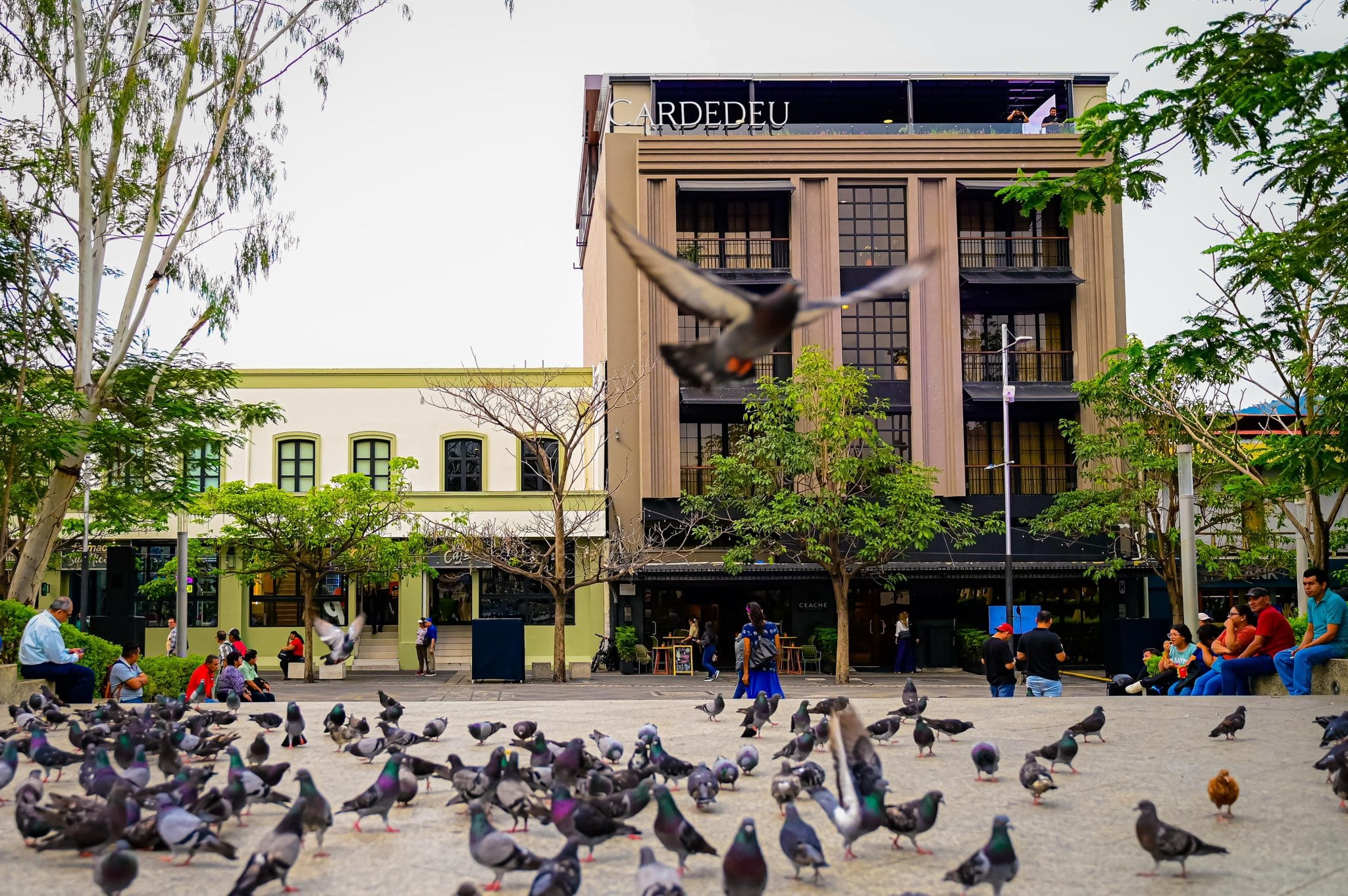
En San Salvador, el sondeo abarcó el Centro Histórico, Escalón, San Benito y sectores cercanos. La tarifa inicial para una habitación individual fue de USD 40, mientras que el precio más alto registrado para esa categoría alcanzó los USD 380.
Las diferencias también se extendieron a las habitaciones dobles, triples y cuádruples. En la capital se detectaron opciones dobles desde USD 50 y tarifas que superaron los USD 400 en alojamientos de segmentos superiores. Para grupos, las alternativas relevadas partieron de USD 60 en habitaciones triples y de USD 103 en cuádruples.
Surf City presenta precios desde USD 45 en Playa El Tunco
En Surf City 1, que incluye sectores de La Libertad Costa, Tamanique y Santa Tecla, la habitación individual más económica tuvo un costo de USD 45 en Playa El Tunco. En esa misma área hubo opciones desde USD 65, mientras que los valores subieron hasta USD 275 en puntos ubicados sobre la carretera Litoral.
La oferta en Playa San Diego registró tarifas desde USD 105 para una habitación individual, con cuádruples de USD 125. En Playa Cangrejera y Santa Tecla, el sondeo encontró tarifas individuales desde USD 153,40 y hasta USD 223,02. Algunas alternativas no incluían desayuno, un aspecto que también incide en la comparación final de precios.
Para viajeros en grupo, las tarifas relevadas en sectores de Playa El Tunco llegaron a USD 255 en habitaciones triples y hasta USD 329 en cuádruples.

La zona oriental combina oferta urbana y estadías de playa
La zona oriental, que comprende San Miguel, Usulután, La Unión y Surf City 2, mostró opciones individuales desde USD 44 en San Miguel. En la ciudad, otras tarifas relevadas fueron de USD 49, USD 69 y USD 100.30.
En los sectores de playa, los precios fueron más altos. En El Cuco y Playa Las Flores, dentro de Chirilagua, se registraron habitaciones individuales desde USD 75 y USD 85. En Jucuarán, cerca de Playa Los Mangos, el valor relevado fue de USD 105, mientras que en La Unión hubo una opción desde USD 112.
Las habitaciones cuádruples de la zona oriental partieron de USD 78 en San Miguel y llegaron hasta USD 195 en sectores costeros de Usulután. La mayoría de los alojamientos relevados informó que incluía desayuno, aunque el documento identificó excepciones.
La Defensoría del Consumidor recomendó cotizar y comparar tarifas antes de contratar la estadía, consultar los horarios de entrada y salida, revisar posibles cobros por camas adicionales, alimentación, aire acondicionado o penalidades, y verificar las políticas de cancelación.
La entidad señaló que, si el alojamiento no coincide con lo ofrecido o el servicio resulta incompleto, el consumidor puede reclamar y exigir un descuento o la devolución de lo pagado por prestaciones no recibidas.
Hoteles,El Salvador,Defensoría del Consumidor

Encuentran un nuevo glitch en el Zelda: Ocarina of Time original que funciona también en Majora’s Mask – Nintenderos

Bloquean planta de Granja Tres Arroyos y les ofrecen cajones de pollo para frenar piquete

La Justicia de San Nicolás absolvió al líder sindical de Camioneros que bloqueó una pyme en 2021

Iowa Dem Senate candidate says he’s too busy campaigning to attend all state House votes

African nations on ‘knife’s edge’ as US embassy warns Americans of long-range attacks

¿Cuánto cuesta alojarse en hoteles y hostales de El Salvador?

Anticipan más crédito y mayor flujo en acciones con reforma del mercado de capitales

Andrea Rincón recordó el quiebre de su amistad con Julieta Ortega: «No se remontó»

La controversia por la ley de Tierras avivó las diferencias internas en la Corte Suprema

Corinthians presentó a un técnico europeo para salvarse del descenso

 INTERNACIONAL3 días ago
El presidente Mulino confirma una llamada con Delcy Rodríguez tras el terremoto que sacudió Panamá
- POLITICA3 días ago
El Gobierno enfrenta una nueva marcha universitaria en medio del conflicto por la Ley de Financiamiento
- DEPORTE3 días ago
Miguel Merentiel dejó un emotivo mensaje para el Manteca Martínez