INTERNACIONAL
Maine progressive says he won’t back Schumer even after Democrats unite behind Collins challenger

NEWYou can now listen to Fox News articles!
ELLSWORTH, MAINE — Graham Platner says he still wouldn’t support Sen. Chuck Schumer as Senate Democratic leader going forward, even after holding what he described as a «perfectly cordial conversation» with the top Democrat in the chamber.
Platner, an oyster farmer and Army and Marine veteran who served in the Afghanistan and Iraq wars, will face off in this year’s midterm elections in blue-leaning Maine against longtime Republican Sen. Susan Collins. The high-profile and competitive 2026 race is one of a handful across the country that will likely determine whether Republicans keep control of their slim Senate majority.
Platner, a first-time candidate, who is backed by progressive champions Sens. Bernie Sanders of Vermont and Elizabeth Warren of Massachusetts, became the Democrats’ presumptive nominee after his rival for the nomination, two-term Gov. Janet Mills, ended her campaign two weeks ago after trailing Platner in polling and fundraising.
Mills was supported by Schumer, who recruited the governor to enter the race.
SCHUMER’S ‘NUMBER 1 TARGET’ SAYS VOTERS WILL SEE HER DEMOCRATIC CHALLENGER AS TOO EXTREME
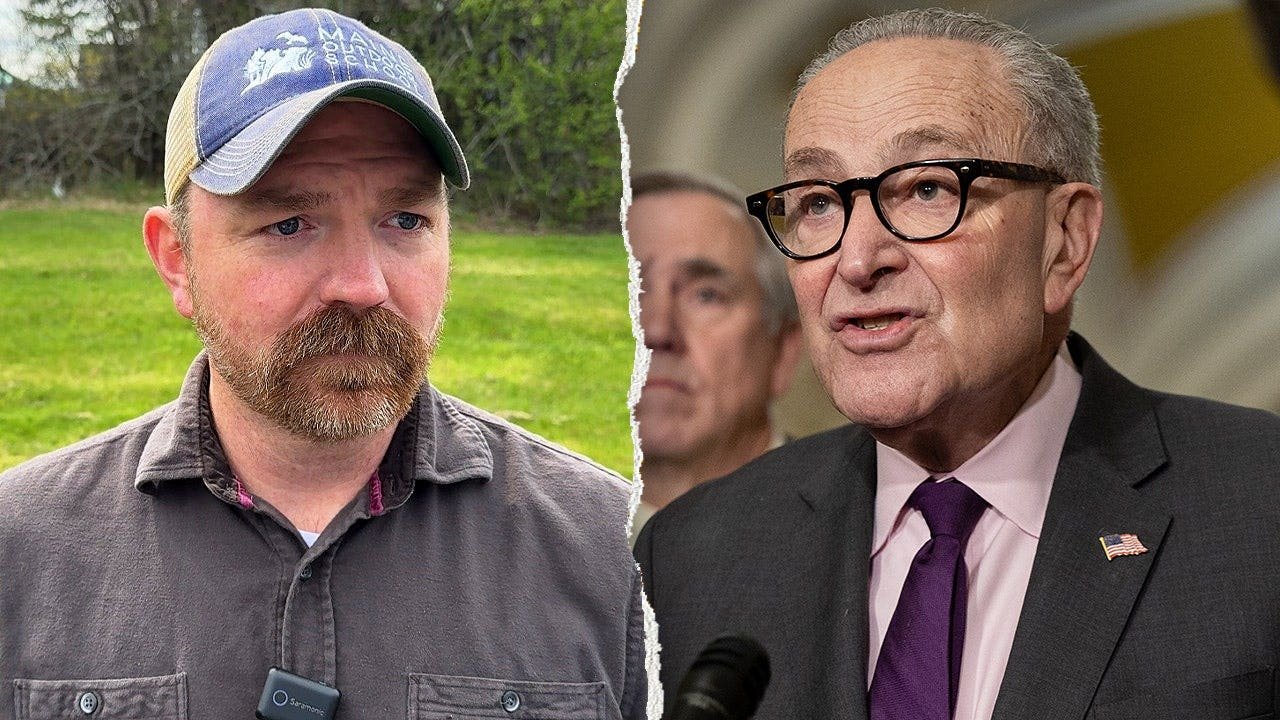
Senate Democratic Leader Sen. Chuck Schumer, right, called Senate candidate in Maine Graham Platner after he became the party’s presumptive nominee (Paul Steinhauser/Fox News Digital; Photo by Nathan Posner/Anadolu via Getty Images)
But Platner said what could have been a difficult conversation was anything but when he had a chance to speak with Schumer on the phone after Mills ended her bid.
«It was not awkward at all. He called to congratulate me on a good race, and nothing brings people together like agreeing that Susan Collins shouldn’t be in the U.S. Senate. So we had a perfectly cordial conversation.»
Platner said that «at this point, it very much feels that the Democratic Party will support us in our continued endeavor.» But he added «we’re going to keep doing what we’ve done up here, because it’s obviously what’s working.»
Platner is one of a small but growing number of progressive Senate candidates who say that, if elected in November, they won’t support Schumer as the Senate’s Democratic leader. Platner added that the topic of his lack of support for the Democratic leader didn’t come up in his conversation with Schumer.
Platner advocates an economically populist agenda as he takes aim at corporate influences and advocates for the working class as he runs for the Senate.
In an interview in Maine with Fox News Digital last week, Collins was asked if she believes Platner is too far to the left and extreme for voters in her northern New England state.
SIX MONTHS TILL MIDTERMS: THE TEN RACES THAT WILL DETERMINE THE SENATE’S MAJORITY
«I believe that will be the conclusion of Maine voters. But, obviously, I don’t take anything for granted,» the senator, who is running for a sixth six-year term in the Senate, answered.
But Platner charges that it’s Collins who is too «radical.»
«My response is that, trying to bring down costs for working Mainers. Trying to make sure that our communities don’t get emptied out because housing has become unaffordable for young people. Trying to create a system in which we are not seeing our health care system utilized as a way of just screwing working people all for the benefit of a health care insurance CEO, I don’t think that’s radical at all,» Platner said. «I think in fact that what most Mainers agree is what we have to be doing.»
And he charged, «What’s radical is somebody like Susan Collins, who, for decades now, has made sure that we pass policies that are going to help corporations and billionaires to the detriment of working people, supporting over and over and over again, illegal and insane foreign wars. She voted to send me to Iraq, and now she continues to vote to support the war in Iran,» Platner said. «I’m sorry that I think is much more radical to the people of Maine than having a health care system that doesn’t collapse before our eyes.»
Platner enlisted in the Marines in 2003 and served three combat tours in Iraq. In 2010, he joined the Maryland Army National Guard for a fourth tour, serving in the infantry in Afghanistan. He returned to Afghanistan eight years later as a security contractor.
DEMOCRACY ’26: STAY UP TO DATE WITH THE FOX NEWS ELECTION HUB
It’s been less than two weeks since Platner became the Democrats’ presumptive nominee, and Republicans didn’t waste any time in taking aim at him.
A Republican group supporting Collins is already blasting Platner in a new ad over controversial comments he made over a decade ago on Reddit about women and rape and a well-publicized tattoo on his chest that resembled a Nazi
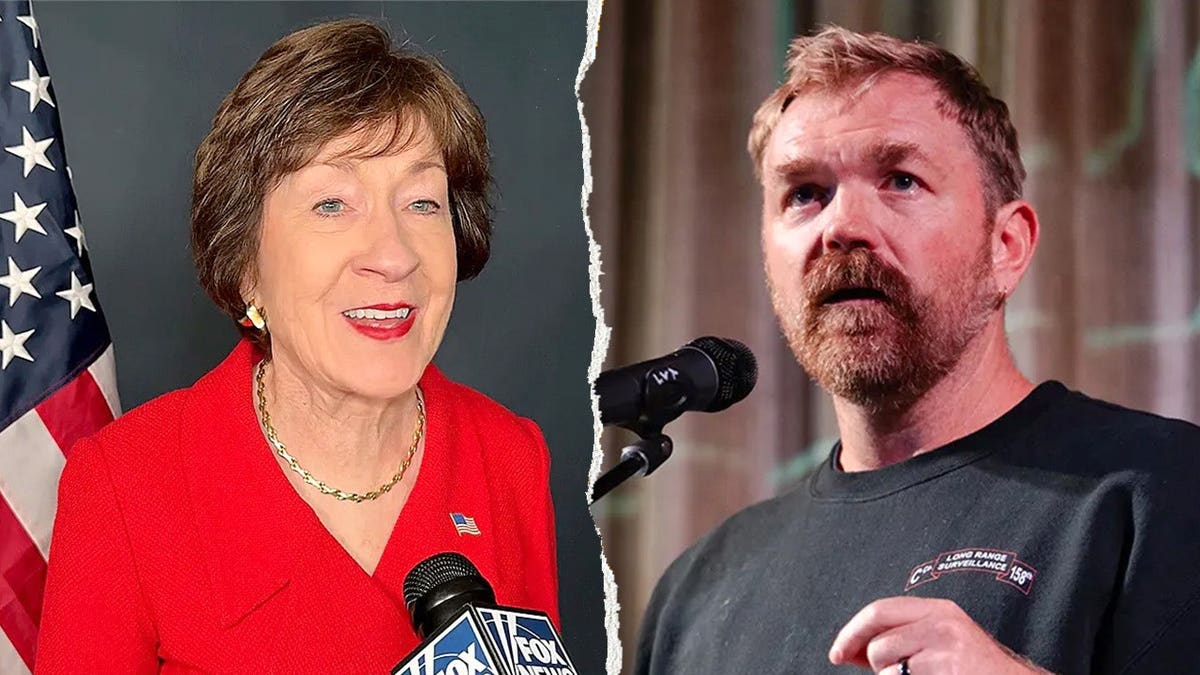
Republican Sen. Susan Collins of Maine, left, and Democratic Senate candidate Graham Platner (Fox News and Getty Images)
Among the comments is one from 2013, which Platner later deleted, that people concerned about rape should not «get so f—ed up they wind up having sex with someone they don’t mean to.»
Platner apologized for his controversial Reddit posts after they made headlines last fall soon after he launched his Senate campaign. And Platner has said he got the skull and crossbones tattoo in 2007 while drinking with fellow Marines stationed in Croatia. He said that he covered up the tattoo with a new design after learning last year that it resembled a Nazi symbol.
The candidate said he’s not concerned about the attack ad, which is likely just a taste of things to come.
«The Democratic establishment tried to use all those attacks against me and failed miserably,» Platner said as he referred to a spot from the Mills campaign before she dropped out of the race. «Now the Republican establishment is going to try to use the exact same attacks, and that will also fail miserably.»
Platner insisted that «the people of Maine understand exactly what this is. They’re not happy to see millions of dollars poured into negative TV ads in a state that, quite frankly, could use million dollars of investment in lots of other things instead of just negative television. And I don’t think it’s going to work, because it hasn’t up until this point.»
And pointing to the Republican attack ad, he said «we knew it was coming the whole time. Look, man, I fought in Iraq and Afghanistan. Somebody wants to say….mean things about me on television, I’m pretty sure I can handle it.»
Platner has also faced scrutiny for more recent Reddit posts, including one from five years ago where he described himself as a «communist» and «socialist.»
«You should read the comments in context. It’s very clear I’m joking,» he told Fox News Digital when asked about them. «It’s called shitposting. It’s when you argue with people on the internet and try to bother them. So, yeah, no, it’s very obviously not true.»
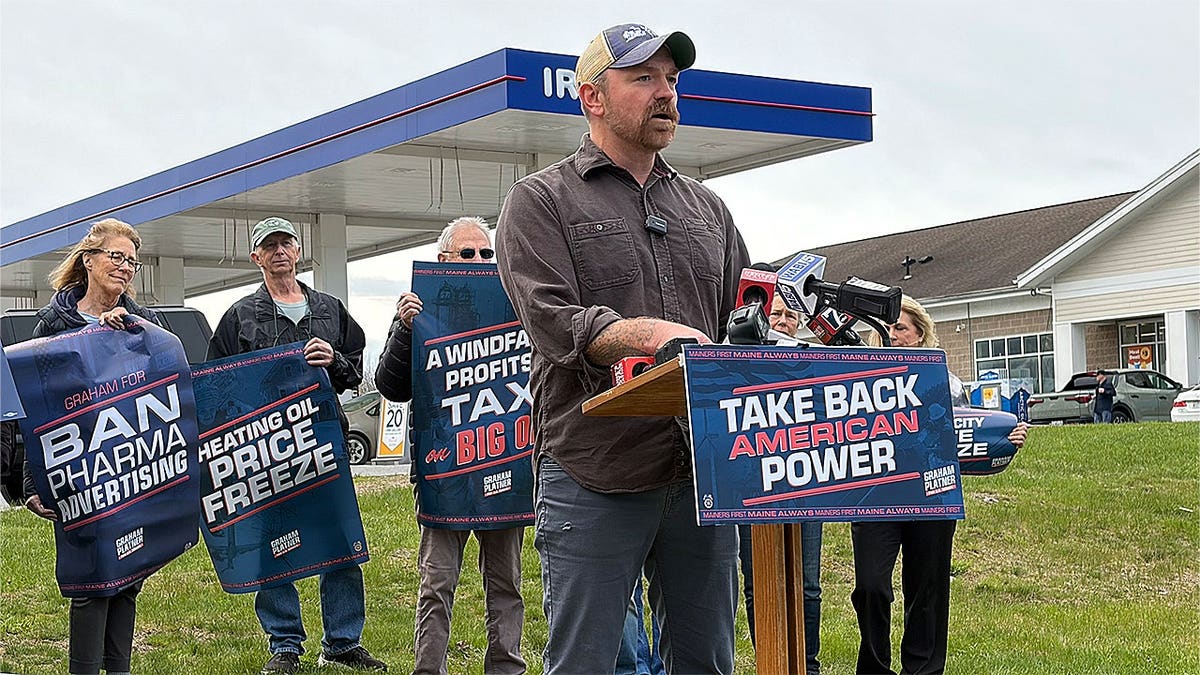
Graham Platner, the Democrats’ presumptive Senate nominee in Maine, holds an energy event in Ellsworth, Maine on Monday, May 11, 2026. (Paul Steinhauser/Fox News)
Platner was interviewed minutes after casting an early voting ballot in Maine’s primary and then holding an event near a gas station to showcase his newly released energy plan, which he says will help reduce people’s bills.
His proposal includes eliminating the national gas and diesel tax, a freeze on electricity rate increases and a fund for clean energy projects.
Platner said his energy plan is «very central» to his campaign. «I think energy costs right now are one of the things that are most damaging working families in this state. It is, in my opinion, essentially an existential crisis that we face.»
Democrats are spotlighting the cost of living as they overperform in special elections, which they hope is a prelude to winning back control of Congress in the midterms.
Republicans — as the party currently in power in Washington, D.C. — were already up against traditional political headwinds that typically lead to a loss of congressional seats. Add to that the challenging climate fueled by persistent inflation, rising gas prices tied to what polls show is an unpopular war with Iran and Trump’s underwater approval ratings.
CLICK HERE TO DOWNLOAD THE FOX NEWS APP
Asked how she can overcome the blame pointed at Republicans over the high cost of living, Collins told Fox News Digital last week that she’s championed the low-income heating assistance program, which «helps low-income families and seniors stay warm during the cold winter months. I just recently made sure the final tranche of money was released because there is a lot of need in the state of Maine, and the cost of living is high here.»
Collins, who was interviewed at a food bank that expanded with federal funding the senator helped obtain, also emphasized her opposition to cuts «in food stamp benefits and in other programs that designed for low-income families because I know how important they are.»
chuck schumer, bernie sanders, midterm elections, elizabeth warren, senate elections, maine, democrats elections










INTERNACIONAL
Alerta en Bolivia por una nueva ola de violencia: sicarios asesinaron a siete personas en dos días

Tres hechos violentos ocurridos entre el miércoles y jueves en el departamento de Santa Cruz, al este de Bolivia, dejaron al menos siete personas muertas y generan alerta por la creciente violencia que provoca el crimen organizado en el país.
El primer caso se produjo el miércoles en la estancia Campo Nuevo, ubicada a unos 10 kilómetros del municipio de San Matías, cerca de la frontera con Brasil. Según el reporte preliminar de la Policía, un grupo de hombres armados interceptó una camioneta y abrió fuego contra sus ocupantes, causando la muerte de cuatro ciudadanos bolivianos.
De acuerdo con los primeros testimonios recogidos por los investigadores, cuatro presuntos sicarios de nacionalidad brasileña participaron en el ataque, que es investigado como un posible ajuste de cuentas.
Vecinos alertaron a las autoridades después de escuchar una intensa balacera. Cuando efectivos del Comando Fronterizo EPI-San Matías llegaron al lugar encontraron a dos personas sin vida y posteriormente se confirmó el fallecimiento de los otras dos debido a la gravedad de sus heridas.

Ese mismo día, la violencia volvió a golpear al departamento de Santa Cruz. Dos cuerpos decapitados fueron hallados la mañana del miércoles en un camino de tierra del municipio de Yapacaní, una zona situada a unos 300 kilómetros de San Matías y considerada un corredor estratégico entre el oriente y el occidente de Bolivia.
Las víctimas, dos hombres identificados como Bismark Gómez, de 25 años y Matías Tapia, de 22 años, fueron encontrados con signos de violencia. Los cuerpos fueron encontrados junto a un mensaje de advertencia cuyo contenido se analiza para determinar el móvil del doble homicidio y la posible participación de organizaciones criminales.
El tercer caso ocurrió en la localidad de Ascensión de la Frontera, también cerca de la frontera con Brasil, donde una balacera dejó dos personas muertes el jueves. De acuerdo con reportes de la prensa local, cuatro personas interceptaron una camioneta, dispararon con armas de grueso calibre e incineraron el vehículo antes de darse a la fuga. Los dos ocupantes murieron en el ataque, uno de ellos el subteniente de la Policía boliviana, Yerson Salazar Aliendres.
Según el comandante policial de Santa Cruz, David Gómez, el agente policial investigaba los asesinatos ocurridos el día antes en San Matías. Tras su ejecución, los atacantes se llevaron el cuerpo del policía sin que hasta ahora se haya logrado recuperarlo.

La Fiscalía y la Policía iniciaron las investigaciones en estos casos y por el momento se tiene un aprehendido por el último crimen. Los tres episodios se producen en un contexto de creciente preocupación por la violencia asociada al narcotráfico y a las disputas entre grupos delictivos que operan en el departamento de Santa Cruz.
San Matías y otros municipios fronterizos con Brasil, han sido escenarios recurrentes de operaciones contra el narcotráfico y de ataques armados atribuidos a organizaciones criminales transnacionales. En tanto, Yapacaní, ubicado entre las ciudades de Santa Cruz de la Sierra y Cochabamba, también ha sido identificado por las autoridades como un punto de tránsito utilizado para el traslado de droga y otras actividades ilícitas.
Los tres ataques dejaron un saldo de siete fallecidos en dos días y mantienen a las fuerzas de seguridad en busca de los responsables y esclarecer si ambos hechos forman parte de una misma dinámica de violencia criminal.

Según un recuento realizado por Infobae en base a reportes de la prensa local, en lo que va del año hubo al menos 23 muertes violentas o ejecutadas por sicarios, la mayoría concentradas en el departamento de Santa Cruz, la región del Trópico de Cochabamba y regiones fronterizas del sur del país.
Entre las víctimas de la ola de violencia de este año figuran el magistrado del Tribunal Agroambiental, Víctor Hugo Claure, asesinado a tiros en mayo en un crimen investigado por un presunto conflicto de tierras, y el caso reciente del subteniente Salazar, quien participaba en las pesquisas de los asesinatos de San Matías ocurridos horas antes.
A diferencia de otros casos atribuidos a ajustes de cuentas entre organizaciones criminales, ambos eran funcionarios del Estado, lo que refleja una expansión de la violencia hacia quienes ejercen funciones de seguridad y administración de justicia y plantea nuevos desafíos para las autoridades en materia de protección institucional, investigación criminal y control del crimen organizado.
camioneta,camino de tierra,zona rural,asalto,arma
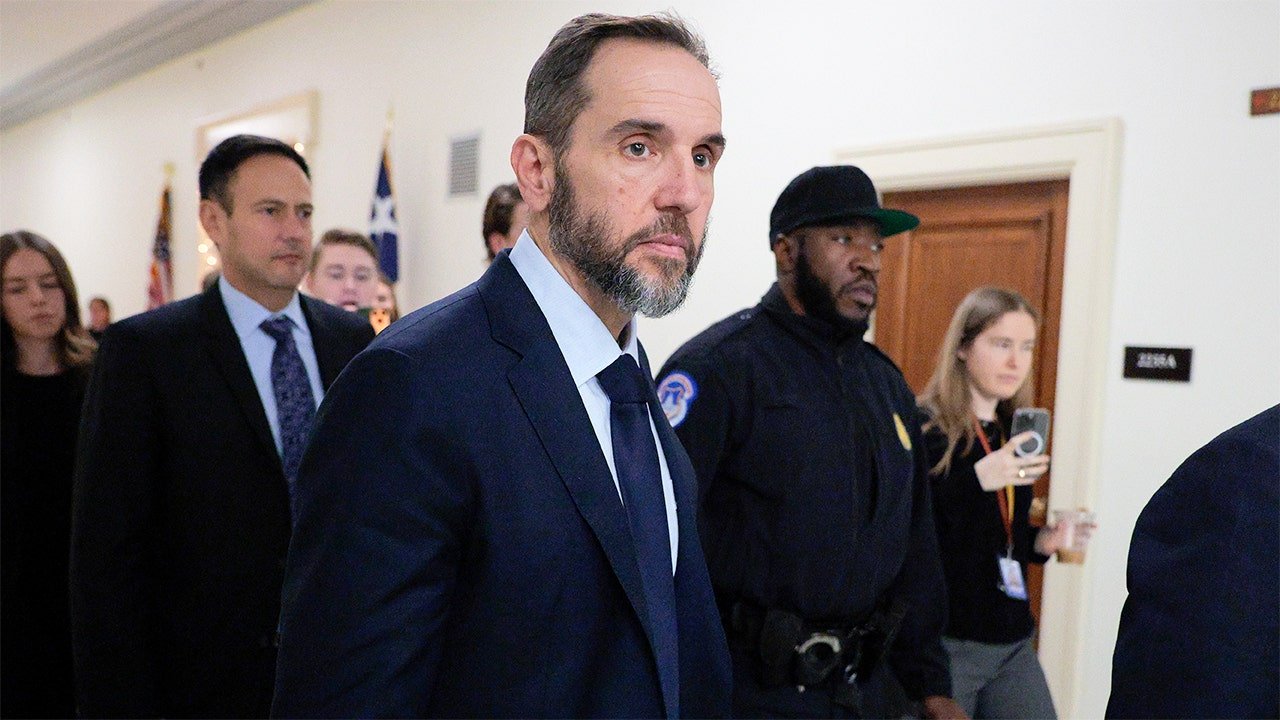
Sen Marsha Blackburn slams Jack Smith over alleged text message spying
Sen. Marsha Blackburn, R-Tenn., strongly condemns former Special Counsel Jack Smith for allegedly illegally obtaining text messages from 44 members of Congress. Blackburn accuses Smith of breaking the law and abusing power, citing past denials by Smith regarding phone record acquisition. She demands a thorough investigation into the ‘Arctic Frost’ probe, highlighting concerns over privacy and due process.
NEWYou can now listen to Fox News articles!
EXCLUSIVE: The Senate investigation into former Special Counsel Jack Smith’s «Arctic Frost» probe is widening, as Republican lawmakers question Verizon’s handling of subpoenas for senators’ phone records after the telecom giant failed to disclose one during an earlier congressional records search.
As part of Operation Arctic Frost — the codename for the FBI’s Trump-election-interference probe with Smith placed at the helm — prosecutors subpoenaed Verizon and other phone carriers for toll records tied to members of Congress and other Republican figures. Several conservative entities were swept up in the probe, including the late Charlie Kirk.
Verizon later acknowledged omitting Smith’s subpoena from its congressional record search.
The dispute centers less on Verizon’s compliance with the subpoena than on what the company knew afterward, whether it should have notified Congress and why it failed to disclose the subpoena during an earlier records search.
BIDEN SPECIAL COUNSEL’S ‘RUNAWAY TRAIN’ SCOOPED UP SENSITIVE LAWMAKER INFO: ‘ABUSE OF POWER’
The Senate investigation into former Special Counsel Jack Smith’s «Arctic Frost» probe is widening. (Getty Images)
Smith’s investigation has faced increased scrutiny in recent months, and now Senate Judiciary Chairman Charles Grassley, R-Iowa — whose records were among those obtained — and a slew of his colleagues want to know what Verizon knew, when it knew it and whether the company should have notified affected members of Congress after turning over their phone records to Smith’s team.
«Jack Smith oversaw a sweeping and unprecedented investigation that swept-up records from hundreds of Republican entities, including the phone toll records and text messages from myself and dozens of my colleagues,» Grassley told Fox News Digital Friday.
Toll records are essentially the metadata of a telephone call — and exclude the contents of the conversation. They often include the phone numbers involved, date, time, duration and often the operative cell-tower location.
MAJOR PHONE CARRIERS REVEAL JACK SMITH’S SUBPOENAS FOR REPUBLICAN SENATORS’ RECORDS
«Congress deserves to know the full picture of how Smith carried out Arctic Frost so it never happens again.»
«As part of our investigation, we need to fully understand what Verizon knew about Smith’s subpoenas, when they became aware members were impacted and why the company didn’t inform members like they were supposed to,» he said.
In a Thursday letter to Verizon CEO Daniel Schulman, Grassley, Senate Investigations Subcommittee chairman Ron Johnson, R-Wis., and more than a dozen senators said they remain concerned not only by the alleged «abuse of power by federal government actors… but also with Verizon’s disclosures of (m)embers’ phone records pursuant to a May 25, 2023, subpoena (and) its failure to disclose this information to affected Members.»
JACK SMITH THRUST BACK INTO SPOTLIGHT AT BLANCHE HEARING OVER EXPOSED SENATORS’ MESSAGES’

In its original October 2023 response to Grassley, Verizon wrote that it often limits retention of legal processes received to a period of four years, and attested it had no records to produce prior to October 2019. (Gabby Jones/Bloomberg via Getty Images)
Of the signatories, Sens. Bill Hagerty IV and Marsha Blackburn, R-Tenn., Rick Scott, R-Fla., Tommy Tuberville, R-Ala., Mike Lee, R-Utah, Ted Cruz, R-Texas, Josh Hawley, R-Mo., John Cornyn, R-Texas, and Cindy Hyde-Smith, R-Miss., also had their phone toll records or text messages swept up by Smith.
Their inquiry noted he asked Verizon in October 2023 to identify Justice Department or other federal law enforcement requests involving Senate devices used by his staff dating back to 2016.
The senator wrote that the subpoena was not disclosed in Verizon’s initial response, and Grassley said Congress did not learn of it until Verizon acknowledged in 2025 that «human error» had caused its omission.
In its original October 2023 response to Grassley, Verizon wrote that it often limits retention of legal processes received to a period of four years, and attested it had no records to produce prior to October 2019.
«This raises questions as to whether Verizon discovered legal process from DOJ for Senate devices and lines, including the May 2023 Arctic Frost subpoena, in its search from October 1, 2019, to October 27, 2023, for responsive records to Chairman Grassley’s request,» Grassley wrote in his new letter.
Therefore, Grassley and 15 other senators are demanding Verizon brass explain when they first learned Smith’s subpoena sought phone records that included members of Congress and when they discovered it had provided «tolling data» connected to those members and transmitted it to Smith.
Fox News Digital reached out to Verizon for comment.
Grassley’s new letter suggests the October 2023 exchange may be the key to determining whether Verizon merely missed the subpoena or discovered it and failed to disclose it.
«On what date were Daniel Schulman, Vandana Venkatesh, Hans Vestberg, and Craig Silliman first informed about the May 25, 2023, subpoena?» they asked of Verizon’s front office.
The senators also asked that Verizon explain its «human error» revelation in more specificity and produce internal records from May 2023 to October 2025 that discuss whether the company believed it was obligated to notify the implicated members of Congress or the Senate Sergeant-at-Arms (SAA).
The «human error» explanation also left unanswered why Smith’s May 25, 2023, «Arctic Frost» subpoena was omitted from Verizon’s review of legal process involving SAA phone lines, even though the company acknowledged that two SAA numbers were included in the subpoena.
In 2025, documents provided to Grassley revealed Verizon complied with Smith while AT&T resisted the requests.
SIGN UP TO GET THE POLITICS NEWSLETTER
However, both subpoenas were accompanied by gag orders signed by Obama-appointed District of Columbia federal Judge James Boasberg, a frequent foil of President Donald Trump’s. Boasberg directed Verizon and AT&T not to disclose the subpoenas to lawmakers for a period of one year.
The DOJ has issued subpoenas for lawmakers’ information in the past, but former inspector general Michael Horowitz cautioned against it except in limited circumstances in a report published in 2025, saying that doing so «risks chilling Congress’s ability to conduct oversight of the executive branch.»
Grassley’s letter gives Verizon until Aug. 13 to explain when it knew senators’ records were involved, who inside the company was informed and why the May 2023 subpoena did not surface in its earlier response to Congress.
Senate Judiciary Committee Republicans have branded Smith’s «Arctic Frost» as «worse than Watergate.»
Fox News Digital reached out to counsel for Smith for comment.
senate elections, verizon, justice department, congress, chuck grassley, joe biden, donald trump, republicans
INTERNACIONAL
El Ejército de Kuwait anunció que sus defensas respondieron a un ataque de Irán con drones

Las defensas aéreas de Kuwait respondieron a ataques con drones tras una reciente agresión por parte de Irán este sábado contra su territorio, según informó el Estado Mayor del Ejército. En ese sentido, la institución señaló que cualquier explosión que fuera escuchada correspondía a la interceptación de estos ataques por parte de los sistemas de defensa aérea.
Las autoridades instaron la población, vía redes sociales, a seguir las instrucciones de seguridad emitidas por los organismos competentes.
El viernes, la agencia de noticias Fars, vinculada a la Guardia Revolucionaria Islámica de Irán, incluyó importantes instalaciones energéticas de la región del Golfo Pérsico e Israel en una lista de posibles objetivos de represalia iraní, en medio del aumento de tensiones con Estados Unidos.
El informe menciona como potenciales blancos el yacimiento petrolífero de Ghawar en Arabia Saudita, las instalaciones de Abqaiq y Khurais, la refinería de Ruwais y el yacimiento petrolífero de Zakum en Emiratos Árabes Unidos, el yacimiento de GNL de North Field y Ras Laffan en Qatar, el yacimiento petrolífero de Burgan en Kuwait, la refinería de Sitra en Bahréin y los yacimientos de gas Leviathan y Tamar en Israel.

El medio recordó también ataques anteriores durante el conflicto, señalando que, tras la ofensiva contra las instalaciones de gas de South Pars en Irán, Teherán respondió con un ataque contra las instalaciones de gas de Ras Laffan en Qatar. El régimen también suele bombardear la base aérea Ahmed Al Jaber en Kuwait, ya que alberga fuerzas militares estadounidenses.
Respecto a la campaña militar de EEUU en Medio Oriente, el Comando Central de Estados Unidos (CENTCOM) informó el viernes que las fuerzas estadounidenses desviaron 30 buques mercantes, inutilizado dos y abordado otros dos como parte de los esfuerzos para hacer cumplir el bloqueo naval contra Irán. Además, se permitió el paso de casi 30 barcos que transportaban ayuda humanitaria.
“Un helicóptero MH-60R Sea Hawk de la Armada de EEUU se prepara para volar a bordo del USS Michael Murphy (DDG 112), mientras el buque de guerra apoya el bloqueo estadounidense contra Irán navegando en aguas regionales. Al 31 de julio, el CENTCOM había desviado 30 buques comerciales, inmovilizado 2 y abordado 2 para garantizar el pleno cumplimiento. Las fuerzas armadas estadounidenses también han permitido que casi 30 barcos atraviesen el bloqueo para brindar ayuda humanitaria”, publicó el CENTCOM en X.
En paralelo, los dos primeros aviones militares de Estados Unidos destinados a brindar apoyo a las operaciones en Medio Oriente arribaron el viernes a una base aérea en el sureste de Bulgaria, lo que provocó una queja de Irán y protestas de residentes búlgaros.

La administración del presidente Donald Trump ha enfrentado resistencia de algunos aliados europeos por el uso de bases aéreas en respaldo a la guerra con Irán. Bulgaria, miembro de la OTAN y la Unión Europea, aprobó a principios de julio el despliegue de hasta ocho aviones cisterna KC-135 estadounidenses, junto a 250 efectivos con armas personales, municiones y equipos para el aeródromo en la Base Aérea de Bezmer.
De acuerdo con un tratado de defensa bilateral firmado en 2006, la instalación de Bezmer —ubicada a unos 260 kilómetros al sureste de Sofía— es de uso conjunto, y cualquier nuevo uso requiere aprobación parlamentaria. El despliegue, solicitado por la embajada estadounidense en Bulgaria, está autorizado hasta el 1 de octubre de 2026.
El inquilino de la Casa Blanca agradeció al primer ministro búlgaro Rumen Radev en una publicación en Truth Social por permitir el despliegue “a pesar de las amenazas de Irán”.
Middle East

Caputo viaja al G20 en busca de sumar respaldo internacional al programa económico: expectativa por el encuentro con Bessent

Rodri Sánchez: ‘La gente habla mucho de dinero, pero no me arrepiento de haber venido a Qatar’

El durísimo relato de la prima de Thiago Medina tras denunciarlo por abuso: «Él tiene dos nenas, tienen que saberlo»

Se aproxima un “profundo ciclón extratropical” que provocará 72 horas de tormentas fuertes, ráfagas de hasta 70 km/h, 60 mm de lluvia y un cambio abrupto de temperatura: las zonas afectadas

Tensiones diplomáticas: qué puede pasar en la industria automotriz si se acentúan los cruces con otros países

Berensztein analizó el escenario electoral: por qué cree que el malestar social no se traduce en votos contra Milei

La pelea con Lula y el verdadero desafío que enfrenta Milei

Cómo manejar en el hielo y la nieve: técnicas y precauciones para usar el auto en la montaña en vacaciones de invierno

El BCRA cortó la racha de compra y en el mercado vuelan rumores de maniobras para frenar al dólar

World-famous Catholic shrine torched, ‘Devil in a skirt’ scrawled on Virgin Mary statue

 INTERNACIONAL2 días ago
Trump admin invokes 30-year dormant terror court as it seeks to deport Afghan woman tied to Election Day plot
- INTERNACIONAL3 días ago
Antisemitic violence reaches deadliest level since 1994, new global report finds
- ECONOMIA3 días ago
Creció la oferta de frutas importadas en las verdulerías: cuáles son las que más llegan y por qué