INTERNACIONAL
2025 shockers: The biggest moments that rocked the campaign trail


NEWYou can now listen to Fox News articles!
It was an off-year when it comes to elections, but 2025 was on fire on the campaign trail, as next year’s looming midterm showdowns took shape.
While it was never expected to match the intensity of the tumultuous 2024 battles for the White House and Congress, this year’s off-year elections grabbed outsized national attention and served as a key barometer leading up to the 2026 midterm contests for the House and Senate majorities.
Here are five of the biggest moments that shaped the campaign trail.
5. Trump pushes mid-decade congressional redistricting
Aiming to prevent what happened during his first term in the White House when Democrats reclaimed the House majority in the 2018 midterms, President Donald Trump in June first floated the idea of rare but not unheard of mid-decade congressional redistricting.
HERE ARE THE NEXT BATTLEGROUNDS IN REDISTRICTING FIGHT
President Donald Trump first floated the idea of mid-decade congressional redistricting in June. (Alex Brandon/AP Photo)
The mission was simple: redraw congressional district maps in red states to pad the GOP’s razor-thin House majority to keep control of the chamber in the 2026 midterms, when the party in power traditionally faces political headwinds and loses seats.
Trump’s first target: Texas.
A month later, when asked by reporters about his plan to add Republican-leaning House seats across the country, the president said, «Texas will be the biggest one. And that’ll be five.»
The push by Trump and his political team triggered a high-stakes redistricting showdown with Democrats to shape the 2026 midterm landscape in the fight for the House majority.
Republican Gov. Greg Abbott of Texas called a special session of the GOP-dominated state legislature to pass the new map.
But Democratic state lawmakers, who broke quorum for two weeks as they fled Texas in a bid to delay the passage of the redistricting bill, energized Democrats across the country.
Among those leading the fight against Trump’s redistricting was Democratic Gov. Gavin Newsom of California.

California Gov. Gavin Newsom speaks during an election night press conference at a California Democratic Party office Tuesday, Nov. 4, 2025, in Sacramento, Calif. (Godofredo A. Vásquez/AP Photo)
California voters earlier this month overwhelmingly passed Proposition 50, a ballot initiative which will temporarily sidetrack the left-leaning state’s nonpartisan redistricting commission and return the power to draw the congressional maps to the Democratic-dominated legislature.
That is expected to result in five more Democratic-leaning congressional districts in California, which aimed to counter the move by Texas to redraw their maps.
The fight quickly spread beyond Texas and California.
Right-tilting Missouri, North Carolina and Ohio have drawn new maps as part of the president’s push.
SETTING THE STAGE: WHAT THE 2025 ELECTIONS SIGNAL FOR NEXT YEAR’S MIDTERM SHOWDOWNS
Republicans are looking to GOP-controlled Florida, where early redistricting moves are underway in Tallahassee. A new map could possibly produce up to five more right-leaning seats. But conservative Gov. Ron DeSantis and GOP legislative leaders don’t see eye-to-eye on how to move forward.
«We must keep the Majority at all costs,» Trump wrote on social media this month.
In blows to Republicans, a Utah district judge this month rejected a congressional district map drawn up by the state’s GOP-dominated legislature and instead approved an alternate that will create a Democratic-leaning district ahead of the 2026 midterm elections.
And Republicans in Indiana’s Senate defied Trump, shooting down a redistricting bill that had passed the state House.
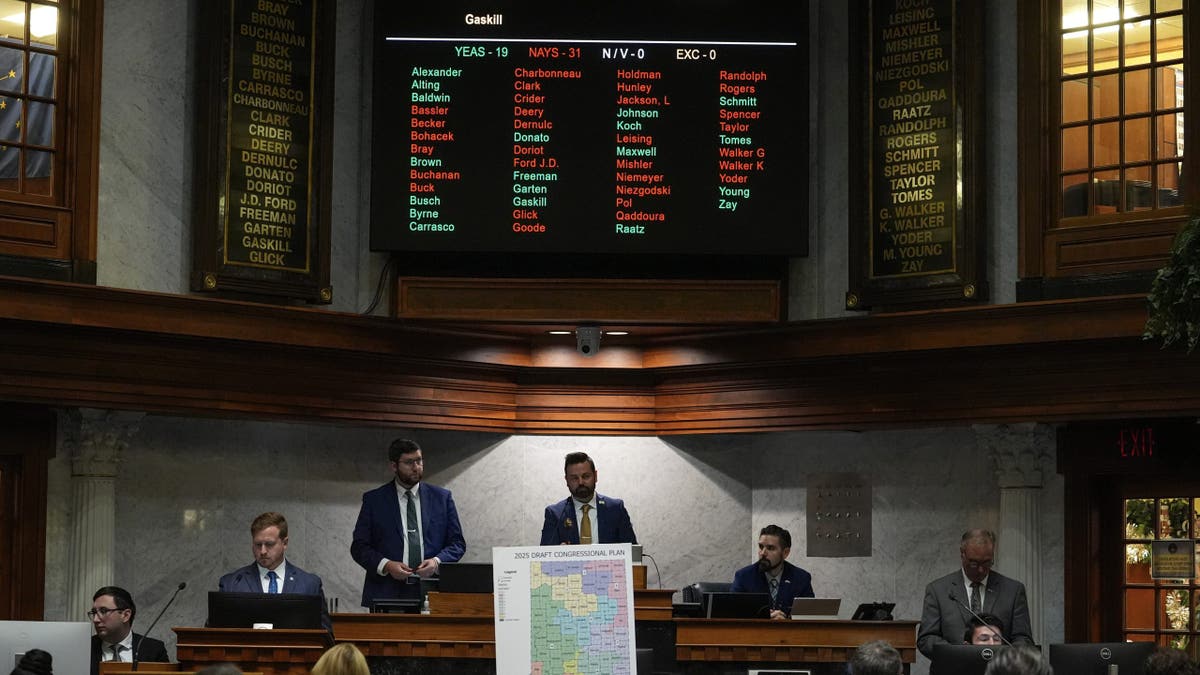
Indiana Lt. Gov. Micah Beckwith announces the results of a vote to redistrict the state’s congressional map, Thursday, Dec. 11, 2025, at the Statehouse in Indianapolis. (Michael Conroy/AP Photo)
But Trump scored a big victory when the conservative majority on the Supreme Court greenlighted Texas’ new map.
Other states that might step into the redistricting wars — Democratic-dominated Illinois and Maryland, and two red states with Democratic governors, Kentucky and Kansas.
4. Jay Jones text messages revealed, rocking Virginia’s elections
Virginia Democrats were cruising toward convincing victories in the commonwealth’s statewide elections when a scandal sent shockwaves up and down the ballot.
SHOWDOWN FOR THE HOUSE: DEMOCRATS, REPUBLICANS BRACE FOR HIGH-STAKES MIDTERM CLASH
Democratic attorney general nominee Jay Jones instantly went into crisis mode after controversial texts were first reported earlier by the National Review in early October.
Jones acknowledged and apologized for texts he sent in 2022, when he compared then-Virginia House Speaker Todd Gilbert to mass murderers Adolf Hitler and Pol Pot, adding that if he was given two bullets, he would use both against the GOP lawmaker to shoot him in the head.
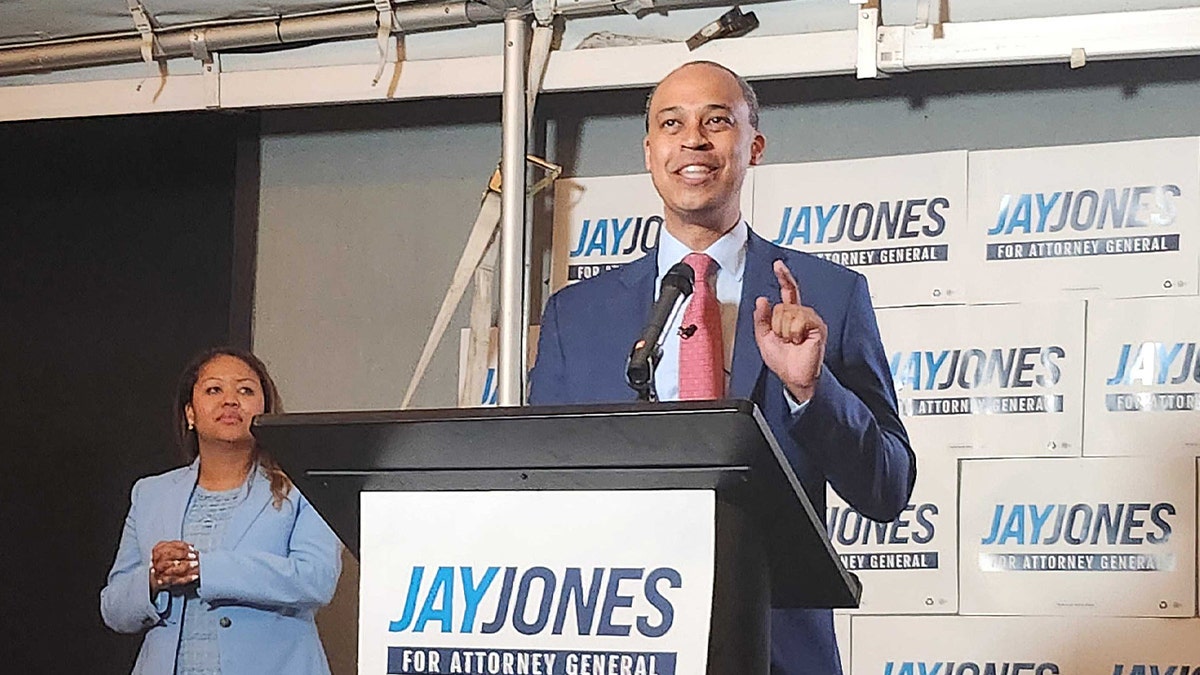
Jay Jones addresses supporters after winning the Democratic nomination for Virginia attorney general as wife Mavis Jones looks on in Norfolk, on June 17, 2025. (Trevor Metcalfe/The Virginian-Pilot/Tribune News Service via Getty Images)
But Jones faced a chorus of calls from Republicans to drop out of the race.
And the GOP leveraged the explosive revelations up the ballot, forcing Democratic Party nominee, former Rep. Abigail Spanberger, back on defense in a campaign where she was seen as the frontrunner against Republican rival Lt. Gov. Winsome Earle-Sears.
Earle-Sears didn’t waste an opportunity to link Spanberger to Jones. And during October’s chaotic and only gubernatorial debate, where Earle-Sears repeatedly interrupted Spanberger, the GOP gubernatorial nominee called on her Democratic rival to tell Jones to end his attorney general bid.
«The comments that Jay Jones made are absolutely abhorrent,» Spanberger said at the debate. But she neither affirmed nor pulled back her support of Jones.
KEY TAKEAWAYS FROM THE 2025 ELECTIONS
While the scandal grabbed national headlines, in the end it didn’t slow down the Democrats, as Spanberger crushed Earle-Sears by 15 points. Democrats won the separate election for lieutenant governor by 11 points and Jones even pulled off a 6-point victory over Republican incumbent Jason Miyares.
3. Democrats overperform at the ballot box
Just eight days into Trump’s second term in the White House, demoralized Democrats had something to cheer about.
Democrat Mike Zimmer defeated Republican Katie Whittington in a special state Senate election in Iowa, flipping a Republican-controlled vacant seat in a district that Trump had carried by 21 points less than three months earlier.
Zimmer’s victory triggered a wave of Democrats overperforming in special elections and regularly scheduled off-year ballot box contests.
Among the most high profile was the victory by the Democratic candidate in Wisconsin’s high-stakes and expensive state Supreme Court showdown.
With inflation, the issue that severely wounded them in the 2024 elections, persisting, Democrats were laser focused on affordability, and the wins kept coming.
In November’s regularly scheduled elections, they won the nation’s only two gubernatorial showdowns — in New Jersey and Virginia — by double digits. And they scored major victories in less high-profile contests from coast to coast.
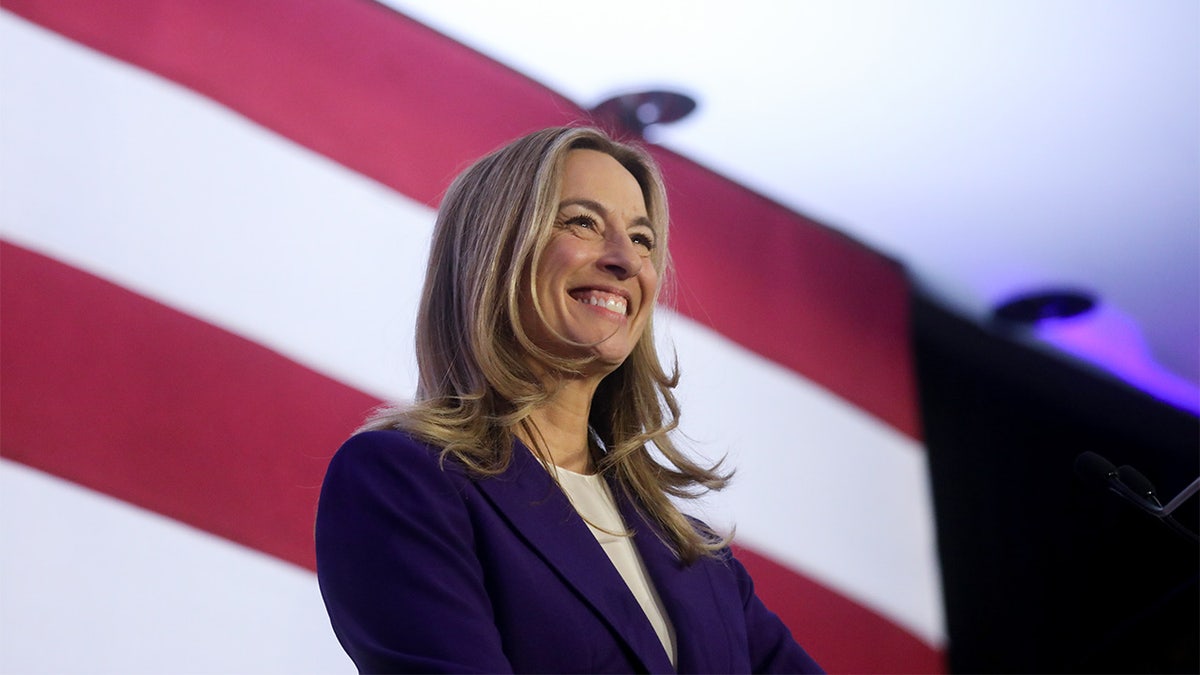
Then-Rep. Mikie Sherrill celebrates during an election night event in East Brunswick, New Jersey, on Tuesday, Nov. 4, 2025. (Michael Nagle/Bloomberg via Getty Images)
The year ended with Democrats winning a mayoral election in Miami, Florida for the first time in a quarter-century, and flipping a state House seat in Georgia.
The Democratic National Committee, in a year-end memo, touted, «In 2025 alone, Democrats won or overperformed in 227 out of 255 key elections — nearly 90% of races.»
But Democrats are still staring down a brand that remains in the gutter, with historically low approval and favorable numbers.
ELECTION REFLECTION: ‘DEMOCRATS FLIPPED THE SCRIPT’ ON AFFORDABILITY IN BALLOT BOX SHOWDOWNS
Among the most recent to grab headlines: Only 18% of voters questioned in a Quinnipiac University survey this month said they approved of the way congressional Democrats were handling their job, while 73% percent disapproved.
That’s the lowest job approval rating for the Democrats in Congress since the Quinnipiac University Poll began asking this question 16 years ago.
2. Democrats’ primary problem
The Democrats overperformed in this month’s special congressional election in a GOP-dominated seat in Tennessee — losing by nine points in a district that Trump carried by 22 points just a year ago,
But there were plenty of centrist Democrats who argued that state Rep. Aftyn Behn, the Democratic nominee in the race, was too far to the left for the district.
Republicans repeatedly attacked Behn over her paper trail of past comments on defunding the police.
‘FULL-BLOWN BATTLE’ BREWING IN DEM PARTY AS MAMDANI-STYLE CANDIDATES RISE IN KEY RACES
And the U.S. Senate campaign launch this month in red-leaning Texas by Rep. Jasmine Crockett, a progressive champion and vocal Trump critic and foil, compounded the argument by centrists.
«The Democratic Party’s aspirations to win statewide in a red state like Texas simply don’t exist without a centrist Democrat who can build a winning coalition of ideologically diverse voters,» Liam Kerr, co-founder of the Welcome PAC, a group which advocates for moderate Democratic candidates, argued in a statement to Fox News Digital.

Democratic nominee State Rep. Aftyn Behn speaks to supporters at a watch party after losing a special election for the U.S. seventh congressional district, Tuesday, Dec. 2, 2025, in Nashville, Tennessee. (George Walker IV/AP Photo)
And the center-left Third Way, in a memo following the Tennessee special election, argued that «there are two projects going on in the Democratic Party right now. One is winning political power so we can stop Trump’s calamity. The other is turning blue places bluer.»
«If far-left groups want to help save American democracy, they should stop pushing their candidates in swing districts and costing us flippable seats,» the memo emphasized.
1. Mamdani wins NYC mayoral primary
It was the story that has dominated campaign politics for the past six months.
Zohran Mamdani‘s convincing June 24 victory in New York City’s Democratic Party mayoral primary was the political earthquake that rocked the nation’s most populous city and sent powerful shockwaves across the country.
The capturing of the Democratic nomination by the now-34-year-old socialist state lawmaker over frontrunner former Gov. Andrew Cuomo and nine other candidates propelled Mamdani to a general election victory.

Zohran Mamdani delivers a victory speech at a mayoral election night watch party, on Tuesday, Nov. 4, 2025, in New York City. (Yuki Iwamura/AP)
Mamdani’s primary shocker, and later, his general election victory, energized the left.
CLICK HERE TO DOWNLOAD THE FOX NEWS APP
But it also handed Republicans instant ammunition as they worked to link the first Muslim New York City mayor with a far-left agenda to Democrats across the country, as the party aimed to paint Democrats as extremists.
But Trump, who had repeatedly called Mamdani a «communist,» appeared to undercut that narrative with a chummy Oval Office meeting with the mayor-elect last month.
2025 2026 elections coverage,virginia governor race,nyc mayoral elections coverage,midterm elections,donald trump,zohran mamdani,campaigning












INTERNACIONAL
Dem fundraising giant ActBlue rocked by allegations it misled Congress about foreign donations

NEWYou can now listen to Fox News articles!
ActBlue, a central piece of the Democratic Party’s fundraising infrastructure, potentially misled Congress when it said it was adequately vetting incoming donations, according to a new report released this week.
The head of ActBlue, a major nonprofit fundraising platform that helps steer donations to left-wing candidates and causes, wrote in 2023 to Congress — in response to concerns about the platform’s ability to vet foreign donors — that it was taking all the necessary steps to ensure it was following the rules to ensure money from foreign sources were not making it through, according to a Thursday report from The New York Times.
However, behind the scenes, ActBlue’s attorneys at Covington & Burling were expressing grave concerns that ActBlue CEO Regina Wallace-Jones’ claims in her letter to Congress were misleading and could open up the platform to significant legal risk, the report said.
ActBlue was already facing scrutiny from Trump, with him calling on the Justice Department last year to investigate the group over concerns the platform was allowing straw and foreign donations, which are barred by federal election laws. The fundraising platform has also been targeted by several congressional probes led by Republican House Committees.
SENATE HOPEFUL WITH DEEP DEM TIES SLAPPED WITH SCATHING COMPLAINT TARGETING ALLEGED FAMILY PAYOUT ‘SCHEME’
Employees work at ActBlue in Somerville, Mass. (Jessica Rinaldi/The Boston Globe via Getty Images)
The concern from ActBlue’s legal counsel was found by the Times after reviewing memos between ActBlue and its legal counsel, resignation letters, and other communications. The Times also held interviews with ActBlue employees on the basis of anonymity.
The memos reportedly communicated that claims to Congress by Wallace-Jones, indicating that ActBlue had a multi-layered vetting framework and processed contributions with foreign mailing addresses only if the donor supplied a U.S. passport number, were not fully accurate. Wallace-Jones also reportedly wrote in her letter that ActBlue’s framework would contact donors to request their U.S. passport information in order to process donations and would return any money when they could not reach the donor. However, this was also reportedly not happening on a consistent basis, according to The Times’ reporting.
«It can be alleged that ActBlue accepted and/or facilitated the acceptance of foreign-national contributions into American elections,» one memo reportedly stated. «In addition, because ActBlue’s staff was aware that its system was not as robust as necessary, it could be alleged that these violations were ‘knowing and willful,’ a standard that both increases the penalties the F.E.C. might seek and gives the Justice Department jurisdiction for a potential criminal investigation.»
FOREIGN BILLIONAIRES FUNNEL $2.6B TO US ADVOCACY GROUPS TO INFLUENCE POLICY, WATCHDOG REPORT CLAIMS
«An aggressive prosecutor may view the November 2023 letter not just as a false statement but as an effort to conceal the foreign contributions,» ActBlue’s legal counsel wrote, The Times reported.

Supporters hold up signs at a campaign rally for Sen. Bernie Sanders, I-Vt., in Madison, Wis., on July 1, 2015. (Christopher Dilts/Bloomberg via Getty Images)
The concerns about Wallace-Jones’ statements to Congress and what to do subsequently resulted in behind-the-scenes chaos at the political fundraising nonprofit, including a slew of departures at ActBlue that were reported publicly by The Times. Additionally, the relationship between ActBlue and its legal firm, Covington & Burling, which is known for representing some of the most high-profile political clients in the United States, was ultimately severed amid disagreements over whether Wallace-Jones’ claims in 2023 were the fault of the legal counsel,or ActBlue, according to the Times’ reporting on Thursday.
«We have complete confidence in the legal advice our lawyers provided to ActBlue,» a Covington spokesperson told Fox News Digital.
ActBlue did not respond to Fox News Digital’s request for comment in time for publication.
In May, ActBlue put out a press release informing people about «what’s really happening and what you need to know,» pertaining to the investigation into ActBlue’s vetting mechanisms. The press release called it a «myth» that the platform allows foreign nationals to illegally contribute donations.
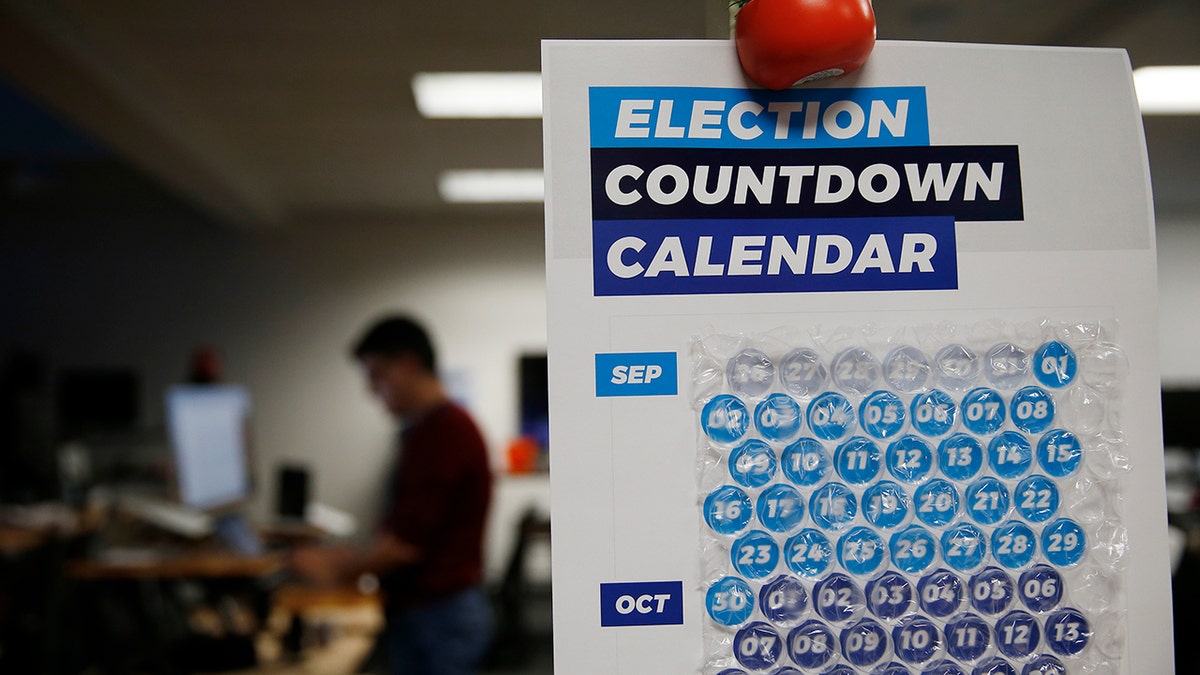
An Election Countdown Calendar hangs at ActBlue in Somerville, Massachusetts. (Jessica Rinaldi/The Boston Globe via Getty Images)
CLICK HERE TO GET THE FOX NEWS APP
«While ActBlue has always had strong measures in place that have successfully prevented illegal foreign donations, beginning in 2025 we have gone even further,» the press release states. «We now require that Americans living abroad be physically present in the United States to make a contribution on our platform, despite campaign finance laws allowing citizens to contribute to campaigns while living abroad.»
Trump called on the DOJ early in his term to return a report within 180 days to him about the status of its findings into ActBlue. However, according to The Times, that report has never been made public. The outlet added that three investigations by GOP-led House committees remain ongoing.
fund raising, democratic party, banking finance, elections, democrats elections, politics
INTERNACIONAL
El régimen iraní aumentó sus ataques contra Israel y bombardeó zonas residenciales del centro del país

Una persona resultó herida en el centro de Israel tras el impacto de un misil balístico iraní equipado con munición de racimo, según informaron medios locales en la madrugada de este sábado.
El servicio de emergencia Magen David Adom (MDA) reportó que un hombre de 79 años sufrió heridas al ser alcanzado por fragmentos impulsados por la onda expansiva del misil en Kiryat Ata, cerca de Haifa.
Las Fuerzas de Defensa de Israel (IDF) identificaron el ataque y emitieron una alerta instando a la población a ingresar a espacios protegidos, mientras los sistemas de defensa trabajaban para interceptar la amenaza.
El Canal 12 de Israel informó que se recibieron llamadas de emergencia desde 17 puntos afectados por los impactos. Entre las ciudades con reportes de daños figuran Tel Aviv, Bnei Brak, Givatayim, Givat Shmuel, Petah Tikva y Rosh HaAyin.
Según el portal Ynet, el misil fragmentado impactó en seis ciudades diferentes y provocó un incendio en un edificio y un apagón en algunas zonas de la ciudad en Rosh HaAyin, daños en un edificio de Petah Tikva y destrozos en Tel Aviv.
Durante el viernes, las FDI llevaron a cabo más de 70 ataques en el oeste y centro de Irán contra emplazamientos de lanzamiento de misiles balísticos y vehículos aéreos no tripulados.
El Ejército israelí lanzó este sábado una serie de bombardeos contra posiciones de Hezbollah en Beirut, la capital de Líbano, en respuesta al lanzamiento de cohetes contra el norte de Israel desde territorio libanés.
“Las Fuerzas Armadas comenzaron a atacar infraestructura de Hezbollah en Beirut”, informó el Ejército israelí en redes sociales durante la madrugada, después de registrar varios ataques en el norte de Israel atribuidos al grupo terrorista.

Este último ataque del régimen iraní se desarrolla en medio de la búsqueda de un soldado estadounidense tras recientes intercepciones de Irán a dos aeronaves militares norteamericanas. Dos aeronaves militares de Estados Unidos fueron derribadas en incidentes separados el viernes durante operaciones de combate contra el régimen iraní, lo que desencadenó una operación de búsqueda y rescate que continúa para localizar a un miembro de la tripulación desaparecido.
Un caza F-15E fue alcanzado por fuego enemigo y se estrelló en territorio iraní; uno de sus dos tripulantes fue rescatado, aunque su estado de salud no detalló. El A-10, también impactado, logró llegar hasta el espacio aéreo de Kuwait antes de que el piloto se eyectara; posteriormente fue rescatado.
Durante la operación de búsqueda y rescate, dos helicópteros estadounidenses también fueron alcanzados por fuego iraní, resultando heridos algunos tripulantes, aunque ambas aeronaves lograron regresar a su base.

Por su parte, el primer ministro israelí, Benjamín Netanyahu, afirmó que la Fuerza Aérea de Israel destruyó el 70% de la capacidad de producción de acero de Irán. En un mensaje, Netanyahu explicó que esta ofensiva priva a la Guardia Revolucionaria iraní de recursos financieros y limita su capacidad para fabricar armamento, en el marco de una operación conjunta con Estados Unidos.
El mandatario indicó que las acciones recientes incluyeron bombardeos contra puentes y otras infraestructuras estratégicas en Irán, y subrayó que todas las operaciones se realizaron “en plena coordinación” con el presidente estadounidense Donald Trump. Netanyahu aseguró que las ofensivas continuarán hasta debilitar aún más al régimen iraní.
“Este régimen está más débil que nunca; Israel está más fuerte que nunca”, declaró tras una reunión de evaluación militar en la base principal de la unidad de Inteligencia del Ejército en Tel Aviv.
El acero es considerado un material estratégico para la industria y el sector militar, esencial en la producción de misiles, drones y embarcaciones. Tras los ataques, las dos mayores plantas siderúrgicas iraníes —Khuzestán y Mobarakeh— quedaron fuera de servicio. Las empresas advirtieron que su reconstrucción podría requerir meses.
La destrucción del 70% de la capacidad siderúrgica iraní representa un golpe relevante para la industria militar y la economía del país. El Gobierno israelí sostiene que la campaña conjunta busca frenar el flujo de recursos hacia la producción de armas por parte de la Guardia Revolucionaria. En respuesta, la Guardia Revolucionaria lanzó misiles y drones contra zonas industriales de la región e Israel, y adviritó sobre nuevas represalias si continúan los ataques.
(Con información de EFE)
War,Middle East,Military Conflicts

NEWYou can now listen to Fox News articles!
FIRST ON FOX: A bipartisan pair of top-ranking senators want to know why sanctioned Russian officials were in Washington, D.C., and given access to the Capitol and meetings with administration officials as wars in Iran and Ukraine rage on.
Senate Armed Services Committee Chair Roger Wicker, R-Miss., and Sen. Jeanne Shaheen, D-N.H., the top-ranking Democrat on the Senate Foreign Relations Committee, raised counterintelligence concerns over the recent visit of a delegation of Russian Duma members, all of whom are sanctioned for «conduct deemed to be harmful to U.S. national security.»
«The delegation came onto U.S. soil for one purpose: to advance the Kremlin’s strategic aims — including gathering additional useful intelligence,» the lawmakers wrote in a letter to Secretary of State Marco Rubio and Treasury Secretary Scott Bessent.
TRUMP EYES NEXT ATTORNEY GENERAL AS KEY GOP SENATOR SIGNALS POTENTIAL ROADBLOCK
Sens. Roger Wicker, R-Miss., and Jeanne Shahenn, D-N.H., raised counterintelligence concerns with the recent visit of a delegation of Russian officials to Washington, D.C. (Alex Wong/Getty Images; Anna Rose Layden/Getty Images)
«They did not come to engage in dialogue or pursue democratic aims,» they continued.
The lawmakers argued that Duma members «include Kremlin subordinates who have committed numerous cyber and ransomware attacks on Americans and have facilitated war crimes against Ukrainian civilians.»
«Remarkably, they are now helping Iran target U.S. military and diplomatic personnel across the Middle East,» Wicker and Shaheen wrote.
SENATE TO QUESTION TRUMP INTEL LEADERS ON IRAN WAR AFTER TOP OFFICIAL QUITS IN PROTEST

Russian President Vladimir Putin listens to Moscow-appointed head of Russian-controlled Zaporizhzhia region of Ukraine, Yevgeny Balitsky, during their meeting at the Kremlin in Moscow, Nov. 18, 2024. (Vyacheslav Prokofyev, Sputnik, Kremlin via AP)
Several members of the Russian Duma visited Washington, D.C., late last month on a trip organized by Rep. Anna Paulina Luna, R-Fla. She was joined by Reps. Eli Crane, R-Ariz., Derrick Van Orden, R-Wis., Andy Ogles, R-Tenn., and Vicente Gonzalez, D-Texas, for a meeting with the delegation.
Luna later gave them a tour of the Capitol after posing for photos outside the United States Institute of Peace.
«As representatives of the world’s two greatest nuclear superpowers, we owe our citizens open dialogue, the exchange of ideas, and open lines of communication,» Luna said on X following the meeting. «We will continue to foster this dialogue and push for peace in support of this [administration’s] efforts, as well as economic opportunity.»
GRAHAM SAYS RUSSIA SANCTIONS BILL ‘NEVER GOING BACK ON THE SHELF’ AFTER TRUMP BACKS PUSH
Wicker and Shaheen noted that the Duma members were «far from innocent participants in a cultural exchange.»
«It included Vyacheslav Nikonov, who in 2023 referred to the United States and the North Atlantic Treaty Organization as the ‘Fourth Reich’ on Russian television. Mikhail Delyagin has advocated for destroying Ukraine’s energy sector. Boris Chernyshov once claimed that Russian retaliatory strikes were ‘an expression of our hatred [of Ukraine],’» they wrote.
CLICK HERE TO DOWNLOAD THE FOX NEWS APP
Wicker and Shaheen demanded that Rubio and Bessent explain why sanctions were waived for the Russian officials’ visit, what meetings the delegation had with Trump administration officials, what counterintelligence assessments were conducted on the visiting Russians, and provide a complete manifest of who traveled from the Russian Federation.
The lawmakers wrote that the delegation’s visit came «at a time when Russia’s intentions are unambiguously clear.»
«Numerous public reports have cited Russian support for Iran’s military targeting of American service members in the Middle East,» they wrote. «European intelligence agencies have reported that Russia intends to attack NATO member states in the coming years. And [Russian President Vladimir] Putin has made it clear that peace in Ukraine is a mirage. His singular ambition for Ukraine is to erase its existence.»
politics, senate, russia, war with iran

Jazmín Ortenzi avanzó a las semifinales del WTA 250 de Bogotá

Dem fundraising giant ActBlue rocked by allegations it misled Congress about foreign donations

Milei endureció su postura contra Irán y prepara el traslado de la embajada en Israel para reafirmar el alineamiento

Se consolida una economía “a dos velocidades”: qué sectores traccionan, cuáles pierden y qué anticipan los analistas

Las encuestas que preocupan a Milei por el caso Adorni y el plan para relanzar la gestión

Unión vs. Deportivo Riestra: formaciones, hora y dónde ver por tv

El Gobierno reevalúa la estrategia de comunicación por el caso Adorni y mide el impacto en la imagen de Milei

Milei se pone al frente de la defensa de Adorni y lo suma a un acto por Malvinas en una nueva muestra de respaldo

Oriana Sabatini sorprendió al elegir a una famosa como madrina de Gia, su hija con Paulo Dybala

La Armada sorteará 30 lugares en el buque que escoltará la salida de la Fragata Libertad: cómo anotarse

 POLITICA2 días ago
Milei se pone al frente de la defensa de Adorni y lo suma a un acto por Malvinas en una nueva muestra de respaldo
- CHIMENTOS2 días ago
Oriana Sabatini sorprendió al elegir a una famosa como madrina de Gia, su hija con Paulo Dybala
- POLITICA1 día ago
La Armada sorteará 30 lugares en el buque que escoltará la salida de la Fragata Libertad: cómo anotarse