INTERNACIONAL
Congress flees town as health care premiums set to explode for millions of Americans in January


NEWYou can now listen to Fox News articles!
Lawmakers left town.
Last Thursday was the final day Congress met until early January. And despite health care dominating the conversation on Capitol Hill since late summer and through the autumn, Congress failed to execute a legislative fix for soaring health care premiums set to spike in January.
It was a Congressional jailbreak around 3 pm et Thursday as the House called its last vote and lawmakers sprinted for the exits, piling into cars on the Capitol plaza.
«Don’t send us home without a vote,» implored House Minority Whip Katherine Clark, D-Mass., on the House steps earlier in the day.
«Our message to (House Speaker) Mike Johnson, R-La., is clear,» said House Minority Leader Hakeem Jeffries, D-N.Y. «You can run. But you cannot hide.»
SANDERS BLASTED AFTER BLOCKING BIPARTISAN KIDS’ CANCER RESEARCH BILL: ‘GRINCH,’ ‘SELFISH’
Lawmakers packed up for December, practically channeling partisans of the (once) hapless Chicago Cubs, declaring «Wait til next year.»
«I’m optimistic that we still have a chance to do better in 2026,» forecast Sen. Jon Husted, R-Ohio.
«I think before the end of January, we really do want to do something,» said Sen. John Hoeven, R-N.D.
There’s a reason why 2026 is fundamentally different from 2025.
«It’s an election year,» observed Sen. Cynthia Lummis, R-Wyo. «I think that Members of Congress are going to start hearing from their constituents.»
The U.S .Capitol Christmas Tree seen on the building’s West Lawn in Washington D.C., Dec. 3, 2025. (Celal Gunes/Anadolu via Getty Images)
Freshman Rep. Ryan Mackenzie, R-Pa., beat former Rep. Susan Wild, D-Pa., by one point in 2024, flipping the district from blue to red. Last week, Mackenzie became one of four House Republicans who rebelled against top Republican leaders – and aligning with Democrats – to renew Obamacare subsidies.
The «Fed Up 4» signed what’s called a «discharge petition.» This is a maneuver to go around the Speaker and put a bill on the floor – if the Speaker won’t. Democrats pushed a discharge petition to re-up the expiring subsidies for three years. But they needed four Republicans to join them in their parliamentary guerilla tactic to take this out of the hands of the Speaker.
CROCKETT FIRES BACK AT JD VANCE’S ‘STREET GIRL’ COMMENTS, SAYS IT’S A RACIST TROPE
«There is no silver bullet. If there was, either party would have done it,» said Mackenze.
When asked about the politics of this in his battleground district, Mackenzie replied that «we have a long way to go before the midterms.»
Discharge petitions don’t ripen for a vote immediately. The House must wait seven legislative days before consideration. The House is out until January 6, 2027. After two days to trigger the discharge petition, the House may consider this maneuver around January 8 or 9.
But even one top House Republican believes this coalition of Democrats and few Republicans will succeed in January.
«My gut tells me that the COVID era subsidies, because we had the four members of the House sign onto that discharge petition, that it probably will pass,» predicted House Republican Conference Chairwoman Lisa McClain (R-MI) on Fox Business.
But the Senate blocked a similar plan earlier this month. That’s why Democrats are skeptical that Congress can fix the problem once premiums explode in the new year.
«Huge damage has already been done. And nothing we do after January 1st can undo so much of that damage,» said Senate Minority Leader Chuck Schumer, D-N.Y.
Some Republicans advocate a complete legislative overhaul of health care next year.
«What is different, though, about 2026 on health care compared to 2025 about health care? Why does this suddenly change?» yours truly asked Sen. Lindsey Graham, R-S.C.
JD VANCE TURNS TURNING POINT SPEECH INTO MIDTERM BATTLE CRY — AND A PREVIEW OF 2028
«There won’t be anything different if you keep doing the same old thing. So that’s the point,» said Graham.
But he added that there was a «deal to be had» on health care.
Only a bipartisan health care bill can overcome a Senate filibuster. That’s why the Senate nuked separate Democratic and Republican plans a few weeks ago. Some Republicans are now advocating going it alone on health care next year. They can do that – if they use a special budget process called «reconciliation.» Via reconciliation, senators can pass a bill with just a simple majority. But the measure must be budget neutral over a decade and just pertain to fiscal policy.
Some Republicans prefer this path. They believe President Trump would sign a partisan bill.
«The only way for us to be able to lower the cost of health care is to do another reconciliation bill,» said Sen. John Kennedy (R-La.), referring to the mechanism the GOP used to pass the Big Beautiful Bill. Democrats also deployed reconciliation to pass Obamacare.
«For the life of me, I cannot figure out why my friend (Senate Majority Leader John) Thune, R-S.D., will not agree to do another reconciliation bill,» continued Kennedy. «Why would you give up the chance to put together a sound social and economic policy when you only need 51 votes to do it.? Why would you give that up?»

Representative Lisa McClain (R-MI) discusses rising health insurance premiums at a press conference in the U.S. Capitol Building on December 10, 2025 in Washington, DC. The Republican leaders discussed healthcare plans with a vote regarding an extension of the ACA subsidies looming. (Heather Diehl/Getty Images)
Sen. Eric Schmitt (R-Mo.) agrees with Kennedy. He believes Democrats prefer to have health care as an issue in 2026 – and not actually address the problems.
«They’re an obstruction party. They despise President Trump,» said Schmitt of the Democrats. «We have majorities. We should use them.»
But that’s the problem. Congressional Republicans have never coalesced around a health care plan which can pass both bodies. Even with their majorities. It didn’t happen in 2017. It’s doubtful that can happen now.
So lawmakers aren’t passing out presents at the holidays. They’re dishing out blame.
«Because of Republicans, it is now impossible, sadly, to prevent people from having to pay hundreds, if not thousands more on their premiums next year,» said Schumer.
«The Democrats do not want a solution,» said Johnson. «They want a campaign talking point.»
So Democrats and Republicans alike abandoned the Capitol for the holidays without voting on a subsidy extension.
«House Republicans have chosen to get out of town before sundown. And that’s a shame,» said Jeffries.
But a few Republicans unloaded on Jeffries.

A runner jogs past the U.S. Capitol shortly after sunrise, Tuesday, Dec. 16, 2025, in Washington. (Julia Demaree Nikhinson/AP Photo)
«What we have seen is Leader Jeffries withholding his votes from the bipartisan efforts. He actually held his Members back,» accused Mackenzie.
Democrats wouldn’t fund the government this fall in their quest to renew the Obamacare credits. Another funding deadline awaits on January 30. Sen. Peter Welch, D-Vt., doubted Democrats would revert to their health care demand ahead of this funding cycle.
«It’s a different time frame,» said Welch.
We’ll know soon enough. Spending bills still aren’t ready. The Senate tried to advance a batch of them last week – but ran into opposition.
Remember that several Senate Democrats helped end the government shutdown by securing an agreement with Thune to hold a vote on health care. Well, they got their vote. But that didn’t fix anything.
So there will be a vote on health care via the health care discharge petition in January. But a House vote does not mean passage. And it doesn’t mean adoption in the Senate.
It’s just a vote.
As McClain forecasts, this may pass. But what about the Senate?
CLICK HERE TO DOWNLOAD THE FOX NEWS APP
Wait til next year.
We’ll know in early 2026.
politics,health,health care healthy living,congress,us,mike johnson,senate,house of representatives politics,republicans,democrats












INTERNACIONAL
Italy cheers faith and flag in Milan after Paris’ ‘woke’ Olympic spectacle sparked culture clash, experts say

NEWYou can now listen to Fox News articles!
Paris and Milan-Cortina delivered two sharply different Olympic spectacles, one that ignited culture-war backlash and another that leaned into heritage and national pride, a contrast some observers say mirrors the political paths of Emmanuel Macron and Giorgia Meloni.
Olympic opening ceremonies rank among the world’s most-watched cultural broadcasts, making them powerful stages for nations to project how they see themselves and how they want to be seen. «Paris tried to reinterpret tradition. Milan showcased tradition,» Hugh Dugan, an Olympic Truce advocate and former U.S. diplomat, told Fox News Digital, framing the contrast between the ceremonies as part of a broader debate over the role of culture, politics and identity in the Games.
Dugan described the 2024 Paris ceremony as «a deliberately disruptive, decentralized, urban spectacle… visually bold but polarizing,» built around a narrative collage of modern France, diversity and reinterpretation of history. He said choreography and costuming «often carried explicit social commentary,» fueling debate over whether parts of the ceremony were intentionally provocative or ideologically driven.
OLYMPICS INTERNATIONAL SKATING UNION DEFENDS CONTROVERSIAL OLYMPIC JUDGING THAT DENIED AMERICANS ICE DANCE GOLD MEDAL
The Trocadero venue while the delegations arrive, in Paris, during the opening ceremony of the Summer Olympics, July 26, 2024. (Francois-Xavier Marit/Pool Photo via AP)
The 2024 Paris opening ceremony, staged along the Seine, sparked controversy after a segment widely interpreted as referencing Leonardo da Vinci’s «Last Supper» drew criticism from Christian groups and conservative commentators before organizers clarified the intent and apologized for any offense.
The moment became a flashpoint in France’s wider culture-war debate over identity, religion and the meaning of public symbolism. The Conversation reported that the ceremony triggered a national discussion over «woke ideology» and France’s cultural direction.
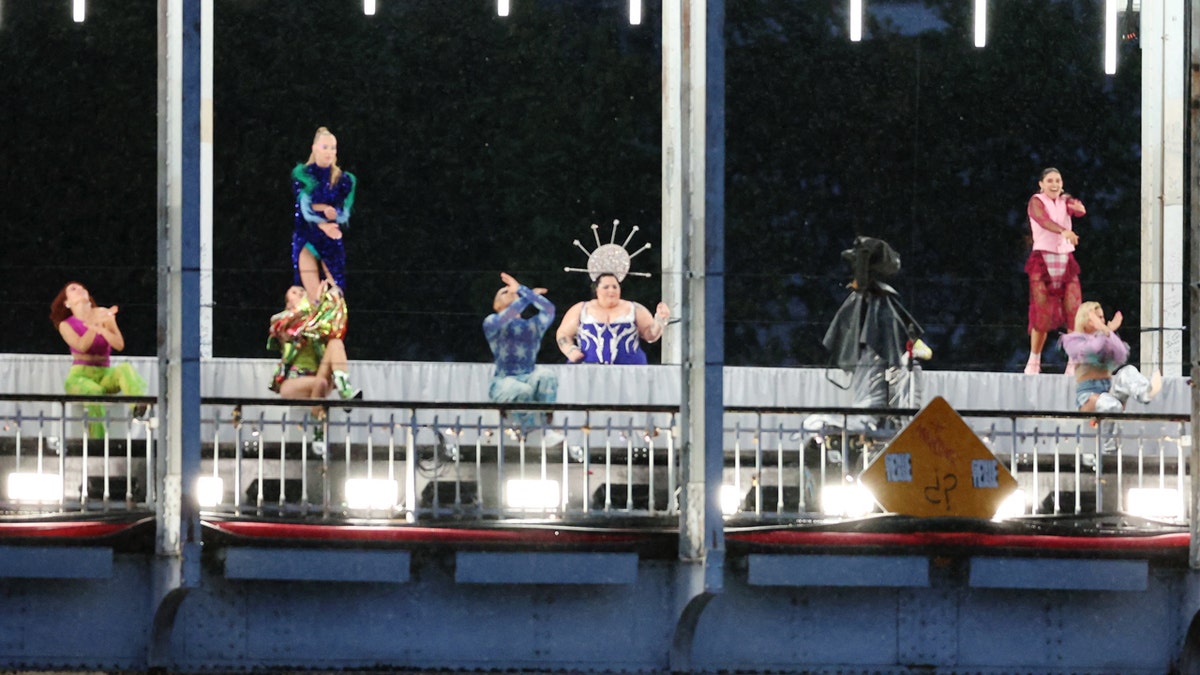
Some of the performers who appeared in the Last Supper depiction in the 2024 Paris Olympics opening ceremony. (Tingshu Wang/Reuters)
Emma Schubart, a research fellow at the U.K.-based Henry Jackson Society, told Fox News Digital, «The Olympics have become a stage for cultural politics as much as sport.»
She continued, «President Emmanuel Macron’s France leaned into progressive, ‘woke’ politics and post-national symbolism, while Prime Minister Giorgia Meloni’s Italy emphasized heritage, tradition and unapologetic national pride. These aesthetic choices reflect a widening divide over Europe’s cultural and political future.»

Flagbearers Arianna Fontana and Federico Pellegrino of Team Italy walk in the parade during the opening ceremony of the Winter Olympics at San Siro Stadium on Feb. 6, 2026, in Milan, Italy. (Maja Hitij/Getty Images)
Dugan praised the Italian games, saying the Milan-Cortina Winter Games ceremony highlighted «tradition, harmony, co-existence and the Olympic truce,» emphasizing heritage, landscapes and the athlete procession over political messaging. He called the Italian approach «panoramic, heritage-driven, classical,» compared with Paris’ «maximalist, narrative-driven, experimental» style.»
IOC CHIEF LAMENTS ‘DISTRACTING’ NEWS CYCLE AHEAD OF 2026 WINTER OLYMPICS

Italian Prime Minister Giorgia Meloni attends the Inauguration ceremony of the Olympic Torch Relay for the Milan-Cortina Winter Olympic Games at the Quirinale Palace, on Dec. 5, 2025, in Rome. (Antonio Masiello/Getty Images)
Reporting on the Milan ceremony described it as a unity-focused event celebrating Italian culture, design and scenery while pushing past pre-Games tensions and highlighting the Olympic ideal of connection and peace. Coverage emphasized tradition and spectacle rather than ideological symbolism, with performances rooted in classical imagery and national identity.
Dugan, who recently launched a Truce Compliance Index tracking how countries observe the tradition, argued the difference reflected two distinct philosophies about what Olympic ceremonies should represent.

Italian actress Matilda De Angelis performs during the Winter Olympics opening ceremony in Milan, Italy, Friday, Feb. 6, 2026. (AP Photo/Ben Curtis)
Paris leaned into modern identity and pluralism, he said, presenting an ambitious cultural narrative that some audiences found bold while others viewed it as politically charged. Milan, by contrast, centered its message on timeless themes tied to heritage, human connection and the Olympic truce.
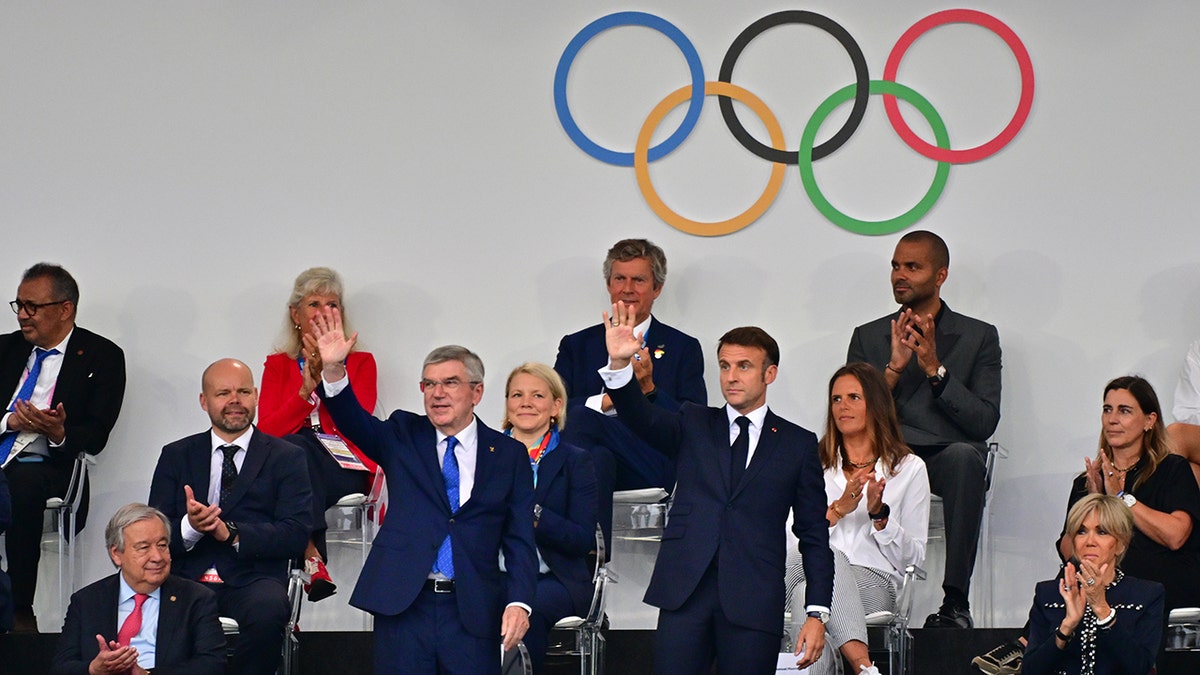
French President Emmanuel Macron, right, waves during the opening ceremony of the Olympic Games on July 26, 2024, in Paris. (Christian Liewig-Corbis/Corbis via Getty Images)
CLICK HERE TO DOWNLOAD THE FOX NEWS APP
The contrast between the ceremonies highlights a broader evolution of the Olympics themselves. Host nations increasingly use opening ceremonies to project national identity and values, whether through modern reinterpretation or traditional symbolism.
olympics,italy,france,culture opinion,sports,emmanuel macron
INTERNACIONAL
Conmoción en Italia: un nene de dos años está en coma tras haber sido trasplantado con un corazón “quemado”

Tommaso, un nene italiano de dos años y tres meses, pelea por su vida en el Hospital Monaldi de Nápoles después de un trasplante fallido de corazón. El órgano, que llegó desde el hospital San Maurizio de Bolzano, habría sufrido daños irreversibles por el uso de hielo seco durante el traslado, según la hipótesis que investiga la Justicia.
La situación es desesperante: el menor permanece en coma inducido y conectado a una máquina de oxigenación por membrana extracorpórea (ECMO), mientras su familia espera la llegada de un nuevo órgano compatible. El caso generó conmoción en Italia y puso bajo la lupa los protocolos de conservación y transporte de órganos para trasplante.
Leé también: Estados Unidos: una mujer asesinó a su hija en un hotel de Las Vegas y luego se mató
El corazón se habría “quemado” por el frío extremo durante el traslado
De acuerdo a la investigación de los Carabineros del NAS (Unidad especializada en seguridad alimentaria y sanitaria), el corazón fue transportado en un contenedor frigorífico convencional con hielo seco, en lugar de hielo tradicional. Este material puede alcanzar temperaturas cercanas a los -80 grados, lo que habría provocado que el órgano se “queme” por el frío y quedara inutilizable. Investigan a seis medicos por el trasplante fallido. (Foto: gentileza Il Mattino).
“El uso de hielo seco implica temperaturas de 70 grados bajo cero, lo que provocó que el órgano se quemara por el frío”, explicó el abogado de la familia, Francesco Petruzzi, en declaraciones a la televisión pública italiana. La caja refrigerada ya fue incautada y la Justicia ordenó un peritaje para determinar si se incumplieron los protocolos de conservación y transporte.
El trasplante falló y el menor sigue en estado crítico
El trasplante se realizó el 23 de diciembre, pero el nuevo corazón no funcionó correctamente desde el primer momento. El nene tuvo que ser conectado a una máquina ECMO y permanece internado en terapia intensiva, en estado crítico.
Para agravar el cuadro, una segunda opinión médica del Hospital Bambino Gesù de Roma advirtió que el chico presenta una hemorragia cerebral y una infección, lo que complica aún más la posibilidad de someterlo a un nuevo trasplante.
Leé también: Washington, Miami y Nueva York: Milei encara en el próximo mes dos viajes consecutivos a Estados Unidos
No obstante, el hospital Monaldi informó que “el Equipo Cardíaco considera que el joven paciente aún cumple los requisitos para permanecer en la lista de espera para trasplantes”.
El niño, que sufre desde que tenía cuatro meses una cardiopatía dilatada, “permanece hospitalizado en cuidados intensivos bajo estrecha monitorización médica e instrumental, así como en consultas con especialistas”, indicó el comunicado
La madre de Tommaso: “Mi hijo es un guerrero”
“Mi hijo es un guerrero. Y yo, como él, tampoco me rendiré. Debe llegar un corazón nuevo para que pueda regresar a casa”, comentó este fin de semana Patrizia Mercolini, la mamá de Tommaso, en las puertas del hospital Monaldi.
“Algunos días después nos llamaron para decirnos que el corazoncito nuevo no funcionaba, por lo que tenían que conectar a mi hijo a una máquina para la oxigenación fuera del cuerpo de la sangre mientras esperaba a un nuevo órgano. Esperemos que llegue pronto. Las horas pasan y hay poco tiempo“, explicó la mujer.
Investigación judicial y suspensión del servicio de trasplantes
La Fiscalía investiga a seis profesionales de la salud por un posible delito de lesiones por negligencia.
Mientras tanto, el servicio de trasplantes pediátricos del Hospital Monaldi fue suspendido de manera cautelar y las autoridades revisan los protocolos aplicados en todo el proceso.
La familia del menor, que lleva 55 días hospitalizado, pidió toda la documentación clínica para buscar nuevas valoraciones médicas, incluso en otros centros de Italia y Europa.
El caso cobró mucha relevancia en los medios italianos y la primera ministra, la ultraderechisgta Giorgia Meloni, llamó a la madre de Tommaso este martes. “Se hará justicia”, le dijo Meloni a Mercolino, y prometió hacer “todo lo posible” para encontrar un nuevo donante compatible.
Italia, trasplante, Corazón
INTERNACIONAL
Chloé Zhao, directora de ‘Hamnet’: “Me convertí en cineasta porque me costaba expresar mis emociones”

La cineasta china Chloé Zhao, ganadora de varios Óscar de Hollywood por Nomadland y ahora nominada en ocho categorías por Hamnet’, define su situación como “compleja”: “Puede ser un poco desagradable que a tu trabajo le pongan una etiqueta” en la que solo eres “ganador o no”, dice. “Creo que todos mis compañeros se sienten así porque todos somos muy sensibles. Así que a lo que nos aferramos es a la comunidad que existe dentro de nuestra industria, especialmente ahora mismo, y a apoyarnos mutuamente”, explica Zhao (43 años) en una entrevista antes de un encuentro en la Academia de Cine.
Todos los pronósticos señalan que el próximo 15 de marzo la cineasta recogerá varias estatuillas por su película sobre el dolor de Shakespeare y su esposa por la muerte de su hijo de 11 años, adaptación de la novela de Maggie O’Farrell, producida por Steven Spielberg, que está teniendo una gran respuesta en cines de distintos países, a cuyo público da las gracias.
Sobre sus orígenes en la industria audiovisual, asegura que hace las películas “por supervivencia”. “Sinceramente, me convertí en narradora y cineasta porque me costaba conectar, expresar o sentir mis emociones”, dice Zhao, que se define como neurodivergente. Sin embargo, sí es capaz de conectar con las emociones de otros -“la pérdida se siente igual, el desamor se siente igual, el amor se siente igual”- y de integrarse rápidamente en comunidades en apariencia muy diferentes.

Esta mujer que nació en China, se educó en Reino Unido y estudió cine en EE.UU., considera que “cuando no eres de un lugar y no tienes un profundo apego, en lo único en lo que puedes confiar es en estar completamente presente cuando estás con otro ser humano”. Con esta premisa consiguió obras como el excelente retrato del oeste americano contemporáneo de The Rider (2017) o la historia de una mujer mayor y pobre que debe buscarse la vida en los bellos pero hostiles paisajes estadounidenses de Nomadland (2020). “Es más fácil y seguro crear un mundo fantástico y contar las historias de otras personas” y “experimentar una especie de catarsis a través de la alquimia de la narración”, destaca.
Algo parecido es lo que le ocurre al personaje de Shakespeare en Hamnet’, que en la piel del actor Paul Mescal muestra dudas, debilidades y un dolor que vuelca en sus inmortales creaciones literarias. La imagen de un Shakespeare que llora chocó a algunos críticos que consideran excesiva la carga emocional de la película. Al respecto, la directora cree que “vivimos en una sociedad que, lamentablemente, no honra nada lo que no es productivo” y en la que a menudo se ocultan los duelos.

(Foto: Agata Grzybowska / © 2025 FOCUS FEATURES LLC)
“Preferimos vivir en verano todo el tiempo en lugar de honrar el invierno, cuando las cosas se están muriendo y se están preparando para el siguiente renacimiento”, defiende Zhao, quien explica que “si no te permites sentir duelo sin intelectualizarlo” no habrá una transformación. Ella misma, a medida que madura, también sigue un proceso de “curación”, ya que había partes sobre las que no se había permitido hacer un duelo.
“Cuanto más lo hago, más me doy cuenta de que el cine, si no pones cuidado, puede ser disociativo, en el sentido de que no estás en tu cuerpo, sino en tu cabeza”, reflexiona. Un ejemplo de esta corporeidad en la película de Hamnet sería la escena del primer parto de la esposa de Shakespeare, Anne Hathaway -en la película es Agnes, el nombre con el que también se le conocía-, interpretada por la actriz irlandesa Jessie Buckley. “El primer nacimiento en el bosque fue muy diferente al segundo, estaba mucho más en contacto con su cuerpo. El bosque, metafóricamente, es su conexión con su propio bosque interior; no solo con su cuerpo, sino con el linaje de las madres y las mujeres de su linaje”, subraya Zhao.
Fuente: EFE
Arts,Culture,Entertainment,Arts / Culture / Entertainment,North America

Italy cheers faith and flag in Milan after Paris’ ‘woke’ Olympic spectacle sparked culture clash, experts say

Conmoción en Italia: un nene de dos años está en coma tras haber sido trasplantado con un corazón “quemado”

El Gobierno les descontará el pago del día a los estatales que adhieran al paro de la CGT

Con un mensaje directo, Victoria Villarruel salió a responder las críticas por su viaje a La Rioja

Qué ver en Netflix, la miniserie de 7 episodios ideal para mirar en un solo día con familia y amigos: «Gambito de dama»

Milei recibió al CEO de la minera Vicuña tras el anuncio de la mega inversión de USD 18.000 millones

Avistaron una ballena azul en Chubut por primera vez en la historia

Uno de los jefes de la CGT adelantó que convocarán a un paro general por la reforma laboral: “Trabajaremos para que sea una gran huelga”

El Gobierno busca aprobar la reforma laboral y el Régimen Penal Juvenil antes del 1 de marzo

Chaotic video shows passengers trading midair blows; plane forced to divert: reports

 POLITICA2 días ago
Uno de los jefes de la CGT adelantó que convocarán a un paro general por la reforma laboral: “Trabajaremos para que sea una gran huelga”
- POLITICA18 horas ago
Cristian Ritondo: “Vamos a apoyar la ley de modernización laboral, pero no el régimen de licencias por enfermedad”
- POLITICA2 días ago
Efecto Santa Fe: policías y penitenciarios de Río Negro rechazaron un aumento en cuotas y amenazan con acampar por tiempo indeterminado en Viedma