INTERNACIONAL
Iran expands it ‘shadow empire’ across Middle East as Trump pulls troops from Iraq, Syria

NEWYou can now listen to Fox News articles!
Just six months after the Trump administration said it would begin drawing down U.S. forces in Syria, the U.S. confirmed this week it will also begin reducing the number of U.S. forces in Iraq under an agreement reached by the Biden administration – a move security experts warn could benefit Iran and its «shadow empire.»
Just six months after the Trump administration announced plans to draw down U.S. forces in Syria, the Biden administration confirmed this week it will also reduce troop levels in Iraq under a new agreement – a move security experts warn could strengthen Iran and its «shadow empire.»
The changes have come amid a perceived reduction in threat from the terrorist network ISIS and a growing U.S. desire to end «forever wars.»
US ‘UPS THE ANTE,’ DESIGNATES IRAN-BACKED GROUPS IN IRAQ TERRORIST ORGANIZATIONS
But a reduced U.S. presence in both Iraq and Syria has security experts deeply concerned about the power vacuum it will create in both countries, and the immediate threat that Iran poses.
Iran for decades has been expanding its influence in both Iraq and Syria, and it has established a complex and highly embedded presence in the region militarily, politically, economically and socially, making it difficult to divert or thwart its influence even amid a regime change in Syria.
People wave guns in the air as they gather to celebrate the fall of the Syrian regime in Umayyad Square Dec. 8 in Damascus, Syria. (Ali Haj Suleiman/Getty Images)
«The relationship between Islamic Revolutionary Iran and Syria goes all the way back to the ’80s. It’s not something that just started with the advent of the Syrian civil war,» Gregg Roman, Executive Director of the Middle East Forum, told Fox News Digital. «They took 40 years of relations and eventually turned that into an enterprise.»
Iran has used Shia militant forces from not only Syria, but Iraq, Afghanistan and Lebanon, to construct a «parallel military infrastructure» in coordination with the Islamic Revolutionary Guard Corps (IRGC) that has transformed Syria into an «Iranian forward operating base.»
According to an investigative report compiled by the Middle East Forum, using on-the-ground sources embedded in Iranian military installations across Syria since 2018, Iran has not only constructed underground tunnels and weapons depots for its disposal. Tehran has embedded itself deeply into the everyday lives of Syrians through an integrated system that has blended military duties with civil programs.
It’s command structure also transcends traditional nation-state borders by integrating Iranian, Lebanese and Iraqi commanders.
While Iran now faces opposition in Syria following the collapse of the Bashar al-Assad regime with the December 2024 takeover by the Sunni paramilitary organization Hay’at Tahrir al-Sham (HST) – once deemed by the U.S. as a terrorist organization deriving from al Qaeda – Tehran has the potential to take advantage of that of lack of a unified government across Syria, as well as an immensely complex geopolitical dynamic where Israel, Turkey and Russia are all vying for more influence in the nation.
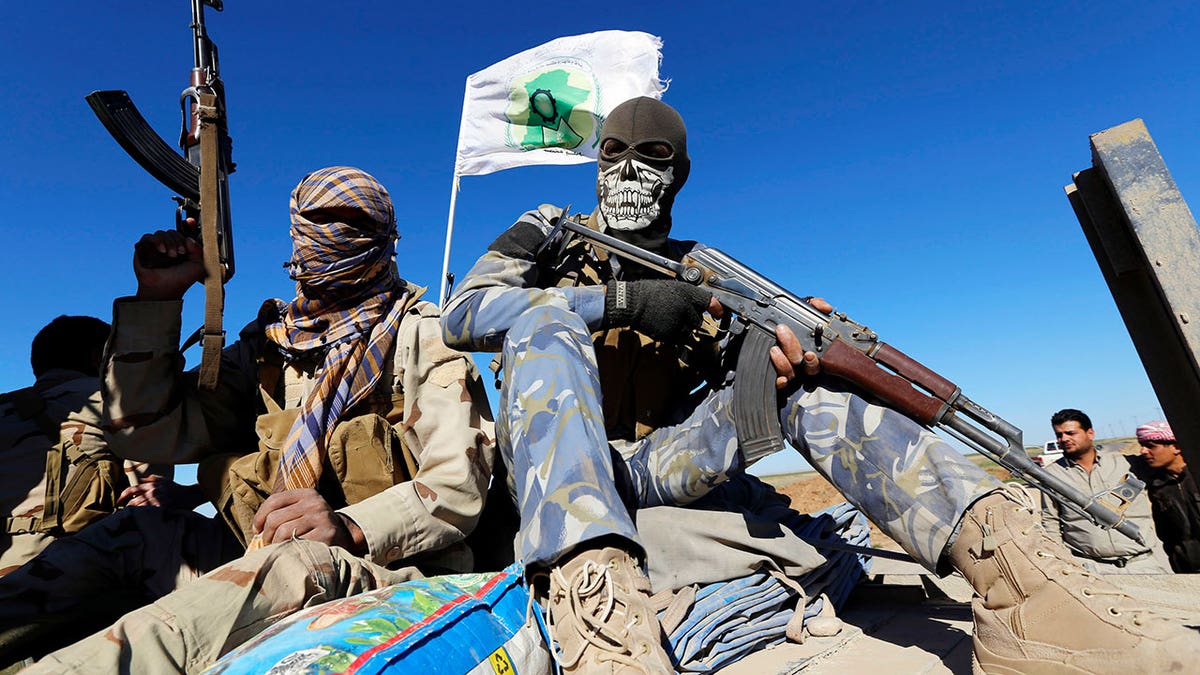
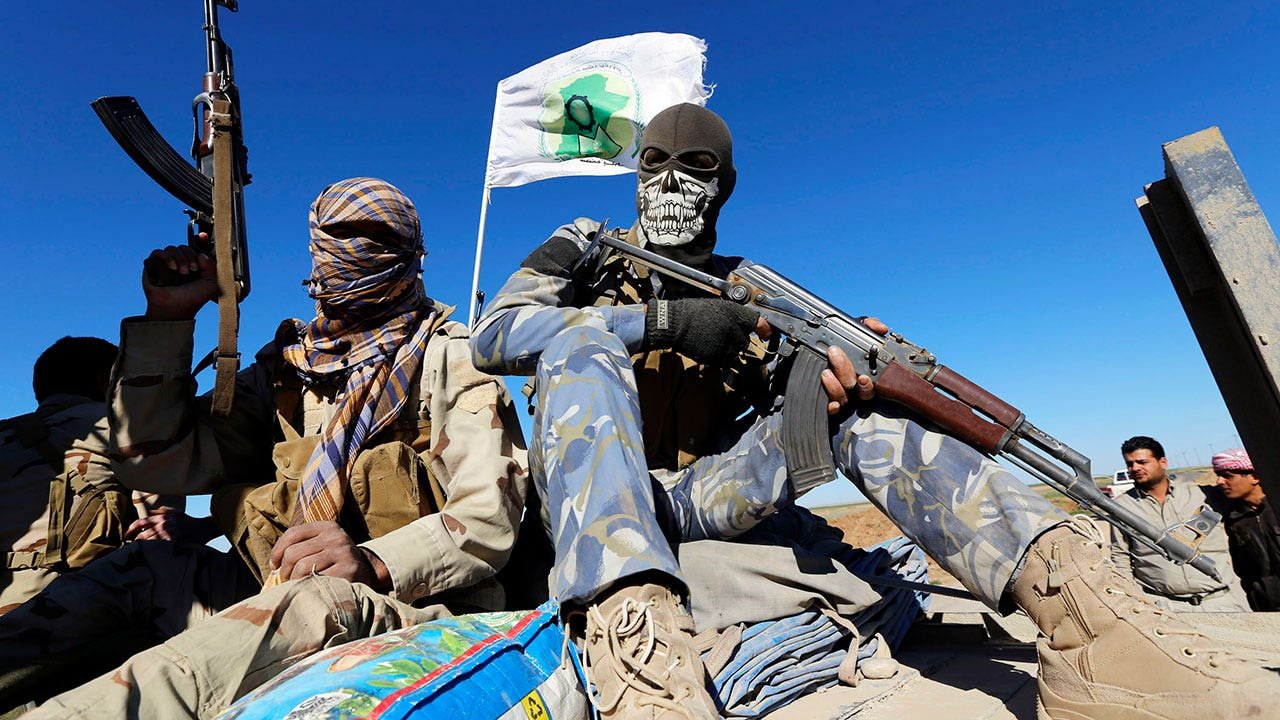
Masked Iran-backed Shi’ite fighters hold their weapons in Iraq’s Al Hadidiya, south of Tikrit, en route to the Islamic State-controlled al-Alam town, where they are preparing to launch an offensive March 6, 2015. (Reuters/Thaier Al-Sudani)
IRAQI PRESIDENT SAYS NATION IS ‘100% SAFE’ AMID LINGERING ISIS, MILITIA CONCERNS
Roman pointed out that if HST, in coordination with the Kurds in the northeast or the Druze in the southwest, are not able to create a «bulwark» against Iranian influence, then Tehran could be well positioned to expand its regional interest under its «shadow empire.»
«Perhaps most concerning is the precedent established by Iran’s success in constructing this shadow empire,» the report found. «The ability to build parallel military infrastructure, operate independently of host government control, and maintain strategic capabilities despite international scrutiny provides a template that could be replicated elsewhere in the region.»
Though its strategy may be slightly different, Iran has repeatedly used power vacuums to extend its reach and counter U.S. influence, as seen in both Afghanistan, where it backed the Taliban, and in Iraq, where it began backing Shia militia groups fighting the U.S. as early as 2003.
«The Iranians have a strategy in Iraq, and it’s effective,» Bill Roggio, expert terrorism analyst and senior editor of the Foundation for Defense of Democracies’ «Long War Journal,» told Fox News Digital. «They’re using military, political and economic means to achieve their goals, and their proximity to Iraq really helps them achieve that.»
Roggio said there are hundreds of thousands of Iran-backed militants in Iraq who are largely a part of the Popular Mobilization Forces, which were heavily influential in fighting ISIS and are a part of the Iraqi Armed Forces under the command of the prime minister, but which are also heavily influenced by Tehran.
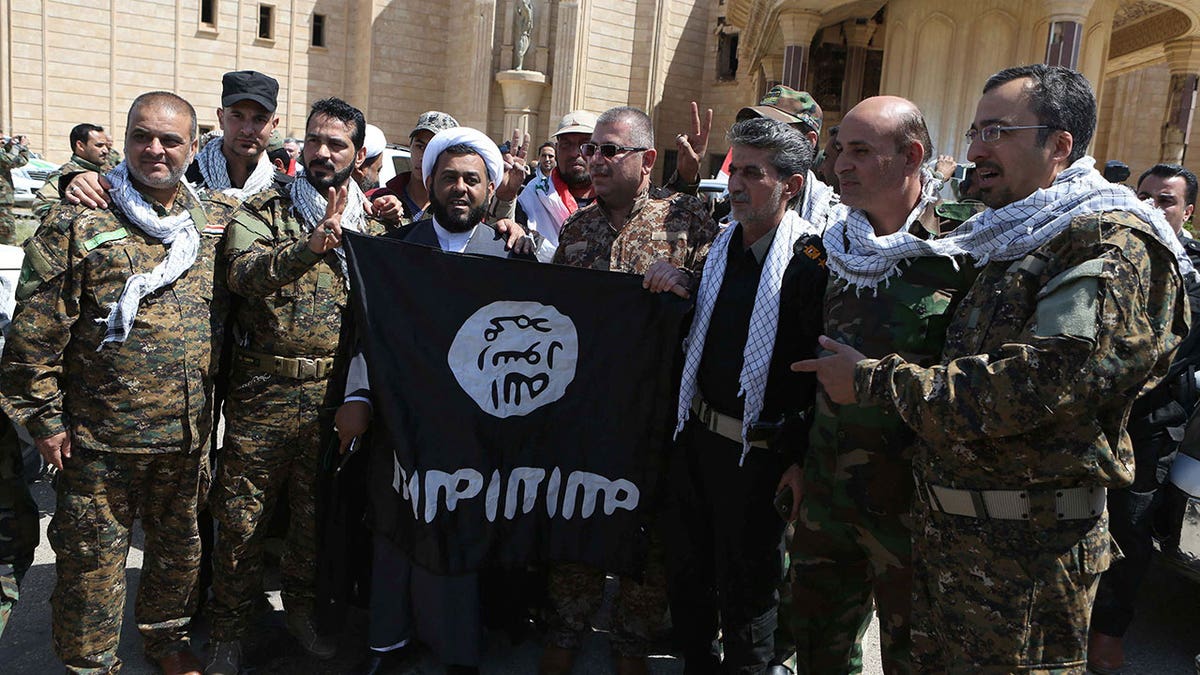
Iraq’s Popular Mobilization Forces, dominated by Iran-backed Shiite militias, hold an Islamist flag after Iraqi forces retook the northern city from ISIS earlier in the month on April 5, 2015, in Tikrit, Iraq. (Mohammed Sawaf/AFP via Getty Images)
IRAN PRESIDENT ACCUSES US OF ‘GRAVE BETRAYAL’ WITH NUCLEAR STRIKES IN UNGA SPEECH
«They wield significant influence in the Iraqi government. They occupy a large, dominant block in the Iraqi parliament. And these militias also have economic power,» Roggio said. «Iran built these militia forces along the same lines as Hezbollah, and they essentially want them to ultimately become like the Islamic Revolutionary Guard Corps is in Iran.»
Both Roman and Roggio expressed concern over the withdrawal of U.S. troops from the region and, more significantly, the removal of U.S. influence at a time when Iran is looking to heavily counter Washington and its interests.
«We haven’t learned the lessons of Afghanistan and even the lessons of Iraq,» Roggio said. «I don’t care if we have 100 or 100,000 troops in Afghanistan or anywhere else. Do we have the right troops to achieve the mission that we put out for them?
«We talk about numbers of troops. … We’re not really talking about what is our mission in Iraq? Is it a counter-ISIS mission? Is it a stave off Iranian influence mission?
«And do we have the right mixture of military and diplomatic and political and economic influence in Iraq to achieve those goals? I don’t believe we do.»
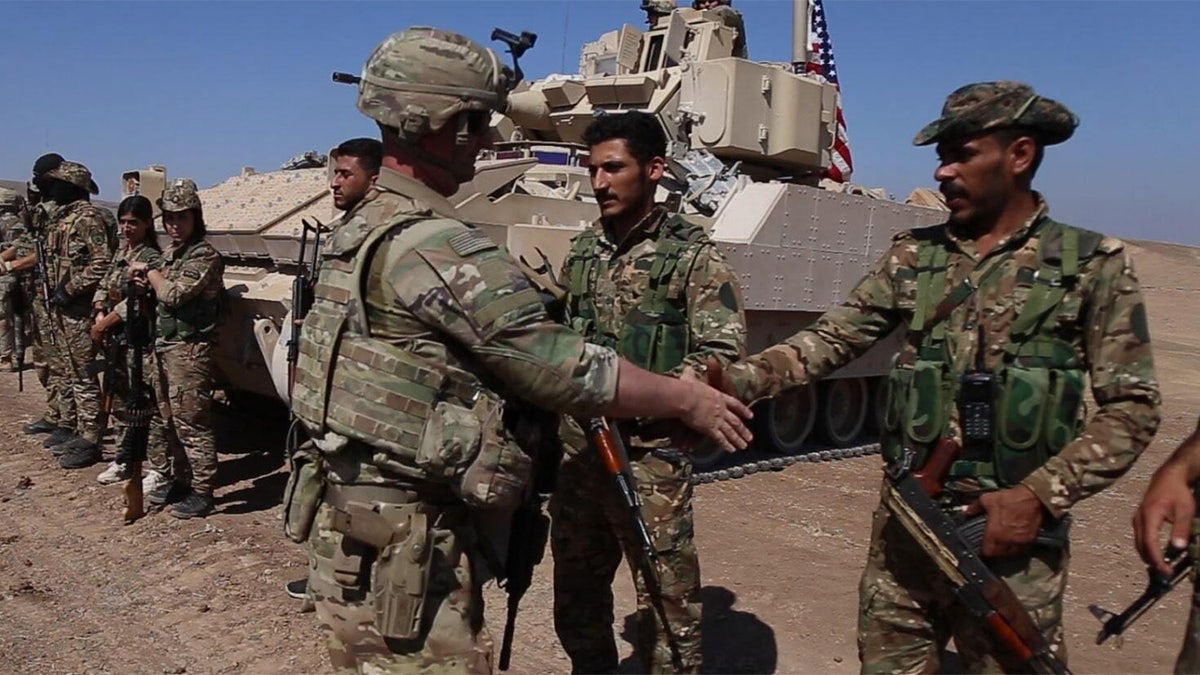
U.S. forces provide military training to members of the YPG/SDF, which Turkey considers an extension of PKK in Syria, in the Qamisli district in the Al-Hasakah province, Syria, Aug. 18, 2023. (Hedil Amir/Anadolu Agency via Getty Images)
CLICK HERE TO GET THE FOX NEWS APP
Both experts pointed out that the U.S. has a long history of not taking Iran and the threat it poses seriously enough, a problem that has spanned decades across both Republican and Democratic administrations.
«The Iranians are patient. They’re operating on timeframes of decades and generations. And we aren’t patient. We operate in timeframes and two and four-year election cycles,» Roggio said. «Ultimately, Iran is looking to drive the U.S. from the region and expand its influence in neighboring countries, be it Afghanistan, be it Iraq, be it the Gulf states.
«The ultimate goal is to get the U.S. out so it can expand its influence.»
iran,middle east,syria,iraq,donald trump,terrorism,world












INTERNACIONAL
La pintura que nadie esperaba: así fue el increíble redescubrimiento de John Constable en el corazón de Texas
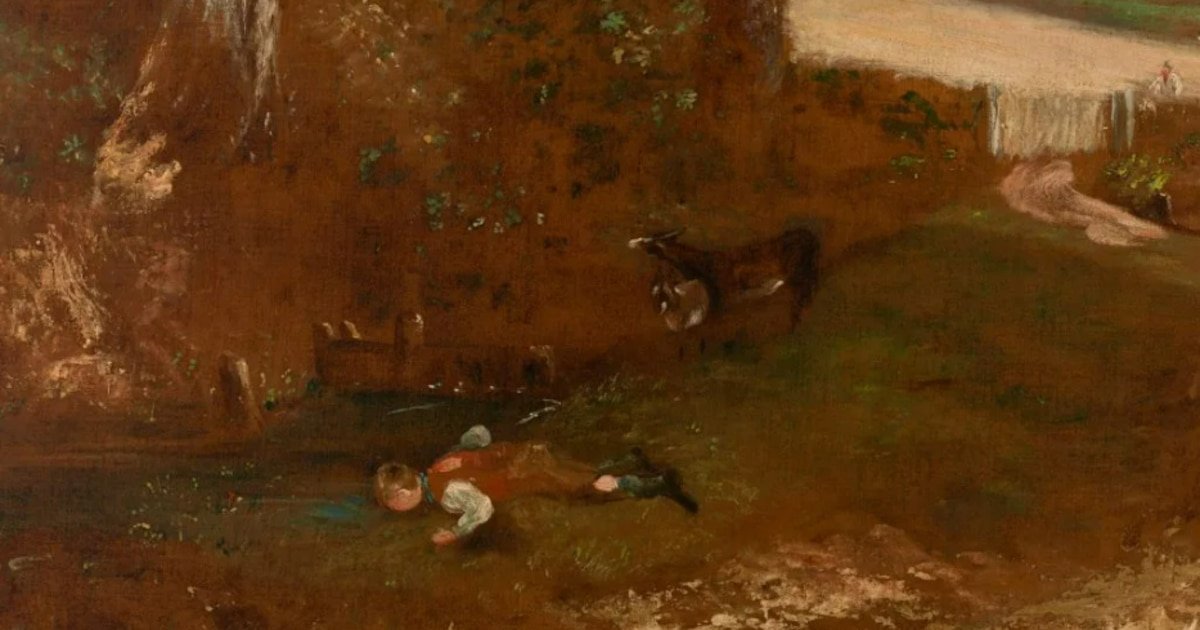
Un nuevo capítulo en la historia del arte británico surgió en el este de Texas, donde una obra atribuida a John Constable —referente del paisaje romántico inglés— fue identificada como un hallazgo insospechado con consecuencias para la comprensión de su proceso creativo.
La pintura, un estudio al óleo de gran escala relacionado con The Cornfield (1826), será la pieza principal en la subasta de arte europeo de la casa Heritage en Dallas este 5 de junio, tras un proceso de atribución que desafió lo sabido sobre el autor y reunió a especialistas ante un enigma de procedencia aún sin resolver.
Una característica distintiva de este hallazgo, nunca registrada en versiones previas de la misma escena, es su tamaño: el estudio mide 140 por 122 centímetros, convirtiéndose en el mayor de los bocetos conocidos para The Cornfield.
Según declaró Marianne Berardi, codirectora de arte europeo en Heritage Auction al medio ARTnews, la obra permaneció décadas en la colección de la Jefferson Historical Society and Museum tras ser donada en los años 1960 por la neoyorquina Newhouse Galleries, con el objetivo de fortalecer esa institución cultural. Solamente en 2017, durante una visita de revisión de patrimonio que gestionó Heritage, surgió la sospecha de que se trataba de una obra auténtica, no una copia más entre las 85 registradas, basadas en la laguna de Fen, en Suffolk.

El estudio, restaurado cuidadosamente e investigado a fondo entre 2023 y 2024, fue sometido a múltiples análisis técnicos —desde pruebas de limpieza hasta reflectografía infrarroja y análisis de pigmentos—. Todos los exámenes confirmaron “consistencia total con los materiales y métodos de trabajo de Constable”, lo que contradijo el consenso anterior entre expertos y abrió nuevas incógnitas sobre la evolución de la célebre pintura terminada, la primera del artista admitida en la National Gallery de Londres en 1837.
La autentificación introdujo elementos inéditos en el relato historiográfico de John Constable. De acuerdo con la restauradora Sarah Cove, versiones previas sostenían que Constable pasaba directamente de pequeños bocetos a la obra final. “Desde el redescubrimiento del boceto a tamaño real, sabemos que eso es incorrecto”, afirmó Cove, quien determinó que el autor ejecutó la composición en una única sesión y, en una segunda etapa, la retocó siguiendo una lógica de revisión más madura, evidenciando un proceso analítico visible y documentable sobre la propia superficie.
Las investigaciones de Anne Lyles, historiadora del arte y experta en Constable, apuntaron a una fecha de ejecución en torno a 1820, basada en el imprimado de la tela. Cove sumó que la intervención principal podría situarse poco después de 1825, en un contexto de experimentaciones simultáneas con la composición The Leaping Horse. “El manejo es tan parecido que sugiere que pudo ocurrir a inicios de 1826, en paralelo al trabajo sobre el boceto a tamaño real para The Cornfield”, sostuvo Cove.

La recurrencia con la que resurgen obras desconocidas de Constable se explica por la extraordinaria cantidad que produjo a lo largo de su carrera, motivado en parte por lo que el mismo artista reconocía como una memoria visual limitada. Los estudios, entonces, se convirtieron en sus equivalentes a la fotografía: modelos de referencia concebidos con una libertad y rapidez que anticipaban la estética impresionista décadas antes de su formulación. Estos trabajos permanecieron, en buena medida, fuera del radar del público hasta la subasta del estudio Foster and Co., un año después de la muerte del pintor en 1837.
A partir de 1816 y luego de su matrimonio, Constable amplió el formato de sus composiciones para hacerlas más atractivas comercialmente y para optimizar el tiempo de ejecución. La obra ahora identificada permite reconstruir cómo la exploración en gran escala fue un paso intermedio crucial entre los bocetos reducidos y el lienzo definitivo, integrando casi todos los elementos presentes en la versión final exhibida en la National Gallery, salvo algunos detalles menores.
La procedencia del estudio aún plantea dudas. Existen registros de ventas históricas que mencionan una “estudio de la naturaleza para The Corn Field, para el cuadro de la National Gallery”. Para Sarah Cove, la pintura recién estudiada desplaza como candidata legítima a la versión hasta ahora conservada en los Newfields de Indianápolis. Anne Lyles, en cambio, mantiene reservas sobre la atribución.
La obra será expuesta antes de la subasta en el espacio londinense de Heritage Auctions entre el 27 de marzo y el 2 de abril. Este recorrido internacional marca un nuevo ciclo para una pieza que permaneció más de medio siglo en relativo anonimato y que, ahora, redefine el conocimiento sobre las estrategias creativas de un pilar del romanticismo inglés.
Pintura,arte,paisaje,National Gallery,óleo,rural,naturaleza,campo,galería,exposición
INTERNACIONAL
Irán pone a Europa en su punto de mira con los misiles lanzados contra la isla Diego García: “Ya no hay vuelta atrás”
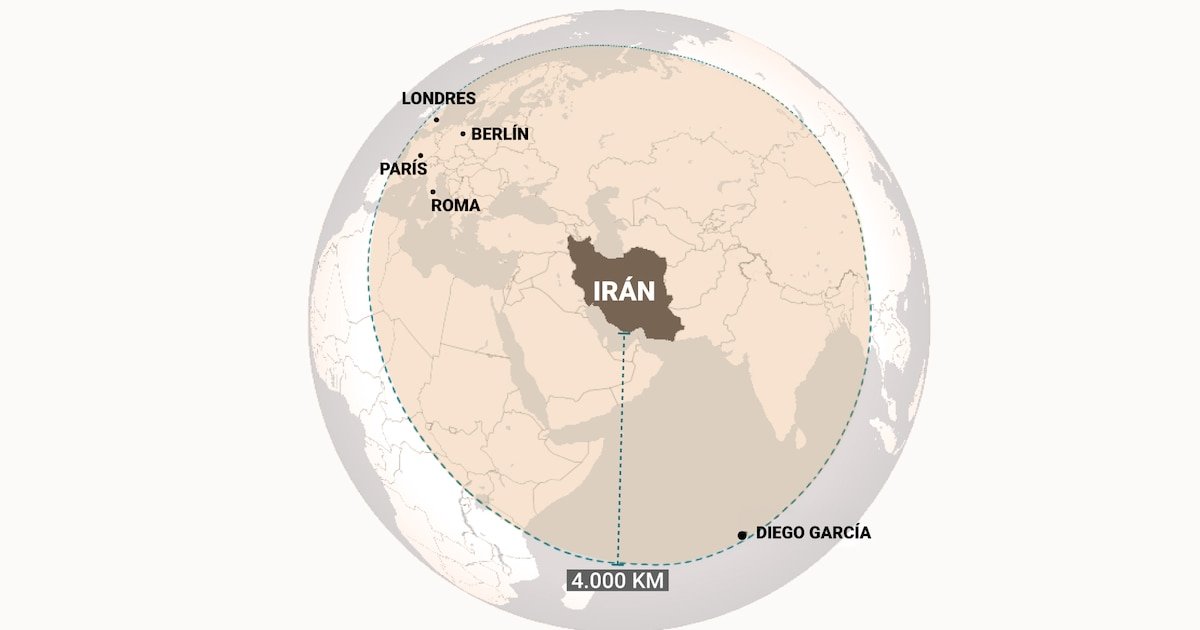
Irán lanzó esta semana dos misiles balísticos de alcance intermedio contra la base militar estadounidense-británica de Diego García, en el océano Índico, revelando capacidades militares que superan lo que muchos analistas creían posible y que, por primera vez, ponen a ciudades europeas dentro del radio de alcance del arsenal iraní.
El ataque, producido en las primeras horas del viernes, fue el primero en que Irán empleó misiles de esta categoría. Uno de los proyectiles falló durante el vuelo; el otro fue neutralizado por un destructor estadounidense que lanzó interceptores SM-3 desde posiciones cercanas a la base. Ninguno impactó en el objetivo, pero el solo hecho de haberlos disparado cambió el mapa estratégico del conflicto.
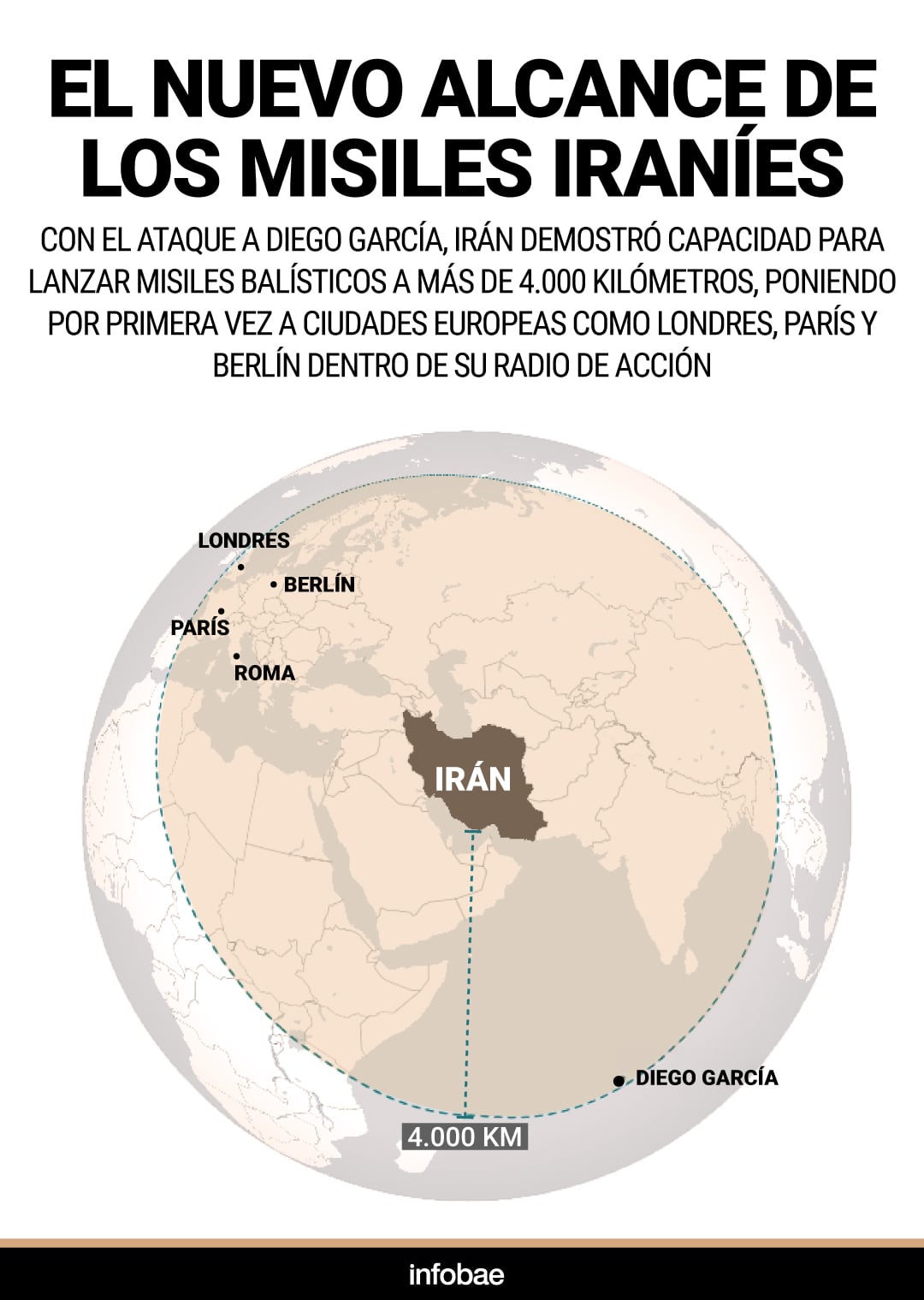
La distancia entre Irán y Diego García supera los 4.000 kilómetros, una cifra que equivale aproximadamente a la que separa a Teherán de Londres o París. Hasta el viernes, las propias autoridades iraníes sostenían públicamente que el alcance máximo de sus misiles no superaba los 2.000 kilómetros. El ataque desmintió esa afirmación de manera contundente.
Analistas consultados por The Wall Street Journal señalaron que la complejidad técnica de estos misiles sugiere que Irán preparó el lanzamiento mucho antes del inicio de la guerra, dado que sería difícil haber completado ese desarrollo bajo los bombardeos de las últimas semanas. Algunos especialistas apuntan a que Irán podría haber adaptado uno de sus lanzadores espaciales civiles para uso militar.

“Ya no hay vuelta atrás”, advirtió Jeffrey Lewis, experto en control de armamentos del Instituto Middlebury. “Este es un hecho: Irán tiene misiles balísticos de alcance intermedio.” Lewis añadió que el cruce de esa línea aumenta el riesgo de que el régimen reconsidere también su postura respecto al desarrollo de armas nucleares, un programa que Teherán ha negado sistemáticamente pero que el conflicto actual podría acelerar.
Danny Citrinowicz, quien dirigió durante años el área de análisis sobre Irán en la inteligencia militar israelí, apuntó al significado político del lanzamiento tanto como al técnico. “Muestra hasta dónde está llegando el proceso de toma de decisiones hacia el extremo”, afirmó al WSJ, sugiriendo que el ataque a Diego García refleja un régimen que ha abandonado los cálculos de prudencia que históricamente moderaron sus respuestas militares.
Farzin Nadimi, investigador especializado en Irán en el Washington Institute, agregó otra capa de incertidumbre: aún no está claro si los misiles disparados habrían podido alcanzar efectivamente Diego García, dado que ninguno impactó en el objetivo. Construir misiles de largo alcance que funcionen de manera confiable es técnicamente complejo, precisó, debido a las tensiones extremas que experimentan los proyectiles durante el vuelo.

El primer ministro israelí, Benjamin Netanyahu, retomó estas conclusiones este domingo durante una visita a Arad, en el sur de Israel, donde el sábado por la noche un misil iraní impactó en un barrio residencial sin ser interceptado. Desde los escombros, Netanyahu fue directo: “Dispararon un misil balístico intercontinental sobre Diego García. Son 4.000 kilómetros. He estado advirtiendo todo el tiempo: ahora tienen la capacidad de llegar profundamente a Europa”.
“Están poniendo a todos en su mira”, agregó el premier, en referencia también al bloqueo iraní del estrecho de Ormuz. “Están cortando una ruta marítima internacional, una ruta energética, e intentando chantajear al mundo entero.”

Netanyahu aprovechó la visita para llamar a los líderes mundiales a sumarse a la ofensiva conjunta israelí-estadounidense contra Irán. “Es hora de que los líderes del resto de los países se sumen. Me complace decir que veo que algunos empiezan a avanzar en esa dirección, pero se necesita más”, afirmó, sin precisar qué países ni en qué capacidad. El presidente Donald Trump ha expresado en repetidas ocasiones su frustración por la escasa respuesta internacional de apoyo a la campaña militar.
Por su parte, el Ejército israelí publicó ayer un mapa en redes sociales mostrando el radio de acción de los misiles iraníes, con Londres, París y Berlín dentro del alcance. “El régimen terrorista iraní representa una amenaza global”, señaló el comunicado militar israelí, recordando que ya en junio de 2025, durante la Operación León Naciente, Israel había advertido sobre el desarrollo de estos proyectiles, advertencia que Teherán negó en ese momento.
El Reino Unido respondió al ataque ampliando el acceso estadounidense a sus bases en todo el mundo para operaciones contra Irán. El Ministerio de Defensa británico calificó los ataques como “una amenaza para los intereses británicos y sus aliados”. El canciller iraní, Abbas Araghchi, advirtió a Londres que permitir el uso de sus instalaciones equivale a “participar en la agresión”.
INTERNACIONAL
Netanyahu visitó uno de los lugares impactados por los misiles iraníes en el sur de Israel: “Estamos aplastando al enemigo”
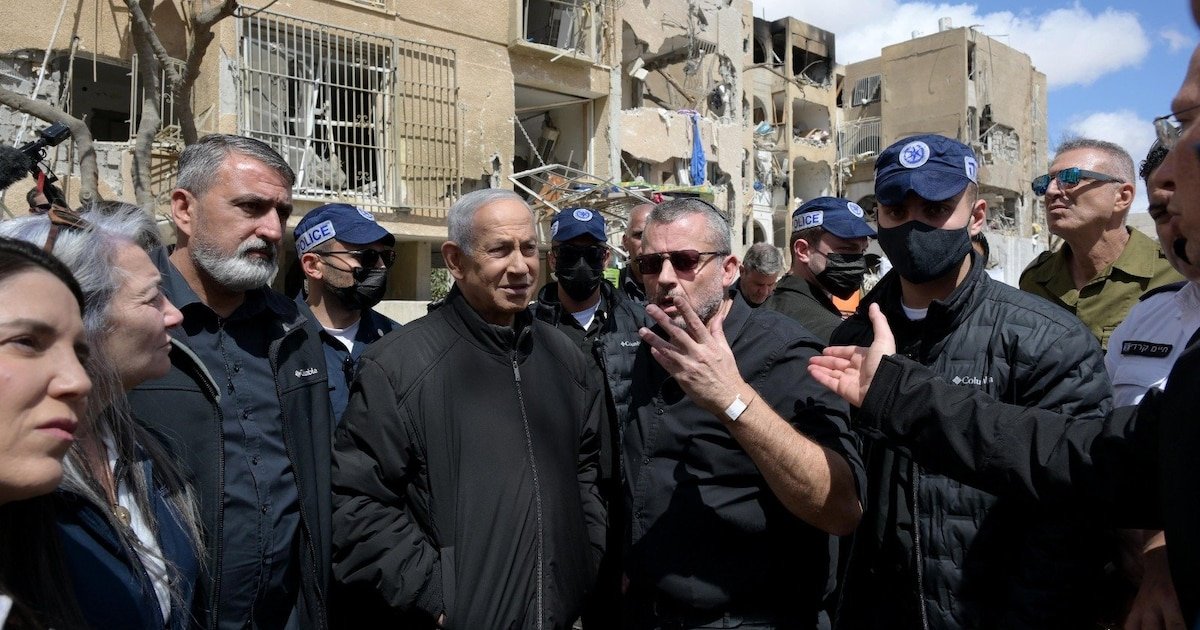
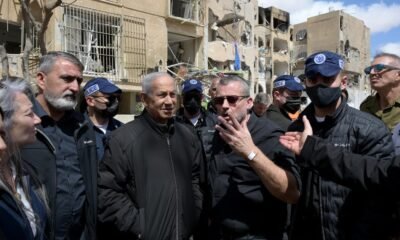
El primer ministro israelí, Benjamin Netanyahu, visitó este domingo la localidad de Arad, en el sur de Israel, donde el sábado por la noche un misil iraní impactó entre edificios residenciales sin ser interceptado por los sistemas de defensa del país. Ante un grupo reducido de periodistas seleccionados por su gabinete, Netanyahu aseguró que Israel está “aplastando al enemigo”, advirtió que Irán ya tiene capacidad para alcanzar el centro de Europa y llamó a los líderes mundiales a sumarse a la ofensiva conjunta con Estados Unidos.
“En las últimas 48 horas, Irán atacó una zona civil”, afirmó Netanyahu señalando los escombros a su alrededor. “Lo están usando como arma de asesinato masivo. Por suerte, nadie murió, pero fue solo suerte”, añadió.
El premier fue más allá en su diagnóstico sobre el alcance de la amenaza iraní. Citó el reciente lanzamiento de un misil balístico intercontinental contra la base militar británico-estadounidense de Diego García, en el océano Índico, como prueba de que Irán ha desarrollado capacidades que superan las estimaciones previas. “Dispararon un misil balístico intercontinental a Diego García. Son 4.000 kilómetros. He estado advirtiendo todo el tiempo: ahora tienen la capacidad de llegar profundamente a Europa”, señaló.

“Están poniendo a todos en su mira. Están cortando una ruta marítima internacional, una ruta energética, e intentando chantajear al mundo entero”, agregó, en referencia al bloqueo iraní del estratégico estrecho de Ormuz. “Es hora de que los líderes del resto de los países se sumen.”
Netanyahu indicó que algunos países “comienzan a moverse en esa dirección”, sin precisar cuáles ni en qué capacidad, pero advirtió que “se necesita más”. El presidente estadounidense Donald Trump ha expresado en reiteradas ocasiones su frustración por la escasa respuesta internacional de apoyo a la ofensiva.
El primer ministro también condenó los ataques iraníes en las cercanías de lugares santos en Jerusalén. “Dispararon sobre Jerusalén, justo al lado de los lugares sagrados de las tres religiones monoteístas: el Muro de los Lamentos, la Iglesia del Santo Sepulcro y la Mezquita de Al-Aqsa. Por un milagro, ninguno resultó dañado, pero estaban apuntando a los sitios sagrados de las tres grandes religiones monoteístas”, denunció.
Consultado sobre cómo responderá Israel a los ataques contra civiles, Netanyahu fue contundente: “Respondemos con gran fuerza, pero no contra civiles. Vamos tras el régimen, tras los Guardianes de la Revolución, esa banda criminal, y los perseguimos personalmente: a sus líderes, sus instalaciones, sus activos económicos. Los estamos persiguiendo con mucha firmeza.”
El misil caído sobre Arad dejó más de 60 heridos, diez de ellos graves, incluido un niño en estado crítico. A 30 kilómetros, en Dimona —sede de la mayor instalación nuclear israelí—, otro misil impactó en circunstancias similares. En total, unas 120 personas resultaron heridas en ambos ataques. El ministro de Exteriores, Gideon Saar, también visitó la zona y afirmó que fue “un milagro” que nadie muriera.

La jornada del domingo dejó además un ataque con misil balístico de ojiva de racimo sobre Tel Aviv, que dispersó submuniciones sobre una amplia zona urbana y dejó 15 heridos, uno grave. En el norte, Hezbolá mató a al menos una persona. El balance diario del Ministerio de Salud israelí contabilizó un muerto y 303 heridos en menos de 24 horas. Desde el inicio del conflicto el 28 de febrero, los heridos hospitalizados en Israel suman 4.564.
En total la guerra dejó 16 muertos en Israel frente a más de 1.200 reconocidos por Irán solo en la primera semana de la ofensiva, y más de un millar de fallecidos en Líbano.
Top Picture,War,Middle East,Military Conflicts

Desde la CGT hablan de crear un “proyecto” para vencer al Gobierno, aunque advierten que “con el peronismo no alcanza”

Alivio fiscal para bares y restaurantes: vence el plazo para pedir la exención de ABL en CABA ante la caída de la actividad

AFA dio a conocer el precio de las entradas para el amistoso entre Argentina y Mauritania: cuándo saldrán a la venta

En plena polémica con Emilia Mernes indican que una amiga suya le copió un particular look a María Becerra en un show

La pintura que nadie esperaba: así fue el increíble redescubrimiento de John Constable en el corazón de Texas

AC/DC en Argentina: la línea D extenderá sus horarios por los shows en River

Senado: la oposición pidió explicaciones por $LIBRA y los vuelos de Adorni y Bullrich defendió al Gobierno

Kicillof desembarcó en CABA, lanzó su proyecto 2027 y empezará a ampliar su armado político en todo el país

¿DÓNDE ESTÁ ESMERALDA? El grito de una madre que sacude a la Argentina: «Me la arrebataron de la puerta»

¿MACRI 2027? El «operativo retorno» que sacude al PRO y los nombres que suenan para la vicepresidencia

 POLITICA3 días ago
Kicillof desembarcó en CABA, lanzó su proyecto 2027 y empezará a ampliar su armado político en todo el país
- POLITICA3 días ago
¿MACRI 2027? El «operativo retorno» que sacude al PRO y los nombres que suenan para la vicepresidencia
- POLITICA2 días ago
¿FIN DE CICLO? Escándalo por la mansión no declarada y viajes de lujo empujan a Manuel Adorni fuera del Gobierno: Su salida sería inminente