INTERNACIONAL
Más macabra que Yiya Murano: la abuela que drogó a sus amigos, los mató y los enterró en su jardín

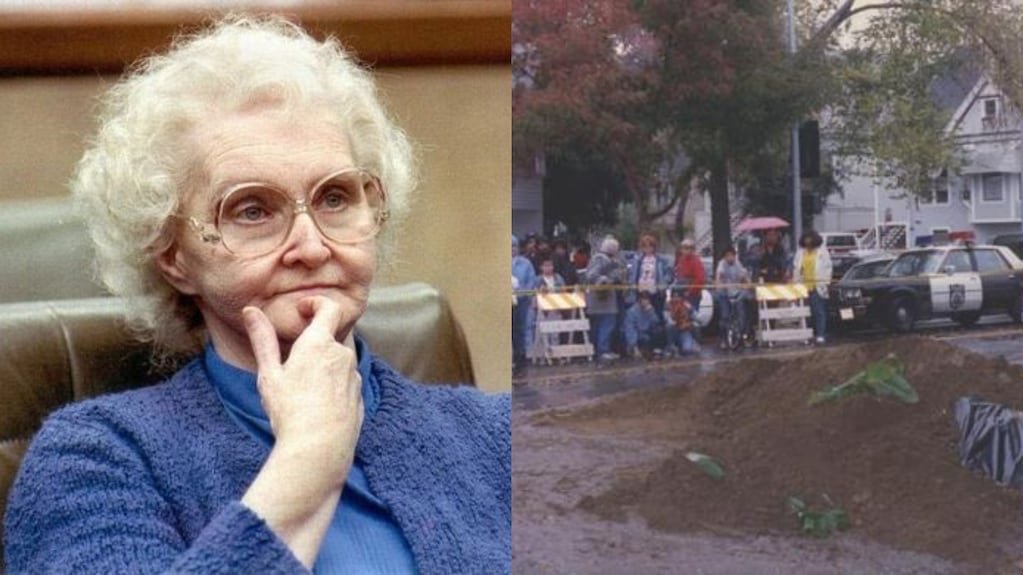
Debajo de una aparente imagen de mujer tranquila, esta abuela ocultaba múltiples crímenes, que la hicieron más macabra que Yiya Murano. La criminal en cuestión es Dorothea Puente, quien aterrorizó a California durante muchos años.
Su modus operandi era lo más escalofriante de la historia, ya que drogaba y asesinaba a sus amigos. Pero esto no es todo, porque una vez cometido el crimen, los enterraba en su jardín, que se convirtió en cementerio de muchas víctimas.
Dorothea Puente, la abuela que asesinaba a sus amigos
Según la investigación que se hizo, posterior al hallazgo de sus crímenes, Puente habría tenido una infancia difícil, creciendo en una casa en la que era moneda corriente la violencia doméstica y el alcoholismo.
Lee también: “Escuchaba voces”: una mujer asesinó a martillazos a su abuela y le dio una macabra explicación a la Justicia
Sus padres murieron cuando ella tenía tan solo nueve años, por lo que tuvo que vivir gran parte de su adolescencia en un orfanato, donde sufrió diferentes tipos de maltratos. Los expertos aseguraron que estas situaciones traumáticas en su infancia pudieron ser clave para el desarrollo criminal.
Su primer acercamiento criminal fue en 1948, cuando fue arrestada por falsificación de cheques. Aunque tendría múltiples encontronazos con la ley, acumulando cargos por otros fraudes e incluso dirigir un burdel.
Luego se terminaría descubriendo que, a lo largo de los años, Dorothea Puente se había casado varias veces y cambiado su identidad para escapar de la policía, terminando en el pueblo de California donde puso una pensión para los más carenciados.
Dorothea Puente fue una abuela que aparentaba ser dulce y tranquila, pero en realidad drogaba y mataba a sus amigos e inquilinos. Video: Youtube/Curiosiando ando
Esa pensión fue su fachada, ya que recibía ancianos o indigentes que no tenían un techo, lo que le hizo ganar el respeto de la comunidad. Pero esa careta de amabilidad solo era parte de su plan para poder asesinarlos y cobrar sus cheques de seguridad social. Con ese dinero podía darse una vida más lujosa, a costa de sus víctimas.
En 1982 empezaría su caída, cuando fue arrestada por el robo a tres personas. Una de ellas, Ruth Munroe falleció, y aunque al principio pareció haber sido por causas naturales, luego se lo caratuló como homicidio y Puente fue a prisión, donde conoció a Everson Gillmouth, con el que inició una relación y luego sería otra de sus víctimas.
La caída de Dorothea Puente, una asesina serial con un método espeluznante
Tras su período en prisión, Dorothea Puente volvió a la misma pensión para continuar con su modus operandi. Pero su imagen ya no era la misma para la comunidad, luego de tener que pasar un tiempo tras las rejas.
Lee también: Horror en Estados Unidos: una enfermera asesinó a sus dos hijos, a su abuela y se quitó la vida
En 1988, un llamado de un vecino que estaba alertado por las desapariciones de las personas que ingresaban a la llamada “Casa de la muerte” fue lo que derivó en el allanamiento de la propiedad.
Dentro de la pensión todo parecía normal, pero las excavaciones en el jardín encontraron algo espeluznante: había múltiples cadáveres enterrados. Puente luego fue acusada de nueve homicidios, aunque solo se la condenó por tres.
Según la investigación policial, la abuela atraía gente carenciada a la pensión, con la promesa de un techo sobre sus cabezas. Luego los drogaba con una mezcla de fármacos y los asesinaba y enterraba. El móvil era económico, ya que cobraba sus cheques de seguridad social luego del crimen. Dorothea Puente esposada tras su detención por asesinato. Foto: Policía de California.
Tras el allanamiento, Dorothea Puente intentó escapar con una identidad falsa, pero fue atrapada tres días después. En el juicio, en el que declararon más de 150 testigos, fue condenada a cadena perpetua. Pasó sus últimos años en prisión y murió en 2011 a los 82 años.
El caso ganó popularidad por la imagen de abuela santa que tenía en su comunidad, a comparación de la vida real que llevaba y los crímenes que cometía. Además, muchos estadounidenses cuestionaron el sistema social de su país, criticando que estas personas se aprovechan de las fallas en la ayuda a los más carenciados.
asesina serial, Estados Unidos, Externo, TNS






INTERNACIONAL
Donald Trump echó a su ministra de Justicia, Pam Bondi, enojado porque no hubo más acusaciones contra sus rivales políticos

El presidente Donald Trump echó este jueves a Pam Bondi de su cargo como ministra de Justicia (fiscal general de Estados Unidos), en medio de tensiones con la funcionaria porque no hay avances en las investigaciones de los adversarios políticos del jefe de la Casa Blanca y por su manejo del caso Epstein.
Es el segundo miembro del gabinete en las últimas semanas en perder su puesto, después de que Trump destituyera a la secretaria de seguridad nacional a Kristi Noem el mes pasado. En su red Truth Social dijo que es “una Gran Patriota estadounidense” y una “amiga fiel” y que se irá a trabajar al sector privado.
El despido de Bondi, de 60 años, pone fin a un turbulento mandato de 14 meses como fiscal general en el que intentó desesperadamente apaciguar a un jefe que exigía control sin obstáculos del Departamento de Justicia para llevar a cabo investigaciones políticamente motivadas contra objetivos elegidos por él, incluso cuando los fiscales advertían que no había pruebas para hacerlo.
El fiscal general adjunto Todd Blanche ocupará su cargo momentáneamente. El principal candidato a sucederla es Lee Zeldin, el jefe de la Agencia de Protección Ambiental, con quien el presidente se reunió el martes.
— Karoline Leavitt (@PressSec) April 2, 2026
Fuentes señalaron a CBS que el presidente siente cariño por Bondi, que era fiscal general de Florida, y la elogiado públicamente por mucho tiempo. Pero Trump no está conforme en cómo su funcionaria había llevado a cabo las investigaciones penales sobre oponentes políticos del mandatario.
El presidente está frustrado porque no se han producido más acusaciones ni detenciones de sus adversarios políticos, incluso cuando fuentes dijeron que actualmente hay nuevos esfuerzos para procesar a la exasesora de la Casa Blanca Cassidy Hutchinson y al exdirector de la CIA John Brennan.
Pero Trump está insatisfecho por los casos que no han avanzado. Un juez federal desestimó el pasado otoño las acusaciones contra el exdirector del FBI James Comey y la fiscal general de Nueva York, Letitia James, tras determinar que el fiscal federal que presentó los cargos fue nombrado ilegalmente. Las investigaciones sobre el senador demócrata Adam Schiff, el representante demócrata Eric Swalwell y la miembro de la Junta de la Reserva Federal Lisa Cook no han dado lugar a cargos hasta la fecha.
También los esfuerzos para investigar al presidente de la Reserva Federal, Jerome Powell, y a seis demócratas del Congreso que publicaron un vídeo instando a miembros militares a desafiar órdenes ilegales también fracasaron, con un juez federal que anuló las citaciones contra Powell y un gran jurado que rechazó por unanimidad los cargos penales contra los legisladores.
Algunos aliados de Bondi creen que la falta de procesamientos contra los enemigos de Trump está impulsada por el fiscal general adjunto Todd Blanche, quien no les ha presionado demasiado debido a preocupaciones políticas y preocupaciones sobre su futuro tras su etapa en el gobierno.
El apoyo del presidente a Bondi ha ido disminuyendo desde el año pasado, cuando sus primeros tropiezos en la gestión de la publicación de los archivos de Epstein provocaron críticas hacia Trump entre un segmento de sus seguidores.
Bondi fue citada para testificar ante el Congreso el 14 de abril sobre la publicación por parte del departamento de millones de páginas de material de la investigación de Epstein, en lo que sería su tercera aparición en el Capitolio para tratar el asunto desde que el Departamento de Justicia comenzó a publicar los registros de Epstein el año pasado.
Los legisladores han criticado a Bondi y a su departamento por su gestión de la liberación de los documentos, entre otras cosas por no haber censurado información relacionada con la identidad de algunas víctimas. El Congreso aprobó el año pasado una ley que obligaba a la administración Trump a publicar los documentos, pero el Departamento de Justicia no hizo públicos la mayoría de sus archivos hasta mucho después de la fecha límite de diciembre.
También, dijeron fuentes a The New York Times, Trump se ha quejado de sus supuestas deficiencias como comunicadora y poco manejo televisivo, una cualidad importante para el presidente.
Bajo la administración de Bondi, el Departamento de Justicia ha sufrido fuertes cambios con el cierre de varias oficinas y el éxodo masivo de miles de abogados federales que renunciaron o fueron despedidos. La mayoría estaban involucrados en casos que investigaban a Trump, por ejemplo por sus esfuerzos para revertir los resultados de las elecciones de 2020
Zeldin, ex congresista y candidato para suceder a Bondi, tiene muy poca experiencia legal, lo que podría provocar una crisis de confianza en el departamento tanto entre funcionarios de carrera como los de rango político.
INTERNACIONAL
Jewish communities on high alert as Passover begins amid rising security threats nationwide

NEWYou can now listen to Fox News articles!
As Jewish families across the United States celebrate Passover, an intensifying threat environment is shaping how communities approach the holiday and beyond. Tensions tied to the war with Iran, attacks against Jews and Jewish institutions have led to concerns over the community’s safety and security.
From Miami to New York, officials are responding to what they describe as a sustained and evolving threat landscape. At a pre-Passover security strategy briefing at the NYPD, Police Commissioner Jessica Tisch told Jewish community leaders, «It is clear that we will be in a heightened state of alert for the foreseeable future,» a warning that comes as policymakers and security experts point to a widening gap between the level of threat facing Jewish communities and the federal resources available to protect them.
Despite security fears, funding for houses of worship in the United States remains below what experts say is needed to meet the current threat, even as antisemitic incidents continue to rise.
NYC BOOSTS PATROLS AMID ‘HEIGHTENED THREAT ENVIRONMENT,’ AFTER GUNMAN RAMS TRUCK INTO MICHIGAN SYNAGOGUE
Aftermath of the attack on Temple Israel synagogue in West Bloomfield, Michigan. An attacker rammed into the building on Thursday, March 12, 2026. (Temple Israel)
According to data from the Federal Bureau of Investigation, anti-Jewish hate crimes have consistently accounted for the largest share of religion-based crime incidents in the United States in recent years.
The gap between risk and resources has become a central concern for those working directly with affected communities. Scott Feltman, Preventative Security Analyst and Executive Vice President at One Israel Fund, said no religious group should have to choose between remaining open and ensuring safety.
«No one should feel unsafe walking into a synagogue, church, mosque or temple in New Jersey or anywhere in America,» Rep. Josh Gottheimer, D-N., told Fox News Digital, who in recent weeks has been advocating for an increase in federal Nonprofit Security Grant Program (NSGP) funding to $1 billion in fiscal year 2027, a proposal currently under consideration in Congress.
Recent attacks underscore the urgency. In Michigan, a man rammed a vehicle into a synagogue in West Bloomfield and opened fire while more than 100 preschool children were inside. In California, two Jewish men speaking Hebrew were reportedly assaulted in a restaurant while the attacker shouted antisemitic slurs.
Jesse Arm, Manhattan Institute vice president for external affairs, told Fox News Digital, «What the latest attempted massacre made clear — when an Islamist from Dearborn via Lebanon tried to ram an explosive-laden truck into a synagogue preschool in my hometown of West Bloomfield, Michigan — is that security works. The presence of trained, armed guards helped save the lives of 140 American children and their caretakers.
SIGN UP FOR ANTISEMITISM EXPOSED NEWSLETTER
«But the broader lesson for the Jewish community is that safety cannot be outsourced entirely to the federal government or to any administration. It requires a cultural shift: normalizing lawful firearm ownership and training, hardening facilities at every level, and investing in the day schools, camps and identity-forming institutions that build communities confident and rooted enough to defend themselves.»
Arm had praise for the administration in its fight against antisemitism: «President Trump has been a godsend for American Jewry. His administration has been unambiguous in its commitment to Jewish safety — naming antisemitism as a serious national security threat, taking a hard line on campus radicalism and prioritizing the kind of border security and counter-jihadist vigilance that the previous administration routinely soft-pedaled. American Jews should recognize that and be immensely grateful for it.»
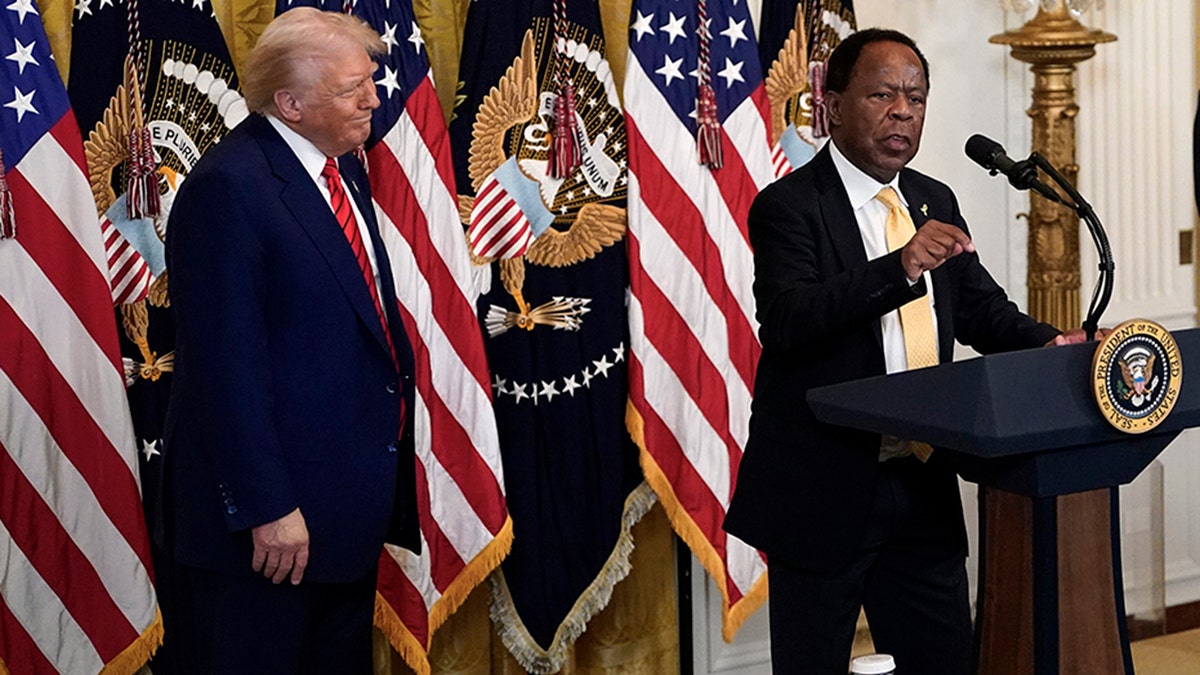
Leo Terrell, chairman of the DOJ Task Force to Combat Antisemitism speaks during a reception for Black History Month in the East Room of the White House on Feb. 20, 2026. (Pool via AP)
JEWISH SUMMER CAMPS RAMPING UP SECURITY MEASURES AMID RISING ANTISEMITISM — AND PARENTS ARE FOOTING THE BILL
The federal Nonprofit Security Grant Program, administered by FEMA, currently allows at-risk institutions to apply for up to $200,000 per location. In practice, however, many organizations receive less than that amount, often after delays that can stretch one to three years, and demand for the program has exceeded available funding in recent years, with applications far outpacing the number of grants awarded, according to federal data.
Security experts add that the delay between identifying a threat and receiving funding can leave institutions without the protections recommended by security professionals during periods of heightened risk.
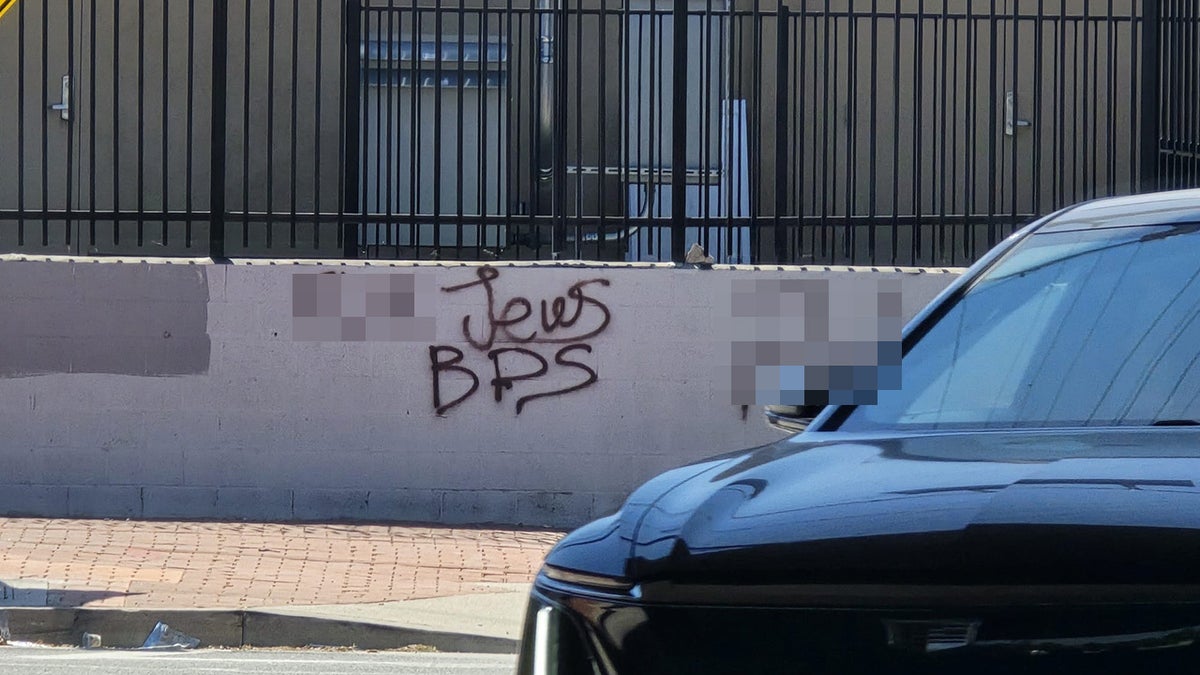
Antisemitic graffiti defaces Israeli-American Council HQ (The Israeli-American Council (IAC) national headquarters in Los Angeles)
To address those gaps, experts recommend layered security measures including trained personnel, reinforced entry points, surveillance systems, controlled access and emergency response training, which they estimate require between $400,000 and $500,000 in funding per location, roughly double the current federal cap. Security experts say both the funding level and the timeline for distribution have become central concerns as incidents continue to rise.
CLICK HERE TO DOWNLOAD THE FOX NEWS APP
Steven Ingber, CEO of the Jewish Federation of Detroit, said much of the financial burden for security continues to fall on the Jewish community itself rather than being fully addressed through government support.
As that debate continues, officials are urging institutions to remain vigilant and maintain close coordination with local law enforcement, particularly during periods of increased tension tied to global events.
Fox News Digital reached out to FEMA for comment but did not receive a response.
anti semitism, us, israel, new york city, terrorism, faith personal freedoms

John Thune blasts Democrats’ DHS shutdown demands
Senate Majority Leader John Thune accuses Democrats of playing politics with the DHS shutdown, explaining how the Senate passed a bill to fund most agencies. He also addresses President Donald Trump’s remarks on rising gas prices.
NEWYou can now listen to Fox News articles!
The House is primed to end the record-breaking Homeland Security shutdown, but Republicans are still fuming over a «s— sandwich» deal from the Senate.
The Senate again advanced its partial Department of Homeland Security (DHS) funding bill on Thursday after being derailed by a House GOP rebellion. The frustration among House Republicans hasn’t gone anywhere, however, with lawmakers railing against House Speaker Mike Johnson, R-La., during a members-only call on Thursday afternoon.
The simmering anger comes after Johnson made a swift reversal, spurred by President Donald Trump, and backed Senate Majority Leader John Thune’s, R-S.D., on a two-track approach Wednesday that would pass the Senate’s partial DHS bill while funding Immigration and Customs Enforcement (ICE) and Customs and Border Protection (CBP) in a forthcoming party-line reconciliation package.
A senior GOP aide told Fox News Digital that House Republicans wanted to see action from their Senate counterparts on reconciliation and were frustrated with how the upper chamber handled the DHS deal, which the source said amounted to a «s— sandwich.»
House Speaker Mike Johnson, R-La., and Senate Majority Leader John Thune, R-S.D., endorsed a two-track approach to end the shutdown on Wednesday, but Johnson is facing criticism from his conference over his previous rejection of the plan. (Getty Images)
BEHIND THE SCENES OF CONGRESS’ ELEVENTH-HOUR RUSH TO FUND THE DHS
House Republicans are incensed at the Senate plan, which carves out funding for ICE and CBP. Still, the bill is expected to pass with bipartisan support.
«People are mad at Johnson,» one source familiar with the call told Fox News.
But for now, House Republicans are in no hurry to return to Washington, D.C., to end the 48-day shutdown. The House is next scheduled to return on April 14. A source familiar with the call told Fox News Digital that leadership is not expected to ask members to return to Washington early to vote on the measure.
A source told Fox News that there was «a lot of frustration» with the situation.
«Does feel like whiplash,» the source said.
«Not happy,» another person familiar with the call said. «Not willing to vote for anything that defunds law enforcement absent tangible action from Senate. Thune should call Senate back today.»
Some House Republicans argued the chamber must fund the president’s immigration and border security efforts through reconciliation before considering the Senate bill — despite the budget reconciliation process expected to take months.
This viewpoint was expressed by a broad group within the conference, not just the conservative flank, according to a source familiar with the call.
If Johnson proceeded first with the Senate bill, conservative opposition could determine how he brings the legislation to the floor. In the event he lacks conference-wide support for the upper chamber’s partial DHS bill, he could be forced to call up the Senate bill under suspension of House rules.
That strategy — requiring a two-thirds majority to pass — risks upsetting conservatives if the DHS bill relies on Democratic votes to clear the chamber.
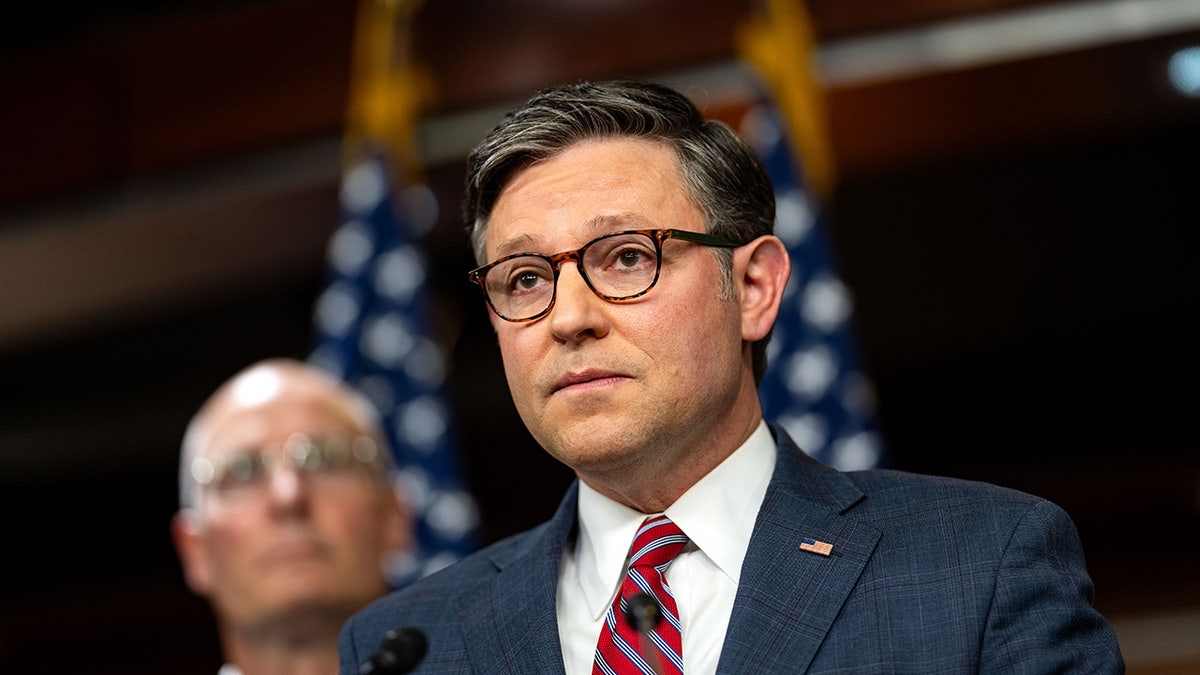
Some House members voiced frustration with House Speaker Mike Johnson’s, R-La., DHS shutdown strategy during a private call Thursday, sources told Fox News Digital. (Getty Images)
HOUSE REPUBLICANS PASS RIVAL DHS PLAN, SETTING UP SENATE FIGHT AS SHUTDOWN SET TO BECOME LONGEST IN HISTORY
House lawmakers could have used the same fast-track process Thursday to pass the DHS bill that was done in the Senate, but opted not to.
Thune said Thursday that he didn’t know when the House would move on the bill, but noted that when they did, Republicans would begin a sprint to complete the budget reconciliation process.
«My assumption is, at some point, hopefully they’ll move it,» Thune said. «And you know, [with] the understanding that we’re going to come behind it with the Recon bill. I mean, I think this whole — where we are is just a regrettable place.»
Senate Minority Leader Chuck Schumer’s, D-N.Y., demanded that the House GOP immediately take up the bill and accused them of now owning «the longest government shutdown in history.»
«The deep division and dysfunction among House Republicans is needlessly extending the DHS shutdown and hurting federal workers who are missing another paycheck,» Schumer said. «The Senate did its work twice to fund key parts of DHS without funding the lawlessness of ICE and Border Patrol.»
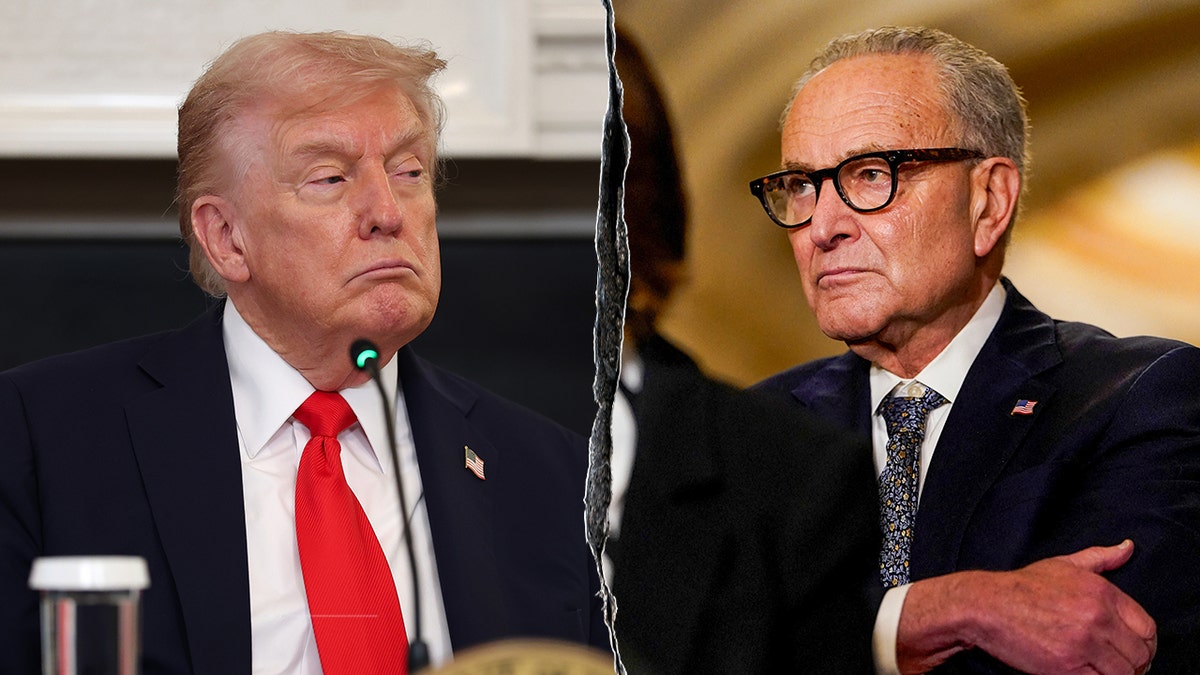
President Donald Trump moved to pay all DHS employees who were reporting to work without pay during the shutdown, despite Senate Minority Leader Chuck Schumer, D-N.Y., vowing that Republicans would get the blame for a prolonged funding lapse. (Anna Moneymaker/Getty Images; Elizabeth Frantz/Reuters)
CLICK HERE TO DOWNLOAD THE FOX NEWS APP
But Trump has already teed up a counter, and plans to pay DHS employees through an executive order.
«Because the Democrats are fully and 100% committed to the Radical Left Policy of Open Borders and Zero Immigration Enforcement (which will hopefully cost them dearly in the Midterms!), allowing Murderers and Criminals of all types into our Country, totally unchecked and unvetted, I will soon sign an order to pay ALL of the incredible employees at the Department of Homeland Security,» Trump said on Truth Social.
mike johnson, politics, congress

En febrero, la producción de pétroleo se mantuvo en niveles récord por el boom de Vaca Muerta

La Joaqui sorprendió con un cambio de look que fascinó a las redes: “Lo que a mí me divierte, para vos está muy mal”

Patricia Bullrich se reunió con la argentina denunciada en Brasil por injuria racial, tras su regreso al país

Javier Milei convocó a una reunión de Gabinete para reactivar la agenda política y ratificar el rol de Manuel Adorni

El Gobierno reúne al Gabinete el lunes y le da una nueva foto de respaldo a Adorni

Tigre recibe a Independiente Rivadavia por la fecha 13 del Torneo Apertura

Dos jubiladas que le habrían prestado dinero a Manuel Adorni negaron conocerlo

Quiénes son las dos acreedoras del préstamo con el que Adorni compró su departamento en Caballito

El Gobierno reevalúa la estrategia de comunicación por el caso Adorni y mide el impacto en la imagen de Milei

Milei se pone al frente de la defensa de Adorni y lo suma a un acto por Malvinas en una nueva muestra de respaldo

 POLITICA3 días ago
Dos jubiladas que le habrían prestado dinero a Manuel Adorni negaron conocerlo
- POLITICA3 días ago
Quiénes son las dos acreedoras del préstamo con el que Adorni compró su departamento en Caballito
- POLITICA2 días ago
El Gobierno reevalúa la estrategia de comunicación por el caso Adorni y mide el impacto en la imagen de Milei