INTERNACIONAL
Netanyahu’s security cabinet to meet on Gaza war, as some in Israel call to resettle enclave


NEWYou can now listen to Fox News articles!
Israeli Prime Minister Benjamin Netanyahu is set to convene his high-level security cabinet on Thursday to discuss expanding the war against Hamas, including the potential full military occupation of the Gaza Strip.
The prospect comes against the backdrop of the 20th anniversary of Israel’s full disengagement from the enclave, as calls for resettlement — once confined to the political fringes — have entered the mainstream, including within the government, particularly in the wake of Hamas’s Oct. 7 massacre.
Rebuilding Jewish communities in Gaza would be «a historic correction to a national injustice,» Yitzhak Wasserlauf, Israel’s minister for the Development of the Periphery, the Negev and the Galilee, told Fox News Digital.
FOX NEWS GETS INSIDE LOOK AT GAZA HUMANITARIAN SITUATION AS ISRAEL WEIGHS NEXT STEPS
Israeli Prime Minister Benjamin Netanyahu stands on a platform overlooking the Gaza Strip during his first visit to Kibbutz Nir Oz since the Oct. 7, 2023 attack by Hamas terrorists where a significant number of this community were killed or captured, near the Israel-Gaza border in southern Israel, on Thursday, July 3, 2025. (AP Photo/Leo Correa)
«Expelling Jews from their homes in their own country was a strategic and moral mistake that led to the rise of an Islamist terrorist regime called Hamas,» he said. «That mistake enabled Hamas to fire relentless rockets and ultimately carry out the October 7 massacre — which included murder, rape, abuse, looting, and, of course, the kidnapping of soldiers and civilians.»
Wasserlauf invoked the bloc of 17 Israeli communities, collectively known as Gush Katif, which was established in Gaza after the 1967 Six-Day War. In August 2005, as part of Israel’s unilateral disengagement, the government forcibly removed approximately 8,600 Jewish residents from the area.
He said reapplying Israeli sovereignty «would send a clear message: whoever strikes us loses the ground beneath his feet. Only in this way can true deterrence be achieved,» Wasserlauf continued. «We need to create facts on the ground. There must be no agreements with terrorists. Settlement in Gaza must, at the very least, be the price that reminds everyone terrorism does not pay.»
From 1948 to 1967, the Gaza Strip was under Egyptian occupation. After Israel captured the territory in the 1967 Six-Day War, it remained under full Israeli control until 1994, when administrative responsibility was transferred to the Palestinian Authority under the Oslo Accords — paving the way for Yasser Arafat’s return from exile in Tunis.
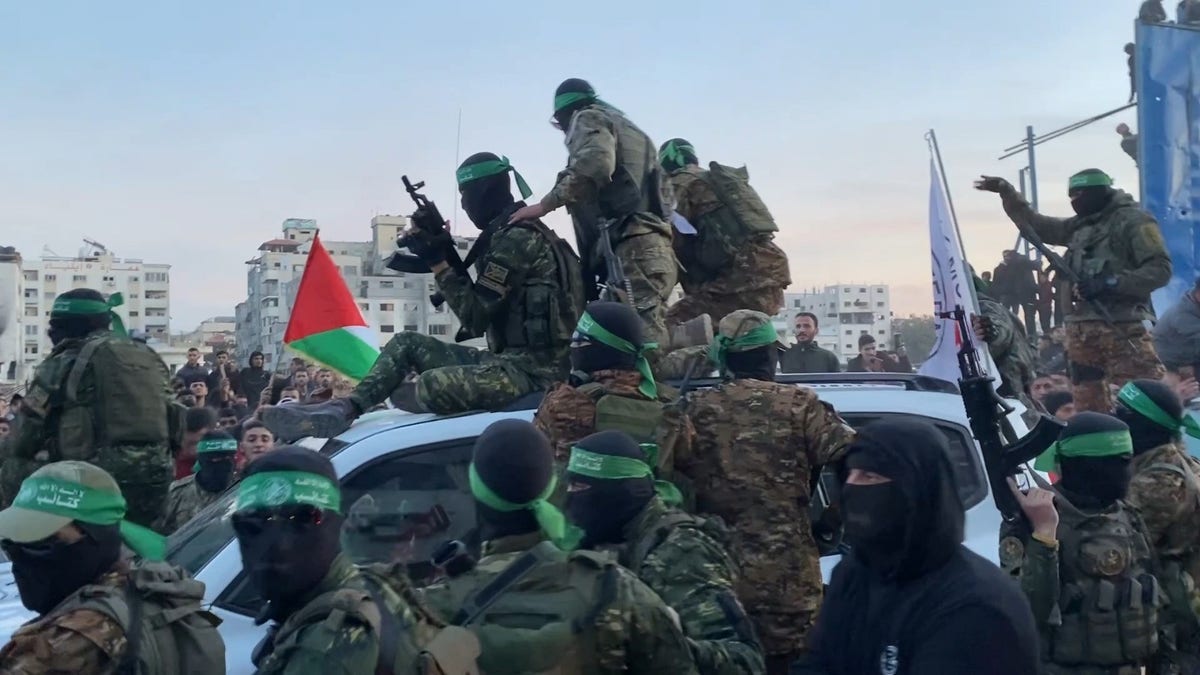
Hamas terrorists emerge from the shadows as they surround Red Cross vehicles. (TPS-IL)
In 2005, Israel evacuated all military personnel and civilian communities from Gaza. Shortly thereafter, Hamas won the Palestinian legislative elections and staged a violent coup to overthrow the Palestinian Authority and seize control of the Strip.
A year after Israel unilaterally disengaged from Gaza, evacuating all military personnel and civilian communities, Hamas won the Palestinian legislative elections and, shortly thereafter, staged a violent coup to overthrow the Palestinian Authority and seize control of the Strip.
Wasserlauf argued that critics of the disengagement had long warned that any concession of land would only embolden terrorists. These warnings, he said, were ignored, but ultimately proven correct by the events that followed.
He acknowledged that renewed settlement in Gaza would likely trigger political backlash both domestically and abroad. «The countries that support us will stand with us, and those that consistently oppose us will remain against us … I remind you that there were countries that urged us not to strike Iran, despite its race toward nuclear weapons and its explicit goal of destroying Israel.»
BROTHER OF ISRAELI HOSTAGE URGES UN TO ACT AFTER VIDEO SHOWS HAMAS STARVING AND TORTURING CAPTIVES

The Israeli settlement of Pa’at Sadeh is seen Dec. 26, 2004 in the southern Gaza Strip.
Brig. Gen. (Res.) Amir Avivi told Fox News Digital that Israel’s core national security doctrine of deterrence is being tested by jihadist groups like Hamas, which operate according to a radically different set of rules.
Avivi, founder and chairman of the Israel Defense and Security Forum, said that Israel’s approach to Gaza may ultimately hinge on U.S. support, especially from President Donald Trump. «If the U.S. president advocates for massive relocation and taking control of Gaza to implement his own vision, it would suggest some kind of basic understanding between the two sides,» Avivi said.
He estimated that the Israel Defense Forces (IDF) currently controls about 75% of Gaza, with past decisions largely driven by military considerations. However, he said that the remaining 25% of the territory involves broader strategic decisions, shaped by how Israel and the United States view the future of the area, including Jewish settlement.
Maj. Gen. (Res.) Yaakov Amidror, a former national security adviser, told Fox News Digital that resettling Gaza should not be part of Israel’s agenda.

Chief of the General Staff LTG Eyal Zamir conducted a field tour in the Rafah area of the Gaza Strip. Zamir spoke with soldiers and was presented with defensive preparations and operational plans. (IDF)
«We have one mission now, and that is to dismantle Hamas,» he said. «We’ll talk about the day after, the day after. To bring back any level of normalcy to Gaza, we need to find partners — and I don’t know who those partners would be if we settle in Gaza.»
SHE FED 100K GAZAN FAMILIES FOR FREE – NOW TERRORISTS AND LOCAL MERCHANTS WANT HER DEAD
Amidror, a distinguished fellow with the Jewish Institute for National Security of America, said that Israel must in the long-term remain solely responsible for security in Gaza, citing past failures when control was transferred to the Palestinians after the Oslo Accords. He argued that reestablishing settlements could complicate that mission, asserting that security should remain solely in the hands of the IDF.
Religious Zionism lawmaker Simcha Rothman told Fox News Digital that «If we are trying to achieve peace, any agreement or situation in which Jews cannot live in their ancient homeland is not just,» but acknowledged it is not one of Israel’s official war objectives. «While resettling Gaza is the right thing to do, it is not part of the current effort.»
Maj. Gen. (ret.) Amos Yadlin, former head of IDF Military Intelligence, reiterated that resettling Gaza is not part of the Israeli government’s declared war objectives.
«If Israel needs to reoccupy Gaza militarily, it should be to destroy Hamas and bring back the hostages — not to annex Gaza as part of Israel. There are 2 million Palestinians in Gaza, maybe more,» Yadlin, who is currently president of MIND Israel, told Fox News Digital.

Memorials at the site of the Oct. 7 Hamas terror attack on the Supernova music festival near Kibbutz Re’im, Israel, on Monday, May 27, 2024. (Kobi Wolf/Bloomberg via Getty Images)
«Israel does not want to rule over them or provide for all their needs. It would cost billions and alter the demographic balance. This idea is being pushed by right-wing elements in the government, and even the prime minister and his party do not support it,» he said.
Daniella Weiss, general director of the Nachala Settlement Movement, told Fox News Digital that the aftermath of Hamas’s October 7 attack signals the start of a new era. «I think we should go much further than what existed in 2005. Back then, we were 10,000 people in Gaza. Our movement, Nachala, has proposed a plan for 1.2 million Jews in Gaza,» Weiss said.
CLICK HERE TO GET THE FOX NEWS APP

Israelis march from Sderot toward the northern border of Gaza, calling for the re-establishment of settlements in the territory, on July 30, 2025 in Israel. (Mostafa Alkharouf/Anadolu via Getty Images)
She said her organization is already taking tangible steps to begin the process, «We’ve organized six groups of young families—more than 1,000 families—who are willing to move to Gaza now,» she said.
While Weiss expressed regret that the Israeli government has not included Jewish resettlement in its official war objectives, she insisted that in Israel’s democracy, public pressure can influence government policy.
«The basic truth is that the Gaza area is part of the western Negev,» she said. «Historically, it was part of the area of the tribe of Yehuda. To turn your back on that is wrong.»
israel,conflicts,middle east,terrorism









INTERNACIONAL
Chloé Zhao, directora de ‘Hamnet’: “Me convertí en cineasta porque me costaba expresar mis emociones”

La cineasta china Chloé Zhao, ganadora de varios Óscar de Hollywood por Nomadland y ahora nominada en ocho categorías por Hamnet’, define su situación como “compleja”: “Puede ser un poco desagradable que a tu trabajo le pongan una etiqueta” en la que solo eres “ganador o no”, dice. “Creo que todos mis compañeros se sienten así porque todos somos muy sensibles. Así que a lo que nos aferramos es a la comunidad que existe dentro de nuestra industria, especialmente ahora mismo, y a apoyarnos mutuamente”, explica Zhao (43 años) en una entrevista antes de un encuentro en la Academia de Cine.
Todos los pronósticos señalan que el próximo 15 de marzo la cineasta recogerá varias estatuillas por su película sobre el dolor de Shakespeare y su esposa por la muerte de su hijo de 11 años, adaptación de la novela de Maggie O’Farrell, producida por Steven Spielberg, que está teniendo una gran respuesta en cines de distintos países, a cuyo público da las gracias.
Sobre sus orígenes en la industria audiovisual, asegura que hace las películas “por supervivencia”. “Sinceramente, me convertí en narradora y cineasta porque me costaba conectar, expresar o sentir mis emociones”, dice Zhao, que se define como neurodivergente. Sin embargo, sí es capaz de conectar con las emociones de otros -“la pérdida se siente igual, el desamor se siente igual, el amor se siente igual”- y de integrarse rápidamente en comunidades en apariencia muy diferentes.

Esta mujer que nació en China, se educó en Reino Unido y estudió cine en EE.UU., considera que “cuando no eres de un lugar y no tienes un profundo apego, en lo único en lo que puedes confiar es en estar completamente presente cuando estás con otro ser humano”. Con esta premisa consiguió obras como el excelente retrato del oeste americano contemporáneo de The Rider (2017) o la historia de una mujer mayor y pobre que debe buscarse la vida en los bellos pero hostiles paisajes estadounidenses de Nomadland (2020). “Es más fácil y seguro crear un mundo fantástico y contar las historias de otras personas” y “experimentar una especie de catarsis a través de la alquimia de la narración”, destaca.
Algo parecido es lo que le ocurre al personaje de Shakespeare en Hamnet’, que en la piel del actor Paul Mescal muestra dudas, debilidades y un dolor que vuelca en sus inmortales creaciones literarias. La imagen de un Shakespeare que llora chocó a algunos críticos que consideran excesiva la carga emocional de la película. Al respecto, la directora cree que “vivimos en una sociedad que, lamentablemente, no honra nada lo que no es productivo” y en la que a menudo se ocultan los duelos.

(Foto: Agata Grzybowska / © 2025 FOCUS FEATURES LLC)
“Preferimos vivir en verano todo el tiempo en lugar de honrar el invierno, cuando las cosas se están muriendo y se están preparando para el siguiente renacimiento”, defiende Zhao, quien explica que “si no te permites sentir duelo sin intelectualizarlo” no habrá una transformación. Ella misma, a medida que madura, también sigue un proceso de “curación”, ya que había partes sobre las que no se había permitido hacer un duelo.
“Cuanto más lo hago, más me doy cuenta de que el cine, si no pones cuidado, puede ser disociativo, en el sentido de que no estás en tu cuerpo, sino en tu cabeza”, reflexiona. Un ejemplo de esta corporeidad en la película de Hamnet sería la escena del primer parto de la esposa de Shakespeare, Anne Hathaway -en la película es Agnes, el nombre con el que también se le conocía-, interpretada por la actriz irlandesa Jessie Buckley. “El primer nacimiento en el bosque fue muy diferente al segundo, estaba mucho más en contacto con su cuerpo. El bosque, metafóricamente, es su conexión con su propio bosque interior; no solo con su cuerpo, sino con el linaje de las madres y las mujeres de su linaje”, subraya Zhao.
Fuente: EFE
Arts,Culture,Entertainment,Arts / Culture / Entertainment,North America
NEWYou can now listen to Fox News articles!
FIRST ON FOX: A coalition of election integrity groups is urging the Supreme Court to uphold a lower court ruling that found federal law requires mail ballots to be received by Election Day.
The conservative-leaning groups, including the Honest Elections Project and the Center for Election Confidence, filed an amicus brief supporting the Republican National Committee’s challenge to Mississippi’s postmark deadline. They argue that federal law establishing a single Election Day requires ballots to be in election officials’ hands by the close of polls. The case could determine whether similar postmark-based deadlines in 14 states remain valid ahead of the 2026 midterms.
Supporters of the RNC’s position say a ruling affirming the lower court would establish a clear standard for when ballots must be received, though curtailing acceptance of late-arriving ballots would not guarantee that election officials won’t still be tabulating ballots in close races beyond Election Day.
«Counting ballots that are received after Election Day unnecessarily damages public trust in election outcomes, delays results, and violates the law,» Jason Snead, Honest Elections Project executive director, told Fox News Digital in a statement.
SUPREME COURT SAYS ILLINOIS CONGRESSMAN CAN SUE OVER STATE MAIL-IN VOTING LAWS
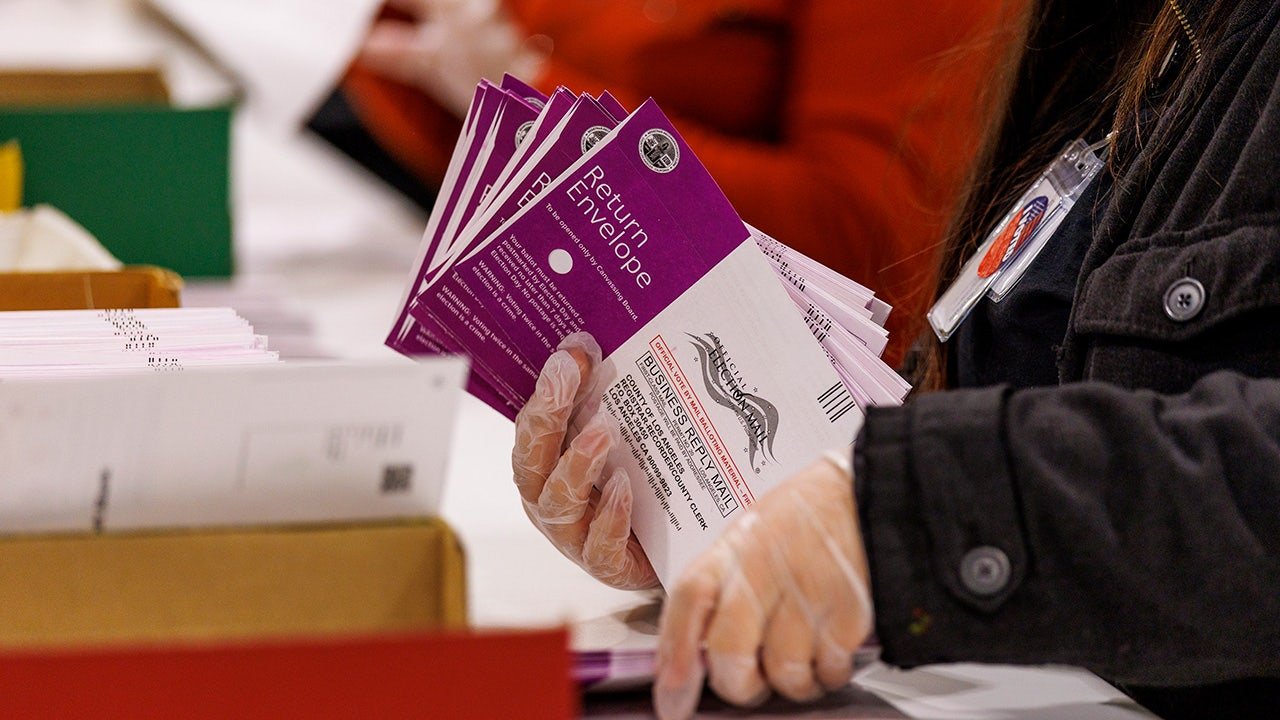
Mail-in ballots are inspected at the Los Angeles County Ballot Processing Center on Nov. 4, 2025, in California. (Gina Ferazzi / Los Angeles Times via Getty Images)
Oral arguments in the case, Watson v. Republican National Committee, are set for March 23, and a decision is expected by the summer.
The case arose from a lawsuit brought by the RNC challenging Mississippi’s practice of counting mail ballots received up to five business days after Election Day if postmarked by that day.
The RNC chose to bring the case in the Republican-friendly U.S. Circuit Court of Appeals for the 5th Circuit, which ruled in the RNC’s favor and found that federal law trumps the state’s deadline and requires ballots to be received by Election Day.
At issue is whether statutes establishing a single Election Day mean that all ballots must be received by that day to be valid. The election integrity groups argued that under the Supreme Court’s decision from three decades ago in Foster v. Love, the «final act of selection» must occur on Election Day and that receipt of a mail-in ballot constitutes casting a ballot, which cannot happen after Election Day by that standard.
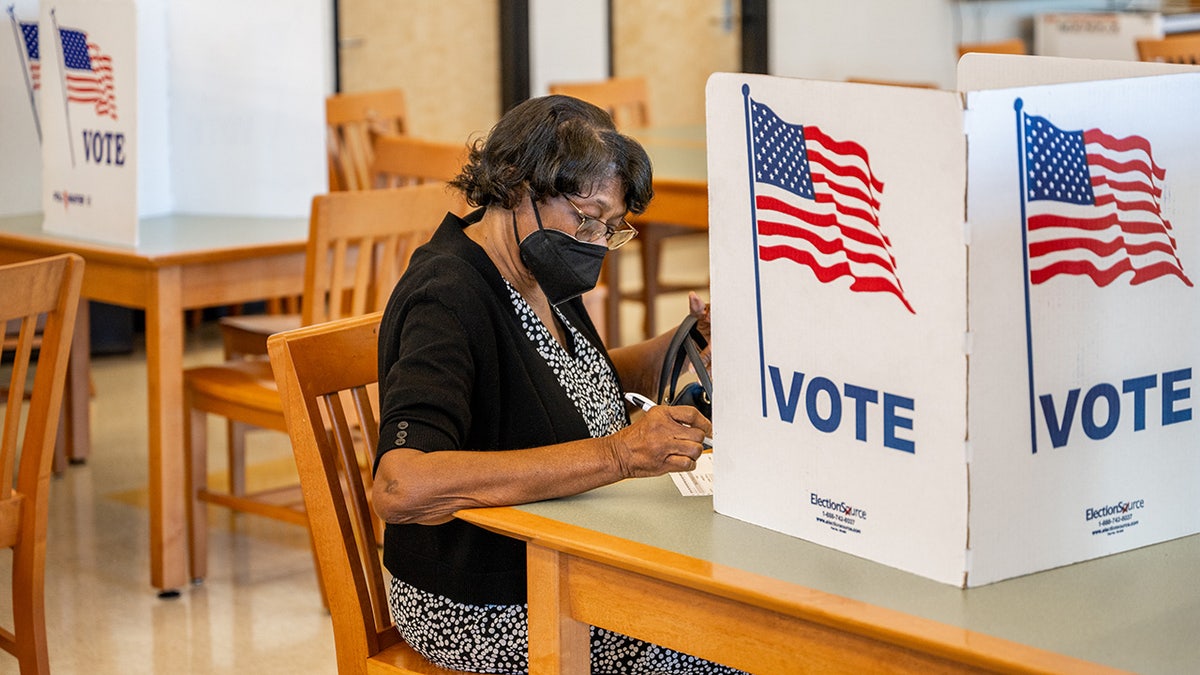
Minnie Bounds, 74, fills out her ballot at Blackburn Laboratory Middle School on Nov. 07, 2023, in Jackson, Mississippi. After months of candidates campaigning, the state of Mississippi is voting today in the Governor’s race between Gov. Tate Reeves and Democratic gubernatorial candidate Brandon Presley. (Brandon Bell/Getty Images)
Snead said a favorable ruling from the Supreme Court would «protect the rights of voters and the integrity of the democratic process, and ensure that it is easy to vote but hard to cheat in future elections.»
The election integrity coalition argued that allowing ballots to arrive after Election Day can lead to delayed results and can chip away at voters’ confidence in elections.
The groups also pointed to recent U.S. Postal Service guidance that warned that postmarks might not reliably reflect when a ballot entered the mail.
HOUSE GOP MOVES TO REQUIRE PROOF OF CITIZENSHIP, PHOTO ID TO VOTE IN FEDERAL ELECTION
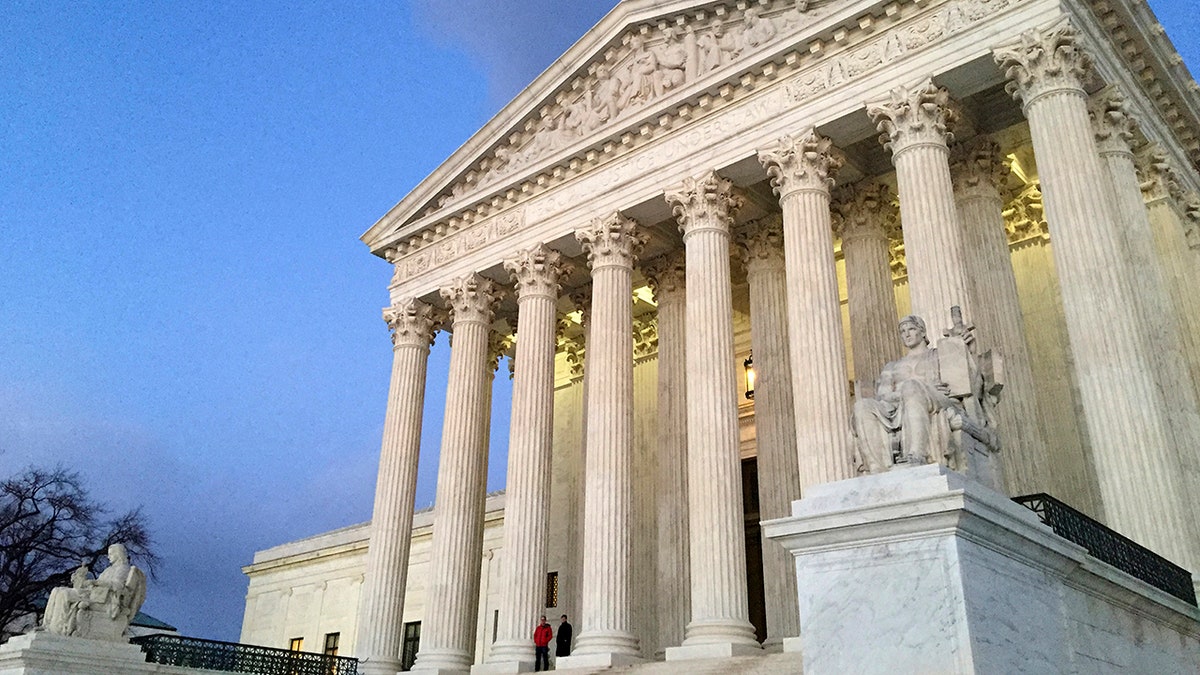
The Supreme Court building is seen in Washington, D.C. (AP/Jon Elswick)
Fourteen states and Washington, D.C., currently count ballots received after Election Day if postmarked on time.
Since the 2024 midterm election, four Republican-controlled states, Kansas, Ohio, Utah and North Dakota, have moved to require receipt by Election Day.
CLICK HERE TO DOWNLOAD THE FOX NEWS APP
A ruling upholding the 5th Circuit could invalidate the laws in the 14 states and require ballots to be in election officials’ hands by the close of polls. The decision is expected to affect the 2026 midterms.
Military and overseas ballots, which are governed by the Uniformed and Overseas Citizens Absentee Voting Act, would likely remain unaffected.
supreme court,mississippi,elections,judiciary,voting,voter fraud concerns
INTERNACIONAL
Iran fires live missiles into Strait of Hormuz as Trump envoys arrive for nuclear talks

NEWYou can now listen to Fox News articles!
Iran fired live missiles into the Strait of Hormuz during naval drills Tuesday and signaled it is prepared to close the strategic waterway if ordered by senior leadership, according to Iranian state-affiliated media.
The drills come as President Donald Trump’s envoys Steve Witkoff and Jared Kushner are meeting senior Iranian officials in Geneva for a second round of nuclear talks.
Rear Adm. Alireza Tangsiri, commander of the Islamic Revolutionary Guard Corps (IRGC) Navy, said Tehran stands ready to shut down the strait, a critical global oil transit route, according to Tasnim News Agency, an outlet affiliated with the IRGC.
Tasnim said traffic through the shipping corridor was suspended for several hours during the «Smart Control of the Strait of Hormuz» exercise, which included missile launches from vessels, coastal positions and inland sites, as well as drone operations conducted in signal-jamming conditions.
TOP IRAN SECURITY OFFICIAL SEEN IN OMAN DAYS AFTER INDIRECT NUCLEAR TALKS WITH US
Iranian military personnel take part in the «Smart Control of the Strait of Hormuz» exercise in the Persian Gulf and the Strait of Hormuz on Feb. 16, 2026. (Press Office Of The Islamic Revolutionary Guard Corps/Handout/Anadolu via Getty Images)
U.S. Central Command (CENTCOM) previously urged the IRGC in late January to carry out its announced two-day live-fire naval exercise «in a manner that is safe, professional and avoids unnecessary risk to freedom of navigation for international maritime traffic.»
«U.S. forces acknowledge Iran’s right to operate professionally in international airspace and waters. Any unsafe and unprofessional behavior near U.S. forces, regional partners or commercial vessels increases risks of collision, escalation, and destabilization,» it said.
GLOBAL PROTESTS CALL FOR IRAN REGIME CHANGE IN MAJOR CITIES WORLDWIDE AFTER BLOODY CRACKDOWN

Iranian military personnel take part in the «Smart Control of the Strait of Hormuz» exercise in the Persian Gulf and the Strait of Hormuz on Feb. 16, 2026. (Press Office Of The Islamic Revolutionary Guard Corps/Handout/Anadolu via Getty Images)
The Trump administration has built up a large military presence in the Middle East as talks over Iran’s nuclear program continue, with U.S. officials signaling that any potential agreement would need to go beyond enrichment and address broader security concerns.
Secretary of State Marco Rubio said in February that for negotiations to be «meaningful,» they would need to address Iran’s ballistic missiles, its sponsorship of terrorist organizations across the region, its nuclear program and its treatment of its own people.
UK, FRANCE, GERMANY TRIGGER UN SANCTIONS ON IRAN OVER ‘SIGNIFICANT’ NUCLEAR PROGRAM DEFIANCE
CLICK HERE TO DOWNLOAD THE FOX NEWS APP
Trump told reporters aboard Air Force One on Monday that he would be involved in the talks «indirectly.»
«They’ll be very important and we’ll see what can happen. It’s been – typically Iran’s a very tough negotiator. They’re good negotiators or bad. I would say they’re bad negotiators because we could have had a deal instead of sending the B-2’s in to knock out their nuclear potential,» he said. «And we had to send the B-2’s. I hope they’re going to be more reasonable. They want to make a deal.»
iran,middle east,donald trump

Mudarán a Comodoro Py al tribunal del caso de los cuadernos de las coimas: buscan apurar el juicio y que pueda ser presencial

Un Hércules de las Fuerzas Armadas debió regresar al aeropuerto de El Palomar tras no poder arribar a Natal

Crimen en el carnaval de Mercedes: qué reveló la autopsia y una confesión clave

Un efecto búmeran para Caputo: por qué el «viejo IPC» tampoco lo ayudará en febrero

Escandalosa confesión de Branco sobre el famoso partido del “bidón” entre Argentina-Brasil en Italia 90: “Me sentía borracho”

El gobierno de Neuquén echó al hijo de un exgobernador acusado de haber cobrado cuatro años sin trabajar: fichaba y se iba

Avistaron una ballena azul en Chubut por primera vez en la historia

El Gobierno busca aprobar la reforma laboral y el Régimen Penal Juvenil antes del 1 de marzo

Uno de los jefes de la CGT adelantó que convocarán a un paro general por la reforma laboral: “Trabajaremos para que sea una gran huelga”

Chaotic video shows passengers trading midair blows; plane forced to divert: reports

 POLITICA2 días ago
Uno de los jefes de la CGT adelantó que convocarán a un paro general por la reforma laboral: “Trabajaremos para que sea una gran huelga”
- POLITICA18 horas ago
Cristian Ritondo: “Vamos a apoyar la ley de modernización laboral, pero no el régimen de licencias por enfermedad”
- POLITICA2 días ago
Efecto Santa Fe: policías y penitenciarios de Río Negro rechazaron un aumento en cuotas y amenazan con acampar por tiempo indeterminado en Viedma