INTERNACIONAL
Reporter’s Notebook: House Dems question sports bill timing amid Lane Kiffin controversy

Congress ‘fumbles’ NIL college sports bill
Fox News chief congressional correspondent Chad Pergram reports on House Minority Leader Hakeem Jeffries questioning an NIL bill’s link to an LSU coaching controversy and more on ‘Special Report.’
NEWYou can now listen to Fox News articles!
There’s no easy solution in Congress to fix spiking healthcare premiums by the end of the year.
«Republicans are sleepwalking America straight into a healthcare crisis,» thundered Senate Minority Leader Chuck Schumer, D-N.Y.
The sides lack consensus so far on bills to avoid a partial government shutdown in late January.
«We still have a lot of work to do on them,» said Rep. Mike Simpson, R-Ind.
CONGRESS RACES AGAINST 3-WEEK DEADLINE TO TACKLE MASSIVE YEAR-END LEGISLATIVE AGENDA
Senate Minority Leader Chuck Schumer, D-N.Y., and House Minority Leader Hakeem Jeffries, D-N.Y., right, update reporters following their face-to-face meeting with President Donald Trump and Republican leaders in Washington, Sept. 29, 2025. (J. Scott Applewhite/AP Newsroom)
So many pressing subjects facing Congress over the next few weeks, so little time.
«I’m literally thinking and watching the clock in front of me tick,» said Sen. Lisa Blunt Rochester, D-Del.
So it’s little surprise why House Minority Leader Hakeem Jeffries, D-N.Y., had questions about why the House planned debate on a bill last week about money in big-time college sports. Jeffries had specific questions for House Speaker Mike Johnson, R-La., and House Minority Leader Steve Scalise, R-La., – both graduates of Louisiana State University, and superfans of the Tigers.
«Who exactly directed Mike Johnson and Steve Scalise to bring this bill to the floor this week? Was it the big donors connected to LSU?» questioned Jeffries. «Why would Mike Johnson and Steve Scalise think it was a good idea to bring the ‘Lane Kiffin Protection Act’ to the floor of the House of Representatives?»
Whoa. «Lane Kiffin Protection Act?»
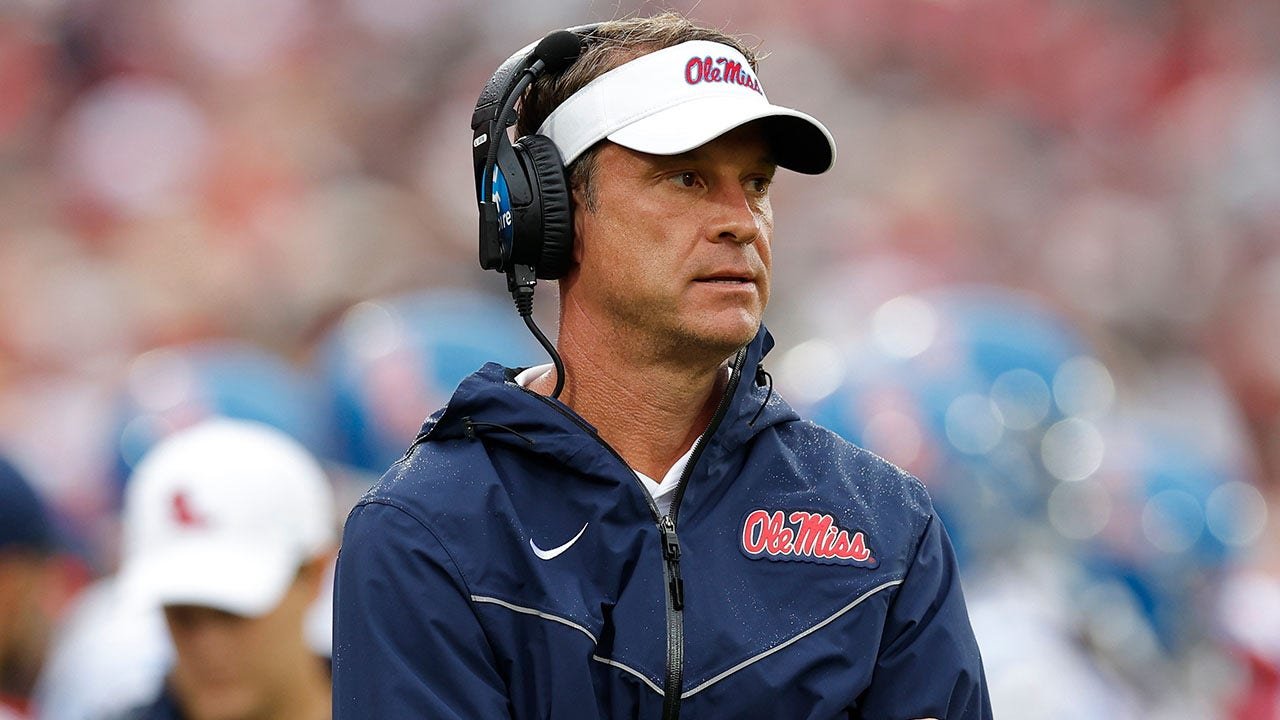
Congress had a lot to do. And the major bill on the House floor last week was on — wait for it — regulating money in college sports. It came just as Lane Kiffin defected from Ole Miss to LSU for a $91 million contract. And it came while Ole Miss was in the middle of an 11-1 season, is ranked number six in the country and has a chance to compete for the national title.
CONGRESS FACES HOLIDAY CRUNCH AS HEALTH CARE FIX COLLIDES WITH SHRINKING CALENDAR
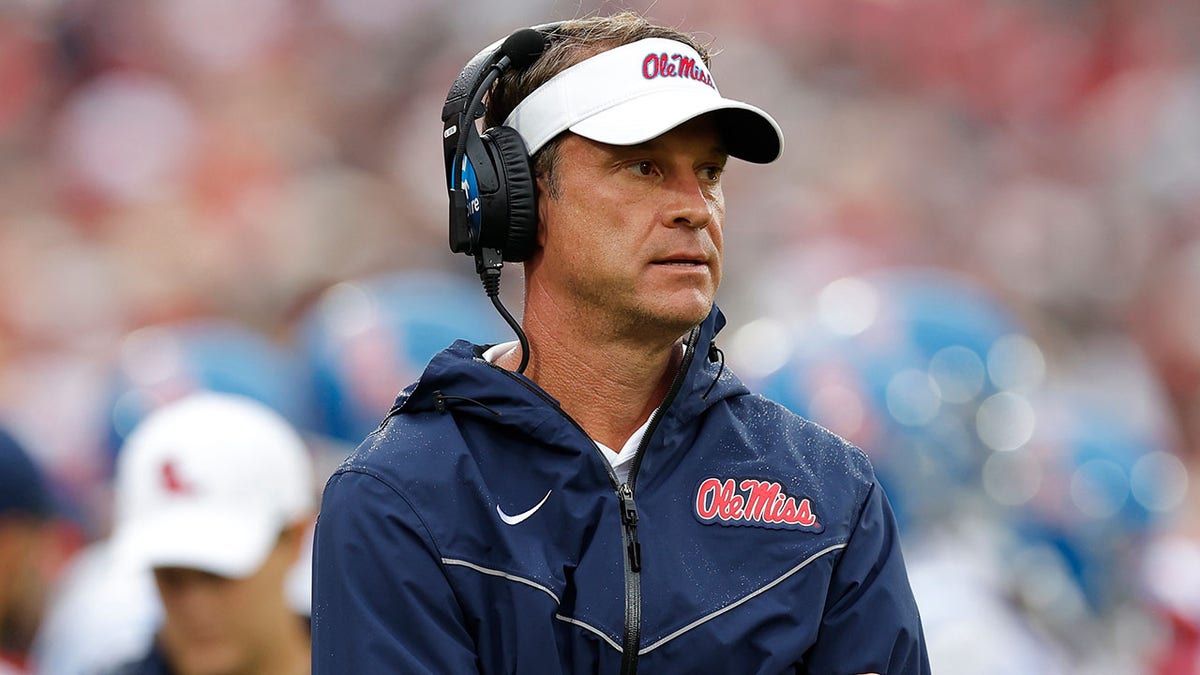
Mississippi head coach Lane Kiffin watches his team play against Oklahoma during the first half of an NCAA college football game in Norman, Oklahoma, Oct. 25, 2025. (Alonzo Adams/AP Newsroom)
The House was set to debate a bill last week which would establish a national standard for NIL or name, image and likeness, in college sports. Major conferences like the Big 10 and SEC love the bill. Smaller schools, not so much. But multiple lawmakers told Fox News that they thought it was bad optics for the House to consider a bill about college sports — just as Kiffin headed to LSU.
«LSU is the best job in football,» declared Kiffin at a press conference.
I pressed Jeffries about his Kiffin charge regarding Johnson and Scalise after his press conference.
«We know that Johnson and Scalise are both partisans of LSU, but do you know something here? You’re suggesting that there’s something going on between LSU and them to put a piece of legislation on the floor?» I queried.
«No. It’s just a reasonable question that a lot of people are actually asking on the floor of the House of Representatives. Like, ‘Why now?’» answered Jeffries. «And what kind of judgment does it take to put that bill on the floor this week in the aftermath of the whole Lane Kiffin saga?»
SENATE DEMOCRATS PUSH OBAMACARE SUBSIDY VOTE ‘DESIGNED TO FAIL’ AS REPUBLICANS CALL PLAN UNSERIOUS
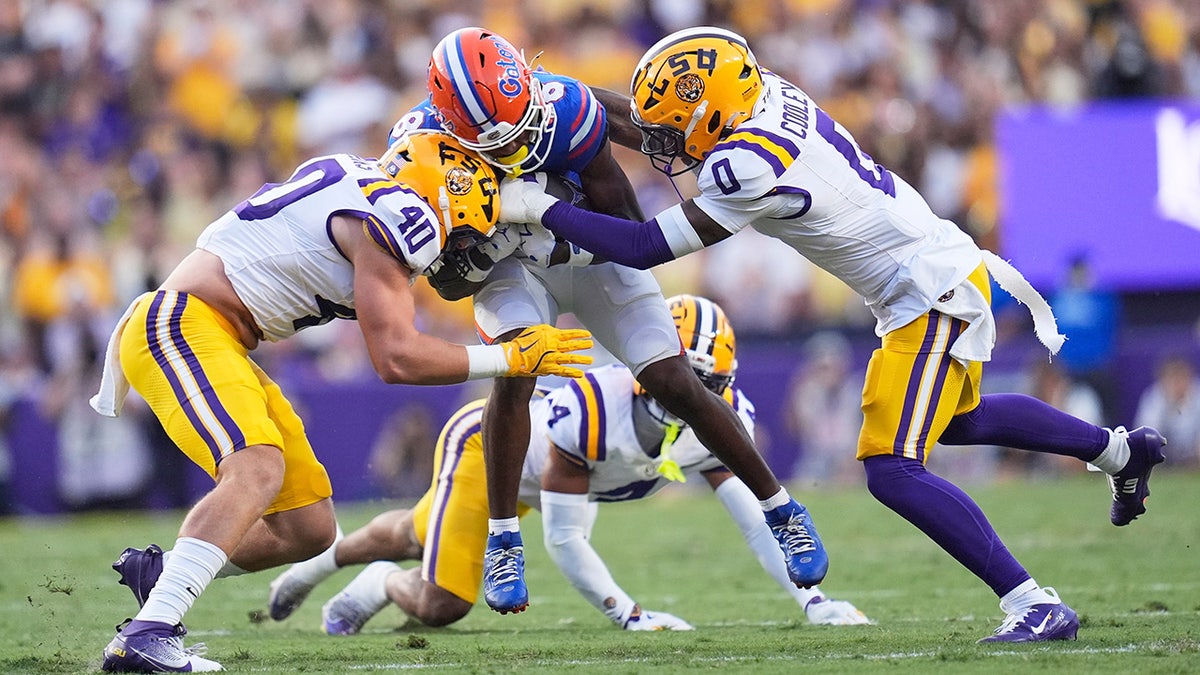
Florida wide receiver Dallas Wilson (6) is hit by LSU linebacker Whit Weeks (40), who was penalized for targeting on the play, and safety Tamarcus Cooley (0), in the first half of an NCAA college football game, Sept. 13, 2025, in Baton Rouge, Louisiana. (Gerald Herbert/AP Photo)
House Republicans struggled to hurdle a procedural barrier in order to put the bill on the floor. Then Republican leaders yanked the bill. Scalise said the bipartisan coalition which supported the bill «was fragile.» But Scalise denied the coincidence about Kiffin and abruptly dumping the legislation from the House schedule.
«To be 100 percent clear, Lane Kiffin, the situation at LSU had nothing to do with this bill getting pulled,» yours truly asked Scalise.
«This had nothing to do with Lane Kiffin or, you know, any particular school,» replied Scalise.
Some lawmakers said Kiffin’s brazen departure from Ole Miss underscores what vexes college sports.
«I think the Kiffin issue is emblematic,» said Rep. Chip Roy, R-Texas, who had issues with the NIL bill. «It certainly demonstrates how broken this whole system is. It’s just ridiculous.»
Roy asked why Congress wasn’t throwing a handbrake on the dizzying coaching carousel which spins this time of year in college football.
«Why in the hell are we allowing coaches to walk out and be paid not to coach for years?» asked Roy. «What we just saw unfold with Lane Kiffin is just an absolute abomination.»
Roy argued that there are «massive issues» in college sports and broadcasting rights, making it an «interstate commerce» subject. Thus, Congress has the right to get involved.
«We’re going to have to respond,» said Roy. «What I don’t want to do is to continue to perpetuate the madness of the University of California, Berkeley, being in the Atlantic Coast Conference and forcing athletes of all sports to have to travel across the frigging continent so that rich people can have sports in different time zones, on contracts, on TV. It’s asinine.»
SCORE ACT RECEIVES SUPPORT FROM OVER 20 CONSERVATIVE GROUPS AS NIL REFORM FIGHT REVS UP
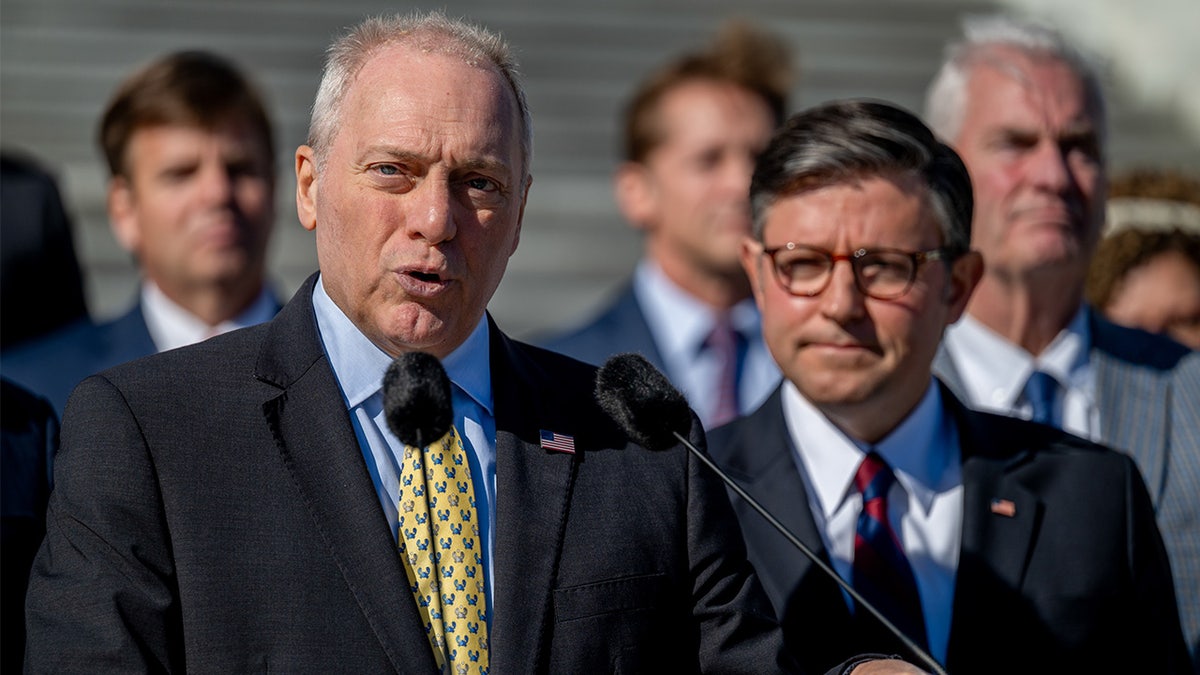
House Majority Leader Steve Scalise, left, and House Speaker Mike Johnson during a news conference at the U.S. Capitol in Washington, Nov. 5, 2025. (Daniel Heuer/Bloomberg via Getty Images)
The bill regulates how much student-athletes can earn from NILs. Rep. Morgan Griffith, R-Va., conceded that the measure was far from perfect. But Griffith says it «affirms the student-athletes’ right to profit from their name, image, and likeness, or NIL.»
Griffith said the bill would set one standard for NILs and prevent universities and athletes navigating «30 state laws and athletes jumping from team to team.»
But critics say it tilts the playing field toward athletic powerhouses. They pinned the responsibility on the House GOP majority.
«Of course, they have a bill to help the NCAA take advantage of student-athletes. Because you know, what this Congress desperately needed was another billionaire organization empowered to squeeze young people,» lamented Rep. Jim McGovern, D-Mass., the top Democrat on the House Rules Committee.
Griffith countered by saying the legislation «was a first step. But not the last step in trying to solve problems that we have in our college athletics.»
Even though the bill is off the calendar now, Scalise believes the legislation will come back later this month.
«If Congress takes no action, then ultimately, college athletics and especially student-athletes will suffer the price for it,» said Scalise.
The legislation mandates that schools share revenue and bars institutions from using student fees to fork out NIL money.
CLICK HERE TO DOWNLOAD THE FOX NEWS APP
So we’ll see if the bill comes back before the end of the year. But for now, there’s no agreement to do so. And lawmakers haven’t worked out an agreement yet on health care or spending bills, either.
And they can’t blame Lane Kiffin for that.
politics,congress,house of representatives politics,sec,democrats senate,republicans










Objetivos

Vidas

INTERNACIONAL
Pritzker joins chorus of Dem governors boycotting White House dinner after snub ignites ‘chaos’

NEWYou can now listen to Fox News articles!
A chorus of Democratic governors are rallying behind their fellow Democratic Governors Jared Polis, from Colorado, and Wes Moore, from Maryland, after they did not receive invites for a traditionally bipartisan White House dinner.
Illinois Democrat Governor J.B. Pritzker was among those who decided they would be boycotting the slate of events hosted at the White House for the National Governors Association’s annual winter gathering held Feb. 19-21.
«No way will I attend the White House dinner with this President,» Gov. Pritzker said Tuesday. «I’m standing with Gov. Wes Moore and Gov. Jared Polis — and standing against Trump’s corruption and hatred. And I’m calling on my Republican colleagues to do the same.»
The boycott is being led by the chair of the Democratic Governors Association, Kentucky Gov. Andy Beshear, and its vice chair, Michigan Gov. Gretchen Whitmer. Other Democratic Party governors who have committed to the boycott include California Gov. Gavin Newsom, Pennsylvania Gov. Josh Shapiro and Minnesota Gov. Tim Walz. A coalition of 18 governors signed a statement Tuesday slamming President Donald Trump for creating «chaos and division» by snubbing the state leaders.
GOP MUTINY FORCES HOUSE SPEAKER MIKE JOHNSON TO DELAY VOTE ON KEY PIECE OF TRUMP’S AGENDA
Democratic Party Governors Wes More (left), from Maryland, and Jared Polis (right), from Colorado. (Getty Images)
The White House reportedly decided to divert from the traditional path of inviting both Republican and Democratic governors to the events being held at the White House. Although a White House official also reportedly told Politico that «many Democrats were invited to dinner at the White House» while others were not.
The move not to invite all Democrat governors to the winter gathering comes after President Trump got into a public spat with Democrat Governor of Maine, Janet Mills, at a bipartisan «Governors Working Session» last year in February over transgender sports participation. The heated back-and-forth was televised on national stations for all to see and led to the pair exchanging barbs for the subsequent weeks over the matter and over the state’s unwillingness to follow federal orders, such as those related to transgender sports participation.
When reached for comment on the matter, a White House spokesperson referred Fox News Digital to press secretary Karoline Leavitt’s comments Tuesday on the matter from the White House briefing room, during which she defended President Trump’s decision to not invite the Democratic Party governors.
«I just spoke with the president about this. It is a dinner at the White House. It’s the people’s house. It’s also the president’s home, and so he can invite whomever he wants to dinners and events here at the White House,» Leavitt told reporters from the White House briefing room Tuesday.
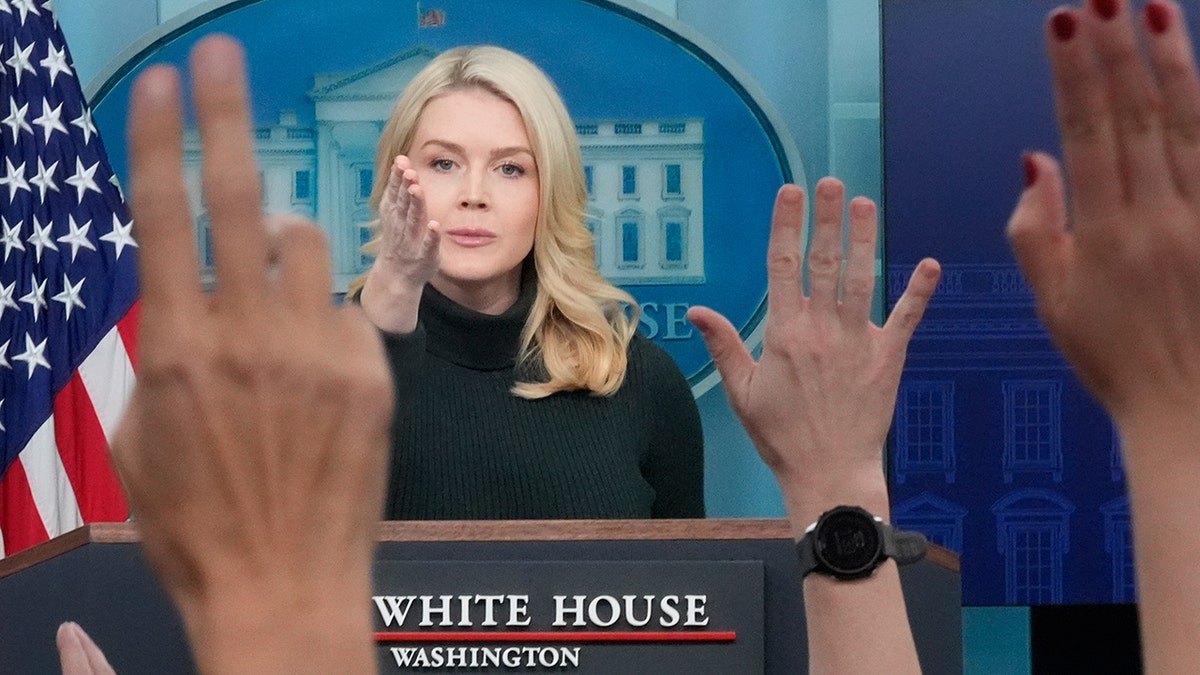
Reporters raise their hands to ask a question as White House press secretary Karoline Leavitt speaks with reporters in the James Brady Press Briefing Room at the White House, Monday, Jan. 26, 2026, in Washington. (Alex Brandon/AP Photo)
FAR-LEFT NONPROFITS IN THE HOT SEAT AS LAWMAKER EXPOSES THEM FOR ‘SOWING CHAOS’ IN US
She added that Gov. Moore had been invited the previous year, but never ended up coming. «Nobody reported on it. But, again, the president has the discretion to invite whomever he wants to the White House, and he welcomes all those who received an invitation to come and if they don’t want to that’s their loss.»
During an appearance on CNN’s «State of the Union,» Moore suggested his lack of an invite was due to race, telling the show it was «not lost» on him that he is the only black governor in the country and the president was trying to deny him attendance at an organization’s event that Moore said his fellow Democrat governors have said they would like to see him lead. Moore also pointed to the fact he led a delegation of governors to the White House several weeks ago.
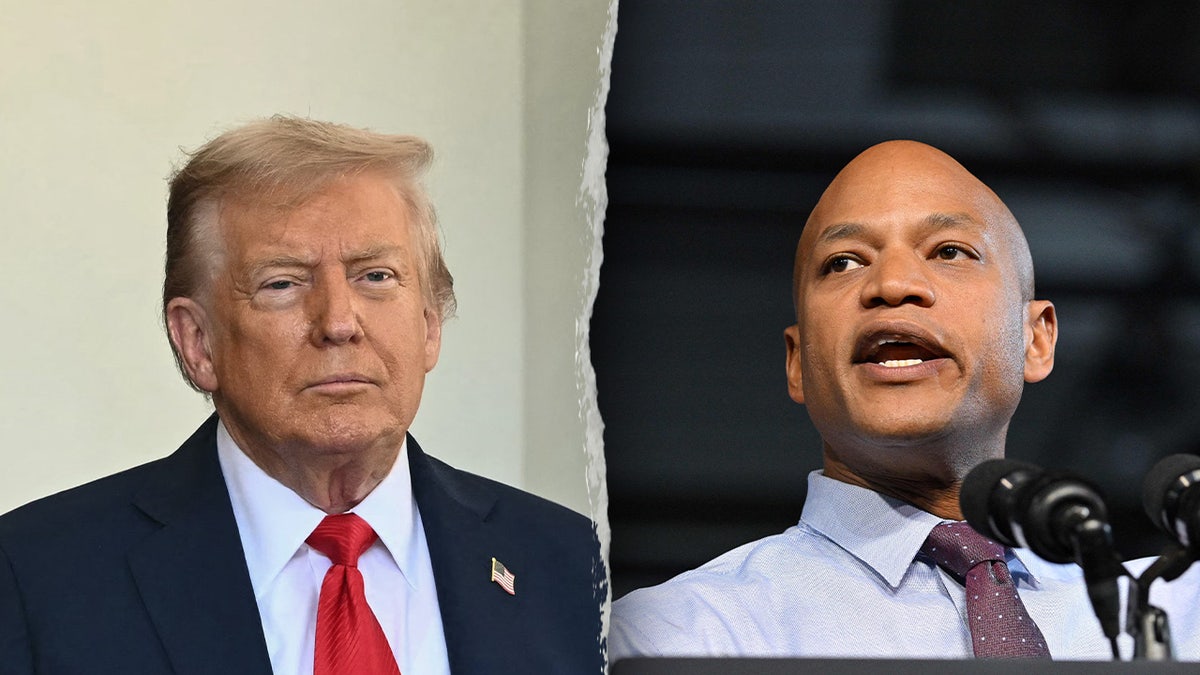
President Donald Trump (left) and Maryland Democratic Gov. Wes Moore (right) (Mandel Ngan/AFP via Getty Images)
In a statement, Brandon Tatum, CEO of the National Governors Association, said he was «disappointed in the administration’s decision.»
CLICK HERE TO DOWNLOAD THE FOX NEWS APP
Oklahoma Gov. Kevin Stitt, a Republican who is the chairman of the NGA, said in a Monday letter to fellow governors that the association was «no longer serving as the facilitator» for the upcoming event, according to The Associated Press. Stitt said the NGA was meant to represent all governors — those of the 50 states as well as the governors of American Samoa, Guam, the Northern Mariana Islands, Puerto Rico and the Virgin Islands.
Fox News Digital’s Rachel Wolf and Patrick Ward contributed to this report.
governors,white house,politics,democratic party,state and local,donald trump
INTERNACIONAL
Los therians llegaron a Uruguay y un centenar se reunió en Montevideo: “Desde chico me identifico como mono”
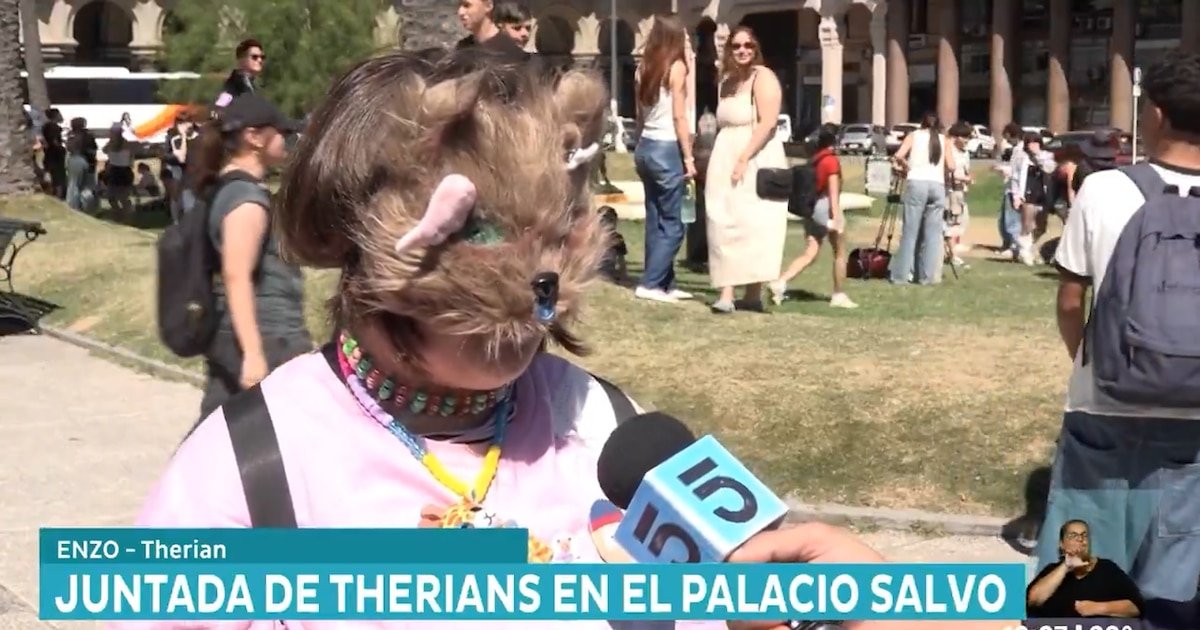
Uruguay se sumó a la tendencia de los nuevos personajes conocidos como therians. Son personas que aseguran sentirse animales y adoptan comportamientos en la vida cotidiana. En la tarde del martes, cientos de ellos se dieron cita en Montevideo y colmaron la Plaza Independencia con máscaras de animales que cubrían sus rostros y otros accesorios.
Un centenar de jóvenes, en su mayoría adolescentes, se encontraron en ese punto céntrico de la capital uruguaya, de acuerdo a la crónica del noticiero Telemundo de Canal 12. La idea en Uruguay surgió de una joven llamada Manuela, que vio la tendencia internacional y decidió replicarla en Uruguay. En un video de Tik Tok planteó su curiosidad, propuso reunirse y su posteo se viralizó. Y el encuentro se hizo realidad.
Francesca, una joven que participó del encuentro, contó que su familia se tomó “bastante bien” la decisión porque no es “muy prejuiciosa”. “Yo soy un humano normal, me comporto como humano. Es espiritualmente que yo me siento conectada”.
“En mi caso me identifico solo con el mono. Desde chico siempre me gustó estar abajo de los árboles, comer banana, caminar de esta forma”, relató otro de ellos en la televisión uruguaya.
Uno de los jóvenes detalló que no están todo el tiempo vestidos de esa manera porque se haría imposible la vida en sociedad. Entonces, es una vestimenta que queda para los ratos libres. Aclaró, sin embargo, que no pueden replicar todas las conductas: “No podemos c… en la calle, por ejemplo, ni tener sexo en la calle como haría un gorila salvaje”.
Otra de las jóvenes relató que es un “politherian”: “Es un therian que tiene más de un theritipo, por lo que me identifico con más de un animal. Ser therian no se puede elegir porque es una conexión. He visto muchos therians que dicen: ‘Uh, me gusta ser therian, voy a serlo’. Si querés hacerlo está bien, pero no es lo recomendado”, señaló la adolescente.

“El término therian es sentir una conexión con el animal. Sentís que pertenecés a esa vida”, señaló.
Algunos de los participantes señalaron que durante la mayor parte del día se comportan como seres humanos normales.
Consultada en Telemundo, otra adolescente contó que “desde siempre” fue una therian. “Empecé sintiéndome sola, haciéndome máscaras. Las intentaba vender, pero nadie me las compraba. Nadie sabía lo que era. Entonces, en un momento descubrí lo que era la comunidad therian y ahí empecé a juntarme más, a conocer gente, incluso a enseñar a gente a saltar y caminar. Ahí empezó todo”, describió.
La joven luego remarcó: “¡Los therians no están locos! Los therians sienten alguna conexión con un animal”.
Enzo, uno de los therian que estaba en la juntada, relató a Canal 5 que hay distintas categorías de therian. Una de ellas se denomina “otra pata” y consiste simplemente en utilizar la máscara, la cola y los guantes. Ellos, según el joven, siguen una “moda” y utilizan la máscara por “estética”.
Otro segundo nivel se llama “otro corazón”, pensado para quienes se identifican “espiritualmente” con un animal. El tercer nivel es propiamente ser un therian, para quienes se identifican completamente. Puede ser porque la persona siente que “en otra vida” fue un animal, relató el joven.

“En mi caso, me identifico como un perro. Un perro así nomás. ¿Por qué? Porque considero que tengo la personalidad de un perro. Soy muy leal, muy fiel”, comentó.
Muchos llegaron hasta la Plaza Independencia solo por curiosidad y observaron cómo los jóvenes saltaban y exhibían otras destrezas que los identificaba con un animal.
El senador opositor Sebastián Da Silva se sumó a la tendencia. En la red social X bromeó en una repuesta a un usuario: “Me hice therian así cambiás un poco la obsesión”.
therians,Uruguay

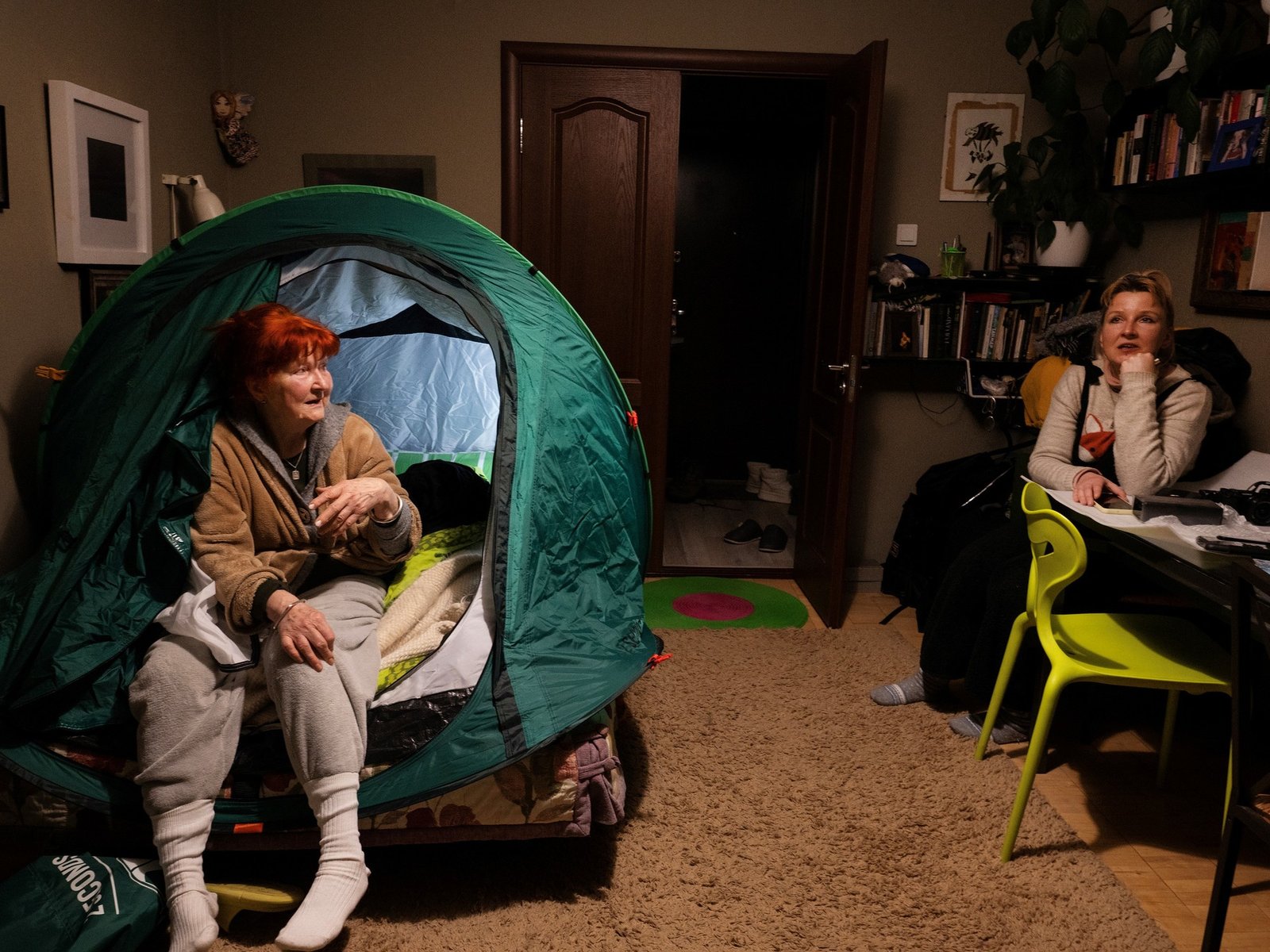
Rusia apagó la calefacción. Así que durmió en una carpa sobre su cama

Las fotos del aterrador accidente que sufrió una snowboarder tras caer de cabeza en los Juegos Olímpicos de Invierno

Milei ordenó a la mesa política que se instale en el Senado para evitar sorpresas y lograr la aprobación de la reforma laboral

El Chino Darín rompió el silencio tras el nacimiento de su hijo con Úrsula Corberó y se quebró al tener que dejarlos: “Pasará un tiempito»

Un plan para las Fuerzas Armadas: el ministro Presti entregará 534 viviendas a militares en actividad

El Gobierno evalúa un pacto fiscal con las provincias para avanzar con la reforma tributaria en marzo

El sector industrial advierte que la apertura económica exige eliminar las distorsiones internas

Mirtha Legrand se quebró desconsolada al hablar de la renuncia de Jimena Monteverde a su mesaza

Central Córdoba vs. Unión: formaciones, hora y dónde ver por tv

Acuartelamiento policial en Santa Fe: reclamo salarial y temor a un conflicto nacional de seguridad

 POLITICA1 día ago
Acuartelamiento policial en Santa Fe: reclamo salarial y temor a un conflicto nacional de seguridad
- ECONOMIA3 días ago
Argentina usa la canasta más vieja de la región: así mide el INDEC frente a países vecinos
- ECONOMIA1 día ago
Cuánto le cuesta a la clase media llenar el changuito y cómo varían los precios de los alimentos entre provincias