INTERNACIONAL
Precios disparatados en Uruguay para alojarse el fin de semana de la final de la Libertadores


“¿Confirman que así estamos todos buscando alojamiento en Montevideo?”, posteó en la red social X Estudiantes de la Plata, después de eliminar a Flamengo por la Copa Libertadores y clasificarse a la final del 28 de noviembre contra Palmeiras en Montevideo. En la imagen aparece el futbolista Tomás Palacio, sentado en el suelo, con el celular en la mano.
Esa tarea, la de buscar alojamiento en Montevideo, se ha vuelto complicada en las últimas semanas. Es que, conseguir un lugar en un hotel o un departamento es una tarea difícil, al menos para aquellos que no estén dispuestos a pagar un precio desorbitante.
Todos los relevamientos muestran una disponibilidad muy limitada en las distintas plataformas para las zonas próximas al estadio. “Estamos frente a un acontecimiento que está generando una presión muy importante sobre el mercado de alojamiento temporal en Montevideo”, reconoció, en diálogo con El Observador, el presidente de la Cámara Inmobiliaria del Uruguay, Matías Medina.
Los alojamientos muestran valores extraordinariamente elevados.
Los precios para dos personas oscilan entre los USD 1.200 y los USD 2.700, al tiempo que para cuatro personas pueden valer más de USD 5.000, según el relevamiento de este medio.
El interés está centrado en apartamentos particulares para dos, cuatro y seis personas, así como en hoteles y otros establecimientos turísticos. Las zonas más demandadas son los barrios cercanos al Estadio Centenario, donde se jugará la final: Parque Batlle, La Blanqueada, Tres Cruces y Cordón.
Esta gremial empresarial aconseja formalizar las condiciones de alquiler por escrito, establecer claramente el precio total, las fechas de ingreso y salida, la cantidad de ocupantes y las condiciones de cancelación. También sugieren documentar el estado del inmueble, comprobar que las instalaciones estén en condiciones adecuadas y verificar que la cobertura del seguro contemple este uso.

El sector hotelero de Piriápolis, Maldonado y Canelones también da cuenta de reservas vinculadas a la final y de consultas de visitantes que buscan alternativas por fuera de Montevideo.
El presidente de la Asociación de Hoteles del Uruguay, Francisco Rodríguez, declaró al diario deportivo Ovación que en junio ya se registraba una alta ocupación para estas fechas. “A nivel de los organizadores de estos eventos, ya tienen hoteles prácticamente todos ocupados y bloqueados desde entonces”, declaró.
Las reservas generales en la zona metropolitana y el este de Montevideo llegan al 90% y alcanzan niveles casi totales en todos los establecimientos de mayor categoría. “En estos momentos las reservas superan el 90% en Montevideo y en el este. Los hoteles más importantes están prácticamente arriba del 95% y el 100%”, destacó.

Las tarifas de los hoteles también se han incrementado por la alta demanda.
“En la oferta formal hay propuestas que pueden llegar a ser 10 veces más caras respecto a lo normal. Y en los alojamientos por fuera del sistema, que no están regularizados, seguramente estén 40 o 50 veces más”, declaró este empresario.
Luego, el representante de los hoteles también pasó un aviso a quienes viajen: “Lo que pedimos es que hagan contrataciones en lugares seguros, ojalá a través de agencias o confirmando directo con el lugar para no llevarse una ingrata sorpresa. Pensamos que vamos a tener 70.000 personas adentro del estadio y no menos de 20.000 dando vueltas, entre los que no consiguen entrada, los que vienen a acompañar, a festejar o a estar en el fan fest”.
En Punta del Este, en tanto, se registró una baja en las reservas tras la eliminación de Flamengo, pero el sector hotelero mantiene un nivel alto de ocupación por varios eventos internacionales que están previstos por esas fechas, consignó Ovación.

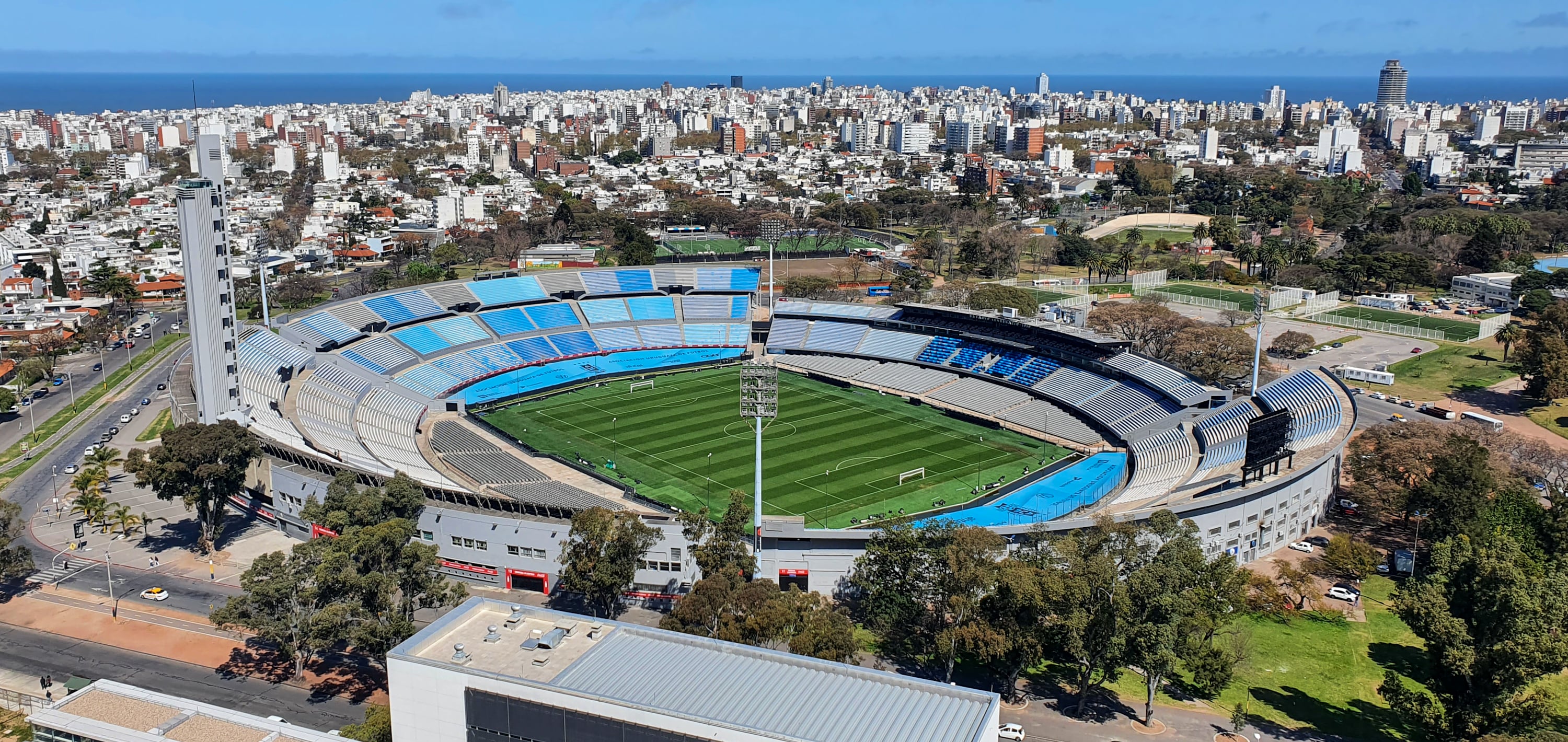
La final de la edición 2026 se disputará a partido único en el Estadio Centenario, escenario emblema del fútbol sudamericano con capacidad para más de 60.000 espectadores. La Confederación Sudamericana de Fútbol (Conmebol) confirmó la sede meses atrás, en el marco de la organización de un evento que reunirá a las hinchadas de ambos finalistas en la capital uruguaya.
estadio centenario,estadios,exterior,instalaciones deportivas,paisaje urbano,urbanismo,vista general











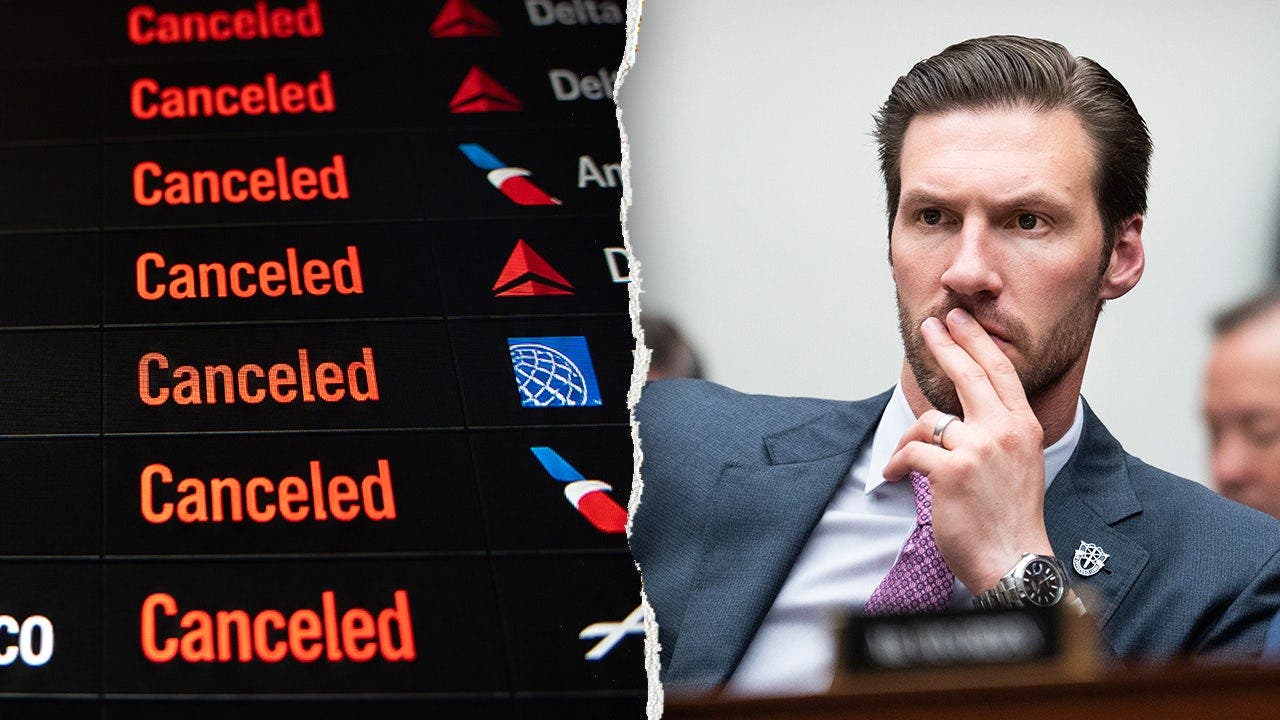
FIRST ON — Rep. Pat Harrigan, R-N.C., wants to close a glaring national-security loophole that allows Chinese entities to cohabitate the same data centers where critical American services also run.
The North Carolina lawmaker is proposing the Digital Infrastructure Act of 2026 to address the potential risk with a $1 million-per-day fine for violators. Meanwhile, the U.S. has experienced a series of outages and incidents this week that have put a microscope on the potential for foreign cyber threats and have prompted skepticism regarding U.S. readiness to defend against digital weaknesses.
«Look, the federal government already determined that companies like China Telecom and China Unicom posed a threat to our national security and revoked their licenses to operate here,» Harrigan said in an interview with Digital.
«But those companies were still able to maintain connections inside of American data centers. So, if we think about that, we determined that they were too dangerous to operate here, but we left them with a foothold in the very infrastructure that carries Americans’ information.»
CHINA IS BUILDING AN AI WAR MACHINE. WASHINGTON MUST WAKE UP BEFORE IT’S TOO LATE
Despite the cascade of outages — including in U.S. air traffic control systems, Microsoft and banking services —Harrigan did not directly draw a line between Chinese companies and the disrupted services. There is also no proof that any of the incidents were the result of cyberattacks.
Harrigan, instead, argued that preventing cyber vulnerabilities in the future requires lawmakers to eliminate what they know to be weaknesses now.
«What we’re talking about is the infrastructure that supports our banks, our hospitals, our businesses and our communication systems,» Harrigan said.
He declined to elaborate on whether the existing loophole has already led to cyberattacks or stolen data but noted that he was made aware of the liability when American businesses approached him with concerns.
His bill would prohibit high-risk carriers from owning or operating a data center in the U.S. or offering cloud services to Americans. The measure would be enforced by a $1 million fine for every day of a continuing violation — a penalty that would extend to affiliates and even American venture partners doing business with Chinese entities.
The bill also includes a time-limited exception for companies approved by American communications officials.
CHINA’S GREAT AI CHIP LOOPHOLE: HOW AMERICAN ESPIONAGE STOPPED CHINA — THIS TIME
«We talked to a lot of companies, frontier labs and data center owners, as well as operators that are concerned about this,» Harrigan said. «And it’s also part of folks from our national security apparatus within government.»
As part of its mission, the Federal Communications Commission (FCC) reviews foreign communication companies and green-lights their operation in the U.S. When identifying a security risk, the FCC issues a denial of application, a power granted to it under Section 214 of the Communications Act of 1934.
In China’s case, companies like China Telecom Corporation, China Unicom Operations Limited and Pacific Networks Corp. have all failed to secure FCC authorization for security reasons.
«The Commission finds that due to several factors related to China Mobile USA’s ownership and control by the Chinese government, grant of the application would raise substantial and serious national security and law enforcement risks,» the FCC wrote in its evaluation of China Mobile USA, a Delaware-based company.
Even so, the FCC order does not address what the company needs to do with its hardware.
«A Section 214 order is a license to sell regulated telecom service, not a physical eviction order,» Harrigan’s office noted.
Asked if he believes Republicans will be able to address the legislation before the end of the 119th Congress, Harrigan said he believes the issue will likely have to be left to the next session, which begins in January.
FOREIGN ADVERSARIES RUNNING ‘PSYOP’ TO FUEL ANTI-AI AND ANTI-DATA CENTER MOVEMENT, WAR OFFICIAL SAYS
He voiced optimism that the incoming Democratic majorities in the House of Representatives and the Senate might recognize his bill as part of a larger interest in AI security.
«This is a bipartisan problem. And there’s a lot of work that I have done with my Democratic colleagues over this last year on artificial intelligence and the next generation of technology in our market economy and how that intertwines with our nation’s defense,» Harrigan said.
«They are very willing to lend a hand because they know it’s a structural problem for our country,» he added.
politics, technology, national security, fcc, congress
INTERNACIONAL
Iran-backed Houthi ‘terrorist attack’ hits Riyadh’s tallest skyscraper and HQ of Saudi Public Investment Fund
NEWYou can now listen to Fox News articles!
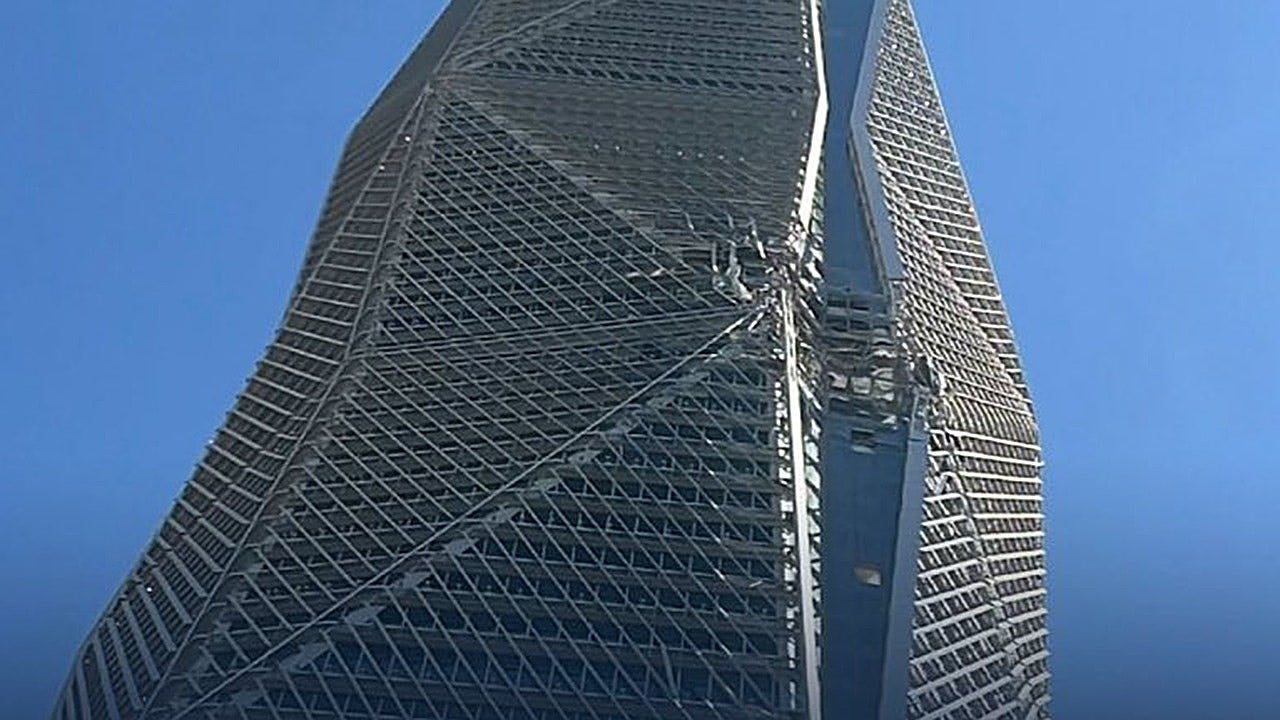
A «terrorist attack» by the Iran-backed Houthis damaged multiple floors at the tallest skyscraper in Riyadh, Saudi Arabia, which houses the headquarters of the Saudi Public Investment Fund on Thursday, authorities and reports said.
Entrances leading into the King Abdullah Financial District were closed and people were being evacuated from the area following the strike by a suspected Houthi missile, according to Reuters.
The news agency reported that the attack on the Public Investment Fund Tower, which is 80 stories tall, destroyed windows across up to eight floors of the building and bent portions of its metal facade.
«One of the towers of the Financial Center in Riyadh was targeted in a terrorist attack by the terrorist Houthi militia, causing material damage but no injuries — praise be to God,» the General Directorate of Saudi Civil Defense wrote on X as it shared a photo of the damage.
HOUTHIS KILL 14 AT SAUDI AIRPORT AS EXPERT WARNS OF ‘RAPID TARGETS’ AMID MIDDLE EAST WAR
The Public Investment Fund Tower in Riyadh, Saudi Arabia, is the tallest skyscraper in the city. The building was seen damaged on Thursday, Nov. 19, 2026, following what officials called a «terrorist attack» by the Iran-backed Houthis. (General Directorate of Saudi Civil Defense)
The incident unfolded after the Houthis attacked a building belonging to Saudi state-owned oil company Aramco, in the same area on Nov. 8, Reuters reported.
Saudi-led coalition spokesman Col. Turki Al-Malki said Thursday that Saudi air defenses «intercepted and destroyed 4 ballistic missiles launched by the Houthi terrorist militia toward the southern region.»
He also said the coalition went on offense in Yemen, destroying a ballistic missile launch platform in Dhamar that was used by the Houthis «in an attempt to attack Riydah today.»
HOUTHIS EMERGE AS GLOBAL THREAT BEYOND IRAN CONTROL AMID SAUDI STRIKES, FORMER ENVOY WARNS

The KAFD World Trade Center, Riyadh Bank skyscraper office building, Public Investment Fund tower and Saudi National Bank headquarters stand beyond the King Abdullah Financial District Conference Center in Riyadh, Saudi Arabia, on Tuesday, Dec. 6, 2022. (Bloomberg via Getty Images)
The Houthis have been escalating attacks on Saudi Arabia during the U.S.-Iran war.
The U.S. Embassy and Consulates in Saudi Arabia warned Americans earlier this week that they «should exercise heightened vigilance due to the increased threat of armed attacks by Iranian-supported Houthis and Iranian efforts to target U.S. government officials and facilities in the region.
«Iranian-supported Houthis have engaged in hostilities against Saudi Arabia, including attacks on civilian airports and other critical infrastructure resulting in civilian casualties and severe travel disruptions,» it added. «These hostilities have the potential to escalate rapidly beyond that immediate area.»
saudi arabia, iran, middle east, world
INTERNACIONAL
Colombia: miles de personas marcharon en el primer paro nacional contra el gobierno de Abelardo de la Espriella

Miles de personas se movilizaron este jueves en las principales ciudades de Colombia para rechazar las políticas del presidente Abelardo de la Espriella y, en particular, el proyecto de Ley de Rescate Económico que se debate en el Congreso.
La protesta, convocada por sindicatos, organizaciones sociales y sectores de la oposición, estuvo marcada por las críticas a una reforma tributaria que busca aumentar la recaudación estatal y que, según sus detractores, afectará principalmente a la clase media.
El primer paro nacional contra el gobierno de De la Espriella comenzó alrededor de las 10:30 (15:30 GMT) en Bogotá, con concentraciones en distintos puntos de la capital, entre ellos la carrera séptima, una de las principales arterias de la ciudad. Los manifestantes marcharon con banderas colombianas, pancartas y equipos de sonido instalados en vehículos.
La movilización también se replicó en Medellín, Cali, Barranquilla y Bucaramanga, donde se registró un fuerte despliegue de la Unidad Nacional Antidisturbios (UNADI) de la Policía.
El operativo se desarrolló en el marco de un decreto firmado por el mandatario en octubre, que regula las protestas sociales y flexibiliza el uso de la fuerza por parte de las autoridades, una medida cuestionada por organizaciones de derechos humanos.
Espriella

El riesgo país se disparó casi 10%: qué factores explican la nueva escalada

$1M-a-day China tech crackdown proposed amid cascade of US cyber disruptions

Iran-backed Houthi ‘terrorist attack’ hits Riyadh’s tallest skyscraper and HQ of Saudi Public Investment Fund

Axel Kicillof, en modo campaña: “Cuatro años más de Milei serían una calamidad”

Un diputado nacional renunció al bloque oficialista tras denunciar un acuerdo de LLA con el PJ en Tucumán

Arthur Melo vuelve a brillar en Brasil con el Santos

Milei dijo que el riesgo país sube por el miedo a "Orcolandia" y afirmó: "Los argentinos no van a votar hacia el pasado"

Encontraron muerto a un trabajador en el Observatorio de La Plata

Se agudiza la suba de tasas y se complica la economía mundial

Feroz escándalo con Wanda Nara en su interminable pelea con la China Suárez: «Ya saben cómo se hizo famosa, te desnudabas en…»

 POLITICA3 días ago
Milei dijo que el riesgo país sube por el miedo a "Orcolandia" y afirmó: "Los argentinos no van a votar hacia el pasado"
- INTERNACIONAL3 días ago
Caída de sistemas, fallas y sospechas: qué hay detrás de la suspensión del tráfico aéreo y los problemas en los bancos de EE.UU.
- POLITICA16 horas ago
Javier Milei y sus medidas, en vivo: “Hoy discutimos si crecemos un punto más o menos”, dijo el Presidente