INTERNACIONAL
Qué pasó con el hombre que mató a puñaladas a una refugiada ucraniana en un tren de EE.UU.


La Justicia federal de Estados Unidos resolvió que Decarlos Brown Jr., el hombre acusado de asesinar a puñaladas a la refugiada ucraniana Iryna Zarutska en un tren de Charlotte en agosto de 2025, no está en condiciones de afrontar un juicio debido a su estado de salud mental.
El caso, que conmocionó a Carolina del Norte, quedó en suspenso desde junio mientras el imputado recibe tratamiento médico.
El juez federal Kenneth D. Bell aceptó el pedido de la defensa y ordenó que Brown, de 35 años, permanezca hasta cuatro meses en una institución médica penitenciaria. El objetivo es intentar restablecer su capacidad para comprender el proceso y colaborar con su defensa.
El informe psiquiátrico y la decisión judicial
Según la evaluación forense presentada en abril, Brown padece una enfermedad mental que le impide entender la naturaleza y las consecuencias del juicio, así como participar adecuadamente en su defensa.
El informe, presentado bajo secreto de sumario, indicó que existe un pronóstico favorable de recuperación si recibe la medicación adecuada.
El magistrado dispuso que Brown quede bajo custodia del fiscal general para su hospitalización y tratamiento.
Al finalizar el período de internación, la Justicia evaluará si el acusado recuperó la competencia para continuar con el proceso, si requiere más tratamiento o si resulta imposible restablecer su aptitud.
Los pedidos del acusado y el contexto del caso
En una presentación judicial, los abogados de Brown informaron que su cliente insistió en que el tribunal conociera su situación.
“Quiero decirle a la corte que tengo una emergencia corporal. Alguien tiene acceso total a mi cuerpo y me controla de manera indebida. La policía se niega a investigar y esto requiere una investigación”, expresó Brown, quien además sostuvo que fue mal diagnosticado con esquizofrenia.
El acusado enfrenta un cargo federal por causar la muerte en un sistema de transporte masivo, delito que puede ser penado con la muerte.
Además, hay una causa estatal por homicidio en primer grado, que quedó en pausa hasta que se resuelva el proceso federal.
Qué pasará con el proceso judicial
Una vez que finalice el tratamiento médico, el juez deberá determinar si Brown está en condiciones de ser juzgado.
Si su competencia es restablecida, el proceso continuará; de lo contrario, podría ordenarse un tratamiento prolongado o declararse su inimputabilidad definitiva.
Cómo fue el crimen de la joven ucraniana
Zarutska, que había huido de su Ucrania natal tras la invasión de su país por Rusia, regresaba a casa después de trabajar en una pizzería cuando Brown la apuñaló mortalmente en un tren la noche del 22 de agosto de 2025.
Un video grabado en el vagón por cámaras de seguridad muestra a Brown sentado detrás de Zarutska, antes de levantarse y clavarle un cuchillo en el cuello.
La joven murió minutos después en el tren, mientras que Brown huyó del lugar y fue arrestado poco después.
En una conversación con su hermana Tracey, Brown afirmó que mató a la joven porque “le leía la mente”.
La familia de Brown asegura que el hombre sufre de esquizofrenia paranoide y que venía mostrando signos de deterioro mental desde hacía tiempo. “Cuando vi el video, supe que había llegado a un punto de quiebre. No lo justifico, pero él no era así”, contó Tracey.
Tracey explicó que su hermano venía obsesionado con la idea de que el gobierno le había implantado un chip y que todos lo perseguían. “Me dijo varias veces que tenía ‘materiales’ en el cuerpo y que eso lo obligaba a hacer cosas”, explicó.
En una conversación telefónica desde la cárcel, Brown Jr. le contó a su hermana que no conocía a la víctima y que los supuestos “materiales” en su cerebro controlaban sus acciones. “Me lastimé la mano apuñalándola. Ni siquiera conocía a la señora. Nunca le dije una palabra. Es aterrador, ¿no? ¿Por qué alguien apuñalaría a otra persona sin motivo?”, expresó, visiblemente perturbado.
Incluso, en la conversación, se refirió a sí mismo en tercera persona y aseguró que “quien manejaba los materiales” fue quien “descargó la furia” sobre la joven.
La madre de Brown, Michelle Dewitt contó que días antes del ataque llevó a un refugio para personas en situación de calle porque se estaba poniendo cada vez más agresivo y que intentó hacerlo internar en vano.
“Cuando llevas a una persona a salud mental y te dicen ‘no tenemos suficiente espacio’ o ‘¿está intentando matarse o matar a alguien?’ y yo respondo que no, entonces no hay nada que podamos hacer, necesita una orden judicial”, explicó.
Sobre su hijo, afirmó “no creer que entienda lo que sucede”.
El caso reavivó el debate sobre la relación entre salud mental y seguridad pública en Estados Unidos. “La seguridad pública y la salud mental deben ser parte de una conversación permanente y conjunta”, sostuvo el exfiscal federal Michael Easley Jr.
Estados Unidos, Asesinato, Crimen, Carolina del Norte












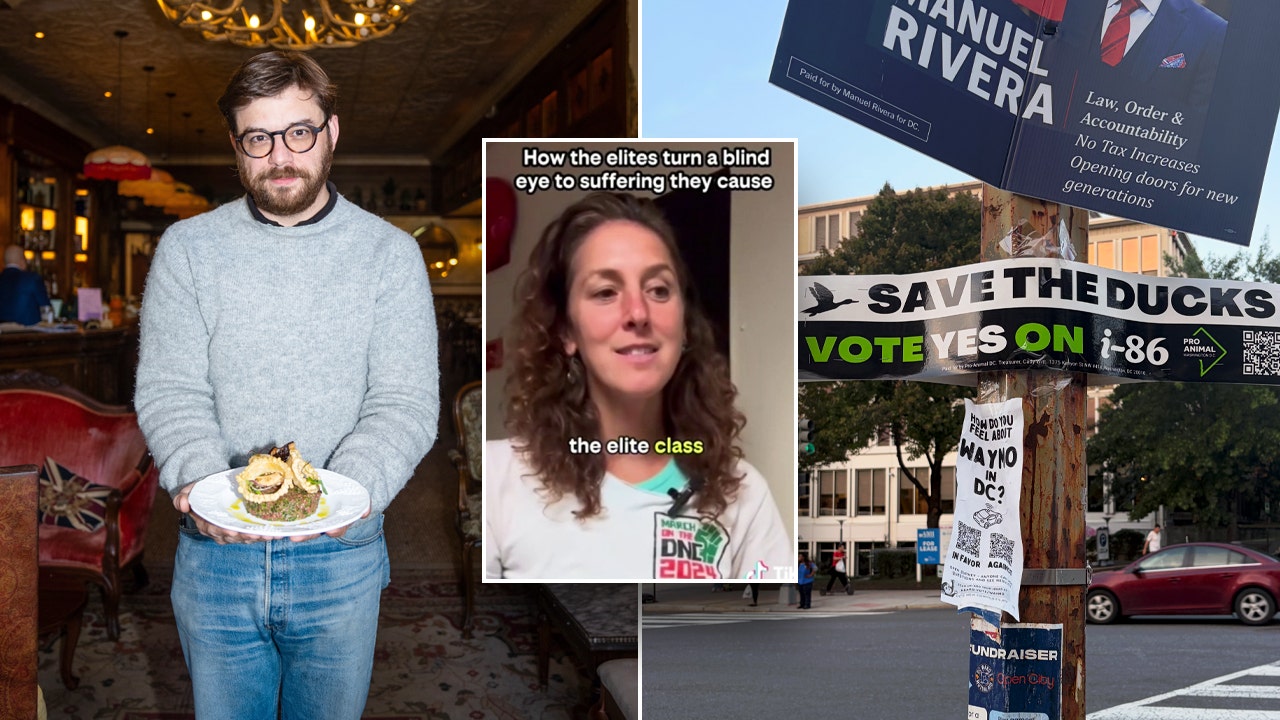
WASHINGTON, D.C. — CodePink D.C. Coordinator Olivia DiNucci last month posted a TikTok video of herself in a home supporting an issue far afield from her usual battles supporting the Communist Party of Cuba and the Islamic Republic of Iran.
This time, she was backing a local ballot measure, «Initiative 86,» introduced in early February in the D.C. City Council to ban foie gras, a fine-dining delicacy made from duck liver, and other products made from birds. D.C. residents will vote on the measure on election day with early voting already started.
The campaign presents itself as a grassroots effort to advance animal welfare, but public financial filings reveal a far more heavily funded operation. A national animal-rights network has supplied hundreds of thousands of dollars in financial support, underwriting paid petition circulators, political consultants, staff salaries and advertising in a campaign that could reshape Washington’s restaurant industry. Far from a shoestring local initiative, the effort has reported nearly half a million dollars in contributions and expenditures, much of it backed by an organization that openly describes local ballot measures as stepping stones toward a broader «pro-animal future.»
WHO’S FUNDING AMERICA’S PROTEST UNREST? NATION’S NEW ‘RIOT INC.’ FOLLOWS THE MONEY TO FIND OUT
A Digital investigation of campaign-finance records, nonprofit filings and the groups’ own organizing documents traces the people, money and long-term strategy behind Initiative 86 and raises questions about how a fight over one luxury menu item became part of a much larger political campaign over what Americans eat.
Pro-Animal Future, a 501(c)(4) nonprofit based in Portland, Ore., launched the campaign, nicknamed I-86, in D.C. and says its local ballot efforts are part of a broader push to change public attitudes toward common animal agricultural practices. Its IRS filing also lists its name as Pro-Animal DC.
In seven financial reports filed with the D.C. Office of Campaign Finance, Pro-Animal DC provides a window into a local political campaign’s operational, financial and logistical infrastructure.
According to its latest filings, Pro-Animal DC collected a whopping $474,190.62 between Sept. 23, 2025, and Oct. 26, 2026, for the local campaign, with Pro-Animal Future as its major backer, providing it $386,435.77.
Its largest expense is stipends totaling $126,780.36, or about one-quarter of the campaign’s expenses, to a paid professional protest organizer: Cady Witt, whose LinkedIn profile lists her as «community impact coordinator» at «DC Voters for Animals.» Witt is also listed as the treasurer of Pro-Animal DC in its campaign reports.
Pro-Animal DC reported another $89,224.00, or about 20% of its expenses, for 293 payments to 64 people described as «consultant – circulator» from September 2025 through October 26, 2026. They got an average payment of $1,394.13 per person.
‘TROJAN HORSES’ IN AMERICA: CONGRESS PROBES INFLUENCE NETWORKS TIED TO CHINA, IRAN AND CUBA
Also a professional organizer, CodePink’s DiNucci is typically a fixture at anti-Israel demonstrations and foreign affairs hearings. CodePink co-founder Jodie Evans is married to an American-born, China-based tech tycoon, Neville Roy Singham, whose funding of activist groups has drawn scrutiny from congressional lawmakers and is the subject of a federal investigation. Pro Animal Future said CodePink doesn’t have a role in its campaign beyond DiNucci’s appearance in her TikTok video.
Pro-Animal Future alleges that birds are «force fed» to gain the weight needed to produce foie gras, and it says its campaigns seek to end «force-feeding» birds and shift public views on animal agriculture. According to its latest available IRS 990 tax filing, Pax Fauna, a 501(c)(3) nonprofit based in Denver, says it’s related to Pro-Animal Future, which it described as doing «lobbying» work.
In 2024, Pax Fauna outlined a 10-year roadmap to build local ballot campaigns and eventually pursue statewide «factory-farming» bans and establish «animal freedom.»
The roadmap called such measures a way to «provoke a sort of identity crisis for the voting public» and «storm the nation». The group sought to launch as many as 10 local chapters during the 2025-2026 election cycle.
An anonymous purchaser bought the web domain ProAnimalDC.org in April 2025, according to online records. Today, Pro-Animal Future lists its current campaigns as running in D.C. and Denver and says it worked with Portland’s City Council to ban foie gras sales this past June.
Pax Fauna’s founders said they have spent years organizing with Direct Action Everywhere, an animal-rights 501(c)(3) nonprofit based in Berkeley, Ca.
Last year, according to its filings, Pro-Animal Future spent $7,703.70 for Airbnb accommodations. This year, on July 31, it spent $22,418.69 for Airbnb accommodations. Pro-Animal DC has stated that the lodging was for about 60 out-of-town «volunteers» who came to Washington, D.C., in July for a signature-gathering effort called «Goosapalooza.» On its website, it promoted the «free housing.»
The measure’s language has raised questions about how far the ban could reach. Its definition of a «fattened bird liver product» covers food or byproducts made from birds’ livers when the birds were fattened «through any method or practice,» and specifically lists pâtés, spreads and processed meat products as products to be banned. The initiative separately defines «force-feeding» as causing a bird to eat more than it would voluntarily consume.
MAMDANI ACCUSED OF BETRAYING NYC WORKERS AS UNION BOSS BLASTS ‘ANTI-LABOR’ HORSE CARRIAGE BAN
Former D.C. Attorney General Karl Racine told City Cast DC, a local media outlet, that the text «includes le poulet,» which means chicken in French.
Jon Mandel, an attorney and former D.C. Council legislative staffer, told the same outlet, that the sales provision could reach poultry-liver products made without force-feeding.
Pro-Animal Future spokeswoman Natalie Fulton told City Cast DC the campaign isn’t trying to ban chicken and «is about foie gras.» She added that the D.C. Council could clarify the language if voters approve the measure.
However, restaurants in the district who serve the delicacy aren’t buying what activists are selling. Bart Hutchins, chef and co-owner of Butterworth’s, a Capitol Hill restaurant popular with Trump administration members, raised a similar concern in an interview with Digital. «Realistically that could ban at least 20 products that I can think of right off the top of my head that aren’t foie gras,» he said. Hutchins said his restaurant would consider legal challenges if the measure passes.
Hutchins sees the initiative as part of a broader effort to restrict what Americans can eat. «If they ban foie gras here, they’ll eventually ban meat here, and they’ll bring that to the rest of the country,» he said.
Pro-Animal Future’s 10-year roadmap calls for statewide factory-farming bans but doesn’t define «factory farming.» Hutchins said he worries the term could be interpreted broadly.
This week, the dispute followed Hutchins to the 17th Street NW «High Heel Race,» a Halloween drag event in the District. Witt, D.C. campaign director for Pro-Animal Future, appeared dressed as Hutchins, wearing a chef’s hat, glasses, a drawn-on mustache and a white corseted outfit.
Nearby, a person in a duck costume crouched with a feeding tube in its mouth. Washingtonian food editor Jessica Sidman shared photos on X, describing Witt simply as «Pro-Animal campaign coordinator.» By late Thursday, the photos had 42,200 views, amplifying the campaign even further. Hutchins didn’t appear phased by the mimicking, he took to X and said, «Bart derangement syndrome enters the lexicon.»
The measure has also drawn opposition from celebrity chef José Andrés, whose D.C. restaurant serves foie gras. He questioned the ban’s broader implications on X, asking, «If duck goes, all goes next?»
The D.C. chief financial officer, Glen Lee, estimates implementing the measure would cost $314,000 from fiscal 2026 through 2029, including $274,000 for an additional inspector and $40,000 for public education. The fiscal impact statement says the District’s Department of Energy and Environment doesn’t inspect restaurant kitchens or other back-of-house operations and isn’t likely to do so. It says the inspector would investigate complaints, inspect establishments and coordinate with other agencies, but doesn’t detail how regulators would verify a product’s origin during routine inspections.
Hutchins said he would continue serving foie gras until the city resolves how to enforce the measure. He disputes the animal-welfare case for a ban, saying he doesn’t believe the feeding process that farms use to create foie gras hurts ducks. Pro-Animal DC’s findings say the practice causes pain and illness. Hutchins also said losing D.C. as a major market could threaten the country’s two commercial foie gras producers, Hudson Valley Foie Gras and La Belle Farm in New York state’s Catskills region.
The measure would regulate sales in D.C. The D.C. chief financial officer’s fiscal impact statement says, «The Office of Revenue Analysis is not aware of any bird farms or bird feeding operations in the District.»
The Catskill Foie Gras Collective, a producer group, says its member farms raise ducks cage-free and use small, flexible plastic tubes to deliver feed to a pouch in their throats. It argues the process causes no pain, citing ducks’ anatomy, and says feeding is skipped if a bird hasn’t finished digesting its previous meal. The collective also says Catskills foie gras farms employ about 400 people.
GET BREAKING NEWS ALERTS
Digital reached out to Pro-Animal DC, which disputed critics’ claim that Initiative 86’s wording could extend to poultry-liver products beyond foie gras. The campaign said the measure is intended only to prohibit force-feeding and foie gras sales. It said «fattened» refers to the extreme enlargement of birds’ livers associated with foie gras production, not ordinary poultry farming. The campaign pointed to the measure’s findings, which describe covered products as luxury foods made from diseased, enlarged livers, and said the broad definition of «bird» is meant to prevent producers from switching species.
SEND US A TIP
Pro-Animal DC said D.C. agencies and courts look to a law’s stated purpose when its wording allows more than one interpretation, and said it would welcome Council clarification if voters approve the measure. Asked what language could clarify the measure, spokeswoman Natalie Fulton didn’t elaborate.
The dispute leaves D.C. voters weighing a ballot measure presented as a foie gras ban while others raise broader questions about its wording, enforcement and the campaign’s long-term goals. For Hutchins, the stakes extend beyond one item on a restaurant menu; for Pro-Animal Future, Initiative 86 is one step in a larger effort to change farming practices at a national scale.
Digital’s Asra Nomani and Ava Palschakov contributed to this report.
midterm elections, politics, campaigning, controversies state and local, food, lobbying, us, washington dc, fox news investigates, investigations

NEWYou can now listen to Fox News articles!
The French government is deploying 70,000 police officers to cities across the country as authorities expect a third week of intense anti-government protests to resume Saturday.
Demonstrators objecting to rising costs and President Emmanuel Macron’s government have engaged in looting and damaging property, prompting the law enforcement surge, according to officials.
«Everyone is on deck to ensure an extremely firm response to any trouble,» Interior Minister Laurent Nunez said at a news conference early in the week.
A French gendarme stands amid clouds of tear gas during a demonstration over the cost of living, public services and economic policies on Oct. 24, 2026, in Nantes, France. The protest was part of nationwide demonstrations involving labor unions, students and former Yellow Vest protesters. (Guillaume Saligot/AFP via Getty Images)
FRANCE ON EDGE WITH 70,000 POLICE DEPLOYED FOR UNREST AS AUTHORITIES PROBE SUSPECTED TERROR ATTACK NEAR PARIS
The expected protests, coinciding with Halloween, introduce an additional element to authorities’ response, as some protesters are expected to don Halloween masks to hide their identities.
At least 150 planned gatherings across the country have been tracked and acknowledged by the Interior Ministry.
FRANCE’S MACRON BLAMES PROTESTS ON ‘ULTRA-LEFT GROUPS WHOSE AIM IS TO BRING DOWN THE REPUBLIC’
One of the events, a planned march between the iconic Parisian squares of Republique and Bastille, has been banned by France’s top administrative court. The demonstration was instead rerouted to boulevards on the eastern fringe of the city, far from the main shopping centers.
France’s Chamber of Commerce has estimated retail losses from looting and property damage at over $1 billion, while other estimates that include lost revenue calculate losses could be double that.

Boarded up stores, including Christian Dior, Parfums de Marly and Ex Nihilo, on Rue Saint-Honore following looting in central Paris, France, on Wednesday, Oct. 21, 2026. Luxury boutiques in Paris’s shopping districts have been damaged after rioting, with some boarding up windows and doors and increasing security measures. (Benjamin Girette/Bloomberg via Getty Images)
PHOTOS SHOW AFTERMATH OF RIOTS AS MASKED GROUPS CLASH WITH POLICE ACROSS FRANCE
Some of Paris’ iconic luxury shops, like Hermes and Louis Vuitton, have been targeted by rioters as France’s marquee shopping avenues now show scores of buildings with protective wooden boards.
In response to the unrest, France’s government is crafting a law that would punish rioters who caused property damage and make them liable to pay up to €10,000, or $11,000.
VIOLENCE ERUPTS AT FRANCE PROTESTS AS MACRON WARNS UNREST IS BEING EXPLOITED
Demonstrations originated with the country’s young people protesting schooling conditions and pushing for educational reform and quickly ballooned to include other social groups and issues, including economic anxieties, rising costs in fuel and borrowing.
Though the French government has vowed to reform education and reduce fuel costs, the promises have not satisfied the protesters.

French gendarmerie officers on the day of a demonstration organised by labour unions as part of nationwide protests called by the «Yellow Vests» movement joined by French high school and university students against the cost of living and rising fuel prices, in Paris, France, October 31, 2026. (REUTERS/Pedro Nunes)
«When I was little, I was told young people were the future,» 15-year-old high school student Aaron Berthier de Grandry, who plans on protesting over the weekend, told Reuters.
«Well, if we, as the future of France, lack resources, that means France will end up collapsing,» de Grandry added.
The U.S. Embassy in France has advised travelers to avoid areas where large gatherings are taking place.
Reuters contributed to this report.
world, france, world protests, cops, news events, trending news
INTERNACIONAL
La Justicia francesa modificó el recorrido de la marcha para alejarla del centro de París ante el temor de nuevos disturbios

El Consejo de Estado –máximo órgano judicial conencioso-administrativo francés– ha modificado en el último momento el recorrido de la manifestación de París durante la jornada de movilizaciones de este sábado convocadas por sindicatos y estudiantes para protestar por la mala situación del sistema educativo y por la carestía de la vida.
Finalmente la marcha no partirá de la plaza de la Bastilla, sino que partirá de la Puerta de Bagnolet y terminará en la Puerta de Charenton, dentro de la ciudad, pero lejos del núcleo histórico de la capital francesa, según el dictamen.
El auto del Consejo de Estado dictado la noche del viernes al sábado anula la decisión del tribunal administrativo, que había autorizado el recorrido inicial en apoyo a la iniciativa del ministro del Interior, Laurent Núñez, que teme que se repitan alteraciones del orden público y daños a comercios e instituciones como los del 17 de octubre.

El principal sindicato francés, la Confederación General de Trabajadores (CGT) ha criticado la decisión “absolutamente escandalosa” y que los manifestantes sean relegados a las afueras de las ciudades. “Hacemos un llamamiento a todos los manifestantes para que se unan a nosotros masivamente en la Puerta de Bagnolet”, ha apelado la cosecretaria general de la CGT París, Adèle Tellez.
En este “tercer acto” de las movilizaciones sabatinas los estudiantes de secundaria protestan pese a la propuesta del Gobierno para reformar el circuito escolar o Parcoursup y exigen su abolición. “No queremos las migajas. Queremos el pastel entero”, ha declarado el líder federal del Movimiento Nacional de Escuelas Secundarias, Fabio Laporte.
Los conocidos como ‘chalecos amarillos’ y los sindicatos también participarán en la marcha para protestar contra el alto costo de la vida, la violencia policial y apoyar la huelga general convocada para el 5 de noviembre.

El Gobierno francés ha ordenado un despliegue de 70.000 efectivos en todo el país, la misma cifra que el fin de semana anterior, para reforzar la seguridad.
Además, se han cerrado 40 estaciones de Metro, desde los Campos Elíseos hasta la Bastilla, pasando por République, Châtelet y la orilla izquierda del Sena. Esta cifra es superior a las 30 estaciones que se cerraron el pasado 24 de octubre.
El Gobierno francés ha intensificado sus mensajes a favor de una vuelta a las aulas en calma el próximo lunes, después de las vacaciones de otoño, mientras los portavoces de las organizaciones estudiantiles mantienen su llamamiento a continuar las protestas, incluidas en las manifestaciones de este sábado, y preparan nuevas acciones para noviembre.

Tanto el presidente francés, Emmanuel Macron, como su ministro de Educación, Édouard Geffray, han multiplicado en los últimos días sus llamamientos para que los estudiantes retomen las clases, tras más de un mes de movilizaciones estudiantiles en demanda de mejoras en las condiciones educativas y en los centros de secundaria.
A dos días de la vuelta a las aulas, Geffray difundió en sus redes sociales una carta dirigida a los estudiantes de secundaria en la que expresó su “profunda confianza” en los jóvenes y defendió las medidas anunciadas esta semana por el Ejecutivo para responder a sus reivindicaciones.
El ministro presentó la educación como una herramienta para que los jóvenes puedan progresar, desarrollarse y convertirse en ciudadanos libres e informados.
“Mi prioridad absoluta es que los alumnos vayan a clase”, afirmó Geffray el martes en una entrevista con BFMTV. Un día después, Macron trasladó un mensaje similar en otra extensa entrevista en HugoDécrypte: “Lo que deseo sobre todo es que, dado que los jóvenes han sido escuchados, puedan volver a clase”, señaló el presidente en ese canal dirigido a los jóvenes, con millones de seguidores en YouTube, TikTok e Instagram.

Mensajes que coinciden con una semana en la que las organizaciones estudiantiles confirmaron su intención de mantener la presión sobre el Gobierno, al considerar insuficientes las medidas anunciadas.
Geffray destacó en su misiva que entre las principales iniciativas figura limitar a 28 el número de alumnos por clase en segundo curso de secundaria en la mitad de los institutos menos favorecidos a partir de septiembre de 2027, antes de extender la medida a todos los centros en 2028, así como contrataciones de docentes. El ministro incidió asimismo en cambios este curso en Parcoursup, la denostada plataforma de admisión a la enseñanza superior, que será sustituida en 2028.
Por su parte, este sábado dos sindicatos de estudiantes franceses han convocado a los estudiantes a bloquear los institutos y las universidades el martes y el jueves, exigiendo al Gobierno que reforme el sistema educativo y mejore las condiciones de estudio.
“A partir de este martes, bloquearemos nuestras universidades e institutos, y volveremos a hacerlo el jueves antes de sumarnos a la manifestación del 5 de noviembre convocada por los trabajadores y los sindicatos”, declaró Sabrine Kharbach, portavoz de la Union étudiante, a los periodistas durante una marcha de protesta celebrada el sábado en París.
(Con información de Europa Press)
Europe,Civil Unrest

Merlo: el horror que reveló el primer examen forense a la madre y sus tres hijos asesinados por el padre de la familia

CodePink leader adds muscle to well-funded fight to ban restaurant delicacy

Tres clubes de la Premier League preguntan por Lennart Karl

France deploys 70,000 police officers to prepare for new wave of protests on Halloween

Por qué Lula no rechazó de manera oficial el rol de Argentina en el viaje de Bolsonaro a EEUU y la tesis de guerra fría

La penalización en la grilla a Verstappen y Lawson tras el “torpe” incidente en la práctica del GP de México: el provocador mensaje de Max

Medios brasileños afirman que Flávio Bolsonaro escapó del país y está en vuelo a Estados Unidos

Malvinas: tras aceptar modificaciones, el Gobierno buscará llevar al recinto el proyecto de Ley de Soberanía el 12 de noviembre

Avanza la búsqueda de los hermanos desaparecidos que fueron arrastrados por la corriente de un río en Santa Cruz

Luis Enrique no tiene al gran ‘killer’ de París: una ‘bestia’ supera a Ferran Torres

 INTERNACIONAL2 días ago
Europa entre Escila y Caribdis
- DEPORTE2 días ago
Goleada en contra y apenas 22 minutos para el Chango Zeballos en Monza
- SOCIEDAD2 días ago
La reflexión de Gabriel Rolón sobre la felicidad: “Es ese momento de eternidad donde lo que fuiste, querés ser, te atormenta y temés coexisten”