INTERNACIONAL
República Dominicana destinará RD$ 2,000 millones (USD 3,3187.98) recuperados de corrupción a 40 instalaciones deportivas en 15 provincias


El gobierno de República Dominicana anunció que destinará RD$ 2.000 millones (USD 33,3 millones), fondos recuperados de casos de corrupción de administraciones anteriores, a la construcción e intervención de 40 instalaciones deportivas en 15 provincias del país.
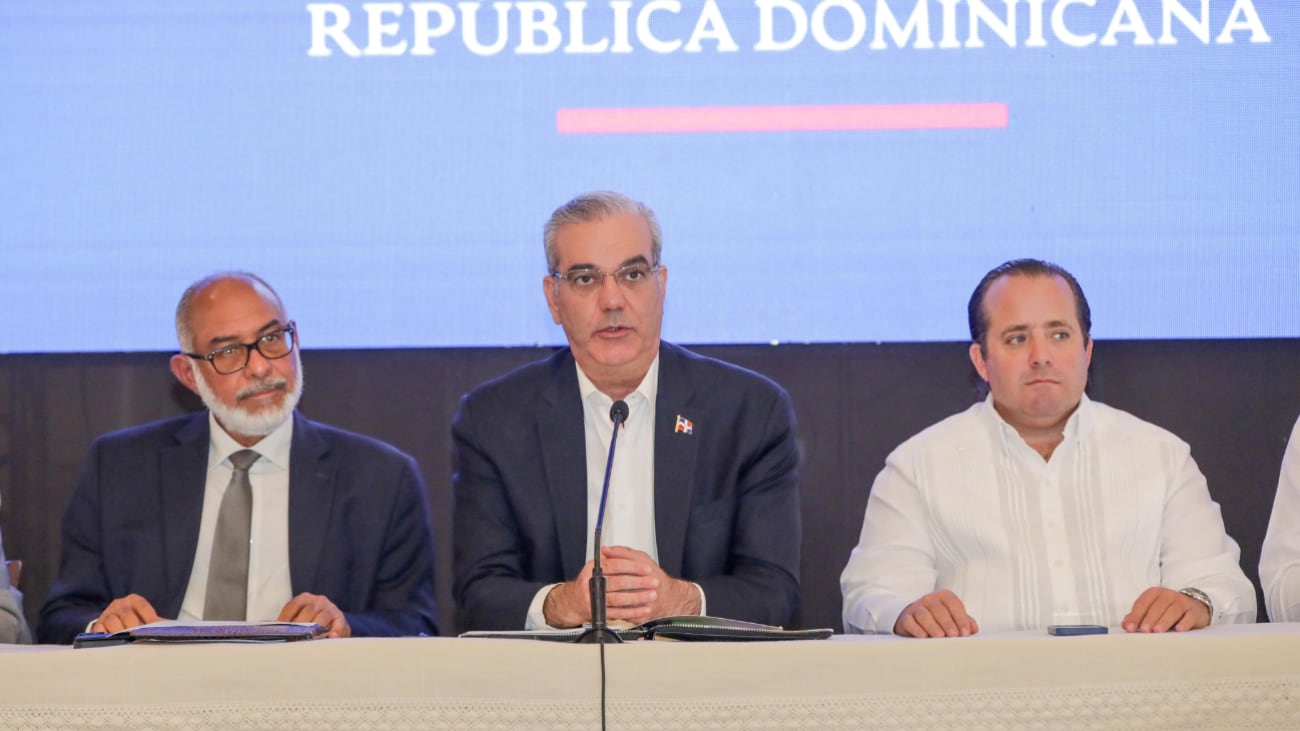
El presidente Luis Abinader informó que las obras incluirán espacios accesibles para personas con discapacidad y adultos mayores. El mandatario sostuvo que la publicación de los montos y las localidades busca reforzar la transparencia sobre el uso de recursos públicos.
“Queremos rendir cuentas en términos de transparencia, y más con unos recursos que son recuperados de la corrupción que se están utilizando en infraestructura deportiva”, afirmó Abinader. También señaló que el desvío de dinero estatal impide la ejecución de proyectos para la población.
El jefe de Estado indicó que las instalaciones previstas funcionarán como espacios de encuentro comunitario y de práctica deportiva para jóvenes.
El programa deportivo suma RD$ 2.232 millones
El ministro de Deportes, Kelvin Cruz, precisó que el conjunto de las obras alcanza RD$ 2.232 millones (USD 37,1 millones). De ese total, RD$ 2.000 millones (USD 33,3 millones) provienen de fondos recuperados y la diferencia, de RD$ 232 millones (USD 3,9 millones), será gestionada desde la Presidencia.
Cruz afirmó que 26 de los 158 municipios dominicanos no contaban con instalaciones deportivas. Mencionó, entre los espacios que requieren intervenciones, el estadio de béisbol de San Juan de la Maguana y los complejos deportivos de San Pedro de Macorís y La Vega.
Los recursos estarán bajo supervisión de una Comisión de Veeduría, encabezada por Persio Maldonado. Según informó el organismo, el proceso de licitación permitió un ahorro de RD$ 125 millones (USD 2,1 millones) frente al presupuesto inicial proyectado.
La comisión también está integrada por monseñor Héctor Rafael Rodríguez Rodríguez, el magistrado Milton Ray Guevara, José Joaquín Puello y Luis Mejía Oviedo, conocido como Luisín Mejía.
Las obras alcanzarán provincias del norte, el sur y el este
En La Romana, el Gobierno construirá el techado multiuso de Villa Hermosa, con una inversión cercana a RD$ 32 millones (USD 532 mil). En Santo Domingo, la cancha multiuso de Guanuma contará con más de RD$ 21 millones (USD 349 mil), dentro de un plan que incluye otros 32 techados en esa demarcación.
En Dajabón, el techado multiuso de El Pino recibirá más de RD$ 28 millones (USD 466 mil). La provincia de Espaillat concentrará dos proyectos: el techado de Veragua, por RD$ 31 millones (USD 516 mil), y el multiuso de San Víctor, con más de RD$ 30 millones (USD 499 mil).
En Santiago, las intervenciones incluyen la cancha de Sabana Iglesia, con más de RD$ 30 millones (USD 499 mil), y la de Puñal, con más de RD$ 28 millones (USD 466 mil). En la provincia Duarte, el techado multiuso Eugenio María de Hostos, en el municipio de Hostos, tendrá una asignación de RD$ 31 millones (USD 516 mil).
El sur reunirá 14 proyectos por más de RD$ 713 millones
La región Sur concentrará 14 estructuras deportivas, con un presupuesto superior a RD$ 713 millones (USD 11,9 millones). En Matanzas, provincia Peravia, se construirá un techado por más de RD$ 28 millones (USD 466 mil).
En Los Cacaos, San Cristóbal, se levantará otro espacio deportivo estimado en casi RD$ 25 millones (USD 416 mil). La provincia Independencia contará con el multiuso de La Descubierta, por más de RD$ 32 millones (USD 532 mil), y el de Cristóbal, con RD$ 31 millones (USD 516 mil).
En Elías Piña se prevén obras en Pedro Santana, por casi RD$ 20 millones (USD 333 mil), y en Juan Santiago, por más de RD$ 26 millones (USD 432 mil). San Juan recibirá RD$ 76 millones (USD 1,3 millones) para reparar el estadio de béisbol Hermanos Suárez.
En Barahona se construirán techados multiusos en Fundación, con más de RD$ 31 millones (USD 516 mil); Jaquimeyes, por casi RD$ 30 millones (USD 499 mil); y El Peñón, con unos RD$ 30 millones (USD 499 mil).
Azua sumará intervenciones en Padre Las Casas, con más de RD$ 30 millones (USD 499 mil); Guayabal, más de RD$ 31 millones (USD 516 mil); Las Yayas, unos RD$ 32 millones (USD 532 mil); Tábara Arriba, más de RD$ 31 millones (USD 516 mil); y Pueblo Viejo, con más de RD$ 30 millones (USD 499 mil).

NEWYou can now listen to Fox News articles!
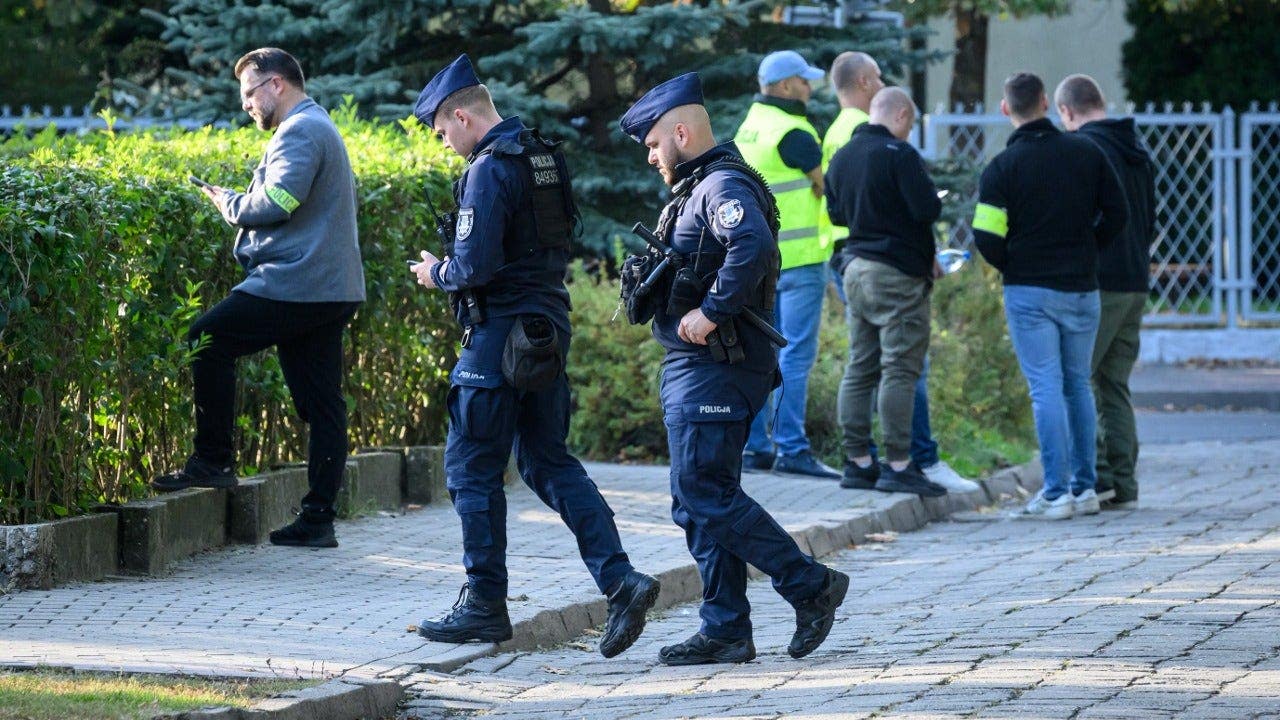
A 15-year-old boy wielding a knife and wearing a helmet-mounted camera attacked a Polish primary school he used to attend, allegedly killing one employee and wounding two others in the country’s second school stabbing in two days.
Authorities are investigating whether the attacks are connected to an online challenge encouraging teenagers to kill as many people as possible.
Police said a 37-year-old woman who worked as a caretaker died in the Thursday morning attack at the school in Leszczydol-Nowiny, northeast of Warsaw.
The school’s head teacher, Krzysztof Ochmanski, was injured while subduing the teenager, officials said. Ochmanski told a radio station he heard a scream and ran into a hallway.
Forensic investigators probe a knife attack at a vocational school in the town of Ostroleka, Poland, Oct. 7, 2026. (Mladen Antonov/AFP via Getty Images)
MOTHER ACCUSED OF TRYING TO KILL DAUGHTERS IN FREEWAY CRASH AND KNIFE ATTACK AS SOLDIERS STEP IN
«He wounded me with the blade of a rather long knife — he had three knives on him — and hit me with the handle,» Ochmanski told the public broadcaster Polskie Radio RDC. «By then, I had managed to restrain him.»
The day before the latest attack, a 19-year-old allegedly wounded 10 people, including himself, at a school in Ostroleka, which is in northeastern Poland.
Also this week, police arrested a 17-year-old in Sierpc in north-central Poland after authorities suspected he was planning a similar attack, Reuters reported.

Members of the media work next to an ambulance parked at the site of a knife attack at a vocational school in Ostroleka Oct. 7, 2026. (Mladen Antonov/AFP via Getty Images)
AMERICAN YOUTH RADICALIZED ONLINE, BUSTED IN SUSPECTED TERROR PLOTS AFTER HATING COUNTRY ON SOCIAL MEDIA
«We fear a grim copycat phenomenon,» Prime Minister Donald Tusk told an emergency meeting, according to Reuters. «We are facing an extraordinary situation. … For the first time, we are dealing with a killer who wore a helmet-mounted camera, intending to film the knife attack.»
Tusk ordered police to visit schools every day to discourage further violence.
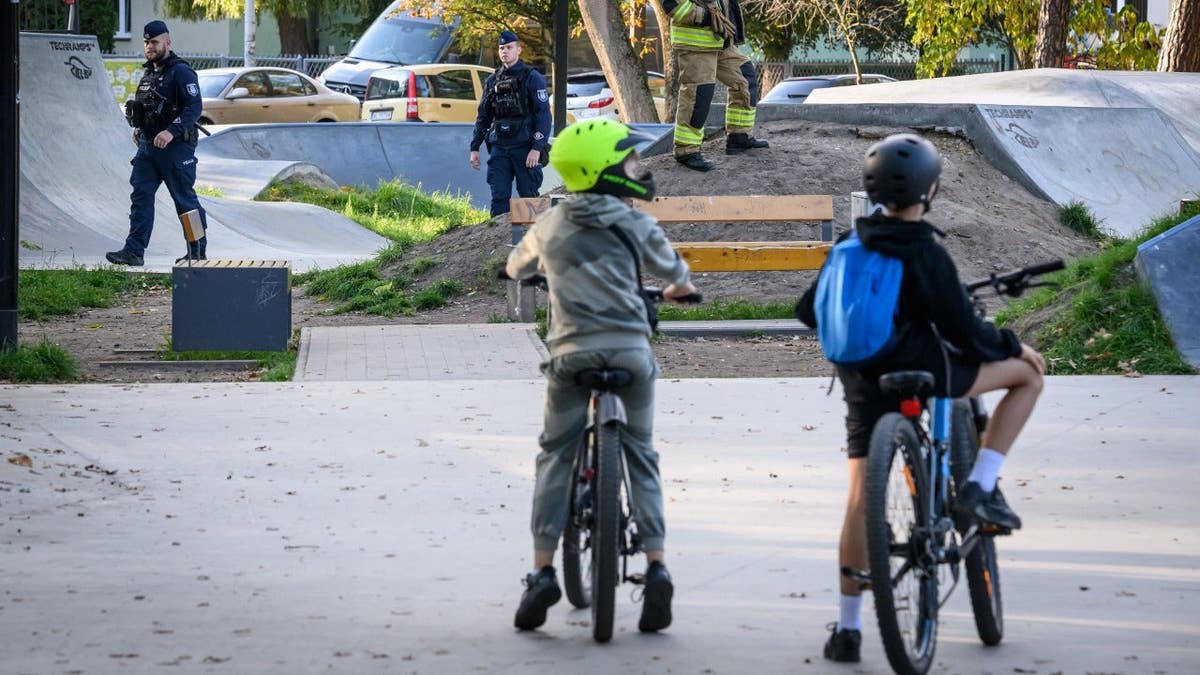
Children look at the scene of a knife attack at a vocational school in the town of Ostroleka Oct. 7, 2026. (Mladen Antonov/AFP via Getty Images)
Nikola, the 18-year-old sister of a boy at the school that was attacked Thursday, told Reuters there were rumors about the social media challenge that the police are now investigating.
«I mean, I didn’t know if it was even real — I still don’t know if it’s true, actually — because it sounds so unreal, so terrifying, just like something out of a movie: some kind of challenge to kill as many people as possible,» she said.
world, trending news, cops, europe
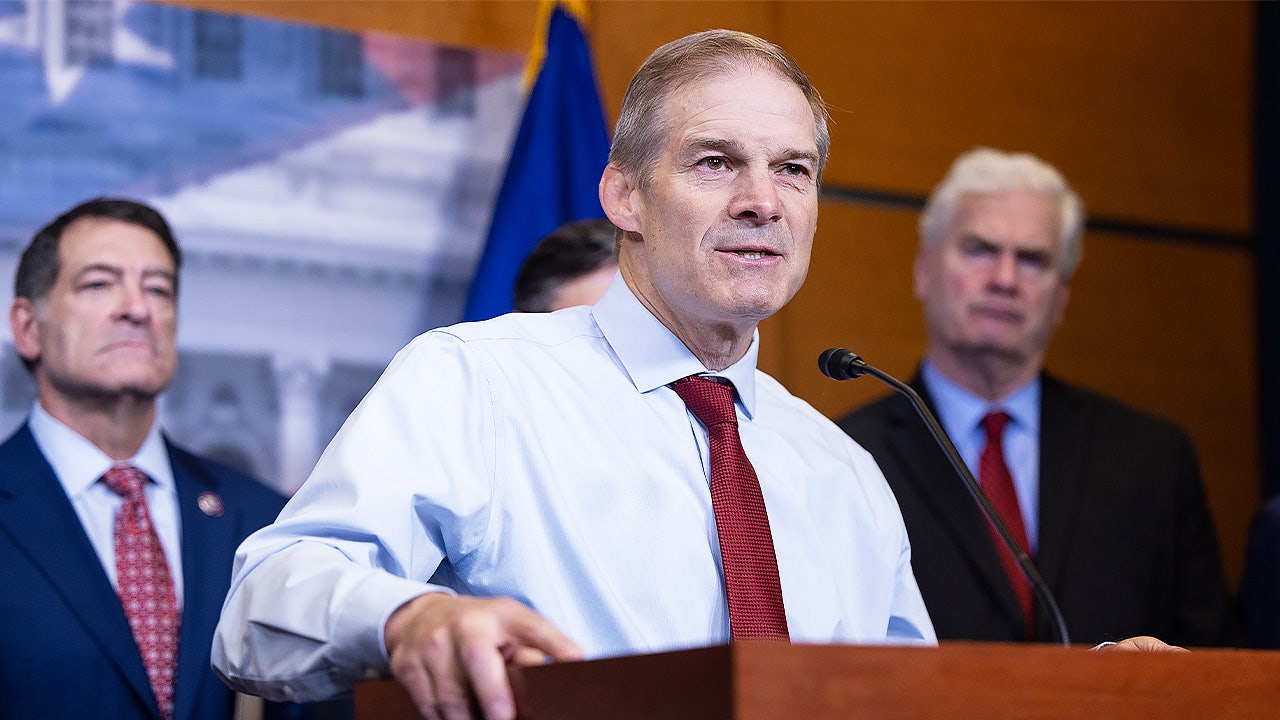
One of President Donald Trump’s most prominent allies in Congress could soon become his highest-ranking defender against a barrage of Democrat-led investigations and impeachment threats.
Several House Republicans told Digital they expect the chamber will slide out of their control come November — and with it, a major shake-up in their top leadership ranks.
«I don’t see a scenario where everyone gets to keep their job,» one House GOP lawmaker bluntly told Digital. «I think [Speaker Mike Johnson, R-La.] would be first out, and then [House Majority Leader Steve Scalise, R-La.] has got to decide if he’s going to run for leader and, can he beat [House Judiciary Chairman Jim Jordan, R-Ohio]?»
Jordan and Scalise’s names came up often, in discussions with various House Republicans, all of whom spoke under the condition of anonymity to discuss internal conference matters.
HOUSE DEMS PLOT TRUMP INVESTIGATION BLITZ IF THEY SEIZE MAJORITY
A second House Republican said Jordan is the «number one name» in talks of a GOP minority leader.
HOUSE CONSERVATIVES UNLEASH MULTIMILLION-DOLLAR MIDTERM BLITZ AGAINST DEM ‘SOCIALIST’ INSURGENCY
The Ohio Republican already enjoys high name recognition among the party base. As the first lawmaker put it, «His celebrity status is very helpful … when Jim Jordan comes to town for you, you put 300 butts in seats.»
That status has been on full display so far this election cycle. Jordan has spent much of August and October traveling across the country campaigning for fellow House Republicans along the political spectrum, from vulnerable moderates to conservative MAGA acolytes.
TOP REPUBLICAN UNLOADS ON RISE OF ‘ANTI-AMERICAN’ CANDIDATES HEADING INTO MIDTERMS: ‘YOU GOT TO BE KIDDING’
It’s a far cry from the Jordan who ran for speaker in October 2023, when former Speaker Kevin McCarthy’s ouster sparked a historic scramble to replace him. Jordan’s bid at the time was marked by fervent conservative support and fierce opposition from moderates, several of whom said they felt threatened by Jordan’s allies for their opposition.
The first House Republican described his current persona as «Jim Jordan 2.0.»
«He’s taken steps to, I think, build out way beyond the Freedom Caucus in terms of people that support him,» that person said. «Like, he’s just a great citizen of the conference.»
But Jordan himself has not publicly pushed any leadership ambitions since the 2023 battle, when Johnson ended up speaker after several weeks of political chaos. The second House Republican said they’ve seen Jordan actively dismiss any such conversations.
He told Punchbowl News earlier this week that he was «focused on winning» the House majority.
The first person said, «I think [Jordan] quietly, without campaigning for it, has built up some infrastructure like that. But also, he could be throwing darts at leadership, and he’s not. He’s just trying to help us win.»
A third House Republican pointed out that, if Democrats win the House in another blue wave, many of Jordan’s most vocal opponents from 2023 will have lost their seats. And unlike a speaker race, where a majority of the full House is needed, a minority leader would only need to win a majority of the GOP conference.
«If we lose 20 or 30 of those guys and all you’re left are guys like me, I think Jim Jordan’s chances are much higher. Because the only people left in the conference are going to be conservative,» the third GOP lawmaker said, adding they would «1,000%» back Jordan.
POWER RANKINGS: FOR THE DEMOCRATS, WHERE COULD IT POSSIBLY GO WRONG?
But a potential minority leader Jordan would not come without a fight. Most House Republicans are privately expecting Scalise, Johnson’s No. 2 and a member of House GOP leadership since 2014, to run for the job.
«It’s very obvious they’re both jockeying for it,» a fourth House Republican told Digital. «Jordan’s a pretty big draw for a lot of folks. I think he might have a play there. But there’s a lot of people who are loyal to Steve, especially those that have been around a while.»
Like other members of House GOP leadership, Scalise has also spent recess traveling the country campaigning for Republican candidates. He is also known as a prolific fundraiser for the party.
A fifth GOP lawmaker said, «I would guess, at this point, that Scalise would be in the lead with Jordan running a close second.»
«And I think it would just depend on, you know, who would people see as a better fighter against the Democrats?» the fifth person posed.
A sixth House Republican said a fight between the Louisiana Republican and Jordan seemed on the horizon if Republicans lost, and argued Scalise is best positioned to continue leading if that majority comes back.
«In some respects, Jim Jordan, I think, would make a pretty good minority leader because he’s a bulldog … [but] I’ve never believed that Jim Jordan would be an effective speaker,» that sixth person said. «I think Steve Scalise probably is the best candidate that we have out there that has experience in dealing with the administration, that understands the must-pass portion of our agenda … and is our best negotiator.»
It would likely be a bruising battle, given there’s no love lost between the two men after their competing bids for speaker after McCarthy’s ouster. Scalise had won a majority of Republicans in a head-to-head against Jordan behind closed doors but ultimately did not see a House floor vote. Jordan’s 2023 bid collapsed after he failed to clinch a majority on the House floor.
JOHNSON DELIVERS BIG FOR TRUMP, BUT FRUSTRATION GROWS ACROSS RAZOR-THIN GOP MAJORITY
But it’s not clear if it may even come to that.
«I think that if Johnson runs for minority leader, he would still get the votes,» the fifth person said. «He’s done everything you could ask of a leader. He’s raised the money, he’s been on the road. He’s cobbled together very difficult votes over the last two years that no one thought possible.»
There is also a world where Republicans defy expectations to keep the House. And in that world, Johnson is all but guaranteed to remain in charge.
«Speaker Mike Johnson is an example of the American Dream. As Speaker, he’s continued to defy the odds with a slim House majority and pass America First-bills,» Trump’s campaign posted on X. «After Republicans win in November, they should re-elect Mike as Speaker quickly!»
If the polls prove correct, however, most people are expecting Johnson to willingly step aside.
«I don’t think he’s going to want to be minority leader after being the Speaker of the House, like, that doesn’t make any sense to me,» the fourth House Republican said.
The third GOP lawmaker was more blunt: «Johnson’s done.»
Johnson himself dismissed any talk of leadership races in an interview with Digital last month.
«I really haven’t given it a moment’s thought because we’re laser focused,» he said when asked if he would seek to be minority leader. «This is a midterm unlike any other, and I’m convinced we are going to defy history and keep and grow this majority.»
If Johnson’s prediction does not pan out, one member of leadership is expected to have a good shot at staying in his place: House Majority Whip Tom Emmer, R-Minn.
Emmer has been privately telling House Republicans that he intends to run for the whip job again no matter what, multiple people told Digital, avoiding a possible collision course with Jordan and Scalise.
«I think it was a brilliant move, saying, ‘You know what? I’m not going to do anything but try to keep my own spot,’» the first House GOP lawmaker said. «I think Tom’s got pretty wide respect, and most of the hand-wringing from people was, ‘I don’t want to have to pick between Tom and Jim.’»
The fifth person said, «It’s my understanding that Emmer is, if there is a race, going to be happy being the No. 2.»
But nothing is a sure thing in an environment where multiple House Republicans have said they are expecting a «bloodbath» in the midterms.
Three GOP lawmakers told Digital they expect Democrats to win between 20 and 25 seats — with Republicans’ redistricting efforts sparing them from an even more devastating loss.
A solid defeat, several House Republicans warned, could have people clamoring for a full leadership shake-up.
The second House Republican said the entire leadership team could be «wiped out» in that situation.
«It strikes me that there wouldn’t be a high likelihood of everybody just being OK with the status quo,» the first person said.
In that case, there is another name people see waiting in the wings for a potential leadership bid: Republican Study Committee Chairman August Pfluger, R-Texas.
«I keep hearing rumors but have not heard that directly,» a seventh House Republican said. «My guess is that he is preparing to make a run in case the opportunity presents itself, but he’s being tactically quiet.»
The second House Republican said they heard his name second only to Jordan in terms of frequency.
«When I was a candidate, I had no idea who he was, but he called me and gave money to my campaign,» the first lawmaker said. «He’s very ambitious, but I don’t know what he’s aiming those ambitions towards.»
Several people speculated that he could run for the No. 2 job as whip if Emmer opted to step aside or was forced to.
The fourth House Republican said they could see a world where Pfluger runs to be chairman of the House GOP campaign arm, the National Republican Congressional Committee (NRCC).
«I think that he’s positioned himself very well to be able to be in some sort of leadership position. I think it just depends on what that looks like,» that person said.
But there is one thing Republican lawmakers seem to largely agree on: November is not looking good.
«Everyone that I have talked to across the country is seeing the same numbers that I’m seeing. So if you’re in anything less than an R+6, I think you’re at risk,» the third House Republican said.
The first person said, «There seems to be a lot of panic buttons being pushed.»
politics, jim jordan, steve scalise, mike johnson, house of representatives politics
INTERNACIONAL
Aluvión en Santiago de Chile: cómo se originó la corriente de barro que arrastró autos en Las Condes
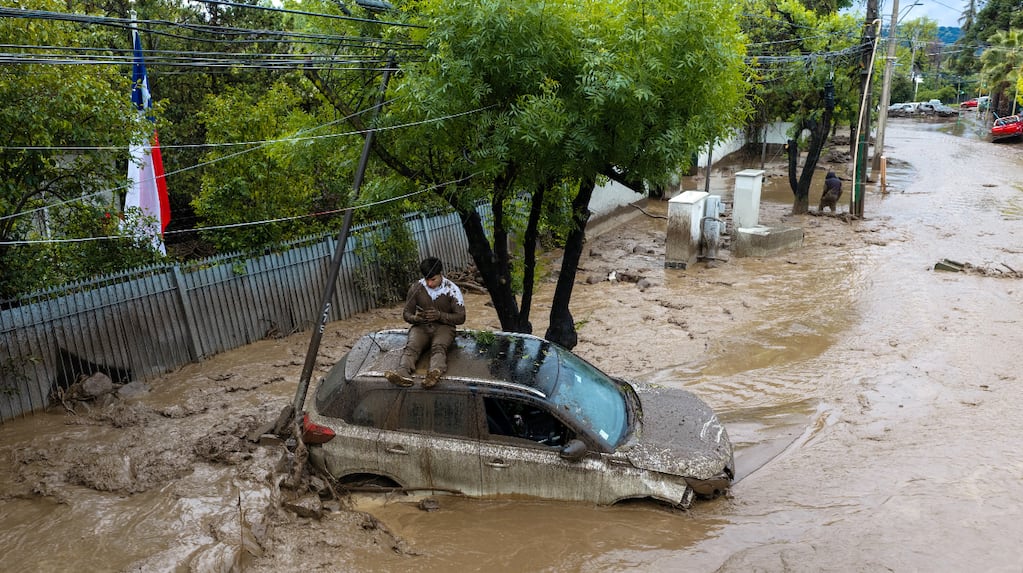
Un violento aluvión arrastró autos, colectivos y escombros por las calles de Santiago de Chile, después de varios días de lluvias intensas en la precordillera. El fenómeno golpeó especialmente a la comuna de Las Condes, donde cayeron 144 milímetros de agua.
La combinación de suelos saturados, conductos de desagüe obstruidos y la pérdida de vegetación por incendios forestales provocó una correntada de barro que desbordó la Quebrada Honda y avanzó sobre las zonas urbanas.
La fuerza del agua sorprendió a los vecinos, destruyó locales comerciales, inundó establecimientos públicos y arrastró vehículos que circulaban por las principales avenidas. En uno de los episodios más impactantes, los pasajeros de un colectivo tuvieron que subirse al techo para escapar del barro.
El presidente de Chile, José Antonio Kast, declaró a Las Condes como zona de catástrofe, mientras los equipos de emergencia comenzaron a retirar los sedimentos acumulados y despejar los sistemas de drenaje.
Por qué se produjo el aluvión en Santiago de Chile y qué ocurrió con los desagües
Las precipitaciones fueron uno de los principales factores que desencadenaron el desastre. Entre el lunes y el martes, algunos sectores de la Región Metropolitana registraron más de 140 milímetros de lluvia, mientras que en otras zonas las mediciones rondaron los 60 milímetros.
La tierra ya estaba saturada y perdió capacidad para absorber nuevas precipitaciones, lo que aceleró el escurrimiento del agua hacia las zonas más bajas.
“El suelo está absolutamente mojado, no da, está totalmente saturado”, explicó Catalina San Martín, alcaldesa de Las Condes.
A las lluvias se sumó otro fenómeno meteorológico. Según explicó Pablo Allard, decano de la Facultad de Arquitectura y Arte de la Universidad del Desarrollo, a ADN Radio, la isoterma cero se ubicó a una altura anormalmente elevada.
Esto provocó que parte de las precipitaciones que habitualmente caen en forma de nieve en la montaña llegaran como agua líquida. Como consecuencia, aumentó rápidamente el volumen que descendió por las quebradas.
Sin embargo, uno de los factores decisivos fue la obstrucción de dos ductos paralelos que debían canalizar el agua fuera del área urbana.
El delegado presidencial de la Región Metropolitana, Germán Codina, explicó que los conductos habrían quedado bloqueados por basura y escombros. Al no poder continuar su recorrido, el agua desbordó la Quebrada Honda y avanzó hacia las calles.
Las precipitaciones también provocaron crecidas de los ríos Mapocho y Maipo. En Talagante, el desborde del Maipo generó inundaciones que afectaron a sectores con viviendas precarias.
El efecto de los incendios forestales y las obras de prevención que no llegaron a instalarse
La magnitud del aluvión también estuvo relacionada con los incendios forestales que afectaron la precordillera de Santiago durante el verano.
El fuego destruyó parte de la vegetación que contribuía a mantener estable el suelo. Sin esa cobertura, las lluvias encontraron grandes cantidades de tierra y sedimentos sueltos que fueron arrastrados pendiente abajo.
Este factor agravó la fuerza destructiva de la corriente y aumentó el volumen de barro que terminó acumulándose en las calles.
El riesgo ya había sido identificado por las autoridades chilenas. El Ministerio de Obras Públicas y el Servicio Nacional de Prevención y Respuesta ante Desastres (SENAPRED) tenían previsto instalar mallas de contención para reducir el arrastre de materiales desde las quebradas.
Sin embargo, esa infraestructura preventiva todavía no estaba operativa cuando ocurrió el aluvión.
La situación abrió interrogantes sobre las medidas de prevención y la capacidad de respuesta ante lluvias extremas, especialmente en sectores urbanos próximos a las laderas de la cordillera.
La alcaldesa San Martín defendió las tareas realizadas antes del temporal. “El trabajo preventivo se hizo, esta lluvia era absolutamente inesperada, es la naturaleza”, sostuvo.
desastre

El Programa de Ciudadanía por Inversión es contrario a la Constitución

El duro pase de factura de Nicolás Repetto a Mario Pergolini tras sus reclamos al aire: “No se puede ser tan manguero”

Hizo el camino del Dibu Martínez, pasó por el hockey y se convirtió en la primera jugadora de Independiente en llegar a la Selección Mayor

La Corte Suprema se reúne este viernes y podría fallar sobre la Ley de Tierras

Alberto Pierri, dueño de Telecentro: “Cuando se ocupa un cargo público lo único que importa es lo que se le deja a la gente”

Video: Neymar le metió un doblete de penal a Rossi

¡Precios de Manhattan con sueldos de Argentina! Cómo los créditos hipotecarios inflaron las propiedades y congelaron el sueño de la casa propia

Escándalo total en la AFA: reventa millonaria, un homenaje paupérrimo a Messi y el pedido urgente de renuncia a Chiqui Tapia

El gobernador de la provincia que más ATN recibió de la Casa Rosada no integró la comitiva de Milei en París

Israeli medical workers who treated Oct 7 wounded relive day terror hit home

 DEPORTE1 día ago
Escándalo total en la AFA: reventa millonaria, un homenaje paupérrimo a Messi y el pedido urgente de renuncia a Chiqui Tapia
- INTERNACIONAL2 días ago
Después de su prohibición, las plataformas de apuestas deportivas y los casinos en línea ya están fuera de servicio en Brasil
- POLITICA2 días ago
Marcha contra la Corte: sectores del PJ, la izquierda, gremios y piqueteros protestan por el fallo que libera la venta de tierras para extranjeros