INTERNACIONAL
Swing state mayor sued as city’s Muslim holiday displays ignite religious-favoritism fight


A federal lawsuit filed Thursday alleges the city of Dearborn spent thousands of taxpayer dollars on public displays celebrating Muslim holidays while ignoring a Christian resident’s repeated requests for Easter and Passover recognition.
Margot Cleveland, a journalist with The Federalist, filed a civil rights lawsuit with the American Freedom Law Center (AFLC) against the city of Dearborn and Democratic Mayor Abdullah Hammoud, alleging the city violated her First and Fourteenth Amendment rights, including protections involving religious establishment, free speech and equal protection.
«The City of Dearborn spent taxpayer money to light up its streets and parks for Ramadan while stonewalling a resident who simply asked that Easter, Passover, and other Christian and Jewish holy days be treated the same way,» Robert J. Muise, AFLC co-founder and senior counsel, said in a statement. «That is a straightforward Establishment Clause violation, and the retaliation our client faced for speaking up about it only compounds the constitutional harm.»
PASTOR UNLEASHES ON DEARBORN AS RELIGIOUS TENSIONS ERUPT AT CITY COUNCIL MEETING: ‘ENOUGH IS ENOUGH’
Dearborn is home to one of the largest Arab American communities in the country. The city had 109,976 residents in the 2020 Census, and 54.5% reported Middle Eastern or North African ancestry. Michigan Avenue, the city’s main thoroughfare, is lined with businesses featuring Arabic-script signs and Middle Eastern cuisine. There are ten mosques within the city limits, according to an online directory.
Hammoud was first elected mayor in November 2021, becoming the first Muslim and Arab American to lead the city of Dearborn.
«What makes this case especially troubling is that City officials, up to and including the Mayor, responded to a citizen’s respectful request for equal treatment with silence, stonewalling, and outright hostility — including the Mayor’s own words telling a Christian resident he is ‘not welcome’ in his own city,» David Yerushalmi, an attorney on the case, said. «Our client is simply asking the City to treat Christians and Jews as equal citizens.»
Lawyers for Cleveland pointed to a September exchange between Hammoud and Christian pastor Ted Barham as evidence of what they allege is the city’s hostility toward Christians. Barham had raised concerns during a City Council meeting over the city’s decision to rename a street after Usama Siblani, publisher of The Arab American News, who has made statements expressing support for Hezbollah.
TRUMP INAUGURATION PASTOR SAYS DEARBORN CHRISTIANS ‘AFRAID’ TO SPEAK OUT IN MUSLIM-MAJORITY CITY
In the exchange, Hammoud called Barham a «bigot» and an «Islamophobe.»
«And although you live here, I want you to know as mayor, you are not welcome here,» Hammoud told the Christian pastor. «And the day you move out of the city will be the day that I launch a parade celebrating the fact that you moved out of the city… because you are not somebody who believes in coexistence.»
But Cleveland’s lawsuit alleges that city leaders ignored her requests for the city to also recognize Christian and Jewish holidays after she began seeing «Ramadan Kareem» banners and large crescent moons displayed across the city in spring 2025. A FOIA request revealed that the city had spent $1,500 on Ramadan banners and $5,000 on the crescent-moon display. The Dearborn Police Department was also selling Ramadan-themed T-shirts.
In emails to the city, Cleveland said she did not want the city to stop celebrating Muslim holidays but wanted equal recognition for Christian and Jewish holy days.
«I much prefer to ensure equality of faith traditions, as opposed to a challenge to the display,» Cleveland wrote in an email.
MASSACHUSETTS HIGH COURT BLOCKS CITY FROM DISPLAYING CATHOLIC SAINT STATUES HONORING FIRST RESPONDERS
Not only did the city allegedly ignore Cleveland’s requests, but in February 2026, it expanded its Ramadan displays, commissioning crescent-and-star lights that were displayed on municipal streetlights across the city.
«This initiative reflects who we are as a city,» Hammoud said in a statement.
Tensions between Cleveland and city officials continued in April, when Cleveland alleges she was told she could attend a community meeting as a resident but not as a journalist. The lawsuit also alleges Hammoud made what it describes as a «snide comment» about residents who criticize the city on social media to monetize their posts.
The lawsuit also alleges that in February 2026, the city expanded its Ramadan displays, commissioning crescent-and-star lights for municipal streetlights across the city.
SIGN UP TO GET THE POLITICS NEWSLETTER
Cleveland pushed back, according to the lawsuit, saying she was simply «a concerned resident who was ignored when I asked for the City to treat Christians and Jews equally.»
«Despite the repeated requests, they treated her as if she were an outsider and not a full member of the political community,» Muise told Digital.
The lawsuit comes during Michigan’s closely watched 2026 U.S. Senate race, with Democratic nominee Abdul El-Sayed, who is Muslim and the son of Egyptian immigrants, facing Republican nominee Mike Rogers for the state’s open Senate seat. Religion and antisemitism have become points of dispute in the race, with Republicans and some Democrats criticizing El-Sayed over his association with streamer Hasan Piker, who said the U.S. was worse than al Qaeda «pound for pound, as far as the number of deaths,» while arguing that U.S. military actions that kill civilians can amount to acts of terror.
At the same time, El-Sayed and his supporters have accused opponents of targeting him with anti-Muslim rhetoric.
Digital reached out to Hammoud’s office and Cleveland’s attorneys for comment.
first amendment religion us, controversies, religion, controversies state and local, michigan, local









INTERNACIONAL
Trump administration weighs targeting Iran’s top regime leaders in bid to end war: report
NEWYou can now listen to Fox News articles!
The Trump administration has renewed internal discussions about potentially targeting senior Iranian regime leaders in strikes that some officials believe could end the ongoing war, according to reports.
Citing a U. S. official and another source, NBC News reported Tuesday that some officials believe eliminating senior figures could pressure Tehran to end the conflict by showing that Washington can locate and strike the regime’s leadership at any time.
Though the option has long been under consideration, it has «been under renewed discussion in recent weeks» as President Donald Trump deliberates over the next phase of the war, two sources told the outlet.
The deliberations come amid reports that Iran could be developing a radioactive «dirty bomb» and a report citing U. S. intelligence assessments of potential Iranian plots involving chemical weapons aimed at senior officials in Washington.
TRUMP WARNS IRAN ABOUT REPORTED PLOT AGAINST ADMIN OFFICIALS: ‘WE TAKE IT VERY SERIOUSLY’
Iran’s new supreme leader, Mojtaba Khamenei, the second son of late Iranian Supreme Leader Ayatollah Ali Khamenei, attends a meeting in Tehran, Iran, in a photo from March 2016. (Rouhollah Vahdati/ISNA/WANA/Reuters)
«We know a lot about what’s happening in Iran. We know everything they say. We know who they are, where they are. We’ll find out about it. We will not allow that,» Trump had told reporters at the White House Nov. 20.
Iran’s surviving leadership includes Supreme Leader Mojtaba Khamenei, who succeeded his father, Ayatollah Ali Khamenei, after the elder Khamenei was killed in the opening strikes of the war Feb. 28.
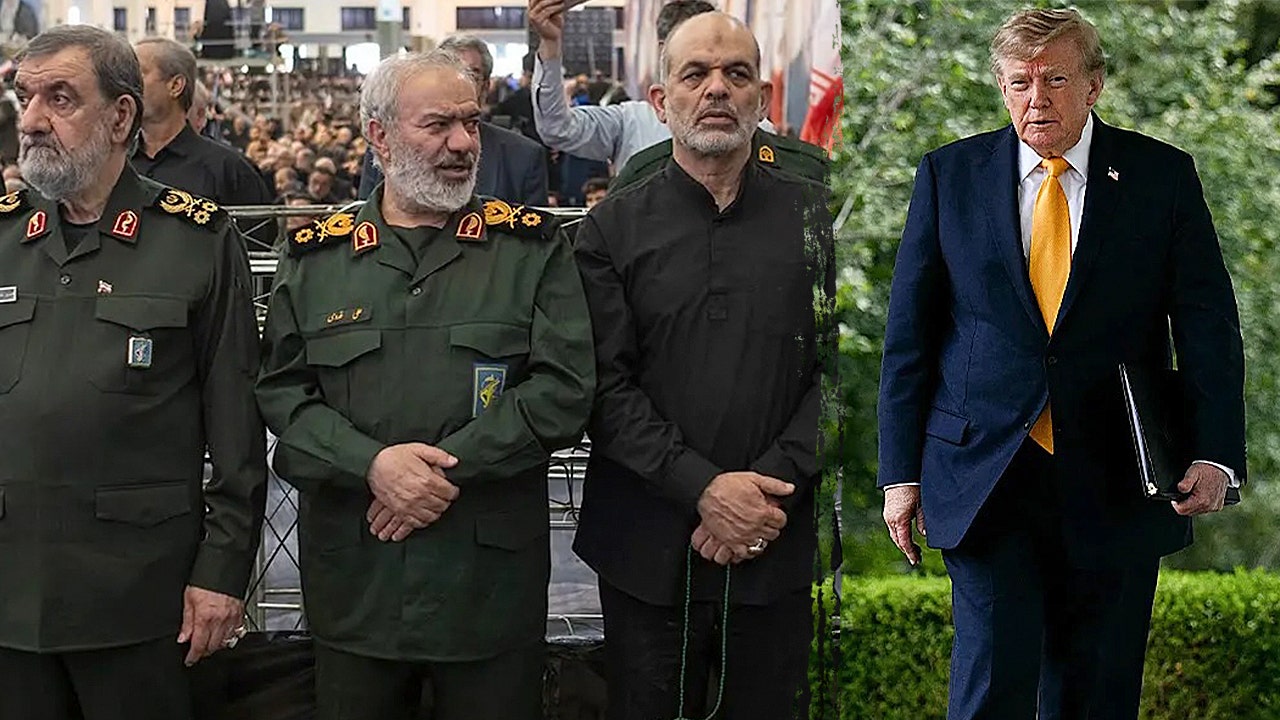
Other senior figures in Iran’s military and national security apparatus include Islamic Revolutionary Guard Corps (IRGC) Commander Ahmad Vahidi, armed forces chief of staff Ali Abdollahi, army chief Amir Hatami and Mohsen Rezaei, a former IRGC commander in chief reportedly appointed secretary of Iran’s Supreme National Security Council in August 2026.
AFTER 6 MONTHS OF WAR, US MUST PREPARE FOR A FUTURE AFTER IRAN’S GOVERNMENT FALLS

President Donald Trump monitors U.S. military operations in Iran after an Israeli strike in Tehran Feb. 28, 2026. (@WhiteHouse/X)
NBC News did not identify any of those officials as specific targets of the operations under discussion.
Administration officials opposed to the proposal have reportedly warned that targeting Iranian leaders could expose American officials to retaliatory attacks, stiffen the resolve of surviving regime figures and undermine future diplomatic efforts to end the conflict, now in its ninth month.
The administration continues to weigh military options, enforce its naval blockade and assert control over the strategically vital Strait of Hormuz.
The debate comes months after U. S. and Israeli strikes killed Iran’s supreme leader and other senior military and intelligence officials, igniting a prolonged conflict centered on Tehran’s nuclear program, ballistic missile capabilities and regional military activities.
Mojtaba Khamenei, who was reportedly injured in the strikes that killed his father, has not been seen publicly since assuming power, though he has warned Washington and Jerusalem against resuming major attacks on Iranian leadership.
MOJTABA KHAMENEI DEFIES ‘MALICIOUS’ ATTACKS AS US ARMY ZEROES IN ON IRAN’S 350,000 TROOPS
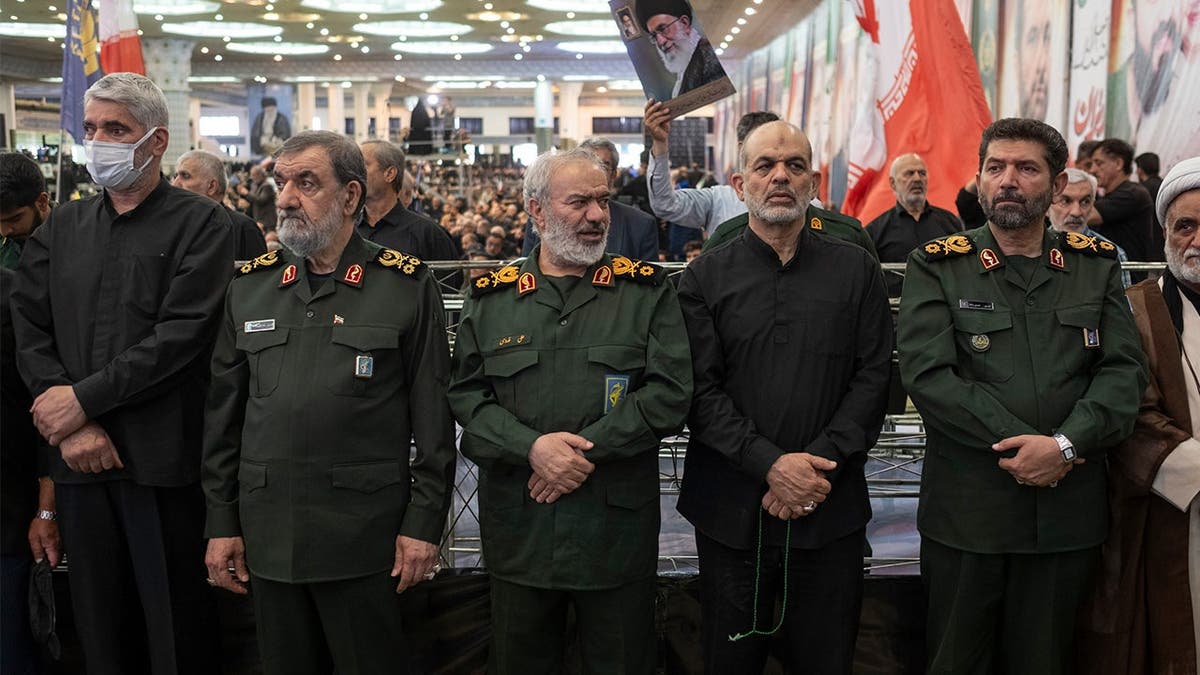
Islamic Revolutionary Guard Corps (IRGC) generals and commanders Mohsen Rezaei, second left; Ali Fadavi, third left; Ahmad Vahidi, second right; and Hassan Hassanzadeh, right, attend a memorial ceremony for IRGC commanders, nuclear scientists and civilians killed in the Iran-Israel war at the Imam Khomeini Grand Mosque in downtown Tehran, Iran, July 2, 2025. (Morteza Nikoubazl/NurPhoto via Getty Images)
«If the enemies once again launch military or terrorist attacks, it is the armed forces of the Islamic Republic and the Iranian nation that will determine the time and conditions for ending them,» a statement attributed to Khamenei said.
The warning reportedly followed a meeting with senior Iranian military commanders, including Abdollahi, Hatami and Vahidi. On Oct. 31, Khamenei also directed Iran’s armed forces to prepare an «immediate, impactful and geographically unrestricted response» to any future threats.
«The United States is in a very strong position with control of the Strait of Hormuz and the Iranian economy collapsing,» a White House official told Fox News Digital Tuesday.
«The president has been clear that the greatest naval blockade in history, Operation Economic Outcast, and the new Task Force Iron Gate will continue with full effect.
«President Trump has many options at his disposal and will make the best possible decision to ensure Iran can never possess a nuclear weapon. «
world, war with iran, iran, national security, foreign policy, geopolitics, middle east foreign policy
INTERNACIONAL
Por qué una suricata sola en el desierto puede brindar claves sobre la memoria a largo plazo
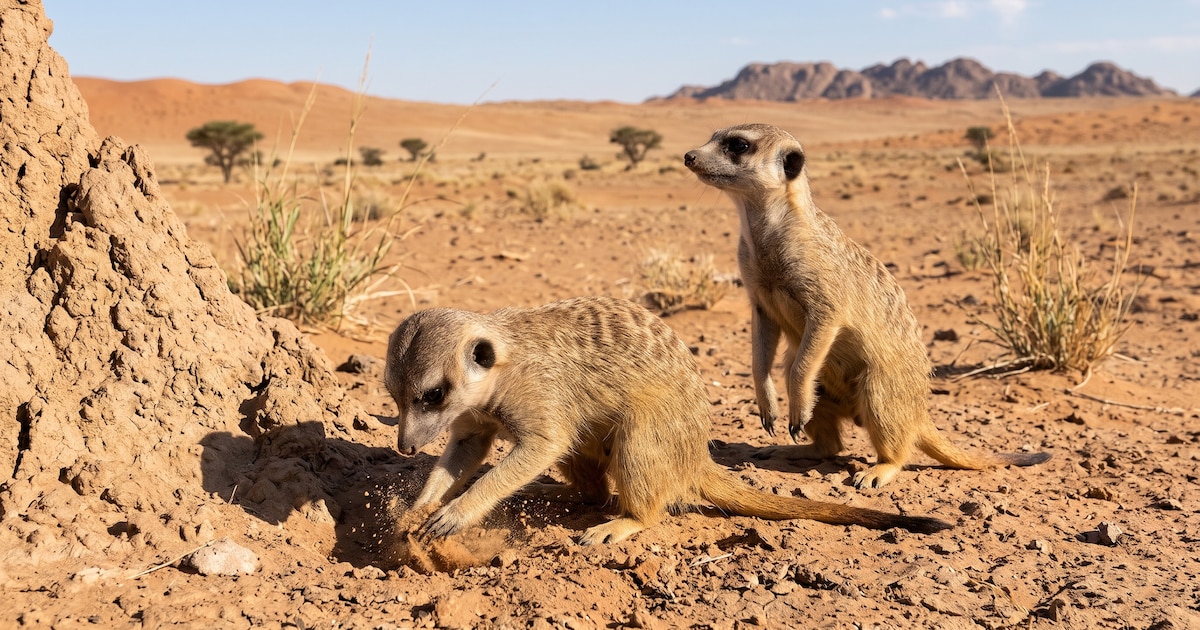
Un estudio realizado entre enero y marzo de 2025 reveló que las suricatas (Suricata suricatta) son capaces de orientarse solas en el desierto del Kalahari tras ser separadas de su grupo, utilizando la memoria a largo plazo para regresar a su madriguera o reunirse con sus compañeros. La investigación fue liderada por Mathilde Martin, de la Universidad de Zúrich, en colaboración con el Proyecto Kalahari Meerkat (PKM).
El equipo trasladó a 20 suricatas adultas hasta 1,5 kilómetros desde el punto donde fueron capturadas, una distancia mayor a la que recorre un grupo en un día completo. 18 de los 20 animales lograron llegar a un lugar conocido o reencontrarse con sus compañeros tras ser liberados. Los resultados, publicados en el Journal of Experimental Biology, desafían la idea de que dependen exclusivamente del grupo para moverse por su territorio.
Catorce suricatas se dirigieron primero a la madriguera donde habían dormido

Luego de ser liberadas, 16 de las 18 suricatas que abandonaron el lugar de liberación se orientaron hacia un destino fijo. De ellas, 14 eligieron como primer destino la madriguera donde el grupo había pasado la noche, según constató el equipo de investigación.
La distancia en línea recta hasta el objetivo representó, en promedio, el 82% del camino real recorrido por cada animal, este dato indica que los trayectos fueron notablemente directos una vez que cada suricata tomó una dirección.
Dos machos nunca abandonaron el punto de suelta y debieron ser devueltos a sus colonias por los científicos tras 90 minutos. Los investigadores atribuyeron este comportamiento al estrés y no a una falta de conocimiento del territorio.
Las zonas de suelta no habían sido visitadas en al menos 30 días

Los sitios de liberación fueron elegidos dentro del espacio de cada agrupación, pero en áreas que no habían sido recorridas en al menos un mes. Esto llevó al equipo a concluir que las suricatas se guiaron por su memoria a largo plazo del territorio y no por rastros recientes de sus compañeros.
El PKM trabaja con alrededor de 15 grupos silvestres habituados a la presencia humana, lo que facilitó la captura y el equipamiento de los animales. “Nuestro trabajo con las suricatas nos permite distraerlas con una botella de agua y colocarles el collar en pocos segundos mientras beben de pie; una mera formalidad para ellos”, explicó Martin en declaraciones recogidas por earth.com.
Cada individuo recibió una etiqueta GPS que registraba su posición una vez por segundo, además de un transmisor de radio y una pequeña grabadora de audio para registrar sus llamados.
Las suricatas exploraron el terreno mirando diez veces más de lo que olfatearon

Durante el trayecto de regreso, las suricatas dedicaron aproximadamente dos tercios de su tiempo a buscar señales del entorno, mientras que la mayor parte del tiempo restante fue empleado en desplazarse. Pocos individuos se detuvieron a comer; los que lo hicieron solo tomaron milpiés que se arrastraban sobre la arena.
Para orientarse, los animales se paraban sobre sus patas traseras o trepaban arbustos y troncos para examinar el paisaje. En total, invirtieron 10 veces más tiempo mirando que olfateando. Sin embargo, esta proporción cambió al acercarse al destino: en esa etapa final, el olfateo ocupó más del 20% del tiempo dedicado a buscar señales.
Los investigadores también observaron que las suricatas olfateaban con frecuencia los pequeños refugios que los animales excavan a lo largo de su territorio. Un experimento previo ya había demostrado que estos ejemplares recuerdan dónde están esas excavaciones, por lo que el equipo sugirió que podrían funcionar como puntos de referencia en su mapa mental.
La experiencia individual previa no predijo el desempeño de cada animal

El equipo evaluó si ciertos factores individuales podían anticipar cuál ejemplar navegaría mejor. Se analizaron la edad, el tiempo dedicado a tareas de vigilancia, la frecuencia con la que marcaban el espacio con feromonas y cuánto excavaban en los refugios. También se consideró si era subordinado y si había realizado desplazamientos solitarios previos en busca de pareja o por haber sido expulsado temporalmente del grupo por la hembra dominante.
Ninguno de esos factores resultó predictivo, tampoco se encontró una diferencia clara entre machos y hembras, aunque el estudio contó con solo cinco ejemplares femeninos frente a 15 masculinos.
Los autores consideran que la explicación está en la estabilidad del territorio: con una superficie que la comunidad recorre entre 0,5 y 1 kilómetro por día, es probable que cada adulto haya cruzado la totalidad del espacio varias veces antes de alcanzar la madurez. En ese sentido, señalaron que las palomas de distintas edades también son capaces de regresar a su hogar con igual eficacia.
Trece suricatas lograron reunirse con su grupo de forma autónoma
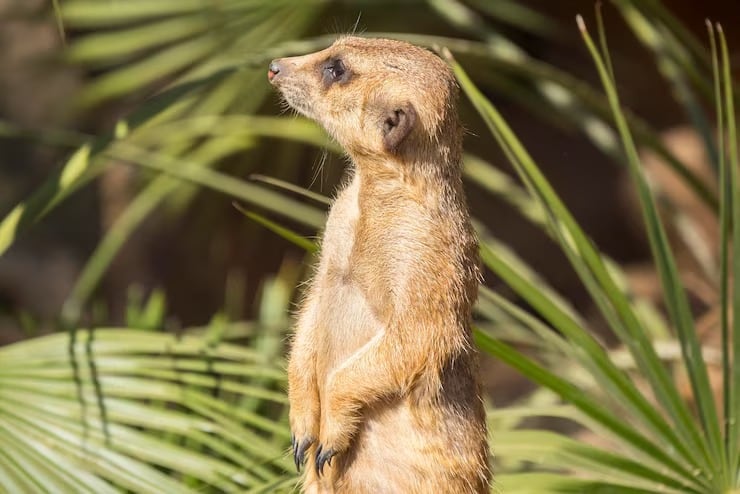
Al finalizar el recorrido, 13 de los 20 animales encontraron a su grupo por sus propios medios. El más lento tardó casi tres horas. Otros cinco llegaron a la madriguera o al punto de captura, pero no lograron encontrar a la comunidad dentro del límite establecido y debieron ser asistidos por el equipo.
El coinvestigador Benjamin Robira indicó que los especialistas tienen previsto profundizar en la comprensión del mapa mental que las suricatas construyen de su zona, así como en los mecanismos que emplean para moverse de un punto a otro.
Los autores reconocieron que una muestra de 20 individuos es reducida y que todos los evaluados eran adultos subordinados mayores de 10 meses; los cachorros y los animales dominantes no fueron incluidos en el estudio. Además, todas las sueltas se realizaron dentro del territorio familiar, por lo que los hallazgos no permiten saber cómo se comportaría un ejemplar en un entorno desconocido.
suricata,Suricata suricatta,desierto
INTERNACIONAL
Polémica ambiental en EE.UU.: el Ejército pidió evacuar un pueblo para detonar 4500 kilos de un material explosivo inestable

El Ejército de Estados Unidos pidió evacuar un pequeño pueblo de Iowa y sus zonas aledañas antes de la detonación controlada, prevista para el miércoles, de 4500 kg de material explosivo inestable, en medio de una creciente polémica ambiental.
El plan es destruir las reservas de azida de plomo, que se utilizaba como detonador para activar otros explosivos en municiones. Sin embargo, el material está degradado y corre el riesgo de una detonación espontánea.
Numerosos residentes de Middletown sellaron sus ventanas y puertas como precaución para impedir la entrada de cualquier polvo de plomo altamente contaminante que pudiera resultar de la detonación.
Otras personas que viven más lejos expresaron preocupación en redes sociales sobre las posibles trayectorias que podría seguir la nube, dependiendo de los cambios en el viento.
Las autoridades reconocieron que el plomo es tóxico y recomendaron que la gente permanezca en interiores cuando ocurra la detonación, y que después limpie con agua las superficies exteriores para limitar la exposición a cualquier partícula de este metal.
Qué está pasando en Iowa
La Agencia Federal para el Manejo de Emergencias (FEMA) está “apoyando la reubicación recomendada de todos los residentes de Middletown, Iowa, y de las áreas circundantes afectadas”, por “precaución extrema”, según una advertencia de seguridad pública.
Middletown tiene unos 360 habitantes. La explosión controlada ha suscitado temores de contaminación por plomo en el área circundante.
“Existe consenso entre los expertos de todo el país de que una detonación controlada y mitigada de la azida de plomo (…) es preferible a una detonación espontánea y no controlada”, declaró el secretario interino del Ejército, Adam Telle, en una conferencia de prensa.
La detonación fue autorizada por una corte federal de apelaciones.
En un comunicado emitido el lunes por la noche, el Ejército indicó que está procediendo con una remoción controlada de 68 barriles de azida de plomo en coordinación con autoridades estatales, locales y federales. “Esta es una decisión por consenso”, publicó Telle en redes sociales.
Unidos

Las acciones argentinas retomaron las pérdidas, contagiadas por las ventas de Wall Street

“¿Ustedes creían que esto iba a ser fácil?”, la frase de Macri en el tráiler de un documental del Pro

El comunicado completo de la UBA tras la suspensión del homenaje a Mario Santucho

Trump administration weighs targeting Iran’s top regime leaders in bid to end war: report

Boca Juniors vs Indepndiente Rivadavia: formaciones, hora y dónde ver por tv

Por qué una suricata sola en el desierto puede brindar claves sobre la memoria a largo plazo

Financial Times duda de la economía argentina: riesgo país, financiamiento e imagen Milei

Agustín “Rada” Aristarán se despide de Chanta: “Con esta obra dejé de ser un impostor”

NYC college put on notice after Jewish campus group shunned by student government: ‘rude awakening’

De qué murió el ex de Maypi Delgado, el padre de su hija: las sensibles circunstancias y el dolor de la famosa

 ECONOMIA2 días ago
Financial Times duda de la economía argentina: riesgo país, financiamiento e imagen Milei
- CHIMENTOS3 días ago
Agustín “Rada” Aristarán se despide de Chanta: “Con esta obra dejé de ser un impostor”
- INTERNACIONAL3 días ago
NYC college put on notice after Jewish campus group shunned by student government: ‘rude awakening’