INTERNACIONAL
The Hitchhiker’s Guide to why removing Ilhan Omar from Congress could be harder than Trump expects


Republicans hope there are lots of Democrats who won’t win re-election next week and return to Capitol Hill. Republicans are imploring voters to kick them out.
But President Trump is focused on bouncing one Democrat from Congress who likely wins re-election in a solidly blue district. That’s Rep. Ilhan Omar (D-Minn.). She carried her district two years ago with nearly three-quarters of the vote. But President Trump questions whether Omar is in the country legally and, therefore, qualified to sit in Congress.
«She used a fake name to be sworn in,» said the President. «She’s a little troublemaker.»
The Department of Justice is investigating Omar for potential immigration fraud. Federal authorities raided her Washington, DC home recently and removed 17 items. That included phones, notebooks, a camera and a Somali phrase book for her kids.
President Trump suggests that her name is not «Ilhan Omar» and that it’s «an entirely different name name. Ihan Nur Sayeed Elmi. It’s close.»
A federal filing in that inquiry lists the Congresswoman’s name as «Ilhan Nur Said Elmi, a/k/a Ilhan Abdullahi Omar.»
That’s why the President says «she must immediately resign from Congress.»
A reporter for Fox Digital confronted the Congresswoman about her name.
SOMALI RAP PROMISING TO ‘SCATTER’ ENEMIES UNDERSCORES OMAR’S SERENE LAKESIDE VIDEO
«Is your name Ilhan Sayed, Ilhan Nur Sayed Alami, or Ilhan Abdullahi Omar?» asked Rashid Umar Abbasi, working for Fox.
«Ilhan Abdullahi Omar. You know it,» replied Omar.
«Ma’am?» asked Abbasi for clarification.
«It’s Ilhan Abdullahi Omar,» she confirmed.
The Clerk of the House of Representatives officially lists the Congresswoman as solely «Ilhan Omar» on 15 different financial disclosure reports dating back to 2018. That’s even before she entered Congress. The same with the Minnesota state legislature where Omar served prior to coming to Washington.
The discrepancy is why the President wants the House to banish Omar.
«She will not be legally allowed to be a member of that august body that sits in Washington,» said President Trump.
But it’s not his call.
However, Article I, Section 5 of the Constitution grants both bodies of Congress final authority about who it admits to its membership.
At least one House Republican is willing to explore that. But only if the facts merit it.
«The House has the prerogative to seat or not seat and to throw Members out if it so chooses,» said Rep. Morgan Griffith (R-Va.). «There ought to be good sound reasons for it.»
It’s a different set of rules, but Griffith had experience with this as the Virginia House of Delegates grappled with a similar issue about seating lawmakers in the Commonwealth in 1988.
But Congress is altogether different.
«It would be extraordinary. And it should be extraordinary and it should not be used except in extraordinary circumstances,» said Griffith.
Yours truly asked what would meet that bar to block someone from serving in the House.
«It’s like the Supreme Court said about pornography. I’ll know it when I see it,» said Griffith, paraphrasing late Justice Potter Stewart from a key 1964 obscenity case.
ILHAN OMAR HIT WITH EXPULSION THREAT AS GOP LAWMAKER VOWS TO BOOT HER FROM CONGRESS OVER DOJ PROBE
House Republicans have two options to deal with Omar if they are truly determined to take action – regardless of what is proven or not. Qualifications for the House are pretty simple. You must be a citizen and a resident of the state you are representing. And, you must be 25 years old. You could even be convicted of a crime and serving time in jail. The Constitution is silent on all other credentials. You could also have a resume which is without a blemish. It doesn’t matter. The House could still take action against you.
The first conceivable option could come now. The Constitution grants the House and Senate the right to expel Members – provided there’s a two-thirds vote. Any scenario to expel Omar seems remarkable. Especially since she hasn’t been convicted of a crime. And even if she is charged, there are lots of other issues which could emerge before a trial.
It would be strange to have the executive branch of government trying to remove a Member of the legislative branch of government. Moreover, it’s likely that the House counsel would contest any effort by federal prosecutors to procure Omar’s official House communication devices as well as documents. There’s a firewall between the legislative branch and executive branch known as the «Speech or Debate Clause.» Article I, Section 6 of the Constitution grants lawmakers privileges tied to their official duties. So getting those papers — let alone potentially deporting her as some have suggested – is a far cry. Especially since she’s a Member and this all hinges on expulsion.
Moreover, two-thirds of the House will never vote to expel a Member under these circumstances unless there’s ironclad proof of wrongdoing. That’s why the House has only expelled six Members in its history. The last was former Rep. George Santos (R-N.Y.) in 2023.
However, what may be an issue is whether or not there could be an objection to seating Omar when the new Congress convenes in January.
In 1968, then Rep. Adam Clayton Powell (D-NY) faced a criminal investigation. House Speaker John McCormack (D-Mass.) refused to seat Powell – even though he met all other requirements. The Supreme Court ruled in Powell v. McCormack that the House can’t exclude a Member if they meet the basic standards to serve in the House.
TRUMP IMMIGRATION WIN COULD STRENGTHEN ADMIN’S HAND IN LOOMING SUPREME COURT FIGHT
That said, it’s possible there could be motions not to seat Omar – or even other progressive Members-elect who have said controversial things about the U.S. and Constitution. Such a motion would come right after the House chooses a Speaker. But the Speaker has not sworn-in the rest of the Members. The House would then swear-in everyone – except the Member or Members-elect who may face questions about serving. Once the House swears in the rest of the body, it can then vote on a motion not to expel those persons, table the motion, or refer the motion to a committee for investigation.
In 1985, the House did not swear-in Rep. Frank McCloskey (D-Ind.) and decided to investigate whether or not he won his seat in the Hoosier State. The House didn’t swear-in McCloskey for several months.
Based on Powell v. McCormack, it’s hard to envision a scenario where the House declines to seat someone. But it might not do it immediately based on the McCloskey case.
Of course, it’s always probable that the House could seat someone – and then expel them. That doesn’t collide headlong with the Powell decision. But considering that the House has only expelled six members, those circumstances are doubtful, too.
What’s in a name? Especially for Ilhan Omar. Her adversaries may raise questions about her name. But it’s doubtful they can do anything about her position.
donald trump, ilhan omar, congress, house of representatives politics, senate, justice department, immigration, politics





INTERNACIONAL
Una nena de 5 años con autismo murió ahogada durante unas vacaciones: la pista que complicó a sus padres

A fines de agosto de este año, una nena de 5 años, Saylor Hayes, estaba de vacaciones con su familia en Carolina del Sur, Estados Unidos. De un momento a otro, desapareció de la casa que sus padres alquilaban.
La nena tenía autismo severo no verbal y contaba con un dispositivo de rastreo que utilizaba para evitar que se alejara sin supervisión. Sin embargo, cuando los equipos de búsqueda intentaron localizarla, descubrieron que el transmisor estaba a más de 300 kilómetros, en la casa familiar de Virginia.
Al día siguiente encontraron su cuerpo en un río. Inmediatamente, las autoridades detuvieron a sus padres y ahora la autopsia confirmó que murió ahogada.
La desaparición de la nena se produjo el 30 de agosto de este año en Pawleys Island, en el condado de Georgetown. Según la reconstrucción inicial de los hechos, Saylor se alejó de la propiedad que alquilaba su familia y quedó sin supervisión a unos 15 metros de una pileta. La nena tenía antecedentes de escaparse y una conocida atracción por el agua, por lo que necesitaba cuidados especiales.
Cuando sus padres denunciaron la desaparición, se desplegó un amplio operativo que involucró a más de 200 vecinos y distintas fuerzas de seguridad. Participaron policías, buzos, perros rastreadores, drones, helicópteros y hasta un vehículo de la Guardia Costera.
Al día siguiente, cerca de las 9.45, agentes del Departamento de Recursos Naturales de Carolina del Sur encontraron el cuerpo de la nena en el río Waccamaw, cerca de Hagley Landing.
Una pista clave
Uno de los elementos centrales de la investigación fue el dispositivo que Saylor utilizaba desde junio de 2024 como parte de Project Lifesaver, un programa que ayuda a localizar a personas con riesgo de alejarse de sus cuidadores por distintas condiciones cognitivas.
El sistema funciona mediante un transmisor de radiofrecuencia que se coloca en una pulsera especial alrededor del tobillo. Según explicó el sheriff de Washington, Blake Andis, el 11 de agosto el dispositivo de Saylor todavía estaba colocado y funcionaba correctamente. Sin embargo, las autoridades determinaron que había sido retirado antes de que la familia viajara a Carolina del Sur.
Los investigadores encontraron el aparato dentro de un vehículo en la propiedad familiar de Virginia. La pulsera no podía retirarse simplemente desabrochándola: para sacar el aparato era necesario cortar la banda. Además, el sistema estaba diseñado para permanecer colocado incluso durante el baño o clases de natación.
Las órdenes de detención sostienen que John Herb Hayes III y Geordyn Nichole Hayes alentaron a los equipos de búsqueda a utilizar Project Lifesaver para encontrar a su hija, aunque sabían que no llevaba el dispositivo. También los acusaron de intentar desviar los rastrillajes de la zona de agua donde finalmente apareció el cuerpo.
Otro dato que llamó la atención de los investigadores fue que las autoridades de Virginia no habían recibido un aviso previo sobre el viaje de la familia. El programa recomienda informar los desplazamientos para que los organismos locales puedan coordinar la asistencia si una persona desaparece fuera de su lugar de residencia.
ahogada
INTERNACIONAL
Federal prosecutor warns Sen Warren of ‘legal consequences’ if records aren’t preserved in Trump-linked probes

A federal prosecutor on Sunday warned Sen. Elizabeth Warren, D-Mass., of «significant legal consequences» if she failed to preserve records tied to potential congressional investigations involving allies of President Donald Trump.
In a letter to Warren, who is poised to become Senate Banking Committee chair in January, U.S. Attorney for the Southern District of Texas Aaron Reitz accused the senator of planning «to target private individuals close to President Trump» with investigations.
«You appear eager to wield your future gavel like a tomahawk, hunting for the scalps of President Trump’s private associates,» he wrote to Warren, currently the top Democrat on the Senate Banking Committee.
Reitz’s letter and accompanying social media post include various puns and references to Native Americans that appear to mock Warren over previous claims about her Native American heritage. Trump and his allies have mocked Warren for years, including by calling her «Pocahontas.»
‘LAWYER UP’: DEMS IMMEDIATELY PUT TRUMP ON NOTICE AMID REPUBLICANS’ MIDTERM BLOODBATH
The letter demands that Warren preserve documents and communications Reitz considers relevant to his allegations that she intends to misuse congressional investigations against people associated with Trump.
«I am writing to give you formal notice of your obligation to preserve all documents, communications, and other electronically stored information relevant to your intent to weaponize congressional investigations and deprive citizens of their core constitutional rights in violation of 18 U.S.C. §§ 241 and 242. You are obligated to preserve all potentially relevant evidence related to your efforts to suppress associational activities related to President Trump and the Trump Administration,» his letter reads.
«Failure to do so may result in sanctions, adverse-inference instructions, or other penalties, and may carry significant legal consequences,» Reitz added.
The letter gives Warren until 6 p.m. ET on Nov. 23 to confirm in writing that she received the notice and took steps to preserve the requested records.
WHITE HOUSE LAWYER’S HARDBALL WARNING TO DEMS HAS LEGAL EXPERTS ON BOTH SIDES QUESTIONING ONE KEY THREAT
The letter does not establish that Warren violated federal law. Congressional investigations conducted for legitimate legislative purposes generally receive constitutional protection under the Speech or Debate Clause, although the scope of that protection depends on the circumstances.
The letter cited Warren’s Nov. 8 appearance on CBS News’ «Face the Nation,» during which she discussed investigating corporate leaders, including Big Tech CEOs and Wall Street executives, who may have broken the law. Reitz wrote that the context «sends a strong smoke signal» that she intends to target people close to the president.
Warren is a staunch critic of Wall Street and corporate executives, including tech executive Elon Musk, Amazon founder Jeff Bezos and Meta CEO Mark Zuckerberg.
Other Democratic lawmakers have received similar warnings, including Sens. Richard Blumenthal, D-Conn., and Elissa Slotkin, D-Mich., who received letters from Reitz, and Rep. Robert Garcia, D-Calif., who received a separate letter from White House Counsel Will Scharf.
«With Senators Blumenthal and Slotkin, each already recipients of preservation demands from my office, you accused several technology companies of having ‘spent lavishly to stay on the good side of President Trump,’ and thereby benefiting personally and financially. You then threatened to spear them with future investigative action,» Reitz told Warren.
Digital reached out to Warren’s office for comment.
Last week, Trump directed the Justice Department to look into what he described as Democrats’ «threatening» conduct. Attorney General Todd Blanche later refused to rule out criminal charges against lawmakers for their investigations, as Democrats prepare to take control of both chambers of Congress in January.
Blanche later clarified his earlier remarks, saying there were «no ongoing investigations, criminal investigations, into words that incoming senators or congressmen have said.»
elizabeth warren, politics, justice department, donald trump, todd blanche, democrats elections
INTERNACIONAL
Las cenizas de Miguel Ángel Asturias descansan en Guatemala 52 años después, en un acto que cerró cuatro días de homenajes
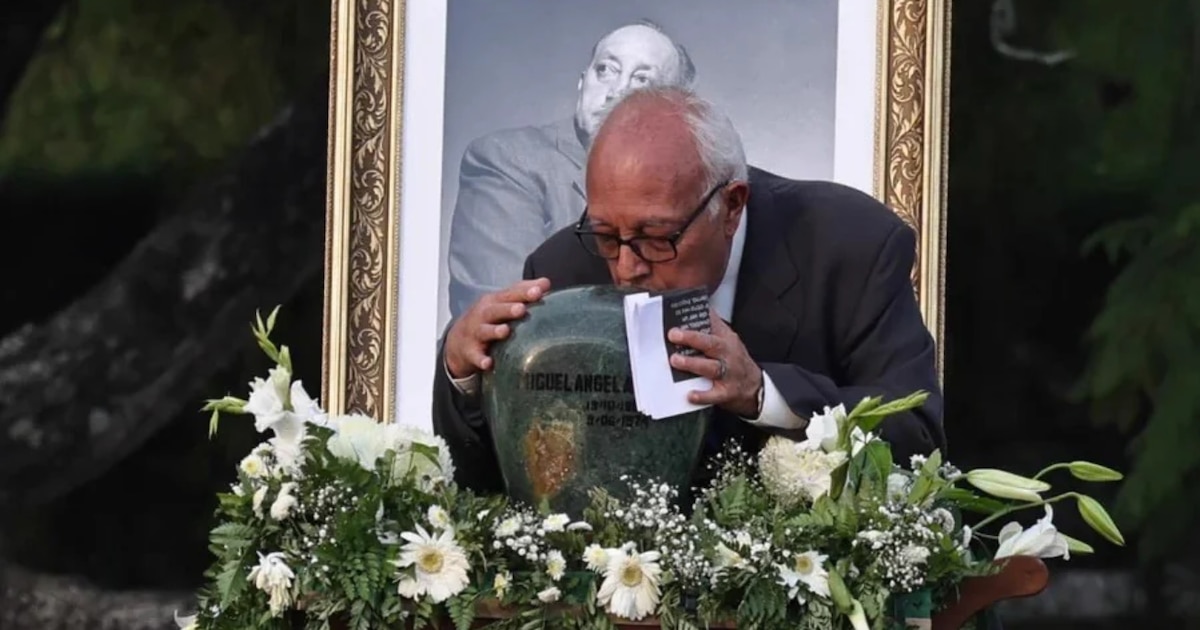
Las cenizas de Miguel Ángel Asturias fueron inhumadas este domingo 15 de noviembre en el Centro Cultural Miguel Ángel Asturias, en Ciudad de Guatemala, en un acto que cerró cuatro días de homenajes tras el retorno definitivo del Premio Nobel de Literatura a su país, 52 años después de que sus restos permanecieran en Francia.
La ceremonia reunió a familiares del escritor, autoridades del Gobierno, integrantes del cuerpo diplomático, escritores y artistas. El presidente de Guatemala, Bernardo Arévalo, encabezó el acto junto con la vicepresidenta Karin Herrera y el ministro de Cultura y Deportes, Luis Méndez Salinas.
La urna de jade verde, elaborada con forma de grano de maíz por el artista Pedro Canivell, quedó depositada en un monumento funerario situado entre la Plaza Maya, la Plaza Mujeres y la explanada principal del complejo cultural que lleva el nombre del autor de El Señor Presidente y Hombres de maíz.

La urna fue acompañada por música autóctona y tierras de varios lugares
El ingreso de las cenizas estuvo acompañado por el sonido del tambor y la chirimía. Miguel Ángel Asturias Amado, hijo del Nobel, colocó la urna en el espacio destinado para el descanso definitivo de su padre.
Sobre las cenizas se depositó tierra proveniente de distintos sitios ligados a la vida y la obra del escritor. Hubo tierra de Salamá, en Baja Verapaz, donde Asturias vivió durante su infancia; de El Tigre, en la provincia de Buenos Aires, Argentina, donde escribió obras como Mulata de tal y Week-end en Guatemala; de Rusia, y del cementerio Père-Lachaise, en París, donde permanecieron sus restos desde su muerte, el 9 de junio de 1974.
También se anunció que el conjunto recibió tierra de los 22 departamentos de Guatemala, como símbolo del regreso del escritor a su país.
La estructura incorpora los colores rojo, negro, amarillo y blanco, vinculados con los puntos cardinales y los pueblos de Guatemala.
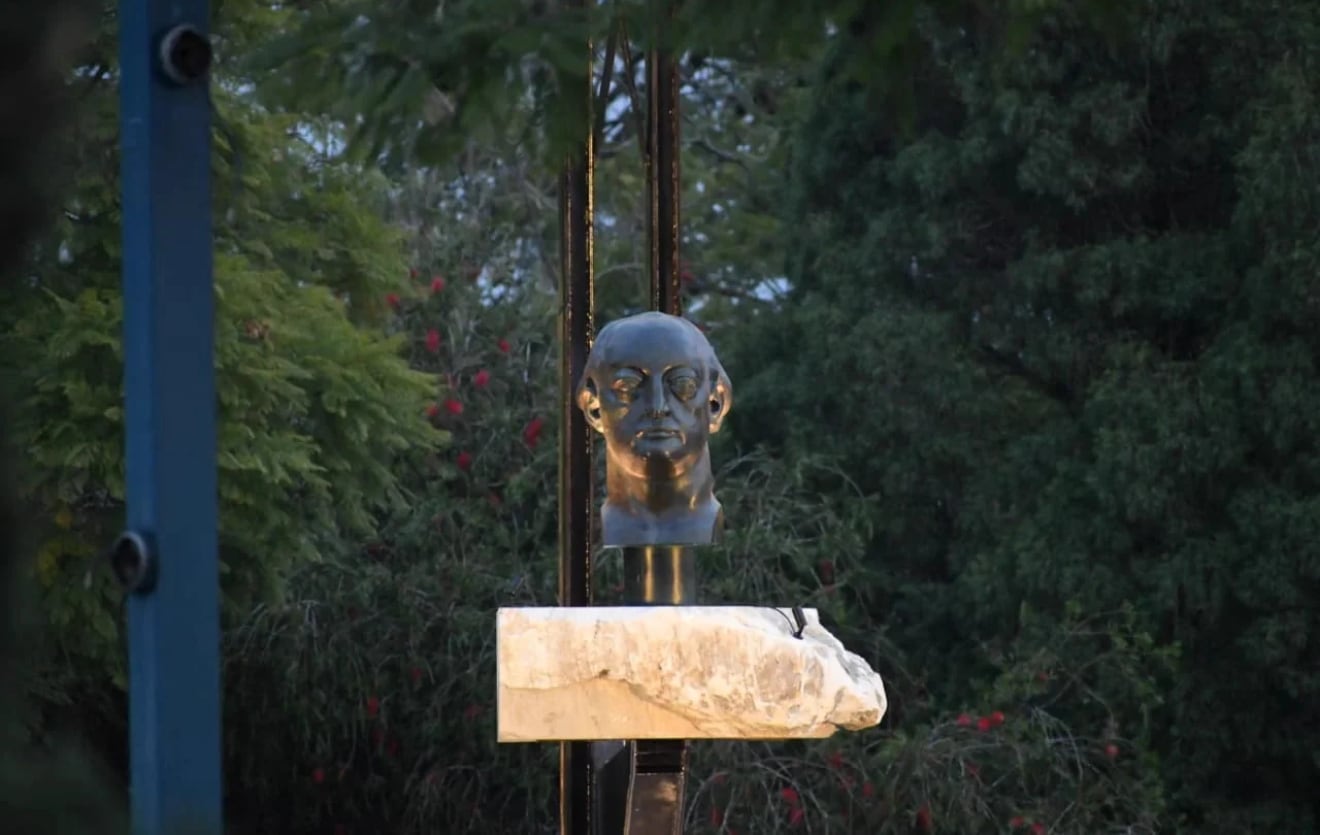
En el centro del monumento se encuentra un busto de Asturias realizado por el escultor Roberto González Goyri en la década de 1960. El proyecto busca integrarse al diseño original del arquitecto y artista Efraín Recinos, autor del complejo cultural.

“Vas a dormir bajo tus cielos”, dijo el hijo del escritor
Antes de la inhumación, Asturias Amado definió la jornada como un momento histórico para su familia y para Guatemala.
“Viejito, estás con nosotros, estás en tu patria, vas a dormir bajo tus cielos, vas a comer tus comidas”, expresó durante su discurso.
El hijo del escritor recordó que su padre sufrió el exilio tras la caída del gobierno de Jacobo Árbenz Guzmán, en 1954.
Asturias fue desterrado y perdió la nacionalidad guatemalteca durante 12 años. En 1966 fue nombrado embajador en Francia, cargo que ocupó hasta 1970, aunque continuó fuera del país hasta su muerte.
“Debemos pensar que tenemos exiliados en Guatemala y que deberían volver con vida, no como mi padre, que le ha tocado volver 52 años después de fallecido”, afirmó Asturias Amado.
Méndez Salinas destacó que el Centro Cultural sumará ahora una dimensión vinculada con la memoria del autor. “Hasta ahora este espacio tenía una dimensión artística y una dimensión histórica; ahora será un lugar de peregrinación”, sostuvo.
Arévalo calificó el regreso como un acto de justicia
En su intervención, el presidente Arévalo señaló que Asturias convirtió los pueblos, las lenguas y los mitos de Guatemala en una obra de alcance universal.

“Como solo ocurre con los escritores verdaderamente grandes, Asturias fundó una tradición que abrigó los caminos por los que transitaron tantos otros escritores, poetas y novelistas de América Latina”, afirmó.
El mandatario recordó que los exilios marcaron la vida del Nobel guatemalteco y sostuvo que su retorno cierra una ausencia de más de medio siglo. “Hoy ponemos fin a esa ausencia, hoy ha regresado a Guatemala”, dijo.
Arévalo concluyó su discurso con una frase dirigida al escritor: “Bienvenido a casa, Miguel Ángel, descansa aquí entre tu gente, descansa en casa”.
La ceremonia terminó con la lectura de un fragmento de Guatemala, a cargo de la escritora Carolina Escobar Sarti.
Guatemala,Miguel Ángel Asturias,Asturias,Premio Nobel,Repatriación,Exilio,Bernardo Arévalo,Gobierno de Guatemala

¿Dónde ver EN VIVO y ONLINE el Godoy Cruz vs. Tristán Suárez?

Neuquén va a elecciones el 14 de febrero: La Libertad Avanza empieza a definir su estrategia y hay dudas sobre si competirá por la gobernación

Una nena de 5 años con autismo murió ahogada durante unas vacaciones: la pista que complicó a sus padres

Miami Heat llevará Vice City a la NBA con camisetas inspiradas en «GTA VI»

Avanza ley de plataformas bonaerense: críticas y rechazo de Cámara de Remises

El impresionante invicto que Inglaterra le cortó a España

Escándalo íntimo en el cumpleaños de Emilia Mernes: un número uno, el mejor amigo, la novia del mejor amigo y una confesión que hizo estallar todo: «Me tocó y…»

Banco Santander anunció aumento de precio en sus paquetes y esto valdrá desde enero

El Gobierno cree que la visita del Papa logró desactivar las tensiones internas y se prepara para una semana clave en el Congreso

La Justicia investiga los viajes de Abel Furlán y la “vecina” de Cristina Kirchner, y apunta a las coincidencias

 INTERNACIONAL1 día ago
U2 vuelve con 12 nuevas canciones y una pregunta incómoda sobre si el rock todavía puede decir algo nuevo
- ECONOMIA14 horas ago
La inflación de octubre: el dato que sorprendió a casi todos y la distancia que persiste con los parámetros internacionales
- DEPORTE3 días ago
Así quedó el historial de clubes que ganaron un título nacional a través de un solo partido tras la victoria de Estudiantes sobre Independiente Rivadavia