INTERNACIONAL
Trump immigration win could strengthen admin’s hand in looming Supreme Court fight

The Trump administration scored a major full-panel victory at the Fifth Circuit Court of Appeals Friday, which ruled that detained illegal immigrants who were never formally admitted into the U. S. are not constitutionally entitled to bond hearings while awaiting deportation.
The ruling comes as the Supreme Court prepares to hear Rhoney v. Barbosa da Cunha this term, a closely related fight over whether the federal mandatory-detention statute applies at all to longtime immigrants arrested inside the country — setting up the possibility that the justices could either undercut Friday’s ruling or strengthen the government’s hand.
The Fifth Circuit answered the constitutional question in Ignacio Sosnava Rodriguez v. Sylvester M. Ortega, finding that three immigrant men detained under the mandatory-detention statute are not entitled to bond hearings under the Due Process Clause of the Fifth Amendment. The court held that their years or even decades of residence in the United States, along with ties to the country and their communities, do not create a constitutional right to a bond hearing.
«The Constitution does not entitle them to a bond hearing,» the court wrote.
FEDERAL APPEALS COURT COMPARES TRUMP MIGRANT DETENTION POLICY TO JAPANESE AMERICAN INTERNMENT
Meanwhile, the Supreme Court will consider Rhoney, a case out of the Second Circuit, to determine whether the mandatory-detention law applies to longtime immigrants arrested inside the country in the first place.
At the center of the issue is a 9-2 circuit split over which federal detention law applies to immigrants who entered the country illegally, were never formally admitted and were later arrested by immigration authorities after living in the U.S. for years — sometimes decades after crossing the border.
The Fifth and Eighth Circuits have held that those immigrants remain «applicants for admission» under Section 1225 of the Immigration and Nationality Act, subjecting them to mandatory detention without an ordinary bond hearing while their removal proceedings play out. Nine other federal appeals courts have ruled that Section 1226 applies instead, which provides a path for them to seek release on bond.
The Supreme Court will essentially decide whether immigrants who entered illegally and have lived in the U.S. for years can be subjected to the same mandatory-detention provision that applies to certain immigrants seeking admission into the country.
If the Supreme Court sides with the Second Circuit, Barbosa da Cunha — a Brazilian national who entered the country illegally roughly two decades ago and was detained in 2025 — would have a path to seek release on bond. Such a ruling would likely apply to the three longtime immigrants at the center of Rodriguez as well, substantially undercutting the significance of Friday’s ruling by eliminating the need to answer the constitutional question of whether due process requires a bond hearing.
SUPREME COURT TAKES UP FIGHT OVER TRUMP’S THIRD-COUNTRY ILLEGAL ALIEN DEPORTATION POLICY
Judge Leslie Southwick pointed directly to the looming Supreme Court fight in her dissent.
Should the Supreme Court eventually determine that this court was wrong as to the statute, then the constitutional issue we address here will have far less significance. It certainly has significance at the moment,» Southwick wrote.
But conservative legal experts say Rodriguez could also strengthen the administration’s hand in Rhoney by undercutting one argument against the government’s interpretation of Section 1225: that applying the mandatory-detention provision to longtime residents would raise serious constitutional concerns.
Michael Morley, a constitutional law professor at Florida State University, said Friday’s ruling could influence how the justices approach that question because courts often consider whether a particular reading of federal law would create constitutional problems.
FEDERAL APPEALS COURT DEALS BLOW TO TRUMP DEPORTATION AGENDA
«The Fifth Circuit’s en banc ruling in Rodriguez today takes the next step by holding that such detention would not violate the U.S. Constitution’s Due Process Clause,» Morley said. «This holding may impact the Supreme Court’s reasoning, because an important consideration in disputes over federal laws is whether a particular interpretation would be unconstitutional.»
«If the Court agrees with the Fifth Circuit’s analysis that the Due Process Clause allows such detention, it may be more likely to conclude that federal law permits it, as well, Morley continued.
Hans von Spakovsky, a senior legal fellow at Advancing American Freedom, argued that the decision could bolster the administration as the justices prepare to resolve the circuit split.
«I actually think this ruling will help the government in the Rhoney case,» von Spakovsky said, pointing to the Fifth Circuit’s position that the applicable immigration statute does not require bond hearings for immigrants who were never admitted to the United States.
SIGN UP TO GET THE POLITICS NEWSLETTER
«There was already a split in the circuit courts on this issue but the Fifth Circuit has consistently held that the applicable immigration statute does not require bond hearings for aliens who were never admitted to the United States,» he said. «I will be surprised if a majority of the Supreme Court disagrees when they ultimately issue a decision in the Rhoney case.»
The Supreme Court has not yet scheduled oral arguments in Rhoney, which it agreed to hear earlier this month.
federal courts, supreme court, immigrant rights, deportation, illegal immigrants, law, constitution, appeals









INTERNACIONAL
Chicago Mayor Brandon Johnson faces audit calls after CFO quits over ‘financial integrity’ concerns
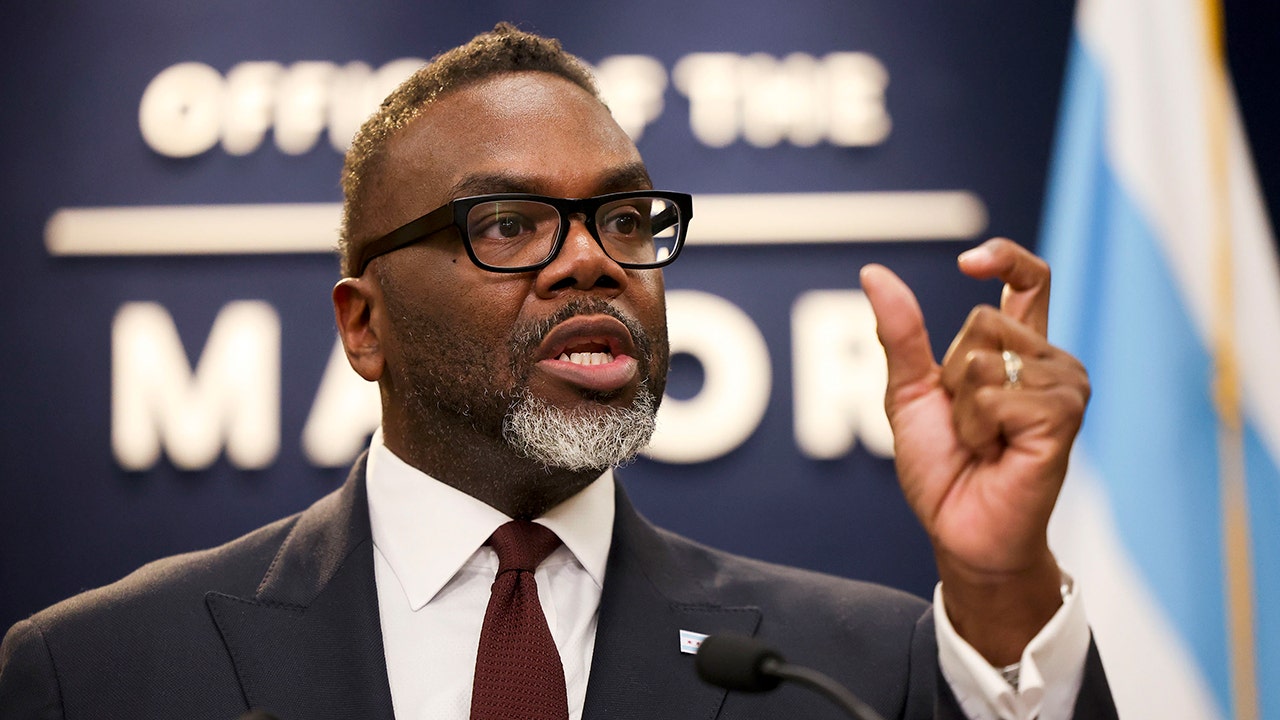
Chicago’s chief financial officer, who formerly worked for a top credit ratings bureau, resigned Friday citing financial integrity concerns, casting a shadow over the fiscal management of progressive Mayor Brandon Johnson amid a fight over the FY-2027 budget.
Chicago CFO Ashlee Gabrysch served only three months before the onetime Fitch Ratings executive stepped down, saying she could no longer meet her professional obligations under the conditions of her employment, according to a resignation letter obtained by the Chicago Tribune.
«The chief financial officer’s statements about the city’s finances are relied upon by investors, rating agencies, City Council, and taxpayers, and they must be complete and accurate,» Gabrysch wrote, according to the Tribune.
«I am not able to fulfill those obligations under the conditions in which I have been asked to serve.»
Johnson did not immediately respond to Digital’s request for comment, but his press secretary accused Gabrysch of being «largely absent» during key parts of the next budget’s creation process.
CHICAGO MAYOR CALLS ICE RAIDS ‘TERRORISM,’ SAYS TRUMP’S AMERICA APPEARS AS ‘IF THE CONFEDERACY WON’
The mayor’s office also accused Gabrysch of improperly directing a $75 million payment to city pension funds before the required legal procedures had been completed, saying it would refer the matter to Chicago’s Office of Inspector General for review.
The Tribune recounted recent events in the budget process involving Gabrysch, including that she disagreed with Johnson over assertions about the size of the city’s deficit.
In September, Johnson announced that the Windy City faces a projected $882 million budget shortfall in 2027, which local media described as smaller than a typical election year and lighter than the $1.15 billion deficit projected in 2025. The city holds its elections in odd years.
«We have difficult and consequential decisions ahead of us as we work to address the structural financial challenges that have confronted Chicago for decades,» Johnson said at the time, according to Chicago’s PBS affiliate.
However, according to the Tribune, Johnson claimed the true figure is now $662 million, «adjusted» in concert with planned borrowing to help fund settlement amounts involving police officers.
CHICAGO MAYOR CALLS DOGE AN ‘ACT OF WAR’
Gabrysch challenged that accounting during budget hearings, arguing that the settlement expenses should remain part of the deficit and that borrowing to pay them amounted to a temporary fix rather than a lasting solution.
While the administration maintained that 76% of its budget measures addressed underlying financial problems, Gabrysch calculated the figure at just 56%, according to the Tribune.
Alderman Marty Quinn, D-Midway, questioned Johnson’s handling at the time, according to the paper, saying he was «not surprised that the mayor may be a little disingenuous here, that seems to be his normal course.»
Gabrysch also stopped short of calling Johnson’s proposed $17.6 billion budget balanced during an October City Council hearing, arguing that the city needed to demonstrate progress toward reducing future deficits, according to Crain’s Chicago Business.
City Comptroller Michael Belsky maintained that proposed revenues matched expenditures, while acting Budget Director Jonathan Ernst defended the administration’s calculations and its plan to borrow roughly $480 million to cover legal settlements.
Gabrysch warned that the city anticipated issuing $350 million in settlement-related bonds in 2027, with an estimated $190 million in interest costs over seven years, according to Crain’s.
CLICK HERE TO GET THE APP
SIGN UP TO GET THE POLITICS NEWSLETTER
Her resignation prompted Council Finance Committee chairman Pat Dowell, D-South Loop, to call for an independent audit.
The departure adds to a wave of turnover in Johnson’s financial leadership, including two previous CFO departures this year and the resignation of the city’s budget director in August. The upheaval comes as Chicago grapples with mounting financial obligations and credit-rating downgrades.
politics, chicago, chicagos crime wave, finance economy, business regulation, illinois, democrats elections
INTERNACIONAL
Fiscales de Estados Unidos acusan a Marset de pagar coimas en Uruguay, Bolivia y Paraguay: “Plata o plomo”

Los fiscales de Estados Unidos pretenden sumar nuevas pruebas en el juicio contra el narcotraficante Sebastián Marset, que comenzará en enero. El uruguayo –detenido el 13 de marzo en Santa Cruz de la Sierra– es acusado de conspirar para traficar cocaína, de lavado de activos y de narcoterrorismo, pero el gobierno norteamericano también buscará probar que Marset sobornaba a autoridades.
El semanario uruguayo Búsqueda informó días atrás que el fiscal Anthony T. Aminoff pidió autorización para presentar pruebas de “otros delitos” cometidos por Marset. En un escrito presentado ante el juez Rossie Alston Jr., del Tribunal de Distrito Este de Virginia, señaló que Marset dirigía una “enorme operación internacional de narcotráfico” de manera “despiadada” y que mataba a quienes se le oponían o colaboraban con las autoridades.
“Tampoco toleraba que los gobiernos interfirieran en sus actividades delictivas; para ello, empleaba el clásico modelo de ‘plata o plomo’ –dinero o balas– con el fin de coaccionar a los gobiernos para que se plegaran a su voluntad”, dice el escrito.

Aminoff adelantó que el gobierno presentará “pruebas relacionadas con sobornos en Uruguay, Paraguay, Bolivia y Venezuela”, según el escrito consignado por el medio uruguayo.
“El acusado pagó a funcionarios gubernamentales para obtener información y protección frente a las fuerzas del orden. Estos sobornos le permitieron continuar con sus actividades de narcotráfico, lavado de dinero y terrorismo sin interferencia de las autoridades”, agrega.
Marset fue capturado el 13 de marzo en un operativo conjunto entre la Fuerza Especial de Lucha contra el Narcotráfico de Bolivia, la Secretaría Nacional Antidrogas de Paraguay y la Administración de Control de Drogas (DEA) de Estados Unidos, que lo requería desde 2024 y adonde fue enviado de inmediato.

El fiscal pretende presentar testimonios que prueben el “pago de sobornos periódicos entre el acusado y un alto funcionario en Bolivia”.
“Dicho funcionario repartía el dinero entre otros miembros del gobierno boliviano. Estos pagos permitían que la organización del acusado traficara con drogas sin interferencia gubernamental; además, si se incautaba algún cargamento de cocaína, los funcionarios corruptos se lo devolvían al acusado a cambio de una suma adicional”, agrega el escrito presentado por el fiscal.
Con estos sobornos, Marset también podía acceder a expedientes sobre narcotráfico, eludir operaciones de captura y recibir información sobre reuniones de la DEA con funcionarios de Bolivia.

Según Aminoff, la relación de Marset con los gobiernos y las fuerzas del orden es un “elemento central” de su esquema delictivo. En la región, los funcionarios y agentes tenían dos opciones: “O bien aceptaban su dinero, o bien sufrían las consecuencias de su ira”.
La fiscal “incorruptible” de Uruguay
El atentado contra la casa de la fiscal de Corte, Mónica Ferrero, generó una fuerte conmoción política en Uruguay.
Ocurrió el 28 de septiembre de 2025, cuando los delincuentes llegaron a su casa vestidos de negro, con capuchas y guantes, a las 04:30. Un tablón los ayudó a subir a la azotea de una casa de la cuadra y, por arriba de los techos, llegaron al patio de la casa de Ferrero. Allí dispararon tres veces contra las ventanas y tiraron una granada que detonó en el patio.
El nombre de Marset apareció de inmediato como uno de los señalados por el atentado.

No era el primer atentado del narcotraficante. Antes, había hecho estallar una granada en la Dirección General de Represión al Tráfico Ilícito de Drogas.
En sus declaraciones a los agentes de la DEA, después de su detención y de la lectura de sus derechos, Marset dijo que esta fiscal “resultó ser incorruptible”, lo que motivó que hiciera estallar su oficina y la amenazara.
Tras la publicación periodística de Búsqueda, Ferrero reaccionó.
“Desde 2004 a 2026 tengo una trayectoria impresionante en drogas, que me ha valido un ataque personal en mi casa, con granada y disparos incluidos. Hoy abro la prensa, leo y –ojalá sea cierto– que el narcotraficante detenido admite que me mandó a matar porque yo era incorruptible. Gran orgullo para mi país, más allá de lo personal”, declaró, al participar de un evento público.
Sebastián Marset,detención policial,custodia

NEWYou can now listen to Fox News articles!
Thousands of migrants flooded Spain’s Canary Islands this weekend as the nation’s government remains under a migration emergency.
The Canary Islands have received the brunt of migration from West Africa and Sub-Saharan Africa in recent months. Authorities there processed over 2,200 migrants in just two days, all arriving in dinghies and makeshift boats.
One flotilla of 14 boats landed on the island of El Hierro carrying 1,324 people. The island’s Spanish population is just 12,000.
SPANISH JOURNALIST SAYS CEUTA RESIDENTS BELIEVE GOVERNMENT ISN’T DOING ENOUGH TO PREVENT ANOTHER MIGRANT RUSH
One of the migrants rescued after a cayuco capsized on May 28, 2025, in El Hierro, Canary Islands, Spain. At least seven women have died, three of them minors, following the capsizing of a cayuco with 180 people on board as it entered the port of La Restinga. (Europa Press Canarias via Getty Images)
The Spanish government declared an emergency over the archipelago last week. The latest surge comes just months after tens of thousands of migrants crossed into Spain’s North African territory of Cueta in July.
The country also faced internal unrest this month after a general strike turned violent last week and rioters began clashing with police, setting fires and bashing storefronts in hotspots across the country.
WOMAN, 87, DIES AFTER BEING CARRIED FROM HOME OF 70 YEARS ON STRETCHER DURING EVICTION IN SPAIN

People light fires and throw objects during a demonstration over the housing crisis on November 11, 2026, in Barcelona, Spain. (Photo by David Ramos/Getty Images)
Violent scenes unfolded in Barcelona, where some demonstrators vandalized stores along the city’s popular Paseo de Gracia shopping boulevard, set small bonfires and launched fireworks at officers arriving in riot gear and armored vehicles.
The violence erupted as Spain experienced its first general strike in 14 years, with workers demanding relief from skyrocketing rents and the rising cost of living.
TOURIST HOT SPOT FACES HOUSING REVOLT AS LOCALS DEMAND CUTS TO VACATION LODGING

A protestor holds up a poster as objects burn in the background during a demonstration over the housing crisis on November 11, 2026, in Barcelona, Spain. (Photo by David Ramos/Getty Images)
Housing activists claimed 400,000 people marched through Barcelona, while city officials estimated attendance at 55,000. Government officials reported another 120,000 demonstrators gathered in Madrid despite heavy rain, The Associated Press reported.
The nationwide walkout disrupted public transportation, forced some businesses to close and blocked major roads. Police made arrests across the country, while officers used pepper spray against demonstrators in Madrid.
Both the migration and housing crises are expected to play a major role in Spain’s Nov. 29 parliamentary elections.
Fox News’ Jasmine Baehr and The Associated Press contributed to this report.
world, spain, refugees, europe, illegal immigrants

Chicago Mayor Brandon Johnson faces audit calls after CFO quits over ‘financial integrity’ concerns

Una estrella del fútbol anunció el retiro de su selección: su impactante lugar en el ranking de máximos goleadores de la historia

Las acciones y los bonos argentinos cotizan en baja y vuelve a subir el riesgo país

Robo y persecución desde Liniers hasta Villa Celina: un detenido

Javier Milei empieza una semana de definiciones con una agenda “amigable” y reuniones con entidades aliadas

Una diputada libertaria mostró su faceta musical: compuso una canción evangélica y grabó su propio videoclip

Banco Santander anunció aumento de precio en sus paquetes y esto valdrá desde enero

Así está el mano a mano entre Estudiantes de La Plata e Independiente Rivadavia

Karina Milei y Diego Santilli aprovecharon la visita a Corrientes para tratar la eliminación de las PASO con el gobernador

U2 vuelve con 12 nuevas canciones y una pregunta incómoda sobre si el rock todavía puede decir algo nuevo

 INTERNACIONAL2 días ago
U2 vuelve con 12 nuevas canciones y una pregunta incómoda sobre si el rock todavía puede decir algo nuevo
- ECONOMIA20 horas ago
La inflación de octubre: el dato que sorprendió a casi todos y la distancia que persiste con los parámetros internacionales
- INTERNACIONAL2 días ago
Democrats seize on midterm wins to push massive minimum wage hikes, but economists see trouble ahead