
INTERNACIONAL
Trump officials unveil private sector blueprint for life after USAID

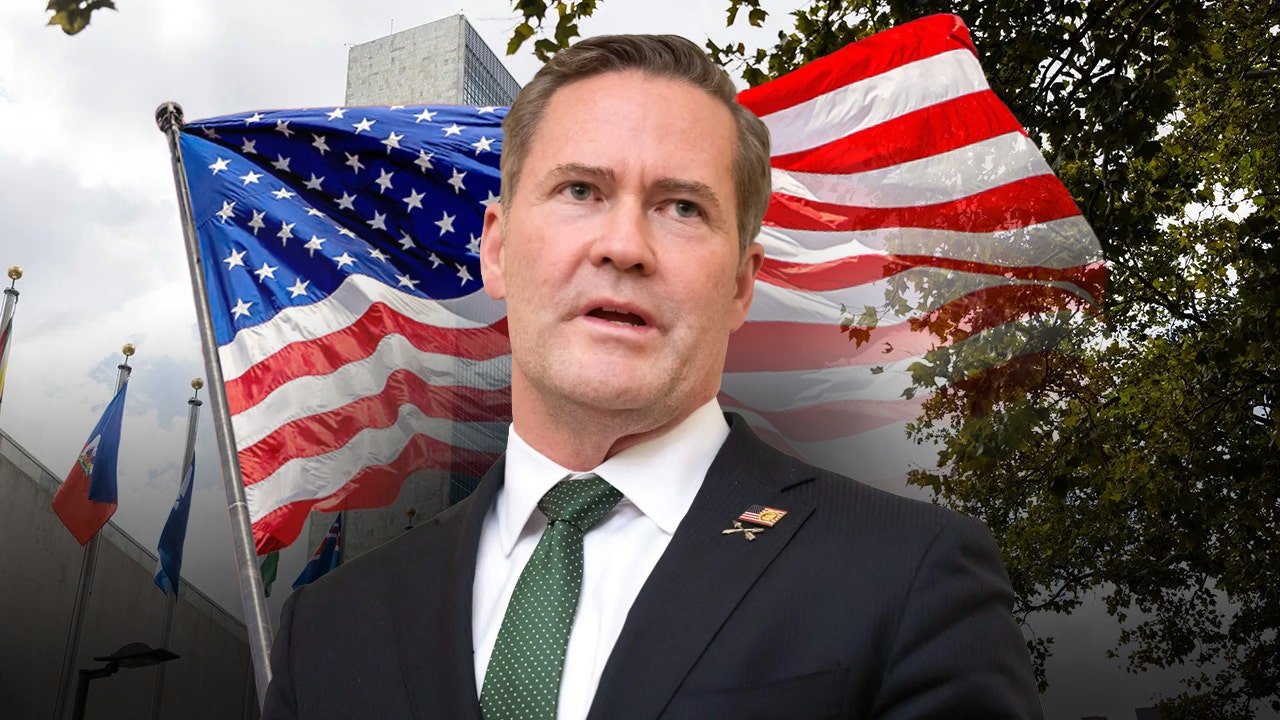
Is «Trade Over Aid» replacing USAID?
Fox News Digital gets exclusive access to the U.S. Mission’s «Trade Over Aid» forum in New York as Trump officials, including U.S. Ambassador to the U.N. Mike Waltz, push private investment over traditional foreign aid.
NEWYou can now listen to Fox News articles!
EXCLUSIVE: The Trump administration is laying out its clearest blueprint yet for what comes after decades of traditional U.S. foreign aid, arguing that private investment, trade and American business — not taxpayer-funded assistance — should become America’s primary engine for development abroad.
At a U.S. Mission to the United Nations «Trade Over Aid» forum in New York Monday, Ambassador Mike Waltz, the U.S. permanent representative to the United Nations, told Fox News Digital in an exclusive interview that the administration is «completely reforming how we do aid» by moving away from taxpayer-funded programs and toward private-sector-led development.
«For too many years, the United States and other countries have poured billions and billions of dollars into these aid programs and got very little in return,» Waltz said. «You go to these forums at the United Nations and at development agencies around the world, and you never find the private sector. You find NGOs and academics and governments, but you don’t find the creators of growth and the creators of jobs.»
U.S. URGES DONORS TO ABANDON U.N.R.W.A. FUNDING AS U.N. DEFENDS AGENCY’S MISSION
Ambassador Mike Waltz speaks at the U.S. Mission to the United Nations’ «Trade Over Aid» forum in New York, where Trump administration officials pitched private investment as a new engine of global development. July 14, 2026. (Donald Conahan/ U.S. mission to the U.N.)
Waltz said the new model is designed to «create jobs, to create business for American companies in line with America First,» while also raising living standards abroad and reducing instability that can fuel terrorism and poverty.
The administration moved to dismantle USAID in 2025, arguing the agency was inefficient and too often disconnected from U.S. foreign policy. Asked directly whether «Trade Over Aid» is replacing USAID, Waltz said USAID’s functions had been folded into the State Department as part of a broader efficiency effort, but insisted the initiative is about something larger than one agency.
«What we’re doing, this isn’t about USAID or what replaces it,» Waltz said. «That was an efficient effort to get our aid to serve our foreign policy, not the other way around. But what I think is more important is how do we help American businesses and how do (we) help create jobs around the world and reduce dependency.»
The stakes are immediate: with USAID reorganized under the State Department and aid budgets under pressure, the Trump administration is trying to show that it has a replacement model for how the U.S. helps poorer and fragile countries. The answer it is pitching is not more traditional aid, but more private capital, more trade, more deals for American companies and fewer open-ended taxpayer commitments.
EXCLUSIVE: SERBIAN PRESIDENT VUČIĆ SAYS SUPPORT FOR US ‘SURGED’ UNDER TRUMP, INVITES HIM TO VISIT BELGRADE
The forum brought together representatives from dozens of countries, U.N. agencies, international financial institutions and major private-sector players, including Microsoft, Google, JPMorgan, Goldman Sachs, Boeing, Walmart, Mastercard, Meta and others.
Czech Environment Minister Igor Cerveny, who attended the forum, said the idea resonated with his country’s own post-communist experience.
After communism, he said, the Czech Republic had to rebuild through work, business, industry and innovation rather than dependency.
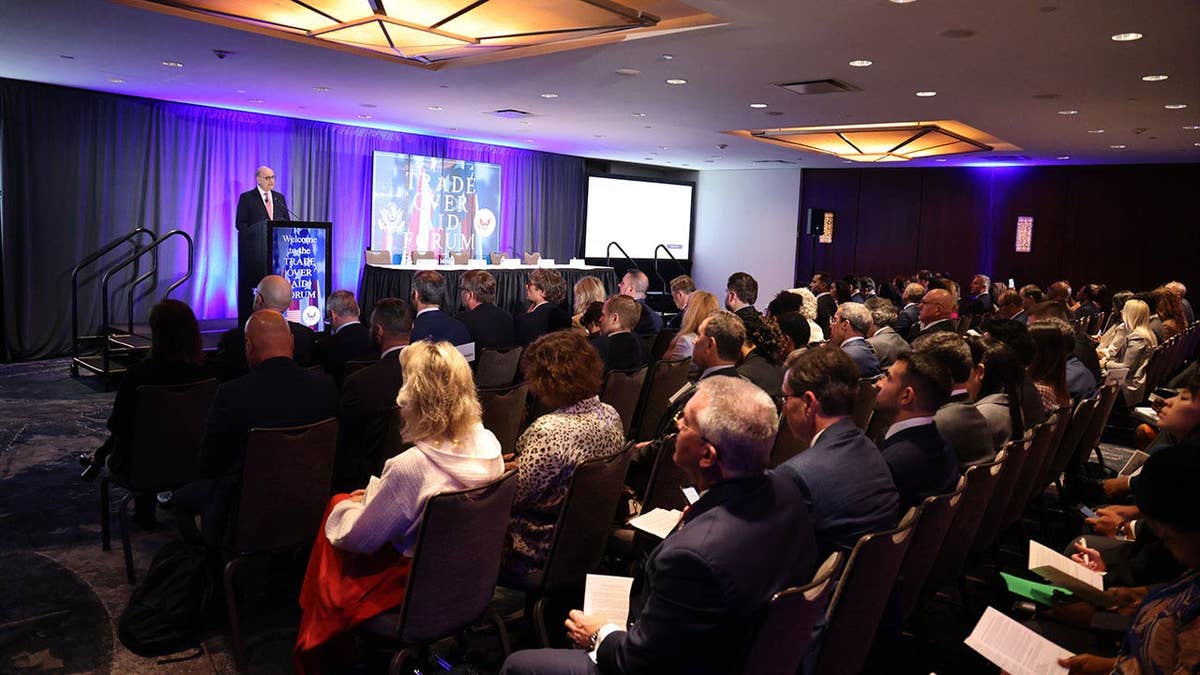
Ambassador Dan Negrea addresses the U.S. Mission to the United Nations’ «Trade Over Aid» forum in New York, July 13, 2026. (Donald Conahan/ U.S. mission to the U.N.)
«If you work on your economy, on your industry, on your society, on nature as well, probably two, three, five years later, (you will) be in a better position,» Cerveny told Fox News Digital. «You have your own money. You are not now the slave of (asking). You are now the master of your destiny.»
Cerveny said trade gives countries an «opportunity to cooperate» rather than forcing them to return again and again with the same request: «Please give me some money.»
Ambassador Dan Negrea, who is spearheading the initiative in the U.S. Mission, told Fox News Digital that shrinking aid budgets around the world make a new model necessary.
«We need to think differently about how we help developing countries in an environment in which, in the United States, we are indebted and we cannot continue to spend money on helping other countries the way we used to,» Negrea said. «Development aid is going down not only in the U.S., but in countries around the world.»
Negrea said the initiative has received less resistance from developing countries than from traditional donor nations.
«Interestingly, there is less pushback from countries receiving aid than from some donor countries that like to continue in this attitude of charity, being magnanimous to other countries,» he told Fox News Digital. «For years and years and for decades, many developing countries are saying that they want to end this status of recipient of charity and move to a much more dignified relationship of partners and development.»
But some leaders from developing countries also warn that trade cannot replace aid overnight, especially in emergency settings. The Democratic Republic of Congo’s Minister of State for Foreign Affairs, International Cooperation, and Francophonie, Thérèse Kayikwamba Wagner, told Fox News Digital that aid remains critical in crises such as the Ebola outbreak in eastern DRC.
«Aid sometimes can transform dramatically a situation,» she said. «This is not something you can change overnight with trade. But yes, over a long term, trade is the pathway to create greater growth, greater economic prosperity, and therefore also more equal relationships between countries.»
Kayikwamba Wagner added that the shift must be «adapted to circumstances» and not be «too abrupt.»
The initiative already has drawn 46 countries, and launched a digital library with 63 capacity-building offers from private companies, governments, NGOs, philanthropies, academic institutions and international organizations.
But when pressed on what those offers have produced so far, Negrea acknowledged the initiative is still in its early stages. The library was inaugurated last week, he said, and the goal now is to turn offers into concrete outcomes.
«We want to see more deliverables,» Negrea said. «We want to see actual transactions that were done. We want to see countries using the digital library to see usable capacity building offers coming from around the world. So we want to help without the cost to the U.S. taxpayers, but at the same time creating opportunities for American companies.»
The central challenge facing the effort is whether private capital will go where aid has traditionally been most needed: fragile countries with weak institutions, unreliable infrastructure, corruption, conflict or markets too risky for major investors.
WALTZ CALLS U.N. A ‘CESSPOOL FOR ANTISEMITISM’ AS TRUMP ADMINISTRATION PUSHES MAJOR REFORMS
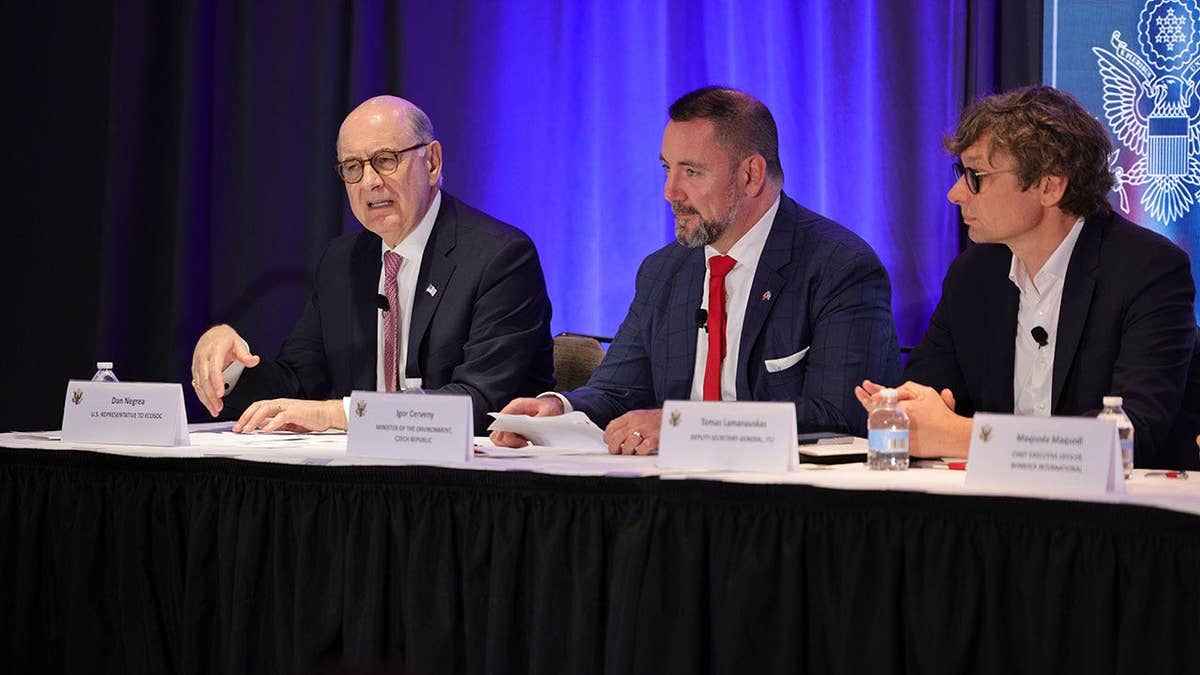
Ambassador Dan Negrea moderates a panel at the U.S. Mission to the United Nations’ «Trade Over Aid» forum in New York, joined by Czech Environment Minister Igor Cerveny and other participants. (Donald Conahan/ U.S. mission to the U.N.)
Waltz argued that is exactly where institutions such as the U.N. Development Program, the World Bank and the U.S. International Development Finance Corporation can play a role.
«When we talk to organizations like J.P. Morgan, Goldman Sachs and others, they’re saying, we want to invest hundreds of millions into these industries abroad, but they need better laws, they need better arbitration,» Waltz said. «We need to know that we can get our money out for our investors here in the United States.»
He said the U.S. International Development Finance Corporation (DFC) and U.S. contributions to the World Bank can provide «risk insurance and guarantees» for investments in riskier markets, including critical minerals projects needed by the U.S. technology sector.
«It is incredibly risky,» Waltz said. «Sometimes these capital providers like on Wall Street and in New York are only going to go to the safest place. Sometimes it makes sense, for example, as we’re looking for critical minerals for our tech industry, to go into risky places, but they need a little help.»
The strongest note of caution came not from critics outside the room, but from inside the forum itself.
Alexander De Croo, the former Belgian prime minister who now leads United Nations Development Programme (UNDP), said trade and aid should not be treated as enemies.
«Trade is a destination, but development is how we get to that destination,» De Croo said. «Markets do not build themselves. They have to be built.»
De Croo said investment flows when rules are predictable, institutions are trusted and workers have the skills to seize opportunity. He described UNDP’s role as helping countries build those foundations. «There is no country over the past decades that has successfully developed without a strong private sector and without trade being a big part of that,» he said.
Christopher Sharrock, Microsoft’s vice president for United Nations and international organizations, also warned that aid still has a role that markets cannot fully replace.
«Aid does do an essential job and it does a job that possibly nothing else can do,» Sharrock said, pointing to vaccination campaigns, famine response and natural disasters as areas where assistance remains critical.
CLICK HERE TO DOWNLOAD THE FOX NEWS APP
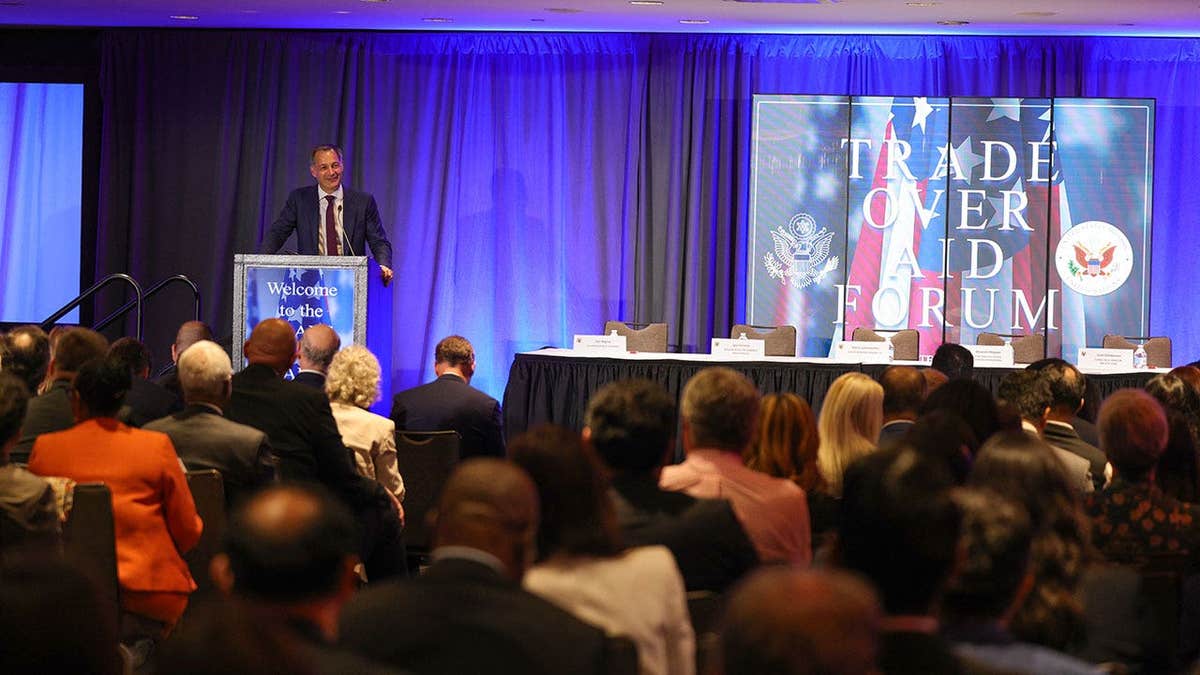
Alexander De Croo, UNDP administrator and former Belgian prime minister, speaks at the U.S. Mission to the United Nations’ «Trade Over Aid» forum in New York, July 13, 2026. (Donald Conahan/ U.S. mission to the U.N.)
For the Trump administration, «Trade Over Aid» is being pitched as a more disciplined, America First answer to development: fewer handouts, more deals, less dependency, more jobs for American companies and foreign partners alike.
But the test will be whether it can deliver not only in countries already ready for investment, but in the hardest places — the places where aid has long filled the gap because markets would not.
united nations, aid, trade, world













INTERNACIONAL
Europa: la ola de calor pone a todas las grandes ciudades de Italia en alerta roja y Austria y Eslovaquia baten récords de temperatura

El calor obliga a Italia a declarar alerta
En Italia: Ventiladores y “playa urbana” para refrescar a la gente

Hungría reduce el uso de energía mientras la sequía afecta a central nuclear
Alemania se preocupa por el caudal de los ríos

Los Balcanes combaten los incendios y la sequía
INTERNACIONAL
Mamdani repeatedly sidesteps questions on reported plan to revive tax hikes on wealthy New Yorkers
NEWYou can now listen to Fox News articles!
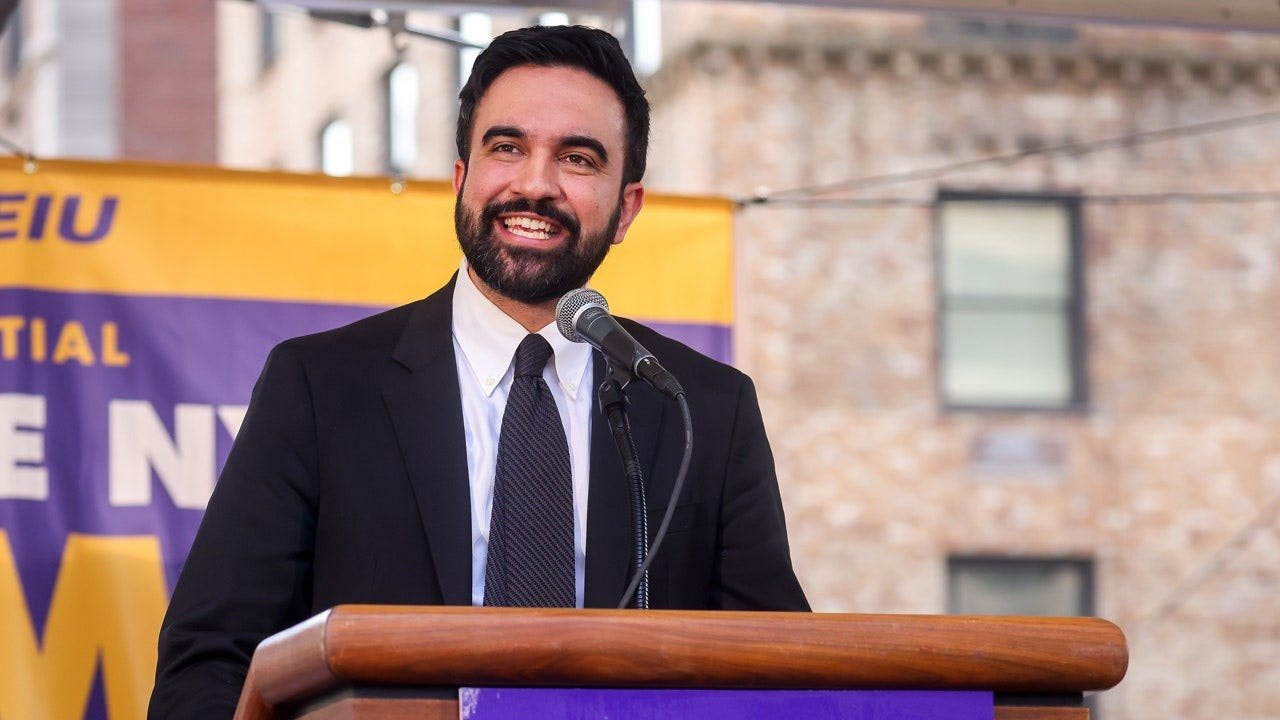
New York City democratic socialist Mayor Zohran Mamdani repeatedly sidestepped questions Thursday about reported plans to launch a public pressure campaign this fall pushing tax hikes on wealthy New Yorkers and corporations.
Mamdani reportedly plans to build public support after Labor Day for similar proposals that Gov. Kathy Hochul previously rejected in early 2026. The reported push is expected ahead of the New York Legislature’s return to Albany in January 2027 and Hochul’s re-election campaign this fall, according to The New York Post.
During an interview with Fox 5 New York, Mamdani repeatedly declined to answer questions about the potential campaign before later saying such discussions would only come after the November election.
Asked whether he had spoken with Hochul about the reported campaign, Mamdani did not answer directly, instead using the opportunity to tout the opening of 2,000 free child care seats for New Yorkers through their policy efforts.
NYC MAYOR MAMDANI CALLS THREAT OF RICH PEOPLE LEAVING NYC OVER TAXES ‘IMAGINED’
Mayor Zohran Mamdani speaks to reporters about the city’s finances during a news conference in New York, Tuesday, Feb. 17, 2026. (Seth Wenig/AP Photo)
«The governor and I are in constant communication and, frankly, I appreciate her partnership because if it wasn’t for the governor, then we wouldn’t have been able to stand together to announce that we had more than 5,000 New Yorkers come forward to apply for these 2,000 free child care seats,» he said. «And I’m so excited about that, and the fact that we’re going to expand to 12,000, and the work that’s still to come.»
The reporter then pressed Mamdani on whether the Democratic Socialists of America would join the potential campaign this fall, but he again declined to answer directly, saying his focus remains on the present.
BERNIE SANDERS, DSA REVEAL DEMANDS FOR DEM PARTY AFTER SOCIALISTS SWEEP NEW YORK ELECTIONS
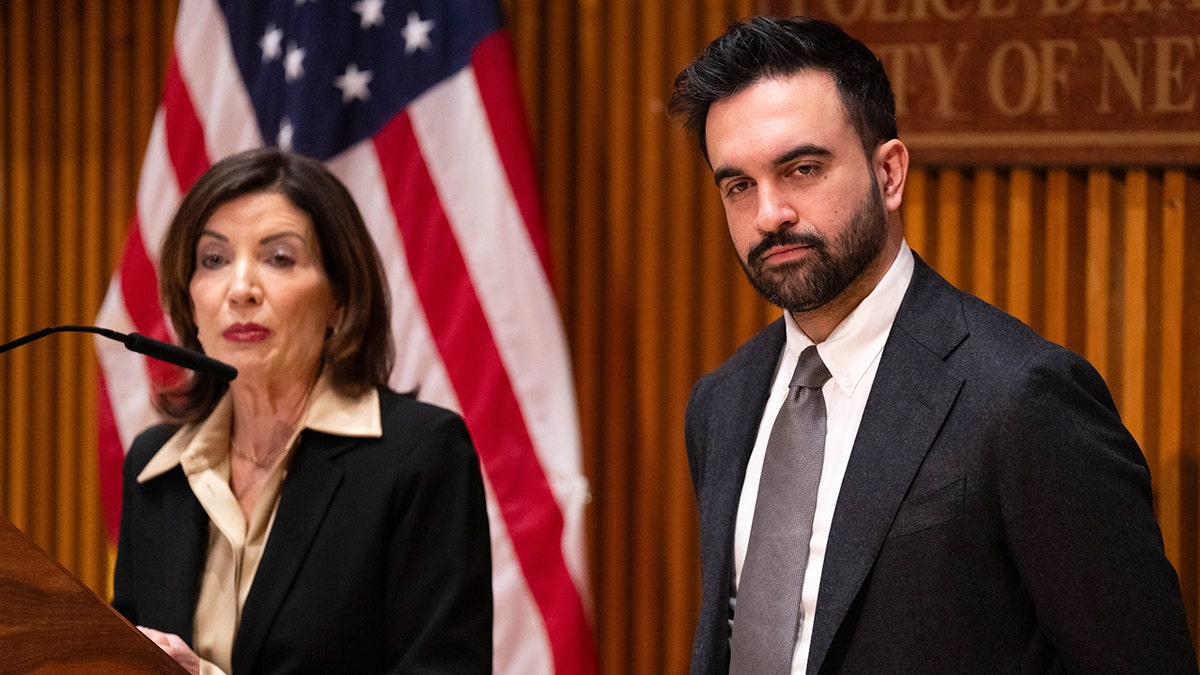
Kathy Hochul, governor of New York, left, and Zohran Mamdani, mayor of New York, speak during an announcement in New York, US, on Tuesday, Jan. 6, 2026. (Adam Gray/Bloomberg via Getty Images)
«My focus right now is where we are, which is August, and ensuring that everything that we’re doing is keeping New Yorkers safe amidst a heat wave and preparing for the school year,» Mamdani said. «A lot of the conversation about what comes after November, I think, is a conversation for what comes after November.»
«So you don’t plan to launch a campaign to tax the rich before the November election?» the reporter asked.
«The conversations I’ve been having with the governor and with my team are about the here and now and there will always be time for the conversations that come after that,» Mamdani said.
MAMDANI EXTENDS DEADLINE FOR NYC HOMEOWNERS TO SEEK EXEMPTION FROM NEW PIED-À-TERRE TAX
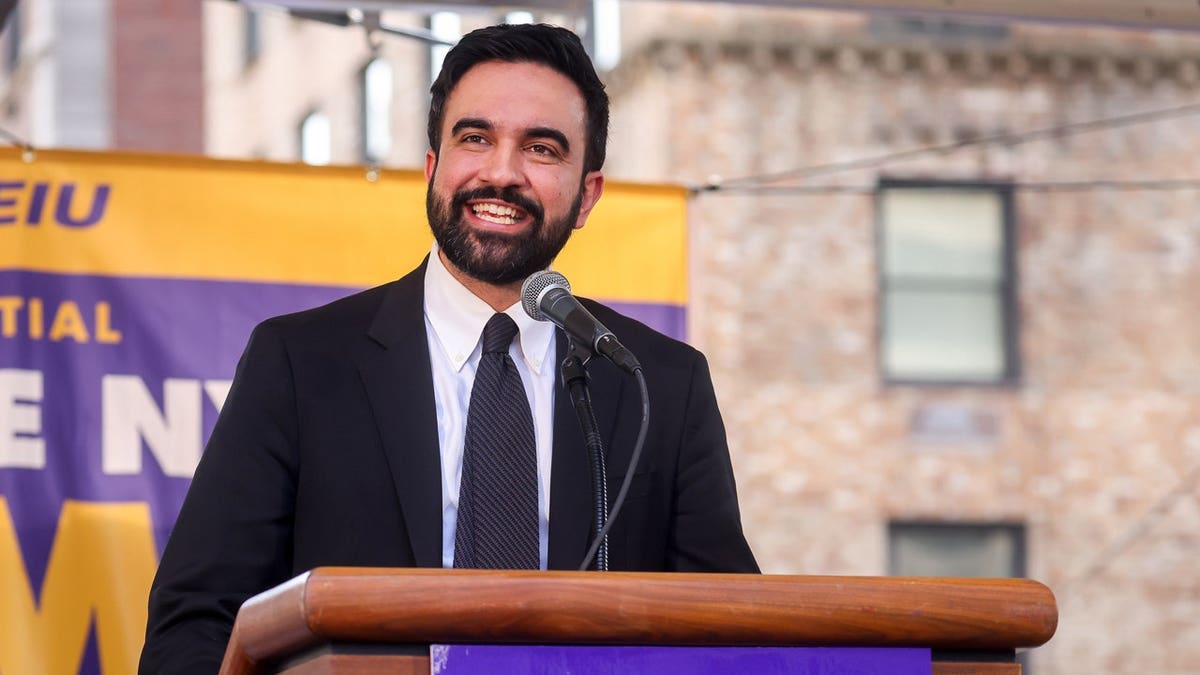
New York City Mayor Zohran Mamdani previously backed a proposal to tax luxury second homes owned by non-residents, targeting ultra-wealthy property owners. (Michael Nagle/Bloomberg via Getty Images)
The reported campaign would revive a previous push by Mamdani to close the city’s multibillion-dollar budget gap through tax increases, a proposal Hochul previously rejected. Mamdani’s earlier plan called for raising the city’s personal income tax rate on filers earning $1 million or more, a move he projected could generate roughly $3 billion annually, while also increasing corporate tax rates.
As an alternative, Hochul and Mamdani jointly advanced the state’s first pied-à-terre tax, an annual surcharge on certain high-value second homes, which passed in May 2026. State and city officials have projected the measure could raise about $500 million annually.
Mamdani also said his May 2026 executive budget closed what his administration described as an inherited $12 billion budget gap, crediting aggressive savings, new investments, his partnership with Albany and new tax revenue, including the pied-à-terre tax.
Mamdani’s office did not immediately respond to a request for comment from Fox News Digital.
zohran mamdani, new york city, elections state and local, taxes, kathy hochul
INTERNACIONAL
Fiscalía prepara escrito de acusación para audiencia intermedia y cierra investigación contra exvicepresidente panameño José Gabriel “Gaby” Carrizo
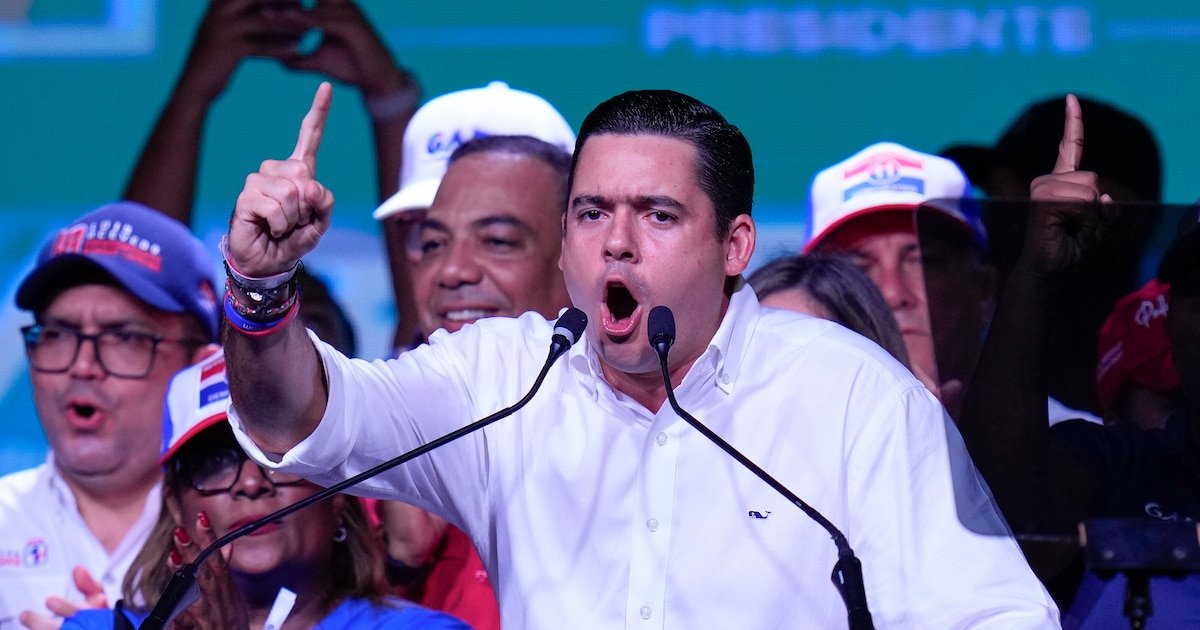
El Ministerio Público de Panamá se encuentra en la etapa decisiva del caso contra José Gabriel “Gaby” Carrizo, exvicepresidente de la República (2019-2024) y excandidato presidencial.
El proceso, que investiga el presunto delito de enriquecimiento injustificado agravado, avanza tras el cierre formal de la investigación, lo que obliga a la Fiscalía Anticorrupción a presentar un escrito de acusación para su revisión judicial.
La defensa de Carrizo, representada por el abogado Víctor Orobio, confirmó a TVN que había recibido la notificación oficial sobre el cierre de la investigación.
“Ya nos notificaron del cierre de la investigación. Estamos esperando la presentación del escrito de acusación y de la fecha de la audiencia intermedia”, detalló Orobio.
El cierre de la investigación responde a la expiración del plazo legal para las pesquisas, después de que los tribunales rechazaran la solicitud fiscal de extender el periodo bajo la figura de “investigación compleja”.

Por tanto, la Fiscalía Anticorrupción debe ahora solicitar formalmente la audiencia y presentar el escrito de acusación, en el que se expondrán los hechos, la calificación jurídica y las pruebas reunidas.
Posteriormente, la defensa tendrá la oportunidad de contestar e introducir sus propias pruebas para la audiencia intermedia.
La causa se originó tras un informe de la Contraloría General de la República, que identificó un supuesto incremento patrimonial injustificado de Carrizo por $1,9 millones durante su gestión pública.
Como consecuencia, el contralor Anel “Bolo” Flores dispuso en noviembre de 2025 el secuestro de bienes y cuentas bancarias pertenecientes al exvicepresidente hasta por $1,3 millones.
El secuestro de bienes, anunciado públicamente el 6 de noviembre, se implementó, según se dijo, como medida cautelar para asegurar fondos en caso de una eventual condena y resarcimiento al Estado panameño.

La decisión de la Contraloría, bajo la gestión de Flores, intensificó la presión sobre Carrizo, quien ya era objeto de dos investigaciones distintas por presuntas irregularidades durante su periodo como vicepresidente entre 2019 y 2024.
La intervención de la Contraloría en este caso marcó la segunda ocasión en la que se aplica una medida similar contra un miembro de alto perfil del Partido Revolucionario Democrático (PRD).
Esta reiteración provocó en su momento especulaciones y aumentó la controversia pública sobre la transparencia y la gestión de los recursos estatales.
El presunto enriquecimiento injustificado constituye una infracción que afecta de manera directa la confianza ciudadana en las instituciones públicas.
Las autoridades buscan determinar si Carrizo obtuvo ventajas económicas ilícitas aprovechando su cargo, un aspecto central para la integridad de la función pública.

La medida de secuestro de bienes tiene como finalidad principal garantizar la posibilidad de reparación al Estado en caso de condena. Los bienes afectados permanecerán bajo custodia judicial hasta que se resuelva el caso en las instancias correspondientes.
El caso de Carrizo se suma a una cadena de escándalos que han sacudido el escenario político panameño, profundizando el malestar social y la desconfianza en la administración pública.
La lucha contra la corrupción se impone como un reto permanente para Panamá, que requiere acciones decididas de todos los sectores para fortalecer el Estado de derecho y la gobernabilidad.
El desenlace del proceso judicial contra el exvicepresidente será determinante para definir el alcance real de la política anticorrupción en el país y marcará un precedente sobre la responsabilidad de los altos funcionarios en la gestión de los recursos públicos.

Uno por uno, qué senadores votaron a favor y cuáles en contra de la Ley de Propiedad Privada

Europa: la ola de calor pone a todas las grandes ciudades de Italia en alerta roja y Austria y Eslovaquia baten récords de temperatura

El magnate Peter Thiel encabezará en Buenos Aires un foro que busca proyectar el modelo de Milei

El Senado aprobó la ley de propiedad privada, pero el Gobierno debió ceder en la reforma del Fuego

El enorme elogio que recibió un juvenil de River que fue cedido a Peñarol: “Nos dieron a Messi”

La irónica reacción de Mario Pergolini por de la separación de Luck Ra y La Joaqui: “Está retriste el flaco”

Javier Milei cruzó a Victoria Villarruel y elevó la tensión: “Es una opositora, replica los argumentos kirchneristas”

Dólar hoy en vivo: a cuánto se negocian todas las cotizaciones minuto a minuto este miércoles 5 de agosto

La oposición cuestionó a Benegas Lynch por su empresa para vender campos a extranjeros y el senador libertario se defendió

Inédito boicot a un decreto para bajar costos portuarios: el Gobierno envió intimaciones con Prefectura
-
 ECONOMIA2 días ago
Dólar hoy en vivo: a cuánto se negocian todas las cotizaciones minuto a minuto este miércoles 5 de agosto
-
 POLITICA7 horas ago
La oposición cuestionó a Benegas Lynch por su empresa para vender campos a extranjeros y el senador libertario se defendió
-

 POLITICA2 días ago
Brasil retira a su embajador en la Argentina: qué consecuencias tiene la medida diplomática