INTERNACIONAL
Trump says Iran unleashed missile, drone surge after midterms

NEWYou can now listen to Fox News articles!
President Donald Trump said Sunday that Iran has launched more missiles and drones over the past week than at any point in more than a year, adding that U. S. forces shot them down without any damage and as tensions escalate following the U.S. midterm elections.
In a post on Truth Social, Trump also tied the surge in Iranian attacks to the Nov. 3 midterm elections, when Democrats won control of both chambers of Congress amid voter frustration over the war with Iran and rising fuel costs.
«As everyone remembers, I predicted two things concerning the November 3rd Midterm Elections,» Trump wrote on Truth Social.
TRUMP RESPONDS AFTER VANCE BLAMES IRAN WAR FOR MIDTERM LOSSES, VP SAYS HIS JOB IS TO SUPPORT PRESIDENT
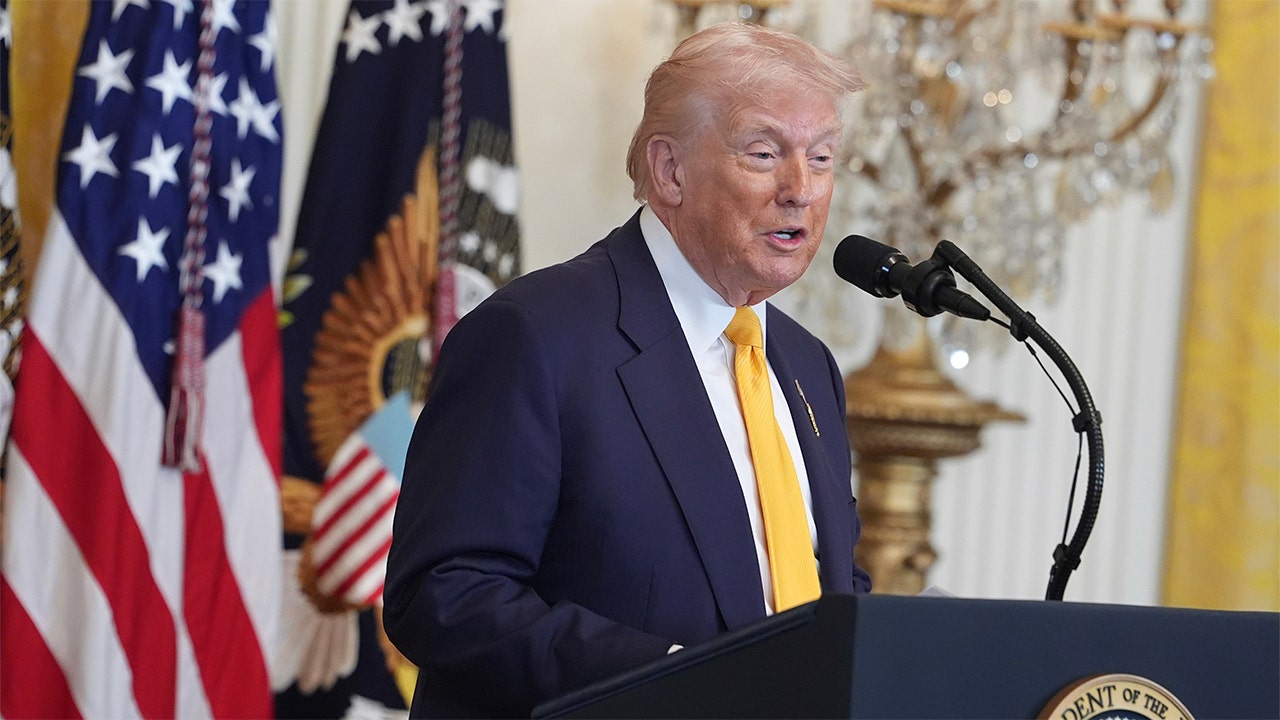
President Donald Trump said Iran has launched more missiles and drones over the past week than at any point in more than a year, claiming U.S. forces intercepted them all without damage. (Michael M. Santiago/Getty Images)
«One, that if the Democrats win, the Stock Markets would go down, substantially, which they have, and two, that the Islamic Republic of Iran, which has killed 81,000 protestors as of today, will grow more aggressive in their attacks, which has also occurred. «
Trump also said that Iran launched «more drones and missiles over the past week than at any time for over a year,» though he said U.S. defenses neutralized the threat.
«Don’t worry, they’ve all been knocked down, and done no damage,» Trump said.
«Iranian leaders consider the Democrats weak, ineffective, and Country destroying, but I won’t let that happen!» he added.
The remarks also came days after the Senate rejected a war powers resolution in a 48-51 vote on Nov. 19, leaving Trump’s military authority intact.
TRUMP WARNS OF NEW STRIKES AGAINST IRAN AFTER NEW YEAR, CALLS NEGOTIATORS ‘PROFESSIONAL TAP DANCERS’
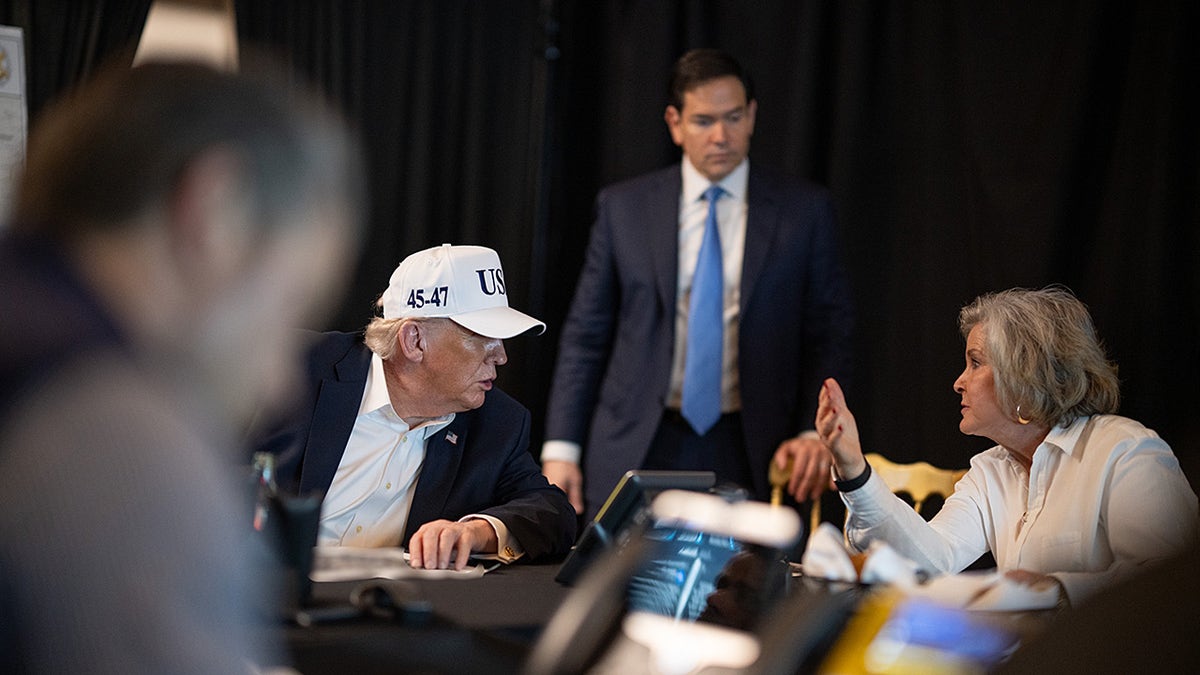
President Donald Trump monitors U.S. military operations in Iran following an Israeli strike in Tehran on Saturday, Feb. 28, 2026. (@WhiteHouse/X)
Speaking to Fox News earlier Sunday, Trump said he is inclined to resume strikes on Iran after the new year if diplomatic talks fail to produce a deal, warning that Iranian vessels testing the U.S. naval blockade would end up «at the bottom of the sea like the rest of the navy.»
In his social media post Sunday, Trump accused both Democrats and Iran of trying to keep fuel prices high ahead of the midterm elections and separately questioned the integrity of the vote without providing evidence.
«Both the Dems and Iran fought like hell to keep the Oil price up as long as possible and, since the Election, the Oil price has dropped by a record level,» Trump wrote, adding that it was too bad voters «didn’t understand this before they pulled the trigger.»
«The whole Election was very ‘strange,’» he said. «In the end, America will win! «
world, donald trump, iran, war with iran, politics, geopolitics, news events, middle east foreign policy











INTERNACIONAL
La Superintendencia de Administración Tributaria de Guatemala revela que la descarga de buques en Puerto Quetzal demora cinco días en promedio

La SAT de Guatemala informó que descargar una embarcación de carga a granel en Puerto Quetzal demanda en promedio cinco días, desde el atraque hasta la finalización del desembarco.
La medición derivó en un Plan de Acción 2027-2029 suscripto por ocho entidades públicas y privadas para dar previsibilidad a la cadena logística y reducir demoras.
La tercera edición del Estudio de Tiempos de Despacho analizó las importaciones de cemento, clínker, granos, metales y sulfato de sodio. El relevamiento determinó que el inicio de la descarga ocurre poco después de la llegada del buque, aunque la duración completa varía según la mercadería y su densidad.
La presentación fue encabezada por el superintendente de Administración Tributaria, Werner Ovalle Ramírez. El funcionario sostuvo que el objetivo excede la reducción de plazos: “No se trata únicamente de reducir tiempos, se trata de transformar procesos, generar certeza, fortalecer la confianza y hacer de Guatemala un país más competitivo”.

Entre 72 y 77 actividades para completar el desembarco
Los productos a granel comienzan a descargarse entre 25 y 35 minutos después del atraque. En el caso de los metales, ese lapso puede extenderse hasta dos horas y media antes de que se inicien las maniobras.
El mapeo operativo identificó 72 actividades en la cadena logística de los graneles y 77 para las importaciones de metales. En ambas operaciones participan ocho actores de los sectores público y privado, con un peso operativo concentrado en transportistas, la entidad portuaria y los agentes aduaneros, según la Superintendencia de Administración Tributaria.
El plazo promedio de cinco días abarca todo el recorrido de la carga: desde el arribo del barco hasta la conclusión de las tareas de desembarco. La medición permitió desagregar las etapas y detectar los puntos donde intervienen más participantes o se concentran mayores tiempos de operación.
El nuevo plan establece compromisos en seis áreas orientadas a fortalecer la coordinación logística en Puerto Quetzal. Una de las medidas previstas es la elaboración de pronósticos trimestrales para anticipar el flujo de embarcaciones y mercancías que llegarán al puerto.
Las acciones fueron asignadas a responsables específicos dentro de la cadena, con plazos definidos para su ejecución hasta 2029. La iniciativa busca ordenar la operación entre los organismos estatales, los operadores portuarios, los transportistas y los representantes del sector privado.
El antecedente de las exportaciones marítimas
La SAT ya había difundido en diciembre de 2025 la segunda edición de su Estudio de Tiempos de Despacho, centrada en las exportaciones por vía marítima. Esa evaluación calculó que los trámites para despachar mercancías al exterior requerían un promedio de 3,5 días.
A partir de aquel resultado, se firmó el Plan de Acción Nacional 2026-2029, que fijó como meta reducir el proceso de exportación a dos días. Las medidas contempladas incluyen modernización tecnológica, ampliación de los horarios portuarios y fortalecimiento del programa de Operador Económico Autorizado.
El estudio sobre importaciones en Puerto Quetzal utiliza una metodología internacional para medir el tiempo que transcurre entre la llegada de una mercancía a un punto de entrada y su salida efectiva. El propósito es localizar obstáculos que afectan el comercio exterior y evaluar los procesos aduaneros y logísticos.
La medición fue realizada bajo la guía técnica de la Organización Mundial de Aduanas y contó con asistencia del Programa Mercator, además de supervisión durante el relevamiento. La iniciativa forma parte del Programa de Modernización Integral Aduanera de la SAT y se vincula con el Acuerdo de Facilitación del Comercio de la Organización Mundial del Comercio.
La divulgación ocurrió mientras sectores productivos guatemaltecos reclaman avances en la agilización de controles comerciales. El Comité Coordinador de Asociaciones Agrícolas, Comerciales, Industriales y Financieras pidió a la SAT y al Ministerio de Agricultura, Ganadería y Alimentación acelerar una matriz de inspecciones en los puntos de ingreso al país, en función de compromisos derivados del acuerdo comercial con Estados Unidos.
Empresa Portuaria Quetzal,remolcador,cubierta marina,transporte marítimo,grúa portuaria
INTERNACIONAL
Tiene 46 años, dejó la ciudad y construyó sus propios ladrillos de barro: transformó un terreno baldío en un oasis natural

Isra, de 46 años, dejó la ciudad y construyó sus propios ladrillos de barro para transformar un terreno baldío en un oasis natural en Amatlán, México. Después de vivir durante 16 años en una zona boscosa, decidió mudarse a un lugar más cálido y cercano a la vida de pueblo. Allí levantó su casa con sus propias manos, reutilizó madera y diseñó un jardín con plantas, flores y una biopiscina.
En Amatlán, una localidad del estado de Morelos, el hombre convirtió un pequeño terreno que estaba prácticamente vacío en un espacio verde. Cuando llegó hace seis años, encontró algunos ciruelos que lo enamoraron del lugar, pero tuvo que pensar cómo aprovechar el resto de la parcela. Con tierra de la zona, madera recuperada y mucho trabajo artesanal, fue construyendo su vivienda y sumando distintos espacios para disfrutar de la naturaleza.
TNS
INTERNACIONAL
Jeffries calling Jerusalem NYC’s ‘sixth borough’ resurfaces as progressives swing against Israel
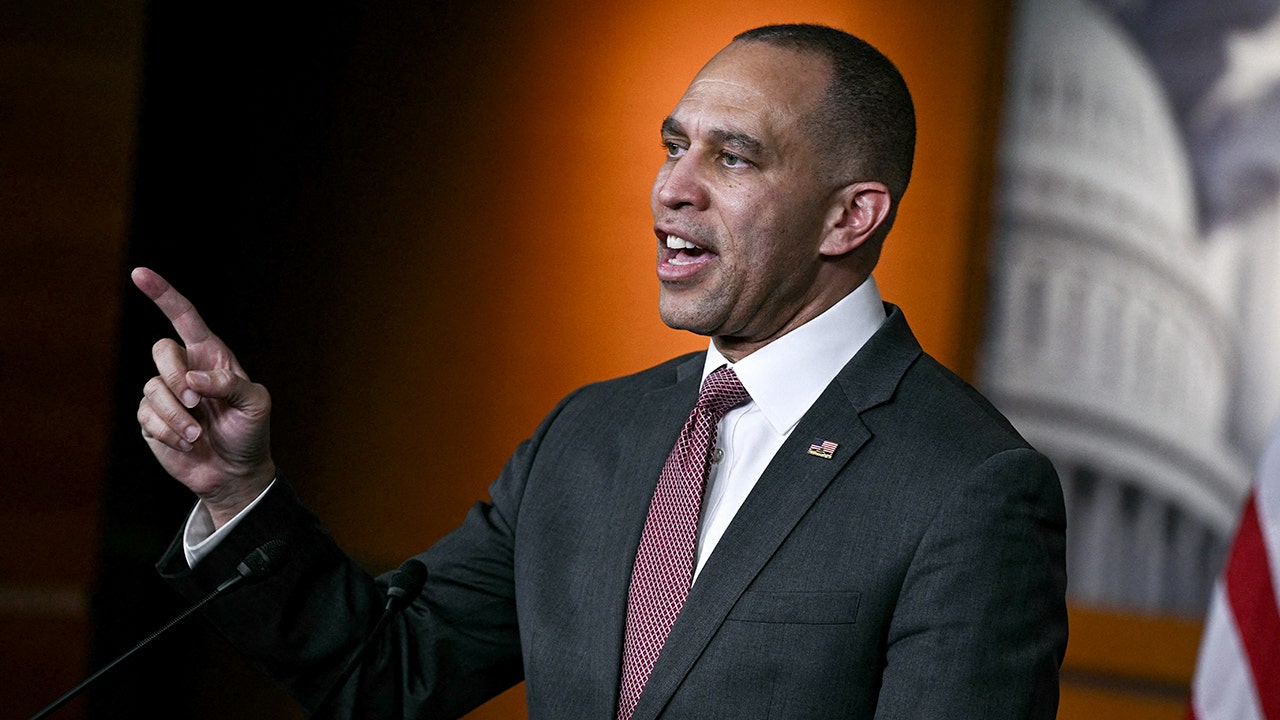
Hakeem Jeffries once called his deep ties to Jerusalem an extension of his representation of New York City as he touted his support for Israel and the Jewish community.
But those comments from 2020, recently resurfaced and going viral, may come back to bite the Democratic House leader as the progressive wing of the party — and even some establishment members — continue to further break with the U.S. maintaining support for the Jewish state.
«Someone said to me, ‘Hakeem, you’re going to Israel a 5th time?’» Jeffries recalled in an interview with the American Israel Public Affairs Committee (AIPAC) more than six years ago.
«I said, ‘listen, I’m from New York City’ — and back home in New York City, we consider Jerusalem to be the 6th Borough. And so, I’m just trying to catch up with my constituents.»
The comments resurfaced just after he won his party’s nomination to be speaker of the House in the next Congress.
JEFFRIES SURVIVES DEM VOTE TO SECURE SPEAKER POSITION AS PROGRESSIVE RESISTANCE CLOUDS HIS CHANCES
The remarks from 2020 contrast starkly with a growing faction of the Democratic Party that has condemned AIPAC and the political favor Israel has historically enjoyed among lawmakers. The clip also raises questions over how far Jeffries will go to placate calls for a more critical review of U.S.-Israel relations in light of his previous support for the Jewish state.
Jeffries won the secret-ballot vote to remain leader of the House’s Democratic Caucus with just 11 in the caucus voting against his leadership and 251 voting in favor. The result secured his nomination ahead of the full House floor vote in January, where he will need a simple majority of the chamber’s 435 members to become speaker.
During his AIPAC speech, Jeffries noted that some of his support stemmed from the uniquely challenging geopolitical environment around Israel.
«I think when you’re on the ground, for me it’s always been clear that Israel lives in an incredibly tough neighborhood,» Jeffries said.
«When you think about the dangerous situation in the Sinai to the south, Hamas in Gaza, Hezbollah to the north, Syria and chaos to the east, Iraq still a mess, Iran with nuclear ambitions and a tremendously bad actor — I grew up in Brooklyn in the late 80s and early 90s, I know from tough neighborhoods that Israel lives in a tough neighborhood,» Jeffries said.
HOUSE DEMOCRATS FRACTURE BADLY OVER MASSIE AMENDMENT TO CUT $3.3B IN U.S. AID TO ISRAEL
The stance clashes forcefully with at least eight members set to be a part of the 120th Congress with ties to the Democratic Socialists of America (DSA). The group aims to «end all military and economic aid to Israel [and] prosecute U.S. and Israeli leaders responsible for the genocide in Gaza.»
Two other members outside of the group, Democratic Reps.-elect Brad Lander and Scott Wiener have similarly called for a full embargo of Israel.
Jeffries’ own tone on Israel has changed over the years since the beginning of its war with Hamas in Gaza in October 2023, citing alarm at Israel’s civilian casualties.
In July, Jeffries argued in a letter to his colleagues that «a meaningful change in direction is needed.»
«Israel has an advanced economy and is capable of paying for its own sophisticated weapons, as the Prime Minister recently acknowledged,» Jeffries wrote.
«Accordingly, any future security arrangement between our two countries should be structured consistently with defense agreements that exist with our other Western allies and strictly adhere to our human rights laws and values,» Jeffries wrote.
FETTERMAN WARNS THERE IS NO LONGER ‘COMMON GROUND’ WITH FAR-LEFT DEMOCRATS OVER ISRAEL
Even so, Jeffries has steered clear of calling the conflict a genocide — a growing characterization from within the progressive wing — and has rejected a blanket discontinuation of U.S. aid to Israel.
In his letter, Jeffries also condemned efforts by Rep. Thomas Massie, R-Ky., to cut off all forms of assistance, advocating for a $3.3 billion military aid package to Israel included in the U.S. 2027 State Department appropriations bill.
«America’s commitment to Israel’s right to exist as a Jewish and democratic state and homeland for the Jewish people must remain ironclad,» Jeffries said in his letter.
politics, house of representatives, congress, israel, hamas, anti semitism

Trump says Iran unleashed missile, drone surge after midterms

Con asistencia del Diablito Echeverri y gol de Prestianni, Benfica avanzó en la Copa de Portugal

Nuevos desafíos, con la palabra oficialista devaluada

La Libertad Avanza impulsa un cambio en Ingresos Brutos en la provincia de Buenos Aires: cómo funcionaría el impuesto que busca reemplazarlo

Catherine Fulop regresó a Venezuela después de 14 años, se reencontró con su madre y se quebró en llanto: «Me explota el pecho de emoción»

La Superintendencia de Administración Tributaria de Guatemala revela que la descarga de buques en Puerto Quetzal demora cinco días en promedio

Javier Milei y sus medidas, en vivo: “Hoy discutimos si crecemos un punto más o menos”, dijo el Presidente

Javier Milei destacó el desembarco de Tesla en el país y aseguró: “Esto también es devolverle la libertad a los argentinos”

El brote de ébola está fuera de control en la República Democrática del Congo y crece el temor a una epidemia continental

El burbujeante ping pong de Colapinto con un actor argentino: de la puja entre Senna y Riquelme a la comida que le falta a la Fórmula 1

 POLITICA2 días ago
Javier Milei destacó el desembarco de Tesla en el país y aseguró: “Esto también es devolverle la libertad a los argentinos”
- CHIMENTOS13 horas ago
Agustín “Rada” Aristarán se despide de Chanta: “Con esta obra dejé de ser un impostor”
- INTERNACIONAL12 horas ago
NYC college put on notice after Jewish campus group shunned by student government: ‘rude awakening’