INTERNACIONAL
Macron under fire over Iran, Hezbollah policy as Trump admin hosts Israel-Lebanon talks

NEWYou can now listen to Fox News articles!
France’s President Emmanuel Macron is facing renewed criticism for his lack of support for President Donald Trump’s war against Iran and demands to include Lebanon in the current ceasefire as historic talks between Israel and Lebanon are set to begin Tuesday.
The historic meeting brokered by President Trump between Lebanon, a former French mandate, and Israel will take place at the ambassador level as hopes for an agreement evolve — most noticeably without French involvement. Secretary of State Marco Rubio is expected to host both nations’ ambassadors.
The Jerusalem Post reported that Israel’s government requested that France be excluded from the talks. An Israeli official told the paper that «France’s conduct over the past year – including initiatives aimed at limiting Israel’s ability to fight in Iran, and a complete lack of willingness to take concrete steps to help Lebanon disarm Hezbollah – has led Israel to view France as an unfair mediator.»
IRAN’S TERROR PROXIES FROM IRAQ-TO-LEBANON SAY READY TO RESPOND TO US-ISRAEL ATTACKS
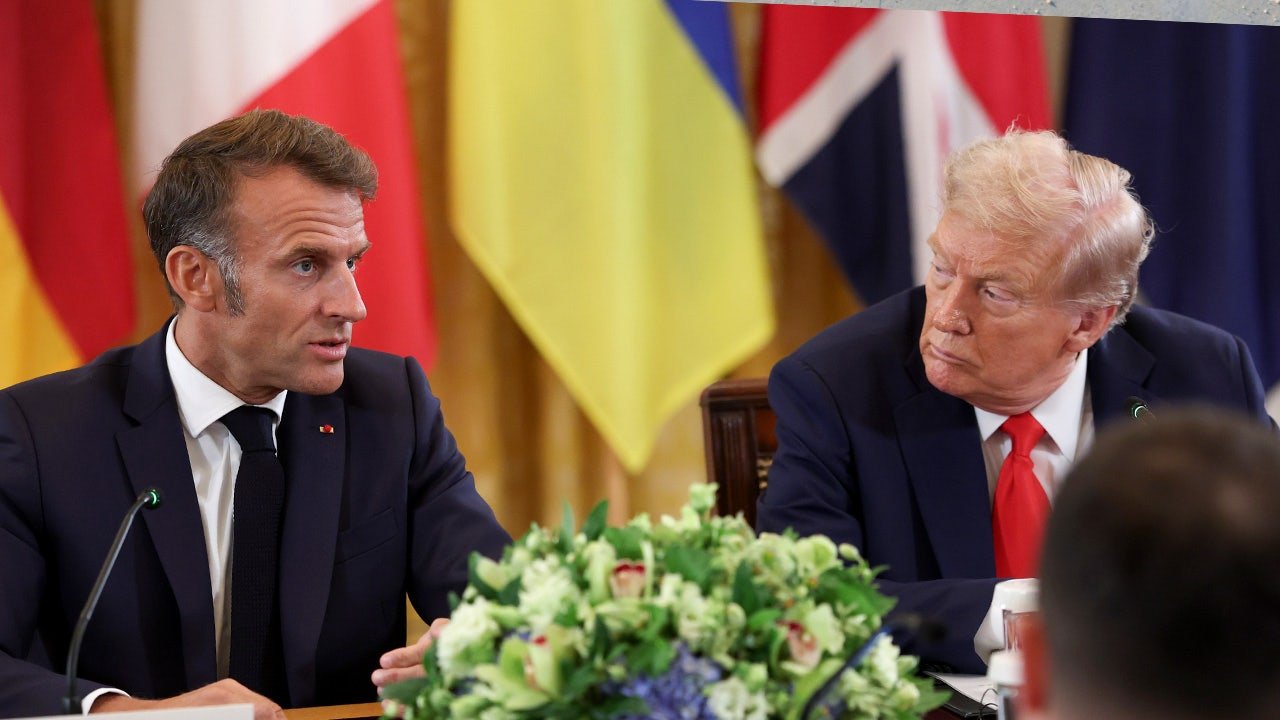
French President Emmanuel Macron speaks during a meeting with President Trump and other world leaders. (Win McNamee/Getty Images)
On Monday, Hezbollah chief Naim Qassem on Monday called on the Lebanese government to cancel the Tuesday meeting in Washington, while describing the talks as pointless. In a televised speech, Qassem said the armed group will continue to confront Israeli attacks on Lebanon.
Hezbollah violated a ceasefire to enter the war on its patron, Iran’s side, in March when it launched rockets into Israel after the U.S.-Israel joint attack on the Islamic Republic began, still Macron has demanded Israel stop attacking Hezbollah’s terror infrastructure in Lebanon.
Israeli Brig. General (Res.) Yosef Kuperwasser told Fox News Digital that Macron was «working against the best interests of the Lebanese state and government. This is a very problematic direction.» He accused Macron of «taking the side of Hezbollah and normalizing Hezbollah because he is focused on «narrow interests.»
IRAN THREATENS TO END CEASEFIRE OVER HEZBOLLAH’S EXCLUSION FROM TRUCE DEAL
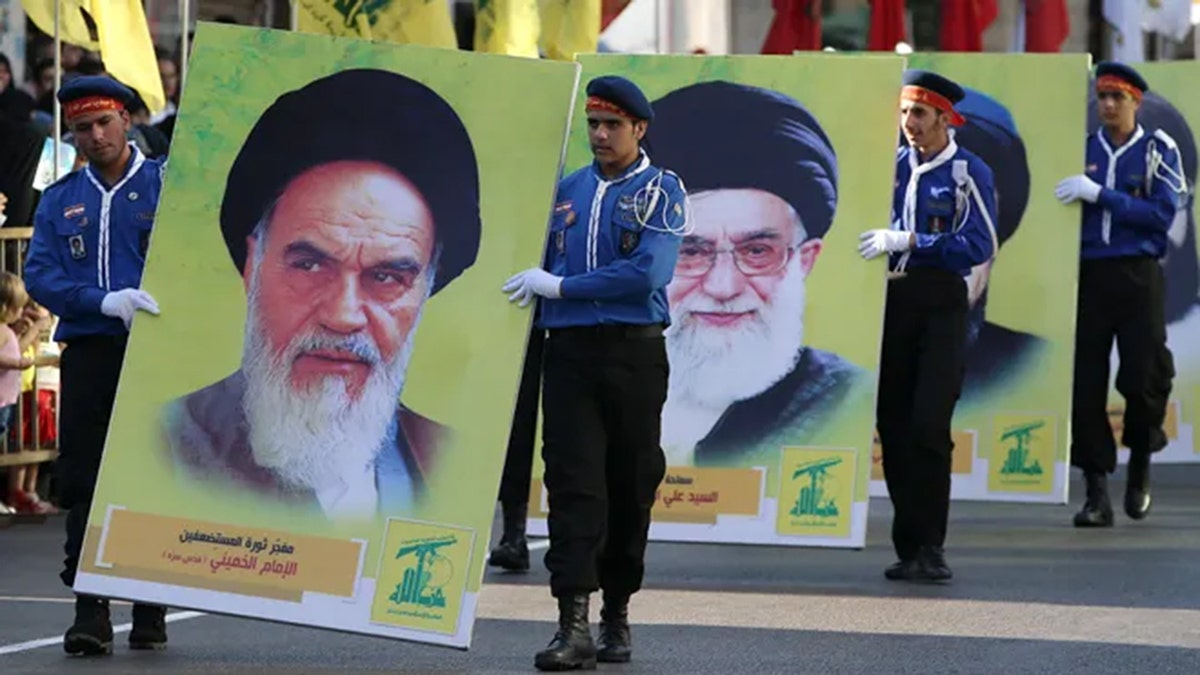
Hezbollah al-Mahdi scouts parade with big portraits of Iran’s late leader Ayatollah Khomeini, foreground, and Iran’s supreme leader Ayatollah Ali Khamenei, background, during an event for Jerusalem day or Al-Quds day, in the southern town of Nabatiyeh, Lebanon, Thursday, Aug. 1, 2013. The last Friday of the Islamic holy month of Ramadan is observed in many Muslim countries as Al-Quds day, as a way of expressing support to the Palestinians and emphasizing the importance of Jerusalem to Muslims. (Hussein Malla/AP Photo)
The former head of research for the Israel Defense Forces’ Military Intelligence Directorate, Kuperwasser, added that the «Americans want us to engage with the Lebanese along with the military [in Lebanon]. Our expectations are very similar. We want to see Lebanon do something about Hezbollah, something real, not just issue statements and pledges. We believe we have helped them by weakening Hezbollah militarily since they decided to launch missiles on March 2. If there is a breakthrough, Lebanon has a lot to gain,» but said it has to «disarm Hezbollah.»
Macron has faced accusations over the years that he has normalized Hezbollah. His government, in contrast to Germany, the U.S., Canada, the Netherlands, Japan, Austria and many other Western and non-Westen countries, refuses to designate Hezbollah’s entire organization a terrorist entity. France has classified Hezbollah’s «military wing» a terrorist organization but declined to ban its «political wing.» Hezbollah considers itself a unified movement without branches.
The French politician François-Xavier Bellamy, who is a member of the European Parliament for the Republicans Party, said last week on French television that «France must stop normalizing Hezbollah.» Macron sparked outrage in 2020 when he reportedly held a private conversation with a top elected Hezbollah official, according to the Paris-based daily Le Figaro.
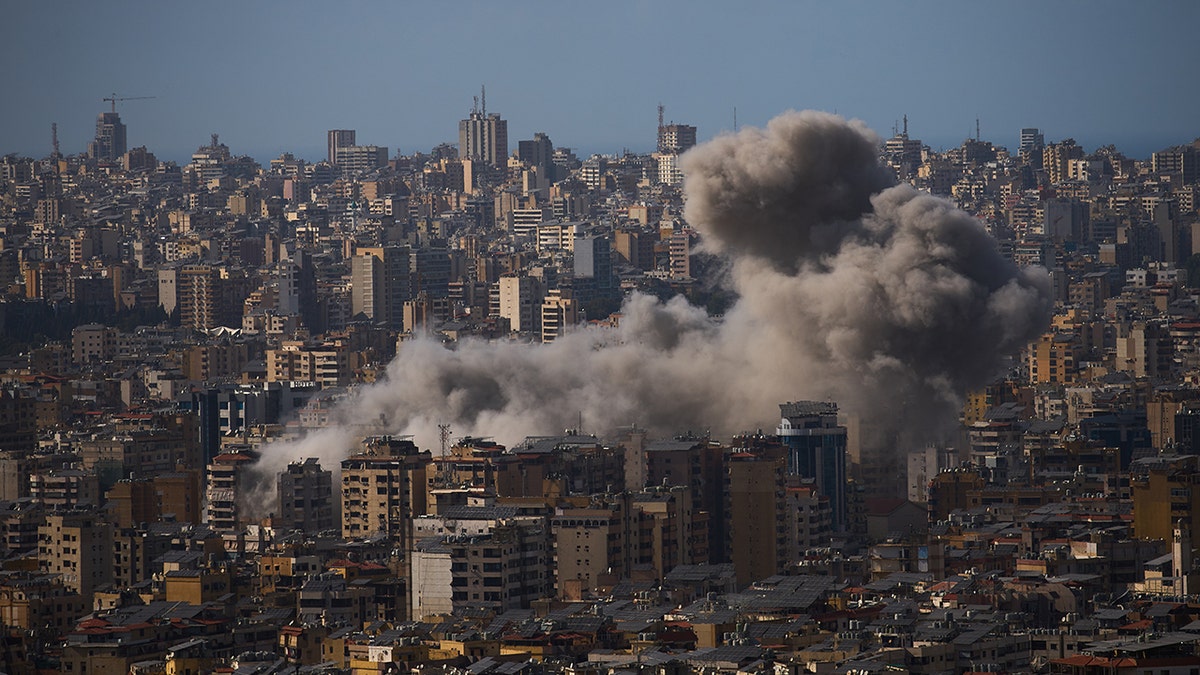
Smoke rises from Israeli airstrikes in Dahiyeh, a southern suburb of Beirut, Lebanon, Sunday, April 5, 2026. (Emilio Morenatti/AP)
Edy Cohen, an Israeli security expert on Hezbollah, who was born in Lebanon, told Fox News Digital, «France is forced not to come out against Hezbollah in order to legitimize its involvement in Lebanon.»
A French diplomat told the Times of Israel that «what we are hoping for is not a ticket to the meeting, but that Israel stops its offensive on Lebanon.»
When asked if France would pressure Lebanon to recognize Israel as a state, Pascal Confavreux, a spokesman for France’s Foreign Ministry, told «Fox News Sunday» that, «Iran has to stop terrorizing Israel through Hezbollah because Hezbollah chose to bring Lebanon into a war which is not Lebanon’s war… Lebanon has to be included in the ceasefire, something that we are pushing diplomatically,» He continued that we are in favor of direct talks between Lebanon and Israel.
It is not known if France asked for a seat at the talks. Fox News Digital sent multiple press queries to France’s embassies in Washington D.C. and Tel Aviv.
IDF UNCOVERS HEZBOLLAH WEAPONS STASH INSIDE HOSPITAL IN LEBANON
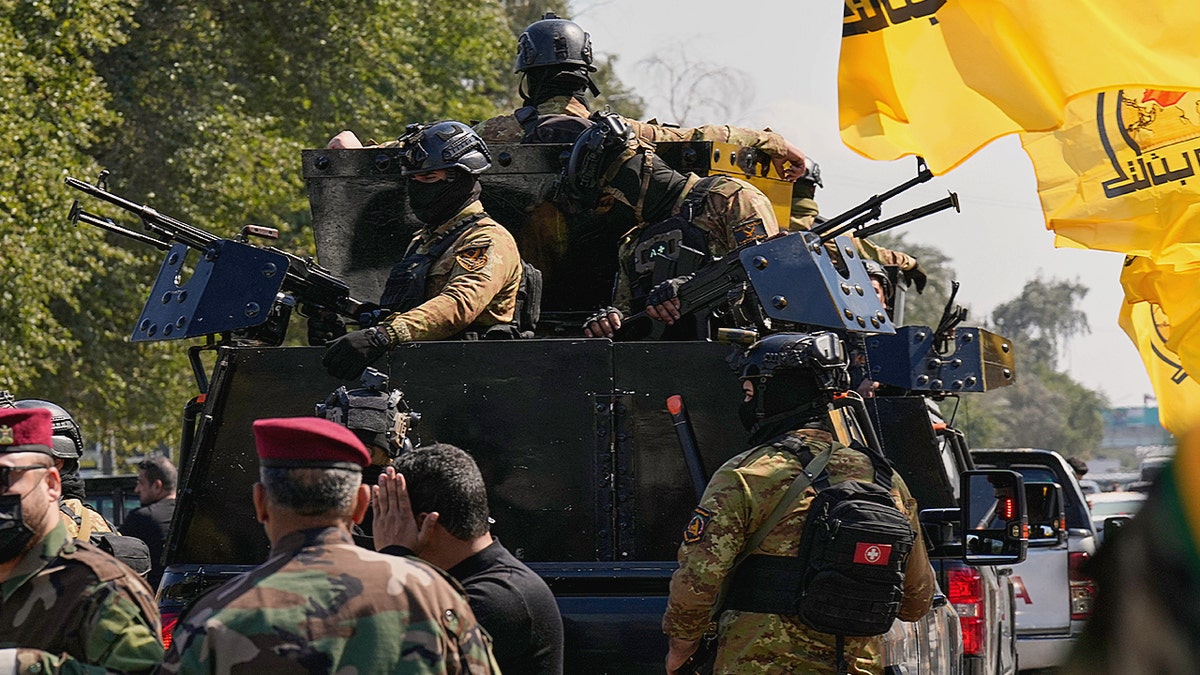
Hezbollah launches long-range missiles from Lebanon into northern Israel within 48 hours of strikes on Iran, escalating the widening conflict amid Operation Epic Fury. (Hadi Mizban/AP)
On Saturday, Macron again pushed his desire for a ceasefire and wrote on X that he had discussions with Iran’s President Massoud Pezeshkian on Saturday: «I stressed the importance of full respect for the ceasefire, including in Lebanon. France extends its full support to the actions of the Lebanese authorities, who alone are legitimate to exercise the sovereignty of the State and decide the destiny of Lebanon.»
Walid Phares, an expert on Lebanon and the region, told Fox News Digital that while the talks are important, problems exist. «It is at ambassadors’ level, which means it is not destined to reach a top level of decision-making.»
He added, «Strangely, the Lebanese president and prime minister declined to invite the Lebanese foreign minister to the Washington talks, provoking a representation by Israel, also at ambassadorial level, showing that Hezbollah still has a strong influence on the Lebanese government. The militia is being rejected by the population on the ground and fears a meeting in D.C. would ostracize Hezbollah further.»
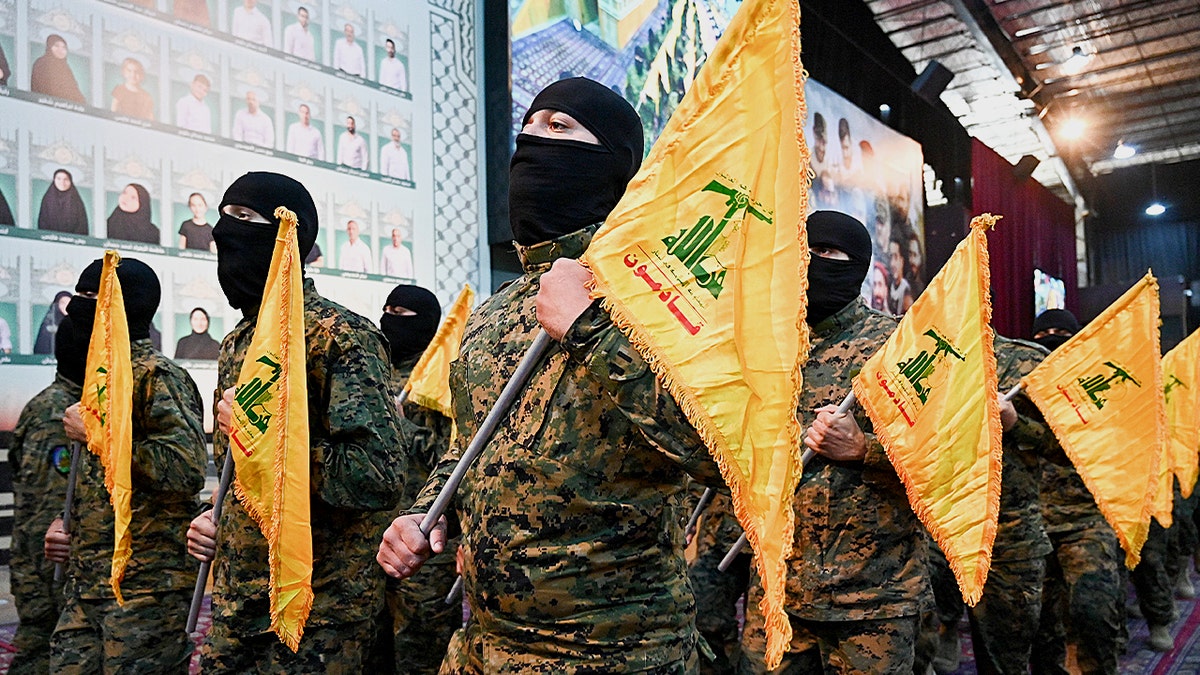
Iran rebuilds Hezbollah ties as Trump gives 10-15 day deadline. (Fadel Itani/NurPhoto)
Sethrida Geagea, a member of parliament from the Lebanese Forces party, posted on X ahead of the Israel-Lebanon talks an open letter to Nabih Berri, the powerful speaker of the Lebanese Parliament and leader of the Shiite Amal Movement. She issued indirect criticism of Hezbollah and its terrorist army within the state. Geagea appealed to Berri to unify the Lebanese to be «protected by a single army.»
Without naming Hezbollah, her letter stated that young Shiites have been plunged into war that has nothing to do with them and the conflict is really about an Iranian decision to retaliate for the joint U.S.-Israel war that assassinated the Islamic Republic’s Supreme Leader, Ali Khamenei, on February 28.
CLICK HERE TO DOWNLOAD THE FOX NEWS APP
The State Department did not immediately respond to a Fox News Digital press query.
Reuters contributed to this report.
france, donald trump, lebanon, war with iran, emmanuel macron, israel










En un número de la revista Crisis de 1973, María Esther Giglio le preguntaba a Borges por qué en sus cuentos tenía tan pocas mujeres. “Les he escrito cientos de poemas”, respondía él, en parte aceptando la crítica, en parte tratando de cambiar de tema. No son tantas, pero tampoco son tan pocas: la viuda Ching, la Lujanera, Emma Zunz, Beatriz Viterbo, la mujer de Pedro Salvadores, Juliana Burgos, algunas más. Casi todas comparten un destino de sangre y muerte; son vehículos de pasiones bajas: la infamia, el rencor, la venganza, las minucias del sexo. En aquella entrevista, él vinculaba lo femenino con la debilidad y la deshonra.
Las mujeres de su vida, sin embargo, fueron fuertes, resueltas, atrevidas. En esa contradicción se jugaban sus relaciones. Tímido y enamoradizo, tuvo muchos amores. Si propusiéramos una biografía a partir las mujeres que amó, comprobaríamos pronto que, desde la adolescencia, con las primeras amigas en Ginebra, y hasta el día de su muerte, hubo pocos momentos en los que no estaba en un noviazgo —real o fantaseado—. “Yo creo que he estado enamorado siempre a lo largo de mi vida, desde que tengo memoria”, le dijo a Osvaldo Ferrari en 1985.

Las hermanas Lange, Emma Risso Platero, Estela Canto, Cecilia Ingenieros, Genoveva Felisca, Susana Bombal, Elvira de Alvear, Esther Zemborain, Elsa Astete, Wally Zener, María Esther Vázquez, María Kodama: la serie parece infinita.
Borges aceptaba con estoicismo los reveses del destino —la ceguera, el primero—, pero vivía la soledad como una carga, como un infierno: necesitaba una mujer a su lado. Y cuando sus sentimientos por ella se acababan o ella lo dejaba, rápidamente encontraba una sustituta. “La vida amorosa de Borges”, escribió Norman Thomas di Giovanni, “fue siempre un asunto cerebral”. Y Estela Canto: “El amor de Borges era romántico, exaltado, tenía una especie de pureza infantil. Al parecer, se entregaba completamente, suplicando no ser rechazado, convirtiendo a la mujer en un ídolo inalcanzable, al cual no se atrevía a aspirar. No era sentimental, sino lírico”.
El saber popular ubicó a Norah Lange y a Estela Canto como los grandes amores —trágicos— de Borges. A cuarenta años de su muerte, es difícil, si no imposible, dar una dimensión real de esas relaciones. Sobre todo, porque se las agigantaba como una forma de menoscabar a María Kodama. Kodama era demasiado polémica, era la Yoko Ono de Borges y Bioy. Norah y Estela no solo eran más accesibles, sino que tenían algo aún más valioso: de las dos se podía contar historias escandalosas de alcohol, rivalidades literarias, sexo. Las dos participaban en ese deporte al que los argentinos nos entregamos con un placer maledicente, el chisme.

Kodama fue el pararrayos que le permitió a Borges una posteridad pacífica. A medida que la distancia aplacaba las disputas políticas en las que él había estado atrapado, era ella quien quedaba en medio de los conflictos. “Todo el periodismo me odia”, le dijo una vez a Pola Oloixarac, “pero la gente sabe que yo defiendo lo que Borges quería que yo defendiera. Por eso no les contesto a los periodistas, que me maltratan y me dicen que yo hago las cosas por dinero, cuando no es así. Es un voto de confianza de Borges que jamás voy a traicionar”. Actuó según lo que ella creía que era necesario para proteger la obra y la memoria de Borges. Fue inflexible, fue arbitraria, fue brutal, fue excesiva, fue cruel.
En 2017, Kodama presentó su libro Relatos en la librería El Ateneo Grand Splendid y la escritora Alina Diaconú dijo que Borges la llamaba “mi samurái”. Como si se moviera con ese código de honor, arrasó con todo lo que podía poner en duda el futuro del fantasma: borró dedicatorias, canceló contratos, renegoció ediciones, quitó derechos, hizo juicios y denuncias, tuvo polémicas públicas con muchísima gente. Hizo que Alfaguara retirara la tirada completa de El hacedor (de Borges) remake, de Agustín Fernández Mallo, y en un hecho muy desgraciado llevó a juicio por plagio a Pablo Katchadjian, que había intervenido el cuento El aleph con un experimento típico de la vanguardia en el que expresaba un saber profundo de la obra de Borges.

Quizá la primera víctima de Kodama —la primera víctima de Borges— haya sido ella misma. Con el terror de no cumplir su misión, parecía que buscaba ser eterna. “Quizá viva 120 años, quizá nunca me muera”, me dijo una vez. Lo sobrevivió treinta y siete años. En todo ese tiempo organizó conferencias, homenajes, encuentros en universidades, bienales, charlas con académicos. No dejó de hablar de él, de pensar en él, de escribir sobre él. Nunca —al menos públicamente— se le conoció otra pareja. Consagró su vida a mantener la vigencia de Borges.
“Está vivo gracias al trabajo que yo hago”, decía, “esa es mi obra”.
En el final de su vida, nadie atendió y cuidó a Borges como ella. Nadie lo escuchó —sus ideas, sus deseos, sus temores— como ella. Él hablaba para ella, recitaba para ella, escribía para ella. Siempre medido en las dedicatorias, a Kodama le dedicó cuatro libros: Historia de la noche, La cifra, Atlas —que hicieron juntos: él, el texto; ella, las fotos— y Los conjurados.
La dedicatoria de La cifra es quizás la más bella que se haya escrito jamás: “Como todos los actos del universo, la dedicatoria de un libro es un acto mágico. También cabría definirla como el modo más grato y más sensible de pronunciar un nombre. Yo pronuncio ahora su nombre, María Kodama. Cuántas mañanas, cuántos mares, cuántos jardines del Oriente y del Occidente, cuánto Virgilio”.
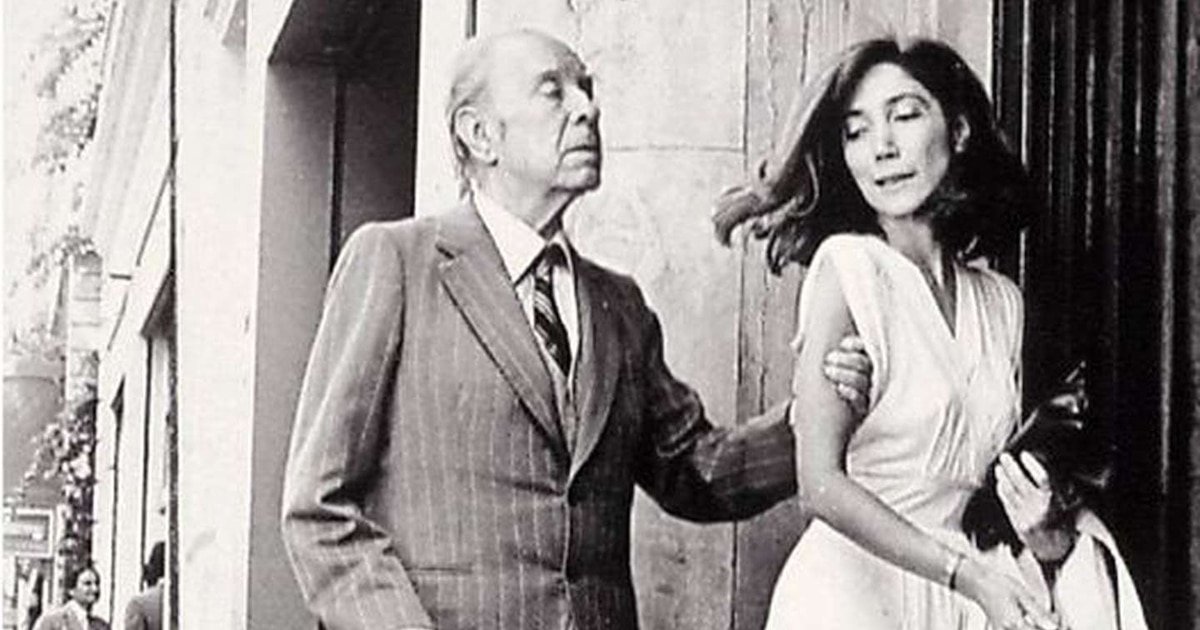
“Cuando caminaban juntos, es decir, casi siempre que Borges caminaba, era él el que la llevaba del brazo”, escribió Juan Martini en el blog de Eterna Cadencia, “y era visible que el gesto de Borges, antes que el de un ciego, era el gesto de un compadrito: el gesto firme y orgulloso del hombre que no solo está con la mujer que quiere estar, sino que dice: Esta mujer es mía”.
Se sacaron cientos de fotos, pero hay una icónica que muestra claramente aquello que decía Martini.
Borges y Kodama salieron a caminar y ahora vuelven a Maipú 994, la casa de él. Ella no vivía ahí; tampoco, según Fanny, la empleada doméstica, tenía la llave. La foto es en la puerta del edificio. María tiene un vestido blanco liviano sin mangas que le cae hasta por debajo de las rodillas. Siempre —o casi siempre— iba de blanco. Tiene una cartera negra, como negros también son los zapatos de taco alto, parecidos a los que se usan para bailar tango. El pelo largo hasta los hombros vuela hacia atrás. Está girando la cabeza hacia él, como si le quisiera advertir algo. Tal vez quiere recordarle el escalón de mármol de la entrada. Borges va un paso atrás. Tiene un traje gris a rayas que le queda un poco ajustado, una camisa clara —blanca o celeste—, una corbata también a rayas. Tiene el mentón hacia arriba, un gesto característico que le da un aire malevo. Agarra el bastón con la mano izquierda y con la derecha la agarra a María. La agarra con fuerza. Le clava los dedos. Si no fueran Borges y Kodama, uno podría creer que él la atrae hacia sí para besarla o pegarle. La foto es perfecta. Una historia en sí misma.
Lawmakers continue dispute over FISA
Chief Congressional Correspondent Chad Pergram reports from Capitol Hill on the ongoing debate surrounding the extension of the FISA surveillance tool.
NEWYou can now listen to Fox News articles!
One of the government’s most powerful surveillance tools will go dark this weekend, and lawmakers aren’t sure what that means for the nation’s intelligence-gathering authorities.
Democrats rejected attempts in the House and Senate to extend Section 702 of the Foreign Intelligence Surveillance Act (FISA) in an act of defiance against President Donald Trump, who tapped Housing chief Bill Pulte to temporarily oversee the nation’s intelligence services.
But there are differing trains of thought on the ramifications of failing to renew the program. Some lawmakers argued that an extension was not necessary given that FISA courts had authorized continued intelligence gathering until March 2027.
SPY PROGRAM CREDITED WITH STOPPING TAYLOR SWIFT TERROR PLOT BARRELS TOWARD EXPIRATION
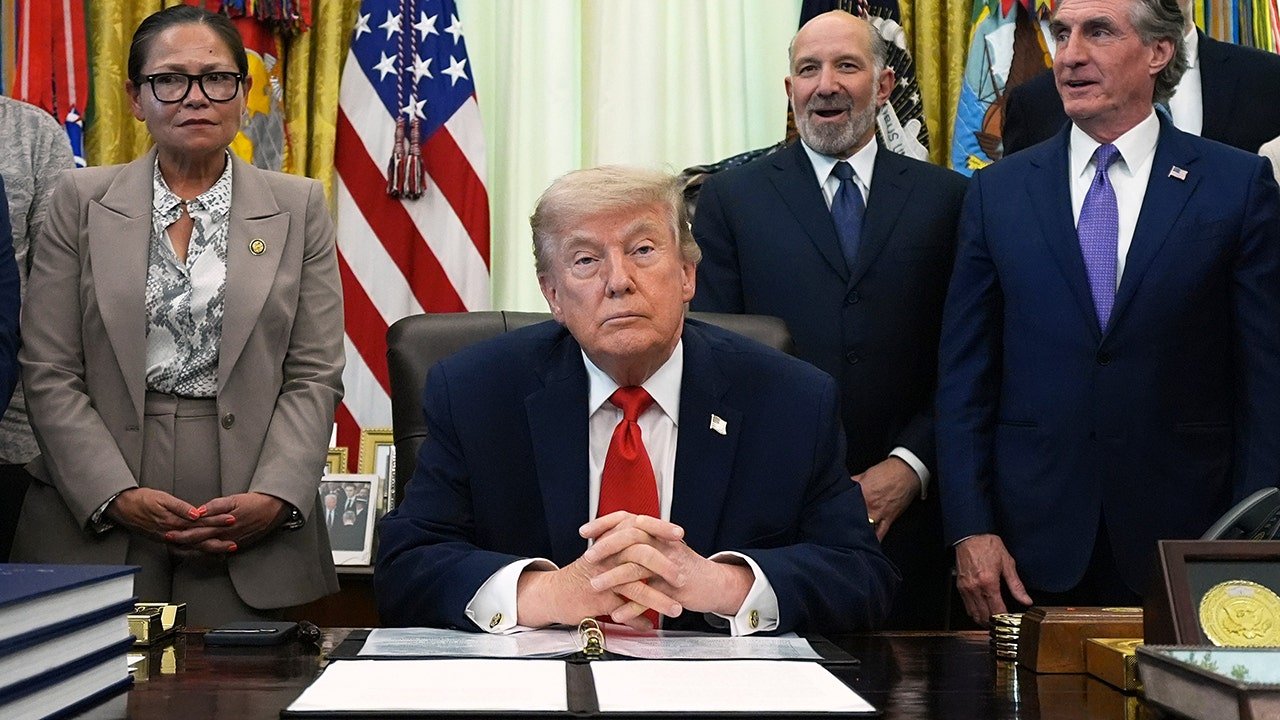
President Donald Trump signs a proclamation about the fishing industry as Del. Kimberlyn King-Hinds, Commerce Secretary Howard Lutnick and Interior Secretary Doug Burgum listen in the Oval Office of the White House in Washington on June 11, 2026. (Jacquelyn Martin/AP)
Others say that it opens up the possibility for telecommunications and major tech companies like Google to decline handing over information without explicit direction from Congress.
«We don’t know the answer to that,» Sen. Mark Warner, D-Va., the top Democrat on the Senate Intelligence Committee, said. «But it is, obviously, a high-risk proposition.»
Boiled down, the Section 702 program allows the U.S. government to collect intelligence on foreigners abroad who are using U.S. communication systems, and it serves as a major part of Trump’s daily intelligence briefing.
But it also sweeps up communications from Americans who are talking to foreign suspects — a key issue that threatened reauthorization among privacy hawks in both parties well before Pulte’s appointment.
CONSERVATIVE FISA REVOLT POSES FRESH TEST FOR SPEAKER JOHNSON
«That is a gray area, and it’s one of the things that we’re going to have to work through,» House Minority Leader Hakeem Jeffries, D-N.Y., told Fox News when asked whether providers would still continue to share information with the government if the program was not authorized.
«What is clear is that we are going to have to address the issue of extending surveillance authority legislatively. And the problem is that the Trump administration has decided to toss this hand grenade into the middle of sensitive negotiations,» he added, referring to Pulte.
Sen. John Kennedy, R-La., contended that there were already thousands of FISA certifications approved, it’s just that new certifications wouldn’t be allowed until the program was reauthorized.
«It’s not like that will be the end of our ability to surveil foreign terrorists,» Kennedy said.
The standoff is not expected to end soon. Trump’s decision to nominate former Securities and Exchange Commission Chairman Jay Clayton to serve as the permanent director of national intelligence also failed to soften Democrats’ opposition.
Many lawmakers remain unwilling to back a renewal of the program while Pulte continues serving in the acting role.
THE TOP 3 FACTORS HEIGHTENING THE RISK OF TERROR ATTACKS ON THE HOMELAND
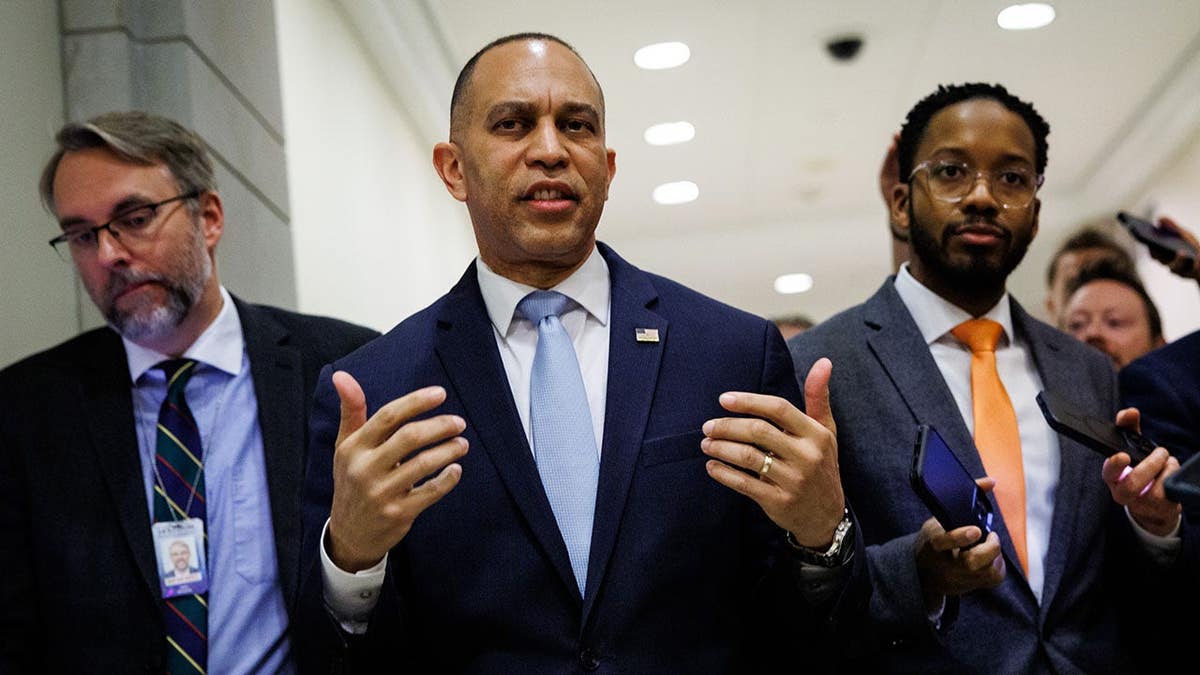
House Minority Leader Hakeem Jeffries, D-N.Y., speaks with reporters as he walks to his office after a press conference at the U.S. Capitol in Washington, D.C., on March 27, 2026. (Samuel Corum/Getty Images)
«Nobody disputes that FISA has been used to stop terrorist attacks on our homeland here,» House Majority Leader Steve Scalise, R-La., told Fox News Thursday. «And why would anybody vote to end that tool is beside me.»
Meanwhile, the House is scheduled to begin a week-long recess next week, meaning that even if there is a resolution in the Senate in the coming week, the program will likely remain dark until they return.
The program’s expiration marks the first extended lapse since it was enacted in 2008. The Trump administration has argued that the surveillance authority is a critical national security tool, crediting it with helping foil a mass-casualty terror plot targeting a 2024 Taylor Swift concert in Austria and combat North Korean hackers, among other successes.
The uncharted territory comes amid a heightened threat environment as the war with Iran continues and large-scale events, such as the World Cup and America 250 celebrations, are beginning to ramp up.
Senate Intelligence Committee Chair Tom Cotton, R-Ark., argued on the Senate floor in his bid to extend the program that there was a bipartisan bill waiting to be passed, but in the meantime, lawmakers should pause the partisan animosity and support an extension.
CLICK HERE TO DOWNLOAD THE FOX NEWS APP
«If we don’t extend it for at least a few weeks while we continue to try to work on our differences, the consequences could be severe,» Cotton said. «The consequences, to be frank, could be fatal.»
Still, Democrats counter that had Trump not appointed Pulte, or at least waited until the reauthorization was completed, Congress would not be in the current logjam.
«I cannot stress enough to you that none of this, none of this needed to happen,» Warner said.
politics, national security, congress, republicans, privacy, democrats senate, donald trump
INTERNACIONAL
La fecundidad en Centroamérica cae por debajo del reemplazo demográfico en varios países

En Centroamérica, menos hijos deseados y más obstáculos para tenerlos marcan una tendencia regional. Según el último informe del Fondo de Población de las Naciones Unidas, el 39% de quienes desean tener hijos señala a la economía y la inestabilidad laboral como los principales frenos para formar la familia ideal.
María, de 28 años, se casó hace poco más de dos años y, junto a su pareja, evalúa la posibilidad de formar una familia. “Aunque contamos con más de dos ingresos, nos asusta la posibilidad de pasar carencias con un niño”, admite.
El trabajo eventual y la atención a clientes les dejan poco margen de tiempo y, también de ingresos, esa, dice la joven salvadoreña, es la principal razón por la que hasta hoy, han postergado la decisión de convertirse en padres, aunque reconoce que no han pensando en más de uno.
“Pensamos en tener solo un hijo, después de los 30, porque me preocupa no poder acompañarlo hasta el final de su formación”.
Las cifras muestran un descenso sostenido. En El Salvador, la tasa global de fecundidad bajó de 6.2 hijos por mujer en 1950 a 1.3 en 2024 y es la tasa más baja de todos los países de la región. El último Censo de Población y Vivienda del Banco Central de Reserva confirma esta cifra.

Costa Rica registra 1.32 hijos por mujer, mientras que en Nicaragua y Panamá los valores rondan los 2.2. Guatemala, aunque mantiene la fecundidad más alta de la región, cayó de 6.7 hijos por mujer en los 80 a 2.8 en la actualidad.
Estos niveles sitúan a varios países por debajo del umbral de reemplazo demográfico de 2.1 hijos por mujer y reconfiguran la estructura por edades. La Comisión Económica para América Latina y el Caribe (CEPAL) estima que la tasa de fecundidad promedio en la región es de 1.8 hijos por mujer en 2024.
La transición hacia familias más pequeñas no ha sido homogénea. Existen diferencias entre áreas urbanas y rurales, y entre sectores con mayor o menor acceso a educación y salud.
El descenso de la fecundidad no responde a una sola causa. La expansión de la educación femenina, la urbanización y la incorporación de las mujeres al mercado laboral cambiaron las aspiraciones y prioridades. La presión económica, marcada por salarios bajos, empleos inestables y altos costos de crianza, se combina con la falta de servicios públicos de cuidado infantil y la persistencia de roles tradicionales de género.
“En Centroamérica, muchas personas no pueden decidir cuántos hijos tener ni cuándo”, advierte el Fondo de Población de las Naciones Unidas. La brecha entre el número deseado y el real se mantiene, ya sea porque se tienen menos hijos por restricciones materiales o más de los planeados por falta de acceso a anticonceptivos y salud sexual.
El embarazo adolescente sigue afectando a jóvenes rurales, indígenas y afrodescendientes, y perpetúa ciclos de pobreza y desigualdad.
En sectores urbanos y de clase media, la tendencia es postergar y limitar la maternidad. En contextos rurales y empobrecidos, la fecundidad alta y los embarazos tempranos siguen siendo frecuentes, asociados a bajos niveles educativos y barreras en el acceso a servicios.

El trabajo no remunerado de cuidados recae mayoritariamente en las mujeres y representa entre el 20% y el 30% de la economía doméstica invisibilizada, según el Banco Mundial. La falta de servicios de cuidado infantil y de licencias parentales equitativas limita las posibilidades de conciliación laboral y familiar.
El acceso a métodos anticonceptivos mejoró, pero las diferencias persisten entre países y dentro de ellos. Mientras en Costa Rica y Colombia más del 75% de las mujeres en edad reproductiva usa algún método anticonceptivo, en Haití, Guyana y Guatemala menos de la mitad accede a métodos modernos.
La falta de educación sexual integral y las restricciones legales sobre el aborto agravan las dificultades, sobre todo en El Salvador, Honduras y Nicaragua. Uno de los problemas más persistentes es la maternidad adolescente. Las adolescentes afrodescendientes en la región presentan un 50% más de probabilidades de ser madres antes de los 19 años respecto de otras jóvenes.
La tasa de fecundidad adolescente en América Latina y el Caribe es una de las más altas del mundo, con 76 nacimientos por cada mil adolescentes de entre 15 y 19 años.

Las recomendaciones del UNFPA insisten en que las políticas no deben centrarse en controlar la cantidad de nacimientos, sino en garantizar derechos y condiciones para decidir.
Propone fortalecer los servicios de salud sexual y reproductiva, facilitar el acceso gratuito y confidencial a anticonceptivos, promover el empleo formal femenino y desarrollar sistemas públicos de cuidado.
En sectores urbanos, muchas mujeres tienen menos hijos de los que desean por no poder conciliar trabajo y familia. En zonas rurales y pobres, la maternidad forzada y el embarazo adolescente siguen siendo frecuentes.
bebés,recién nacidos,hospital,gemelos,nacimiento,pediatría,cuidado neonatal,salud,maternidad,cuna

The Last Worlds: Crossed Souls y más juegos se aproximan a Nintendo Switch / Nintendo Switch 2 – Nintenderos

Daniela Celis mostró la tierna manera en la que sus hijas se preparan para vivir el debut de Argentina

¿Estaba enamorado Borges de María Kodama?

La acumulación de reservas: un colchón que protege al ciudadano y a las empresas

Martín Anselmi, que sonó en varios clubes argentinos, fue presentado como nuevo DT de Elche de España

Kicillof descarta responderle a Caputo las reiteradas críticas y cree que lo beneficia que lo elijan como rival

“Me parece una vergüenza”: la dura crítica de Victoria Villarruel a la declaración jurada de Manuel Adorni

La advertencia del economista más escuchado por Milei: «Si Argentina tiene éxito, va a ser cara»

Se viralizó un tuit en el que Adorni contaba que en 2018 le habían cortado la luz por falta de pago

Manuel Adorni y su esposa decidieron acogerse al régimen de “inocencia fiscal” aunque aseguran que no declararán dólares

 POLITICA3 días ago
“Me parece una vergüenza”: la dura crítica de Victoria Villarruel a la declaración jurada de Manuel Adorni
- POLITICA2 días ago
Se viralizó un tuit en el que Adorni contaba que en 2018 le habían cortado la luz por falta de pago
- POLITICA1 día ago
Diputados de la Coalición Cívica denunciaron penalmente a Manuel Adorni por presuntas irregularidades en sus declaraciones juradas