INTERNACIONAL
Expiring spy law sparks warnings of ‘fatal’ consequences ahead of World Cup

Lawmakers continue dispute over FISA
Chief Congressional Correspondent Chad Pergram reports from Capitol Hill on the ongoing debate surrounding the extension of the FISA surveillance tool.
NEWYou can now listen to Fox News articles!
One of the government’s most powerful surveillance tools will go dark this weekend, and lawmakers aren’t sure what that means for the nation’s intelligence-gathering authorities.
Democrats rejected attempts in the House and Senate to extend Section 702 of the Foreign Intelligence Surveillance Act (FISA) in an act of defiance against President Donald Trump, who tapped Housing chief Bill Pulte to temporarily oversee the nation’s intelligence services.
But there are differing trains of thought on the ramifications of failing to renew the program. Some lawmakers argued that an extension was not necessary given that FISA courts had authorized continued intelligence gathering until March 2027.
SPY PROGRAM CREDITED WITH STOPPING TAYLOR SWIFT TERROR PLOT BARRELS TOWARD EXPIRATION
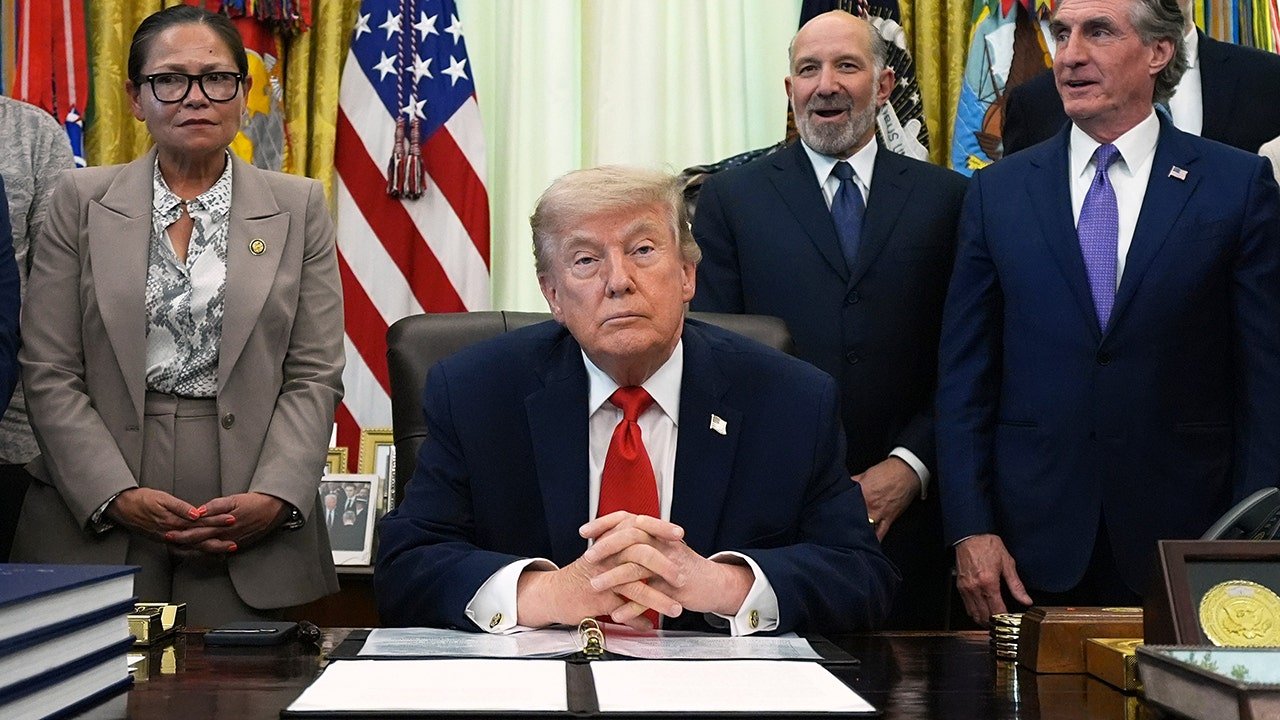
President Donald Trump signs a proclamation about the fishing industry as Del. Kimberlyn King-Hinds, Commerce Secretary Howard Lutnick and Interior Secretary Doug Burgum listen in the Oval Office of the White House in Washington on June 11, 2026. (Jacquelyn Martin/AP)
Others say that it opens up the possibility for telecommunications and major tech companies like Google to decline handing over information without explicit direction from Congress.
«We don’t know the answer to that,» Sen. Mark Warner, D-Va., the top Democrat on the Senate Intelligence Committee, said. «But it is, obviously, a high-risk proposition.»
Boiled down, the Section 702 program allows the U.S. government to collect intelligence on foreigners abroad who are using U.S. communication systems, and it serves as a major part of Trump’s daily intelligence briefing.
But it also sweeps up communications from Americans who are talking to foreign suspects — a key issue that threatened reauthorization among privacy hawks in both parties well before Pulte’s appointment.
CONSERVATIVE FISA REVOLT POSES FRESH TEST FOR SPEAKER JOHNSON
«That is a gray area, and it’s one of the things that we’re going to have to work through,» House Minority Leader Hakeem Jeffries, D-N.Y., told Fox News when asked whether providers would still continue to share information with the government if the program was not authorized.
«What is clear is that we are going to have to address the issue of extending surveillance authority legislatively. And the problem is that the Trump administration has decided to toss this hand grenade into the middle of sensitive negotiations,» he added, referring to Pulte.
Sen. John Kennedy, R-La., contended that there were already thousands of FISA certifications approved, it’s just that new certifications wouldn’t be allowed until the program was reauthorized.
«It’s not like that will be the end of our ability to surveil foreign terrorists,» Kennedy said.
The standoff is not expected to end soon. Trump’s decision to nominate former Securities and Exchange Commission Chairman Jay Clayton to serve as the permanent director of national intelligence also failed to soften Democrats’ opposition.
Many lawmakers remain unwilling to back a renewal of the program while Pulte continues serving in the acting role.
THE TOP 3 FACTORS HEIGHTENING THE RISK OF TERROR ATTACKS ON THE HOMELAND
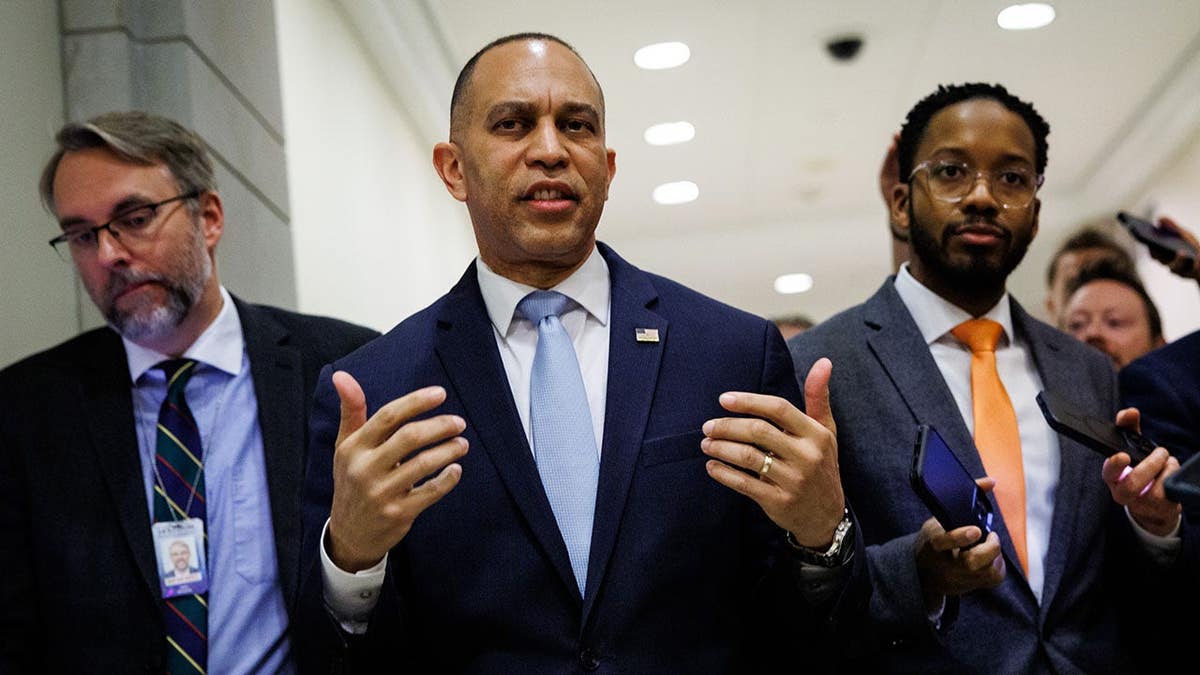
House Minority Leader Hakeem Jeffries, D-N.Y., speaks with reporters as he walks to his office after a press conference at the U.S. Capitol in Washington, D.C., on March 27, 2026. (Samuel Corum/Getty Images)
«Nobody disputes that FISA has been used to stop terrorist attacks on our homeland here,» House Majority Leader Steve Scalise, R-La., told Fox News Thursday. «And why would anybody vote to end that tool is beside me.»
Meanwhile, the House is scheduled to begin a week-long recess next week, meaning that even if there is a resolution in the Senate in the coming week, the program will likely remain dark until they return.
The program’s expiration marks the first extended lapse since it was enacted in 2008. The Trump administration has argued that the surveillance authority is a critical national security tool, crediting it with helping foil a mass-casualty terror plot targeting a 2024 Taylor Swift concert in Austria and combat North Korean hackers, among other successes.
The uncharted territory comes amid a heightened threat environment as the war with Iran continues and large-scale events, such as the World Cup and America 250 celebrations, are beginning to ramp up.
Senate Intelligence Committee Chair Tom Cotton, R-Ark., argued on the Senate floor in his bid to extend the program that there was a bipartisan bill waiting to be passed, but in the meantime, lawmakers should pause the partisan animosity and support an extension.
CLICK HERE TO DOWNLOAD THE FOX NEWS APP
«If we don’t extend it for at least a few weeks while we continue to try to work on our differences, the consequences could be severe,» Cotton said. «The consequences, to be frank, could be fatal.»
Still, Democrats counter that had Trump not appointed Pulte, or at least waited until the reauthorization was completed, Congress would not be in the current logjam.
«I cannot stress enough to you that none of this, none of this needed to happen,» Warner said.
politics, national security, congress, republicans, privacy, democrats senate, donald trump











INTERNACIONAL
Federal appeals court rejects Trump bid to enforce mail ballot order ahead of midterm elections
Federal judge blocks Trump’s voter verification database
Fox News host Laura Ingraham and Ohio Congressman Jim Jordan discuss a federal judge’s decision blocking President Donald Trump’s voter verification database. Jordan criticizes the ruling, arguing it impedes election integrity by allowing non-citizens on voter rolls and goes against common sense. The segment highlights ongoing concerns about election security and judicial activism, particularly regarding voter ID laws.
NEWYou can now listen to Fox News articles!
A federal appeals court on Saturday refused to let the Trump administration enforce key parts of President Donald Trump’s executive order tightening mail-in voting rules in 23 Democratic-led states, a setback that could send the administration to the U.S. Supreme Court ahead of this year’s midterm elections.
In a 2-1 decision, the 1st U.S. Circuit Court of Appeals denied the Department of Justice’s (DOJ) request to pause a June ruling blocking several provisions of Trump’s March executive order while the administration appeals.
The DOJ previously told the court it could seek emergency relief from the Supreme Court if it did not prevail.
The administration argued the lawsuit was premature because federal agencies had not finalized the policies needed to implement the executive order. But the appeals court found the plaintiff states were already facing looming election deadlines and had begun preparing for potential changes.
OBAMA-APPOINTED JUDGE BLOCKS TRUMP’S ELECTION ORDER AS SAVE AMERICA ACT FIGHT INTENSIFIES
A federal appeals court has refused to let the Trump administration enforce key parts of President Donald Trump’s executive order tightening mail-in voting rules in 23 Democratic-led states. (Chris Kleponis/CNP/Bloomberg via Getty Image, File)
«As the district court reasoned, the (executive order) lays out a clear set of rapidly approaching deadlines by which states must coordinate with federal officials and comply with new voting procedures,» the majority wrote. «The Plaintiff States have no practical choice but to respond to the (order) now.»
Trump signed Executive Order 14399 in March as part of his election integrity agenda.
The order directs the Department of Homeland Security (DHS) to compile lists of confirmed U.S. citizens eligible to vote and provide them to states, instructs the U.S. Postal Service (USPS) to establish new standards for mail-in ballots and directs the Justice Department to prioritize investigations into state and local election officials who issue federal ballots to people deemed ineligible to vote.
‘ROGUE’ OBAMA JUDGE’S SMACKDOWN OF TRUMP ELECTION RULES PROVOKES OMINOUS WARNING FROM WHITE HOUSE DEPUTY

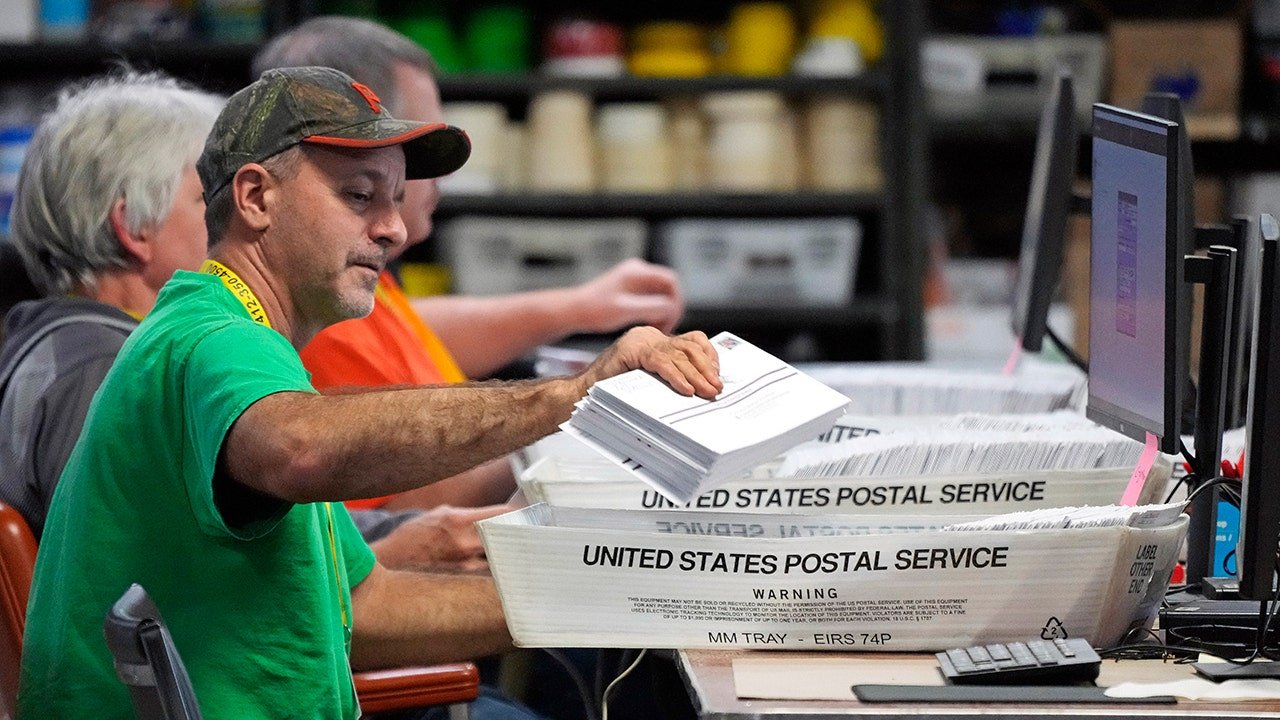
An elections office employee scans mail-in ballots in Pennsylvania. (Fox News, File)
The lawsuit was brought by 23 states, and the District of Columbia, led by California, Massachusetts, Nevada and Washington. The states argue the Constitution gives them primary responsibility for administering federal elections and that the president exceeded his authority by directing federal agencies to impose new voting requirements.
U.S. District Judge Indira Talwani agreed in June, ruling that several provisions of the executive order likely exceeded the president’s authority and blocking federal agencies from implementing them in the plaintiff states through the Nov. 3 federal elections.
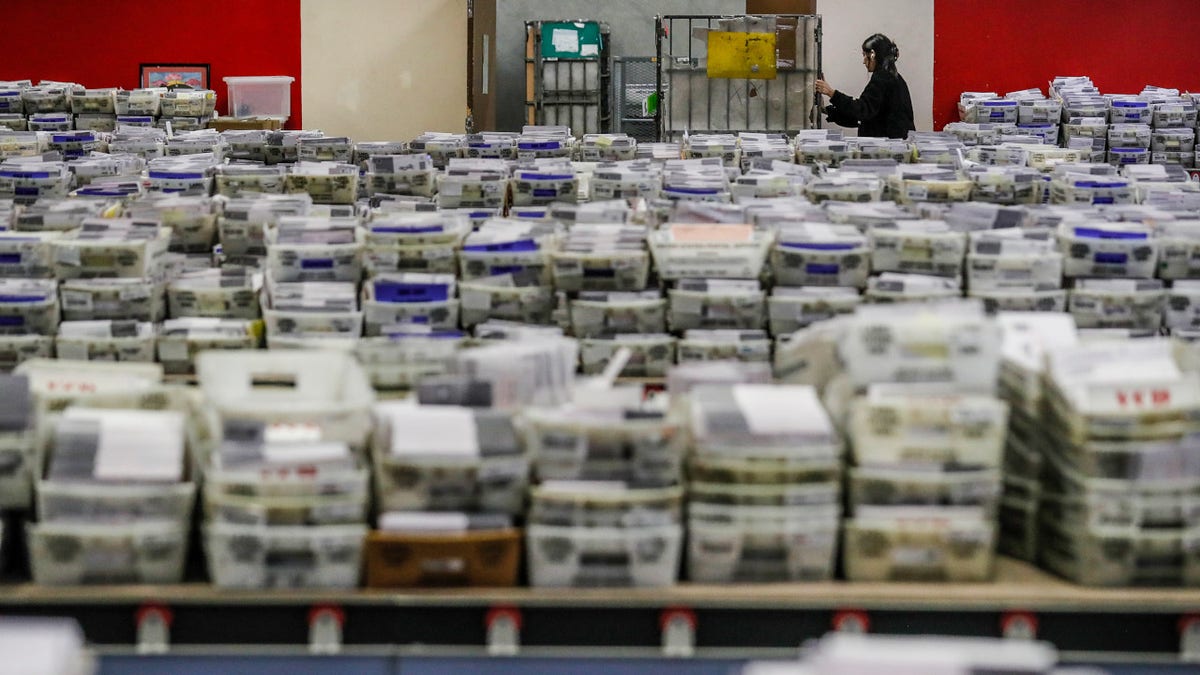
Ballots are received, sorted and verified at the Los Angeles County ballot processing facility in Industry, Calif. (Robert Gauthier/Los Angeles Times)
Saturday’s ruling does not resolve the underlying legal challenge, but leaves Talwani’s injunction in place while the appeal proceeds.
CLICK HERE TO DOWNLOAD THE FOX NEWS APP
The White House and the Justice Department did not immediately respond to Fox News Digital’s requests for comment.
voting, federal courts, donald trump, elections disputes, democratic party, midterm elections, politics
INTERNACIONAL
Brasil negó las visas a funcionarios de Estados Unidos que planeaban ir a cuestionar el sistema de voto electrónico

El gobierno de Donald Trump tenía previsto enviar a Brasilia a dos altos funcionarios del Departamento de Estado con el objetivo de cuestionar la confiabilidad del sistema de voto electrónico brasileño, cuando se lanzó de lleno la campaña para las elecciones presidenciales del 4 de octubre. Pero el Ejecutivo de Luiz Inácio Lula da Silva les negó las visas y no podrán entrar al país.
La cancillería de Brasil negó las solicitudes de visado presentadas por los diplomáticos Riley M. Barnes, secretario adjunto, y Samuel Samson, subsecretario adjunto del Departamento de Estado de los Estados Unidos, informó el sitio de noticias G1, de la red Globo, este sábado.
En un artículo publicado por The Washington Post, se mencionó a ambos como responsables de una estrategia para cuestionar la integridad y la fiabilidad del sistema electoral brasileño.
El viaje estaba programado para unas semanas antes de las elecciones presidenciales del país, previstas para el 4 de octubre. Según la información obtenida por G1, el gobierno brasileño fue informado de la naturaleza «inusual» de la misión de los dos funcionarios y decidió denegarles las visas.
Según fuentes diplomáticas, Brasil tiene la tradición de recibir observadores internacionales durante las elecciones, pero se considera que los estadounidenses no eran observadores; de hecho, tenían «otro papel».
Según The Washington Post, los funcionarios estadounidenses tenían previsto reunirse con referentes críticos del sistema de urnas electrónicas y recopilar información para elaborar un informe destinado a poner en duda la fiabilidad del mecanismo de votación utilizado en Brasil. Justamente, el candidato opositor Flávio Bolsonaro, hijo del ex presidente de ultraderecha Jair Bolsonaro, es uno de los críticos del sistema de urnas electrónicas, igual que su padre.
La solicitud de los funcionarios del Departamento de Estado fue presentada poco después de que el senador y candidato presidencial Flávio Bolsonaro afirmara sin presentar pruebas que las urnas electrónicas brasileñas fueron fabricadas por la empresa venezolana Smartmatic, durante una reunión con representantes de cerca de 40 países celebrada esta semana en Brasilia.
El Tribunal Superior Electoral (TSE) desmintió esa afirmación y aseguró que esa empresa nunca suministró urnas electrónicas ni programas utilizados en el sistema electoral brasileño.
La reunión se produjo bajo la sombra del antecedente sentado por el padre del senador cuatro años atrás.
El 18 de julio de 2022, el entonces presidente Jair Bolsonaro -hoy preso por golpismo- utilizó la residencia oficial del Palacio de la Alvorada y los medios de comunicación del Estado para convocar a decenas de embajadores extranjeros. En esa cita, Bolsonaro atacó la seguridad del voto electrónico y sembró sospechas de fraude.
Aquel episodio tuvo severas consecuencias judiciales: en junio de 2023, el TSE condenó a Jair Bolsonaro por abuso de poder político y uso indebido de los medios públicos, y lo declaró inelegible hasta 2030.
El gobierno de Lula da Silva considera la iniciativa como un intento de interferencia en el proceso electoral y aseguró que actuará para impedir cualquier efecto sobre los comicios. Dos altos diplomáticos brasileños calificaron la misión como «completamente incompatible con la democracia brasileña» y afirmaron que el Ejecutivo protegerá la integridad del proceso.
El Departamento de Estado confirmó el viaje de los funcionarios, pero evitó responder sobre el objetivo de la misión o sobre eventuales cuestionamientos a la integridad del sistema electoral brasileño.
La iniciativa se produce en un contexto de creciente tensión entre Washington y Brasilia, marcado por los recientes aranceles impuestos por Estados Unidos a productos brasileños y por el proceso judicial contra el expresidente Jair Bolsonaro por el presunto intento de impedir la asunción de Lula tras las elecciones de 2022.
La campaña electoral en Brasil está dominada por la polarización, las disputas sobre la transparencia del proceso electoral y las investigaciones judiciales que mantienen inhabilitado políticamente a Jair Bolsonaro, mientras el sistema de voto electrónico continúa siendo respaldado por el TSE y por observadores internacionales, que hasta ahora no han detectado evidencias de fraude en los comicios.
NEWYou can now listen to Fox News articles!
German authorities on Saturday canceled a popular pride festival after numerous people were injured and one killed when a white van rammed the festivities in Berlin.
«We are currently deployed with numerous police forces as well as rescue units from the Berlin Fire Department in the Großer Tiergarten,» Berlin Police said in a translated X post, after telling festivalgoers to leave the area.
Police said the injured were being treated by rescue personnel.
The incident occurred during the European city’s annual Christopher Street Day festival, an LGBTQ+ pride event.
GUNFIRE SHATTERS TORONTO LATIN STREET FESTIVAL, LEAVING AT LEAST 2 DEAD AND MULTIPLE WOUNDED
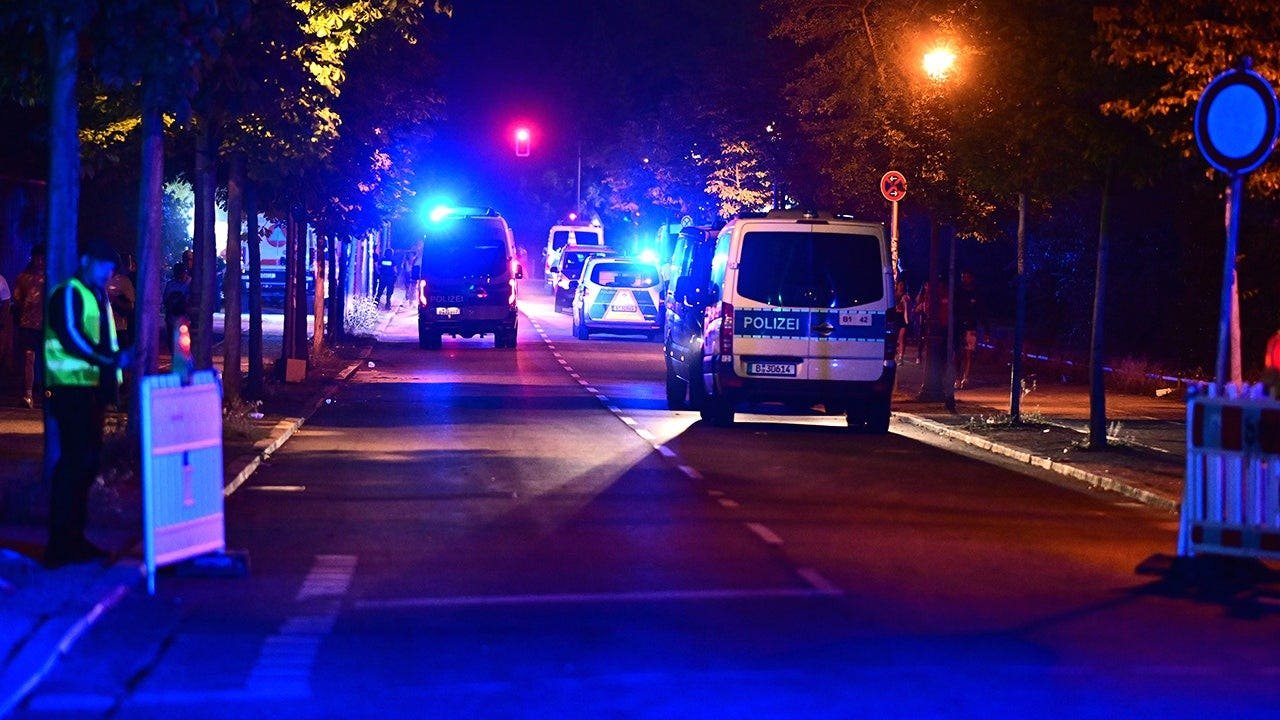
Police officers are on the scene following the cancellation of Christopher Street Day in Berlin on Saturday. (Fabian Sommer/DPA via AP)
«We are conducting an intensive manhunt for suspects,» police added, later clarifying that it could be one or more suspects.
Authorities haven’t released a possible motive.
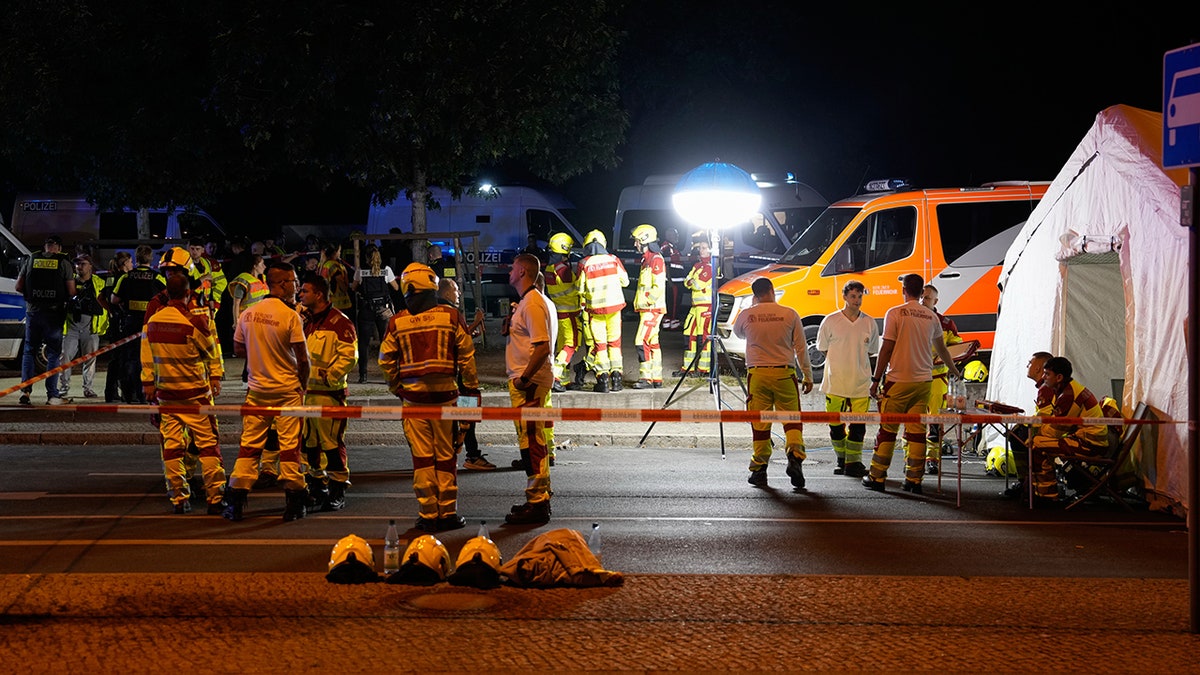
Emergency personnel gather in Berlin, early Sunday, July 26, 2026, following the cancellation of Christopher Street Day festivities. (AP Photo/Markus Schreiber)
In an update, the police said several of those injured have life-threatening injuries.
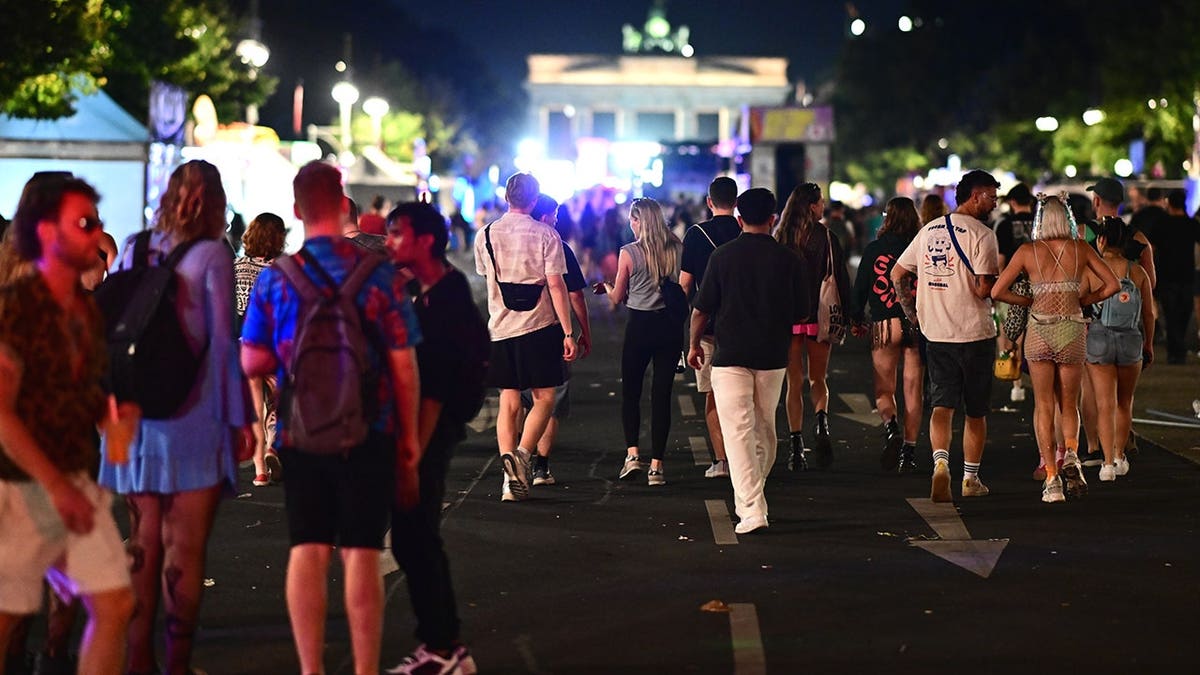
Crowds are seen at the Christopher Street Day festival in Berlin, which was canceled after police say several people were injured when a van rammed the festivities Saturday. (Fabian Sommer/DPA via AP)
CLICK HERE TO DOWNLOAD THE FOX NEWS APP
Hundreds of thousands of people turned out for the event, which included a parade and ended Saturday evening with a show at Tiergarten park near Brandenberg Gate.
world, events, europe, germany, fairs festivals, crime

Federal appeals court rejects Trump bid to enforce mail ballot order ahead of midterm elections

Dura crítica del partido de Lula da Silva a Milei por su discurso en Brasil: “No sorprende que se comporte de esa manera”

El polémico festejo de Neymar luego las críticas que recibió por jugar un torneo de poker…

Neuquén, Catamarca, Jujuy, Salta, San Juan: cómo cambiaron la geografía y la matriz exportadora argentina en los últimos 15 años

Sofía Aldrey mostró las primeras fotos de su hijo Marco y contó cómo la maternidad le cambió la vida

El Gobierno profundiza el traspaso de la gestión de rutas a las provincias mientras archiva la Ley de Lobby

Escándalo Mundial: Las presiones secretas, la amenaza de la FIFA por Malvinas y la verdad detrás del partido contra España

Jorge Berredo, general retirado de las FFAA, asumió como Secretario de Seguridad en San Isidro

Sin la anestesia mundialista, aflora la crisis del conurbano y Milei necesita reconectar con lo popular
Marc Stanley destacó el potencial de Vaca Muerta para “estabilizar la economía” y evitó hablar de política interna

 POLITICA3 días ago
Jorge Berredo, general retirado de las FFAA, asumió como Secretario de Seguridad en San Isidro
- POLITICA3 días ago
Sin la anestesia mundialista, aflora la crisis del conurbano y Milei necesita reconectar con lo popular
- POLITICA2 días ago
Marc Stanley destacó el potencial de Vaca Muerta para “estabilizar la economía” y evitó hablar de política interna