INTERNACIONAL
EN VIVO: El petróleo sube ante la incertidumbre por las negociaciones entre Irán y EEUU


Este jueves se celebrará en Washington la segunda ronda de diálogo entre el Líbano e Israel, luego de que las primeras conversaciones permitieran la entrada en vigor de la tregua actual el pasado viernes. Tel Aviv buscará en la mesa de negociación el desarme total del grupo terrorista Hezbollah, mientras Beirut planteará la retirada de las Fuerzas de Defensa de Israel del sur de su territorio.
En paralelo, las autoridades del régimen de Irán mantienen su amenaza de no reabrir el estrecho de Ormuz mientras persista el bloqueo naval estadounidense sobre sus puertos. El Comando Central de Estados Unidos (CENTCOM) informó el miércoles por la noche que ordenó a 31 embarcaciones dar la vuelta o cambiar su rumbo como parte de la obstrucción portuaria contra la república islámica.
En este contexto, el presidente estadounidense, Donald Trump, afirmó que existe la posibilidad de retomar el diálogo con Teherán en medio del alto el fuego. No obstante, el presidente del Parlamento iraní, Mohammad Baqer Qalibaf, advirtió: “Un alto el fuego completo solo tiene sentido si no se infringe mediante un bloqueo naval”.
A continuación, la cobertura minuto a minuto:
Un funcionario de Pakistán se reúne con el embajador de EEUU para discutir las conversaciones en Islamabad
El ministro del Interior de Pakistán, Mohsin Naqvi, y la embajadora de Estados Unidos, Natalie Baker, evaluaron la situación regional y los esfuerzos diplomáticos para organizar una segunda ronda de conversaciones en Islamabad entre Irán y Estados Unidos.
El Ministerio del Interior de Pakistán comunicó en X que Naqvi valoró la iniciativa del presidente Donald Trump de extender el alto el fuego con Irán y subrayó la importancia de mantener abiertos los canales diplomáticos para lograr una solución duradera.
Naqvi expresó su expectativa de que se produzcan “avances positivos por parte de Irán” y destacó que el primer ministro Shehbaz Sharif y el mariscal de campo Asim Munir “están haciendo todo lo posible a todos los niveles para resolver el problema”.
El Ministerio de Defensa israelí realizó un pedido de 200 millones de dólares en municiones aéreas
El Ministerio de Defensa de Israel realizó pedidos por alrededor de USD 200 millones a la empresa local Elbit Systems para el suministro de municiones aéreas avanzadas, en el contexto de la guerra contra Irán.
En un comunicado, Elbit destacó su “liderazgo tecnológico en sistemas de armas lanzados desde el aire” y expresó orgullo por la “larga colaboración con el Ministerio de Defensa israelí”. La empresa sostuvo que sus municiones figuran “entre los factores que permitieron la superioridad aérea de la Fuerza Aérea israelí”.
Según el medio Haaretz, la cartera de Defensa indicó que el acuerdo, gestionado por la dirección de adquisiciones, tiene como objetivo reforzar la “independencia en armamento” y apoyar la preparación ante “escenarios de combate inmediatos” y una “década de seguridad intensa”. El ministro de Defensa, Israel Katz, señaló que la operación se enmarca en los esfuerzos por “seguir fortaleciendo la independencia del suministro de municiones de Israel”.
El petróleo se disparó más de 1% ante la incertidumbre sobre las negociaciones entre Irán y EEUU
Los futuros de las principales bolsas europeas anticipan una apertura con caídas cercanas al 1% este jueves, en un contexto de incremento en el precio del petróleo y persistente bloqueo en el estrecho de Ormuz, mientras las negociaciones de paz entre Estados Unidos e Irán no registran avances.
El mercado europeo se prepara para una nueva sesión a la baja, mientras el precio del crudo Brent, referencia en Europa, sube un 1,28 %y se sitúa en 103,21 dólares por barril. Por su parte, el petróleo intermedio de Texas (WTI), referencia en Estados Unidos, avanza un 1,51 % y alcanza los 91,54 dólares por barril.
A las 5:30 (hora GMT), los futuros de la Bolsa de Fráncfort retrocedieron un 1,04% y los del índice Euro Stoxx 50, que agrupa a las cincuenta empresas más grandes de la zona euro, descienden un 0,94%. Los futuros de la Bolsa de París caen un 0,54%, y los de la Bolsa de Londres bajan un 0,37%.
El Ejército de Estados Unidos impidió el ingreso de 31 buques comerciales con destino a Irán desde el inicio del bloqueo
En una actualización difundida en redes sociales por el comando militar estadounidense que opera en Medio Oriente, las fuerzas de Washington afirmaron que “la mayoría de los buques han cumplido con las instrucciones de EEUU”


El Comando Central de Estados Unidos (CENTCOM) brindó nuevos detalles de la operación «Furia Épica“, en especial sobre el bloqueo del Ejército estadounidense a los puertos iraníes en el Golfo Pérsico y el estrecho de Ormuz. A su vez, el miércoles negó que embarcaciones comerciales hayan logrado evadir la obstrucción impuesta sobre las costas de Irán.
Irán ejecutó a un hombre acusado de tener vínculos con Israel
Irán ejecutó este jueves a un hombre acusado de pertenecer a un grupo de oposición prohibido y de colaborar con Israel, según informó el poder judicial.
El sitio web oficial Mizan Online identificó al ejecutado como Sultan-Ali Shirzadi-Fakhr, quien fue ahorcado tras ser declarado culpable de integrar la Organización de los Muyahidines del Pueblo (MEK), calificada como grupo terrorista por las autoridades iraníes, y de colaborar con el servicio de espionaje israelí.
Shirzadi-Fakhr también recibió una condena por el delito de “hacer la guerra contra Dios”, figura utilizada en Irán para imputar a quienes participan en acciones hostiles contra la República Islámica, de acuerdo con la información difundida por Mizan.
El Ejército israelí capturó a un miembro de la Fuerza Radwan, la unidad de élite de Hezbollah, en Líbano
Las Fuerzas de Defensa de Israel (FDI) informaron que capturaron a un integrante de la Fuerza Radwan, la unidad de élite de Hezbollah, durante una operación en el sur del Líbano.
Según el Ejército israelí, las tropas localizaron al miembro de Radwan cuando planeaba llevar a cabo ataques “inminentes” contra fuerzas israelíes desplegadas en la zona.
Las FDI detallaron que, tras ser identificado, el hombre se entregó y fue detenido por las fuerzas de seguridad. Posteriormente, fue trasladado a Israel para ser interrogado por la Unidad 504 de la Dirección de Inteligencia Militar, especializada en inteligencia humana.
Resumen de las últimas novedades
La Casa Blanca afirmó que el presidente Trump no ha fijado un “plazo definitivo” para la prórroga del alto el fuego con Irán y que sigue esperando una “respuesta unificada” de los líderes del régimen.
El Ministerio de Asuntos Exteriores iraní, Abbas Araghchi declaró el jueves, durante una reunión en Teherán con el enviado especial de Corea del Sur, que Estados Unidos e Israel son responsables de las consecuencias de la guerra por ser los “agresores”.
Panamá condenó a Irán por la incautación de un buque portacontenedores y su tripulación, que navegaba bajo bandera panameña, en el estrecho de Ormuz; uno de los dos buques incautados por las fuerzas iraníes el miércoles.
Ucrania prevé reforzar la cooperación antiaérea con Bahréin
El presidente de Ucrania, Volodimir Zelensky, mantuvo el miércoles una reunión con el secretario del Consejo Nacional de Defensa, Rustem Umerov, tras sus conversaciones con representantes de India y Bahréin para fortalecer la cooperación en seguridad ante los desafíos derivados de la guerra en Irán, en particular por el uso de drones iraníes en la región, tecnología que Rusia emplea también en ataques contra territorio ucraniano.
Zelensky explicó que, tomando como referencia la experiencia adquirida por los equipos de expertos ucranianos en Arabia Saudí y Qatar, se está trabajando para reforzar áreas específicas de la cooperación bilateral.
El presidente señaló que existe consenso sobre los aspectos prioritarios que deben fortalecerse y sobre las medidas a implementar en primer término.
Abbas Araghchi se reunió con el enviado de Corea del Sur

El jefe de la diplomacia iraní, Abbas Araghchi, declaró al enviado especial de Corea del Sur, Chang Byung-ha, durante una reunión en Teherán, que la agresión de Estados Unidos e Israel “es la raíz de la inseguridad” en la región del Golfo y el Estrecho de Ormuz.
Araghchi detalló a Chang los “crímenes” atribuidos a EEUU e Israel durante el conflicto con Irán y exhortó a los países a adoptar una postura clara y firme para condenar los ataques, según informó el régimen iraní en redes sociales.
“Irán, como Estado costero, ha adoptado medidas en virtud del derecho internacional para defender su seguridad e intereses; la responsabilidad por las consecuencias recae sobre los agresores”, sostuvo Araghchi.
Estados Unidos recomendó a sus ciudadanos en Líbano abandonar el país en vísperas de las negociaciones con Israel
Este jueves se celebrará la segunda ronda de diálogo a nivel de embajadores entre el Líbano e Israel, luego de que las primeras conversaciones permitieran la entrada en vigor de la tregua actual el pasado viernes

La administración de Estados Unidos pidió a sus ciudadanos en Líbano que abandonen el país ante un contexto de seguridad “complejo” y cambiante. La advertencia se produce mientras continúa el fuego cruzado entre el Ejército de Israel y Hezbollah, a pesar de la tregua de 10 días pactada la semana pasada y en vísperas de nuevas conversaciones entre delegaciones de ambos países en Washington este jueves.


NEWYou can now listen to Fox News articles!
A gunman was «neutralized» Monday following a shooting in Montreal that left one police officer and one other person dead.
Authorities told Fox News that the shooting happened in the Côte-des-Neiges neighborhood of the city.
NYPD RELEASES DRAMATIC BODY CAM FOOTAGE OF OFFICERS TACKLING ALLEGED TEEN GUNMAN IN BROOKLYN CHASE
A shooting in Montreal left one person dead Monday, as well as a police officer, authorities said. (Getty Images)
At a news conference, Montreal police (Service de police de la Ville de Montréal) Chief Fady Dagher said officers were called to the Hilton Garden Inn where someone opened fire on them, he said.
A male officer and a civilian died, he said. A female officer was injured and taken to a hospital in critical condition but was upgraded to stable condition.
«It’s a tragedy. It’s a nightmare,» Dagher said.
The weapon used in the shooting was recovered, the chief said.
In an alert, issued around 12:30 p.m., authorities advised people in the Côte-des-Neiges area to shelter indoors because of an «armed and dangerous suspect» in the neighborhood.
«If you are in the affected area, shelter indoors, lock the doors, stay away from windows and follow instructions of local authorities,» the alert stated.
Montreal Mayor Soraya Martinez Ferrada reacted to the shooting online.
TRANSGENDER STUDENT IDENTIFIED AS ALLEGED SUSPECT IN CANADA SCHOOL MASS SHOOTING THAT LEFT AT LEAST 9 DEAD
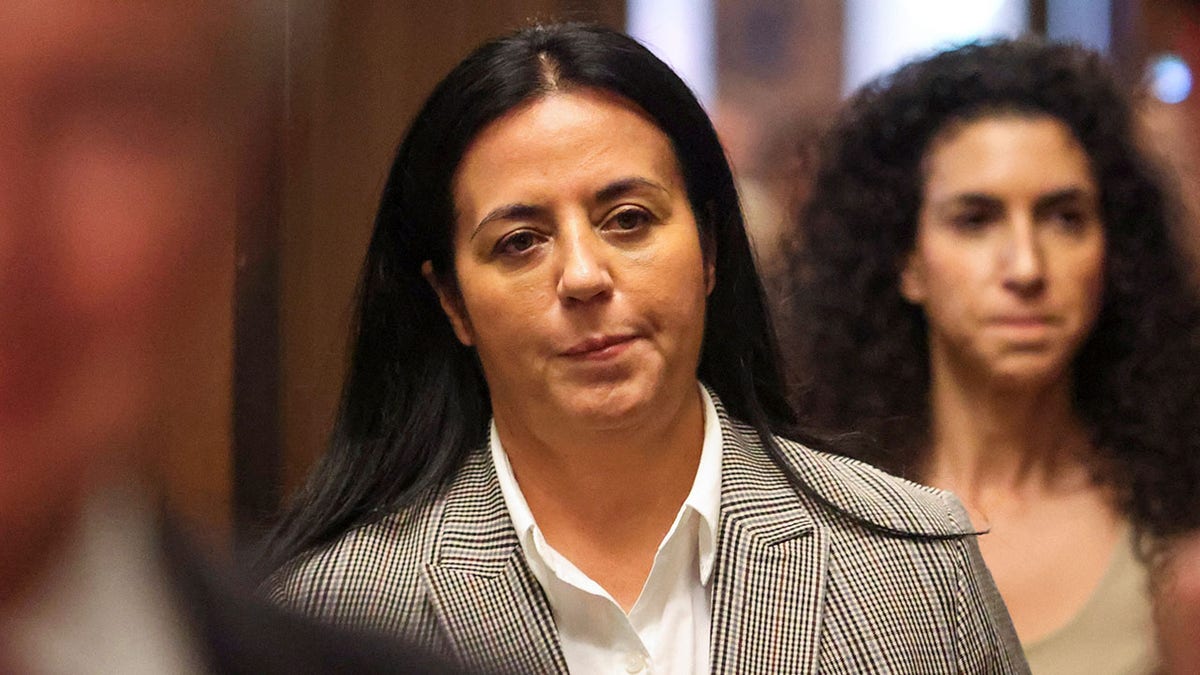
Montreal Mayor Soraya Martinez Ferrada leaves a caucus meeting on Parliament Hill in Ottawa, Ontario, Canada. (Reuters)
«My deepest condolences to the family, loved ones, and colleagues of the police officer who died in the line of duty in Côte-des-Neiges,» she wrote. «My thoughts are also with all those affected by this tragedy. We are closely following the evolution of the situation and ask the public to respect the instructions of the SPVM.»
In a post on X, Quebec Premier Christine Fréchette said she was «deeply shaken» by the shooting and that the provincial government would offer its full co-operation to the relevant authorities.
«Such acts have no place here. We are monitoring the situation closely,» Fréchette said.
Details about the alleged gunman or what led to the shooting have not been disclosed.
It has been 24 years since the last (SPVM) officer was killed in the line of duty, Dagher said.
Brandon Elkaim, who lives near where the shooting happened, said he was shocked to learn of the violence in the area.

A shooting in Montreal, Quebec, Canada left a police officer dead, as well as one other person, authorities said Monday. (Photographer: Nasuna Stuart-Ulin/Bloomberg via Getty Images)
CLICK HERE TO DOWNLOAD THE FOX NEWS APP
«It was about 10 or 12, what we now know, were shots in a row,» he told CTV News. «About 10 minutes went by of quiet but in that time, we saw the park completely empty out, parents and kids running in a panic.»
As of Monday afternoon, there was no immediate threat to the public, authorities said.
crime, canada, police and law enforcement
INTERNACIONAL
«El mundo está seguro»: cómo Andy Burnham heredó el poder en el Reino Unido en solo veinte minutos
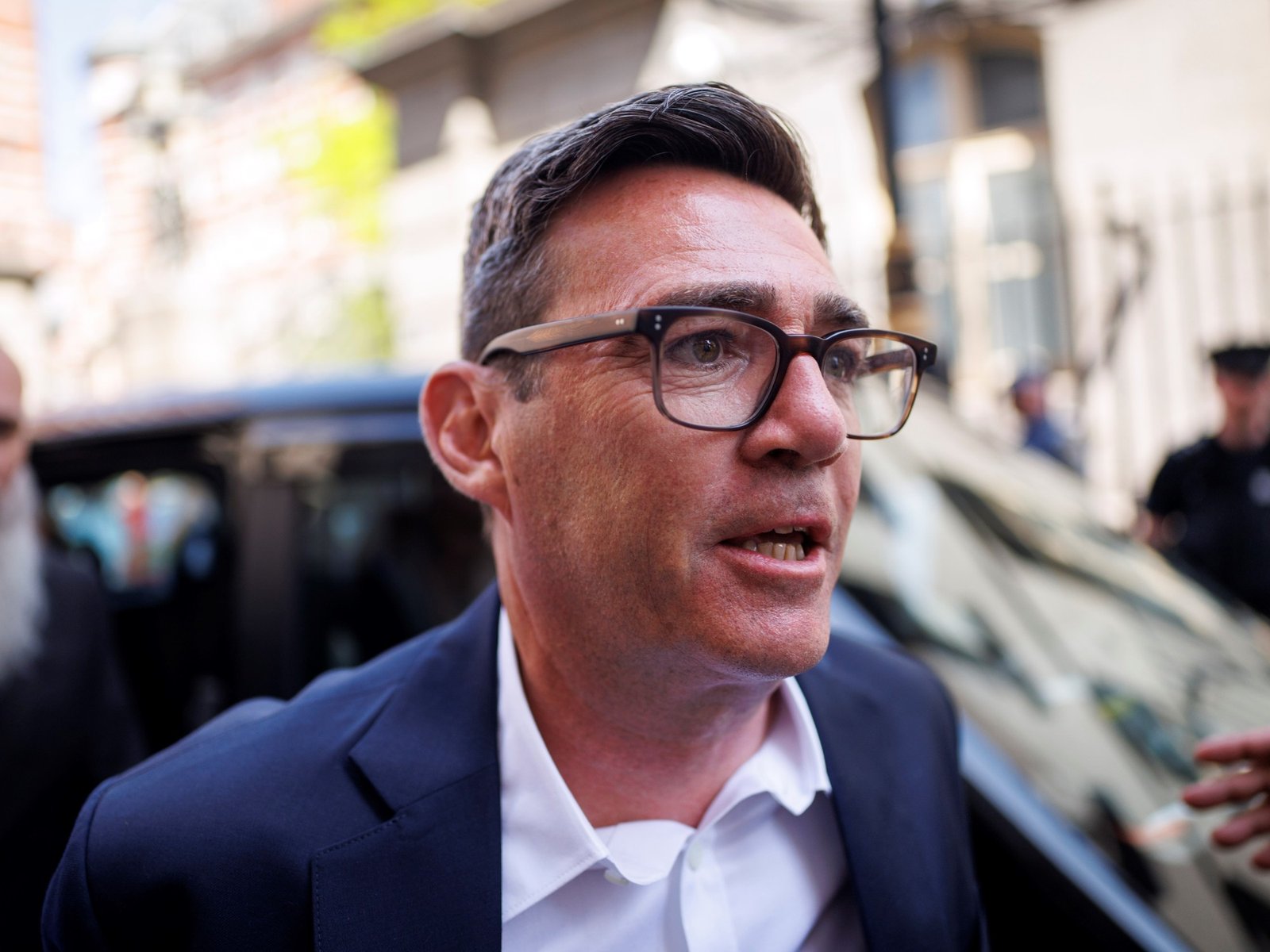
El ascenso de Andy Burnham
Streeting renunció a desafiarlo

Diplomacia interpares
¿Un liderazgo de izquierda?

Starmer, muy emocionado


Reacciones
La reacción de Nigel Farage
La herencia
INTERNACIONAL
Obama-era inspection flaws in Iran could persist as experts warn of nuclear blind spots
NEWYou can now listen to Fox News articles!
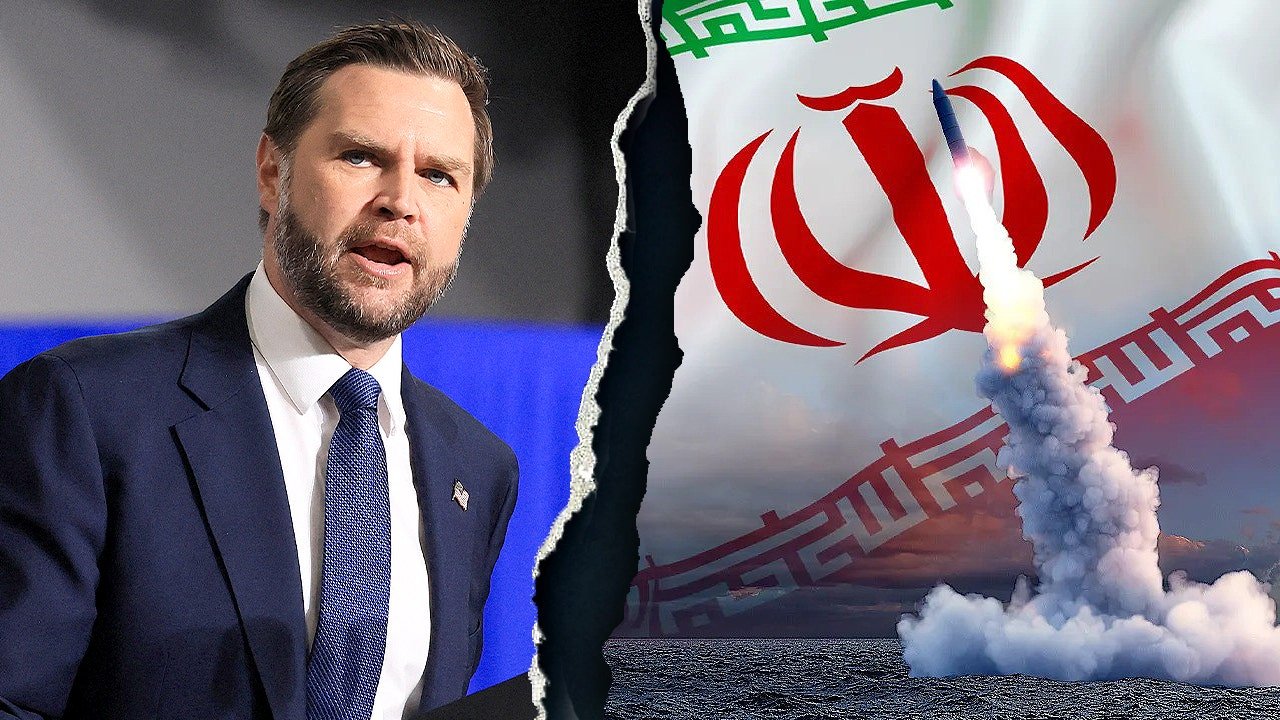
Iran has agreed to let nuclear inspectors back into the country, Vice President JD Vance said Monday, as nuclear experts warned President Donald Trump’s new Tehran framework will only work if inspectors get the kind of unfettered access they say was missing from the Obama-era Iran deal.
The news, which Vance described as «a major milestone,» comes as Trump’s new Iran framework drew warnings from nuclear experts who told Fox News Digital the deal could leave Tehran too much control over its uranium stockpile unless inspectors first locate, secure and verify the material. The IAEA has not been able to resume full in-field verification of Iran’s declared nuclear program since last year’s strikes, apart from a June inspection at a single Iranian nuclear power plant.
The verification gap concern centers on language in the reported U.S.-Iran memorandum of understanding (MOU) saying the two sides will resolve the fate of Iran’s enriched uranium stockpile through a still-to-be-negotiated process. The MOU identifies onsite «downblending,» which means diluting enriched uranium so it is less usable for a nuclear weapon, under International Atomic Energy Agency (IAEA) supervision as the minimum acceptable method for dealing with the material. The MOU does not explicitly say Iran will retain a civilian nuclear program, but it says the two sides will discuss enrichment and other matters related to Iran’s «nuclear needs» in a final deal.
«Unfettered verification is everything,» Chuck DeVore, Chief National Initiatives Officer at the Texas Public Policy Foundation, told Fox News Digital. «There can be no denial for teams to inspect on the ground. Remote, technological means can achieve a lot, but nothing beats in-person inspections.»
TRUMP NUCLEAR TALKS FACE DEFINING QUESTION: WHAT HAPPENS TO IRAN’S URANIUM STOCKPILE?
Vice President JD Vance said the Iranians have agreed to let nuclear inspectors back into their country. U.S. nuclear experts are warning that Trump’s reported Iran framework could leave Tehran too much control over its uranium stockpile unless inspectors first fully account for and secure the material. (Photo by Spencer Platt / POOL / AFP via Getty Images)
IAEA supervision would only be meaningful if inspectors first regain enough access to fully account for Iran’s enriched uranium stockpile and ensure Tehran does not retain unchecked control of the material, experts warned Fox News Digital. Meanwhile, a recent IAEA report released this month underscored the agency’s limited visibility into Iran’s declared nuclear program after last year’s military strikes, saying that aside from a single inspection at an Iranian nuclear power plant, the agency «has not received information from Iran» about the status of its other declared nuclear facilities or associated nuclear material. «Nor has the Agency had access» to those sites for in-field verification, the report noted.
A senior administration official told Fox News Digital on background that the MOU required Iran’s regime to reaffirm that it will not procure or develop nuclear weapons, calling that a critical first step under Iran’s new Supreme Leader.
The official said the U.S. has reached understandings with Iran when it comes to its uranium stockpile, and the new deal is the first step of turning these understandings into real results, which include progress on enriched uranium stockpiles, dismantlement of nuclear sites, an enrichment ban and inspection access. The official added that the U.S. has already had productive discussions with Iran on those issues and, now that the MOU is formally in place, negotiators will work to make quick progress.
US-IRAN TALKS POSTPONED IN SWITZERLAND AMID ISRAEL-HEZBOLLAH TENSIONS; HORMUZ REMAINS A KEY ISSUE
The official also referred Fox News Digital to comments Vice President JD Vance made Thursday, when he said the deal’s benefits depend on Iran following through on its promises.
«They have promised not to enrich. They have promised that they would allow inspectors in to destroy that highly enriched stockpile. And then, of course, it’s not usable anymore. You take it somewhere else,» Vance said. «They promised a number of things, and that’s why the deal contemplates a number of benefits if they do those things. But it doesn’t do anything if they don’t actually meet those promises.»
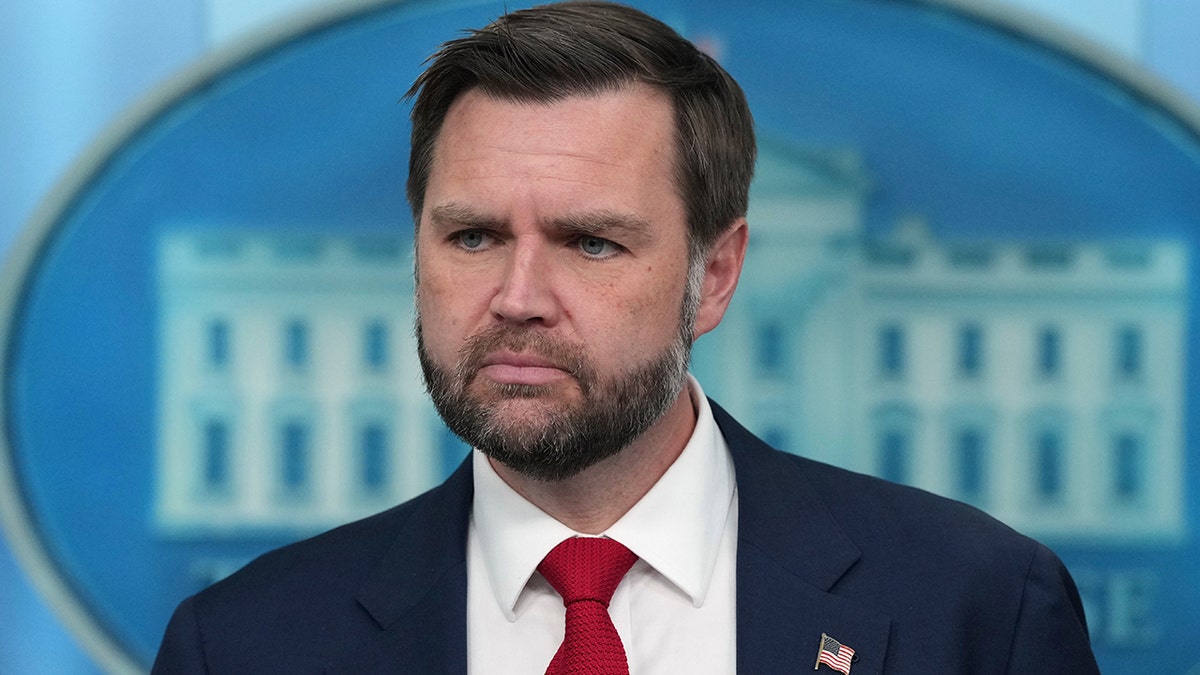
Vice President JD Vance listens as a reporter asks a question in the James Brady Press Briefing Room at the White House, on Thursday, June 18, 2026, in Washington. (Jacquelyn Martin/AP)
«The Iranians have agreed to invite IAEA inspectors back into their country. That is a major milestone for the American people, and the first step in permanently denuclearize, easing or permanently ending a nuclear weapons program in Iran,» Vance added Monday after negotiations in Switzerland resumed. «And that’s exactly what we wanted to do. That’s exactly what we asked to happen.»
The Vice President said that the technical negotiations will continue over the next weeks and days, even in his absence. He said a framework for «proper political oversight» of these negotiations has been established as well. Vance simultaneously highlighted that «a lot of great progress on other nuclear talks» has already been made in the early days.
Andrea Stricker, deputy director of the Foundation for Defense of Democracies’ Nonproliferation Program, told Fox News Digital that any credible agreement must begin with recovering and safeguarding Iran’s enriched uranium stockpile, and not allowing Tehran to keep control of the material while it is diluted inside the country.
«Without verifiably dismantling and destroying all of Iran’s fundamental nuclear capabilities — nuclear material, facilities, centrifuges, manufacturing capabilities, equipment, documentation, and weaponization capacities, and ensuring scientists are redirected to civilian work — Iran’s pledge on paper is meaningless,» she told Fox News Digital, noting that Iran’s enriched uranium stockpile could, if recovered and further enriched, provide enough weapons-grade material for roughly 22 nuclear weapons.
HOW DOES TRUMP SOLVE KEY ‘NUCLEAR DUST’ HANG-UP IN NEGOTIATIONS TO END IRAN WAR?
DeVore was more cautious about assigning a single number to Iran’s potential weapons capacity, saying the estimate depends heavily on the sophistication of the weapon design. He said the same stockpile could translate into fewer basic weapons or be stretched further by a more advanced nuclear program.
He said onsite downblending, if properly verified, would be aimed at making Iran’s roughly 1,000 pounds of 60% enriched uranium unavailable for further enrichment. DeVore cautioned that the material would still need additional processing to be turned into weapons-grade uranium and said he does not believe Tehran can currently do that because key facilities were destroyed in last year’s strikes.
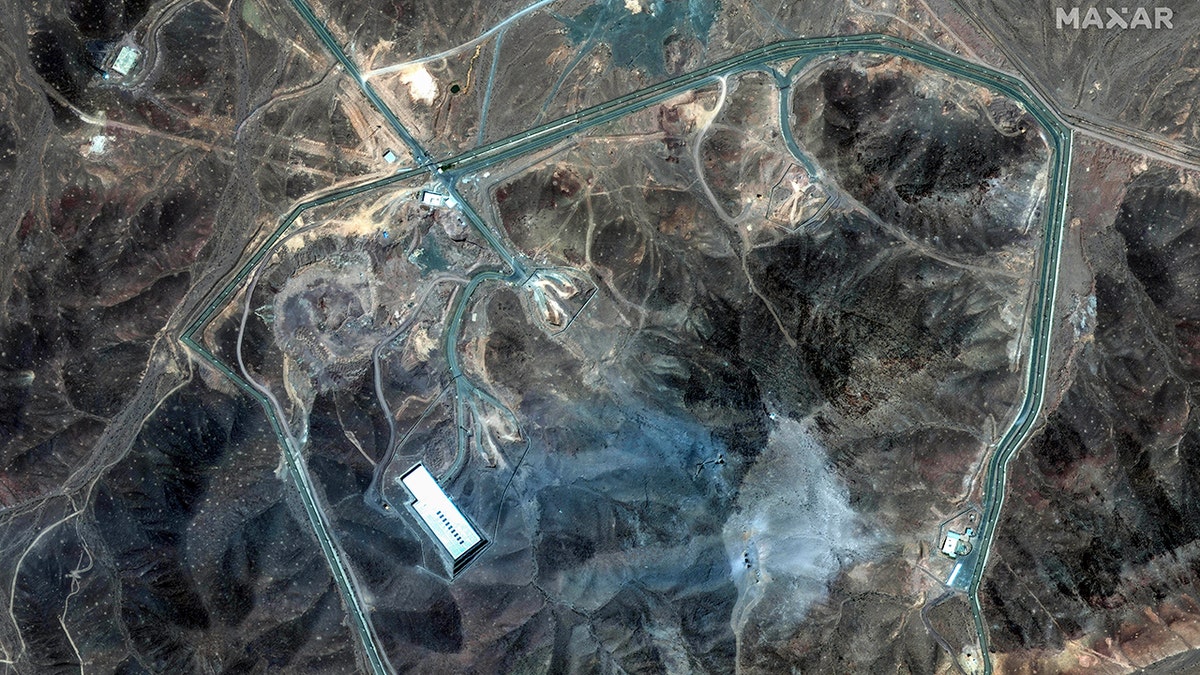
A satellite image shows damage at the Fordo enrichment facility in Iran after U.S. strikes on June 22, 2025. (Maxar Technologies)
Asked what would be needed to make any Iran deal enforceable, DeVore told Fox News Digital the U.S. must avoid repeating what he described as a key weakness of the Obama-era nuclear deal: allowing Tehran to restrict access or keep certain sites off limits. He said the «ultimate question» is onsite verification, warning that Washington cannot allow itself to be pushed into «an agreement for agreement’s sake.»
TOP SENATE REPUBLICAN RIPS INTO TRUMP’S IRAN DEAL, SAYS $300B MAKES OBAMA DEAL LOOK LIKE ‘A PITTANCE’
DeVore also said the Obama-era JCPOA gave inspectors too much notice and too little freedom to inspect suspicious locations as well, arguing that any new deal must avoid a system where Iran can delay, limit or steer inspections before the IAEA gets on the ground.
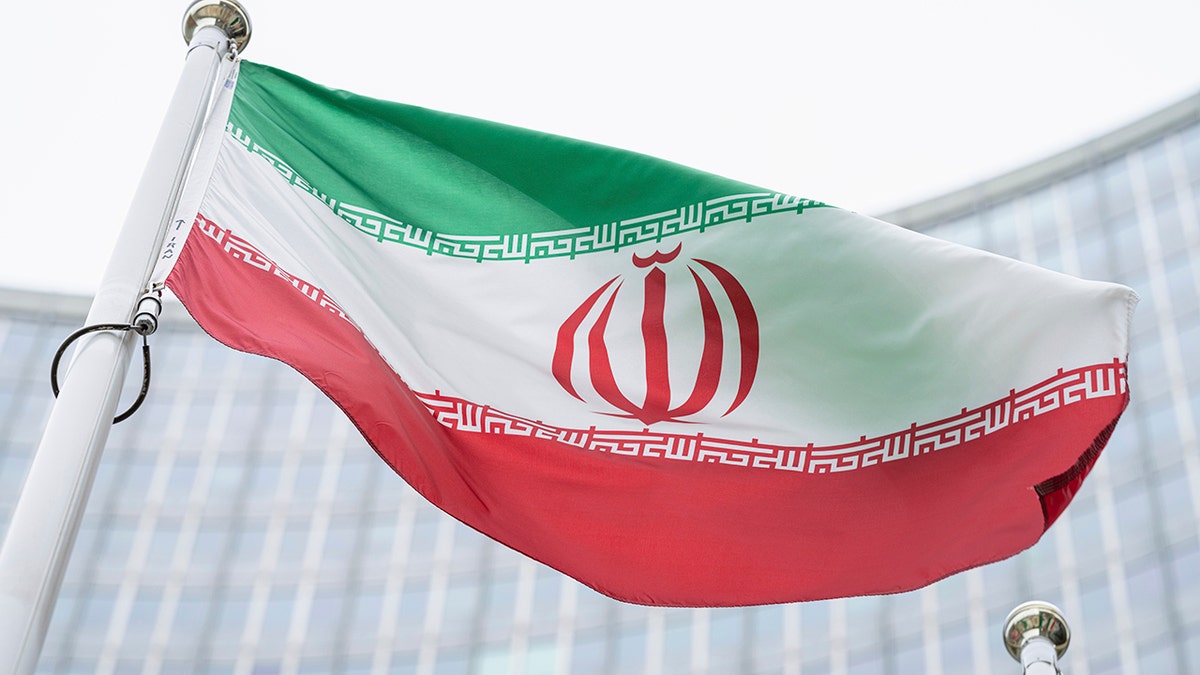
The flag of Iran waves in front of the International Atomic Energy Agency headquarters in Vienna, Austria. (Florian Schroetter/AP Photo)
DeVore told Fox News Digital that his concern is informed by his experience as a young special assistant for foreign affairs in the Reagan administration, when he worked on verification issues surrounding Cold War-era nuclear agreements with the Soviet Union, including the Peaceful Nuclear Explosions Treaty and the Threshold Test Ban Treaty.
In those negotiations, DeVore said, the danger was that the minimum level of verification sought by defense and intelligence officials could become the starting point for diplomats, meaning the final deal could end up below what experts believed was necessary.
CLICK HERE TO DOWNLOAD THE FOX NEWS APP
«Once you say, ‘This is the minimum we need,’ then that becomes the starting point, so anything agreed to is less than that,» DeVore said. «That’s what I fear.»
Fox News Digital reached out to the IAEA asking whether the agency can currently account for Iran’s enriched uranium stockpile and whether it has any comment on the verification questions raised by the reported framework but did not hear back. The agency did not release any statement after Vance said they would be allowed access to Iran in time for publication.
war with iran, nuclear proliferation, foreign policy, middle east foreign policy, treaties, sanctions

Los eufóricos festejos en el programa español El Chiringuito ante los históricos dos goles de Messi en el Mundial

La felicidad de Ian Lucas por su encuentro con Lionel Messi luego del triunfo de Argentina: “Me reconoció”

Javier Milei y sus medidas, EN VIVO: el Presidente habla en la Fundación Faro y Adorni se reúne con senadores libertarios en busca de respaldo

Suspect ‘neutralized’ after Montreal shooting leaves at least 2 dead including officer

Inglaterra-Ghana, EN VIVO, por el Mundial 2026: hora, TV, formaciones y todo lo que hay que saber

Mercado Pago quedó bajo la lupa por los «torneos entre amigos»

LA DOBLE VARA ZURDA: Militantes K prefieren el pasado dictatorial y los excesos de Maradona antes que el éxito limpio de Messi

Preocupación en el oficialismo por el impacto digital del caso Adorni y la insuficiencia del “efecto Mundial”

Difundieron videos en los que Jésica Cirio aparece junto a miles de dólares

Qué dijo Jesica Cirio tras la difusión de los videos donde se ven fajos con millones de dólares en la casa de Martín Insaurralde

 POLITICA2 días ago
LA DOBLE VARA ZURDA: Militantes K prefieren el pasado dictatorial y los excesos de Maradona antes que el éxito limpio de Messi
- POLITICA2 días ago
Preocupación en el oficialismo por el impacto digital del caso Adorni y la insuficiencia del “efecto Mundial”
- POLITICA3 días ago
Difundieron videos en los que Jésica Cirio aparece junto a miles de dólares