INTERNACIONAL
From trained assassins to rally stage-rushers, here’s every known attempt on Trump’s life since 2016


Schmitt warns ‘Trump derangement syndrome’ has ‘metastasized’ after WHCA Dinner shooting
Following the WHCA Dinner shooting, the White House condemns far-left incendiary rhetoric targeting President Donald Trump. Sen. Eric Schmitt, R-Mo., discusses legislation to build a secure White House ballroom after multiple assassination attempts on the commander-in-chief in less than two years. Experts analyze the charges against the suspect and the broader implications of political violence, as Trump prepares to host King Charles III.
NEWYou can now listen to Fox News articles!
Another assassination attempt targeting Donald Trump at the White House Correspondents’ Dinner adds to a mounting list of threats since he entered politics — a total that now equals what two hands can count.
Just days before the most recent assassination attempt, House Minority Leader Hakeem Jeffries, D-N.Y., said Democrats are in an «era of maximum warfare,» prompting criticism from Republicans that the political rhetoric is pushing citizens to commit political violence. Since the assassination of Turning Point USA founder Charlie Kirk, calls from politicians and activists on both sides to «lower the temperature» have grown into an ongoing national conversation.
Ever since Trump first entered the political sphere in 2015, prominent public figures have referred to him as a «fascist,» a «Nazi,» and he’s been likened to Adolf Hitler. Comparisons to Trump and members of his administrations to Nazi Germany have only grown since he took office in January 2025. Many of Trump’s attempted attackers or assassins have pointed to their belief that Trump was a «White supremacist,» a «bully,» as rationale for their planned attacks.
«President Trump remains completely undeterred, despite the multiple attempts on his life by cowardly individuals,» White House spokeswoman Allison Schuster said. «The President will not allow deranged lunatics to change the fabric of this Country and dictate the American way of life. President Trump and the entire Administration will continue to stand strong and fight for the American people.»
Here is a timeline of all the known attacks on President Donald Trump’s life:
UNEARTHED VIDEO REVEALS COLE ALLEN AS QUIET INVENTOR YEARS BEFORE ALLEGED BID TO ASSASSINATE TRUMP
Former President Donald Trump is rushed offstage by U.S. Secret Service agents after being grazed by a bullet during a rally in Butler, Pa., on July 13, 2024. The shooter was killed, one audience member died, and another was injured in the incident, Butler County District Attorney Richard Goldinger said. (Anna Moneymaker/Getty Images)
March 12, 2016 — Dayton, Ohio
During his 2016 presidential campaign, Trump held a rally at Wright State University. A 22-year-old protester named Thomas DiMassimo jumped a security barrier and attempted to charge the stage, but he was stopped by Secret Service. DiMassimo claimed he wanted to «bully the bully» and was going to make «some remarks» to Trump and his followers. He was charged with a misdemeanor and was sentenced to a year of probation.
June 18, 2016 — Las Vegas, Nev.
Michael Steven Sandford, a British national, attempted to grab a police officer’s gun while in attendance at Trump’s rally in Las Vegas. Sandford, who is diagnosed with autism, told an arresting officer that he intended to «shoot and kill Trump.» He was sentenced to 12 months and a day in U.S. federal prison, and he was deported back to the United Kingdom after he completed his sentence.
Sept. 6, 2017 — Mandan, N.D.
During President Trump’s visit to Andeavor Mandan Refinery where he delivered a speech on tax reform, Gregory Lee Leingang attempted to drive a stolen forklift into the presidential motorcade. He intended to «flip» Trump’s limousine and kill him, but the forklift got stuck. Leingang was sentenced to 20 years in prison.
MAN ACCUSED OF IRAN-BACKED TRUMP ASSASSINATION PLOT COMPARED HIS PLAN TO BUTLER SHOOTING: FBI
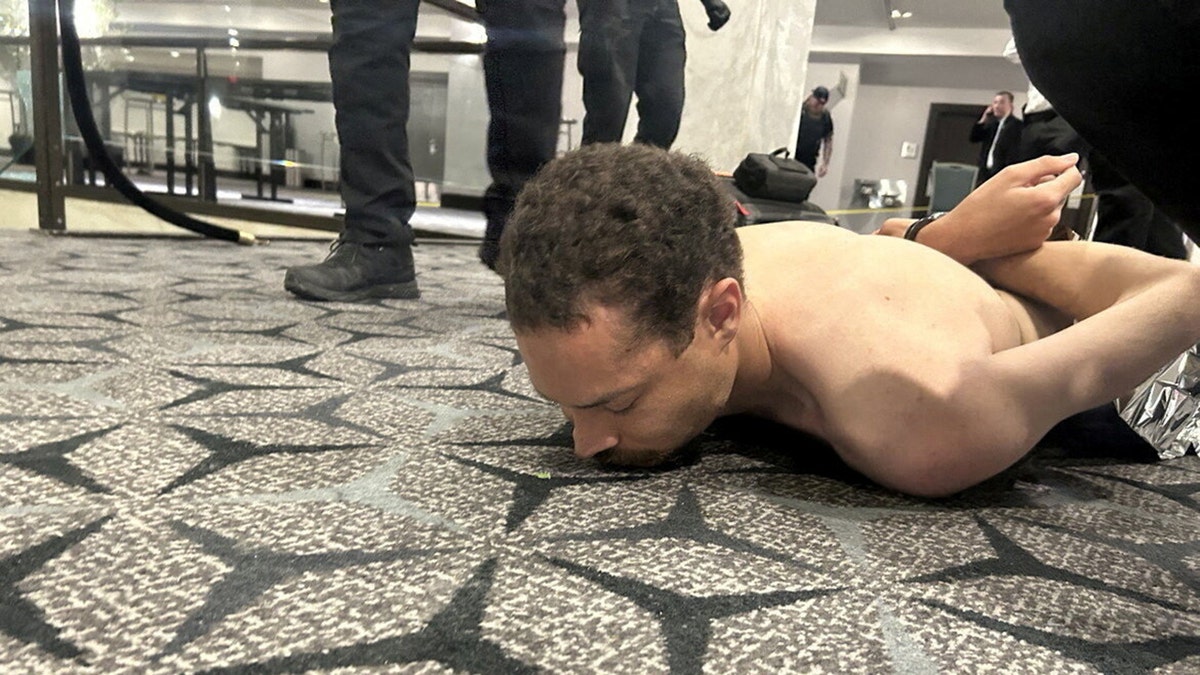
Law enforcement personnel detain Cole Tomas Allen, a suspect in the shooting incident at the White House Correspondents’ Association dinner in Washington, D.C., on April 25, 2026. (Donald J Trump via Truth Social/Handout via Reuters)
November 2017 — Manila, Philippines
During Trump’s visit to the Philippines for the Association of Southeast Asian Nations’ ASEAN 50 Summit, ISIS operatives planned to kill the president, having released several videos threatening Trump’s life. One of the videos includes a picture of Trump with several bullet holes. Just twenty minutes before Trump’s plane landed, Secret Service agents tracked down and apprehended one of the ISIS operatives, who was parked a mile away from Trump’s hotel.
September 2020 — Canada
A Canadian woman mailed to the White House and eight Texas state law enforcement officials a slew of threatening letters and homemade ricin — a deadly toxin. Pascale Cecile Veronique Ferrier, 55, called in the letters for Trump to end his presidential candidacy, and made calls on Twitter that «someone please shoot ‘Trump in the face.’» Border patrol agents stopped Ferrier at the Peace Bridge Border Crossing in Buffalo, N.Y., on Sept. 20, 2020. She was in possession of a loaded firearm and hundreds of rounds of ammunition. She was sentenced to over 21 years in prison.
April 2024 — Iranian plot
Asif Raza Merchant, a Pakistani national and a trained operative of Iran’s Islamic Revolutionary Guard Corps, was sent by the terrorist force to plan and execute political assassinations with intended targets including President Donald Trump, former President Joseph Biden, and U.S. Ambassador to the United Nations Nikki Haley, according to the Eastern District of New York. Merchant arrived in the United States in April 2024 and met with a purported hitmen in June, but in reality were undercover U.S. law enforcement officers. Merchant was convicted in March 2026, but has not yet been sentenced.
NEW BOOK DETAILS SECURITY LAPSES AHEAD OF TRUMP ASSASSINATION ATTEMPT: ‘CLEAR THERE WAS A PROBLEM’

Thomas Matthew Crooks, a 20-year-old from Bethel Park, Pennsylvania, attempted to assassinate former President Donald Trump during a 2024 campaign rally before being shot and killed by Secret Service agents. (Obtained by Fox News Digital)
July 13, 2024 — Butler, Pa.
Positioned roughly 150 yards atop a building outside the security perimeter at Trump’s Butler rally, assassin Thomas Matthew Crooks fired approximately eight shots from his AR-15 rifle — hitting Trump in the ear and killing an attendee, Corey Comperatore, 50. It was the closest attempt on Trump’s life. Crooks, 20, was killed by a member of the Secret Service counter sniper team. Little is known about Crooks, who acted alone with no criminal history. The attempted assassination has intensified scrutiny over the Secret Service.
Sept. 15, 2024 — West Palm Beach, Fla.
A little more than two months after Butler, a Secret Service agent found Ryan Wesley Routh hiding in a bush near a fence surrounding Trump’s West Palm Beach golf course after noticing the barrel of a rifle poking out. Routh fled and was later apprehended. Routh was sentenced to life in prison in February after being convicted for his assassination attempt on Trump. In a letter outlining his reasoning for assassinating Trump, Routh accused the president of being a threat to democracy, and accused Trump of being a «pedophile» and a «rapist.»
February 2026, Palm Beach, Fla.
Austin Tucker Martin, a 21-year-old from North Carolina, breached Mar-a-Lago’s perimeter carrying a gas can and shotgun. Secret Service agents confronted Martin, ordering him to lay down his weapons, but he refused. Martin was fatally shot by the Secret Service agents. At the time of the incident, Trump was at the White House. Martin’s motive remains unknown.
ARMED MAN SHOT AND KILLED AFTER ‘UNAUTHORIZED ENTRY’ INTO MAR-A-LAGO: SECRET SERVICE
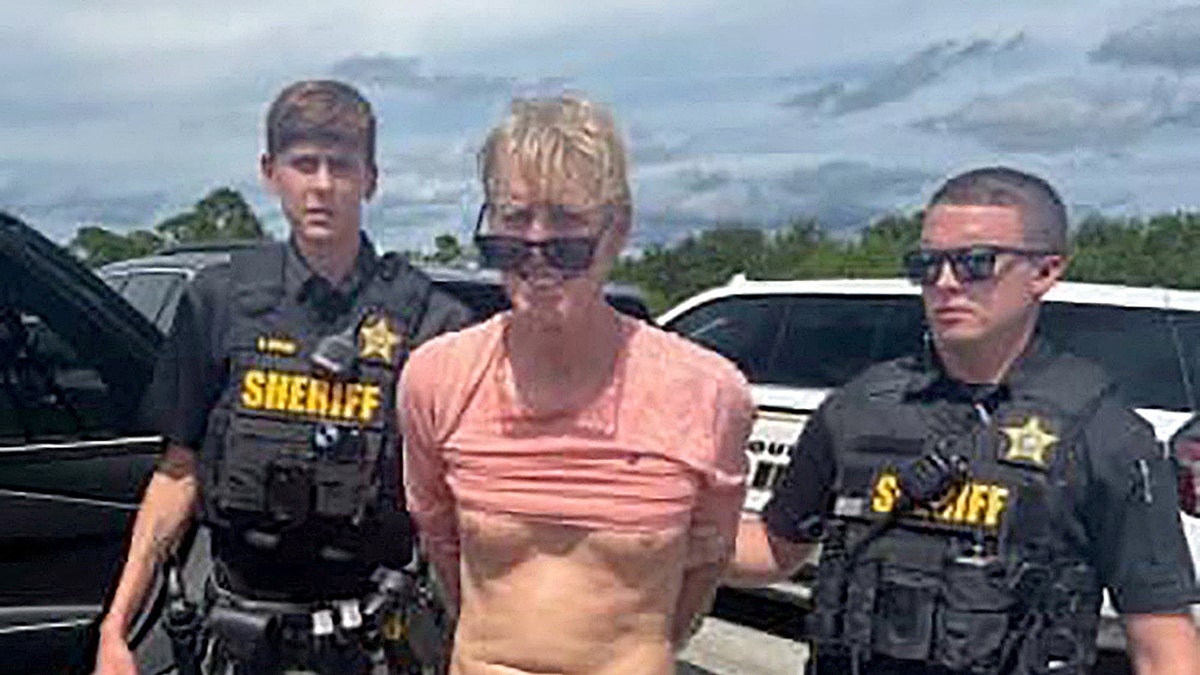
Ryan W. Routh, suspected of attempting to assassinate former President Donald Trump at his West Palm Beach golf course, stands handcuffed between two Martin County Sheriff’s deputies after his arrest during a traffic stop near Palm City, Fla., on Sept. 15, 2024. (Martin County Sheriff’s Office/Handout via REUTERS)
CLICK HERE TO DOWNLOAD THE FOX NEWS APP
April 25, 2026, Washington, D.C.
The most recent alleged attempted assassin, Cole Tomas Allen, a 31-year-old school teacher from California, rushed the lobby doors leading to the Washington Hilton Hotel ballroom where the dinner was held. He fired several shots before Secret Service agents tackled him to the ground, stopping Allen from breaching the ballroom. Acting Attorney General Todd Blanche said that based on the evidence collected, which includes a manifesto, investigators suspect that Allen sought to kill as many high-ranking cabinet officials as possible, including President Donald Trump.
donald trump, tyler robinson, white house, charlie kirk, assassinations murders, politics










INTERNACIONAL
White House dishes out new election security jab over Olive Garden’s pasta pass ID policy
Trump will not sign housing bill without voter ID, criticizes Senate
President Donald Trump took to Truth Social, declaring he will not sign the housing bill despite congressional approval. He protests the Senate’s inability to pass The SAVE America Act, which he claims is supported by 97% of Republicans and many Democrats. Trump emphasizes the need for photo voter ID and proof of citizenship to prevent voter fraud.
NEWYou can now listen to Fox News articles!
After a popular Italian restaurant chain dished out an online response to a curious diner about its new unlimited pasta pass, politically-minded social media users, including those at the top of the food chain, are taking a stand.
Olive Garden took to X on Wednesday to promote its new deal, which offers customers the chance purchase a «Never Ending Pasta Pass» for $100 plus tax, giving the first 10,000 people to purchase their pass 13 weeks of unlimited pasta.
A user posed a question to the iconic American restaurant chain, asking whether they could purchase the unlimited pasta pass and share it with their family.
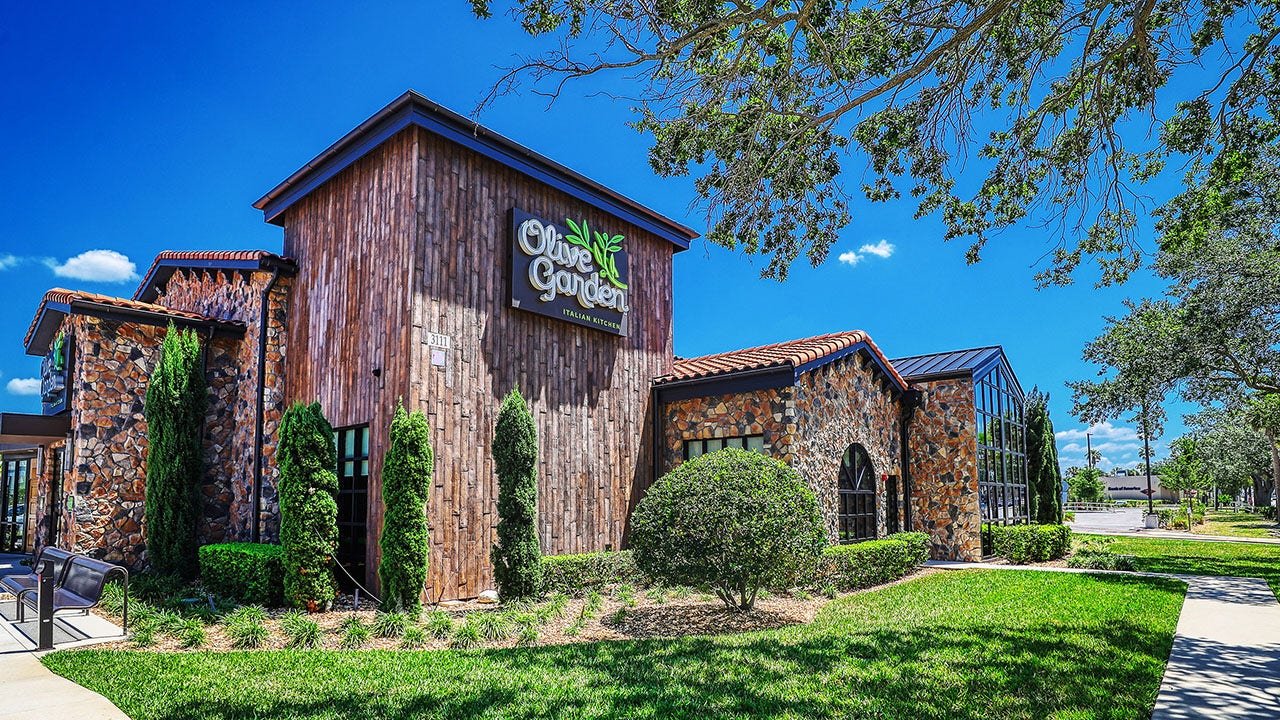
An Olive Garden sign is affixed atop one of its locations. (iStock)
WATCH: ELISSA SLOTKIN SAYS SAVE AMERICA ACT WOULD MAKE IT ‘HARD FOR ANY DEMOCRAT’ TO WIN AN ELECTION
«No. The Never-Ending Pasta Pass is only for use by the Passholder whose name is printed on the Pass,» Olive Garden replied. «Passes are personalized and non-transferable.»
«Passholders must present a valid photo I.D. along with the Pass at the time of ordering,» the chain instructed from its X account.
Immediately, the political right seized the opportunity to prove a point — that Olive Garden appears more strict about its unlimited pasta promotion than Democrat-run states are about voting. The timely post comes as Trump continues to push for what would be a signature legislative victory — the SAVE Act — which, if passed, would require photo identification to vote. It has faced fierce pushback from the left-wing, who have argued against requiring proof of identity to cast a ballot in elections.
«Olive Garden takes their Pasta Pass security more seriously than Democrats take election security,» White House spokesperson Abigail Jackson told Fox News Digital. «It’s sad but true.»
«The SAVE America Act is a commonsense police, supported by the vast majority of Americans, that will secure our elections for generations to come. The only people opposed seem to be Democrats in Congress… I wonder why?» she added.
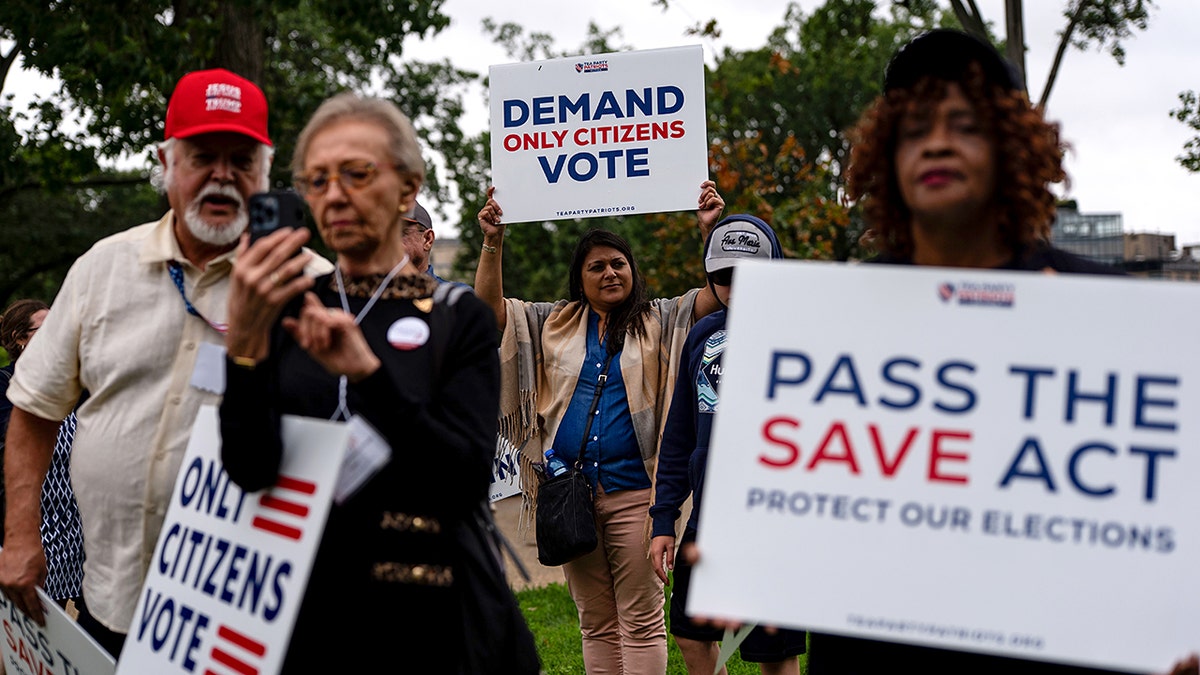
People with signs supporting the SAVE act at Upper Senate Park. (Kent Nishimura/Getty Images)
WATCH: MCCARTHY SAYS TRUMP WILL USE ‘EVERYTHING HE CAN’ TO FORCE SENATE ACTION ON SAVE AMERICA ACT
The social media post quickly caused an online feeding frenzy.
«PUT OLIVE GARDEN IN CHARGE OF OUR ELECTIONS!!!» one popular X account quipped.
«I hope you understand that this is extremely discriminatory towards minorities and married women,» one user said, parroting talking points that the political left has used in opposition of the SAVE Act.
MEMPHIS PIZZA JOINT SPARKS BACKLASH AFTER OWNER REFUSES TO SERVE NATIONAL GUARD TROOPS

US President Donald Trump addresses the nation from the East Room of the White House in Washington, DC on July 16, 2026. (SAUL LOEB/Pool via REUTERS)
Another user also mockingly used the common parlance of the political left in response to Olive Garden’s strict policy.
«I’m sorry, but this sounds incredibly racist to me, a requirement ID and some sort of proof of being a passholder will negatively affect marginalized communities ability to access Olive Garden,» wrote the sarcastic user. «Do better Olive Garden.»
«Are you saying that if photo ID is not presented, it could lead to cheating the system?» another social media user asked.
«Good grief, Olive Garden is more secure than our elections,» said yet another.

Adding protein, fat, or fiber to carbs—like topping pasta with chicken, spinach, and olive oil—helps slow digestion and prevent blood sugar spikes. (iStock)
CLICK HERE TO DOWNLOAD THE FOX NEWS APP
Since Republicans in the House of Representatives passed the SAVE Act in February, the bill has faced major obstruction by Democrats in the Senate, as the conservative lawmakers don’t have the 60 votes required to overcome a filibuster.
Earlier this week, SAVE Act language was attached to a State Department appropriations bill in a creative attempt to pass the law.
white house, donald trump, legislation, food, restaurants
INTERNACIONAL
Tiene 75 años, superó con éxito un trasplante pulmonar robótico y volvió a respirar sin oxígeno
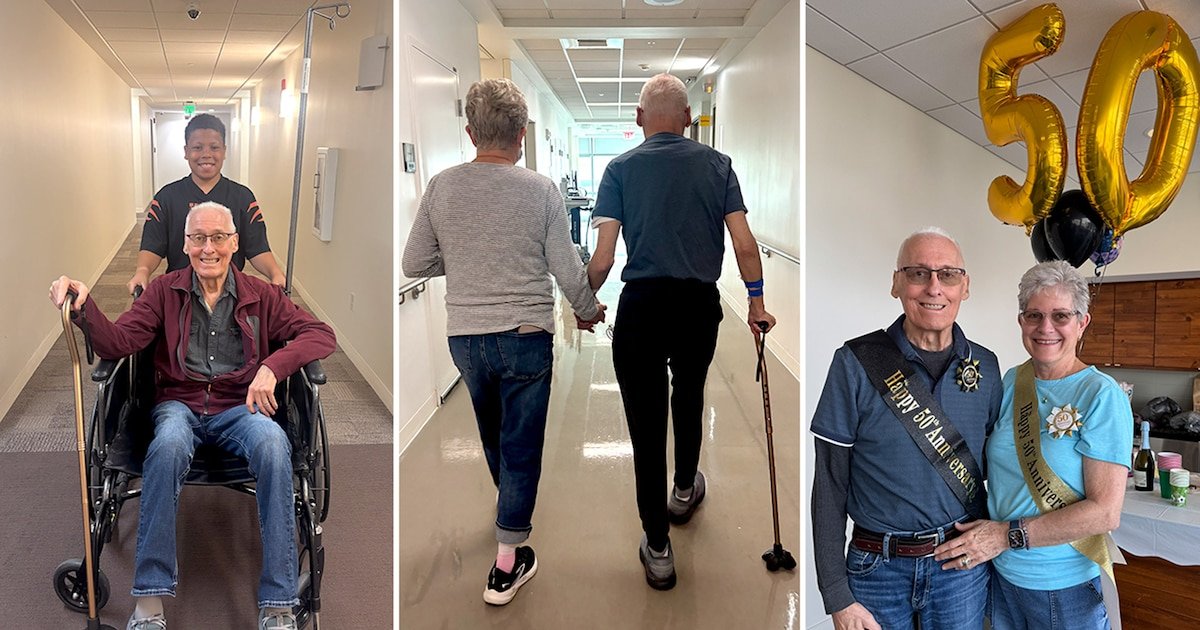
A los 75 años, John Hanley volvió a respirar sin oxígeno después de convertirse en mayo de 2026 en el primer paciente de la Cleveland Clinic en Estados Unidos en recibir un trasplante pulmonar robótico, una intervención elegida porque su fibrosis pulmonar había avanzado hasta el punto de que un trasplante era la mejor opción terapéutica y porque este abordaje podía reducir dolor, cicatrices y tiempo de recuperación.
Según la historia publicada por la propia institución, la operación duró 7 horas y marcó también el primer trasplante pulmonar robótico de este tipo realizado en Ohio. El centro figura entre un número reducido de hospitales en el mundo que ofrecen esta técnica.
Hanley, oriundo de Corry, en Pensilvania, había sido diagnosticado en 2024 después de consultar por una tos persistente, episodios de mareos y falta de aire. Su esposa, Peggy Hanley, contó que en un primer momento los médicos pensaron que se trataba de neumonía, pero estudios posteriores mostraron fibrosis pulmonar.

El cirujano torácico Gregory Jones explicó que Hanley padecía fibrosis pulmonar idiopática, la forma más frecuente y más grave de enfermedad pulmonar intersticial, un grupo de trastornos que provoca cicatrices en los pulmones, los vuelve rígidos y reduce su capacidad de funcionar. El componente idiopático, precisó, significa que no se conoce la causa del cuadro.
La enfermedad empeoró hasta obligarlo a usar oxígeno las 24 horas. Como el pulmón derecho era el más afectado, el equipo definió avanzar con un trasplante de un solo pulmón.
Jones señaló que Hanley era un candidato adecuado para el abordaje robótico por dos razones concretas: su tórax de mayor tamaño ofrecía el espacio necesario para realizar el procedimiento con seguridad y eficacia, y su buen estado físico previo al trasplante también jugaba a favor. Antes de decidirse, el paciente discutió la opción con su familia.

“El médico me dijo que mi condición solo iba a empeorar si no hacía nada, y yo quería poder ver crecer a mis nietos. Y si había alguna posibilidad de no tener que andar con oxígeno otra vez, la iba a tomar”, dijo Hanley.
Fue incorporado a la lista de espera en febrero de 2026. Para preparar la cirugía, Jones trabajó junto con un equipo amplio que incluyó al cirujano cardiotorácico Kenneth McCurry, director quirúrgico de trasplante pulmonar y director institucional de trasplantes en la clínica.
De acuerdo con Jones, el primer paso fue desarrollar un protocolo específico para el abordaje robótico y colaborar con otros centros que ya tenían experiencia con este tipo de procedimiento. Después, el equipo pasó muchas horas en un laboratorio de simulación para practicar cada etapa y llegar al quirófano con un proceso aceitado.
En un trasplante pulmonar tradicional, los cirujanos suelen abrir el tórax cortando el esternón o las costillas para acceder a los pulmones. La técnica robótica, en cambio, requiere apenas unas pocas incisiones pequeñas, algo que suele asociarse con menos dolor y una recuperación más rápida.

Las intervenciones quirúrgicas asistidas por robots cuentan con varios años de investigación y aplicación en distintos países, y su avance continúa. Un equipo médico del Hospital Vall d’Hebron de Barcelona realizó en 2023 el primer trasplante pulmonar utilizando cirugía completamente robótica mediante una técnica novedosa: una pequeña incisión bajo el esternón permitió extraer el pulmón enfermo e implantar el nuevo órgano, sin abrir el tórax.
Jones detalló que los brazos robóticos con instrumentos quirúrgicos se introducen por esas incisiones y son controlados por el cirujano desde una consola dentro del quirófano. Esa consola ofrece además una visión tridimensional ampliada y de alta definición del campo quirúrgico, mientras que los instrumentos aportan una destreza superior a la de las manos humanas solas, sobre todo en espacios pequeños o delicados.
McCurry sostuvo, citado por la publicación, que el caso reflejó el trabajo conjunto y la innovación de los equipos de trasplante y cirugía. También afirmó que, a medida que estas tecnologías evolucionen, tendrán un papel cada vez mayor en la mejora de los resultados de los pacientes y en el desarrollo futuro del trasplante.
Hanley recibió un pulmón donado en mayo de 2026, fue operado con asistencia robótica y dejó de necesitar oxígeno poco después de la intervención. El objetivo del procedimiento fue reemplazar el pulmón más dañado con una técnica menos invasiva que la cirugía convencional.

(Imagen Ilustrativa Infobae)
La recuperación fue rápida. Hanley dejó el oxígeno dentro de las primeras 24 horas, salió de la unidad de cuidados intensivos en 48 horas y recibió el alta hospitalaria en dos semanas.
“Tenía unas pocas incisiones pequeñas, y la más grande era de tal vez dos o tres pulgadas. Todas cicatrizaron rápido. Realmente no tuve nada de dolor después de la cirugía”, contó el paciente. Jones agregó que durante la operación aplicaron múltiples medidas para controlar el dolor y hacer que el posoperatorio fuera lo más confortable posible.
Los controles posteriores mostraron que el nuevo pulmón funcionaba bien. Hanley dijo que ya no necesita cargar equipos de oxígeno y que espera retomar desayunos con amigos y viajes junto con su esposa, sus dos hijos y sus tres nietos.
También agradeció al equipo médico, al que mencionó por nombre, y a la familia del donante. “Esperamos que sepan la diferencia que hicieron en nuestras vidas”, afirmó.
La clínica señaló que la cirugía robótica es solo una de varias formas de abordar el trasplante pulmonar y que muchos pacientes no son candidatos para esta técnica. Jones sostuvo que este hito amplía la experiencia del equipo en cirugía robótica y trasplante, y Hanley expresó su deseo de que su caso ayude a otros a ver “lo que es posible” con este tipo de intervención, que en su experiencia implicó menos dolor, una recuperación más rápida y una vuelta más temprana a su vida cotidiana.
cirugía robótica,quirófano,Da Vinci,cirujanos,robot médico


El video con la pregunta de Dibu Martínez con el que presentaron a Manzambi en el Aston Villa

Vialidad III: suspendieron la primera audiencia porque a dos abogados se les superpuso con el juicio de los cuadernos de las coimas

Kimi K3, la IA china que ha puesto en guardia a Silicon Valley

Cómo se preparan los operativos de seguridad del domingo y la definición que falta de la AFA para el lunes

Di María eligió bajarse de la final del Mundial y explicó el motivo que descolocó a todos: «No quiero…»

La inflación mayorista cayó al 1,1% en junio y Milei volvió a elogiar a Caputo

El machete del arquero inglés en una botella que sorprendió a Messi tras el triunfo: el dardo de un ayudante de Scaloni a Inglaterra

El fuerte cruce público entre Victoria Villarruel y Patricia Bullrich tras los chats filtrados antes de la sesión del Senado

Revelan que Israel intentó reclutar como espía al iraní Mahmoud Ahmadinejad, que firmó el memorándum con Cristina Kirchner

Expertos recomiendan en qué acciones, CEDEARs y bonos invertir

 DEPORTE2 días ago
El machete del arquero inglés en una botella que sorprendió a Messi tras el triunfo: el dardo de un ayudante de Scaloni a Inglaterra
- POLITICA22 horas ago
El fuerte cruce público entre Victoria Villarruel y Patricia Bullrich tras los chats filtrados antes de la sesión del Senado
- POLITICA22 horas ago
Adrián Ravier, vocero de Milei: “No coincidimos en el Gobierno con esto de que la gente no llega a fin de mes”