INTERNACIONAL
Latest Trump assassination attempt exposes ‘educated assassins’ moral crisis, university president says

NEWYou can now listen to Fox News articles!
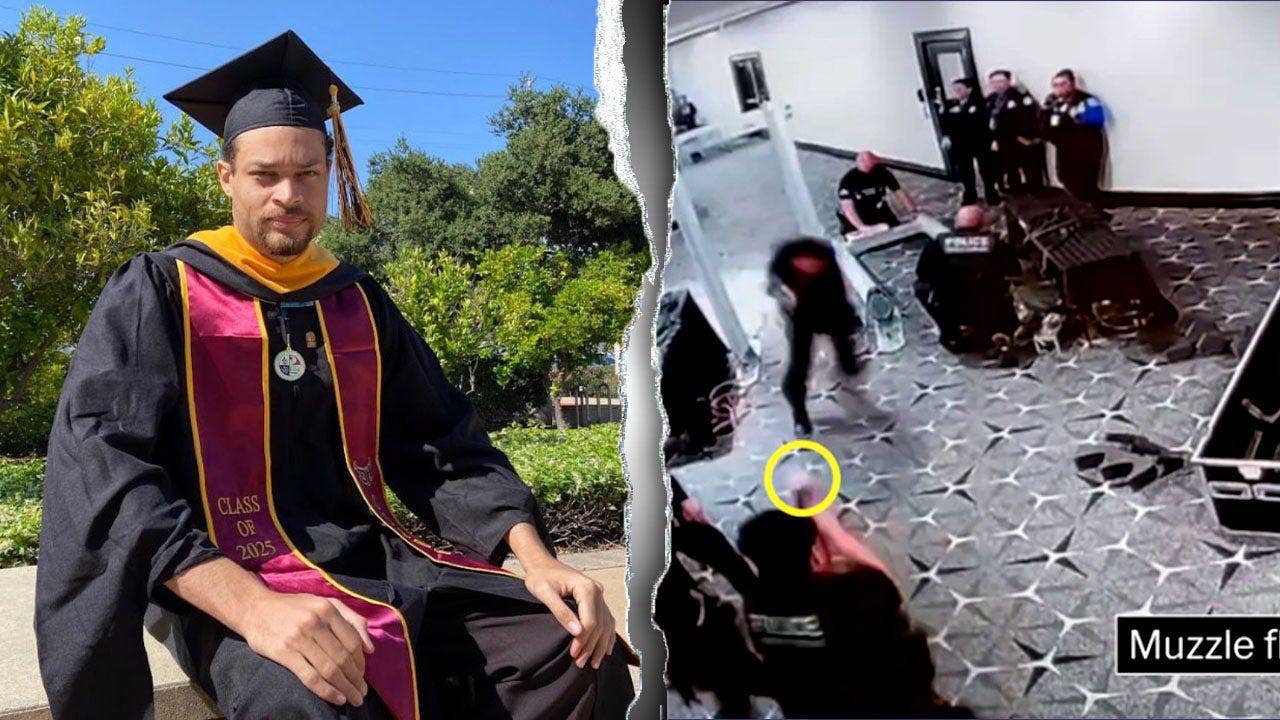
The California man accused of attempting to assassinate President Donald Trump at the White House Correspondents’ Association Dinner was highly educated and had worked as a tutor, a profile one university president said raises an unsettling question about the role of education in shaping character.
Cole Allen, 31, earned a bachelor’s degree in mechanical engineering from the California Institute of Technology in 2017 and a master’s degree in computer science from California State University, Dominguez Hills last year. That doesn’t match the typical resume of a would-be presidential assassin, but a disturbing shift appears to be underway, according to Cornerstone University President Gerson Moreno-Riaño.
«A troubling trend that appears to be emerging is that of the ‘educated assassin,’ individuals who do not fit the typical profile of people who commit such heinous acts,» Moreno-Riaño said. «These individuals are often schooled in some of America’s most elite institutions and act out of a perverted philosophical conviction that sees the killing of others not as evil, but as justified.»
ALLEGED TRUMP ASSASSINATION PLOT: ANALYSIS SHOWS 1 IN 5 LEFT-WING POSTS CRY HOAX, ADMIN SHREDS ‘MORON’ CLAIMS
A photo of Cole Allen in a graduation gown and cap from 2025. (Cole Allen/LinkedIn)
«My concern has been for many, many years that some of these not just activists, but violent activists, are perhaps some of the most highly educated ones in our country,» he said. «When education ceases to educate, when it’s ideological, when it’s brainwashing, when it’s indoctrination, it’s no longer education… It’s something very different.»
Prosecutors say Allen, who remains in federal custody, targeted Trump and Cabinet officials in the April 25 incident. He allegedly had authored a damning manifesto and left what authorities described as an extensive digital trail showing weeks of planning.
In addition to his advanced schooling, Allen joined tutoring company C2 Education in March 2020, according to his LinkedIn profile. A Dec. 30, 2024, Facebook post from the company congratulated «Cole Allen of C2 Education Torrence» as a teacher of the month.
CHARLAMAGNE BLAMES TRUMP FOR HEATED RHETORIC AMID WCHA DINNER FALLOUT

Law enforcement personnel detain Cole Tomas Allen, a suspect in the shooting at the White House Correspondents’ Association Dinner in Washington, D.C., on April 25, 2026. (Donald J Trump via Truth Social/Handout via Reuters)
Secret Service Director Sean Curran told Fox News Thursday that Allen shot an agent in the chest while «charging through security,» with the round stopped by the agent’s bulletproof vest.
Curran said the agent returned five shots that missed, adding the agent was the only person other than Allen who discharged a weapon during the incident. Allen is believed to have tripped and fallen, prompting Secret Service agents to surround and subdue him.
Defense attorneys claim prosecutors lack key physical evidence and dispute aspects of how the incident has been characterized. A defense memo described Allen as a «devout Christian,» a highly educated man with no criminal history and a «loved and respected teacher.»
But Moreno-Riaño warned that credentials and professional roles do not necessarily reflect deeper moral grounding.
«The universities have rejected the centrality of God, a theistic Christian worldview, but nothing has taken its place,» he said.
«There is no moral compass for universities and for education today. It just doesn’t exist.»
KANSAS PROFESSOR PUT ON LEAVE AFTER CALLING WHITE MEN ‘DANGEROUS ANIMALS’ IN THE WAKE OF CHARLIE KIRK’S MURDER
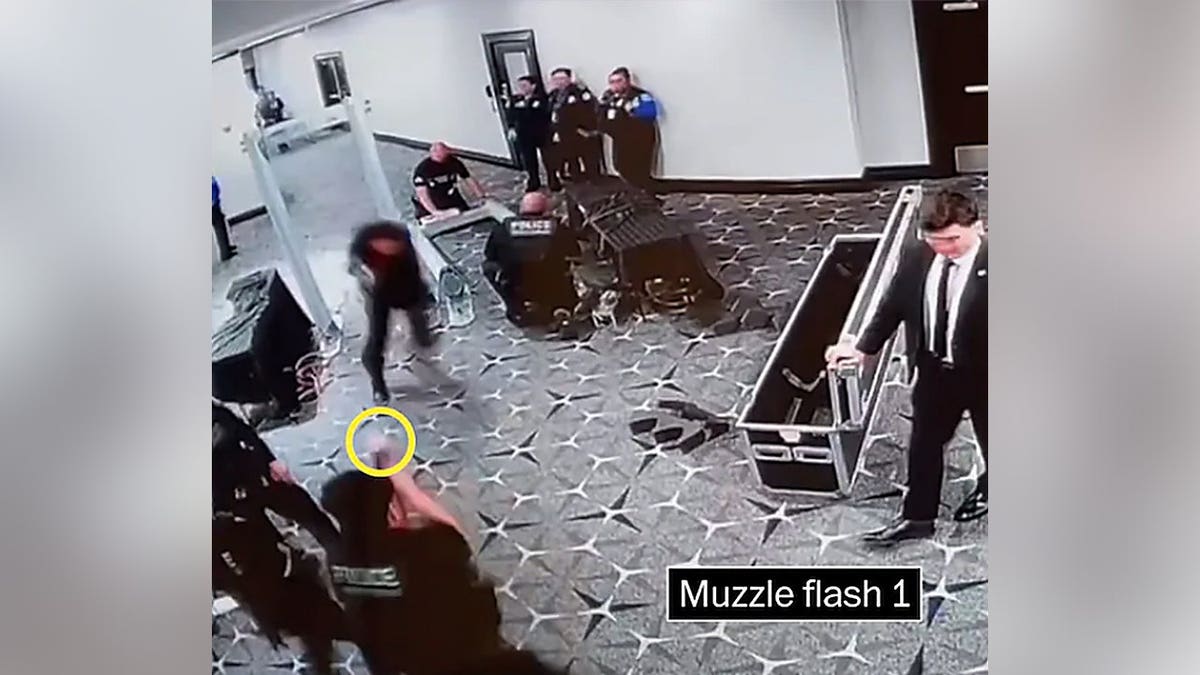
A Secret Service agent fires at Cole Allen, suspected in the assassination attempt of President Donald Trump on Saturday, April 25, 2026. (Obtained by The Washington Post)
He added that parents should take a more active role in understanding what their children are being taught.
«Parents can no longer… simply drop off their student» and assume responsibility ends there, Moreno-Riaño said.
Moreno-Riaño also said people who carry out acts like this can hide their intentions, making them difficult to identify ahead of time.
«Our entire life as a whole, whatever we do in private, whatever we’re doing in secret, does have a significant impact on what we do in public,» he said.
Allen’s next hearing is scheduled for May 11.
For Moreno-Riaño, the case points to a moral concern.
CLICK HERE TO DOWNLOAD THE FOX NEWS APP
«There’s a crisis of morality, a crisis of faith,» he said. «Without it, all we’re giving to students is just information then. And that’s not giving them guidance and moral direction.»
Fox News Digital’s Alex Koch, Asra Q. Nomani, Jake Gibson, Julia Bonavita and Peter D’Abrosca contributed to this reporting.
college, fox news, donald trump, fox news investigates, controversies education

INTERNACIONAL
Trump anunció que Estados Unidos escoltará barcos fuera del estrecho de Ormuz: “Es un gesto humanitario”

El presidente de Estados Unidos, Donald Trump, anunció este domingo el inicio de una operación internacional para escoltar barcos de terceros países atrapados en el estrecho de Ormuz, en medio del bloqueo impuesto por Irán en la principal vía marítima de la región.
Trump explicó que “naciones de todo el mundo, la mayoría ajenas al conflicto de Medio Oriente, han solicitado ayuda de Estados Unidos para sacar sus embarcaciones, que han quedado atrapadas en el estrecho sin estar involucradas en la disputa”.
El mandatario remarcó que estos buques, de naciones sin vínculo con la confrontación regional, están siendo retenidos “sin tener absolutamente nada que ver con la situación actual”.
Indicó que instruyó a sus funcionarios para que comuniquen a los gobiernos afectados que Estados Unidos hará “todo lo posible para evacuar de manera segura sus barcos y tripulaciones” a través de las rutas restringidas, permitiéndoles retomar sus actividades comerciales normales.
La operación, denominada “Proyecto Libertad”, comenzará este lunes, según el horario local del Medio Oriente.
Trump afirmó que el único objetivo es asistir a “personas, empresas y países inocentes, víctimas de circunstancias ajenas”, y presentó la iniciativa como un gesto humanitario que involucra tanto a Estados Unidos como a naciones de Medio Oriente, e incluso a Irán.
El presidente aseguró que “la seguridad y el bienestar de las tripulaciones son la prioridad”, ya que muchos de los barcos afectados están sufriendo falta de alimentos y suministros básicos, lo que dificulta la permanencia saludable de grandes dotaciones a bordo.
Trump recalcó que, tras recibir la garantía de asistencia, los países implicados han confirmado que sus buques no volverán a navegar el estrecho hasta que la zona sea calificada como segura para la navegación y otras actividades marítimas.
“Hemos informado a estos países que guiaremos sus embarcaciones de forma segura fuera de estas vías restringidas, para que puedan continuar libremente con sus actividades”, subrayó el mandatario.
El presidente también destacó que este esfuerzo se produce en paralelo a “conversaciones muy positivas” que sus representantes mantienen con Irán, y expresó su expectativa de que estas negociaciones puedan derivar en “resultados favorables para todas las partes”.
Sin embargo, Trump fue tajante en su advertencia respecto a cualquier obstáculo en la operación. Declaró que si el proceso humanitario para liberar a los barcos y sus tripulaciones es obstruido, “lamentablemente, esa interferencia deberá ser respondida con firmeza”.
La situación en el estrecho de Ormuz se ha agravado desde la escalada del conflicto regional, con Irán bloqueando el paso de buques y exigiendo peajes a naves no afiliadas a Estados Unidos o Israel.

El tránsito por el estrecho, por donde circula cerca del 20% del petróleo mundial, se ha visto severamente afectado, generando un impacto en los precios internacionales del crudo y en la logística global de hidrocarburos.
El “Proyecto Libertad” busca aliviar la crisis humanitaria y comercial para los barcos que, sin ser parte del conflicto, han quedado atrapados en la zona.
Trump insistió en que el movimiento de los buques tiene únicamente un objetivo humanitario y no forma parte de ninguna acción militar ofensiva.
“Se trata de un gesto humanitario por parte de Estados Unidos, de los países de Medio Oriente y, en particular, de Irán”, enfatizó.
La Casa Blanca concluyó que la comunidad internacional será informada sobre el desarrollo de la operación y que la seguridad de las tripulaciones y la libertad de navegación seguirán siendo una prioridad hasta que la región recupere la normalidad.
(Con información de EFE y AFP)
Domestic,Politics,North America,Government / Politics
INTERNACIONAL
Obama-era ‘clean energy’ solar power plant still uses fossil fuels – and kills thousands of birds annually

NEWYou can now listen to Fox News articles!
This is part 2 of a series on California’s troubled Ivanpah Solar Power Plant in the Mojave Desert.
SAN BERNARDINO, Calif. – More than a decade after it opened, an Obama-era taxpayer-backed «clean energy» solar plant in California still burns fossil fuels and kills thousands of birds each year.
The Ivanpah Solar Power Plant, a massive facility in the Mojave Desert near the California-Nevada border, uses hundreds of thousands of mirrors to reflect sunlight into three towering structures, generating intense heat to produce electricity.
But those same beams have proven deadly.
A composite image shows a tower at the Ivanpah Solar Power Plant alongside a bird found with burn injuries linked to concentrated solar heat exposure, according to federal wildlife research. (Jeff Gritchen/MediaNews Group/Orange County Register via Getty Images; U.S. Fish and Wildlife Service)
OBAMA-BACKED $2.2B GREEN ENERGY ‘BOONDOGGLE’ LEAVES TAXPAYERS ON THE HOOK
Federal researchers and monitoring reports have documented thousands of birds being killed after flying through the plant’s concentrated solar rays — a phenomenon known as «solar flux.»
The plant also relies on natural gas to start up each day – producing tens of thousands of metric tons of carbon dioxide annually – an amount comparable to the energy use of thousands of homes, raising questions about how «clean» the facility really is.
Standing near the site, its footprint is unmistakable. The towers glow intensely as beams of reflected sunlight converge at their tops, creating an almost surreal scene against the desert landscape.
Once promoted as a symbol of the future of renewable energy, Ivanpah is now drawing scrutiny over whether its environmental costs outweigh its benefits, with critics saying the project raises broader concerns about how «clean energy» is evaluated.
«If oil and gas spills a drop, literally a drop, the entire operation is shut down. And to an extent that’s a good thing,» Daniel Turner, founder of the energy advocacy group Power The Future, told Fox News Digital.
«But you label something ‘green’ or ‘clean’ and all regulations are waived.»
TRUMP’S UN SPEECH REVEALS INCONVENIENT TRUTH OF MASSIVE GREEN ENERGY COSTS

An aerial view shows the Ivanpah Solar Power Plant near the California-Nevada border, where mirrors reflect sunlight onto towers to generate electricity. (Joe Sohm/Visions of America/Universal Images Group)
Despite the documented wildlife impacts, the plant continues to operate — with California regulators declining efforts to shut it down and instead arguing it is still needed to support the power grid. Officials under both the Trump and Biden administrations have supported shutting the facility down, citing the high cost of its electricity compared to newer alternatives.
The project was built with more than $1.6 billion in federally backed loans and additional taxpayer-funded incentives, leaving hundreds of millions of dollars still outstanding — even as environmental concerns continue to mount. In addition, the U.S. Department of the Treasury provided a $539 million grant to help build the facility, covering about 30% of construction costs.
Bird deaths and wildlife impacts
The facility spans more than 4,000 acres of the Mojave Desert and uses roughly 350,000 mirrors — mounted on more than 170,000 heliostats — to reflect sunlight toward three central towers.
That same concentrated light has had unintended consequences.
Researchers say insects are drawn to the bright towers, which in turn attract birds. Some then fly through the plant’s concentrated solar beams — known as solar flux — where they can be injured or killed.
Researchers dubbed the phenomenon «streamers,» with video released by the U.S. Geological Survey showing birds trailing smoke as their feathers burn.

A peregrine falcon wing shows severe feather damage consistent with exposure to concentrated solar heat, according to a U.S. Fish and Wildlife Service study of the Ivanpah solar plant. (U.S. Fish and Wildlife Service)

Burned feathers from a peregrine falcon show damage patterns linked to concentrated solar beams at the Ivanpah solar plant, according to federal research. (U.S. Fish and Wildlife Service)
A 2016 federal study by the U.S. Fish and Wildlife Service found evidence of birds suffering feather damage and trauma consistent with exposure to intense heat near the towers.
Monitoring reports filed with California regulators and reviewed by Fox News Digital continue to document bird and bat deaths at the site, with hundreds of birds found dead each year.
Environmental reviews conducted before construction anticipated some level of wildlife impact, including bird deaths linked to mirror collisions and concentrated solar beams, according to California Energy Commission documents.
«Bird mortality is still a significant concern at concentrated solar plants like Ivanpah,» Lewis Grove, director of wind and energy policy at the American Bird Conservancy, told Fox News Digital.
«Public estimates are that thousands of birds are killed every year by this single facility,» he said, adding that the trade-off is «generally not worth it for birds.»
CALIFORNIA’S POLITICIANS DIDN’T START THE FIRES. THEY MADE THEM WORSE
He noted that newer photovoltaic solar systems have significantly lower impacts on wildlife, underscoring how the industry has shifted away from the technology used at Ivanpah.
«The Ivanpah plant was a financial boondoggle and environmental disaster,» Julia Dowell of the Sierra Club said in a previous Fox News Digital report. She added the project «killed thousands of birds and tortoises» and showed that «not all renewable technologies are created equal.»
Habitat impact
Beyond bird deaths, the project has reshaped the surrounding desert.
The site was once considered a high-quality habitat, according to federal environmental reviews conducted before construction. Development cleared large areas of land, displacing tortoises and other wildlife and raised concerns about long-term survival.
Early monitoring reports showed dozens of protected desert tortoises went unaccounted for during initial operations — including animals held in controlled enclosures — according to California Energy Commission documents reviewed by Fox News Digital.
Critics have also questioned whether efforts to relocate tortoises away from the site have been effective.
Burning fossil fuels
The plant’s environmental footprint extends beyond wildlife.
Ivanpah relies on natural gas to start up operations each day — a requirement that has raised questions about how «clean» the facility really is.
While the original design assumed limited gas use, actual operations often require several hours of gas-burning to bring the system online. The plant also lacks large-scale energy storage, meaning it cannot generate electricity at night — a limitation newer solar projects increasingly address.

A bird feather shows curling and charring linked to concentrated solar heat exposure at the Ivanpah facility, according to a federal wildlife study. (U.S. Fish and Wildlife Service)
Project documents show the facility was originally approved to use significantly less natural gas than it ultimately required, with operators later seeking approval to increase usage by roughly 60% to maintain reliable operations, according to California Energy Commission filings reviewed by Fox News Digital.
The plant has burned natural gas to support daily startup and operations, producing roughly 25,000 to 30,000 metric tons of carbon dioxide annually — roughly equivalent to the emissions from several thousand U.S. homes.
That level of emissions is enough to place the plant under California’s cap-and-trade program, which requires major polluters to pay for their emissions — effectively placing the «solar» facility alongside traditional fossil fuel plants when it comes to emissions.
While Ivanpah produces fewer emissions than a conventional natural gas plant, its carbon footprint remains significantly higher than that of modern solar farms, which generate electricity without burning fossil fuels.
NRG Energy, which operates the facility, said in a previous statement that it remains committed to providing renewable electricity but declined to provide additional comment regarding environmental issues.
The California Energy Commission told Fox News Digital the project remains in compliance with its environmental requirements, with wildlife impacts addressed through ongoing monitoring and coordination with federal and state agencies.

The Ivanpah Solar Power Plant in California’s Mojave Desert uses mirrors to focus sunlight onto three towers to generate electricity. (Jeff Gritchen/MediaNews Group/Orange County Register/Getty Images)
CLICK HERE TO DOWNLOAD THE FOX NEWS APP
More than a decade after it opened, Ivanpah now stands as a symbol of the trade-offs in the push for clean energy — where efforts to reduce emissions can also bring real-world environmental costs.
For now, the plant continues to operate because regulators say the power it provides is still needed — even as questions remain about its cost, environmental impact and whether it still makes sense to keep it running.
Those questions extend beyond the plant itself, raising broader concerns about how projects like Ivanpah were approved — an issue Fox News Digital will examine in the next part of this series.
energy, nevada, carbon emissions, california, birds, green economy, barack obama
INTERNACIONAL
“Resistir a ser borrado”: la lucha del arte chicano en la era Trump desde México

Un mural, un grafiti o una fotografía bastan para rescatar la memoria de los mexicanos en Estados Unidos y demostrar que, en un país marcado por las deportaciones masivas y la criminalización del migrante, “nosotros hemos estado ahí desde antes”, afirmó a esta agencia la artista mexicoestadounidense Alexa Ramírez, quien exhibe su obra en México junto al colectivo chicano 3B Collective.
“Quieren borrar nuestra historia y dar a entender que nunca pasó(…), pero así como (el Servicio de Inmigración de Estados Unidos) ICE usa cámaras para vigilarnos, nosotros también podemos usar la fotografía para decir: ‘Aquí estamos y aquí vamos a estar’”, sostuvo Ramírez sobre la resistencia histórica del movimiento chicano frente a gobiernos republicanos como los de los presidentes Donald Trump o Ronald Reagan (1981-1989).
La resistencia histórica a la que alude la artista, de 27 años, es también el corazón de sus piezas, que se exhibirán hasta el 23 de agosto en AztLán, túnel del tiempo, la primera muestra de arte chicano incluida en la programación del Palacio de Bellas Artes, en la capital del país.
En el recorrido, enriquecido con la obra de 33 artistas, prevalece la defensa de la identidad latina en Estados Unidos, así como “la recuperación de la memoria de nuestros seres queridos”, explicó la artista, quien, al residir en Los Ángeles, ha presenciado la separación de familias por la deportación masiva de mexicanos, que durante el segundo mandato de Trump llega a las casi 190.000.
“A mí me importa mucho guardar las fotos de mi familia, porque a Estados Unidos no le importamos. Para ellos, ese archivo forma parte de una historia que quieren borrar”, lamentó.
Ramírez aseguró que la fractura del núcleo familiar es un mecanismo del Gobierno estadounidense para “restar poder” a la comunidad latina, pues son estos grupos los que apoyan a personas como ella, que llegó al país a los 8 años sin saber inglés y sintiéndose sola.

“La separación de las familias siempre ha ocurrido, la diferencia es que ahora la violencia es directa, ya no sucede solo dentro de las cortes o a puertas cerradas”, destacó.
Y recalcó que, sin importar el color del partido político, desde antes del siglo XX “ha existido la intención política de borrar la historia de la comunidad latina en EEUU”, incluso cuando se niega que, en 1848, California fue parte de México.
Por ello, esta exhibición también hace un recuento de los antepasados del arte chicano, como el trabajo del colectivo Asco -que en la década de 1970 criticó desde el activismo y el arte la exclusión de la población latinoamericana-, o la obra de Chaz Bojorquez, uno de los pioneros del grafiti y del arte callejero en Los Ángeles.
También recuerda que, en 1932, el mural América tropical fue cubierto con pintura blanca; una obra en la que el maestro David Alfaro Siqueiros se pronunció contra el imperialismo norteamericano.
El rechazo al movimiento chicano proviene tanto del vecino del norte como de México, admitió a esta agencia Joshua Sánchez, curador en jefe del Museo del Palacio de Bellas Artes.
Por ello, “esta primera muestra en el museo es una forma de saldar una deuda histórica” con la tradición del arte chicano, que desde la década de 1960 ha luchado por la “reivindicación de derechos” feministas, sociales y civiles.

Además, añadió que este es un momento idóneo para “romper con los prejuicios” difundidos por los medios de comunicación estadounidenses, que “presentan a las comunidades mexicanas como no deseables”, cuando, en realidad, “son personas que contribuyen en gran medida al PIB de ese país”, al ser una población de 40 millones.
AztLán, túnel del tiempo reúne obras de artistas radicados principalmente en Los Ángeles, aunque abarca distintas generaciones del siglo XX y XXI, con el objetivo de propiciar la reflexión sobre el impacto de las fronteras y la censura de la historia, así como normalizar la idea de que ser humano es cambiante y migrante.
“Hay Gobiernos que pretenden, con una visión aislacionista, plantear que la migración es algo anómalo, cuando lo anómalo es lo quieto, lo que no se mueve”, concluyó Sánchez.
Fuente: EFE.
Fotos: EFE/ Sáshenka Gutiérrez.
Arte chicano,Trump,exposición,cultura,identidad,artista,tapiz,Neshoj’n Na Shoqllash,camión,resistencia
CHIMENTOS2 días agoAgustín Aristarán y su inesperada separación de Fernanda Metilli: ataques de pánico y terapia psiquiátrica
CHIMENTOS3 días agoLa emoción de un cronista al enterarse en vivo de su nominación a los Martín Fierro de Televisión Abierta 2026
CHIMENTOS3 días agoSusana Giménez se bajó de los Martín Fierro por un insólito motivo: “Estoy cansada de…”