INTERNACIONAL
Massie ally sparks backlash after accusing Trump-backed challenger of abusing VA benefits

NEWYou can now listen to Fox News articles!
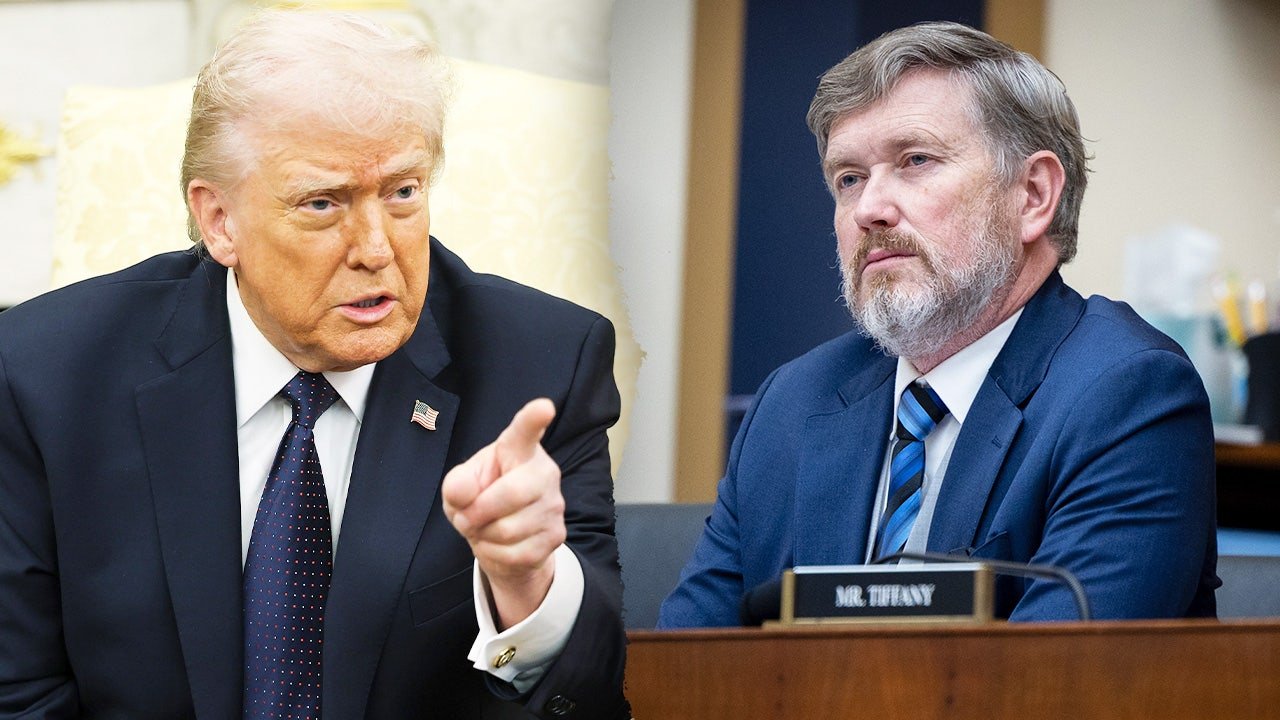
An ally of Rep. Thomas Massie, R-Ky., is receiving blowback for painting Ed Gallrein, Massie’s challenger, as a veteran potentially abusing disability benefits.
«Ed Gallrein has received government benefits for claiming to be 100% physically disabled, while also claiming to do demanding full-time farm work on his family’s operation,» Andrew Cooperrider, a radio and podcast host, said in a post to Facebook.
«This raises serious questions about consistency, transparency and accountability,» he continued.
The post drew criticisms from experts in the veterans’ community for what they called a mischaracterization of the Veterans Affairs (VA) disability rating system. It also highlights the sensitivity of a race that pits a Trump-endorsed candidate against one of the president’s most frequent critics.
SCOOP: TRUMP-BACKED FORMER NAVY SEAL LAUNCHES GOP PRIMARY CHALLENGE AGAINST MASSIE
Republican congressional candidate for Kentucky, Ed Gallrein speaks as U.S. President Donald Trump looks during an event at Verst Logistics on March 11, 2026, in Hebron, Kentucky. (Andrew Harnik/Getty Images)
«I think it’s disgraceful that any type of campaign would try to use a VA disability rating against somebody,» Mark Lucas, founder and president of Veteran Action, an advocacy group, said of Cooperrider’s post.
«Just because a veteran has a disability, it does not mean that they can’t work,» Lucas added.
Gallrein, a former longtime Navy SEAL and fifth-generation Kentucky farmer, has positioned himself as a pro-Trump candidate looking to unseat the biggest thorn in the side of the GOP. He contends that Massie’s decision to vote against Trump’s Big Beautiful Bill, his push to pass the Epstein Files Transparency Act and constant criticisms of overseas conflicts in Iran and Venezuela all go against the grain of the party.
Gallrein received Trump’s endorsement earlier this year.
Tim Murtaugh, an advisor to his campaign, blasted Cooperrider’s Facebook post, calling the criticism an «offensive attack.»
«This is a ridiculous and offensive attack on a veteran, a potentially illegal invasion of privacy and it proves Massie and his allies truly have no shame and no honor,» Murtaugh said.
EXCLUSIVE INTERVIEW WITH NAVY SEAL EDDIE GALLAGHER AS TRUMP POISED TO INTERVENE IN CASE
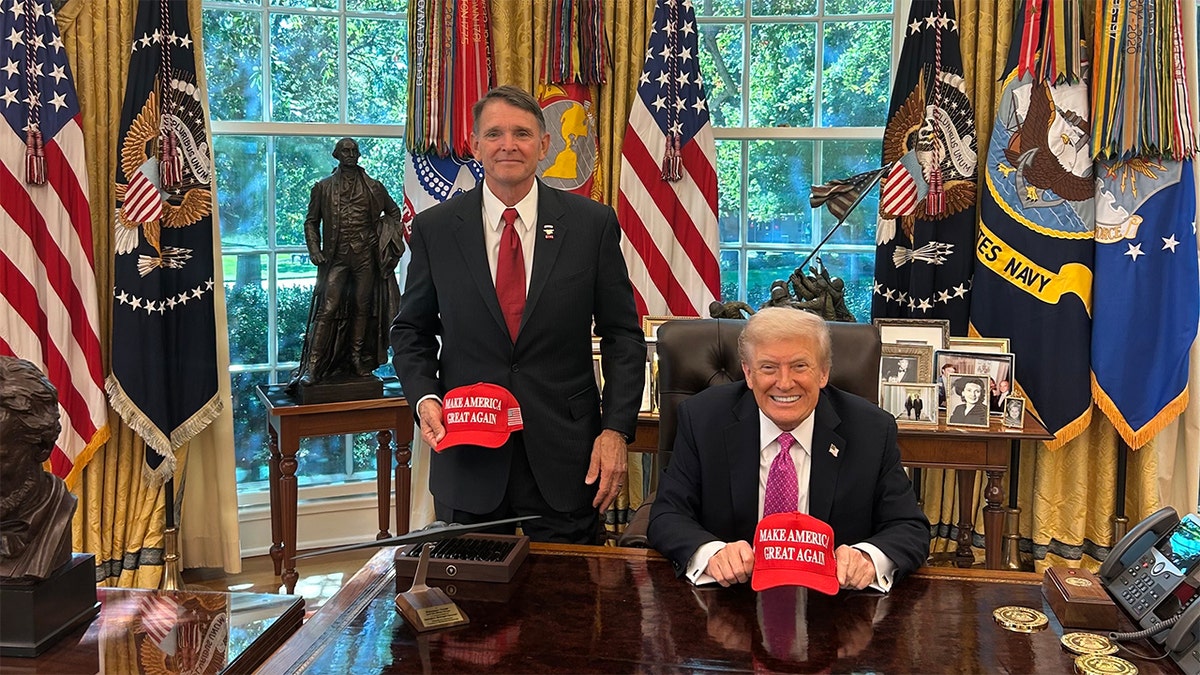
Ed Gallrein launched a congressional campaign to challenge Rep. Thomas Massie in Kentucky after President Donald Trump endorsed him. The announcement took place in the Oval Office at the White House in March. (Fox News)
Prior to his political aspirations, Gallrein served as a member of SEAL Team Six, deploying to conflict zones in Panama and the Persian Gulf among others, before returning to work on his family’s farm, according to his online biography.
It’s unclear what kind of injuries led the Department of Veterans’ Affairs to give Gallrein the 100% disability rating.
Darin Selnick, former VA Affairs advisor for the White House Domestic Policy Council and a senior advisor for Veteran Action, explained that a disability rating is a multi-factor assessment of injuries sustained in service-related activity that then serves as a basis for federal assistance.
He stressed that veterans have little say in the rating they ultimately receive.
ARMY OFFICER-TURNED-CREATOR ‘MANDATORYFUNDAY’ RISES ABOVE VETERANS DAY BACKLASH: ‘I CHOOSE TO LAUGH’
Signage is displayed outside the Department of Veterans Affairs headquarters in Washington, D.C. (Stefani Reynolds/Bloomberg)
«When you file for the claim, the VA has an independent medical examiner that looks at your medical records. They do additional medical examinations to confirm what’s in the medical records. That report goes to the ratings examiner,» Selnick said.
CLICK HERE TO DOWNLOAD THE FOX NEWS APP
«VA then says, okay, based on this rating, you then get X amount of compensation per month for the service-connected injuries that happened to you.»
Cooperrider did not immediately respond to a request for comment from Fox News Digital.
fox news, republicans, republicans elections, veterans












INTERNACIONAL
With US unleashing attacks, Iranian official threatens that the Islamic Republic will deliver a ‘hard slap’

NEWYou can now listen to Fox News articles!
An Iranian official warned that the Islamic Republic will deliver a «hard slap» while another blatantly threatened the U.S. that «if you strike, you’ll get hit,» according to automatic translations from the two men’s Persian-language posts on X.
Ebrahim Rezaei, whose profile on the social media platform indicates that he is a representative in Iran’s Parliament and the spokesperson for the National Security and Foreign Policy Commission, wrote in a post on X, «The martyred Khamenei taught us not to fear America and showed that ‘falsehood will perish.’ Await the hard slap from the Iranians.»
The speaker of Iran’s Parliament, Mohammad Bagher Ghalibaf, warned, «America still hasn’t learned that bullying and breaking promises are no longer cost-free. Let me put it plainly: if you strike, you’ll get hit. Don’t flail around pointlessly, or you’ll sink even deeper: the Strait of Hormuz will only open with ‘Iranian arrangements,’ not American threats.»
Both of the men issued their posts on Wednesday after U.S. Central Command (CENTCOM) announced more strikes against Iran.
«At the direction of the Commander in Chief, U.S. Central Command forces have started conducting additional strikes against Iran to further degrade their ability to threaten freedom of navigation in the Strait of Hormuz. The United States is holding Iran accountable for recent unjustified aggression against commercial shipping and civilian crews freely navigating a vital international waterway,» CENTCOM had noted in a post on X.
TRUMP SAYS IRAN CEASEFIRE DEAL IS ‘OVER’ AFTER NEW ROUND OF STRIKES
People gather at the Imam Khomeini Grand Mosalla for a farewell ceremony for Iran’s late Ayatollah Ali Khamenei on July 4, 2026, in Tehran, Iran. (Majid Saeedi/Getty Images)
The U.S. military later provided more information about the attacks.
«U.S. Central Command (CENTCOM) forces completed an additional round of strikes against Iran, July 8, to further degrade Iran’s ability to attack commercial shipping and innocent civilian mariners in the Strait of Hormuz,» CENTCOM noted on Wednesday night.
«U.S. forces struck approximately 90 Iranian military targets including air defense systems, coastal surveillance assets, missile and drone storage sites, naval capabilities, and military logistics infrastructure along Iran’s coastline. The latest strikes follow successful execution of offensive strikes in Iran the night before,» the announcement noted. «CENTCOM forces hit approximately 80 Iranian military targets July 7, including more than 60 Islamic Revolutionary Guard Corps small boats, to impose heavy costs for Iran violating the ceasefire by attacking three commercial vessels navigating the Strait of Hormuz.»
TRUMP DEMANDS END TO TRADE WITH KEY US ALLY, CALLS IT A ‘WASTED CAUSE’
President Donald Trump indicated on Wednesday that, as far as he was concerned, the U.S.-Iran Memorandum of Understanding ceasefire was «over.»
Kuwait and Bahrain have both reported coming under attack.
The Kuwait Army noted in a Thursday post on X, which was written in Arabic, «The Official Spokesman for the Ministry of Defense, Major General Saud Abdulaziz Al-Otaibi, stated that the armed forces detected, at dawn today, (3) ballistic missiles, (1) cruise missile, and (10) hostile drones within Kuwaiti airspace, which were successfully intercepted and dealt with.»
TRUMP SAYS ‘IRAN LIES AND CHEATS’ AS IRGC EMERGES AS DOMINANT FORCE IN NEGOTIATIONS WITH US
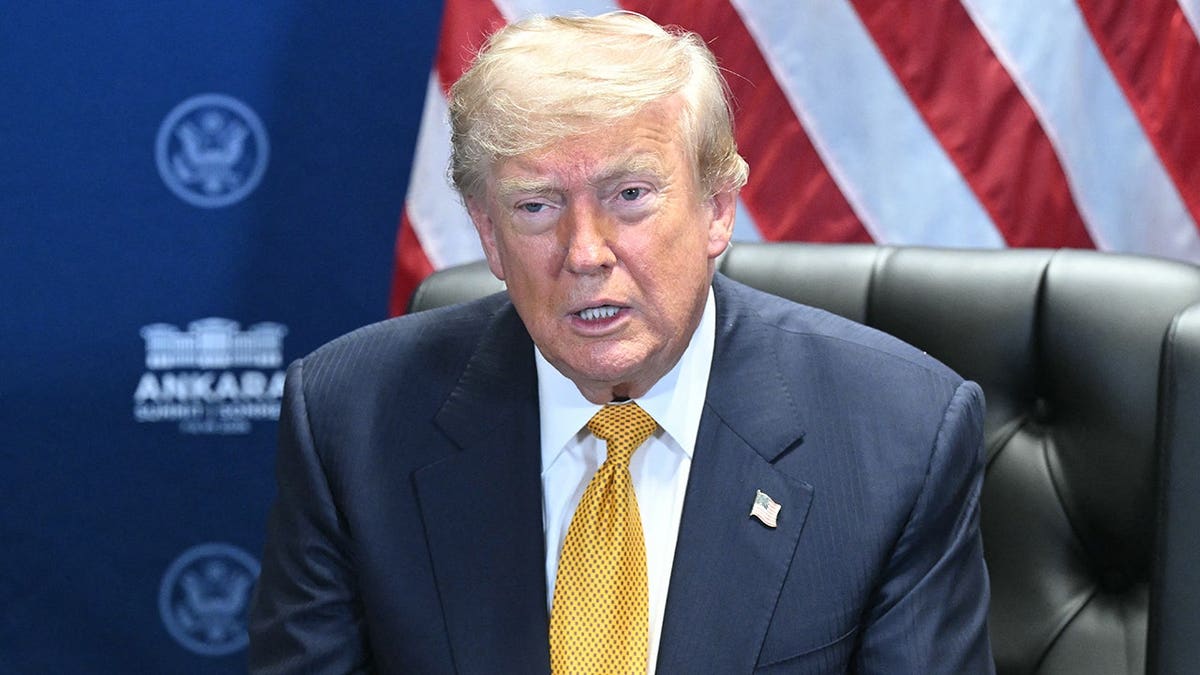
President Donald Trump speaks as he meets with NATO Secretary General Mark Rutte on the sidelines of the NATO summit in Ankara, on July 8, 2026. (SAUL LOEB / AFP via Getty Images)
CLICK HERE TO DOWNLOAD THE FOX NEWS APP
The Bahrain Defense Force noted in a post that was in Arabic, «The General Command clarifies that, with firm resolve and high combat readiness, the Bahrain Defense Force’s air defense systems confronted, intercepted, and destroyed several treacherous Iranian aerial attacks this morning, Thursday, July 9, 2026 CE.»
politics, war with iran, iran, military, world
NEWYou can now listen to Fox News articles!
An unlikely reason has chipped away, for now, at Senate Republican resistance against President Donald Trump’s flagship election priority.
The Safeguarding American Voter Eligibility (SAVE) America Act has hit brick wall after brick wall in the Senate, and has only twice mustered 50 votes. Still, Trump wants Republicans to pass it by any means necessary.
Republicans, however, aren’t unified behind it. One lawmaker, Sen. Mitch McConnell, R-Ky., has routinely voted against the bill in its variety of iterations, earning the personal ire of Trump.
MCCONNELL FACES FRESH CALLS TO COME CLEAN ABOUT HEALTH ISSUES
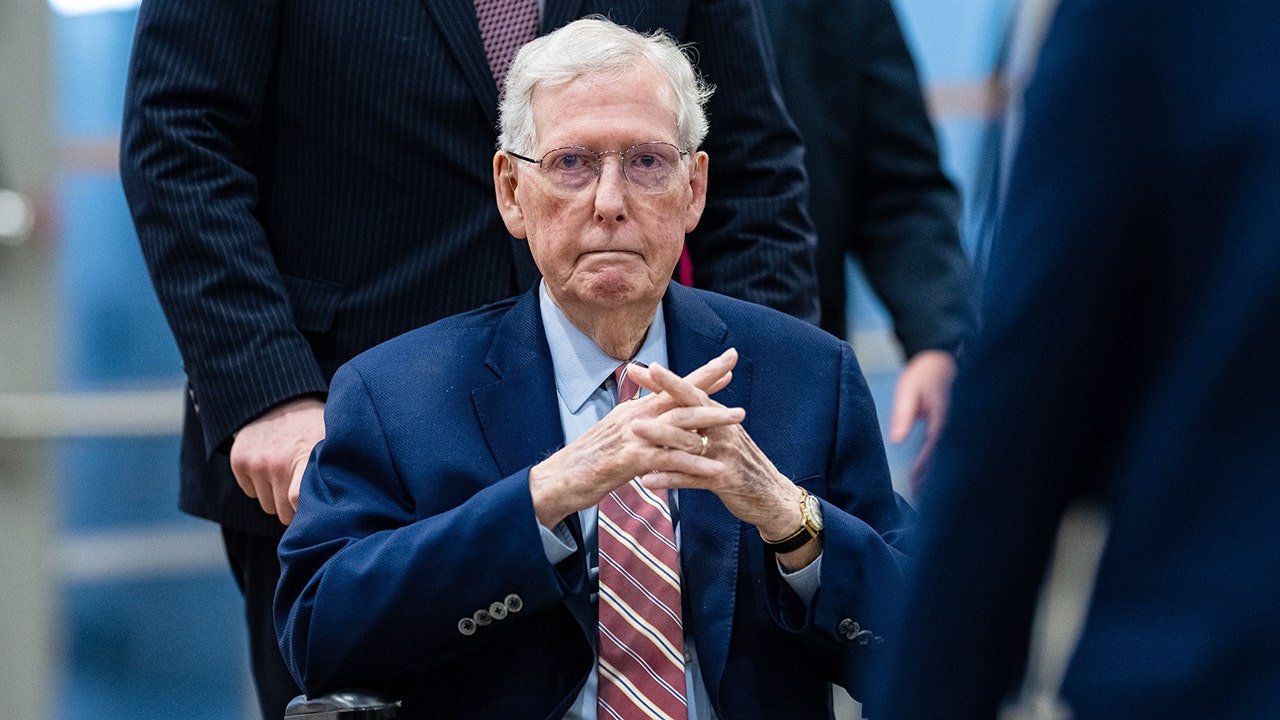
Sen. Mitch McConnell, a Republican from Kentucky, is pushed in a wheelchair in the Senate Subway of the U.S. Capitol in Washington, D.C., on March 4, 2026. (Graeme Sloan/Bloomberg via Getty Images)
«Mitch McConnell,» Trump told reporters last month. «He’s very disloyal to John Thune. You know, John Thune was a very good person for him. I mean, he’s a very loyal person, and Mitch McConnell’s against him almost all the time because he’s angry, I guess. Probably at me.»
McConnell has been absent from the Senate, which is currently in recess, for almost three weeks due to health issues. When he will return still remains unclear.
But without his resistance, that’s one less «no» vote that Republicans have to contend with.
REPUBLICAN SAYS TRUMP’S TOP ELECTION PRIORITY ‘DEAD’ IN SENATE AS GOP FRACTURES AHEAD OF MIDTERMS
Still, it doesn’t address the broader math problem in the Senate weighing down the chances of the SAVE America Act passing.
Senate Democrats are unified against it, meaning Trump and the SAVE America Act’s biggest proponents can’t break through the 60-vote filibuster, which has, in part, fueled the president’s demands to nuke the filibuster.
Senate Republicans don’t have the votes to do that, either.
«The only way you could get there is to undo or get rid of the legislative filibuster, and there aren’t even close to the votes here in the United States Senate in order to achieve that,» Senate Majority Leader John Thune, R-S.D., said last month.
There is the talking filibuster, which Sen. Mike Lee, R-Utah, has pushed for months, which Republicans have yet to turn to, largely over concerns of floor time being eaten away and fractured unity leading to Democratic wins.
Then there is the budget reconciliation route, which Trump has pushed Congress to consider. While Senate Republicans aren’t leaping at the prospect, the House is moving full steam ahead.
GOP INFIGHTING OVER TRUMP’S VOTER ID BILL ERUPTS AS TOP SENATOR CALLS STRATEGY ‘FANTASY’
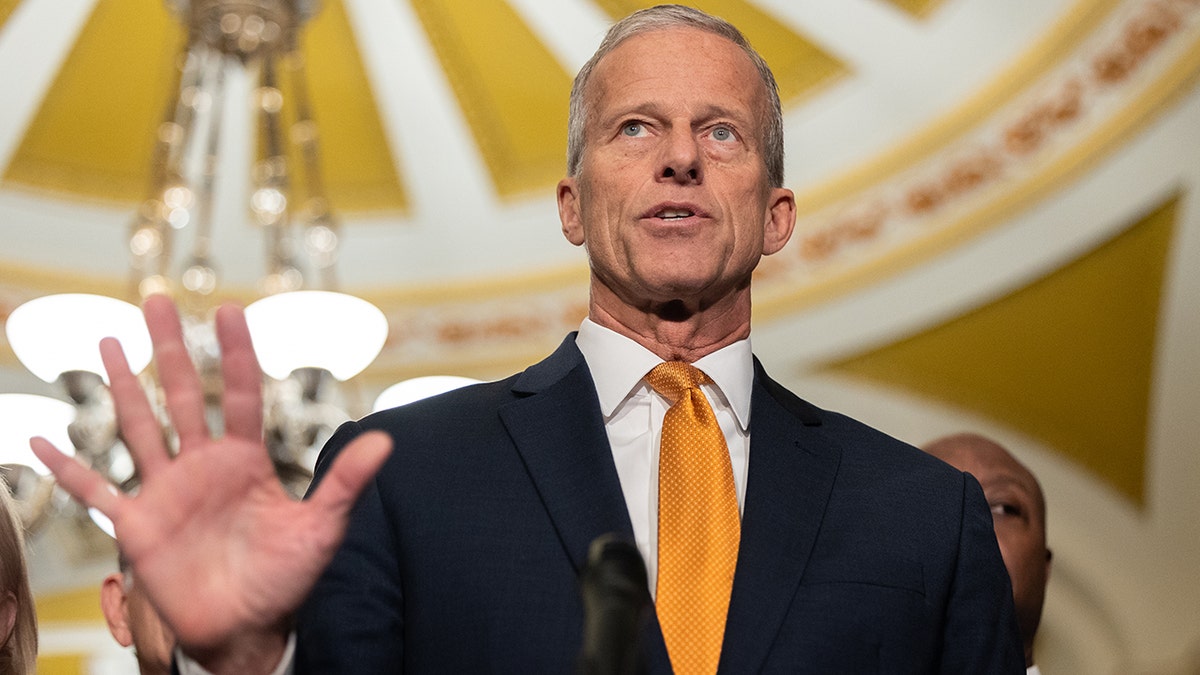
Senate Majority Leader John Thune, R-S.D., speaks at a press conference with other members of Senate Republican leadership after a policy luncheon in Washington, D.C., on Oct. 28, 2025. (Nathan Posner/Anadolu via Getty Images)
House Speaker Mike Johnson, R-La., told Fox News’ Shannon Bream that he would move ahead with the reconciliation plan.
«We passed it three times in the House. We’re going to try one more time on a budget reconciliation bill, and I think that will be the way to get it through the Senate, and finally, to the president’s desk.»
Notably, though, House Republicans have not passed the version of the SAVE America Act that Trump desires, which would include a strict crackdown on mail-in balloting, a ban on transgender athletes in women’s sports and a ban on transgender surgical procedures for minors.
But even the bill’s biggest backers see reconciliation as a far-fetched option.
CLICK HERE TO DOWNLOAD THE FOX NEWS APP
Lee last month told Fox News Digital that the SAVE America Act was «policy, it’s non-budgetary. Therefore, SAVE America itself is not eligible for consideration in a third reconciliation.»
There could be alterations, like giving states federal funding to start doling out enhanced REAL IDs with citizenship verification in a reconciliation package, while separately passing a voter ID bill.
However, Lee believed that there was «no evidence that there is a viable path to a third reconciliation bill.»
«I hope there is. I would love to be wrong on that. I want us to do that. I think we should do that. But the schedule that we’ve got, to my great disappointment, is not — it doesn’t accommodate any of it.»
politics, republicans, mitch mcconnell, senate elections, john thune, donald trump

El colapso del alto al fuego con Irán complica la agenda exterior de Trump

Muchas nubes y sin frío polar: así estará el tiempo en el AMBA en el fin de semana extralargo de julio

EEUU saludó a Argentina por el 9 de Julio y definió al país como un “socio indispensable” bajo el liderazgo de Milei

With US unleashing attacks, Iranian official threatens that the Islamic Republic will deliver a ‘hard slap’

El brutal accidente de una tenista con una alcanzapelotas que sembró preocupación durante un partido de Wimbledon

El increíble método japonés que sigue vigente para ahorrar dólares

La producción textil aceleró su caída y la capacidad instalada siguió entre las más bajas de la industria

Ojo con las multas de tránsito: las más caras llegan a $3.8 millones

Portugal vs España: formaciones, hora y dónde ver por tv