INTERNACIONAL
Largas filas para conseguir pollo o combustible: los piquetes ahogan a La Paz y surgen «contramarchas» en toda Bolivia






NEWYou can now listen to Fox News articles!
While U.S. tech companies race for AI dominance, the latest Fox News nationwide survey finds voters hitting the brakes on data centers, as more prefer taking time to address local concerns than rushing expansion to maintain a competitive global edge.
By a 40-point margin, voters oppose building data centers in their area to support artificial intelligence (30% favor, 70% oppose).
MAGA supporters (46% favor) and Republican men (45%) are the groups most likely to favor data centers, while White women with a college degree (84% oppose) and liberal voters (80%) are the most opposed.
FOX NEWS POLL: VOTERS WANT MAJOR CHANGE AMID ECONOMIC AND POLITICAL DISCONTENT
Among those favoring data centers, 60% cite economic benefits, including jobs, economic growth, community investment, and tax revenue as the reason for their support. Another 21% point to technological benefits, saying the centers are useful, necessary, or important for future progress. Just 2% say staying ahead of competitors is the primary reason for their support.
Those opposing data centers emphasize a different set of considerations. Half (50%) say environmental issues are their main concern, including energy and water use, pollution, noise, and overall environmental impact, while far fewer mention quality-of-life concerns (14%), economic effects (11%), or simply having a negative view of AI (11%).
FOX NEWS POLL: SIGNIFICANT SUPPORT FOR BOTH VOTER ID LAWS AND MAIL-IN BALLOTS
While data centers are broadly unpopular, views of artificial intelligence technology itself are somewhat less negative. Overall, 45% view AI favorably versus 54% unfavorably, underwater by 9 points. In April, it was -11 points.
Positive views of AI are higher among MAGA Republicans (55% favorable), voters with graduate degrees (52%), conservatives (50%), and men (49%) than among Democrats (41%), those without a college degree (43%), liberals (37%), and women (40%).
Nearly 8 in 10 voters prefer slower data center construction to address environmental and community concerns, while 2 in 10 favor building them as quickly as possible to maintain a competitive advantage over China and other countries.
While majorities across the board prefer the slow adoption of the centers, MAGA Republicans (36%) and very conservatives (35%) are the most likely to prioritize rapid expansion to maintain international competitiveness.
AI won’t find an ally in the under 30 crowd
Although younger voters are often viewed as more tech-savvy, that does not translate into warm views of artificial intelligence.
Voters under age 30 are the least likely to view AI favorably, at 38%, compared with 48% of those ages 30-44 and 44% of those 45 and over.
CLICK HERE FOR CROSSTABS AND TOPLINE
Regardless of differences in views of AI, attitudes toward data centers are pretty consistent across generations. Roughly 7 in 10 in every age group oppose building data centers, and about 8 in 10 prefer slowing construction to address environmental and local concerns.
Conducted July 17–20, 2026, under the direction of Beacon Research (D) and Shaw & Company Research (R), this Fox News survey includes interviews with a sample of 1,003 registered voters randomly selected from a national voter file. Respondents spoke with live interviewers on landlines (70) and cellphones (681) or completed the survey online after receiving a text (252). Results based on the full sample have a margin of sampling error of ±3 percentage points. The survey includes an oversample of 200 voters aged 18–29, bringing the sample size for that subgroup to 350 (±5). Sampling error for results among subgroups is higher. In addition to sampling errors, question wording and order can influence results. Weights are generally applied to age, race, education, and area variables to ensure the demographics are representative of the registered voter population. Sources for developing weight targets include the most recent American Community Survey, Fox News Voter Analysis, and voter file data.
fox news poll, politics, artificial intelligence, donald trump, china, economy, technologies
INTERNACIONAL
Brote de infecciones respiratorias cobra la vida de seis personas en la comarca indígena Ngäbe Buglé, en Panamá

Seis personas, entre niños y adultos, fallecieron recientemente en la comarca Ngäbe Buglé a raíz de un brote de infecciones respiratorias bajas graves.
Las autoridades sanitarias movilizaron un equipo de respuesta rápida para investigar la situación y reforzar las acciones de atención médica en las comunidades afectadas.
Desde el sábado pasado, el Ministerio de Salud desplegó personal especializado en las zonas de Valle Bonito, Palmira y Guayacán.
El equipo permanecerá en el área hasta el viernes, realizando investigaciones de campo y vigilando de cerca la evolución de los casos.
El objetivo principal es identificar el origen del brote y contener su propagación, mientras se mantienen medidas de respuesta sanitaria.

La intervención permitió ofrecer atención médica a 178 personas, administrar 391 dosis de vacunas —incluidas 184 contra la influenza— y distribuir 394 medicamentos en las comunidades afectadas. Las acciones forman parte de un plan integral que busca limitar los riesgos asociados a la enfermedad respiratoria.
El Ministerio de Salud señaló que tres de los fallecidos no buscaron atención médica o recurrieron únicamente a medicina botánica.
Los contactos cercanos de estos casos permanecen asintomáticos, según los reportes iniciales de la investigación epidemiológica.
Hasta el momento, la vigilancia epidemiológica continúa activa en la comarca. Las autoridades insisten en que toda persona con fiebre, dificultad para respirar o tos persistente debe acudir al centro de salud más cercano y evitar la automedicación.
El llamado busca garantizar el diagnóstico y tratamiento oportunos, y así prevenir nuevas complicaciones en la población.

Por otra parte, el ministerio informó que más de 14 mil pacientes han recibido atención médica en todo el país gracias a la iniciativa “Juntos por la Salud”, que opera en 27 instalaciones de salud y busca reforzar la atención especializada en diferentes regiones de Panamá.
El programa se ha desplegado en hospitales como San Miguel Arcángel, Santo Tomás y Nicolás A. Solano, donde profesionales panameños y estadounidenses colaboran en la atención a la población.
Durante la última semana, cerca de 100 pacientes de cardiología y fonoaudiología en Panamá Oeste recibieron atención como parte de este esfuerzo conjunto.
El ministro de Salud, Fernando Boyd Galindo, y el embajador de Estados Unidos en Panamá, Kevin Marino Cabrera, recorrieron el Hospital Nicolás A. Solano para supervisar la labor de los nueve especialistas del Comando Sur que actualmente prestan servicios en el lugar.
El ministro Boyd Galindo subrayó el respaldo del personal médico militar, quienes aportan experiencia en áreas como cardiología, fisioterapia, pediatría y ginecología.

Destacó que el apoyo llega en un momento clave, ya que el Estado se encuentra en proceso de licitación para construir el nuevo Hospital Nicolás A. Solano, proyecto que contempla una inversión de $78 millones. Posteriormente, se prevé la construcción de un hospital materno infantil, infraestructura considerada necesaria para la zona.
La iniciativa nació con el objetivo de fortalecer la respuesta sanitaria nacional. Para ello, el Comando Sur de Estados Unidos aporta servicios médicos especializados y entrega insumos, equipos y medicamentos valorados en decenas de miles de dólares, según la información oficial.
Las misiones de “Juntos por la Salud” se desarrollan de manera simultánea en 27 centros de atención, cubriendo las diez provincias del país y la comarca Ngäbe Buglé. Esta estrategia busca ampliar el acceso a servicios médicos de calidad en comunidades que requieren apoyo adicional, reforzando la cooperación internacional en materia de salud pública.
“Estamos muy contentos con los resultados de la iniciativa ‘Juntos por la Salud’, que iniciamos este año con la meta de beneficiar a más de 10 mil panameños”, dijo el embajador estadounidense Kevin Marino Cabrera.
INTERNACIONAL
Summer School: Republicans’ crusade to teach voters the ‘New Math’ on the ‘commie caucus’
NEWYou can now listen to Fox News articles!
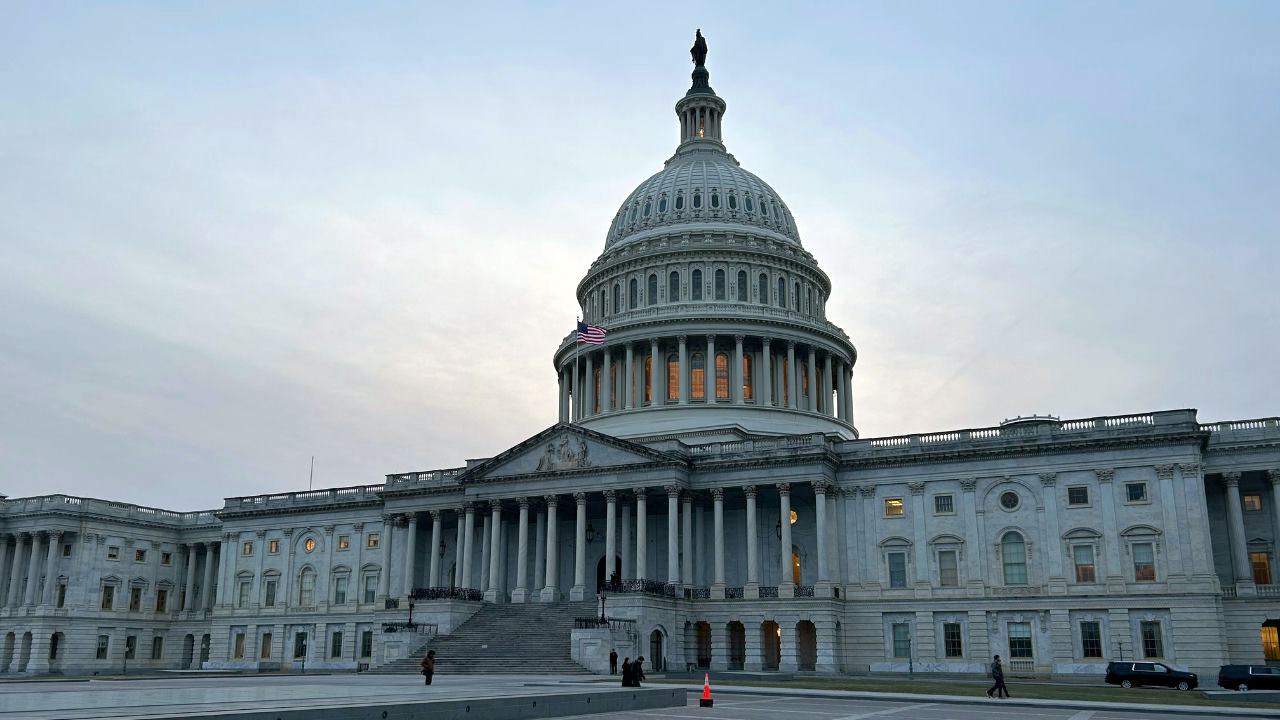
The House is gone. But the campaign is on.
«We’re going to have a lot to talk about during this break,» said House Majority Leader Steve Scalise, R-La. «The contrast on the ballot this November between communism and freedom.»
School is out for the summer in the House until August 31. But Republicans envision a version of summer school for the voters. They intend to educate people about Democratic candidates who are veering to the left.
«The reality is that the communist caucus, the commie caucus is coming to Congress,» claimed Rep. Nicole Malliotakis, R-N.Y.
REPORTER’S NOTEBOOK: HOUSE’S FINAL SPRINT PUTS SAVE AMERICA ACT AND IRAN FUNDING IN PLAY
The House might be a lost cause for Republicans, but their summer campaign to educate voters on the Democrats’ insurgent left flank has just begun. (Emma Woodhead/Fox News Digital)
Republicans hope to cling to their narrow House majority by distinguishing themselves from Democrats – and noting how Democrats tapped far-left candidates in New York City and even Colorado. These «Democratic Socialists of America» candidates will undoubtedly prevail in their districts. But Republicans believe that left-wing Democrats freak out independents and mainstream Democrats. The GOP is banking on that as an insurance policy to maintain control of the House.
House Republicans also enjoyed some relative success last week for the first time in months. The GOP advanced a host of bills important to them. And, simultaneously got Democrats on the record about bills which Republicans think they can boomerang against their adversaries this fall.
«They have to answer for why they voted against funding our troops, against funding the government, against common sense policies like voter ID and proof of citizenship,» said House Speaker Mike Johnson, R-La.

«They have to answer for why they voted against funding our troops, against funding the government, against common sense policies like voter ID and proof of citizenship,» House Speaker Mike Johnson, R-La., said of the opposition. (Graeme Sloan/Bloomberg via Getty Images)
The House approved a plan barring stock trades by Members, 232-198. Only 13 Democrats voted yes compared to all Republicans. But the GOP tacked on a voter ID mandate. Democrats argue that provision transformed a once bipartisan issue into a GOP political wedge.
«I proudly voted no because we are not going to sabotage mail-in voting in this country. And we’re not going to fall for that kind of bait-and-switch tactic here,» fumed Rep. Alexandria Ocasio-Cortez, D-N.Y.
Democrats have long campaigned on affordability.
«Today, prices are up over 25 cents a gallon above $4 a gallon in my region,» said Rep. Mary Gay Scanlon, D-Pa.
SUCCESSION: WHY CONGRESS HAS NO CLEAR PLAN WHEN LAWMAKERS CAN’T SERVE
President Donald Trump has now paused the air campaign against Iran after two weeks of consecutive bombing. But the war in Iran presents Democrats with a political opening.
«Will Democrats recalibrate their message on Iran? Will we see ads on Iran going into the midterms?» yours truly asked House Minority Leader Jeffries, D-N.Y.
«We don’t have to recalibrate our message. We’ve been opposed to Donald Trump’s reckless and costly war of choice in the Middle East from the very beginning,» replied Jeffries.
There was a split decision on Capitol Hill last week. The House voted to shackle the president on Iran war powers. Four Republicans defected and sided with Democrats.
«He ran on no new wars,» said Rep. Becca Balint, D-Vt. «He’s making the case for us. He hit voters over and over and over with this promise. And then he did the exact opposite.»

President Trump has paused the air campaign against Iran after weeks of regular bombing. (CENTCOM)
Still, the president’s allies claimed that the vote undercuts American forces in harm’s way.
«To belittle this mission is to belittle and demean the very service these members who gave their lives,» said House Foreign Affairs Committee Chairman Brian Mast, R-Fla.
A couple of hours later, the Senate rejected the House’s rebuke of the President.
«I think Democrats have taken that tack from the start,» said Sen. John Hoeven, R-N.D., of the Democrats hoping to cut off the Iran operation.
«It wouldn’t have passed if it wasn’t for Republicans in the House,» yours truly pointed out.
«A few Republicans,» conceded Hoeven. «But I think there’s strong support in our party (for the President).»
That’s ultimately why the Senate defeated its Iran measure. Some GOPers argued that the U.S. has Iran on the ropes.
«Last time I checked, we’ve wiped these b——s out. An occasional missile strike and boats in the Strait (of Hormuz). That’s not military strength. Those are the flailings of a failing empire,» declared Sen. Tim Sheehy, R-Mont.
HOUSE GOP VOTES TO PUNT GOVERNMENT SHUTDOWN BATTLE TO AFTER NOVEMBER MIDTERMS
But Senate Democrats chided Republicans for not intervening in the conflict.
«Every time Republicans oppose our war powers resolution and vote against ending this war, they lose the faith of the American people,» said Senate Minority Leader Chuck Schumer, D-N.Y. «Senate Republicans need to wake up. Not next week. Not next month. Now.»
Top Congressional GOP leaders say it’s not necessary for Congress to flex its war powers muscles.
«I don’t think an AUMF (authorization for use of military force) is in order right now. I think we need to bring this to a resolution,» said Johnson.
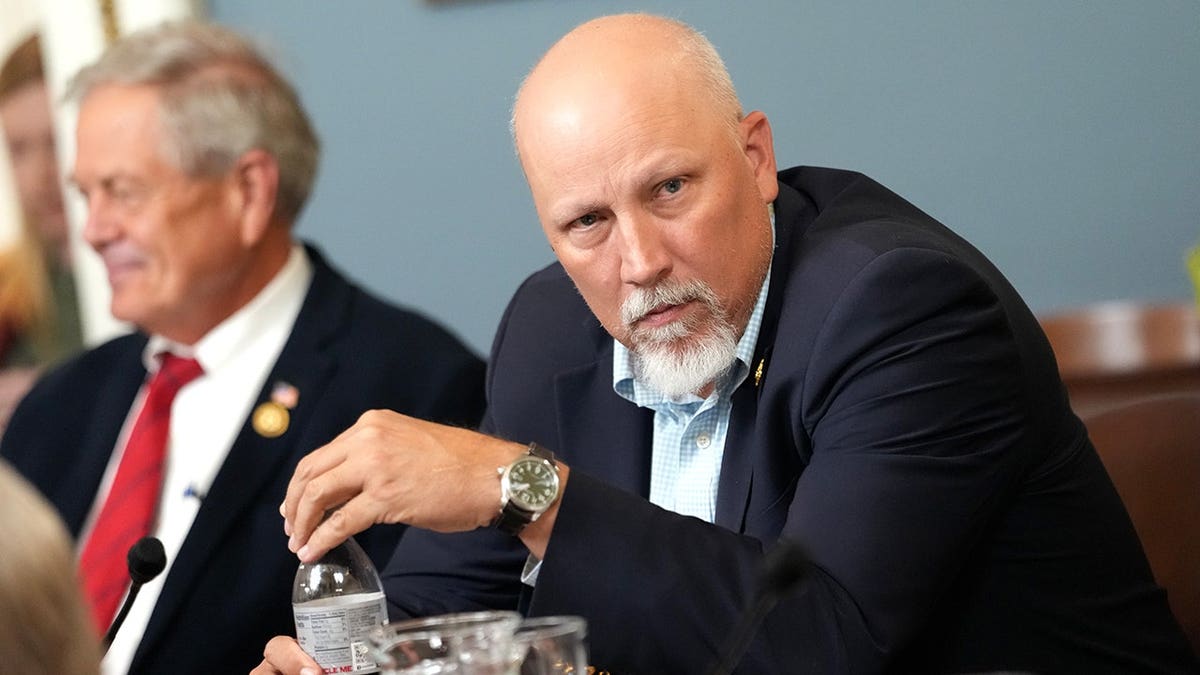
Rep. Chip Roy, R-Texas, is calling for «greater clarity» on the Iran conflict. (Kevin Dietsch/Getty Images)
However, some Republicans demand answers about the endgame.
«I think we need greater clarity there. I think Congress needs to exercise more of its powers here,» said Rep. Chip Roy, R-Texas.
Democrats may believe they have an advantage on Iran. But like Roy, they demand a plan.
«This whiplash policy in Iran is not good,» said Rep. Bennie Thompson, D-Miss., the top Democrat on the Homeland Security Committee. «You can’t run a war at 2:00 in the morning on Twitter.»
JOHNSON HAS THREE-WORD ANSWER ON WHETHER HOUSE WILL LEAVE EARLY
Despite their criticism, Democrats are vague about how they’d go about ending the war.
«We’ve got to figure that out. But Donald Trump got us into this mess,» said Jeffries.
«But won’t voters demand you guys to have a plan if you’re going to win the majority, Mr. Leader?» I asked as Jeffries walked away.
I posed a similar question to Sen. Chris Coons, D-Del., one of the most thoughtful Democrats on foreign policy and national security issues.
«We didn’t start it,» replied Coons.
«But don’t you have to have a plan if you’re going to criticize the president on this?» I asked.
«I wouldn’t have gotten into this war,» said Coons.
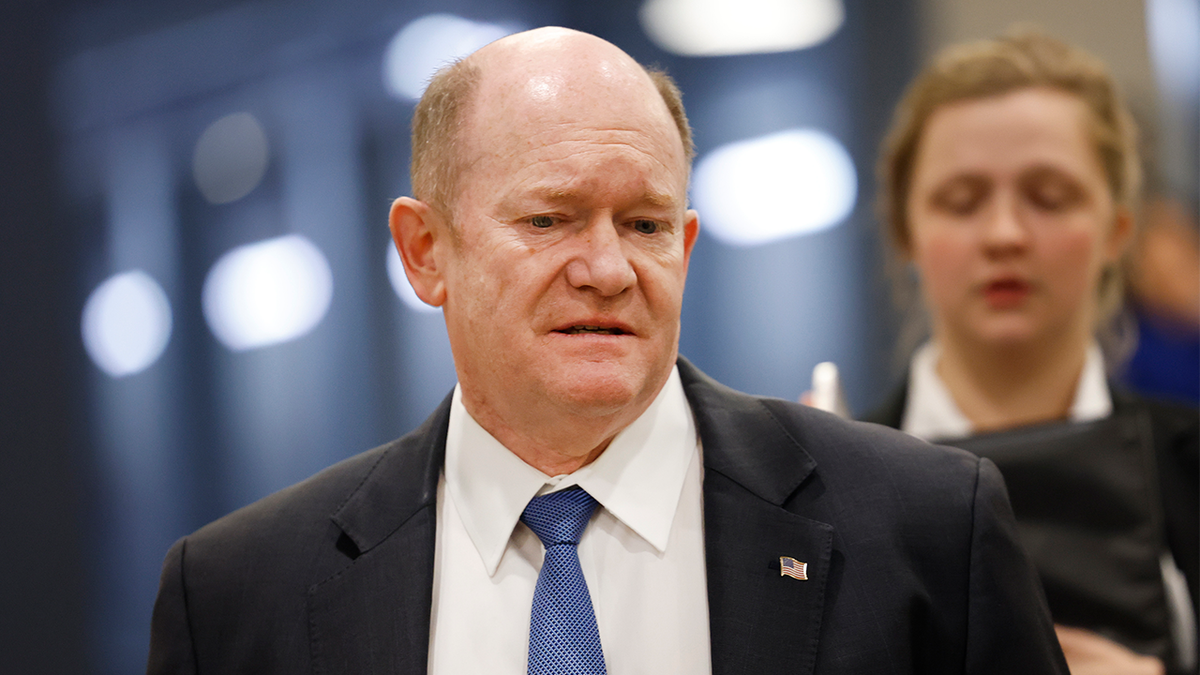
Sen. Chris Coons, D-Del., was more blunt – saying outright that he «wouldn’t have gotten into this war.» (Photo by Anna Moneymaker/Getty Images)
The Pentagon is now running short on cash since the defense policy bill is stalled. That’s to say nothing of the budget resolution which could provide $95 billion to the Pentagon. Congressional approval to pay for the war could take months. Perhaps until December. That’s after the election. Democrats may want to see how they fare in the midterms before coughing up money for the military.
Midterm elections are often a referendum on the president.
CLICK HERE TO DOWNLOAD THE FOX NEWS APP
In 2006, Democrats flipped the House and Senate by campaigning on ending the unpopular war in Iraq. They had a plan to wind down the conflict. Eighteen years later, Democrats want to run on Iran in this fall’s midterms. But unlike 2006, they don’t seem to have a clear plan on how to end the conflict.
But they know who to blame: President Trump.
congress, house of representatives politics, midterm elections, democratic party

Plazo fijo Banco Santander ahora paga más y esto se gana invirtiendo $2 millones

Fox News Poll: Cool your servers! Voters reject data centers

Todos los ganadores de los Premios Pinti, el galardón que distingue lo mejor del teatro comercial argentino

La argentina Solana Sierra tropezó en el inicio de la gira sobre cemento: perdió en la primera ronda del WTA 250 de Memphis

Jornada financiera: el desplome del precio del petróleo marcó el pulso de las bolsas y subió el riesgo país

Brote de infecciones respiratorias cobra la vida de seis personas en la comarca indígena Ngäbe Buglé, en Panamá

Vocero de Milei dijo que un dólar a $1.800 es «posible» y la City alerta por fin de la paz cambiaria

Polémica por el proyecto que busca desregular los planes de ahorro de autos 0 km: qué podría cambiar

Panorama internacional: Brasil, una batalla electoral no solo de los brasileños

Convivencia pacífica o tensión administrada: el PRO define cómo pararse frente al gobierno de Milei rumbo a 2027

 POLITICA16 horas ago
Crisis entre Milei y Lula: la trama política, personal y geopolítica detrás del mayor choque diplomático entre Argentina y Brasil
- POLITICA2 días ago
Cuentapropismo emocional en lo profundo del conurbano
- SOCIEDAD1 día ago
San Isidro: la ballena que quedó varada en un banco de arena murió pese al operativo de rescate