INTERNACIONAL
Death toll from Venezuela earthquakes rises to at least 589, with thousands reported missing


NEWYou can now listen to Fox News articles!
The death toll from the catastrophic series of earthquakes that rocked Venezuela this week has risen to at least 589, with at least 2,980 injured and thousands more missing as U.S. military leadership has arrived in Caracas to help coordinate relief efforts.
The number of dead is expected to climb Friday following back-to-back magnitude 7.2 and 7.5 earthquakes that hit northern Venezuela on Wednesday night, roughly 120 miles west of Caracas.
Venezuelan state TV has broadcast dramatic images of rescues, including a woman who was trapped under a cement slab, only a bare foot poking out before crews managed to get her out alive, The Associated Press reported. The injured were seen being pulled out of the rubble covered in dust and blood, among them children and animals.
U.S. Southern Command said overnight that U.S. Marine Corps Maj. Gen. Kevin J. Jarrard arrived in Caracas on Thursday «to oversee Department of War support to Venezuela earthquake relief efforts.»
TRUMP ADMINISTRATION PLEDGES $150M IN AID, DEPLOYS NAVY WARSHIPS AFTER DEADLY VENEZUELA EARTHQUAKES
Neighbors carry a man rescued from the rubble of a collapsed building in La Guaira, Venezuela, on Thursday, June 25, 2026, the day after earthquakes struck the area. (Pedro Mattey/AP Photo)
SOUTHCOM’s announcement comes as the Trump administration has activated a government-wide humanitarian response, pledging $150 million in aid and deploying U.S. Navy warships to assist in life-saving rescue operations.
«Maj. Gen. Jarrard is serving as the senior U.S. Southern Command (SOUTHCOM) official on the ground and is working closely with partners to plan, coordinate, and direct the U.S. military’s unparalleled logistical and operational capabilities to support the rapid, life-saving movement of response personnel, equipment, and humanitarian assistance into affected areas,» SOUTHCOM said in a statement, noting that Venezuela’s interim government — led by acting President Delcy Rodríguez — formally requested American assistance.
«Assigned U.S. military forces will utilize fixed and rotor wing aircraft to provide specialized mobility services and assist U.S. Government personnel, search and rescue teams, and partners assessing damage and delivering critical life-saving assistance,» SOUTHCOM added.
PLAYERS, FANS FLEE STADIUM AS POWERFUL EARTHQUAKES STRIKE DURING VENEZUELA BASEBALL GAME
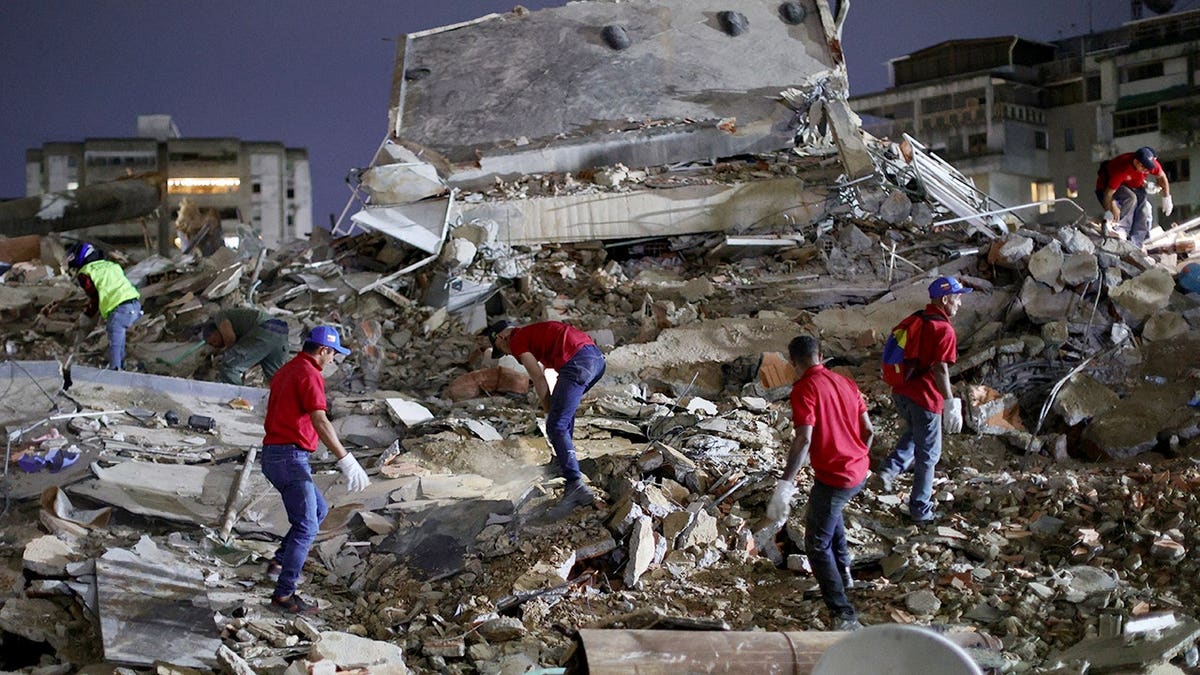
Responders search for victims in a demolished building in Caracas, Venezuela, after a magnitude 7.2 earthquake and a 7.5 aftershock struck the region on June 24, 2026. (Jesus Vargas/Getty Images)
The coastal region of La Guaira, which is located north of Caracas, suffered some of the heaviest damage and casualties. The country’s main airport is there and was closed due to damage, complicating aid efforts.
Retired schoolteacher Juan Alberto Mendaño climbed through wreckage in La Guaira and past a body when he spotted a woman who was trapped and signaling with her hand for help, according to the AP.
«May God rescue her as quickly as possible,» Mendaño reportedly said. «When we heard the scream, there was nothing we could do.»
Venezuelan authorities said they were diverting rescue teams from other parts of the country to La Guaira.
Rodríguez also appealed to businesses Thursday to make heavy construction equipment available for rescue operations.

Patients lie outside a hospital evacuated after it was damaged in an earthquake in Catia La Mar, Venezuela, on June 25, 2026. (Pedro Mattey/AP)
CLICK HERE TO DOWNLOAD THE FOX NEWS APP
«We hope to rescue as many living people as possible,» Rodríguez added, referring to La Guaira as a «disaster zone.»
Fox News Digital’s Alexandra Koch and The Associated Press contributed to this report.
earthquakes, us marines, south america, military, disasters, disaster response disasters













INTERNACIONAL
‘It’s a mess’: GOP turns on House conservatives as voter ID blockade stalls Trump’s agenda
NEWYou can now listen to Fox News articles!
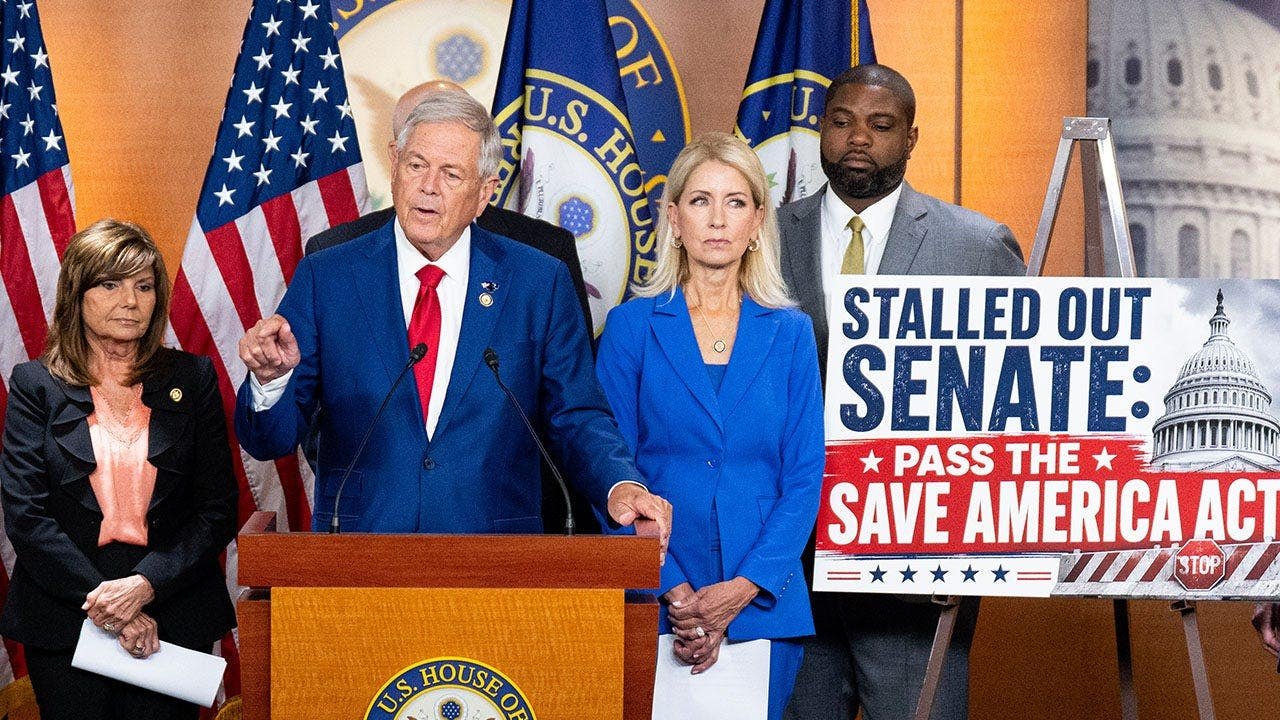
House conservatives’ decision to grind the chamber to a halt in an effort to force Senate action on the SAVE America Act is drawing sharp backlash from Republicans across the conference, who say the strategy is accomplishing little beyond derailing their own agenda.
House Republicans were forced to punt several votes this week after the conservative splinter group, led by Rep. Anna Paulina Luna, R-Fla., used a routine procedural hurdle teeing up legislation as leverage to force the Senate to consider the stalled election bill.
The tactic appeared to fall flat after the Senate left Washington for a planned recess Wednesday while the House floor remained at a standstill, leaving SAVE no closer to passage.
‘AS LONG AS IT TAKES’: TRUMP ALLIES FREEZE HOUSE FLOOR TO PRESSURE SENATE ON VOTER ID BILL
Rep. Ralph Norman, R-S.C., speaks during the House Freedom Caucus news conference in the U.S. Capitol urging Senate action on the SAVE America Act on June 25, 2026. (Bill Clark/CQ-Roll Call, Inc./Getty Images)
«It’s a mess,» Rep. Nick Langworthy, R-N.Y., told Fox News Digital. «We have to be able to continue to function.»
«It’s just creating more inaction and more reasons for people to have a bad taste in their mouth about the U.S. House,» he continued, referring to the legislative paralysis.
Even after President Donald Trump urged the group to stand down in a Truth Social post Thursday after meeting with House Speaker Mike Johnson, R-La., it’s unclear whether his directive to «stop grandstanding» will be enough to reopen the House floor when lawmakers return Monday.
Luna, a Trump ally, is pushing for the SAVE America Act to be attached to the annual defense policy bill expected to receive a vote in the House next week.
TWO DOZEN HOUSE REPUBLICANS GO TO WAR WITH SENATE GOP OVER SAVE AMERICA ACT
Pairing the measures could jeopardize consideration of the must-pass defense bill and would likely doom its chances in the Senate, where Republican leadership insists the votes aren’t there to pass SAVE.
«Using floor time as a pressure campaign on the Senate is a strategy that has not moved the needle, and right now it is costing us momentum on our own agenda,» a senior Republican aide told Fox News Digital. «We can keep making the case for SAVE without bringing the House to a grinding halt in the process.»
«This is a longstanding issue we’ve had with members who don’t function as a team,» Rep. Mariannette Miller-Meeks, R-Iowa, told Fox News Digital in an interview. «We win when we work and function as a team, and it’s imperative for us to be able to keep the majority.»
Asked about conservative hardliners’ vow to oppose all legislation in protest of SAVE, Rep. Brian Fitzpatrick, R-Pa., said, «I don’t know why they would want to take their own initiatives off the table, because there’s a math problem in the Senate.»
The standoff has exposed a growing divide among House Republicans over what should take priority before the fast-approaching midterms: conservatives who see SAVE as the conference’s top objective despite the House having already passed multiple versions of the bill, and a larger bloc of Republicans who argue the party can’t afford to sideline the rest of its agenda.
BITTER HOUSE GOP DIVISIONS ERUPT AFTER JOHNSON SHUTS DOWN VOTES OVER REPUBLICAN MUTINY
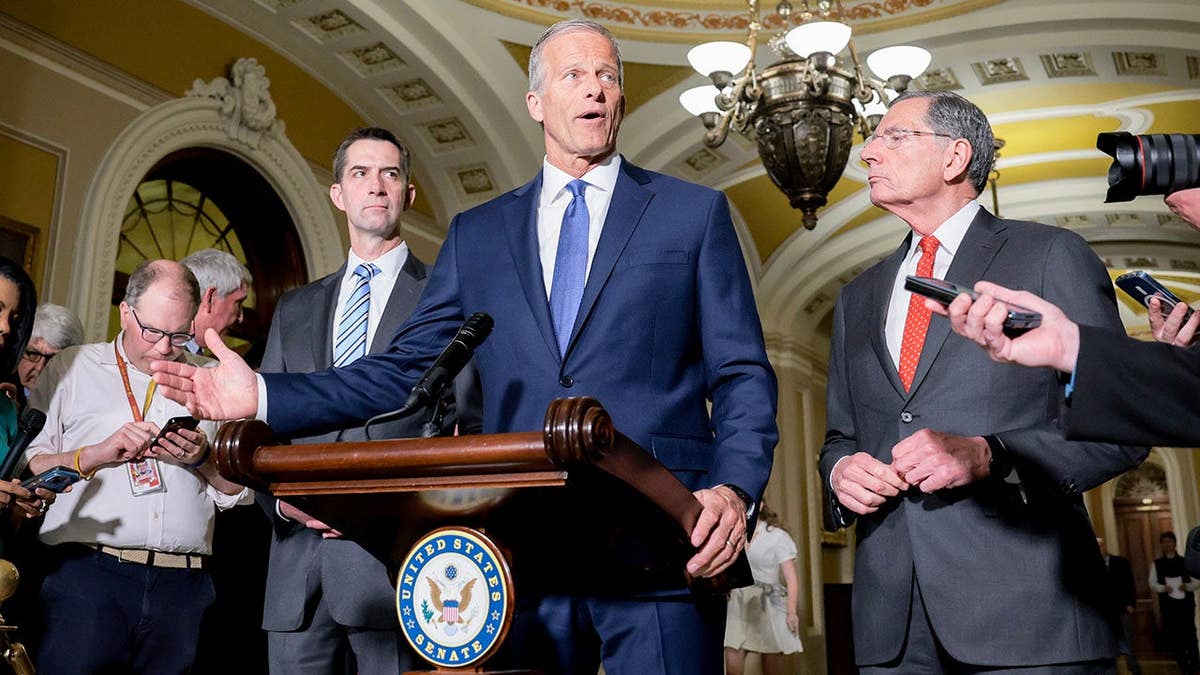
Senate Majority Leader John Thune speaks during a news conference after a weekly policy luncheon with Senate Republicans at the U.S. Capitol in Washington, D.C. (Anna Moneymaker/Getty Images)
With fewer than 30 scheduled legislative days in the House left before the midterms, both camps have little time to spare.
Meanwhile, Republican leadership is racing to advance government funding bills, renew a lapsed surveillance program targeting foreigners overseas, and assemble a third party-line megabill that could incorporate hundreds of millions of dollars in defense spending requested by the Pentagon.
«We should be spending every bit of energy we have building it,» the senior GOP aide told Fox News Digital, referring to the third budget reconciliation bill.
The package has struggled to get off the ground due to GOP divisions over whether to include elements of SAVE and what spending cuts would pay for the legislation, among other sticking points.
But some conservatives, including several who will not be returning next Congress, argued SAVE should take priority over everything else.
«I personally think we should not have any more legislation until the Senate comes back in session,» Rep. Ralph Norman, R-S.C., said Thursday.
«What is happening in the U.S. Senate is laziness, and quite frankly, it’s disgusting,» Rep. Byron Donalds, R-Fla., said Thursday. «They need to come back. They need to pass this legislation.»
Senate Republicans, meanwhile, have repeatedly dismissed the criticism as misguided. And the Senate GOP has voted on the SAVE America Act, and several variations of it a handful of times without success.
CLICK HERE TO DOWNLOAD THE FOX NEWS APP
Nor has the House passed Trump’s version of the legislation, which would add mail-in voting restrictions, prohibit men in women’s sports and ban child sex change procedures.
«Why is the House blaming the Senate for not passing the SAVE America Act when they themselves have never voted on the president’s version of SAVE?» a Senate GOP aide told Fox News Digital. «Instead of being obsessed with a chamber they don’t serve in, the House Freedom Caucus should be focused on passing the president’s agenda instead of standing in his way.»
Amid GOP infighting, some Democrats are boasting that they have governed more effectively from the minority.
«It feels like we’re passing more with the discharge approach than they’re doing with regular legislation,» Rep. Glenn Ivey, D-Md., told Fox News Digital. «They really ought to be able to manage it better than this.»
politics, midterm elections, congress, republicans, house of representatives, senate elections
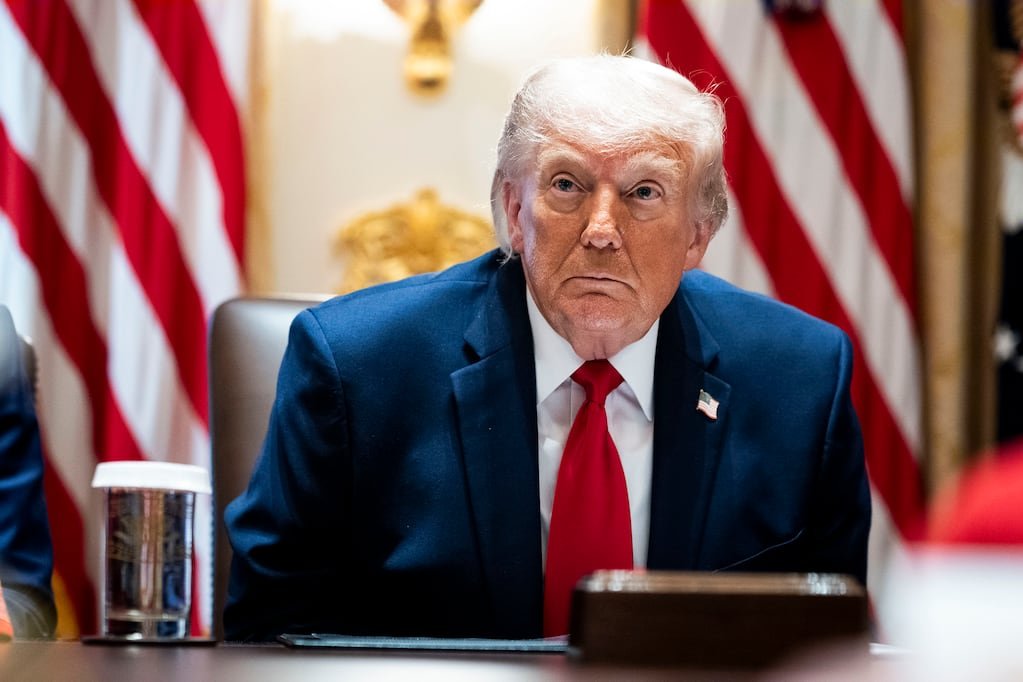
Pero en los últimos meses, y sobre todo desde que el gobierno de Donald Trump ha defendido su acuerdo de paz preliminar, se ha ido afianzando una perspectiva diferente en algunos sectores de la derecha estadounidense: Irán como un país pragmático con el que Estados Unidos puede, y debe, aprender a convivir.
Este cambio radical lo ha liderado el presidente Trump, que la semana pasada calificó a los líderes iraníes de “gente fuerte, gente inteligente”, pero va mucho más allá de él. El vicepresidente JD Vance se ha convertido en su principal defensor. Los conservadores, que durante mucho tiempo han mostrado una tendencia aislacionista, han recibido un nuevo ímpetu. Incluso algunos de los llamados halcones -que siempre han tenido un enfoque más agresivo sobre el conflicto- han cambiado de tono.
Es demasiado pronto para saber si este cambio durará. Muchos republicanos mantienen su postura de línea dura, y Trump ha amenazado de vez en cuando con reanudar la guerra. Parte de este cambio de discurso entre los republicanos podría deberse a la conocida trayectoria de la era Trump para mantenerse en la línea de un presidente voluble.
Pero las entrevistas muestran que el giro de la derecha, que se aleja de la tradicional postura belicista republicana respecto a Irán, está impulsado por factores que van más allá del deseo de Trump de desentenderse del conflicto. Hay un cambio generacional en el partido que se aleja del apoyo incondicional a Israel, el archienemigo de Irán, e incluso muestra, a regañadientes, cierta admiración por la capacidad del régimen iraní para resistir semanas de bombardeos intensos.
Se trata de una dinámica política interna con implicaciones globales; un asunto que queda claro en las consecuencias de la guerra de Irán para el suministro energético de Europa y Asia, así como para la seguridad de los países árabes del Golfo Pérsico.
“Irán se ha defendido. Bien por Irán”, dijo Curt Mills, director ejecutivo de The American Conservative, transmitiendo lo que describió como el mensaje de Trump a los estadounidenses. “Y eso significa que a Estados Unidos solo le interesa bajarle un poco los humos a estos tipos”.
Mills, de 35 años, dirige una revista fundada por uno de los aislacionistas originales del conservadurismo moderno, Patrick Buchanan. Defiende desde hace mucho tiempo la moderación en política exterior, una opinión que, según las encuestas, comparten muchos republicanos más jóvenes, que alcanzaron la mayoría de edad durante las guerras de Irak y Afganistán. “Decir que estamos en contra de pelear contra Irán desde la derecha es cada vez menos tabú”, dijo Mills.
Stephen Bannon, exasesor principal de Trump, describió al presidente como un “negociador y un pragmático” que ahora sabe que “no va a celebrar una ceremonia de rendición en el acorazado Misuri, en el puerto de Bandar Abbas», el puerto iraní. Bannon evocó las antiguas guerras de Persia contra Grecia y Roma para explicar la dificultad de Trump para derrotar a Irán.
“Se atrincheran y se afianzan con fuerza”, dijo Bannon en un mensaje de texto.
Anna Kelly, vocera de la Casa Blanca, dijo que la guerra contra Irán había “destruido con éxito” gran parte del ejército del país, y que los negociadores ahora estaban “trabajando para eliminar de una vez por todas la capacidad nuclear de Irán”.
“El presidente no toma estas decisiones importantes de seguridad nacional para complacer a los presentadores de pódcast o a los comentaristas de sillón de los grupos de expertos”, dijo Kelly. “Su única prioridad es lo que más le conviene al pueblo estadounidense”.
Pero, como muestra de que la Casa Blanca está al tanto de los cambios políticos en Irán, Vance acudió la semana pasada al programa en internet de Megyn Kelly para promocionar el acuerdo de paz preliminar. Kelly, una expresentadora de Fox News, tiene cuatro millones de suscriptores en YouTube y se ha convertido en la voz de los republicanos desencantados con la política exterior de Trump.
Los halcones “actúan basándose en una visión anticuada del mundo y de la actitud y capacidad estadounidenses”, dijo Kelly en su programa dos días después de hablar con Vance, y añadió: “Los iraníes no van a ceder. Les ha ido bien en esta guerra”.
Esa visión anterior del mundo quedó reflejada en el discurso sobre el Estado de la Unión de 2002 del presidente George W. Bush. Irán formaba parte de un “eje del mal”; para Estados Unidos, era “tanto nuestra responsabilidad como nuestro privilegio librar la batalla por la libertad”. Al iniciar la guerra el 28 de febrero, el propio Trump había calificado al gobierno iraní de “gente muy dura y terrible” que “quería hacer el mal”.
Al hacer eco de esa opinión, el senador Ted Cruz, republicano por Texas, dijo en su pódcast la semana pasada que Trump ahora estaba “recibiendo muy malos consejos” sobre Irán porque “dar miles de millones de dólares a unos lunáticos teocráticos” es “una idea muy, muy mala”. El senador Tim Sheehy, republicano de Montana, dijo en Fox & Friends que los líderes de Irán siguen “queriéndonos muertos a ti y a mí”.
Pero incluso en el Senado, un bastión de los conservadores que tienen una visión más agresiva del conflicto, se nota un cambio de tono.
Roger Marshall, senador republicano por Kansas que en abril dijo que negociar con “fanáticos religiosos irracionales” en Teherán era “casi imposible”, argumentó este mes en CNN que se podría permitir a Irán tener misiles porque “deberían poder defenderse”. En The Brian Kilmeade Show de Fox Radio, dijo que no quería parecer “un defensor de Irán”. Pero repitió el mantra de “no a las guerras eternas” al explicar por qué Estados Unidos debería negociar una salida del conflicto.
“Ya hemos perdido a 13 soldados estadounidenses, básicamente defendiendo a Israel en su mayor parte y tratando de eliminar las armas nucleares”, dijo.
Estos cambios en el discurso pueden deberse, en parte, a que los políticos conservadores se están dando cuenta de un cambio generacional en la forma en que sus posibles votantes perciben el lugar que ocupa Estados Unidos en el mundo.
Una encuesta del New York Times/Siena del mes pasado reveló que el 53 por ciento de los posibles simpatizantes republicanos menores de 45 años se oponían a la guerra en Irán, frente al 22 por ciento de los mayores de 45 años; el 54 por ciento de los más jóvenes dijo que Trump apoyaba demasiado a Israel, frente a solo el 16 por ciento del grupo de mayor edad. Y casi tres cuartas partes de los simpatizantes republicanos menores de 45 años dijeron que Estados Unidos debería prestar menos atención a los problemas en el extranjero, frente al 40 por ciento de los mayores de 45 años.
Estas diferencias en la visión del mundo también quedaron patentes en la perspectiva relativamente positiva que tienen los seguidores republicanos más jóvenes sobre el expresentador de Fox News Tucker Carlson -un 41 por ciento de opinión favorable, un 23 por ciento desfavorable-, a pesar de que Trump se ha referido a él y a Kelly como “PERDEDORES” con “COEFICIENTE INTELECTUAL BAJO”. Carlson es quizás el conservador que se opone con mayor vehemencia a la guerra.
La semana pasada, Carlson publicó una entrevista con Trita Parsi, crítico de la guerra contra Irán y cofundador del Quincy Institute for Responsible Statecraft, un centro de estudios de Washington que aboga por un papel más limitado de Estados Unidos en el mundo. Le dijo a Parsi que Irán saldría de la guerra como “una gran potencia mundial” gracias a su capacidad para cerrar el estrecho de Ormuz, una ruta clave para gran parte del petróleo mundial. Parsi dijo que Irán se había vuelto “mucho más fuerte, al menos de manera temporal” y que ya le había dicho al gobierno de Trump, al inicio de la guerra, que era un error.
En una entrevista telefónica, Parsi dijo que había mantenido “conversaciones continuas” con funcionarios del gobierno sobre Irán desde principios del año pasado, incluso “con la gente que está en la mesa de negociaciones”. También dijo que a una parte de la derecha estadounidense “francamente no le importa Irán”.
“Están más enfadados por el hecho de que se iniciara la guerra en primer lugar que por el hecho de que Estados Unidos sufriera una derrota estratégica”, dijo Parsi. “Eso te da una idea de lo mucho que ha cambiado la percepción sobre Irán”.
—-
Anton Troianovski escribe para el Times sobre política exterior y seguridad nacional estadounidense desde Washington. Anteriormente fue corresponsal extranjero con sede en Moscú y Berlín.
The New York Times, data-cc, data-cc-nyt

La felicidad de Belu Lucius en su escapada a Mónaco: elogios a Mica Viciconte y un emotivo recuerdo con su hermana

Supergirl prometía ser el peliculón del verano según los influencers y los críticos la hundieron. A Christopher Nolan no le harán pasar por eso

Adorni compró aparatos para videojuegos con tarjetas de crédito de dos funcionarios que trabajaban para él

Mercados: suben las acciones y bajan los bonos argentinos en el cierre de una semana volátil

La decisión que tomó el juez de Campana con la causa por la mansión de Pilar atribuida a Toviggino

Nico Paz seguiría en Cómo: avances con el Madrid antes de su gran chance ante Jordania

“El mejor del mundo”: los elogios a Messi y a la selección argentina en el arco político tras el triunfo ante Austria

AI-first: los detalles de la estrategia de Inteligencia Artificial del banco Santander

Diputados: con el apoyo de bloques aliados, LLA logró frenar la sesión en la que la oposición buscaba interpelar a Adorni

El Senado bonaerense no sancionó este año ni una sola ley, pero gasta $428 millones por día

 POLITICA3 días ago
Diputados: con el apoyo de bloques aliados, LLA logró frenar la sesión en la que la oposición buscaba interpelar a Adorni
- ECONOMIA2 días ago
Nuevos controles a las devoluciones de 30% por gastos en el exterior: cómo pedir el reembolso del dólar tarjeta ante ARCA
- SOCIEDAD2 días ago
Desesperación y burocracia: Pacientes con cáncer denuncian esperas de más de 20 días en PAMI para recibir su medicación