INTERNACIONAL
Wave of attacks on Iran’s IRGC raises questions about renewed Kurdish insurgency

NEWYou can now listen to Fox News articles!
Iran’s Islamic Revolutionary Guard Corps is facing a new round of violence in the country’s Kurdish-majority west, raising questions about whether a long-simmering Kurdish insurgency is entering a more active phase as fragile talks between Iran and Washington continue, experts say.
The flare-up matters beyond Iran’s borderlands because Kurdish opposition groups were recently viewed as a potential pressure point against Iran during the U.S.-Israeli war with Iran — and now some Kurdish voices fear they could be left exposed as Washington and Tehran return to fragile diplomacy.
In recent days, Iranian security forces have been killed in several reported attacks and clashes across western and northwestern Iran. Four Iranian security personnel reportedly were killed and several others injured in two separate armed attacks Tuesday, reported The Jerusalem Post, in an analysis by Seth J. Frantzman, citing Iraq’s Shafaq News.
IRANIAN REGIME CRITIC WARNS TRUMP DEAL COULD BE ‘LIFELINE’ FOR REGIME, CLAIMS PEOPLE ARE ‘NERVOUS’
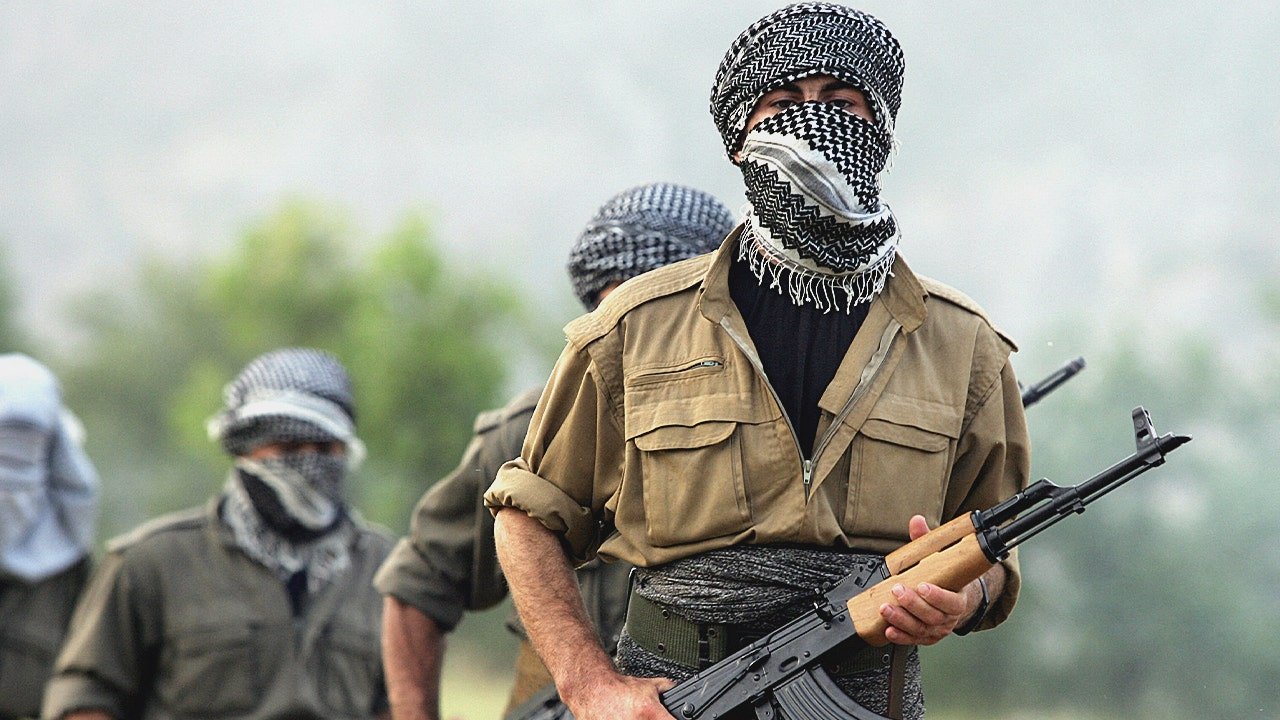
Kurdish separatists attempted Iran crossing from Iraq amid protests. (Mustafa Ozer/AFP via Getty Images)
Two Islamic Revolutionary Guard Corps members were reportedly killed and two others wounded in what it called an «armed terrorist attack» in Paveh, Iran, a border city in Kermanshah Province, reported Tasnim News, an Iranian outlet close to the Islamic Revolutionary Guard Corps.
In Baneh, Iran, gunmen attacked a police checkpoint, killing two police officers and injuring three other people, including a 3-year-old girl, The Jerusalem Post reported. Clashes had spread to Iran’s Paveh, Marivan and Mahabad, the outlet reported, citing Rojhelat.Info, a Kurdish-focused media account.
The Paveh, Iran, attack was claimed by a little-known armed group called Xore Heva, or «Sun of Hope,» which said it carried out the attack in retaliation for Iran’s crackdown on protests sparked by the 2022 death of Kurdish woman Mahsa Amini. The 22-year-old died after being detained by Iran’s morality police for allegedly violating the country’s mandatory hijab rules, The National reported.
The Kurds are one of the largest stateless ethnic groups in the Middle East, with communities spread across Iran, Iraq, Syria and Turkey.
In Iran, many Kurds live in the country’s mountainous west and northwest, where Kurdish opposition groups have long accused Iran of political repression, executions, forced assimilation and military crackdowns.
Iranian authorities, in turn, view armed Kurdish factions as separatist or terrorist threats, especially groups such as PJAK, which has clashed for years with the Islamic Revolutionary Guard Corps along Iran’s western border. The fight is not simply ethnic: It is also political, rooted in Kurdish demands for rights and autonomy, Iran’s fear of separatism and the Islamic Revolutionary Guard Corps’s role in suppressing dissent in border regions.
Jino Victoria Doabi, head of international relation at Hiwa, a Kurdish-led human rights organization, told Fox News Digital the latest clashes could appear to mark more than isolated exchanges.
«It looks like this could be an escalation,» Doabi said, referring to the spread of reported clashes.
She said the initial attack appeared to be framed by Kurdish forces as retaliation, but argued the geographic spread suggested the confrontation may continue.
IRANIAN REGIME CRITIC WARNS TRUMP DEAL COULD BE ‘LIFELINE’ FOR REGIME, CLAIMS PEOPLE ARE ‘NERVOUS’
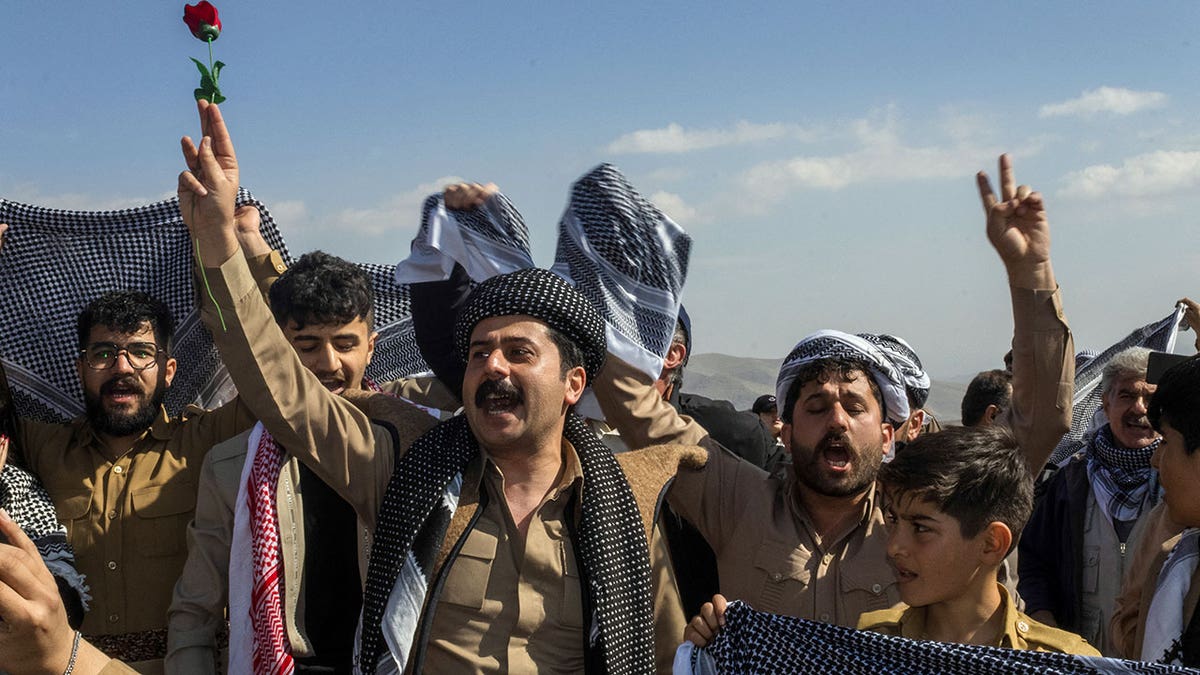
People hold Kurdish scarves and roses during Nowruz festivities in Saqqez, Iran, on March 15, 2024. (Barbod Khorshidi/Middle East Images/AFP via Getty Images)
Doabi said Kurdish anger is being driven not only by the latest casualties, but by a broader sense that Iran has been able to target Kurdish areas and opposition groups systemically without consequence.
«The Kurdish people in Iran are very dissatisfied that the IRGC can attack Kurdish parties and Kurdish fighters and no one reacts,» Doabi said.
The violence comes as Iran is moving forward with a memorandum of understanding with Washington that has drawn criticism from Iranian opposition circles. Iranian President Masoud Pezeshkian said Supreme Leader Mojtaba Khamenei had approved the U.S.–Iran memorandum after receiving assurances that Iran’s rights would be protected, IranWire reported Tuesday.
Iranian officials have described the deal as having the support of top officials, even as critics inside Iran have attacked negotiators over the arrangement, IranWire also reported.
Doabi said Kurdish parties are deeply skeptical of any memorandum of understanding or negotiated arrangement with Iran, arguing that many Kurds believe such a deal would only strengthen the regime.
«Kurdish parties do not believe that making a deal with this regime can help the people in Iran,» Doabi said. «Their position is that a deal would only strengthen the regime.»
IRANIAN REGIME CRITIC WARNS TRUMP DEAL COULD BE ‘LIFELINE’ FOR REGIME, CLAIMS PEOPLE ARE ‘NERVOUS’
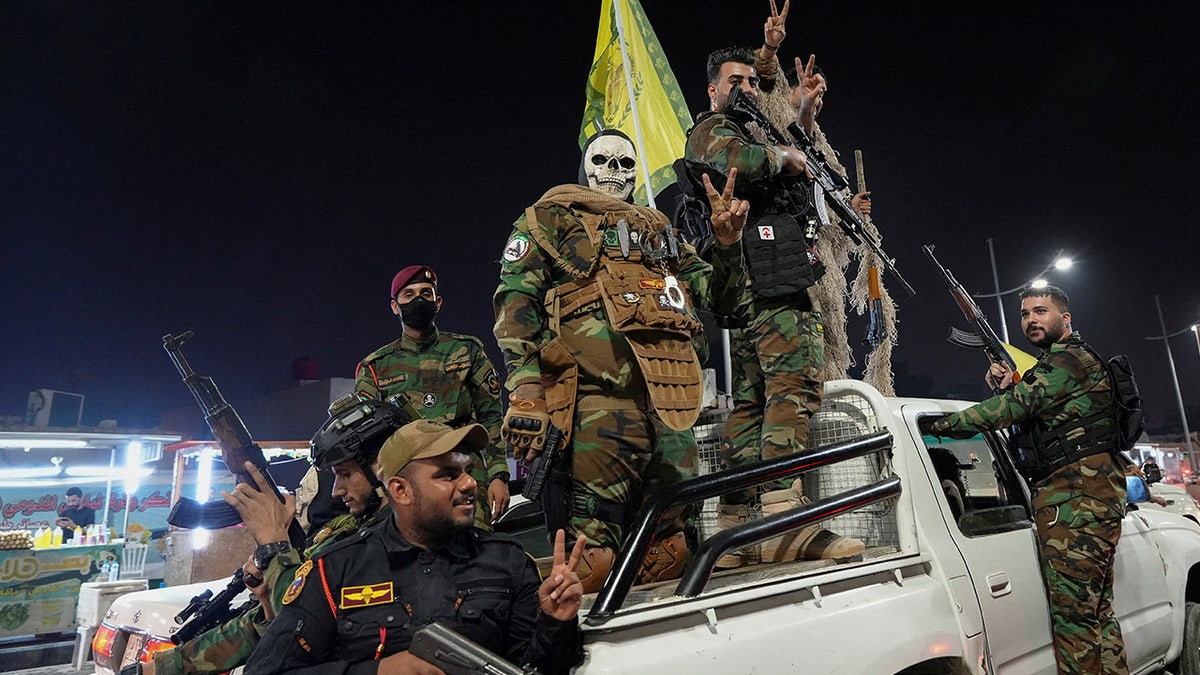
Iran-backed fighters celebrate after the IRGC attack on Israel, in Basra, Iraq, Oct. 1, 2024. (Essam Al-sudani/Reuters)
She added that many Kurds in Iran are «very angry» over the idea of any agreement with Iran, citing decades of repression, arrests and killings in Kurdish areas.
«It is going to be very dangerous for people in Iran, and especially in Kurdistan, Azerbaijan and Baluchistan,» Doabi said, «because that is where much of the resistance and activism is.»
The Kurdish groups now under scrutiny include the Party for a Free Life in Kurdistan, known as PJAK, and its armed wing, the East Kurdistan Defense Units, or YRK.
IranWire reported earlier in June that YRK accused Iran’s Islamic Revolutionary Guard Corps of launching artillery and mortar attacks against its positions near Marivan, Iran, beginning June 8, prompting what YRK described as a defensive response. Iranian official outlets had not responded to YRK’s casualty claims at the time, according to IranWire.
That regional sensitivity was on display earlier in 2026, when reports emerged that Kurdish opposition groups could open a front against Iran during the U.S.–Israeli war with Iran.
Israel had been backing plans by Iranian Kurdish militias to seize border areas inside Iran, Reuters reported in March, though the outlet said the fighters would likely need U.S. and Israeli backing to make a significant move. Five long-standing Iranian dissident groups, including PJAK, the Democratic Party of Iranian Kurdistan and the Kurdistan Freedom Party, had formed an alliance, Reuters also reported.
During the war, Trump told Reuters that he would be «all for it» if the Kurds wanted to move against Iran and said their objective should be «to win.» But Reuters reported that Kurdish commanders were frustrated by a lack of clear U.S. or Israeli strategy and that Iran’s threats helped keep Kurdish forces from launching an incursion.
Regional reports later claimed Turkish President Recep Tayyip Erdogan persuaded Trump to abandon a plan to arm Iranian opposition groups and Iraqi Kurdish groups against Tehran. Israeli media reported June 6 that Erdogan pressed Trump to scrap the proposal after details were allegedly leaked to Turkey by White House officials.
CLICK HERE TO DOWNLOAD THE FOX NEWS APP
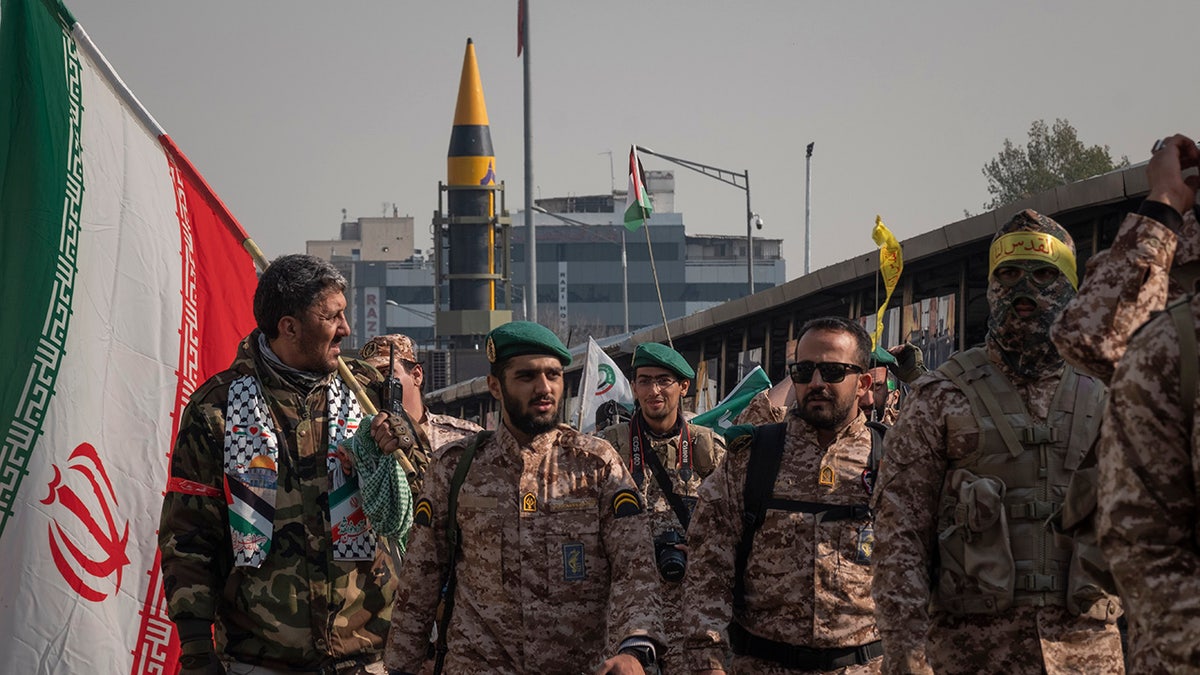
Islamic Revolutionary Guard Corps (IRGC) personnel walk along Enghelab (Revolution) Avenue as an Iranian Kheibar missile is unveiled during the Ela Beit Al-Moghaddas (Al-Aqsa Mosque) military rally in Tehran, Iran, on Nov. 24, 2023. (Morteza Nikoubazl/NurPhoto via Getty Images)
The latest violence does not prove that a coordinated insurgency is underway. But the reported spread of clashes across multiple Kurdish areas, the involvement claimed by Kurdish militant factions and Kurdish opposition to ongoing U.S.–Iran talks suggest that Iran’s western borderlands could become a new pressure point for Tehran at a moment when the regime is trying to preserve both internal control and fragile diplomatic momentum.
Fox News Digital has reached out to Iranian officials and Kurdish representatives for comment.
war with iran, iran, wars









INTERNACIONAL
Thousands of police deployed across South Africa as deadly anti-immigration protests spread to multiple cities
NEWYou can now listen to Fox News articles!
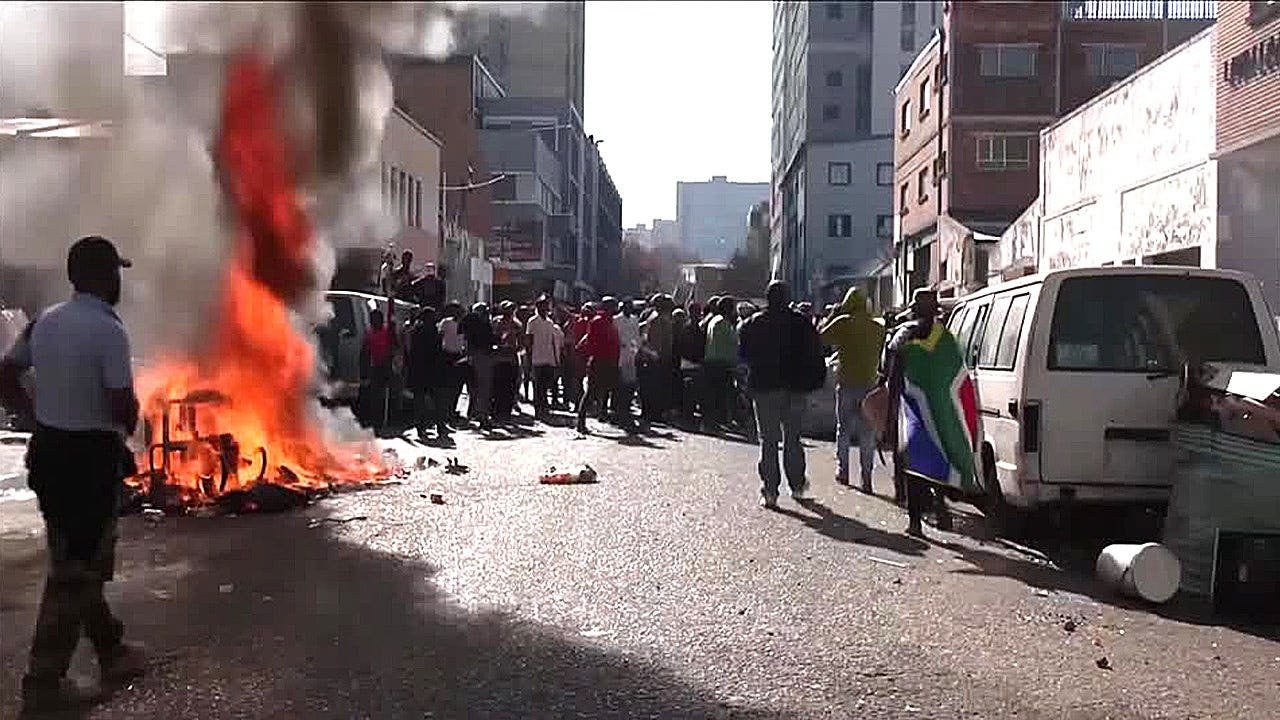
Thousands of police officers were deployed across South Africa after large-scale protests against illegal immigration erupted Tuesday, with destructive clashes spreading across multiple cities.
The unrest, involving thousands of protesters, broke out ahead of a June 30 deadline set by some organizers demanding the departure of all illegal migrants, according to Reuters.
The marches reportedly drew thousands of mostly poor or unemployed South Africans, who say foreign migrants have taken jobs by accepting lower wages while also fueling higher crime rates.
At least four people have been killed as violence and looting spread across the country, Reuters reported.
STATE DEPARTMENT REPORT CONDEMNS SOUTH AFRICA OVER ‘EXTRAJUDICIAL KILLINGS’ IN ANNUAL HUMAN RIGHTS REPORT
Anti-immigrant marchers walk through the streets of Johannesburg on the day of an unofficial deadline set by anti-immigrant groups for all illlegal migrants to leave, in Johannesburg, South Africa, June 30, 2026. (REUTERS/Oupa Nkosi)
The clashes mark the largest migration-related protests since anti-migrant violence erupted in South Africa in 2008.
While thousands of foreign nationals from other African countries had already fled ahead of Tuesday’s so-called deadline, tensions have remained high, Reuters said.
Multiple businesses and properties were vandalized in several areas, according to reports.
In anticipation of further attacks, many shops reportedly closed, with foreign workers staying home.
Landlords in Durban and Johannesburg also evicted foreign tenants illegally to avoid further trouble, witnesses alleged.
Reuters added that 100 Congolese nationals were reported sleeping on the streets of Durban.
SOUTH AFRICA’S HIGH VIOLENCE AND LAND DEBATES CLASH WITH WESTERN MEDIA VIEWS
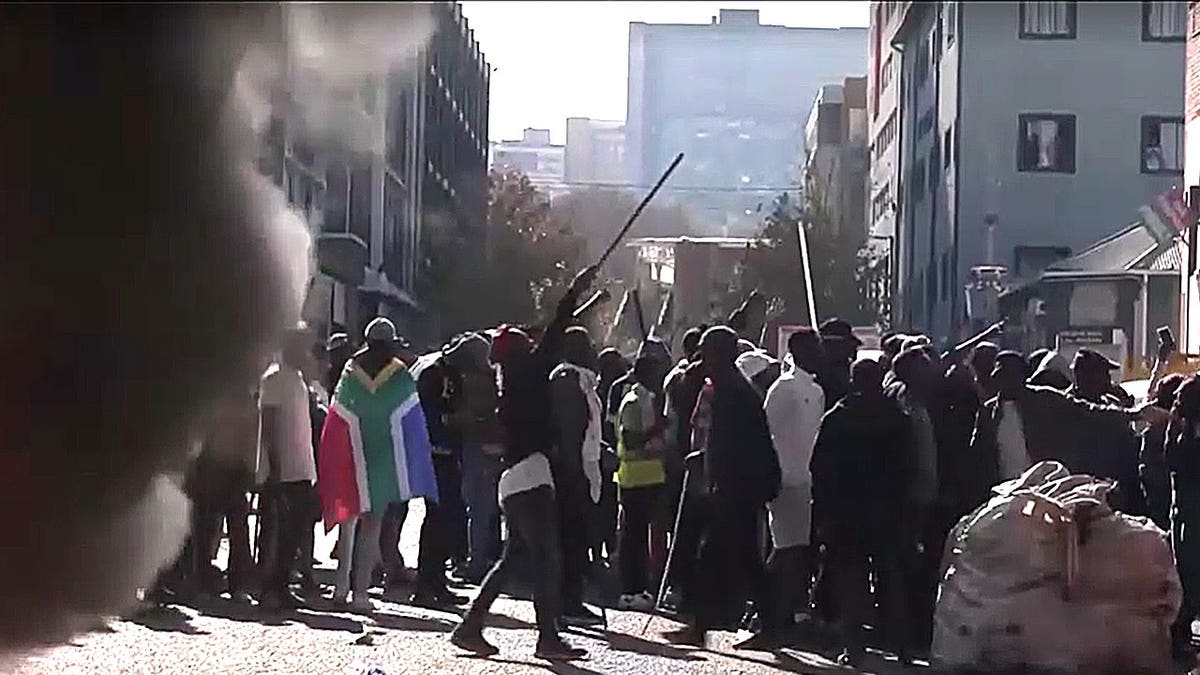
Protesters stand with wooden sticks near a fire burning in the street in Johannesburg, South Africa, on June 30, 2026. (Reuters)
While many marches were considered peaceful, police reported that they arrested several looters and fired rubber bullets to disperse crowds.
National broadcaster SABC added that protesters looted shacks belonging to foreign nationals in the Soweto township.
In Thembisa, a suburb of Johannesburg, rioters reportedly threw stones at police and suspected migrants, with witnesses saying sporadic gunfire was heard.
STATE DEPT SAYS G20 BOYCOTT TIED TO SOUTH AFRICA’S ‘GOVERNMENT-SPONSORED DISCRIMINATION’ AGAINST AFRIKANERS
Police deployed tactical vehicles and fired shots in Benoni, east of Johannesburg, after being confronted by a group of roughly 500 protesters, Daily Maverick reported.
Thousands of police officers have been deployed nationwide, while the military was placed on standby, a defense spokesperson said in a statement.
«To those who intend to break the law tomorrow, our message is simple: do not test the resolve of the State,» Lt. Gen. Tebello Mosikili said.
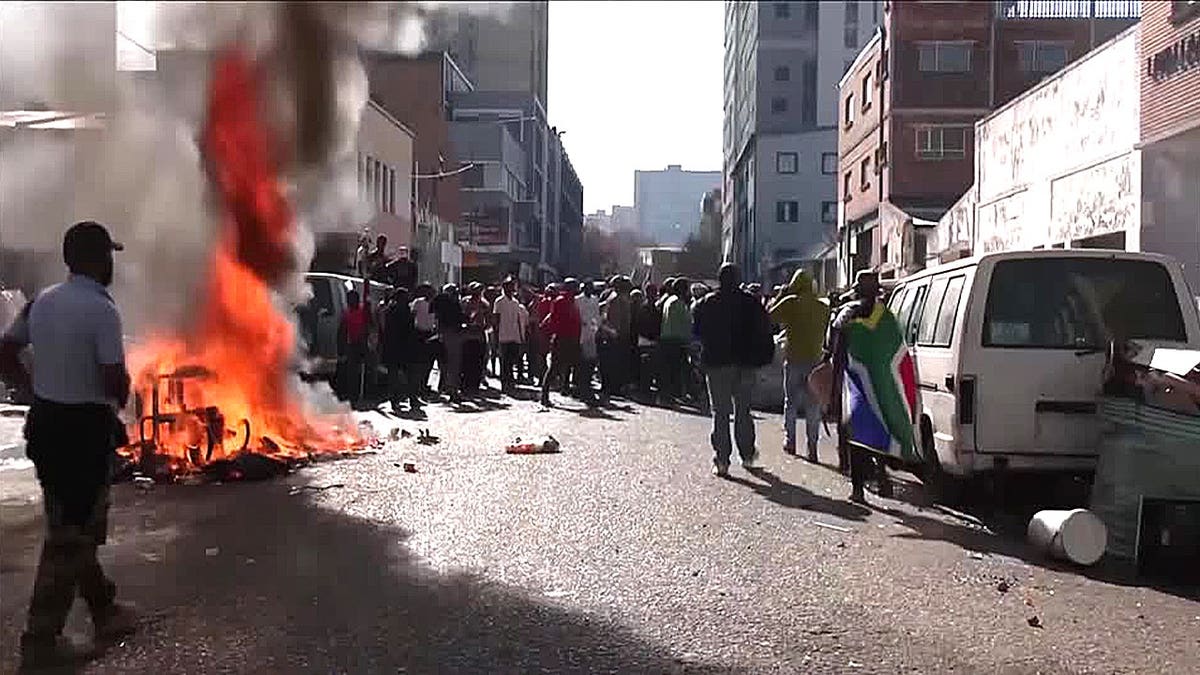
Protesters start a fire in the streets of Johannesburg, South Africa, on June 30, 2026. (Reuters)
The «March and March» group, one of the more prominent organizations behind the unrest, addressed the violence, saying it cannot be held responsible for spontaneous incidents breaking out during the demonstrations.
«Unfortunately, we can’t be in every single community telling them … how to behave,» Jacinta Ngobese, leader of the March and March group, told Reuters two weeks ago.
Ngobese said the group plans to hold weekly marches until its demands are met, despite the government rejecting the deadline and saying only authorities can enforce immigration laws.
«For the next six months, we are asking for our national resources to be used to take the illegal immigrants out of this country. From building to building — they must go,» Ngobese said, according to ZimLive.
CLICK HERE TO DOWNLOAD THE FOX NEWS APP
Despite South Africa’s high unemployment rate, the country remains Africa’s largest economy and continues to draw migrants.
The immigrant population stands at about 3 million, or roughly 4% of the total, according to StatsSA.
Reuters contributed to this report.
south africa, world protests, police and law enforcement, illegal immigrants, africa
INTERNACIONAL
Ola de xenofobia en Sudáfrica: crecen las protestas contra inmigrantes y miles de extranjeros huyen del país
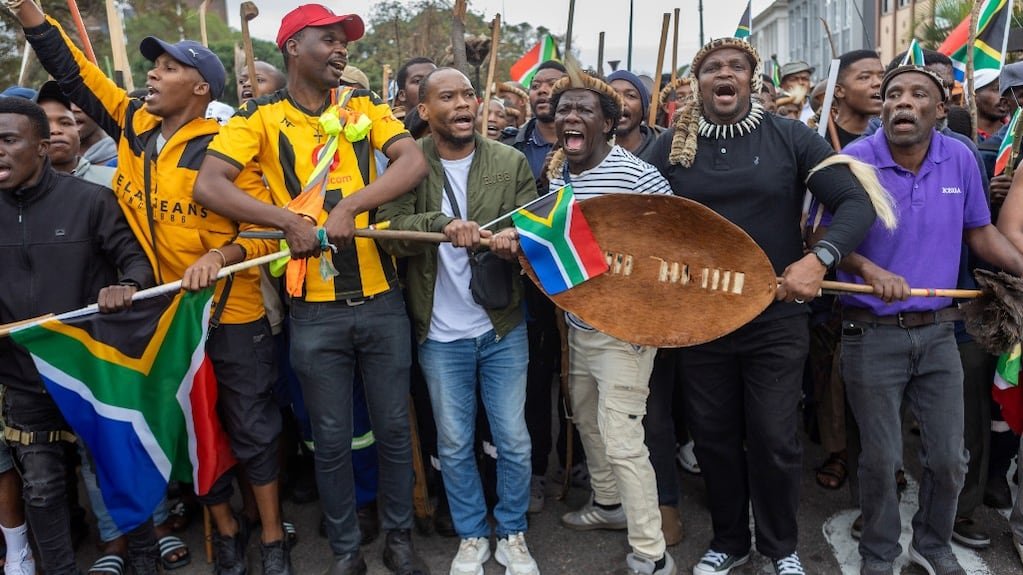
Miles de personas se manifestaron este martes en Sudáfrica para exigir la expulsión de los migrantes sin papeles, en medio de incidentes aislados y el creciente temor de distintas comunidades extranjeras por una ola xenófoba que invadió el país.
La movilización estuvo marcada por la muerte de un extranjero tras caer de un edificio por miedo a ser perseguido, según la policía.
Las fuerzas de seguridad se desplegaron masivamente para las protestas a nivel nacional encabezadas por grupos ciudadanos que fijaron sin sustento legal este martes como plazo para que los extranjeros sin papeles abandonaran el país.
Más de 25.000 extranjeros tramitaron su salida del país en las últimas semanas.
Hubo incidentes en Johannesburgo
Se produjeron incidentes aislados, como lanzamientos de piedras y enfrentamientos cerca de Johannesburgo, donde las fuerzas de seguridad escoltaron a algunos extranjeros para alejarlos de una turba.
Varias personas fueron detenidas por saqueos y se desplegó a soldados en Johannesburgo, corazón económico del país, de acuerdo con autoridades. Manifestantes marchan contra la inmigración ilegal en Johannesburgo, Sudáfrica, el martes 30 de junio de 2026. (AP Foto/Themba Hadebe)
En la ciudad portuaria de Durban, los manifestantes salieron con atuendos tradicionales de guerrero zulú, portando lanzas, látigos y escudos, y algunos cubiertos con pieles de leopardo.
La manifestante Brightness Gumbi, de 48 años, dijo que estaba frustrada por no poder permitirse alquilar un local para su negocio, mientras los extranjeros sí podían regentar comercios. “Los extranjeros ilegales consiguen pagarlo porque venden drogas a nuestra gente”, declaró.
“Tengo miedo”
Al menos dos mozambiqueños, un etíope y un malauí fueron asesinados en las últimas semanas de protestas, según la policía.
Un extranjero fue hallado muerto este martes después de que presuntamente saltara desde el octavo piso de un edificio en Durban, aparentemente por miedo a ser perseguido, informó la policía.
Leé también: El papa León XIV pidió a los “lefebvrianos” frenar la ordenación de obispos para evitar un cisma en la Iglesia
Mientras las protestas se desarrollaban en varias ciudades, cientos de migrantes se congregaban en Ciudad del Cabo, Johannesburgo y otros centros, aún a la espera de ayuda para regresar a sus países.
Algunos dijeron que los habían desalojado o sus empleadores los habían despedido, temiendo multas de los inspectores laborales o ataques de grupos de vigilantes.
“La gente en Sudáfrica no nos quiere aquí. Tengo miedo”, dijo una mujer zimbabuense de 23 años en Ciudad del Cabo, donde más de 1500 personas aguardaban la repatriación.
Solo unas pocas decenas de malauíes permanecían en un lugar de Durban desde donde varios miles habían sido enviados en autobús en los últimos días. “Pensé que podía quedarme, pero los vecinos nos advirtieron anoche”, contó Adam John, de 32 años.
“Sentí que era mejor tratar de volver a casa mientras aún pueda”, añadió.
En los días previos a las manifestaciones, el presidente Cyril Ramaphosa anunció que el gobierno intensificaría los planes para combatir la inmigración ilegal, incluyendo un mayor control de las fronteras y más inspecciones. Anteriores disturbios xenófobos en Sudáfrica resultaron mortales. En 2008, la violencia dejó 62 muertos.
Tres millones de extranjeros
Sudáfrica, la primera economía del continente, es un imán para la mano de obra migrante. El país se enfrenta a una tasa de desempleo superior al 30%, altos índices de criminalidad y el colapso de servicios en muchas zonas.
Unos 3 millones de extranjeros, es decir, el 5,1% de la población, viven en el país del expresidente Nelson Mandela, según las estadísticas oficiales.
Los grupos que se movilizan contra las personas indocumentadas los acusan de quitar empleos y servicios, lo que, según los analistas, supone convertir a los extranjeros en chivos expiatorios de los fracasos del gobierno.
A medida que aumentaban las tensiones, varios gobiernos africanos, entre ellos Nigeria, Malaui, Ghana, Zimbabue y Mozambique, organizaron vuelos y autobuses de repatriación voluntaria para sus ciudadanos.
Más de 25.000 personas habían sido tramitadas para su salida en las últimas semanas, señalaron las autoridades el lunes. Solo en los últimos días, casi 4300 extranjeros fueron repatriados y más de 400 deportados, informó la ministra de Justicia, Mmamoloko Kubayi, a los periodistas el martes por la noche.
(Con información de AFP)
Sudáfrica, xenofobia
INTERNACIONAL
First lady cites memoir after Supreme Court upholds state laws reserving girls’ sports for biological females
Supreme Court upholds state bans on biological boys in girls’ sports
Fox News reports on the Supreme Court’s decision to uphold Idaho and West Virginia laws, effectively banning biological males from participating in girls’ sports. Constitutional law attorney Jonathan Turley and chief legal correspondent Shannon Bream explain that the ruling aligns with the view that transgender status is not a protected class like race or religion, leaving the decision to individual states.
NEWYou can now listen to Fox News articles!
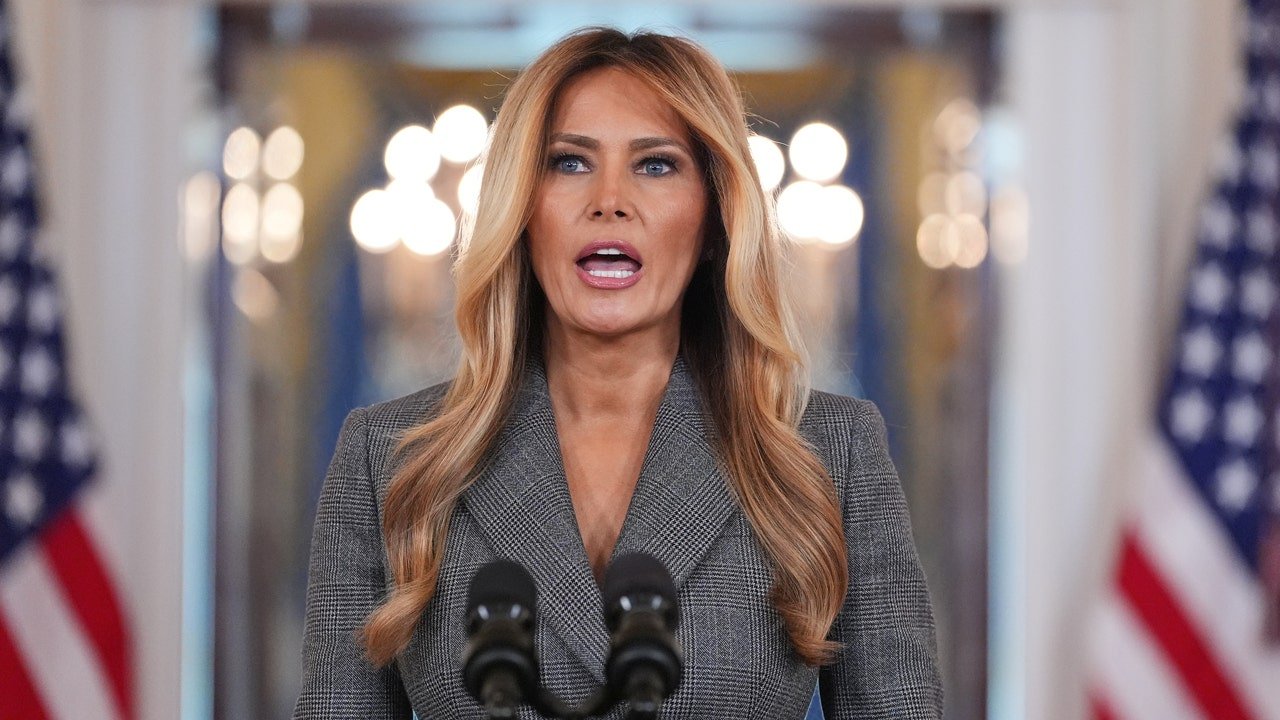
First lady Melania Trump pointed to a passage from her bestselling memoir Tuesday after the Supreme Court ruled that states may limit women’s and girls’ sports teams to biological females, saying the decision aligns with a position she has long supported.
In a post on X, Trump highlighted a passage from Melania that was published months before the court’s landmark 6-3 decision, which held that states may determine eligibility for women’s and girls’ sports based on biological sex under Title IX and the Equal Protection Clause.
«As many of you may know, I fully support the LGBTQIA+ community. But we must also ensure that our female athletes are protected and respected,» the first lady wrote on X, pointing readers to page 156 of her memoir, «Melania.»
U.S. SENATE COMMITTEE MAKES NEW TRANS ATHLETE FINDINGS AGAINST USA HOCKEY
First lady Melania Trump’s comments came just hours after the Supreme Court established a new nationwide precedent. (AP Photo/Jacquelyn Martin, File)
«The U.S. Supreme Court has now legally confirmed this opinion: ‘Under Title IX and the Equal Protection Clause of the Fourteenth Amendment, may schools maintain women’s and girls’ sports for biological females? … The answer is yes,’» Trump continued, citing the court’s decision.
«America, we can support the rights of the LGBTQIA+ community and also protect opportunities for female athletes,» she added. «Respect everyone and keep girls’ sports fair. Both ideals are essential.»
The first lady’s comments came just hours after the Supreme Court established a new nationwide precedent allowing states to maintain women’s and girls’ sports teams for biological females.
U.S. SENATE COMMITTEE MAKES NEW TRANS ATHLETE FINDINGS AGAINST USA HOCKEY
In the consolidated cases West Virginia v. B.P.J. and Little v. Hecox, the justices ruled 6-3 in favor of West Virginia and Idaho, upholding state laws requiring student-athletes to compete on teams that correspond with their biological sex at birth rather than their gender identity.
Writing for the majority, the court held: «Consistent with Title IX and the Equal Protection Clause, we hold that the States may maintain women’s and girls’ sports for biological females. They may determine eligibility for women’s and girls’ sports based on biological sex.»
The decision marks a major victory for supporters of so-called «Save Women’s Sports» laws, validating similar legislation enacted in 27 states in recent years. The ruling also clears the way for those states to continue enforcing the laws without the legal uncertainty that surrounded them while the cases moved through the courts.
LAWYERS FIGHTING SJSU OVER VOLLEYBALL SCANDAL RESPOND TO FEDERAL TITLE IX PROBE FINDINGS
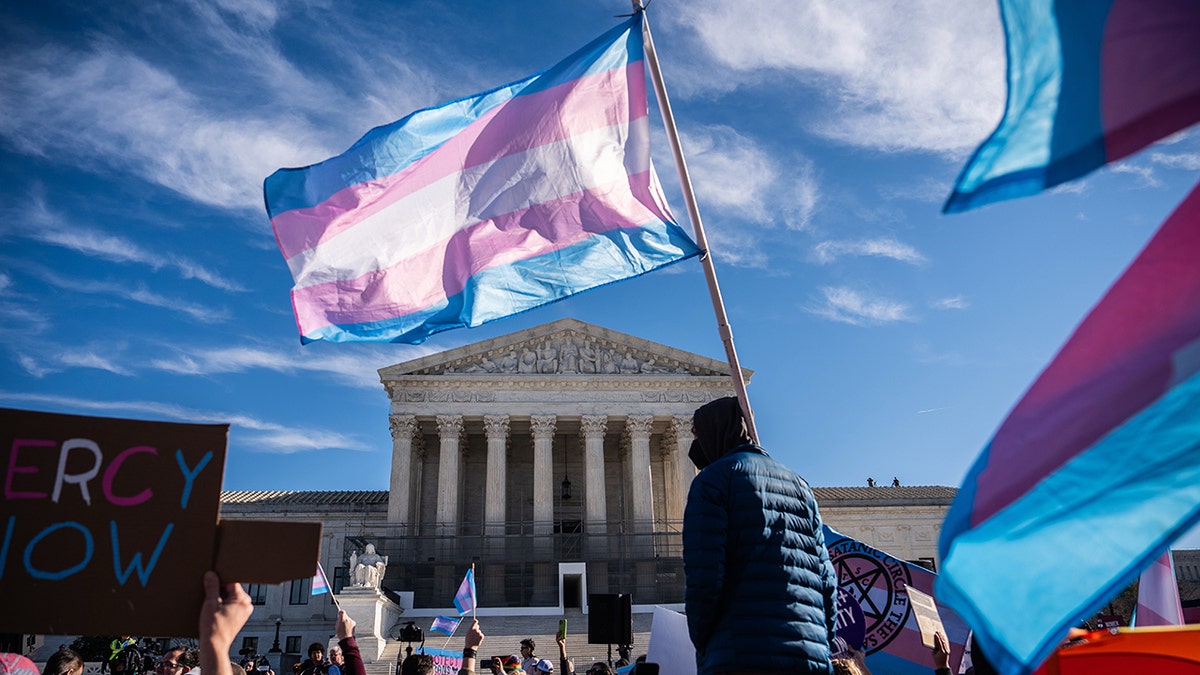
Protesters wave transgender pride flags outside the Supreme Court in Washington, D.C. (AP Photo/Julia Demaree Nikhinson, File)
Justice Sonia Sotomayor filed an opinion concurring in part and dissenting in part, joined by Justices Elena Kagan and Ketanji Brown Jackson.
West Virginia Attorney General John McCuskey praised the ruling, calling it «a monumental victory for every female athlete who has ever competed, or dreamed of competing, on a fair and safe playing field.»
Idaho Attorney General Raul Labrador likewise hailed the decision, saying it confirmed states’ authority to «preserve fair competition and protect the opportunities that generations of women fought to secure.»
CLICK HERE TO DOWNLOAD THE FOX NEWS APP
The cases centered on West Virginia’s Save Women’s Sports Act and Idaho’s Fairness in Women’s Sports Act, both of which had been blocked after legal challenges brought by transgender athletes.
Fox News Digital’s Jackson Thompson contributed to this report.
melania trump, supreme court, controversies education, high school, college, politics, sports

Se supo por qué el hijo mayor de Messi no fue con Antonela Roccuzzo al último partido en el Mundial

Los detalles ocultos de la nueva pelota del fútbol argentino: Argentum Gambeta

Oportunidad: este supermercado liquida camperas por $20.000 y en cuotas sin interés

Fuerte apoyo de Estados Unidos a Milei, en el acto por los 250 años de la independencia norteamericana

Quién es Ignacio Devitt, el reemplazante de Diego Santilli en el Ministerio del Interior

Thousands of police deployed across South Africa as deadly anti-immigration protests spread to multiple cities

El punto de quiebre que sentó la suerte de Manuel Adorni y los preparativos que hace el Gobierno ante su inminente salida

La bomba de Nico Occhiato tras el escándalo de Florencia Peña con Messi: “Lo más groso que pudimos haber logrado”

Cómo ganar $20 millones con Mercado Pago: el paso a paso para quienes cobran ANSES

Una escena estremecedora: el dato más doloroso de los minutos posteriores a la muerte de Ernestina Pais

 POLITICA2 días ago
Exigen que Adorni renuncie a su cargo en el directorio de YPF
- POLITICA2 días ago
Tras haber dejado su cargo de jefe de Gabinete, Manuel Adorni también renunciará como director de YPF
- CHIMENTOS3 días ago
Dolor infinito: encontraron muertos a la esposa y los hijos del futbolista argentino Lucas Trejo entre las ruinas del terremoto en Venezuela