INTERNACIONAL
Shipping giant warns Strait of Hormuz chaos is ‘new normal’ as Tehran shifts 4M barrels

Ceasefire between US and Iran being tested
Fox News anchor Shannon Bream covers the escalating conflict in the Middle East as Trey Yingst reports from Tel Aviv. The U.S. carried out strikes against Iranian missile and drone storage locations after Iran targeted shipping in the Strait of Hormuz. Additionally, Iran launched drones toward Kuwait and Bahrain, while Israel conducted strikes against Hezbollah in Lebanon. These events coincide with a diplomatic framework agreement between Israel and Lebanon.
NEWYou can now listen to Fox News articles!
A «new normal» of heightened risk and uncertain regulation is impacting the Strait of Hormuz, shipping firm Hapag-Lloyd warned Sunday, as military strikes escalated and conflicting routing directives plunged the waterway into operational chaos.
The remarks from the German shipping giant also came as Tehran «simultaneously» began moving millions of barrels of crude oil from Kharg Island for the first time in days, according to maritime intelligence firm Windward AI.
«At Kharg, the T-Jetty and Western Terminal loaded simultaneously for the first time in days; the East Waiting Area holds 28 tankers, 27 dark, signaling the Iranian crude export cycle restarting,» Windward AI said in a post on X.
The outbound cargo consists of an estimated 4.12 million barrels of wet cargo, including crude oil and other liquid hydrocarbons. Of that total, about 3.91 million barrels are crude oil, analytics firm Vortexa said.
GULF SHIPPING OPERATIONS GRIND TO HALT NEAR IRAN, US QUIETLY PREPARES FOR POSSIBLE STRIKE: ‘HEIGHTENED RISK’
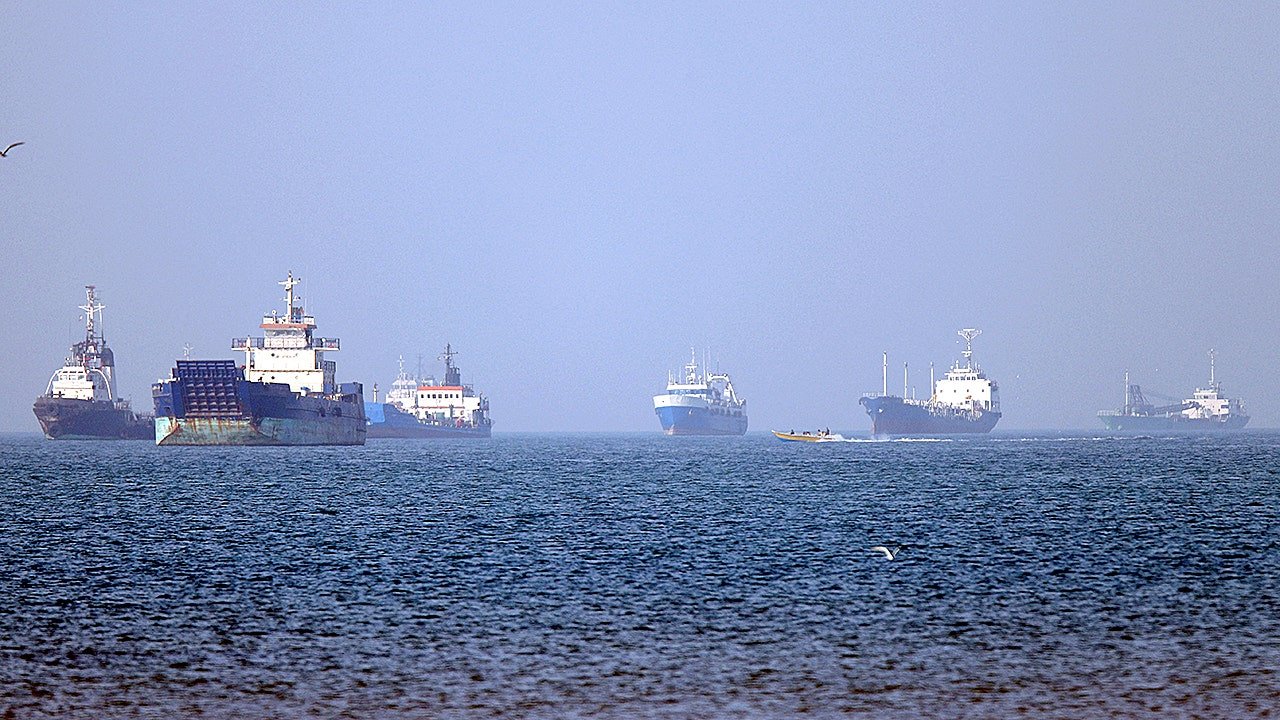
Commercial cargo vessels and crude oil tankers are anchored in the Gulf of Oman off the coast of Muscat, Oman, as they prepare to transit through the Strait of Hormuz, a critical global trade corridor. (Shady Alassar/Anadolu)
«We have to acknowledge that this is for some months the new normal in the Persian Gulf region,» Hapag-Lloyd AG spokesperson Hanja Maria Richter told Fox News Digital.
«The situation has been fluid for us since the beginning of the conflict,» she said before adding that constant vigilance has become essential to operating in the region.
«We have been making and still make regular risk and situation assessments with our security partners, all relevant authorities and our people on shore and, of course, on the vessels,» Richter said.
«It is a region in conflict, so we consider this with every single ship we move in the region and assess the risks for every vessel and its crew individually.»
IRAN STARTS ‘INDISCRIMINATE’ STRIKES ACROSS GULF OF OMAN, HITS SHADOW TANKER TIED TO REGIME
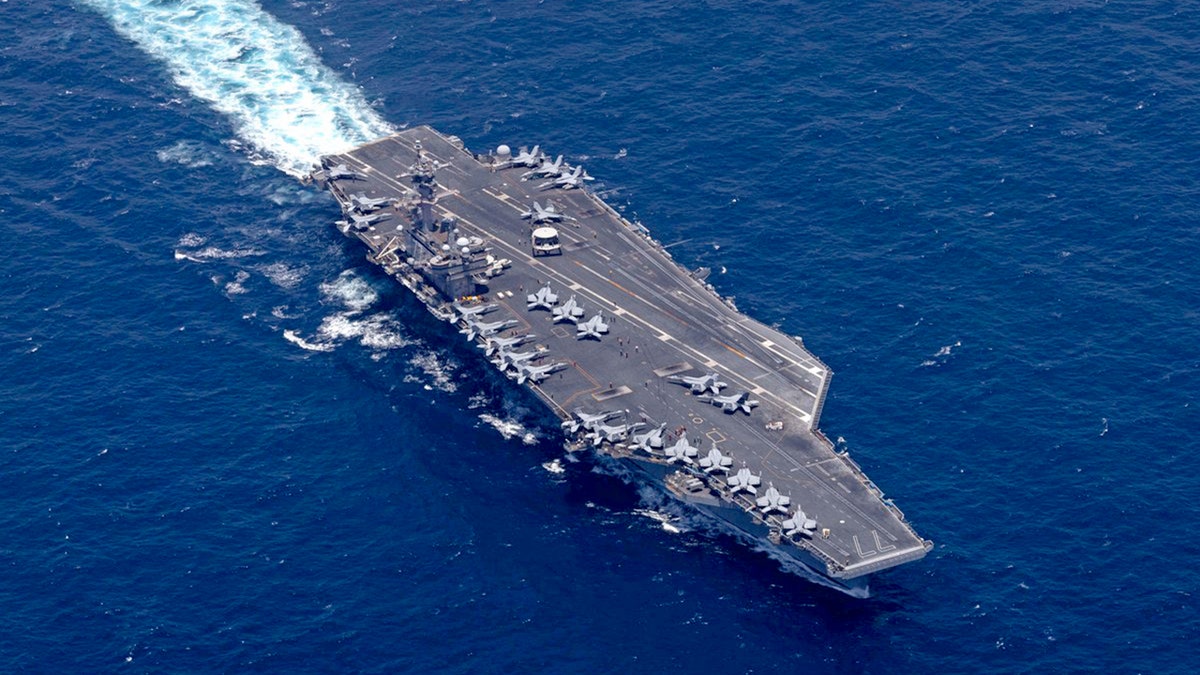
USS George H.W. Bush transits the Arabian Sea as U.S. forces enforce a naval blockade against Iran and support Project Freedom in the Strait of Hormuz, according to U.S. Central Command. (CENTCOM)
Richter’s remarks came as U.S. Central Command (CENTCOM) launched airstrikes against Iranian targets, including Qeshm Island on June 26 after a vessel was struck in the strait.
This prompted Iran’s Islamic Revolutionary Guard Corps (IRGC) to retaliate by targeting U.S. military sites in Kuwait and Bahrain.
Adding to the strike risk is a tug-of-war over control of the transit lanes.
Lloyd’s List described the fracturing of the waterway as a «confused, two-tier system now operating in the strait, which remains split between the Iran-controlled northern route and a U.S.-protected southern ‘highway,’ with the pre-war routes rendered unusable because of the risk of mines, separating them.»
Iran is responsible for managing and fully reopening maritime traffic through the Strait of Hormuz under recent understandings, Iranian Foreign Minister Abbas Araghchi said Sunday, according to Iran International.
EXPERTS URGE EXTREME CAUTION ON IRAN’S ‘CROWN JEWEL’ HEZBOLLAH — TERROR GROUP WITH US BLOOD ON ITS HANDS
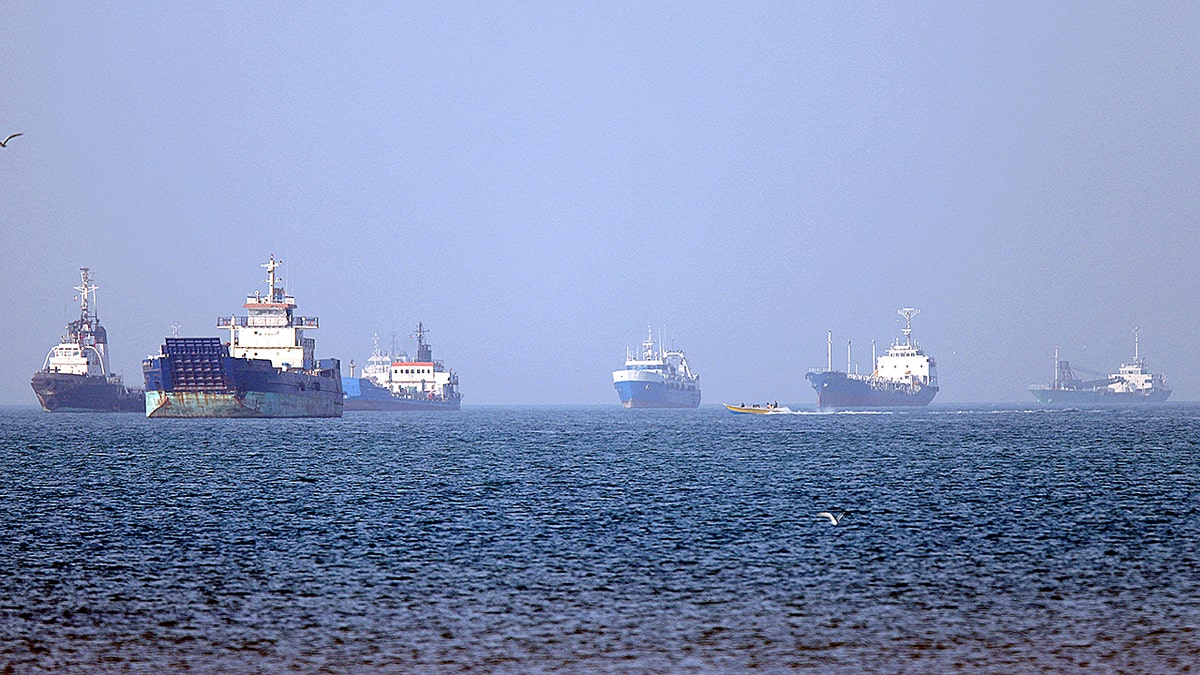
Ships are anchored in the Strait of Hormuz off Bandar Abbas in southern Iran on May 4. A report on May 15 said a ship was seized off the coast of the United Arab Emirates and is being brought to Iranian waters. (Amirhossein Khorgooei/ISNA/AFP via Getty Images)
Iranian state television said that passage through the Strait of Hormuz demands coordination with the IRGC.
Hapag-Lloyd pushed back against any future attempts to weaponize or monetize passage through the critical global chokepoint.
«It would be fundamentally wrong to impose fees for passage through international waters,» Richter said.
«Fees for infrastructure such as the Suez Canal or the Panama Canal are a different matter, as they reflect major infrastructure investments. That is not the case with the Strait of Hormuz.»
CLICK HERE TO DOWNLOAD THE FOX NEWS APP
While thousands of crew members remain caught by conflicting naval directives, Hapag-Lloyd said it had successfully navigated the initial bottleneck.
«Good news is that we were able to have all Hapag-Lloyd vessels that were affected by the temporary closure of the Strait of Hormuz and had been waiting in the Persian Gulf depart safely from the Gulf,» Richter noted before adding that «the safety of our crews is our highest priority.»
middle east, transportation, war with iran, iran, trade










INTERNACIONAL
Incendios forestales se extienden en el este y sur de Bolivia en medio de escasez de agua y diésel
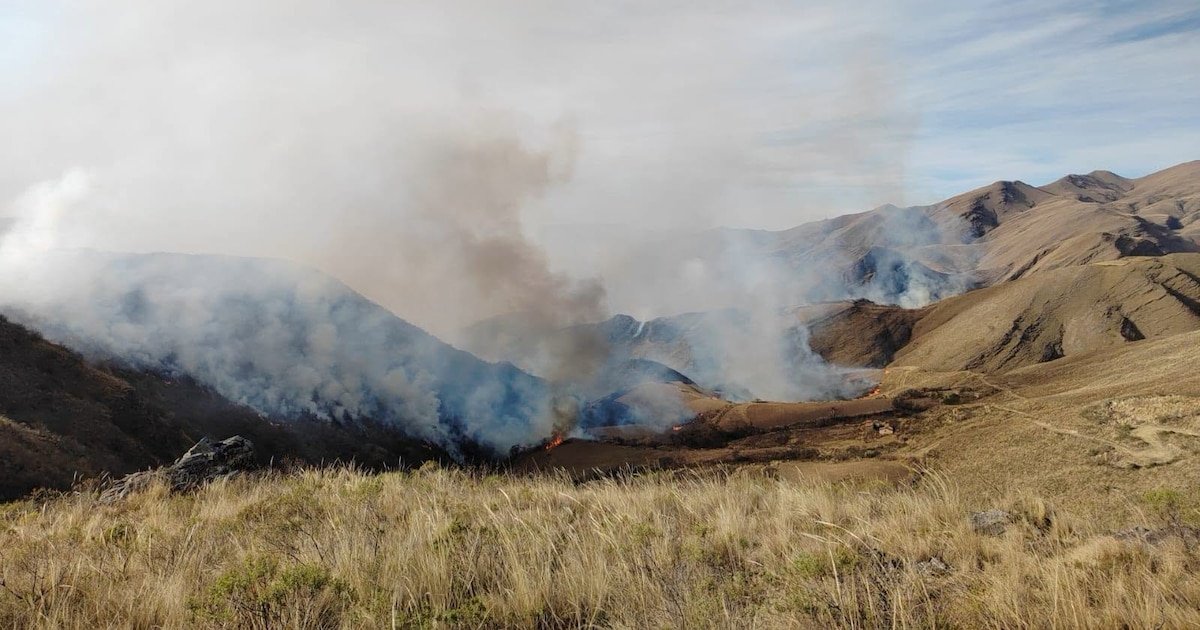
Bolivia registra en los últimos días múltiples incendios forestales en los departamentos de Santa Cruz, en el este del país, y Tarija, en el sur, donde las labores para apagar el fuego se han visto complicadas por dificultades en el abastecimiento de agua y diésel para las brigadas de emergencia.
En el departamento de Santa Cruz, las autoridades informaron que los principales incendios se localizan en el Parque Nacional Otuquis, donde unas 2.538 hectáreas resultaron afectadas, además de focos en los municipios de Pailón y Porongo, distantes a 50 y 20 kilómetros de Santa Cruz de la Sierra. También se monitorea un nuevo foco de calor en el municipio de San Matías, cerca de la frontera con Brasil.
El vocero de la Gobernación, Marcelo Schrup, señaló a los medios locales que las tareas de combate enfrentan limitaciones por la escasez de agua y combustible, aunque indicó que se recibieron donaciones para apoyar las operaciones.
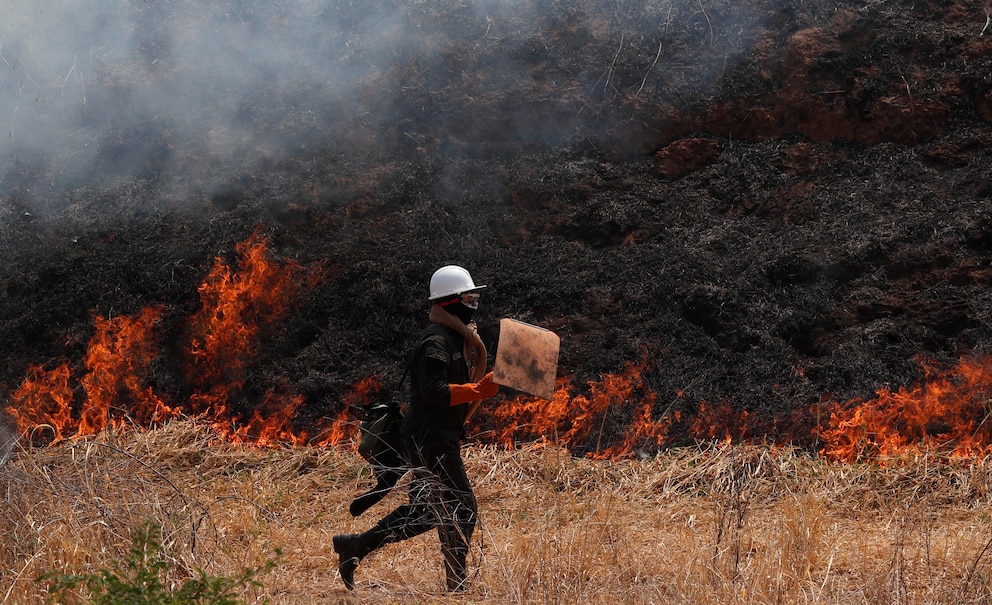
En Tarija, el fuego inició el viernes y se propagó hasta la madrugada del lunes por los fuertes vientos, afectando a comunidades rurales del municipio de San Lorenzo, distante a 15 kilómetros de la capital. En tanto, en la ciudad, en el barrio residencial de Miraflores, el domingo por la tarde los vecinos ayudaron a apagar un incendio en un área verde de aproximadamente dos kilómetros.

Si bien esos focos fueron controlados, la mañana de este lunes la Alcaldía informó de otros puntos cerca de la ciudad, en las localidades de Pinos Sud y Sella. “No puede ser una coincidencia que tengamos tantos incendios a la vez; está ocurriendo algo”, afirmó en conferencia de prensa el alcalde Jhonny Torrez.
La autoridad municipal pidió a la Policía iniciar una investigación y reformar las leyes y normas que rigen el manejo del fuego para fines agrícolas. “Apagamos un incendio y comienza de inmediato otro en otra parte; estamos altamente preocupados (…) el daño es grande”, afirmó Torrez.
Luego de haber realizado un sobrevuelo en la zona de incendios el domingo, los ministros de Defensa y Obras Públicas, Ernesto Justiniano y Mauricio Zamora, informaron el inicio de las investigaciones para identificar a los responsables de haber quemado tierra, en una práctica de cultivo que localmente se denomina “chaqueo”.
Bolivia ingresa cada año, entre julio y octubre, a la temporada de mayor riesgo de incendios forestales, cuando las condiciones de sequía y los vientos coinciden con las quemas agrícolas utilizadas para preparar los terrenos de cultivo.
En 2024, Bolivia sufrió la peor emergencia por incendios forestales de su historia, con 12,6 millones de hectáreas afectadas, según una investigación de la Fundación Tierra. La superficie quemada equivale a la de Grecia o Nicaragua.
Según las investigaciones de la organización, además de las quemas agrícolas hay otros factores que inciden en la recurrencia de los incendios forestales, como la expansión de la frontera agrícola y pecuaria, la distribución de tierras para favorecer intereses sectoriales y los avasallamientos vinculados a actividades ilícitas como el narcotráfico y la minería ilegal.
A estos fenómenos se suma un compendio normativo permisivo con los chaqueos y desmontes que los críticos en Bolivia denominan “leyes incendiarias”, aprobadas entre 2013 y 2019 durante el Gobierno de Evo Morales. Este marco jurídico dio legalidad a las quemas y deforestación, bajo ciertas condiciones, para la expansión agrícola.
Este año, las autoridades emitieron alertas rojas por los fuertes vientos y advirtieron que algunas quemas se realizaron pese a las restricciones, lo que podría derivar en sanciones.
incendio forestal,voluntarios,extinción de incendios,terreno quemado,Tarija,recuperación ambiental
INTERNACIONAL
Army IDs 2 victims killed in Jordan air base attack; Trump: Iran will pay ‘many times over’

US hammers Iran in 9th straight night of strikes
Bill Hemmer and Dana Perino lead coverage on the escalating conflict between the U.S. and Iran. U.S. Central Command confirmed a ninth consecutive night of strikes against Iranian military targets. This follows tragic deaths of U.S. service members in Iranian attacks in Jordan and Iraq. President Donald Trump vows continued pressure to degrade Iran’s military capabilities and enforce naval blockades in the Strait of Hormuz.
NEWYou can now listen to Fox News articles!
The War Department has identified two active-duty Army soldiers killed during an enemy attack at Muwaffaq Salti Air Base in Jordan last week as 1st Lt. Tyler James Feehan, 25, of Ewa Beach, Hawaii, and Pvt. Isabella Gonzales, 19, of Carrollton, Texas.
They were the first U.S. service members killed since the restart of hostilities amid Iran’s violations of President Donald Trump’s peace agreement.
A third U.S. service member’s remains are being identified, while another was killed Saturday «during a controlled detonation of unexploded ordnance» in northern Iraq, U.S. Central Command said.
«Every time Iran kills an American Soldier they will pay for that killing many times over!» Trump wrote Monday on Truth Social. «This directive has been passed on to Secretary of War, Pete Hegseth, Chairman of the Joint Chiefs of Staff, Daniel Caine, and every Leader in the Military.»
TWO US SERVICE MEMBERS KILLED IN IRANIAN STRIKES ON JORDAN, CENTCOM SAYS
The first victims of restarted hostilities were identified as Lt. Tyler James Feehan, 25, of Ewa Beach, Hawaii, and Pvt. Isabella Gonzales, 19, of Carrollton, Texas, according to a Monday release. (U.S. Army)
The announcement brought the number of U.S. service members killed since the war began to 17, while more than 420 have been wounded.
Feehan and Gonzales were victims of the Iran attack Friday on Jordan, which remains under investigation. The release of their identities noted they were in Jordan supporting Operation Inherent Resolve, the international campaign against ISIS in Iraq and Syria.
The mission has ended operations in Iraq, while the U.S. has been consolidating and transitioning its presence in Syria.
Feehan was assigned to the 2nd Battalion, 55th Air Defense Artillery Regiment, 32nd Army Air and Missile Defense Command, at Fort Bragg, North Carolina.
«U.S. Army Space and Missile Defense Command mourns the loss of 1st Lt. Tyler Feehan, whose service and sacrifice will never be forgotten,» Lt. Gen. John L. Rafferty said in a statement. «Losing him to enemy fire will inspire our soldiers and strengthen their resolve to continue the mission.»
ISIS POISED TO EXPLOIT HISTORIC US IRAQ EXIT, TERROR GROUP ‘ACTIVELY WAITING IN THE GAPS,’ EXPERT WARNS
Feehan will receive the Bronze Star, Purple Heart and Combat Action Badge, and be posthumously promoted to captain. He had already received the Army Achievement Medal, National Defense Service Medal, Army Service Ribbon, and Combat Action Badge.
«1st Lt. Feehan’s unwavering dedication to our mission, our values, and the air defenders he led will leave an enduring legacy,» Brig. Gen. John Dawber said. «We stand fully committed to supporting his family and loved ones through this incredibly difficult time, and we will never forget his ultimate sacrifice in defense of our nation.»
Gonzales was assigned to the 1st Battalion, 57th Air Defense Artillery Regiment, 52nd Air Defense Artillery Brigade, 10th Army Air and Missile Defense Command, in Ansbach, Germany.
The U.S. and Iran have intensified attacks since an interim ceasefire deal signed a month ago fell apart last week, leading to the return to all-out war.
TRUMP’S 60-DAY IRAN DEAL REACHES HALFWAY MARK AS CEASEFIRE COLLAPSES INTO ESCALATING WAR

Army Pvt. Isabella Gonzales, 19, of Carrollton, Texas, was one of the U.S. service members killed in action Friday, July 17, 2026, during an enemy attack at Muwaffaq Salti Air Base, Jordan. (U.S. Army)
«Godspeed, heroes,» War Secretary Pete Hegseth wrote on X. «Their sacrifice only stiffens our resolve.»
Trump has authorized nine consecutive days of pounding strikes on Iran’s coastal military sites and Islamic Revolution Guard Corps forces defying the terms of the now-defunct memorandum of understanding (MOU), designed to bring a ceasefire and open up the Strait of Hormuz to freedom of navigation.

U.S. Central Command has said it will continue working to dismantle ISIS networks and prevent the terror group’s resurgence. (Ahmad al-Rubaye/AFP via Getty Images)
CLICK HERE TO DOWNLOAD THE FOX NEWS APP
«We hit them very hard again tonight, and we did that in honor of the probably three – it’s probably three as opposed to two great patriots,» Trump told reporters at Joint Base Andrews on Sunday night. «We feel very badly, but you know, those great people, those great patriots were out there fighting that Iran could not have a nuclear weapon.»
war with iran, us army, donald trump, pentagon, military, wars

NEWYou can now listen to Fox News articles!
Ukraine launched one of its largest drone attacks of the war against Moscow and the surrounding region overnight, striking an oil depot and logistics facilities more than 250 miles from the Ukrainian border, according to Ukrainian and Russian officials.
Moscow Mayor Sergei Sobyanin said more than 400 Ukrainian drones were launched toward the Moscow region between Sunday evening and early Monday, including 85 that were destroyed while approaching the Russian capital. Russia’s Defense Ministry separately claimed that its forces intercepted 381 drones across Russian regions, the Black Sea and the Sea of Azov.
The Russian claims could not be independently verified by Fox News Digital.
At least 10 people were wounded in the Moscow region, including three Chinese nationals, according to regional authorities cited by Reuters. Seven of the injuries were reported in Domodedovo, Russia, where officials said a residential building was struck and a fire broke out at an industrial park near one of Moscow’s main airports.
The scale and reach of the operation suggest Ukraine is moving beyond occasional symbolic attacks on Moscow and building a sustained campaign against the infrastructure that supports Russia’s war.
UKRAINE LAUNCHES WHAT APPEARS TO BE ONE OF ITS LARGEST DRONE ATTACKS AGAINST RUSSIA: REPORT
By simultaneously targeting oil facilities, transportation networks and logistics hubs hundreds of miles from the front, Kyiv is seeking to disrupt the flow of fuel and supplies to Russian forces, reduce revenue available to the Kremlin and force Moscow to divert air-defense systems away from the battlefield.
Ukrainian attacks on Russian refineries had doubled since the beginning of 2026, Reuters reported, contributing to refinery shutdowns and reduced production of gasoline, diesel and jet fuel.
Smoke and flames rise from an industrial facility in Podolsk, Russia, in the Moscow region, after a large-scale Ukrainian drone attack overnight July 20, 2026. (East2west news)
Ukrainian President Volodymyr Zelenskyy confirmed that Ukrainian forces targeted logistics facilities and an oil depot in the Moscow region.
«Our long-range sanctions have produced results against logistics facilities and an oil depot,» Zelenskyy wrote on X, adding that the targets were more than 400 kilometers (roughly 250 miles) from Ukraine’s border. «We are responding, justly, to every Russian strike against our cities and communities.»
Wildberries, a company known as «Russia’s Amazon,» said its logistics center in the Podolsk district of Russia was temporarily evacuated as a precaution before resuming normal operations, East2West News reported. Ukraine has accused the company of selling supplies used by the Russian military.
RUSSIA UNLEASHES NEARLY 600 MISSILES AND DRONES ON KYIV IN DEADLIEST STRIKE SINCE MAY

Smoke rises from the Guinea-Bissau-flagged cargo ship Golden Leo after it was struck near Odesa on July 20, 2026. Ukrainian officials said 10 people were killed in the Russian missile attack. (East2west news)
Ksenia Svetlova, associate fellow at Chatham House policy institute based in London, argued that the disruption caused by strikes on fuel infrastructure and companies such as Wildberries is unlikely, by itself, to change President Vladimir Putin’s approach to the war.
«The hardship of the Russian citizen who suffers because of fuel shortages, the strike on a Wildberries warehouse, or forced recruitment does not interest him,» Svetlova said. «The war machine is operating at full force, and he has neither the desire nor the ability to stop it.»
Svetlova said Putin remains reluctant to announce another mass mobilization after large numbers of young Russians fled the country during the Kremlin’s previous call-up. At the same time, she said, Russia’s military still needs additional troops after recruiting heavily from its prison population and is increasingly pressuring ordinary civilians accused of relatively minor offenses to sign military contracts.
The sweeping Ukrainian operation followed one of Russia’s largest ballistic missile attacks of the war against Kyiv. Ukraine’s air force said Russia launched 41 missiles of various types in the overnight barrage, which killed at least one person and wounded 16, Reuters reported Sunday.
The Russian attack also spread into the Black Sea, where a Russian missile attack on the Guinea-Bissau-flagged cargo ship Golden Leo killed 10 people near Odesa, Reuters reported Monday.
‘A NEW KIND OF WAR’: INSIDE UKRAINE’S HIDDEN FACTORIES MASS-PRODUCING COMBAT DRONES

An explosion strikes a building in Domodedovo, in the Moscow region, during a large-scale Ukrainian drone attack overnight on July 20, 2026. (East2West news)
Ukrainian officials said the vessel, which was carrying corn, was struck by three cruise missiles and caught fire. Nine crew members and a Ukrainian maritime pilot were killed, while eight other crew members were rescued. The ship’s crew included Indian and Syrian nationals, according to Reuters.
The escalation comes as Zelenskyy faces growing domestic pressure over his removal of Defense Minister Mykhailo Fedorov, a 35-year-old reformer credited with expanding Ukraine’s drone capabilities and seeking to modernize military procurement and management. Fedorov’s supporters viewed him as a rare official willing to challenge entrenched practices, improve oversight of defense spending and push a technology-centered approach to the war.
Thousands of demonstrators gathered following Fedorov’s dismissal, demanding his reinstatement and the removal of commander-in-chief Gen. Oleksandr Syrskyi. Protesters have accused Syrskyi of resisting modernization and retaining a rigid command structure that they say contributes to high troop losses. Syrskyi has defended his wartime record and called for unity.
Fedorov publicly accused Syrskyi of blocking his initiatives and sabotaging his work. Zelenskyy said their relationship had deteriorated so badly that the two could no longer work together, but provided little additional explanation for removing Fedorov.
CLICK HERE TO DOWNLOAD THE FOX NEWS APP

People protest against Ukrainian President Volodymyr Zelenskiy’s decision to replace Mykhailo Fedorov as defense minister, amid Russia’s attack on Ukraine, in Kyiv, Ukraine, July 18, 2026. (Thomas Peter/Reuters)
Zelenskyy indicated Monday that consultations over Ukraine’s military leadership were continuing, saying he had spoken with Maj. Gen. Mykhailo Drapatyi about ensuring that the experience of every branch of Ukraine’s defense forces was applied in a coordinated manner. He did not announce any decision on Syrskyi’s future.
Reuters contributed to this report.
russia, ukraine, military, volodymyr zelenskyy

Luto en Inglaterra: murió Kevin Keegan, histórico ex futbolista del Liverpool

Una exdirectiva de una empresa de Lázaro Báez realizará tareas comunitarias a cambio de no ir a juicio por corrupción

El mensaje más triste de Lionel Messi tras la final que conmovió a millones de argentinos: «El dolor es muy grande»

El Gobierno busca acelerar la compra de helicópteros que son un símbolo de Estados Unidos

Incendios forestales se extienden en el este y sur de Bolivia en medio de escasez de agua y diésel

Army IDs 2 victims killed in Jordan air base attack; Trump: Iran will pay ‘many times over’

El fuerte cruce público entre Victoria Villarruel y Patricia Bullrich tras los chats filtrados antes de la sesión del Senado

Adrián Ravier, vocero de Milei: “No coincidimos en el Gobierno con esto de que la gente no llega a fin de mes”

Rubio’s call to combat global funders of far-left terrorism could put Singham in crosshairs

Sismo de 7.4 sacude a Guatemala: Autoridades declaran alerta anaranjada por daños y descartan tsunami

 INTERNACIONAL3 días ago
Rubio’s call to combat global funders of far-left terrorism could put Singham in crosshairs
- DEPORTE3 días ago
Canales para ver EN VIVO el San Lorenzo vs. Deportivo Riestra por la Copa Argentina
- ECONOMIA3 días ago
Obra pública: el Gobierno prorrogó la adhesión al plan para cancelar deudas con bonos