INTERNACIONAL
Ukraine unleashes more than 400 drones near Moscow in one of war’s biggest attacks


NEWYou can now listen to Fox News articles!
Ukraine launched one of its largest drone attacks of the war against Moscow and the surrounding region overnight, striking an oil depot and logistics facilities more than 250 miles from the Ukrainian border, according to Ukrainian and Russian officials.
Moscow Mayor Sergei Sobyanin said more than 400 Ukrainian drones were launched toward the Moscow region between Sunday evening and early Monday, including 85 that were destroyed while approaching the Russian capital. Russia’s Defense Ministry separately claimed that its forces intercepted 381 drones across Russian regions, the Black Sea and the Sea of Azov.
The Russian claims could not be independently verified by Fox News Digital.
At least 10 people were wounded in the Moscow region, including three Chinese nationals, according to regional authorities cited by Reuters. Seven of the injuries were reported in Domodedovo, Russia, where officials said a residential building was struck and a fire broke out at an industrial park near one of Moscow’s main airports.
The scale and reach of the operation suggest Ukraine is moving beyond occasional symbolic attacks on Moscow and building a sustained campaign against the infrastructure that supports Russia’s war.
UKRAINE LAUNCHES WHAT APPEARS TO BE ONE OF ITS LARGEST DRONE ATTACKS AGAINST RUSSIA: REPORT
By simultaneously targeting oil facilities, transportation networks and logistics hubs hundreds of miles from the front, Kyiv is seeking to disrupt the flow of fuel and supplies to Russian forces, reduce revenue available to the Kremlin and force Moscow to divert air-defense systems away from the battlefield.
Ukrainian attacks on Russian refineries had doubled since the beginning of 2026, Reuters reported, contributing to refinery shutdowns and reduced production of gasoline, diesel and jet fuel.
Smoke and flames rise from an industrial facility in Podolsk, Russia, in the Moscow region, after a large-scale Ukrainian drone attack overnight July 20, 2026. (East2west news)
Ukrainian President Volodymyr Zelenskyy confirmed that Ukrainian forces targeted logistics facilities and an oil depot in the Moscow region.
«Our long-range sanctions have produced results against logistics facilities and an oil depot,» Zelenskyy wrote on X, adding that the targets were more than 400 kilometers (roughly 250 miles) from Ukraine’s border. «We are responding, justly, to every Russian strike against our cities and communities.»
Wildberries, a company known as «Russia’s Amazon,» said its logistics center in the Podolsk district of Russia was temporarily evacuated as a precaution before resuming normal operations, East2West News reported. Ukraine has accused the company of selling supplies used by the Russian military.
RUSSIA UNLEASHES NEARLY 600 MISSILES AND DRONES ON KYIV IN DEADLIEST STRIKE SINCE MAY

Smoke rises from the Guinea-Bissau-flagged cargo ship Golden Leo after it was struck near Odesa on July 20, 2026. Ukrainian officials said 10 people were killed in the Russian missile attack. (East2west news)
Ksenia Svetlova, associate fellow at Chatham House policy institute based in London, argued that the disruption caused by strikes on fuel infrastructure and companies such as Wildberries is unlikely, by itself, to change President Vladimir Putin’s approach to the war.
«The hardship of the Russian citizen who suffers because of fuel shortages, the strike on a Wildberries warehouse, or forced recruitment does not interest him,» Svetlova said. «The war machine is operating at full force, and he has neither the desire nor the ability to stop it.»
Svetlova said Putin remains reluctant to announce another mass mobilization after large numbers of young Russians fled the country during the Kremlin’s previous call-up. At the same time, she said, Russia’s military still needs additional troops after recruiting heavily from its prison population and is increasingly pressuring ordinary civilians accused of relatively minor offenses to sign military contracts.
The sweeping Ukrainian operation followed one of Russia’s largest ballistic missile attacks of the war against Kyiv. Ukraine’s air force said Russia launched 41 missiles of various types in the overnight barrage, which killed at least one person and wounded 16, Reuters reported Sunday.
The Russian attack also spread into the Black Sea, where a Russian missile attack on the Guinea-Bissau-flagged cargo ship Golden Leo killed 10 people near Odesa, Reuters reported Monday.
‘A NEW KIND OF WAR’: INSIDE UKRAINE’S HIDDEN FACTORIES MASS-PRODUCING COMBAT DRONES

An explosion strikes a building in Domodedovo, in the Moscow region, during a large-scale Ukrainian drone attack overnight on July 20, 2026. (East2West news)
Ukrainian officials said the vessel, which was carrying corn, was struck by three cruise missiles and caught fire. Nine crew members and a Ukrainian maritime pilot were killed, while eight other crew members were rescued. The ship’s crew included Indian and Syrian nationals, according to Reuters.
The escalation comes as Zelenskyy faces growing domestic pressure over his removal of Defense Minister Mykhailo Fedorov, a 35-year-old reformer credited with expanding Ukraine’s drone capabilities and seeking to modernize military procurement and management. Fedorov’s supporters viewed him as a rare official willing to challenge entrenched practices, improve oversight of defense spending and push a technology-centered approach to the war.
Thousands of demonstrators gathered following Fedorov’s dismissal, demanding his reinstatement and the removal of commander-in-chief Gen. Oleksandr Syrskyi. Protesters have accused Syrskyi of resisting modernization and retaining a rigid command structure that they say contributes to high troop losses. Syrskyi has defended his wartime record and called for unity.
Fedorov publicly accused Syrskyi of blocking his initiatives and sabotaging his work. Zelenskyy said their relationship had deteriorated so badly that the two could no longer work together, but provided little additional explanation for removing Fedorov.
CLICK HERE TO DOWNLOAD THE FOX NEWS APP

People protest against Ukrainian President Volodymyr Zelenskiy’s decision to replace Mykhailo Fedorov as defense minister, amid Russia’s attack on Ukraine, in Kyiv, Ukraine, July 18, 2026. (Thomas Peter/Reuters)
Zelenskyy indicated Monday that consultations over Ukraine’s military leadership were continuing, saying he had spoken with Maj. Gen. Mykhailo Drapatyi about ensuring that the experience of every branch of Ukraine’s defense forces was applied in a coordinated manner. He did not announce any decision on Syrskyi’s future.
Reuters contributed to this report.
russia, ukraine, military, volodymyr zelenskyy












INTERNACIONAL
Una modesta propuesta para la disputa por el estrecho: un pacto compartido entre los Estados del Golfo

INTERNACIONAL
Johnson’s strategy to bypass Democrats’ SAVE Act blockade survives key vote, handing GOP big win

President Trump urges lawmakers to pass the SAVE America Act
President Trump used his nationwide address to demand Congress pass the Save America Act, believing it will tighten election security. Chad Pergram, Chief Congressional Correspondent, reports on the legislation’s challenging path forward. While most House Republicans are on board, some GOP Senators remain skeptical, highlighting concerns about its implementation and potential impact on election integrity.
NEWYou can now listen to Fox News articles!
Speaker Mike Johnson’s latest bid to skirt Democrats’ opposition to an election integrity bill backed by President Donald Trump survived a key hurdle on Monday evening.
The Safeguarding American Voter Eligibility (SAVE) America Act has faced significant headwinds in Congress despite having Trump’s full-throated support. While it passed the House, the legislation has struggled in the Senate where at least several Democratic votes are needed to break a filibuster and advance to final passage.
But the new plan by Johnson, R-La., which would allow key parts of the bill to skirt Democrats entirely, is one step closer to getting a House-wide vote sometime this week.
TRUMP INTERVENES AS HOUSE GOP REVOLT PUTS SAVE AMERICA ACT AT CENTER OF SPENDING SHOWDOWN
Speaker of the House Mike Johnson, R-La., and House Minority Leader Hakeem Jeffries, D-N.Y., attend the U.S. Holocaust Memorial Museum’s National Commemoration of the Days of Remembrance ceremony in Emancipation Hall on Tuesday, April 14, 2026. (Tom Williams/CQ-Roll Call, Inc. via Getty Images)
Republicans would erase the need for any Democratic buy-in by putting key elements of the SAVE America Act into a larger budget reconciliation bill. The reconciliation process allows the party in power to pass sweeping fiscal policy reforms without input from their opposition by lowering the Senate’s threshold for passage to line up with the House’s simple majority requirement.
But there are strict guidelines for what can be in a reconciliation bill. Such legislation must deal with yearly federal spending and revenues, meaning issues that do not directly affect fiscal policy are generally excluded.
House Republicans are aiming to use this reconciliation bill to fund states’ election integrity efforts, replenish military funding amid the U.S. war with Iran, and dole out aid to American farmers.
GOP’S $95B DEFENSE PACKAGE SURVIVES CRITICAL HURDLE AMID FISCAL HAWK REVOLT
In total, the legislation would set the stage for $95 billion in new federal spending across the next 10 years.
The first chamber-wide step in the reconciliation process is to pass a framework that directs the relevant committees to then craft details dealing with their allocated budgets. Those details are then put back into a single sweeping bill that must pass the House and Senate before getting to Trump’s desk for his signature.
Passing the House Rules Committee means the bill will see a chamber-wide test vote that, if adopted, will set the stage for lawmakers to debate the bill before a final vote.
GOP CIVIL WAR ERUPTS OVER TRUMP’S LATEST AGENDA PUSH AS KEY REPUBLICANS THREATEN TO SINK MEGABILL
That vote is expected to occur Tuesday afternoon, with the final vote taking place the following day at 3:30 p.m., according to a preliminary schedule obtained by Fox News Digital.
Trump urged Republicans to advance the bill earlier Monday, arguing it would «get AS MUCH of THE SAVE AMERICA ACT as possible in a Budget Bill, along with aid to our incredible Farmers, and funding for our Military.»
Democrats, meanwhile, have accused Republicans of trying to unfairly sway elections with their SAVE America Act push.
«This is a phony issue that Donald Trump is creating. What’s amazing to me is that Donald Trump had the nerve to say to the Speaker of the House, who apparently didn’t object, that the most important thing that Republicans should focus on is voter suppression legislation, and that housing doesn’t matter, healthcare doesn’t matter, grocery bills don’t matter,» House Minority Leader Hakeem Jeffries, D-N.Y., said earlier this year.
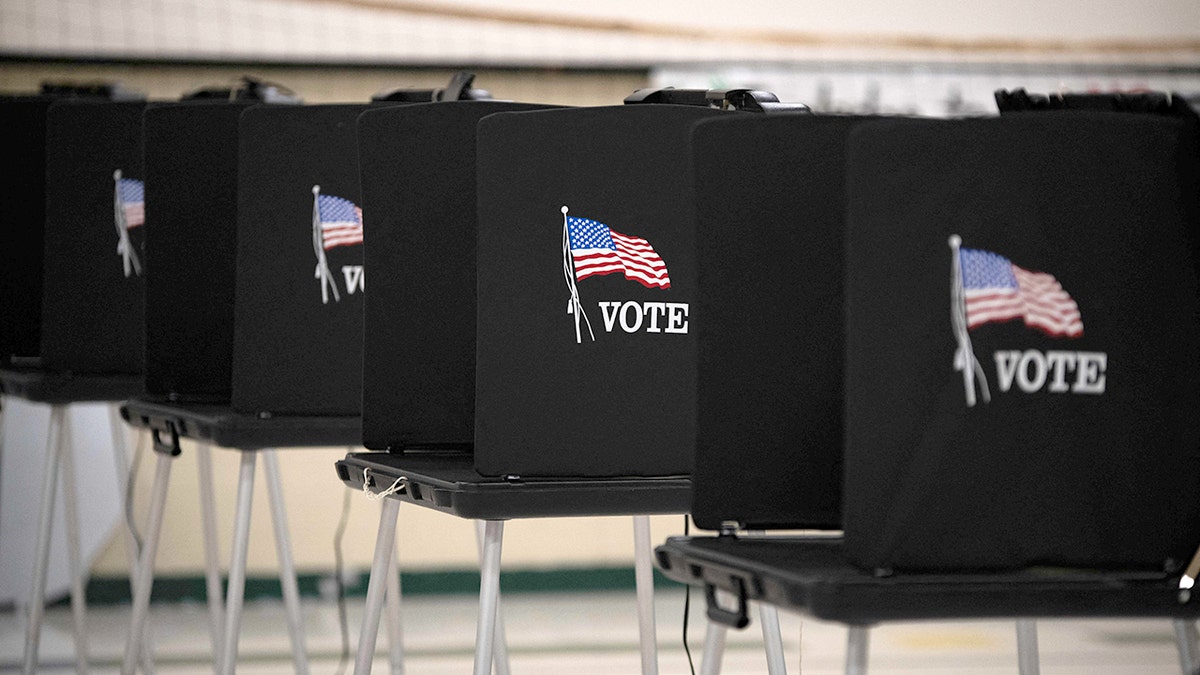
Voting booths are seen at Glass Elementary School’s polling station in Eagle Pass, Texas, on November 8, 2022. (MARK FELIX/AFP via Getty Images)
Senate Minority Leader Chuck Schumer, D-N.Y., has repeatedly referred to the legislation as «Jim Crow 2.0.»
CLICK HERE TO DOWNLOAD THE FOX NEWS APP
«While the specific policies may have changed since the days of the Jim Crow South, the goal of the SAVE Act is the same: disenfranchising American citizens and making it harder for eligible people to vote, particularly low income Americans and people of color,» he said in February.
Republicans argue that the SAVE America Act — which would implement federal voter ID requirements and a proof of citizenship mandate in the voter registration process — would make American elections safer and more secure.
elections, congress, voting, mike johnson, politics
INTERNACIONAL
Basado en hechos reales: cuando el dolor se transforma en un libro capaz de iluminar a sus lectores
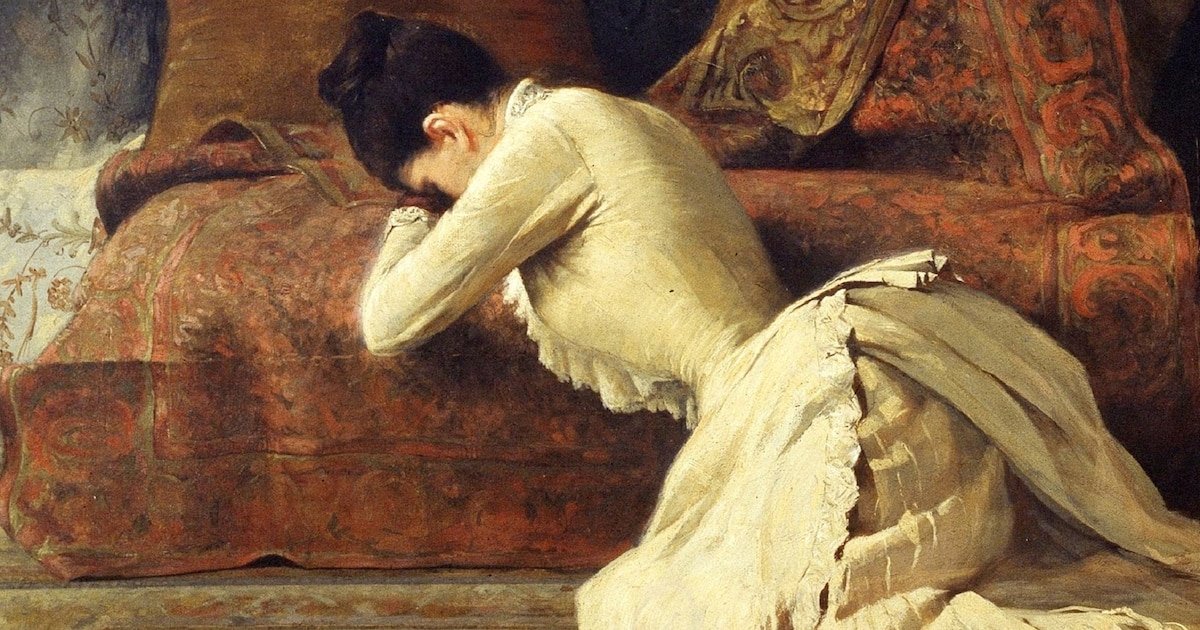
Las tres parten de una tragedia íntima. Y las tres de circunstancias distintas: un aborto clandestino, la supervivencia al Holocausto y la muerte de un ser amado. ¿El punto de contacto? la escritura como forma de procesar lo vivido y encontrar un sentido que trascienda lo personal.
En El acontecimiento, la francesa Annie Ernaux, Premio Nobel de Literatura, reconstruye el aborto clandestino al que debió someterse en la Francia de 1963, cuando interrumpir un embarazo era un delito. Y lo hace con una honestidad brutal. Ernaux no pretende despertar compasión ni hacer un alegato sentimental. Solo escribe y, de esa forma, rescata de la oscuridad una experiencia compartida por miles de mujeres, demostrando cómo la memoria individual puede convertirse en colectiva.
“Una tarde salí decidida a encontrar un médico que aceptara ayudarme a abortar. Ese ser tenía que existir en algún lugar. (…) Las chicas como yo estropeábamos el día a los médicos. Sin dinero y sin relaciones – de lo contrario no hubiéramos ido a parar a ciegas a su consulta- les obligábamos a recordar la ley que podía llevarles a la cárcel y prohibirles para siempre el ejercicio de su profesión. No se atrevían a decir la verdad: que no iban a arriesgarse a perderlo todo por la cara bonita de una señorita lo bastante estúpida como para haberse dejado preñar. (…) Y como de costumbre, era imposible determinar si el aborto estaba prohibido porque estaba mal, o si estaba mal porque estaba prohibido. Se juzgaba con relación a la ley, no se juzgaba la ley”.

Diferente es la travesía de la sicóloga húngara Edith Eger, con La bailarina de Auschwitz. Deportada al campo de concentración nazi, con solo 16 años, pudo sobrevivir al horror después de perder a sus padres y de convivir con el hambre, el miedo y la muerte.
“El doctor Menguele es un asesino refinado y amante de las bellas artes. Por las noches busca entre los barracones a presas con talento para que lo entretengan. Esta noche entra con su séquito de ayudantes y lanza una mirada sobre las recién llegadas. (…) Permanecemos inmóviles, con las espaldas pegadas a las literas de madera que rodean la habitación. Nos examina. (…) Los ojos de Menguele me miran fijamente. (…) ¡Baila! Me ordena. (…) Puedo oír su voz por encima de la música. Habla con el otro oficial acerca de cuáles de las cien chicas presentes serán las próximas en morir. Si doy un mal paso, si hago algo que le desagrade, podría ser yo”.
Décadas más tarde, convertida en psicóloga clínica, encontró en la escritura una manera de integrar el pasado y de transmitir una enseñanza que atraviesa todo el texto: incluso después del sufrimiento más extremo, siempre está la posibilidad de elegir cómo vivir con eso que nos pasó. Su relato evita el resentimiento y apuesta por la resiliencia como una forma de libertad interior. La historia real que escribe Eger, es un análisis exhaustivo del alma humana y de cómo recuperarla luego de un episodio traumático. Y es posible. Al menos así lo asegura.

“Estamos abrumados por la pérdida y creemos que nunca recuperaremos el sentido de identidad y de realización, que nunca mejoraremos. Pero, a pesar de las dificultades y las tragedias de nuestras vidas y, en realidad, gracias a ellas, todos tenemos la posibilidad de adoptar una perspectiva que nos transforme de víctimas en triunfadores. Podemos elegir asumir la responsabilidad de nuestras dificultades y nuestra curación. Podemos elegir ser libres.”
En línea con la pérdida y el duelo, en El año del pensamiento mágico, la periodista y escritora norteamericana Joan Didion enfrenta una tragedia diferente pero igualmente devastadora: la muerte repentina de su esposo, el escritor John Gregory Dunne. Con la lucidez que la caracteriza, Didion registra el desconcierto del duelo, “la vida cambia en un instante, Te sientas a cenar y la vida que conocías se acaba”, esa etapa en la que la razón convive con la idea irracional de que el ser querido pueda regresar.
“Todavía no estaba preparada para enfrentarme a los trajes camisas y chaquetas, pero sí pensé que podía encargarme de los zapatos que quedaban, lo cual era un principio. Me detuve en la puerta de la habitación. No pude dar el resto de los zapatos. Me quedé allí un momento plantada y entonces me di cuenta de por qué: si John quería volver, le iban a hacer falta zapatos. El ser consciente de esta idea no la erradicó en absoluto. (…) Cómo podía volver John si le sacaban los órganos, ¿cómo iba a volver si no tenía zapatos?”.

La obra es una exploración minuciosa de la pérdida, pero también un testimonio contundente sobre los mecanismos con los que la mente intenta sobrevivir cuando el mundo conocido se derrumba.
Final. Más allá de sus diferencias, las tres obras comparten una convicción: contar la verdad, incluso cuando duele, puede ser un acto profundamente transformador. Y que el medio para ese relato sea la literatura pone de relieve la función catalizadora que puede llegar a tener la acción de contarlo, pero por escrito.
Las tres autoras eligieron escribir desde la herida, convirtiéndose en protagonistas y narradoras de su propia tragedia. Esa condición les permitió construir textos reflexivos y de alto impacto emocional a la vez. En tiempos en que las fronteras entre ficción y realidad son cada vez más difusas, Ernaux, Eger y Didion demuestran que la experiencia propia puede alcanzar una dimensión universal. Sus relatos hablan de ellas, pero también de cualquier persona que haya atravesado la pérdida, la incertidumbre o el miedo. Porque, al final, estas lecturas celebran algo valioso: la capacidad humana para encontrar sentido en medio del dolor y transformar una vivencia límite en una obra capaz de acompañar, consolar e iluminar la vida de los lectores.

Los motivos ocultos del Gobierno y la CGT para acordar una modificación en la restricción que afectaba a la caja sindical

Asesinaron de una puñalada a un adolescente en Mendoza tras una discusión entre vecinos y su hermano resultó herido

Boom exportador: prevén que el superávit comercial sumará USD 7.000 millones en la segunda mitad del año

La burla de Lamine Yamal a Leandro Paredes por su pelea con Gavi: el cartel que se robó las miradas en los festejos de España

Una modesta propuesta para la disputa por el estrecho: un pacto compartido entre los Estados del Golfo

Paro de transporte. El universo de los sindicalistas que pueden frenar los vuelos en el país

Rubio’s call to combat global funders of far-left terrorism could put Singham in crosshairs

Sismo de 7.4 sacude a Guatemala: Autoridades declaran alerta anaranjada por daños y descartan tsunami

Canales para ver EN VIVO el San Lorenzo vs. Deportivo Riestra por la Copa Argentina

Rogelio Frigerio presentó un seguro multirriesgo con un fondo de USD 1 millón para el maíz en Entre Ríos

 POLITICA18 horas ago
Sin la Copa y sin Messi en el avión, vuelve Tapia y deberá enfrentar tres frentes de tormenta tras la pausa del Mundial
- INTERNACIONAL3 días ago
Estados Unidos cambia una regla histórica del jugo de naranja vigente desde 1963 y afecta a toda la industria
- CHIMENTOS3 días ago
Es el conductor más querido de la tele y tan argentino como el mate, pero pocos saben que nació en España: ¿a quién alentará en la final?