INTERNACIONAL
Francisco, papa argentino: “El corrupto no conoce la fraternidad, conoce la complicidad”

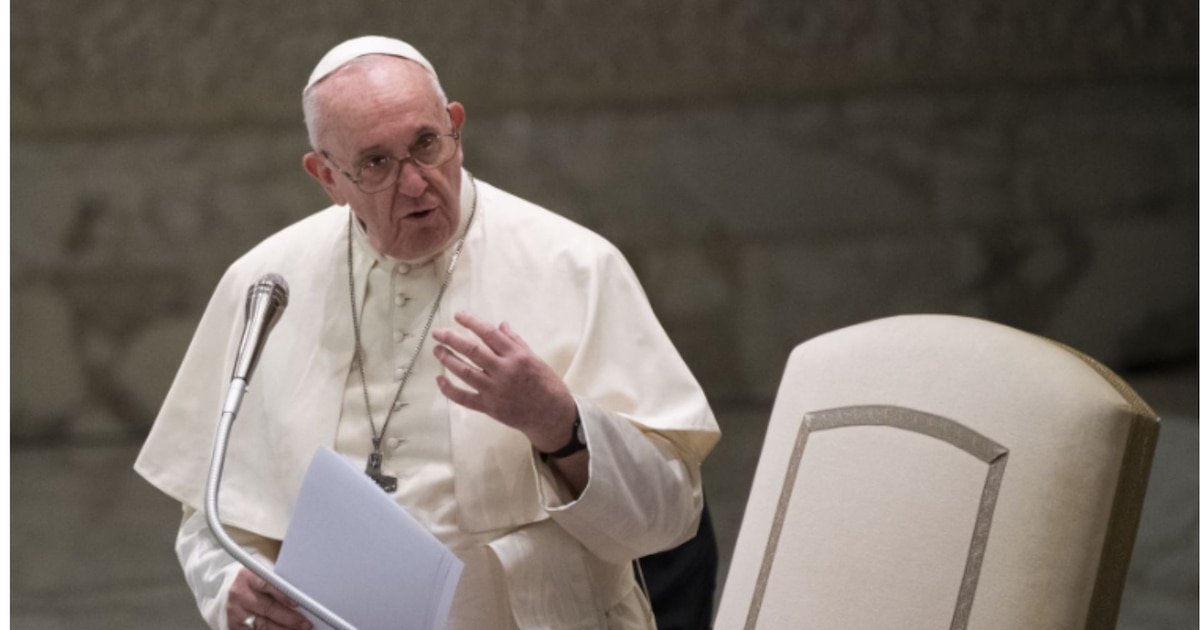
En el vasto andamiaje del pensamiento contemporáneo, pocas figuras han diseccionado las dinámicas del poder con la crudeza conceptual de Jorge Bergoglio. Mucho antes de convertirse en el Papa Francisco, el entonces arzobispo de Buenos Aires ya orbitaba alrededor de una obsesión que combinaba la teología pastoral con la sociología de las instituciones: la naturaleza destructiva de la corrupción. Sobre este asunto dejó un gran aforismo: “El corrupto no conoce la fraternidad, conoce la complicidad”.
Detrás de esta línea hay una tesis filosófica que define la corrupción como la negación absoluta del lazo social y la instauración de una mafia del espíritu. Aunque el mundo la escuchó con resonancia global el 23 de octubre de 2014, cuando el Papa Francisco la pronunció en el Aula del Sínodo de la Ciudad del Vaticano ante los miembros de la Asociación Internacional de Derecho Penal, la idea ya había sido gestada casi una década antes en el ruidoso escenario de la crisis argentina.
La matriz conceptual de esta declaración se encuentra en Corrupción y pecado: algunas reflexiones en torno al tema de la corrupción, un breve pero filoso ensayo publicado por Jorge Bergoglio en el año 2005. En aquellas páginas, escritas bajo el pulso de una sociedad que aún suturaba las heridas políticas y económicas del cambio de siglo, el cardenal se propuso delimitar una frontera invisible pero insalvable para la Iglesia católica: la sutil distancia que separa al pecador del corrupto.
Cuando en 2014 se paró frente a los máximos penalistas del mundo, no lo hizo para hablar exclusivamente de códigos o procedimientos técnicos, sino para describir la psicología del criminal de cuello blanco. Fue en ese contexto de debate sobre los abusos del poder punitivo y la criminalidad económica donde la frase cobró su dimensión definitiva. ¿Por qué el corrupto es incapaz de la fraternidad? Para el Papa Francisco, la fraternidad requiere una simetría moral y la aceptación de la vulnerabilidad del otro.

En su concepción, el hermano es un igual con quien se comparte un destino común. El corrupto, atrapado en una paranoia de impunidad, es incapaz de mirar al otro sin calcular su utilidad. La complicidad es, entonces, la siniestra parodia de la amistad. Mientras que la amistad libera, la complicidad encadena; mientras que la fraternidad se funda en la transparencia, la complicidad exige el secreto compartimentado. Los hombres libres se asocian para construir; los cómplices, para encubrir.
En la arquitectura mental que Jorge Bergoglio describe, el corrupto no tiene amigos, tiene socios; no genera redes de contención, sino pactos de silencio. Quien no entra en la transa colectiva no es un disidente: es un enemigo directo que amenaza la estabilidad del sistema. Esta idea no es un satélite periférico en su producción intelectual; es el centro de gravedad de su geopolítica y sus encíclicas más disruptivas. El pensamiento bergogliano se hamaca siempre entre dos polos: la comunión y la fragmentación.
A diferencia del pecador común, que experimenta la culpa y el peso de su caída —vía que el pensamiento católico clásico explora en obras que van desde las Confesiones de San Agustín hasta la literatura existencialista de Graham Greene—, el corrupto analizado por Jorge Bergoglio ha anestesiado su conciencia. El corrupto no se siente en falta; se siente un ganador. Vive en un estado de autosuficiencia donde la impunidad, y su consiguiente autopreservación, ha sido internalizada como un derecho adquirido.
En última instancia, al denunciar que el corrupto solo conoce la complicidad, el Papa Francisco despoja a la corrupción de su ropaje meramente financiero. Nos advierte que el verdadero peligro de este flagelo no es el dinero que se desvía, sino la degradación antropológica que produce: la transformación de una comunidad de hermanos en una asociación ilícita de cómplices. Esas palabras tan simples y a la vez tan profundas vuelven a sonar hoy cuando —lo vimos estos días— la corrupción sigue enquistada.

Jorge Mario Bergoglio, conocido como el Papa Francisco, nació en Buenos Aires, Argentina, el 17 de diciembre de 1936. Hijo de inmigrantes italianos, se graduó como técnico químico antes de descubrir su vocación religiosa y unirse a la Compañía de Jesús en 1958. Su carrera eclesiástica avanzó con rapidez: se desempeñó como provincial de los jesuitas en Argentina y, en 1998, asumió como arzobispo de Buenos Aires, cargo desde el cual se convirtió en una figura central de la Iglesia latinoamericana.
Su liderazgo cercano, su estilo de vida austero y su constante preocupación por las periferias marcaron su gestión pastoral en el país, consolidando un perfil profundamente enfocado en la justicia social y el cuidado de los sectores más vulnerables. El 13 de marzo de 2013 hizo historia al ser elegido como el papa número 266 de la Iglesia católica, convirtiéndose en el primer pontífice jesuita y el primero proveniente de América. Adoptó el nombre de Francisco en honor a San Francisco de Asís.
A lo largo de sus doce años de pontificado, impulsó reformas estructurales en la curia romana, abogó por la transparencia financiera e instaló debates globales a través de encíclicas fundamentales como Laudato si’ (sobre el cuidado del medio ambiente) y Fratelli tutti (sobre la fraternidad y la amistad social). Tras un prolongado deterioro de su salud debido a afecciones respiratorias, falleció a los 88 años el 21 de abril de 2025 en su residencia de la Casa de Santa Marta, en la Ciudad del Vaticano.

INTERNACIONAL
Social media erupts over socialist’s 9/11 comments after House primary win: ‘Radical lunatic’
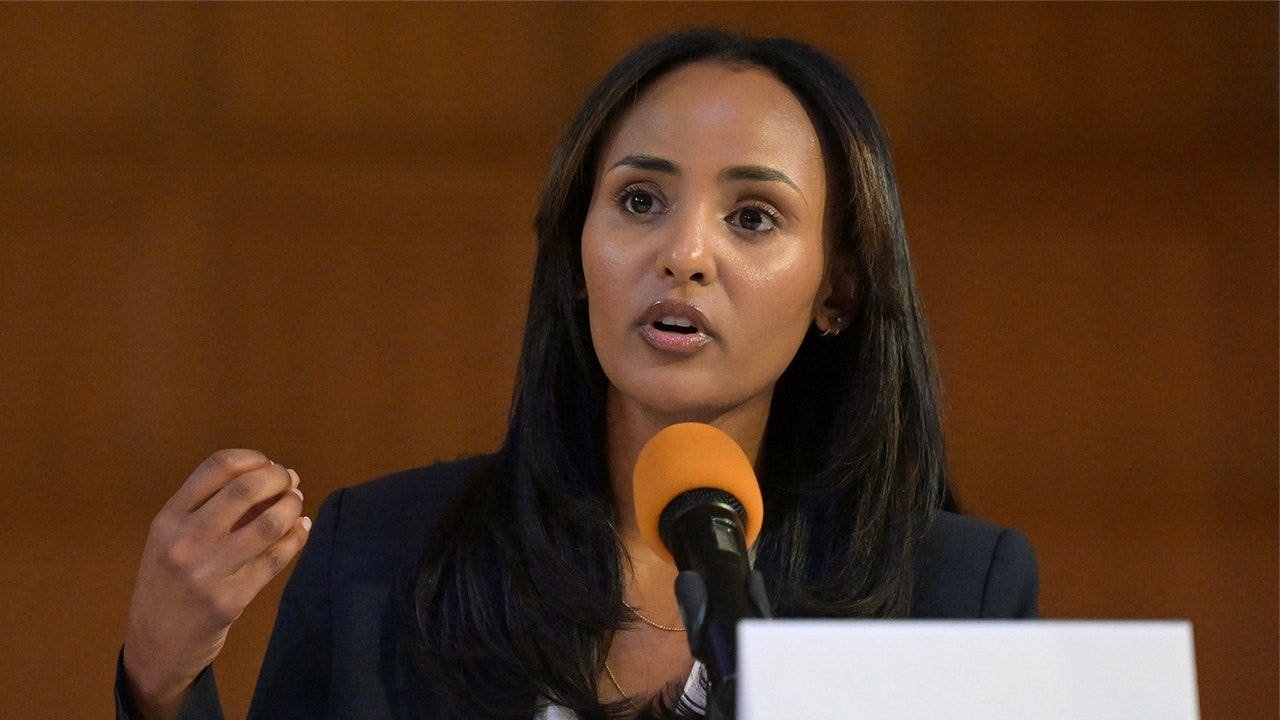
Colorado poised to send socialist to Congress after Democratic primary upset
The ‘Outnumbered’ panel, led by Kayleigh McEnany, raises alarms about the growing influence of socialist candidates like Melat Kiros, who won a Colorado primary. The discussion emphasizes former President Ronald Reagan’s historic warnings against socialism and communism, drawing parallels to current progressive political trends.
NEWYou can now listen to Fox News articles!
In the wake of her primary victory on Tuesday evening in Colorado’s first congressional district, conservatives and social media users expressed alarm at Melat Kiros’s stated views of the 9/11 terror attacks.
«This is light-years worse than AOC beating 10-term incumbent Joe Crowley,» Steve Guest, a GOP strategist, said in a post to X, referring to the rise of progressive Rep. Alexandria Ocasio-Cortez.
«This is the Democrat party,» Guest added.
Kiros has suggested the U.S. may have invited the attacks on the World Trade Center in 2001 that left nearly 3,000 Americans dead. Those views, compounded with other statements that have seemed to rationalize acts of violence, have sparked backlash as she looks poised to capture a seat in the U.S. House of Representatives and further cement the momentum of the far-left flank of the Democratic Party.
MUSLIM MAMDANI-BACKED SOCIALIST PRIMARY WINNER SUGGESTED AMERICA DESERVED 9/11 IN UNEARTHED VIDEO
Democratic congressional candidate Melat Kiros speaks to supporters at an election-night watch party after winning the Colorado primary on June 30, 2026 in Denver, Colorado. Kiros defeated incumbent Rep. Diana DeGette, D-Colo., in the Democratic primary. (Michael Ciaglo/Getty Images)
When asked if the 9/11 attacks had been avoidable, Kiros said she believed the U.S. had made them «inevitable» through its foreign policy.
«Inevitable in the sense that we destabilized a lot of the Middle East. That forced people to believe that another act of violence was the only response,» Kiros said in an interview.
«SICK!» the Republican National Committee (RNC) wrote online, highlighting the comments.
Benny Johnson, a conservative media personality, pointed to Kiros’ win as evidence that the Democratic Party had conceded to candidates with extreme positions.
«She is a socialist who was born in Ethiopia. Melat also thinks America deserved 9/11. It isn’t just happening in New York; Democrats are losing their entire party,» Johnson said in a post, alluding to the victory of other socialist candidates with similar views.
Rep. Mike Lawler, R-N.Y., also echoed Johnson’s thinking.
«One radical lunatic after the next is coming to Washington. Why would we ever want to empower someone who believes 9/11 is America’s fault?»
MELAT KIROS BECOMES 28TH FAR-LEFT CANDIDATE TO WIN A DEMOCRATIC PRIMARY THIS YEAR AS SOCIALISTS AMASS POWER
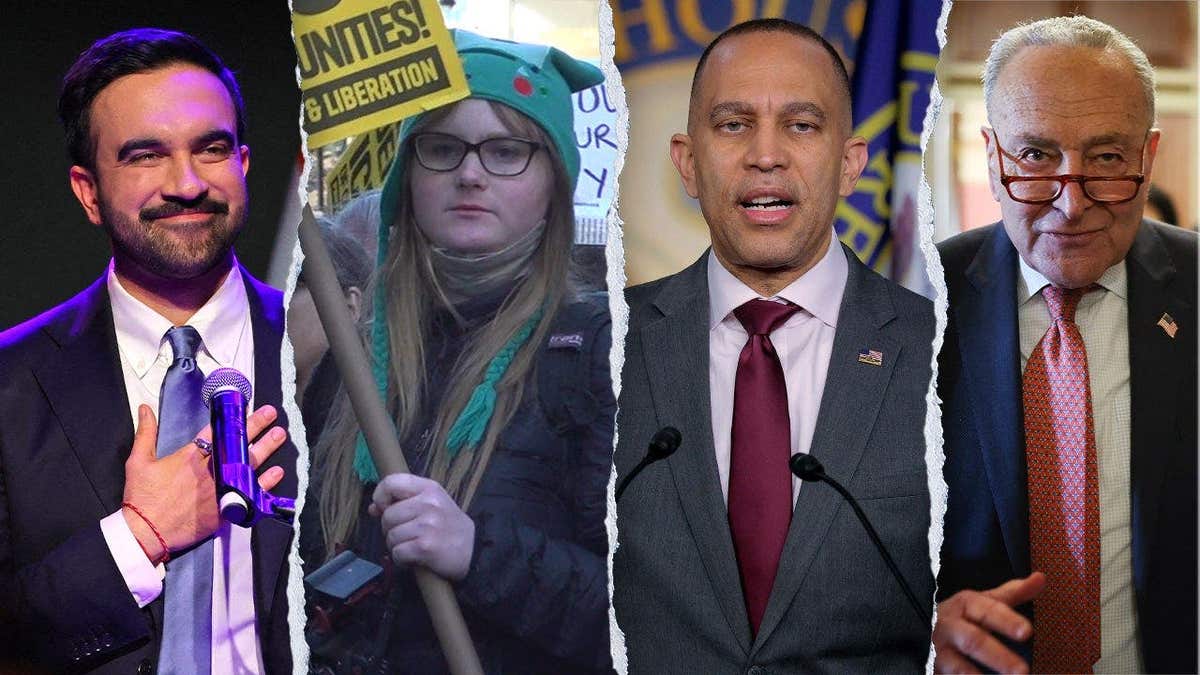
Mamdani, AOC and socialism gain ground, while Schumer and Jeffries take a hit after NYC’s primaries. (ANGELA WEISS/AFP via Getty Images ; Fox News Digital ; Chip Somodevilla/Getty Images ; Kayla Bartkowski/Getty Images)
On her website, Kiros shares platform items that are commonly held by many radical progressives: Medicare-for-all, ending «all wars,» abolishing Immigration and Customs Enforcement (ICE) and universal childcare.
«As someone who’s working as a barista to pay for school and health care, I know what it’s like to work so hard to get ahead while Washington is so far behind,» Kiros said in a campaign video.
But it’s her views on Israel and U.S. foreign relations that have set her apart from many other candidates, including DeGette.
Kiros, a Ph.D. student and lawyer, was fired from a New York firm in 2023 after publishing an open letter, arguing that anti-Israel student protesters calling for the elimination of Israel were not antisemitic and appearing to defend Hamas.
She has also described the Oct. 7, 2023, attacks against the Jewish state as the «inevitable consequence of apartheid» and declined to characterize the deadly firebombing of protesters in Boulder last year who were urging the release of hostages held by Hamas in Gaza as antisemitic.
«I don’t know what was in the heart of the perpetrator,» Kiros told Colorado’s 9News in a recent television interview. «All I know is that he went and attacked innocent people because of what they might have believed.»
Like other onlookers, Clay Travis, the conservative founder of OutKick, a sports and pop culture website, said he feared that Kiros’ victory would only lead to more far-left momentum elsewhere.
SOCIALISM GOES WEST AS DSA-BACKED CHALLENGER OUSTS LONGTIME DEMOCRAT

Democratic congressional candidate Melat Kiros participated in a League of Women Voters Congressional District 1 candidate forum at Montview Presbyterian Church on May 28, 2026, in Denver, Colorado. (Photo by RJ Sangosti/MediaNews Group/The Denver Post via Getty Images)
CLICK HERE TO DOWNLOAD THE FOX NEWS APP
«That’s four incumbents losing primaries to socialists in a week. Every state now has a Mamdani [and] the Democrat Party is on a rapid descent to Communism,» Travis wrote.
Kiros will face Republican challenger Christy Peterson, a local accountant, in the state’s general election on Nov. 3.
democrats, democratic party, the squad, democrats elections
INTERNACIONAL
El cisma en la Iglesia: el Papa León XIV excomulgó a obispos lefebvrianos por desafiar su autoridad

NEWYou can now listen to Fox News articles!
TEL AVIV: As Israel marks 1,000 days since the Hamas-led Oct. 7 massacre, children — many still coping with the psychological effects of the war — are beginning their summer vacation, with some navigating the uncertainties of traveling abroad amid rising antisemitism and others grappling at home with the anxieties of living in a society shaped by nearly three years of war on multiple fronts.
Lilach, 47, of Kibbutz Eilon, jut over a mile and a half from Israel’s border with Lebanon in the Western Galilee, told Fox News Digital she hopes her children — Yuval, Amit, and Yoni — will finally be able to enjoy a normal summer.
During the war, there was always concern about leaving home. The kids were barely in school and spent most of their time indoors in front of screens,» she said.
«I hope they can now spend time with their friends and enjoy activities together. Tomorrow, Yoni is going to an amusement park. I just want them to have fun, be with their friends and enjoy being kids again,» she added.
ISRAEL ANNOUNCES IT KILLED ONE OF THE ARCHITECTS OF THE OCT. 7 ATTACKS
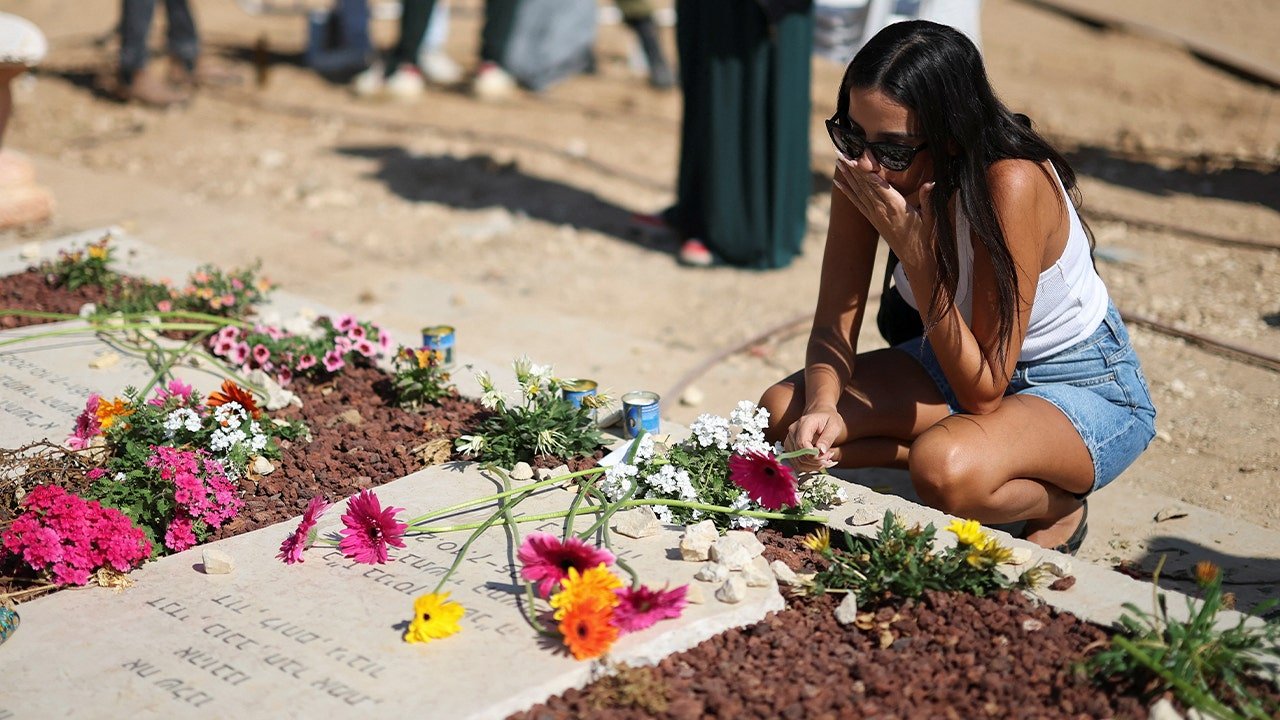
A woman reacts as the community of Kibbutz Kfar Aza commemorates their members who were killed, taken hostage and who died in captivity, following the deadly Oct. 7, 2023 attack by Hamas terrorists, in Kibbutz Kfar Aza, southern Israel, Oct. 16, 2025. (Hannah McKay/Reuters)
Since the COVID-19 pandemic began in early 2020, Lilach said, her children have had only one uninterrupted year of school.
«It was hard. They would start school, attend for a month or two, then classes would stop because of the war with Iran or fighting with Lebanon, and then resume. It was difficult to get back into a routine each time. It felt like starting a new school year over and over again,» she said.
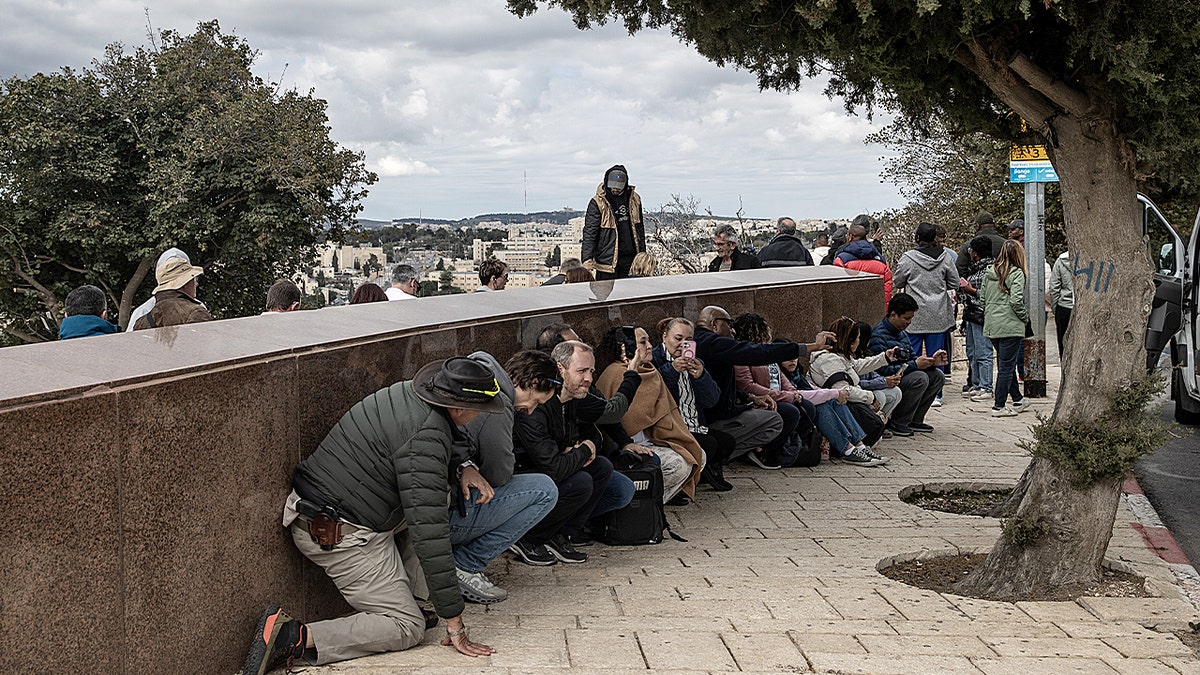
People take shelter as Iran launched missiles and drones towards Israel following the US-Israeli attacks. ( Mostafa Alkharouf/Anadolu via Getty Images)
Despite the repeated disruptions, Lilach said her daughter Amit graduated from high school thanks to her determination and private tutoring. Yoni, however, who has attention deficit disorder, struggled with spending weeks at home during the fighting and will move to a smaller classroom next year to receive additional support.
Evacuated with her family a day after the Oct. 7 attacks, Anat, 50, of Kibbutz Yiftah in the Upper Galilee, less than two miles from Israel’s border with Lebanon, told Fox News Digital that her children changed schools three times before the family returned home in February 2025. During Israel’s recent war with Iran, they were again out of school for about six weeks.
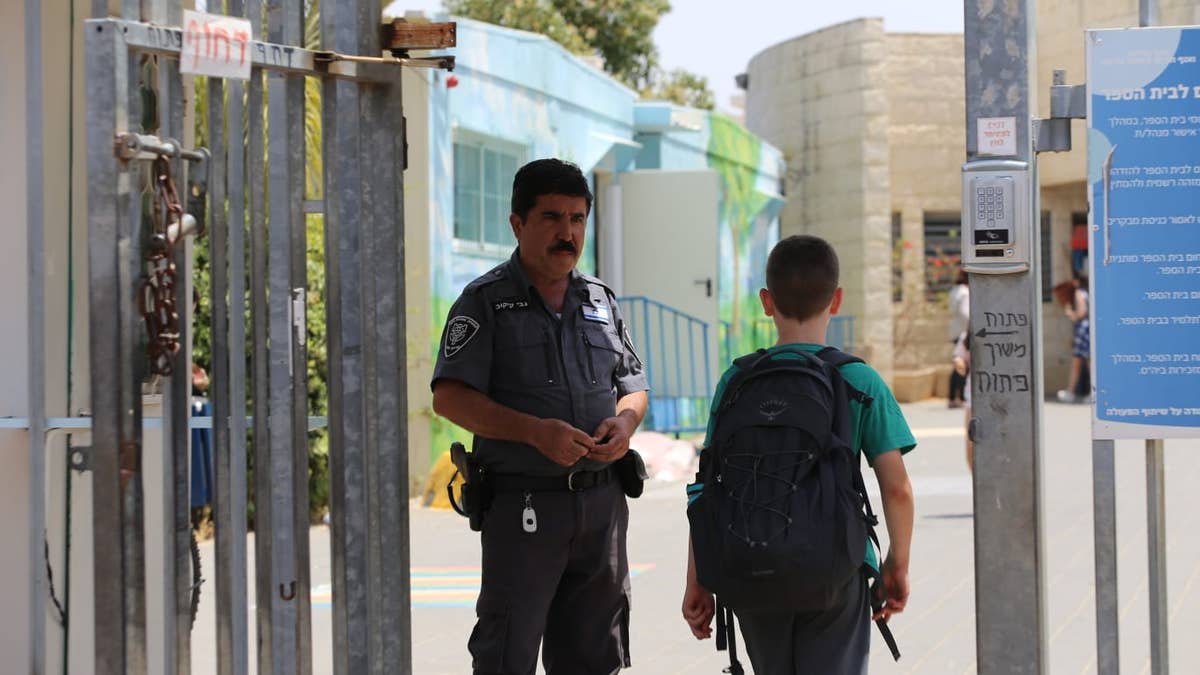
An Israeli school security officer watches on as students enter school (Eitan Elhadz/TPS)
«Every day, having my 10-year-old log on to Zoom for online classes was a challenge. It was very difficult to maintain a routine and continuity in her learning,» Anat said.
With the family hoping to travel abroad this summer, Anat said she has tried to shelter her children from the tidal wave of antisemitism that has emerged globally over the past three years of war.
«We don’t talk at home about people around the world who hate us. We love everyone, and we don’t talk about hate, period. For them, traveling is something wonderful that they can’t wait for,» she said. «Despite how difficult it has been, our children are strong. They have grown up quickly because of everything they’ve been through and know how to cope. We don’t feel sorry for ourselves—we’re fighters.»
EXPERTS URGE EXTREME CAUTION ON IRAN’S ‘CROWN JEWEL’ HEZBOLLAH — TERROR GROUP WITH US BLOOD ON ITS HANDS
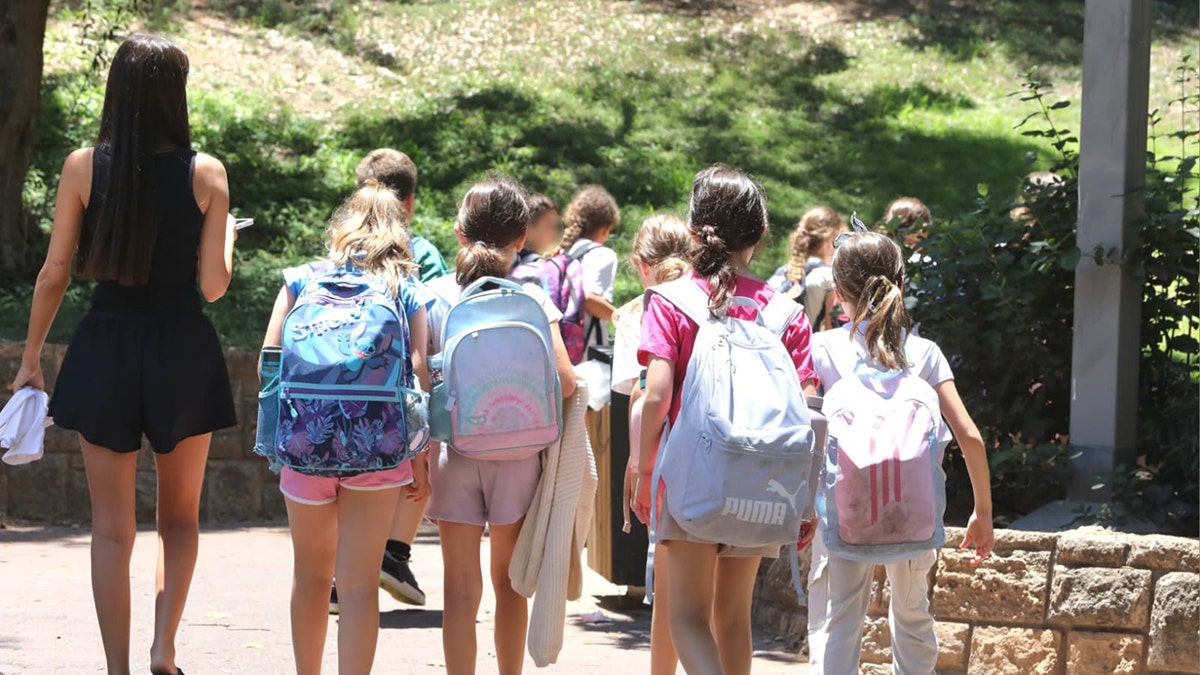
Israeli school kids on an outing on June 30, 2026. (Gideon Markowicz/TPS-IL)
Nufar Bar Lipshatz, a developmental psychologist in the Northern District of Clalit Health Services, Israel’s largest healthcare provider, said many children continue to show signs of trauma.
According to data she cited from Israel’s National Insurance Institute, 25,274 children had been officially recognized as victims of hostile acts between Oct. 7, 2023 and the end of 2025. She also referenced a joint study by the Goshen organization and the Israeli Pediatric Association showing that 84% of Israeli children exhibited signs of emotional distress by late 2023 following the cross-border terror assault from Gaza and Hezbollah’s entry into the war from Lebanon the following day.
«We see many symptoms that are connected but manifest differently in each child, whether it’s a child who can’t speak, wets their pants, or develops [nervous] tics,» Bar Lipshatz said. «Trauma is real, and children can’t always express it with words, so they act it out. They reenact running to shelters, their father being deployed, war, aggression and kidnappings during play.»
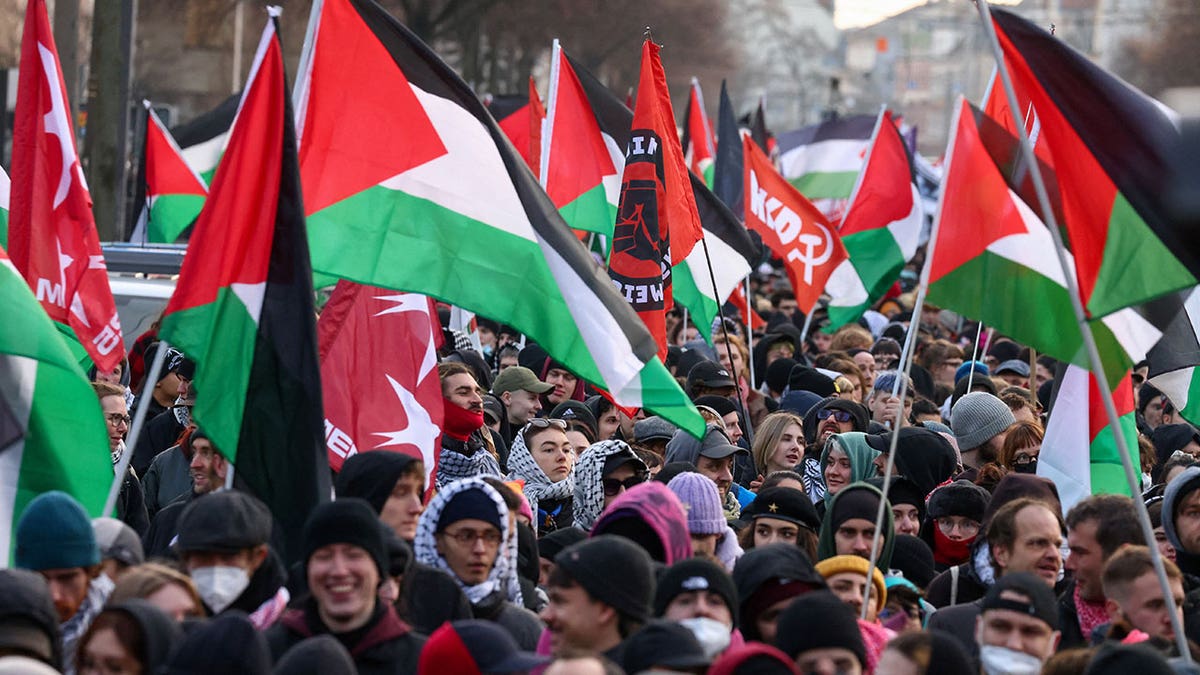
Protesters attend an anti-Israel demonstration in Leipzig, Germany Jan. 17, 2026. (Christian Mang/Reuters)
She recalled treating a girl who became unable to ride her bicycle because she constantly looked over her shoulder, checking whether someone was behind her.
While summer vacation may offer temporary relief, Bar Lipshatz warned that long breaks from routine can reinforce anxiety.
«We know from research that children need stability and routine because it helps them feel safe. During school breaks, children may feel safer because they are avoiding situations that trigger stress, but over time they are also avoiding facing their fears,» she said. «We need to give parents and children the tools to cope with stress because it will not disappear simply by staying at home.»
Bar Lipshatz, who also works with autistic children, said travel itself can be challenging because unfamiliar sounds and crowded environments may trigger traumatic memories.
SIGN UP FOR ANTISEMITISM EXPOSED NEWSLETTER
«When you go on vacation, you go to places with lots of people and noise. What we think could be fun can actually become a trigger,» she said, recalling a trip to Romania where bear-warning sirens in a national park sounded identical to Israel’s missile alerts.
She noted that one of her young patients told her she feared traveling abroad because, despite the war, Israel felt more predictable than an unfamiliar country.
In a bid to maintain a sense of routine and help students catch up on lost time, the Israeli Ministry of Education told Fox News Digital that it will continue operating throughout the summer through programs serving approximately 1.12 million students, supported by an investment of about $270 million.
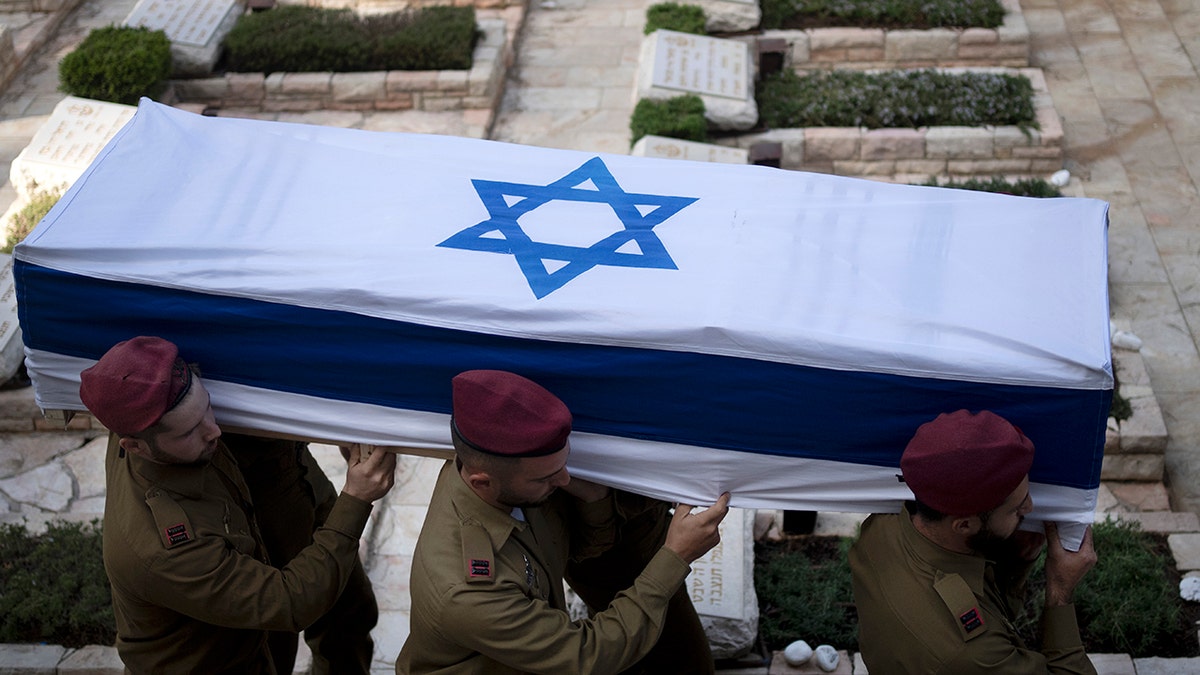
Soldiers carry Oster’s coffin during his funeral on Wednesday in Tel Aviv. (AP/Maya Alleruzzo)
For the first time, middle school students will participate in summer programs focused on artificial intelligence, STEM subjects, mathematics, science, and English. The ministry said the highest participation rates are in northern and southern communities affected by the war.
It also said it will continue providing emotional support through its Psychological Counseling Service, expand psychological services for students in need, and keep its «Voice for All» support hotline operating throughout the summer.
«The education system will continue to support Israeli students during the summer vacation to ensure educational, emotional and social continuity for every student who needs it,» the ministry said.
FROM HOMEROOM TO HATE: HOW JEWISH STUDENTS ARE FACING A NEW KIND OF PRESSURE IN PUBLIC SCHOOLS
Children affected by the war are also attending summer camps such as those led by OneFamily, an organization that supports victims of terrorism and war and their families.
More than 400 children — each of whom has lost an immediate family member to terrorism or war, most since the Hamas-led Oct. 7, 2023, attacks — will take part in OneFamily’s annual summer camp from July 8 to July 13 in the Golan Heights, where they will spend time with other children who share similar experiences of grief and loss.
A central focus of the camp is helping children build resilience while learning to cope with their grief. This year, the organization’s founding director, Chantal Belzberg, received the Israel Prize for Lifetime Achievement.

Israeli children at the OneFamily summer camp, July 2025. (Meir Pavlovski)
Activities include swimming, competitions, sports, but also therapeutic group dialogue circles. On the last night, some campers share stories about their lost loved ones and their own journey to healing, followed by a big concert.
«Children who have lost a parent, both parents or siblings to terrorism or acts of war don’t always want to go to therapy. But when you bring them together with other children who have experienced the same loss, it gives them strength and creates a therapeutic environment,» Belzberg told Fox News Digital.
CLICK HERE TO DOWNLOAD THE FOX NEWS APP
«They come to have fun, and through the activities they meet other children who have gone through the same thing. That’s when they begin to talk. Traditional support services are not always places where children want to go,» she continued.
«We bring them together so they meet children who truly understand them. They realize they are not alone and can build a community where they don’t feel isolated. One of the greatest challenges after trauma is isolation,» she added.
anti semitism, israel, conflicts, terrorism, war with iran

De qué se trata la reforma electoral que negocia Santilli con los gobernadores

La jugada del juez más temido por la AFA que inquieta a Chiqui Tapia y Pablo Toviggino

Mario Massaccesi habló de la situación que vivió en su infancia y lo marcó para siempre en su vida: «No me voy a olvidar nunca»

Dólar hoy en vivo: a cuánto se operan todas las cotizaciones minuto a minuto este jueves 2 de julio

Ante el interés del Real Madrid, la propuesta récord que prepara Bayern Munich para blindar a una de las figuras del Mundial

Jorge Macri presentó BAX, un asistente de inteligencia artificial para agilizar la consulta de trámites y servicios

Exigen que Adorni renuncie a su cargo en el directorio de YPF

Tras haber dejado su cargo de jefe de Gabinete, Manuel Adorni también renunciará como director de YPF

Shipping giant warns Strait of Hormuz chaos is ‘new normal’ as Tehran shifts 4M barrels

Javier Milei irá a la cumbre del Mercosur en tensión con Brasil y con Venezuela como telón de fondo

 POLITICA1 día ago
Con la incorporación de Santilli al Gabinete, el Gobierno relanza su estrategia para las elecciones 2027
- ECONOMIA3 días ago
Exportadores y el sindicato de aceiteros acordaron un aumento de sueldo para todo 2026
- ECONOMIA2 días ago
Comcast’s Breakup Is Overdue. It Shouldn’t Rush Into a New Marriage.