INTERNACIONAL
Encuentro en Turquía: Europa intenta contener a Donald Trump en una cumbre clave de la OTAN


Los europeos intentan salvar otra cumbre de la OTAN ante las embestidas de un Donald Trump que nunca entendió la organización y mucho menos el papel de su país en ella. El presidente estadounidense considera que los europeos se aprovechan de Estados Unidos desde hace 80 años, pero sin la plataforma que ofrece Europa, Washington sería incapaz de proyectar poder en el resto del mundo y habría perdido su primer mercado.
Trump llegó a Ankara este martes diciendo que estaba “muy decepcionado” por la respuesta que los europeos dieron a su aventura bélica en Irán. “Me decepcionó mucho”, dijo ante el anfitrión de la cumbre, el presidente turco Recep Tayyip Erdogan. “No necesitábamos ninguna ayuda, sólo estaba probándolos”. Aseguró que sólo asiste a la reunión “por Erdogan”, despreciando a los otros 30 gobernantes presentes.
El presidente estadounidense volvió a amenazar a Dinamarca al decir que “Groenlandia debería estar bajo control de Estados Unidos”, elevando la tensión de la cumbre incluso antes de su inicio formal. Trump hizo incluso referencias a la política migratoria europea (le parece blanda) y a la energética (rechaza las renovables que va sumando Europa).
Hace un año, en La Haya, Trump les exigió gastar en defensa el 5,0% del PBI. Todos aceptaron excepto el español Pedro Sánchez, que se sigue negando con el argumento de que no es ni militarmente necesario ni económicamente sostenible. La OTAN, sin Estados Unidos, ya gastaba en defensa siete veces más que Rusia antes de los aumentos del año pasado.
Los Estados miembros de la organización deben presentar en esta cumbre sus programas de gasto de los próximos años para llegar a ese 5%. España no lo hará. Otros lo harán a sabiendas de que su situación económica (deuda pública italiana por encima del 130% del PBI, francesa ya rozando el 120%) o política (el Reino Unido y sus recurrentes cambios de primer ministro) complican cumplir cualquier promesa.
Pero hay que contener a Trump. Así que la cumbre arrancó con un foro empresarial en el que se anunciaron acuerdos con la industria estadounidense por valor de 1.600 millones de euros, pecata minuta en un gasto militar que el año pasado subió en Europa un 20%. Alemania por su cuenta ya gasta más de 100.000 millones de euros al año.
Mark Rutte, secretario general de la Alianza Atlántica (el cargo es más de coordinación que de liderazgo) y ex primer ministro holandés, dedicado desde hace año y medio a aplaudir y halagar a Trump hasta límites que rozan el ridículo, vende una cumbre sin problemas, exitosa y de consolidación de la OTAN. Pero a los europeos les valdría con que Trump no rompiera nada.
La situación es tan incómoda que del borrador de declaración final se cayó por ahora toda referencia a la cumbre del próximo año, que debía celebrarse en Albania. Algunos creen que si no hay cumbre, hay menos posibilidad de chocar con el inquilino del Despacho Oval.
Rutte vende que los europeos están dando pasos rápidos y reales para asumir la seguridad del continente sin Estados Unidos, también en el flanco oriental y en el Ártico, donde Trump amenaza desde hace meses con arrebatarle por la fuerza a Dinamarca la isla de Groenlandia. Rutte, ciego a eso, dice que “toda la evidencia es de una Europa y una OTAN más fuertes”.
Pero Trump no parece escuchar. En los últimos meses dijo varias veces que la OTAN es “un tigre de papel” y critica con dureza que los europeos no quisieran ayudar a Estados Unidos en su aventura militar contra Irán, fuera del marco de la OTAN, sin haberles consultado y sin estrategia evidente.
Jens Stoltenberg, antecesor de Rutte en el cargo, decía este lunes que si Trump simplemente anuncia que Estados Unidos no se siente obligado por el tratado de la OTAN, es decir, que no defendería a un país aliado atacado por un tercer país, en la práctica la organización habría muerto.
Rutte intenta que se mire a otros lados. El lunes a última hora, después de que China hiciera un lanzamiento de un misil de prueba desde un submarino nuclear en el Pacífico, Rutte dijo que la OTAN no puede ser “ingenua” sobre el desarrollo militar chino, aunque el tratado fundacional de la Alianza Atlántica sólo cubre el espacio noratlántico, no el Pacífico, salvo que a China se le ocurriera atacar en territorio europeo, estadounidense o canadiense.


Tom Homan: Democrats ‘lying’ about ICE facility conditions
Border czar Tom Homan refutes claims of inhumane conditions at a New Jersey ICE facility. Homan states, ‘Democratic politicians were lying’ about alleged hunger strikes and mistreatment after personally inspecting the medical, recreation and housing units. He found the facility well-maintained, even eating the same meal as detainees to verify food quality.
NEWYou can now listen to Fox News articles!
The Trump administration plans to open up a new migrant holding facility next to an airport hub in Louisiana, potentially allowing the federal government to speed up deportations of families and unaccompanied children.
A holding facility with 528 beds is set to open in Alexandria, Louisiana near the Alexandria International Airport (AEX), according to The Associated Press.
The proximity to the airport is believed to make it easier for federal immigration officials to house illegal immigrants and unaccompanied children during final flight preparations, the outlet reported.
Immigration and Customs Enforcement is describing the new Louisiana facility as a «staging area» and not a detention center, saying migrants would only be held there for a few days at most.
NEW YORKER SUING ICE AFTER OFFICERS WENT TO HIS HOME TO WARN HIM OVER CRITICISM OF AGENCY
FILE – The Trump administration plans to open up a new migrant holding facility next to an airport hub in Louisiana. (John Tlumacki/The Boston Globe via Getty Images)
«England Airpark is a staging facility for deportations. A staging facility is where illegal aliens await their deportation flight to their destination country or transfer to a detention facility,» a spokesperson for the Department of Homeland Security said in a statement to Fox News Digital.
Fox News Digital reached out to the White House, which deferred to DHS.
Airpark officials at the airfield where the structure is being built said the facility is a «humanitarian effort» for families who are «self-deporting,» but immigration advocates say families and unaccompanied children sometimes decide to leave due to pressure or a lack of an understanding of their options, The AP reported.
The facility would be stationed next to the nation’s largest hub for deportations.
More than 4,400 immigration enforcement flights came to and from the Alexandria International Airport last year, according to data from the ICE Flight Monitor, an initiative of Human Rights First.
ICE documents say families and children at the facility «are in the legal custody of ICE and can only be released at the direction of ICE.»
The agency has told contractors that families at the facility should not be referred to as prisoners, detainees or inmates, records show.
Contractors were instructed not to utilize bars or cages when transporting families and unaccompanied children. The facility will not be required to take headcounts and should allow families to wear their own clothes, the agency said.

The facility would be stationed next to the nation’s largest hub for deportations. (John Moore/Getty Images)
Unaccompanied children are typically not taken to facilities overseen by ICE and must instead be placed in the care of state-licensed shelters and foster care programs, which are run by the Office of Refugee Resettlement in the Department of Health and Human Services, but that agency is not involved in the new facility’s operation, a spokesperson at the airfield where the facility is being built told The Associated Press.
The facility would be run by a nonprofit arm of LaSalle Corrections, a private prison contractor, according to Ralph Hennessy, executive director of the England Airpark Authority, who said it could be operational as early as next month.
«These are people that are volunteering to go back home and they’re going back home as a family unit,» Hennessy told The Associated Press.
ICE signed a contract late last month to build the facility at the former military base near Alexandria International Airport, Hennessy said.
APPEALS COURT BLOCKS TRUMP ADMIN FROM HOLDING MIGRANTS WITHOUT BOND FOR OVER 90 DAYS
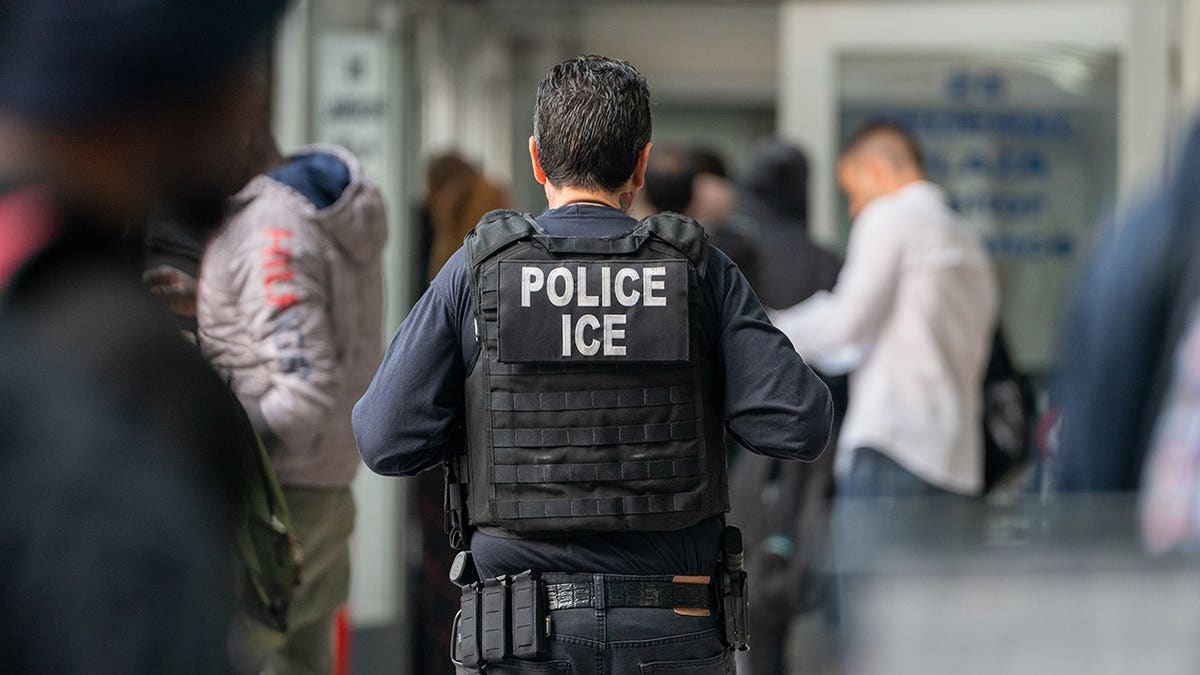
ICE is describing the new Louisiana facility as a «staging area» and not a detention center. (David Dee Delgado/Getty Images)
The facility would operate as a 72-hour holding center for migrants awaiting deportation, records show, according to The Associated Press.
LaSalle Corrections runs several private prisons and federal immigration detention centers throughout the south, including the «Louisiana Lockup» inside the state’s maximum-security prison in Angola.
The official contractor for the new ICE holding facility will be the company’s nonprofit arm, the LaSalle Family Foundation, but LaSalle Corrections itself will be involved in operating the holding facility and ensuring compliance, according to the company’s chief financial officer, Tim Kurpiewski.
CLICK HERE TO DOWNLOAD THE FOX NEWS APP
Since April, two detainee deaths have been reported at a LaSalle-run ICE facility in the state.
Winn Correctional Center was also found last month to have violated standards regarding environmental health and safety, food service, use-of-force, medical care and other concerns, according to the Department of Homeland Security’s Office of Inspector General.
The Associated Press contributed to this report.
deportation, immigrant rights, immigration, homeland security, louisiana, politics, illegal immigrants
INTERNACIONAL
La película Cordillera de Fuego llega a la capital guatemalteca con su primera proyección oficial

La película Cordillera de Fuego debutó jueves en la capital guatemalteca con su primera proyección oficial en el Teatro al Aire Libre del Centro Cultural Miguel Ángel Asturias, una presentación que puso en circulación nacional la quinta cinta de Jayro Bustamante y situó desde el inicio su eje temático: la amenaza de un nuevo volcán, la vulnerabilidad de comunidades mayas y el peso de la corrupción y los intereses económicos sobre una emergencia.
La producción fue filmada en 2022 en municipios de Sololá como San Lucas Tolimán, San Andrés Semetabaj y Santiago Atitlán, además de la ciudad de Guatemala, y según la productora supuso una inversión de USD 1.5 millones en la economía local. La película incorpora diálogos en español, kaqchikel y tz’utujil.
El estreno de gala reunió al director, al elenco, al equipo de producción, representantes del sector cultural, invitados especiales y medios de comunicación. Varios integrantes del equipo viajaron desde Santiago Atitlán y San Lucas Tolimán para participar en la función del jueves 2 de julio, que cerró entre aplausos.

La trama se centra en Paula, una vulcanóloga que intenta poner a salvo a poblaciones mayas amenazadas por el surgimiento de un nuevo volcán. En ese proceso enfrenta intereses políticos y económicos que, de acuerdo con la sinopsis y la presentación de la obra, convierten el desastre en un terreno de disputa y agravan el riesgo para miles de personas.
La cinta combina ficción, ciencia y drama, y también incorpora elementos de realismo mágico, según el texto de presentación de la producción. El relato explora la relación entre desastres naturales, resistencia comunitaria, territorio y desigualdades que atraviesan a los pueblos indígenas del país.
Bustamante explicó después de la función que la película se aparta del modelo centrado en un héroe individual. “Para los pueblos originarios de Mesoamérica, el viaje de un individuo no tiene importancia si no afecta a la comunidad”, afirmó.
Esa definición ordena buena parte de la propuesta narrativa de la obra, que prioriza el relato colectivo sobre la figura de un solo protagonista. El cineasta sostuvo además que la producción buscó demostrar la capacidad instalada del país para sostener una película de gran escala con personal local: “El objetivo era demostrarnos a nosotros mismos que ya podíamos cubrir todos los puestos y realizar una película de esta magnitud únicamente con el enorme talento que existe en Guatemala”.

La película fue protagonizada por María Mercedes Coroy, quien interpreta a la vulcanóloga, y cuenta con actuaciones de María Telón, Juan Pablo Olyslager, Tatiana Palomo, Enrique Salanic, Willian Toc y Jonathan Shitamúl. Según la presentación del proyecto, el elenco y el equipo técnico reflejan una apuesta sostenida por el talento guatemalteco.
Bustamante destacó que el rodaje se realizó casi en su totalidad con personal guatemalteco, tanto frente como detrás de cámaras, una meta que la productora persigue desde sus primeras películas. La obra también incorporó un programa de formación para nuevos talentos de las comunidades donde se desarrolló la filmación.
La actriz y guionista Margarita Kenéfic señaló que muchas de las personas que participaron en el rodaje habían vivido desplazamientos provocados por desastres naturales, una experiencia que, según explicó, alimentó la construcción del relato. “Esta es una película de toda Guatemala”, expresó.
Según explicó la producción a Prensa Libre, la película incorpora además un trasfondo histórico concreto: la erupción del volcán de Fuego de 2018, cuando el coloso liberó flujos piroclásticos sobre aldeas situadas en sus laderas. El hecho dejó miles de personas fallecidas y desaparecidas, además de graves daños materiales.
Cordillera de Fuego llegó a la Ciudad de Guatemala después de su estreno en Santiago Atitlán. La función en el Centro Cultural Miguel Ángel Asturias incluyó una alfombra roja, un encuentro con el director y parte del elenco, y la primera exhibición oficial del largometraje ante el público capitalino.
Como parte de la velada también se presentó el primer avance de Erupción, el próximo largometraje documental de Bustamante. Ese proyecto, según se anunció durante la actividad, explorará la memoria histórica del país a partir de testimonios, arte y danza.
Cordillera de Fuego,Jayro Bustamante,cine,teatro,presentación,7 Stages Theatre
NEWYou can now listen to Fox News articles!
Cuba’s foreign minister accused the United States of committing an «act of war» by restricting fuel shipments to the island Tuesday, prompting U.S. Ambassador to the United Nations Mike Waltz to deliver a forceful response blaming Cuba’s communist government for years of blackouts, repression and economic collapse.
The confrontation unfolded at the U.N. General Assembly one day after Cuba’s national electrical grid collapsed, leaving nearly 10 million people without power. It was the third nationwide grid failure this year and the eighth since October 2025, Reuters reported.
Cuban officials had restored electricity to parts of central Cuba and roughly one-third of Havana by Tuesday morning, although large areas remained offline or faced unstable service, according to Reuters.
CUBA PLUNGES INTO THIRD MAJOR BLACKOUT THIS YEAR AS POWER CRISIS WORSENS
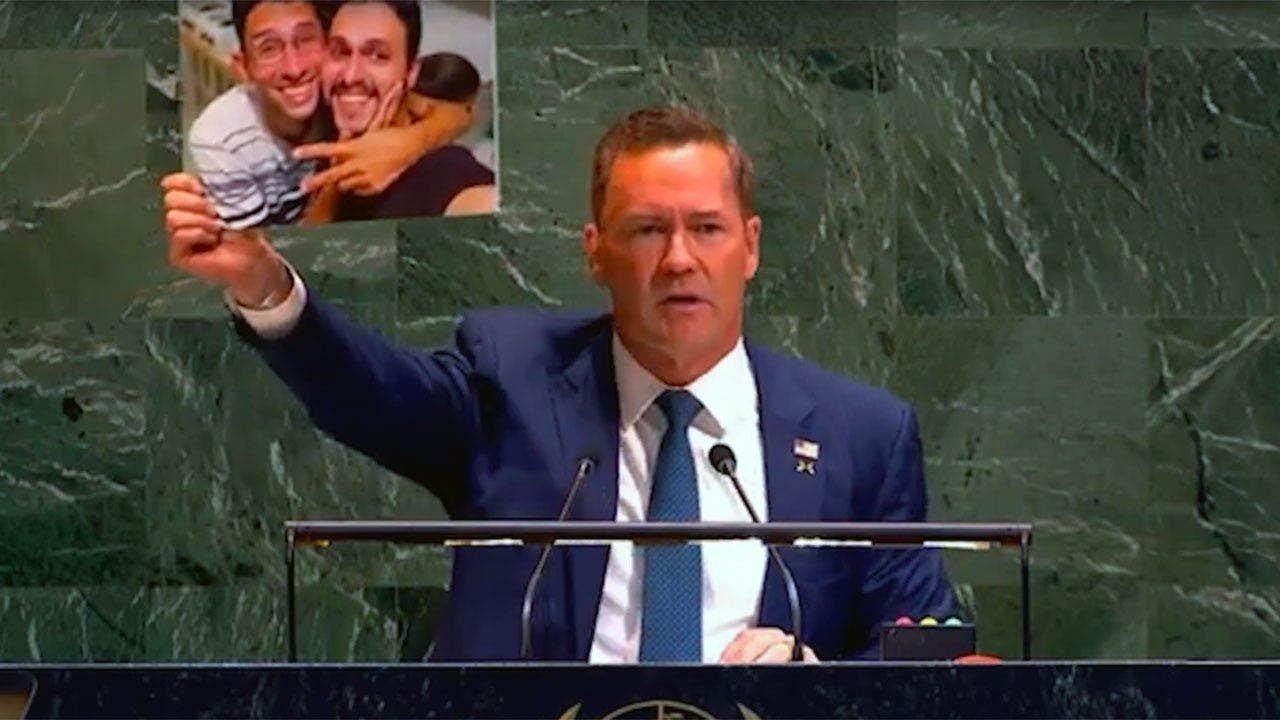
U.S. Ambassador to the United Nations Mike Waltz holds up a photograph of jailed Cuban dissidents during a General Assembly debate on the U.S. embargo against Cuba at U.N. headquarters in New York on July 7, 2026. (UNTV)
Cuban Foreign Minister Bruno Rodríguez told delegates that the Trump administration was carrying out a «multidimensional, non-conventional war» against Cuba that had grown «more cruel and ruthless in the last seven months.»
Rodríguez described U.S. efforts to restrict fuel deliveries as the imposition of «an energy collapse, equivalent to a naval blockade, which is an act of war,» according to a UNTV transcript.
Waltz rejected the claim that the United States had established a naval blockade around Cuba.
«There is no ring of Navy warships, U.S. Navy warships sitting around this island blocking trade or humanitarian aid going into Cuba,» Waltz said. «It’s fake. It’s false. It’s a lie. Period.»
Waltz argued that the real embargo was the one Cuba’s government imposed on its own citizens.
HAVANA REGIME IN SUSPENSE AFTER CASTRO INDICTMENT WITH TRUMP PRESSURE ON, SAYS CUBAN-BORN GOP REP.
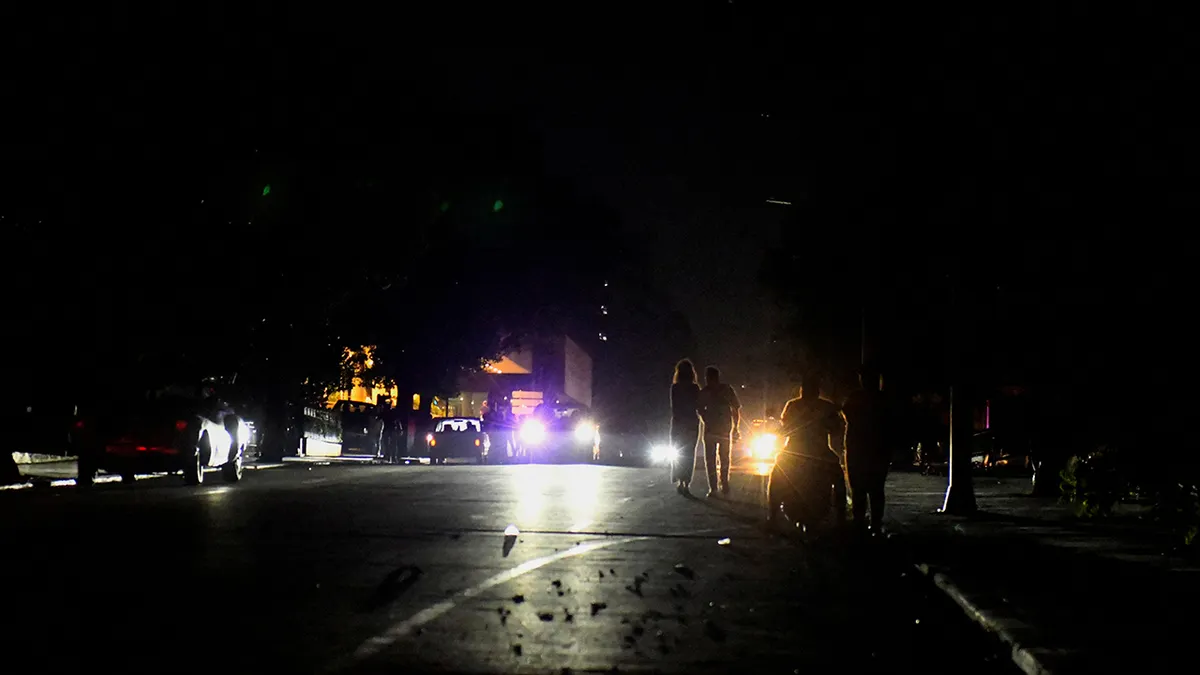
People walk on the street during a national electrical grid collapse, in Havana, Cuba, March 14, 2025. (Norlys Perez/Reuters)
«There’s a lot of talk today of an embargo. And indeed there is one,» he said. «It’s the embargo the Cuban regime mercilessly imposes on its own people decade after decade after decade.»
He called on Havana to «change your ways» and «turn the lights back on for your people,» while accusing Cuba’s leaders of ensuring that government compounds and propaganda operations had power even as families worried about spoiled food, hospitals losing electricity and phones running out of charge.
Waltz noted that Tuesday’s meeting came days before the fifth anniversary of the July 11, 2021, demonstrations, when thousands of Cubans took to the streets amid shortages of food, medicine and electricity and demanded greater freedom.
As Waltz spoke, a member of the Cuban delegation pounded on the table, prompting the ambassador to respond.
«This is not Havana. This is the United States of America. This is the United Nations,» Waltz said. «And we will speak, we will be heard, and we will not be silenced like your own people. So, pound away.»
Waltz displayed photographs and read the names of several jailed Cuban artists, musicians and activists, including Luis Manuel Otero Alcántara, Maykel Castillo Pérez and Duannis Dabel León Taboada.
MILLIONS LOSE POWER ACROSS CUBA AS TRUMP SANCTIONS CONTINUE TO FUEL ONGOING ENERGY CRISIS
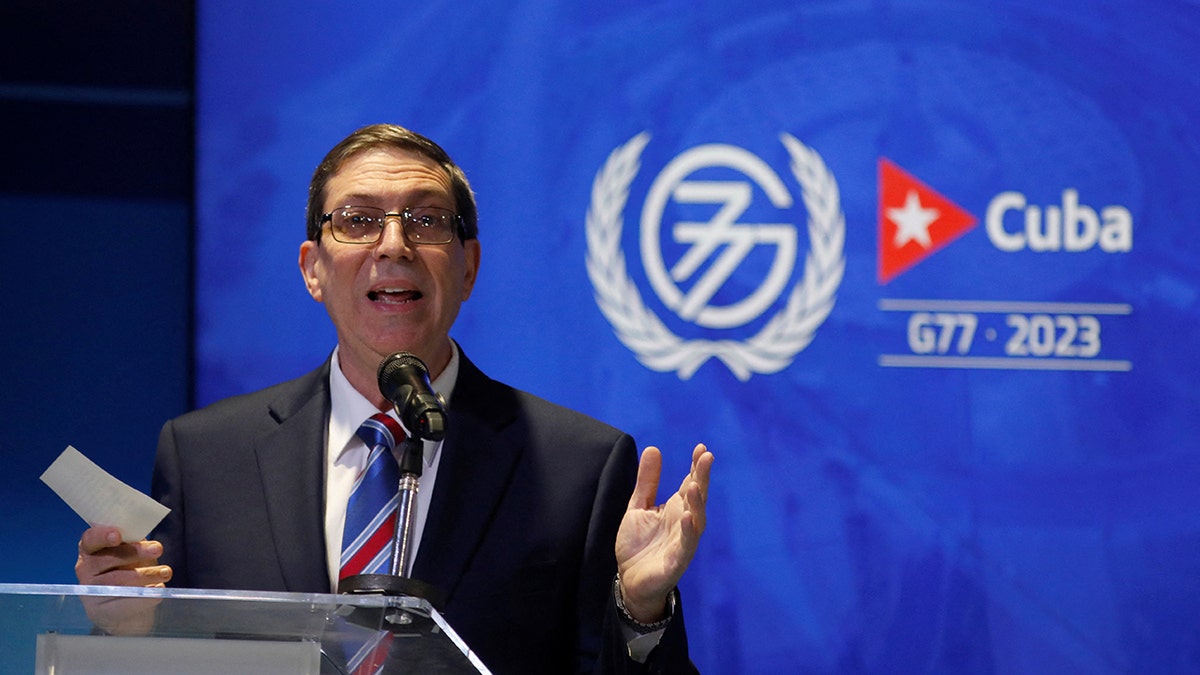
Cuba’s Foreign Minister Bruno Rodriguez speaks during a news conference in Havana. (Reuters/Alexandre Meneghini)
«They’re not armed. They’re not violent,» Waltz said. «They carry flowers, and write poems and write music. And for that, the regime beats them, detains them and tries to break them.»
Waltz also said GAESA, Cuba’s military-run conglomerate, controls approximately half of the country’s economy and holds $18 billion in assets.
Reuters has reported that estimates of GAESA’s economic reach range from approximately 40% to 70%, while Cuban officials dispute the U.S. government’s $18 billion figure.
Waltz said that despite Cuba’s blockade claims, humanitarian assistance had recently arrived from countries including China, Russia, Mexico, Canada and Spain, as well as from the European Union and the United Nations.
He also said the United States had provided more than $100 million in aid this year and approximately $500 million annually in commodities.
«The answer is simple: because blaming the United States is the only economic plan Havana has left,» Waltz said of Cuba’s decision to bring the issue before the General Assembly.
CUBA SAYS CIA CHIEF RATCLIFFE MET WITH OFFICIALS IN HAVANA AMID US TENSIONS
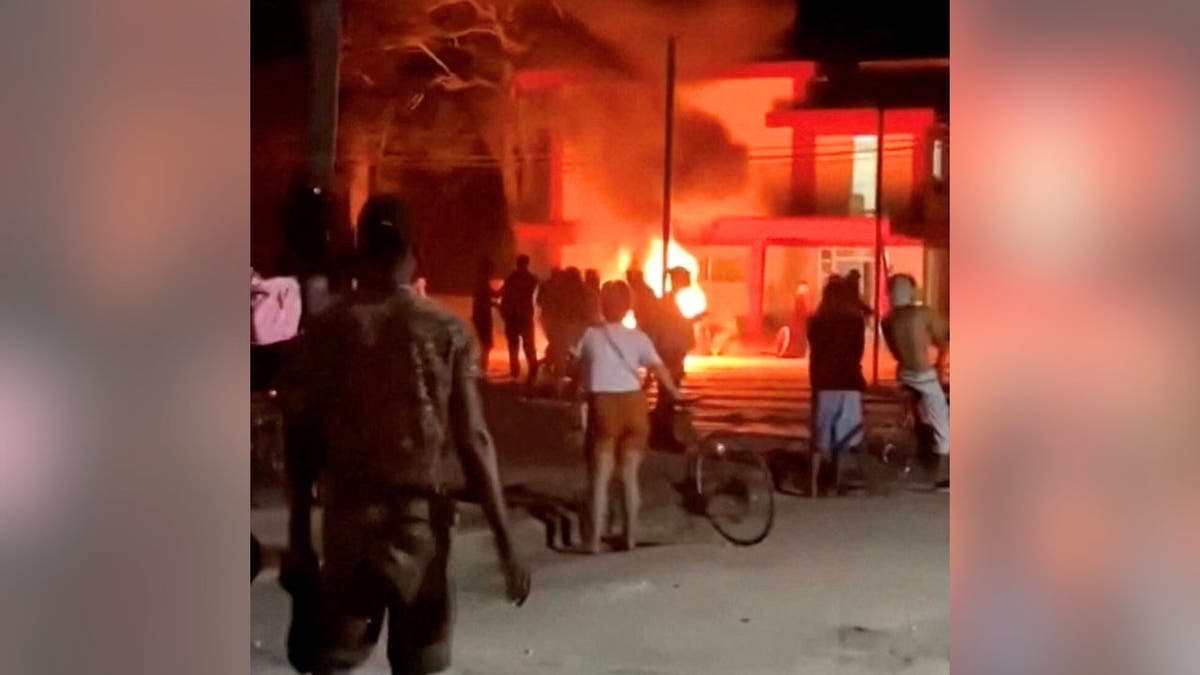
Protesters gather outside a Communist Party headquarters in Morón, Cuba, as a fire burns in the street during overnight unrest. Video obtained by Fox News Digital appeared to show demonstrators attempting to set fire to the building amid protests linked to widespread blackouts. (Reuters)
Before the wider debate, U.S. Representative for U.N. Management and Reform Jeffrey Bartos objected to reopening the agenda item and called for a vote on whether the proceedings should go forward.
Bartos said the three-hour meeting would cost approximately $84,000, money he argued could instead provide food, emergency medical supplies and solar lanterns to Cuban families.
«Right now, Cuba is in darkness — again,» Bartos said. «I urge the Cuban regime: turn the lights back on for your people.»
Members of the Cuban delegation also interrupted Bartos several times by pounding on the table. Bartos at one point paused and responded, «Keep banging away. It’s very effective,» before continuing his remarks.
Bartos accused Havana of seeking «another propaganda clip» rather than solutions and pointed to what he said were more than 800 political prisoners held by the government.
Independent organizations have produced varying estimates. Human Rights Watch said in April that more than 700 people remained imprisoned for political reasons, while Prisoners Defenders reported more than 1,200 political prisoners in Cuba in the spring of 2026. Cuba denies holding anyone for political reasons.
«That is the real Cuban embargo,» Bartos said. «It is the embargo the regime imposes on its own people: on speech, on faith, on enterprise, on dissent, on political rights and hope — and now, quite literally, on light.»
Rodríguez accused the U.S. delegation of offering «worn-out lies» and attempting to prevent the General Assembly from debating the effects of American policy.
CLICK HERE TO DOWNLOAD THE FOX NEWS APP
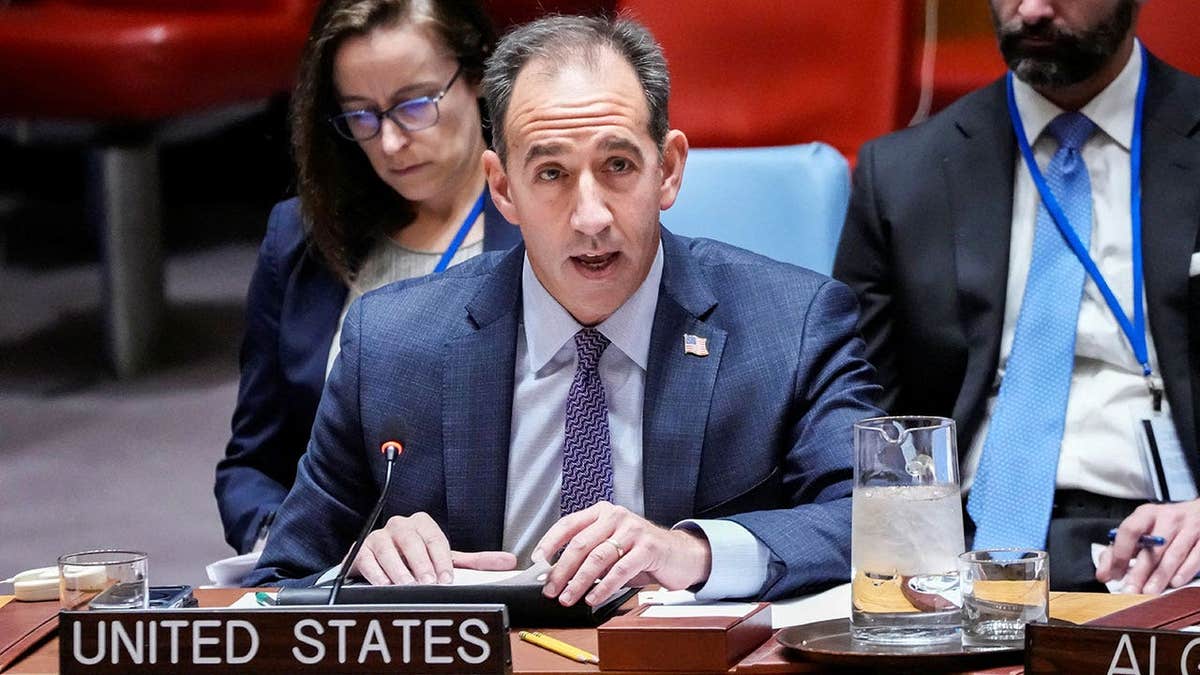
Jeff Bartos, U.S. Representative to the United Nations for Management and Reform, addresses a meeting of the Security Council at U.N. headquarters in New York City, Nov. 25, 2025. (Eduardo Munoz/Reuters)
Cuba’s electricity crisis has been driven by severe fuel shortages and an aging, poorly maintained power system that has struggled to meet demand. The Cuban government primarily blames U.S. restrictions, while Washington attributes the island’s broader economic crisis to communist economic policies, corruption and repression.
Reuters contributed to this report.
cuba, united nations, national security, world protests

Maxi López se divirtió haciendo un reto viral de fútbol: el ninguneo a Mauro Icardi y la reacción mordaz de Wanda Nara

El juez Armella rechazó el pedido de Insaurralde y Cirio para descartar el video de los dólares como prueba

Javier Milei anunció que prepara un proyecto inspirado en el “shutdown” de Estados Unidos para limitar los gastos del Estado

Ignacio Malcorra pone punto final a su carrera en Independiente en este mercado de pases

Trump admin plans new ICE holding facility near Louisiana deportation flight hub

Se frenó el país: cómo el partido de la Argentina contra Egipto desplomó el consumo de energía eléctrica

Marcha atrás judicial en la venta de SanCor: la Justicia suspendió el proceso tras el recurso de la empresa Fidulac

La producción textil aceleró su caída y la capacidad instalada siguió entre las más bajas de la industria

Javier Milei felicitó a Keiko Fujimori y anunció una nueva etapa en la relación bilateral con Perú

Sólo necesitó 25 minutos para financiarse y ya ha alcanzado el 634% de su objetivo. Así es el metroidvania que está arrasando en Kickstarter

 ECONOMIA2 días ago
La producción textil aceleró su caída y la capacidad instalada siguió entre las más bajas de la industria
- DEPORTE1 día ago
Portugal vs España: formaciones, hora y dónde ver por tv
- POLITICA2 días ago
Fin al presidente antisistema: Milei ya tiene su “casta” y se aferra al dogma económico