INTERNACIONAL
EXCLUSIVE: Russian document reveals sweeping Iran plan spanning nuclear, finance and aviation

NEWYou can now listen to Fox News articles!
EXCLUSIVE: A nonpublic Russian government document obtained and reviewed by Fox News Digital reveals how Moscow sought to deepen its relationship with Iran far beyond conventional trade — laying out plans for alternative financial channels, nuclear cooperation, Iranian production of Russian aircraft components, major energy projects and new transportation routes stretching toward the Persian Gulf.
The 44-page Russian-language document, titled «Plan for Cooperation Between the Russian Federation and the Islamic Republic of Iran for 2024-2026,» is marked «For official use» and was approved on the Russian side on Sept. 2, 2024. It assigns ministries, agencies and state companies responsibility for projects and sets deadlines extending through the end of 2026.
PUTIN AND IRAN ‘NEED EACH OTHER DESPERATELY,’ EXPERT SAYS, AS RUSSIA VOICES SUPPORT FOR REGIME
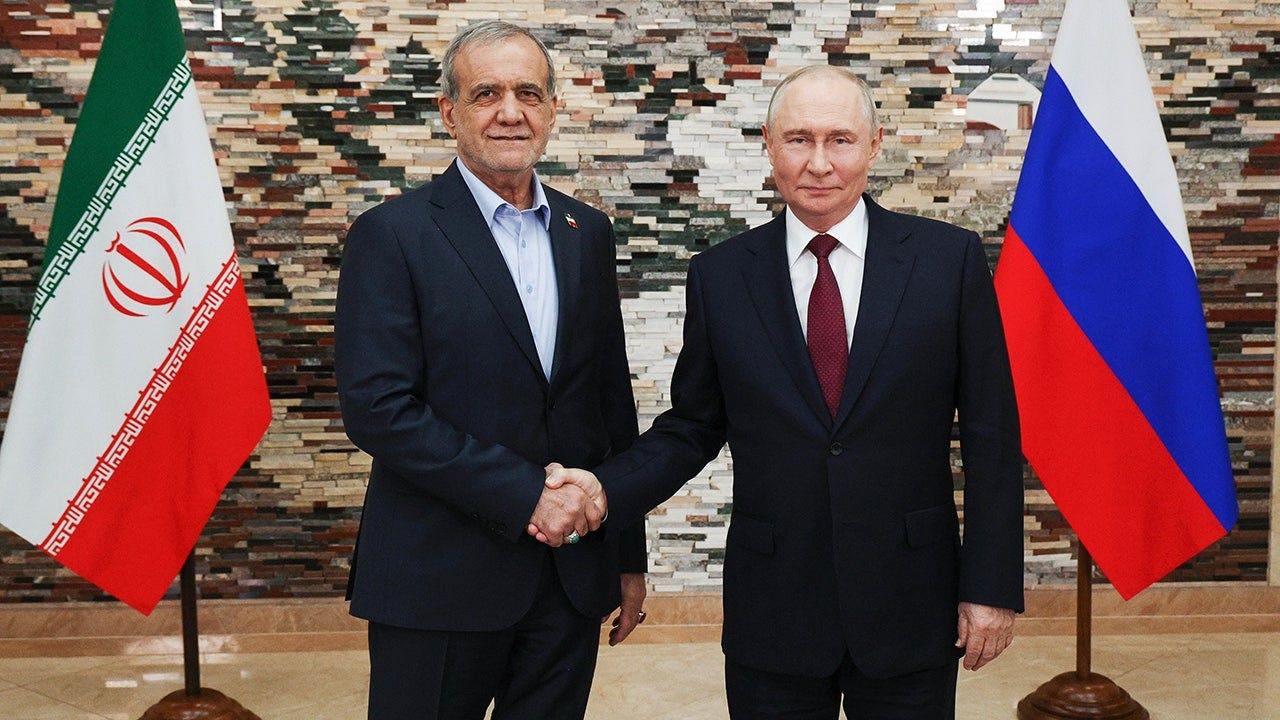
Russian President Vladimir Putin and Iranian President Masoud Pezeshkian talk during their meeting on the sidelines of the Shanghai Cooperation Organization in Bishkek, Kyrgyzstan, on Sept. 1, 2026. (Kristina Solovyova/Pool Sputnik Kremlin via AP)
The document predates the current war involving Iran and the United States by well over a year, meaning it does not establish which projects remain active or how the conflict may have altered Moscow’s plans.
But an independent review of the Russian-language document, along with subsequent public reporting, shows that a number of initiatives described in the roadmap later advanced or materialized.
Keti Korkiya, a research analyst with the Foundation for Defense of Democracies’ Russia program, reviewed the document for Fox News Digital and said its significance lies less in any single project than in the architecture Moscow was trying to build around the relationship.
«The roadmap is not revelatory: people paying close attention to the relationship between Russia and Iran will see many collaborations between the two countries that have been public for years,» Korkiya said in written analysis provided to Fox News Digital.
WHY TRUMP IS DOWNPLAYING REPORTS RUSSIA AND CHINA ARE HELPING IRAN
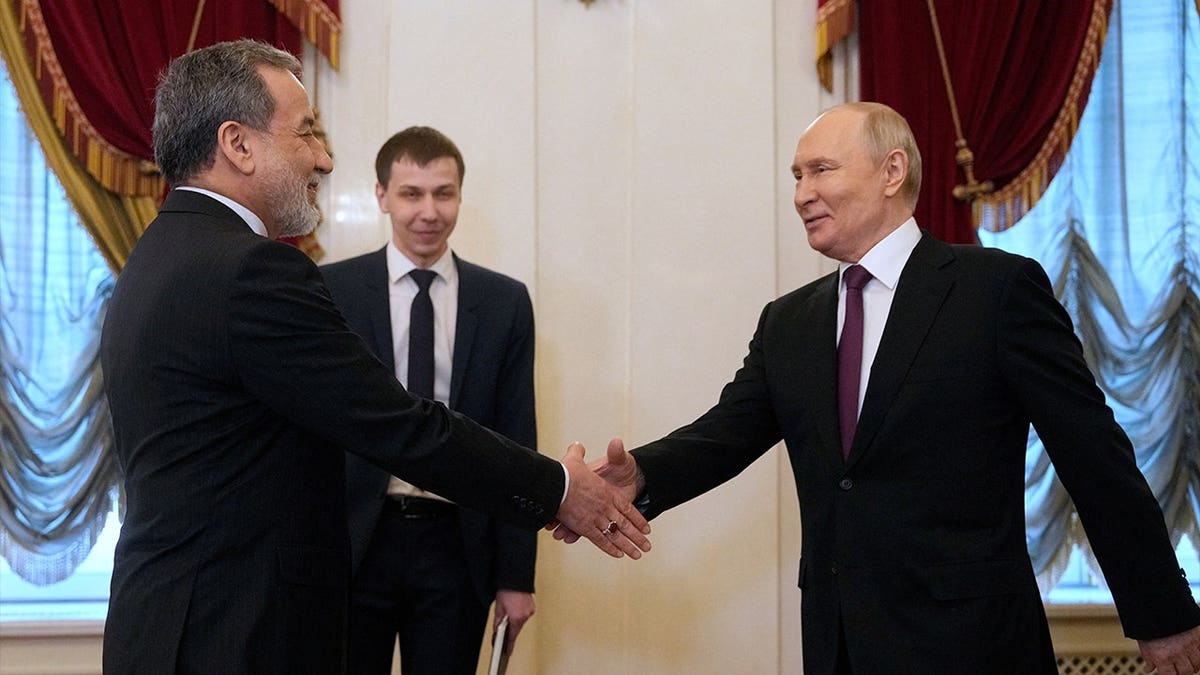
President Vladimir Putin shakes hands with Iranian Foreign Minister Abbas Araqchi during a meeting at the Boris Yeltsin Presidential Library in St. Petersburg, Russia, April 27, 2026. (Dmitri Lovetsky/Pool via Reuters)
«What is more revealing is the architecture of the relationship Moscow is trying to build,» she said, pointing to financial mechanisms, transportation routes, energy investment and aviation cooperation as different ways of reducing vulnerabilities created by sanctions and Western economic pressure.
«These are nonpublic high-level documents that illustrate the comprehensive cooperation between Russia and Iran,» a European intelligence source who reviewed the material told Fox News Digital.
«It is also strategic, sensitive and highly politicized, focusing on areas like nuclear programs, energy trade and financial transactions that aim to evade the U.S. sanctions,» the source said.
A U.S. official, responding on background to questions from Fox News Digital about the financial provisions, said U.S. sanctions have «severely isolated Russia and Iran from the international financial system,» adding that efforts by the two countries to develop alternative financial channels and other sanctions-evasion schemes were therefore «not surprising.»
The official said Washington closely tracks attempts by sanctioned jurisdictions to develop alternative cross-border payment mechanisms and would seek to disrupt those that facilitate sanctions evasion or illicit finance.
The Russian document itself does not use the phrase «sanctions evasion.» Instead, it repeatedly calls for increased use of national currencies, independent financial channels and measures to counter what Moscow describes as «unilateral restrictive measures.»
TRUMP THREATENS ‘UNPRECEDENTED’ ECONOMIC CONSEQUENCES FOR ANY NATION AIDING IRAN
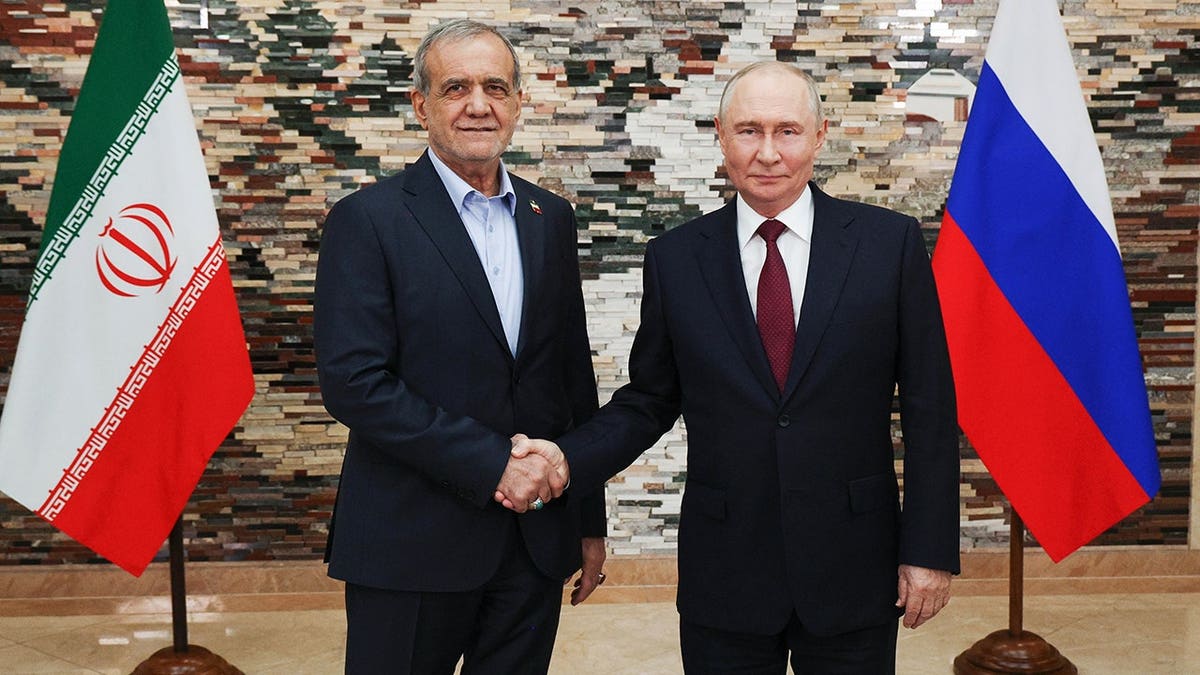
Russian President Vladimir Putin and Iranian President Masoud Pezeshkian pose for a photo during their meeting at the Shanghai Cooperation Organization summit in Bishkek, Kyrgyzstan, on Sept. 1, 2026. (Vyacheslav Prokofyev/Pool Sputnik Kremlin via AP)
BUILDING FINANCIAL CHANNELS OUTSIDE WESTERN SYSTEMS
Some of the clearest provisions concern how Russia and Iran intended to move money.
The plan set a target of increasing the share of bilateral trade conducted in national currencies from 68% in 2024 to 71% by 2026, while also seeking to expand correspondent accounts denominated in national currencies.
More ambitiously, the roadmap calls for the Bank of Russia and the Central Bank of Iran to develop the use of central bank digital currencies for cross-border settlements.
Another provision calls for «ensuring the use of independent systems for transmitting financial messages,» including connecting financial institutions to independent channels for exchanging financial information.
The document does not identify which messaging system would be used or explicitly state that the goal was to bypass SWIFT or U.S. financial controls.
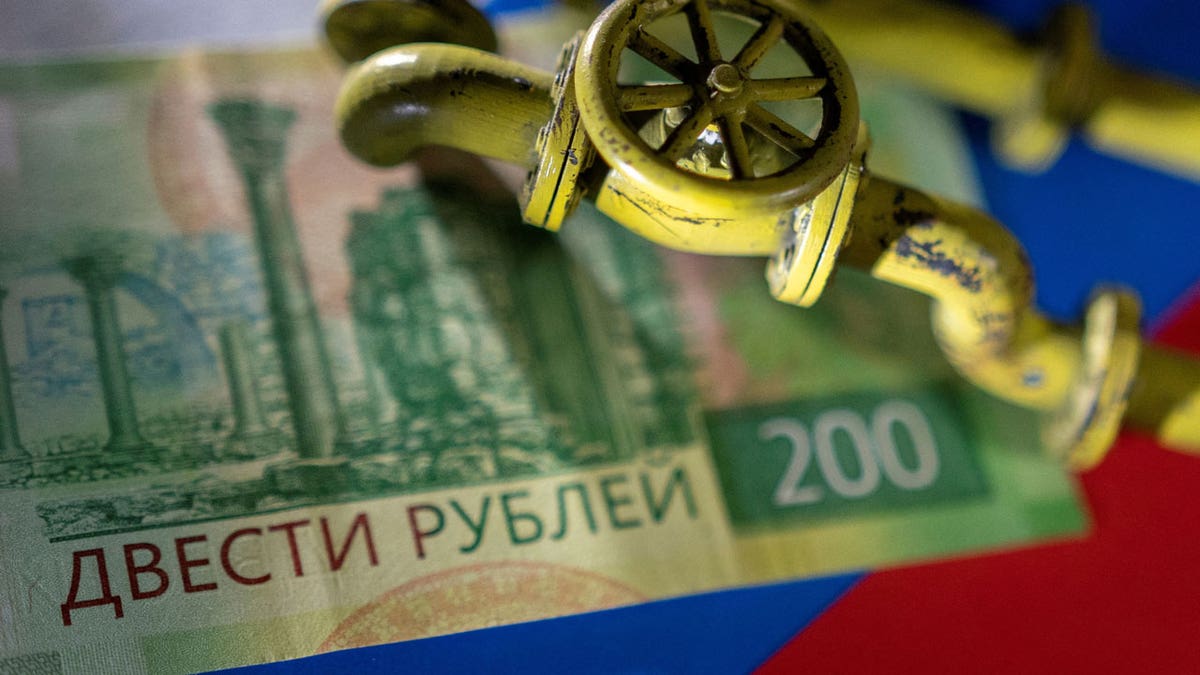
Strategic moves by Russia to address its budget deficit may inadvertently devalue the ruble, analysts warn. (Reuters/Dado Ruvic/Illustration/File Photo)
But some of that financial integration later became public.
In February 2025, Russian Deputy Prime Minister Alexei Overchuk said Russia and Iran had «practically completely» shifted bilateral settlements into national currencies using their own systems for transmitting financial and banking messages. Interfax, a Russian news agency, reported that the effort was part of a broader push toward independent payment infrastructure between the two countries.
Iran’s ambassador to Russia also said in February 2025 that Tehran and Moscow no longer needed SWIFT for bilateral banking relations and were using their own confidential bank-messaging systems. He said the initial phase of linking Iran’s Shetab payment network with Russia’s Mir system had begun the previous year.
Korkiya said the significance of those measures is cumulative.
IRAN REGIME USES FORMER SOVIET REPUBLIC TO DODGE SANCTIONS, FUND WAR MACHINE: REPORT
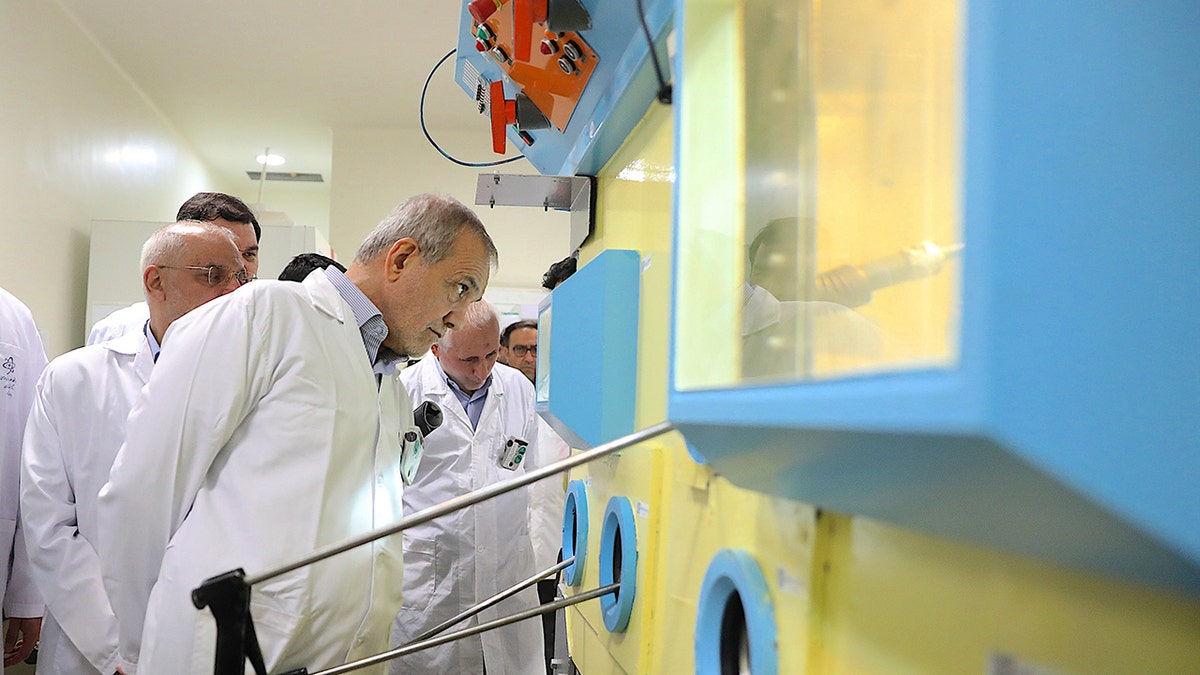
Iranian President Masoud Pezeshkian visits nuclear facilities in Tehran on Nov. 1, 2025. (Iranian Presidency/Handout/Anadolu via Getty Images)
«Individually, none of these initiatives is transformative,» she wrote. «Collectively, however, they amount to an attempt to remove single points of vulnerability and build redundancy into the Russia-Iran economic relationship.»
The financial effort is paired with a political one.
The roadmap calls for Russia and Iran to coordinate through BRICS and other international institutions against «unilateral trade restrictions,» while another provision proposes studying ways to counter «unilateral restrictive measures» and their impact on global markets.
Korkiya said that goes beyond simply finding workarounds.
«Especially interesting is that the roadmap also goes beyond practical sanctions workarounds and includes an effort to build an intellectual and diplomatic campaign against sanctions themselves,» she wrote, citing plans for expert communities, discussion platforms and an international forum focused on unilateral restrictions.
A U.S. official told Fox News Digital that financial institutions and intermediaries enabling sanctions evasion expose themselves to «significant sanctions risks,» adding that Washington would continue working with partners to «identify, expose and disrupt these networks wherever they emerge.»
The official also pushed back on the idea that alternative Russia-Iran systems could displace Western financial infrastructure.
«Russia and Iran can try to build alternative financial channels, but they cannot replicate the reach, liquidity or trust of the U.S. dollar and the international financial system,» the official said. «Their efforts will not weaken the effectiveness of U.S. sanctions.»
CHINA, RUSSIA, IRAN AND NORTH KOREA FORM ‘AXIS OF AGGRESSORS’ THAT COULD OVERWHELM US, BOOK WARNS

A person walks past a sign at a currency exchange, as the value of the Iranian rial drops, in Tehran, Dec. 30, 2025. (Majid Asgaripour/West Asia News Agency via Reuters)
ROSATOM AND IRAN’S NUCLEAR SECTOR
The financial architecture sits alongside another strategically sensitive pillar of the relationship: civilian nuclear energy.
The plan assigns Russia’s state nuclear corporation Rosatom continued responsibility at Iran’s Bushehr nuclear power plant, including fuel and maintenance support for Unit 1 and continuing construction work associated with Units 2 and 3.
The cooperation did not remain solely on paper.
On Sept. 2, 2026, Rosatom said Russian specialists had begun returning to Bushehr, that Unit 1 was preparing for scheduled maintenance and partial fuel replacement, and that nuclear fuel had already been delivered to the site. Rosatom also said work was continuing on the plant and that additional Russian specialists were expected to arrive.
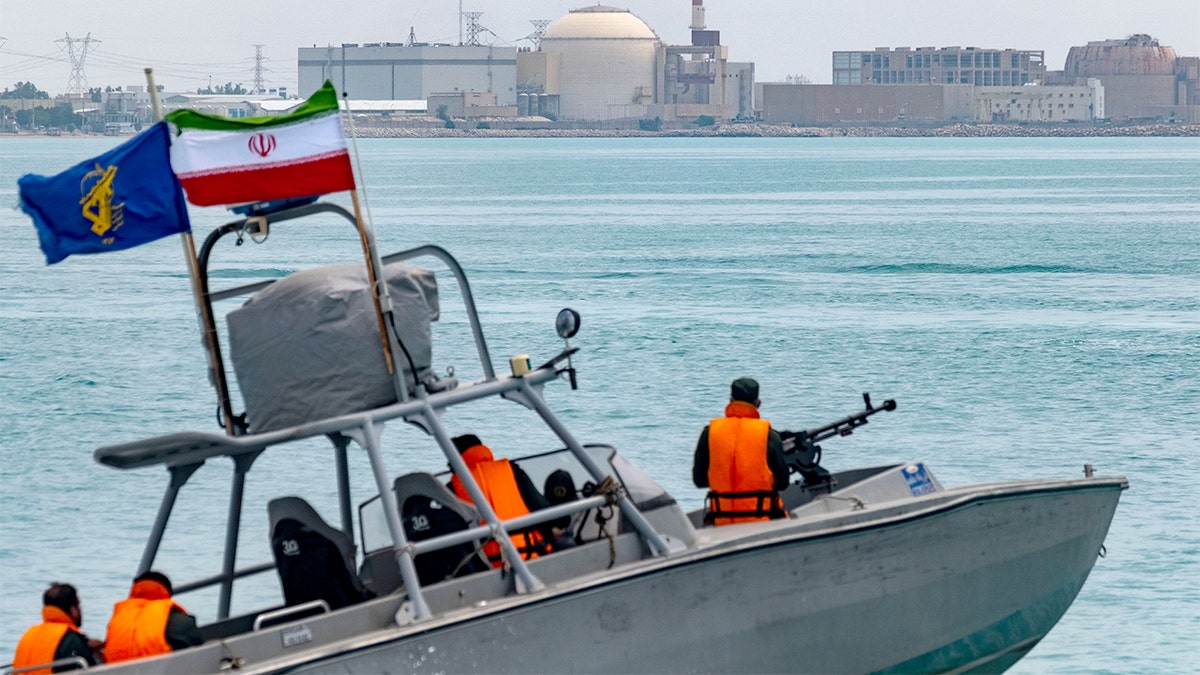
An Islamic Revolutionary Guard Corps speedboat during a parade marking Persian Gulf National Day near the Bushehr nuclear power plant in Iran on April 29, 2024. (Morteza Nikoubazl/NurPhoto via Getty Images)
Korkiya noted that the Bushehr Units 2 and 3 project predates the 2024 roadmap, meaning the document did not originate that cooperation but rather incorporated an existing strategic project into the broader Russia-Iran framework.
«Such strategies and protocols confirm that Russia and Iran are closely aligned countries, and Russia almost certainly continues and aims to increase its current cooperation with Iran also in 2026,» the European intelligence source said.
Fox News Digital sought comment from Rosatom on the document and the current status of its work in Iran.
ENERGY PROJECTS — WITH SOME FINANCING KEPT CONFIDENTIAL
The roadmap also identifies specific Iranian oil and gas fields where Moscow sought a role.
It names Shadegan, Kish and North Pars, assigning Russia’s Energy Ministry and unspecified «interested Russian companies» responsibility for advancing the projects.
Those companies are not named in the roadmap. For several projects, the financing column is marked «Confidential.»
There is evidence that at least one of the named projects advanced.
Interfax reported on Feb. 13, 2026, that Russian state-owned ZN-Vostok was developing Iran’s Shadegan oil field, while Iranian officials said Tehran hoped to expand Russian investment across additional oil and gas projects.
The roadmap sets milestones for Shadegan through the end of 2025, while work involving Kish and North Pars runs into 2026 and includes legal, commercial and project-analysis work.
That pattern appears repeatedly through the document: ministries, deadlines and strategic objectives are spelled out, while some of the participating companies or financing arrangements remain undisclosed.
BESSENT WARNS IRAN’S OUTSIDE BACKERS TO ‘STAY AWAY’ AS TRUMP SEEKS TO ‘ASPHYXIATE’ TEHRAN’S ECONOMY
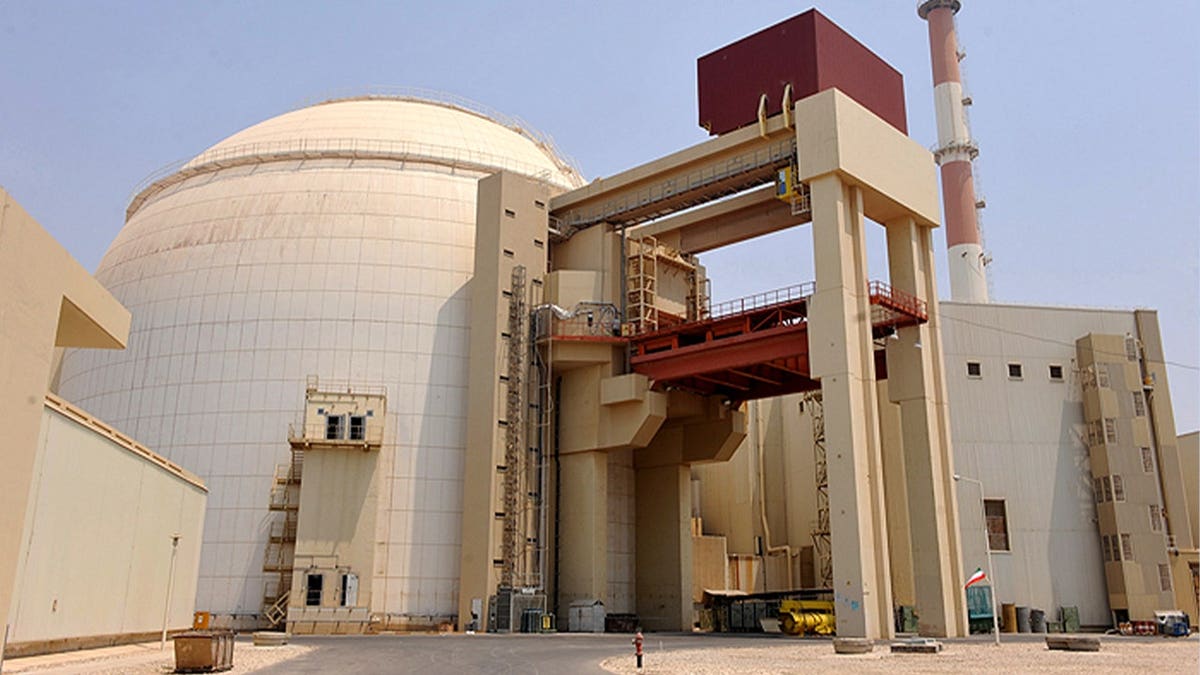
This handout image supplied by the Iran International Photo Agency (IPA) shows the reactor building at the Russian-built Bushehr nuclear power plant on Aug. 21, 2010, in southern Iran. (IIPA via Getty Images)
RUSSIAN AIRCRAFT PARTS — MADE IN IRAN?
One of the more unusual provisions goes beyond ordinary trade.
The roadmap calls for Russia to help establish production in Iran of individual parts and assemblies for Russian aircraft.
Russian authorities were instructed to determine which aircraft parts could be repaired or manufactured in Iran, identify Iranian companies capable of producing them, certify selected sites through Russia’s aviation regulator Rosaviatsiya and conclude a localization agreement.
The roadmap set a March 31, 2026, deadline for an agreement on localized production and a Dec. 31, 2026, target for launching prototype production.
Public evidence does show that aviation cooperation advanced in the related area of aircraft maintenance.
In February 2025, Rosaviatsiya’s chief said three Iranian companies had been approved to perform maintenance and airworthiness work on Russian-operated aircraft after an Aeroflot Airbus A330 underwent maintenance in Tehran.
The Russian government also publicly discussed deeper aviation-industrial cooperation with Iran that month, including aircraft manufacturing and joint work on jet engines for passenger aircraft.
But Fox News Digital has not independently verified that the more ambitious provision in the roadmap — manufacturing Russian aircraft components inside Iran — was implemented.
A TRADE ROUTE SOUTH
The document also lays out an effort to strengthen the physical transportation network linking Russia and Iran.
It calls for work on a proposed railway built to Russia’s 1,520-millimeter track gauge, stretching from Iran’s border with Azerbaijan toward Iranian ports on the Persian Gulf.
The proposal remained in the planning and negotiation stage in the roadmap.
Separately, Moscow sought to advance the Rasht-Astara railway, a roughly 162-kilometer missing link in the International North-South Transport Corridor.
That project subsequently moved beyond the purely conceptual stage.
Russia and Iran formally launched engineering surveys for the railway in May 2025, according to Russia’s Transport Ministry.
Korkiya said the project had still not reached full construction by late summer 2026, with Russian and Iranian officials continuing to work on the implementation and construction arrangements. She also identified another provision: Iranian investment in port infrastructure in Astrakhan, Russia.
The roadmap calls for a terminal there using Iranian investment, along with warehouses, a logistics park and grain and vegetable-oil facilities. Korkiya found that an Iranian-owned company later operated a terminal in Astrakhan with a railway spur and was building grain and vegetable-oil storage facilities that closely tracked the roadmap’s description, although the document does not identify that company by name and the match cannot be definitively established.
Taken together, the transport provisions point to an effort to build physical trade routes that are less dependent on traditional European corridors.
MEDIA, TECHNOLOGY AND «INFORMATION SECURITY»
The roadmap reaches well beyond finance and heavy industry.
It calls for content exchange, journalist training and joint media production, including at least two joint projects and ‘professional training’ for Iranian journalists.
It also calls for Russian technology companies to secure at least two contracts in Iran involving information and communications technology, including «information security,» telecommunications and the video-game industry.
US ECONOMIC CHOKEHOLD ON IRAN REACHES PEAK LEVERAGE AS COLLAPSE RISKS EMERGE
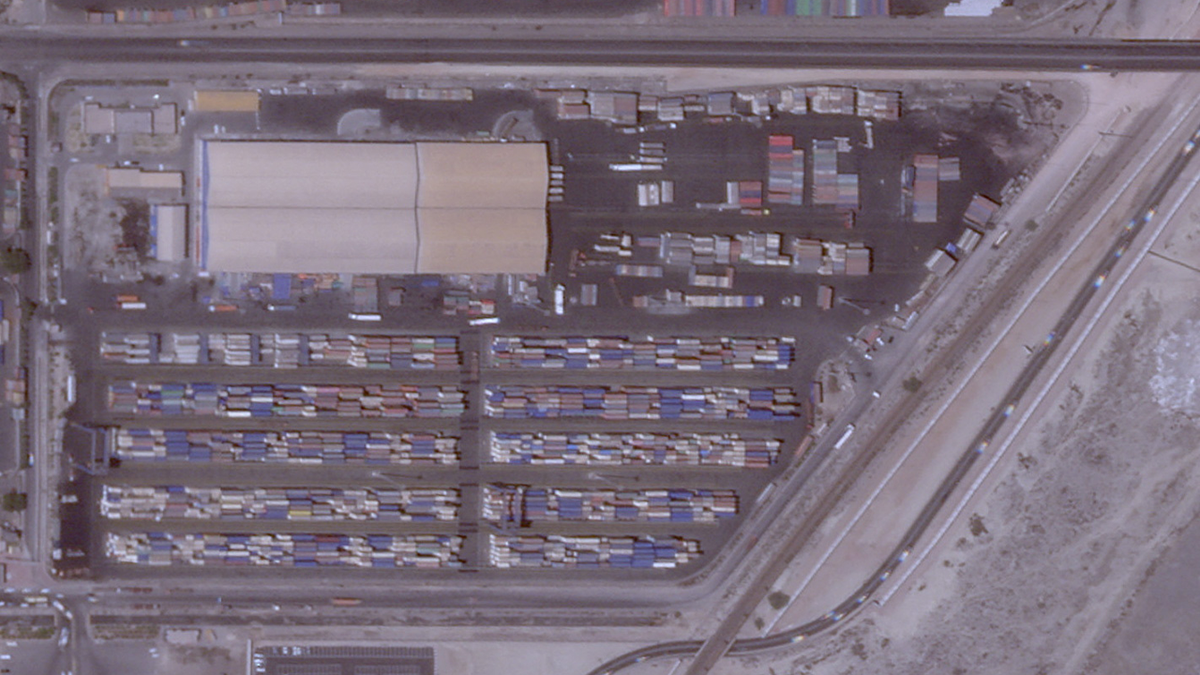
A satellite image shows Shahid Rajaee port in Bandar Abbas, Iran, April 9, 2025. (Planet Labs PBC/Handout via Reuters)
A PUTIN FAMILY CONNECTION AT THE TOP
The official overseeing the Russian side of the relationship also has a direct connection to President Vladimir Putin’s extended family.
Russian Energy Minister Sergei Tsivilev chairs the Russian side of the Permanent Russian-Iranian Commission on Trade and Economic Cooperation.
Tsivilev is married to Anna Tsivileva, a Russian deputy defense minister and the daughter of Putin’s late cousin, Reuters reported when Putin appointed her to the Defense Ministry in June 2024.
The European intelligence source argued that the connection reflects the political importance Moscow attaches to Iran.
«It should be emphasized that on Russia’s part, the economic cooperation with Iran is coordinated and managed by a representative of Vladimir Putin’s extended family,» the source said.
«This indicates that the Iranian matter is not just one of many bureaucratic issues in the agenda of the Russian government. But it holds significant value for the interest of the Vladimir Putin regime.»
«What is also notable is the degree of state coordination and institutionalization behind this effort,» she said, pointing to the involvement of central banks, ministries, regulators and state companies, as well as formal deadlines and confidential financing in some projects.
«That suggests Moscow is trying to turn what could otherwise remain a politically convenient partnership into something more durable and bureaucratically embedded,» Korkiya said.
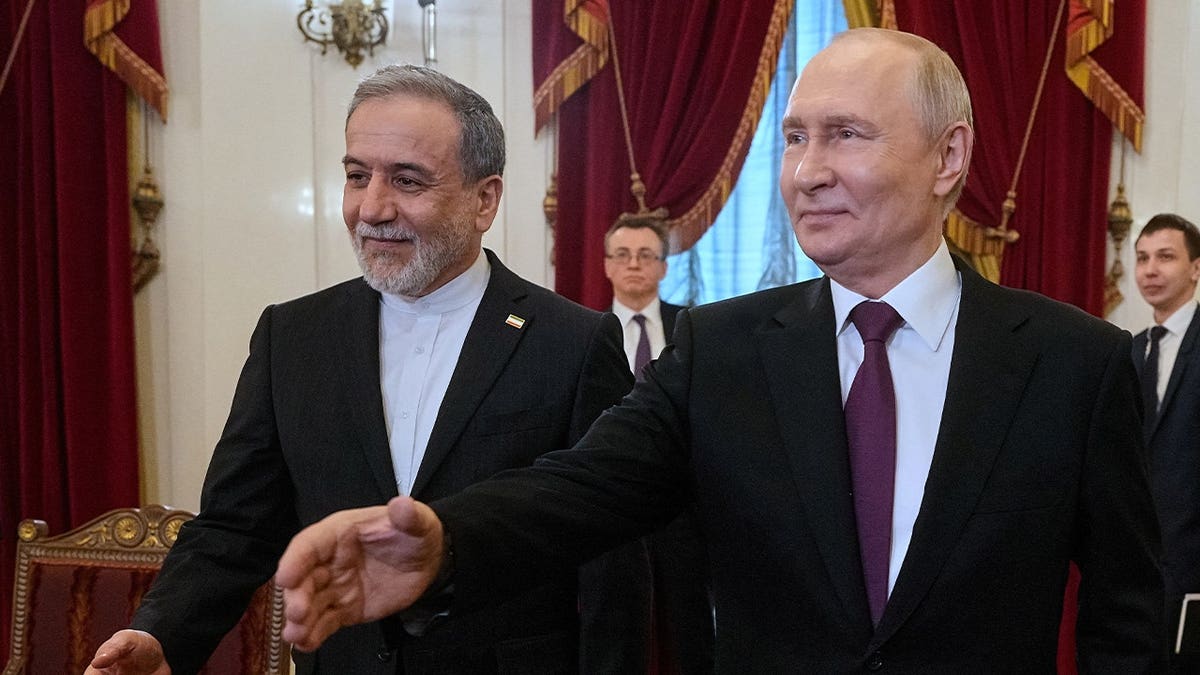
President Vladimir Putin and Iranian Foreign Minister Abbas Araqchi attend a meeting at the Boris Yeltsin Presidential Library in St. Petersburg, Russia, April 27, 2026. (Dmitri Lovetsky/Pool via Reuters)
Russian and Iranian officials did not respond to multiple requests for comment from Fox News Digital. Fox News Digital also sought comment from Rosatom and from Russian officials responsible for Moscow’s participation in BRICS.
war with iran, russia, iran, foreign policy, vladimir putin









INTERNACIONAL
Rescataron a Falcon, una ballena jorobada enredada en 30 metros de cuerda: el tercer intento la liberó antes del anochecer
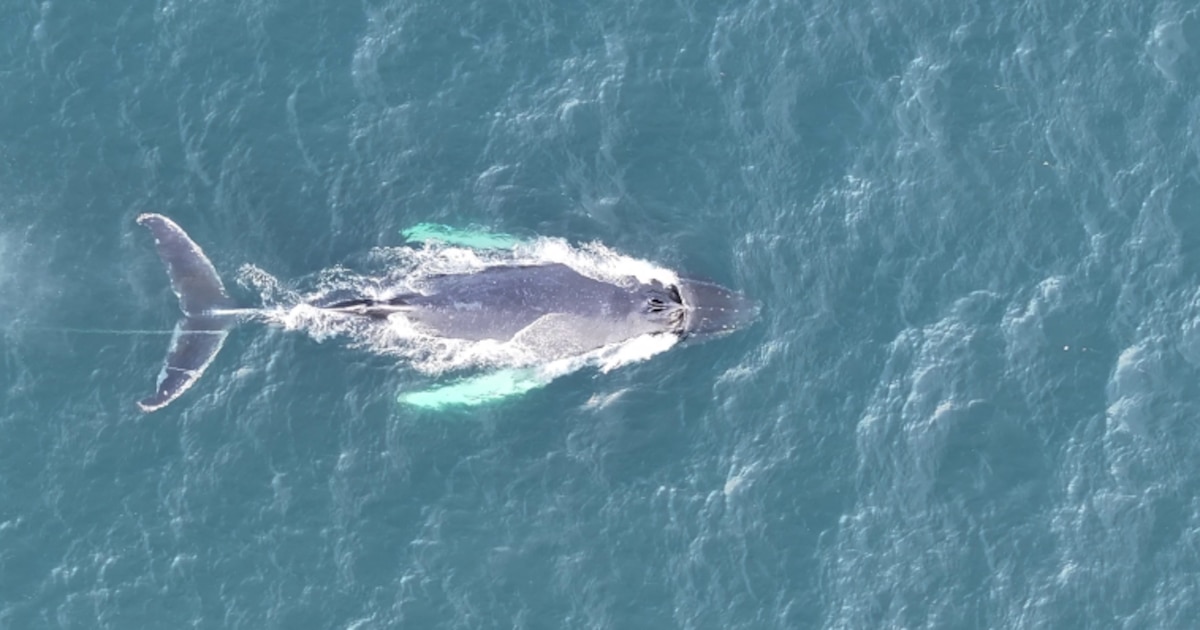
Cuando el sol ya dejaba poca luz sobre el agua, Falcon volvió a salir a la superficie. Estaba a unos 90 metros de la embarcación de rescate y arrastraba una cuerda de pesca que llevaba enredada en la cola. Habían fallado dos intentos. Quedaban cerca de 20 minutos antes de que anocheciera. El tercero alcanzó la línea sumergida y, tras unos segundos de tensión e incertidumbre, la ballena jorobada quedó libre de los casi 30 metros de cuerda de pesca que limitaban sus movimientos.
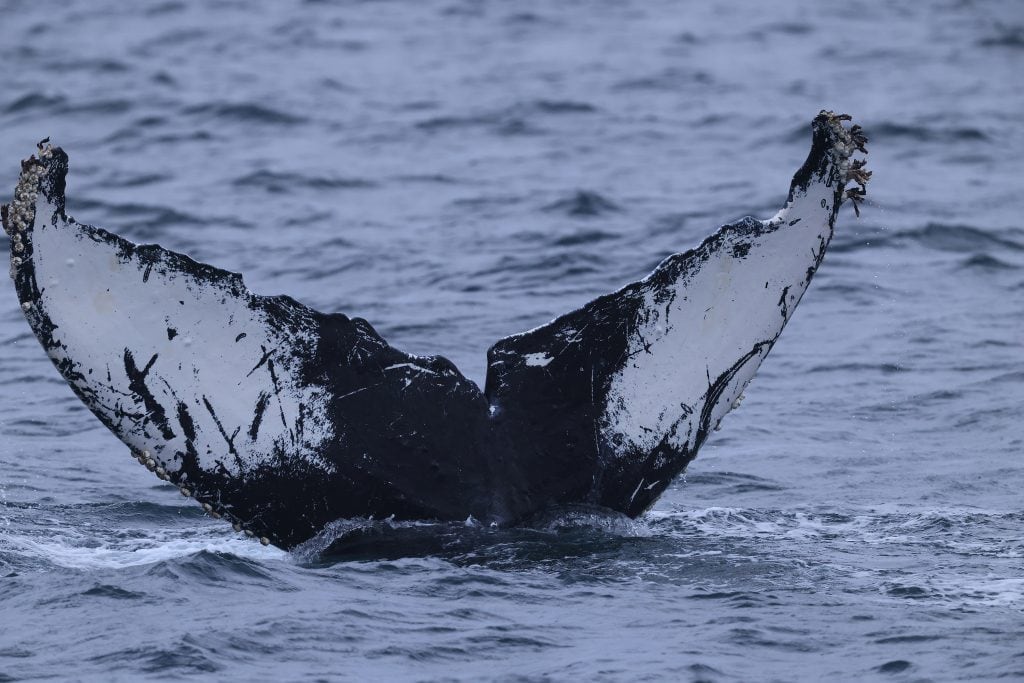
Falcon, identificada por los investigadores como CRC-13514, pudo continuar su nado luego de una operación realizada el 11 de noviembre. El rescate reunió a naturalistas, científicos, tripulaciones de avistamiento y equipos autorizados para intervenir ante el enmallamiento de grandes cetáceos.
Durante semanas, la ballena había sido una presencia conocida en esas aguas. Quienes salían a observar cetáceos la habían visto cerca de Tacoma, Gig Harbor y Carr Inlet. Su silueta, el soplido al emerger y el movimiento de su cola formaban parte de las jornadas de varias embarcaciones. Hasta que una tripulación advirtió algo distinto: una cuerda rodeaba su aleta caudal.
El aviso que activó el rescate de la ballena jorobada
La tarde de ese miércoles, la tripulación de Puget Sound Express, integrante de la Pacific Whale Watch Association, encontró a Falcon al norte de Seattle. Tomaron fotografías, documentaron el enredo y alertaron de inmediato a la línea de emergencia de la Administración Nacional Oceánica y Atmosférica de Estados Unidos (NOAA).
La señal de alarma movilizó al Cascadia Research Collective (CRC) y a SeaLife Response, Rehabilitation, and Research (SR3), dos organizaciones con personal entrenado y autorizado para responder ante este tipo de situaciones.
El tiempo era el principal obstáculo. Los equipos de rescate se encontraban a más de una hora de navegación. La luz comenzaba a caer y la cuerda que seguía a la ballena estaba bajo el agua, fuera de la vista de quienes navegaban hacia ella.
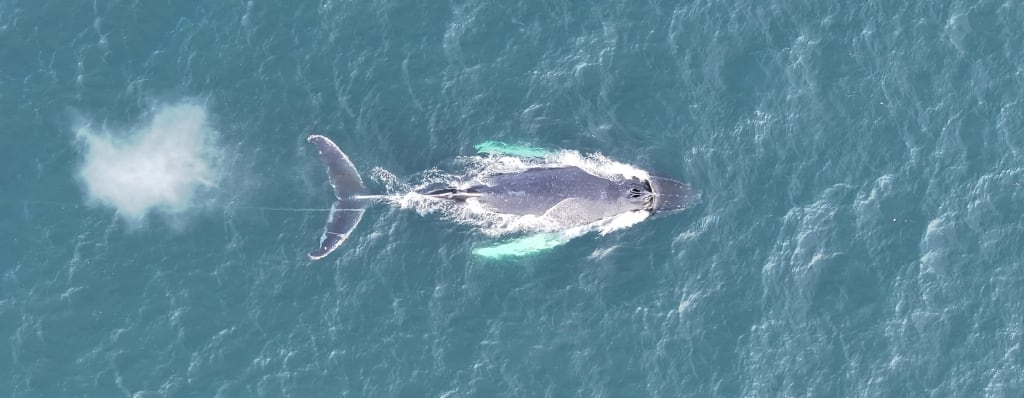
Mientras tanto, científicos del Center for Whale Research (CWR) y del Orca Behavior Institute (OBI) realizaban estudios sobre orcas en el área. Dejaron de lado esa tarea y se sumaron al operativo. Lograron ubicar nuevamente a Falcon, tomaron imágenes con un dron y siguieron sus desplazamientos para guiar a quienes iban en camino.
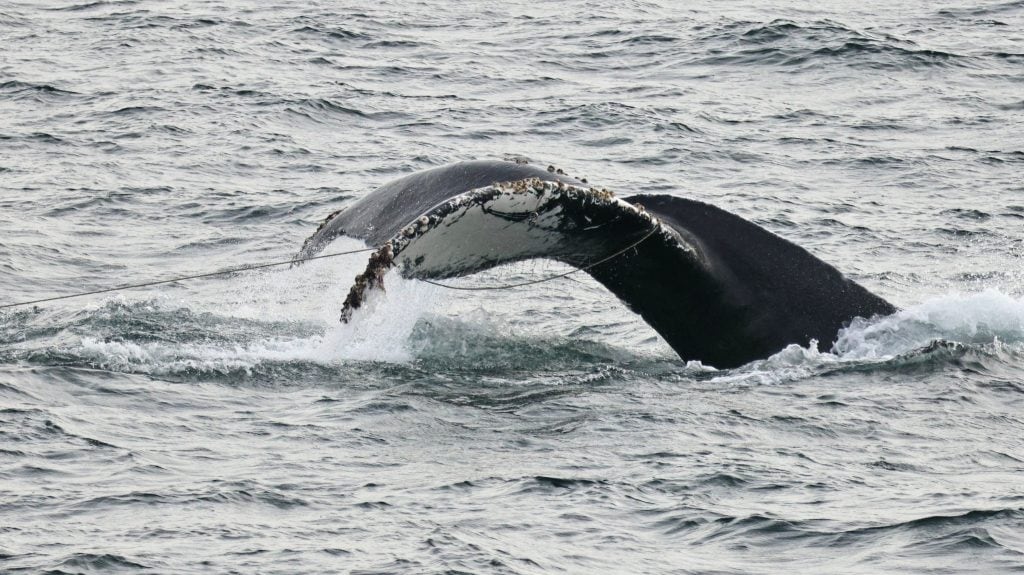
Las imágenes confirmaron el problema: una cuerda estaba enrollada en el lado derecho de la cola y se extendía unos 30 metros detrás del animal. La aleta caudal es la parte del cuerpo que permite a las ballenas avanzar y ganar velocidad en el agua. Una línea adherida allí puede rozar la piel, provocar cortes, dificultar el desplazamiento y apretarse cada vez más.
Falcon avanzaba mientras el día se apagaba
La ballena se desplazaba hacia el sur. Ese movimiento, que podía haber alejado al animal de los rescatistas, terminó por acercarlo a las embarcaciones que iban en su búsqueda. Personal de SR3 llegó primero y asumió la vigilancia. Poco después arribó el barco del CRC, con dos rescatistas de SR3 a bordo.
La primera meta no era retirar de inmediato todo el aparejo. El plan consistía en enganchar la cuerda que Falcon arrastraba y sujetarle una boya de telemetría. Esa boya sirve para rastrear al animal si la intervención debe detenerse y continuar al día siguiente con luz natural.
Doug Sandilands, rescatista principal del CRC, explicó que el trabajo comienza mucho antes del contacto con una ballena. “Un desenmalle exitoso suele comenzar mucho antes de que los rescatistas lleguen a la ballena”, afirmó.
El especialista señaló que mantener contacto visual con el animal, registrar el tipo de aparejo y comunicar sus movimientos puede definir el resultado de un operativo. “En el caso de Falcon, la disposición del CWR y del OBI para detener sus propias actividades de investigación y ayudar cambió todo, sobre todo porque se terminaba la luz”, agregó.
La primera maniobra falló. El gancho no logró tomar la cuerda que permanecía debajo de la superficie. El equipo volvió a acercarse. Por un instante, surgió la posibilidad de que el aparejo se hubiera desprendido solo.
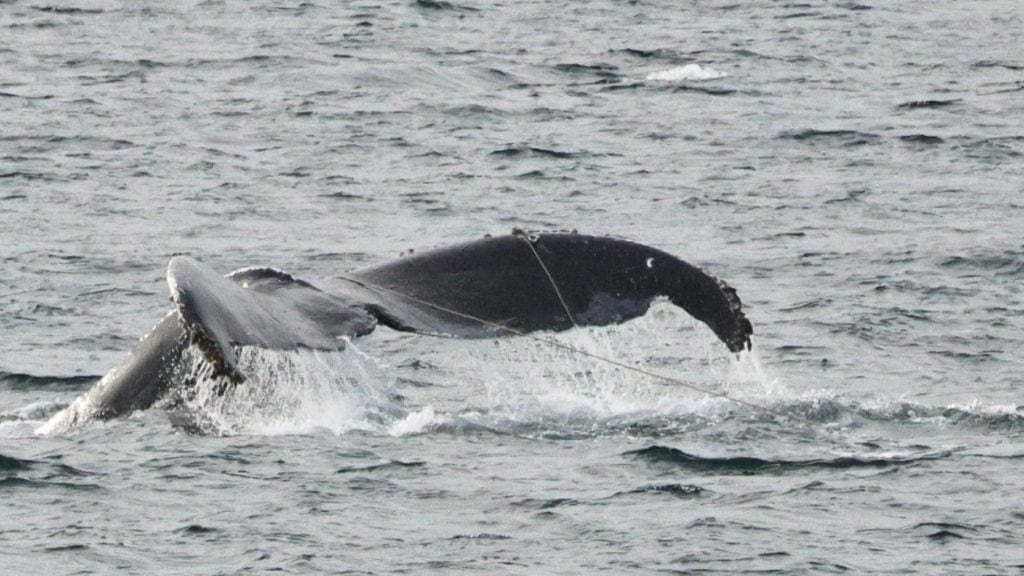
Pero Falcon levantó la cola por encima del agua. La cuerda seguía allí, ajustada en la aleta caudal derecha.
El segundo intento tampoco funcionó. La noche estaba cada vez más cerca y los rescatistas debían decidir si suspendían el operativo hasta el día siguiente. Hicieron un último intento.
El tercer lanzamiento liberó los 30 metros de cuerda de pesca
Falcon emergió de nuevo, a unos 90 metros del barco. Desde la embarcación lanzaron el gancho por tercera vez. Esta vez, el dispositivo tomó la línea sumergida.
La ballena reaccionó al peso adicional y aceleró. Arrastró la cuerda de control y la boya de telemetría. Durante unos segundos, los rescatistas no supieron si el gancho había retirado el aparejo completo o si había cortado la línea y dejado un tramo alrededor de su cola.
Recuperaron la boya, revisaron las cuerdas y encontraron la respuesta: habían extraído todo el material que mantenía atrapada a Falcon.
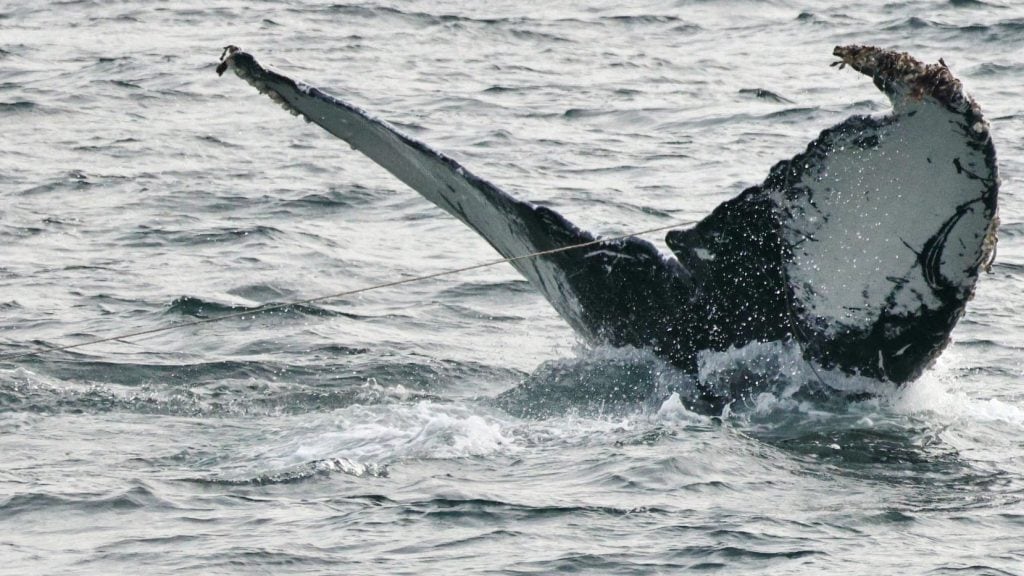
Poco después, la ballena salió a respirar y volvió a elevar la cola. Ya no había una cuerda alrededor de la aleta. La confirmación llegó antes de que el día terminara.
KC Scofield, rescatista de SR3, destacó que la coordinación permitió una intervención rápida. “Lo llamativo fue la colaboración y la comunicación de todos los grupos para reunir los recursos necesarios y conseguir un desenmalle tan rápido”, afirmó.
El equipo permaneció cerca del cetáceo durante varios momentos de respiración para comprobar que no quedaran restos de aparejos. Falcon seguía su recorrido sin la línea que, horas antes, se extendía detrás de su cuerpo.
La nueva observación que confirmó que Falcon estaba libre
Dos días más tarde, la tripulación de Puget Sound Express localizó otra vez a Falcon frente a Edmonds. Esta vez pudieron observarla con luz de día. Según el CRC, no tenía cuerdas adheridas ni presentaba heridas de gravedad.
La ballena jorobada quedó en condiciones de continuar el recorrido que la lleva desde las aguas del estado de Washington hacia Hawái, donde estos animales se desplazan durante la temporada de reproducción.
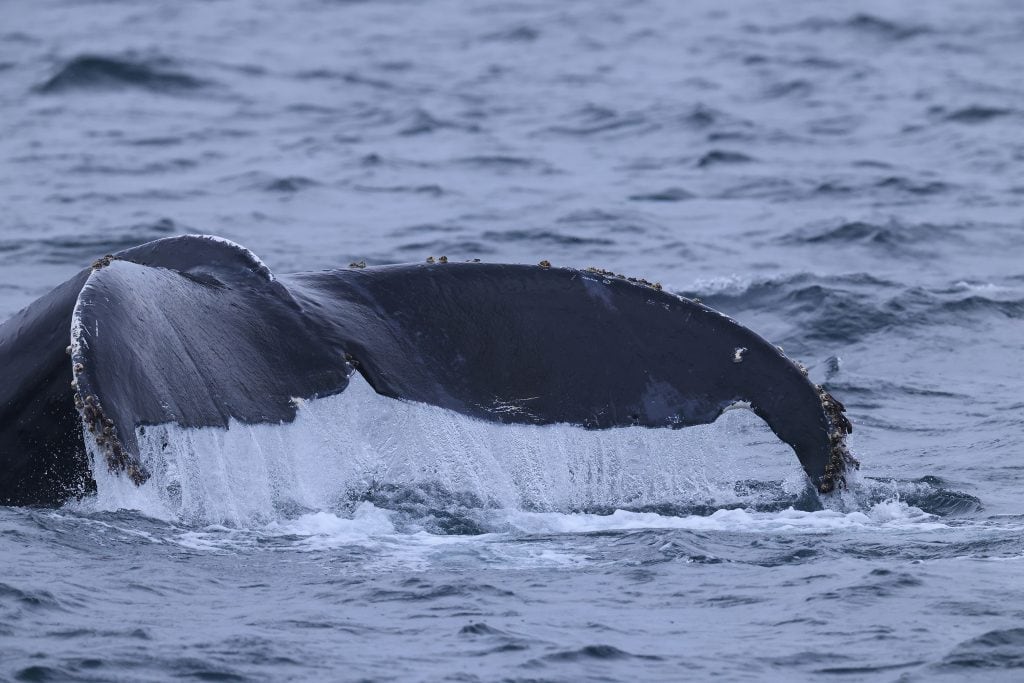
El operativo integró la Red de Respuesta ante Enmallamientos de la Costa Oeste, que reúne a organizaciones y autoridades dedicadas a asistir a grandes ballenas atrapadas en artes de pesca, documentar los incidentes y buscar medidas de prevención.
La intervención se realizó bajo el permiso número 24359 de NOAA. Los protocolos impiden que personas sin entrenamiento intenten liberar por su cuenta a una ballena enredada. Las cuerdas tensionadas, el tamaño de los animales y sus reacciones imprevisibles convierten esas maniobras en un riesgo para todos.
Por eso, ante el avistamiento de un cetáceo atrapado, la recomendación es mantener distancia, tomar fotografías o videos si es posible y dar aviso a los equipos especializados. En el caso de Falcon, una llamada a tiempo, la vigilancia de quienes estaban en el agua y un último lanzamiento antes del anochecer fueron suficientes para que la ballena volviera a nadar libre.
INTERNACIONAL
Russian warship sinks off Libya as suspected Ukrainian strikes take war beyond Black Sea
Ukraine launches record drone attack on Russia, hits Crimea Bridge
Russia faces a record Ukraine drone attack as more than 1,400 drones strike overnight, damaging the prized Crimean Bridge. Host Harris Faulkner covers the escalating war before analyzing the arrival of the USS Theodore Roosevelt in the Middle East. Retired Blackhawk helicopter pilot Lt. Col. Darin Gaub joins ‘The Focus’ to discuss these rising global conflicts and U.S. military positioning.
NEWYou can now listen to Fox News articles!
A Russian warship capsized and sank Sunday after suspected Ukrainian sea drones struck a naval base in eastern Libya, triggering an explosion and fire, according to Libyan officials.
Hours later, a second drone attack also hit a commercial ship off the coast of Benghazi, Reuters reported.
The first ship, the Russian navy corvette Merkury, was docked at Benghazi Naval Base when two explosive-laden sea drones struck the vessel, according to Libyan military officials who spoke to The Associated Press.
UKRAINE POUNDS BLACK SEA FLEET’S ‘LAST MAJOR STRONGHOLD’ WHILE PUTIN FLEXES NAVAL POWER IN PACIFIC
Fire burns after an explosion aboard a Russian ship docked at Benghazi port in Libya. (Reuters)
At least four other drones were intercepted and destroyed, the officials said.
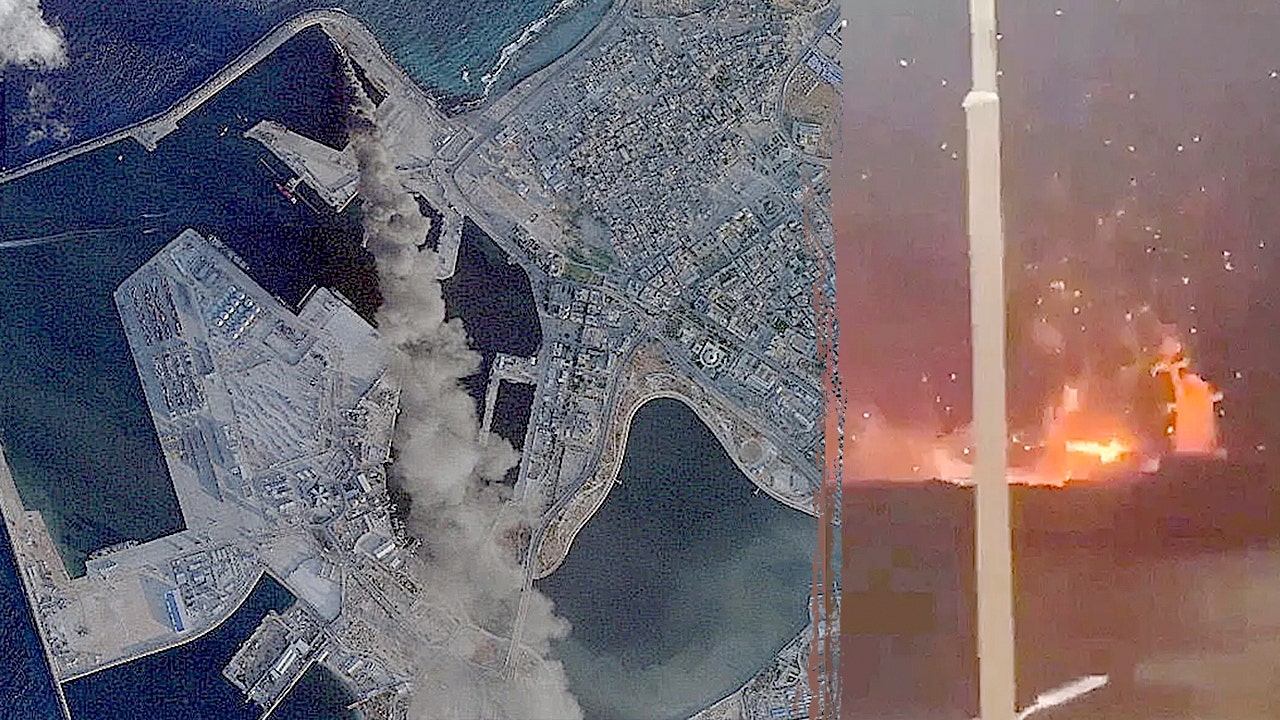
Satellite images showed most of the warship capsized and submerged, with only its bow remaining above water. Smoke could be seen rising from the ship’s superstructure, and debris was scattered along the pier.
Ten people, including Russian and Libyan nationals, suffered minor injuries in the attack and were receiving treatment in Benghazi, medical sources told Reuters.
The warship had stopped at the port to refuel and resupply while returning to Russia under a maritime cooperation agreement with Libya’s eastern-based government, officials said in a statement.
Libyan military officials said an initial investigation indicated that Ukrainian sea drones had been launched from a base in western Libya, according to The AP.
UKRAINE STRIKES DEEP INTO RUSSIA’S ARCTIC GAS HEARTLAND AS TRUMP PUSHES PUTIN TOWARD PEACE

The port of Benghazi after an explosion aboard a Russian ship docked at the Benghazi naval base. (Vantor/Handout via REUTERS)
Hours after the warship was struck, a Maltese-flagged commercial ship was also hit by a sea drone off Benghazi, two Libyan military sources told Reuters.
Libyan naval forces rescued the commercial ship’s crew, while health officials reported that some crew members sustained minor injuries and were in stable condition.
Libyan naval and air forces also intercepted more than 20 drone boats off Benghazi on Sunday evening, the military sources told Reuters.
The attacks prompted Libya’s eastern-based government to seek an international investigation.
Prime Minister Osama Hamad said his government had submitted a formal request to the United Nations General Assembly and Security Council to investigate the attacks, including suspicions that the drones were launched from western Libya.
RUSSIA DEPLOYS NORTH KOREAN MISSILE UNIT TO UKRAINE; MOSCOW-PYONGYANG AXIS DEEPENS: REPORT

A Russian corvette before and after the explosion in Benghazi, with Libya’s eastern-based government saying the explosion was caused by a suspected drone attack. (VANTOR/ Reuters)
Hamad also called for an investigation into the possible presence of Ukrainian military experts in Libya and requested an explanation from Kyiv about their activities.
The eastern government insisted that Libya was not a party to the war between Russia and Ukraine and condemned attempts to use its territory to settle foreign conflicts.
«The Libyan government will not allow Libyan ports, territory or territorial waters to be turned into an arena for settling scores or exporting international conflicts,» the government said.
Benghazi is controlled by forces loyal to Gen. Khalifa Haftar, whose self-styled Libyan National Army dominates eastern and southern Libya and maintains close ties with Russia.
Libya has been divided since the 2011 NATO-backed uprising that toppled longtime dictator Moammar Gadhafi.
UKRAINE UNLEASHES MORE THAN 400 DRONES NEAR MOSCOW IN ONE OF WAR’S BIGGEST ATTACKS
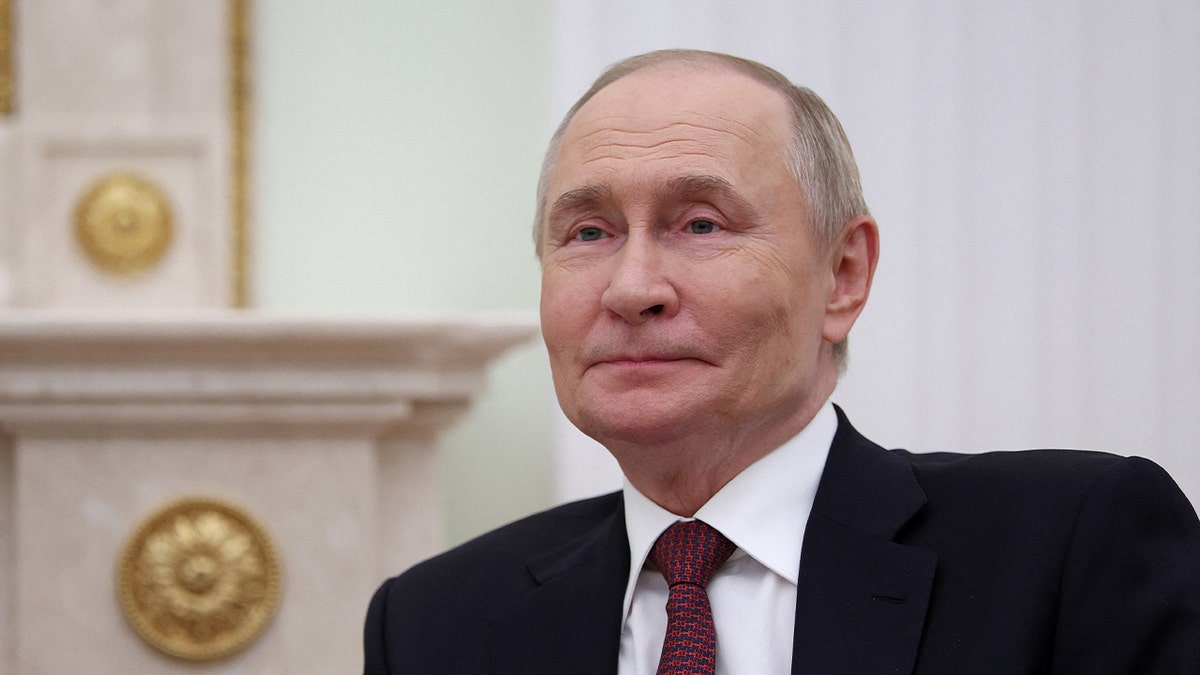
Putin is testing the boundaries of NATO with aircraft incursions, allied states say. (Ramil Sitdikov/Pool/Reuters)
A U. N. recognized government operates from Tripoli, while a rival administration controls much of the east.
The suspected attacks also come as Ukraine has expanded its campaign against Russian naval assets beyond the Black Sea. In December 2025, Ukraine said it struck a Russian-linked oil tanker with aerial drones in the Mediterranean Sea.
In March 2026, Russia accused Ukraine of attacking a Russian liquefied natural gas tanker with naval drones launched from the Libyan coast.
Libyan officials previously told the AP that Ukrainian drone specialists had been operating from military facilities in western Libya, including an air base in Misrata and sites in Tripoli and Zawiya.
Since Russia launched its full-scale invasion of Ukraine in 2022, Ukrainian forces have used explosive-laden sea drones and missiles to strike Russian warships and naval installations, primarily in the Black Sea.
world, navy, military, geopolitics, foreign affairs, russia, ukraine, foreign
INTERNACIONAL
Guatemala lanza nuevo proyecto de conservación forestal en la región Trifinio con financiamiento internacional

El Ministerio de Ambiente y Recursos Naturales de Guatemala encabezó el lanzamiento de un proyecto para conservar bosques y restaurar ecosistemas en la Reserva de Biosfera Trifinio Fraternidad, compartida con El Salvador y Honduras, durante los próximos cinco años. La iniciativa busca vincular la protección ambiental con el bienestar de las comunidades locales e indígenas que dependen de los recursos del territorio.
El programa regional prevé mejorar la gestión de más de 5 millones de hectáreas de áreas protegidas, restaurar 61 mil hectáreas prioritarias para conectar bosques primarios y beneficiar de forma directa a 176.500 personas. De ese total, 79.500 son mujeres.
La propuesta se denomina “Biomas forestales críticos de Guatemala: Garantizar beneficios para el bienestar de las comunidades locales y los ecosistemas de la Selva Maya y el Trifinio”. Integra el Programa de Biomas Forestales Críticos de Mesoamérica, financiado por el Fondo para el Medio Ambiente Mundial, conocido como GEF, e implementado por la Unión Internacional para la Conservación de la Naturaleza.
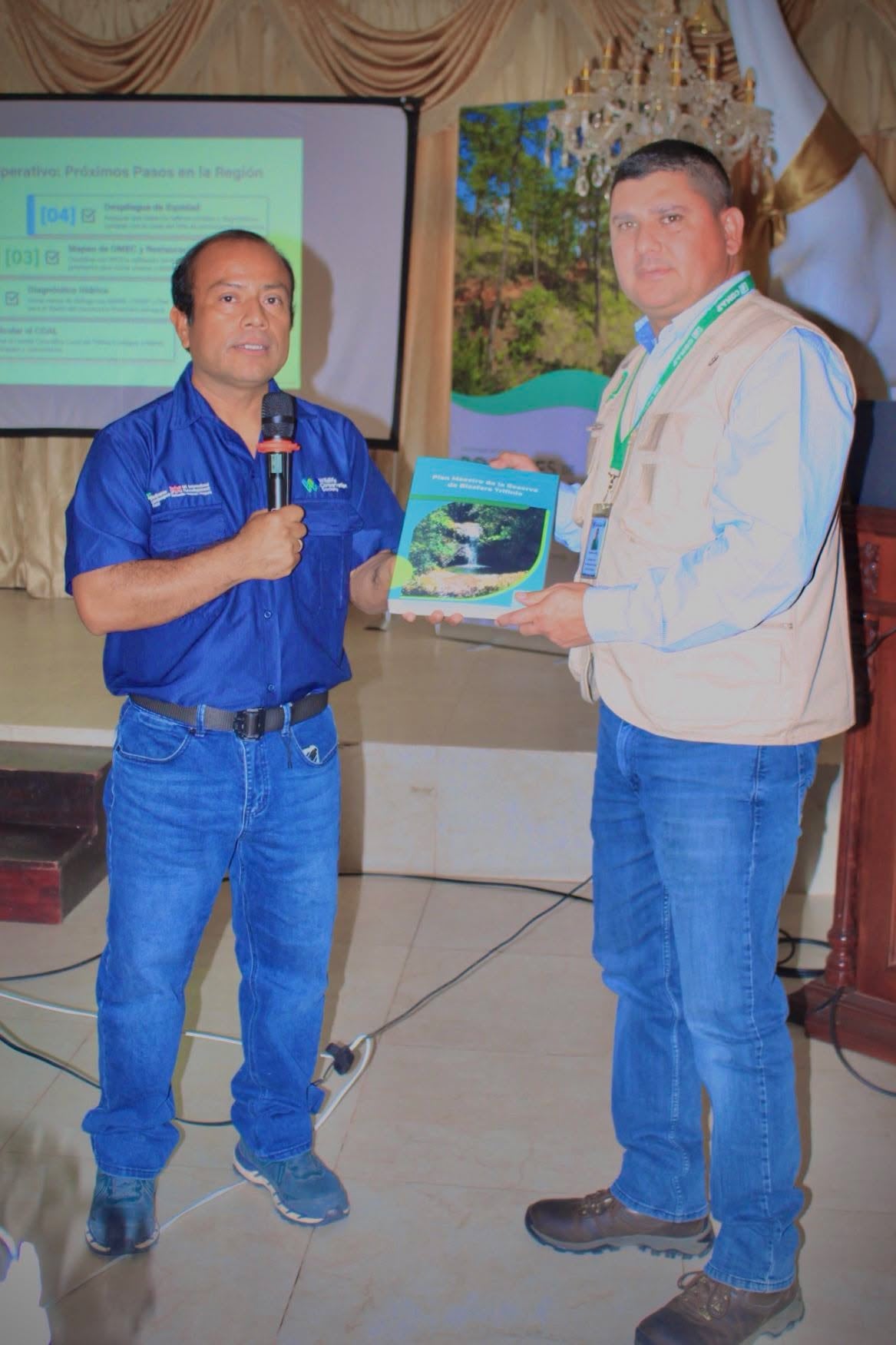
Dos territorios guatemaltecos dentro de una estrategia regional
Guatemala desarrollará el programa en la Selva Maya, ubicada en Petén, y en el territorio de Trifinio Guatemala. The Nature Conservancy estará a cargo de la ejecución en la Selva Maya, mientras que Wildlife Conservation Society asumirá el componente en Trifinio.
El área de intervención en Trifinio incluye el Parque Nacional Montecristo y zonas de influencia de los municipios de Esquipulas y Concepción Las Minas. Ambos se encuentran dentro de la Reserva de Biosfera Trifinio Fraternidad, la primera reserva transfronteriza de Centroamérica.
El taller de arranque reunió a representantes del Consejo Nacional de Áreas Protegidas, la Municipalidad de Esquipulas, organizaciones locales y delegados del Ministerio de Ambiente y Recursos Naturales, que funciona como punto focal nacional. Un Comité Directivo presidido por esa cartera coordinará la ejecución en el país.
La reserva concentra fuentes hídricas, bosques nublados y hábitats de especies como el quetzal y la guacamaya. El proyecto contempla la protección y restauración de esos ecosistemas, además del fortalecimiento de la gobernanza local y de la gestión de áreas protegidas.
El Consejo Nacional de Áreas Protegidas recibirá capacitaciones técnicas para su personal y sus guardarrecursos. La formación integra las medidas previstas para elevar la efectividad de manejo y ampliar las capacidades institucionales en el territorio.

USD 65 millones para la conservación mesoamericana
El programa regional cuenta con una donación de más de USD 65 millones del GEF y con USD 270 millones de cofinanciamiento. Participan los ministerios de Ambiente de Belice, El Salvador, Guatemala, Honduras y Panamá, junto con la Comisión Centroamericana de Ambiente y Desarrollo, el Consejo Agropecuario Centroamericano y la Comisión Trinacional del Plan Trifinio.
La estrategia está compuesta por seis proyectos nacionales y una iniciativa regional de gestión de conocimiento. También apunta a mejorar el manejo paisajístico de 1,3 millones de hectáreas y a movilizar instrumentos financieros para actividades compatibles con la conservación forestal.
Las comunidades y los pueblos indígenas tendrán participación en la implementación, incluido el pueblo Chortí. El plan prevé consolidar mecanismos locales de conservación y la posible expansión de corredores bioculturales hacia otros municipios de la región.
La conservación de los bosques estará acompañada por acciones destinadas a promover inversiones y medios de vida vinculados con el uso sostenible de los recursos. Los delegados del Plan Trifinio plantearon la necesidad de que la protección de los ecosistemas se articule con el desarrollo social y económico de las poblaciones locales.
El lanzamiento sucede después de un proyecto de conectividad ecológica impulsado por la Organización de las Naciones Unidas para la Educación, la Ciencia y la Cultura entre 2025 y 2026 en la misma reserva. Esa iniciativa contó con financiamiento del Fondo de Biodiversidad de Kunming y de la Agencia Española de Parques Nacionales.
Los talleres realizados en Esquipulas, Ocotepeque y Metapán incluyeron la participación del pueblo Chortí. El trabajo permitió elaborar un mapa de uso del suelo de alta resolución y modelos de conectividad que identificaron corredores prioritarios en una reserva integrada por 32 municipios de los tres países y habitada por más de 500 mil personas.
conferencia,oratoria,Reserva de Biosfera Trifinio Fraternidad,Bosques de Mesoamérica,gestión ambiental

El Gobierno encara una semana legislativa clave con una doble sesión por el Presupuesto y la reforma electoral

Rescataron a Falcon, una ballena jorobada enredada en 30 metros de cuerda: el tercer intento la liberó antes del anochecer

Olimpia campeón con Vitamina Sánchez

Hellraiser: Revival supera a Resident Evil Requiem y se convierte en el Juego del Año de los Horror Game Awards 2026 – Nintenderos

Russian warship sinks off Libya as suspected Ukrainian strikes take war beyond Black Sea

Tras escrachar a un empleado, Robertito Funes Ugarte se defendió de las críticas e hizo un furioso descargo: «¡Maleducado y xenófobo!»

Javier Milei y sus medidas, en vivo: “Hoy discutimos si crecemos un punto más o menos”, dijo el Presidente

Javier Milei destacó el desembarco de Tesla en el país y aseguró: “Esto también es devolverle la libertad a los argentinos”

El brote de ébola está fuera de control en la República Democrática del Congo y crece el temor a una epidemia continental

El burbujeante ping pong de Colapinto con un actor argentino: de la puja entre Senna y Riquelme a la comida que le falta a la Fórmula 1

 POLITICA2 días ago
Javier Milei destacó el desembarco de Tesla en el país y aseguró: “Esto también es devolverle la libertad a los argentinos”
- CHIMENTOS15 horas ago
Agustín “Rada” Aristarán se despide de Chanta: “Con esta obra dejé de ser un impostor”
- INTERNACIONAL15 horas ago
NYC college put on notice after Jewish campus group shunned by student government: ‘rude awakening’