INTERNACIONAL
Bangkok declaró el estado de desastre en sus 50 distritos por las inundaciones


Las autoridades han declarado zona de desastre los 50 distritos en los que está dividido administrativamente la ciudad de Bangkok, la capital de Tailandia, debido a las fuertes lluvias recientes que han provocado importantes inundaciones.
El gobernador de Bangkok, Chadchart Sittipunt, ha firmado la declaración este sábado por la mañana tras decidir ampliar la zona desde los tres distritos declarados zona de desastre previamente.
La medida permite a la administración responder más rápidamente a la emergencia, que afecta en mayor medida a las regiones del este de la ciudad, informa el diario ‘Bangkok Post’.
El Departamento Meteorológico de Tailandia ha informado de un sistema de bajas presiones en la llanura central, Bangkok y las provincias circundantes. Está previsto que siga lloviendo hasta el domingo.

Septiembre es el mes de mayores precipitaciones en la región de Bangkok, pero este año se han registrado cifras inusualmente altas con 487 milímetros de lluvia por metro cuadrado entre el 1 y el 25 de septiembre, muy por encima de la media de 269 milímetros registrada entre 1991 y 2020.
Además de en la capital, hay inundaciones en otras 20 provincias tailandesas: Najon Ratchasima, Chanthaburi, Phetchabun, Chon Buri, Chachoengsao, Buri Ram, Surin, Sing Buri, Samut Prakan, Najon Sawan, Phichit, Rayong, Ang Thong, Chai Nat, Uthai Thani, Prachin Buri, Ayutthaya, Sa Kaeo, Phitsanulok, Suphan Buri y Najon Phanom.
Decenas de calles inundadas
Tras más de 24 horas de lluvia, algo poco usual en Bangkok, más acostumbrada a breves e intensos chaparrones durante la época de lluvias, que se extiende aproximadamente de junio a octubre, varias zonas de la capital –incluida parte del céntrico barrio de Ekkamai– están anegadas.
La zona este de la ciudad sufre las mayores afectaciones del temporal, que se prevé que se prolongue cinco días, con el agua impidiendo la circulación de vehículos pequeños, principalmente motocicletas, uno de los principales medios de transporte en Tailandia.
“En la acera calculo que hay unos 40 centímetros (de agua). Somos 300 casas y mínimo (el nivel del agua llega) hasta la rodilla”, relata el español Eneko Iruretagoyena, vecino de una zona aledaña a un canal cercano al aeropuerto internacional de Suvarnabhumi (este).

Iruretagoyena asegura que hizo acopio de provisiones ante la previsión de que las lluvias dificultarían la movilidad, igual que otras decenas de ciudadanos, según puede apreciarse este sábado en supermercados del centro de Bangkok.
Las autoridades han habilitado refugios temporales en varios distritos, principalmente del noreste y el norte de la capital, como Lat Phrao y Chatuchak, cercanos al centro, o Don Mueang, que alberga otro aeropuerto internacional.
Bangkok es especialmente susceptible de sufrir inundaciones ante fuertes precipitaciones debido a factores como su ubicación sobre el delta del río Chao Phraya, a unos 1,5 metros sobre el nivel del mar; la histórica sobreexplotación de acuíferos subterráneos, que ha contribuido al hundimiento de la metrópolis; o su extensa red de canales.
El Ejército de Tailandia evacúa a afectados
El Ejército de Tailandia evacúa este sábado a ciudadanos afectados por las inundaciones provocadas por las fuertes y persistentes lluvias que azotan la capitalina Bangkok y áreas colindantes desde hace más de 24 horas, además de repartir provisiones entre residentes de zonas anegadas.
Efectivos de las fuerzas armadas trasladaron a varias personas mayores de una residencia situada en la provincia de Nonthaburi, al norte de Bangkok y parte de su área metropolitana, hasta uno de los refugios temporales habilitados por las autoridades ante el temporal, que se espera que se prolongue cinco días.
Así lo mostró el Ejército del país asiático a través de la plataforma X, en una publicación acompañada de imágenes en las que aparecen ancianos, algunos en silla de ruedas, siendo trasladados hasta un vehículo militar por parte de efectivos equipados con chubasqueros y a quienes el agua les llega a la altura de las rodillas.

Las fuerzas tailandesas anunciaron, en la misma red social, evacuaciones de personas vulnerables también desde domicilios particulares hacia distintos tipos de centros habilitados ante los riesgos derivados de las lluvias, así como repartos de provisiones, principalmente agua potable, entre residentes de áreas bajas, adyacentes a canales.
La Administración Metropolitana de Bangkok declaró este sábado el estado de desastre en los 50 distritos bajo su jurisdicción por las inundaciones derivadas de las fuertes lluvias que registra la capital tailandesa y su área metropolitana, donde viven unos los 15 millones de personas.
La medida “permite a las agencias competentes actuar dentro de sus atribuciones de manera rápida, sistemática y adecuada a la situación”, argumentaron las autoridades en un comunicado difundido en Facebook.
En una alerta que los habitantes de Bangkok recibieron en sus teléfonos móviles sobre las 9:00 hora local (2:00 GMT), el Departamento de Prevención y Mitigación de Desastres de Tailandia instó a “los residentes de zonas aledañas a canales y áreas de baja altitud a trasladarse a lugares más elevados, proteger objetos de valor y evitar desplazamientos innecesarios”.

El Departamento de Meteorología explicó que “es probable que se registren lluvias de fuertes a muy fuertes” en toda Tailandia, debido al “sistema activo de baja presión” sobre la zona central del país, donde se ubica Bangkok, y al monzón que afecta simultáneamente a las regiones norte, sur y suroeste.
El organismo advirtió de eventuales “inundaciones repentinas, desbordamientos y deslizamientos de tierra”, así como del “fortalecimiento de los vientos”, que amenazan con causar olas de hasta tres metros en el golfo de Tailandia y el mar de Andamán.
(Con información de Europa Press y EFE)
Top Picture,Weather,Asia / Pacific,Weather Markets / Weather










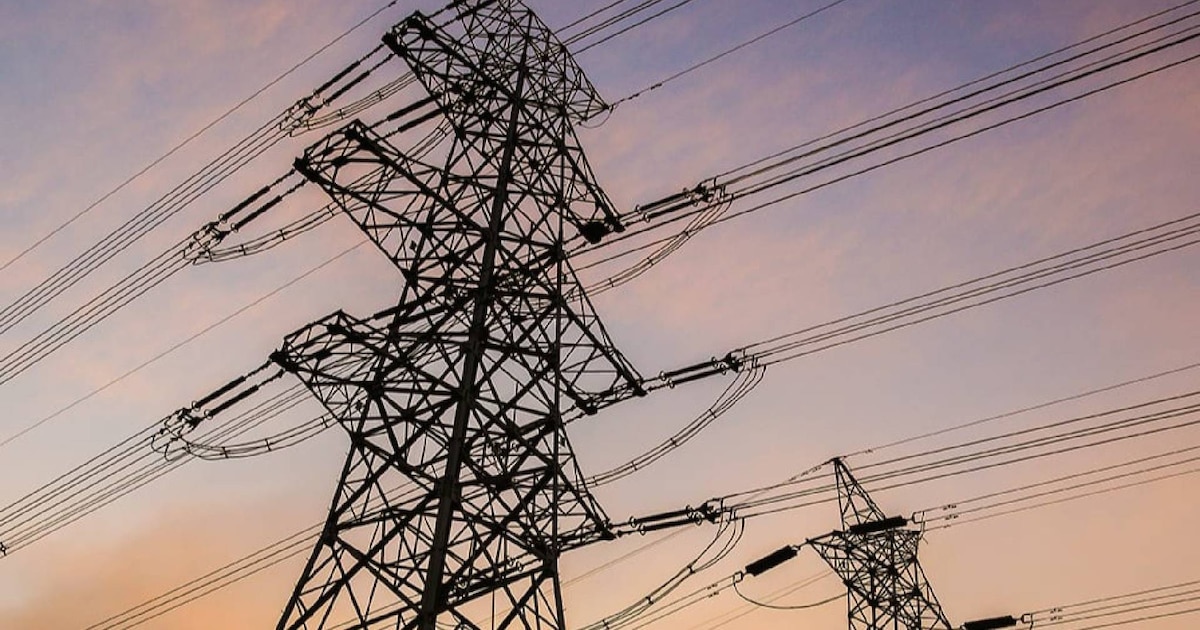
La falta de sistemas eléctricos alternativos en Centroamérica y el Caribe, junto con la dependencia de las importaciones de energía en varios países, puede aumentar los efectos del fenómeno El Niño.
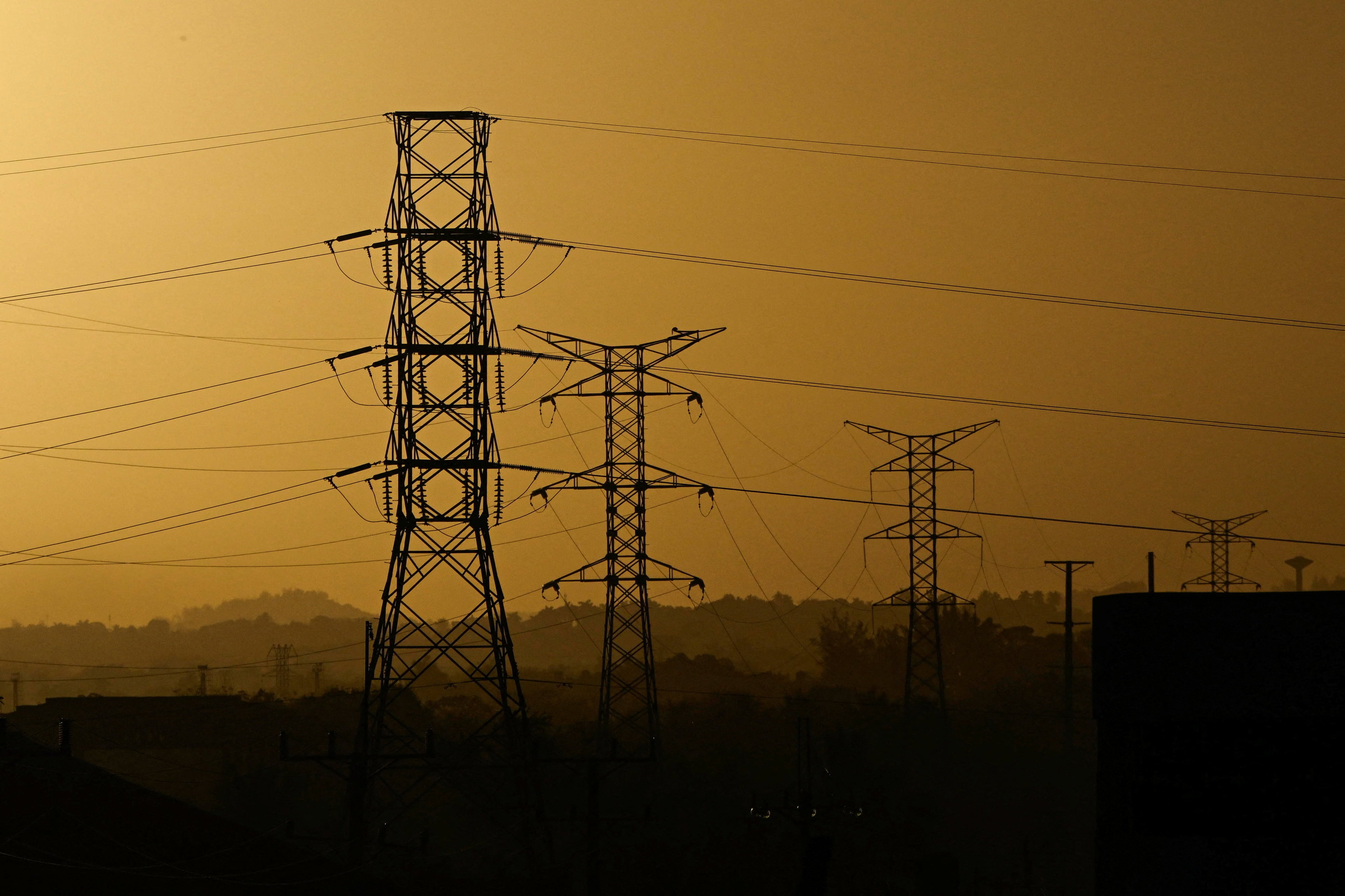
Una falla que afecte una parte pequeña de la infraestructura eléctrica puede interrumpir el servicio en zonas más amplias y dificultar la continuidad del suministro según un informe de la Comisión Económica para América Latina y el Caribe (CEPAL).
El fenómeno El Niño/Oscilación del Sur afecta al sector energético mediante la disminución de las precipitaciones, el aumento de las temperaturas, el riesgo de incendios forestales y las modificaciones en los patrones de viento y radiación solar.
Los sistemas eléctricos de América Latina y el Caribe también presentan vulnerabilidades estructurales. En varios países, la generación hidroeléctrica supera el 70% de la matriz eléctrica. Además, el consumo eléctrico regional aumentó un 75% entre 2004 y 2024. Más de la mitad de la capacidad hidroeléctrica instalada tiene más de 30 años y presenta brechas de mantenimiento.
Una parte importante de la infraestructura crítica, como centrales, líneas de transmisión y subestaciones, se concentra en cuencas y corredores expuestos a sequías, inundaciones e incendios.

Déficit hídrico, calor y daños en la infraestructura
El Corredor Seco Centroamericano enfrenta condiciones persistentes de déficit hídrico, con probabilidades de entre 89% y 92%. La disminución de las precipitaciones reduce los caudales y, con varios meses de retraso, limita la generación hidroeléctrica.
Para el trimestre octubre-noviembre-diciembre de 2026, el riesgo de sequía para la generación hidroeléctrica alcanza su mayor nivel a escala regional. La probabilidad de déficit de precipitaciones se sitúa en un 60%. A escala de América Latina y el Caribe, el 31,1% del territorio se encuentra en condición de alerta elevada, con una probabilidad de déficit igual o superior al 80%.
El riesgo no se distribuye de la misma manera en todos los territorios. En sectores de la costa de Colombia y Ecuador, las precipitaciones tienden a intensificarse, mientras que amplias zonas del interior andino-amazónico presentan déficits crecientes. Por esta razón, el informe recomienda realizar el monitoreo y la gestión del riesgo a escala de cuenca, con información sobre caudales, niveles de embalse y proyecciones de precipitación.
En Ecuador, las condiciones de sequía y los bajos niveles de los embalses durante 2023 y 2024 redujeron la disponibilidad de generación hidroeléctrica y provocaron cortes recurrentes de electricidad que llegaron hasta 12 horas diarias en 2024.
En Colombia, la reducción de las precipitaciones asociada con El Niño disminuyó la disponibilidad de generación hidroeléctrica y ejerció presión al alza sobre los precios de la electricidad durante 2023 y 2024.

El aumento de las temperaturas incrementa la demanda de electricidad para climatización, especialmente durante las olas de calor y en las grandes ciudades. Esta presión puede coincidir con una menor disponibilidad de recursos hídricos para la generación hidroeléctrica.
Las altas temperaturas también pueden reducir la eficiencia de las centrales eléctricas, los paneles solares y las redes de transmisión y distribución.
Los incendios forestales pueden afectar directamente las líneas de transmisión y las subestaciones, ya sea por daños físicos o por desconexiones preventivas asociadas con el humo.
En las regiones más húmedas, la evaluación de la resiliencia de la infraestructura debe incluir amenazas adicionales, como inundaciones y deslizamientos.
Riesgos para las fuentes renovables y efectos económicos
El fenómeno El Niño modifica los patrones de viento y las condiciones de nubosidad y radiación solar. Estos cambios generan variaciones en la disponibilidad de generación eólica y fotovoltaica según la subregión y el periodo analizado.
La complementariedad entre tecnologías renovables puede contribuir a la seguridad energética cuando las anomalías climáticas que afectan cada recurso no están altamente correlacionadas y existen capacidades suficientes de almacenamiento, transmisión y gestión de la demanda.
Los riesgos identificados pueden afectar de manera simultánea la disponibilidad de energía, los costos del suministro, la resiliencia de la infraestructura y la sostenibilidad de la transición energética.
El aumento de los costos de generación puede trasladarse a los consumidores mediante tarifas más elevadas, aumentar la necesidad de subsidios públicos o deteriorar la situación financiera de las empresas eléctricas. El traslado de esos costos puede afectar de manera desproporcionada a los hogares de menores ingresos, a menos que las tarifas se diferencien según el nivel de ingreso.
La coincidencia de varias amenazas en el tiempo y el territorio puede intensificar los efectos. Una menor generación hidroeléctrica puede coincidir con un aumento de la demanda por las altas temperaturas o con daños en las redes de transmisión.
Medidas de adaptación y planificación regional
En el corto plazo, la prioridad consiste en asegurar la continuidad del suministro eléctrico y evitar que la combinación de una menor generación hidroeléctrica, daños en la infraestructura crítica y aumentos de la demanda provoque racionamientos o incrementos abruptos de los costos.

El informe de la CEPAL recomienda verificar la disponibilidad efectiva de generación de respaldo, asegurar el abastecimiento de combustibles estratégicos y realizar labores de mantenimiento en centrales, líneas y subestaciones críticas. También plantea reforzar la protección física de los activos más expuestos, actualizar los protocolos de respuesta y reposición ante fallas e implementar programas temporales de eficiencia energética y gestión de la demanda durante periodos de calor extremo, especialmente en las horas punta.
Para México y el norte de Centroamérica, se propone fortalecer el monitoreo subnacional de las precipitaciones y la demanda. A largo plazo, las medidas incluyen diversificar las tecnologías y las ubicaciones de generación, ampliar el almacenamiento y fortalecer las reservas operativas.
En el Caribe, Centroamérica y la costa norte de América del Sur, se recomienda identificar los activos críticos con baja redundancia, asegurar combustibles y generación de respaldo, promover microredes, generación distribuida, diversificación de proveedores y reservas estratégicas regionales.
El informe plantea que la política energética debe incorporar el riesgo climático en tres horizontes temporales: medidas inmediatas para preservar la continuidad del suministro, acciones de mediano plazo para reducir las vulnerabilidades estructurales y transformaciones de largo plazo que incorporen ese riesgo de manera permanente en la planificación energética.
Para Centroamérica y el Caribe, las prioridades incluyen fortalecer la generación de respaldo, diversificar las fuentes de suministro, ampliar el almacenamiento, proteger la infraestructura crítica frente a incendios, inundaciones y deslizamientos, mejorar los sistemas de alerta temprana y reforzar la coordinación entre operadores eléctricos, autoridades energéticas y organismos de protección civil.
torre de transmisión,línea eléctrica,transmisión de energía,electricidad,infraestructura
INTERNACIONAL
Finland’s Stubb credits Trump for pushing Ukraine peace talks while dismissing Russian invasion fears
NEWYou can now listen to Fox News articles!
UNITED NATIONS — As Ukrainian President Volodymyr Zelenskyy warns that Russia could take its war beyond Ukraine, Finnish President Alexander Stubb is striking a markedly calmer tone — saying Finland is prepared for Moscow and crediting President Donald Trump with pushing harder for a negotiated end to the war.
«I think we’re certainly in a better place than we were before President Trump started,» Stubb told Fox News Digital in an on-camera interview on the sidelines of the U.N. General Assembly in New York. «He’s doubled down in the past year and a half to try to find a solution for peace with negotiators such as Steve Witkoff, Jared Kushner and many others.»
Stubb, who has been closely involved in the diplomatic effort, said he and Norway’s prime minister have worked largely «in the back office,» relaying information among Ukraine, the United States and European governments.
KUSHNER, WITKOFF SET FOR KYIV TALKS AFTER PUTIN MEETING IN US PUSH FOR PEACE
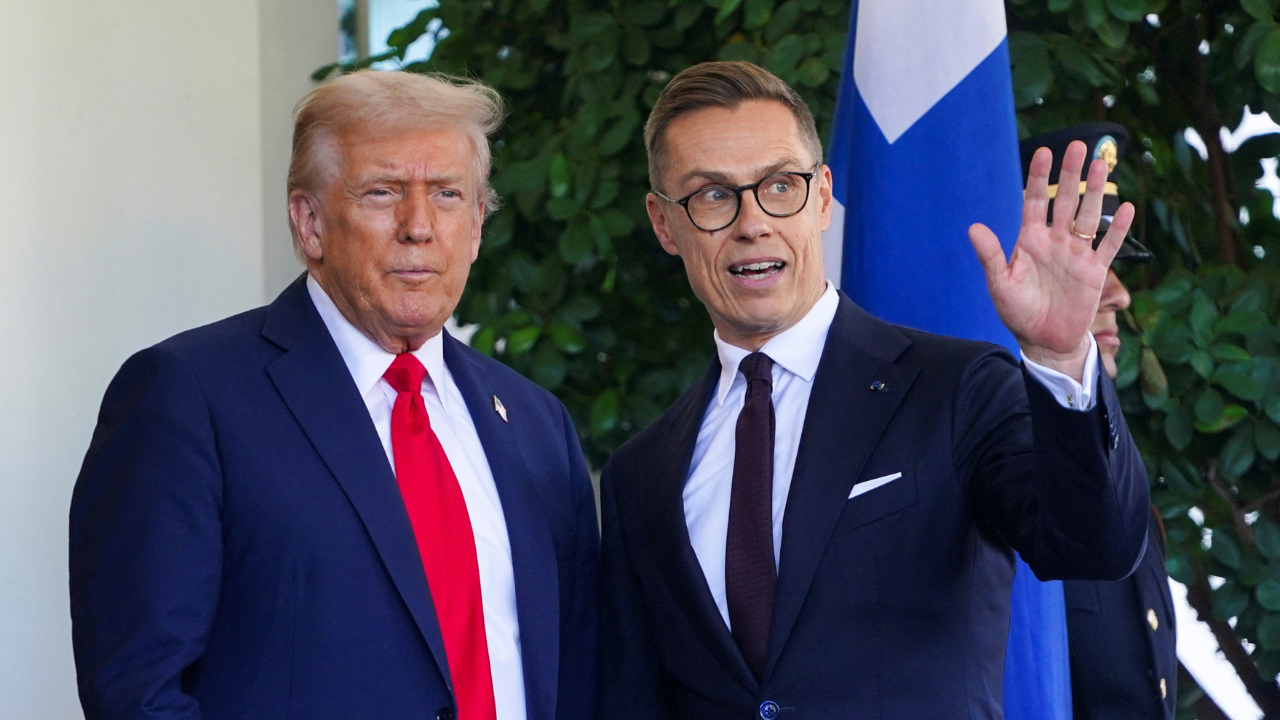
US President Donald Trump meets with Finnish President Alexander Stubb in the Oval Office of the White House in Washington, DC, on October 9, 2025. (Photo by Jim WATSON / AFP) (Photo by JIM WATSON/AFP via Getty Images) (Jim Watson/AFP via Getty Images)
«I think he’s really working hard and hopefully we’ll get a solution,» Stubb said.
The interview came during an intense diplomatic week in New York focused heavily on the wars in Ukraine and the Middle East.
Trump and Ukrainian President Volodymyr Zelenskyy met in New York during UNGA week as Washington continued its effort to revive negotiations with Moscow. Zelenskyy said peace remained Ukraine’s priority and thanked Trump for sending the two envoys to Kyiv after they had also held talks in Moscow.
Zelenskyy was asked by Fox News Digital after the meeting about the possibility that Russia could invade or attack another European country in the near future.
BATTLE-TESTED ZELENSKYY SOUNDS CHILLING ALARM ON WHERE PUTIN’S WAR COULD HEAD NEXT
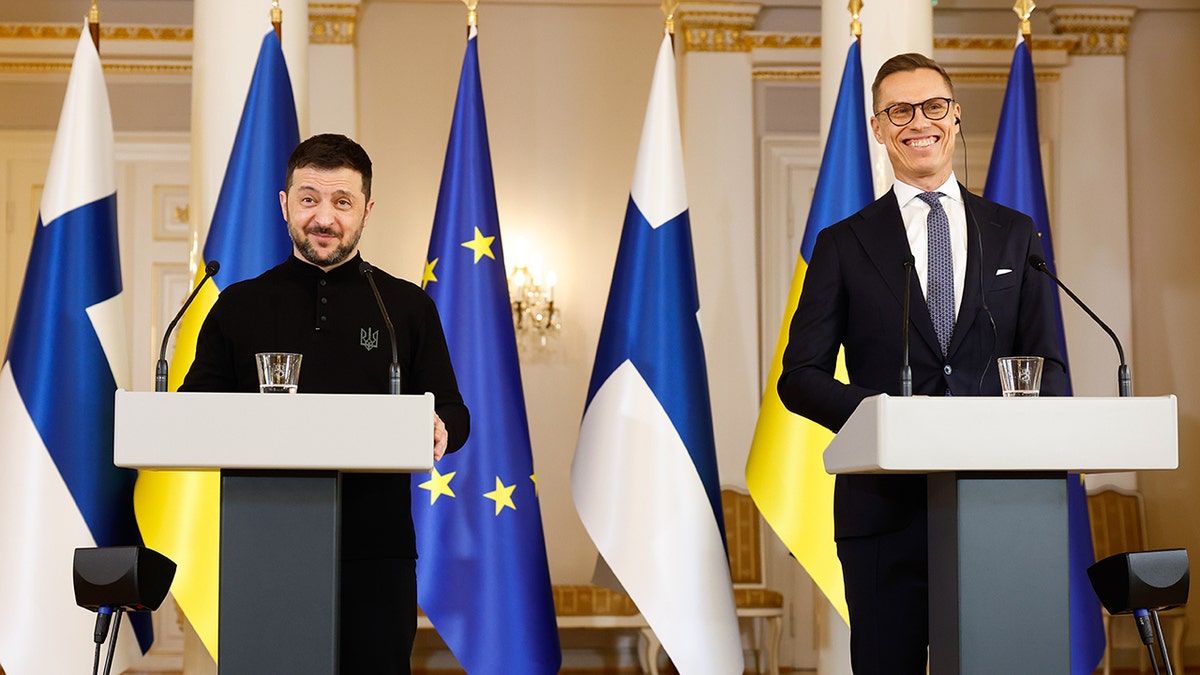
Volodymyr Zelenskyy, Ukraine’s president, left, and Alexander Stubb, Finland’s president, right, during a news conference in Helsinki, Finland, on Wednesday, March 19, 2025. (Roni Rekomaa/Bloomberg via Getty Images)
«That’s why the risk of offensive by drones, missiles or land operation is very high against other countries who are bordering Russia or Belarus,» Zelenskyy said.
The Ukrainian leader argued that Russian President Vladimir Putin, unable to achieve his military objectives in Ukraine, could seek to create instability elsewhere in Europe to pressure Western governments into reducing their support for Kyiv. He pointed to drone incursions and disruptions affecting several European countries, arguing that Moscow is already attempting to intimidate European societies and test their response.
Asked by Fox News Digital what European countries should do in response to the growing threat, Zelenskyy offered a direct answer.
«Respond. Always respond. It’s not about the war. If you don’t respond, Russians, they will go further,» he said.
But Stubb struck a notably calmer tone when asked about Zelenskyy’s warnings that Russia could eventually attack other European countries, including Finland, which shares the longest border with Russia.
«As commander-in-chief in Finland, I sit on all the relevant information and I just don’t see a factual basis for it,» Stubb said.
RUSSIA’S SHADOW WAR IS PUTTING EUROPE ON EDGE AS GERMANY CONFRONTS A GROWING THREAT
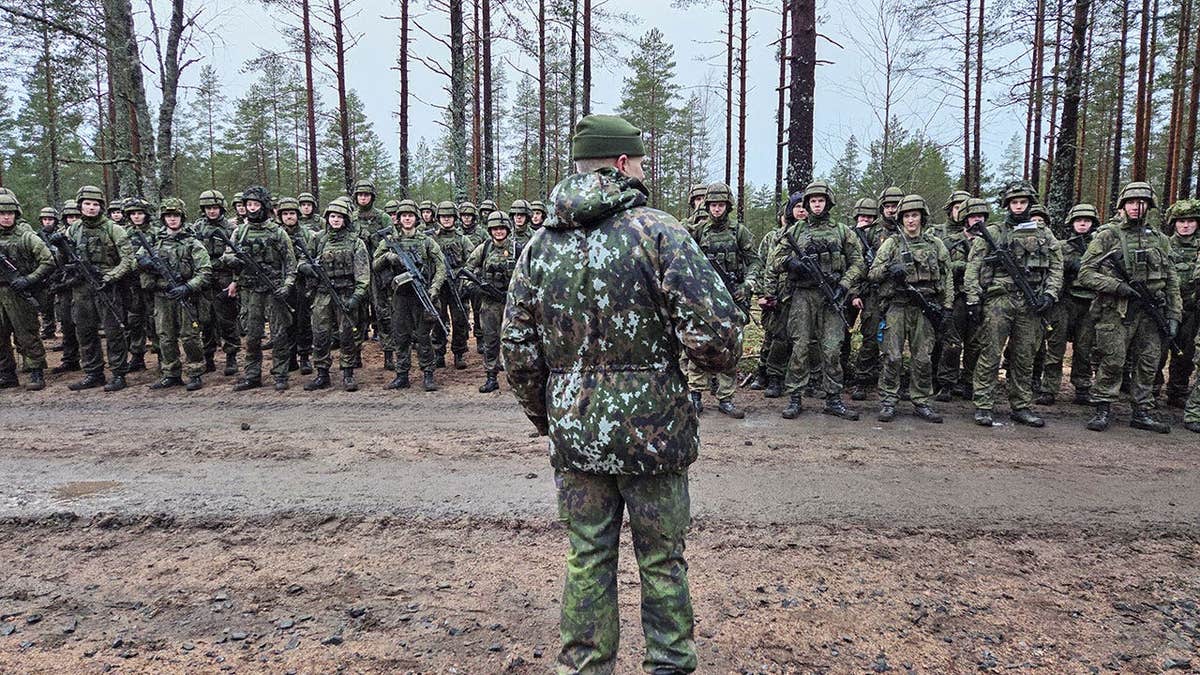
Commander of the Finnish Army Lieutenant General Pasi Valimaki addresses Finnish conscript soldiers after a military exercise at Pori Brigade in Niinisalo, Finland, Dec. 9, 2025. (Anne Kauranen/Reuters)
That does not mean, he stressed, that Moscow has stopped targeting Europe.
Stubb distinguished between the «kinetic» war Russia is fighting in Ukraine and what he described as a broader «hybrid» campaign in Europe, pointing to cyberattacks, sabotage and damage to undersea cables in the Baltic Sea.
«We have to see this as a campaign,» he said. «Russia tries to intimidate Europe, scare us and get into our heads.»
His prescription was characteristically Finnish: «cool, calm and collected, take a sauna and a nice bath and deal with it.»
Stubb said Finland, a country with a population of 5.6 million, can afford that attitude precisely because it has spent decades preparing for a potential threat from its eastern neighbor.
«We are calm because we are prepared,» he said.
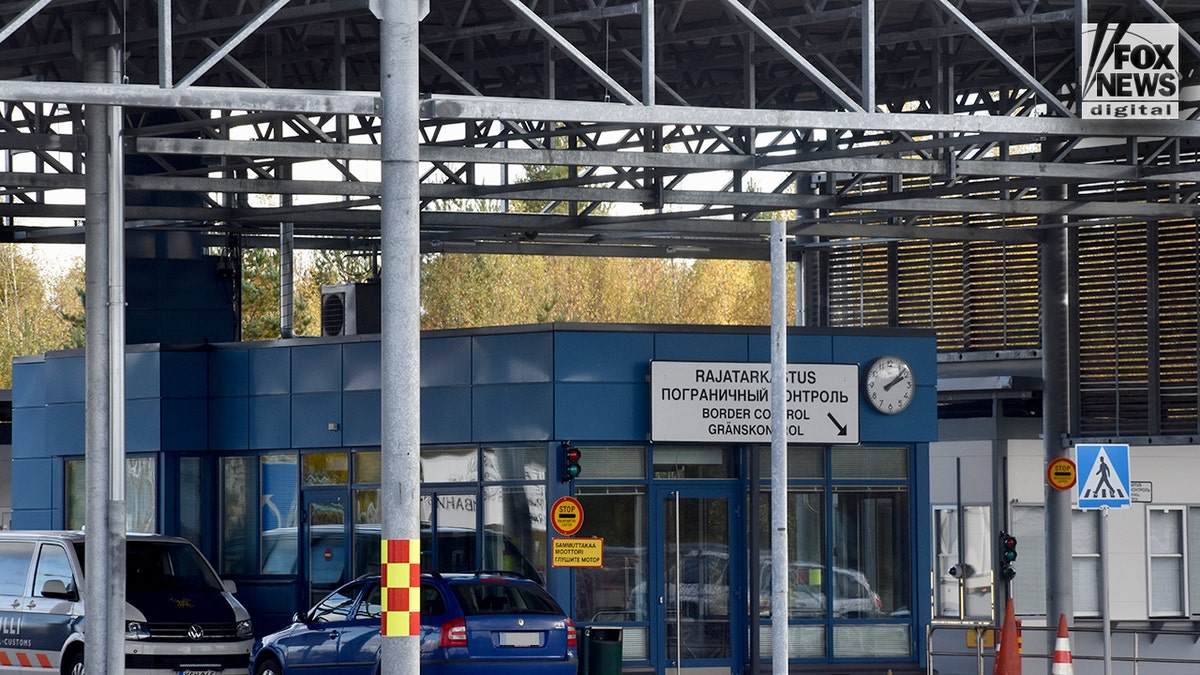
The Niirala border crossing point is seen along Finland’s eastern border with Russia in Oct. 2022 after the Finnish government announced tightening of several border crossings amid concerns over migrant crossings. (Brooke Curto/Fox News Digital) (Brooke Curto/Fox News Digital)
He pointed to Finland’s mandatory military service, reserve force, artillery, long-range capabilities and extensive network of civilian shelters. The Finnish Defence Forces puts Finland’s wartime military strength at 280,000 personnel, with additional reservists available if needed.
That deterrent received another boost just days before Stubb traveled to New York. Finland is acquiring 64 F-35A fighter jets to replace its F/A-18 Hornet fleet under a procurement decision announced by the Finnish government.
The first two F-35s intended for operations inside Finland arrived at the Lapland Air Wing in Rovaniemi on Sept. 18, according to a Finnish Defence Forces press release.
«We have obligatory military service. I did mine, my son did his. We have women who do it voluntarily. We have over 60 F-18s. We just bought 64 F-35s, the two first of which arrived. We have long-range missiles, air, land and sea. We have the capability to mobilize 280,000 troops within days in a conflictual situation. On top of that, we have land mines. And we have the biggest artillery in Europe together with Poland… On top of that, we have civilian shelters for over 4.4 million people out of 5.6.»
FINLAND’S PARLIAMENT VOTES TO LIFT DECADES-OLD BAN ON NUCLEAR WEAPONS IN HISTORIC NATO DEFENSE SHIFT
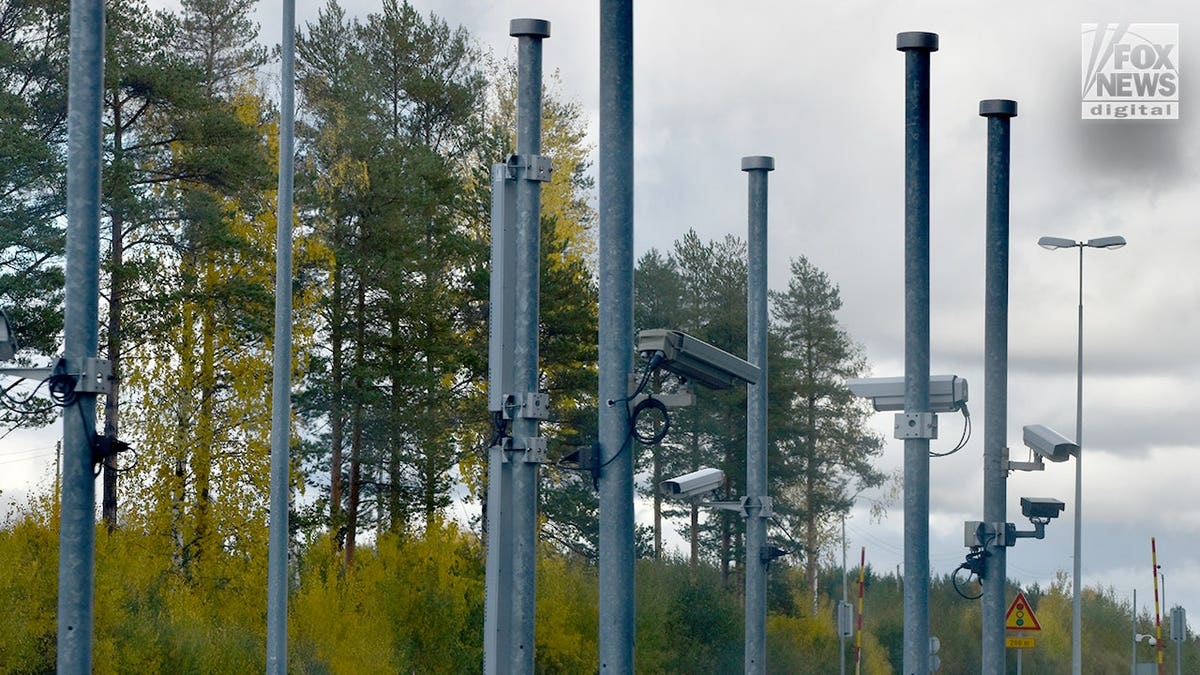
Security cameras overlook the Niirala Border Crossing Station along Finland’s eastern border with Russia in Nov. 2023 after Finland closed the checkpoint amid heightened border security concerns. (Brooke Curto/Fox News Digital)
«We don’t have them because we’re worried about Sweden,» Stubb joked of Finland’s military capabilities. «We have them because we see a security threat coming from Russia.»
He said that level of preparedness, combined with Finland’s NATO membership, makes a direct Russian attack unlikely. Finland became NATO’s 31st member on April 4, 2023, after abandoning its longstanding military non-alignment following Russia’s full-scale invasion of Ukraine.
«We feel that we’re very prepared, and that gives us a strong enough … deterrent that we don’t believe that Russia is going to test a country like Finland,» Stubb said. «And of course the icing on the cake is that we are now security providers in the Alliance NATO.»
Stubb also used his Sept. 22 address to the U.N. General Assembly to advocate for continued support for Kyiv, calling the «Coalition of the Willing» supporting Ukraine «particularly close to my heart.» He said the coalition was working toward a «just and lasting peace in Ukraine in accordance with the U.N. Charter.»
Stubb made additional news on Ukraine during UNGA week, when he urged SpaceX owner Elon Musk to extend Starlink coverage so Ukrainian forces could use the satellite network in areas containing Russian ballistic missile launchers, including inside Russia. He argued that doing so could help Ukraine target launchers firing missiles at Ukrainian cities.
Yet Ukraine was only one piece of what Stubb described as an increasingly interconnected global security crisis.
WORLD LEADERS DESCEND ON NEW YORK FOR UNGA — BUT WHO REALLY HAS AMERICA’S EAR?
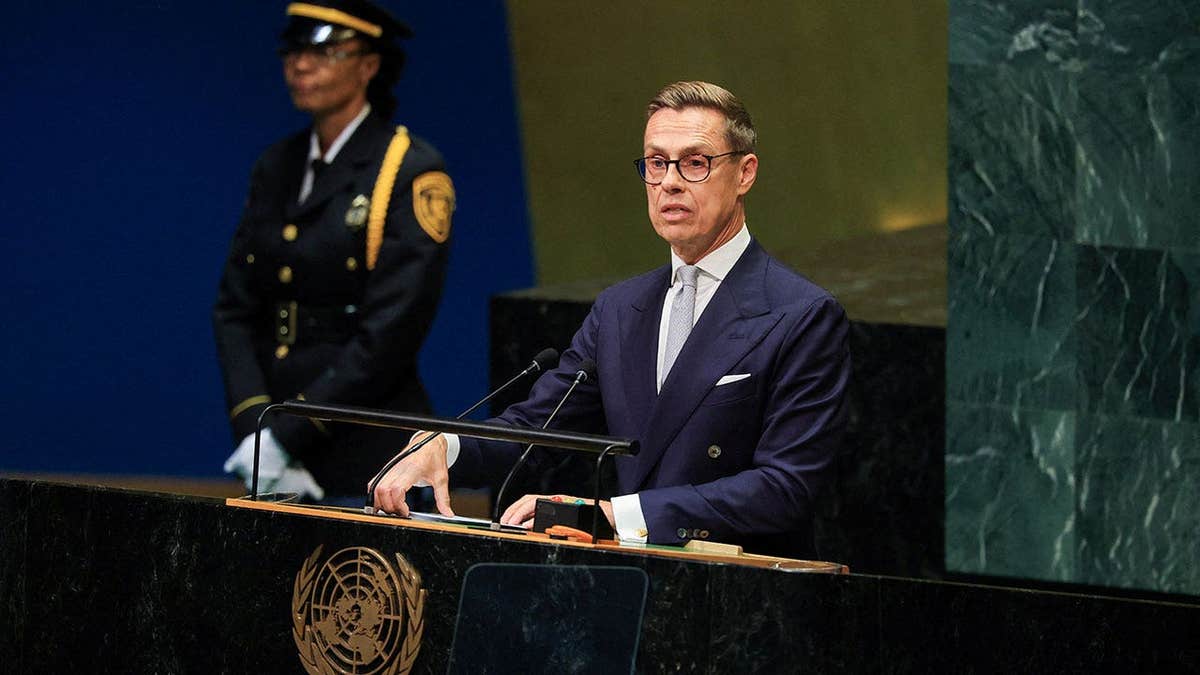
Finland’s President Alexander Stubb addresses the 81st United Nations General Assembly at UN headquarters in New York City, US, September 22, 2026. (Brendan McDermid/Reuters)
Asked about Trump’s call at the U.N. for countries to support efforts to prevent Iran from obtaining a nuclear weapon, Stubb was unequivocal.
«I agree, Iran should not obtain nuclear weapons,» he told Fox News Digital, adding that Tehran should not use proxies or be able to produce missiles.
Stubb also argued that the conflicts involving Russia and Iran can no longer be viewed in isolation, alleging that Moscow is providing intelligence to Tehran that Iran has used against U.S. military bases in the Gulf, while Iranian weapons have been supplied to Russia for use against Ukraine.
«We’re going in this merry-go-round where every bit of the conflict is linked to another,» Stubb said. «The sooner we can end both, the better.»
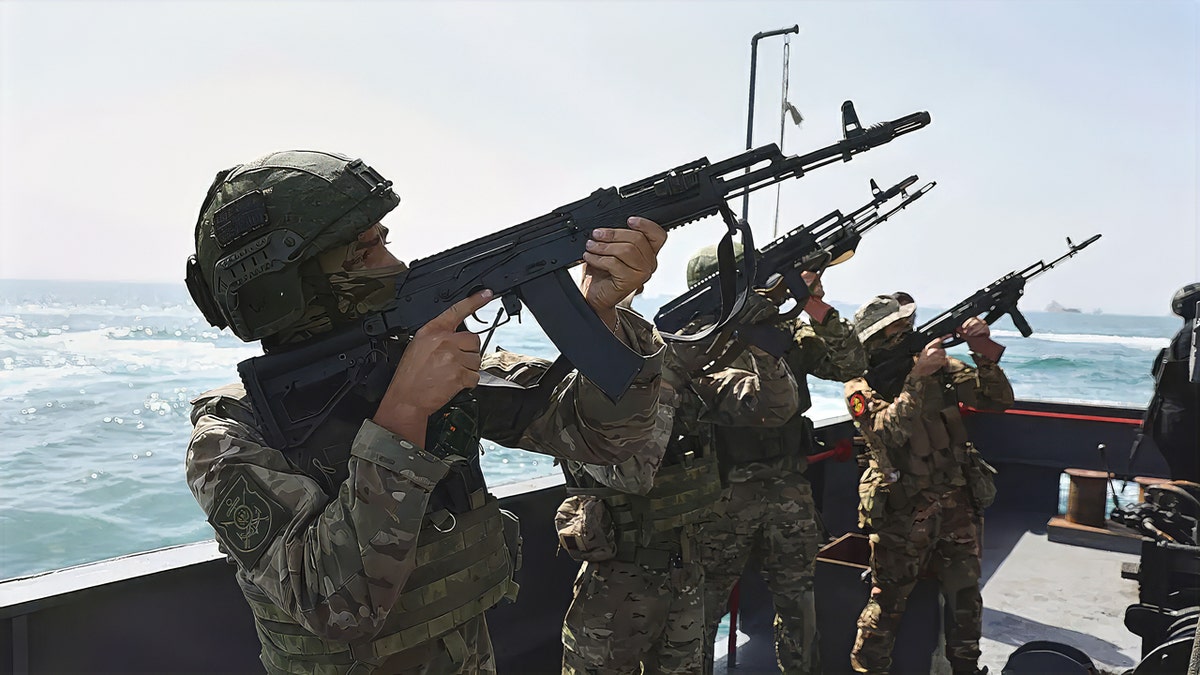
Iran conducts joint military exercises with Russia in the Strait of Hormuz after the U.S. deployed surveillance drones. (Iranian Army/Handout/Anadolu via Getty Images)
Trump used his Sept. 22 U.N. General Assembly address to call for Iran’s economic isolation and reiterate that Tehran should not obtain a nuclear weapon, while warning of further US military action if a peace agreement is not reached, according to Reuters.
For Stubb, the proliferation of conflicts — from Ukraine and Iran to Gaza, Yemen and Sudan — is testing a diplomatic system already struggling to keep pace.
«It’s not a zero-sum game,» he said. «We have to deal with a multiplicity of conflicts right now, unfortunately.»
And for Trump, he added, that means «working around the clock.»
nato, russia, ukraine, donald trump, world, united nations
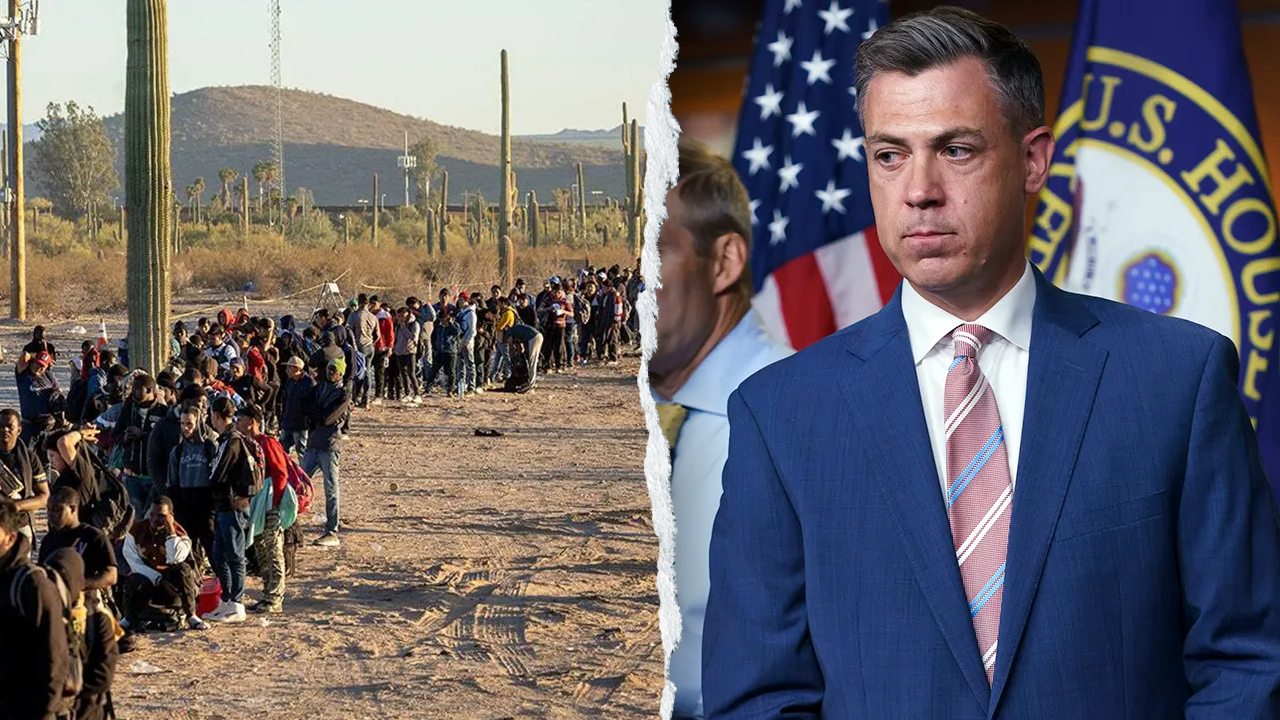
A massive five- day ICE operation that netted 426 arrests across Indiana is fueling Hoosier Sen. Jim Banks’ push for Congress to cement President Donald Trump’s immigration crackdown into law before a future administration can reverse course.
Banks hailed «Operation Safe Community: Indiana» in a Digital interview this week after federal immigration officers fanned out across his home state from Aug. 30 through Sept. 3, arresting 426 people with records involving sex crimes, assault, domestic violence, drug trafficking and weapons offenses, according to ICE.
«This is why Donald Trump was elected in 2024: for mass deportation,» Banks told Digital. «It was one of his key agenda items during the campaign. And in this case in Indiana, you see the direct result of it.»
TRUMP ADMINISTRATION’S IMMIGRATION PUSH FUELS ICE’S BIGGEST ARREST MONTH IN AGENCY HISTORY
ICE also credited cooperation with state and local law enforcement agencies in carrying out the operation, something Republicans have flagged as a key aspect to successful enforcement.
But Banks argued the operation also underscores a limitation of Trump’s crackdown: aggressive executive enforcement today does not guarantee that the same immigration policies survive the next administration.
DHS BOSS REVEALS OVAL OFFICE PLAN TO ‘WITHHOLD FUNDING’ FROM SANCTUARY CITIES AFTER AGGRESSIVE NEW YORK BUST
«It is important that we codify Trump border security measures and tough-on-immigration policies and make them the law of the land,» he said.
The busts build on the lawmaker’s seven-bill immigration package, previously reported by Digital, which targets issues including birthright citizenship, family-based immigration, H-1B visas, noncitizens’ CDLs and congressional authority over Temporary Protected Status (TPS) to limit judicial intervention.
«If this could happen in Indiana, it could happen anywhere,» he added, arguing that the opposition has made it tougher to achieve immigration goals after displacing ICE from the 2025 immigration appropriations legislation.
«They’ve made that one of their biggest priorities in this Congress to defund our federal law enforcement, to stop ICE from doing their job, to deport violent criminals who are here illegally,» he said.
OMAR’S NEW LEGISLATION TARGETING ICE SPARKS OUTRAGE WHEN THE INTERNET SEES WHAT’S IN IT: ‘UN-AMERICAN’
«So it is important that we codify Trump border security measures and tough-on-immigration policies and make them the law of the land so that the next time, God forbid, a Joe Biden ever gets elected back to the White House or someone that comes from that radical wing of the Democrat Party…»
Banks also directed his frustration at his own party, criticizing the Republican-led Senate for failing to advance separate election legislation that he says should be another priority.
Many on the right have pressed for passage of the SAVE Act, a bill requiring documentary proof of U.S. citizenship to register to vote in federal elections.
«That’s one of my biggest disappointments with this Republican Senate – we haven’t passed [it],» he said.
«I hope by the end of the year that we can find a way to pass it. I’m going to keep fighting for it, but at the end of the day, the Trump administration and the Department of Justice is doing a lot crack down on illegals voting in our elections.»
In a separate Indiana case, DHS arrested an illegal immigrant on Sept. 18 who had entered the U.S. during the Obama administration and later cast a federal ballot.
ICE Enforcement Division Assistant Director Patricia Hyde said the right to vote is the «cornerstone of democracy» in announcing the capture of Guatemalan national Helda Mendez-Merida for «poisoning our elections.»
«We cannot allow that sacred right [to vote] to be perverted,» she said.
Banks said such incidents keep surfacing «because Joe Biden and Democrats flooded our country with tens of millions of illegals – they’re still here [and] mass deportation is important.»
Senate Majority Leader John Thune, R-S.D., has repeatedly pushed back on criticism he is not working hard enough to pass the SAVE Act or advance the Trump agenda.
Thune previously told Digital that he is an original co-sponsor of a previous version of the bill and that the 50-vote threshold needed to pass provisions that qualify for the parliamentary maneuver known as reconciliation remains a sticking point.
SIGN UP TO GET THE POLITICS NEWSLETTER
«I keep asking the question, am I the only one in this town that can count to 50? Because it seems like these questions recur and there are a lot of people out there who haven’t seemed to internalize the fact that there aren’t Democrats that are going to flip and vote for this,» Thune said.
Alex Miller contributed to this report.
illegal immigrants, politics, congress, senate, john thune, indiana, immigration, donald trump

El encuentro entre la directora de cine María Luisa Bemberg y un militar que cambió el destino del cuerpo embalsamado de Eva Perón

El Niño aumenta la presión sobre las redes eléctricas de Centroamérica

En fotos: Lali reunió a las máximas figuras del pop argentino y homenajeó a Madonna en una noche inolvidable

“Técnicamente indefendibles”: desvíos de hasta 1972% y productos que no eran los adjudicados en la Andis

Once Upon a Katamari confirma todas estas mejoras en Nintendo Switch 2: resolución, FPS y más – Nintenderos

Reelecciones, internas y “Cristina libre”: los secretos del inédito asado que reunió peronistas, libertarios y radicales

La pobreza subió al 32,3% en el primer semestre del año y afectó a 15,5 millones de personas

El gesto de Moria Casán con el embajador de Noruega tras viralizarse el video con sus icónicas frases

Gira por New York: Milei se reunirá con Netanyahu y disertará en el Club Económico antes de regresar a Buenos Aires

En fotos: así fue la recepción de Xi Jinping en la Casa Blanca

 ECONOMIA3 días ago
La pobreza subió al 32,3% en el primer semestre del año y afectó a 15,5 millones de personas
- CHIMENTOS3 días ago
El gesto de Moria Casán con el embajador de Noruega tras viralizarse el video con sus icónicas frases
- INTERNACIONAL3 días ago
En fotos: así fue la recepción de Xi Jinping en la Casa Blanca