INTERNACIONAL
Estados Unidos: cómo la IA podría ayudar a frenar el avance de las pitones birmanas en los Everglades


En los humedales del sur de Florida, dentro del ecosistema de los Everglades, una pitón birmana puede pasar desapercibida durante días, inmóvil y oculta bajo la vegetación. Por eso, encontrarla ya es difícil. Con esto en mente, un equipo de la Universidad de Florida descubrió que no todas las capturas valen lo mismo.
Los programas de remoción medían su éxito por el número de serpientes retiradas, sin distinguir entre una cría con pocas chances de sobrevivir y una hembra adulta capaz de poner docenas de huevos.
Por eso, los investigadores construyeron una herramienta para identificar qué ejemplares tienen mayor peso sobre el crecimiento de la población.
Hasta ahora, el número total de serpientes capturadas podía funcionar como una medida de actividad de los programas de remoción, aunque esa cifra no reflejara las diferencias entre animales jóvenes, adultos, machos o hembras capaces de poner docenas de huevos.

Un estudio publicado en Ecological Applications propone combinar información demográfica con aprendizaje automático para identificar cuándo es más probable encontrar a los individuos cuya extracción podría tener un efecto mayor sobre la población.
El índice distingue las capturas según su capacidad de reproducirse
Las pitones birmanas son depredadores invasores con presencia consolidada en esa región. Su alimentación incluye principalmente mamíferos y aves, entre ellos especies sujetas a medidas de conservación.
Localizarlas supone una tarea compleja porque pueden permanecer inmóviles, ocultas o sumergidas durante largos períodos.
“Eliminar a la hembra más grande es muy diferente de remover una serpiente diminuta que tal vez no sobreviva al año siguiente”, señaló Alex Romer, ecólogo cuantitativo de UF/IFAS y autor principal del estudio, según el comunicado institucional al que tuvo acceso Infobae.

El equipo creó el Índice de Remoción Ponderado, un sistema que asigna una prioridad relativa a las capturas según la probabilidad de que cada pitón sobreviva y se reproduzca.
Así, permite diferenciar la importancia ecológica de los ejemplares retirados, en vez de tratar todas las serpientes halladas como equivalentes.
Romer explicó que una hembra grande podría recibir un valor de 100 puntos ecológicos arbitrarios, mientras que una serpiente pequeña tendría un valor de cinco.
La comparación permite estimar cuántas capturas de ejemplares pequeños harían falta para igualar la prioridad ecológica de remover una hembra con mayor capacidad reproductiva, según informó UF/IFAS.

Enero y febrero ganan relevancia cuando se observa qué pitones fueron removidas
El estudio muestra que el total mensual de pitones capturadas no basta para determinar en qué períodos las tareas de remoción pueden resultar más valiosas. Ese registro permite conocer el volumen de actividad, aunque no distingue las características de los animales retirados.
Los investigadores analizaron datos del Programa de Remoción de Pitones del Distrito de Gestión del Agua del Sur de Florida. A esos registros sumaron información demográfica, una clasificación que considera la edad, el tamaño, el sexo y el potencial reproductivo de los animales capturados.
Enero y febrero ilustraron la diferencia entre ambos criterios. Cuando se observó únicamente el número de pitones retiradas, esos meses no parecían especialmente relevantes porque se capturaba una cantidad relativamente baja de serpientes.

Sin embargo, al evaluar la composición de esas capturas, cobraron mayor importancia por la proporción de machos y hembras sexualmente maduros.
“Si simplemente contamos cuántas pitones capturan los contratistas en un mes, enero y febrero no parecen tan importantes, pues se captura un número relativamente bajo de serpientes”, afirmó Romer, ecólogo cuantitativo del Equipo de Investigación de Fauna Silvestre Croc Docs, de acuerdo con el comunicado.
Al tiempo que agregó: “Al incorporar la ponderación demográfica, de repente esos meses adquieren mucha más importancia”. Esta diferencia puede ser relevante en los programas que recurren a contratistas, donde el número de serpientes capturadas constituye una medida clave del desempeño.
Los investigadores sostienen que el índice podría ayudar a organizar las tareas y los incentivos alrededor de las remociones con mayor potencial para influir en la población, según el comunicado.

Los modelos buscan orientar las búsquedas hacia ejemplares prioritarios
El equipo evaluó tres modelos de aprendizaje automático, una técnica informática que identifica patrones en conjuntos de datos para realizar estimaciones.
Los utilizaron para prever tanto cuándo era más probable encontrar pitones como cuándo podían aparecer ejemplares con mayor capacidad de influir en el crecimiento de la población.
Uno de los modelos mostró los mejores resultados al identificar condiciones asociadas con la remoción de serpientes de mayor relevancia demográfica. Entre ellas figuraron un clima más cálido y húmedo y determinadas fases lunares.

El comunicado no presenta estas condiciones como una garantía de captura, sino como elementos que podrían servir para planificar las búsquedas.
“Comprender qué variables son más relevantes a la hora del manejo de especies invasoras es fundamental, ya que permite utilizar los recursos de manera más consciente”, explicó Sergio Balaguera Reina, coautor del estudio e investigador de fauna silvestre en ese mismo centro, de acuerdo con el comunicado institucional brindado a Infobae.
Y agregó que incorporar la demografía a los modelos predictivos puede cambiar la forma en que se planifican las búsquedas: “Integrar este conocimiento en modelos que nos permitan predecir dónde podrían encontrarse las pitones de mayor impacto, es decir, las hembras reproductoras, puede suponer un punto de inflexión”.

Para el investigador, esa capacidad predictiva es lo que distingue al nuevo enfoque de los métodos de remoción tradicionales: “Marcar una diferencia real en la lucha contra estos invasores”.
“Cada pitón birmana removida representa una victoria para los Everglades”, afirmó Melissa Miller, coautora del estudio y profesora adjunta de ecología de fauna invasora en el mismo centro. La especialista agregó que el criterio puede resultar especialmente útil en nuevos focos de invasión y en el frente de avance de la especie, según informó la universidad.
pitón birmana,huevos,nido,incubación



INTERNACIONAL
Elecciones en Brasil: la seguridad ciudadana y el Escudo de las Américas se cuelan en el tramo final de la campaña
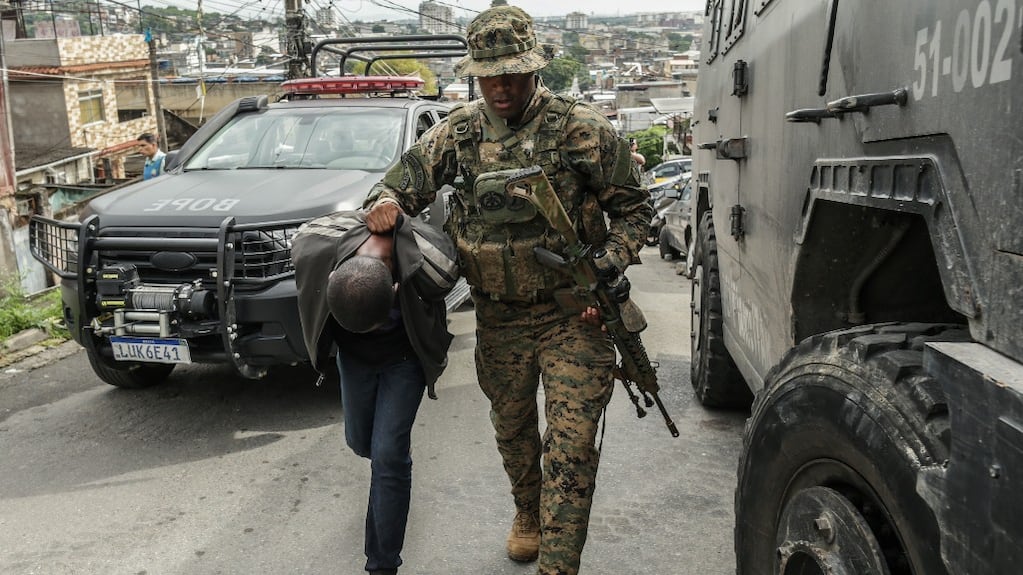
La seguridad ciudadana se convirtió en un punto clave en el tramo final de la campaña electoral en Brasil, uno de los países más violentos de la región, a cuatro días de los comicios presidenciales de este domingo que pondrán en juego dos modelos ideológicos antagónicos.
El presidente izquierdista Luiz Lula da Silva y su principal rival de la derecha dura, Flávio Bolsonaro, hicieron de la seguridad y el combate al narcotráfico una de las cuestiones prioritarias de su agenda, aunque con enfoques opuestos.
La delincuencia es hoy la principal preocupación de los brasileños. Es un tema que golpea a todos los sectores de la sociedad, en especial a los más vulnerables y que generó fuertes cortocircuitos entre Lula y Donald Trump después que el presidente estadounidense declaró como organizaciones narcoterroristas a los grupos criminales Comando Vermelho y Primer Comando de la Capital (PCC).
La medida, fuertemente cuestionada por Brasilia, se enmarca en el proyecto de Washington conocido como “Escudo de las Américas”, al que se sumó la Argentina y que busca coordinar operativos militares y el intercambio de inteligencia para enfrentar a los carteles del narcotráfico y los grupos criminales de la región.
Bolsonaro respalda la iniciativa y promete sumar a Brasilia a esa coalición que hoy conforman 17 países del área bajo el liderazgo de Estados Unidos.
“Brasil formará parte del Escudo de las Américas a partir del año que viene. Yo voy a colocarlo para que así se una a esos países que combaten el narcoterrorismo”, vaticinó.
Para Lula, se trata de un intento de socavar la soberanía nacional.
Seguridad ciudadana: los distintos enfoques
Si bien las estadísticas marcan un descenso de los crímenes en los últimos años, la tasa de asesinatos por 100.000 habitantes que tiene Brasil, de 19,2 según la organización independiente Insight Crime, es una de las más altas de la región. En la Argentina es de 3,7.
Una de las últimas imágenes de la violencia fue sin dudas la que dejó el megaoperativo policial del 18 de noviembre de 2025 en dos favelas de Río de Janeiro que causó más de 120 muertos, en lo que fue la mayor operación de la historia de la ciudad contra el narcotráfico. Las fotos de hileras de cuerpos tirados en la calle recorrieron el mundo entero.
Pero la inseguridad también está asociada a otros delitos, como asaltos, robos y hurtos. El Foro Brasileño de Seguridad Pública (FBSP) reveló en su último informe publicado en mayo que alrededor de 14 millones de personas fueron víctimas del robo de sus teléfonos celulares en los 12 meses anteriores en el país.
El sondeo reveló que el 30% de los brasileños esconden su celular al salir a la calle y tienen a mano “un teléfono (de menor valía) para el ladrón”.
Hoy los dos principales candidatos presidenciales muestran distintas propuestas y enfoques para abordar este flagelo profundamente arraigado en el país.
¿Qué va a pasar con el Escudo de las Américas?
Thiago Rodrígues, académico y politólogo brasileño especializado en crimen organizado, narcotráfico y seguridad pública, dijo a TN que “el tema se internacionalizó con la presión de Estados Unidos sobre el Comando Vermelho y el PCC”.
Se trata de las dos mayores organizaciones criminales de Brasil que dominan el tráfico de drogas y todo tipo de actividades ilegales, como extorsión, secuestro, trata, sicariato y juego clandestino, con ramificaciones en países vecinos.
Silva
INTERNACIONAL
Irish PM says Ireland ‘not overrun’ by immigrants, legal migration tied to economic success

NEWYou can now listen to Fox News articles!
NEW YORK — Irish Prime Minister Micheál Martin pushed back on the notion that Ireland has been «overrun» by immigrants as nearly one in four residents is now foreign-born, arguing that the country’s dramatic demographic change has been driven largely by legal migration tied to its economic success story.
Martin, in an exclusive interview with Fox News Digital, acknowledged failures in Ireland’s asylum system after a record surge in applications, saying it «was too slow» in recent years.
He also addressed moves to tighten citizenship rules and opened the door to publishing crime statistics by nationality amid a heated debate over immigration and crime.
The issue has become a political flashpoint across Europe and the U.S. and comes weeks after President Donald Trump warned about Europe’s approach while appearing alongside Martin in Dublin.
«That immigration, what you’re doing to yourselves, you’re just killing yourselves,» Trump said.
TRUMP SAYS HE WOULD ‘LOVE’ TO SEE IRELAND UNIFIED AS ONE NATION
Irish Prime Minister Micheál Martin pushed back on claims that Ireland has been «overrun» by immigrants as the country grapples with rapid demographic change and an increasingly heated immigration debate. (REUTERS/Damien Eagers; Sean Gallup/Getty Images)
«Ireland is not overrun in any shape or form,» Martin told Fox News Digital. «But we are conscious that it is an issue that has to be addressed robustly, firmly, fairly as well in terms of those seeking asylum.»
«All over Europe it’s tightening up because of the pressures and migration has created significant political pressures across Europe,» he added.
«Obviously, illegal migration is the more potent issue. And our system was too slow in processing those seeking asylum. That has changed. We’ve accelerated the application and the consideration of applications, and we’ve also now accelerated the appeals process.»
Martin said his government is developing a new migration strategy that includes proposals to increase residency requirements for citizenship from five to eight years and introduce language and economic self-sufficiency requirements.
Migration and crime
Immigration has become increasingly intertwined in Ireland’s political debate with concerns over housing, crime and rapidly changing demographics in a country that was drastically more homogeneous a generation ago.
The issue burst into international view in November 2023, after Algerian-born Irish citizen Riad Bouchaker stabbed three young children and a childcare worker outside a school in Dublin, triggering riots as anger among some opponents of mass immigration spilled into violence on the streets of the capital. The unrest was followed by sustained opposition to government efforts to house asylum seekers in communities across the country, with some protests also descending into violent clashes.
Immigration returned to the spotlight this summer following the violent killing of Jamey Carney, a 43-year-old American mother from New York who was found dead at her home in County Kerry.

American citizen Jamey Carney, right, was found dead at her home in Killarney, Ireland, where police have launched a murder investigation. The town, left, is one of Ireland’s best-known tourist destinations. (iStock / Jamey Carney via Facebook)
Her Jordanian boyfriend, the suspect in the case, had applied for asylum in Ireland but was rejected and was appealing the decision while remaining in the country. He fled Ireland for Turkey shortly after the killing, later traveling to Jordan and Irish police are now seeking his extradition.
Fox News Digital asked Martin whether the case exposed weaknesses in Ireland’s immigration system and whether laws needed to be changed.
«We’re looking at all of that in terms of tightening up the laws,» Martin said. «We will make sure that, particularly if people’s applications are rejected, that there’s fast movement in terms of the consequences of that.»
MIGRANT WHO FLED IRELAND AFTER AMERICAN MOTHER’S MURDER IS ARRESTED IN JORDAN
Crime data
Critics of Ireland’s immigration policies have argued that migrants are disproportionately responsible for crime, while opponents of that view say such claims unfairly stigmatize the country’s growing foreign-born population. But the debate has been difficult to settle because Irish national crime statistics do not routinely publish nationality breakdowns, leaving limited public data to test competing claims.
The lack of data has prompted calls for greater transparency from women’s advocates and some Irish lawmakers, including proposals to publish crime statistics broken down by nationality.
«I’ve no issue with data … because that can inform, because sometimes you get a kind of distorted picture,» Martin said when asked whether crime statistics should include the nationality of alleged suspects. «So as far as I’m concerned, data is important.»
But Martin pushed back on the argument that nationality itself drives crime.
«I don’t think crime is specific to any nationality,» he said. «But there are issues there, and in some cases, yes, there’s been horrific crimes committed, but not all by illegal migrants either.»
Housing pressures
Housing has become another flashpoint as Ireland struggles to build enough homes to keep pace with its growing population.
Martin acknowledged that workers arriving legally in Ireland add to housing demand but said his government’s answer is to increase supply, with about 36,000 homes built last year, up more than 20% from the previous year and the highest annual total since 2011.
The Irish government’s reliance on hotels and other properties to house asylum seekers has itself become a flashpoint. The state spent about $1.4 billion on asylum accommodation and related services in 2025, while also buying properties outright, including the sprawling Citywest Hotel and Convention Centre for about $175 million.
The allocation of scarce public housing has further fueled the immigration debate.
The pressure is particularly acute in Dublin, where figures released by the city council this month showed 42% of the 15,005 households on its social-housing waiting list were categorized as non-Irish, fueling anger online as Ireland’s homeless population hit a record high last month.
Nationally, 28.7% of social housing applicants — nearly 18,000 households — were non-Irish citizens in 2025, according to government figures provided to Fox News Digital. That included nearly 3,200 applicants from outside the EU with refugee status, up 64% from the previous year.
Asked whether Irish citizens should receive preferential treatment for social housing amid pressure on waiting lists, Martin backed the idea, saying that «our position is basically its citizens get priority.»
WATCH: Irish PM Micheál Martin addresses immigration’s impact on Ireland’s housing crisis

Irish Prime Minister Micheál Martin speaks to reporters during a visit to the Richmond Village housing development in Dublin on April 20, 2026. Martin told Fox News Digital that Ireland needs to build more homes to keep pace with its growing population. (Michael Dorgan)
A country transformed
Ireland’s demographic transformation has been rapid.
Nearly one in four people living in Ireland was born abroad, up from about one in seven two decades ago. At 23.3%, Ireland now has the fourth-highest percentage of foreign-born residents in the European Union, according to Eurostat.
The transformation accelerated after the EU expanded eastward in 2004, a decision that helped fuel a sharp rise in immigration during Ireland’s «Celtic Tiger» economic boom, when years of rapid growth transformed the country from one of Western Europe’s poorer economies into one of its wealthiest.
«It’s a bit like America really, free movement for the states here,» Martin said. «Our economy’s expanded hugely.»
Martin pointed to financial services and medical devices as industries that rely on skilled foreign workers, including non-EU workers arriving on work permits. More than half a million non-EU citizens were living in Ireland at the start of 2025, accounting for 9.3% of the population, according to Eurostat.
«It has been very dramatic, I agree, in the last three decades, largely because of the economic growth of Ireland,» Martin said. «You can’t switch off an economy either.»
WATCH: Irish PM says legal immigration fueled Ireland’s economic success story

People walk along Grafton Street in Dublin. Ireland’s economy has expanded dramatically in recent decades, helping drive demand for foreign workers as the country’s population has grown. (Patrick Bolger/Bloomberg via Getty Images)
Ireland’s economy has undergone a remarkable turnaround since the economic stagnation of the 1980s, through the «Celtic Tiger» boom and a devastating crash in 2008, before rebounding strongly. Over those decades, Ireland became a major European base for U.S. multinationals including Apple, Meta, Pfizer and Johnson & Johnson.
Martin has been at the center of Irish politics through much of that period, serving in successive Fianna Fáil-led governments from 1997 before becoming prime minister, or Taoiseach, in 2020 and returning to the post in 2025.
Ireland’s economy continued to expand in 2025, with GDP growing 8%, according to Ireland’s Central Statistics Office (CSO).
But prosperity has not eliminated pressure on households: nearly 45% reported difficulty making ends meet, while 64% identified housing and the same share identified inflation and the cost of living as among Ireland’s most pressing problems, according to the CSO.
Ireland’s more recent migration pressures have included a post-pandemic surge in asylum applicants, including people arriving from Africa, the Middle East and elsewhere. Applications jumped from roughly 3,500 a year before COVID to a record 18,561 in 2024, before falling nearly 30% last year and continuing to decline in 2026.
Separately, more than 120,000 Ukrainians fleeing Russia’s invasion arrived under the EU’s Temporary Protection system rather than the asylum system. Martin said roughly 80,000 remain in Ireland, with many now working and contributing to the economy.

Tents pitched by asylum seekers line Dublin’s Grand Canal on May 9, 2024, as authorities dismantled the encampment and moved residents to another makeshift migrant camp near the International Protection Office on Mount Street. (Brian Lawless/PA Images via Getty Images)
A nation of emigrants
Martin also emphasized that EU free movement works in both directions, with Irish citizens themselves living and working throughout the bloc.
«Irish people are working and living all over Europe,» Martin said. «That’s the other side of that story and that is something perhaps that we’re not as conscious of, but it is reality.»
Martin also placed Ireland’s modern demographic transformation within the country’s much longer history of emigration, pointing to the exodus that followed the Irish Famine.

Irish Prime Minister Micheal Martin and President Donald Trump met in the Oval Office on St. Patrick’s Day. (Jim WATSON / AFP)
«Ireland had 8 million people in 1845 before the Great Famine. That led to the big wave of Irish people migrating to come to America,» Martin said.
«We’re not at that level yet on the island of Ireland, so we need to look at it through the broad sweep of history in a historical perspective.»
politics, ireland, world, immigration, refugees, demographics, illegal immigrants

Elon Musk is taking on a new role in the Trump administration, this time helping the Pentagon determine what weapons and technology American troops will need to fight the wars of the future.
War Secretary Pete Hegseth announced Wednesday that Musk will co-lead Project Meridian, a new Pentagon initiative tasked with looking years and even decades ahead to identify emerging domains of warfare and the capabilities the U.S. military will need to dominate them.
Musk, the former leader of the Trump administration’s Department of Government Efficiency (DOGE), will lead the effort alongside defense tech billionaire Palmer Luckey and former House Speaker Newt Gingrich under the direction of War Department Chief Technology Officer Emil Michael.
EXCLUSIVE: HEGSETH TO DOUBLE CUTS TO GENERALS, ADMIRALS IN MAJOR PENTAGON SHAKEUP
«The best forecasters of future conflict do not solely reside inside the Pentagon,» Hegseth said during his State of the Force address at Marine Corps Base Quantico. «There are obvious biases and risks to asking ourselves to both ask the questions and answer them.»
Hegseth said the initiative would begin immediately and he would meet with Musk, Luckey and Gingrich in a secure facility just 200 yards from the stage following his speech.
Project Meridian will have 120 days to «ruthlessly map the trajectory of wars, domains and technologies,» culminating in a public rollout of its findings and a classified annex.
Hegseth described a sweeping mandate that stretches «from under the Earth to beyond the moon.» Rather than developing new military strategies or policies, the group will seek to identify «the domains that we must conquer and capabilities we must master» and focus on «discovering, developing, and fielding» weapons and systems that could be needed by future generations of American troops.
Musk and Luckey enter the effort with firsthand experience developing technology for the U.S. military. Musk’s SpaceX is a major Pentagon contractor, while Luckey founded Anduril Industries, a defense technology company specializing in autonomous weapons and other advanced military systems.
Their industry experience positions both men to bring an unusually close view of emerging technology and the modern battlefield to the Pentagon’s long-range planning. It could also raise potential conflict-of-interest questions as executives whose companies compete for defense business help identify the capabilities and technologies the military should pursue.
BATTLEFIELD ROBOTS OPEN NEW FRONT IN INNOVATION WAR WITH MAJOR US ADVERSARY
Meridian was one piece of a broader push announced by Hegseth Wednesday to remake the military around autonomous warfare and rapidly emerging technology.
Hegseth announced the creation of Autonomous Warfare Command, or AUTOWARCOM, a new four-star combatant command with what he described as «service-like authorities» to scale autonomous and robotic capabilities across the joint force.
The War Department will also begin phasing in new occupational frameworks across the military departments to create dedicated career paths for what Hegseth called a new generation of «autonomous warfighters.»
«We should have been thinking about Autonomous Warfare Command ten years ago,» Hegseth said, explaining that Meridian is intended to look far enough ahead to anticipate the next technological transformation before the military falls behind.
The announcements came during the second iteration of what the War Department has dubbed Hegseth’s annual State of the Force address at Marine Corps Base Quantico.
The setting was the same as last year, but the audience was markedly different. Hegseth summoned generals, admirals and other senior military leaders from around the world to Quantico for his first address, where he laid out sweeping changes to military standards, personnel and what he called the «warrior ethos.»
This time, Hegseth addressed a younger generation of military leaders, including top-performing E-6 enlisted service members and O-3 officers from across the force. He called them the military’s «current and future leaders on the front lines» and said the address would become an annual opportunity to assess the state of the force and lay out his vision for its future.
Hegseth used Wednesday’s speech to unveil six new initiatives, ranging from the military’s embrace of autonomous warfare to an effort to make U.S. bases and defense supply chains less vulnerable to foreign disruption.
The secretary also used the address to deliver some of his most pointed rhetoric yet about his effort to reshape the culture of the military, and about the news media.
«We are no longer the woke department or the weak department,» Hegseth said. «No fatties, no trainees, no weirdos, no beardos, no wimps, no radicals. Just warriors.»
Hegseth later accused some journalists of engaging in «partisan activism» that jeopardizes military operations and service members, calling such reporting «fundamentally anti-American.»
«It’s sick. It’s a national betrayal. It’s treason, actually,» Hegseth said.
elon musk, pete hegseth, military, armed forces topics

Presupuesto porteño 2027: el gobierno de la Ciudad prevé una baja de Patentes y una inversión récord en subte

Elecciones en Brasil: la seguridad ciudadana y el Escudo de las Américas se cuelan en el tramo final de la campaña

El Reino Unido rechazó el arbitraje internacional que pide la Argentina por la explotación en las islas Malvinas

Ley de Tierras: la CGT repudió el fallo de la Corte Suprema y le exigió a Diputados que rechace el DNU de Milei

Irish PM says Ireland ‘not overrun’ by immigrants, legal migration tied to economic success

Elon Musk lands new Trump admin role shaping future of American warfare

El obispo de San Justo alertó que la asistencia alimentaria volvió a niveles de pandemia

Cómo deciden las empresas exitosas si endeudarse en moneda local o extranjera

El shock que monitorea el Gobierno, los pronósticos para la economía y la interna libertaria que se profundiza