INTERNACIONAL
‘We beat Disney, Fauci, Soros’: Ron DeSantis unleashes ‘Florida model’ in hard-hitting midterm rally

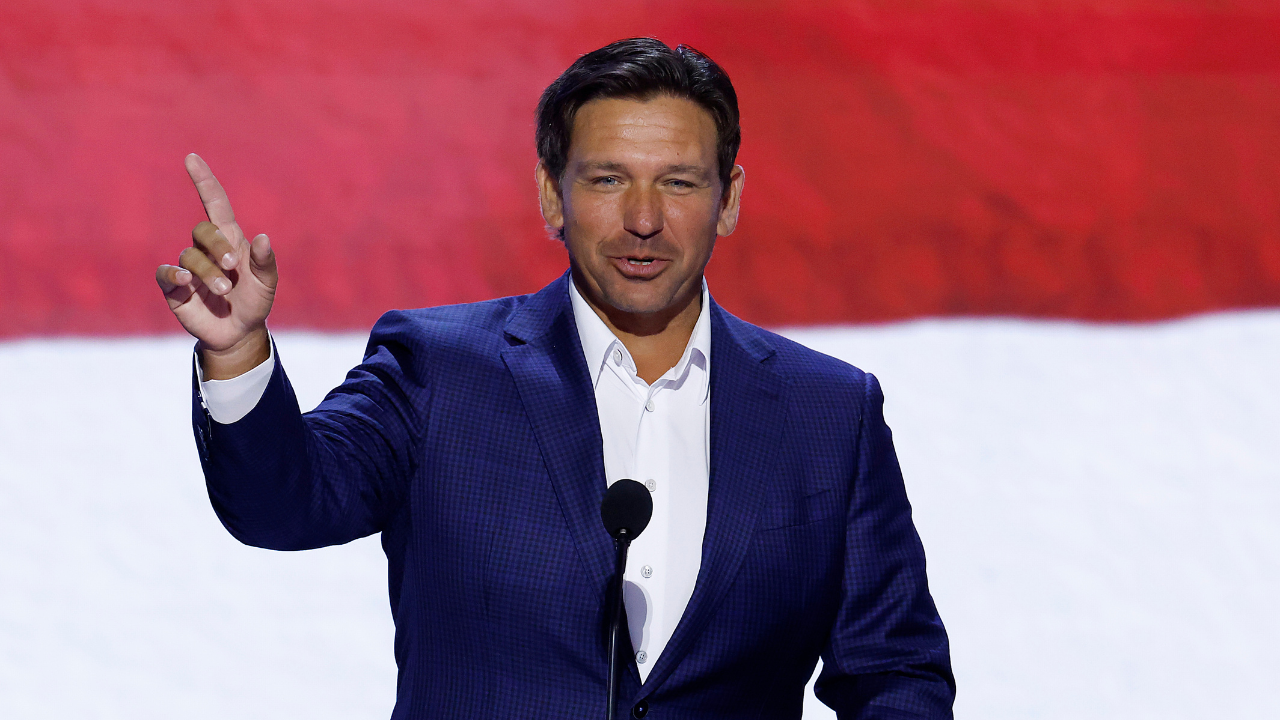
Pitching his administration’s conservative record as a national blueprint for Capitol Hill, Gov. Ron DeSantis rallied Republicans in Osceola County Tuesday night, portraying Navy veteran Dan Green’s bid for Florida’s 9th Congressional District as part of a broader push to bring aggressive Florida-style governance to Washington.
Speaking before a crowd in St. Cloud, south of Orlando, DeSantis pointed to his administration’s high-profile battles on education policy, state spending reductions and corporate pushback and urged voters to bring that same combative, policy-driven mandate to the halls of Congress.
SOCIAL MEDIA ERUPTS AFTER DESANTIS GIVES ‘SOROS’ PROTESTER A PIECE OF HIS MIND: ‘AIN’T MY FIRST RODEO’
«I will say that I’m looking forward to y’all getting the congressman elected that has served this country and that has served for the right reasons. Now, I am a big believer that we need term limits for members of Congress. But until we do that, you can show your current guy the term limit by kicking him out of office.
«So, I think what we need is what we’ve done in Florida. It can be a model for people like Dan going to Washington, other states, you name it, because it’s not just about peacocking and putting social media press releases out and never getting anything done. We have fought every big fight that there has been to fight in the state of Florida, and we have won every big fight that there is to fight in Florida.»
DeSantis rallied the conservative faithful with a recap, alleging major victories over left-wing institutions, agencies and agendas.
«Just think about it. We beat Dr. Fauci on COVID. We beat Disney on gender ideology. We beat Soros on crime by removing two of his prosecutors. We beat Martha’s Vineyard on illegal immigration.
«We just beat the Muslim Brotherhood by banning Sharia law. We beat the teachers unions by enacting universal school choice for all Florida families. We beat SEIU by doing paycheck protection.
«Every single time there was a fight, we would beat and win the fights. And that’s ultimately what it’s all about. Because leadership — when it’s popular, when it’s easy — anyone can do that. ‘I’ll just go with the flow,’ all this other stuff. It really matters when it is tough and when you’re going to face arrows.»
TRUMP’S HANDPICKED DESANTIS SUCCESSOR WINS CROWDED GOP PRIMARY FOR FLORIDA GOVERNOR
DeSantis repeatedly emphasized that his top priority was sticking to the courage of his convictions, not seeking political expediency or going along to get along.
«I remember during COVID, I was doing things, and people said, ‘Oh, he’s not shutting down the beaches. Why does he have these people in school?’ And all this other stuff. You know, people come after you, and a lot of people told me that I was frittering away my governorship, that I wouldn’t be able to win in ’22, and all this other stuff. I don’t know if that was true. Who knows, right?
«But when you get in a position to lead, you either do it or you should just sit down. My job was not to be worried about my own political hide. My job was to be worried about protecting the liberty, jobs, and businesses of the people I was elected to serve. So, we started the fire, and we gave them his right.»
It is clear that the two-term governor considers his famed battle with Disney to be a particular feather in his cap.
«Nobody in the history of the state had ever taken on Disney in anything. A lot of people told me I was making a mistake,» DeSantis said.
«But the reality is, do we want a society in which our 6-year-olds are being told they can change genders, or do we want a society rooted in truth? If you want a society rooted in truth, even if the biggest, most powerful corporation in the state is against you, you’ve got to stand up and you’ve got to fight. And we fought, and we won.»
As the federal debt has topped a staggering $40 trillion, DeSantis made the case that he has taken the state on a markedly divergent course.
«Just look at the results. For four straight years, Florida has reduced its budget. Is any other state in the country reducing spending? We’ve done it four years in a row,» DeSantis said.
«I was just able to announce today if you take all of Florida’s debt for all of our history up until the time I became governor, just in my tenure, we will retire 54% of the state’s debt, more than cutting it in half.
«We’ve been ranked No. 1 for education freedom, and our public university system is ranked No. 1. We have the lowest in-state tuition of any state in the United States, and it’s the exact same cost today to students and families that it was the day I took office.
«It did not go up one penny under my tenure. Is there anything else that didn’t go up? The dollar menu at McDonald’s is all $2.99 now. Everything else has gone up, but that has not gone up.»
And DeSantis touts Florida as a national leader in lowering taxes for its citizens and called for voters to back Amendment 3 in Florida, which would pave the way for elimination of non-school property taxes.
«If you look at tax relief, we’ve done $10 billion over my tenure — more than anyone. Some of it is permanent, like no tax on baby items, back-to-school items and no tax on business rent. But, really, the big enchilada is going to be on the ballot in November when you have a chance on Amendment 3 to vote yourself more control over your own home and not let them tax you to death. So vote yes on 3.
As Republicans face headwinds heading into the midterms in a little over a month, DeSantis drew a parallel between this year’s election, and the 2018 election, which propelled him to the governor’s mansion by a narrow margin.
«We’ve done all this stuff, but I think the lesson is this: When I won eight years ago, it was kind of similar to how it is now. People were saying it was a ‘blue year.’ There was a lot of wind in the face of Republican candidates,» DeSantis recalled.
«A lot of people thought Florida was a swing state — that we were purple — where one point had decided all these races for the previous decade. A lot of people didn’t think I could even win given those circumstances. And even if I won, they said, ‘Well, the state’s going to go blue. You’ve got all these people moving from Puerto Rico, the Northeast, anything.’ So, I’m running. It wasn’t easy, and we won.»
DeSantis maintains he has never taken a poll as a means to determine a position on an issue.
«It was a close race, so I had a choice to make: Do I try to tiptoe around the tulips, not offend anybody, and just try to walk this tight line? Or do I say, ‘You know what? I won the election. I got 100% of the executive power, and I didn’t get elected to follow. I got elected to lead,’» DeSantis said.
«So, I am going to fly the banner of bold colors, not pale pastels. I’m going to do what I believe in. I am not going to take any polls. I have not to this day ever polled a single issue in my entire time as governor.
«The reason is simple. … It depends on how you ask the question, right? I can tweak the words and get a different result. But also, what does a poll actually mean? Like Popeye said, ‘I am what I am,’ right?»
florida, politics, house of representatives politics, house of representatives, governors











INTERNACIONAL
El Instituto Nacional de Estadística reporta que el 13.4% de los hogares de Guatemala incluye a una persona con discapacidad

El Instituto Nacional de Estadística (INE) presentó el 30 de septiembre los resultados de la Encuesta Nacional de Propósitos Múltiples, ENAPROM 2025, que determinó que el 13.4% de los hogares de Guatemala tiene al menos una persona con discapacidad.
La medición busca aportar información para formular, seguir y evaluar políticas públicas sobre las barreras que enfrentan estas personas en el cuidado, el acceso a dispositivos, la salud, el transporte y el empleo.
El relevamiento se concentró en la población de cinco años o más y estableció que el 3,9% presenta mucha dificultad o imposibilidad para realizar al menos una actividad funcional.
La encuesta se realizó mediante entrevistas directas en 5,760 viviendas de las ocho regiones del país e incluyó a residentes habituales de viviendas particulares.
La metodología vinculó las dificultades funcionales con las condiciones del entorno. Para identificar a la población con discapacidad, el INE aplicó el Conjunto Corto de Preguntas sobre Funcionamiento del Grupo de Washington, basado en la Clasificación Internacional del Funcionamiento, de la Discapacidad y de la Salud de la Organización Mundial de la Salud.
Las áreas evaluadas fueron visión, audición, movilidad, cognición, cuidado personal y comunicación. Una misma persona puede presentar dificultades en más de uno de esos dominios, por lo que los porcentajes específicos no deben sumarse.

La discapacidad aumenta a partir de los 60 años
La prevalencia crece de forma sostenida con la edad: alcanza al 1,2% de las personas de cinco a 14 años, al 1.7% del grupo de 15 a 29 años y al 3,5% entre quienes tienen de 30 a 59 años. En la población de 60 años o más, la proporción asciende al 19%.
Las mujeres registran una proporción de discapacidad de 4,1%, frente al 3,6% de los hombres. La diferencia también se observa por área de residencia: el indicador llega al 4,2% en zonas urbanas y al 3,4% en áreas rurales.
La limitación más frecuente es la movilidad: el 1,7% de la población de cinco años o más reportó mucha dificultad o imposibilidad para caminar o subir escaleras. Le siguen las dificultades para ver, incluso con lentes o anteojos, con 1,6%; para oír y para recordar o concentrarse, con 0,8% cada una; para comunicarse, con 0,7%; y para el cuidado personal o vestirse, con 0,5%.
El 71.2% de las personas con discapacidad necesita ayuda para realizar alguna actividad cotidiana y requiere asistencia en un promedio de 2,3 tareas. Caminar o subir escaleras concentra la mayor demanda de apoyo, ya que el 50,5% necesita la ayuda de otra persona para hacerlo.
La asistencia para bañarse o ducharse alcanza al 34,3%; para comunicarse, al 32.9%; para vestirse, al 29,7%; y para acostarse o levantarse de la cama, al 27%. Comer o beber es la actividad con menor proporción de personas que requieren apoyo, con 17.7%.
La necesidad de ayuda cotidiana es mayor fuera de las ciudades: afecta al 76.4% de las personas con discapacidad del área rural, frente al 67.7% de quienes viven en zonas urbanas. La diferencia se repite en cada una de las tareas consideradas por la encuesta.

La falta de dispositivos alcanza a siete de cada 10 personas que los necesitan
El 63,5% de las personas con discapacidad requiere una tecnología de apoyo, como silla de ruedas, bastón, aparato auditivo o prótesis. Entre quienes necesitan esos recursos, el 69,9% no accede a ellos, mientras que el 30,1% cuenta con el dispositivo que requiere.
La demanda de estas tecnologías alcanza al 65% de la población con discapacidad del área rural y al 62,5% de la urbana. Sin embargo, solo el 23,9% de las personas rurales que necesita un dispositivo dispone de él, una proporción inferior al 34,3% registrado en las ciudades.
El acceso también varía según pertenencia étnica. Entre los pueblos indígenas y afrodescendientes, el 22,9% de quienes necesitan un dispositivo de apoyo logra obtenerlo, frente al 33,7% de las personas pertenecientes a otros pueblos.
Las barreras se extienden al entorno doméstico y comunitario. El 51,2% de las personas con discapacidad enfrenta obstáculos en su vivienda, el 50,3% en espacios públicos destinados a la socialización y la vida comunitaria, y el 48,4% en servicios de salud.
Los lugares habituales de culto religioso presentan barreras para el 44,3% de esta población; el transporte público colectivo, para el 43,9%; y las tiendas o comercios cercanos, para el 43,8%. En las instituciones públicas donde se realizan trámites, el indicador es de 37%, mientras que las instalaciones educativas registran el menor porcentaje, con 28,4%.
Las dificultades son más frecuentes en las áreas rurales en la vivienda, los espacios públicos, el transporte y los lugares de culto. En los hogares, por ejemplo, el 56,7% de las personas rurales con discapacidad reporta obstáculos, frente al 47,5% de quienes residen en zonas urbanas.
La creación en 2026 de la Oficina Coordinadora Sectorial de Estadísticas de Discapacidad, solicitada por el Consejo Nacional para la Atención de las Personas con Discapacidad, acompaña la producción de estos datos. La oficina busca articular la generación de estadísticas sobre discapacidad después de la incorporación de módulos específicos en el Censo de 2018 y en distintas encuestas de hogares realizadas desde 2022.
Guatemala,funcionario,discurso,lengua de señas,CONADI
INTERNACIONAL
EEUU refuerza su presencia militar en Medio Oriente con miles de soldados mientras Trump evalúa una nueva ofensiva contra Irán

Estados Unidos envió unos 9.000 soldados a bordo de siete buques hacia Medio Oriente, en un nuevo refuerzo de su presencia militar en la región mientras el presidente Donald Trump evalúa la posibilidad de reanudar o intensificar los ataques contra Irán después de las elecciones de medio término del 3 de noviembre.
El despliegue incluye el grupo de ataque del portaaviones USS Theodore Roosevelt, que partió esta semana desde San Diego junto con tres destructores, y el grupo anfibio de preparación USS Makin Island, que transporta a la 13.ª Unidad Expedicionaria de Marines. Según un funcionario estadounidense citado por The Associated Press y Financial Times, los buques podrían llegar a la región a fines de noviembre.
En conjunto, los barcos transportan más de 7.000 marineros y unos 2.000 infantes de Marina, según el funcionario, que habló bajo condición de anonimato debido a que se trata de operaciones militares sensibles. La llegada del USS Theodore Roosevelt podría elevar a tres el número de portaaviones estadounidenses en la región, aunque todavía no está definido si reemplazará a uno de los dos que ya se encuentran allí o si se sumará a ellos.
El despliegue se produce mientras Trump dejó abierta la posibilidad de una nueva escalada militar contra Teherán. En una entrevista con la revista Time publicada el jueves, el mandatario afirmó que es “posible” que Estados Unidos aumente los ataques contra Irán después de las elecciones si no alcanza un acuerdo satisfactorio con las autoridades iraníes.
Cuando se le pidió que explicara qué objetivos podría atacar, Trump respondió: “No puedo decirles eso porque, miren, ya saben, ustedes preguntan: ¿dónde van a bombardear?”

El presidente también explicó en esa entrevista, realizada el lunes, por qué rechazó la última propuesta iraní de alto el fuego. Según Trump, la oferta incluía la posibilidad de “abrir” el estrecho de Ormuz, una vía clave para el transporte marítimo de energía, pero consideró que la propuesta general “no era lo suficientemente buena”.
Trump sostuvo que “cosas que no habría aprobado hace un año no las habría aprobado hoy”, al referirse a las condiciones planteadas por Teherán.
La situación militar se desarrolla en paralelo con nuevos contactos diplomáticos. Representantes de Estados Unidos e Irán mantuvieron conversaciones al margen de la Asamblea General de Naciones Unidas en Nueva York, después de que Trump amenazara con “aniquilar” a la República Islámica durante un discurso ante líderes mundiales.
En los días posteriores, el mandatario estadounidense rechazó una propuesta iraní de siete días para reabrir el estrecho de Ormuz a cambio de que Washington aplicara una serie de medidas contempladas en el memorando de entendimiento acordado por ambos países en junio.
Los mediadores retomaron sus gestiones para alcanzar un acuerdo entre Washington y Teherán. Según la propuesta en discusión, Irán permitiría el libre tránsito por el estrecho de Ormuz y Estados Unidos levantaría su bloqueo sobre los puertos iraníes. El objetivo de los mediadores es reactivar las conversaciones para alcanzar un acuerdo definitivo que permita poner fin a la guerra.

Mientras tanto, Estados Unidos mantiene alrededor de 20 buques de guerra en Medio Oriente, donde la Armada aplica un bloqueo sobre los puertos iraníes y escolta a buques comerciales que atraviesan el estrecho de Ormuz. Además, hay más de 50.000 soldados estadounidenses desplegados en la región.
El nuevo movimiento naval también incluye al grupo anfibio de preparación USS Makin Island, integrado por un buque de asalto anfibio y dos buques de desembarco. El contingente transporta a unos 4.200 marineros e infantes de Marina, de acuerdo con los datos proporcionados sobre este tipo de unidades.
El USS Theodore Roosevelt, por su parte, se desplegó con el crucero USS Chosin. Su llegada podría modificar la composición de la fuerza naval estadounidense en Medio Oriente, donde actualmente se encuentran los portaaviones USS George H.W. Bush y USS George Washington, además del grupo anfibio de preparación USS Boxer.
El refuerzo militar también ocurre después de una serie de incidentes que Estados Unidos y sus aliados vincularon con Irán. Trump afirmó el jueves que los primeros indicios apuntan a una posible conexión entre Teherán y el copiloto de FlyDubai acusado de apuñalar al capitán de un avión e intentar estrellar el vuelo con destino a Israel el miércoles.
Consultado sobre si existía un vínculo entre el atacante y Teherán, Trump respondió: “Yo diría que la respuesta, según lo que estoy escuchando, es ‘sí’, pero lo estamos investigando ahora mismo”.
El mandatario agregó que Estados Unidos respondería si se confirma esa relación. “Oh, los van a golpear muy duro, no se preocupen. Pregúntenles a ellos. Saben lo que pasó. Los van a golpear muy duro”, afirmó.

El primer ministro israelí, Benjamin Netanyahu, declaró a Fox News que los investigadores creen que el sospechoso del incidente de FlyDubai fue sometido a un “adoctrinamiento islamista y radical”, aunque no ofreció más detalles sobre esa investigación.
Otro episodio tuvo lugar en Reino Unido, donde las autoridades arrestaron a un ciudadano con doble nacionalidad británica e iraní, de 27 años, bajo sospecha de planear un ataque terrorista después de un incidente de seguridad en una base aérea militar operada por Estados Unidos en Inglaterra.
Las autoridades británicas también arrestaron el domingo a cinco hombres, todos ciudadanos británicos de unos 20 años y residentes de Londres, por sospechas relacionadas con explosivos y terrorismo cerca de la base aérea Fairford de la Real Fuerza Aérea. Los cinco fueron posteriormente liberados bajo fianza.
La base de Fairford fue utilizada por bombarderos estadounidenses para atacar Irán. Los incidentes en Reino Unido y el episodio protagonizado por el vuelo de FlyDubai se produjeron mientras Washington mantiene su bloqueo sobre los puertos iraníes y aumenta su presencia naval en la región.
Trump sostuvo además que la guerra contra Irán no necesariamente perjudicará al Partido Republicano en las elecciones de medio término. Consultado sobre si el conflicto podría afectar las posibilidades de su partido, respondió primero: “Es posible”.

Luego afirmó: “Debería ayudar, porque Irán no tendrá un arma nuclear” y sostuvo que “el 100% de la gente” se opone a que Irán tenga capacidad de ataque nuclear, “incluida la gente de todo el mundo”.
“Así que, cuando lo dices de esa manera, ayudará. Si no lo dices así, podría perjudicar”, agregó.
(Con información de AP)
Business,Domestic Politics,Corporate Events,North America,Government / Politics
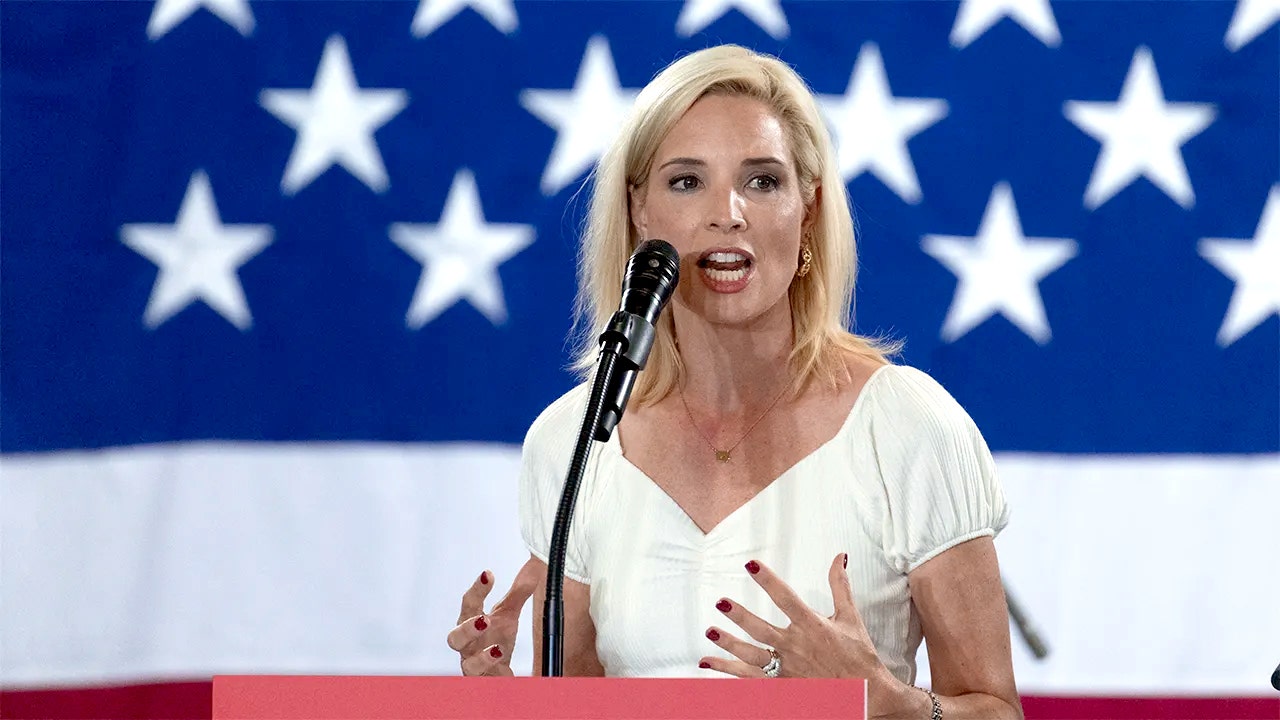
Economic concerns and party loyalty are key factors shaping Iowa’s U.S. Senate matchup.
A statewide survey of Iowa likely voters finds Democrat Josh Turek with a two-point edge over Republican Ashley Hinson, 49% to 47%, well within the margin of error.
Among registered voters, Turek is ahead by 4 points, 50% to 46%. That also falls within the range of sampling error and has been unchanged since June.
The analysis below is based on likely voter results.
Democrats are more unified behind state representative Turek (96%) than Republicans are of current Congresswoman Hinson (87%). Independents favor Turek by two-to-one, and 10% of Republicans back him. It’s Iowa’s partisan structure that keeps the race tight, as more voters identify as Republicans than Democrats.
POLL: MICHIGAN VOTERS SPLIT BETWEEN EL-SAYED AND ROGERS
Iowa voters are split on control of the Senate: 49% prefer Democratic control and 48% favor Republican. With those numbers nearly matching the Senate matchup, both candidates are performing close to their party’s ceiling.
Turek is preferred by 11 points among women, 16 points in the suburbs, 17 points among voters with a college degree, and 32 points among independents.
Hinson is up by 7 points among men, 6 points among those without a college degree, 14 points among rural voters, and 41 points among White evangelical Christians.
Economic pressure influences the contest. In the 2024 Voter Analysis, 3 in 10 Iowans described their families as falling behind financially. That share has risen to 4 in 10 today, and they back Turek by a 38-point margin. Meanwhile, those holding steady (45%) and getting ahead (13%) favor Hinson (by 14 and 53 points respectively).
POLL: VOTERS QUESTION WHETHER AI’S PROMISE OUTWEIGHS ITS RISKS
In addition, 6 in 10 say the cost of living will be extremely important to their Senate vote decision. That outpaces other top issues, like President Donald Trump (43% extremely), immigration (39% extremely), and AI technology (27% extremely).
Turek has the advantage among voters who say the cost of living, Trump, and AI technology are each extremely important to their vote, while voters prioritizing immigration favor Hinson.
Trump won Iowa with nearly 56% of the vote in 2024. Today, that’s how many Iowa voters disapprove of his job performance as president (57%), while far fewer, 42%, approve.
CLICK HERE FOR CROSSTABS AND TOPLINE
The president’s ratings are only part of Hinson’s challenge. While 42% view her positively, 50% have an unfavorable view, including nearly 4 in 10 who are «strongly» unfavorable. In contrast, Turek’s ratings are net positive: 48% favorable to 40% unfavorable (24% «strongly» unfavorable).
By a 9-point margin, more voters are concerned Hinson is too close to Trump than are worried Turek’s views are too liberal (52% vs. 43%). Among those «extremely» concerned, that gap widens to 14 points: 36% say Hinson is too tied to Trump, while 22% say Turek is too liberal.
More of Turek’s backers are certain of their choice: 88% are committed to him compared to 77% for Hinson. Twice as many Hinson supporters say they might change their mind (20% vs. 10%).
«Recent history and the state’s partisan makeup suggest Hinson can pull this out,» says GOP pollster Daron Shaw, who works on the Poll with Democrat Chris Anderson. «But the warning signs are clear: Iowa Republicans seem ambivalent, independents prefer Turek, and even her supporters say they aren’t sure.»
Iowa hasn’t elected a Democrat to the Senate in 18 years (when Sen. Tom Harkin won his final term), and it’s been 20 years since they elected a Democrat as governor.
In the Iowa governor’s contest, Democrat Rob Sand outperforms Republican Zach Lahn among likely voters by 53-44%. The race has been steady since June.
Sand’s lead comes not only from getting the support of nearly all Democrats (97%), but also 14% of Republicans and 66% of independents (vs. 16% of independents for Lahn). Plus, 11% of voters backing Hinson for Senate switched parties to support Sand for governor.
Conducted September 24-28, 2026, under the joint direction of Beacon Research (D) and Shaw & Company Research (R), this Poll includes interviews with a sample of 1,204 Iowa registered voters randomly selected from a statewide voter file. Respondents spoke with live interviewers on landlines (183) and cellphones (733) or completed the survey online after receiving a text message (288). Results based on the registered voter sample have a margin of sampling error of ±2.5 percentage points and for the subsample of 1,008 likely voters it is ±3 percentage points. Sampling error for results among subgroups is higher. In addition to sampling error, question wording and order can influence results. Sources for developing weight targets include the most recent American Community Survey, Voter Analysis, and voter file data. Weights are generally applied to age, race, education, and area variables to ensure the demographics of respondents are representative of the registered voter population. Likely voters are based on a probabilistic statistical model that relies on past vote history, interest in the current election, intention to vote, age, education, race, ethnicity, and marital status. Results among subgroups are only shown when the sample size is at least N=100.
Fox News’ Victoria Balara contributed to this report.
fox news poll, iowa, midterm elections, senate, gubernatorial, politics

El Instituto Nacional de Estadística reporta que el 13.4% de los hogares de Guatemala incluye a una persona con discapacidad

La esposa de Migue Granados le dejó el hijo a su cuidado, cometió un error garrafal y se comió un reto tremendo: “¿Por qué te lo tengo que explicar?”

El Gobierno pone la lupa en Brasil: escenario parejo, el rol de Milei y los gestos ante un eventual balotaje

El Gobierno y la oposición miden fuerzas en Diputados por el DNU de la Ley de Tierras, las deudas de las familias y discapacidad

FIC.UBA 2026: Lita Stantic y Félix “Chango” Monti recibieron el Doctorado Honoris Causa en una noche de cine y emoción

EEUU refuerza su presencia militar en Medio Oriente con miles de soldados mientras Trump evalúa una nueva ofensiva contra Irán

El riesgo país vuelve a subir y llega a su nivel máximo en lo que va del año

Cayó la confianza en el Gobierno e igualó la peor medición de la era Milei

Nuevo parte médico por la salud de Mirtha Legrand: “Finalizó el tratamiento antibiótico”

Vuelve a caer fuerte el Índice de Confianza en el Gobierno hasta el nivel más bajo de la gestión Milei

 POLITICA3 días ago
Antes de viajar a París, Milei les envió un mensaje a inversores franceses: “Son bienvenidos para venir a llenarse los bolsillos”
- INTERNACIONAL3 días ago
Bombshell report exposes healthcare fraud schemes as taxpayers lose up to $521 billion annually
- POLITICA3 días ago
Elecciones en la UTA: se pone en juego la conducción del poderoso gremio de colectiveros