INTERNACIONAL
Tennessee suspendió las ejecuciones previstas para este año luego de que Christa Pike sobreviviera a dos inyecciones letales


El estado de Tennessee quedó en el centro de la polémica luego de que Christa Pike, condenada a muerte desde 1996, sobreviviera a dos intentos de ejecución con inyección letal.
El episodio, ocurrido este miércoles, llevó al gobernador Bill Lee a suspender todas las ejecuciones previstas para 2026 y a ordenar una investigación exhaustiva sobre lo sucedido.
Pike, que iba a convertirse en la primera mujer ejecutada en Tennessee en 200 años, recibió dos dosis de pentobarbital, pero siguió con vida durante casi una hora.
Testigos aseguraron que pudieron escuchar su respiración antes de que fueran obligados a abandonar la sala, en medio de un procedimiento para el que, según periodistas presentes, el protocolo estatal no prevé cómo actuar.
El gobernador pidió una investigación y frenó las ejecuciones
Tras el fallido intento de ejecución, el gobernador Lee emitió un comunicado en el que remarcó que “llevar a cabo las sentencias impuestas de forma legal está entre las responsabilidades más importantes del estado”, pero subrayó que deben realizarse “de manera no solo legal y constitucional, sino también efectiva”.
Por eso, Lee ordenó una investigación exhaustiva sobre el caso de Pike y suspendió el resto de las ejecuciones programadas para este año.
Entre ellas, estaba prevista la de Gary Wayne Sutton para el 3 de diciembre, según el Centro de Información de la Pena de Muerte.
El caso de Christa Pike y el fallo del Tribunal Supremo
Pike llevaba casi tres décadas en el corredor de la muerte tras ser condenada a los 18 por el asesinato de otra joven en 1995.
Su ejecución había sido frenada horas antes por un tribunal federal de apelaciones, pero el Tribunal Supremo levantó la suspensión y habilitó al estado a continuar con la pena capital.
Durante el procedimiento, la condenada sobrevivió a dos dosis letales y fue trasladada a recibir atención médica. Sus abogados, hasta el momento, desconocen su estado de salud.
El episodio reavivó el debate sobre la aplicación de la pena de muerte y dejó en evidencia las falencias en los protocolos de ejecución en Tennessee.
Por qué crimen fue condenada Christa Pike
Pike, que ahora tiene 50 años, tenía 18 cuando ella y su novio torturaron y mataron a golpes a Colleen Slemmer en un campamento de formación profesional para jóvenes en 1995. Su novio, que entonces tenía 17 años, fue condenado a cadena perpetua.
El caso tomó notoriedad porque el cuerpo de la víctima fue hallado con un pentagrama grabado en el pecho, lo que alimentó rumores de rituales satánicos.
Sus abogados argumentaron que debían concederle clemencia debido a su corta edad y a los problemas de salud mental que padecía en el momento del asesinato.
“Tenía 18 años cuando cometió su delito, y sufría una enfermedad mental grave”, escribieron en una petición de clemencia dirigida al gobernador de Tennessee, Bill Lee, quien dijo que no intervendría.
Christa Pike padecía trastorno bipolar y estrés postraumático desde la infancia, pero no fue diagnosticada hasta después de su condena a muerte, según sus abogados.
“Era una niña que soportó violaciones reiteradas, violencia sexual, abandono y traumas profundos. En el momento del crimen, llevaba consigo las cicatrices de esa violencia, de esa negligencia y de una enfermedad mental no tratada”, consideraron.
Un grupo de expertos de la ONU había instado al gobierno de Estados Unidos y a las autoridades de Tennessee a “detener de inmediato” la ejecución y conmutar su sentencia de muerte.
“La ejecución de Pike marcaría la culminación de una trayectoria de intenso sufrimiento físico y psicológico, caracterizada por abusos en la infancia y por casi tres décadas de aislamiento en el corredor de la muerte”, señalaron.
Estados Unidos, pena de muerte












INTERNACIONAL
Guerra entre bandas en Ecuador: los antiguos aliados se enfrentan y los enemigos ahora pactan

El mapa del crimen organizado en Ecuador dejó de responder a una división relativamente clara entre dos grandes bloques. La fragmentación de las principales bandas, las capturas y muertes de sus cabecillas y la formación de alianzas locales han configurado un escenario en el que decenas de estructuras compiten por territorios y economías ilícitas, pero también establecen acuerdos temporales cuando existen intereses comunes.
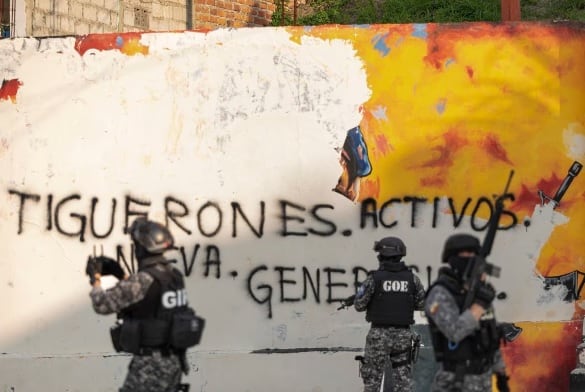
La transformación tiene su antecedente en diciembre de 2020, cuando fue asesinado Jorge Luis Zambrano, alias Rasquiña, entonces máximo líder de Los Choneros. Bajo su mando, la organización funcionaba como una federación que agrupaba o mantenía bajo su influencia a estructuras como Los Lobos, Tiguerones, Chone Killers, Águilas y Fatales.
La muerte de Zambrano precipitó la ruptura. Los Lobos, Tiguerones y Chone Killers terminaron alejándose de Los Choneros y conformaron una coalición conocida como Nueva Generación. La confrontación entre ambos bloques se trasladó inicialmente a las cárceles y posteriormente a las calles. Las sucesivas masacres penitenciarias desde 2021 fueron una de las expresiones más violentas de esa disputa.
Cinco años después, tampoco aquella división permite explicar el escenario actual.

Según información policial difundida por medios ecuatorianos durante 2026, las organizaciones se han subdividido en facciones que mantienen grados distintos de autonomía. Capturas, asesinatos y extradiciones de dirigentes han acelerado el proceso. Entre ellos están José Adolfo Macías Villamar, alias Fito, líder de Los Choneros, extraditado a Estados Unidos; Wilmer Chavarría, alias Pipo, señalado como cabecilla de Los Lobos y detenido en España; y William Alcívar, alias Negro Willy, identificado como líder de Los Tiguerones.
La fragmentación también alcanzó a Chone Killers. Después del asesinato en Colombia de su líder, conocido como Ben 10, la organización se dividió en varias facciones. Informes policiales citados por Primicias señalaron durante 2026 que llegaron a identificarse hasta diez subgrupos relacionados con esa estructura.
Los Tiguerones atravesaron un proceso similar. Dos facciones, conocidas como Fénix e Igualitos, mantienen disputas en sectores de Guayaquil. La particularidad es que sus alianzas cruzan las antiguas fronteras criminales: Fénix ha sido relacionada con Águilas, históricamente vinculada al entorno de Los Choneros, mientras Igualitos se aproximó a Los Lobos.
También Los Lobos han sufrido desprendimientos. Uno de ellos es Sao Box, organización surgida tras una ruptura relacionada con la disputa por la minería ilegal en Camilo Ponce Enríquez, en Azuay. Posteriormente trasladó parte de sus operaciones hacia El Oro. Información policial recogida por Primicias señala indicios de una aproximación entre Sao Box y Los Choneros para enfrentar a Los Lobos en Machala y Puerto Bolívar.
Las alianzas varían según el territorio. En Guayas, informes de inteligencia conocidos a finales de septiembre identifican relaciones entre Los Lobos, Lagartos y Latin Kings. En Playas, Los Lobos se han asociado con Los Silenciosos para disputar zonas controladas por Los Choneros. En Durán, las autoridades han detectado acercamientos entre Los Lobos y determinadas facciones de Chone Killers.
El resultado es un sistema en el que pertenecer a una organización ya no determina necesariamente todas sus alianzas. Una facción puede combatir a otra derivada de la misma banda y, al mismo tiempo, establecer acuerdos con antiguos adversarios para controlar rutas, puertos, barrios o mercados ilícitos.
Un informe de inteligencia divulgado por Ecuavisa el 30 de septiembre identificó solamente en Guayas a 14 estructuras criminales. Entre ellas constan Los Lobos, Los Choneros, Tiguerones, Gánsters, Lagartos, Águilas, Fatales, R7 y P27, además de organizaciones menores.

El documento incorpora además al Frente Oliver Sinisterra y Comuneros del Sur, dos estructuras surgidas del conflicto armado colombiano. Su inclusión evidencia otra transformación del escenario: actores extranjeros ya no aparecen únicamente como proveedores o compradores de droga, sino como organizaciones con incidencia dentro del territorio ecuatoriano.
La Policía también registra configuraciones diferentes en Manabí, Los Ríos y El Oro. En esta última provincia aparecen, además de Choneros y Lobos, estructuras como Tiguerones, Sao Box, Gatos Secos, P27 y una facción denominada Lobos Nueva Generación.
La expansión de organizaciones menores coincide con la diversificación de sus fuentes de financiamiento. El narcotráfico continúa siendo una de las economías centrales, pero las disputas también involucran minería ilegal, extorsiones, microtráfico y control de corredores logísticos.
South America / Central America,Government / Politics
INTERNACIONAL
Iranian negotiators kicked out of US as talks stall, Trump lays out ‘possible’ timeline for more strikes
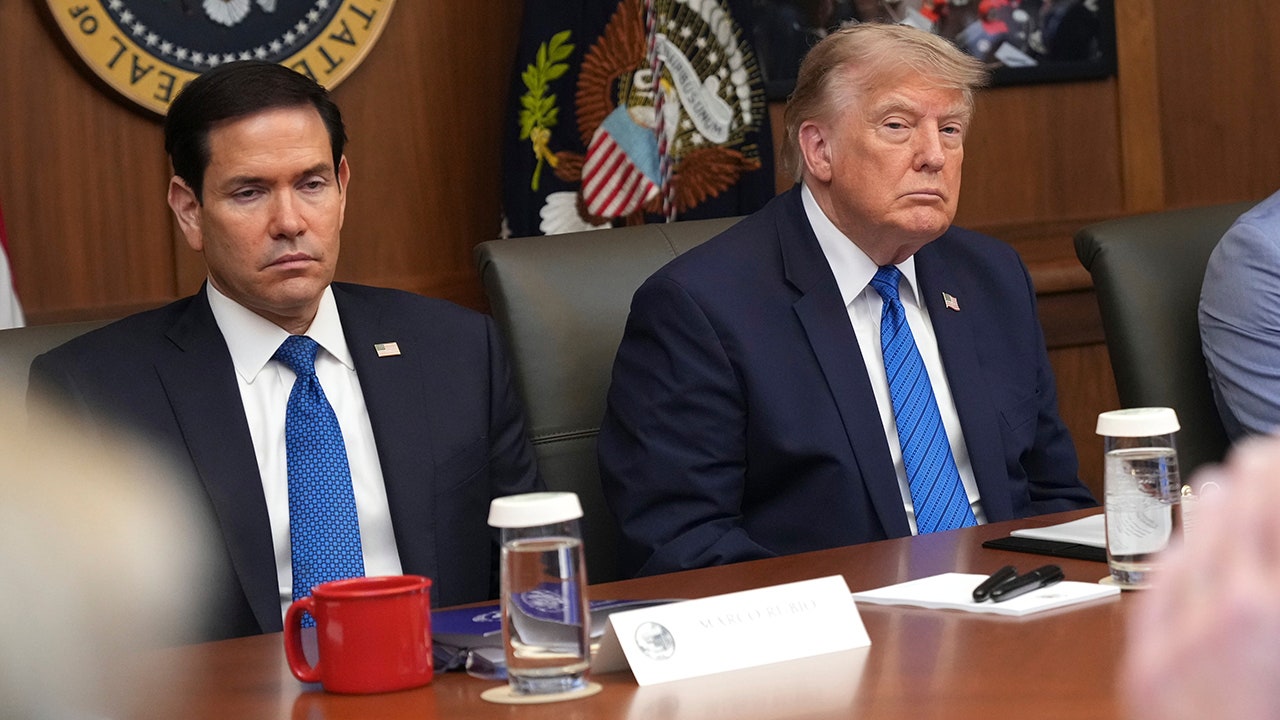
Secretary of State Marco Rubio abruptly ended talks and ordered the Iranian delegation to leave the U.S. after negotiations stalled, yet again, with no clear sign of a breakthrough more than seven months into the conflict.
And now, President Donald Trump is directly warning Iran it’s «possible» he will go harder with strikes in the Middle East after the midterm elections in November and revealed the U.S. military has significantly rebuilt its arsenal in recent months.
The latest messaging from the White House and State Department signals an increasingly strained diplomatic track, after days of negotiations failed to close the gap between Washington and Tehran over the terms of ending the war.
IRAN ‘MISCALCULATING’ BY BETTING ON MIDTERMS AFTER 3-HOUR TALKS, TRUMP OFFICIALS WARN
Asked in an interview with Time whether he would «ramp up bombing after the midterms,» Trump replied: «Possible.»
Further pressed on whether such an escalation was under consideration, the president declined to discuss potential targets but said the U.S. had spent months rebuilding its arsenal.
«We have a lot of weapons. You know, we’ve been stocking up for the last six months,» Trump said.
Trump also used the word «possible» when asked whether he «might annihilate Iran.»
After little progress in weekend meetings involving Iranian officials and Qatari mediators, Rubio told Iranian Foreign Minister Abbas Araghchi and his delegation on Monday that they needed to leave New York, a U.S. official confirmed to Digital after Axios first reported it.
Rubio concluded the Iranians had «overstayed their welcome» after the high-level U.N. meetings had ended. Araghchi had remained in New York for indirect talks seeking to end the blockade of oil and shipping through the Strait of Hormuz, ending the conflict overall and restarting negotiations over Iran’s nuclear program.
TRUMP, IRANIAN PRESIDENT CONVERGE ON NYC FOR ‘DRAMATIC’ UN SHOWDOWN AS TEHRAN FACES TIGHT RESTRICTIONS
Trump said in his speech to the United Nation’s General Assembly last week that he would continue to make sure Iran is not able to obtain nuclear weapons.
Araghchi and his team departed early Tuesday. Iran disputed the U.S. account, saying the delegation’s Monday night departure had already been scheduled and communicated to the State Department on Sept. 17.
The order to leave amounted to an unusually sharp diplomatic rebuke at a moment when mediators are still trying to keep negotiations alive.
The latest talks have centered on a seven-day confidence-building proposal aimed at reopening the Strait of Hormuz and reviving the June framework that briefly halted the fighting. Qatar has been shuttling messages between Washington and Tehran, with the two sides still divided largely over the sequencing of concessions — including when Iran would reopen the strait, what nuclear steps Tehran would take and what economic relief the U.S. would provide in return.
Trump rejected Iran’s latest proposal over the weekend, later saying Tehran’s offer to reopen the strait was «not good enough. Nearly.» He also denied reports that he had offered sanctions relief or the release of frozen Iranian funds in exchange for movement on the nuclear issue.
Despite the diplomatic stalemate, oil flows through the region have been recovering. Estimates cited by major banks put recent Middle East exports close to pre-war levels, helping ease some of the supply fears that sent crude prices sharply higher earlier in the conflict.
But the lack of a deal is still putting pressure on energy markets. Brent crude settled above $103 a barrel Wednesday, while U.S. crude closed above $90, with oil posting steep September gains as traders weighed stalled U.S.-Iran talks against the recovery in regional supply.
Americans are still feeling that pressure at the pump. The national average for regular gasoline was about $4.43 a gallon Wednesday, compared with roughly $3.15 a year earlier, while diesel stood above $6.40 a gallon.
The Strait of Hormuz remains central to both the negotiations and the economic stakes. Before the war, roughly one-fifth of global crude oil and liquefied natural gas supplies passed through the waterway, making even partial disruption a major driver of global energy prices.
iran, war with iran, donald trump, marco rubio, foreign affairs
INTERNACIONAL
Pro-life group says mail-order abortion pills violate federal law, urges Trump admin to take action
EXCLUSIVE: A pro-life group has released a new report calling on the Trump administration to take action against mail-order abortion drugs, arguing that it can enforce a 19th-century federal law to crack down on abortion pill shipments.
In the report obtained by Digital, the Restoration of America Foundation (ROAF) said Democrat-led states’ shield laws — adopted to protect providers in blue states from being prosecuted by GOP state governments — allow providers to ship, or are being used by providers to ship, the abortion pill mifepristone into red states «with no in-person exam or verification of who takes them or whether they take them willingly.»
ROAF attributed the growth in mail-order abortions in part to FDA policy changes that suspended the in-person dispensing requirement during the COVID-19 pandemic before making the change permanent, allowing abortion drugs to be prescribed through telehealth and mailed to patients.
BLUE STATE SHIELD LAWS ALLOWED 330K ABORTION PILLS TO BE SENT TO ABORTION BAN STATES, PRO-LIFE GROUP FINDS
The report said nearly 15,000 medication abortions each month were provided under blue state shield laws by June 2025. It also said that by the end of 2024, about 15% of all U.S. abortions were through medication mailed to women in states with abortion restrictions.
ROAF also cited an insurance claims analysis that the organization said found serious adverse health events following 10.9% of drug-induced abortions from 2017 through 2023, roughly 22 times the rate reported on the FDA-approved label for the abortion pill regimen. The group said the rate reached 11.2% in 2023 as the drugs were used more broadly.
According to the report, ROAF estimated that mail-order drugs were «directly responsible» for more than 300,000 abortions in 2025 alone.
This comes just ahead of the 110th anniversary of Planned Parenthood in the U.S., as the nation’s largest abortion provider will be commemorating its Oct. 16, 1916, founding later this month.
The ROAF report is urging Attorney General Todd Blanche to enforce the Comstock Act, an 1873 law criminalizing sending certain abortion-related materials that the pro-life group argues should be used by the Trump administration to stop shield laws from protecting mail-order medication abortions.
«As we come up with this anniversary for Planned Parenthood, we think it’s a good moment to release this paper. We really want to talk about the Comstock Act and the impact it could have on abortions going forward in this country,» ROAF CEO Doug Truax told Digital.
«The Comstock Act says it’s illegal to put these drugs in the mail, so we’re just asking them to enforce the law,» he continued.
After the Supreme Court overturned Roe v. Wade, which returned the power to make abortion laws to the states, the Justice Department’s Office of Legal Counsel under the Biden administration in December 2022 issued an opinion that concluded that the Comstock Act does not prohibit mailing mifepristone or misoprostol when the sender lacks intent that the recipient use the drugs unlawfully.
The Biden administration’s Office of Legal Counsel concluded in a December 2022 opinion that the Comstock Act does not prohibit mailing mifepristone or misoprostol when the sender lacks the intent that the drugs be used unlawfully.
But Blanche said during his confirmation hearings over the summer that he would review how the DOJ interprets the Comstock Act. ROAF says the department should withdraw the Biden administration’s opinion, investigate providers and organizations involved in mailing the drugs and enforce the 150-year-old federal law, which the group argues would effectively ban the mailing of abortion drugs nationwide.
PRO-LIFE GROUP FINDS BIDEN-ERA FDA POLICY IS DRIVING 500 ABORTIONS PER DAY, SAYS TRUMP HAS POWER TO END IT
«We are asking the administration to take a step back and say, okay, when Roe was the law of the land, Comstock was unenforceable. But since Roe is out, Comstock is back on the table, and it is valid law, and it is illegal to put abortion drugs in the mail. You have thousands of people in basically blue states mailing a ton of pills around this country … it’s resulting in the amount of deaths that we’re talking about here. So this is an illegal action that they’re taking. We just want you to enforce Comstock, and it will save hundreds of thousands of lives going forward,» Truax said.
«It’s a great way to get momentum back on our side in the pro-life community, which, frankly, I think the president and all conservatives around the country would appreciate now, as we head into November 3, and then, especially as we head into the next election cycle,» he added.
abortion, politics, justice department, attorney general, donald trump, todd blanche

Patricia Bullrich habló del armado electoral de LLA: “Lo importante es que este proyecto avance, no sé en qué lugar me va a encontrar”

Nike liquida zapatillas desde $79.999 con hasta 50% de descuento en su outlet online

En medio de la gira de Milei por París, Victoria Villarruel se mostró junto al rey de España

Guerra entre bandas en Ecuador: los antiguos aliados se enfrentan y los enemigos ahora pactan

Causa Cuadernos: el video que confirmaría que había una bóveda en la casa de Cristina Kirchner en El Calafate

Clima menos tenso y algunas dudas: Milei se reunió con los gobernadores en París y les agradeció por acompañarlo

Comienza un juicio contra dos jefes camioneros por bloqueos a una empresa distribuidora

El riesgo país vuelve a subir y llega a su nivel máximo en lo que va del año

Cayó la confianza en el Gobierno e igualó la peor medición de la era Milei

Nuevo parte médico por la salud de Mirtha Legrand: “Finalizó el tratamiento antibiótico”

 POLITICA2 días ago
Antes de viajar a París, Milei les envió un mensaje a inversores franceses: “Son bienvenidos para venir a llenarse los bolsillos”
- INTERNACIONAL2 días ago
Bombshell report exposes healthcare fraud schemes as taxpayers lose up to $521 billion annually
- POLITICA2 días ago
La CGT descartó un paro general, pero hará una movilización el 8 de octubre en defensa de la industria