INTERNACIONAL
Cómo afecta el retiro de Messi a la imagen de la Argentina en el mundo: de referente nacional a una marca global


El retiro de Lionel Messi de la Selección nacional dejó con una sensación de desamparo a millones de fanáticos argentinos, pero su salida también significó la pérdida activa de una figura internacional asociada a la Argentina y que ayudó en los últimos 20 años a cimentar el “Soft Power” (poder blando) del país.
Más allá de que la selección albiceleste y el 10 quedaron involucrados en el último Mundial en una campaña de descrédito con señalamientos de racismo y trampa, Messi ha sido el mejor embajador nacional en el mundo a lo largo de dos décadas.
Messi, el papa Francisco, Maradona y la selección de fútbol fueron algunos de los mayores símbolos argentinos conocidos a nivel mundial junto al tango y la carne, en el último medio siglo.
La pregunta es qué influencia tuvo Messi en ese “Soft Power” nacional y qué perderá el país, más allá del impacto emocional y deportivo, con su retiro del seleccionado.
TN consultó a cuatro analistas para responder a estos interrogantes.
¿Qué es el Soft Power?
El “Soft Power” es la capacidad de un país para influir en otros por su poder de “atracción” en áreas como la cultura, la gastronomía, sus valores tradicionales, su política exterior o por figuras públicas conocidas a nivel mundial.
El concepto fue acuñado por el politólogo estadounidense Joseph Nye.
Messi encuadra ahí perfectamente.
Sin dudas, el jugador del Inter Miami ha generado en su carrera una mayoritaria asociación positiva con la Argentina en millones de fanáticos desparramados en todo el mundo. Las imágenes desde Bangladesh en cada Copa del Mundo son el mayor ejemplo.
También las camisetas albicelestes con el número 10 que se ven en cualquier lugar del planeta. Son personas que se vinculan con la Argentina a través de Messi.
Pero, ¿cuál es su verdadero impacto en la imagen-país?
Fútbol












INTERNACIONAL
Byung-Chul Han y el ghosting como síntoma de una sociedad rota: algoritmos, narcisismo y la muerte del respeto

En Sin respeto, Byung-Chul Han examina cómo el ghosting, la competencia extrema y la búsqueda de atención erosionan el respeto entre las personas y debilitan los vínculos que sostienen la convivencia. El filósofo sitúa estas conductas en sociedades dominadas por el neoliberalismo, el narcisismo y la comunicación digital.
Dejar un mensaje sin respuesta implica tratar al otro como alguien prescindible y reemplazable. Para Han, esa práctica desliga a quien la ejerce de su responsabilidad hacia los demás y expresa una relación utilitaria con los vínculos personales.
Una sociedad sana protege a sus miembros y ofrece valores capaces de generar seguridad y justicia. Cuando desaparecen esos puntos de referencia, las costumbres dejan de ordenar la vida colectiva y la falta de vergüenza se convierte, a la vez, en causa y consecuencia de la pérdida de valores.
La competencia, la desinhibición digital y la concentración en el propio interés han convertido el respeto en un valor amenazado. La atención ocupa el lugar que antes tenía la consideración por los demás: despertar interés puede otorgar visibilidad, pero no garantiza reconocimiento.

La cortesía ha cedido terreno ante la humillación pública, convertida en una práctica frecuente. Han describe ese desplazamiento como el paso de una sociedad del respeto a una sociedad del rendimiento, donde cada persona percibe a las demás como rivales.
Esa competencia generalizada provoca una caída de la autoestima y erosiona los lazos sociales. El ensayo sostiene que el egoísmo reduce la empatía, la comprensión y la consideración hacia otros, pero también puede afectar el respeto que cada individuo conserva por sí mismo.
El filósofo retoma a John Rawls y su obra Una teoría de la justicia, publicada en 1971, para vincular la autoestima con el trato hacia los demás. Han afirma: “Quien no se respeta a sí mismo, no tiene autoestima o incluso llega a odiarse, acabará menospreciando también a los otros. El respeto por uno mismo y el respeto por los demás van de la mano”.
El respeto propio exige, según esa reflexión, dos condiciones: “Un firme convencimiento sobre la concepción del bien que tenemos y que nuestro proyecto de vida merece la pena de realizarse”, junto con “confianza en la propia capacidad, en la medida que sea posible, de llevar a término los propios propósitos”. Esa confianza sostiene la integridad personal y el propósito vital.

Han cuestiona un sistema neocapitalista que, a su juicio, limita la autonomía individual y transforma a las personas en combatientes aislados. “La sociedad bien ordenada no es una sociedad del rendimiento, sino una sociedad del respeto”, plantea el autor.
La lógica neoliberal, sostiene, desplaza la idea del bien común ante el materialismo de la propiedad. En ese escenario, “todos se enfrentan a todos” y ya no existe solidaridad “ni tan siquiera entre los perdedores”.
Redes sociales, identidad y dominación tecnológica
Las redes sociales intensifican la competencia por reconocimiento y convierten el respeto en una disputa por atención. Han advierte que quien no recibe interacción o respuesta en línea puede interpretar esa ausencia como un insulto, una humillación, un rechazo o una forma de exclusión social.
El resultado es una mayor distancia entre las personas y un incremento de los recelos. La búsqueda de una identidad influenciable y frágil desplaza la atención sobre la alteridad, entendida como la capacidad de reconocer al otro como diferente y establecer con él un intercambio de ideas.
Esa pérdida de apertura favorece que los diálogos deriven en confrontaciones entre personas que vinculan sus opiniones con su identidad. Para Han, un debate requiere disposición a revisar las propias posiciones o incluso adoptar las del interlocutor sin sentir que ello amenaza quién se es.
“El debate ideal” distingue con claridad entre opinión e identidad, sostiene el filósofo. Quien convierte los hechos o una forma de pensar en una cuestión identitaria queda incapacitado para debatir, porque cualquier cuestionamiento se vive como una impugnación personal.
La ética de Immanuel Kant ocupa un lugar central en esa defensa del respeto. Han retoma el imperativo categórico para afirmar que el ser humano no puede ser utilizado únicamente como un medio, ni siquiera por sí mismo, sino que debe ser tratado siempre como un fin.

Esa idea funda la dignidad humana y se opone a un imperativo capitalista que atribuye a las personas un valor de mercado. El autor advierte que la autodeterminación puede degradarse en autoexplotación cuando todo adquiere un precio y la identidad queda sometida a vigilancia.
La tecnología participa de ese proceso mediante formas de dominio que no se presentan como represivas, sino como atractivas y adictivas. Han sostiene que el algoritmo estimula “una ilusión de libertad”, aunque mantiene mecanismos de control capaces de orientar el comportamiento.
El arte tampoco queda al margen de la presión por la aprobación inmediata. Han afirma que podría ser un refugio para lo sublime y un antídoto contra la cultura del consumo, pero la exigencia de nivelarlo todo lo mantiene cautivo como un “arte del Me gusta”.
Al final del ensayo, Han extiende su advertencia a la inteligencia artificial: “Como ha pasado a menudo, el ser humano se convierte en esclavo de sus propias creaciones”.
ghosting,desconexión,soledad,relaciones digitales,mensajes de texto,teléfonos móviles
INTERNACIONAL
Ex-Obama spy chief prepped for anti-Trump trial by Biden-era special counsel’s team, new records reveal
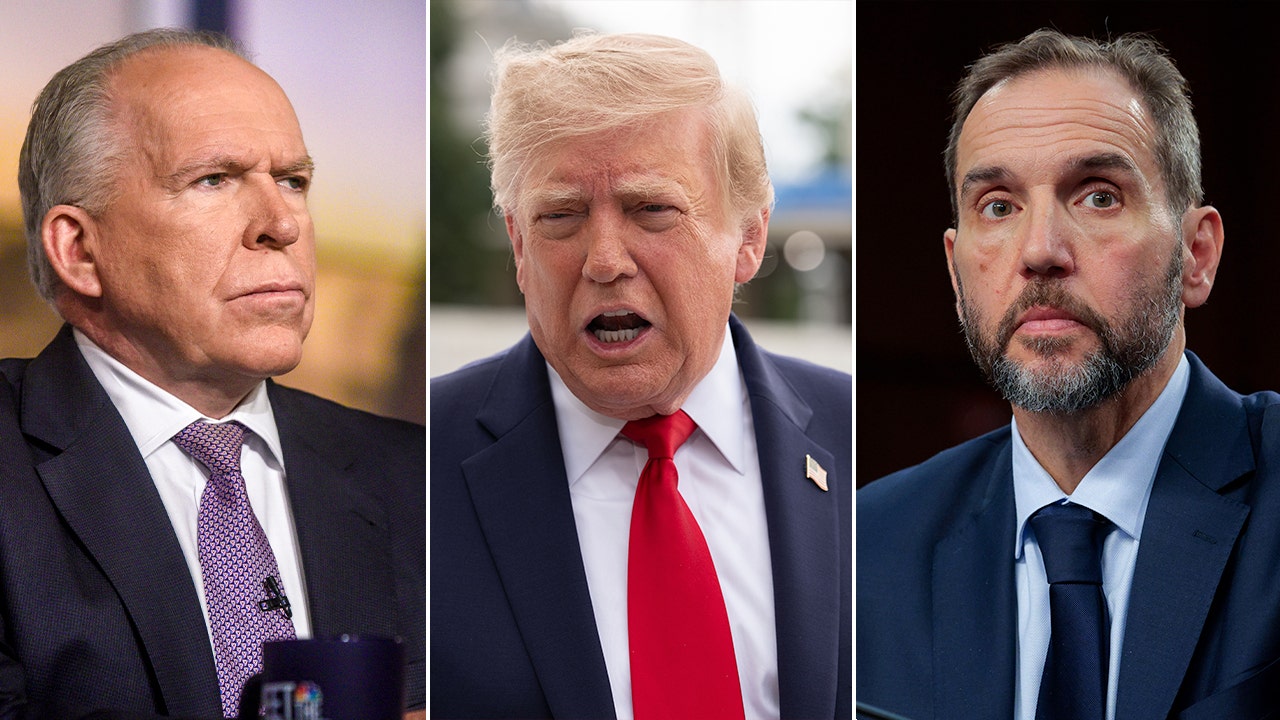
Former special counsel Jack Smith told lawmakers he had «never met» former CIA director and vocal Trump critic John Brennan when pressed about whether Brennan provided consultation or counsel during his tenure, but records just declassified by the White House reveal members of Smith’s team met with Brennan while preparing the classified-documents case against President Donald Trump.
The revelation about Brennan’s meeting with special counsel Smith’s team adds another wrinkle to Republicans’ broader scrutiny of Smith’s investigations into Trump, which has included claims of political bias, overreach and other investigative missteps.
«Jack Smith was a tool of the Biden administration to put Trump in prison,» said Harvard Law professor and former Trump impeachment counsel, Alan Dershowitz, who described Smith’s work as «a partisan weapon that broke the rules, lied to the court and engaged in bad faith throughout» in a 2025 op-ed for The Wall Street Journal. Another critic, investigative reporter John Solomon, recently described the probes as among a «10-year conspiracy to stop Donald Trump using the resources of the United States government.»
EXPLOSIVE NEW REPORT PUTS JACK SMITH BACK IN HOT SEAT AS JIM JORDAN ALLEGES HE TRIED TO ‘SWAY’ 2024 ELECTION
Two assistant special counsels working under Smith joined FBI agents for a November 2023 meeting with Brennan at CIA headquarters in McLean, Virginia, according to documents that were declassified Monday by the White House. The meeting was held «to discuss expert testimony to National Defense Information in the forthcoming trial,» indicating prosecutors were exploring the possibility of using the former CIA chief’s national security expertise as they prepared their case against Trump.
Meanwhile, Smith appeared before the Senate Judiciary Committee last week as part of the Republican-led panel’s oversight of his investigations into Trump. During the hearing, GOP lawmakers pressed Smith over allegations of political bias, investigative overreach and misconduct in both the Arctic Frost 2020 election probe and his classified-documents case known as «Plasmic Echo.»
In particular, Senate Judiciary Committee Chairman Chuck Grassley, R-Iowa, asked Smith whether he had ever received «consultation or counsel» from Brennan, including during his tenure as special counsel.
EX-CIA CHIEF ACCUSED OF ORCHESTRATING ‘RUSSIA HOAX’ SUES TRUMP ADMIN FOR ‘VINDICTIVE PROSECUTION’
«Have you ever received any consultation or counsel by John Brennan, former CIA director, whether during your time as special counsel or otherwise? If so, when and for what purpose?» Grassley asked.
«I’ve never met John Brennan,» Smith responded.
FORMER CIA DIRECTOR BRENNAN SUBPOENAED TO TESTIFY IN FEDERAL TRUMP CONSPIRACY CASE
Grassley’s question, however, was broader than whether Smith personally met Brennan, and the newly declassified records show prosecutors working directly under Smith met with the former CIA director as they prepared the government’s case against Trump.
«This meeting occurred during Jack Smith’s time as Special Counsel and constitutes ‘consultation or counsel’ from John Brennan to Smith and his team,» Grassley told Digital. «Smith’s response before the Senate Judiciary Committee was highly evasive and misleading, at minimum.»
During the hearing, Grassley later returned to the issue, asking Smith whether he had ever had a conversation with Brennan.
«I have no recollection of having a conversation with John Brennan,» Smith responded.
FBI QUESTIONING CURRENT AND FORMER CIA OFFICIALS IN DOJ PROBE INTO JOHN BRENNAN’S ROLE IN RUSSIA ASSESSMENT
In addition to the memo outlining the 2023 Brennan meeting, the declassified release also included two pages of notes bearing CIA headquarters headers where lines of text beneath Brennan’s name are blacked out by government redactions, leaving the remainder of the ruled pages blank.
Brennan was not serving as CIA director during the period covered by Smith’s classified-documents case, and the released records do not indicate he had firsthand knowledge of Trump’s alleged handling of the documents.
JACK SMITH’S TRUMP PROBE SWEPT UP NEWS, OTHER MEDIA COMMUNICATIONS AS INVESTIGATION WENT BEYOND LAWMAKERS
Grassley, as well as other GOP lawmakers and critics, have accused the former special counsel of investigative overreach and political bias, including pointing to records showing his Arctic Frost investigation obtained financial information involving thousands of Trump donors and phone records of Republican lawmakers, among other investigative steps. Grassley has separately raised questions about the origins and conduct of Smith’s classified-documents prosecution.
Smith, meanwhile, has rejected allegations that his investigations were politically motivated and has maintained that his decisions were driven by the evidence and defending the work of prosecutors and investigators on his team.
Digital reached out to attorneys for Smith to obtain comment about the Brennan meeting, as well as the Justice Department, but did not receive a response.
politics, donald trump, cia, hearings, chuck grassley
Four weeks out from the election, and for most Americans, it’s time for football, foliage and flannel. For politics watchers, all eyes are on an October surprise.
They’ve been game-changers before. In 2008, the collapse of Lehman Brothers, which ushered in the biggest financial crisis since the Great Depression, was a turning point in John McCain’s presidential campaign. He was even with Barack Obama when the news broke, then trailed in every survey after. He lost the popular vote by seven points.
Surprises have come from home and abroad. In 1980, it was President Jimmy Carter’s inability to resolve the Iranian hostage crisis. Eight years earlier, it was President Richard Nixon’s announcement that «peace was at hand» in Vietnam.
Some have more impact than others. It’s not clear that news about George W. Bush’s DUI changed much about the 2000 election, nor that James Comey’s letter to Congress about Hillary Clinton’s email server was the decider in President Trump’s 2016 win.
Still, these surprises all have one thing in common: they happened in presidential years.
EXPLOSIVE SLEEPER ISSUE COULD FUEL MIDTERM SHAKEUPS, TOP REPUBLICAN PREDICTS: ‘YOU’RE GONNA SEE SURPRISES’
It’s not as though we don’t get breaking news during the last month of a midterm cycle. Take 2018, when the GOP warned about a migrant caravan, Brett Kavanaugh sought a seat on the Supreme Court, and a gunman opened fire at a Pittsburgh synagogue.
But that was the exception, not the rule. For the most part, midterm October surprises affect individual races, not the overall trajectory of a party.
In the last midterm, for example, Herschel Walker faced damaging allegations about paying for former girlfriends’ abortions, while in Florida, the destruction caused by Hurricane Ian gave Gov. Ron DeSantis the opportunity to show Floridians that he could be trusted to handle a crisis.
POWER RANKINGS: FOR THE DEMOCRATS, WHERE COULD IT POSSIBLY GO WRONG?
Voters haven’t changed their minds about Trump or the party they’d prefer to elect to the House for several months now, so local stories like these are the ones to watch in the final weeks of the campaign.
Besides, the biggest surprises come after October.
For what still looks like a good – maybe great – year for the Democrats, the party is playing defense in some unexpected places.
DAVID MARCUS: IN DEEP BLUE MINNESOTA A RED DAWN MAY BE RISING AHEAD OF THE MIDTERMS
That starts with Minnesota, where Republicans have a star candidate in Michele Tafoya. The former NFL sideline reporter has been up and down the state with a message to «stop the fraud» if elected to the Senate. That’s been a hot issue in the state, and it’s allowed her to target the Democrat, Peggy Flanagan, who currently serves as lieutenant governor.
Then there’s New Hampshire, another state where Democrats are in the driver’s seat thanks to this political environment, but where the GOP has a favorable match up. Former U.S. Senator John E. Sununu is back on the ballot this year against Chris Pappas, who seems to have had trouble animating his voters.
Even Oregon’s gubernatorial race is competitive this year.
Meanwhile, Republicans are spending money in surprising places.
REPUBLICANS FACE BRUTAL MIDTERM HEADWINDS. SIX FORCES COULD HELP THEM DEFY HISTORY.
In Arkansas, Sen. Tom Cotton has thrown $13.6 million at his reelection bid, outspending his Democratic opponent Hallie Schoffner 65 to 1. Cotton may have ambitions beyond his current role in the Senate, but in 2020, his spending fell short of $1 million.
Idahoans got a letter in the mail from Vice President Vance last month warning them that Democrats could «pour millions of dollars» into independent challenger Todd Achilles; Vance called it an «urgent national race.»
Mississippi Sen. Cindy Hyde-Smith has been running ads attacking her Democratic challenger Scott Colom in recent weeks, calling him a «failed prosecutor» with a «chilling» record on crime; that state has seen $5 million in ad spending so far this year.
POLL: IT’S A LONE STAR SENATE SHOWDOWN BETWEEN TALARICO AND PAXTON
And Florida is full of election surprises. In 2018, Rick Scott won his Senate race by 0.1 percentage points while DeSantis won his by 0.4 points. Two years later, the presidential race was decided by just 3.4 points.
Nebraska and South Dakota could be closer-than-expected for Republicans as well.
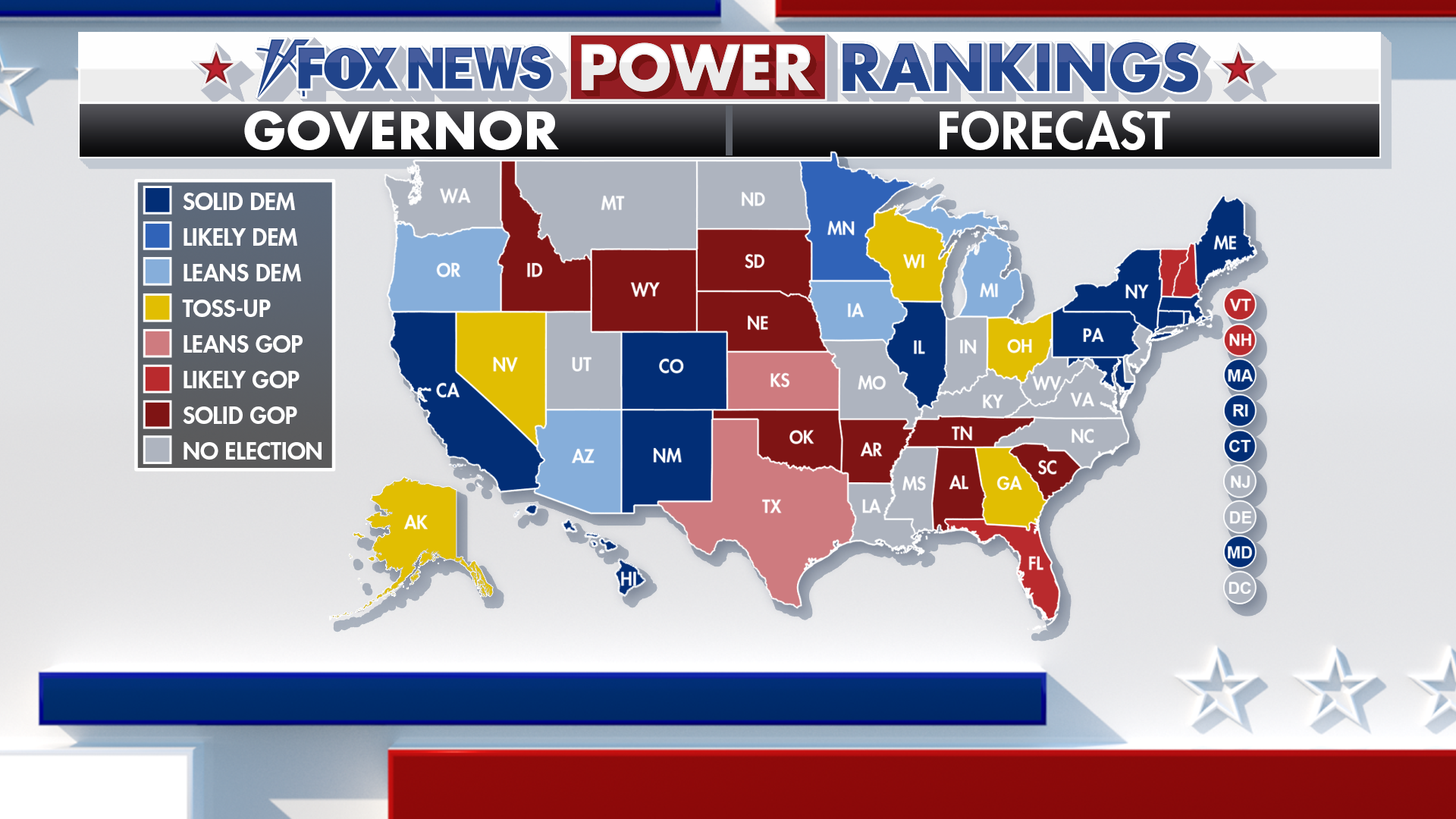
In this week’s Power Rankings, one Carolina gets more competitive while another drifts away from the GOP, and Democrats get nervous about a governor’s race in Oregon.
The math is the same in the Senate. Each party has 47 seats to their name, leaving six toss-up races to determine control.
Those are Alaska, Iowa, Maine, Michigan, Ohio, and Texas, which all look close in the flurry of surveys released by pollsters last week.
Two other races are highly competitive: New Hampshire (Lean D) and Kansas (Lean R).
On the polling alone, these look more like toss-up states: surveys released last week have the Democrat ahead by only five points in New Hampshire, and the Kansas race dead even. It’s the partisan makeup of these states that keeps them at «lean.»
North Carolina is less competitive than it was two weeks ago. confirmed on Friday that the Senate Leadership Fund, a powerful Super PAC aligned with Republican leadership, was pulling resources from the state. Earlier, Sen. Tim Scott left it off a list of states where Republicans were focusing spending.
GOP nominee Michael Whatley is running as strong a race as he can there, and the margin will probably be tighter than polls currently have it. But the Democrat, Roy Cooper, is also a strong candidate, and he has had double-digit leads in multiple surveys.
North Carolina moves from Lean D to Likely D.
Nearby South Carolina is getting more competitive. Darline Graham, appointed to the Senate after the death of her brother, Lindsey, is reportedly getting more help on the campaign trail from President Trump.
There are lingering questions about Graham’s ability to turn out a broad spectrum of Republican voters against a Democratic candidate who, like her counterparts in Kansas and Nebraska, is pushing hard on the price of diesel.
The state moves from Solid R to Likely R.
Four years ago, Oregonians sent Tina Kotek to the governor’s mansion for the first time, and it hasn’t gone smoothly.
Kotek faces four issues all at once in this campaign, as outlined in local reports and on the trail: a housing crisis, poor education outcomes, higher city crime rates than in neighboring states, and like other incumbents, she flip-flopped on data centers.
A lethargic debate performance last week didn’t help matters.
Drazan has lost this race before, and this time, won’t get help from a third-party candidate who drew votes from the Democrat. But this time around, she has created more distance both from Trump and conversations about abortion, which she calls a «settled issue.»
Democrats have every reason to hold on to this state in November, but it’s going to be tougher than the party wants. Oregon moves from Likely D to Lean D.
Elsewhere, two states are becoming more competitive for Democrats, beginning with Florida.
The Sunshine State is the home of the «MAGA» movement, and Rep. Byron Donalds easily locked up the Republican nomination in August. But he has stumbled, at times, on the campaign trail, and Hispanic voters continue to express frustration with this economy. Florida moves from Solid R to Likely R.
And in Vermont, longtime incumbent Republican Phil Scott might have raised an eyebrow at a new poll from the University of New Hampshire showing his Democratic opponent, Amanda Janoo, up six points against Scott, 49% to 43%.
Scott keeps winning elections comfortably in Vermont, but the party label could be a bigger problem this cycle. The Green Mountain State also moves from Solid R to Likely R.
power rankings, politics, midterm elections, elections, elections state and local

La curiosa reacción del entrenador de Portugal tras el explosivo descargo de Cristiano Ronaldo

Independiente analiza terminar el vínculo de Jadson Viera si no logra un buen resultado ante Talleres

Tini Stoessel recibió la peor noticia para su casamiento con Rodrigo de Paul y la crisis es total

Financiamiento universitario: el Gobierno apeló el fallo judicial y las universidades preparan una movilización al Congreso

Neymar despidió a Messi de la Selección Argentina con un emotivo mensaje: “El mundo te agradece”

Con un gol a Benín, Messi le dijo adiós a la selección argentina y cerró un ciclo irrepetible de 21 años en la cima del fútbol mundial

DHS exposes dilemma behind SCOTUS deportation fight: ‘We have two choices’

El Reino Unido anunció que las nuevas licencias de hidrocarburos en las Islas Malvinas requerirán su autorización final

El pedido de Abel Pintos que sorprendió a Guido Kaczka: “Necesito renovarlos”

Elecciones en Brasil: el Gobierno prevé que Lula gane la primera vuelta y que Bolsonaro tenga ventaja en un balotaje

 POLITICA2 días ago
¡Precios de Manhattan con sueldos de Argentina! Cómo los créditos hipotecarios inflaron las propiedades y congelaron el sueño de la casa propia
- INTERNACIONAL3 días ago
Iran could move shadow war in a dangerous direction, experts warn on back of two possible terror attacks
- INTERNACIONAL3 días ago
Exclusive: Trump envoy blasts South Africa over hateful ‘kill’ chant, says country is drifting toward US foes