INTERNACIONAL
Exclusive: Trump envoy blasts South Africa over hateful ‘kill’ chant, says country is drifting toward US foes

NEWYou can now listen to Fox News articles!
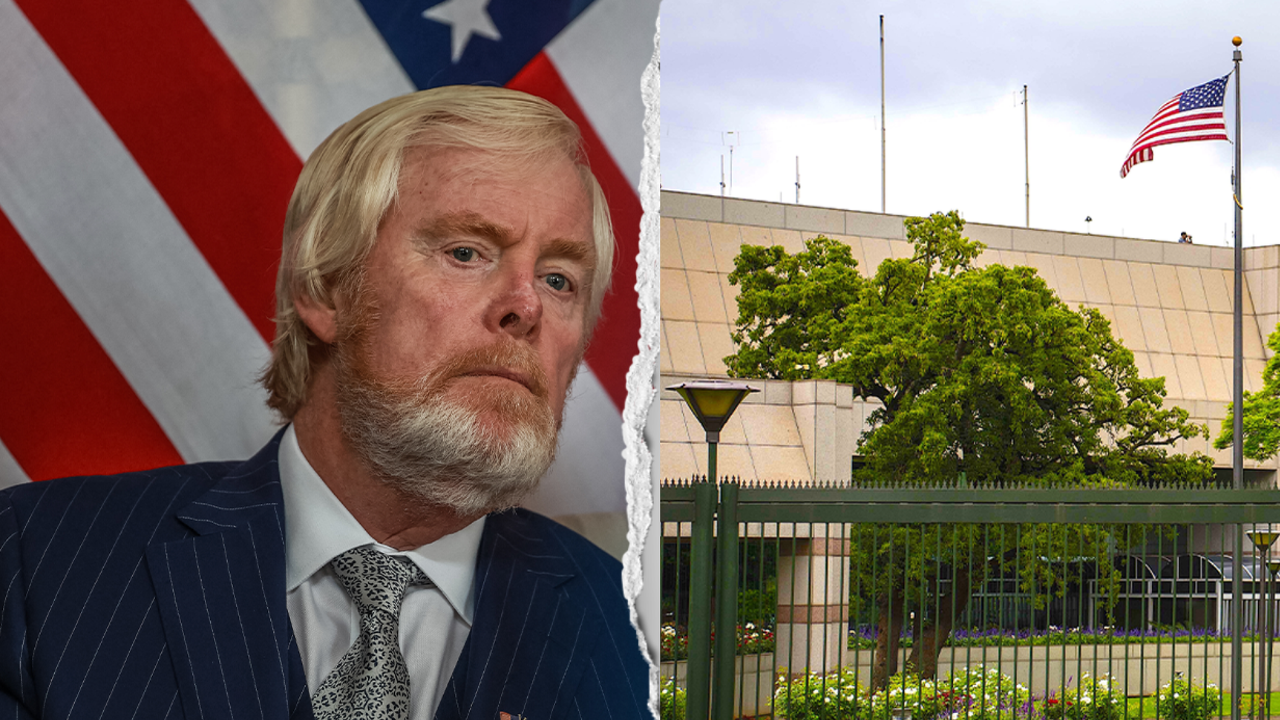
JOHANNESBURG: The U.S. ambassador to South Africa has hit out at the country’s President, Cyril Ramaphosa, telling Fox News Digital, «You’ve got a president of South Africa who refuses to condemn an incitement to kill.»
Ambassador L. Brent Bozell III was responding strongly, in an exclusive interview with Fox News Digital, to being summoned this past week to South Africa’s foreign ministry and criticized for ‘undiplomatic conduct.»
This is the third time the ambassador has received a démarche — a diplomatic rebuke — from Pretoria in the nine months since he arrived here. The ambassador has been slammed by South Africa for relaying President Trump’s condemnation of South African policies and statements. Bozell is a former Fox News contributor and founder of the largest conservative media watchdog, the Media Research Center.
TRUMP ADMIN IMPOSES NEW VISA RESTRICTIONS OVER ALLEGED RACIAL DISCRIMINATION, LAND SEIZURES IN SOUTH AFRICA
The Peaceful Boere march from the Castle of Cape Town to Parliament attended by over 300 individuals to pay tribute to murdered farmers on October 25, 2020 in Cape Town, South Africa. According to media reports, a monument was erected in Paarl in remembrance of those killed on farms. (Brenton Geach/Gallo Images via Getty Images)
He has repeatedly pushed for issues brought up by President Trump in a testy confrontation in the Oval Office with South Africa’s President Ramaphosa 16 months ago to be addressed. Among other points, these include alleged race-based discrimination, allegations of murder and torture of farmers, plans for uncompensated land seizures and the incitement of violence against minority groups.
The ambassador said three of the five specific ‘asks’ the Trump administration wants have been ignored by South Africa.
High up the list of ‘asks’ is President Trump’s demand that President Ramaphosa stops people in South Africa from shouting «Kill the Boer! Kill the farmer!» A Boer is a white man, according to the Merriam-Webster dictionary. It defines it as «a South African of Dutch or Huguenot descent». Ramaphosa has claimed he can’t stop people chanting this slogan because it’s been cleared for use by the country’s supreme court.
Bozell told Fox News Digital, «You’ve got a president of South Africa who refuses to condemn an incitement to kill.»
SOUTH AFRICA’S ILLEGAL MIGRATION BACKLASH MIRRORS POLITICAL BATTLES ACROSS THE WEST
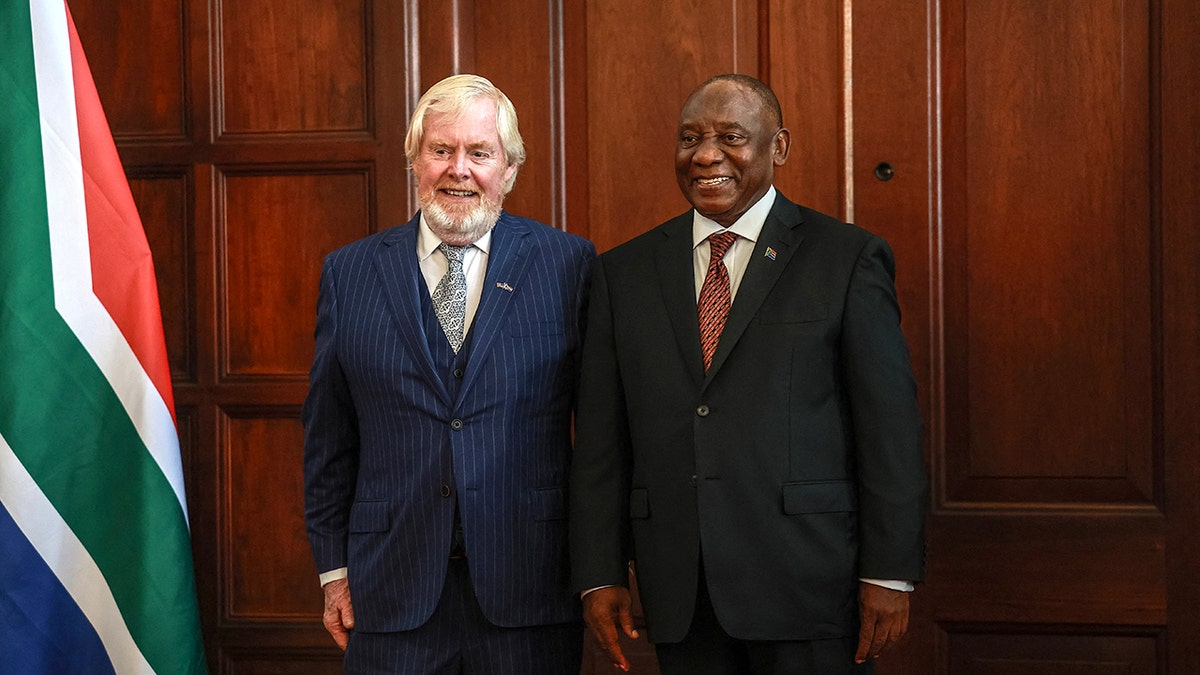
U.S. Ambassador to South Africa Brent Bozell III (L) poses for a photograph after presenting letters of credence to South African President Cyril Ramaphosa (R) at Sefako Makgatho Presidential Guest House in Pretoria on April 8, 2026. (Phill Magakoe / AFP via Getty Images)
He added, «You’ve got a government that has said it’s not going to do any more for the Afrikaner rural community, and it’s got a government that’s saying no, your mining has to go through race-based programs. We’re not going to allow your investments to go the way everyone else has been allowed to go».
«Those were three strikes and you’re out as far as we were concerned,» Bozell said.
«Ask 100% of the world if «kill the farmer!, kill the Boer» isn’t hate speech,» he continued. «If that isn’t hate speech, I don’t know what hate speech is: inciting people to commit murder. So the answer we’ve gotten is, well, the court said it isn’t. To which our response is look, in the United States, the president can disagree with the court and does about every five minutes because that’s what you do in a democracy when you disagree with something.»
TRUMP GETS MAJOR WIN AGAINST CHINA IN AFRICAN RARE EARTH MINERALS RACE
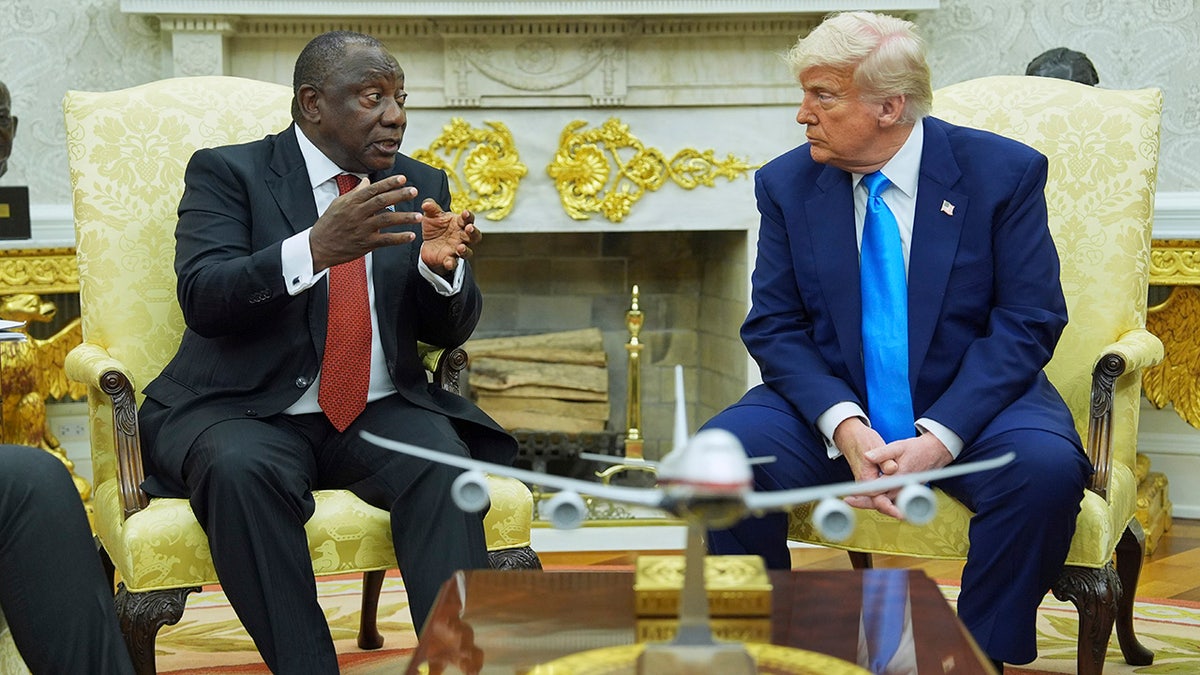
President Donald Trump meets South African President Cyril Ramaphosa in the Oval Office of the White House, on Wednesday, May 21, in Washington. (AP/Evan Vucci)
Bozell added, «So, to say, well, you can’t do it because the court said it’s not, you know, that’s poppycock. If President Ramaphosa, if he wants to, he can do it. It’s just as simple as that.»
The ambassador pushed hard on the point, saying «How hard is it to say this chant, where some, where people do it, 50,000 people in the stadium jump up and down, pantomiming guns, shooting people, how hard is it to say, stop it? This is awful that anybody would be inciting people to kill.»
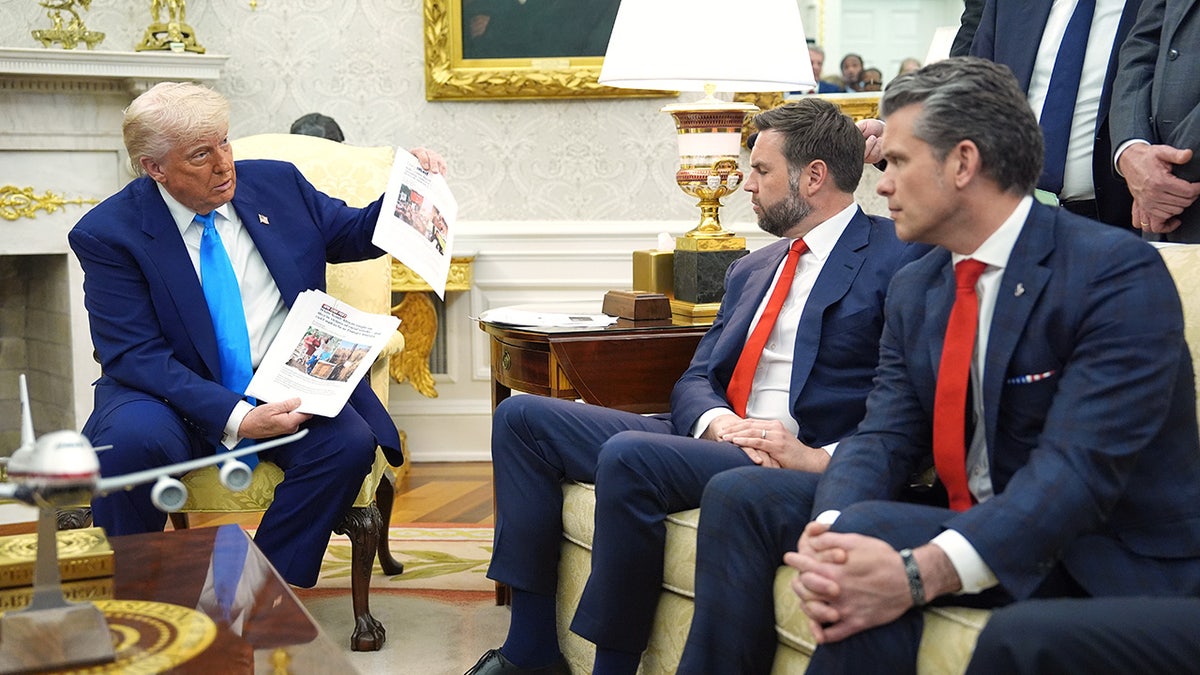
President Donald Trump shows documents as he meets South Africa’s President Cyril Ramaphosa at the White House on Thursday, May 21, in Washington. (AP/Evan Vucci)
South Africa, analysts say, is drawing ever closer to Iran, Russia, China even Cuba. The African National Congress, the ANC, the party which rules the country in the so-called ‘government of national unity’, has hosted the terror group Hamas.
This is very much on the administration’s radar. President Trump met with Bozell in Washington again recently, with the ambassador telling Fox News Digital the president’s thinking «perhaps most of all, he’s concerned about how South Africa has been systematically leaving the non-alignment space and moving closer and closer to our adversaries.»
Referring to South Africa, the ambassador added, «There are people who are living in the glory days of the Soviet Union, and they want to go back to the good old days of communism. Why are they still working with Cuba?»
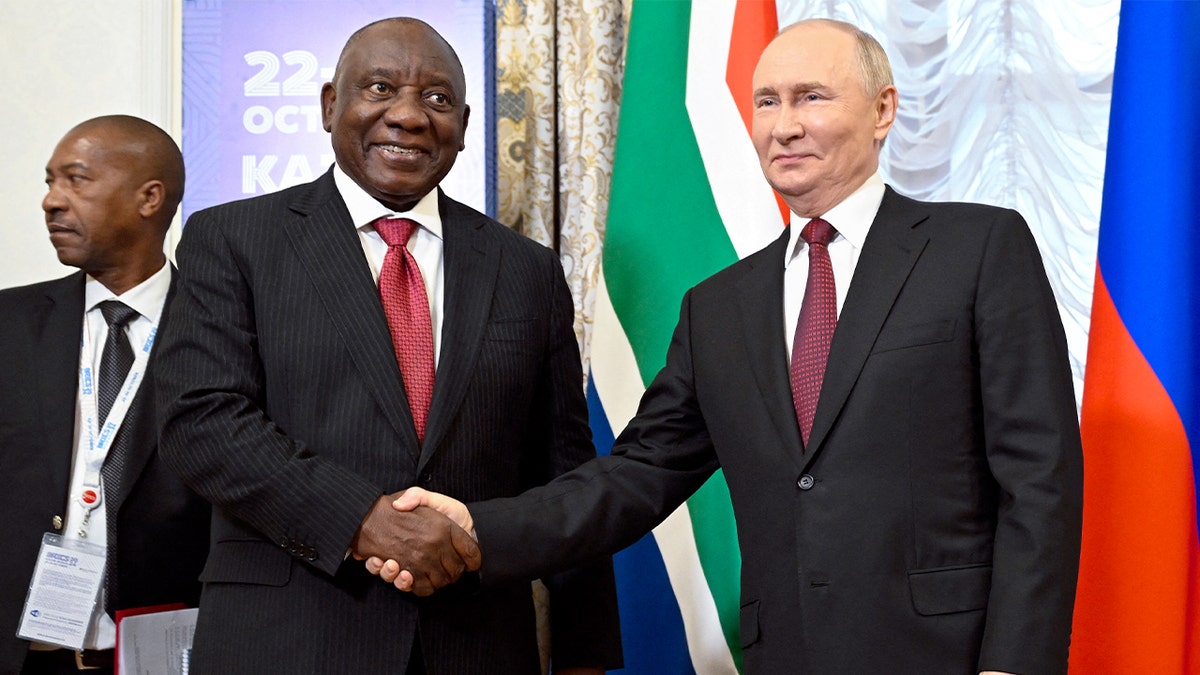
Russian President Vladimir Putin meets with South African President Cyril Ramaphosa on the sidelines of the BRICS summit in Kazan on Oct. 22, 2024. (Alexander Nemenov/Pool/AFP via Getty Images)
Digging deeper, Bozell asked, «Why are they working with Iran and Hamas terror organizations? What’s Russia doing for them? What’s China doing for them? This is bad news when they’re going in that direction. What we’re saying is simply do what you’ve always done. Have a non-aligned with both sides. We’ll live with that.»
US COUNTERS CHINA AS BEIJING’S ‘SHOCK WAVE’ HITS AFRICAN ECONOMIES
The ambassador stressed that the U.S. wants to make dynamic business with South Africa on mining, particularly on critical or rare earth minerals. He stated, «We’re not going to do what the Chinese do. They come in, they take the ore, they take it to China, they benefit [from] it and they make a pile of money. We’re saying to South Africa, we’ll come in, we’ll do the mining, we’ll do it right there in South Africa.»
He continued,»South Africa gets the money, not the Chinese. We bring in the technology that they could never have. We’ve created hundreds of thousands of jobs. We’re saying we could create more and more and more at a time when they desperately need it, but it will be good for us as well. This is the partnership we want.»
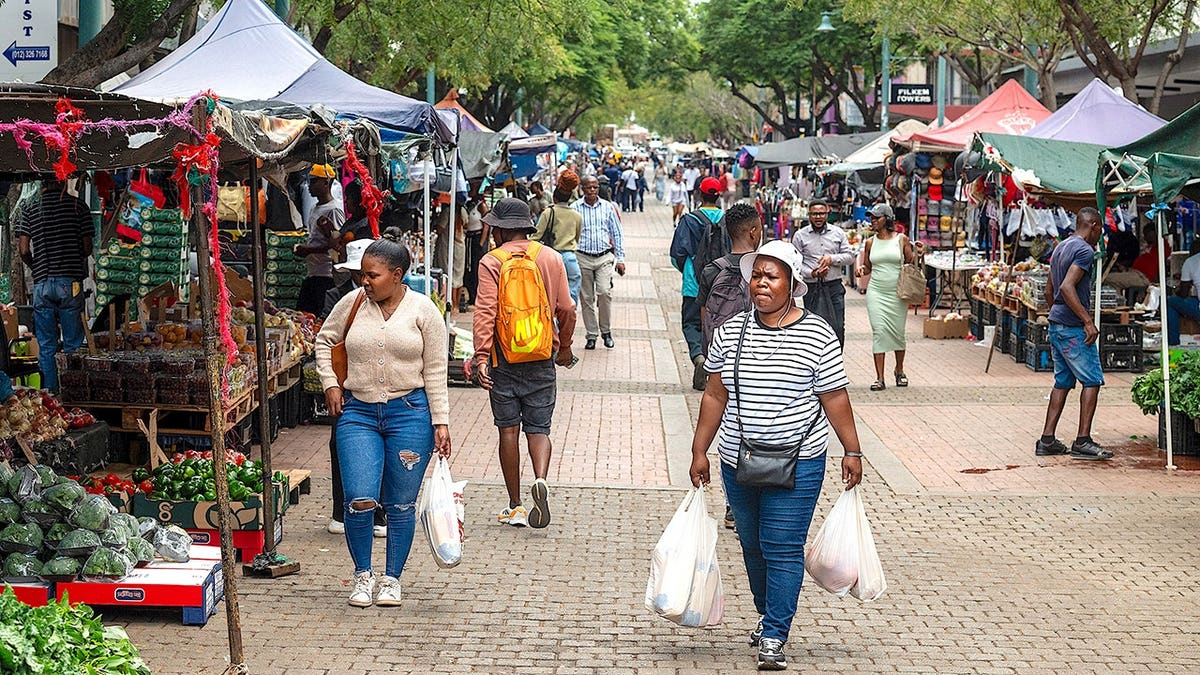
South African shoppers in Pretoria’s Central Business District. (Leon Sadiki/Bloomberg via Getty Images)
Elon Musk and his Starlink satellite internet company are one of many U.S. companies which want to enter South Africa. But in the telecommunications and mining fields, the government insists that 30% of foreign company ownership must be given to black local entrepreneurs.
Bozell says this is problematical for the U.S. «There are literally billions of dollars from American firms and American government investments ready to go into mining, but it’s not going to go there so long as you have these race-based avenues they must go through. In telecom, Elon Musk has said he will put Starlink in 500 schools and pay for it in perpetuity if he’s allowed to go this way. And they said, «No, we want 30% of your company. So yeah, of course it’s hurting.»
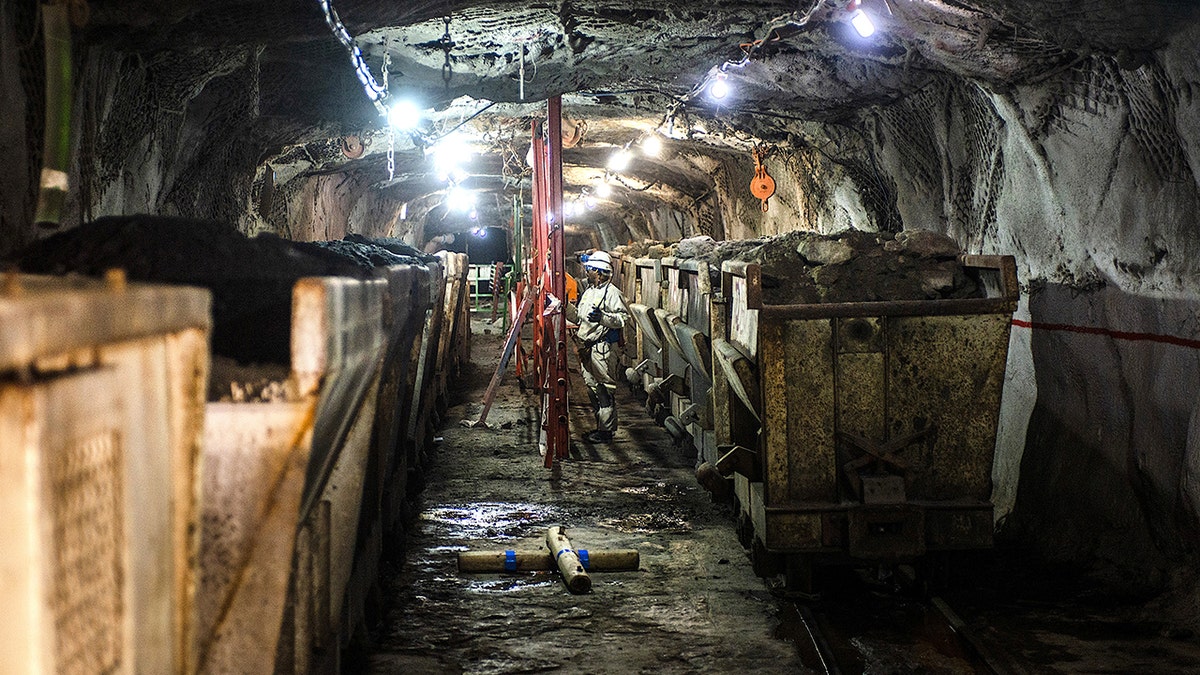
Mined platinum rich rock sits inside a freight wagon in the mine shaft during a media tour of the Sibanye-Stillwater Khuseleka platinum mine, operated by Sibanye Gold Ltd., outside Rustenburg, South Africa on Wednesday, Oct. 16 2019. Sibanye said its on track to resume paying dividends next year, should the company settle a wage dispute with platinum-mine workers without too much disruption. (Waldo Swiegers/Bloomberg via Getty Images)
On Friday, a senior official at South Africa’s Department of International Relations – the country’s foreign ministry – confirmed to Fox News Digital that they demarched Ambassador Bozell for a third time, adding, «This is a record. He was called in to explain his undiplomatic conduct. The issues related to the bilateral relations between the two countries are a subject of ongoing discussions. There is commitment from both sides to resolve the outstanding matters. South Africa values the relationship with the USA. It is a mutually beneficial partnership».
Also, Friday, a State Department spokesperson told Fox News Digital, «We are not interested in diplomatic maneuvering, procedural delays, or dialogue for dialogue’s sake. The ball is now squarely in the Government of South Africa’s court to outline the relationship it wants with the United States and respond accordingly to President Trump’s executive order.»
Still, Bozell looks to the future of the U.S. – South Africa relationship with guarded optimism. «Look, temperatures can go up, but I want their temperature to go down too. You know, we want this partnership. We want to figure this out. It’s good for South Africa. It’s good for the United States of America. Temperatures need to go down, and we got to figure it out.»
south africa, africa, state department, donald trump, national security







INTERNACIONAL
Debate presidencial entre Lula y Bolsonaro en Brasil, EN VIVO: los momentos más destacados
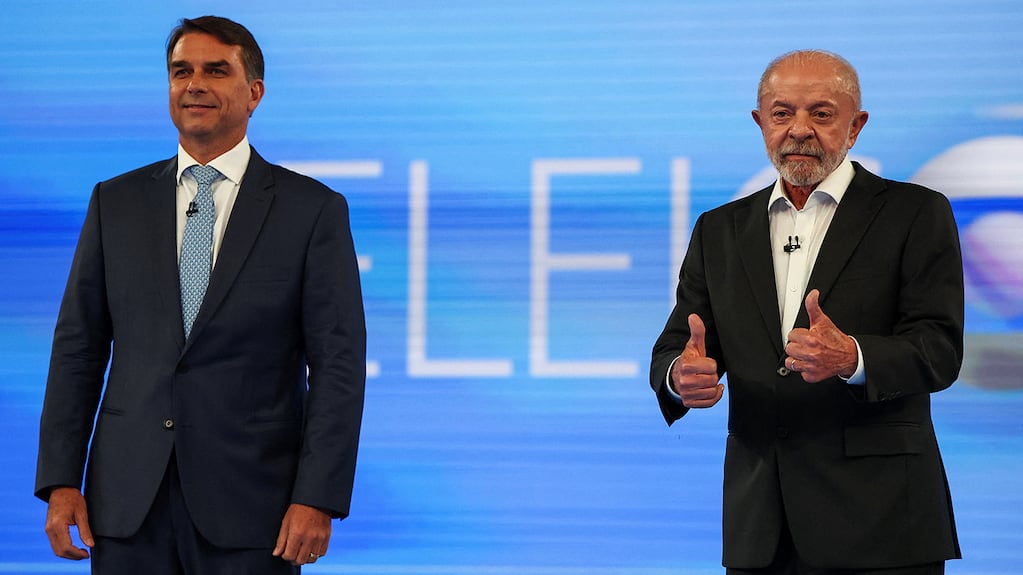
- Lula da Silva y Flávio Bolsonaro se enfrentaron este viernes en el último debate televisivo antes del balotaje del domingo en Brasil.
- Flávio Bolsonaro aseguró que hay 100.500 obras de infraestructura paralizadas en el país.
- Lula cruzó a Bolsonaro con críticas a Milei: «En la Argentina, hay gente que come carne de burro y vos querés un modelo igual».
- Flávio Bolsonaro comparó a Lula con Cristina Kirchner y cuestionó sus políticas monetarias.
- Lula acusó a Flávio Bolsonaro de «lamer las botas» de Donald Trump y lo vinculó con los aranceles del 25% que Estados Unidos impuso a las importaciones brasileñas.
Seguí en vivo la cobertura por TN y mirá las noticias más destacadas minuto a minuto:
El contundente posteo de Lula luego de que Flávio Bolsonaro lo llamara «nueve dedos» en el debate presidencial
Lula publicó una foto con una mano de cuatro dedos tras el cruce con Flávio Bolsonaro en el debate presidencial. (Foto: X / @LulaOficial)
Tras el debate, Flávio Bolsonaro apuntó contra Lula en las redes sociales

El posteo de Flávio Bolsonaro tras el debate presidencial con Lula da Silva. (Foto: X / @FlavioBolsonaro)
Terminó el segundo y último debate presidencial de Lula y Flávio Bolsonaro antes del balotaje en Brasil
Flávio Bolsonaro propuso bajar a 14 años la edad de imputabilidad para violadores

Flávio Bolsonaro en el debate en Río de Janeiro este viernes. (Foto: REUTERS/Agustin Marcarian)
“Nueve dedos”: el apodo de Flávio Bolsonaro que desató la furia de Lula
Flávio Bolsonaro comparó a Lula con Cristina Kirchner y cuestionó sus políticas monetarias
Bolsonaro: “Los pobres son los que más sufren la inflación”
Lula y Flávio Bolsonaro discutieron por los aranceles de Trump y las tasas de interés

Un grupo de personas observó el debate televisado entre Lula da Silva y Flávio Bolsonaro antes de la segunda vuelta electoral, en un bar de Río de Janeiro este 23 de octubre de 2026. (Foto: REUTERS/Pilar Olivares)
Lula afirmó que Bolsonaro «no conoce Brasil» y no comprende sus necesidades
Lula cruzó a Bolsonaro con críticas a Milei: “En la Argentina, la gente come carne de burro y vos querés un modelo igual”

El senador Flávio Bolsonaro, del Partido Liberal (PL), y el presidente Luiz Inácio Lula da Silva, del Partido de los Trabajadores (PT), en el debate televisado previo a la segunda vuelta de las elecciones presidenciales en Río de Janeiro, Brasil, el 23 de octubre de 2026. (Foto: Reuters / Agustín Marcarian).
Leé la nota completa
Lula le preguntó a Flávio Bolsonaro si sabía cuál era el salario mínimo en San Pablo y el senador lo acusó de endeudar a Brasil
Flávio Bolsonaro aseguró que hay 100.500 proyectos de infraestructura paralizados en Brasil
Empezó el último debate presidencial de Lula da Silva y Flávio Bolsonaro antes del balotaje en Brasil

El senador Flávio Bolsonaro, del Partido Liberal (PL), y el presidente Luiz Inácio Lula da Silva, del Partido de los Trabajadores (PT), en el debate televisado previo a la segunda vuelta de las elecciones presidenciales en Río de Janeiro, Brasil, el 23 de octubre de 2026. (Foto: Agustín Marcarian/REUTERS)
Cuatro bloques y límites para desplazarse por el estudio: así será el último debate entre Lula y Flávio Bolsonaro antes del balotaje
Brasil movilizará a 25.000 militares para reforzar la seguridad en el balotaje presidencial

Imagen de archivo: un soldado brasileño sobre un vehículo militar durante un ejercicio de demostración en Río de Janeiro en julio de 2025. (Foto: Tita Barros/REUTERS)
“Lula, ladrón, tu lugar es la prisión”: el cántico de los votantes de Bolsonaro antes del debate presidencial

Carolina Amoroso habló con votantes de Bolsonaro antes del debate presidencial. (Video: TN)
Lula da Silva y Flávio Bolsonaro se preparan para el último debate antes del balotaje en Brasil
Imagen de archivo del primer debate entre los candidatos presidenciales brasileños Luiz Inácio Lula da Silva y Flávio Bolsonaro en San Pablo el 18 de octubre de 2026. (Foto: Jean Carniel/REUTERS)
“Brasil está muy dividido”: qué opinan los vecinos de la favela más grande de San Pablo a dos días del balotaje

«Brasil está muy dividido y esto hace que muchas personas tengan dudas sobre lo que va a pasar», señaló el dueño de una peluquería en Heliópolis. (Video: TN).
Leé la nota completa
Brasil, Flavio Bolsonaro, Lula Da Silva
INTERNACIONAL
From arrests to crackdowns, how Europe’s leaders are responding as protests rock the continent
NEWYou can now listen to Fox News articles!
From mass arrests in France to troop deployments in Italy, European leaders are taking varied approaches to protests and clashes across the continent. The unrest began in France in mid-September with student demonstrations over school conditions, then spread to other countries, where protests have centered on local grievances.
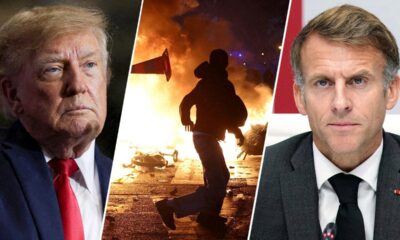
President Donald Trump has used the unrest to press his hard-line immigration message, blaming France’s protests on immigration and urging the country to close its borders.
PHOTOS SHOW AFTERMATH OF RIOTS AS MASKED GROUPS CLASH WITH POLICE ACROSS FRANCE
French President Emmanuel Macron pushed back, calling foreign leaders’ comments «unacceptable and even stupid» and accusing them of exploiting France’s crisis for political gain.
Here’s how leaders across Europe are responding.
France vows to make rioters pay as cities assess damage
Demonstrators occupy the sculptures and ledges of the Monument a la Republique in Paris, France, on October 17, 2026. (Aruallan / Hans Lucas /AFP/Getty Images)
Macron has vowed that those who loot or destroy property will be held accountable and made to pay for the damage. French authorities deployed 70,000 police officers nationwide Saturday as demonstrations took place in Paris and other cities.
Some clashes broke out in several cities, including Paris, Lyon, Lille, Toulouse and Nantes. Police used tear gas, sound grenades and water cannons, and the Interior Ministry reported more than 1,300 arrests.
VIOLENCE ERUPTS AT FRANCE PROTESTS AS MACRON WARNS UNREST IS BEING EXPLOITED
Most union-organized marches were peaceful, though clashes broke out later in Paris and several other cities. Separately, a French intelligence assessment reportedly identified Antifa and other far-left groups as instigators of some of the violence, according to a French outlet.
Italy takes one of Europe’s toughest lines
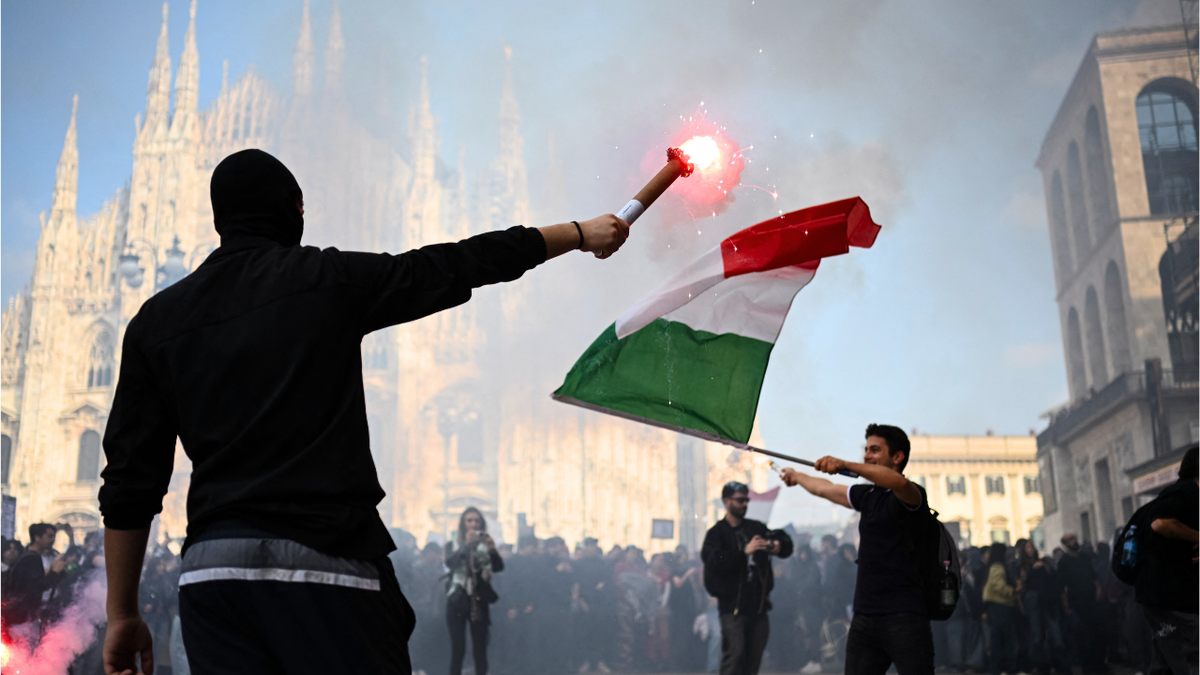
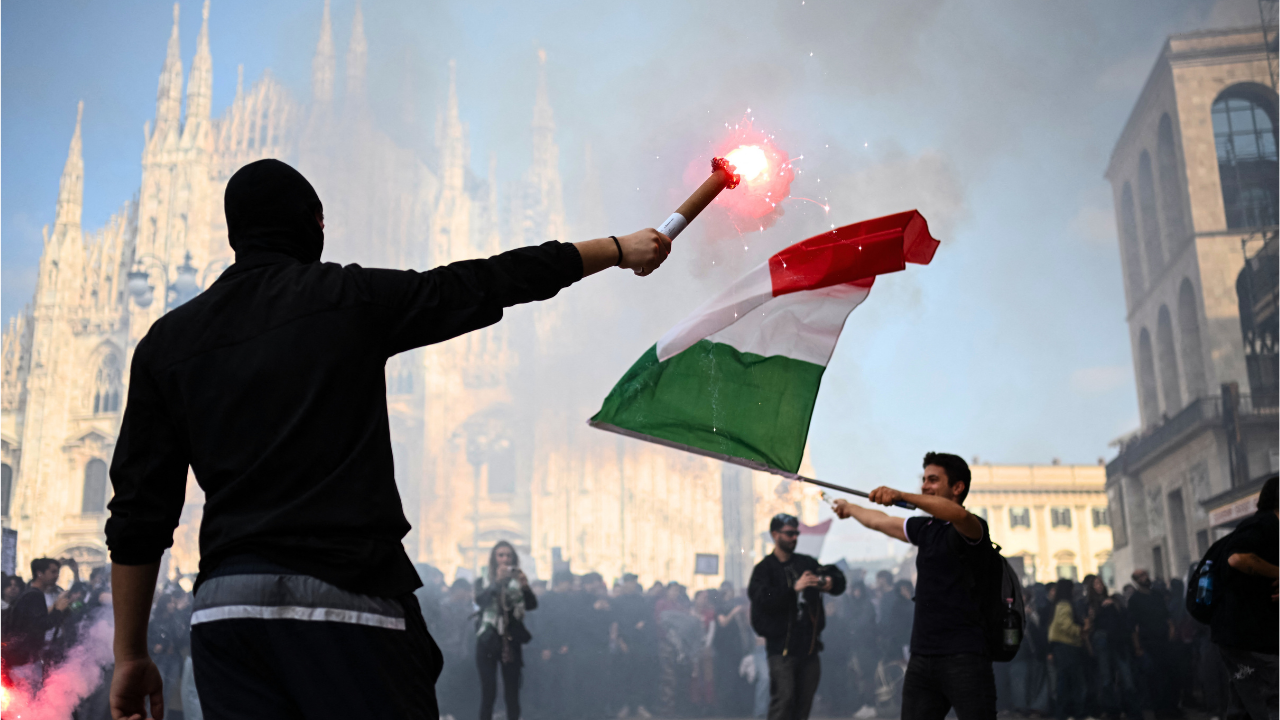
Demonstrators light flares during an anti-government protest organized by the Italia in Piazza movement, at Piazza Duomo in Milan, on October 17, 2026. (Piero Cruciatti/AFP/Getty Images)
Prime Minister Giorgia Meloni condemned what she called «gangs of thugs» who used demonstrations to «sow chaos,» and voiced support for police facing violence in several Italian cities.
Meloni moved quickly after the previous weekend’s looting and clashes, sending 500 additional soldiers to Milan and approving tougher penalties for minors involved in vandalism. She said destroying and stealing was a crime and that the state’s response would be firm.
The measures put Meloni among the European leaders taking the most visible steps to deter further violence.
Greek police maintain a visible presence
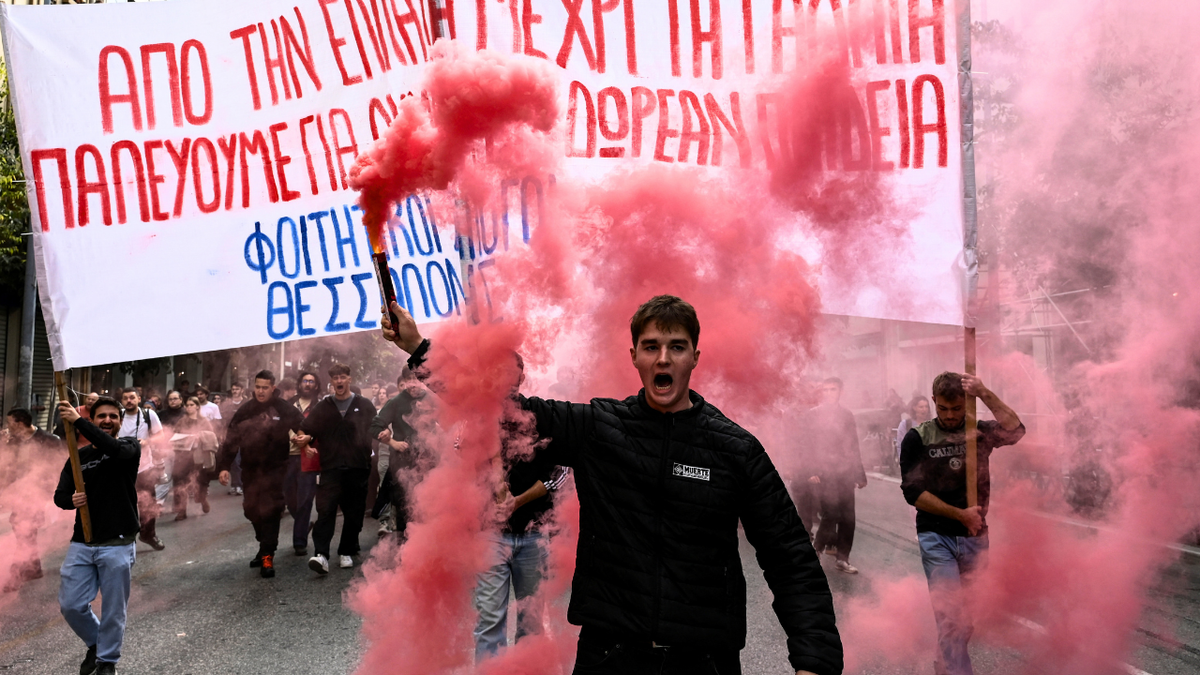
A protester holds a lit flare and shouts slogans as students, teachers and civil servants take part in a rally to protest against the high cost of living, saying they face the same problems that sparked violent demonstrations in France at the weekend, in Greece on October 21, 2026. (Sakis Mitrolidis/AFP/Getty Images)
While Greece has seen less unrest than France and other European countries, officials have been monitoring the risk of clashes as student and teacher demonstrations spread.
Government spokesperson Pavlos Marinakis said the right to protest must be respected as long as demonstrations remain lawful, while condemning violence, looting and occupations.
Police still kept a visible presence at demonstrations earlier in the week, which largely passed without major violence.
Belgium accuses Antifa-linked activists of stoking clashes
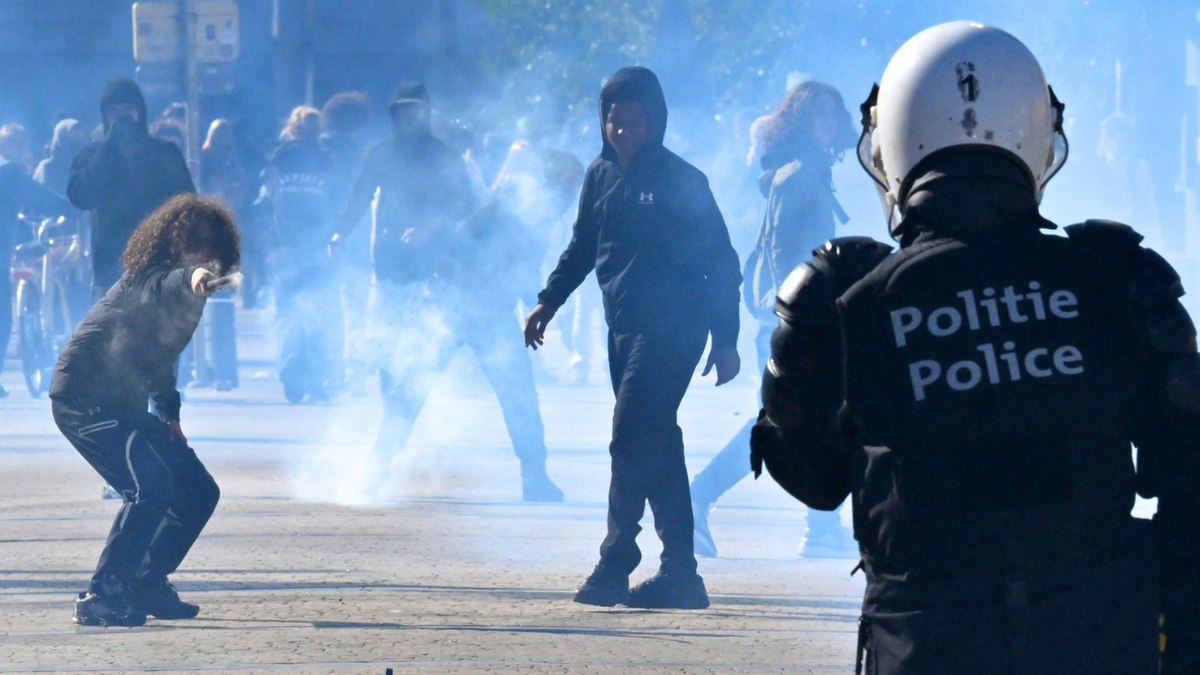
A Belgian police officer faces young protesters during clashes near Brussels-South railway station on October 12, 2026. (Nicolas Tucat/AFP/Getty Images)
Belgium’s demonstrations began over education reforms and budget cuts, with young protesters taking to the streets in Brussels and Liège. Earlier clashes injured police, damaged public areas and blocked roads. Nearly 200 people were arrested, according to Belgian officials.
Interior Minister Bernard Quintin accused far-left activists, including people linked to Antifa, of infiltrating demonstrations and encouraging young people to commit violence.
Albania clashes escalate as protesters demand prime minister’s ouster
In Albania’s capital, Tirana, student-led protests have grown into a broader challenge to Prime Minister Edi Rama, with demonstrators demanding his resignation and accusing his government of corruption and neglecting schools and public services.
US LAWMAKERS SOUND ALARM AS VIOLENCE GRIPS NATO ALLY ALBANIA AMID ANTI-GOVERNMENT PROTESTS
Police used tear gas and water cannons as more than 2,500 officers were deployed. Rama placed chairs outside his government headquarters and invited protesters to talk, but they rejected the gesture.
He said his government would address their concerns and warned that people responsible for violence could face criminal and financial consequences.
Spanish regional leaders vow consequences after Barcelona riots
In Spain, the unrest was largely concentrated in Barcelona, unlike France, where protests and clashes spread across multiple cities.
Police arrested 128 people in Barcelona after fires, vandalism and looting. Catalonia, the northeastern Spanish region that includes Barcelona, saw its regional president, Salvador Illa, condemn the violence and back the police response.
CLICK HERE TO GET THE APP
Meanwhile, Barcelona Mayor Jaume Collboni said the city would take legal action against those responsible and warned that parents or guardians could face consequences for damage caused by their children.
europe, politics, france, world, emmanuel macron, world protests
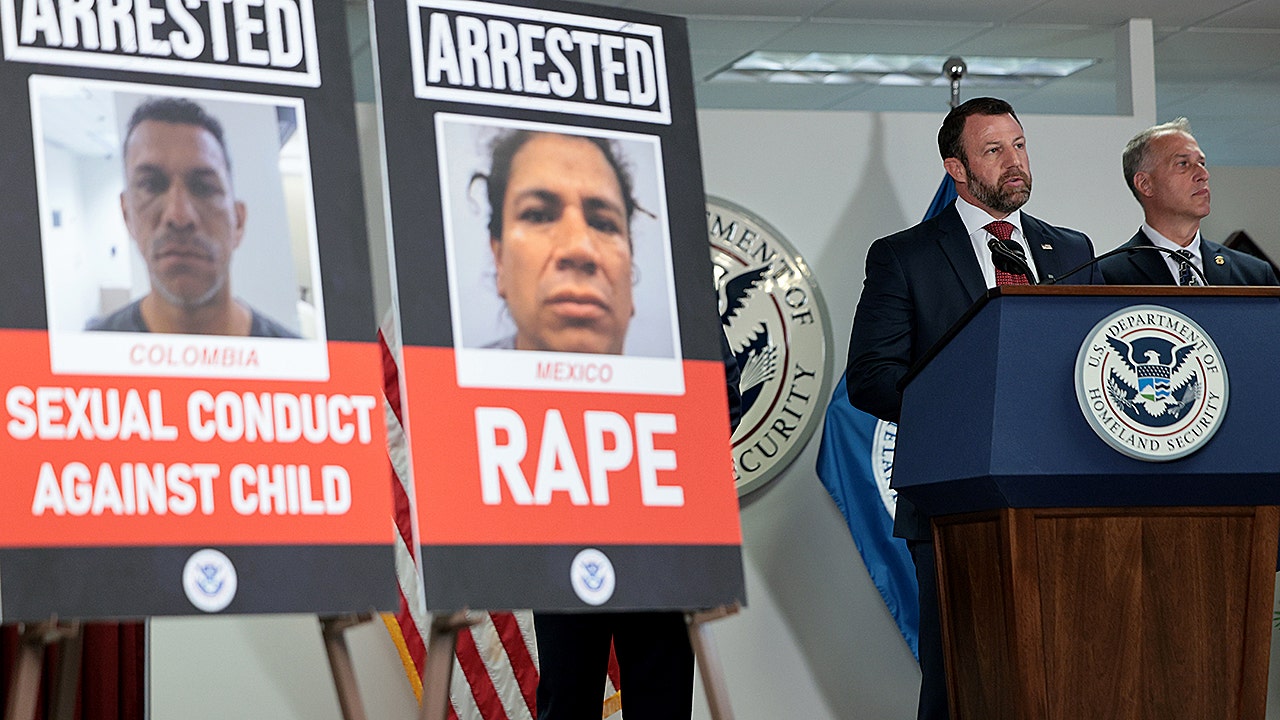
The Trump administration scored a major full-panel victory at the Fifth Circuit Court of Appeals Friday, which ruled that detained illegal immigrants who were never formally admitted into the U. S. are not constitutionally entitled to bond hearings while awaiting deportation.
The ruling comes as the Supreme Court prepares to hear Rhoney v. Barbosa da Cunha this term, a closely related fight over whether the federal mandatory-detention statute applies at all to longtime immigrants arrested inside the country — setting up the possibility that the justices could either undercut Friday’s ruling or strengthen the government’s hand.
The Fifth Circuit answered the constitutional question in Ignacio Sosnava Rodriguez v. Sylvester M. Ortega, finding that three immigrant men detained under the mandatory-detention statute are not entitled to bond hearings under the Due Process Clause of the Fifth Amendment. The court held that their years or even decades of residence in the United States, along with ties to the country and their communities, do not create a constitutional right to a bond hearing.
«The Constitution does not entitle them to a bond hearing,» the court wrote.
FEDERAL APPEALS COURT COMPARES TRUMP MIGRANT DETENTION POLICY TO JAPANESE AMERICAN INTERNMENT
Meanwhile, the Supreme Court will consider Rhoney, a case out of the Second Circuit, to determine whether the mandatory-detention law applies to longtime immigrants arrested inside the country in the first place.
At the center of the issue is a 9-2 circuit split over which federal detention law applies to immigrants who entered the country illegally, were never formally admitted and were later arrested by immigration authorities after living in the U.S. for years — sometimes decades after crossing the border.
The Fifth and Eighth Circuits have held that those immigrants remain «applicants for admission» under Section 1225 of the Immigration and Nationality Act, subjecting them to mandatory detention without an ordinary bond hearing while their removal proceedings play out. Nine other federal appeals courts have ruled that Section 1226 applies instead, which provides a path for them to seek release on bond.
The Supreme Court will essentially decide whether immigrants who entered illegally and have lived in the U.S. for years can be subjected to the same mandatory-detention provision that applies to certain immigrants seeking admission into the country.
If the Supreme Court sides with the Second Circuit, Barbosa da Cunha — a Brazilian national who entered the country illegally roughly two decades ago and was detained in 2025 — would have a path to seek release on bond. Such a ruling would likely apply to the three longtime immigrants at the center of Rodriguez as well, substantially undercutting the significance of Friday’s ruling by eliminating the need to answer the constitutional question of whether due process requires a bond hearing.
SUPREME COURT TAKES UP FIGHT OVER TRUMP’S THIRD-COUNTRY ILLEGAL ALIEN DEPORTATION POLICY
Judge Leslie Southwick pointed directly to the looming Supreme Court fight in her dissent.
Should the Supreme Court eventually determine that this court was wrong as to the statute, then the constitutional issue we address here will have far less significance. It certainly has significance at the moment,» Southwick wrote.
But conservative legal experts say Rodriguez could also strengthen the administration’s hand in Rhoney by undercutting one argument against the government’s interpretation of Section 1225: that applying the mandatory-detention provision to longtime residents would raise serious constitutional concerns.
Michael Morley, a constitutional law professor at Florida State University, said Friday’s ruling could influence how the justices approach that question because courts often consider whether a particular reading of federal law would create constitutional problems.
FEDERAL APPEALS COURT DEALS BLOW TO TRUMP DEPORTATION AGENDA
«The Fifth Circuit’s en banc ruling in Rodriguez today takes the next step by holding that such detention would not violate the U.S. Constitution’s Due Process Clause,» Morley said. «This holding may impact the Supreme Court’s reasoning, because an important consideration in disputes over federal laws is whether a particular interpretation would be unconstitutional.»
«If the Court agrees with the Fifth Circuit’s analysis that the Due Process Clause allows such detention, it may be more likely to conclude that federal law permits it, as well, Morley continued.
Hans von Spakovsky, a senior legal fellow at Advancing American Freedom, argued that the decision could bolster the administration as the justices prepare to resolve the circuit split.
«I actually think this ruling will help the government in the Rhoney case,» von Spakovsky said, pointing to the Fifth Circuit’s position that the applicable immigration statute does not require bond hearings for immigrants who were never admitted to the United States.
SIGN UP TO GET THE POLITICS NEWSLETTER
«There was already a split in the circuit courts on this issue but the Fifth Circuit has consistently held that the applicable immigration statute does not require bond hearings for aliens who were never admitted to the United States,» he said. «I will be surprised if a majority of the Supreme Court disagrees when they ultimately issue a decision in the Rhoney case.»
The Supreme Court has not yet scheduled oral arguments in Rhoney, which it agreed to hear earlier this month.
federal courts, supreme court, immigrant rights, deportation, illegal immigrants, law, constitution, appeals

Aldosivi enfrenta a Belgrano con la obligación de sumar para lograr la permanencia en Primera División

Alerta en la Justicia Electoral por la posibilidad de que PBA y CABA voten el mismo día con distintos sistemas

Debate presidencial entre Lula y Bolsonaro en Brasil, EN VIVO: los momentos más destacados

Desde diciembre de 2023, el boleto mínimo de colectivo en la provincia de Buenos Aires aumentó seis veces más que la inflación

Juana Viale destrozó a Julieta Prandi por su separación de Emanuel Ortega y habló del verdadero motivo de su ruptura: “No me jodas, no me digas que se desgastó la relación”

Carlos Jornet, nuevo presidente de la SIP: “Si no apoyamos al periodismo, la próxima consecuencia será un acelerado deterioro democrático e institucional”

Javier Milei y sus medidas, en vivo: el mandatario dijo que piensa un proyecto a “100 años” para la Argentina

Escándalo con Sancor Salud: Cuotas millonarias por un servicio nefasto que abandona a los pacientes en urgencias

Tensión por discapacidad: la Iglesia advierte sobre el dictamen del oficialismo y reclama la prórroga de la ley de emergencia

Míchel y Jordi Cruyff ‘acogen’ a un campeón de la Premier: ‘Estoy verdaderamente agradecido’

 POLITICA3 días ago
Javier Milei y sus medidas, en vivo: el mandatario dijo que piensa un proyecto a “100 años” para la Argentina
- SOCIEDAD2 días ago
Escándalo con Sancor Salud: Cuotas millonarias por un servicio nefasto que abandona a los pacientes en urgencias
- INTERNACIONAL3 días ago
“Cualquier negociación sólo puede ocurrir después de liberar a los presos políticos”: la petición de 140 expresos cubanos al régimen