INTERNACIONAL
Brazil becomes next test for Latin America’s surging conservative movement

NEWYou can now listen to Fox News articles!
Brazil’s estimated 158 million voters could advance Latin America’s conservative wave in Sunday’s election as the continent’s most populous nation could elect conservative Sen. Flavio Bolsonaro as its next president.
The first round election three weeks ago saw a strong performance by Bolsonaro, proving the polls wrong. While incumbent President Luiz Inacio Lula da Silva (Lula) had been predicted to take the first round by single digits, Bolsonaro ended up winning 47% to Lula’s 45%. As neither candidate won a majority, the election went to a second round.
Brazil’s election follows a long string of victories for the Latin American right across Central and South America that started with the election of Libertarian outsider Javier Milei in Argentina in 2023.
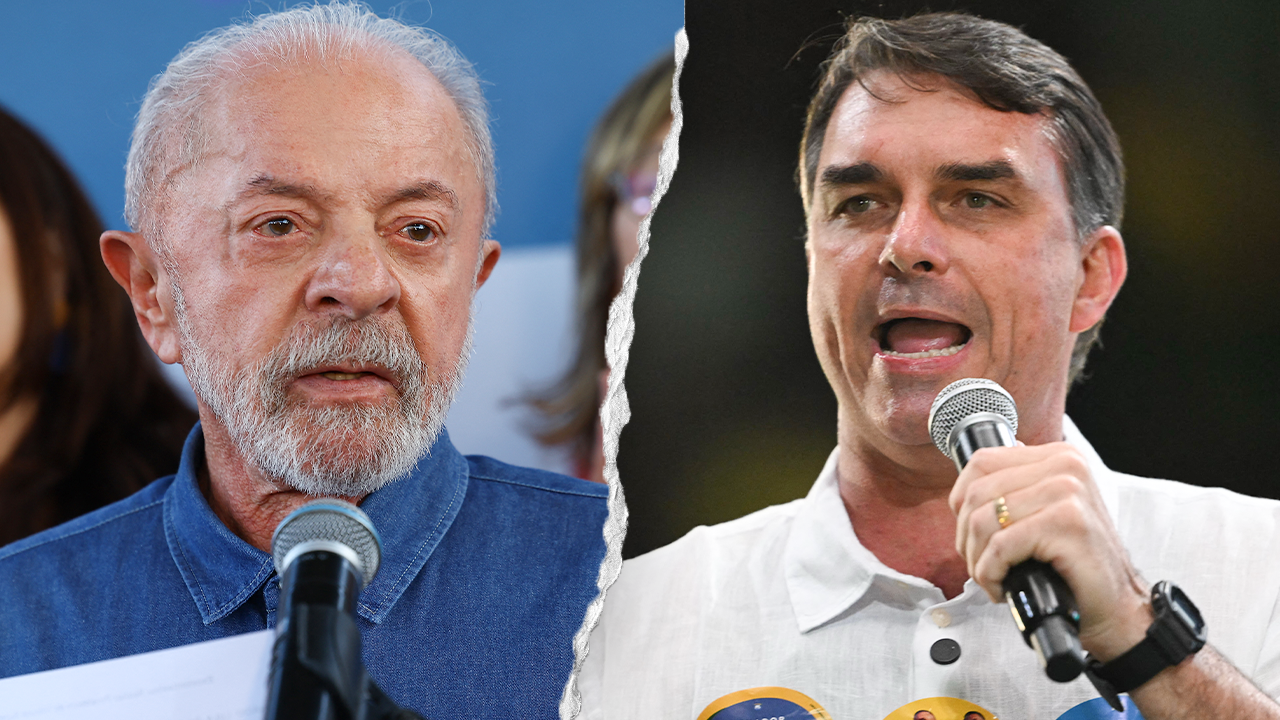
Brazilian President Luiz Inácio Lula da Silva, left, and Sen. Flávio Bolsonaro, right, face off in a presidential election runoff. (Getty Images)
BOLSONARO WINS FIRST ROUND OF BRAZILIAN PRESIDENTIAL ELECTION, AS TRUMP-BACKED CANDIDATES CONTINUE RED WAVE
2025 saw a right-wing sweep across the region, as Ecuador, Bolivia, Honduras and Chile all voted for conservative heads of state.
In 2026, Keiko Fujimori narrowly defeated a left-wing candidate to win the Peruvian presidency, while most recently, in Colombia, conservative attorney Abelardo de la Espriella bested left-wing Senator Ivan Cepeda.
Bolsonaro’s slate of congressional candidates also fared well, ensuring that Brazil will have one of the most conservative congresses in years, and a legislative branch aligned with Bolsonaro’s goals, or ready to thwart Lula’s agenda.
The two candidates met Friday night for the final debate in Rio de Janeiro, which featured a series of questions organized around Brazil’s five geographic regions. While the debate featured some heated personal exchanges, it appears unlikely to have moved the needle in either direction heading into a close race.
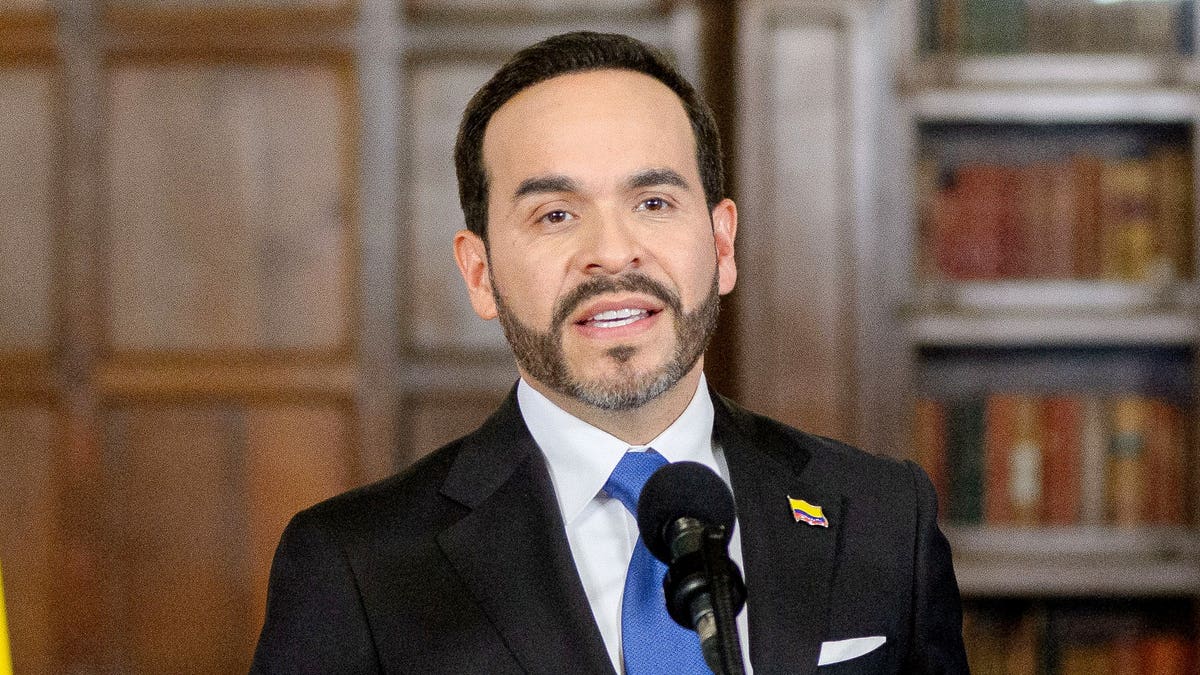
Colombian President Abelardo De la Espriella holds a press conference with the mayor of Bogota and newly appointed city manager Clara Lucia Sandoval in Bogota, on Aug. 25, 2026. (Sebastian Barros/NurPhoto via Getty Images)
TRUMP’S WAR ON DRUG CARTELS COULD GAIN POWERFUL NEW ALLY AFTER PIVOTAL ELECTION
President Donald Trump has heralded these electoral results as vindication for his hardline approach to security, crime, and migration policies, as well as a stamp of approval for the new Shield of the Americas initiative.
The Trump administration counts on considerably more close allies now than it did at the beginning of Trump’s second term.
Yet, the question remains: why is the region resoundingly rejecting the left and progressivism?
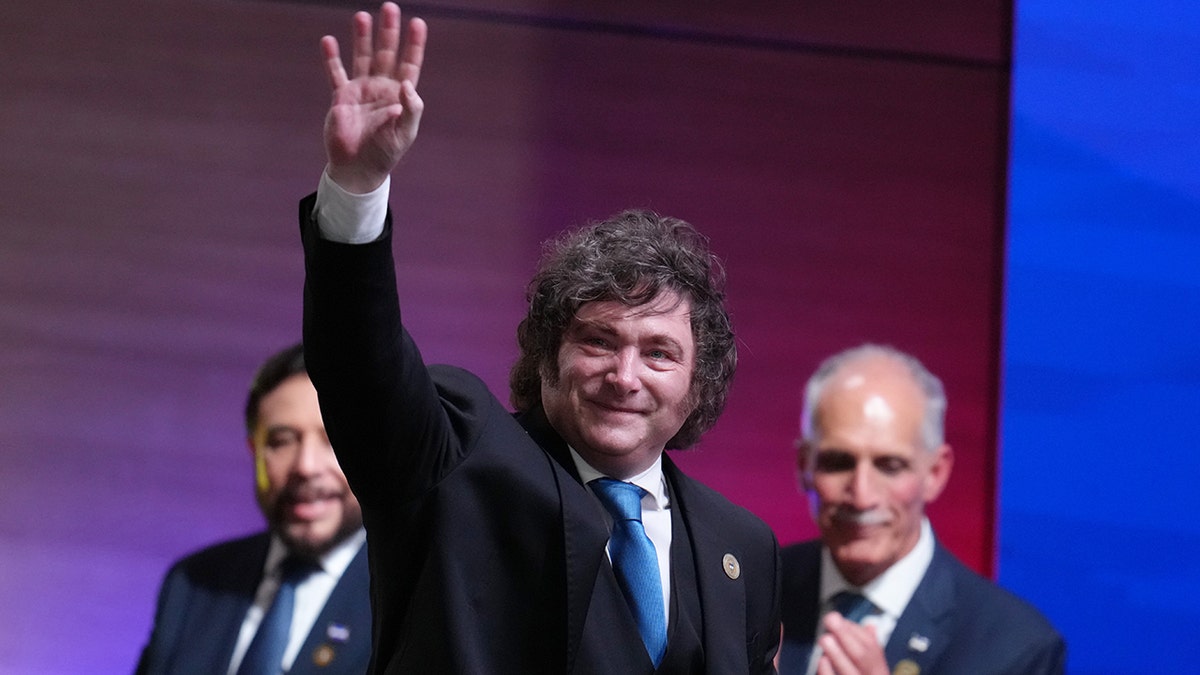
Argentina’s President Javier Milei arrives for the inauguration of Colombia’s President Abelardo de la Espriella in Cali, Colombia, Friday, Aug. 7, 2026. (Matias Delacroix/AP Photo)
Many of the elections have been won by narrow margins, with Brazil being a case in point: Lula bested Jair Bolsonaro in 2022 by just 1.8%. While many Latin American nations remain deeply polarized, there is no denying a right-wing resurgence.
Commentators appear to be expressing a rejection of progressive movements amid growing concerns over safety and security, giving approval to proposals to dramatically ramp up police and military presence to combat crime and drug trafficking.
Meanwhile, leftist parties seem unable to capitalize on recurring concerns over inflation and kitchen table economics, which have played into the hands of the Latin American right, as working class and middle class voters have felt the pinch of rising food, housing and energy costs.
In addition to social and economic concerns, the specter of Jair Bolsonaro also looms over the election. Flavio Bolsonaro has pledged to free his father, who is currently serving a 27-year sentence on house arrest for allegedly plotting a coup in the wake of the 2022 election.
Lula was also sentenced to a 12-year prison sentence on corruption charges stemming from the infamous Operation Car Wash, until he was freed on a technicality by the Brazilian Supreme Court, and rose from the ashes to win the 2022 presidential election.

Brazil’s right-wing senator and presidential candidate Flavio Bolsonaro of the Liberal Party (PL) gestures next to federal deputy and candidate for governor of Rio de Janeiro, Douglas Ruas (L) during a campaign rally on the eve of the general election, in Campo Grande neighborhood, in the western zone of Rio de Janeiro, Brazil on October 3, 2026. Brazilians go to the polls on Oct.r 4, 2026 (Douglas SHINEIDR / AFP via Getty Images)
BRAZIL’S RAPID ELECTION COUNT PUTS SPOTLIGHT ON VOTING SECURITY AHEAD OF US MIDTERMS
Bolsonaro has narrowly led in recent polls, and enters the second round with some structural advantages. Most importantly, he enjoys the backing of three of the four other major candidates in the race, who failed to advance to the second round.
Self-help author Augusto Cury, former Goias Governor Ronaldo Caiado, and former Minas Gerais Governor Romeu Zema all officially backed Bolsonaro in the second round.
Entrepreneur Renan Santos, candidate for the Mission Party, declined to endorse either candidate. However, as his political movement is characterized as free-market and libertarian, these voters are also more likely to trend to Bolsonaro.
Thus, Lula needs to win a significant majority of first round voters who backed right-wing or center-right candidates. It’s a daunting, but not impossible, proposition.
The entire election may hinge on voters who are voting against a candidate, as much as for a candidate.
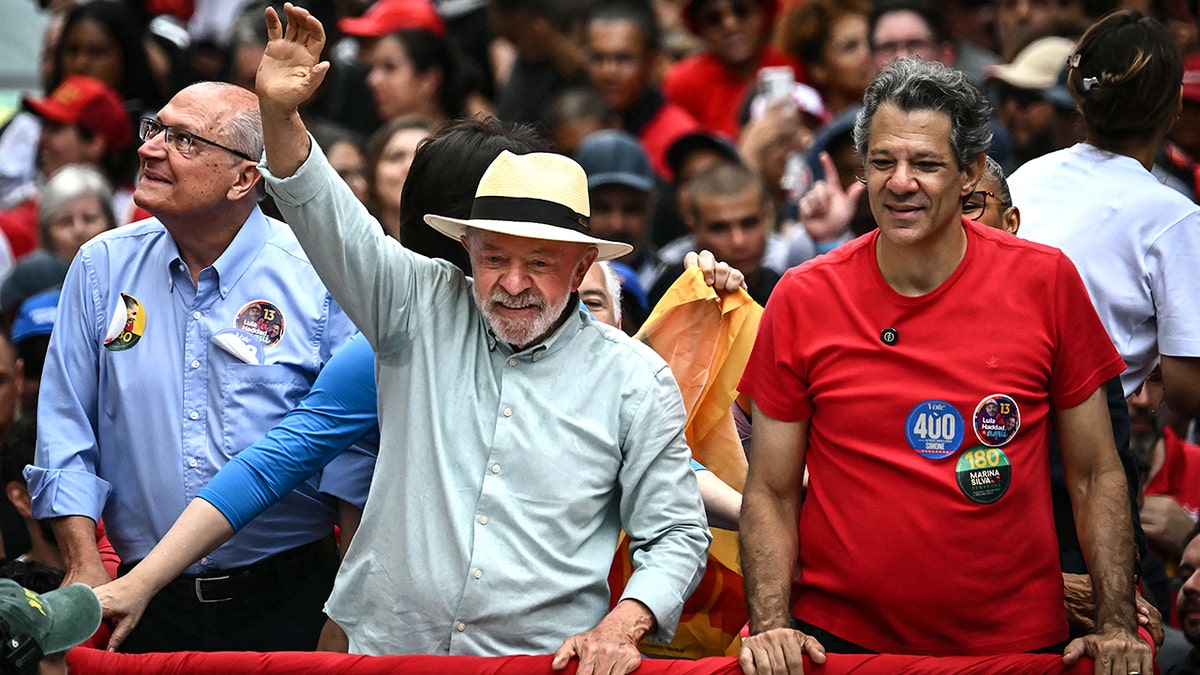
Brazil’s President and presidential candidate Luiz Inacio Lula da Silva (C) waves next to Vice-President Geraldo Alckmin (L) and to his candidate for Sao Paulo’s governor, Fernando Haddad during a campaign rally on the eve of the general election, in Sao Paulo, Brazil on October 3, 2026. Brazilians go to the polls on October 4, 2026, in a tight race led by leftist President Luiz Inacio Lula da Silva and right-wing senator Flavio Bolsonaro, son of former president Jair Bolsonaro, who is serving house arrest. (Luis Robayo/AFP Via Getty Images)
Another question looming over the election: has Lula finally worn out his welcome with the Brazilian electorate?
This will be Lula’s seventh time in 40 years appearing on a presidential ballot: he lost elections in 1989, 1994, 1998, won in 2002, 2006, and 2022.
Lula famously promised to serve only one term when he ran to oust Jair Bolsonaro in 2022.
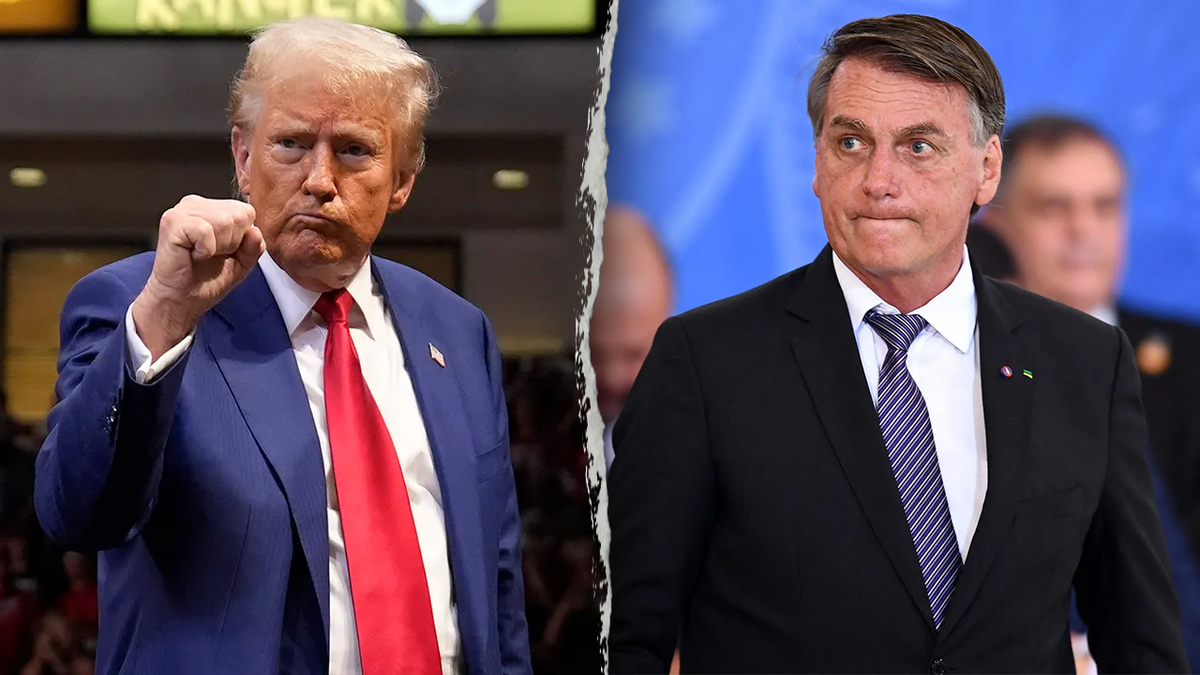
President Trump sent a letter to former Brazilian President Jair Bolsonaro calling for an immediate end to the ‘unjust’ trial against him for allegedly starting a coup. (AP Photo/Evan Vucci and Evaristo Sa/AFP via Getty Images)
On October 25, 2022, just five days before the last second round presidential election, he posted on his official X account: «If elected, I will be a single-term president.»
It was a promise that he did not keep.
Various polls have shown that voters are not happy with the course of Lula’s third term, and even a sizable percentage of Lula backers in 2022 responded with pessimism on the prospect of an unprecedented fourth term.
However, a large percentage of the Brazilian electorate also consistently rejects the prospect of voting for another Bolsonaro for president.
Lula is unquestionably the dominant figure in Brazilian politics over the past half-century. But will his magnetism and charisma be enough to overcome the right-wing resurgence sweeping the continent?
world elections, brazil, south america, donald trump, jair bolsonaro







INTERNACIONAL
Gobierno salvadoreño defiende $2,700 millones para Educación: modernizarán 2,000 escuelas y alistan uniformes para 2027

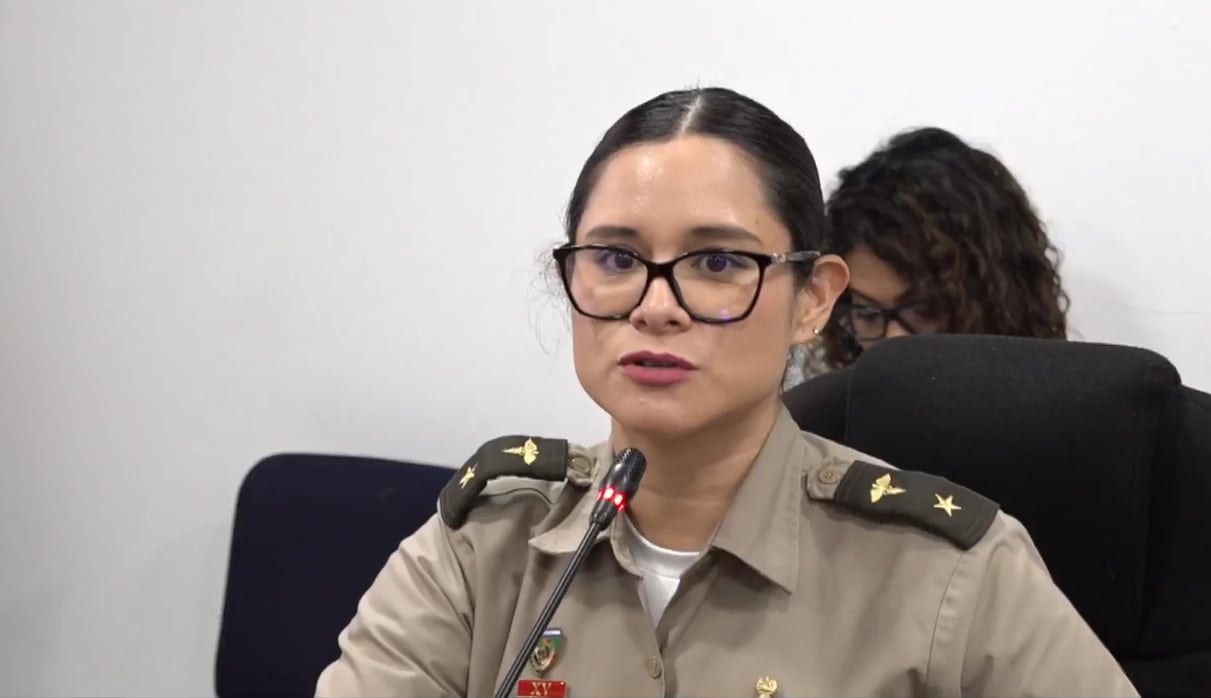
La ministra de Educación de El Salvador, Karla Trigueros, defendió ante la Comisión de Hacienda y Especial del Presupuesto de la Asamblea Legislativa una asignación de USD 2.700,2 millones para el Ministerio de Educación en 2027, un aumento del 60% frente al presupuesto presentado un año antes, según expuso durante su comparecencia.
Trigueros sostuvo que los recursos estarán orientados a infraestructura escolar, conectividad, dispositivos electrónicos, paquetes escolares, capacitación docente, primera infancia y programas de continuidad educativa para jóvenes y adultos.
La funcionaria afirmó que la inversión pública total destinada a educación alcanzará USD 3.416 millones en 2027, cifra que, de acuerdo con su presentación, equivale al 8,1% del producto interno bruto y al 27,5% del Presupuesto General de la Nación. También aseguró que será el monto más alto destinado a educación en la historia del país.
USD 679 millones para infraestructura escolar
La mayor partida anunciada por la ministra corresponde al programa gubernamental de “Dos escuelas por día”, que tendrá USD 679 millones para la renovación y construcción de centros educativos.
Trigueros indicó que más de mil escuelas ya fueron intervenidas o permanecen en obras, y señaló que la política de infraestructura busca reemplazar centros construidos con láminas o con daños estructurales, en lugar de limitarse a trabajos de pintura y reparación superficial.

El presupuesto también incluirá USD 60 millones para mantenimiento de infraestructura escolar, destinados a reparaciones de techos, sistemas eléctricos y fosas sépticas. Según la ministra, será la primera vez que esa área contará con una partida específica dentro del presupuesto de la cartera.
USD 134 millones para paquetes escolares
La funcionaria informó que el Gobierno destinará USD 134 millones a los paquetes escolares, que incluyen uniformes, zapatos, útiles, libros y materiales pedagógicos adaptados a cada nivel educativo.
La medida alcanzará a estudiantes desde educación inicial hasta bachillerato, además de personas inscritas en modalidades educativas flexibles. En esos casos, el paquete excluye uniformes y calzado, pero contempla dispositivos, libros y útiles para quienes retoman su trayectoria académica.
Trigueros señaló que el Ministerio ya inició el proceso de tallaje para la entrega de uniformes del ciclo 2027, luego del cierre del año escolar.

Inteligencia artificial y conectividad en las aulas
La ministra anunció USD 415 millones para reducir la brecha digital mediante la entrega y reposición de dispositivos electrónicos, mientras que otros USD 163,6 millones financiarán la modernización del sistema educativo y la incorporación de inteligencia artificial en las aulas.
Según detalló, los alumnos de parvularia reciben tabletas interactivas; los estudiantes de primer ciclo usan una segunda tableta, y desde cuarto grado acceden a computadoras. La titular de Educación afirmó que los equipos entregados en niveles previos permanecen en manos de los estudiantes.
También se asignarán USD 32 millones para ampliar y mantener la conectividad digital de los centros escolares. La estrategia incluye acceso a Internet, plataformas educativas, herramientas de gestión escolar y sistemas de tutoría individualizada con inteligencia artificial.
Trigueros afirmó que alrededor de 2.000 escuelas ya están incluidas en el proceso de modernización y que el objetivo oficial es extenderlo a todo el sistema educativo para 2028.
Más de 138 horas de capacitación docente en escuelas modernizadas
La formación de maestros figura entre los ejes anunciados por la ministra. La cartera aseguró que capacitó al 100% de los docentes de primera infancia en un nuevo currículo y que prepara a directores de centros educativos que atienden esos niveles.
En las escuelas incorporadas al programa de modernización, los docentes recibirán más de 138 horas de formación sobre herramientas digitales, plataformas de gestión y uso pedagógico de inteligencia artificial, según expuso Trigueros.
La funcionaria sostuvo que el plan contempla seguimiento permanente a profesores y directores, con herramientas que permiten revisar el desarrollo de clases, el avance de los contenidos y las necesidades técnicas de cada centro educativo.
Para la Universidad de El Salvador, la propuesta contempla USD 118 millones, USD 2 millones más que la asignación del año anterior, de acuerdo con la presentación.
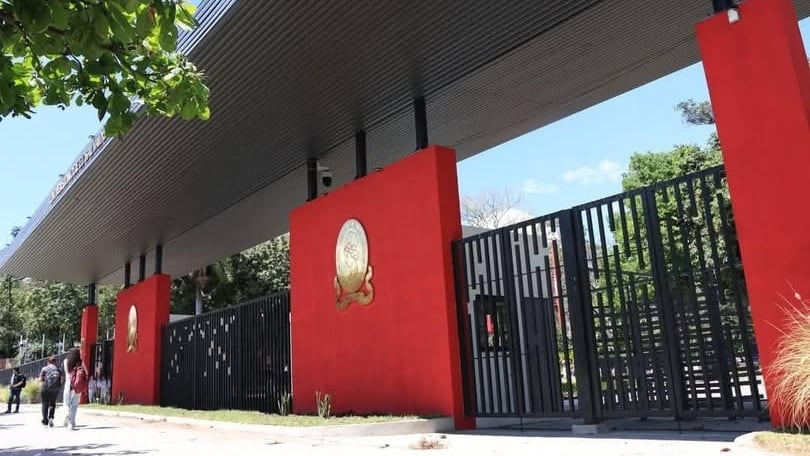
Trigueros vinculó esos recursos con los programas de becas para educación superior y con la oferta de cursos en línea, entre ellos un convenio con Platzi, plataforma de formación digital.
Mejoras en la evaluación PISA 2025 y resultados del piloto PISA for Schools
Durante la comparecencia, Trigueros afirmó que el país registró mejoras en ciencias, lectura y matemáticas en la evaluación PISA 2025 respecto de PISA 2022. Según su exposición, El Salvador aumentó 12 puntos en ciencias, dos en lectura y tres en matemáticas.
La ministra también mencionó resultados de PISA for Schools 2026 en 171 escuelas incluidas en un piloto de modernización educativa. Aseguró que esos centros obtuvieron mejoras de 128 puntos en lectura, 71 en matemáticas y 69 en ciencias, con desempeños comparables a los de Suiza y Alemania.
La funcionaria aclaró que esos datos corresponden a las escuelas participantes del piloto y no a la totalidad del sistema educativo salvadoreño.
La Comisión de Hacienda y Especial del Presupuesto deberá analizar la propuesta de asignación para el Ministerio de Educación dentro de la discusión del Presupuesto General de la Nación para 2027.
corresponsal:Desde San Salvador, El Salvador

Trump targets drug cartels in Ecuador
Dana Perino reports on former President Donald Trump’s initiative to combat drug cartels in Ecuador. The U.S. is providing military and intelligence assistance to the South American nation, which is grappling with significant drug-related violence and has become a major cocaine exporter. This joint effort reflects a broader strategy to reassert U.S. influence and target transnational criminal groups, aiming for enhanced security in the region.
NEWYou can now listen to Fox News articles!
Ecuadorian President Daniel Noboa denied that the United States operates a military base in his country after an Agence France-Presse (AFP) investigation signaled an expanded U.S. military presence at an air base near the port city of Guayaquil.
«Sometimes there’s a specific mission. Sometimes there’s a specific operation,» Noboa told the news outlet Altavoz, describing U.S. personnel at Taura Air Base as carrying out «temporary activities» under a bilateral security agreement, including intelligence-gathering drone flights.
«We work together. It’s not an American base. It’s an Ecuadoran base,» he commented.
THE UNLIKELY SOUTH AMERICAN ALLY HELPING LEAD TRUMP’S DRUG CARTEL CRACKDOWN
Ecuadorian President Daniel Noboa denied that the United States operates a military base in his country after an Agence France-Presse (AFP) investigation revealed an expanded U.S. military presence at an air base near the port city of Guayaquil. (Franklin Jacome/Agencia Press South/Getty Images)
Noboa’s remarks came about a month after AFP had documented an unusual deployment of U.S. military aircraft, dozens of tents and construction of new infrastructure at the air base.
The investigation identified approximately 20 U.S. military flights arriving at Taura between June and mid-October, along with internal documents confirming the presence of American troops.
Several flights originated from U.S. military installations, including Marine Corps Air Station Cherry Point in North Carolina and Dover Air Force Base in Delaware, with stopovers in Puerto Rico and Panama.
The buildup also raised legal concerns among senior Ecuadorian military officials.
AFP cited a September letter in which then-Air Force commander Gen. Mauricio Salazar asked military leaders to clarify the legality of the deployment. Salazar was subsequently removed from his post and reassigned to a less senior role, the report said.
The increased U.S. military presence comes after Ecuadorian voters rejected a Noboa-backed referendum in November 2025 that would have amended the country’s constitution to lift its ban on foreign military bases.
US MILITARY BOARDS, SEARCHES AND SINKS VESSEL ALLEGEDLY SUPPORTING LOS CHONEROS NARCO-TERRORISTS

U.S. and Ecuadorian forces launched joint operations Tuesday targeting suspected narco-terrorists in Ecuador, according to U.S. Southern Command. (U.S. Southern Command)
Despite the referendum’s defeat, Quito and Washington have deepened security cooperation to combat drug trafficking and transnational organized crime.
Human Rights Watch has described the United States as Ecuador’s primary security partner in its crackdown on organized crime, providing equipment, training, intelligence and direct military support.
The watchdog characterized the partnership as «perilous,» warning that «both governments have engaged in serious human rights violations fuelled by their insistence on framing their confrontations with organised crime groups as a kind of war.»
Since returning to the White House in January 2025, President Donald Trump has designated several Latin American cartels as foreign terrorist organizations and authorized military strikes against vessels in international waters suspected of drug trafficking.
WHITE HOUSE HIGHLIGHTS ‘STEEPEST’ EVER DECLINE IN US CASUALTIES FROM CARTELS AMID BOAT STRIKES

Ecuador FM Roberto Kury and Ecuadorian police forces during counterdrug mission. (Fox News Digital)
Ecuador has also emerged as a key ally in Trump’s crackdown on drug cartels and narcoterrorism, with U.S. and Ecuadorian forces working together to intercept narcotics shipments and dismantle transnational criminal networks, the country’s foreign minister told Fox News Digital in September.
Roberto Kury said closer cooperation with Washington had delivered «a lot of positive results» in recent months, citing drug shipments intercepted through U.S. intelligence and joint operations.
«There is an intelligence (sic) and cooperation from the United States, but there is also always the presence of Ecuadorian military or police. They work together,» Kury told Fox News Digital on the sidelines of the U.N. General Assembly.
«Most of the drugs go to the United States. So that’s why the United States shares the problem,» Kury said.
Secretary of State Marco Rubio has also praised Ecuador as the United States’ most «aggressive» partner in its Western Hemisphere crackdown.
Fox News Digital has reached out to Southcom for comment.
world, foreign policy, geopolitics, national security, military, us air force, south america
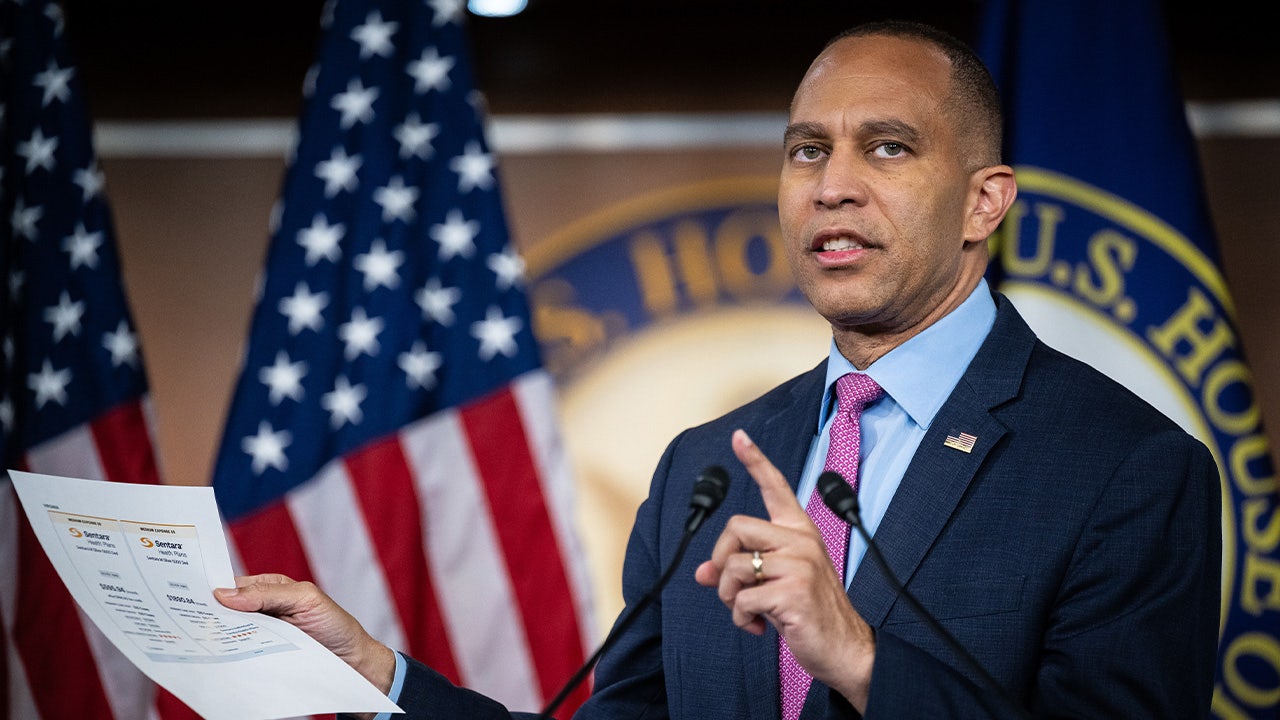
You can’t play follow the leader until you decide who you want to follow.
That’s the conundrum facing House and Senate Democrats. Not all House Democrats are on board with promoting House Minority Leader Hakeem Jeffries (D-N.Y.) to Speaker. And Sen. Chris Van Hollen (D-Md.) is challenging Senate Minority Leader Chuck Schumer (D-N.Y.) for Majority Leader.
«As of today, my position is no because that’s what my constituents and my community is saying,» said Rep.-elect Angela Gonzales-Torres (D-Calif.) when asked if she backed Jeffries, «It’s really about the process. We want a democratic process. And that’s what we’re really fighting for. It’s not about one person.»
It may not be about one person. But no one is running against Jeffries. That’s why some Jeffries loyalists believe that House Democrats should endorse him for the Speakership by acclimation on Wednesday.
SENATE DEM CHALLENGING SEN CHUCK SCHUMER FOR LEADERSHIP POST BACKS HAKEEM JEFFRIES FOR HOUSE SPEAKER
Rep.-elect Jessica Killin (D-Colo.) flipped a district from red to blue and endorses Jeffries.
«He hasn’t had the opportunity to work in the majority as a leader of our party yet and I want to give him that opportunity,» said Killin.
Yet nearby in in the Centennial State, progressive Rep.-elect Melat Kiros (D-Colo.) isn’t in Jeffries camp.
«Not yet,» said Kiros when asked by yours truly if she would vote for Jeffries. «Ultimately this is about making sure that there is a democratic process in lieu of there not being multiple candidates.»
But reservations about Jeffries aren’t just coming from the left. Try the center. Rep.-elect Sam Forstag (D-MT) won a district in western Montana which President Trump carried by 11 points two years ago. Forstag.
«I haven’t committed my vote to anybody,» said Forstag. «I’ll be voting for whoever’s going to actually help us modernize the way this place works.»
HAKEEM JEFFRIES FACES PROGRESSIVE HOLDOUTS BUT NO RIVAL AS HOUSE SPEAKER RACE TAKES SHAPE
Before voters elected her to Congress, Killin toiled for multiple House Democrats as a chief of staff. She understands what Members must synthesize before supporting someone for leadership.
«We have a wild and unwieldy freshman class. It’s over 100 people. This is part of process,» said Killin. «Each person needs to follow their own process on how we’re electing leadership.»
House Republicans settled their leadership team last week, tapping Rep. Jim Jordan (R-Ohio) to serve as Minority Leader next year over current House Majority Leader Steve Scalise (R-La.). Rep.-elect Chris Stigall (R-Mo.) may consider investing in tubs of popcorn as he watches leadership machinations across the aisle.
«They’re going to have one heck of a fight on their hands deciding who the voice of their party going forward is going to be,» predicted Stigall. «If Team Jeffries can somehow manage to wrangle and herd those cats, it’ll be a miracle, frankly.»
In the Senate, Van Hollen says midterm wins by Democrats in states which haven’t been in the Democratic column in years spurred his candidacy for Majority Leader.
«We understand that this will be a competition,» said Van Hollen. «I think it’s important to give Senate Democrats a choice. That’s what we just gave voters all over the country. A choice. They chose change.»
Schumer has led Senate Democrats for a decade. Van Hollen is nearly nine years younger than the 75-year-old Schumer — who turns 76 next week. Van Hollen has at least five senators or senators-elect who caucus with the Democrats who will support him. There are three senators who associate with the Democrats who won’t back Schumer as the next Majority Leader.
«I’ve been open that I’m not voting for Sen. Schumer,» said Sen. Elissa Slotkin (D-Mich.).
The revolt over Jeffries and Schumer reveals fractures between moderates and progressives. Plus old and new. Even Schumer’s hometown mayor sidestepped an opportunity to endorse the Brooklyn Democrat.
«I care less about who it is and I care more about what they do with that power,» said New York City Mayor Zohran Mamdani (D).
That says, Schumer has vocal supporters — including an ally from the Empire State.
«This caucus is grateful for the hard work of Sen. Schumer. No one has put in the time and effort that anyone has put into this cycle than he did,» said Sen. Kirsten Gillibrand (D-N.Y.). «That is why you will see, despite all the grumblings, enormous gratitude for the hard work he has done to get us to this position.»
«Chris Van Hollen is a great colleague,» said Sen. Richard Blumenthal (D-Conn.). «But I’m supporting Chuck Schumer.»
But even one Democrat aligned with Schumer says what gets done outweighs who does it.
«I think no matter who is Leader, we’re going to deliver on this agenda,» said Sen. Ruben Gallego (D-Ariz.).
A small group of demonstrators cursed at Jeffries when he spoke at a Democrats’ conference in Colorado late last week. The protesters hollered about impeachment and called him a «f****** liar.» Frication like that threatens to sidetrack Democrats.
«There’s really a fight for the soul of the Democratic Party. Are they going to embrace these radical ideas?» asked Sen. Dave McCormick (R-Pa.) on Fox.
Some incoming progressives contend there’s no internal strife.
«People try to say we’re we’re fractured as a party. In reality, we’re all working on the same message,» said Rep.-elect Donavan McKinney (D-Mich.).
RACHEL MADDOW WELCOMES ‘BIG FIGHT’ BETWEEN SOCIALIST AND MODERATE DEMOCRATS AFTER MIDTERM WINS
One Democrat said the internecine arguments are natural at this stage with Democrats just capturing big majorities.
«I think a little bit of scrumming around inside the party is a good thing,» said Rep.-elect Fred Wellman (D-Mo.) who defeated Rep. Ann Wagner (R-MO) in what had been an historically red district. «The wonderful thing about my party is we’re more than happy to duke it out.»
Rep.-elect Eric Jones (D-Calif.) quibbles with the terminology characterizing Democratic disagreements.
«I wouldn’t go so far as to say ‘duke it out’ because those are fighting words,» said Jones. «But there are definitely open conversations. They’re pretty collegial. Pretty collaborative.»
But real differences exist. Sen. John Fetterman (D-Pa.) says he opposes what he termed Van Hollen’s «strong, anti-Israel kinds of views.»
«I can’t really think of what Van Hollen is known for. But he became like a progressive darling. But I don’t see that he has a path to be leader,» said Fetterman on Fox.
Liberal Democrats believe Van Hollen is willing to enact progressive priorities – which may be controversial among centrist Democrats.
«Sen. Van Hollen has been a long-time supporter of DC and DC statehood,» said Washington, DC’s new non-voting delegate to the House, Del.-elect Robert White (D-DC). «I would get rid of the filibuster in order to get DC statehood.»
On Fox, Van Hollen said he wouldn’t end the filibuster «right out of the gate.» But the Maryland Democrat added that the filibuster was an «undemocratic provision.»
Specifics matter in politics. They’ll matter if there’s a move to change the filibuster. Obliterating the filibuster might excite some progressives. But other Democrats may recoil. The same with Medicare for all. Progressives may embrace such a vote. But moderate Democrats who flipped red districts could abhor that prospect.
Those are the things which Democratic leaders must figure out. And when they do, only then will we know who is willing to follow them.
socialism, democrats senate, democrats, chuck schumer, congress, midterm elections, politics

18 fotos de la cena del Consejo Interamericano de Comercio y Producción con Javier Milei como invitado especial

La Universidad de Buenos Aires abrió la inscripción al CBC 2027 hasta el 26 de noviembre

Yategate: solicitaron nuevamente a la Justicia que se incorporen como prueba los videos de Jesica Cirio en el vestidor

Moria Casán fue declarada Personalidad Destacada de la Cultura porteña: “Soy lo que soy por ustedes”

PASO 2027: quiénes son los 15 senadores indecisos que tienen en sus manos la reforma electoral de Milei

Claudio Tapia rompió el silencio y se defendió de las críticas

La inflación de octubre: el dato que sorprendió a casi todos y la distancia que persiste con los parámetros internacionales

U2 vuelve con 12 nuevas canciones y una pregunta incómoda sobre si el rock todavía puede decir algo nuevo

Reforma laboral: el Gobierno asegura que el incentivo a la formalización creó 82.000 empleos en blanco en cuatro meses

Kicillof retoma su agenda rumbo a 2027 tras la visita del Papa: recorridas, Presupuesto y reelecciones indefinidas

 ECONOMIA1 día ago
La inflación de octubre: el dato que sorprendió a casi todos y la distancia que persiste con los parámetros internacionales
- INTERNACIONAL2 días ago
U2 vuelve con 12 nuevas canciones y una pregunta incómoda sobre si el rock todavía puede decir algo nuevo
- INTERNACIONAL3 días ago
Democrats seize on midterm wins to push massive minimum wage hikes, but economists see trouble ahead