INTERNACIONAL
Disturbios en Francia: detuvieron a dos hombres por el incendio del histórico edificio del Ayuntamiento de Limoges

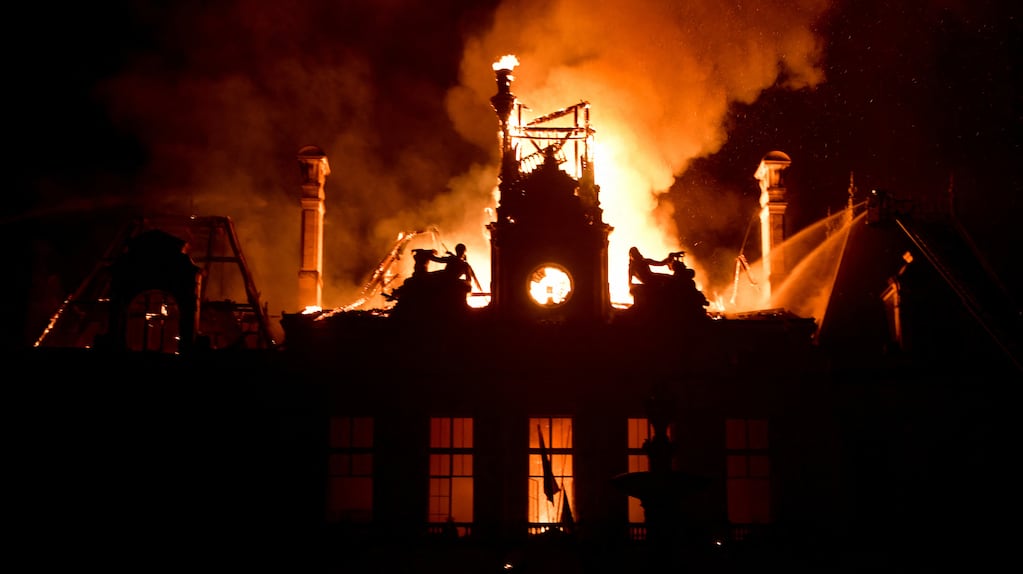
Dos hombres fueron imputados y enviados a prisión preventiva por su presunta participación en el incendio que destruyó gran parte del edificio de 143 años del Ayuntamiento de Limoges, en el oeste de Francia. El ataque ocurrió el sábado pasado durante las protestas contra el encarecimiento de los costos de vida que derivaron en enfrentamientos, saqueos y daños a edificios públicos y comercios.
Según informó la fiscalía local, los sospechosos son investigados, entre otros delitos, por la destrucción del edificio municipal y el presunto intento de homicidio de un agente de la policía.
internacional













NEWYou can now listen to Fox News articles!
JERUSALEM — Israel’s high-stakes election on Oct. 27 pits the longest serving prime minister, Benjamin Netanyahu, against the highly decorated retired Lt. Gen. Gadi Eisenkot. While fairly new to politics, Eisenkot has an impressive resume that could help him become the Jewish state’s next leader.
According to a number of polls, Eisenkot’s centrist political party, Yashar, has a narrow lead over Netanyahu’s Likud. To form a government, Yashar or Likud will need to cobble together a 61-seat majority of parties to be able to form a new coalition government.
TRUMP SAYS NETANYAHU NEEDS TO BE RE-ELECTED, OR ELSE US WILL HAVE TO ‘FINISH THE JOB’ AGAINST IRAN ALONE
Gadi Eisenkot, leader of the Yashar party, speaks from behind a podium with a banner reading «Yashar with Eisenkot» during an event presenting the party’s full candidate list ahead of October’s general election on Sept. 7, 2026 in Rosh HaAyin, Israel. Eisenkot, a retired chief of the Israel Defense Forces, has emerged as the foremost challenger to Prime Minister Benjamin Netanyahu. (Erik Marmor/Getty Images)
Who is the 66-year-old Eisenkot?
He was born in Tiberias in Israel’s north to a Jewish-Moroccan family who relocated to Israel’s southernmost city, Eilat, on the Red Sea when he was a toddler.
A career soldier, he opted to serve in the infantry. He was part of the elite Golani Brigade and reached the zenith of the military with his 2015 appointment to the Israel Defense Forces (IDF) chief of staff in 2015 until 2019.
Yossi Melman, one of Israel’s most respected journalists on intelligence and defense reporting, told Fox News Digital that Eisenkot, «Is 100% a soldier. He is very brave and humble. He is an officer and gentleman.»
Melman noted that when Eisenkot was chosen to be the next IDF chief of staff, he declined because he felt that then General Benny Gantz should receive the appointment. Melman asked, «How many people would do that? He was selected after Gantz. It shows his traits of modesty, honesty and not arrogant.»
Melman said, «It is a miracle he is leading in the polls. He is the antithesis of a what a politician should be. He is not a great orator when you compare him to Netanyahu. He radiates honesty.»
BENJAMIN NETANYAHU’S LEGACY AND POLITICAL FUTURE ON THE LINE IN ISRAEL’S OCT 27 ELECTION
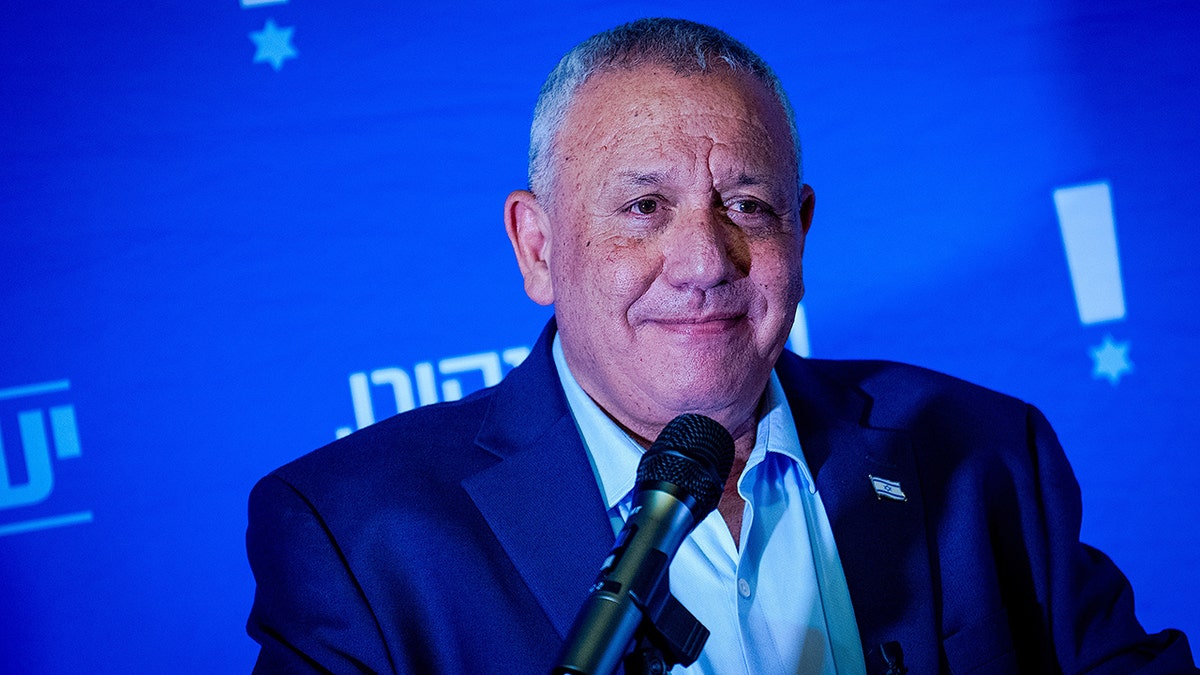
Yashar party leader Gadi Eisenkot attends the Jerusalem Residents Conference on Aug. 12, 2026 in Jerusalem. Gadi Eisenkot, a retired chief of the Israel Defense Forces and current leader of the Yashar party, has emerged as the foremost challenger to Benjamin Netanyahu ahead of October’s general election. (Erik Marmor/Getty Images)
Eisenkot’s Mizrahi background — Jews who originate from North Africa and the Middle East — would mean, if he prevails, that he would be the first Israeli Prime Minister of Moroccan origin. The Prime Minister’s office has been held by Israelis of Eastern European descent (Ashkenazi) since the rebirth of the Jewish state in 1948.
After Hamas invaded Israel on Oct. 7, 2023 and slaughtered over 1,200 people, including more than 40 Americans, Eisenkot joined Netanyahu’s war cabinet as a minister without portfolio.
Melman said Eisenkot «did not set any political conditions» and «his presence in the cabinet saved Netanyahu.» After eight months of serving in the war cabinet, Eisenkot resigned, blaming the prime minister for failing to implement a comprehensive strategy.
The war against the Iran-backed terrorist movement Hamas took an enormous toll on the battle-hardened General Eisenkot and his family. Hamas killed his son, 25-year-old Master Sergeant Gal Eisenkot, in Dec. 2023. The terrorist organization also killed two nephews of Eisenkot. Netanyahu and his wife Sara said at the time that they were devastated by Gal’s death and Eisenkot was a «true hero.»
ZIONISM EXPLAINED FROM ITS BIBLICAL ORIGINS TO THE REBIRTH OF THE STATE OF ISRAEL

Gadi Eisenkot, former Israeli army chief of staff and head of the Yashar party, is seen at the Black Arrow memorial site near Kibbutz Mefalsim during a visit to deliver a statement near the border with the Gaza Strip on Oct. 15, 2026, ahead of the Israel’s legislative election. (Ilia Yefimovich/AFP via Getty Images)
Danny Orbach, a military historian from the Hebrew University of Jerusalem, gave his take on the leading contender to replace Netanyahu. «I think his military record and his prospects as a national leader have both significant strengths and serious weaknesses. He bears considerable responsibility for shaping the IDF that existed on Oct. 7, 2023. And that was, paradoxically, both the army that proved capable of defeating Hezbollah, striking Iran and achieving unprecedented military successes in the extraordinarily difficult, tunnel-ridden battlefield of Gaza and the army that failed so miserably on Oct. 7.»
He continued that, «Like other chiefs of staff, Eisenkot bears responsibility for the decisions that reduced the army’s size and for the infamous ‘conceptzia’ [Hebrew word for concept] regarding Hamas. In that respect, I consider him just as culpable as Netanyahu.»
Israel’s military, intelligence and political establishments bought into the ‘conceptzia’ that Hamas could be housebroken with massive infusions of economic aid. Hamas, however, was wedded to its radical Islamist ideology —the destruction of the Jewish state — and used the funds to advance its war aims.
Orbach noted that «I don’t think most of Eisenkot’s support stems from his energy, enthusiasm or even his political platform. My impression is that Eisenkot has emerged as the default ‘non-Bibi’ candidate, the politician who currently channels much of the camp’s hopes and expectations.»

Israeli Prime Minister Benjamin Netanyahu and Israeli Chief of Staff Gadi Eizenkot (L) give a press conference in Tel Aviv, on Dec. 4, 2018. Israel’s army said today it has discovered Hezbollah tunnels infiltrating its territory from Lebanon and launched an operation to destroy them, a move likely to raise tensions with the Iran-backed group. (Jack Guez/AFP Via Getty Images)
Orbach added that «I also doubt that Eisenkot would have had the political determination to stand up to the Biden administration on such matters.»
Netanyahu and former President Biden repeatedly clashed over Biden’s attempts to rope in Israel’s efforts to defeat Iran’s seven-front war against the Jewish state.
The military historian, however, noted that «I believe an Eisenkot government could address several of Israel’s most urgent problems. It would remove Ben Gvir from power, confront the growing problem of Jewish extremist violence and terrorism in the West Bank, and begin repairing Israel’s severely damaged international legitimacy.»
Itamar Ben-Gvir is a controversial right-wing firebrand politician and the current minister of national security since 2022, who has outraged many Western European and foreign leaders with his heated rhetoric against the Palestinians.
TIMELINE OF DECADES-LONG ISRAELI-ARAB, PALESTINIAN CONFLICT

Former army chief Gadi Eisenkot attends the funeral for his son, First Sergeant Major Gal Meir Eisenkot, 25 years old, at the Herzliya cemetery on Dec. 8, 2023 in Herzliya, Israel. The Israel Defense Forces said the 25-year-old major, son of the cabinet minister and former army chief Gadi Eisenkot, died on Thursday in Gaza. (Dima Vazinovich / Middle East Images / Middle East Images/AFP via Getty Images))
Eisenkot’s wife, Hannah, comes from an American Jewish family. U.S. General Joseph Dunford awarded Eisenkot the Commander of the Legion of Merit because of his «exceptionally meritorious service as chief of the General Staff of the IDF» and his «contribution to the strategic cooperation between the United States and Israel [that] will have a lasting effect on both countries,» according to the Washington Institute, where Eisenkot served as a military fellow in 2019.
Nadav Eyal, an Israeli analyst and journalist for the mass circulation Israeli paper Yedioth Aharonoth, told Fox News Digital, Gadi Eisenkot is widely considered one of the most successful Chiefs of Staff that Israel has had in the last thirty years.»

Israel’s new Chief of Staff Gadi Eisenkot delivers a speech during his swearing-in ceremony at the Prime Minister’s Jerusalem offices on Feb. 16, 2015. (Menahem Kahana/AFP via Getty Images)
He continued that «Chiefs of Staff in Israel, unlike in other countries, are really extremely capable, in general, to be prime minister. They are leading the country’s biggest organization, the IDF.»
Eyal, who writes extensively about the IDF, credited Eisenkot’s military planning against the Iran-backed Hezbollah terrorist organization in Lebanon and the significant defeats the Lebanese Shiite entity experienced, including the «discovery of tunnels that Hezbollah built» to enter Israel. Hezbollah immediately joined Hamas’s war against Israel in Oct. 2023.
Given the nature of Israel’s electoral system, an outright winner won’t likely be known for several days, since the leading party will need to form a coalition to get to the 61-seat mandate to run the country.
israel, benjamin netanyahu, world elections, middle east, middle east foreign policy, elections

ANN ARBOR, Mich. — Socialism is gaining popularity among young Americans, but Digital found strikingly different understandings of the ideology among college students, some of whom acknowledged that their generation may not fully grasp what they’re embracing.
A recent poll found that 48% of Americans ages 18 to 34 viewed socialism favorably, compared with 32% of Americans overall. When Digital asked more than a dozen University of Michigan students to define socialism, their answers ranged from government-funded safety nets and affordable health care to collective ownership of industry.
«If the definition was more widely known, people would support it less honestly,» one student, Ahnika, told Digital.
Other students acknowledged the confusion, while at least a dozen declined to be interviewed on camera because they said they did not know enough about socialism to give an informed answer.
THE NUMBERS DON’T LIE. YOUNG AMERICANS ARE FALLING IN LOVE … WITH SOCIALISM
«Absolutely. I feel like many people don’t really understand, I feel, the full grasp or scope of what socialism really means,» a student named Owen told Digital. «I think they kind of have a more idealistic image of it.»
The divide over what socialism actually means comes as the ideology becomes an increasingly prominent issue in American politics, including Michigan’s closely watched Senate contest, where Republicans have sought to tie Democratic nominee Abdul El-Sayed to socialism – despite his rejection of the label.
Socialism? It’s a safety net
Some of the students interviewed used the word socialism as a way to describe a government that spends more money on subsidizing healthcare, housing or other basic necessities.
«It’s an economic system in which the resources of the government … are allocated into public services such as housing, affordable housing, food like food banks, education, things like that,» James, one student, told Digital.
«Socialism to me is a concept in politics where everybody gets a little bit of everything. Everybody benefits and everybody is really taken care of. Kind of that social net that you see in other types of politics,» Kayla, another student, said.
«It’s a political system where less social goods are delivered by the market than in capitalism,» said her fellow student, Sam.
Republicans and centrist Democrats have both raised concerns about the rising tide of socialism, while young people turn to it as a solution to the cost of living.
«Does the socialism thing scare me? Yes. Is it the wrong solution? Yes,» Vice President JD Vance said in a July interview. «But one thing I try to persuade my fellow Republicans of is socialism is the alternative if we don’t have a pathway to give people a sense that the system is not rigged and that the American dream is attainable.»
While the precise definition of socialism is debated by economists and philosophers, the ideology generally calls for replacing private ownership of major productive assets with some form of public, collective or worker ownership, though socialists differ sharply over whether that control should be exercised through the government, workers themselves or other institutions.
Modern socialism emerged as a major political and economic movement in 19th-century Europe, fueled by concerns over wealth inequality, industrial working conditions and the concentration of economic power in private hands.
A fair number of the students who spoke with Digital had understandings of socialism more in line with this traditional definition.
EL-SAYED REVEALS HE WOULD GO ‘STEP FURTHER’ THAN SANDERS ON SOCIALIST PLAN FOR MAJOR US INDUSTRY
Or is it government control?
«It’s an economic system where certain aspects [of the economy] are controlled by the government such as health care, possibly housing, agriculture, general necessities,» Owen said. «It’s distinct from communism in that the government does not have free rein over every aspect of the market, but it’s not the same as capitalism where the free market determines everything.»
How far government control should extend has long divided socialists. Some advocate government ownership of nearly all major industries, while others favor worker-owned businesses amid a mix of public and private enterprise.
«I guess I would define it as an economic system where resources are shared in a more, in a somewhat equitable sense, and there’s some level of, you know, public control of that,» Zack, also a student at the university, told Digital. «It’s not really any more specific than that, socialism is a broad term, you know?»
While some young Americans associate socialism with government control of private businesses, an idea that has long faced resistance in American politics, the ideology has gained support among younger voters, even as they differ over what it would mean in practice. The Democratic Socialists of America, which advocates replacing capitalism with a more collectively controlled economy, has seen its ranks swell with members and notched a series of electoral victories during the second Trump administration.
«I’d say I define socialism by the government taking collective ownership of companies’ production and distribution of goods,» student Ahnika told Digital.
«As far as I’m aware, it’s about like workers and members of society owning the product … as opposed to capitalism where you make the product, if you work on an assembly line, the product goes to your manager or whoever runs the factory and then they make most of the profit off of your work,» Noah, also a student, told Digital.
Maybe it’s Canada?
Others defined socialism in relation to countries or politicians.
«Mostly I think of Canada when I think of socialism,» Samantha, another student, told Digital. Elyse, her peer, said that New York City Mayor Zohran Mamdani comes to mind when thinking of a definition for socialism.
LIBERAL-CITY RESIDENT HESITATES WHEN PRESSED ON BELIEFS: ‘I HADN’T REALLY THOUGHT ABOUT SOCIALISM THAT WAY’
The University of Michigan’s student body isn’t alone in its division over the definition of socialism.
Gallup found in 2018 that 23% of Americans thought the word meant «equality, including equal rights, standing or distribution,» while 10% defined it as «provision of benefits and services, such as health care,» 6% said it was «communism or a modified version of it» and further 6% understood it to be «being social or getting along with others.»
Roughly a quarter of respondents had no opinion on the definition of socialism, and just 17% described it as «government ownership or control of businesses and the economy,» the definition typically favored by economists.
Michigan, where many of the students interviewed vote, could easily decide control of Congress following November’s midterm elections. Socialism is a major issue in the race, with Republicans attempting to portray Democratic nominee Abdul El-Sayed as a socialist — a label he rejects despite a long-running association with the Democratic Socialists of America.
At least a dozen students told Digital that they were not comfortable filming an interview because they did not feel they knew enough about socialism to give an informed response, further highlighting the degree of confusion surrounding the term among young people.
LIBERAL HOT SPOT RESIDENTS CAN’T AGREE ON WHAT SOCIALISM MEANS AS FAR-LEFT MOVEMENTS GAINS STEAM
While the students couldn’t agree on what socialism meant, they did agree that their peers were confused.
«Yeah, I mean there’s sort of a general idea of an equitable distribution of resources, but other than that, in terms of how it should be done, um like what it actually looks like, how power is distributed, there’s a lot of open questions there,» said Zach.
«Yeah, absolutely. There’s a huge misconception about socialism, even capitalism as well,» a student named Jeff told Digital. «So I think these terms in the broader space of political thought are probably allegories depending on your political orientation for good or bad … that’s probably the most ubiquitous use of that term. ‘Socialism bad, capitalism good,’ or vice versa if you’re a progressive.»
THE MEDICARE FOR ALL TRADE-OFFS SOCIALISTS AREN’T TALKING ABOUT, ACCORDING TO EXPERTS
Other students felt their peers were too quick to define socialism in relation to other political systems.
«I would say some people would compare socialism to communism as being practically identical, whereas others would just understand it as having a stronger social safety net like in like Nordic countries,» Sam said, noting that he doesn’t feel there is a right or wrong definition for the word.
«Yeah, I feel like a lot of people don’t really understand what socialism is,» Tommy, another student, said. «I feel like they think that sometimes it’s communism and they conflate the two. So I feel like people need to educate themselves on what the concept actually is.»
One student felt that, if more people understood socialism to imply government ownership of industry, the system would be significantly less popular.
«I honestly think there’s a bit of confusion … If the definition was more widely known, people would support it less honestly,» Ahnika said. «Rather than having a good understanding of what socialism is, people often try to antagonize the opposite end of the spectrum, which is private ownership.»
Not everyone felt that the ambiguity surrounding the term was necessarily a bad thing, however.
«I think having complex definitions of things only encourages conversation and when those conversations can be productive and when we approach them in a productive way I think we only uh strengthen what can be the collective definition of stuff like socialism,» Elyse told Digital.
politics, socialism, college, education, midterm elections
NEWYou can now listen to Fox News articles!
Brazil’s estimated 158 million voters could advance Latin America’s conservative wave in Sunday’s election as the continent’s most populous nation could elect conservative Sen. Flavio Bolsonaro as its next president.
The first round election three weeks ago saw a strong performance by Bolsonaro, proving the polls wrong. While incumbent President Luiz Inacio Lula da Silva (Lula) had been predicted to take the first round by single digits, Bolsonaro ended up winning 47% to Lula’s 45%. As neither candidate won a majority, the election went to a second round.
Brazil’s election follows a long string of victories for the Latin American right across Central and South America that started with the election of Libertarian outsider Javier Milei in Argentina in 2023.
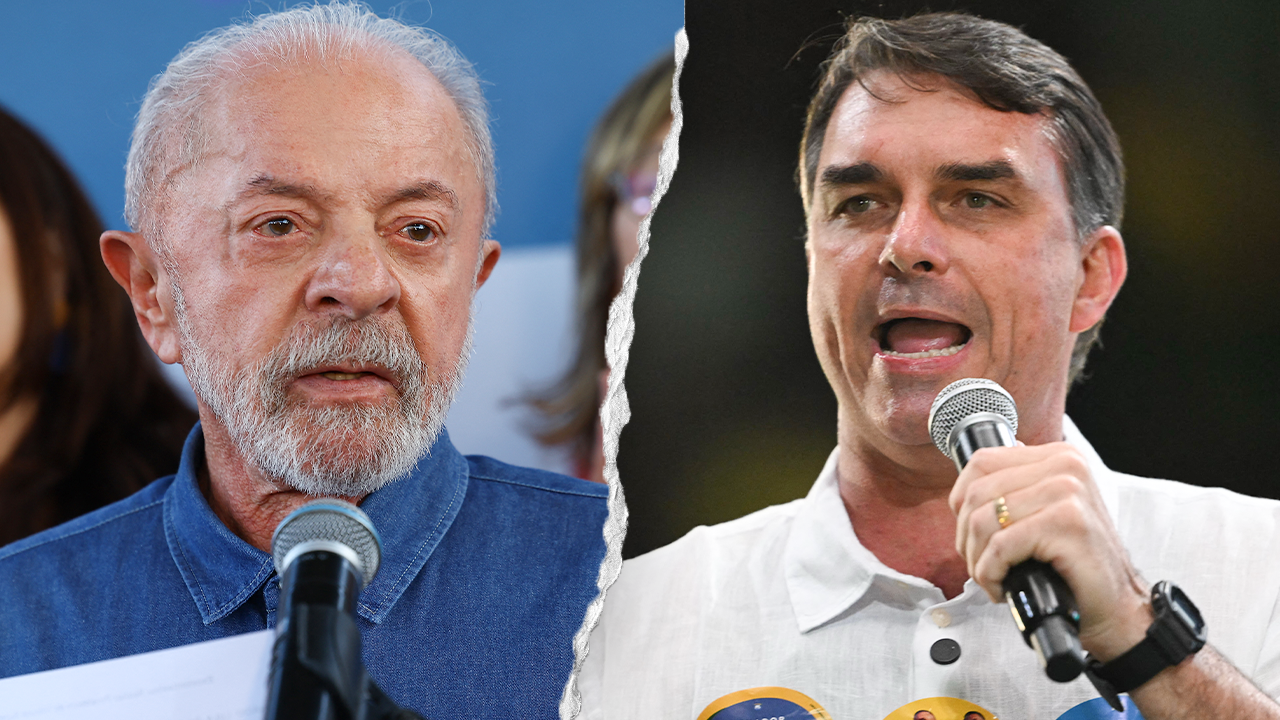
Brazilian President Luiz Inácio Lula da Silva, left, and Sen. Flávio Bolsonaro, right, face off in a presidential election runoff. (Getty Images)
BOLSONARO WINS FIRST ROUND OF BRAZILIAN PRESIDENTIAL ELECTION, AS TRUMP-BACKED CANDIDATES CONTINUE RED WAVE
2025 saw a right-wing sweep across the region, as Ecuador, Bolivia, Honduras and Chile all voted for conservative heads of state.
In 2026, Keiko Fujimori narrowly defeated a left-wing candidate to win the Peruvian presidency, while most recently, in Colombia, conservative attorney Abelardo de la Espriella bested left-wing Senator Ivan Cepeda.
Bolsonaro’s slate of congressional candidates also fared well, ensuring that Brazil will have one of the most conservative congresses in years, and a legislative branch aligned with Bolsonaro’s goals, or ready to thwart Lula’s agenda.
The two candidates met Friday night for the final debate in Rio de Janeiro, which featured a series of questions organized around Brazil’s five geographic regions. While the debate featured some heated personal exchanges, it appears unlikely to have moved the needle in either direction heading into a close race.
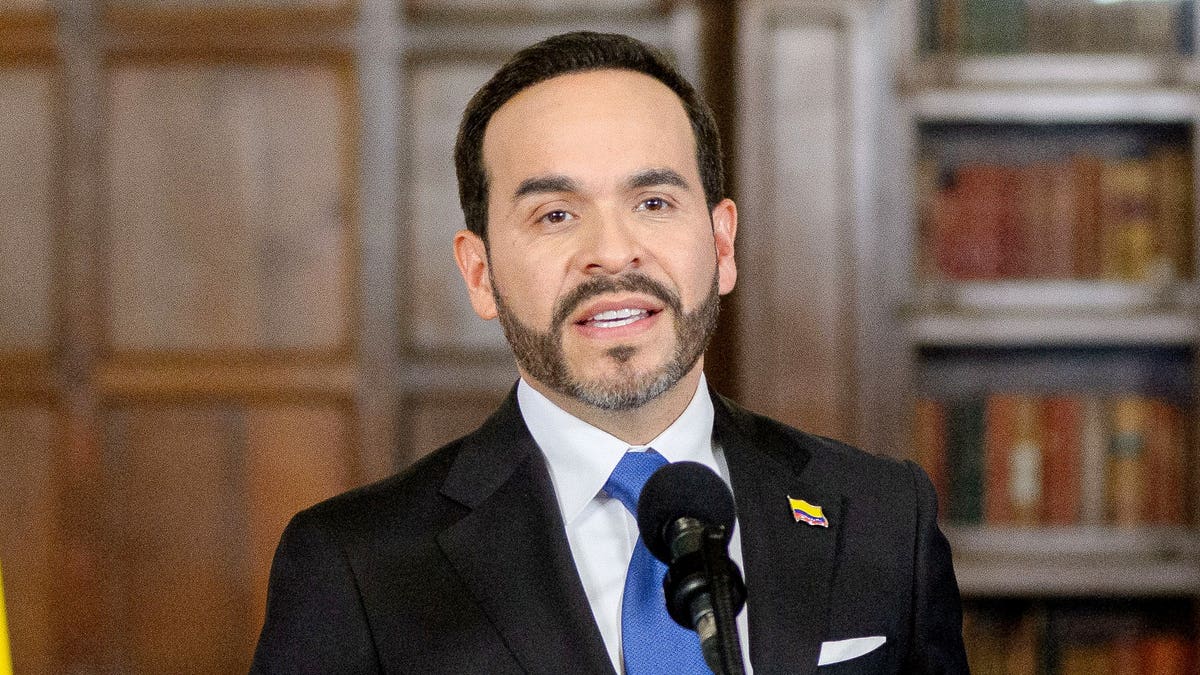
Colombian President Abelardo De la Espriella holds a press conference with the mayor of Bogota and newly appointed city manager Clara Lucia Sandoval in Bogota, on Aug. 25, 2026. (Sebastian Barros/NurPhoto via Getty Images)
TRUMP’S WAR ON DRUG CARTELS COULD GAIN POWERFUL NEW ALLY AFTER PIVOTAL ELECTION
President Donald Trump has heralded these electoral results as vindication for his hardline approach to security, crime, and migration policies, as well as a stamp of approval for the new Shield of the Americas initiative.
The Trump administration counts on considerably more close allies now than it did at the beginning of Trump’s second term.
Yet, the question remains: why is the region resoundingly rejecting the left and progressivism?
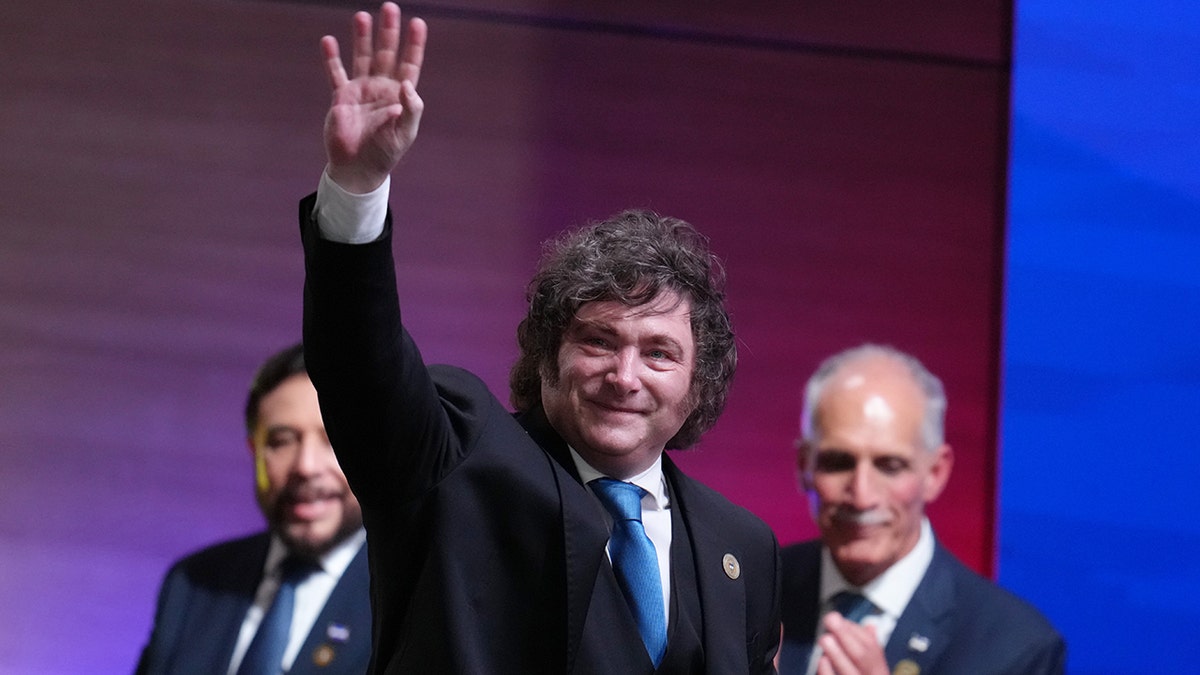
Argentina’s President Javier Milei arrives for the inauguration of Colombia’s President Abelardo de la Espriella in Cali, Colombia, Friday, Aug. 7, 2026. (Matias Delacroix/AP Photo)
Many of the elections have been won by narrow margins, with Brazil being a case in point: Lula bested Jair Bolsonaro in 2022 by just 1.8%. While many Latin American nations remain deeply polarized, there is no denying a right-wing resurgence.
Commentators appear to be expressing a rejection of progressive movements amid growing concerns over safety and security, giving approval to proposals to dramatically ramp up police and military presence to combat crime and drug trafficking.
Meanwhile, leftist parties seem unable to capitalize on recurring concerns over inflation and kitchen table economics, which have played into the hands of the Latin American right, as working class and middle class voters have felt the pinch of rising food, housing and energy costs.
In addition to social and economic concerns, the specter of Jair Bolsonaro also looms over the election. Flavio Bolsonaro has pledged to free his father, who is currently serving a 27-year sentence on house arrest for allegedly plotting a coup in the wake of the 2022 election.
Lula was also sentenced to a 12-year prison sentence on corruption charges stemming from the infamous Operation Car Wash, until he was freed on a technicality by the Brazilian Supreme Court, and rose from the ashes to win the 2022 presidential election.

Brazil’s right-wing senator and presidential candidate Flavio Bolsonaro of the Liberal Party (PL) gestures next to federal deputy and candidate for governor of Rio de Janeiro, Douglas Ruas (L) during a campaign rally on the eve of the general election, in Campo Grande neighborhood, in the western zone of Rio de Janeiro, Brazil on October 3, 2026. Brazilians go to the polls on Oct.r 4, 2026 (Douglas SHINEIDR / AFP via Getty Images)
BRAZIL’S RAPID ELECTION COUNT PUTS SPOTLIGHT ON VOTING SECURITY AHEAD OF US MIDTERMS
Bolsonaro has narrowly led in recent polls, and enters the second round with some structural advantages. Most importantly, he enjoys the backing of three of the four other major candidates in the race, who failed to advance to the second round.
Self-help author Augusto Cury, former Goias Governor Ronaldo Caiado, and former Minas Gerais Governor Romeu Zema all officially backed Bolsonaro in the second round.
Entrepreneur Renan Santos, candidate for the Mission Party, declined to endorse either candidate. However, as his political movement is characterized as free-market and libertarian, these voters are also more likely to trend to Bolsonaro.
Thus, Lula needs to win a significant majority of first round voters who backed right-wing or center-right candidates. It’s a daunting, but not impossible, proposition.
The entire election may hinge on voters who are voting against a candidate, as much as for a candidate.
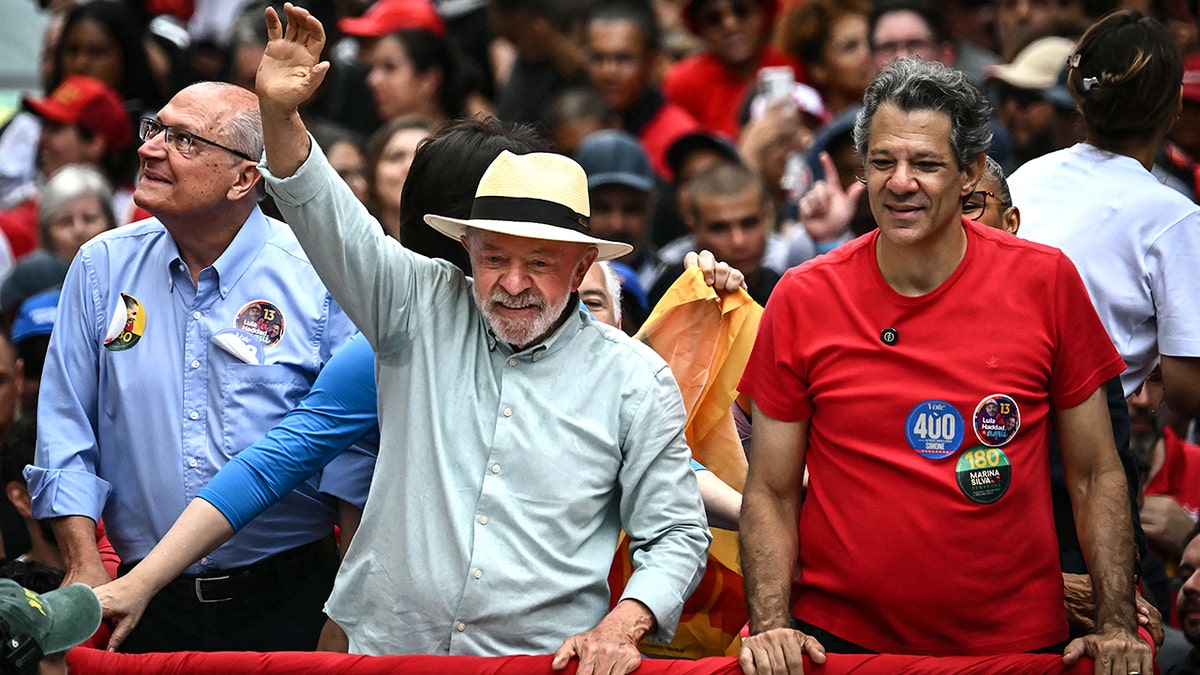
Brazil’s President and presidential candidate Luiz Inacio Lula da Silva (C) waves next to Vice-President Geraldo Alckmin (L) and to his candidate for Sao Paulo’s governor, Fernando Haddad during a campaign rally on the eve of the general election, in Sao Paulo, Brazil on October 3, 2026. Brazilians go to the polls on October 4, 2026, in a tight race led by leftist President Luiz Inacio Lula da Silva and right-wing senator Flavio Bolsonaro, son of former president Jair Bolsonaro, who is serving house arrest. (Luis Robayo/AFP Via Getty Images)
Another question looming over the election: has Lula finally worn out his welcome with the Brazilian electorate?
This will be Lula’s seventh time in 40 years appearing on a presidential ballot: he lost elections in 1989, 1994, 1998, won in 2002, 2006, and 2022.
Lula famously promised to serve only one term when he ran to oust Jair Bolsonaro in 2022.
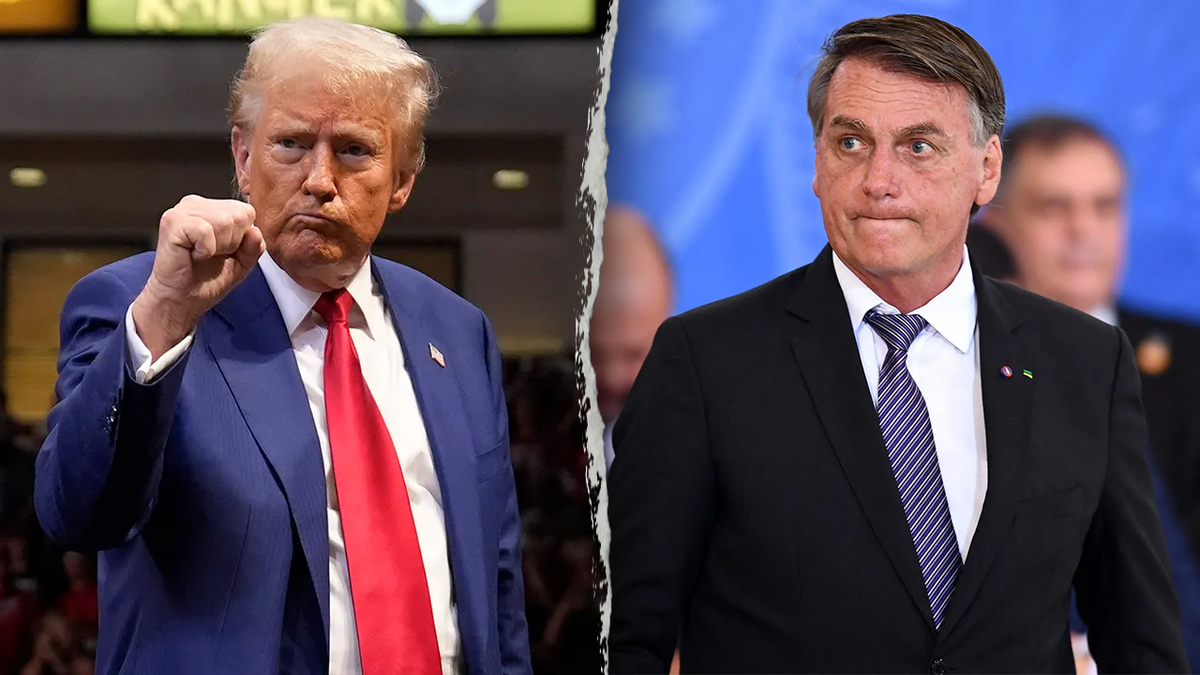
President Trump sent a letter to former Brazilian President Jair Bolsonaro calling for an immediate end to the ‘unjust’ trial against him for allegedly starting a coup. (AP Photo/Evan Vucci and Evaristo Sa/AFP via Getty Images)
On October 25, 2022, just five days before the last second round presidential election, he posted on his official X account: «If elected, I will be a single-term president.»
It was a promise that he did not keep.
Various polls have shown that voters are not happy with the course of Lula’s third term, and even a sizable percentage of Lula backers in 2022 responded with pessimism on the prospect of an unprecedented fourth term.
However, a large percentage of the Brazilian electorate also consistently rejects the prospect of voting for another Bolsonaro for president.
Lula is unquestionably the dominant figure in Brazilian politics over the past half-century. But will his magnetism and charisma be enough to overcome the right-wing resurgence sweeping the continent?
world elections, brazil, south america, donald trump, jair bolsonaro

Former IDF chief Gadi Eisenkot emerges as Netanyahu’s leading election challenger

Socialism’s growing appeal meets an awkward reality check on college campus

El trasfondo de la nueva jugada de Bullrich: cuáles son las chances de que se produzca su "Plan B"

El elogio de Abel Ferreira a Estudiantes y el palito para Flamengo antes de la final de la Libertadores

Polémica con Neymar en Brasil: fue expulsado por un gesto contra un rival y estalló con un duro descargo

Disturbios en Francia: detuvieron a dos hombres por el incendio del histórico edificio del Ayuntamiento de Limoges

Javier Milei y sus medidas, en vivo: el mandatario dijo que piensa un proyecto a “100 años” para la Argentina

Cuáles son las condiciones que enfrentan las pymes para financiarse en el mercado de capitales

Escándalo con Sancor Salud: Cuotas millonarias por un servicio nefasto que abandona a los pacientes en urgencias

Tensión por discapacidad: la Iglesia advierte sobre el dictamen del oficialismo y reclama la prórroga de la ley de emergencia

 POLITICA2 días ago
Javier Milei y sus medidas, en vivo: el mandatario dijo que piensa un proyecto a “100 años” para la Argentina
- SOCIEDAD2 días ago
Escándalo con Sancor Salud: Cuotas millonarias por un servicio nefasto que abandona a los pacientes en urgencias
- DEPORTE3 días ago
Estudiantes de La Plata busca su sexta final de Copa Libertadores: la tabla histórica del torneo y la disputa Argentina-Brasil que podría dirimir