INTERNACIONAL
Iran could move shadow war in a dangerous direction, experts warn on back of two possible terror attacks

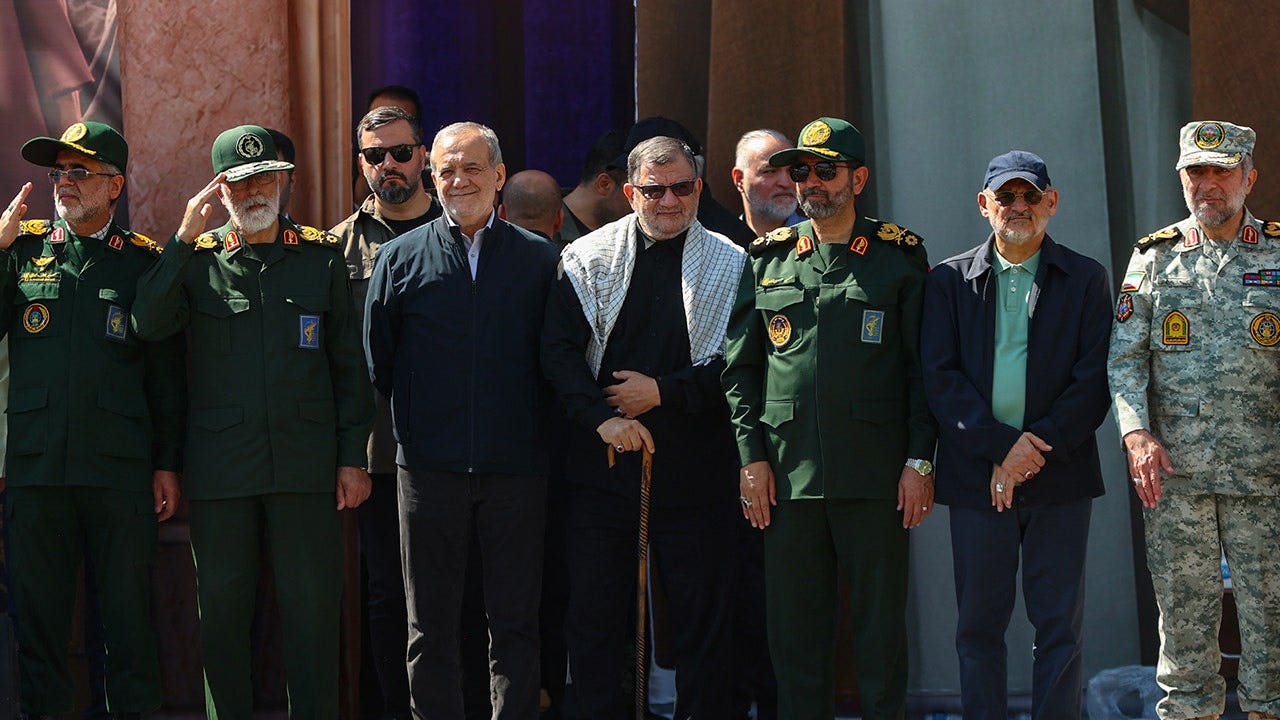
The FlyDubai stabbing is contributing to concerns that Iran could increase covert and deniable attacks as the conflict with the United States and Israel drags on.
British Prime Minister Andy Burnham, meanwhile, said there are «strong indications» Iran played a role in a suspected terror plot near RAF Fairford, the British air base used by U.S. forces during operations against Iran. Counterterrorism police have since arrested a dual UK-Iranian national on suspicion of preparing terrorist acts.
The two suspected attacks are raising questions over whether Iran’s war strategy is shifting, but experts caution not to treat the incidents as equally indicative of Iranian involvement — or evidence yet that Tehran has changed its tactics.
FLYDUBAI PILOT SHOWED WORLD ‘THE HIGHEST FORM OF COURAGE,’ INDIA’S PM SAYS
President Donald Trump said early information he has received points to a possible Iranian connection to the attack aboard an Israel-bound FlyDubai flight, where a co-pilot allegedly stabbed the captain and attempted to crash the aircraft with more than 180 people aboard.
The United Arab Emirates and Israeli Prime Minister Benjamin Netanyahu have described the FlyDubai incident as terrorism, but UAE authorities have not publicly attributed the attack to Iran. Neither investigation has publicly established that the Iranian government directed the attacks, and Iran has denied involvement in the Fairford case.
Daniel Byman, director of the Warfare, Irregular Threats and Terrorism Program at the Center for Strategic and International Studies, said the Fairford case fits more closely with Iran’s recent use of hired operatives and other intermediaries.
«The attack on the airbase in the United Kingdom does fit more recent patterns,» Byman told Digital, while stressing how much remains unknown about the investigation.
RUBIO CONFIRMS ‘FOREIGN ACTOR’ INVOLVED IN UK TERROR PLOT
The FlyDubai attack would be a more significant departure.
«That is quite different, and that is something that Iran in the past, at least we haven’t seen Iran do,» Byman said. «It is plausible to me that Iran is involved, but that seems like much more of a stretch based on Iran’s traditional way of operating.»
But the uncertainty surrounding the attacks also illustrates part of the appeal of the broader strategy Iran has spent decades developing: using proxies, covert operatives, criminal networks and other intermediaries to threaten adversaries far beyond its borders while making Tehran’s own role more difficult to establish.
Matthew Levitt, a former Treasury and FBI counterterrorism official who now directs the Reinhard Program on Counterterrorism and Intelligence at the Washington Institute, said Iran has increasingly sought to put more distance between itself and the people carrying out overseas operations.
«Typically Iran does not admit that it’s involved in these types of attacks because it wants reasonable deniability,» Levitt said.
«There are several advantages for Iran to using terrorism,» Byman said. «One is that there is often a degree of deniability.»
«Terrorism gives Iran a lot more reach,» he added. Levitt, however, put the distinction with conventional warfare more bluntly.
«If Iran shoots a drone or a missile at you, you know where it came from and you know where to shoot back,» he said. «But if Iran uses proxies, and recruits people and does things in a covert manner, it might not be so easy to point a finger back at Iran or to know exactly who did it.»
That capability matters in part because Iran does not have the conventional military strength to match the United States and its allies directly, Levitt said.
«They just don’t have the capability to fight soldier to soldier, airplane to airplane in an all-out kinetic war, but they’re extremely effective at asymmetric warfare, at covert terrorist activity, if that’s what this proves to be,» he said.
UK AIRBASE TERROR SUSPECTS BEING RELEASED ON BAIL AS IRAN DENIES CONNECTION
Recent U.S. prosecutions have shown how far that playbook can extend. Federal cases have accused Iranian operatives of seeking to recruit hitmen to kill U.S. officials and using Eastern European organized crime figures in a murder-for-hire plot targeting Iranian-American journalist and dissident Masih Alinejad in New York.
Those operations relied on the same basic advantage: Tehran could pursue targets overseas without launching a conventional attack that immediately identified Iran as the aggressor.
The question now is whether the current conflict gives Iran reason to push that strategy further.
Levitt said Tehran could pursue overseas plots in an effort to pressure Western governments to end the conflict by demonstrating that Iran can impose costs far beyond the conventional battlefield.
And if Fairford and FlyDubai are ultimately tied to Tehran, he said, they would stand out because they involve harder targets and potentially more ambitious tactics than the assassinations, kidnappings, shootings and smaller-scale bombings Iran has more commonly pursued overseas.
«Perhaps this is the new normal, and Iran wants to demonstrate that it can exact a higher cost,» Levitt said.
Byman, however, pointed to several reasons Tehran could exercise restraint.
Iran already has other ways to pressure Washington and its allies, while a terrorist attack against Americans could backfire by uniting U.S. public opinion behind further escalation against Tehran, he said. U.S. and Israeli strikes against senior Iranian intelligence and security officials may also have disrupted some of the networks Tehran would need for overseas operations.
«If Iran wants to go further, then terrorism does become more of an option,» Byman said.
iran, terrorism, counter terrorism, national security, politics, geopolitics, foreign affairs, war with iran










INTERNACIONAL
From arrests to crackdowns, how Europe’s leaders are responding as protests rock the continent
NEWYou can now listen to Fox News articles!
From mass arrests in France to troop deployments in Italy, European leaders are taking varied approaches to protests and clashes across the continent. The unrest began in France in mid-September with student demonstrations over school conditions, then spread to other countries, where protests have centered on local grievances.
President Donald Trump has used the unrest to press his hard-line immigration message, blaming France’s protests on immigration and urging the country to close its borders.
PHOTOS SHOW AFTERMATH OF RIOTS AS MASKED GROUPS CLASH WITH POLICE ACROSS FRANCE
French President Emmanuel Macron pushed back, calling foreign leaders’ comments «unacceptable and even stupid» and accusing them of exploiting France’s crisis for political gain.
Here’s how leaders across Europe are responding.
France vows to make rioters pay as cities assess damage
Demonstrators occupy the sculptures and ledges of the Monument a la Republique in Paris, France, on October 17, 2026. (Aruallan / Hans Lucas /AFP/Getty Images)
Macron has vowed that those who loot or destroy property will be held accountable and made to pay for the damage. French authorities deployed 70,000 police officers nationwide Saturday as demonstrations took place in Paris and other cities.
Some clashes broke out in several cities, including Paris, Lyon, Lille, Toulouse and Nantes. Police used tear gas, sound grenades and water cannons, and the Interior Ministry reported more than 1,300 arrests.
VIOLENCE ERUPTS AT FRANCE PROTESTS AS MACRON WARNS UNREST IS BEING EXPLOITED
Most union-organized marches were peaceful, though clashes broke out later in Paris and several other cities. Separately, a French intelligence assessment reportedly identified Antifa and other far-left groups as instigators of some of the violence, according to a French outlet.
Italy takes one of Europe’s toughest lines
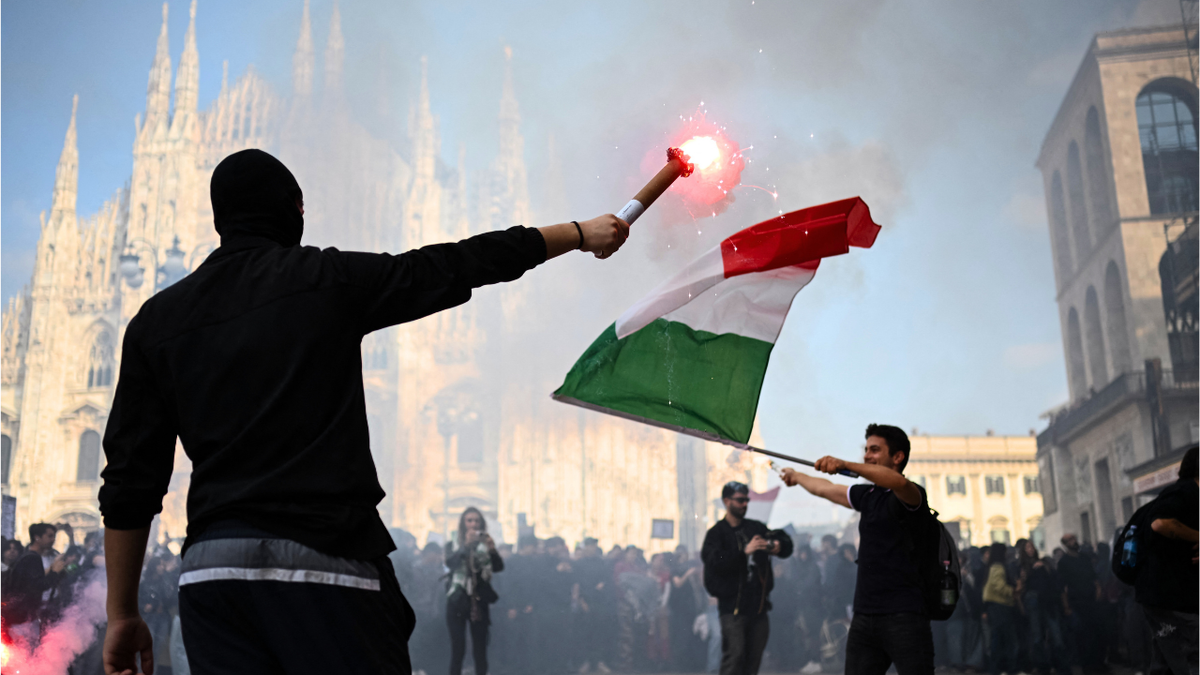
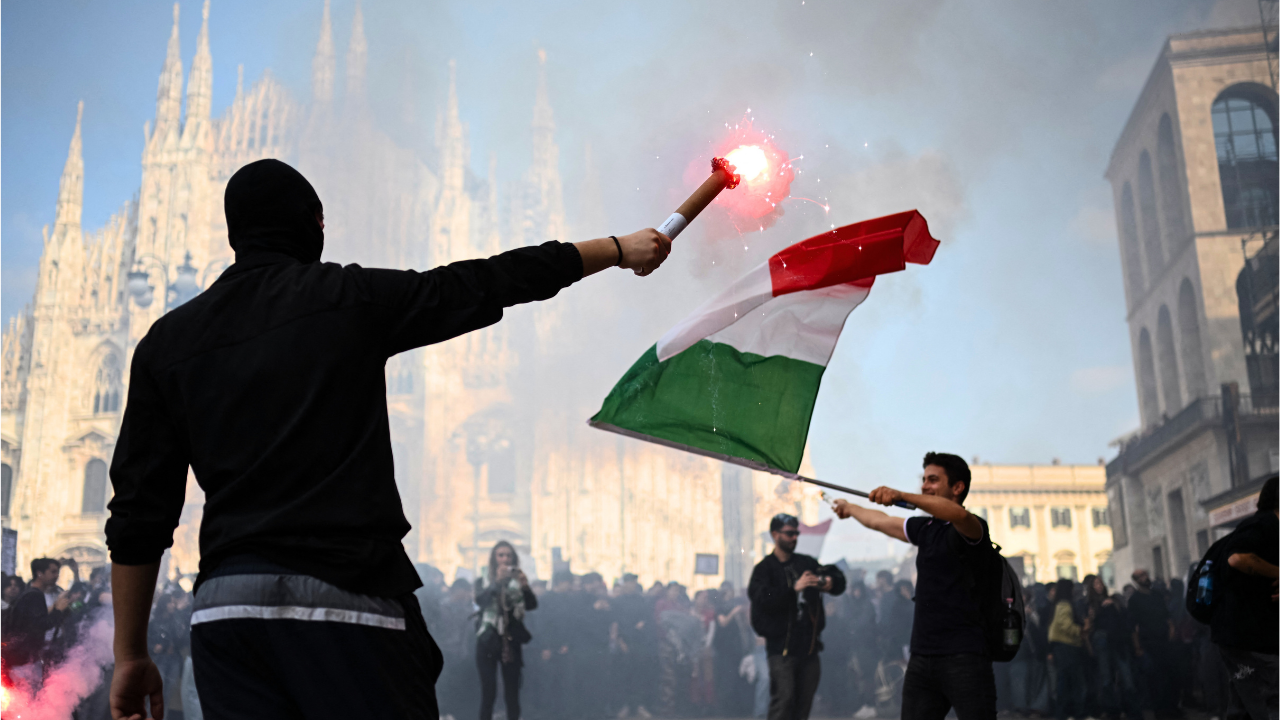
Demonstrators light flares during an anti-government protest organized by the Italia in Piazza movement, at Piazza Duomo in Milan, on October 17, 2026. (Piero Cruciatti/AFP/Getty Images)
Prime Minister Giorgia Meloni condemned what she called «gangs of thugs» who used demonstrations to «sow chaos,» and voiced support for police facing violence in several Italian cities.
Meloni moved quickly after the previous weekend’s looting and clashes, sending 500 additional soldiers to Milan and approving tougher penalties for minors involved in vandalism. She said destroying and stealing was a crime and that the state’s response would be firm.
The measures put Meloni among the European leaders taking the most visible steps to deter further violence.
Greek police maintain a visible presence
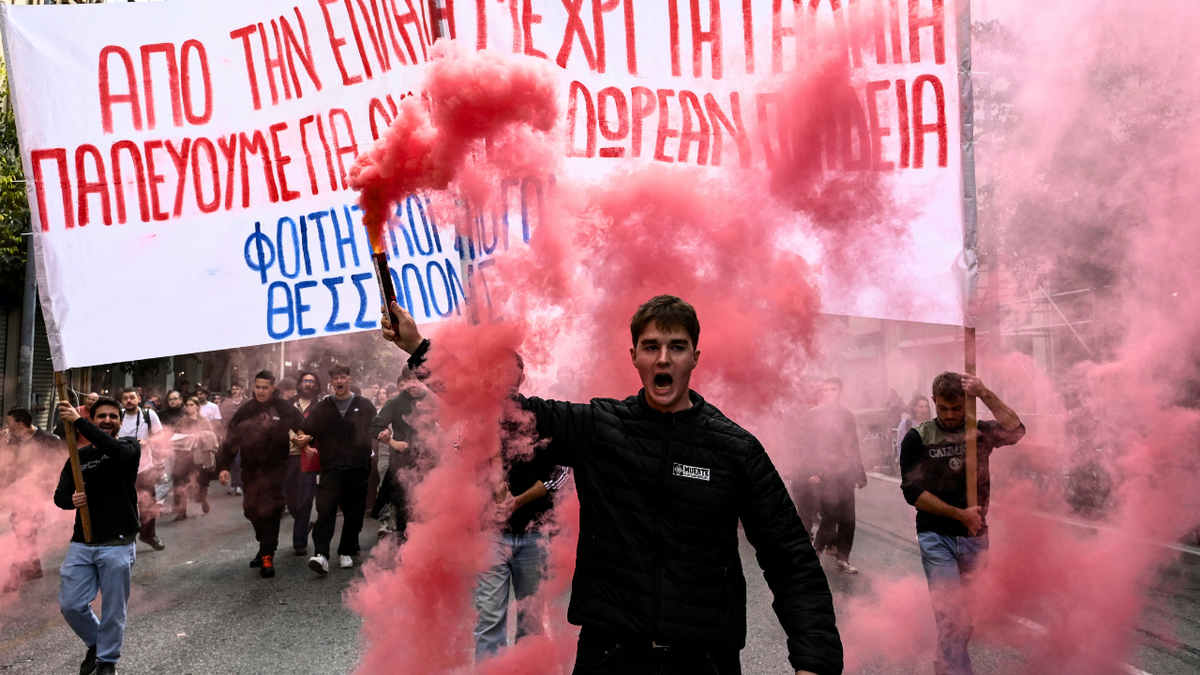
A protester holds a lit flare and shouts slogans as students, teachers and civil servants take part in a rally to protest against the high cost of living, saying they face the same problems that sparked violent demonstrations in France at the weekend, in Greece on October 21, 2026. (Sakis Mitrolidis/AFP/Getty Images)
While Greece has seen less unrest than France and other European countries, officials have been monitoring the risk of clashes as student and teacher demonstrations spread.
Government spokesperson Pavlos Marinakis said the right to protest must be respected as long as demonstrations remain lawful, while condemning violence, looting and occupations.
Police still kept a visible presence at demonstrations earlier in the week, which largely passed without major violence.
Belgium accuses Antifa-linked activists of stoking clashes
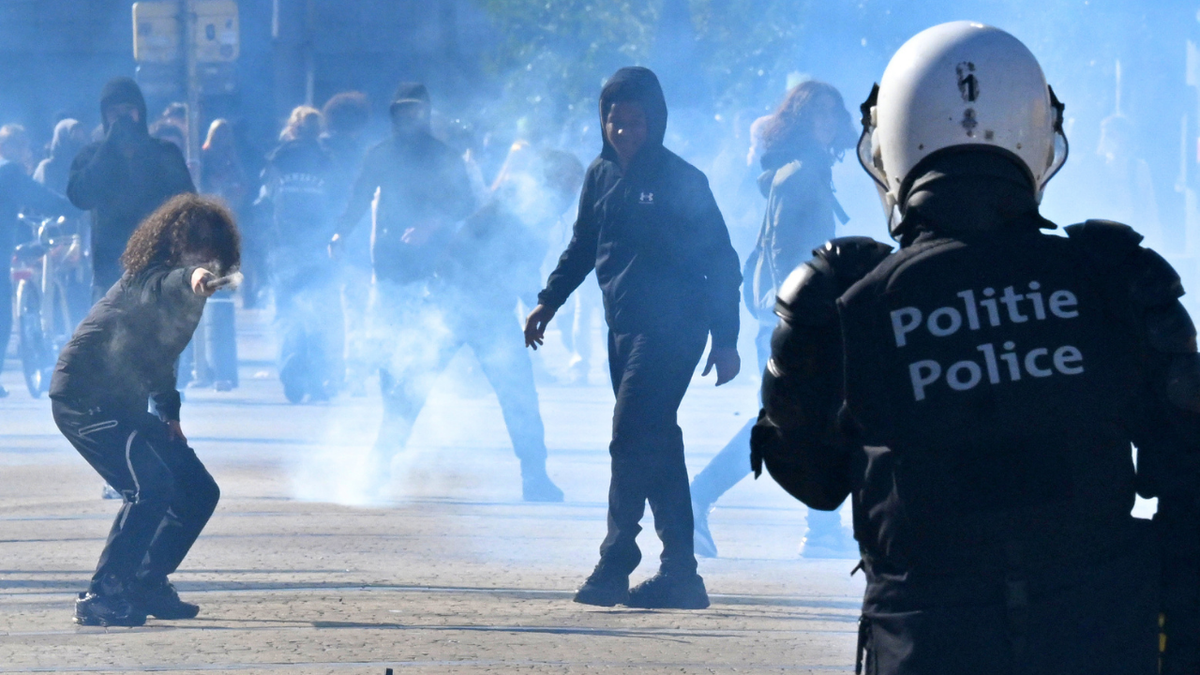
A Belgian police officer faces young protesters during clashes near Brussels-South railway station on October 12, 2026. (Nicolas Tucat/AFP/Getty Images)
Belgium’s demonstrations began over education reforms and budget cuts, with young protesters taking to the streets in Brussels and Liège. Earlier clashes injured police, damaged public areas and blocked roads. Nearly 200 people were arrested, according to Belgian officials.
Interior Minister Bernard Quintin accused far-left activists, including people linked to Antifa, of infiltrating demonstrations and encouraging young people to commit violence.
Albania clashes escalate as protesters demand prime minister’s ouster
In Albania’s capital, Tirana, student-led protests have grown into a broader challenge to Prime Minister Edi Rama, with demonstrators demanding his resignation and accusing his government of corruption and neglecting schools and public services.
US LAWMAKERS SOUND ALARM AS VIOLENCE GRIPS NATO ALLY ALBANIA AMID ANTI-GOVERNMENT PROTESTS
Police used tear gas and water cannons as more than 2,500 officers were deployed. Rama placed chairs outside his government headquarters and invited protesters to talk, but they rejected the gesture.
He said his government would address their concerns and warned that people responsible for violence could face criminal and financial consequences.
Spanish regional leaders vow consequences after Barcelona riots
In Spain, the unrest was largely concentrated in Barcelona, unlike France, where protests and clashes spread across multiple cities.
Police arrested 128 people in Barcelona after fires, vandalism and looting. Catalonia, the northeastern Spanish region that includes Barcelona, saw its regional president, Salvador Illa, condemn the violence and back the police response.
CLICK HERE TO GET THE APP
Meanwhile, Barcelona Mayor Jaume Collboni said the city would take legal action against those responsible and warned that parents or guardians could face consequences for damage caused by their children.
europe, politics, france, world, emmanuel macron, world protests
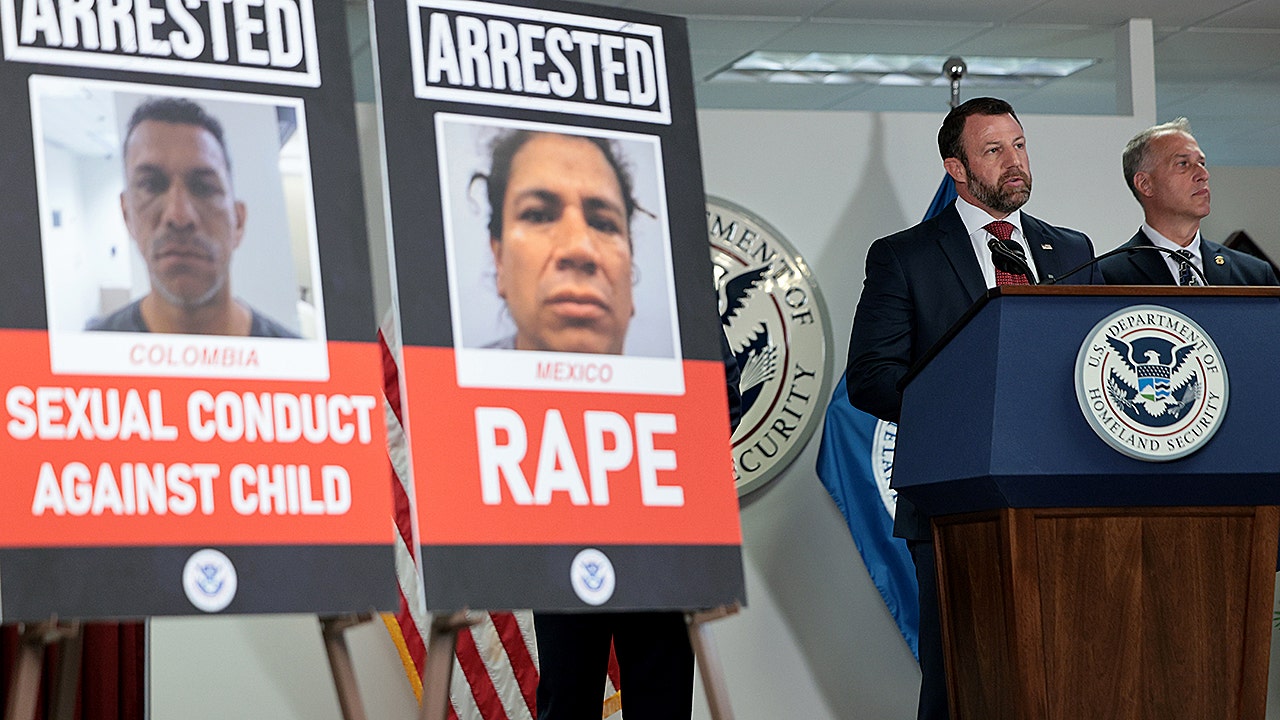
The Trump administration scored a major full-panel victory at the Fifth Circuit Court of Appeals Friday, which ruled that detained illegal immigrants who were never formally admitted into the U. S. are not constitutionally entitled to bond hearings while awaiting deportation.
The ruling comes as the Supreme Court prepares to hear Rhoney v. Barbosa da Cunha this term, a closely related fight over whether the federal mandatory-detention statute applies at all to longtime immigrants arrested inside the country — setting up the possibility that the justices could either undercut Friday’s ruling or strengthen the government’s hand.
The Fifth Circuit answered the constitutional question in Ignacio Sosnava Rodriguez v. Sylvester M. Ortega, finding that three immigrant men detained under the mandatory-detention statute are not entitled to bond hearings under the Due Process Clause of the Fifth Amendment. The court held that their years or even decades of residence in the United States, along with ties to the country and their communities, do not create a constitutional right to a bond hearing.
«The Constitution does not entitle them to a bond hearing,» the court wrote.
FEDERAL APPEALS COURT COMPARES TRUMP MIGRANT DETENTION POLICY TO JAPANESE AMERICAN INTERNMENT
Meanwhile, the Supreme Court will consider Rhoney, a case out of the Second Circuit, to determine whether the mandatory-detention law applies to longtime immigrants arrested inside the country in the first place.
At the center of the issue is a 9-2 circuit split over which federal detention law applies to immigrants who entered the country illegally, were never formally admitted and were later arrested by immigration authorities after living in the U.S. for years — sometimes decades after crossing the border.
The Fifth and Eighth Circuits have held that those immigrants remain «applicants for admission» under Section 1225 of the Immigration and Nationality Act, subjecting them to mandatory detention without an ordinary bond hearing while their removal proceedings play out. Nine other federal appeals courts have ruled that Section 1226 applies instead, which provides a path for them to seek release on bond.
The Supreme Court will essentially decide whether immigrants who entered illegally and have lived in the U.S. for years can be subjected to the same mandatory-detention provision that applies to certain immigrants seeking admission into the country.
If the Supreme Court sides with the Second Circuit, Barbosa da Cunha — a Brazilian national who entered the country illegally roughly two decades ago and was detained in 2025 — would have a path to seek release on bond. Such a ruling would likely apply to the three longtime immigrants at the center of Rodriguez as well, substantially undercutting the significance of Friday’s ruling by eliminating the need to answer the constitutional question of whether due process requires a bond hearing.
SUPREME COURT TAKES UP FIGHT OVER TRUMP’S THIRD-COUNTRY ILLEGAL ALIEN DEPORTATION POLICY
Judge Leslie Southwick pointed directly to the looming Supreme Court fight in her dissent.
Should the Supreme Court eventually determine that this court was wrong as to the statute, then the constitutional issue we address here will have far less significance. It certainly has significance at the moment,» Southwick wrote.
But conservative legal experts say Rodriguez could also strengthen the administration’s hand in Rhoney by undercutting one argument against the government’s interpretation of Section 1225: that applying the mandatory-detention provision to longtime residents would raise serious constitutional concerns.
Michael Morley, a constitutional law professor at Florida State University, said Friday’s ruling could influence how the justices approach that question because courts often consider whether a particular reading of federal law would create constitutional problems.
FEDERAL APPEALS COURT DEALS BLOW TO TRUMP DEPORTATION AGENDA
«The Fifth Circuit’s en banc ruling in Rodriguez today takes the next step by holding that such detention would not violate the U.S. Constitution’s Due Process Clause,» Morley said. «This holding may impact the Supreme Court’s reasoning, because an important consideration in disputes over federal laws is whether a particular interpretation would be unconstitutional.»
«If the Court agrees with the Fifth Circuit’s analysis that the Due Process Clause allows such detention, it may be more likely to conclude that federal law permits it, as well, Morley continued.
Hans von Spakovsky, a senior legal fellow at Advancing American Freedom, argued that the decision could bolster the administration as the justices prepare to resolve the circuit split.
«I actually think this ruling will help the government in the Rhoney case,» von Spakovsky said, pointing to the Fifth Circuit’s position that the applicable immigration statute does not require bond hearings for immigrants who were never admitted to the United States.
SIGN UP TO GET THE POLITICS NEWSLETTER
«There was already a split in the circuit courts on this issue but the Fifth Circuit has consistently held that the applicable immigration statute does not require bond hearings for aliens who were never admitted to the United States,» he said. «I will be surprised if a majority of the Supreme Court disagrees when they ultimately issue a decision in the Rhoney case.»
The Supreme Court has not yet scheduled oral arguments in Rhoney, which it agreed to hear earlier this month.
federal courts, supreme court, immigrant rights, deportation, illegal immigrants, law, constitution, appeals
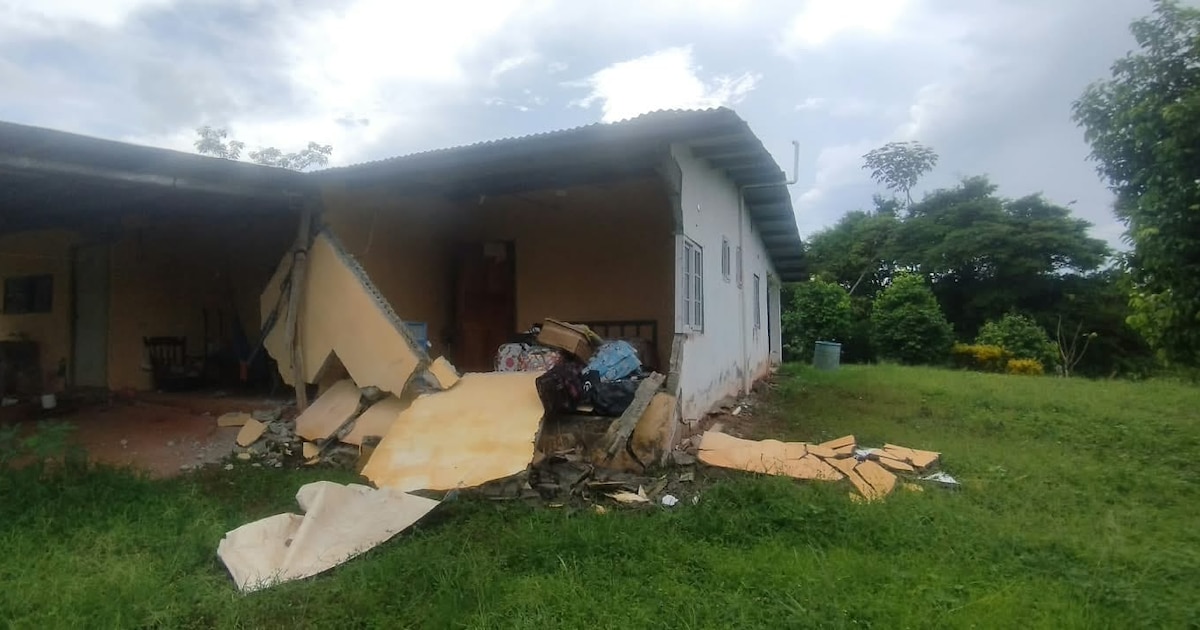
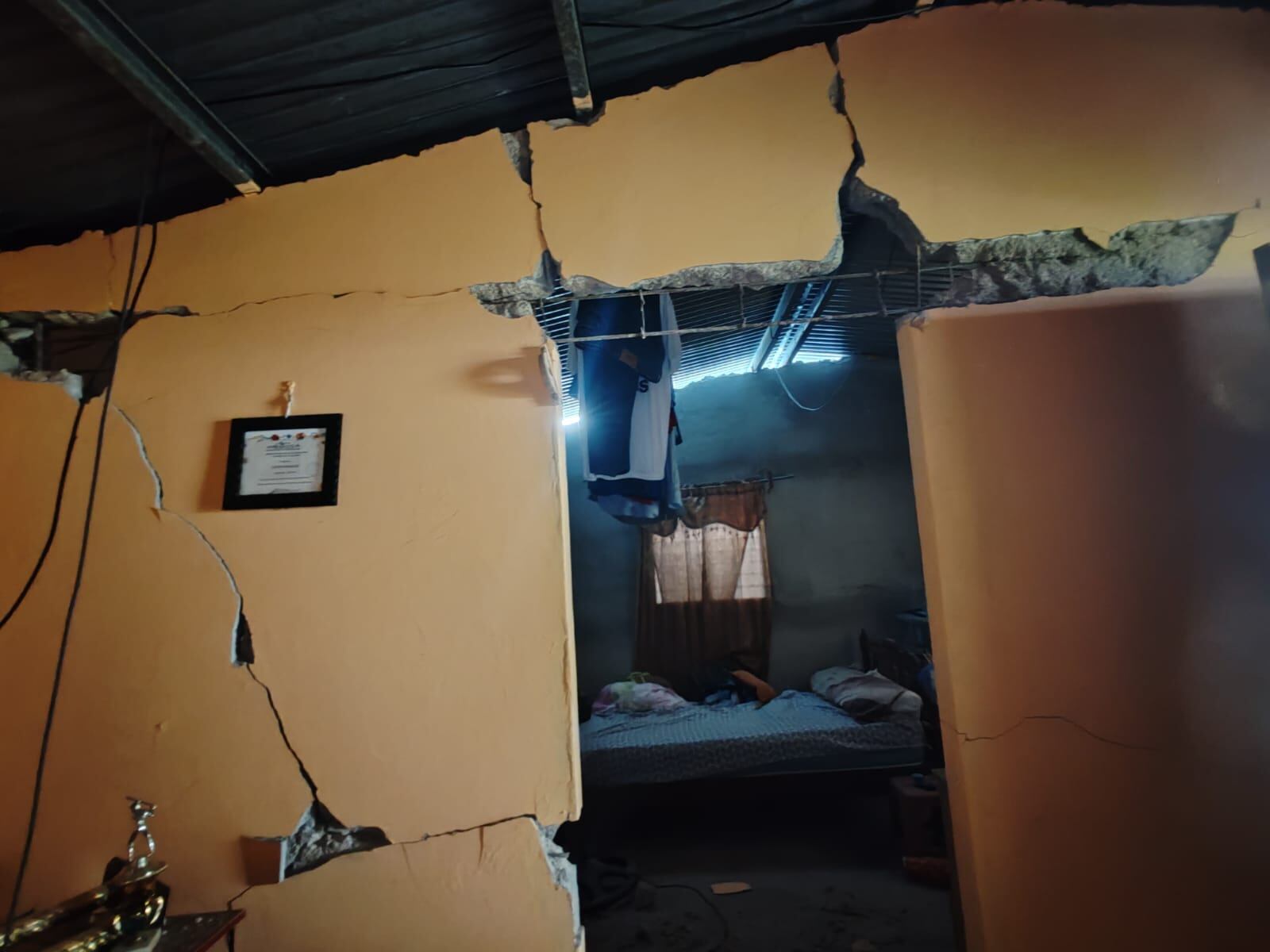
Sesenta y ocho familias damnificadas por el terremoto que el 9 de octubre provocó severos daños en gran parte de las provincias centrales de Panamá recibirán viviendas nuevas, con los fondos reunidos este sábado en la Teletón 20-30 de 2026, realizada en la ciudad de Chitré, provincia de Herrera.
La jornada, bajo el lema “Un país, una meta”, cerró con una recaudación de $1,457,028.59
El dinero se destinará al Proyecto Meta, la iniciativa del Club Activo 20-30 de Panamá para reconstruir hogares en las zonas golpeadas por el sismo.
Entre los criterios de selección, los organizadores manifestaron que el proyecto contempla dar prioridad a los hogares donde resida al menos una persona con discapacidad.
Las soluciones habitacionales, de acuerdo con la iniciativa, se construirán con criterios de seguridad, habitabilidad y accesibilidad.

Los diseños de las nuevas residencias se adaptarán a las condiciones de cada región y a la normativa vigente, según indicó la organización.
Se reiteró que los fondos reunidos en la Teletón 20-30 financiarán 68 soluciones habitacionales en Herrera, Los Santos, Veraguas y Coclé, las provincias más afectadas por el sismo.
Junto a las viviendas, la iniciativa también tiene entre sus objetivos equipar de manera sistemática y organizada la Red de Neonatología de las provincias antes mencionadas.
En medio de la tragedia y en un ambiente festivo la actividad reunió a ciudadanos, empresas, artistas, medios de comunicación y voluntarios, todos convocados para apoyar a los damnificados de las provincias mencionadas.
Artistas de diversos géneros musicales, predominando la música típica panameña, que tiene su mayor arraigo en las provincias afectadas, dieron su aporte motivando al público presente y a quienes seguían la actividad a través de una cadena nacional de televisión.
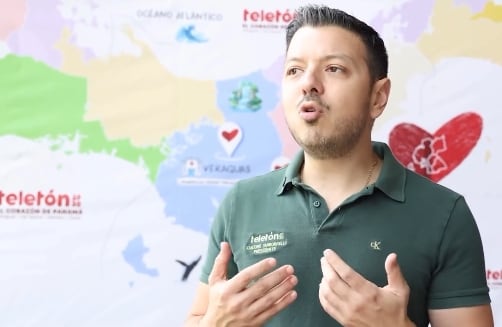
Giacomo Tamburrelli, presidente de la Teletón 20-30 de 2026, agradeció el aporte recibido y remarcó el alcance del trabajo por delante.
“Cada aporte representa una oportunidad para una familia que necesita volver a sentirse segura”, aseguró.
El dirigente sumó una definición sobre el objetivo final de la iniciativa: “No solo vamos a construir casas: vamos a reconstruir hogares”. Con esas palabras cerró su mensaje a quienes donaron, compartieron la campaña o aportaron su tiempo a la causa.
En su oportunidad, Fabián Madrid, presidente del Club Activo 20-30 de Panamá, vinculó la recaudación con la responsabilidad en el uso de los recursos.
“La confianza de Panamá nos compromete a seguir trabajando con responsabilidad y transparencia”, manifestó.
Madrid añadió que el desafío de la organización consiste en traducir la solidaridad recibida en resultados concretos.
“Nuestro deber es convertir esa solidaridad en resultados para las familias y rendir cuentas sobre el uso de los recursos”, señaló a los medios de comunicación.
Definió además la etapa que se abre tras el cierre de la jornada. “El cierre de esta jornada es un paso más en un compromiso que continúa”, sostuvo.
Por su parte, la Contraloría General de la República participó de la jornada en tareas de fiscalización de los aportes recibidos. Su presencia, de acuerdo a lo que informó, se suma al esquema de control que acompaña al Proyecto Meta desde su lanzamiento.
En aras de la transparencia, los directivos del Club Activo 20-30 de Panamá invitaron a la ciudadanía y a los medios de comunicación a revisar los informes financieros oficiales de la institución. Según la organización, esos documentos son auditados de manera independiente.

Los informes se entregan además de forma voluntaria al Nodo de Transparencia de la Defensoría del Pueblo. La organización presentó ese mecanismo como parte del control externo sobre el destino de los $1,457,028.59recaudados.
La recaudación llega dos semanas después del terremoto del 9 de octubre, que dejó a numerosas familias sin vivienda en el interior del país.
El Proyecto Meta concentrará ahora sus esfuerzos en avanzar con la construcción de las 68 soluciones habitacionales previstas para Herrera, Los Santos, Veraguas y Coclé.
incubadora,recién nacido,cuidados intensivos neonatales,neonatología

River Plate recibirá a Racing en el Monumental en uno de los clásicos de la fecha 14 del Torneo Clausura: hora, TV y formaciones

From arrests to crackdowns, how Europe’s leaders are responding as protests rock the continent

Trump immigration win could strengthen admin’s hand in looming Supreme Court fight

Drama Ansu: lesionado a los 15 minutos ante el Lille

Por diferencias con Monteoliva, renunció Julián Curi, el funcionario a cargo de las cárceles federales

Sol Pérez contó cómo cambió su vida sexual con su marido tras convertirse en padres

Javier Milei y sus medidas, en vivo: el mandatario dijo que piensa un proyecto a “100 años” para la Argentina

Cuáles son las condiciones que enfrentan las pymes para financiarse en el mercado de capitales

Escándalo con Sancor Salud: Cuotas millonarias por un servicio nefasto que abandona a los pacientes en urgencias

Tensión por discapacidad: la Iglesia advierte sobre el dictamen del oficialismo y reclama la prórroga de la ley de emergencia

 POLITICA2 días ago
Javier Milei y sus medidas, en vivo: el mandatario dijo que piensa un proyecto a “100 años” para la Argentina
- SOCIEDAD2 días ago
Escándalo con Sancor Salud: Cuotas millonarias por un servicio nefasto que abandona a los pacientes en urgencias
- INTERNACIONAL3 días ago
“Cualquier negociación sólo puede ocurrir después de liberar a los presos políticos”: la petición de 140 expresos cubanos al régimen