INTERNACIONAL
Socialism’s growing appeal meets an awkward reality check on college campus


ANN ARBOR, Mich. — Socialism is gaining popularity among young Americans, but Digital found strikingly different understandings of the ideology among college students, some of whom acknowledged that their generation may not fully grasp what they’re embracing.
A recent poll found that 48% of Americans ages 18 to 34 viewed socialism favorably, compared with 32% of Americans overall. When Digital asked more than a dozen University of Michigan students to define socialism, their answers ranged from government-funded safety nets and affordable health care to collective ownership of industry.
«If the definition was more widely known, people would support it less honestly,» one student, Ahnika, told Digital.
Other students acknowledged the confusion, while at least a dozen declined to be interviewed on camera because they said they did not know enough about socialism to give an informed answer.
THE NUMBERS DON’T LIE. YOUNG AMERICANS ARE FALLING IN LOVE … WITH SOCIALISM
«Absolutely. I feel like many people don’t really understand, I feel, the full grasp or scope of what socialism really means,» a student named Owen told Digital. «I think they kind of have a more idealistic image of it.»
The divide over what socialism actually means comes as the ideology becomes an increasingly prominent issue in American politics, including Michigan’s closely watched Senate contest, where Republicans have sought to tie Democratic nominee Abdul El-Sayed to socialism – despite his rejection of the label.
Socialism? It’s a safety net
Some of the students interviewed used the word socialism as a way to describe a government that spends more money on subsidizing healthcare, housing or other basic necessities.
«It’s an economic system in which the resources of the government … are allocated into public services such as housing, affordable housing, food like food banks, education, things like that,» James, one student, told Digital.
«Socialism to me is a concept in politics where everybody gets a little bit of everything. Everybody benefits and everybody is really taken care of. Kind of that social net that you see in other types of politics,» Kayla, another student, said.
«It’s a political system where less social goods are delivered by the market than in capitalism,» said her fellow student, Sam.
Republicans and centrist Democrats have both raised concerns about the rising tide of socialism, while young people turn to it as a solution to the cost of living.
«Does the socialism thing scare me? Yes. Is it the wrong solution? Yes,» Vice President JD Vance said in a July interview. «But one thing I try to persuade my fellow Republicans of is socialism is the alternative if we don’t have a pathway to give people a sense that the system is not rigged and that the American dream is attainable.»
While the precise definition of socialism is debated by economists and philosophers, the ideology generally calls for replacing private ownership of major productive assets with some form of public, collective or worker ownership, though socialists differ sharply over whether that control should be exercised through the government, workers themselves or other institutions.
Modern socialism emerged as a major political and economic movement in 19th-century Europe, fueled by concerns over wealth inequality, industrial working conditions and the concentration of economic power in private hands.
A fair number of the students who spoke with Digital had understandings of socialism more in line with this traditional definition.
EL-SAYED REVEALS HE WOULD GO ‘STEP FURTHER’ THAN SANDERS ON SOCIALIST PLAN FOR MAJOR US INDUSTRY
Or is it government control?
«It’s an economic system where certain aspects [of the economy] are controlled by the government such as health care, possibly housing, agriculture, general necessities,» Owen said. «It’s distinct from communism in that the government does not have free rein over every aspect of the market, but it’s not the same as capitalism where the free market determines everything.»
How far government control should extend has long divided socialists. Some advocate government ownership of nearly all major industries, while others favor worker-owned businesses amid a mix of public and private enterprise.
«I guess I would define it as an economic system where resources are shared in a more, in a somewhat equitable sense, and there’s some level of, you know, public control of that,» Zack, also a student at the university, told Digital. «It’s not really any more specific than that, socialism is a broad term, you know?»
While some young Americans associate socialism with government control of private businesses, an idea that has long faced resistance in American politics, the ideology has gained support among younger voters, even as they differ over what it would mean in practice. The Democratic Socialists of America, which advocates replacing capitalism with a more collectively controlled economy, has seen its ranks swell with members and notched a series of electoral victories during the second Trump administration.
«I’d say I define socialism by the government taking collective ownership of companies’ production and distribution of goods,» student Ahnika told Digital.
«As far as I’m aware, it’s about like workers and members of society owning the product … as opposed to capitalism where you make the product, if you work on an assembly line, the product goes to your manager or whoever runs the factory and then they make most of the profit off of your work,» Noah, also a student, told Digital.
Maybe it’s Canada?
Others defined socialism in relation to countries or politicians.
«Mostly I think of Canada when I think of socialism,» Samantha, another student, told Digital. Elyse, her peer, said that New York City Mayor Zohran Mamdani comes to mind when thinking of a definition for socialism.
LIBERAL-CITY RESIDENT HESITATES WHEN PRESSED ON BELIEFS: ‘I HADN’T REALLY THOUGHT ABOUT SOCIALISM THAT WAY’
The University of Michigan’s student body isn’t alone in its division over the definition of socialism.
Gallup found in 2018 that 23% of Americans thought the word meant «equality, including equal rights, standing or distribution,» while 10% defined it as «provision of benefits and services, such as health care,» 6% said it was «communism or a modified version of it» and further 6% understood it to be «being social or getting along with others.»
Roughly a quarter of respondents had no opinion on the definition of socialism, and just 17% described it as «government ownership or control of businesses and the economy,» the definition typically favored by economists.
Michigan, where many of the students interviewed vote, could easily decide control of Congress following November’s midterm elections. Socialism is a major issue in the race, with Republicans attempting to portray Democratic nominee Abdul El-Sayed as a socialist — a label he rejects despite a long-running association with the Democratic Socialists of America.
At least a dozen students told Digital that they were not comfortable filming an interview because they did not feel they knew enough about socialism to give an informed response, further highlighting the degree of confusion surrounding the term among young people.
LIBERAL HOT SPOT RESIDENTS CAN’T AGREE ON WHAT SOCIALISM MEANS AS FAR-LEFT MOVEMENTS GAINS STEAM
While the students couldn’t agree on what socialism meant, they did agree that their peers were confused.
«Yeah, I mean there’s sort of a general idea of an equitable distribution of resources, but other than that, in terms of how it should be done, um like what it actually looks like, how power is distributed, there’s a lot of open questions there,» said Zach.
«Yeah, absolutely. There’s a huge misconception about socialism, even capitalism as well,» a student named Jeff told Digital. «So I think these terms in the broader space of political thought are probably allegories depending on your political orientation for good or bad … that’s probably the most ubiquitous use of that term. ‘Socialism bad, capitalism good,’ or vice versa if you’re a progressive.»
THE MEDICARE FOR ALL TRADE-OFFS SOCIALISTS AREN’T TALKING ABOUT, ACCORDING TO EXPERTS
Other students felt their peers were too quick to define socialism in relation to other political systems.
«I would say some people would compare socialism to communism as being practically identical, whereas others would just understand it as having a stronger social safety net like in like Nordic countries,» Sam said, noting that he doesn’t feel there is a right or wrong definition for the word.
«Yeah, I feel like a lot of people don’t really understand what socialism is,» Tommy, another student, said. «I feel like they think that sometimes it’s communism and they conflate the two. So I feel like people need to educate themselves on what the concept actually is.»
One student felt that, if more people understood socialism to imply government ownership of industry, the system would be significantly less popular.
«I honestly think there’s a bit of confusion … If the definition was more widely known, people would support it less honestly,» Ahnika said. «Rather than having a good understanding of what socialism is, people often try to antagonize the opposite end of the spectrum, which is private ownership.»
Not everyone felt that the ambiguity surrounding the term was necessarily a bad thing, however.
«I think having complex definitions of things only encourages conversation and when those conversations can be productive and when we approach them in a productive way I think we only uh strengthen what can be the collective definition of stuff like socialism,» Elyse told Digital.
politics, socialism, college, education, midterm elections












INTERNACIONAL
Protestas en Francia: detuvieron a casi 1000 manifestantes por los enfrentamientos con la policía en las masivas marchas contra el costo de vida

Entre 410.000 y casi 800.000 personas se movilizaron este sábado en distintas ciudades de Francia, según el gobierno y el sindicato CGT, contra el aumento del costo de vida y en apoyo a los estudiantes de los liceos, en un clima de máxima tensión por los incidentes registrados hace una semana. Las movilizaciones fueron en respuesta a la convocatoria de los chalecos amarillos y agrupaciones estudiantiles, en un clima de máxima tensión tras los incidentes registrados hace una semana.
El gobierno de Emmanuel Macron, que dejará el poder en mayo, intentó evitar nuevos episodios de caos con un masivo despliegue policial y la prohibición de varias manifestaciones. Las protestas fueron en su mayoría pacíficas, pero cuando terminaban hubo disturbios en París, Lyon, Burdeos y otras ciudades. En varios de esos lugares, la policía usó gases lacrimógenos y cañones de agua para dispersar a los manifestantes.
Según el ministro del Interior, Laurent Nuñez, los enfrentamientos entre los manifestantes y la policía dejaron un saldo de casi 1000 detenidos. También se incautaron objetos como bolas de metal, fuegos artificiales y hasta una katana.
París blindado y recorridos cambiados a último momento
En París, Marsella y otras ciudades se autorizaron marchas contra el aumento del costo de vida y en apoyo a los estudiantes que reclaman mejores condiciones en los liceos.
Sin embargo, en la capital, el recorrido de la marcha fue modificado a último momento: en vez de salir de la simbólica plaza de la Bastilla, los manifestantes debieron reunirse en una zona más alejada, cerca de la autopista periférica. Según la prefectura de Policía, marcharon 110.000 personas, y según la CGT, 250.000. Al final de la concentración en la puerta de Vincennes, en el sureste de la ciudad, la policía usó cañones de agua para dispersar a un grupo que le tiraba objetos.

En la capital, el operativo de seguridad incluyó 70.000 agentes, unidades de élite, soldados de la misión Sentinelle, blindados, helicópteros y patrullas en puntos clave.
Las autoridades atribuyeron los disturbios de la semana pasada a “grupúsculos de ultraizquierda” —antifascistas, anarquistas y anarco-autónomos— y a “delincuentes oportunistas”, en su mayoría jóvenes de los suburbios, que aprovecharon para saquear comercios.
Para retomar el control, el gobierno decretó toques de queda nocturnos en barrios de grandes ciudades y prohibió manifestaciones, salvo las solicitadas por actores “legítimos” como los sindicatos.
Reclamos por derechos y denuncias de autoritarismo
Bajo un cielo gris y frío otoñal, miles de personas —en su mayoría jóvenes— marcharon en París con pancartas que decían “Macron, al rincón” y “No esperábamos nada y aun así estamos decepcionados”, mientras se escuchaban cánticos como “Macron renuncia” y “Todo el mundo odia a la policía”.
El comisario de Derechos Humanos del Consejo de Europa, Michael O’Flaherty, pidió a los países europeos afectados por protestas —incluyendo Francia, España, Italia y Albania— que respeten el derecho a manifestarse y prioricen la “desescalada” en los operativos policiales.
Comercios y museos cerrados, y nuevas marchas en el horizonte
El temor a nuevos disturbios llevó a que blindados de la Gendarmería custodiaran el Palacio del Elíseo y la Asamblea Nacional.
Muchos comerciantes protegieron sus locales con tablones, algunos decidieron no abrir y otros se prepararon para defender sus negocios ante posibles saqueos. El sábado pasado, casi 3000 comercios resultaron afectados en todo el país.
Además, museos emblemáticos como el Louvre, Orsay, Picasso y la Ópera de París cerraron de manera excepcional.
protestas
INTERNACIONAL
Hochul faces revolt from unlikely New Yorkers as Democrats deliver scathing verdict on their party

BRONX, N.Y. – Republican New York gubernatorial candidate Bruce Blakeman is courting disaffected Democrats as he seeks to unseat Gov. Kathy Hochul, betting that frustration over affordability, crime and the party’s leftward shift could help him make inroads with traditionally Democratic voters.
«They’re not Democrats. They’re socialists and communists,» former Democratic Bronx Assemblyman Stephen Kaufman told Digital. «They’re just not Democrats, they’re not moderates.»
Kaufman delivered the blistering criticism while rallying alongside Blakeman at the Crosstown Diner in the Bronx, where several voters expressed similar frustrations with Democratic leadership and said they were backing the Republican candidate.
«Every time I go out and meet the people, another Democrat comes up to me and says, ‘Bruce, I’m a lifelong Democrat. I’ve never voted Republican in my life. We’re voting for you,’» Blakeman told Digital.
NY SOCIALIST SURGE COULD PUSH DEM VOTERS TO DEFECT, GOP GOVERNOR CANDIDATE PREDICTS
Kaufman accused the Democratic Socialists of America of gaining increasing influence over the party, warning that Democrats are «rapidly becoming a house of hatred» that no longer welcomes moderate voices.
Several Bronx voters who spoke with Digital echoed those concerns, pointing to rising costs, public safety and the Democratic Party’s increasingly progressive direction as reasons they feel politically abandoned.
«It’s not your Democratic Party anymore. It’s not your grandfather’s Democratic Party. It’s become the Democratic Socialist, a.k.a. Communist Party,» Lisa, a resident of the Bronx’s Throggs Neck neighborhood, said.
«The socialists here literally said we’re land-hoarding if we only have a single-family home or a four-family home and that we were a problem… Kathy was all in support and quiet about it. She didn’t defend the homeowners,» another man from the Bronx added.
BRUCE BLAKEMAN HAMMERS DEM GOV HOCHUL, MAMDANI OVER SUBWAY SAFETY DURING NYC CAMPAIGN RIDE
One registered Democrat said the party’s failure to address the needs of working families was driving his political decisions.
«I’m a registered Democrat. Ask me if I vote that way,» he said. «I vote to what affects me, my community, the people I live with. I vote who’s going to help the middle class.»
SHOCK POLL: POWERFUL BLUE STATE GOV’S LEAD SHRINKS TO SINGLE DIGITS WEEKS BEFORE ELECTION
Blakeman argued that growing frustration with Hochul’s leadership has created an opening for Republicans in a state long dominated by Democrats.
«Kathy Hochul has raised taxes. She’s raised utility rates 48 times. Programs like cashless bail make it easier for criminals to operate in our neighborhoods. So now I have the evidences. I have her report card and it’s straight F’s,» said Blakeman.
Kaufman said that Hochul has embraced and catered towards the further left of her party.
THE IRAN WAR DIDN’T MAKE YOUR HEATING BILL THIS HIGH. BLUE-STATE ENERGY POLICY DID
«The electricity rates have skyrocketed. She’s had 42 increases over time. She wouldn’t permit building of gas lines. She’s closed utility plants. All she does is move harder and harder to the left. Which don’t represent people in this neighborhood,» he said.
«Every time she has a problem, she goes crying to the hard left. She’s totally controlled by them,» Kaufman added.
Blakeman, meanwhile, told Digital he would take the opposite approach, pledging to cut taxes and utility bills while making communities safer.
«I will cut taxes. I will cut utility bills. And I will make for safer communities just like I did in my own county as county executive,» Blakeman said.
Blakeman pointed to his record as Nassau County executive, saying he has «not raised taxes a penny in five years» and has instead cut taxes by $150 million.
«I’ll take my record, compare it to hers,» he said, arguing he would «cut their taxes, cut the utility bills and make safer communities.»
The socialist wing of the Democratic Party has moved from the margins to positions of real political power, particularly in New York, where democratic socialist Zohran Mamdani became mayor and DSA-backed candidates went on to topple Democratic incumbents in congressional primaries.
The movement has also scored victories beyond New York, with DSA-backed Melat Kiros defeating longtime Democratic Rep. Diana DeGette in Colorado and self-described democratic socialist Janeese Lewis George capturing the Democratic mayoral nomination in Washington, D.C.
Digital reached out to Hochul’s office for comment.
democratic party, kathy hochul, rise of socialism, midterm elections
INTERNACIONAL
De la gloria al abandono y la miseria, el patrón que repiten decenas de excampeones cubanos al retirarse
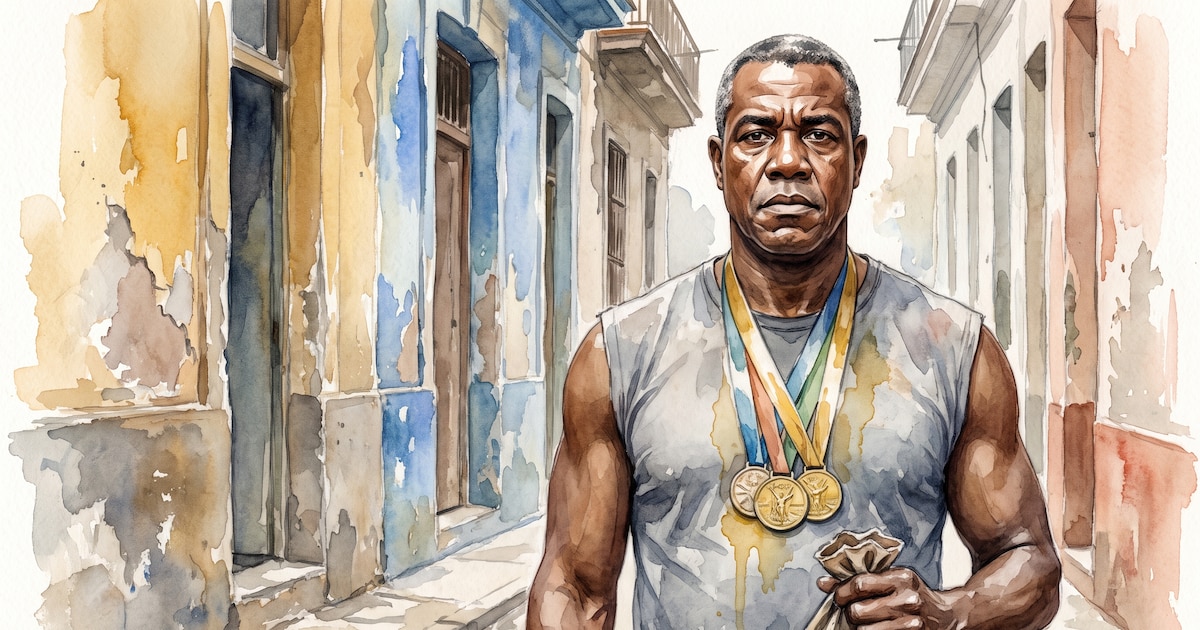
Más de un millón de reproducciones en apenas 24 horas acumuló un video que muestra a Félix Savón, tres veces campeón olímpico de boxeo, mientras busca comida en la calle. La grabación, difundida el 11 de octubre, reabrió un debate que atraviesa al deporte cubano desde hace meses: el de sus glorias envejecidas y sin respaldo.
El clip, de apenas 17 segundos, fue publicado por la página de Facebook BoxeoCubano y recogido por Periódico Cubano, sitio de noticias independiente sobre la isla.
En las imágenes, un hombre que graba desde un automóvil le pregunta al excampeón qué hace. Savón responde: “Yo recogiendo comida, comida para comer”.

Sin datos sobre el origen del video
Según detalló Periódico Cubano, no se conoce quién filmó la escena ni dónde ni cuándo ocurrió. La página que difundió el material tampoco se atribuyó la autoría, aunque acompañó el video con un mensaje sobre “la realidad que enfrentan algunas antiguas glorias deportivas de Cuba”.
Savón ganó oro en Barcelona 1992, Atlanta 1996 y Sídney 2000, además de seis títulos mundiales amateur. Su caso, documentado también por Cubanoticias 360, portal de noticias sobre Cuba, no es aislado: corresponde a un patrón que se repite entre decenas de atletas retirados en la isla.
Según las denuncias recogidas por medios independientes, la combinación de pensiones mínimas, desabastecimiento de medicamentos y falta de mecanismos reales de apoyo institucional deja a numerosos exdeportistas sin ingresos suficientes al retirarse, pese a los reconocimientos oficiales que reciben como glorias del deporte.

Boxeadores veteranos sin respaldo institucional
El caso de Gaspar Casamayor Álvarez salió a la luz en marzo, cuando una denuncia documentada por Cubanoticias 360 mostró a este exboxeador de Santiago de Cuba pidiendo dinero y vendiendo artículos para comer. Casamayor cuenta con una credencial oficial de Gloria Deportiva otorgada por el Instituto Nacional de Deportes, Educación Física y Recreación (INDER), vinculada a su trayectoria pugilística de los años 60 y 70.
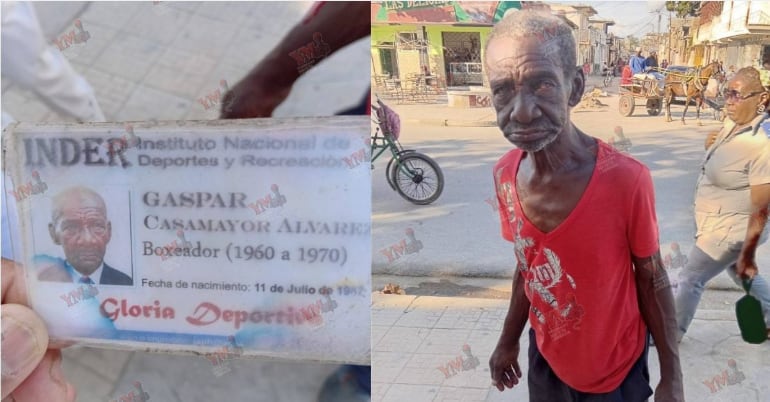
Un caso similar se sumó este mes en Holguín. Leonardo Winter Echeverría, boxeador activo durante la década de 1980 y con 207 combates disputados, vive en Banes con artrosis de rodilla y asegura no recibir respaldo del INDER. Su testimonio fue documentado en video por el movimiento opositor Cuba Independiente y Democrática.
Ariel Hernández, doble campeón olímpico de boxeo, relató que la remuneración recibida por sus resultados internacionales nunca cubrió sus necesidades y que debió trabajar como custodio tras retirarse de la competencia.

Demencia senil y una casa con goteras en Camagüey
El caso de Bernardo Comas Aguilera, campeón mundial amateur de boxeo en Múnich 1982, cobró fuerza en septiembre cuando su familia denunció sus condiciones de vida en Camagüey, según reportó Cubanoticias 360. El exboxeador, de 65 años, padece demencia senil.
Una investigación de CiberCuba, portal de noticias independiente, amplió el panorama semanas después. Su madre, cuidadora principal, describió una vivienda con filtraciones: “Cuando llueve, no duermo. Tenemos que apurarnos”, relató ante el portal. Sobre los electrodomésticos fue tajante: “Nada funciona aquí. Ni el refrigerador, ni la lavadora, ni el ventilador”.
La familia sobrevive con 8,000 pesos cubanos mensuales ( unos 333 dólares) de la pensión del exboxeador y 3.000 (124.9 usd) pesos de la jubilación de la madre. En octubre, el INDER provincial rechazó las acusaciones de abandono y afirmó mantener “visitas, asistencia médica, apoyo institucional y homenajes públicos”, aunque, según CiberCuba, no presentó registros que lo acreditaran.

El ajedrez y el béisbol también denuncian abandono
Jesús Nogueiras Santiago, Gran Maestro Internacional de ajedrez que representó a Cuba en 14 olimpiadas, acusó públicamente al INDER de negarle la garantía alimentaria pactada.
Cubanoticias 360 reportó además que Nogueiras padece esquizofrenia, un trastorno hereditario en su familia que se ha agravado por la falta periódica de medicamentos.
En el béisbol, Braudilio Vinent, considerado uno de los mejores lanzadores de la historia nacional con 221 victorias en 20 temporadas, denunció su situación ante CiberCuba este mes: “Yo me sacrifiqué por la Revolución, ahora nadie se acuerda de mí”. El exlanzador, de más de 70 años, advirtió que podría retirar de las paredes de su casa las medallas y diplomas que documentan su carrera, aunque aclaró que no piensa venderlos.
El exjugador granmense Víctor Tornés fue reportado en situación de abandono tras sufrir un derrame cerebral, mientras la esposa del campeón olímpico Andrés Aldama, de 70 años y con demencia y diabetes, pidió ayuda pública en Matanzas. Ambos casos fueron documentados por CiberCuba.
Baloncestistas y atletas olímpicas en situación de calle
El exbaloncestista Félix Morales Alfonso, de 73 años y participante en dos Juegos Olímpicos, fue filmado en agosto vendiendo productos en Cárdenas, Matanzas.
“Estoy pasando por un mal momento”, reconoció ante 14ymedio, diario digital cubano, que detalló cómo recorría el reparto 13 de Marzo buscando ingresos.
Aleida Palomo Sánchez, antigua atleta de alto rendimiento y profesora, fue vista enferma y desorientada en Santiago de Cuba, según una denuncia recogida por Cubanoticias 360 en octubre de 2025.
Miguel Calderón Gómez, medallista de bronce en el baloncesto olímpico de Múnich 1972, enfrentó problemas de salud y carencias materiales antes de morir en septiembre de ese año.
La exbaloncestista Margarita Skeet, parte de la selección olímpica en Moscú 1980 y ganadora de cuatro títulos centroamericanos, depende hoy de la ayuda de vecinos y familiares para sus necesidades cotidianas.

El INDER niega un abandono generalizado
El comisionado nacional de Atención al Atleta del INDER, Wilmer Lewis Calvo, negó en febrero de 2025 en el programa televisivo Mesa Redonda que existiera abandono hacia los deportistas históricos. Aseguró que el organismo cuenta con estructuras institucionales de apoyo.
Los casos documentados por CiberCuba contradicen esa versión oficial. El portal reportó que el 39% de los jubilados cubanos recibe la pensión mínima de 1.528 pesos mensuales, una cifra insuficiente para cubrir necesidades básicas. Una encuesta a 506 jubilados en cinco provincias mostró que el 98.8% percibe abandono institucional.
El ajedrecista Lázaro Bruzón, radicado fuera de Cuba desde 2018, resumió el fenómeno ante CiberCuba: “Todos los deportistas fueron cifras útiles mientras producíamos resultados. Una vez retirados, se acabó el negocio para ellos”. Bruzón agregó que el sistema deportivo cubano “recicla personas, exprime almas y descarta” a quienes dejan de ser útiles.
Los casos de Savón, Comas Aguilera, Nogueiras, Morales Alfonso, Palomo Sánchez y otros comparten un mismo patrón: nombres que llenaron titulares de orgullo nacional y que hoy encabezan denuncias de hambre, enfermedad y vivienda precaria.
La situación, documentada por Cubanoticias 360 y por otros medios independientes, sigue sin recibir una respuesta institucional que satisfaga a las familias afectadas.
Félix Savón,boxeo,Cuba,medallas olímpicas,acuarela

Protestas en Francia: detuvieron a casi 1000 manifestantes por los enfrentamientos con la policía en las masivas marchas contra el costo de vida

Lisandro Martínez reapareció en el United: suplente en el partido vs. Bournemouth

Hochul faces revolt from unlikely New Yorkers as Democrats deliver scathing verdict on their party

La revelación sobre la misteriosa separación de Vinicius en medio de su ausencia del clásico entre Real Madrid y Barcelona

Los detalles de la ruta marítima entre Chile y Malvinas, la tensión con Argentina y el proyecto para frenar el intercambio

Lágrimas, camisetas de la Selección y la promesa de regresar al país: así fue la última noche de BTS en la Argentina

Javier Milei y sus medidas, en vivo: el mandatario dijo que piensa un proyecto a “100 años” para la Argentina

Cuáles son las condiciones que enfrentan las pymes para financiarse en el mercado de capitales

Escándalo con Sancor Salud: Cuotas millonarias por un servicio nefasto que abandona a los pacientes en urgencias

Tensión por discapacidad: la Iglesia advierte sobre el dictamen del oficialismo y reclama la prórroga de la ley de emergencia

 POLITICA2 días ago
Javier Milei y sus medidas, en vivo: el mandatario dijo que piensa un proyecto a “100 años” para la Argentina
- SOCIEDAD2 días ago
Escándalo con Sancor Salud: Cuotas millonarias por un servicio nefasto que abandona a los pacientes en urgencias
- CHIMENTOS2 días ago
Fue mamá por primera vez a los 30 años, se separó a los 3 meses y el papá de su hija es el hermano mellizo de su ex novio: «Es lo peor que te puede pasar»